SUBSCRIBE TO OUR FREE NEWSLETTER
Daily news & progressive opinion—funded by the people, not the corporations—delivered straight to your inbox.
5
#000000
#FFFFFF
To donate by check, phone, or other method, see our More Ways to Give page.


Daily news & progressive opinion—funded by the people, not the corporations—delivered straight to your inbox.
Special Counsel Robert Mueller spent almost two years to produce a $25 million report that is a flat tire. Still unreleased in full to the American people, Trump's acolyte, Attorney General William Barr, a longtime friend of Republican Mueller, gave us what Trump long craved--by stating that "the investigation did not establish that members of the Trump campaign conspired or coordinated with the Russian government in its election interference activities" during the 2016 election. As for obstruction of justice by Trump, Attorney General Barr cryptically burped, that "The Special Counsel states that 'while this report does not conclude that the President committed a crime, it also does not exonerate him"--whatever that means. Give people the whole report now, as the House of Representatives voted 420 to 0 to do.
What a farce and distraction this whole exercise turned out to be! Mueller's assigned subject was Trump. So, does this prosecutor demand to interview Trump, to subpoena Trump? No. Does this special investigator conclude with any legal recommendations at all? No. He just wants to be forgotten as he slinks away into deliberate silence (unless he is made to testify before the House Judiciary Committee).
Really, what should we have expected from someone who, as FBI Director, testified before Congress as part of the Bush/Cheney regime, pushing for the criminal invasion of Iraq in 2003?
"Really, what should we have expected from someone who, as FBI Director, testified before Congress as part of the Bush/Cheney regime, pushing for the criminal invasion of Iraq in 2003?"
The assignment to Mueller was doomed from the start. Its charge was far too narrow and proof in such matters is very difficult to find. Intent to collude requires direct examination of the President himself. But why would Trump have to collude at all? The Russians interfered in his favor in various ways to the detriment of Hillary Clinton and all he had to do was accept such foreign largess.
An inquiry into Trump and all his business deals and business proposals with various governments point to Trump's disregard for the law. By the way, whatever happened to the IRS audit that Tricky Donald kept using as an excuse in 2016 for not releasing these voluminous tax records depicting suspicious relations that Pulitzer Prize winner David Cay Johnston has written about for years (see his book The Making of Donald Trump)?
The endless speculation and successful prosecutions of Trump's associates largely focused on ancillary lies and thefts not leading directly to the White House.
Trump couldn't have distracted the mass dittohead media any better from his true crimes. Those include unlawful war-making, corruption, wasting public funds, and unlawfully handcuffing or firing the federal "cops" whose job is to save the lives, health, safety, and economic assets of all the American people from big corporate predators across the land.
Consider all the print, TV, and radio time the mass media used on the Mueller Russian probe compared to Trump's cruelty and viciousness from his brazen "deregulation," or open flouting of statutorily mandated government missions.
These policies have directly harmed innocent children, the elderly, patients, consumers, and workers and have wreaked environmental ruin, polluting the air, water, and soil with lethal toxins. He proudly took away protections leaving defenseless humans to suffer more deadly coal dust, coal ash, and coal pollution.
"Consider all the print, TV, and radio time the mass media used on the Mueller Russian probe compared to Trump's cruelty and viciousness from his brazen "deregulation," or open flouting of statutorily mandated government missions."
He has blocked our government's responses to the climate crisis looming everywhere.
He has gotten away with massive federal deficits caused by his tax holidays for corporations and the rich, including the Trump family. Take that, next generation of Americans!
He backs for-profit colleges who have committed serial crimes against their impoverished students while heavily subsidizing these corporations with your tax dollars.
He is pushing to weaken or eliminate modest controls over imperial Wall Street, upsetting even Wall Streeters like Timothy Geithner, setting the stage for another Wall Street collapse on the economy, causing workers to lose their pensions and savings, before they, as taxpayers, are required to again bailout the Wall Street speculators and crooks.
He lies repeatedly about current realities, falsely brags about conditions he is actually worsening. He opposes any increase in the frozen federal minimum wage of $7.25 an hour and does not adequately enforce fair labor standards. He has hired and personally profited from many undocumented workers while attacking their presence in the U.S.
He pays more attention to one golf ball than he does to the estimated $60 billion in annual wage theft or $350 billion a year in the health industry's computerized billing fraud, or the gouging drug prices he falsely promised the people he would reduce.
Never mind impeachment, millions of Trump's victims, regardless of how they voted in 2016, should demand his resignation. A million-people march should surround the White House and peacefully make this demand repeatedly.
"Never mind impeachment, millions of Trump's victims, regardless of how they voted in 2016, should demand his resignation. A million-people march should surround the White House and peacefully make this demand repeatedly."
Enough of lying Trump's slimy bigotry and his snarling, hateful, bullying speech always directed at the powerless. Enough of his destructive impact on millions of children imitating his coarseness toward siblings and parents who, when admonished, blurt out that the President says this and does that. That daily acidic intrusion into family life--a cultural time bomb--has yet to properly interest the media.
Cheating Donald J. Trump has gotten away with everything in his failed businesses and his Electoral College-caused Presidency. In so doing, he has taught us much about ourselves, how much we tolerate with chronic indifference to the flaying of the rule of law, and the principles of decency, helpfulness, peace, and justice.
He has taught us about the costs of not doing our political homework, of staying home civically and electorally. He has taught us that if we do not look ourselves into the mirror, the three horsemen of fascism, lawless plutocracy, and oligarchy will run our beloved country into the ground, if not over the fiscal cliff.
Glenn Kessler, the Washington Post Fact Checker gave Bernie Sanders two Pinocchios yesterday for saying that the Wall Street banks got a trillion dollar bailout. Kessler raises several points of contention. First, whether the Wall Street banks actually got that much money. Second, whether it can really be called a bailout, since the government made a profit on the loans. Third, that the bailout was necessary to keep the financial system running.
Taking these in turn, Kessler points out that the money that went from the TARP to the Wall Street banks, the congressionally approved bailout, was in the low hundreds of billions, far less than $1 trillion. He does note that a much larger amount of loans went from the Federal Reserve Board to the banks, however the piece points out both that the Fed is nominally independent of the government and that many of these loans were short-term, so that rolling them over would count twice. (If a bank got overnight loans for $1 billion for a week, this would count as $7 billion.)
Sanders seems on pretty solid ground here when including the Fed loans. First, the reason the Fed has the power it does is because it is the central bank of the United States. It is true, that when it was established in 1913 it was set up as a mixed public-private entity, with the banks having a direct voice in setting policy. However, its ability to print an essentially unlimited amount of money is due to the fact that it is the central bank of the United States. All the other major central banks (e.g. the European Central Bank, the Bank of England, The Bank of Japan) are fully public institutions. The fact that the United States allows private banks to have a voice in setting Fed policy doesn't really change the fact that it is a government institution and therefore loans from the Fed should be seen as coming from the government.
The fact that many of the loans made by the Fed were very short-term does make adding them up more complicated, but there were many points at which the outstanding loans and guarantees to the banks were well over $1 trillion. In fact, it set up special lending facilities specifically for Bank of America and Citigroup, each of which had well over $100 billion in loans and guarantees at the peak of the crisis in 2009.
As far as the government making a profit on the loans, this is a rather dubious claim. The measure of profit here is the difference between what the banks repaid and the government's cost of borrowing. The latter was of course quite low, since the government was one of the few secure borrowers in the world at that point.
Anyhow, the notion of this being a bailout stems from the fact that these loans were granted at interest rates that were far below the market rate at the time. This allowed banks like Bank of America and Citigroup to stay in business at a point where they would have been pushed into bankruptcy if the market was allowed to work its magic. In fact, then Federal Reserve Chair Ben Bernanke, argued at a Brookings forum last fall that all 13 of the country's largest banks would have gone into bankruptcy if the market had been allowed to run its course.
The government quite explicitly acted to save the banks from the market. As then Treasury Secretary Timothy Geithner says repeatedly in his autobiography, they acted to ensure that there would be no more Lehmans. The fact that they charged an interest rate that was above the rate paid on government borrowing is pretty much irrelevant. The interest rate paid by the banks on their loans was far less than the market rate they would have paid at the time in the absence of government support, and for this reason can accurately be called a "bailout."
Finally, there is the issue of whether the bailout was necessary. There seems unanimity from the people who could not see the $8 trillion housing bubble whose collapse led to the crisis that we would have faced a "Second Great Depression" without the bailout. This is hard to see.
The government has a long history of keeping a bank operating through a bankruptcy. This is the reason the Federal Deposit Insurance Corporation (FDIC) exists. The FDIC takes over a bank when it becomes insolvent and, for the most part, its depositors never even know anything has changed until they get a note in the mail. Having the country's largest banks implode would have been a huge burden on the FDIC and there undoubtedly would have been glitches, but having these glitches imply a Second Great Depression (ten years of double-digit unemployment) involves some very serious hand waiving.
There is little doubt that the initial downturn would have been worse if the market was allowed to work its magic and put the Wall Street banks out of business, but there is nothing that would have prevented a large government stimulus from boosting the economy back to more normal levels of output. It is worth noting on this issue that one of the main rationales for the TARP bailout, that the commercial paper market was shutting down, was completely dishonest.
The Fed single-handedly had the ability to support the commercial paper market. The world discovered this fact the weekend after Congress approved the TARP when the Fed announced the creation of a commercial paper market lending facility. Anyhow, in the same way that the fear of a shutdown of the commercial paper market was used to sell the TARP, saving us from a Second Great Depression has repeatedly been used after the fact as a rationale for the larger bailout. Neither is true.
In what progressive lawmakers and advocacy groups decried as the Trump administration's latest "shameful" attack on vulnerable families, the Consumer Financial Protection Bureau (CFPB) unveiled a plan on Wednesday that would gut regulations protecting consumers from predatory payday lenders.
"This decision will put already struggling families in a cycle of debt and leave them in an even worse financial position."
--Vanita Gupta, Leadership Conference on Civil and Human Rights
Vanita Gupta, president and CEO of the Leadership Conference on Civil and Human Rights, denounced the CFPB's plan as "a slap in the face to consumers--especially people of color--who have been victims of predatory business practices and abusive lenders."
"This decision will put already struggling families in a cycle of debt and leave them in an even worse financial position," Gupta added. "This administration has moved the CFPB away from protecting consumers to protecting the very companies abusing them."
Detailed in a statement by Trump-appointed CFPB director Kathy Kraninger, the agency's proposal would dramatically weaken an Obama-era rule that would have required payday lenders to verify that borrowers have the financial ability to repay their loans--an effort to help vulnerable people avoid falling into debt traps.
"Eliminating these protections would be a grave error and would leave the 12 million Americans who use payday loans every year exposed to unaffordable payments at interest rates that average nearly 400 percent."
--Alex Horowitz, Pew Charitable Trusts
In its explanation of the rule change, the CFPB said it wants consumers to have even more access to payday lenders, despite their long record of exploiting the poor.
"Kraninger is siding with the payday loan sharks instead of the American people," Rebecca Borne, senior policy counsel at the Center for Responsible Lending, said in a statement. "We urge director Kraninger to reconsider, as her current plan will keep families trapped in predatory, unaffordable debt."
The original rule was initially set to take effect in January, but the Trump administration has delayed implementation until August.
In a tweet responding to the agency's proposed rollback, former CFPB chief Richard Cordray called the plan "a bad move that will hurt the hardest-hit consumers" and predicted that it "will be subject to a stiff legal challenge."
"Eliminating these protections would be a grave error and would leave the 12 million Americans who use payday loans every year exposed to unaffordable payments at interest rates that average nearly 400 percent," concluded Alex Horowitz, senior research officer with Pew Charitable Trusts' consumer finance project. "This proposal is not a tweak to the existing rule; instead, it's a complete dismantling of the consumer protections finalized in 2017."
Senate Democrats have once again selected Sen. Chuck Schumer (D-N.Y.) as their minority leader without so much as a whisper of a debate or contest.
This is galling. The man is incompetent, has abysmal politics, and as we were reminded in a huge New York Times investigation into Facebook, is extremely corrupt.
In his first two years as Senate minority leader, Schumer had two main priorities. First, preserve his vulnerable moderates running in deeply Trumpy states, like Claire McCaskill in Missouri, Heidi Heitkamp in North Dakota, and Joe Donnelly in Indiana. Second, use the Trump presidency to sneak through some odious stuff that most liberals hate.
Schumer definitely succeeded in the latter objective. In keeping with his long career as a Wall Street stooge (and in sharp contrast with his predecessor Harry Reid), he quietly shepherded financial deregulation through. And because he has an almost neoconservative foreign policy, he largely stood aside as Trump pulled the U.S. out of the Iran nuclear deal for no reason. He also attacked Trump from the right for not being belligerent enough towards North Korea.
And how about that first goal? Schumer failed spectacularly in preserving most of these seats. Nearly all of his moderates -- to whom he had granted significant leeway to vote for President Trump's judicial nominees and bills -- lost. Only Joe Manchin in West Virginia managed to hang on. The Democratic Senate margin is being somewhat bolstered only by other candidates knocking off Republican senators in Arizona and Nevada, which Schumer had little to do with. (Indeed, Harry Reid, who is still helping run a well-oiled labor turnout machine in Nevada, was the key figure behind the Nevada win.)
This brings me to Facebook. Sheera Frenkel, Nicholas Confessore, Cecilia Kang, Matthew Rosenberg, and Jack Nicas wrote a jaw-dropping piece of reporting for the Times about Facebook's lobbying operation. They focused on how the company has defended itself from evidence that Russian intelligence used the platform to help Trump win in 2016, and that political extremists have been using the platform to organize atrocities, including genocide.
Basically, the strategy conducted by Facebook's top executives, including CEO Mark Zuckerberg and COO Sheryl Sandberg, was the filthiest sludge out of the bottom of the lobbying barrel. (Facebook has defended itself and calls the report "grossly unfair.") The story is very long, but probably the most explosive revelation was that Facebook hired a soulless Republican propaganda shop to attack its critics -- notably the Open Markets Institute, which Anne-Marie Slaughter shoved out of the New America Foundation on instructions from her Google paymasters -- with anti-Semitic smears, casting it as the tool of wealthy Jewish philanthropist George Soros. Remarkably, at the very same time they convinced the Anti-Defamation League to cast criticism of Facebook as anti-Semitic, as both Zuckerberg and Sandberg are Jewish.
It's worth stopping for a moment to take this in. Just a couple weeks ago a right-wing terrorist hopped up on anti-Soros propaganda massacred 11 Jews at a synagogue in Pittsburgh. Another sent a mail bomb to Soros' home. A third person in D.C. was recently arrested on suspicion of plotting another synagogue shooting.
Where does Schumer come in? Well, in 2017, Sen. Mark Warner (D-Va.) opened an investigation into Facebook over Russiagate and misinformation generally. (Far from being some fire-breathing populist, Warner is among the most milquetoast, business-friendly Democrats who has ever held high office.) But Schumer has raised more money from Facebook than any other member of Congress, his daughter works there, and he helped get his former staffer appointed to the Federal Trade Commission (which oversees Facebook). In concert with Facebook brass, he told Warner to lay off the company, reported the Times: "Mr. Warner should be looking for ways to work with Facebook, Mr. Schumer advised, not harm it."
So when it comes to sellout Democrats voting to make another financial crisis more likely, Schumer wrings his hands and hectors progressives not to criticize them too much (after which most of the sellouts lose anyway). But when those same sellouts start criticizing one of his favored sources of campaign cash, suddenly he discovers a knack for backroom arm-twisting and hardball tactics.
The problem isn't exactly that Schumer is cynical when he should be idealistic. It's that he's just so incredibly feckless. He burns all his political capital on defending despised banks who are no doubt cooking up new schemes to pillage the working class, and a monstrous social media giant that maybe helped Trump win and is hugely biased towards the extreme right in terms of traffic. What does he get in return? Three lost Senate seats.
Let's hope in the next Congress, Democrats can come up with someone who isn't so craven and helpless. If nothing else, I suggest start with drawing names out of a hat.
Excluding institutions such as Blackrock and Vanguard, which are composed of multiple investors, the largest single players in global equity markets are now thought to be central banks themselves. An estimated 30 to 40 central banks are invested in the stock market, either directly or through their investment vehicles (sovereign wealth funds). According to David Haggith on Zero Hedge:
Central banks buying stocks are effectively nationalizing US corporations just to maintain the illusion that their "recovery" plan is working . . . . At first, their novel entry into the stock market was only intended to rescue imperiled corporations, such as General Motors during the first plunge into the Great Recession, but recently their efforts have shifted to propping up the entire stock market via major purchases of the most healthy companies on the market.
The US Federal Reserve, which bailed out General Motors in a rescue operation in 2009, was prohibited from lending to individual companies under the Dodd-Frank Act of 2010; and it is legally barred from owning equities. It parks its reserves instead in bonds and other government-backed securities. But other countries have different rules, and today central banks are buying individual stocks as investments, with a preference for big tech stocks like Amazon, Apple, Facebook and Microsoft. Those are the stocks that dominate the market, and central banks are bidding them up aggressively. Markets, including the US stock market, are thus literally being rigged by foreign central banks.
The result, as noted in a January 2017 article on Zero Hedge, is that central bankers, "who create fiat money out of thin air and for whom 'acquisition cost' is a meaningless term, are increasingly nationalizing the equity capital markets." At least they would be nationalizing equities, if they were actually "national" central banks. But the Swiss National Bank, the biggest single player in this game, is 48% privately owned; and most central banks have declared their independence from their governments. They march to the drums not of government but of big international banks.
Marking the 10th anniversary of the 2008 collapse, former Fed chairman Ben Bernanke and former Treasury secretaries Timothy Geithner and Henry Paulson wrote in a September 7 New York Times op-ed that the Fed's tools needed to be broadened to allow it to fight the next anticipated economic crisis, including allowing it to prop up the stock market by buying individual stocks. To investors, propping up the stock market may seem like a good thing; but what happens when the central banks decide to sell? The Fed's massive $4 trillion economic support is now being taken away, and other central banks are expected to follow. Their US and global holdings are so large that their withdrawal from the market could trigger another global recession. That means when and how the economy will collapse is now in the hands of central bankers.
Moving Goal Posts
The two most aggressive central bank players in the equity markets are the Swiss National Bank and the Bank of Japan. The goal of the Bank of Japan, which now owns 75% of Japanese exchange-traded funds, is evidently to stimulate growth and defy longstanding expectations of deflation. But the Swiss National Bank is acting more like a hedge fund, snatching up individual stocks because "that is where the money is." About 20% of the SNB's reserves are in equities, and more than half of that is in US equities. The SNB's goal is said to be to counteract the global demand for Swiss francs, which has been driving up the value of the national currency, making it hard for Swiss companies to compete in international trade. The SNB does this by buying up other currencies, and it needs to put them somewhere, so it is putting the money in stocks.
That is a reasonable explanation for the SNB's actions, but some critics suspect other motives. Switzerland is home to the Bank for International Settlements, the "central bankers' bank" in Basel, where central bankers meet regularly behind closed doors. Dr. Carroll Quigley, a Georgetown history professor who claimed to be the historian of the international bankers, wrote of this institution in Tragedy and Hope in 1966:
[T]he powers of financialcapitalism had another far-reaching aim, nothing less than to create a world system of financial control in private hands able to dominate the political system of each country and the economy of the world as a whole. This system was to be controlled in a feudalist fashion by the central banks of the world acting in concert, by secret agreements arrived at in frequent private meetings and conferences. The apex of the system was to be the Bank for International Settlements in Basel, Switzerland, a private bank owned and controlled by the world's central banks which were themselves private corporations.
The key to their success, said Quigley, was that they would control and manipulate the money system of a nation while letting it appear to be controlled by the government. The economic and political systems of nations would be controlled not by citizens but by bankers, for the benefit of bankers. The goal was to establish an independent (privately owned or controlled) central bank in every country. Today, that goal has largely been achieved.
In a paper presented at the 14th Rhodes Forum in Greece in October 2016, Dr. Richard Werner, Director of International Development at the University of Southampton in the UK, argued that central banks have managed to achieve total independence from government and total lack of accountability to the people, and that they are now in the process of consolidating their powers. They control markets by creating bubbles, busts, and economic chaos. He pointed to the European Central Bank, which was modeled on the disastrous earlier German central bank, the Reichsbank. The Reichsbank created deflation, hyperinflation, and the chaos that helped bring Adolf Hitler to power. The problem with the Reichsbank, says Werner, was its excessive independence and its lack of accountability to German institutions and Parliament. The founders of post-war Germany changed the new central bank's status by significantly curtailing its independence. Werner writes, "The Bundesbank was made accountable and subordinated to Parliament, as one would expect in a democracy. It became probably the world's most successful central bank."
But today's central banks, he says, are following the disastrous Reichsbank model, involving an unprecedented concentration of power without accountability. Central banks are not held responsible for their massive policy mistakes and reckless creation of boom-bust cycles, banking crises and large-scale unemployment. Youth unemployment now exceeds 50 percent in Spain and Greece. Many central banks remain in private hands, including not only the Swiss National Bank but the Federal Reserve Bank of New York and the Italian, Greek and South African central banks.
Banks and Central Banks Should Be Made Public Utilities
Werner's proposed solution to this dangerous situation is to bypass both the central banks and the big international banks and decentralize power by creating and supporting local not-for-profit public banks. Ultimately, he envisions a system of local public money issued by local authorities as receipts for services rendered to the local community. Legally, he notes, 97 percent of the money supply is already just private company credit, which can be created by any company, with or without a banking license. Governments should stop issuing government bonds, he says, and instead fund their public sector credit needs through domestic banks that create money on their books (as all banks have the power to do). These banks could offer more competitive rates than the bond markets and could stimulate the local economy with injections of new money. They could also put the big bond underwriting firms that feed on the national debt out of business.
Abolishing the central banks is one possibility, but if they were recaptured as public utilities, they could serve some useful purposes. A central bank dedicated to the service of the public could act as an unlimited source of liquidity for a system of public banks, eliminating bank runs since the central bank cannot go bankrupt. It could also fix the looming problem of an unrepayable federal debt, and it could generate "quantitative easing for the people," which could be used to fund infrastructure, low-interest loans to cities and states, and other public services.
The ability to nationalize companies by buying them with money created on the central bank's books could also be a useful public tool. The next time the megabanks collapse, rather than bailing them out they could be nationalized and their debts paid off with central bank-generated money. There are other possibilities. Former Assistant Treasury Secretary Paul Craig Roberts argues that we should also nationalize the media and the armaments industry. Researchers at the Democracy Collaborative have suggested nationalizing the large fossil fuel companies by simply purchasing them with Fed-generated funds. In a September 2018 policy paper titled "Taking Climate Action to the Next Level," the researchers wrote, "This action might represent our best chance to gain time and unlock a rapid but orderly energy transition, where wealth and benefits are no longer centralized in growth-oriented, undemocratic, and ethically dubious corporations, such as ExxonMobil and Chevron."
Critics will say this would result in hyperinflation, but an argument can be made that it wouldn't. That argument will have to wait for another article, but the point here is that massive central bank interventions that were thought to be impossible in the 20thcentury are now being implemented in the 21st, and they are being done by independent central banks controlled by an international banking cartel. It is time to curb central bank independence. If their powerful tools are going to be put to work, it should be in the service of the public and the economy.
Ten years ago, on Saturday, September 13th, 2008, the world was about to end.
The New York Federal Reserve was a zoo. Imagine NASA headquarters on the day a giant asteroid careens into the atmosphere. That was the New York Fed: all hands on deck, peak human panic.
The crowd included future Treasury Secretary Timothy Geithner, then-Treasury Secretary (and former Goldman Sachs CEO) Hank Paulson, the representatives of multiple regulatory offices, and the CEOs of virtually every major bank in New York, each toting armies of bean counters and bankers.
The asteroid metaphor fit. In the twin collapses of top-five investment bank Lehman Brothers and insurance giant AIG, Wall Street saw a civilization-imperiling ball of debt hurtling its way.
The legend of that meeting, as immortalized in hagiographic reconstructions like Andrew Ross Sorkin's Too Big to Fail, is that the tough-minded bank honchos found a way to scrape up just enough cash to steer the debt-comet off course.
In Too Big To Fail, the "superstar" chief of Goldman, Lloyd Blankfein, along with "smart" Jamie Dimon of Chase, "fighter" John Mack of Morgan Stanley, and other titans brokered the deal of deals, just in time to stave off a Mad Max scenario for us all.
The plan included a federal bailout of incompetent AIG, along with key mergers - Bank of America buying Merrill, Barclays swallowing the sinking hull of Lehman, etc.
With respect to the fine actors in the film, the legend is bull.
There are more accurate chronicles of the crisis period, including the just-released Financial Exposure by Elise Bean of the Senate Permanent Subcommittee on Investigations, probably the most aggressive crew of financial detectives who sifted through the rubble over the past 10 years. Bean's account of what went on at banks like Goldman, HSBC, UBS and Washington Mutual is terrifying to read even now.
But history is written by the victors, and the banks that blew up the economy are somehow still winning the narrative.
But history is written by the victors, and the banks that blew up the economy are somehow still winning the narrative. Persistent propaganda about what happened 10 years ago not only continues to warp news coverage, but contributed to a wide array of political consequences, including the election of Donald Trump.
The most persistent myths about 2008:
Myth#1: The crash was an accident
In the early days of the crash, reporters were told the crisis particulars were probably too complex for news audiences. But metaphors would do. And the operating metaphor for 2008 was a "thousand-year flood," a rare and inexplicable accident - something that just sort of happened.
It was even implied that the meltdown was due in part to irrational panic, "hysteria," a fear of fear itself. When Lehman Brothers failed, the theory held, investors overreacted by freezing all lending, causing more disruptions and more losses. The economy was basically healthy, but fear had caused it to founder on a lack of confidence.
In Too Big to Fail, William Hurt plays Treasury Secretary Paulson as a saddened, wearied Atlas. He quips, early in the mess: "This is a confidence game," and if Lehman Brothers failed, "all the other banks are gonna drop like dominoes."
Poor Cynthia Nixon, who plays Treasury spokesperson Michele Davis, is heard responding, "Congress won't move until we've already hit the iceberg."
The film flashes to Lehman's Dick "The Gorilla" Fuld (played by James Woods in kinetic perma-jerk mode), who contrasts their fears with his overconfident weather report:
"Real estate always comes back," he snorts, smugly fixing his tux. "I've seen this before. CEOs panic and they sell out cheap... The street's running around with its hair on fire, but the storm always passes."
This colorful language - dominoes, a confidence game, an "iceberg," a "storm" - artfully disguised reality. This wasn't weather coming at them, but the consequences of years of untrammeled criminal fraud.
Banks like Lehman had lent billions to fly-by-night mortgage mills like Countrywide and New Century. Those firms in turn sent hordes of loan hustlers into lower-income neighborhoods offering magical deals to anyone who could "fog a mirror," as former Countrywide executive Michael Winston once put it to me. The targets were frequently minorities and the elderly.
Tales of mortgage swindlers guzzling Red Bulls and handing out easy loans in all directions began showing up in news reports as early as 2005. "It was like a boiler room," one agent told the Los Angeles Times. "You produce, you make a lot of money... There's no real compassion or understanding of the position they're putting their customers in."
These mortgage mills dispensed with due diligence, rarely bothering to verify incomes, identification, even citizenship. The loans were designed to have short, fragile lives, like fruit flies. They had to stay viable just long enough to be sent back to Wall Street and resold to secondary buyers, who took the losses.
It was a classic Ponzi scheme. So long as new loans were created and sold faster than the old ones failed, the subprime market made everyone rich. But the minute the market started to swing back the other way, everyone knew they would all crash to earth, Wile E. Coyote-style.
Paulson knew as well as anyone. Treasury and the other regulators received ample warning. Take the Office of Thrift Supervision (OTS), a regulatory arm of Treasury that happened to oversee two of the worst basket-cases, Washington Mutual and AIG. According to Bean, the OTS observed and ignored more than 500 deficiencies in mortgage practices just at WaMu in the years before the crash.
Even the FBI - not exactly an on-the-ball financial regulator, certainly not to the degree that Treasury or the Fed is expected to be - had warned as far back as 2004 that so-called "liar's loans" were "epidemic" and would cause a "financial crisis" if not addressed.
CNN told the public of the FBI warning of a "next S&L crisis," going so far as to identify the top 10 "hot spots' for mortgage fraud" in: Georgia, South Carolina, Florida, Michigan, Illinois, Missouri, California, Nevada, Utah and Colorado.
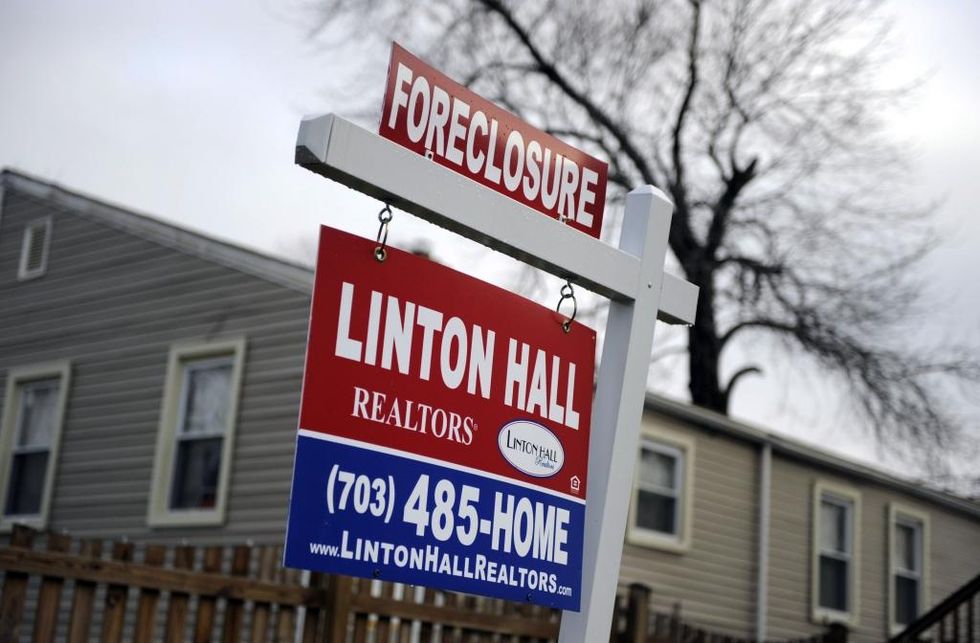
All places that would later be rocked by mass foreclosures.
It took longer to get a car wash than a home loan in those days. I had one mortgage broker in Florida tell me he used to look for customers on the way home from work at night, at the beer cooler at his neighborhood 7-Eleven. His pitch was, "Hey, buddy, you like where you're living?"
The titans of Wall Street ignored at least four years of warnings, escaped richer than ever, and in the end were lauded as heroes by the likes of Sorkin.
The end of this party was no confidence game. This was gravity: what went way up, coming way down.
The captain of the Titanic ignored one day's worth of iceberg warnings and went down in history as an all-time schmuck for it. History commends him only for the honorable act of going down with his ship.
The titans of Wall Street ignored at least four years of warnings, escaped richer than ever, and in the end were lauded as heroes by the likes of Sorkin.
Myth #2: The crash was caused by greedy homeowners
Too Big To Fail shows Fuld on a rant:
"People act like we're crack dealers," Fuld (James Woods) gripes. "Nobody put a gun to anybody's head and said, 'Hey, nimrod, buy a house you can't afford. And you know what? While you're at it, put a line of credit on that baby and buy yourself a boat."
This argument is the Wall Street equivalent of Reagan's famous Cadillac-driving "welfare queen" spiel, which today is universally recognized as asinine race rhetoric.
Were there masses of people pre-2008 buying houses they couldn't afford? Hell yes. Were some of them speculators or "flippers" who were trying to game the bubble for profit? Sure.
Most weren't like that - most were ordinary working people, or, worse, elderly folks encouraged to refinance and use their houses as ATMs - but there were some flippers in there, sure.
People pointing the finger at homeowners are asking the wrong questions. The right question is, why didn't the Fulds of the world care if those "nimrods" couldn't afford their loans?
The answer is, the game had nothing to do with whether or not the homeowner could pay. The homeowner was not the real mark. The real suckers were institutional customers like pensions, hedge funds and insurance companies, who invested in these mortgages.
If you had a retirement fund and woke up one day in 2009 to see you'd lost 30 percent of your life savings, you were the mark.
If you had a retirement fund and woke up one day in 2009 to see you'd lost 30 percent of your life savings, you were the mark. Ordinary Americans had their remaining cash in houses and retirement plans, and the subprime scheme was designed to suck the value out of both places, into the coffers of a few giant banks.
A blizzard of post-2008 lawsuits involving pension funds testifies to this. One State Street fund lost 28 percent of its value. Plaintiffs like the Iowa Public Employees' Union or an Electrical Workers' Union in Illinois or even the Zuni Native American tribe in Arizona and New Mexico all lost millions because of mortgage investments.
Bean's report makes it clear that when Senate investigators started to look through the records, they found that not only the companies themselves, but even their regulators saw the entire outlines of this con from the start.
"Other materials showed OTS supervisors downplaying the risk," she writes, "highlighting bank profits and the speed with which banks sold the high-risk loans to Wall Street."
In other words, nobody cared if the loans were shoddy. They were selling like hotcakes, generating lots of cash. Party on!
To this day, you'll find people pushing the line that the crash was caused because Congress "forced everybody to go and give mortgages to people who were on the cusp."
But nobody pushed banks to do anything. Homeowners were necessary parts of the scam. They were the straw in the Rumpelstiltskin scheme. If the Countrywides of the world had been worried about borrowers' ability to pay, they would have, you know, checked.
It was a hot-potato game. Get a name on a piece of paper, then toss the loan from buyer to buyer until you found someone unsophisticated enough to take it.
All that brainpower in the New York Fed 10 years ago was searching for new takers for hot potatoes. They got the taxpayer to buy a lot, and got the Fed to buy more. They even used Fannie and Freddie as a backdoor bailout mechanism, buying up still more toxic assets. The banks themselves were the only ones who refused to take losses.
Myth #3: The bailouts were about saving capitalism
The deal those bankers cooked up was to save the banks from capitalism.
Losers must be allowed to lose. It's the first and most important regulatory mechanism in a market economy.
But by 2008, the banks had simply grown too big and interconnected to allow normal market processes to take place.
These firms almost certainly would have died without help. In 2011, the Financial Crisis Inquiry Commission released a report quoting then-Fed chief Ben Bernanke as saying this about that fateful week in September 2008:
"Out of maybe the 13, 13 of the most important financial institutions in the United States, 12 were at risk of failure within a period of a week or two..."
Again, the legend is that the banks at the Fed that weekend were the healthy ones, saving us from the contagion of AIG and Lehman. This legend has been reinforced by constant propaganda about the banks being "forced" to accept bailouts like the TARP.
It's a lie. Paulson and the other regulators repeatedly intervened to prevent the natural demises of these firms.
It wasn't just small market-stopping moves, like when they banned short-selling to protect corrupt companies from smaller gamblers who'd wagered on their failure. Or the deal made on September 19th, 2008, when two companies that were not commercial banks, Goldman Sachs and Morgan Stanley, were given emergency commercial bank charters on a Sunday night, allowing the two plummeting giants access to lifesaving Fed cash the next morning.
The public to this day has no understanding of the scale of the intervention.
To put it in perspective, the War on Terror has cost America about $5.6 trillion since 9/11, or about $32 million an hour. The bailouts probably dwarf that effort. Most studies suggest it was a world-war-level mobilization of cash, a generation of savings used to plug a single hole.
To put it in perspective, the War on Terror has cost America about $5.6 trillion since 9/11, or about $32 million an hour.
The bailouts probably dwarf that effort. Most studies suggest it was a world-war-level mobilization of cash, a generation of savings used to plug a single hole.
The Special Inspector General of the TARP put the gross government outlay at $4.6 trillion, with over $16 trillion in guarantees. Bloomberg concluded the rescue expenditure was $12.8 trillion. Fortune (which saluted the investment as hugely profitable for America in the end) put the number at $14 trillion. The Levy Institute at Bard College did probably the most extensive study, and put the number at $29 trillion.
An argument is frequently put forth that the government made a huge profit on the bailouts. This is an impossible stance to counter. It's like trying to quantify how plaid something is.
Sure, in an environment in which the chief bailout recipients were allowed virtually limitless access to free capital; affirmatively non-prosecuted for severe regulatory violations (like rigging electricity prices or laundering money for drug cartels); repeatedly saved from crippling litigation by sweetheart settlements; and allowed to get financially well again overnight by feasting on direct cash injections, richly priced government-backed mortgages and other monster subsidies like the Quantitative Easing (QE) program... yes, in that universe, the bailout "earned" a profit. But for whom?
The real effect of the deal made that weekend has been a radical transformation of the economy. Previously, small banks traditionally enjoyed a lending advantage because of their on-the-ground relationships with local businesses. But the effective merger of the state with giant, too-big-to-fail banks has tilted the advantage far in the other direction.
Big banks post-2008 could now borrow much more cheaply than smaller ones, because lenders no longer worried about them going out of business. Some studies describe this "implicit guarantee" as a subsidy worth billions a year.
In 2012, Bloomberg put the number at $83 billion for just the top 10 banks. Fast-forward to last year. How much of the record $171.3 billion in profits earned by banks in 2017 was owed to the implicit guarantee?
The bank-state merger brokered 10 years ago this week socialized the risks of the financial sector, and essentially converted Wall Street into a vehicle for annually privatizing a big chunk of America's GDP into the hands of a few executives.
The bank-state merger brokered 10 years ago this week socialized the risks of the financial sector, and essentially converted Wall Street into a vehicle for annually privatizing a big chunk of America's GDP into the hands of a few executives. The same people who were minutes from being (deservedly) destitute 10 years ago are now a permanent aristocracy.
Just look at the numbers. The average finance-sector salary last year was over $375,000, or five times the rate of the rest of the private sector. While the rest of the economy mostly ran in place, just the average Wall Street bonus grew 17 percent in 2017, to $184,220, or about three times the median income for an American household.
The companies enjoy a vast smorgasbord of seen and unseen subsidies, even earning interest on their reserve capital (a trillion-dollar perk the Fed gave them after the crash, essentially paying banks to be banks). Most of the biggest banks pay little to no tax, a serious problem Trump has made worse.
Just like actual aristocrats, employees of these firms do not go to jail, even for serious crimes they admit committing.
The "merger" committed the governments of Europe and America to unwavering overt and covert support of the finance sector. Scandals of worsening gravity kept popping up after 2008 - from the flash crash to LIBOR to HSBC's $850 million drug money-laundering fiasco - and regulators kept quietly making them go away. Just like actual aristocrats, employees of these firms do not go to jail, even for serious crimes they admit committing.
The crisis response dramatically accelerated two huge problems. First, we made Too Big To Fail worse by making the companies even bigger and more dangerous, through the supposedly ingenious litany of state-aided mergers arranged 10 years ago this weekend. Wells Fargo is bigger, Chase is bigger, Bank of America is way bigger. In the next crisis, letting losers lose will be even more unimaginable.
Secondly, an already-serious economic inequality issue became formalized. The people responsible for the crisis weren't just saved, but made beneficiaries of another decade of massive unearned profits. Thanks to zero-interest-rate lending and QE and other subsidies, they are making more money than ever, in the new failure-proof profession known as banking with a government guarantee.
One market analyst this week described the business model of too big to fail banks in the post-bailout era as being like Brewster's Millions:
"People at Goldman and JPM," he says, "many of them do not understand the real reason they've been making money hand over fist the last nine or 10 years. If you were running one of these places you would have to really try - like every day - to fuck it up. It would have to be your sole mission when you got up in the morning. Like, 'I'm off to go fuck things up.'"
Restoring compensation levels was one of the first and most urgent priorities of the bailout. Bonuses on the street were back to normal within six months. Goldman, which needed billions in public funds, paid an astonishing $16.9 billion in compensation just a year after the crash, a company record.
In 2008, 861,664 families lost their homes, and homeowners lost a breathtaking $3.3 trillion in home equity.
Outside Manhattan, the pain was just starting. In 2008, 861,664 families lost their homes, and homeowners lost a breathtaking $3.3 trillion in home equity (coincidentally, this was the TARP inspector's estimate for the entire net outlay of the bailout). By 2011, a full 11.6 million homeowners were underwater on their homes.
Out there, in foreclosure - er, flyover - country, the only way out of the crisis was a big hit. You either foreclosed and lost your credit rating forever, or you sold your home, usually the chief investment in your life, at a gigantic loss. But a major principle of the bailout is that the banks never had to take any losses at all. Not one cent.
In the Fed's bailout facilities, which were specifically designed to absorb the bad loans infecting the economy, the state bought toxic inventory at par, i.e. at full price. Regulators, in other words, didn't even make the banks take a discount for loans on their books that were a) worthless, and b) may have been created in furtherance of a criminal scheme.
Not only did the state cough up $173 billion to pay AIG's counterparties in September 2008 - paying full price on billions' worth of AIG swaps to Goldman and the other gambling banks - but the news later emerged that "rescued," post-bailout AIG paid $450 million in bonuses to the employees of AIGFP, the tiny swaps unit that had nearly destroyed the universe with its insane mismanagement and greed.
Post-bailout AIG paid $450 million in bonuses to the employees of AIGFP, the tiny swaps unit that had nearly destroyed the universe with its insane mismanagement and greed.
In other words, everyone in the upper echelon of the finance community got Paid In Full in the bailout, even the exact people who screwed up the worst. But outside Manhattan? It was like Warren Buffet's partner Charlie Munger sneered: People should just "suck it in and cope."
The biggest victims in this miserable story turned out to be poor, nonwhite, and elderly. One of the main things the financial press missed in its countless crash post-mortems is that the subprime scam was significantly about race. In its particulars, it was really just a rehash of ancient race crimes like "contract selling," a predatory white-on-black home loan scam from the Jim Crow days that often involved no money down, but severely punitive rates.
The housing rush similarly involved no-money-down "100%" mortgage deals, often given by rich banks to poor minorities. The most infamous example was probably Wells Fargo's efforts to push toxic "ghetto loans" on "mud people" in Maryland.
The housing bubble devastated black and Latino homeowners, disproportionately to white counterparts. The James Woods/Dick Fuld remark about crack dealing wasn't far off. Subprime blighted minority neighborhoods with similar speed and ferocity. Debt was the crack of the early 21st century. And we bailed out the dealers.
For years since, pundits have been scratching their heads over the rise of "populism," wondering why the public refuses to accept seemingly obvious economic plans like austerity. The money's gone. Don't they understand that belts need to be tightened?
One of the head-scratchers was bailout architect Ben Bernanke, who in 2015 had the stones to publish a memoir called The Courage to Act (his protege Geithner's self-congratulatory tome was called Stress Test).
Despairing at what the Times described as the "messy maw of democracy," Bernanke asked: Why did the public keep embracing the bombast of politicians like audit-the-Fed advocates Bernie Sanders and Ron Paul (who only wanted to know where all those trillions went), when it could just be trusting the "orderly, thoughtful decision-making" of the bailout architects?
After being similarly confused by a lack of public enthusiasm for his renomination, Bernanke decided to accept the advice of an unnamed senator, who essentially told him that sometimes, you just have to "throw some red meat to the knuckle-draggers."
It was only after the public elected Donald Trump that Bernanke had an insight. He realized suddenly that "growth is not enough" (translation: the rich getting richer for eight straight years did not please voters).
Economists, he now said, may actually have a "responsibility" to address inequities in the economy, which he conceded might have been caused by a "proclivity toward top-down, rather than bottom-up, policies."
Imagine how dense you'd have to be to need 10 years, and the election of Donald Trump, to realize this.
These are the people who got Trump elected. Popular media myths may insist otherwise, but people in charge have to be this clueless and arrogant in order for "Anyone but..." to have real ballot appeal.
"Anyone but" is what we got, and will get again, until someone gets serious about undoing the damage caused by that awful deal made 10 years ago this weekend.
What does it mean when Timothy Geithner, Barack Obama's bro-ish and apparently self-satisfied former Secretary of the Treasury, becomes president of a company that hoodwinks the victims of the financial system he helped rescue?
If you care about economic justice, or if you want the Democratic Party to win more elections, the answer is: more than you might think.
Geithner made some (presumably unwelcome) news last week when it was reported that Warburg Pincus, the financial firm he now helms, is in the words of one employee, "monetizing poor people" with exploitative practices and rates that meet the textbook definition of usury.
"Tim Geithner, as president of the private equity investing firm that owns and manages Mariner Finance, seems to feel no discomfort when he profits from the poor."
A Warburg subsidiary called Mariner Finance operates on a simple business model: It mails checks to financially struggling Americans, hides many of its potential charges in the fine print, and counts on them to cash the checks on impulse - or, more likely, out of a combination of impulse and desperation.
Here's what most people don't know when they cash a check from Mariner Finance, either because it is not disclosed or is hidden in that fine print: The company typically borrows money at 4 to 5 percent interest, but charges customers as much as 36 percent. It charges them an exorbitant amount for a flaky "insurance" policy, which is managed through an offshore company to evade U.S. regulations.
That's grift, pure and simple.
Mariner Finance also uses extremely invasive collection tactics, including phone calls to friends, family, and employers. Customers can be charged an additional 20 percent for legal fees - and lawsuits are part of the company's aggressive business model.
Last year the company filed 300 lawsuits in Baltimore alone, the Washington Post reports, and customers can be sued within five months of borrowing money.
Websites like Ripoff Report are filled with horror stories like this one about Mariner Finance's practices. Job websites tell grim stories, too, like this one from a self-described former employee:
It was a requirement to try and make your sales goals by offering sub-prime loans to people with somewhat bad credit scores. They pushed to try and up sell by getting a secured loan by have some form of collateral (car, boat, etc) There was (sic) a few times where you could actually help... Skip tracing the people that do not pay and constantly calling people for payments were the worst part of the job.
"Mariner Finance was a great place to work," another ex-employee commented, but "I just wasn't very comfortable with the loan business."
Tim Geithner, as president of the private equity investing firm that owns and manages Mariner Finance, seems to feel no such discomfort when he profits from the poor.
The Warburg Pincus website says that the firm's "unique, globally integrated partnership ensures that all of our resources are committed to the success of each portfolio company." The website also boasts of the company's "accountability, ethical business conduct and a sense of responsibility for the local communities in which we operate," which proves you can't believe everything you read.
Predatory financing isn't the only kind of investment you'll find in Warburg Pincus's book of business. Its fossil-fuel investments, according to Bloomberg, include "oil and gas exploration and production, refining, upstream, midstream and oilfield services, (and) power generation and transmission," with some alternative-energy investments thrown in for good measure.
Warburg Pincus also profits from our misshapen, profit-driven health economy. HEWlth investments include "biopharmaceuticals, healthcare services, consumer and digital health, medical devices, diagnostics, biotechnology, and specialty pharmaceuticals."
Why did Geithner, who served as President Obama's Secretary of the Treasury, choose to parachute into a private equity firm, instead of one of the more obvious choices on Wall Street for White House alums, like Citigroup, JP Morgan Chase or Goldman Sachs?
CNBC reports that "a person familiar with (Geithner's) thinking" - it could be Geithner himself, of course - "said... Geithner specifically did not want to work for a company that he either directly or indirectly regulated" because he was "concerned with worsening the perception of mistrust that many Americans feel toward government and Wall Street."
That unnamed source, according to CNBC, said that he was therefore "looking for a job that would not bring him on a daily basis in contact with the people he did business with in the government."
That all sounds very high-minded, unless you've read these words from The Economist magazine: "Private equity's vitality has seen it replace investment banking as the most sought-after job in finance."
By chance, it would seem, Geithner's noble intentions happened to lead him to one of the most sought-after and lucrative positions in the financial world. Apparently it's true: Virtue is its own reward.
Why does the grim story of Geithner's grift even matter? Because it demonstrates that even the supposed good guys and the party that claims to stand up for working people are deeply embedded in the corrupt and exploitative culture of American finance.
I once met Geithner, as part of a group of writers while he was Treasury Secretary. I asked him why he wasn't willing to provide principal relief for American mortgage holders. He replied that it would "reward the undeserving."
Geithner also famously said that foreclosing on struggling homeowners would help "foam the runway" for troubled banks. That's an almost sociopathically callous way to view families who were losing their homes and, in many cases, their life savings: as raw material for Wall Street's rescue.
This is the man Barack Obama chose to guide the American economy, during its gravest crisis since the Great Depression. That says volumes - about Obama, his party, and the milieu in which they both operate.
When the government, under Geithner's guidance, bailed out the insurance giant AIG in 2008 with a loan of more than $170 billion, it set strict lending terms. It replaced the firm's leadership, and took an ownership position in the company.(Disclosure: I was a mid-level manager at AIG many years ago, as part of a non-financial subsidiary company.)
That was the right way to handle a mismanaged company.
Why didn't the Obama Administration, and Geithner, do the same thing with the banks and other financial firms it rescued? Why did it help criminal, reckless bankers keep their ill-gotten gains with loans at virtually no cost?
Why did it bend the rules by retroactively declaring Goldman Sachs a bank, despite that firm's well-documented misdeeds? Why did Geithner and Obama both declare that Wall Street bankers had committed no crimes, despite mountains of evidence to the contrary? Why did Geithner appear to let rate-rigging banks off the hook when he ran the New York Fed?
Perhaps it's because those firms and the decision-makers in the administration had too much in common, culturally and socially. They traveled in the same circles, attended the same fundraisers, shared many of the same values. The insurance company operatives were outsiders, rogues, strangers. Executives like Chase's Jamie Dimon and Goldman's Lloyd Blankfein were... well, they were people the administration knew.
Geithner is not the only veteran of a Democratic administration to cash in. Cashing in is the rule, not the exception. As Zach Carter and Paul Blumenthal wrote recently, "many (Obama Administration alums) are lending the prestige of their White House resumes to scandal-fraught organizations in return for large sums of money. Some are even doing business with the Trump administration."
Many Clinton administration officials, including Treasury Secretary Robert Rubin, who helmed Citigroup after leaving the White House, did the same thing.
Nor are presidents immune from the lure of post-political payouts from morally dubious sources. The Washington Post reports that Bill Clinton earned $104.9 million for giving 542 speeches to wealthy and powerful interests, most frequently from the financial industry, in his first 12 years after leaving office. Barack Obama accepted a $400,000 speaking fee from an investment firm less than three months after leaving the presidency.
These speeches aren't just "bad optics," to use the parlance of political operatives, although they certainly hurt the Democratic Party's image. They also hint at a polite, if unstated, agreement: If these politicians and officials don't make life too uncomfortable for Wall Street banks and other predatory interests, someday those interests will make them very, very comfortable indeed.
Donald Trump became president for many reasons - some known and some, perhaps, still to be revealed, but one of them is surely this: Some voters were willing to believe him when he stole Bernie Sanders' rhetoric to say, accurately, that "the economic game was rigged" against working people by big banks.
Trump was lying when he said he'd fix the rigged game, of course. But, after years of disappointment, some people were prepared to believe him. They knew that their financial troubles were created by policies that ignored them and favored the powerful. They also saw that there were people in both parties who were willing to profit from their misery.
Unfortunately, they're seeing the same thing today.
In a related development, a recent poll showed that most Democrats want this year's Congressional candidates to be "more like Bernie Sanders." Unfortunately, too many Democratic operatives would still rather be like Tim Geithner, even if their party - and the country - pays for it in the end.
New reporting out Wednesday details how some former Obama officials are taking full advantage of the revolving door between big business and government, with critics charging they are exploiting Trump's tenure at the White House by "cashing in" on lucrative opportunities.
In fact, "many are lending the prestige of their White House resumes to scandal-fraught organizations in return for large sums of money. Some are even doing business with the Trump administration," the Huffington Post's Zach Carter and Paul Blumenthal report.
Among the former officials called out in the reporting is Obama's Department of Homeland Security Secretary Jeh Johnson, now receiving $290,000 a year to serve on the board of directors at weapons giant and war profiteer Lockheed Martin--a company that appears to be doing quite well under the Trump administration.
"All told, the company does $35 billion a year in business with the federal government, much of it contracted with the very department Johnson recently headed," according to Carter and Blumenthal.
Johnson has recently published op-eds at the Washington Post, they note, in which he capitalized on his status as previous head of DHS while failing to disclose "the fact that he works for a defense contractor that stands to profit from DHS business."
Take also Mary Schapiro, who served as Obama's Securities and Exchange Commission Chair from 2009-2012. She recently joined the board of directors of "Morgan Stanley--an investment banking behemoth that has settled 24 separate allegations of misconduct with the federal government since her departure from the SEC." Her position on the board will likely reward her with over $300,000 a year.
Also making the list is Timothy Geithner, whose case was laid out last week at the Washington Post. "After a lengthy government career defined by his central role in bailing out predatory Wall Street banks as former President Barack Obama's Treasury Secretary," as Common Dreams reported, he "appears to have found his true calling in the private sector, where he now heads a large financial institution that exploits the economic struggles of poor Americans for profit." He's head of private equity firm Warburg Pincus, which owns Mariner Finance, a predatory lending firm that targets poor people with mass-mailed checks, high interest rates, and enforcement of payments through lawsuits.
While the so-called revolving door is considered normal in D.C., Carter and Blumenthal conclude that "much of what passes for normal in Washington is considered grotesque in the rest of the country. If the Trump administration weren't bumbling between different crimes against humanity, it's hard to imagine anyone getting nostalgic for the era when these folks ran the free world."
After a lengthy government career defined by his central role in bailing out predatory Wall Street banks as former President Barack Obama's Treasury Secretary, Timothy Geithner appears to have found his true calling in the private sector, where he now heads a large financial institution that exploits the economic struggles of poor Americans for profit.
"This industry is a pipeline to transfer money from the poor to the ultra-rich. Your economy, rigged to redistribute wealth to the top."
--Ben Wikler, MoveOn.orgAs president of Warburg Pincus--a major New York private equity firm--Geithner helps manage a lucrative predatory lending outfit called Mariner Finance, which mass-mails loan checks to low-income Americans, hides exorbitant interest rates in the fine print, and quickly sues those who fail to repay the loan and interest in time, according to a detailed Washington Post report published late Sunday.
"It's basically a way of monetizing poor people," John Lafferty, who worked as a manager trainee at a Mariner Finance branch in Nashville, told the Post. "Maybe at the beginning, people thought these loans could help people pay their electric bill. But it has become a cash cow."
Part of the burgeoning "consumer installment" industry--which consists of firms that offer slightly larger loans than payday lenders--Mariner Finance has hundreds of thousands of customers who, often in desparation, use the loans to cover soaring medical costs, home repairs, and other urgent expenses.
Given that in our "new gilded age" 40 percent of Americans can't afford a $400 emergency payment, the market for predatory lenders like Mariner Finance is vast and growing.
"This industry is a pipeline to transfer money from the poor to the ultra-rich," Ben Wikler, Washington director of MoveOn.org, wrote in response to the Post's report on Sunday. "Obama's treasury secretary Tim Geithner is president of one of the private equity firms making a killing from it. Your economy, rigged to redistribute wealth to the top."
In one illustrative case detailed by the Post, Barbara Williams--a 72-year-old retired school custodian--cashed a $2,539 loan check from Mariner to pay for dental work and hospital bills that had mounted after "three mini-strokes and pneumonia."
"In a just world, Geithner would be shamed out of society and forced to beg for scraps after a story like this was published. Instead, he'll keep making millions."
--Libby Watson, Splinter
"Within a few months, Mariner suggested she borrow another $500, and she did," the Post reports. "She paid more than $350 for fees and insurance on the loan, according to the loan documents. The interest rate was 30 percent."
After Williams fell behind on her payments, Mariner sued and "won court judgment against her in April for $3,852, including $632 in fees for Mariner's attorney."
Reacting to the Post's reporting--which also revealed how Mariner harasses customers and their relatives with phone calls if they're late on payments--Splinter's Libby Watson wrote: "In a just world, Geithner would be shamed out of society and forced to beg for scraps after a story like this was published. Instead, he'll keep making millions--while people like Barbara Williams are forced to take out predatory loans to pay their hospital bills."
While Mariner refused to say how many loan checks it mails out to vulnerable Americans, the Post estimates that "the number is probably in the millions"--meaning there are likely countless others with stories similar to Williams'.
"Were there a few loans that actually helped people? Yes," concluded an anonymous former branch manager in an interview with the Post. "Were 80 percent of them predatory? Probably."
Twenty-five years ago, the so-called New Democrats were triumphant. Today, their political heirs are eager to prevent the Democratic Party from living up to its name. At stake is whether democracy will have a chance to function.
A fundamental battle for democracy is in progress--a conflict over whether to reduce the number of superdelegates to the party's national convention in 2020, or maybe even eliminate them entirely. That struggle is set to reach a threshold at a party committee meeting next week and then be decided by the full Democratic National Committee before the end of this summer.
To understand the Democratic Party's current internal battle lines and what's at stake, it's important to know how we got here.
After a dozen years of awful Republican presidencies, Bill Clinton and running mate Al Gore proved to be just the ticket for the corporate wing of the Democratic Party. Clinton settled into the White House in early 1993 as the leader of pathbreaking New Democrats. Many media outlets hailed him as a visionary who had overcome left-leaning liberalism to set the party straight.
Although candidate Clinton had criticized Republican trickle-down economics and spoken about the need for public investment by the federal government, as president he proceeded along the lines of what Washington Post economics reporter Hobart Rowan described as a formula of "fiscal conservatism and social liberalism." That formula provided a template that the next Democratic president, Barack Obama, deftly filled.
Both Clinton and Obama were youthful and articulate, breaths of fresh air after repugnant Republican predecessors in the White House. Yet our two most recent Democratic presidents were down with corporate power--not as far down as the GOP, but nevertheless in the thrall of Wall Street and the big banks.
From the outset of the Clinton and Obama administrations, top appointees reflected and propelled the deference to oligarchic power. Robert Rubin went from being co-chair of Goldman Sachs (paid $17 million in 1992) to serving wealthy interests as director of Clinton's National Economic Council, a post so powerful that it earned him the title of "economic czar." Two years later, Rubin began a long stint as secretary of the treasury, succeeding former Texas senator and big-business tool Lloyd Bentsen. They were just two of the numerous corporate functionaries in the upper realms of the Clinton administration.
"Ron Brown, corporate lawyer and lobbyist for American Express and Duvalier's Haiti, would supervise a Clinton industrial policy at the Department of Commerce," economic analyst Doug Henwood wrote after eight months of Clinton's presidency. "Mickey Kantor, corporate lawyer, would negotiate trade deals. Warren Christopher, corporate lawyer, would oversee the New World Order. Hillary Rodham Clinton, corporate lawyer and board member at Walmart, the low-wage retailer that's destroyed countless rural downtowns, would supervise health care."
While that kind of lineup went over big with moneyed interests, its policy pursuits would end up driving a wedge between the Democratic Party and the working class. Of course the guys driving Clinton's economic train loved the North American Free Trade Agreement. Why wouldn't they? Workers were costs, not people. Corporate trade deals were profit boosters.
Weeks after pushing NAFTA through Congress with an alliance of Republicans and corporate-friendly Democrats, Clinton signed the trade pact in December 1993--a move that was unpopular with working-class voters across the political spectrum. A year later, Republicans gained control of the House of Representatives, a GOP grip over the body that went uninterrupted for 12 years.
During his first term, Clinton's signature accomplishments to serve economic elites went beyond NAFTA to include the landmark Telecommunications Act of 1996. That same year, riding a wave that included ample undertows of misogyny and racism, Clinton celebrated his signing of the welfare "reform" bill into law. The legislation created a gold rush for media conglomerates to gobble up broadcast stations, while low-income women found their financial plights becoming even more dire.
Heartbroken over the new welfare law, one of the lone holdouts against the corporate sensibilities in the Clinton Cabinet, Labor Secretary Robert Reich, exited as the first term ended. Meanwhile, Clinton doubled down on selecting an intensely corporate crew for the administration. "The firm--er, team--is still adding partners--er, members," Time reported in December 1996, cataloging the array of investment bankers, stock-market-friendly lawyers and wealthy financiers who had reached key posts.
The newcomers "are don't-rock-the-boat appointments, and they are exactly what Wall Street wants," a senior economist at an investment banking firm told the magazine. During the last years of his presidency, Clinton's economic team implemented reckless Wall Street deregulation, paving the way for the financial meltdown of 2007-2008.
The political similarities between how Presidents Clinton and Obama behaved in office--and the electoral disasters that ensued for Democrats--are grimly acute. Only two years into their service to corporate America as presidents, the bottom fell out of support from the Democratic base to such an extent that in both instances the Democrats lost control of Congress.
Arriving in the Oval Office while a huge financial crisis threatened the homes of millions, Obama proceeded to bail out the big banks, offering little help to people whose houses were "under water" and who faced foreclosures.
Not coincidentally, like Clinton, Obama stocked his Cabinet with Wall Street favorites. His first-term treasury secretary was Rubin protege Timothy Geithner. During the second Obama term, the job went to Jack Lew, a former top executive whose achievements from 2006 till 2008 included overseeing "a unit of Citigroup that made money by betting against the housing market as it prepared to implode."
In fact, profiteering from the 2008 housing implosion was in keeping with what helped make Obama's election to the presidency possible. In 2007, his campaign was lubricated by bountiful donations from the biggest Wall Street investment banks. And more than anyone else, his financial patron in the quest for the White House was Penny Pritzker, a billionaire real estate magnate who profited handsomely from the 2008 subprime mortgage disaster that befell so many low- and moderate-income Americans, a large proportion of them people of color.
In 2013, Obama made Pritzker the secretary of commerce, a position she held through the end of his presidency. Of all the people to choose for that Cabinet role, he selected someone with an estimated wealth of more than $2 billion who just happened to be the most important financial backer of his political career.
After his re-election, Obama lost interest in the Democratic National Committee, leaving its finances in shambles by the time the 2016 election rolled around. And, as measured by votes, the Democratic base eroded nationwide. During Obama's eight years in office, his party lost about 1,000 seats in state legislatures.
Now, the New Democrats and those walking in their footsteps are battling to retain control of the national party.
This year's midterm election campaign has seen lots of intervention efforts by the Democratic Congressional Campaign Committee, favoring establishment candidates over progressive opponents in party primaries from California to Texas to Pennsylvania. Days ago--after the release of a secretly recorded audio tape that exposed how House Minority Whip Steny Hoyer tried to pressure a progressive congressional candidate to pull out of a race in Colorado--House Minority Leader Nancy Pelosi defended Hoyer at a news conference.
Later this year, as the 2020 election grows larger on the horizon, the DNC will make decisions about party rules with major effects on the race for the presidential nomination. Insiders who don't want to democratize the Democratic Party are weighing their options.
Consider, for instance, a long-standing New Democrat named Elaine Kamarck. She's one of only a few people (all of them Clinton 2016 primary supporters) on both the DNC's Unity Reform Commission and its powerful Rules and Bylaws Committee--which will meet in Washington next week to vote on such matters as superdelegates to the 2020 Democratic National Convention.
Based at the Brookings Institution, Kamarck has been on the DNC's Rules and Bylaws Committee since 1997. Her official Brookings biography says that "she has participated actively in four presidential campaigns and in 10 nominating conventions--including two Republican conventions."
The bio goes on to tout Kamarck this way: "In the 1980s, she was one of the founders of the New Democrat movement that helped elect Bill Clinton president. She served in the White House from 1993 to 1997, where she created and managed the Clinton administration's National Performance Review, also known as the 'reinventing government initiative.' "
In her role on the Rules and Bylaws Committee, Kamarck is part of the process that could end up--as recommended by the party's Unity Reform Commission that included Clintonites and progressives--eliminating 60 percent of the existing 712 superdelegates (more than one-seventh of the total) in time for the 2020 national convention.
The distorting and undemocratic impacts of superdelegates have gone way beyond their numbers. By November 2015, Hillary Clinton had already gained public commitments of support from 50 percent of all the superdelegates--fully 11 weeks before any voter had cast a ballot in a state caucus or primary election. Such a front-loaded delegate count, made possible by high-ranking party officials who are superdelegates, can give enormous early momentum to an establishment candidate.
Many Democrats are eager to substantially reduce or eliminate superdelegates as antithetical to democracy. But Kamarck has quite a different agenda. She doesn't want to get rid of superdelegates. In fact, she'd like more of them.
That makes sense, when you consider that Kamarck is working to lower corporate taxes. She's co-chair of the big business organization RATE (Reforming America's Taxes Equitably) Coalition, which has the explicit mission of "reducing the corporate income tax rate."
Such an agenda is best served in the long run by choking off democracy as much as possible, lest the riffraff get away with undermining the ruling elites.
"Kamarck has backed the original Unity Reform Commission proposal, but also made clear that she believes that, in the long term, more so-called peer review by veteran party leaders produces stronger presidential nominees," BuzzFeed reported in April.
Kamarck's idea is for party authorities to screen candidates. BuzzFeed explained: "In a forthcoming study for New York University's law journal, she said, she will propose a number of changes to the nominating system, from an increase in superdelegates to a new pre-primary endorsement process where the party's top elected officials would meet with the candidates, question their positions, and issue votes of confidence or no confidence. Candidates who fail to meet a certain threshold would be barred from debates or from a spot on the ballot, depending on how the party decided to structure the system, she said."
Let's face it: Democracy is dangerous to the powerful who rely on big money, institutional leverage and mass media to work their will. The insurgencies of this decade against economic injustice--embodied in the Occupy movement and then Bernie Sanders' presidential campaign--are potentially dire threats to the established unjust order.
For those determined to retain their positions in the upper reaches of the Democratic Party hierarchy, democracy within the party sounds truly scary. And inauthenticity of the party--and its corresponding heavy losses of seats from state legislatures to Capitol Hill during the last 10 years--don't seem nearly as worrisome to Democratic elites as the prospect that upsurges of grass-roots activities might remove them from their privileged quarters.
As Sanders told a New York Times Magazine reporter in early 2017: "Certainly there are some people in the Democratic Party who want to maintain the status quo. They would rather go down with the Titanic so long as they have first-class seats."