
SUBSCRIBE TO OUR FREE NEWSLETTER
Daily news & progressive opinion—funded by the people, not the corporations—delivered straight to your inbox.
5
#000000
#FFFFFF
To donate by check, phone, or other method, see our More Ways to Give page.


Daily news & progressive opinion—funded by the people, not the corporations—delivered straight to your inbox.
"This is a systematic decimation of access to reproductive healthcare and a signifier of what else is likely to come," warned one critic.
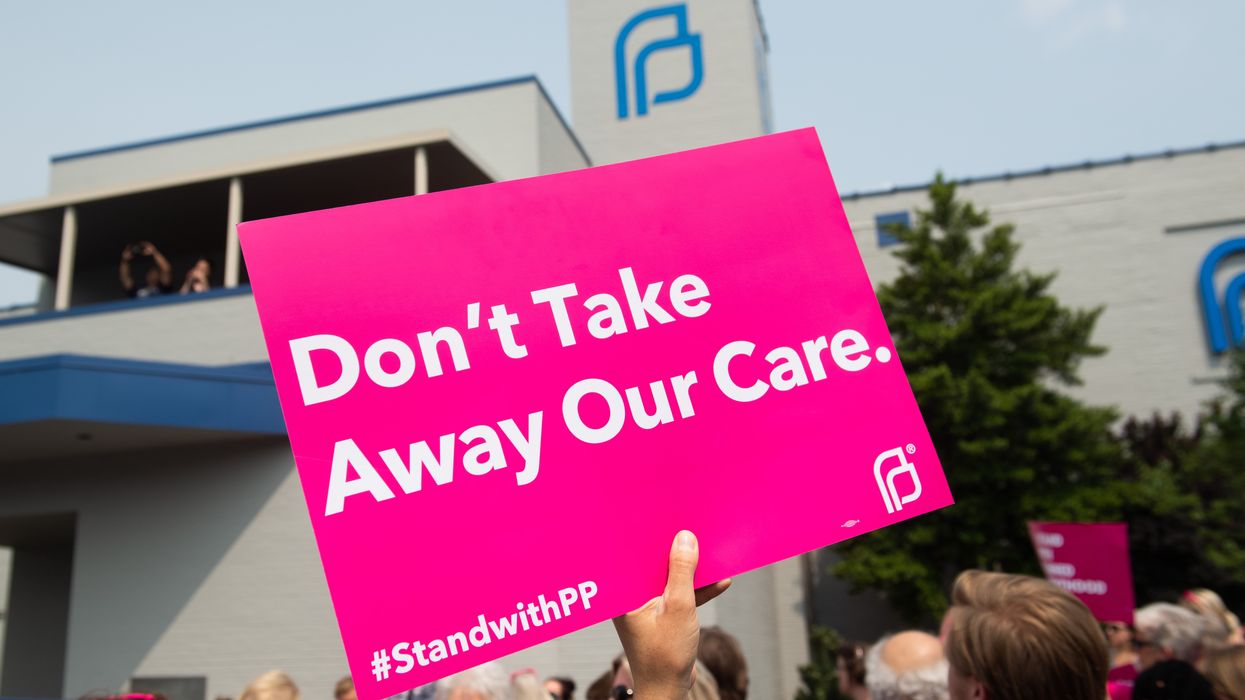
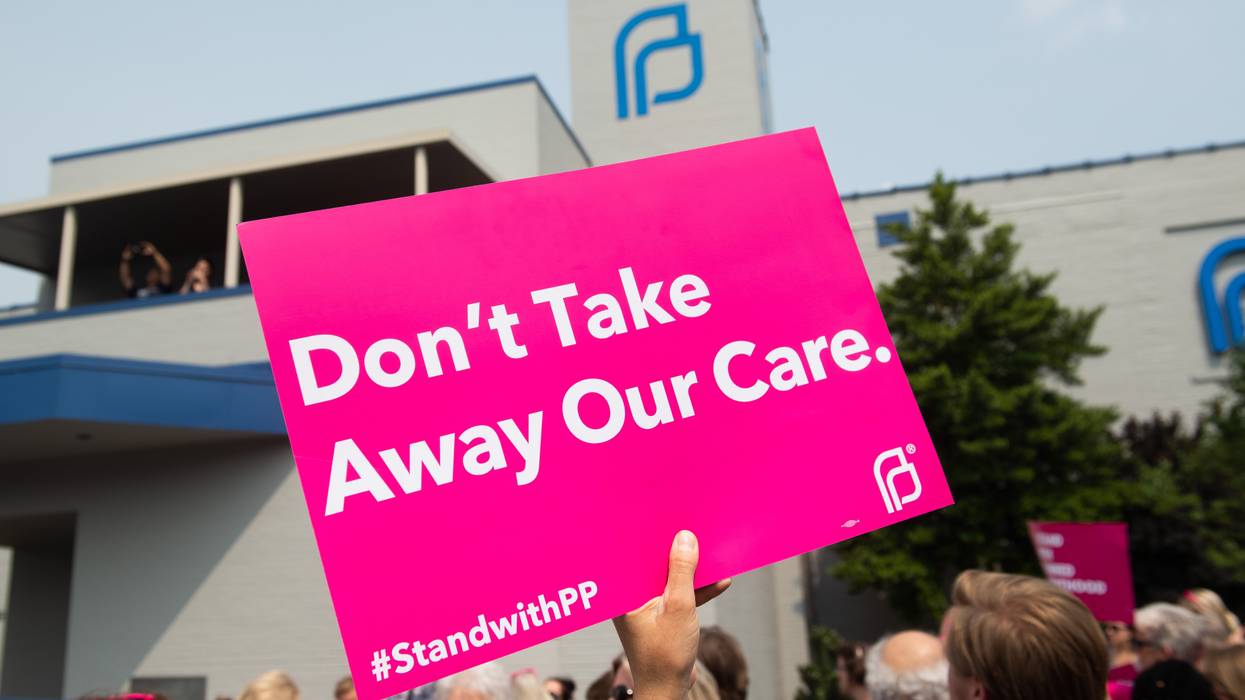
In its latest blow to reproductive healthcare in the United States, the Supreme Court's right-wing supermajority on Thursday blocked Planned Parenthood and one of its patients from suing South Carolina over its defunding of the medical provider because it performs abortions—a decision that critics say will cost lives as more Republican-controlled states follow suit.
At question in Medina v. Planned Parenthood South Atlantic was whether Medicaid beneficiaries can sue in order to secure healthcare services under a law that allows patients to choose any qualified provider. The high court ruled 6-3 that they cannot, with liberal Justices Sonia Sotomayor, Elena Kagan, and Ketanji Brown Jackson dissenting.
"The decision whether to let private plaintiffs enforce a new statutory right poses delicate questions of public policy. New rights for some mean new duties for others," Justice Neil Gorsuch wrote for the majority. "And private enforcement actions, meritorious or not, can force governments to direct money away from public services and spend it instead on litigation."
"The job of resolving how best to weigh those competing costs and benefits belongs to the people's elected representatives, not
unelected judges charged with applying the law as they find it," Gorsuch added.
Concurring with the majority, far-right Justice Clarence Thomas wrote that the ruling invites further scrutiny of Section 1983, the federal law empowering individuals to sue state and local government officials for violating their constitutional rights.
And, predictably, in Medina, Justice Thomas isn't content to axe Planned Parenthood from Medicaid. He would go further ... "to reexamine more broadly this Court’s §1983 jurisprudence . . . ."This is an invitation to undermine a major foundation of civil rights litigation.
[image or embed]
— Melissa Murray (@profmmurray.bsky.social) June 26, 2025 at 7:17 AM
In a furious dissent, Jackson wrote that "the court's decision today is not the first to so weaken the landmark civil rights protections that Congress enacted during the Reconstruction era."
"That means we do have a sense of what comes next: As with those past rulings, today's decision is likely to result in tangible harm to real people," she continued. "At a minimum, it will deprive Medicaid recipients in South Carolina of their only meaningful way of enforcing a right that Congress has expressly granted to them."
"And, more concretely, it will strip those South Carolinians—and countless other Medicaid recipients around the country—of a deeply personal freedom: the 'ability to decide who treats us at our most vulnerable,'" Jackson added. "The court today disregards Congress' express desire to prevent that very outcome."
More than 70 million Americans rely upon Medicaid, the federal government's primary health insurance program for lower-income people. The program is facing the prospect of major cuts under a Republican budget proposal that critics warn could cause millions of people to lose their healthcare coverage in service to a massive tax break backed by President Donald Trump that would disproportionately benefit the rich and corporations.
According to Planned Parenthood Federation of America president and CEO Alexis McGill Johnson, "currently, 20% of South Carolinians—over 1 million—receive healthcare services through the Medicaid program, and approximately 5% of those recipients sought sexual and reproductive health care services at Planned Parenthood South Atlantic (PPSAT) so far this year."
Responding to Thursday's ruling, McGill Johnson said that "the consequences are not theoretical in South Carolina or other states with hostile legislatures."
"Patients need access to birth control, cancer screenings, STI testing and treatment, and more. And right now, lawmakers in Congress are trying to 'defund' Planned Parenthood as part of their long-term goal to shut down Planned Parenthood and ban abortion nationwide," she added. "Make no mistake, the attacks are ongoing and Planned Parenthood will continue to do everything possible to show up in communities across the country and provide care."
Under tremendous Republican-led pressure, Planned Parenthood has closed or announced plans to close at least 20 locations across seven states since the beginning of the year.
"Today's decision is a grave injustice that strikes at the very bedrock of American freedom and promises to send South Carolina deeper into a healthcare crisis," PPSAT president and CEO Paige Johnson said following Thursday's decision. "Twice, justices of this court denied to even hear this case because [South Carolina Gov. Henry] McMaster's intent is clear: weaponize anti-abortion sentiment to deprive communities with low incomes of basic healthcare."
"Planned Parenthood South Atlantic will continue to operate and offer care in South Carolina, including for people enrolled in Medicaid," Johnson added. "To our patients, we will do everything in our power to ensure you can get the care you need at low or no cost to you. Know that we are still here for you, and we will never stop fighting for you to reclaim the rights and dignity you deserve."
Destiny Lopez, co-president and CEO of the Guttmacher Institute, called the ruling "a grave injustice."
Lopez continued:
At a time when healthcare is already costly and difficult to access, stripping patients of their right to high-quality, affordable healthcare at the provider of their choosing is a dangerous violation of bodily autonomy and reproductive freedom.
Specifically targeting Planned Parenthood has long been a strategy of the anti-abortion movement. Planned Parenthood health centers are an irreplaceable part of the U.S. healthcare system; Guttmacher data show that among the 4.7 million contraceptive patients served by publicly supported clinics in 2020, one in three received care from Planned Parenthood.
"In the face of attempts to 'defund' Planned Parenthood and attack Medicaid, Title X, and other pillars of reproductive healthcare, the court's actions cannot be considered in a vacuum," Lopez asserted. "This is a systematic decimation of access to reproductive healthcare and a signifier of what else is likely to come. Everyone deserves choice in their healthcare provider and access to the family planning they need."
Progressive groups and individuals also condemned Thursday's ruling, with the Freedom From Religion Foundation lamenting that "Christian nationalists win, women and low-income patients lose."
"This isn't justice," FFRF added. "It's religious favoritism at the highest level."
Planned Parenthood provides affordable:➡ Cancer screening➡ STD testing and treatment➡ Prenatal supportToday's decision from SCOTUS to allow SC to remove Planned Parenthood from Medicaid means that people will be sicker and people will die.www.theguardian.com/us-news/2025...
[image or embed]
— Congresswoman Pramila Jayapal (@jayapal.house.gov) June 26, 2025 at 7:34 AM
Meagan Hatcher-Mays, senior adviser at United for Democracy, said in a statement that "millions of Medicaid patients across the country rely on Planned Parenthood health centers for their primary and reproductive care, and people who face systemic racism and discrimination—Black, Latino, and Indigenous communities, as well as LGBTQ+ people and women—are more likely to be covered by Medicaid."
"It's ironic that the MAGA justices issued this ruling today, almost three years to the day that they overturned Roe v. Wade and threw abortion access into chaos across the country," Hatcher-Mays added. "Today's ruling is a further attack on healthcare, bodily autonomy, and our freedoms. This ruling clearly harms communities in South Carolina, and it's a matter of time before we see that harm expand further into the country."
"These anti-choice fanatics will stop at nothing. They don't think their work is finished even after such a horrible and wide-ranging decision as Dobbs," warned the Senate's top Democrat.
Reproductive freedom advocates on Tuesday marked the third anniversary of the U.S. Supreme Court reversing Roe v. Wade by calling out Republican decision-makers—including President Donald Trump—for the harmful impacts of the Dobbs v. Jackson Women's Health Organization decision.
"Three years after the Supreme Court's devastating Dobbs decision stripped away constitutional protections for reproductive freedom, we face not only the predicted economic catastrophe but a terrifying escalation of political violence targeting women's rights advocates," said Equal Rights Advocates executive director Noreen Farrell, pointing to the recent assassination of former Minnesota House Speaker Melissa Hortman (DFL-61) and attempted murder of state Sen. John Hoffman (DFL-34).
"Equal Rights Advocates warned that Dobbs would unleash more than legal restrictions—it would legitimize extremism. Now we see the tragic fulfillment of that prediction," Farrell continued. "This administration's policies represent calculated economic warfare against women, particularly low-income women and women of color. The case of Adriana Smith last week illustrates the extreme consequences of the Dobbs decision—a pregnant Black woman denied medical care, becoming a brain-dead incubator for a fetus against her medical directive and her family's wishes."
"In the 21 states with abortion bans and extreme restrictions, women continue to die, and along with their providers, are being threatened, targeted, and criminalized."
The Georgia law doctors at Emory University Hospital cited to keep Smith on life support—allegedly without the input or consent of her family—until her fetus could be delivered is one of various anti-choice state laws that took effect after Dobbs.
"For the last three years, we have witnessed firsthand what happens when politicians try to control the rights of people to practice basic bodily autonomy—with dire results," said Dr. Jamila Perritt, an OB-GYN and abortion provider who serves as president and CEO of Physicians for Reproductive Health, in a Tuesday statement.
"We have seen countless people forced to leave their communities to get basic healthcare, forced to remain pregnant when they wouldn't have otherwise, criminalized for experiencing pregnancy loss, and ultimately, we have seen people dying after being turned away when seeking emergency abortion care," Perritt detailed.
The Guttmacher Institute on Tuesday released new data about the 155,000 abortion patients who traveled out of state to obtain care last year. The group said that "similar to 2023, Illinois remained a critical access point in 2024, with 35,470 patients traveling from across the South and Midwest to obtain abortion care in the state."
Guttmacher Institute data scientist and study lead Isaac Maddow-Zimet noted that "while these findings show us where and how far patients are traveling, they are not able to capture the numerous financial, logistical, social, and emotional obstacles people face. In addition to the travel costs, driving or flying across state lines often requires taking time off work, navigating complex logistics and arranging childcare, not to mention paying for the abortion itself."
As states continue to pass restrictions post-Dobbs, patients' options are dwindling. For example, Guttmacher director of state policy Candace Gibson explained that "Florida had been an important access point for abortion in the Southeast, so when the state's six-week ban went into effect in May 2024, it was not just Floridians who were impacted, but also the thousands of out-of-state patients who would have traveled there for care."
While running to retake the White House last year, Republican President Donald Trump—who appointed three of the Supreme Court's six right-wing justices during his first term—came out against a Florida ballot measure that would end his state's strict abortion ban and bragged about his role in reversing Roe but also tried to downplay the importance of reproductive rights to voters.
"It's been three years since people in the United States have lost their federal constitutional right to abortion; three years since President Trump's handpicked Supreme Court justices stripped Americans of this fundamental right to freedom," Alexis McGill Johnson, president and CEO of Planned Parenthood Action Fund, said in a Tuesday statement. "The consequences have been devastating, even lethal."
"We can't know all the names of the women who have died because of abortion bans, but we will never forget that people have endured injury, pain, and suffering because of the Dobbs decision," she declared. "We continue to fight President Trump and his backers' attacks on reproductive rights, including their effort to 'defund' Planned Parenthood in Congress and end abortion access for everyone, everywhere. Planned Parenthood Action Fund will never stop advocating for a country where all people have the power to control their own bodies, lives, and futures."
Reproductive Freedom for All president and CEO Mini Timmaraju was similarly determined on Tuesday, launching a campaign to mobilize against Trump and the GOP.
"In the 21 states with abortion bans and extreme restrictions, women continue to die, and along with their providers, are being threatened, targeted, and criminalized," Timmaraju said. "And while the Trump administration continues to gut our fundamental freedoms, we continue to fight against the GOP's attacks on Planned Parenthood, Medicaid, and essential reproductive care."
Congressional Democrats—who have minorities in both chambers—joined advocacy group leaders in using the Dobbs anniversary to direct anger at the president and Republican policymakers working to strip away reproductive freedom from people nationwide.
During a Tuesday press conference, Senate Minority Leader Chuck Schumer (D-N.Y.) said the high court's June 2022 ruling "will go down in history as one of the worst, most harmful, most regressive decisions in modern history" and stressed that "people are dying as a result of the Dobbs decision."
Noting that many patients have had to travel or wait for care, Schumer said that "this is abominable. We know that this is what Republicans want, a total ban on abortion. These anti-choice fanatics will stop at nothing. They don't think their work is finished even after such a horrible and wide-ranging decision as Dobbs. Reproductive freedom is under attack on all sides. Extremists are banning and restricting abortion, criminalizing providers, defunding care, and interfering with lifesaving medicines."
"These attacks are also devastating our economy. With fewer reproductive healthcare protections, fewer women are participating in the workforce. State-level restrictions on abortion access combined with the lack of federal protection cost the economy more than $133 billion nationally," he continued. "The 16 states with the most restrictive abortion policies were responsible for $64 billion in economic loss."
The Senate's top Democrat also called out his GOP colleagues for what he called "a Republican backdoor abortion ban done in the reconciliation bill," taking aim at "two nasty provisions to defund Planned Parenthood and eliminate coverage for comprehensive reproductive care" from the Affordable Care Act marketplace.
"I'm here to say that Democrats are going to fight like hell to strip these cruel provisions from the Republican bill, including in the Byrd bath, which will be occurring today or tomorrow," he pledged, referring to the Senate parliamentarian's review of the GOP megabill. "Just as we fought back against attacks on abortion before, we will fight these nasty provisions with every fiber in our being."
"People worldwide will have fewer points of service," said Doctors Without Borders. "It means fewer safe places to talk about their health options, and fewer providers to go to for help during medical emergencies."
Reproductive rights and medical experts on Monday continued to warn that U.S. President Donald Trump's highly anticipated reinstatement of the Mexico City Policy, which bans nongovernmental organizations that perform or promote abortion from receiving federal funding, will cause "devastating damage" for people around the world.
The global gag rule (GGR), as it is called by critics, has been imposed by every Republican president for decades, including Trump during his first term. After returning to office a week ago, Trump on Friday signed an executive order "to end the use of federal taxpayer dollars to fund or promote elective abortion" and revived the controversial rule with a presidential memorandum.
"As the single largest funder of international aid, the U.S. plays a powerful role in shaping the global health landscape—and women's and girls' lives are being used as pawns in this political game," Dr. Carole Sekimpi wrote Monday for the British journal The BMJ. "My work overseeing reproductive health programs in Africa for MSI Reproductive Choices gives me an understanding of the profound consequences that this will have on communities that Trump will never set foot in."
"It's prudent to first understand that the U.S. government never funds abortions," Sekimpi stressed, noting the rule punishes groups that participate in anything abortion-related with separate funding. "Last time Trump was in power, MSI was among those that refused to accept the terms of this policy. The U.S. funding we lost would have allowed us to serve 8 million women, preventing 6 million unintended pregnancies, 1.8 million unsafe abortions, and 20,000 maternal deaths. And that was just one organization."
Ibis Reproductive Health president Kelly Blanchard and Evelyne Opondo, an Ibis board member and the International Center for Research on Women's Africa director, also emphasized in a Monday Medium post that the rule's impact "is felt keenly by organizations that provide comprehensive sexual and reproductive healthcare—including contraception and abortion care—around the world," such as MSI and International Planned Parenthood Federation, "who refuse to abide by the terms because they support the human rights of all people and will not withhold information or critical reproductive healthcare from individuals who need it."
"The GGR flies in the face of both human rights and evidence-based public health," the pair asserted. "The GGR does not prevent abortion from happening but rather increases barriers to abortion access, reduces access to contraception increasing risk of unintended pregnancy, and could actually increase unsafe abortion, a key driver of maternal deaths around the world."
Melanie Nezer, vice president for advocacy and external relations at the Women's Refugee Commission, similarly declared in a Monday statement denouncing the GGR, "Let us be clear: this policy will not protect lives—it will endanger them."
"The goal of the global gag rule is to curtail access to safe sexual and reproductive healthcare, including access to safe abortion," she said. "The result is more suffering from the consequences of conflict-related sexual violence, more unintended pregnancies, more unsafe abortions, and more maternal death that would otherwise be entirely preventable."
Reproductive rights groups worldwide were similarly critical of the decision on Friday and throughout the weekend, with Planned Parenthood Federation of America president and CEO Alexis McGill Johnson calling it "dangerous" and arguing that "elected officials should not be interfering in personal medical decisions, in this country or anywhere in the world."
Like the critics on Monday, Rachana Desai Martin, chief government and external relations officer at the Center for Reproductive Rights, pointed to the fallout from GGR during the Republican's first term and said that "the reinstatement and expansion of President Trump's global gag rule is a direct assault on the health and human rights of millions of people around the world."
Also recalling the first Trump administration, Guttmacher Institute acting co-CEO Destiny Lopez highlighted how her group's "research has documented its severe ripple effects, including stalling and even reversing progress in expanding access to modern contraception in countries like Ethiopia and Uganda."
"Now history will sadly and shamefully repeat itself, and people in many countries will find it harder to access safe abortion, contraception, and other critical health services," she said, vowing to track the impacts and work to repeal the harmful policy.
Reproductive Freedom for All president and CEO Mini Timmaraju also pledged to battle the GGR and other Republican attacks on choice, saying that "these policies inflict harm on those who need access to reproductive healthcare, including abortion, in our country, and around the world—and we will fight back."
Previewing the fight ahead, National Abortion Federation president and CEO Brittany Fonteno warned that the GGR "will not be the last" attack on reproductive healthcare, adding that "for nearly a decade now, Donald Trump has shown us just how dangerous he is for abortion access, and it is clear that over the next four years, the anti-abortion movement will take every opportunity to strip away our fundamental right to reproductive freedom—both here and abroad."
RealClearPolitics, the first to report the rule's revival, noted that "the president timed the release of his executive actions to coincide with the annual March for Life on Friday when some of his most ardent supporters rallied on the National Mall. Vice President JD Vance addressed the march in person, while Trump recorded a video message Thursday to be played at the Friday rally."
Although Trump said on the campaign trail that he thinks abortion policies should be decided at the state level, rights advocates have cited his extensive record of dishonesty and bragging about the role he played in overturning Roe v. Wade, and expressed fear that the Republican-controlled Congress will send a national abortion ban to his desk.
"We're more prepared than ever to block the disastrous Trump policies we know are coming," said one climate group.
As voters across the United States grappled on Wednesday with the results of the presidential election, progressive organizers expressed disappointment and devastation but said they were "clear-eyed" about the road ahead: one that will require solidarity and a major mobilization to counter the policies and attacks put forward by President-elect Donald Trump.
Anthony D. Romero, executive director of ACLU, did not mince words about the "clear and present danger" Trump poses to U.S. institutions and democratic norms, noting that GOP president-elect is "dead serious" about targeting "the 'enemy within'—which, for Trump, means anyone who disagrees with him."
The ACLU fully expects Trump to seek "retribution against his political opponents and deploying federal law enforcement to shut down protests and muzzle dissent," but Romero emphasized that the 105-year-old organization has a long track record of defending freedom of speech and combating abuses of power, including during Trump's first term.
"We filed 434 legal actions against the first Trump administration, often winning landmark cases before Trump-appointed judges," said Romero. "One week into Trump's presidency, we were the first organization to challenge his Muslim ban. And when the administration sought to include a citizenship question on the 2020 census, the ACLU took that fight to the Supreme Court and won. Our litigation also stopped the inhumane practice of separating immigrant families."
The Center for Biological Diversity (CBD), one of many groups that have warned a Trump victory would signal a disaster for the planet as scientists warn fossil fuel extraction must end immediately to limit planetary heating as much as possible, said the president-elect can expect to face "unprecedented resistance" from organizers.
"Trump 2.0 is going to get twice the fight from the protectors of our planet, wildlife, and basic human rights," said Kierán Suckling, executive director of CBD. "We've battled Trump from the border wall to the Arctic Wildlife Refuge, and in many cases we've won. This country's bedrock environmental laws stand strong. We're more prepared than ever to block the disastrous Trump policies we know are coming."
Romero and Suckling's defiant tones were echoed by reproductive rights organizations that have spent the past two years fighting the nationwide effects of Trump's first term, which resulted in the right-wing supermajority on the U.S. Supreme Court that overturned Roe v. Wade, clearing the way for 21 states to impose abortion bans and extreme restrictions that have had deadly consequences for at least four women.
Despite those bans, said Destiny Lopez, acting co-CEO of the Guttmacher Institute, "more than one million abortions occurred in the United States in 2023."
"The anti-abortion movement, with Trump and [Vice President-elect JD] Vance's support, are poised to ban every single abortion going forward," said Lopez. "We're clear-eyed about what's coming. Guttmacher will meet this moment—alongside our state, national, and global partners—and mobilize all our resources to counter these attacks in pursuit of a strong, vibrant democracy that protects and upholds all of our rights."
On Tuesday, voters in seven of 10 states with abortion rights amendments on the ballot voted to protect reproductive freedom—initiatives that were strongly supported by groups such as the Center for Reproductive Rights (CRR).
But with Republican lawmakers in the Senate—which will be controlled by the GOP starting in January—supporting a nationwide abortion ban, CRR president and CEO Nancy Northrup said the group is prepared for the new administration to compound the harms already done "with new, potentially far worse ones."
"The Center for Reproductive Rights is ready for this next fight," said Northrup. "We will vigorously oppose any and all attempts to roll back progress. We will scrutinize every action of the White House and federal agencies, amass the factual and legal record to counter agency actions, and work to stop harmful policies from going into effect. If they do, we will take them to court. We will vehemently fight any effort to pass a national abortion ban, to stop the provision of medication abortion by mail, to block women from crossing state lines to get care, to dismantle [United Nations] protections for reproductive rights and progress made at the national level in countries around the world, and more."
With Trump planning to further gut abortion rights, mobilize a mass deportation operation, and roll back climate regulations while keeping his promise to oil executives to expand fossil fuel drilling, journalist Mehdi Hasan of Zeteo urged all progressive organizers to make "'solidarity'... the most important word in our political vocabulary."
"Yes, a majority of American voters may have cast their votes for an unhinged racist and demagogue who is promising a 'bloody' program of mass deportation and a new and bigger 'Muslim ban,' but the rest of us need to stick together," said Hasan. "We need each other. And so, for the next four years, solidarity is the name of the game."
The term has been the rallying cry of the labor movement for generations, and United Auto Workers organizer Helen Brosnan echoed Hasan's call.
"The only way through is solidarity," said Brosnan. "We can't let what happens next divide us. We have to fight the billionaire class together."
Former Labor Secretary Robert Reich did not hide his despair over Trump's victory, writing in his Substack newsletter that he was "heartbroken and scared."
But Reich urged progressives not to lose sight of "our first responsibility... to protect all those who are in harm's way," including women, immigrants, and transgender people.
How will we conduct this resistance?
By organizing our communities. By fighting through the courts. By arguing our cause through the media.
We will ask other Americans to join us—left and right, progressive and conservative, white people and people of color. It will be the largest and most powerful resistance since the American revolution.
But it will be peaceful. We will not succumb to violence, which would only give Trump and his regime an excuse to use organized violence against us.
We will keep alive the flames of freedom and the common good, and we will preserve our democracy. We will fight for the same things Americans have fought for since the founding of our nation—rights enshrined in the constitution and Bill of Rights.
The preamble to the Constitution of the United States opens with the phrase "We the people", conveying a sense of shared interest and a desire "to promote the general welfare," as the preamble goes on to say.
We the people will fight for the general welfare.
We the people will resist tyranny. We will preserve the common good. We will protect our democracy.
The National Immigration Law Center, which joined the ACLU in fighting Trump's Muslim bans and other xenophobic policies during his first term, said it "knew Trump could win and that is why we helped lead a movement wide effort to plan for this moment."
"Trump and his allies told us what he plans to do: mass deportations, ending birthright citizenship, ending the right to public education for immigrant children, internment camps, and using the military to hunt down immigrants. We should take him at his word," said Kica Matos, president of the NILC. "One thing is certain: we cannot and will not retreat. For more than 40 years, NILC has been steadfast in our fight to defend the rights of low-income immigrants and their loved ones. We successfully fought Donald Trump before, and we will do it again."
Reich reminded his readers that Americans "supported one another during the Great Depression" and other national crises.
"We were victorious over Hitler's fascism and Soviet communism," he wrote. "We survived Joe McCarthy's witch-hunts, Richard Nixon's crimes, Lyndon Johnson's Vietnam war, the horrors of 9/11, and George W. Bush's wars in Iraq and Afghanistan."
"We will resist Donald Trump's tyranny," he added. "Although peaceful and non-violent, the resistance will nonetheless be committed and determined. It will encompass every community in America. It will endure as long as necessary. We will never give up on America. The resistance starts now."
For one patient, doctors "had to wait for her creatinine to bump and her kidneys to be about to fail" before they could even offer her abortion care.
As new reporting on Amber Nicole Thurman's death highlights the dangers of Georgia Republicans' six-week abortion ban, a human rights group on Tuesday released a research brief about how a similar policy in a neighboring state "harms the health and safety of Florida patients while obstructing clinicians from providing basic reproductive and maternal medical care."
The Physicians for Human Rights (PHR) report, Delayed and Denied: How Florida's Abortion Ban Criminalizes Medical Care, focuses on the prohibition that was signed by Republican Gov. Ron DeSantis last year but didn't take effect until May, following a state Supreme Court ruling.
The PHR brief follows late May reporting on how wait times soared at abortion clinics in the states closest to Florida after its ban took effect and the Guttmacher Institute's findings from last week that the law led to a "substantial drop" in clinician-provided abortions across the state, in part because many people don't even know they are pregnant until after six weeks.
"Florida clinicians shared harrowing accounts of how routine medical care has been delayed, denied, and deviated from standards of care."
This summer, PHR interviewed 25 of Florida's reproductive healthcare providers about their experiences caring for pregnant patients under the six-week ban. Brief co-author Dr. Michele Heisler said in a Tuesday statement that "Florida clinicians shared harrowing accounts of how routine medical care has been delayed, denied, and deviated from standards of care."
"Not only abortion care but miscarriage and broader maternal healthcare have suffered gravely due to the state's ban," noted Heisler, PHR's medical director and a professor of internal medicine and public health at the University of Michigan.
"Our research brief sheds new light on the health and rights crisis fueled by Florida's abortion ban—on patients, providers, and the medical system as a whole," she said. "Under the state's abortion ban, Floridians have lost their reproductive autonomy."
One Florida doctor in private practice told PHR that "with the six-week ban, I would say it is more like the inability to really offer anything at all now. I mean, we see patients for their new obstetrician-gynecologist visits usually around eight weeks, and sometimes we see them earlier, if they are having bleeding or other issues where we end up scanning them earlier."
"But I do not think I have ever had a viable pregnancy that was less than six weeks that I could offer a termination," the OB-GYN said. "They are never less than six weeks, so it is essentially impossible. By the time we see them for their first visit, that option is already gone."
Florida's ban technically allows some abortions after six weeks—in cases of rape and incest, or to protect the health of the pregnant person—though medical professionals and reproductive rights advocates often point out that many patients are still denied legal care even with the limited "exceptions" in place.
Before the current law, Floridians were living under a 15-week ban, which took effect in the wake of the U.S. Supreme Court's right-wing supermajority reversing Roe v. Wade with its June 2022 Dobbs v. Jackson Women's Health Organization ruling.
One doctor who spoke with PHR recalled a story from that period: "I strongly remember a patient who had severe kidney disease and was admitted to the hospital and was teetering on the edge of that 15 weeks. I think she was 14 weeks or so, and she got admitted, and we were trying to figure out how best to help her. She was getting sicker and sicker."
"[We] had to bring it to the head people of the hospital and be like, 'What are we allowed to do?' And they were like, 'She is not sick enough yet.' And we had to wait for her to get sicker before we were even allowed to offer her termination. And she was past 15 weeks at that point," the OB-GYN explained.
"I think it took over two weeks for us to get an answer from the hospital administrators," the doctor added. "So that hit very strongly, because it was kind of insane that we had to wait for her to become sicker. We had to wait for her creatinine to bump and her kidneys to be about to fail before we were allowed to even offer her [termination]. Then we had to jump through so many hoops to be able to do it. It really changed everything that we did in our practice."
The report features several other stories of patient and provider frustrations and the dangers created by the six-week ban.
"The findings of PHR's research brief demonstrate the need to remove Florida's extreme abortion ban and restore access to comprehensive reproductive healthcare in the state," argued Payal Shah, brief co-author and the group's director of advocacy, legal, and research. "Both patients and providers are trapped in an unworkable legal landscape."
"Despite state health agency statements to the contrary, the state's abortion ban is an egregious intrusion on patient autonomy that is causing medical harm," Shah added. "The ban's criminal penalties and narrow, vague exceptions have compelled clinicians to deviate from established standards of care and medical ethics. These impacts constitute violations of Floridians' human rights."
Florida voters will soon have an opportunity to restore much broader access to abortion care. This November, they can vote "yes" on Amendment 4, a state constitutional amendment backed by Floridians Protecting Freedom that would enshrine the right to abortion before viability in Florida.
Former President Donald Trump, a Florida resident and the Republican nominee facing Democratic Vice President Kamala Harris in the battle for the White House, confirmed last month that he plans to vote "no" on the ballot measure. In response, Harris said that "I trust women to make their own healthcare decisions and believe the government should never come between a woman and her doctor... The choice in this election is clear."
"We must remain vigilant," one expert warned. "The anti-abortion movement is ruthlessly pursuing its end goal of banning abortion nationwide."
While welcoming the U.S. Supreme Court's unanimous decision to preserve access to mifepristone, a medication commonly used for abortion care, rights advocates on Thursday also stressed that the six conservative justices who reversed Roe v. Wade are no allies to reproductive freedom.
"We are relieved by this outcome, but we are not celebrating," said Destiny Lopez, acting co-CEO of the Guttmacher Institute. "From the start, this case was rooted in bad faith and lacking any basis in facts or science. This case never should have reached our nation's top court in the first place and the Supreme Court made the only reasonable decision by leaving access to medication abortion using mifepristone unchanged."
"Mifepristone is safe, effective, and essential."
"Mifepristone is safe, effective, and essential," Lopez continued, citing Guttmacher data that two-thirds of known U.S. abortion patients last year used medication to end their pregnancies. "Even with this baseless challenge defeated, we must remain vigilant. The anti-abortion movement is ruthlessly pursuing its end goal of banning abortion nationwide."
Two years after Dobbs v. Jackson Women's Health Organization overturned Roe, "abortion is banned in 14 states and severely restricted in many more," she noted. "In the face of relentless attacks, policymakers at all levels need to keep pushing forward expansive and protective policies that ensure everyone can access abortion care using the method that best suits their needs.
The court agreed to take Food and Drug Administration v. Alliance for Hippocratic Medicine in December and heard arguments in March. The new opinion, written by Justice Brett Kavanaugh, concludes that the anti-choice groups that were trying to cut off access to the abortion pill across the country lacked "standing to challenge FDA's actions regarding the regulation of mifepristone."
Justice Clarence Thomas penned a concurring opinion—as he did for Dobbs, when he suggested the court should also reconsider rulings that affirmed the right to use contraceptives, overturned a state law that criminalized consensual sexual activity between adults of the same sex, and enabled LGBTQ+ couples to legally marry nationwide.
The dismissal on standing "is a powerful affirmation of what we have always known: mifepristone is a safe and essential medication, and there is no legitimate medical or scientific reason why access to mifepristone should be limited," said Dr. Jamila Perritt, a Washington, D.C.-based OB-GYN who leads Physicians for Reproductive Health.
"We fought tirelessly to ensure access to mifepristone because of its critical role in reproductive healthcare and its importance in expanding abortion access for our community members, especially those living at the intersections of systemic oppression disproportionately harmed by abortion bans and restrictions," Perritt explained.
However, that fight is far from over. Like Lopez, ACLU Reproductive Freedom Project director Jennifer Dalven emphasized that "we are relieved the Supreme Court didn't take this bait, but unfortunately we know that this is far from the end of the line."
"Although the court refused to allow these particular people to bring this case, anti-abortion politicians are waiting in the wings to attempt to continue pushing this case before an extremist judge in Texas in an effort to deny people access to medication abortion care," she said, calling out District Judge Matthew Kacsmaryk, an appointee of former President Donald Trump, the presumed Republican nominee for November.
While Trump has bragged about his role in reversing Roe—he appointed three of the court's six right-wing justices—Democratic President Joe Biden has campaigned on his support for reproductive rights. Like the advocates, he welcomed Thursday's ruling but also warned of "Republican elected officials' extreme and dangerous agenda to ban abortion nationwide."
With the mifepristone case settled—for now—rights defenders are shifting their focus to another forthcoming decision.
"Today, the Supreme Court did the bare minimum by rejecting this case on standing and allowing mifepristone to remain FDA-approved and without new restrictions. However, with the case returning to the district court, the fight is not over," said Planned Parenthood Federation of America president and CEO Alexis McGill Johnson. "As we breathe a sigh of relief for now, we cannot forget that the court is deciding another case about abortion this term."
That case, Dalven noted, "will determine whether politicians can force doctors to withhold emergency room care from their patients while they suffer severe, life-altering pregnancy complications."
"These cases show the extreme lengths politicians will go," she added, "to prevent people from getting the reproductive healthcare they need."
"The number of signatures gathered in just over three months shows how deeply Nevadans believe in abortion rights," said one campaigner.
An amendment to enshrine abortion rights in Nevada's Constitution moved one step closer to appearing on this November's ballot Monday as reproductive rights defenders submitted nearly twice the number of required signatures to state election officials.
Nevadans for Reproductive Freedom, the coalition spearheading the ballot measure, said it submitted more than 200,000 signatures from every county in the state—where abortion is legal up to 24 weeks of pregnancy—supporting the Nevada Right to Reproductive Freedom Amendment. Proposed 2024 Nevada ballot questions need 102,362 verified signatures to qualify; campaigners generally aim to collect double the required number of signatures, as many are disqualified for various reasons.
"This is a true testament to the volunteers, supporters, and coalition partners who recognize the importance of codifying abortion rights into our state constitution," Nevadans for Reproductive Freedom said on social media. "We're officially one step closer."
"The number of signatures gathered in just over three months shows how deeply Nevadans believe in abortion rights and its importance to this moment in our nation's history."
Speaking to supporters outside the Clark County Courthouse in Las Vegas on Monday, Nevadans for Reproductive Freedom president Lindsey Harmon said that "the majority of Nevadans agree that the government should stay out of their personal and private decisions... about our bodies, our lives, and our futures."
"The number of signatures gathered in just over three months shows how deeply Nevadans believe in abortion rights and its importance to this moment in our nation's history," Harmon added.
Nevada constitutional amendments must be approved by voters twice. If the proposed abortion rights amendment qualifies for the ballot and is approved by voters this November, it will appear again on the 2026 statewide ballot.
Last November, Carson City District Court Judge James Russell sided with right-wing advocacy groups who argued that the proposed amendment violates Nevada law by covering more than one subject. After Nevadans for Reproductive Freedom subsequently narrowed the proposal's focus, Russell ruled the coalition could proceed with signature gathering. In April, the Nevada Supreme Court affirmed the proposed ballot measure's original language.
Four states—Florida, Kansas, Maryland, and New York—have abortion rights measures on November's ballot, while Arizona, Arkansas, Colorado, Missouri, Montana, Nebraska, and Nevada have proposed such initiatives.
Since the right-wing U.S. Supreme Courtvoided half a century of federal abortion rights nearly two years ago in Dobbs v. Jackson Women's Health Organization, seven states have let voters weigh in on the issue. People in all seven states—including conservative Kansas, Kentucky, and Montana—have voted to either protect and expand abortion rights or defeat measures seeking to restrict access to the procedure.
Meanwhile, 14 states have enacted total abortion bans, while 27 have legislated restrictions on the procedure based on duration of pregnancy,
according to the Guttmacher Institute.
"The overturn of Roe was just the first step in the far right's relentless campaign to restrict women's reproductive freedom," said one advocate. "We always knew they would come for medication abortion, too."
As the U.S. Supreme Court heard oral arguments Tuesday in a case brought by right-wing activists seeking to sharply limit access to a commonly used abortion pill, reproductive rights advocates renewed warnings that Republicans' endgame isn't just making abortion a states' rights issue, but rather forcing a nationwide ban on all forms of the medical procedure.
The high court justices—including six conservatives, half of them appointed by former President Donald Trump, the presumptive 2024 GOP presidential nominee—are hearing oral arguments in Food and Drug Administration v. Alliance for Hippocratic Medicine, a case brought by the right-wing Alliance Defending Freedom on behalf of anti-abortion doctors. The case involves the abortion pill known by the generic name mifepristone, which was first approved by the FDA in 2000 as part of a two-drug protocol to terminate early-stage pregnancies.
"If the Supreme Court refuses to follow the evidence and imposes medically unnecessary restrictions on mifepristone, it will be just another stepping stone in the anti-abortion movement's end goal of a nationwide ban on abortion."
"Mifepristone has been used by millions of women over the last 20 years, and its safety and effectiveness have been well-documented," said Jamila Taylor, president and CEO of the Institute for Women's Policy Research. "The drug has taken on even greater importance for women's health since the Supreme Court overturned Roe v. Wade, and the far right has moved to block women's access to healthcare at every turn."
In a dubious practice known as "judge shopping," the plaintiffs filed their complaint in Amarillo, Texas, where Matthew Kacsmaryk, the sole federal district judge and a Trump appointee, ruled last April that the FDA's approval of mifepristone was illegal. Shortly after Kacsmaryk's ruling, a federal judge in Washington state issued a contradictory decision that blocked the FDA from removing mifepristone from the market. The U.S. Department of Justice subsequently appealed Kacsmaryk's ruling.
Later in April 2023, the Supreme Court issued a temporary order that allowed mifepristone to remain widely available while legal challenges continued. A three-judge panel of the right-wing 5th U.S. Circuit Court of Appeals ruled last August that the FDA's 2016 move to allow mifepristone to be taken later in pregnancy, mailed directly to patients, and prescribed by healthcare professionals other than doctors, was likely illegal. However, the court also allowed the pill to remain on the market pending the outcome of litigation.
In an analysis of the case published Tuesday, jurist Amy Howe explained:
There are three separate questions before the justices on Tuesday. The first one is whether the challengers have a legal right to sue, known as standing, at all. The FDA maintains that they do not, because the individual doctors do not prescribe mifepristone and are not obligated to do anything as a result of the FDA's decision to allow other doctors to prescribe the drug.
The court of appeals held that the medical groups have standing because of the prospect that one of the groups' members might have to treat women who had been prescribed mifepristone and then suffered complications—which, the FDA stresses, are "exceedingly rare"—requiring emergency care. But the correct test, the FDA and [mifepristone maker] Danco maintain, is not whether the groups' members will suffer a possible injury, but an imminent injury.
Destiny Lopez, acting co-CEO of the Guttmacher Institute, called the plaintiffs' claims "baseless."
"If the Supreme Court refuses to follow the evidence and imposes medically unnecessary restrictions on mifepristone, it will be just another stepping stone in the anti-abortion movement's end goal of a nationwide ban on abortion," she said on Tuesday. "As the court weighs its decision, let's be clear that the only outcome that respects facts and science is maintaining full access to mifepristone."
As more than 20 states have banned or restricted abortion since the Supreme Court's June 2022 Dobbs v. Jackson Women's Health Organization ruling overturned Roe v. Wade and voided half a century of federal abortion rights, people have increasingly turned to medication abortion to terminate unwanted pregnancies. And while Republicans have often claimed that overturning Roe was not meant to ban all abortions but merely to leave the issue up to the states, GOP-authored forced pregnancy bills and statements by Republican lawmakers and candidates including Trump—who last week endorsed a 15-week national ban—belie conservatives' goal of nationwide prohibition.
Project 2025, a coalition of more than 100 right-wing groups including Susan B. Anthony Pro-Life America and other anti-abortion organizations, wants to require the FDA to ban drugs used for medication abortions, protect employers who refuse to include contraceptive coverage in insurance plans, and increase surveillance of abortion and maternal mortality reporting. The coalition is reportedly drafting executive orders through which Trump, if reelected, could roll back Biden administration policies aimed at protecting and expanding abortion access.
"The overturn of Roe was just the first step in the far right's relentless campaign to restrict women's reproductive freedom. We always knew they would come for medication abortion, too," Taylor said. "But conservatives seeking to block access to mifepristone are not concerned about women's safety; they want to block all abortion options for women and prevent them from making their own reproductive decisions, even in their own homes."
Right-wing groups including the Heritage Foundation have been pressing Trump to invoke the Comstock laws, a series of anti-obscenity statutes passed in 1873 during the Ulysses S. Grant administration. One of the laws outlawed using the U.S. Postal Service to send contraceptives and punished offenders with up to five years' hard labor. Named after Victorian-era anti-vice crusader and U.S. postal inspector Anthony Comstock, the laws were condemned by progressives of the day, with one syndicated newspaper editorial accusing Comstock of striking "a dastard's blow at liberty and law in the United States."
Slate senior writer Mark Joseph Stern said Tuesday that far-right Justices Clarence Thomas and Samuel Alito—who wrote the majority opinion in Dobbs—"are clearly eager to revive the Comstock Act as a nationwide ban on medication abortion, and maybe procedural abortion, too."
"That would subject abortion providers in all 50 states to prosecution and imprisonment," he added. "No congressional action needed."
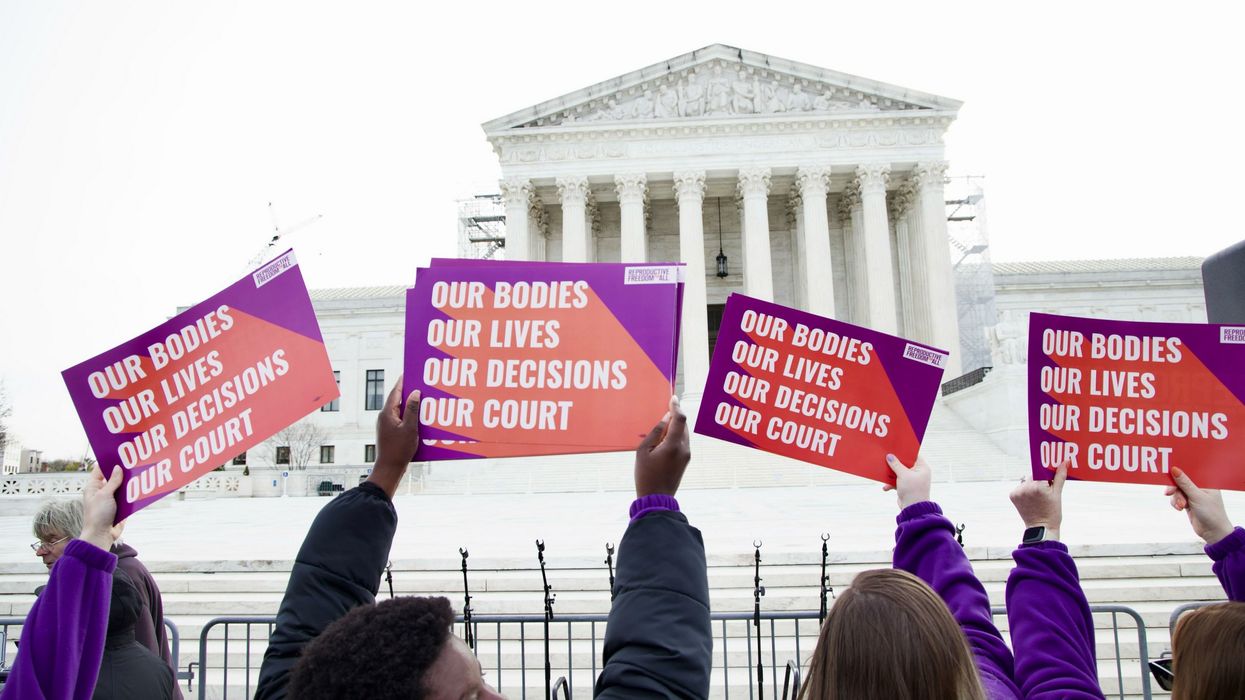
Progressive U.S. lawmakers joined reproductive rights advocates in rallying outside the Supreme Court on Tuesday.
"Mifepristone is safe and effective and has been used in our country for decades," said Rep. Rashida Tlaib (D-Mich.). "These far-right justices need to stop legislating from the bench."
Rep. Ayanna Pressley (D-Mass.) asserted that "medication abortion is safe, effective, and routine healthcare."
"Over half of U.S. abortions are done this way and we have decades of scientific evidence to back up its safety," she added. "SCOTUS must protect access to mifepristone and we must affirm abortion care as the human right that it is."
"Her health is on the line. She's been in and out of the emergency room and she couldn't wait any longer," said Nancy Northup at the Center for Reproductive Rights.
After the Texas Supreme Court blocked a judge's order enabling Kate Cox to terminate a pregnancy due to the fetus having a fatal condition, the 31-year-old Dallas resident has fled the state for abortion care, her lawyers announced Monday.
"This past week of legal limbo has been hellish for Kate," said Nancy Northup, president and CEO at the Center for Reproductive Rights (CRR), which filed the case for Cox last week. "Her health is on the line. She's been in and out of the emergency room and she couldn't wait any longer. This is why judges and politicians should not be making healthcare decisions for pregnant people—they are not doctors."
"This is the result of the Supreme Court's reversal of Roe v. Wade: Women are forced to beg for urgent healthcare in court," Northup added. "Kate's case has shown the world that abortion bans are dangerous for pregnant people, and exceptions don't work. She desperately wanted to be able to get care where she lives and recover at home surrounded by family. While Kate had the ability to leave the state, most people do not, and a situation like this could be a death sentence."
CRR is not disclosing where Cox is going for care. The mother of two is about 20 weeks pregnant with a fetus that has trisomy 18, a chromosomal abnormality that could result in a miscarriage, stillbirth, or the death of her child in the hours or days after birth. Her doctors warned that continuing the pregnancy would threaten her future fertility.
The Texas Supreme Court's Friday decision blocking the judge's order was only temporary. The Monday announcement from CRR came as Cox was still awaiting a permanent decision, which could have been appealed to the U.S. Supreme Court.
Cox's case has garnered attention across Texas and the United States. Former Democratic Texas Sen. Wendy Davis took aim at the state's Republican attorney general, governor, and lieutenant governor, saying Monday that "my heart breaks for Kate Cox and her family as they endure the emotional and physical stress of this journey—one created by the cruel and inhumane policies of politicians like Ken Paxton, Greg Abbott, and Dan Patrick."
Along with thanking CRR for its "incredible work on the judicial front" fighting "for people like Kate Cox," Davis—who made national headlines a decade ago for her hourslong filibuster of anti-choice legislation—declared that "to turn things around, we must confront these injustices at both the ballot box and in the courtroom."
Congresswoman Katherine Clark (D-Mass.), the House minority whip, said on social media that "Kate Cox is bravely sharing her pain with the world while Republican extremist Ken Paxton threatens to throw her doctors in jail if they provide her abortion care. This is the GOP's post-Roe America. It's cruel. It's inhumane. And we have to stop them."
As the Houston Chronicle reported on Cox's decision to leave the state:
The development likely marks the end of the litigation, as the abortion in question is now a moot issue, said Joanna Grossman, a law professor at Southern Methodist University. Yet, the case could inspire other women with dangerous pregnancies to file similar suits, she said.
Cox is believed to be the first in the country to sue for permission to get an abortion since the fall of Roe v. Wade and Texas' implementation of a near-total abortion ban.
"It kind of gives a blueprint for other plaintiffs who are in similar situations," Grossman said. "I expect we'll see more of these cases, both in Texas and in other banned states.
The newspaper noted that "the Texas Supreme Court is still weighing a larger case brought by 22 women who, like Cox, faced dangerous pregnancy complications and were denied abortions because the emergency exception to the state's ban was so vague their doctors feared legal consequences."
Since the Supreme Court overturned Roe in Dobbs v. Jackson Women's Health Organization last year, over a dozen states have banned abortion with very limited exceptions—forcing nearly 1 in 5 patients to travel out of state to obtain abortion care in the first half of this year, according to research released Friday by the Guttmacher Institute.
"We knew that more people have been traveling across state lines for abortion since the end of Roe, but these findings are stunning nonetheless, and powerfully illustrate just how disruptive the overturning of Roe has been for tens of thousands of abortion patients," said institute data scientist and project lead Isaac Maddow-Zimet.
Kelly Baden, Guttmacher's vice president for public policy, stressed that "policies that protect and expand access, such as those that permit any qualified healthcare provider—not just physicians—to offer abortion care or shield laws that protect providers from criminal investigation from hostile states, have been critical in helping states meet patients' needs."
"We must also acknowledge the role that abortion funds and other support networks have played in helping people overcome the numerous financial and logistical barriers that traveling for abortion care entails," Baden added. "However, nothing can substitute for sound public policy that recognizes abortion as a critical, necessary component of basic healthcare that everyone deserves, regardless of where they live."
"The Supreme Court knows that siding with extreme Trump judges to restrict medication abortion will ignite the biggest political firestorm since Roe v. Wade was overturned," said one advocate.
An anticipated ruling on access to mifespristone, one of two medications used in a majority of abortions in the U.S., was delayed by the U.S. Supreme Court on Wednesday, giving the court until Friday to rule on the availability of the pill.
The court is considering a ruling handed down earlier this month by the 5th Circuit Court of Appeals, which would terminate Food and Drug Administration (FDA) policies adopted in 2016 to improve access to mifepristone. That year, the agency allowed patients to obtain the pill through the mail, retail pharmacies, and telemedicine prescriptions.
If allowed to take effect, the appeals court ruling would also change the FDA's approval of the drug to seven weeks of pregnancy instead of the current 10 weeks.
The appeals court ruling only partially blocked an early decision by right-wing U.S. District Judge Matthew Kacsmaryk, which would entirely suspend the FDA's approval of mifepristone, more than two decades after the drug became legally available.
The FDA and drug companies have warned that even allowing the 5th Circuit Court of Appeals' ruling to go forward would drastically cut access to mifepristone, which has been used by more than 5 million people in the U.S. since its approval.
Reproductive rights groups on Wednesday emphasized that "mifepristone remains available" until at least Friday, while warning that a ruling in favor of the lower courts' decisions will harm millions of people who rely on the medication.
"There is only one acceptable outcome here," said the Guttmacher Institute, a research and policy group.
Supreme Court observers were left to wonder Wednesday evening whether the ruling was delayed to give time to a liberal justice to write a dissent regarding a denial of a stay on the appeals court's decision, or for a conservative justice to dissent against a stay.
NARAL Pro-Choice America President Mini Timmaraju expressed hope that "the anti-choice extremists on the court" will "throw in the towel and accept reality: the science, the facts, and the law are all on the side of legal and accessible medication abortion."
"As this case continues, safe and effective medication abortion with mifepristone in all 50 states remains in peril. The Supreme Court knows that siding with extreme Trump judges to restrict medication abortion will ignite the biggest political firestorm since Roe v. Wade was overturned," said Timmaraju. "The lower courts' decisions have been entirely baseless."