

SUBSCRIBE TO OUR FREE NEWSLETTER
Daily news & progressive opinion—funded by the people, not the corporations—delivered straight to your inbox.
5
#000000
#FFFFFF
To donate by check, phone, or other method, see our More Ways to Give page.
Daily news & progressive opinion—funded by the people, not the corporations—delivered straight to your inbox.
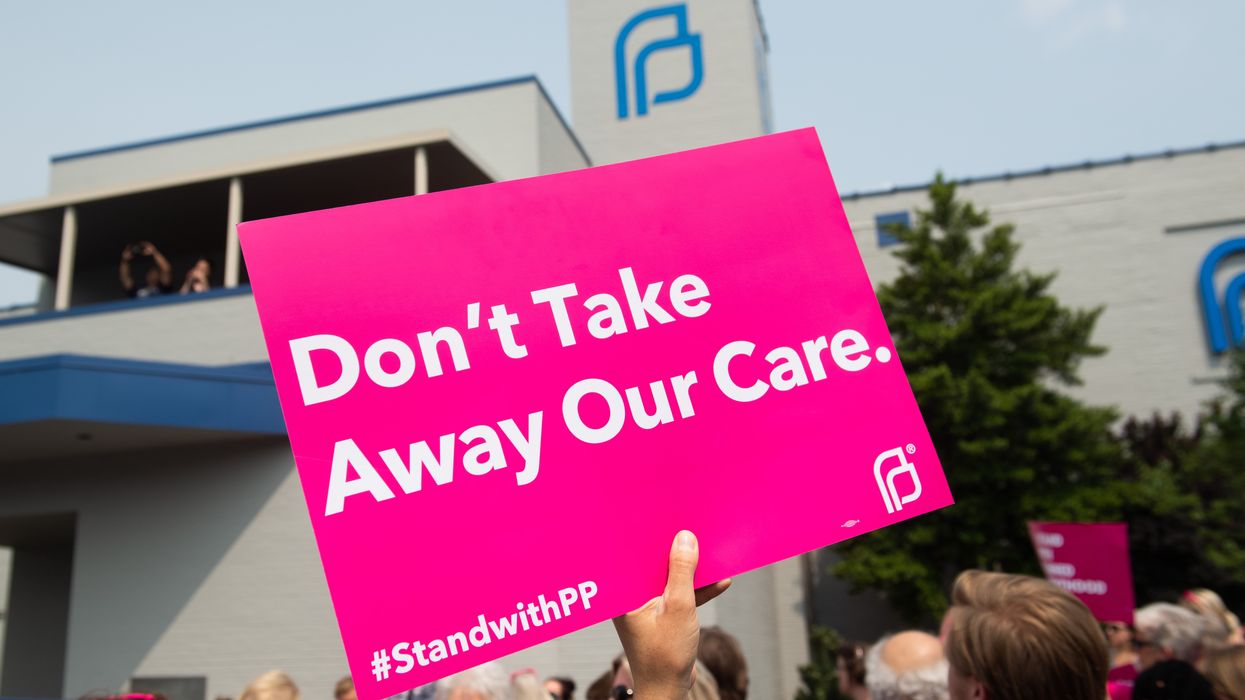
"This is a systematic decimation of access to reproductive healthcare and a signifier of what else is likely to come," warned one critic.
In its latest blow to reproductive healthcare in the United States, the Supreme Court's right-wing supermajority on Thursday blocked Planned Parenthood and one of its patients from suing South Carolina over its defunding of the medical provider because it performs abortions—a decision that critics say will cost lives as more Republican-controlled states follow suit.
At question in Medina v. Planned Parenthood South Atlantic was whether Medicaid beneficiaries can sue in order to secure healthcare services under a law that allows patients to choose any qualified provider. The high court ruled 6-3 that they cannot, with liberal Justices Sonia Sotomayor, Elena Kagan, and Ketanji Brown Jackson dissenting.
"The decision whether to let private plaintiffs enforce a new statutory right poses delicate questions of public policy. New rights for some mean new duties for others," Justice Neil Gorsuch wrote for the majority. "And private enforcement actions, meritorious or not, can force governments to direct money away from public services and spend it instead on litigation."
"The job of resolving how best to weigh those competing costs and benefits belongs to the people's elected representatives, not
unelected judges charged with applying the law as they find it," Gorsuch added.
Concurring with the majority, far-right Justice Clarence Thomas wrote that the ruling invites further scrutiny of Section 1983, the federal law empowering individuals to sue state and local government officials for violating their constitutional rights.
And, predictably, in Medina, Justice Thomas isn't content to axe Planned Parenthood from Medicaid. He would go further ... "to reexamine more broadly this Court’s §1983 jurisprudence . . . ."This is an invitation to undermine a major foundation of civil rights litigation.
[image or embed]
— Melissa Murray (@profmmurray.bsky.social) June 26, 2025 at 7:17 AM
In a furious dissent, Jackson wrote that "the court's decision today is not the first to so weaken the landmark civil rights protections that Congress enacted during the Reconstruction era."
"That means we do have a sense of what comes next: As with those past rulings, today's decision is likely to result in tangible harm to real people," she continued. "At a minimum, it will deprive Medicaid recipients in South Carolina of their only meaningful way of enforcing a right that Congress has expressly granted to them."
"And, more concretely, it will strip those South Carolinians—and countless other Medicaid recipients around the country—of a deeply personal freedom: the 'ability to decide who treats us at our most vulnerable,'" Jackson added. "The court today disregards Congress' express desire to prevent that very outcome."
More than 70 million Americans rely upon Medicaid, the federal government's primary health insurance program for lower-income people. The program is facing the prospect of major cuts under a Republican budget proposal that critics warn could cause millions of people to lose their healthcare coverage in service to a massive tax break backed by President Donald Trump that would disproportionately benefit the rich and corporations.
According to Planned Parenthood Federation of America president and CEO Alexis McGill Johnson, "currently, 20% of South Carolinians—over 1 million—receive healthcare services through the Medicaid program, and approximately 5% of those recipients sought sexual and reproductive health care services at Planned Parenthood South Atlantic (PPSAT) so far this year."
Responding to Thursday's ruling, McGill Johnson said that "the consequences are not theoretical in South Carolina or other states with hostile legislatures."
"Patients need access to birth control, cancer screenings, STI testing and treatment, and more. And right now, lawmakers in Congress are trying to 'defund' Planned Parenthood as part of their long-term goal to shut down Planned Parenthood and ban abortion nationwide," she added. "Make no mistake, the attacks are ongoing and Planned Parenthood will continue to do everything possible to show up in communities across the country and provide care."
Under tremendous Republican-led pressure, Planned Parenthood has closed or announced plans to close at least 20 locations across seven states since the beginning of the year.
"Today's decision is a grave injustice that strikes at the very bedrock of American freedom and promises to send South Carolina deeper into a healthcare crisis," PPSAT president and CEO Paige Johnson said following Thursday's decision. "Twice, justices of this court denied to even hear this case because [South Carolina Gov. Henry] McMaster's intent is clear: weaponize anti-abortion sentiment to deprive communities with low incomes of basic healthcare."
"Planned Parenthood South Atlantic will continue to operate and offer care in South Carolina, including for people enrolled in Medicaid," Johnson added. "To our patients, we will do everything in our power to ensure you can get the care you need at low or no cost to you. Know that we are still here for you, and we will never stop fighting for you to reclaim the rights and dignity you deserve."
Destiny Lopez, co-president and CEO of the Guttmacher Institute, called the ruling "a grave injustice."
Lopez continued:
At a time when healthcare is already costly and difficult to access, stripping patients of their right to high-quality, affordable healthcare at the provider of their choosing is a dangerous violation of bodily autonomy and reproductive freedom.
Specifically targeting Planned Parenthood has long been a strategy of the anti-abortion movement. Planned Parenthood health centers are an irreplaceable part of the U.S. healthcare system; Guttmacher data show that among the 4.7 million contraceptive patients served by publicly supported clinics in 2020, one in three received care from Planned Parenthood.
"In the face of attempts to 'defund' Planned Parenthood and attack Medicaid, Title X, and other pillars of reproductive healthcare, the court's actions cannot be considered in a vacuum," Lopez asserted. "This is a systematic decimation of access to reproductive healthcare and a signifier of what else is likely to come. Everyone deserves choice in their healthcare provider and access to the family planning they need."
Progressive groups and individuals also condemned Thursday's ruling, with the Freedom From Religion Foundation lamenting that "Christian nationalists win, women and low-income patients lose."
"This isn't justice," FFRF added. "It's religious favoritism at the highest level."
Planned Parenthood provides affordable:➡ Cancer screening➡ STD testing and treatment➡ Prenatal supportToday's decision from SCOTUS to allow SC to remove Planned Parenthood from Medicaid means that people will be sicker and people will die.www.theguardian.com/us-news/2025...
[image or embed]
— Congresswoman Pramila Jayapal (@jayapal.house.gov) June 26, 2025 at 7:34 AM
Meagan Hatcher-Mays, senior adviser at United for Democracy, said in a statement that "millions of Medicaid patients across the country rely on Planned Parenthood health centers for their primary and reproductive care, and people who face systemic racism and discrimination—Black, Latino, and Indigenous communities, as well as LGBTQ+ people and women—are more likely to be covered by Medicaid."
"It's ironic that the MAGA justices issued this ruling today, almost three years to the day that they overturned Roe v. Wade and threw abortion access into chaos across the country," Hatcher-Mays added. "Today's ruling is a further attack on healthcare, bodily autonomy, and our freedoms. This ruling clearly harms communities in South Carolina, and it's a matter of time before we see that harm expand further into the country."

"Today, seven members of the Supreme Court followed the law and did not capitulate to special interests like the NRA, and our streets will be safer for it," said one Democratic senator.
In what one gun control group hailed as "a BIG win for public safety," the U.S. Supreme Court on Wednesday upheld a Biden-era rule regulating ghost guns, which can be made using 3D printers, obtained without background checks, and smuggled into high-security locations.
The high court ruled 7-2—with Justices Samuel Alito and Clarence Thomas dissenting—in Bondi v. Vanderstock that ghost guns, which are virtually untraceable, are firearms subject to regulation by the U.S. Bureau of Alcohol, Tobacco, Firearms, and Explosives (ATF).
NEW: The Supreme Court just upheld ATF’s critical ghost gun rule 👏👏👏 They ruled that ghost gun kits are legally firearms, meaning they must have serial numbers and can only be sold by licensed sellers after a background check. This is a BIG win for public safety.
[image or embed]
— GIFFORDS ( @giffords.org) March 26, 2025 at 7:57 AM
In 2022, the Biden administration enacted rules including a licensing requirement for companies making and selling ghost gun parts, mandating serial numbers for such components, and subjecting buyers to background checks. Ghost gun component manufacturers and Second Amendment advocates sued the government, claiming that ghost guns are not firearms as defined by the landmark Gun Control Act of 1968.
The 5th U.S. Circuit Court of Appeals sided with the plaintiffs in a 2023 decision striking down the ATF ghost gun rules.
However, while conceding that some ghost gun kits may not qualify as firearms under the law, Justice Neil Gorsuch wrote for the majority that others "'contain all components necessary' for 'a complete pistol' and can be completed in perhaps half an hour using commonly available tools."
"But even as sold, the kit comes with all necessary components, and its intended function as instrument of combat is obvious," Gorsuch added. "Really, the kit's name says it all: 'Buy Build Shoot.'"
Today's decision is a pretty major smackdown for the 5th Circuit, which angrily rejected the ghost gun regulations as an egregiously unlawful assault on the rights of at-home gunsmiths. Gorsuch's opinion says the 5th Circuit badly misapplied the law in a number of ways. When you've lost Gorsuch...
— Mark Joseph Stern ( @mjsdc.bsky.social) March 26, 2025 at 7:16 AM
Responding to the ruling, David Pucino, the legal director and deputy chief counsel at the Giffords Law Center, said: "Ghost guns are the gun industry's way of skirting commonsense gun laws and arming dangerous people without background checks. We are thrilled that the Supreme Court has upheld the ATF rule that treats ghost guns as what they are: guns."
"We've seen how the rise in ghost guns has contributed to increases in crime and gun deaths in communities across the United States," Pucino added. "The Supreme Court's ruling is a huge win for public safety."
The legal division of Everytown for Gun Safety also hailed what it called the court's "lifesaving decision."
"We applaud the Supreme Court for doing the right thing by upholding a lawful and critical rule that protects public safety, and by rejecting the gun lobby's extreme legal agenda," Everytown Law executive director Eric Tirschwell said. "The ATF ghost gun rule has broad support from state and federal law enforcement, who have all affirmed it is crucial to keeping our communities safe—and data shows it is reducing the number of ghost guns recovered at crime scenes nationwide. We look forward to seeing this downward trend continue."
As Everytown noted, "early data indicates a drop in ghost gun recoveries at crime scenes since the ATF's rule went into effect," and "New York City, Baltimore, Boston, Los Angeles, San Francisco, Philadelphia, Oakland, and other cities reported declines in ghost gun recoveries" in 2023.
Great news coming out of the Supreme Court! In a 7-2 decision, Justices have upheld the ban on ghost guns. These untraceable weapons have no legitimate use and are the perfect firearms for use in crime. This is a victory for public safety!
— Team ENOUGH ( @teamenough.org) March 26, 2025 at 7:16 AM
"At 17, my son, Guy, was badly wounded when he was shot with a ghost gun by a minor too young to legally purchase a pistol. No one should have to go through the trauma of learning that your child has been shot and may not survive," Denise Wieck, a volunteer with the gun control advocacy group Moms Demand Action, said following Wednesday's ruling.
"Though Guy suffers the consequences of the gunshot wound to this day—including an epilepsy diagnosis, anxiety, and the loss of an eye—we have both turned our grief into power through education and advocacy," Wieck added. "We are deeply relieved by today's ruling, which will help ensure that a tragedy like ours never happens again."
Democratic lawmakers also welcomed Wednesday's ruling.
"Ghost guns have been a terror on our streets, haunting our communities, and taking lives," Senate Minority Leader Chuck Schumer (D-N.Y.) said in a statement. "For years, I have been warning of the dangers of these untraceable guns, and I strongly supported the Biden administration's rule to crack down on these treacherous kits."
"Today, seven members of the Supreme Court followed the law and did not capitulate to special interests like the NRA, and our streets will be safer for it," Schumer added, referring to the National Rifle Association. "Senate Democrats will continue to push Republicans to take commonsense actions to keep ghost guns off the streets."
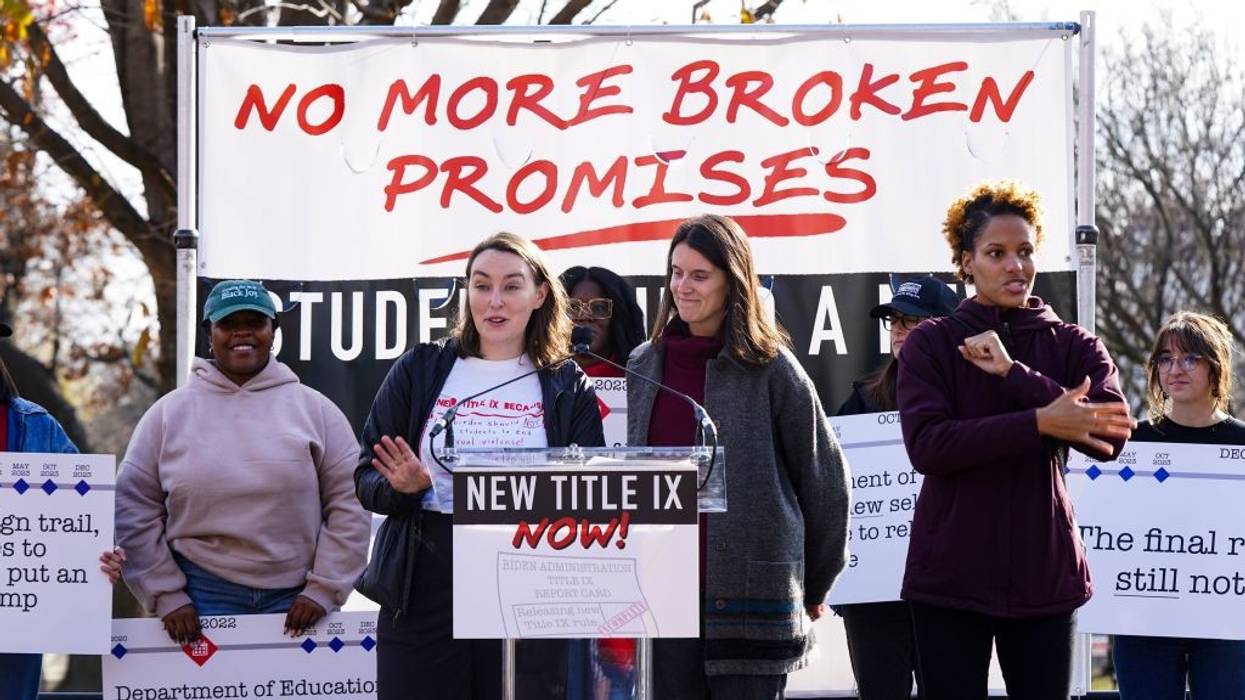
In a 5-4 ruling—with Justice Neil Gorsuch joining the liberals in dissent—the court delayed Biden's expansion of Title IX protections to include gender identity and sexual orientation.
The U.S. Supreme Court on Friday denied the Biden administration's emergency request to reinstate parts of its updated Department of Education Title IX rule expanding the definition of "discrimination on the basis of sex" to include sexual orientation, gender identity, and pregnancy status.
The nation's highest court ruled 5-4—with conservative Justice Neil Gorsuch joining liberal colleagues Sonia Sotomayor, Elena Kagan, and Ketanji Brown Jackson in dissent—that the Biden administration "has not provided this court a sufficient basis to disturb the lower courts' interim conclusions that the three provisions found likely to be unlawful are intertwined with and affect other provisions of the rule."
Republican attorneys general in more than two dozen states pushed courts to block the Biden administration's updated Title IX rule, which was set to take effect on August 1. The new rule has been on hold pending the outcome of litigation.
In her dissent, Sotomayor wrote: "A majority of this court leaves in place preliminary injunctions that bar the government from enforcing the entire rule—including provisions that bear no apparent relationship to respondents' alleged injuries. Those injunctions are overbroad."
While conservatives welcomed the ruling, LGBTQ+ advocates expressed disappointment.
"All young people deserve to show up to school and get an education without facing the threat of discrimination and bigotry. But five cruel justices on the Supreme Court just put countless LGBTQ+ students' health, safety, and lives in jeopardy," said Sarah Lipton-Lubet, president of the advocacy group Take Back the Court.
"The hateful right-wing movement with which these justices align themselves constantly invokes 'protecting children' as a false justification for their extremist agenda," Lipton-Lubet added. "But protecting children means keeping them safe from homophobic and transphobic violence; from gun violence; from attacks on equitable education; and from environmental destruction that threatens their futures. This court has failed them time and time again."
The Biden administration's effort to expand Title IX protections came amid a wave of anti-LGBTQ+ laws enacted in Republican-controlled states in recent years.
More than two dozen states have passed laws banning or restricting gender-affirming healthcare including puberty-blocking drugs, hormone therapy, and surgery for minors. At least 11 states have also passed laws banning transgender students from using school restrooms and other facilities consistent with their gender identity, and 25 states have banned transgender girls from competing on female scholastic sports teams.
Responding to Friday's decision, an Education Department spokesperson said that "while we do not agree with this ruling, the department stands by the final Title IX regulations released in April 2024, and we will continue to defend those rules in the expedited litigation in the lower courts."
Friday's ruling is not the last word on the Biden administration's Title IX rule, as the decision merely delays the issue pending further litigation that could ultimately be revisited by the Supreme Court in the future.

Americans know the Supreme Court’s anti-democratic agenda when they see it. Americans know a judicial power grab when they see it. Americans know a king when they see one. Tell me, America, do you like what you see?
Former President Richard Nixon used a ridiculous line to rationalize his misconduct: “If the President does it, that means it’s not illegal.”
On July 1, 2024, Nixon’s outrageous position became the law of the land.
But that is only the most recent illustration of how former President Donald Trump’s Supreme Court is remaking America. The justices comprising the court’s six-member conservative supermajority are foisting their personal vision for the country on citizens who largely disagree with that vision. Trump appointed three of them.
Trump asserts that, if reelected, he’ll be “dictator for a day.” The Supreme Court’s ruling makes him comparable to a king—a law unto himself—for an entire four-year term.
Two years ago, Dobbs v. Jackson Women’s Health Organization was a harbinger. The Court’s six conservatives overruled the landmark 50-year-old precedent, Roe v. Wade, and obliterated a woman’s right to abortion—a right that the vast majority of Americans across the political spectrum support.
Dobbs was only the beginning.
The conservatives justices’ agenda requires violating the bedrock principle of stare decisis.
Justice Elena Kagan explained, “Adherence to precedent is ‘a foundation stone of the rule of law...’ Stare decisis ‘promotes the even-handed, predictable, and consistent development of legal principles.’ It enables people to order their lives in reliance on judicial decisions. And it ‘contributes to the actual and perceived integrity of the judicial process,’ by ensuring that those decisions are founded in the law, and not in the ‘personal preferences’ of judges.” [Citations omitted.]
Already at a historic low, the court’s perceived integrity continues to suffer self-inflicted wounds at the hands of its conservative members. They are imposing their personal preferences on the entire nation.
In the waning days of the court’s 2023-2024 term, some of the most draconian—and dangerous—emerged from the shadows.
On June 27, 2024, the Court’s conservative block (Justices Samuel Alito, Amy Coney Barrett, Neil Gorsuch, Brett Kavanaugh, John Roberts, and Clarence Thomas) issued SEC v. Jarkesy. The ruling bars the Security and Exchange Commission from adjudicating civil fraud actions itself before an administrative law judge. Instead, the SEC must now file all such actions in federal court where a defendant can request a jury trial, thereby crippling the agency’s enforcement capabilities.
On behalf of the court’s three dissenting liberals (Ketanji Brown Jackson, Kagan, and Sonia Sotomayor), Justice Sotomayor wrote, “Congress has enacted countless new statutes in the past 50 years that have empowered federal agencies to impose civil penalties for statutory violations… Similarly, there are, at the very least, more than two dozen agencies that can impose civil penalties in administrative proceedings… The constitutionality of hundreds of statutes may now be in peril, and dozens of agencies could be stripped of their power to enforce laws enacted by Congress.”
Justice Sotomayor added, “Today’s ruling is part of a disconcerting trend: When it comes to the separation of powers, this court tells the American public and its coordinate branches that it knows best… Make no mistake: Today’s decision is a power grab.”
Also on June 27, 2024, in Ohio v. EPA, five of the Court’s conservatives blocked the Environmental Protection Agency’s plan to protect “downwind” states from the air pollution that “upwind” states generated.
From 1981-1983, Justice Gorsuch’s mother, Anne, had led the EPA during the Reagan administration. Repeatedly, she clashed with environmentalists and congressional investigators challenging her management of the agency. In 1983, the White House forced her to resign.
In her 1986 memoir, Anne Gorsuch wrote that her rocky tenure and unceremonious departure distressed her son, Neil, who was 15 years old at the time:
“You should never have resigned,” he told her. “You didn’t do anything wrong. You only did what the president ordered. Why are you quitting? You raised me not to be a quitter. Why are you a quitter?”
Forty years later, Justice Neil Gorsuch wrote the majority opinion in Ohio v. EPA.
The following day, on June 28, the conservative block struck again in Loper Bright Enterprises, v. Raimondo, overruling a 40-year-old precedent, Chevron v. National Resources Defense Council.
Back in 1984, conservatives had scored a big victory when a unanimous Supreme Court first issued the Chevron ruling. It required that courts defer to administrative agencies that filled in gaps or resolved ambiguities in Congress’ regulatory statutes.
At the time, business leaders cheered the decision because President Ronald Reagan’s EPA (under Anne Gorsuch) had loosened air pollution emission regulations. To preserve that loosening, the affected businesses wanted courts to respect the EPA’s scientific and technical expertise. The Court agreed, observing, “Judges are not experts in the field, and are not part of either political branch of the government.” The latter point meant that judges weren’t accountable to the electorate, whereas agency administrators served at the pleasure of an elected president.
But in the years that followed, businesses chafed at agency regulation. Along with the conservative legal movement, business leaders reversed course and attacked Chevron unsuccessfully—until Trump’s appointment of Barrett gave the conservatives a supermajority on the Supreme Court.
In dissent, Justice Kagan observed that Chevron “served as a cornerstone of administrative law, allocating responsibility for statutory construction between courts and agencies… [It] has formed the backdrop against which Congress, courts, and agencies—as well as regulated parties and the public—all have operated for decades. It has been applied in thousands of judicial decisions. It has become part of the warp and woof of modern government, supporting regulatory efforts of all kinds—to name a few, keeping air and water clean, food and drugs safe, and financial markets honest.”
Under Chevron, Justice Kagan added, the Supreme Court itself “has upheld an agency’s reasonable interpretation of a statute at least 70 times. Lower courts have applied the Chevron framework on thousands upon thousands of occasions... Chevron was cited in more than 18,000 federal-court decisions.” [Citations omitted.]
“A longstanding precedent at the crux of administrative governance thus falls victim to a bald assertion of judicial authority,” Justice Kagan concluded. “The majority disdains restraint, and grasps for power.”
The conservative block saved its worst for last—the court's July 1, 2024 ruling in Trump v. U.S. If democracy dies in America, Chief Justice Roberts’ opinion in the case will have been a key contributor.
“We conclude that under our constitutional structure of separated powers, the nature of presidential power requires that a former president have some immunity from criminal prosecution for official acts during his tenure in office,” Roberts wrote on the final day of the court’s term. “At least with respect to the president’s exercise of his core constitutional powers, this immunity must be absolute. As for his remaining official actions, he is also entitled to immunity.”
Writing for the three dissenting liberal members, Justice Sotomayor declared, “Today’s decision to grant former presidents criminal immunity reshapes the institution of the Presidency. It makes a mockery of the principle, foundational to our Constitution and system of government, that no man is above the law… [O]ur Constitution does not shield a former president from answering for criminal and treasonous acts,…”
Trump asserts that, if reelected, he’ll be “dictator for a day.” The Supreme Court’s ruling makes him comparable to a king—a law unto himself—for an entire four-year term.
In discussing a pornography case, Justice Potter Stewart once remarked, “I know it when I see it.”
Americans know the Supreme Court’s anti-democratic agenda when they see it.
Americans know a judicial power grab when they see it.
Americans know a king when they see one.
And as Americans come to understand the conservative Supreme Court justices’ profoundly negative impact on their daily lives, they won’t like what they see.
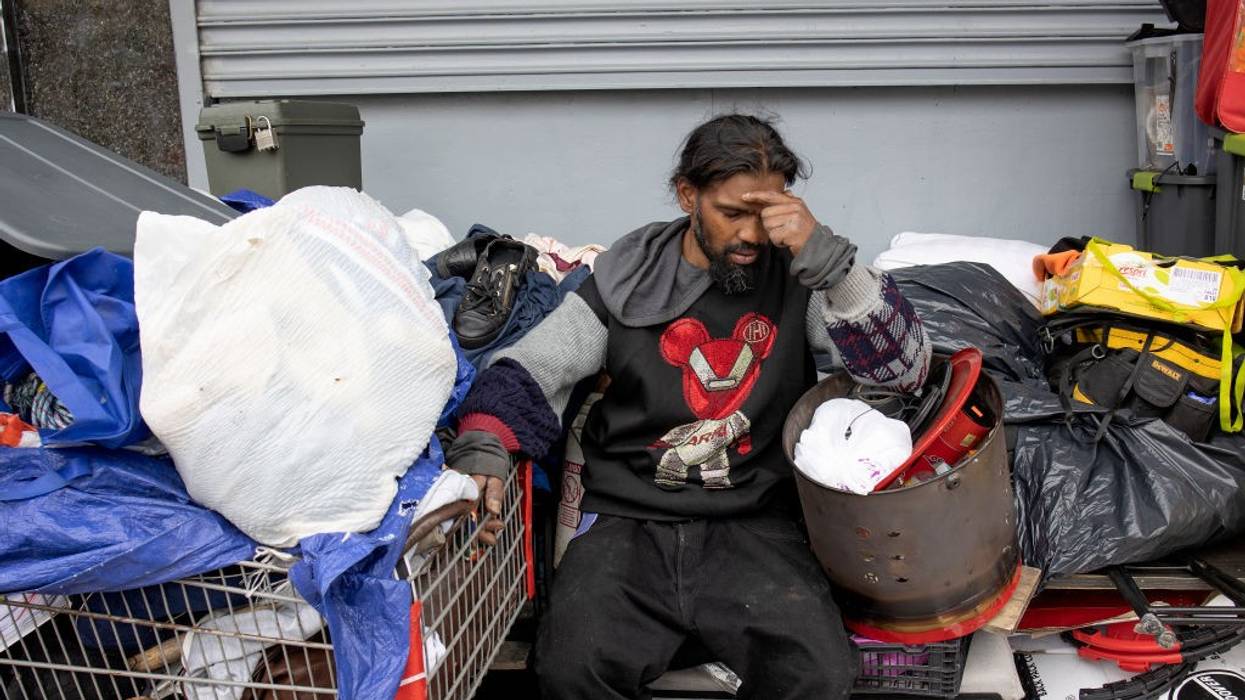
"Maybe the right-wing justices could empathize with the most vulnerable Americans if they spent less time jet-setting on luxury vacations on their wealthy benefactors' dime," said one critic.
"SCOTUS just criminalized homelessness."
So said numerous legal experts and advocates for the unhoused Friday after the U.S. Supreme Court's right-wing supermajority ruled that local governments can enforce bans on sleeping outdoors, regardless of whether municipalities are able to offer them shelter space.
In a 6-3 decision along ideological lines, the justices ruled in City of Grants Pass, Oregon v. Johnson that officials can criminalize sleeping and camping on public property including parks, even when housing options are unavailable or unaffordable.
"We are disappointed that a majority of the court has decided that our Constitution allows a city to punish its homeless residents simply for sleeping outside with a blanket to survive the cold when there is nowhere else for them to go," said Ed Johnson, director of litigation at the Oregon Law Center, which represented unhoused Grants Pass residents in the case.
The decision overturned a ruling by the San Francisco-based 9th U.S. Circuit Court of Appeals that found bans on outdoor sleeping violated the 8th Amendment's proscription of cruel and unusual punishment.
"Homelessness is complex. Its causes are many. So may be the public policy responses required to address it," Justice Neil Gorsuch wrote for the majority. "A handful of federal judges cannot begin to 'match' the collective wisdom the American people possess in deciding 'how best to handle' a pressing social question like homelessness."
Gorsuch suggested that unhoused people could invoke "necessity... insanity, diminished-capacity, and duress defenses" when they are prosecuted for poverty-related offenses.
In a dissent calling the criminalization of unhoused people "unconscionable and unconstitutional," Justice Sonia Sotomayor wrote that "sleep is a biological necessity, not a crime."
"For some people, sleeping outside is their only option," she noted.
Sotomayor continued:
Homelessness is a reality for too many Americans. On any given night, over half a million people across the country lack a fixed, regular, and adequate nighttime residence. Many do not have access to shelters and are left to sleep in cars, sidewalks, parks, and other public places. They experience homelessness due to complex and interconnected issues, including crippling debt and stagnant wages; domestic and sexual abuse; physical and psychiatric disabilities; and rising housing costs coupled with declining affordable housing options.
"It is possible to acknowledge and balance the issues facing local governments, the humanity and dignity of homeless people, and our constitutional principles," Sotomayor asserted. "Instead, the majority focuses almost exclusively on the needs of local governments and leaves the most vulnerable in our society with an impossible choice: Either stay awake or be arrested."
"The Constitution provides a baseline of rights for all Americans rich and poor, housed and unhoused," Sotomayor added. "This court must safeguard those rights even when, and perhaps especially when, doing so is uncomfortable or unpopular."
Attorney Theane Evangelis, who represented Grants Pass in the case, cheered the decision, arguing that the 9th Circuit ruling had "tied the hands of local governments."
Some leaders in places where the homelessness crisis is most acute welcomed Friday's ruling, including Democratic California Gov. Gavin Newsom, who filed an amicus brief in the case, and London Breed, the Democratic mayor of San Francisco, which also filed an amicus brief.
"Gorsuch extensively cites San Francisco's amicus in the decision,"
noted Raya Steier, a San Francisco-based attorney who led the successful campaign to pass a local ballot measure taxing the wealthy to generate hundreds of millions of dollars in revenue for Covid rent relief and affordable housing. "Congratulations London Breed and David Chiu, this is now your legacy."
Economic justice advocates said rising inequality and housing costs have played a key role in driving the U.S. unhoused population to a record 650,000. If all the unhoused people in the country came together to form a city, it would be the nation's 23rd-largest—ahead of Las Vegas, Boston, Detroit, and Portland, Oregon—based on 2020 Census figures.
"We are in the midst of a crisis where housing is unaffordable for millions of Americans. Millions of us are just one paycheck away from losing our homes," New York-based Center for Popular Democracy Action said in a statement. "Today, the Supreme Court has made the morally bankrupt decision to allow people experiencing homelessness to be persecuted and punished just for existing, while denying them shelter and safety as a human right."
"For those who are unhoused, this will mean fines, tickets, and even incarceration for a vulnerable community already abandoned by city and state authorities," the group added.
Referring to the high court's 2010 Citizens United v. Federal Election Commission ruling, many social media users said that "corporations are people" but "the homeless are not."
Others pointed to the millions of dollars worth of gifts and other perks—many of them undisclosed—lavished upon Supreme Court members, especially far-right Justices Clarence Thomas and Samuel Alito, by right-wing billionaires, some with business before the court.
"Today's decision shows how little the MAGA supermajority cares about struggling Americans," said Tracy Adair, communications manager at Stand Up America, a New York-based pro-democracy group. "It is unfathomably cruel to punish unhoused individuals for existing on public property when they have nowhere else to go."
"Maybe the right-wing justices could empathize with the most vulnerable Americans if they spent less time jet-setting on luxury vacations on their wealthy benefactors' dime," Adair added.
Advocates for the unhoused stressed that the solution to homelessness is housing, not criminalization.
"Cities should not punish people for being poor," said Jennifer Friedenbach, executive director of the Coalition on Homelessness, a housing justice and human rights group serving San Francisco. "The solution is, and has always been, safe and affordable housing."
In response to the ruling, the National Homelessness Law Center is calling on the Biden administration to invest at least $356 billion next year to fund universal rental assistance, upgraded public housing, a national housing trust fund, eviction and homelessness prevention programs, and voluntary supportive and emergency services.

"With this decision, the Supreme Court has abandoned any pretense of neutrality in cases involving environmental regulations," an expert said.
Health and environmental groups decried a U.S. Supreme Court decision on Thursday that suspended an air pollution rule with far-reaching implications set by the Environmental Protection Agency.
The justices ruled 5-4 in Ohio v. EPA to nullify the rule, designed to protect people in states downwind from smog-forming pollution, until the case can be decided on its merits in federal court, siding with the industrial polluters and upwind states who'd petitioned them to do so.
"With this decision, the Supreme Court has abandoned any pretense of neutrality in cases involving environmental regulations," Sam Sankar, a senior vice president at Earthjustice, an environmental law firm, said in a statement.
"The court's order puts thousands of lives at risk, forces downwind states to regulate their industries more tightly, and tells big polluters that it's open season on our environmental laws," he added.
A coalition of health and environmental groups, including Earthjustice, agreed that the ruling would have devastating effects.
"Today's decision is deeply disappointing," the coalition wrote in a joint statement. "It will result almost immediately in pollution that endangers the health of millions of people."
Initial thoughts on Ohio v. EPA - Justice Gorsuch's majority opinion reflects two longstanding trends in his environmental law jurisprudence: deep skepticism of agency experts and emphasis on state authority over environmental protection. You can read my analysis of these trends…
— Rachel Rothschild (@ProfRRothschild) June 27, 2024
The legal dispute stems from the EPA's 2015 ozone pollution regulations. States were required to issue plans showing compliance, and last year the EPA determined that 23 of the plans were insufficient, issuing its own plan for those states. The agency said that in 2026 alone, the multi-state plan would prevent about 1,300 premature deaths.
The EPA plan set off a flurry of legal challenges by fossil fuel companies, power companies, and related trade associations, as well as upwind states. Some challenges were successful in getting federal courts to temporarily suspend the EPA rules in individual states. However, the consolidated case, Ohio v. EPA, hasn't yet been heard by the Court of Appeals for the District of Columbia Circuit, and that court denied a request for a suspension of the rule in the meantime.
The plaintiffs then sought emergency relief from the rule at the Supreme Court, arguing that it could cost "hundreds of millions if not billions of dollars in costs over the next 12 to 18 months." The Supreme Court normally dismisses such relief requests, but in this case not only accepted the case onto its shadow docket, but took the unusual step of hearing oral arguments, which most shadow docket cases don't have, as they tend to deal with stays and injunctions, and not the fully-fledged merits of a case.
At the oral arguments, in February, Justice Ketanji Brown Jackson expressed concern that the case was even before the court, given that it hadn't even been heard on its merits by the D.C. Circuit court.
"What I’m a little concerned about is that really your argument is just boiling down to we think we have a meritorious claim and we don't want to have to follow the law while we’re challenging it," Jackson said to the plaintiffs' legal team. "And I don’t understand why every single person who is challenging a rule doesn’t have the same set of circumstances."
Jackson is one of three liberal justices on the court, but it was in fact conservative Justice Amy Coney Barrett who authored what The New York Times called a "spirited" dissent to Justice Neil Gorsuch's majority opinion.
"The court today enjoins the enforcement of a major Environmental Protection Agency rule based on an underdeveloped theory that is unlikely to succeed on the merits," Barrett wrote. "In so doing, the court grants emergency relief in a fact-intensive and highly technical case without fully engaging with both the relevant law and the voluminous record."
Rachel Rothschild, a law professor at the University of Michigan, wrote on social media that Gorsuch's opinion drew on his "deep skepticism of agency experts and emphasis on state authority over environmental protection."
The conservative justices' aversion to agency expertise was also evident in both its 2022 ruling against the EPA's climate change rules and its 2023 ruling against the EPA's water pollution rules.
The Center for American Progress wrote in February that a loss in Ohio v. EPA would be another "devastating reversal" for the EPA as the agency struggles to assert "the authorities that Congress has explicitly granted it."
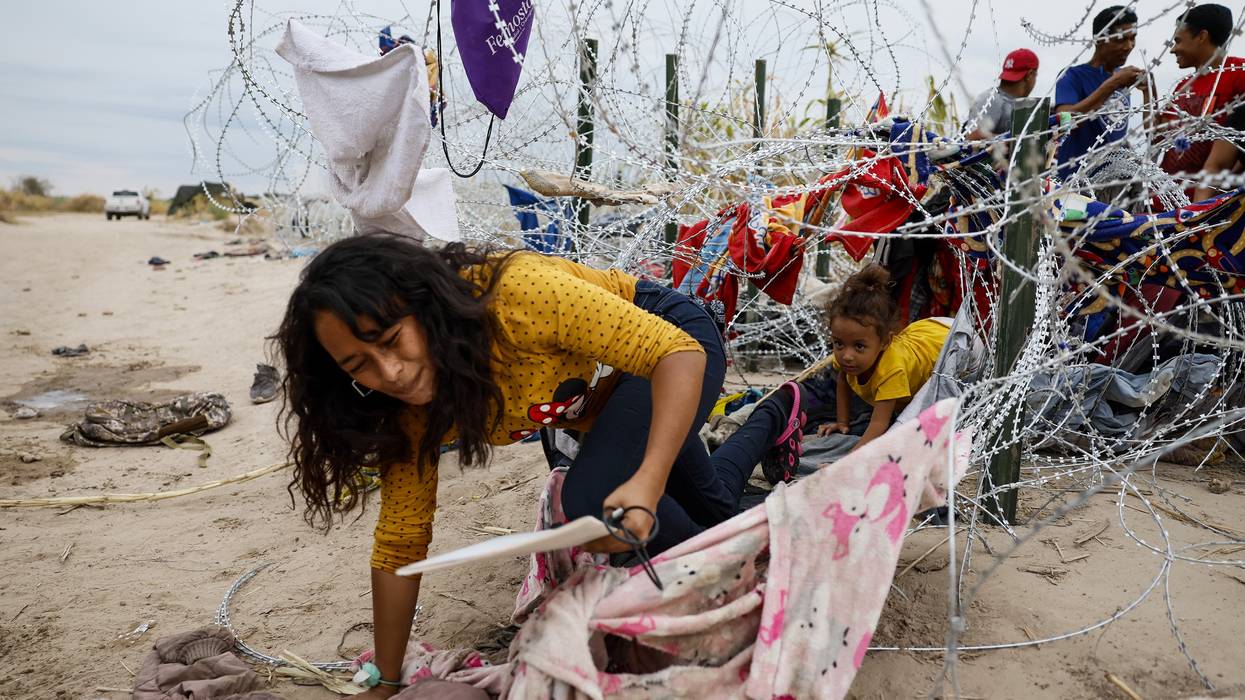
"The fact that four votes went in Texas' favor is a worrying sign," said one advocate.
Immigrant rights advocates and legal experts on Monday applauded as the U.S. Supreme Court ruled that Texas officials cannot impede federal border agents from cutting down razor wire that Republican Gov. Greg Abbott installed near the Rio Grande to stop migrants and asylum-seekers from crossing the U.S.-Mexico border—but expressed shock that four justices opposed the decision.
The high court voted 5-4 in favor of the Biden administration, which had previously been ordered by a federal appeals court last month to stop removing razor wire.
Right-wing Justices Brett Kavanaugh, Clarence Thomas, Neil Gorsuch, and Samuel Alito dissented, while Chief Justice John Roberts and Justice Amy Coney Barrett joined the court's three liberals in voting to allow border agents to cut down the wire.
Texas argued last month that under the Biden administration's orders, border agents had damaged state property and illegally trespassed when they cut through the concertina wire in order to reach migrants who had crossed onto U.S. soil and take them into custody for processing.
The U.S. Justice Department filed an emergency request asking the Supreme Court to reverse the federal appeals court's ruling.
In the Biden administration's filing, officials noted that three migrants—a woman and two children—drowned just over a week ago while trying to cross the Rio Grande.
The drownings, wrote U.S. Solicitor General Elizabeth Prelogar, "underscore that Texas is firm in its continued efforts to exercise complete control of the border and land... and to block Border Patrol’s access to the border even in emergency circumstances."
"It is impossible to say what might have happened if Border Patrol had had its former access to the area—including through its surveillance trucks that assisted in monitoring the area," wrote Prelogar. "At the very least, however, Border Patrol would have had the opportunity to take any available steps to fulfill its responsibilities and assist its counterparts in the Mexican government with undertaking the rescue mission. Texas made that impossible."
The administration said the appeals court's ruling turned the U.S. Constitution's supremacy clause "on its head." The clause states that federal laws take precedence over statutes put in place by state governments.
"If that injunction is left in place," Prelogar said, "it will impede Border Patrol agents from carrying out their responsibilities to enforce the immigration laws and guard against the risk of injury and death, matters for which the federal government, not Texas, is held politically accountable."
Journalist Peter Sterne was among those who expressed concern over the four conservative justices' apparent disagreement with the supremacy clause.
"Whatever one thinks of current immigration policy, it ought not to be that controversial that states cannot prevent the federal government from enforcing federal law—lest we set the stage for Democratic-led states to similarly attempt to frustrate the enforcement of federal policies by Republican presidents," said University of Texas School of Law professor and CNN Supreme Court analyst Steve Vladeck. "That four justices would still have left the lower court injunction in place will be taken, rightly or wrongly, as a sign that some of those long-standing principles of constitutional federalism might be in a degree of flux."
Aaron Reichlin-Melnick, policy director of the American Immigration Council, said that considering well-established constitutional law, it was "not a surprise that the Supreme Court ruled in the Biden administration's favor here.
"That said," he added, "the fact that four votes went in Texas' favor is a worrying sign."

This latest pathetic attempt at pacifying the public will do little to reverse the sharp decline in public confidence in the nation’s highest court.
Yesterday, the Supreme Court announced an ethics code for the justices. But the code is utterly empty. It has no enforcement mechanism and no mechanism for the public to lodge complaints of misconduct.
It’s public relations pablum.
The court effectively admitted this, saying that “the absence of a Code… has led in recent years to the misunderstanding that the justices of this court, unlike all other jurists in this country, regard themselves as unrestricted by any ethics rules.”
The new code has no system for the public to lodge complaints or for any outside review of alleged ethical violations.
Misunderstanding? I’m sorry, but the public understands quite well that the justices regard themselves as free to do whatever they wish, in terms of ethics.
In April, ProPublica documented years of undisclosed luxury travel enjoyed by Justice Clarence Thomas, including private jets and trips aboard a super-yacht courtesy of a Texas real estate magnate and conservative donor, Harlan Crow. Since then, other undisclosed gifts to Thomas have been revealed, all from powerful friends—including a motor coach, private school tuition for a grandnephew the justice was raising, and the justice’s mother’s home in an undisclosed real estate deal.
Thomas has also come under fire for failing to recuse himself from cases related to attacks on the 2020 election results—given that his wife, Virginia Thomas, worked to overturn the 2020 election results in the weeks leading up to the Capitol attack.
Other justices, including Samuel A. Alito Jr. and Neil M. Gorsuch, have also failed to disclose their connections to wealthy people with close ties to the court. Alito did not report a 2008 trip on the private jet of Paul Singer, a hedge fund billionaire who later had cases before the court.
Alito defended his conduct in an op-ed published by The Wall Street Journal, writing that he had “no obligation” to recuse himself from the cases involving Singer’s business, and did not have to report the travel and lodging because the jet constituted a “facility” exempt from reporting requirements. He claimed that the justices “commonly interpreted” hospitality to include accommodations and transportation for social events that did not have to be reported as gifts.
In addition to Thomas and Alito, Gorsuch did not disclose that the head of a major law firm had purchased a Colorado vacation property that he co-owned. Justice Sonia Sotomayor’s staff pushed public entities hosting her to purchase her books; she failed to recuse herself from cases involving her book publisher.
The new code would have had no effect on any of these instances and will have no effect on future ethical lapses.
The new rules don’t require any changes in how the justices conduct themselves.
The new code has no system for the public to lodge complaints or for any outside review of alleged ethical violations.
In the absence of any enforcement process, the document states that Chief Justice John Roberts has directed court staff to do a review of “best practices” based on systems already in place in the lower courts. It didn’t provide a timeline for that review or what action the court might take in response.
What prompted the court to put out this piece of PR pablum now?
Probably the fact that the Senate Judiciary Committee has scheduled a vote on Thursday for issuing subpoenas to Republican megadonor Harlan Crow and conservative legal activist Leonard Leo as part of its ongoing investigation into the Supreme Court.
As Senator Sheldon Whitehouse, chair of the Judiciary Committee subcommittee overseeing the federal courts, explained:
We need to develop information about how systemic this was. This isn’t just a random gift here and a random gift there. It’s always the same individuals, the same front groups. It’s—there’s a network effect here that we need to understand… What you have is billionaires with a demonstrated pattern of trying to influence the Supreme Court through a whole variety of groups by giving donations and participating, who are at the same time also giving enormous, massive, secret gifts to justices. Just on its face, that merits investigation. And if it happened in any other court in the United States, it would have been investigated. There would have been fact-finding, and there would have been a result and consequences. It’s only the Supreme Court that is living outside the bounds of the rules.
The Supreme Court’s new “Code of Ethics” changes nothing. The court is still living outside the bounds of rules.
Ultimately, I blame Chief Justice John Roberts. The court’s chief justice is supposed to maintain public trust and confidence in the court, but Roberts has done everything possible to avoid a Code of Ethics with teeth. This latest pathetic attempt at pacifying the public will do little to reverse the sharp decline in public confidence in the nation’s highest court.
At his nomination hearing in September 2005, I testified against Roberts becoming the next chief justice. I had no confidence in his ability or willingness to put the public interest above the interests of individual justices. Sad to say, I’ve been proven correct.
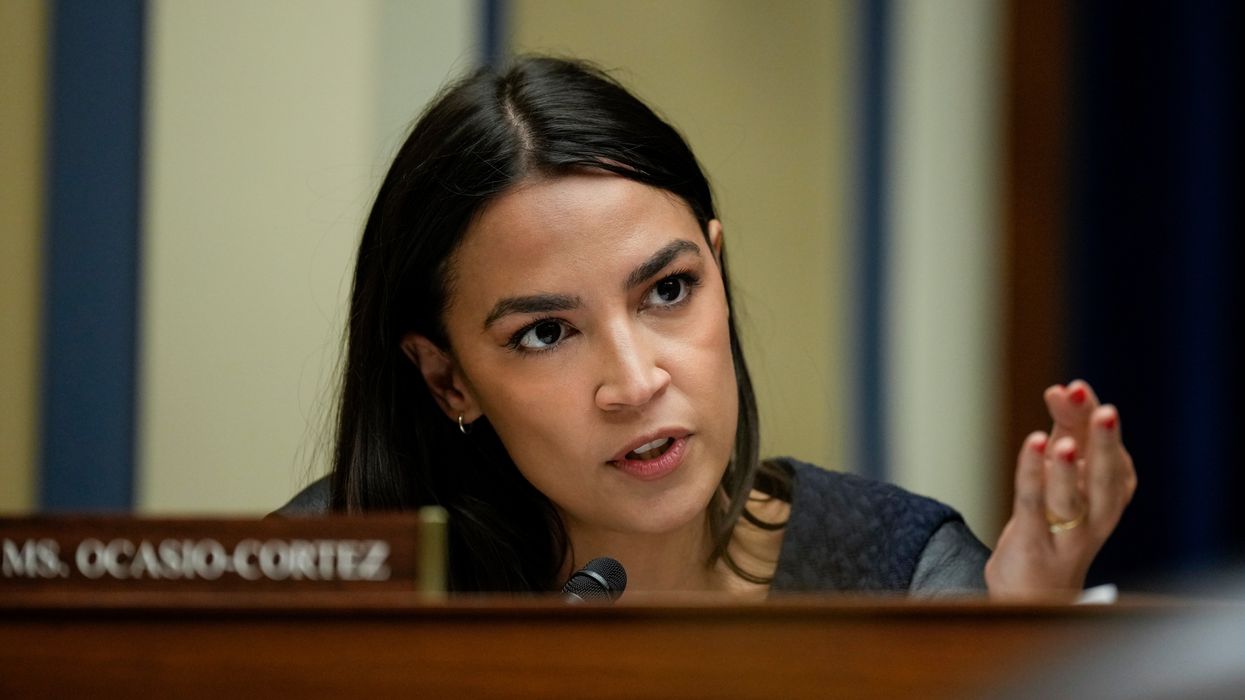
"No one is above the law," the New York Democrat asserted. "For two decades, Justice Thomas failed to report millions in gifts."
A day after several House Democrats urged U.S. Supreme Court Justice Clarence Thomas to resign following fresh reporting on undisclosed luxury vacations he accepted from wealthy Republican donors, Rep. Alexandria Ocasio-Cortez on Friday led a letter calling on the Department of Justice to investigate the right-wing judge's failure to report "significant gifts" from billionaires "in defiance of his duty under federal law."
"For close to two decades, Justice Thomas repeatedly certified that his financial disclosures were 'accurate, true, and complete,' despite omitting millions of dollars in gifts," the office of Ocasio-Cortez (D-N.Y.) said in a statement. "Justices of the Supreme Court are required to file annual reports disclosing gifts, and the failure to do so carries a legal penalty under the Ethics of Government Act of 1978."
According to the letter—which was also signed by Democratic Reps. Jerry Nadler (N.Y.), Jamie Raskin (Md.), Hank Johnson (Ga.), and Ted Lieu (Calif.)—"Justice Thomas' consistent failure to disclose gifts and benefits from industry magnates and wealthy, politically active executives highlights a blatant disregard for judicial ethics as well as apparent legal violations."
The letter continues:
No individual, regardless of their position or stature, should be exempt from legal scrutiny for lawbreaking. The integrity of our judicial system hinges on the impartiality and transparency of its members. As a Supreme Court justice and high constitutional officer, Justice Thomas should be held to the highest standard, not the lowest—and he certainly shouldn't be allowed to violate federal law. Refusing to hold him accountable would set a dangerous precedent, undermining public trust in our institutions and raising legitimate questions about the equal application of laws in our nation.
ProPublica reported Thursday that Thomas has accepted at least 38 luxury vacations funded by ultrawealthy executives and Republican donors—some with business interests before the Supreme Court. The outlet noted that "while some of the hospitality, such as stays in personal homes, may not have required disclosure, Thomas appears to have violated the law by failing to disclose flights, yacht cruises, and expensive sports tickets."
Ocasio-Cortez and other congressional Democrats have previously called for Thomas' impeachment over ethical issues including his unsigned dissent in a case involving the January 6, 2021 attack on the U.S. Capitol by supporters of former Republican President Donald Trump, who is facing federal charges for trying to overturn his 2020 election loss. The justice's wife, GOP operative Ginni Thomas, allegedly lobbied state lawmakers in Arizona to help rig the election for Trump.
Critics have lamented that the Supreme Court—alone among the three co-equal branches of the federal government—is not subjected to a binding code of ethics. Last month, the Democrat-led Senate Judiciary Committee advanced legislation led by Sen. Sheldon Whitehouse (D-R.I.) that would compel the high court to adopt an enforceable code of ethics. The measure advanced with no Republican support and is unlikely to pass the full Senate and GOP-controlled House.
ProPublica has also exposed a luxury fishing vacation in Alaska that another right-wing justice, Dobbs v. Jackson author Samuel Alito, accepted from a billionaire hedge fund manager who has repeatedly had business before the court.
Additionally, Politico's Heidi Przybyla reported earlier this year that Justice Neil Gorsuch, another member of the high court's conservative supermajority, in 2017 sold a property to the head of a law firm subsequently involved in over 20 cases before the court.
Last month, an Associated Press investigation also revealed that liberal Justice Sonia Sotomayor's staff "has often prodded public institutions that have hosted the justice to buy her memoir or children's books, works that have earned her at least $3.7 million since she joined the court in 2009."
Thomas and Alito have argued they don't have to disclose gifts they've received, even from people who have or have had cases before the Supreme Court. Critics derided Thomas for claiming that he was advised by colleagues to not report the largesse of billionaire GOP megadonor Harlan Crow and others from whom he accepted gifts.
"Thomas must resign and Congress must pass a binding code of ethics for Supreme Court justices."
Meanwhile, Chief Justice John Roberts has rebuffed demands from congressional Democrats and others to investigate allegations of unethical and possibly illegal conduct by Thomas and Alito, while refusing an invitation to testify before the Senate Judiciary Committee over the accusations.
Responding to the latest ProPublica reporting, Sen. Elizabeth Warren (D-Mass.) wrote Thursday on the social media site formerly known as Twitter that "Thomas' behavior is unconscionable."
"Americans deserve better from their highest court," Warren added. "We need binding ethics rules for SCOTUS now."
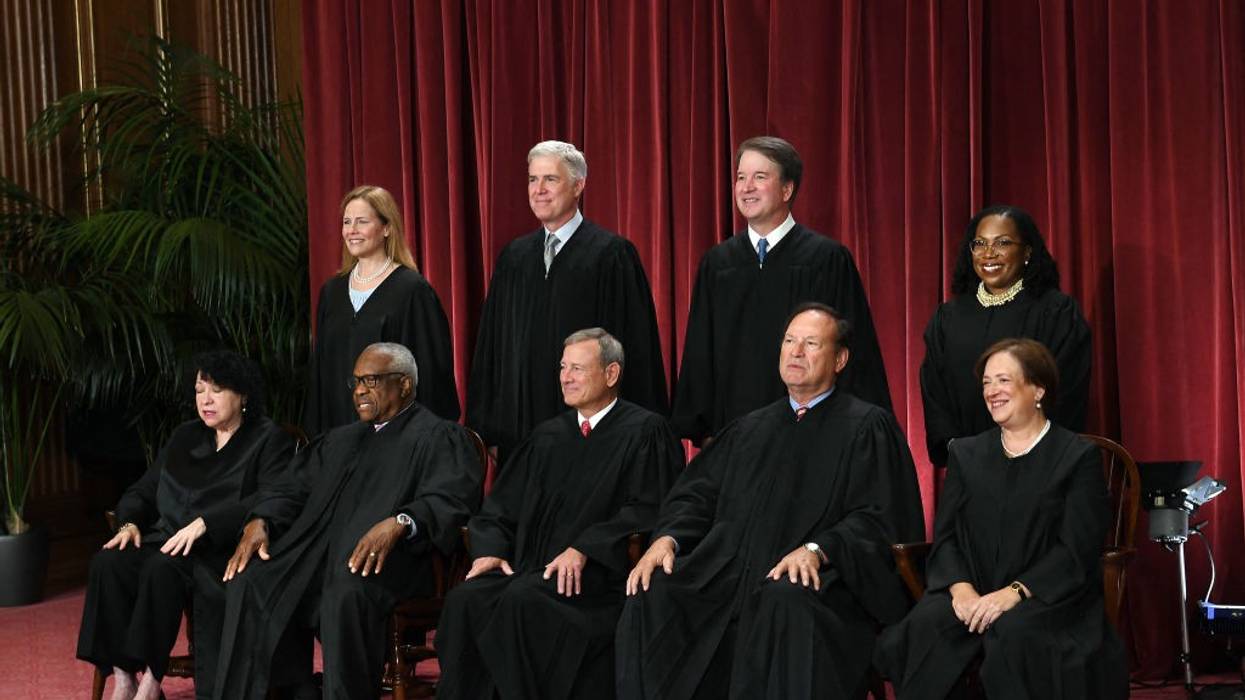
If Andrew Johnson and Bull Connor were alive today, they’d be mighty happy with this Supreme Court. It might be their ghosts, along with their ideological chums from Roger Taney, architect of the infamous Dred Scott case, to Strom Thurmond, George Wallace and the other Southern Dixiecrats, wearing those Court robes today.
Those defenders of slavery and segregation would be thrilled with the efforts of Roberts and his cabal to rewrite the history of the 14th Amendment’s “equal protection of the laws” clause of the Reconstruction era that is the core of American democracy. And their frontal assault on the goal of a multi-racial society premised on diversity, equity, and inclusion that is so feared by the ghosts of the plantation class ideologues and their descendants longing for a return to those days past.
Chief Justice John Roberts’ labored efforts to pretend his court is not merely a far-right partisan cabal crashed aground in a parade of extremist court rulings in the waning days of the 2022-2023 court term.
In the cynical hands of Roberts and his cronies on the court, the original intent of the 14th has been perverted to instead buttress and protect white supremacy and white privilege. And to strike down reforms designed to expand rights and protections for the marginalized and disadvantaged.
The debauched majority opinion striking down affirmative action, defines the “core purpose” of the Equal Protection Clause of the 14th as “do[ing] away with all governmentally imposed discrimination based on race,” by which Roberts argues means historically disadvantaged Black and Brown students should not “be admitted (to colleges and universities) in greater numbers than they otherwise would have been.”
That would surely be news to the authors of the 14th and its precursor, the 1866 Civil Rights Act, who specifically crafted the bill and amendment to reverse the horrors of slavery and the pseudo-scientific racism which buttressed it in the face of virulent racism and increasingly violent repression by the former Confederate soldiers abetted by the white politicians aligned with them.
As Eric Foner, one of the most prominent historians of Reconstruction, wrote in his seminal book “The Second Founding,” President Johnson vetoed the 1866 Act (overridden by Congress) as made to operate in favor of the colored and against the white race” and opponents of the 14th directly attacked it as a violation of white supremacy.
“[E]qual protection of the laws is not achieved through indiscriminate imposition of inequalities,” Roberts pontificated, seeking to obscure and re-write the 14th’s “equal protection of the laws” clause as meant to advocate a colorblind society that as Justice Sonia Sotomayor wrote in her forceful dissent “is not, and has never been, colorblind.”
As with his mugging on the Voting Rights Act, the subtext of his evisceration of affirmative action is infused with his presumption that the racist sins of the past are now past.
Roberts’ interpretation of the 14th, noted Sonia Sotomayor, is not only “contrary to precedent and the entire teachings of our history, but is also grounded in the illusion that racial inequality was a problem of a different generation. Entrenched racial inequality remains a reality today.”
Or as Justice Ketanji Brown-Jackson in her dissent, noted in beautiful simplicity, “history speaks. In some form, it can be heard forever. The race-based gaps that first developed centuries ago are echoes from the past that still exist today. By all accounts, they are still stark.”
The Court majority, wrote Sotomayor in her far reaching dissent, “subverts the constitutional guarantee of equal protection by further entrenching racial inequality in education, the very foundation of our democratic government and pluralistic society… Reduced to its simplest terms, the Court’s conclusion is that an increase in the representation of racial minorities at institutions of higher learning that were historically reserved for white Americans is an unfair and repugnant outcome that offends the Equal Protection Clause”.
Or as Leah Litman, one of three constitutional law professors who provide colorful takedowns on the Court in their entertaining podcast Strict Scrutiny put it, “there’s almost nothing more that the Republican appointed justices love to do than to deny doing what it is in fact they are doing.”
The veil of Roberts’ deception is easily ripped off by glaring exemptions in the majority opinion, another telling case described by Sotomayor, and a companion Court ruling the next day.
First, there is the court’s transparent acceptance of preferential admission policy for legacy applicants and the offspring of wealthy donors, which ensures special status rather than the “merit” of a supposed colorblind society. Of white Harvard students, 43 percent are either legacies, children of faculty, kin of donors or a recruited athlete who would not have gotten in if not for special treatment that the Court does not challenge.
Second, not well hidden in a footnote, Roberts exempts military academies, allowing them to continue to use race-based admissions “in light of the potentially distinct interests that military academies may present.” In other words, the highly diverse military and the need for a diverse officer corps.
“During the Vietnam War,” Sotomayor noted, lack of racial diversity “threatened the integrity and performance of the Nation’s military” because it fueled “perceptions of racial/ethnic minorities serving as ‘cannon fodder’ for white military leaders.” Or as Jackson put it, “the Court has come to rest on the bottom-line conclusion that racial diversity in higher education is only worth potentially preserving insofar as it might be needed to prepare Black Americans and other underrepresented minorities for success in the bunker, not the boardroom.”
To Sotomayor, “the majority recognizes the compelling need for diversity in the military and
the national security implications at stake but it ends race-conscious college admissions at civilian universities implicating those interests anyway.” Diversity is equally essential everywhere in a society that is growing more multi-national, more multi-cultural by the day no matter how hard the Tucker Carlson’s and his ilk, try to stop it.
“Race-conscious college admissions,” Sotomayor added, are, for example, “critical for providing equitable and effective public services. State and local governments require public servants educated in diverse environments who can “identify, understand, and respond to perspectives” in “our increasingly diverse communities.”
Third, Sotomayor cited another case where the Court majority was perfectly comfortable with a race-based exception where “Mexican appearance” could be “a relevant factor” to justify a stop “at the border.” The Court, she wrote, thus facilitated racial profiling of Latinos as a law enforcement tool and did not adopt a race-blind rule. The Court later extended this reasoning to border patrol agents selectively referring motorists for secondary inspection at a checkpoint, concluding that “even if it be assumed that such referrals are made largely on the basis of apparent Mexican ancestry, [there is] no constitutional violation.”
And then came the subsequent ruling the next day ruling 6-3 on partisan lines if a Colorado web designer could hypothetically, as Strict Scrutiny noted, refuse to design hypothetical wedding websites for hypothetical same-sex couples despite a state law that forbids discrimination against gay people.
“For the first time in history”, Sotomayor wrote in another powerful dissent, “granted a business open to the public a Constitutional right to refuse to serve members of a protected class.”
“The owner who hangs a shingle and offers her services to the public cannot retreat from the promise of open service. It is to convey the promise of a free and open society and then take the prize away from the despised few.”
Sotomayor aptly recounts the long struggle to achieve a “public accommodations law” that guarantees to every person the full and equal enjoyment of places of public accommodation without unjust discrimination. The civil rights freedom movement won enactment of the Civil Rights Act of 1964 and the Americans with Disabilities Act of 1990 which prohibit discrimination by places of public accommodation on the basis of race, color, religion, national origin, or disability – laws premised, one might add, on the equal protection clause of the 14th Amendment that the Roberts Court majority is so determined to subvert.
Sotomayor and Jackson both emphasized the need for continued popular struggle to win the reforms needed to counter the rightwing assaults.
In a master class history that recounts the pervasive legacy of slavery, segregation and continuing structural racism, Jackson reminded all of us that “the justification for admissions programs that account for race is inseparable from the race-linked gaps in health, wealth, and well-being that still exist in our society (the closure of which today’s decision will forestall).”
From economic opportunity, savings and income to housing to education to the criminal justice system, the examples continue to rip through every fabric of our society. Those are reasons that historically disadvantaged Black and Latino students are disproportionately harmed by the Court’s overturning of President Biden’s plan to cancel federal student debt as well.
One of the most insidious consequences Jackson highlights, is the most basic – health, life and death. Citing the success of the University of North Carolina (UNC) policy outlawed by the court, Jackson wrote: “Beyond campus, the diversity that UNC pursues for the betterment of its students and society is not a trendy slogan. It saves lives.
“For marginalized communities in North Carolina,” she continued, “it is critically important that UNC and other area institutions produce highly educated professionals of color. Research shows that Black physicians are more likely to accurately assess Black patients’ pain tolerance and treat them accordingly (including, for example, prescribing them appropriate amounts of pain medication).
“For high-risk Black newborns, having a Black physician more than doubles the likelihood that the baby will live, and not die. Studies also confirm what common sense counsels: Closing wealth disparities through programs like UNC’s – which, beyond diversifying the medical profession, open doors to every sort of opportunity – helps address the aforementioned health disparities (in the long run) as well,” Jackson wrote.
Sotomayor cited briefs submitted by the Southern Governors that increasing the number of students from underrepresented backgrounds who join “the ranks of medical professionals” improves “healthcare access and health outcomes in medically underserved communities.” And another from the Association of American Medical Colleges that all physicians become better practitioners when they learn in a racially diverse environment.
Other medical professionals have issued similar warnings. Lee Jones, dean of medical education at the Georgetown University School of Medicine, observed that the ruling will harm efforts to mitigate the country’s massive racial and health disparities, adding that white residents in Washington, D.C., live more than 15 years more than Black residents.
After California banned affirmative action in the notorious Prop. 209 initiative in 1996, the number of Black and Latino students in colleges and medical schools plummeted. At the University of California San Diego, the entering medical school class in 1997 did not include a single Black student.
Health and Human Services Secretary Xavier Becerra noted that people of color had been excluded from attending medical school and joining medical organizations for generations. “This ruling will make it even more difficult for the nation’s colleges and universities to help create future health experts and workers that reflect” the nation’s diversity. “We need more health workers, especially those who look like and share the experiences of the people they serve,” he said.
“It is important to have a representative, culturally and linguistically competent nursing workforce to provide the best care for our communities, and yet only 6.3 percent of RNs are Black and just 6.9 percent are Latinx, despite Black and Latinx people respectively accounting for 13.6 percent and 19.1 percent of the total U.S. population,” said National Nurses United. “We need to diversify the nursing workforce and thus increase, not cut back, educational opportunities for people of color who want to be nurses.”
Fig leaf efforts by Roberts to shroud his racist intent that universities can, as Sotomayor put it, “in some situations, consider race in application essays is nothing but an attempt to put lipstick on a pig. The Court’s opinion circumscribes universities’ ability to consider race in any form by meticulously gutting respondents’ asserted diversity interests. Yet, because the Court cannot escape the inevitable truth that race matters in students’ lives, it announces a false promise to save face and appear attuned to reality. No one is fooled.”
For everyone appalled by the ghosts of Andrew Johnson, Bull Connors et al who sit on the court bench today, it is long past time to revisit proposals for essential court reform, from term limits of the lifetime appointments to expansion of the court to reflect the political reality of the nation.
“Despite the Court’s unjustified exercise of power the opinion today will serve only to highlight the Court’s own impotence in the face of an America whose cries for equality resound, Sotomayor concluded. “As has been the case before in the history of American democracy, concluded, quoting Dr. Martin Luther King, “the arc of the moral universe” will bend toward racial justice despite the Court’s efforts today to impede its progress.”