SUBSCRIBE TO OUR FREE NEWSLETTER
Daily news & progressive opinion—funded by the people, not the corporations—delivered straight to your inbox.
5
#000000
#FFFFFF
To donate by check, phone, or other method, see our More Ways to Give page.


Daily news & progressive opinion—funded by the people, not the corporations—delivered straight to your inbox.
"Nevadans overwhelmingly support putting reproductive rights into our state constitution," said one abortion rights campaigner.
Abortion rights advocates said this week that they would appeal a decision by a Nevada judge to reject a 2024 ballot initiative to enshrine reproductive rights in the state constitution.
Carson City District Court Judge James Russell sided Tuesday with the Coalition for Parents and Children PAC, which last month filed a lawsuit claiming the ballot measure—which would guarantee the "fundamental right to reproductive freedom"—violates Nevada law by covering more than one subject. The petition mentions abortion, birth control, prenatal care, and post-partum care, which advocates note all fall under the umbrella of "reproductive freedom."
However, Russell said that "it is clear to me this is probably the clearest case I have seen that I think there is a violation of the single-subject rule."
"We are optimistic about the ballot initiative as a whole, and you know, we plan to appeal this."
Nevadans for Reproductive Freedom—a coalition including Planned Parenthood, Reproductive Freedom for All Nevada, and Indivisible Northern Nevada that filed the petition in September—disagreed with Russell's ruling and vowed to appeal to the Nevada Supreme Court.
"We are optimistic about the ballot initiative as a whole, and you know, we plan to appeal this," said Lindsey Harmon with Nevadans for Reproductive Freedom. "And we know that in fact, these are all a single subject."
"Nevadans overwhelmingly support putting reproductive rights into our state constitution, and voters should be aware that anti-abortion advocates still have plenty of state government allies who are willing to help them undermine reproductive freedom," Harmon asserted, adding that the coalition would not "let one judge's misguided ruling deter us."
Voters in seven states—most recently Ohio—have passed ballot measures protecting reproductive rights in the wake of the U.S. Supreme Court's cancellation of half a century of federal abortion rights in last year's Dobbs v. Jackson Women's Health Organization decision.
"The result will essentially force an untold number of affected women to give birth without their consent," wrote Justice Donald Beatty in his dissent. "I am hard-pressed to think of a greater governmental intrusion by a political body."
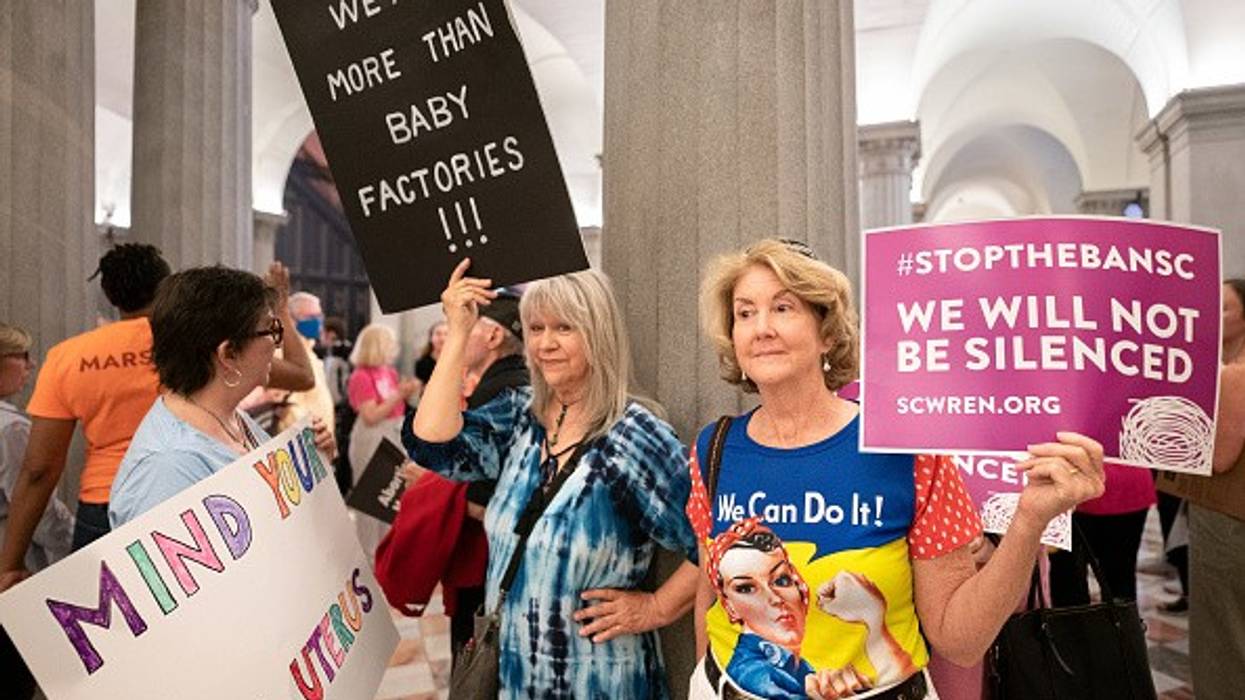
Despite a recent poll showing that just 37% of South Carolinians backed a six-week abortion ban, the state Supreme Court on Wednesday reinstated the previously blocked law, gutting what remained of abortion access for millions of people across the South.
The ruling was handed down by the all-male high court following the mandatory retirement of former Justice Kaye Hearn, who wrote the majority opinion in another ruling in January which struck down a nearly identical six-week ban that had been passed in 2021.
The state Legislature appointed Judge Gary Hill to replace Hearn after two women who were running for the seat dropped out. State Sen. Sandy Senn (R-41) accused House Republicans of forcing Judges Stephanie McDonald and Aphrodite Konduros out of the race by holding informal polls that showed they were behind Hill. South Carolina now has the only all-male state Supreme Court in the United States.
The previous law was overturned in a 3-2 ruling, and Wednesday's decision was 4-1 with Chief Justice Donald Beatty dissenting.
Jenny Black, president and CEO of Planned Parenthood South Atlantic, said Wednesday's ruling "puts the dangerous politicization of South Carolina's highest court on full display."
"This abortion ban is nearly identical to the ban struck down by this court just months ago—the only thing that has changed is the makeup of the court," said Black. "Planned Parenthood South Atlantic's doors remain open, and we will continue to provide abortion care in South Carolina under the severe restrictions of this law, but we know that's not enough. This abortion ban takes away people's ability to control what happens to their bodies, forcing many South Carolinians to remain pregnant against their will."
The law upheld by the court, S.B. 474, bans abortion care after six weeks of pregnancy—before many people even know they are pregnant. It contains so-called "exceptions" for situations in which the pregnant person's life or health are at risk and in cases of a fetal diagnosis that is "incompatible" with life—but numerous cases in states that have placed extreme restrictions or bans on abortion care since Roe v. Wade was overturned last year have shown that such exceptions place pregnant people's lives and health at great risk.
S.B. 474 also ostensibly permits survivors of rape and incest to access abortion until 12 weeks of pregnancy, but only if their physician reports the crime and the survivor's name to law enforcement.
Planned Parenthood noted that not only South Carolina but people across the South will be affected by the ruling. Arkansas, Louisiana, Mississippi, and Alabama now have full abortion bans and are bordered by states that also ban or severely restrict abortion care. Georgia and South Carolina both ban abortion at six weeks and a six-week ban is also being reviewed being reviewed by Florida's Supreme Court.
"South Carolinians who need care past the earliest stages of pregnancy will have to travel out of state for care, seek abortion outside the healthcare system, or continue pregnancies against their will," said Planned Parenthood in a statement. "South Carolina has been a critical access point for abortion in the South, as surrounding states have banned or severely restricted abortion. Today's ruling means people across the region will need to travel much further for abortion care."
Noting a survey taken by Winthrop University in May that showed nearly two-thirds of South Carolina residents opposed a six-week ban, NARAL Pro-Choice America said the state Supreme Court had "subverted the will of South Carolinians."
After the 2021 law was struck down by the court in January, Republican legislators amended the law to clarify that contraceptives are permitted, among other changes.
But Planned Parenthood Federation of America President Alexis McGill Johnson said the new ruling is "not only a stunning reversal of a decision made just seven months ago but an exceedingly dangerous and cynical move by the court that has chosen to do the bidding of anti-abortion politicians in the Legislature."
Nancy Northrup, president of the Center for Reproductive Rights, said that "with today's decision, the court has turned their backs on South Carolinians and their fundamental rights."
"A change in the court's makeup shouldn't change the enduring protections of South Carolina's constitution," she added. "The right to make deeply personal healthcare decisions should not depend on where you live, and we will not stop fighting for reproductive freedom in South Carolina and across the country."
"Issue 1 was a blatant attempt by its supporters to control both the policy agenda and the process of direct democracy," said one campaigner.
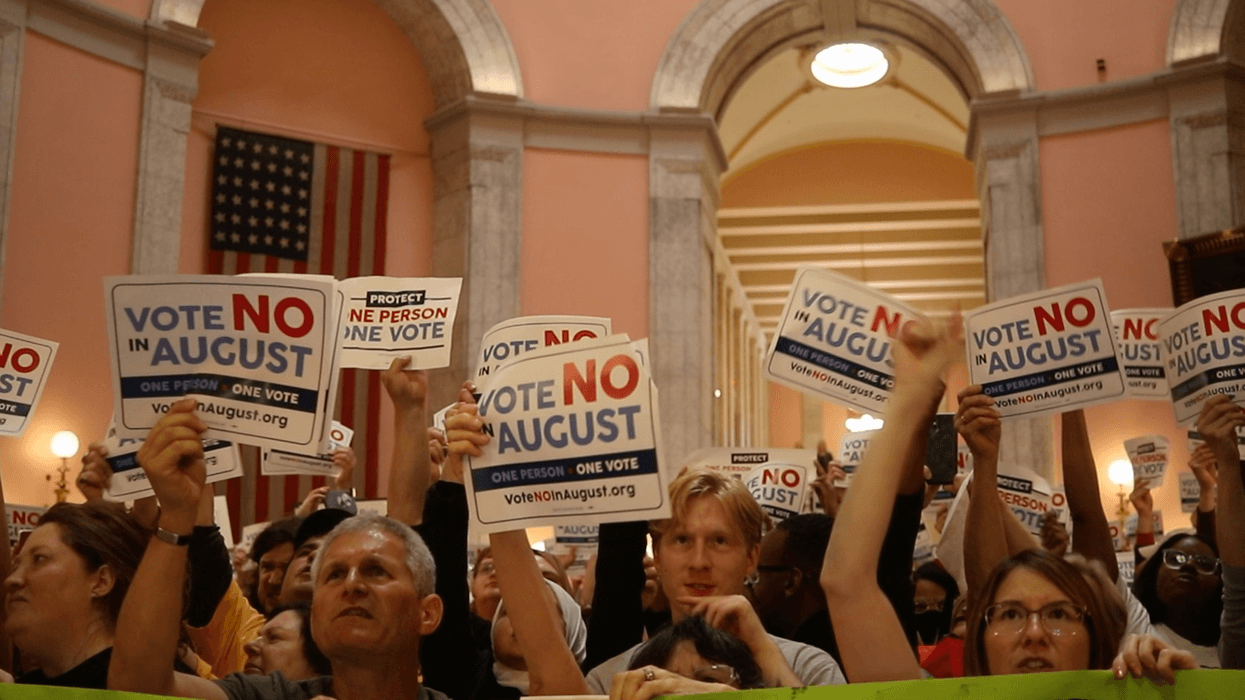
Ohio voters on Tuesday decisively rejected a Republican-authored measure that would have made it more difficult to amend the state constitution through the ballot initiative process, a billionaire-funded effort aimed at preempting a November vote on abortion rights.
If approved by voters, the measure known as Issue 1 would have raised the threshold for passage of a constitutional amendment from a simple majority to 60%. The measure also would have imposed more stringent signature requirements for Ohio ballot initiatives.
The GOP proposal—which was the only item on the ballot in Tuesday's special election—failed by a vote of 43% to 57%, according to the Ohio secretary of state's office.
"Issue 1 was a blatant attempt by its supporters to control both the policy agenda and the process of direct democracy," said Rachael Belz, the CEO of Ohio Citizen Action, one of the groups that mobilized in opposition to the proposal. "When they forced Issue 1 onto the ballot, they awakened a sleeping giant and unleashed a movement. And that movement isn't going away tomorrow. It will continue to build and grow and to carry us through to victories in November and beyond."
The Republican push for Issue 1 drew national attention given the implications for both the democratic process and reproductive rights in Ohio, where abortion is currently legal through 22 weeks of pregnancy—though the state GOP is working to change that.
A proposed constitutional amendment on the ballot in November would codify the right to abortion access in the Ohio constitution, stating that "every individual has a right to make and carry out one's own reproductive decisions, including but not limited to decisions on contraception, fertility treatment, continuing one's own pregnancy, miscarriage care, and abortion."
Frank LaRose, Ohio's Republican secretary of state and a U.S. Senate hopeful, said in June that Issue 1 was " 100% about" preventing passage of the abortion rights amendment.
Recent polling indicates that around 58% of Ohioans back the proposed amendment—a level of support that would have been insufficient had Issue 1 succeeded.
"From defeating Issue 1 tonight to submitting nearly twice the amount of signatures needed to get a measure protecting abortion access on the ballot in November, Ohio voters have made clear that they will settle for nothing less than reproductive freedom for all," Mini Timmaraju, the president of NARAL Pro-Choice America, said in a statement late Tuesday.
"Republicans should be ashamed of their efforts to subvert the will of voters," Timmaraju added. "Seeing this measure defeated is a victory for our fundamental rights and our democracy. We're grateful to our partners on the ground for their tireless efforts to secure abortion rights and access. We look forward to fighting by their side to lock this fundamental freedom into law in November."
"It was the hard work and resilience of Ohioans of all parties that prevented the destruction of a foundational right we've held for 110+ years."
The Republican attack on the ballot initiative process in Ohio is part of a nationwide GOP effort to limit direct democracy as the party—emboldened by the right-wing U.S. Supreme Court—continues its effort to roll back abortion rights and other freedoms.
According to a March tally by election analyst Stephen Wolf, Republicans have recently tried to make it harder to pass citizen-led ballot initiatives in at least 10 states, including Ohio, Florida, Arizona, and Arkansas.
"In the many states where the GOP has refused to take action, activists have used ballot initiatives to expand Medicaid, raise the minimum wage, secure abortion rights, protect the right to vote, curb gerrymandering, legalize marijuana, promote gun safety, and more," Wolf wrote. "How have Republicans reacted to this? By trying to make it harder to pass initiatives in the first place."
Catherine Turcer, executive director of Common Cause Ohio, said Tuesday that "since 1912, Ohioans have had the right to collect signatures and bring proposed constitutional amendments directly to voters."
"This is an important check on the state legislature, hyperpartisan politicians, and special interests who did everything they could to take away that right," Turcer added. "It was the hard work and resilience of Ohioans of all parties that prevented the destruction of a foundational right we've held for 110+ years."
"Tonight's results," Turcer said, "are a resounding victory for Ohio voters who helped stop this power grab by the state legislature and Secretary of State Frank LaRose."
"We are the majority!" said one abortion rights leader. "It's time to take our court back. It's time to take our government back."
As rights advocates took stock on Saturday of the catastrophic effects of the U.S. Supreme Court's overturning of Roe v. Wade exactly a year after the court's right-wing majority gutted abortion rights for millions, campaigners rallied to demand bold action from the Democratic Party and the White House to protect reproductive freedom.
" Republicans are across the way right now lobbying for a national abortion ban with their hero Mike Pence," said NARAL Pro-Choice America President Mini Timmaraju, despite the fact that "poll after poll after poll has shown Americans are with us. They don't want a national abortion ban, they want Congress to codify abortion access."
NARAL is among the rights groups that have demanded the passage of the Women's Health Protection Act (WHPA), which was obstructed last year when right-wing Democratic Sen. Joe Manchin of West Virginia joined the Republican Party in blocking it. The law would affirm the right to abortion care at the federal level.
The Dobbs v. Jackson Women's Health Organization ruling last year, handed down just weeks after the WHPA was blocked, paved the way for at least 14 states to ban most abortions. Republicans including Sen. Lindsey Graham (R-S.C.) and former Vice President Mike Pence, who is running for president in 2024, have called for a nationwide 15-week abortion ban.
After leading the crowd in a chant of, "We are the majority!" Timmaraju said, "It's time to take our court back. It's time to take our government back."
Along with Planned Parenthood and other national rights organizations, NARAL in recent months has joined the push for an expansion of the Supreme Court, which has been done by Congress seven times in the past.
In Charlotte, North Carolina, Vice President Kamala Harris on Saturday addressed a packed house at the Grady Cole Center, where she noted that "more than 350 new laws to restrict these freedoms and the right to have access to reproductive healthcare" have been proposed or passed in states, leaving 23 million women of reproductive age living in states with extreme abortion bans.
"Extremist Republicans in Congress have proposed to ban abortion nationwide. But I have news for them. We're not having that. We're not standing for that. We won't let that happen. And by the way, the majority of Americans are with us," said Harris. "The United States Congress must put back in place what the Supreme Court took away."
The effects of abortion bans have been well-documented in the past 12 months, as pregnant patients have been denied care by doctors fearing prosecution, even as their pregnancies threatened their health. A survey of OB/GYNs this week found that 68% of doctors said Dobbs has made managing pregnancy-related medical emergencies more difficult and 64% said the ruling has worsened pregnancy-related mortality.
As the anniversary drew near this week, President Joe Biden signed an executive order expanding access to birth control and Arizona Gov. Katie Hobbs (D) took action to block county prosecutions of people who have abortions. A 15-week abortion ban is in effect in Hobbs's state.
Amnesty International USA national programs director Tarah Demant said that even in states where bans are not in effect, "a climate of fear is being purposefully sewn to restrict women, girls, and people who can get pregnant from finding legal abortion care."
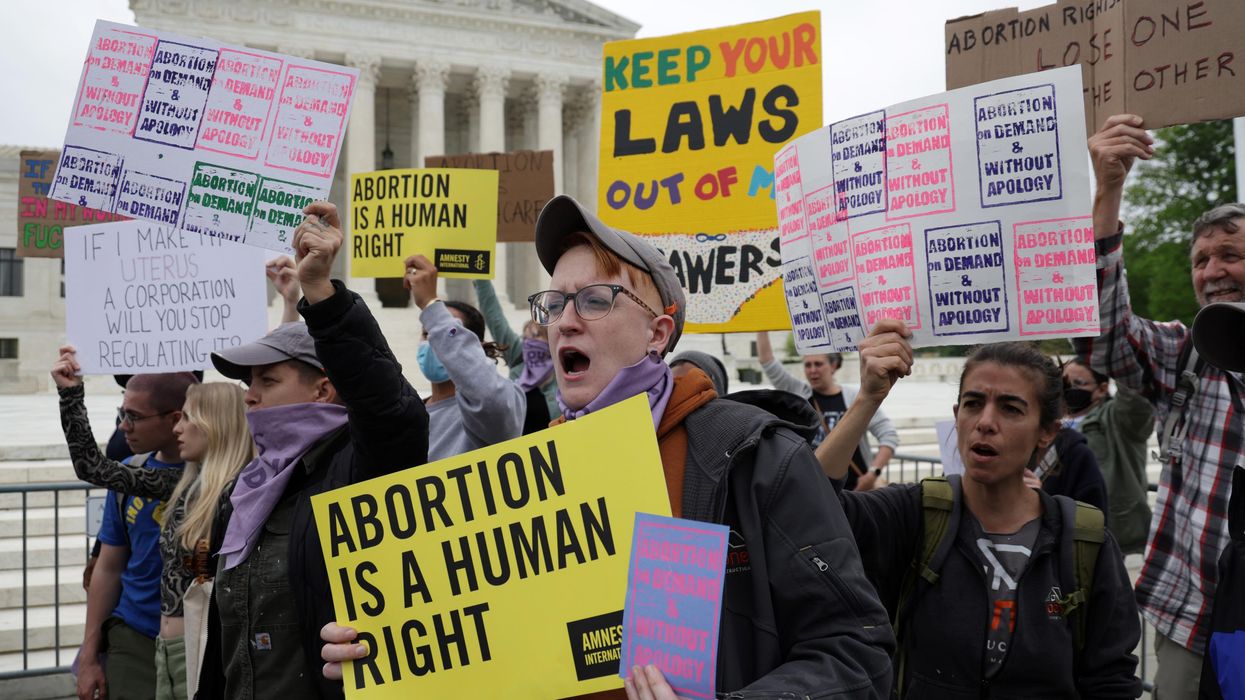
"Yet despite these coordinated and vitriolic attacks on our rights, Americans continue to overwhelmingly support access to safe and legal abortion, multiple states have added new protections, and activists across states continue to advocate for their rights," said Demant. "Abortion is a human right and basic healthcare, and activists across the country and around the world are more determined than ever to ensure that people across the USA will be able to access this right."
"From his hostility toward racial equity and LGBTQ+ rights, to book bans, to one of the most draconian abortion bans on record, he poses an immense threat to our freedoms and our country's most vulnerable communities," said one critic.
"Of all the extremists gunning for the GOP nomination, Ron DeSantis might be the worst."
That's what NARAL Pro-Choice America president Mini Timmaraju said in a statement Wednesday as Florida's Republican governor formally launched his long-anticipated campaign for the party's 2024 presidential nomination.
"From his hostility toward racial equity and LGBTQ+ rights, to book bans, to one of the most draconian abortion bans on record, he poses an immense threat to our freedoms and our country's most vulnerable communities," Timmaraju warned. "NARAL and our 4 million members will keep fighting side-by-side with those that DeSantis has targeted, and we are ready to mobilize to ensure that his extremism gets nowhere near the White House."
In a series of tweets Wednesday, Women's March also slammed "fascist, anti-choice" DeSantis, and listed some of the policies he has fought for as governor, including a six-week abortion ban and the "Don't Say Gay" law. The Florida Republican has also recently engaged in attacks on academic freedom, the rights of immigrants and transgender people, and democracy.
Jenny Lawson, executive director of Planned Parenthood Votes, similarly stressed Wednesday that "Ron DeSantis' governorship has been an unmitigated disaster for Floridians, and his candidacy is a grave threat to every American's reproductive freedom."
"He's shown time and time again that he will put himself and his political ambitions over anything and everyone—including the health and lives of Floridians," Lawson continued. "While Floridians demand affordable healthcare and safer communities, DeSantis has pushed policies that endanger Florida's future."
"Voters in Florida don't support his anti-abortion, anti-LGBTQ+ agenda, and DeSantis will soon learn that the rest of the country doesn't, either," she added. "Everyone will see him for the dangerous, out-of-touch, overzealous politician he is. Planned Parenthood Votes will make sure of it."
DeSantis on Wednesday filed paperwork with the Federal Election Commission and then officially announced his candidacy during a Twitter "Spaces" event—hosted by the social media giant's billionaire owner, Elon Musk—that, as Politico put it, was "marred by horrendous tech failures."
Nora Benavidez, Free Press Action's senior counsel and director of digital justice and civil rights, said that "it's no surprise that the Spaces suffered a tech meltdown during tonight's big announcement. Musk has cut back on the personnel needed to keep Twitter glitch-free. It's fitting that his reckless management style would bite him just as so many are tuning in."
"Giving airtime to Ron DeSantis is not about free speech on Twitter or making the platform a public square. Elon Musk is instead prioritizing voices like his that promote bigotry and hate," Benavidez added. "This latest Musk stunt merely showcases a man who has misused his power in Florida to attack every basic right Floridians have. From DeSantis' attacks on voting rights, protest rights, and academic freedoms to denying basic protections for the LGBTQIA+ community, his presidential announcement this evening shows us all what Twitter has become: a megaphone for right-wing reactionary views."
As Politico reported:
President Joe Biden was quick to chime in, tweeting: "This link works," followed by a link to the president's campaign donation site.Polling results released Wednesday by Quinnipiac University show that despite his various legal issues, Trump is the top choice for 56% of Republican and Republican-leaning voters, followed by DeSantis with 25%. Former United Nations Ambassador and South Carolina Gov. Nikki Haley got just 3% while ex-New Jersey Gov. Chris Christie, former Vice President Mike Pence, and U.S. Sen. Tim Scott (S.C.) all tied at 2%; the other eight declared or potential candidates each received less than that.
A spokesperson for former President Donald Trump responded: "Glitchy. Tech issues. Uncomfortable silences. A complete failure to launch. And that's just the candidate!"
As Common Dreams reported earlier Wednesday, DeSantis entered the 2024 race as he faced scrutiny from campaign finance watchdogs.
This article has been updated with comment from Free Press Action.
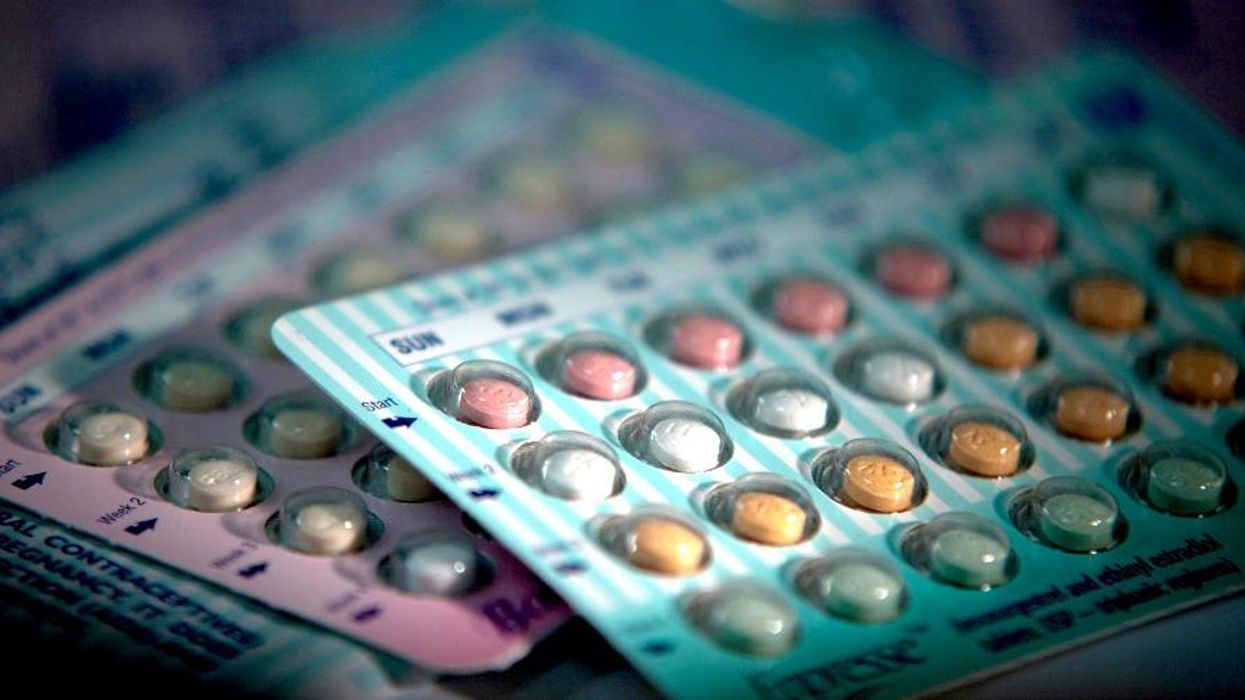
"Every day we wait is another day longer where barriers remain in place, preventing people from getting access to the contraceptive care they want and need," said one leading OTC birth control advocacy coalition.
Reproductive rights groups on Wednesday called on the Food and Drug Administration to approve a birth control pill for over-the-counter use "without any further delay" after an advisory panel unanimously recommended permitting use of the medication without a prescription—two decades after advocates first began campaigning on the issue.
A joint advisory committee voted 17-0 in favor of offering OPill, which was first approved for prescription use 50 years ago, without a prescription after hearing from public health analysts and scientists. Concerns that some FDA scientists raised about patients failing to take birth control correctly unless they were provided the pills by a medical professional were outweighed by the benefits, the panel found.
"The panel expresses confidence in the effectiveness, not only in the general population of females, but also in adolescent populations and those with limited literacy," Maria Coyle, chairwoman of the committee, told The New York Times. "The panel seems very comfortable with the limited number of risks from the medication itself."
The Free the Pill Coalition, a campaign started by the global advocacy group Ibis Reproductive Health which has pushed for over-the-counter (OTC) birth control, said the recommendation itself was a "landmark achievement for reproductive justice" and expressed hope that the panel's decision would result in swift approval by the FDA.
"Every day we wait is another day longer where barriers remain in place, preventing people from getting access to the contraceptive care they want and need," said the group. "It's past time for an OTC birth control pill that's fully covered by insurance, affordable, and available to people of all ages."
U.S. Rep. Ayanna Pressley (D-Mass.) also called on the FDA to take the advice of the panel "without delay," calling the recommendation "a major step forward in our fight to affirm folks' right to make decisions about their body, when to start a family, and their future."
The Free the Pill Coalition and other groups say OTC dispensing of birth control pills will increase access for people who have logistical or financial barriers to regularly seeing a doctor for a prescription.
Some FDA scientists told the panel that data from HRA Pharma raised concerns about whether people with certain medical conditions that contraindicate the use of OPill would follow warnings if the pill was available over-the-counter, and whether adolescents and people with limited literacy would follow the directions carefully enough to take the pill each day at the same time.
Author and MSNBC contributor Dr. Uché Blackstock called those concerns "quite paternalistic."
"Given the technology available, alternative ways can be developed to help deliver instructions," tweeted Blackstock.
Contrary to those claims, said Dr. Raegan McDonald-Mosley of the contraceptive advocacy group Power to Decide, "the committee followed the scientific evidence and paved the way for a massive breakthrough in access to birth control."
"As a practicing OB-GYN, I am confident that my patients do not need a visit with me to safely and effectively use the birth control pills they need," said McDonald-Mosley. "Requiring prescriptions and provider visits places unnecessary barriers to accessing reproductive health care, especially for those in contraceptive deserts—counties without a single clinic that provides the full range of contraceptive methods. In such areas, people have to travel further just to visit a provider to get their birth control, which means they need to take even more time off work or arrange for more childcare. Allowing OTC access for the pill would help eliminate these unnecessary barriers and increase access to reproductive health across the country."
Crediting the "tireless advocates, including the Free the Pill Coalition," with pressuring the FDA panel to take a significant step toward approving non-prescription use of OPill, NARAL Pro-Choice America said the decision is "not only historic—it is simply the right thing to do," particularly as abortion rights are under attack by right-wing lawmakers across the country.
"As reproductive freedom in our country faces an unprecedented crisis," said the group, "expanding access to proven, safe, and effective contraception has never been more important."
"The people of North Carolina did not give Republicans a supermajority of the state House," said one progressive group. "Only the duplicity and corruption of Tricia Cotham did."
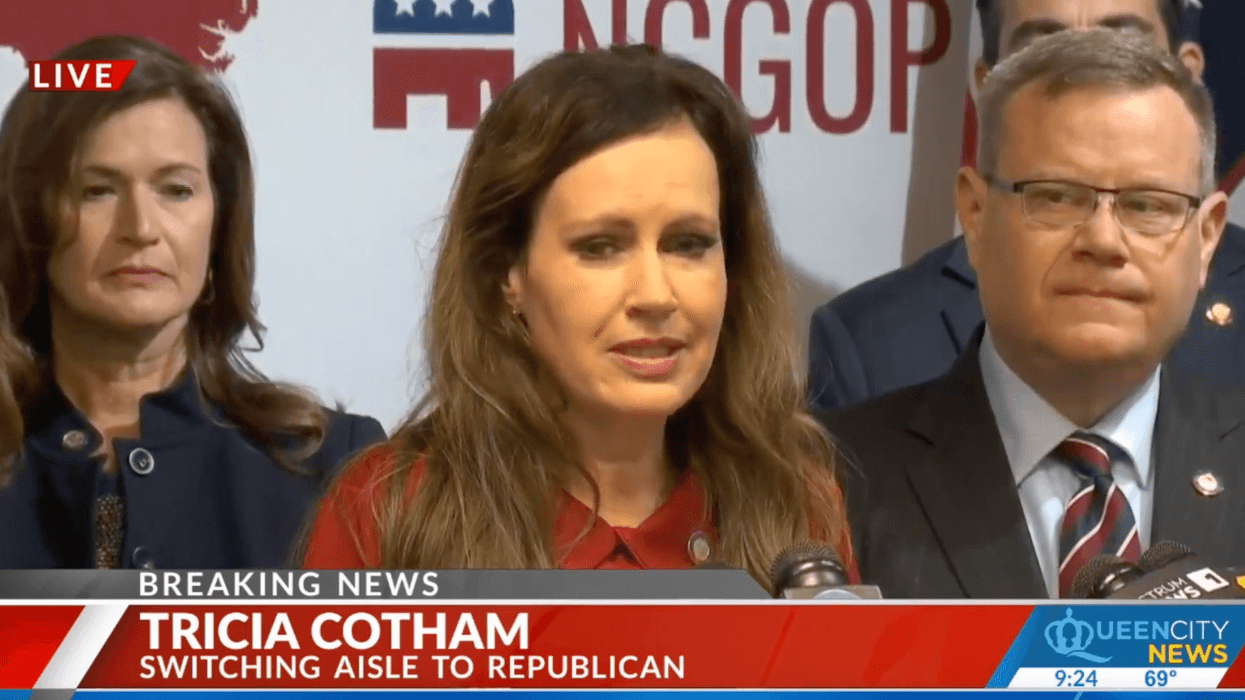
A pro-forced pregnancy bill passed in North Carolina late Thursday is likely to become law despite the objections of Democratic Gov. Roy Cooper thanks largely to a sudden decision by state Rep. Tricia Cotham last month to join the Republican Party after years as a pro-choice Democrat—giving the GOP a veto-proof majority.
The state Senate on Thursday passed Senate Bill 20, which includes a ban on abortion care after 12 weeks of pregnancy along with other restrictions, less than 48 hours after they unveiled the legislation at a press conference on Tuesday. The bill was inserted into a separate piece of legislation instead of being officially introduced in the Legislature, taking Democrats and advocacy groups by surprise and allowing no time for public hearings.
According to The Washington Post, Republicans were deliberately secretive about the crafting of the legislation, which was written in secret meetings in recent weeks where members were forbidden from having their own copies of documents to avoid leaks, in order to prevent advocates from organizing protests at the state Capitol.
Planned Parenthood South Atlantic still managed to spearhead a rally on Wednesday, where state Attorney General Josh Stein warned the bill is a "massive first step" toward a total abortion ban, despite Republican claims that a 12-week ban is more "mainstream" than bans starting at six weeks of gestation or at any stage in pregnancy, which have been passed in 15 states including the majority of states in the Southeast.
The bill includes "exceptions" for pregnancies that result from rape or incest through 20 weeks, certain fetal abnormalities through 24 weeks, and for life-threatening complications for a pregnant person.
Numerous cases since the right-wing majority of the U.S. Supreme Court overturned Roe v. Wade last June have shown that such exceptions put patients through weeks of physical and emotional trauma as doctors and hospitals—fearing litigation under the new laws—refuse to provide treatment until their lives are sufficiently in danger.
S.B. 20 also includes restrictions such a requirement that anyone who obtains an abortion before 12 weeks of pregnancy also see their medical provider 72 hours before the procedure, likely cutting off access to out-of-state people, many of whom have traveled to North Carolina from other parts of the South since Roe was overturned, and to people who don't have paid leave or access to childcare.
If the bill becomes law, said NARAL Pro-Choice America, "abortion access across the Southeast will be further decimated."
Cooper told the Post he plans to veto the bill after a delay of up to 10 days to give North Carolina residents time to "digest this very complicated, burdensome legislation that they haven't had a chance to even see," but the governor will have to convince at least one Republican to break the party's veto-proof majority to stop the bill from becoming law.
Because Cotham (R-112) announced just last month that she was joining the GOP, the party now has the 72 House seats it needs to override a veto in the 120-seat state House.
Politics in the state are shifting to the right "with extraordinary speed," said Daniel Nichanian of Bolts.
Cotham announced her decision to change parties three months after co-sponsoring a bill to codify abortion rights in state law, and five months after winning her election following a vehemently pro-choice campaign. She also spoke about her own abortion on the state House floor in 2015 during a debate over abortion restrictions. On Wednesday, she voted with the Republicans in favor of S.B. 20.
"The people of North Carolina did not give Republicans a supermajority of the state House," said the progressive group Carolina Forward. "Only the duplicity and corruption of Tricia Cotham did these things."
Cooper told the Post he plans to lobby Republicans who have claimed to support abortion rights—including state Rep. Ted Davis (R-19), who did not vote on Wednesday—to tank the GOP's effort to override his veto.
Republicans are "trying to dress this up as a reasonable 12-week ban," the governor told the Post. "It's not."
"The Supreme Court knows that siding with extreme Trump judges to restrict medication abortion will ignite the biggest political firestorm since Roe v. Wade was overturned," said one advocate.
An anticipated ruling on access to mifespristone, one of two medications used in a majority of abortions in the U.S., was delayed by the U.S. Supreme Court on Wednesday, giving the court until Friday to rule on the availability of the pill.
The court is considering a ruling handed down earlier this month by the 5th Circuit Court of Appeals, which would terminate Food and Drug Administration (FDA) policies adopted in 2016 to improve access to mifepristone. That year, the agency allowed patients to obtain the pill through the mail, retail pharmacies, and telemedicine prescriptions.
If allowed to take effect, the appeals court ruling would also change the FDA's approval of the drug to seven weeks of pregnancy instead of the current 10 weeks.
The appeals court ruling only partially blocked an early decision by right-wing U.S. District Judge Matthew Kacsmaryk, which would entirely suspend the FDA's approval of mifepristone, more than two decades after the drug became legally available.
The FDA and drug companies have warned that even allowing the 5th Circuit Court of Appeals' ruling to go forward would drastically cut access to mifepristone, which has been used by more than 5 million people in the U.S. since its approval.
Reproductive rights groups on Wednesday emphasized that "mifepristone remains available" until at least Friday, while warning that a ruling in favor of the lower courts' decisions will harm millions of people who rely on the medication.
"There is only one acceptable outcome here," said the Guttmacher Institute, a research and policy group.
Supreme Court observers were left to wonder Wednesday evening whether the ruling was delayed to give time to a liberal justice to write a dissent regarding a denial of a stay on the appeals court's decision, or for a conservative justice to dissent against a stay.
NARAL Pro-Choice America President Mini Timmaraju expressed hope that "the anti-choice extremists on the court" will "throw in the towel and accept reality: the science, the facts, and the law are all on the side of legal and accessible medication abortion."
"As this case continues, safe and effective medication abortion with mifepristone in all 50 states remains in peril. The Supreme Court knows that siding with extreme Trump judges to restrict medication abortion will ignite the biggest political firestorm since Roe v. Wade was overturned," said Timmaraju. "The lower courts' decisions have been entirely baseless."
"This stay is the bare minimum," said one reproductive rights campaigner. "The imminent threat to access to mifepristone and abortion care remains."
"Mifepristone remains safe, effective, and AVAILABLE."
However, access to medication abortion remains at "severe risk." That was the message Friday from reproductive rights advocates after the United States Supreme Court temporarily blocked a ruling by a Texas federal judge that would effectively end access to abortion pills.
Justice Samuel Alitoissued a short order on the high court's "shadow docket" staying until next Wednesday last week's decision by U.S. 5th Circuit Judge Matthew Kacsmaryk, an appointee of former President Donald Trump who ruled that the U.S. Food and Drug Administration's 2000 approval of mifepristone—one of two drugs typically used in tandem to induce abortion—was illegal.
Alito, who wrote the majority opinion in Dobbs v. Jackson Women's Health Organization—the ruling that canceled half a century of federal abortion rights—is assigned to the 5th U.S. Circuit Court of Appeals.
"While medication abortion remains accessible for now, this case should never have been heard in the first place," NARAL Pro-Choice America president Minni Timmaraju said in a statement. "Nothing about the rulings from the lower courts' Trump-appointed judges had any basis in medical science–both are steeped in reckless disinformation and total disregard for the law. As this case continues, safe and effective medication abortion in all 50 states is at severe risk."
Jenny Ma, senior counsel at the Center for Reproductive Rights, said Friday that "mifepristone will remain available as it has for the last 23 years, for at least five more days."
"This week has created whiplash for healthcare providers and patients—and this order provides cold comfort for a brief few days," Ma added. "But this case is far from over. The Supreme Court must take action next week to stop the chaos unleashed by these extreme decisions."
On Wednesday, a three-judge panel of the 5th Circuit Court temporarily blocked the part of Kacsmaryk's ruling that would have invalidated the FDA's approval of mifepristone. Nancy Northup, president and CEO of the Center for Reproductive Rights, called Wednesday's ruling "a wolf in sheep's clothing."
"The court rightly found that some claims were filed too late," Northup added, "but that should not distract from the radical assault on the FDA's decision-making authority and the fact that it will wreak havoc on the provision of medication abortion if it stands."
The full Supreme Court next week is expected to consider granting a longer stay of Kacsmaryk's decision.
According to the Center for Reproductive Rights, healthcare providers "have been thrown into chaos repeatedly this week, with the accessibility of mifepristone volleying between two federal district courts and a circuit court."
After Friday's stay, NARAL Pro-Choice America asserted:
The people hurt most by these bans and restrictions are those who already face barriers to accessing abortion care—including women; Black, Latina/x, Asian American, Native Hawaiian, Pacific Islander, and Indigenous people; those working to make ends meet; the LGBTQ+ community; immigrants; young people; those living in rural communities; people with disabilities, and other historically oppressed communities.
Rachel O'Leary Carmona, executive director at Women's March, said in a statement that "had the Supreme Court refused to act today, the restrictions imposed by the 5th Circuit would have taken effect across the nation. This stay is the bare minimum. The imminent threat to access to mifepristone and abortion care remains."
"Mifepristone has been safe and effective and proven that way for more than 20 years," O'Leary Carmona continued. "There is no doubt about the FDA's authority to regulate it, or that the drug helps save lives."
"This case should be a clarion call to defenders of democracy to take action," she asserted. "If we don't act now, our courts and democracy itself will be eroded beyond repair."
"That's why Women's March is turning out in D.C. and cities across the country this weekend," she added, referring to nationwide protests planned for Saturday. "Together, we can protect the right to safe, legal abortion care and ensure that everyone has the freedom to make decisions about their own bodies and lives."
"Women have been stripped of their rights and access to lifesaving healthcare," warned one Democratic lawmaker. "Women will undoubtedly die. This is not freedom."
Reproductive rights defenders decried the signing of a near-total abortion ban in Florida overnight by Republican Governor Ron DeSantis, a likely presidential candidate for the GOP in 2024.
Republican state lawmakers, who control both legislative chambers in the state, sent S.B. 300 to DeSantis' desk in order to bar the medical procedure after just six weeks of pregnancy, before most people know they are pregnant. Wasting no time, the governor signed the bill just before midnight.
The bill passed in the Florida House of Representatives by a 70-40 vote on Thursday afternoon, largely along party lines, after approval by the GOP-controlled Senate earlier this month. While the law will not go into effect immediately, the legislation is designed to replace an existing 2022 Florida law prohibiting abortions after 15 weeks of pregnancy with a six-week ban containing exceptions for victims of rape, incest, or human trafficking; in cases of fatal fetal abnormalities; or to save the pregnant person's life.
Jezebel reports Republican state lawmakers rejected an amendment to include an exception for a life-threatening condition that recently caused a woman to miscarry in a hair salon and nearly bleed to death. The woman, Anya Cook, is Black; this week is Black Maternal Health Week.
DeSantis, an ally of former President Donald Trump widely expected to seek the 2024 Republican presidential nomination, promised he would sign the six-week ban into law.
"I've said…we're for pro-life," the governor said last month. "I urged the legislature to work, produce good stuff, and we will sign."
S.B. 300 is written so that it will become law if the Florida Supreme Court affirms the 15-week ban. The court is expected to hear a case involving that ban in the coming months.
Responding to Thursday's vote in the state House, Florida Senate Minority Leader Lauren Book (D-32) tweeted that "Florida Republicans have now passed a dangerous abortion ban through both the House and the Senate—choosing to disregard the pleas of women and the doctors entrusted with their care, including two mothers in my own district forced to the brink of death following miscarriages due to the state's current restrictive laws."
"Now, things will get much worse," she added. "Women have been stripped of their rights and access to lifesaving healthcare. Women will undoubtedly die. This is not freedom."
Florida state Rep. Anna Eskamani (D-47) took to the legislature floor in pre-vote debate Thursday to propose an amendment to rename S.B. 300, officially the Pregnancy and Parenting Support Act.
"Members," she said, "this amendment renames the bill to the Forced Pregnancy Act, which is basically what it does."
Abortion rights defenders—some of whom were joined by Democratic Florida lawmakers in an impromptu singing of "Lean on Me" in the State Capitol after Thursday's vote—also warned that the six-week ban poses life-and-death risks to Floridians.
"Across the country, pregnant people are being pushed to the brink of death because they can't get an abortion. Yet Florida lawmakers have rushed this dangerous ban through the legislature with no concern for their citizens and how it will harm them," Elisabeth Smith, director of state policy and advocacy at the Center for Reproductive Rights, said in a statement.
"This bill threatens to end abortion almost entirely amid a growing public health crisis," she continued. "If this ban takes effect, Floridians would be stranded in a vast abortion desert and forced to travel over 1,000 miles to get an abortion. No one should have to face that, and many people will not be able to make that journey."
"Across the country, pregnant people are being pushed to the brink of death because they can't get an abortion."
Common Dreams previously reported the ordeal of Nancy Davis, a Louisiana woman forced to carry a fetus with a fatal skull deformity inside her body for six months and then make a 2,500-mile round trip to New York in order to obtain an abortion.
"We also must remember," Smith added, "that Mifepristone is under attack, and if that pill is taken off the market, it will become even harder to get an abortion before six weeks."
Although a panel of the right-wing 5th U.S. Circuit Court of Appeal on Thursday temporarily blocked a Texas federal judge's invalidation of the government's approval of mifepristone—one of two drugs typically taken in tandem to induce medical abortion—reproductive rights campaigners warned that the ruling still poses a grave threat.
Earlier this week, Rep. Alexandria Ocasio-Cortez (D-N.Y.) contended that if the U.S. Supreme Court hears the Texas case and the court's right-wing supermajority upholds the ruling, "it would essentially institute a national abortion ban."
Kara Gross, the ACLU of Florida's legislative director and senior policy counsel, said that "in a state that prides itself on being free, this is an unprecedented and unacceptable level of government overreach and intrusion."
"This near-total abortion ban will effectively eliminate legal abortion care in Florida," Gross continued. "It will force hundreds of thousands of pregnant people to have to travel out of state to seek the care they need. Others will be forced to remain pregnant against their will and endure labor and delivery and all of the significant medical risks associated with pregnancy and birth. "
"Floridians deserve better from their elected leaders who are responsible for representing their voices and protecting their freedoms," she asserted. "The government should never be able to force anyone to carry a pregnancy against their will. Every Floridian deserves access to health care and the right to make personal decisions about their own lives, families, and futures."
NARAL Pro-Choice America president Mini Timmaraju said in a statement that "this ban is dangerous, plain and simple. It will not only cut off abortion access for Floridians but the countless people who have sought care there as extremists in their own states enforce bans."
" Ron DeSantis talks about the 'Free State of Florida,' but it's clear that if he signs this bill as he has signaled he will, he'll be selling out our freedoms for his own personal ambition, stooping to new lows to win the 2024 GOP primary," Timmaraju added. "He should have listened in November when voters made it clear they don't support abortion bans—he can count on hearing it again when he's on the ballot next."