

SUBSCRIBE TO OUR FREE NEWSLETTER
Daily news & progressive opinion—funded by the people, not the corporations—delivered straight to your inbox.
5
#000000
#FFFFFF
To donate by check, phone, or other method, see our More Ways to Give page.
Daily news & progressive opinion—funded by the people, not the corporations—delivered straight to your inbox.
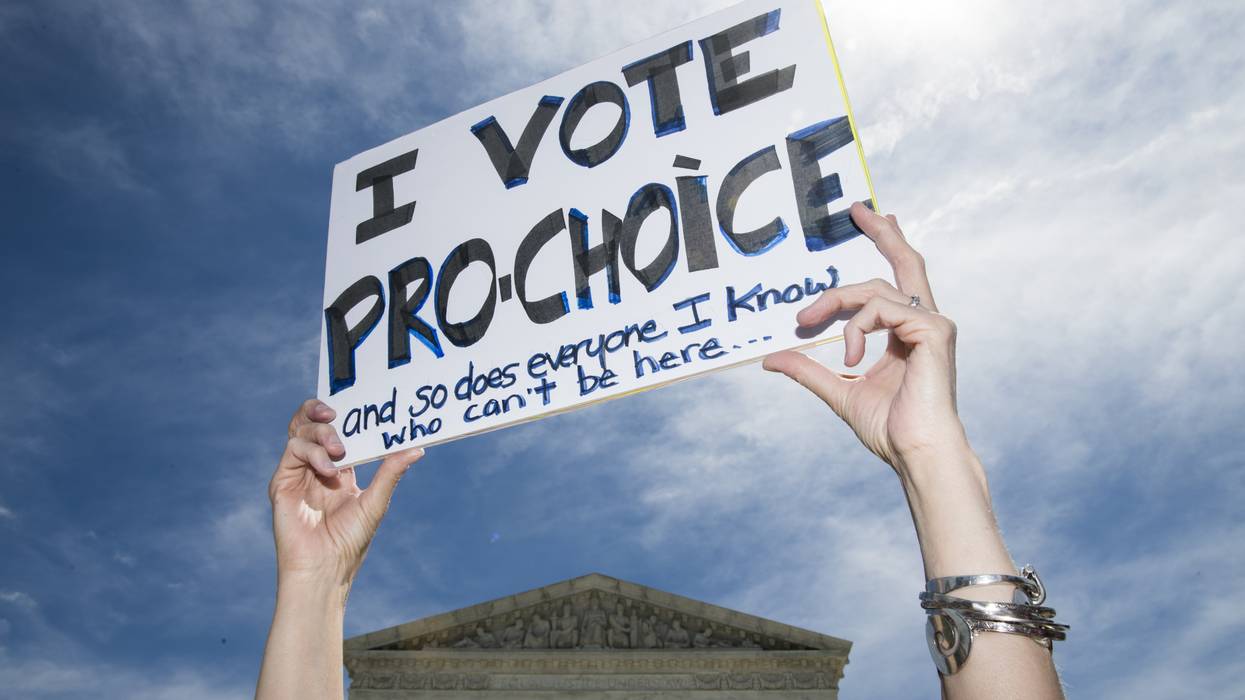
This November, will the American people show up to the polls to defend reproductive freedom? Or, will our elected officials succumb to pressure from extremists seeking to ban abortion nationwide?
In today’s post-Roe world, the current landscape of abortion care is not defined by a single sweeping law or dramatic congressional vote. Instead, it is shaped by something far more subtle, sinister, and more consequential for millions of Americans. As we speak, every lever of government is being used to chip away at our reproductive freedom—and anti-abortion extremists are just getting warmed up.
This November, will the American people show up to the polls to defend reproductive freedom? Or, will our elected officials succumb to pressure from extremists seeking to ban abortion nationwide?
This year marks four years since the Supreme Court’s Dobbs decision, which overturned Roe v. Wade and eliminated federal protections for abortion care. As the lead plaintiff in Zurawski v. Texas, I have felt the full weight of the deadly Dobbs decision, and what happens when extremism infiltrates our democracy leading to devastating consequences for women and patients nationwide.
In a recent New York Times piece entitled “The Missing Middle in the Abortion Debate,” the author asserts that candidates need to find a “middle ground” and compromise when it comes to abortion laws in states like Texas. But the reality is that there is no “middle ground” when lives are at risk.
Protecting abortion access is still popular with Americans across the political spectrum, and yet, anti-abortion extremists and lawmakers continue to ignore what most Americans want.
As soon as Roe was overturned, states with anti-abortion legislatures quickly instituted trigger bans resulting in several women dying in states like Texas, Georgia, and North Carolina after being denied or delayed abortion care. In the years since we lost federal protections for abortion rights, many more women and patients from across the country have jumped through unimaginable hurdles just to seek care they needed.
Let me be clear, the piece treats abortion like a line on a chart. I know how being denied abortion care can mean the difference between life and death, and I also know that compromising on reproductive rights can cost women their lives.
My husband Josh and I always knew we wanted a family, so after trying for over a year, I found out that I was pregnant with my baby girl, Willow. However, at 18 weeks pregnant, our lives completely changed when we learned that my cervix had prematurely dilated, that amniotic fluid was leaking from my body, and that Willow was not going to survive to birth. Because of the Dobbs decision, which happened two months prior to everything I was experiencing, doctors sent me home because they could not legally treat me. Days later, I was in the ICU with sepsis, fighting for my life. Today, because I was denied the care I desperately needed, I am unable to bear children in the future.
My pregnancy was wanted. My daughter Willow was wanted. In a perfect world, I would be growing my family with my husband and daughter by my side. Instead, I turned my trauma into advocacy and have spent the last four years fighting for women across the country to be able to access safe abortion care.
Right now, anti-abortion extremists are leveraging every opportunity to ban abortion nationwide—no matter the cost. They are orchestrating a layered, coordinated effort to restrict abortion access through our judicial system, state legislatures, and federal agencies. Anti-abortion extremists are taking these measures to achieve several goals at one time: eliminate abortion care without further complicating their chances in the upcoming midterm elections.
And yet, anti-abortion politicians and lawmakers have been relentless in their efforts to chip away at abortion access. From Sen. Josh Hawley’s (R-M. attacks on medication abortion, and Senate Republicans upholding President Donald Trump’s ban on abortion care for veterans or demanding anti-abortion riders in critical funding legislation—these extremists have demonstrated a clear commitment to enacting their anti-abortion agenda.
What’s alarming is that these attacks are not happening in isolation. Republicans are publicly avoiding discussion of abortion ahead of November. However, wherever they are governing, they are actively fighting to take away our freedom to choose.
Though the post-Dobbs landscape was initially framed as “a return to states’ rights,” the reality is that Trump and his administration have taken a number of covert steps to diminish abortion care, while allowing states to lead the charge in an all out assault on abortion rights. Republican-led state legislatures are advancing laws to block the mailing of abortion medication, criminalize its distribution, and even classify these medicines as controlled substances.
Furthermore, several states have taken up lawsuits similar to Louisiana v. FDA to challenge federal approval and distribution rules. In other words, state-level bans are being weaponized to attack all forms of abortion care and eliminate a patient’s ability to receive comprehensive reproductive healthcare.
As we look toward November, now more than ever we must be mindful of who will stand up for reproductive freedom—because lives are on the line. Abortion is on the ballot once again, and we deserve to know who will protect our freedoms without hesitation or compromise.
I recently traveled back to Washington, DC to tell my story alongside more than 150 abortion storytellers to talk about the impact of the Dobbs decision on our lives and in our communities. We met with both Democratic and Republican offices to stress the importance of fighting for reproductive freedom to save lives.
Protecting abortion access is still popular with Americans across the political spectrum, and yet, anti-abortion extremists and lawmakers continue to ignore what most Americans want. According to the latest data by Navigator Research, a majority of Americans continue to believe that abortion should be legal in most cases and that lawmakers who support anti-abortion policies, including banning or restricting contraception and abortion nationally, are deal-breakers.
The debate is no longer just about whether abortion is legal in a given state. It’s about who controls the systems that determine access: courts, agencies, supply chains, and Congress.
Extremists are weaponizing the machinery of democracy to erode our freedoms—not all at once, but piece by piece, at the expense of American lives. Now more than ever, we must use our voices at the ballot box and beyond to fight back.
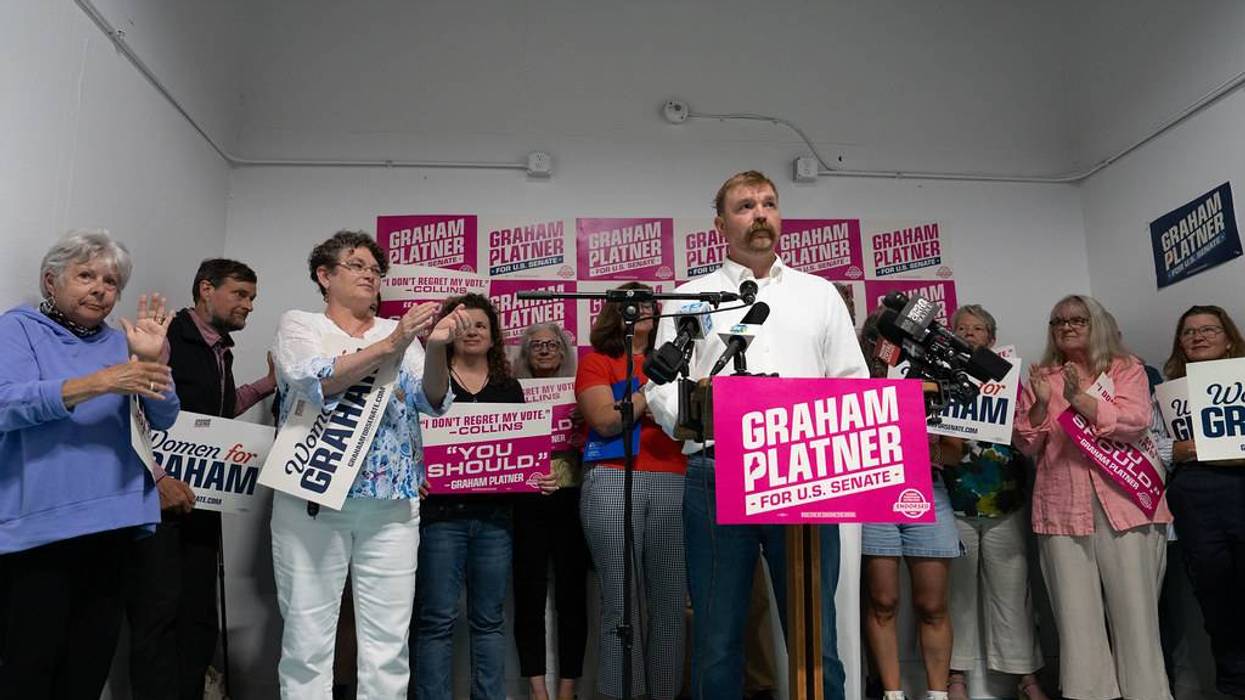
With the Supreme Court's overturning of abortion rights just as unpopular as it was four years ago, Democrats are hoping to highlight the "toxic, anti-choice records" of their GOP opponents.
Fresh off an endorsement from the Planned Parenthood Action Fund, Democratic Senate candidate Graham Platner is continuing to hammer his Republican opponent, Sen. Susan Collins, over her vote to confirm US Supreme Court Justice Brett Kavanaugh, which helped set the stage for the right-wing court to overturn the constitutional right to an abortion in 2022.
Platner marked the four-year anniversary of the court's ruling in Dobbs v. Jackson Women's Health Organization on Wednesday by posting a video of Collins (Maine) from 2018, standing before the Senate and giving what he called a "stirring defense" of Kavanaugh, whose nomination by President Donald Trump was at risk of being derailed by accusations of sexual assault from three women that had been aired during his confirmation hearing.
Collins, who'd go on to serve as a deciding vote to confirm Kavanaugh to the high court, described the then-federal judge as "an exemplary public servant" whom she'd hoped would "work to lessen the divisions in the Supreme Court, so that we have far fewer 5-4 decisions."
Around that time, she said she'd been assured that Kavanaugh viewed Roe v. Wade, which guaranteed the right to abortion before fetal viability, as established precedent that he would keep in place if confirmed.
Of course, Dobbs itself ended up being a 5-4 decision, with Kavanaugh being one of the five conservatives who voted to hand decision-making on reproductive autonomy back to the states. (The court also voted 6-3 to uphold the 15-week Mississippi abortion ban at the center of the case.)
Since the ruling, 13 states have almost or totally outlawed abortion, while seven more have restricted it to between 6 and 12 weeks of gestation, according to KFF. States with bans have seen increases in both infant and maternal deaths, and delays to emergency and miscarriage care from providers unsure if they are putting themselves at legal risk.
As Collins has run for her sixth term in the Senate, her pivotal vote for Kavanaugh has come back to haunt her. While Collins said in 2022 that she had been "misled" by Kavanaugh about his stance on Roe, she has insisted this month that she did not "regret" voting to confirm him.
She has, however, appeared eager to downplay the impact of her decision. On Monday, she falsely stated that, "Whether Justice Kavanaugh were confirmed or not, Roe v. Wade would have been overturned, given the 6-3 vote.”
In fact, the vote to fully overturn Roe was 5-4, as Chief Justice John Roberts did not join his fellow conservatives in ending the precedent, leading Platner to accuse her of "lying through her teeth."
While abortion does not rank high on the list of issues Americans say will determine their vote, the Dobbs decision is just as despised—if not slightly more so—compared with four years ago, when it helped to fuel an unexpectedly strong Democratic showing in the 2022 midterms.
According to a nationwide poll from Marquette University this May, 61% of Americans still said they disapproved of the decision to overturn Roe, compared with 58% who said the same thing in June 2022 shortly after the draft of the Dobbs decision was leaked.
As the second Trump administration turbocharges attacks on reproductive rights, pro-choice groups are hoping to make Collins pay for her role in midwifing this new reality and have thrown their full weight behind Platner, who has said he'd fight "tooth-and-nail to restore and protect reproductive freedom."
"Mainers deserve a senator they can trust to have their backs at every turn. It is clear that it is not Susan Collins,” said Planned Parenthood Action Fund president and CEO Alexis McGill Johnson in a statement endorsing Platner on Monday. "We know we can count on Graham Platner to fight for everyone to get the essential, lifesaving care they need as part of a pro-reproductive rights Senate majority."
Maeve Coyle, a spokesperson for the Democratic Senatorial Campaign Committee (DSCC), said the party is seeking to highlight its Republican opponents' "toxic, anti-choice records" at the national level in the hope that "the American people will vote against Republicans who paved the way for Roe’s demise and cheered on the rollback of our rights.”
A press release sent by the DSCC on Wednesday highlights the voting records of other top GOP midterm targets, including Sen. Dan Sullivan (R-Alaska), who signed an amicus brief in support of overturning Roe and has said he opposes abortion even in cases of rape or incest or to protect a mother's life. It also called out Reps. Mike Collins (R-Ga.) and Ashley Hinson (R-Iowa), who co-sponsored total national abortion bans that would have also outlawed in vitro fertilization (IVF).
The Maine Democratic Party, meanwhile, has zeroed in on Susan Collins' vote for Kavanaugh with a new digital ad and a series of prominent newspaper ads that draw a direct line between her decision and the slew of abortion bans that followed.
“Susan Collins wants Mainers to forget what happened after she cast the decisive vote for Brett Kavanaugh. But Mainers haven’t forgotten," said Kristi Johnston, a spokesperson for the Maine Democratic Party.
"Four years after Dobbs, Collins continues to defend that vote while rubber-stamping more anti-abortion judges onto the federal bench," she added. "Mainers deserve to know exactly what role Susan Collins continues to play in stripping away reproductive freedom.”
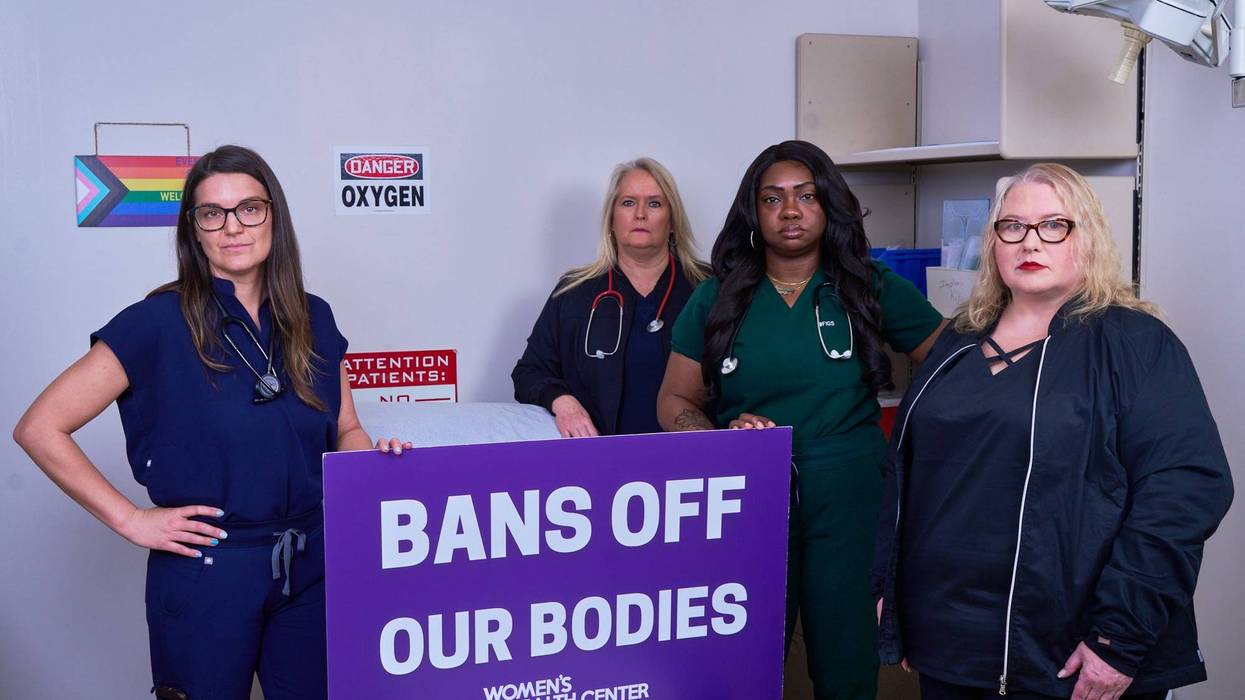
On the anniversary of both Dobbs v. Jackson Women’s Health and US v. Skrmetti, support independent clinics in hard places keeping the doors open.
We’ve been here before. When Dobbs came for abortion care in our states, we did two things: We opened clinics across state lines so our patients would still have a legal option. And we stayed. We kept our original clinics open, expanding the care we'd always offered or always wanted to offer. When Skrmetti came for gender-affirming care, we kept providing that too, because abortion care patients and transgender patients are not separate communities. The calculation patients make before they walk through the door is identical for both communities: Will I be seen? Will I be safe? Will the person across from me treat my body like a problem to be managed, or a life to be supported? June marks anniversaries of both Dobbs v. Jackson Women’s Health and US v. Skrmetti, and that conviction has never felt more urgent.
Long before Dobbs or Skrmetti, the intersection of abortion rights and trans rights was already living in our waiting rooms, in the patients who received reproductive care and gender-affirming hormone therapy (GAHT) under the same roof; in the person who drove hours across the state because we were the only provider they trusted; and in those who trust us with their whole-person care because their grandmothers, mothers, sisters, aunts, and friends have relied on our clinics for care for 50 years. Throughout that history, our organizations have been guided by a simple principle: When members of our community are targeted, excluded, or denied the care they need, we do not look away. We listen, we adapt, and we show up.
When abortion care moved across the border after Dobbs, the patients who remained still needed care they couldn’t access at home. The wall between reproductive healthcare and LGBTQIA+ healthcare that exists in policy language and funding categories has never existed in our exam rooms.
What connects every patient who walks through our doors, whether they’re coming in for an abortion or a hormone therapy appointment, is something our staff recognized long before we had language for it: the experience of arriving at a clinic while carrying the weight of a political target on your back. A clinic’s job of creating a space where people can receive care without shame or fear has always been exactly the same job regardless of why they came.
Bodily autonomy is the foundational principle of reproductive rights, and it only means something if it applies to everyone.
Marty had learned, growing up as a transgender person in rural Maryland, to brace himself before every medical appointment, because finding healthcare that was both competent and genuinely affirming had always required a fight. What he found at our clinic was a staff that met him without conditions, no justifications required, no explanations asked for. His mother has supported the Women’s Health Center (WHC) since its earliest days, and used to volunteer as a clinic escort. Watching the same clinic support her son in his gender-affirming care gave her, in her own words, a peace she hadn’t known she needed. When gaps in care left Ben, a transgender West Virginian, navigating painful dysphoric cycles and a transition that had stalled, he found his way to WHC West Virginia. Today, he says that every time he looks in the mirror, he sees more of himself looking back.
When one of our providers first interviewed to work for CHOICES, she didn't really know much about gender-affirming care. In the time she has been with CHOICES, she has cared for hundreds of gender-affirming care patients across the mid-South. "It's clear how important this care is for patients," she shared. "After patients start hormone replacement therapy, they come back as a much more energetic, vivacious person.” Since the state of Tennessee has restricted gender-affirming healthcare, including banning minors from accessing care, our patients are experiencing increased anxiety and fear about their privacy, safety, and continued access to care. CHOICES' provider shared, "Hormone replacement therapy is routine, like every other service we offer.” If something has such a profound impact on someone's life, why wouldn't we keep this care accessible?
The pattern behind Skrmetti is one reproductive rights advocates should recognize immediately, because it follows the same logic as the restrictions that led to Dobbs: They come for the most vulnerable first, in the states where the political ground is most hostile, and they build from there. Idaho passed the first transgender athlete ban in 2020, West Virginia followed with the Save Women’s Sports Act in 2021, and Tennessee’s restrictions on gender-affirming care for minors moved through the courts the same way abortion restrictions moved state by state in the years before Dobbs. Since abortion care moved across the border, thousands have received gender-affirming and LGBTQIA+ care at our clinics, even as the political, legal, and financial pressure on both organizations has intensified.
Bodily autonomy is the foundational principle of reproductive rights, and it only means something if it applies to everyone. When it becomes conditional, granted to some patients and denied to others, it stops being a principle and starts being a permission slip, and permission slips get revoked. The fights to protect abortion access and gender-affirming care are not parallel struggles that happen to share a difficult political moment. They are the same struggle, rooted in the same conviction, playing out in the same clinics with the same patients, and the forces working to end both of them have always understood that connection even when the rest of us have sometimes lost sight of it.
Between our two organizations, we’ve earned a century’s worth of experience at the practice of staying, enduring. CHOICES has kept their doors open for 52 years, and the Women’s Health Centers of West Virginia and Maryland will celebrate 50 years of care on June 24—the same day Roe v. Wade was overturned four years ago.
Support independent clinics in hard places keeping the doors open. And when the next fight comes, show up for the communities under pressure. Remember that those targeted first won’t be the last, but they will be the ones to lead the way.
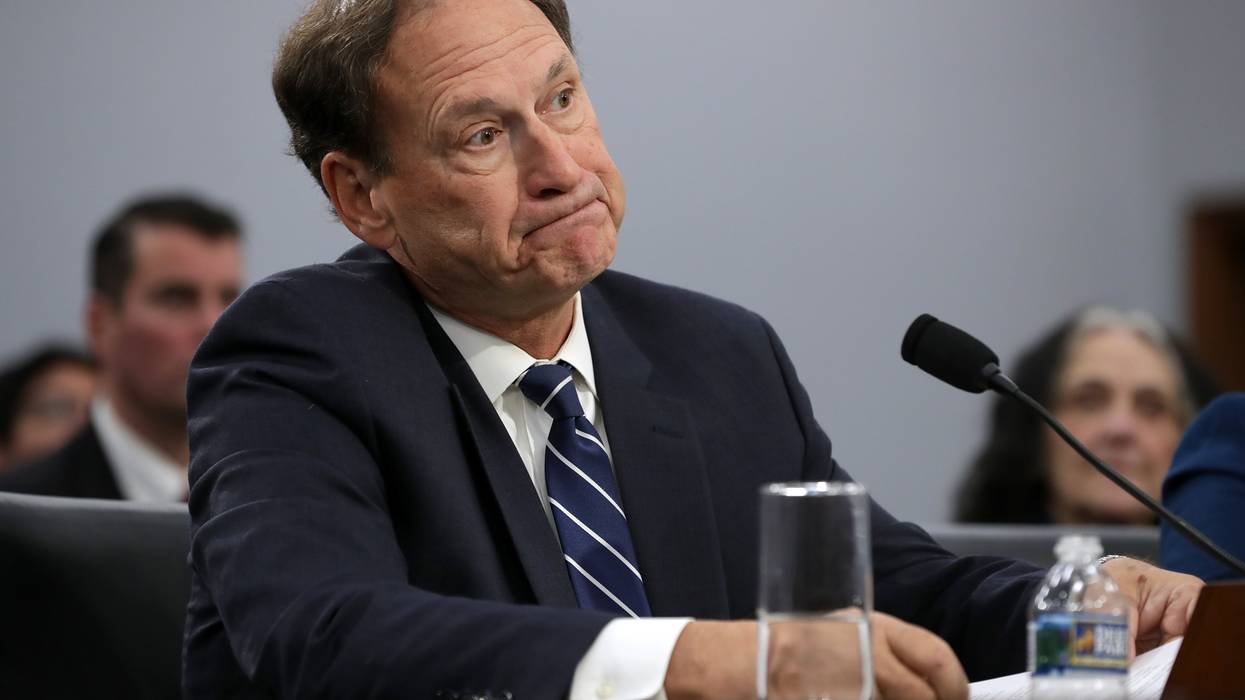
In majority opinions gutting abortion rights and voting rights, Supreme Court Justice Samuel Alito made crucial errors.
Justice Samuel Alito wrote the conservative majority’s opinions in two of the most consequential Supreme Court decisions in recent years: 1) Dobbs v. Jackson Women’s Health Organization—overruling Roe v. Wade; and 2) Louisiana v. Callais—neutering the Voting Rights Act of 1965. In both cases, Alito recited and relied on asserted “facts” that did not exist.
Ohio State University Prof. Treva Lindsey observed, ”From the nation’s founding through the early 1800s, pre-quickening abortions—that is, abortions before a pregnant person feels fetal movement—were fairly common and even advertised.“
But Alito claimed incorrectly in Dobbs that “no common-law case or authority... remotely suggests a positive right to procure an abortion at any stage of pregnancy” and, in the United States specifically, “an unbroken tradition of prohibiting abortion on pain of criminal punishment persisted from the earliest days of the common law until 1973.”
Writing for the three dissenters, Justice Elena Kagan called Alito “embarrassingly” wrong. There was no such “unbroken tradition,” and historical evidence undermined his claim. But the conservative majority got its desired outcome.
In 2013, Chief Justice John Roberts and the conservative majority began undermining the Voting Rights Act in the Shelby County case. Prior to that decision, states and localities with a history of racial discrimination in voting had to obtain federal approval before making changes to election rules—a process known as preclearance. The state or locality had to prove that any changes would not disadvantage racial and ethnic minorities.
Rewrite history; distort reality; make up facts; overturn longstanding precedent. For Justice Alito—with an occasional assist from Chief Justice Roberts—it’s all in a day’s work.
Roberts argued that the elections of 2008 and 2012—when there was no difference in voter participation rates between Black and white voters (i.e., no “turnout gap”)—meant that the Voting Rights Act had done its job and preclearance could be suspended.
Even at the time, Roberts’ reasoning was suspect. The elections of 2008 and 2012 were anomalies—not the end of the turnout gap—because Barack Obama’s candidacy had driven up Black turnout.
In her dissent, Justice Ruth Bader Ginsburg noted another flaw in Roberts’ logic: “Throwing out preclearance when it has worked and is continuing to work to stop discriminatory changes is like throwing away your umbrella in a rainstorm because you are not getting wet.”
Justice Ginsburg was correct, and now democracy is getting wet. A 2024 study concluded:
The formerly covered states [subject to preclearance] have large nonwhite populations and large turnout gaps, leading to some of the largest statewide turnout distortions in the nation. Put differently, a decade after Shelby County, the turnout gap continues to have a disproportionate impact in precisely the parts of the country that were once covered due to their histories of racially discriminatory voting practices.
Stated simply, “[S]ince 2013, the racial turnout gap around the nation has exploded.”
Justice Alito ignored the exploding turnout gap in striking the fatal blow to the Voting Rights Act on April 29, 2026. For decades previously, the court had ruled repeatedly that a state could not undermine minority voters’ power to choose their desired candidates by drawing legislative districts that dispersed such voters across majority-white districts. Instead, states had to create “majority-minority” districts, thereby assuring minority representation in statehouses and Congress.
In its amicus brief to the court in the Callais case, the Department of Justice (DOJ) ignored the trend after 2013 and argued that majority-minority districts were no longer necessary because “the racial gap in voter registration and turnout had largely disappeared, with minorities registering and voting at levels that sometimes surpassed the majority. Shelby County, 570 U.S. at 547-548.” To emphasize the point, the DOJ observed, “Since 2004, black voters have turned out at higher rates than white voters in two of five presidential elections nationwide and in Louisiana.”
Armed with the Callais decision, Republicans are now racing to eliminate majority-Black districts throughout the country.
Alito parroted the DOJ’s sophistry: “Black voters now participate in elections at similar rates as the rest of the electorate, even turning out at higher rates than white voters in two of the five most recent Presidential elections nationwide and in Louisiana.”
As election experts have observed, Alito’s claim that Black and white turnout reached parity in 2 of the 5 most recent presidential elections “represents egregious cherry-picking. [H]e was not referring to recent elections, but to those in 2008 and 2012—the years that Barack Obama ran for president. In the three most recent presidential elections, the trend shows exactly the opposite. The indisputable fact is the racial turnout gap is widening, and the Roberts Court is partially responsible [because of its Shelby County decision].”
Armed with the Callais decision, Republicans are now racing to eliminate majority-Black districts throughout the country.
Rewrite history; distort reality; make up facts; overturn longstanding precedent. For Justice Alito—with an occasional assist from Chief Justice Roberts—it’s all in a day’s work.
"Abortion bans don't stay in exam rooms," said the Center for Reproductive Rights president. "They reshape communities, workplaces, and state economies."
With attention directed at President Donald Trump's war on immigrants across the United States and various international conflicts, including the assault on Iran, there hasn't been much prominent news coverage in recent weeks about a key issue of the 2024 campaign—GOP abortion bans—but people nationwide continue to endure the impacts of such policies, as revealed in a Monday report from the Center for Reproductive Rights.
The Price of Safety: Stories of Abortions Denied, Careers Disrupted, and States Left Behind features various profiles demonstrating "the human and economic toll" of abortion bans, which right-wing policymakers have enacted or intensified since the US Supreme Court reversed Roe v. Wade with its Dobbs v. Jackson Women's Health Organization decision in 2022.
The anthology uses stories from patients, doctors, business leaders, and others to "show the real-world consequences of laws that criminalize standard medical care," said Nancy Northup, the center's president, in a statement. "Abortion bans don't stay in exam rooms. They reshape communities, workplaces, and state economies. As long as politicians keep restricting care, families will keep moving, clinicians will keep leaving, and states will keep watching their competitive edge slip away."
"Our daughter's spine was severely abnormal, her brain hadn't formed correctly, and she only had one kidney... I did everything by the book medically, but the experience still made me feel like a criminal for seeking evidence-based care for a lethal fetal diagnosis."
Dani Mathisen, "a Fort Worth native from a family of physicians," discovered during a routine anatomy scan with her OB-GYN, who is also her aunt, that she needed an abortion, 18 weeks into a planned pregnancy. As she explained, "Our daughter's spine was severely abnormal, her brain hadn't formed correctly, and she only had one kidney."
Texas had banned abortions after six weeks and allowed private citizens to sue anyone who helped a pregnant person access care. According to Mathisen: "My mom, also a doctor, stepped in anyway. She found a clinic in New Mexico, booked the flights and hotel, called the staff, and handed us an envelope of cash. We paid for the abortion with cash out of fear of leaving a paper trail tying Texas credit cards to out-of-state abortion care. I did everything by the book medically, but the experience still made me feel like a criminal for seeking evidence-based care for a lethal fetal diagnosis."
"I had always imagined building my career in Texas," she added. "After this, I chose an OB-GYN residency in Hawaii because I needed full-spectrum training—including abortion care—and I couldn't get that in Texas."
Mathisen wasn't alone in fleeing that state. Amanda Ducach, CEO and co-founder of an artificial intelligence startup focused on women's health, shared how she "built Ema in Houston, and Texas shaped our earliest users and our mission," but when Roe fell, she "was seven and a half months into a high-risk pregnancy."
"Suddenly, even if I were to face a life-threatening emergency, I wasn't sure I'd receive timely care. My doctors weren't sure either," Ducach detailed. "It also changed how I thought about my company, and our responsibility to the people who rely on us through our partner platforms."
"After months of legal review and deep conversations with my team, I decided to relocate both my family and Ema's headquarters to Massachusetts where abortion access is protected under state law," she continued. "I also gave employees the option to work from any location, which brought immediate relief."
"Suddenly, even if I were to face a life-threatening emergency, I wasn't sure I'd receive timely care. My doctors weren't sure either."
Elizabeth Weller also left Texas. She said that "the decision cost us $25,000+ in income, distanced us from our community, and upended the future we had envisioned. But after the pregnancy complications I faced, it was painfully clear: Texas no longer provided the basic medical care necessary to have a child."
So did Dr. Judy Levison, who spent over two decades practicing and teaching obstetrics and gynecology in the state. After "watching abortion bans turn routine medical care into a legal minefield," she retired, moved to Colorado, and "began volunteering with an abortion support group."
It's not just Texas. Kayla Smith said that she left Idaho—"where I'd lived for 13 years, gone to college, met my husband, built our careers, and wanted to grow our family"—for Washington state. She explained that just 48 hours after Idaho's ban took effect and "19 weeks into my pregnancy with my second child, we discovered that our baby had a severe, inoperable heart defect."
Tracy Young, "a first-generation American, a mother of four, and the co-founder of two technology companies," highlighted how abortion bans also outlaw proper treatment for people experiencing miscarriages. While she is based in San Francisco, California, Young began "losing a pregnancy I had deeply wanted" while traveling for work in Louisiana.
"Back home in California, my doctors told me that my body had not completed the miscarriage naturally. They prescribed misoprostol, and when that wasn't enough, performed a surgical procedure to prevent infection and complications," she said. "Today, abortion bans have made that same care illegal or heavily restricted in many states, including Louisiana where I miscarried."
Another business leader, Chris Webb, CEO and co-founder of ChowNow—an online ordering platform with offices in California and Missouri—publicly supported abortion access in 2019 by signing on to a coalition's "Don't Ban Equality" letter. After Roe's reversal, he sent out a company-wide email disclosing a girlfriend's abortion and offering to personally cover the travel costs of any employee who needed such care.
"Leaders owe employees honesty about where they stand—and action when basic rights are on the line," he said. "Abortion policies aren't just about healthcare. They're good for employers and good for people. When more companies speak up, there is safety in numbers. And in the long run, protecting your team protects your business—and is just the right thing to do."
"Reproductive rights are so crucial that Americans are uprooting their lives to ensure they have access to care."
The report's release coincided with the publication of a paper adapted from one prepared for the center by researchers who estimated "the market value of reproductive rights as capitalized into US housing markets."
The paper, published by the National Bureau of Economic Research, shows that "total abortion bans reduced rents by an average of 2.2% from July 2022 through June 2025, with the effect reaching 4.0% in the most recent year. Over the same horizon, bans increased rental vacancy rates by an average of 1.1 percentage points, with the effect reaching 1.8 percentage points in the most recent year. Estimates for home values and homeowner vacancy rates are similar in magnitude but less precise."
The center's senior director, Julia Taylor Kennedy, said that "the economic data and the firsthand accounts are telling the same story... Reproductive rights are so crucial that Americans are uprooting their lives to ensure they have access to care. That means that, for employers and policymakers, abortion bans carry measurable workforce and competitiveness implications."
Despite such findings, Republican state and federal policymakers continue to restrict reproductive freedom. In recent months, the Trump administration quietly imposed an abortion ban at the US Department of Veterans Affairs and expanded the global gag rule.
Meanwhile, at the state level last month, Tennessee Republicans introduced legislation to make abortion a capital offense, and a sheriff's office in South Carolina launched an investigation into a fetus, estimated to be just 13-15 weeks, found at a water treatment plant, highlighting the rising criminalization of pregnancy loss.
Last week, the Marion County Superior Court granted a permanent injunction preventing enforcement of Indiana's near-total abortion ban, and Republican Attorney General Todd Rokita swiftly appealed.
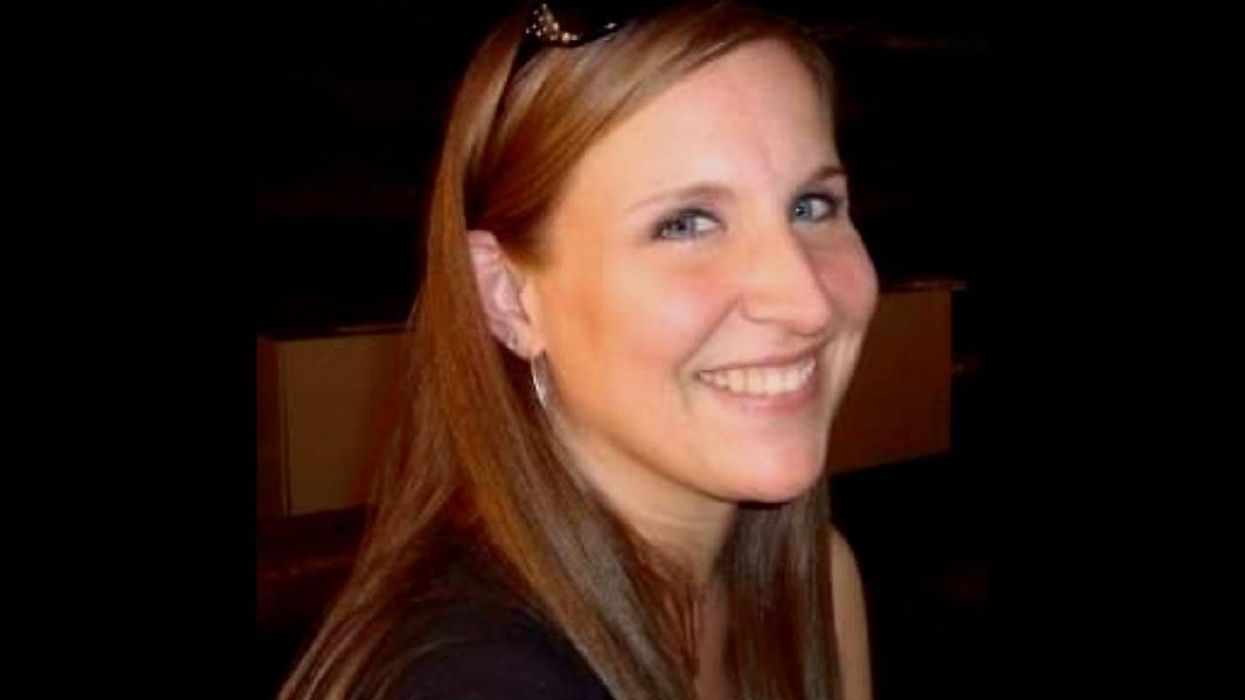
"I'm hopeful that my new trial will end with me being freed, because I simply lost my pregnancy at home because of an infection," said Brooke Shoemaker, who has already spent five years in prison.
While Brooke Shoemaker and a rights group representing her in court are celebrating this week after an Alabama judge threw out her conviction and ordered a new trial, her case is also drawing attention to the dangers of "fetal personhood" policies.
"Laws and judicial decisions that grant fetuses—and in some cases embryos and fertilized eggs—the same legal rights and status given to born people, such as the right to life, is 'fetal personhood,'" explains the website of the group, Pregnancy Justice. "When fetuses have rights, this fundamentally changes the legal rights and status of all pregnant people, opening the door to criminalization, surveillance, and obstetric violence."
Since the US Supreme Court's Dobbs v. Jackson Women's Health Organization ruling ended the federal right to abortion in 2022, far-right activists and politicians have ramped up their fight for fetal personhood policies. Pregnancy Justice found that in the two years after the decision, the number of people who faced criminal charges related to their pregnancies hit its highest level in US history.
Shoemaker's case began even earlier, in 2017, when she experienced a stillbirth at home about 24-26 weeks into her pregnancy. Paramedics brought her to a hospital, where she disclosed using methamphetamine while pregnant. Although a medical examiner could not determine whether the drug use caused the stillbirth—and, according to Pregnancy Justice, "her placenta showed clear signs of infection"—a jury found her guilty of chemical endangerment of a minor. She's served five years of her 18-year sentence.
"After becoming Ms. Shoemaker's counsel in 2024, Pregnancy Justice filed a petition alongside Andrew Stanley of the Samford Law Office requesting a hearing based on new evidence about the infection that led to the demise of Ms. Shoemaker's pregnancy, leading the judge to agree with Pregnancy Justice's medical witness and to vacate the conviction," the rights group said in a Monday statement.
Lee County Circuit Judge Jeffrey Tickal wrote in his December 22 order that "should the facts had been known, and brought before the jury, the results probably would have been different."
Shoemaker said Monday that "after years of fighting, I'm thankful that I'm finally being heard, and I pray that my next Christmas will be spent at home with my children and parents... I'm hopeful that my new trial will end with me being freed, because I simply lost my pregnancy at home because of an infection. I loved and wanted my baby, and I never deserved this."
Although Tickal's decision came three days before Christmas, the 45-year-old mother of four remained behind bars for the holiday last week, as the state appeals.
"While we are thrilled with the judge's decision, we are outraged that Ms. Shoemaker is still behind bars when she should have been home for Christmas," said former Pregnancy Justice senior staff attorney Emma Roth. "She was convicted based on feelings, not facts. Pregnancy Justice will continue to fight on appeal and prove that pregnancies end tragically for reasons far beyond a mother's control. Women like Ms. Shoemaker should be allowed to grieve their loss without fearing arrest."
AL.com reported Tuesday that "Alabama is unique in that it is one of only three states, along with Oklahoma and South Carolina, where the state Supreme Court allows the application of criminal laws meant to punish child abuse or child endangerment to be applied in the context of pregnancy."
However, similar cases aren't restricted to those states. Pregnancy Justice found that in the two years following Dobbs, "prosecutors initiated cases in 16 states: Alabama, California, Florida, Idaho, Kentucky, Mississippi, Nebraska, New Mexico, Ohio, Oklahoma, Pennsylvania, South Carolina, South Dakota, Texas, Wisconsin, and Wyoming. While prosecutions were brought in all of these states, to date, the majority of the reported cases occurred in Alabama (192) and Oklahoma (112)."
This is fantastic news!!I wrote in my book how the medical examiner ruled the cause of the stillbirth "undetermined," but the coroner (who lacks medical training) instead listed cause of stillbirth as mom's meth usage on the fetal death certificate.
[image or embed]
— Jill Wieber Lens (@jillwieberlens.bsky.social) December 30, 2025 at 12:25 PM
"Prosecutors used a variety of criminal statutes to charge the defendants in these cases, often bringing more than one charge against an individual defendant," the group's report continues. "In total, the 412 defendants faced 441 charges for conduct related to pregnancy, pregnancy loss, or birth. The majority of charges (398/441) asserted some form of child abuse, neglect, or endangerment."
"As has been the case for decades, nearly all the cases alleged that the pregnant person used a substance during pregnancy," the report adds. "In 268 cases, substance use was the only allegation made against the pregnant person. In the midst of a wide-ranging crisis in maternal healthcare and despite maternal healthcare deserts across the country, prosecutors or police argued that pregnant people's failure to obtain prenatal care was evidence of a crime. This was the case in 29 of 412 cases."
When the publication was released last year, Pregnancy Justice president Lourdes A. Rivera said in a statement that "the Dobbs decision emboldened prosecutors to develop ever more aggressive strategies to prosecute pregnancy, leading to the most pregnancy-related criminal cases on record."
"This is directly tied to the radical legal doctrine of 'fetal personhood,' which grants full legal rights to an embryo or fetus, turning them into victims of crimes perpetrated by pregnant women," Rivera argued. "To turn the tide on criminalization, we need to separate healthcare from the criminal legal system and to change policy and practices to ensure that pregnant people can safely access the healthcare they need, without fear of criminalization. This report demonstrates that, in post-Dobbs America, being pregnant places people at increased risk, not only of dire health outcomes, but of arrest."
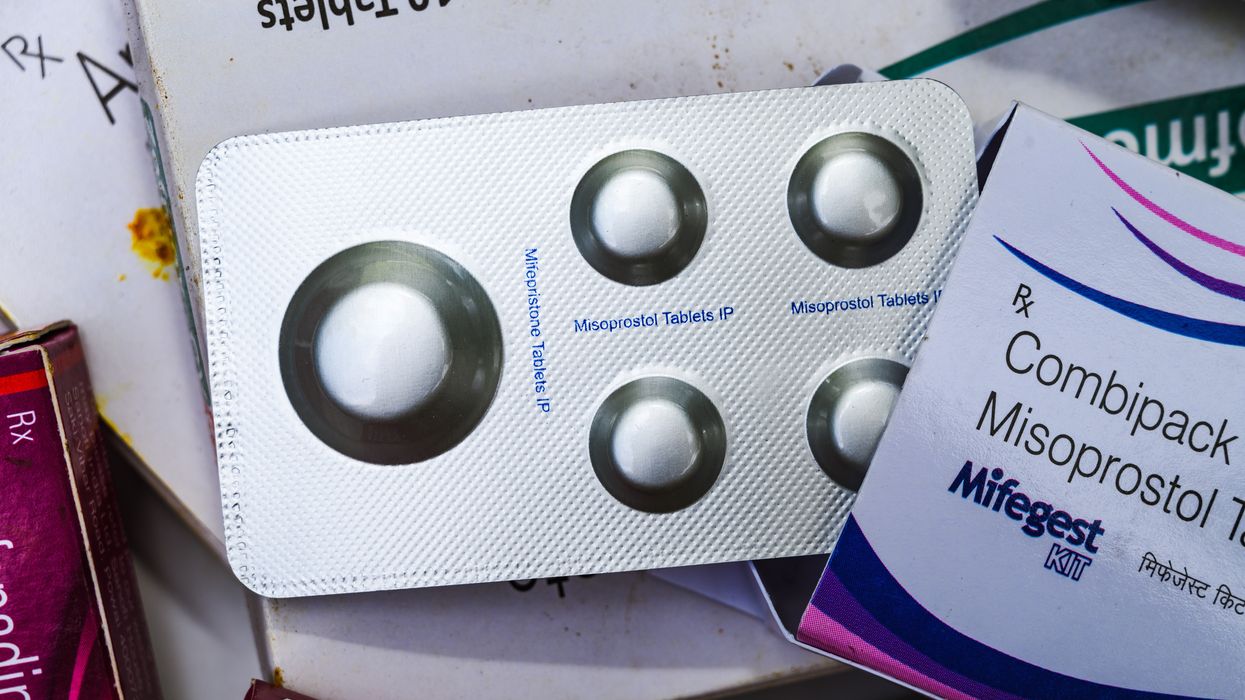
The high-profile lawyer behind the case "wants to shut down doctors in shield law states," said one expert, and "he wants a federal court to weigh in on the Comstock Act."
As polling reaffirms U.S. public support for abortion rights, a new case in Texas is generating alarm and outrage, as it involves a federal "zombie law" that the forced birth movement aims to use to block people across the country from accessing abortion pills.
Jonathan Mitchell is serving as lead counsel in the proposed class action lawsuit, filed Sunday in the Southern District of Texas. Described as an "anti-abortion legal terrorist" by Susan Rinkunas in Jezebel, Mitchell is Texas' former solicitor general and the chief architect of a state law that entices anti-choice vigilantes with $10,000 bounties to enforce a six-week abortion ban.
"He's represented at least three other men who've sued over women's abortions—including Marcus Silva, who sued his ex-wife's friends for helping her get abortion pills. That case was eventually dropped, but not before it came out that Silva tried to use the lawsuit to blackmail his ex into having sex with him," Jessica Valenti noted in her Abortion, Everyday newsletter. "Since then, Mitchell and other anti-abortion activists have been cozying up to men's rights groups, 'abortion recovery' ministries, and crisis pregnancy centers—on the lookout for more angry men eager to sue their partners or exes for ending a pregnancy."
In the new wrongful death case in Texas, Mitchell represents Jerry Rodriguez, who is suing Rémy Coeytaux, a California doctor accused of mailing to Galveston County medication that his girlfriend used to end her pregnancy last September. The complaint claims the girlfriend's estranged husband and mother "pressured her to kill the baby with the drugs obtained from Coeytaux."
The complaint also claims the girlfriend ended a second pregnancy with "pills that were illegally obtained" in January—and she is now two months into a third pregnancy, and Rodriguez believes she may seek another medication abortion. He asked for $75,000 in damages and "an injunction to stop Coeytaux from distributing abortion-inducing drugs in violation of state or federal law."
The new "wrongful death" abortion pill lawsuit out of Texas is a BFD for several reasons, but one twist is that the doctor being targeted is the brother of lifelong reproductive health advocate Francine Coeytaux of @plancpills.bsky.social Collab by Nina Martin & me on what the case is all about:
[image or embed]
— Madison Pauly (@msjpauly.bsky.social) July 23, 2025 at 5:25 PM
Among the legislation cited in the filing is the Comstock Act, or 18 U.S. Code § 1461, a dormant 1873 law that criminalized the shipping of "obscene" materials, including abortifacients. While some anti-choice advocates aim to outlaw abortion nationwide with legislation in Congress, Mitchell has said that "we don't need a federal ban when we have Comstock on the books."
Since the U.S. Supreme Court's right-wing majority reversed Roe v. Wade with Dobbs v. Jackson Women's Health Organization in 2022, Republican lawmakers have ramped up their efforts to restrict abortion rights within their states—with deadly consequences. Residents of those parts of the country have increasingly turned to telehealth. States with pro-choice policymakers have enacted "shield laws" to protect abortion providers and patients who are traveling or receiving care online.
"These anti-abortion folks are really upset that all these pills are being sent to their states, and they're doing whatever they can to try to stop it," Jill Wieber Lens, a University of Iowa College of Law professor and reproductive rights expert, told Jezebel.
Lens also framed the Texas case as a fear tactic. "I think so much of this is about the chilling effect, as opposed to actually winning this lawsuit," she said. "This might scare other doctors in shield states from wanting to continue what they're doing."
According to Mother Jones, "The case is the first known test of whether abortion opponents can use federal court lawsuits to circumvent state shield laws aimed at protecting providers—a major escalation of attacks on abortion-friendly states."
Mary Ziegler, an abortion historian and law professor at the University of California, Davis, told the outlet that "the whole game for Jonathan Mitchell is to get into federal court... both because he wants to shut down doctors in shield law states, like everyone in the anti-abortion movement, and because he wants a federal court to weigh in on the Comstock Act."
Ziegler added on social media that the suit is also intended to "force a response" from the U.S. Supreme Court and President Donald Trump, who has so far resisted pressure from forced birth activists to use the Comstock Act to ban abortion nationwide. Further, she said, "it reinforces arguments for fetal personhood (note that is a class action on behalf of all 'fathers of unborn children')."
Three years after the fall of Roe v. Wade, most Americans still support legal abortion.-64% say abortion should be legal in all or most cases.-80%+ support it in cases of rape, incest, or health risks.-Even after Dobbs, public opinion hasn’t budged; the people are not with the ban.
[image or embed]
— Anna DNP, FNP, BC@ AccessToCareAdvocate (@anna1900.bsky.social) July 24, 2025 at 7:33 AM
The case comes as Thursday polling from the Associated Press-NORC Center for Public Affairs Research shows that 64% of U.S. adults across the political spectrum say that abortion should be legal in all or most cases.
While 52% of all respondents agreed abortion should be allowed if the patient does not want to be pregnant "for any reason," large majorities believe it should be allowed if the pregnant person's health is seriously endangered (89%), the pregnancy is a result of rape or incest (86%), and an abnormality would prevent the fetus from surviving outside of the womb (85%).
Additionally, according to the poll, a majority of Americans support protecting abortion access for people who endure miscarriages or other pregnancy-related emergencies (69%), protecting a patient's right to obtain care in another state (56%), and protecting doctors from fines or prison time (55%).
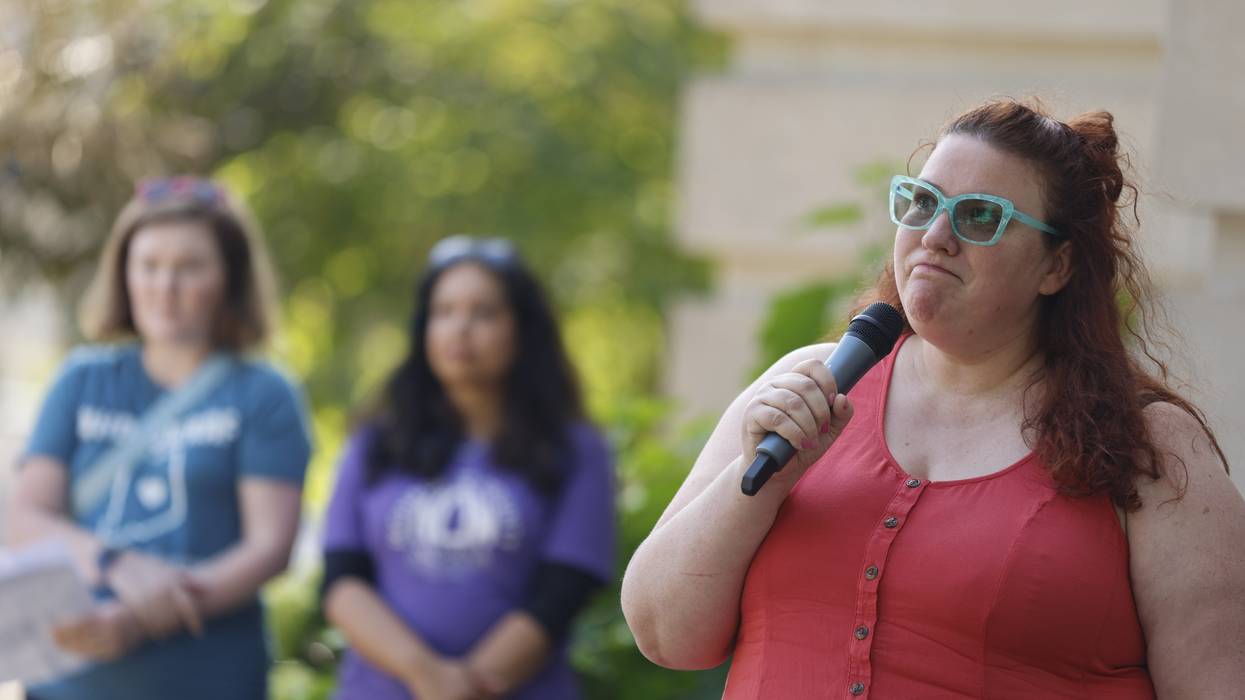
With laws constantly changing and often unclear, being able to reach abortion seekers on an emotional level is a critical touchpoint in the new digital landscape of access.
In the three years since the Dobbs decision resulted in abortion bans in 42 states across the U.S, the ecosystem of abortion access in America has shifted and stretched to meet the ever-changing moment. The Supreme Court’s ruling in Planned Parenthood vs. Medina has paved the way for even more states to further target abortion providers by enabling states to withhold state funding to clinics that provide sexual health services from sexually transmitted infection tests to cervical cancer screenings simply because they also offer abortion care.
With laws constantly changing and often unclear in the eyes on abortion seekers, being able to reach abortion seekers on an emotional level is a critical touchpoint in the new digital landscape of access. Innovators have stepped up to meet the demand for emotional support, helping individuals feel heard and get informed throughout the abortion process as laws change and stigma abounds. They’re pairing abortion seekers with counselors, peers, and educators as the digital entry point to care, meeting and supporting the actual and immediate needs, whether they are anxious, confused about where to find care, or feeling stigmatized.
With policies currently in Congress that might lead to the closure of even more reproductive healthcare clinics, including services from cancer screenings to STI testing, the need to keep patients informed of how to get the care they want has never been more dire.
We might discuss the emotional journey of an abortion seeker around getting them from confusion and disorientation to understanding and relief, regardless of their choices.
At the same time, Crisis Pregnancy Centers, or fake clinics that pose as counseling centers for pregnant people, persist in their anti-abortion messaging and are funded nationwide at five times the rate of abortion clinics and funds. Through the language of free testing and counseling, they encourage patients to enter illegitimate medical clinics, by talking about abortion decision-making despite the fact that they do not provide it, or any other form of medical care.
Their latest move has been to go digital, expanding their already vast and well-funded footprint into a mobile chat experience that utilizes the language of values-based decision-making and regret avoidance to deter those seeking real support amid a complicated landscape.Their goal is clear: be the first to reach abortion seekers confused by the complex legal landscape when they go online looking for information. They then delay, deter, and redirect them away from real medical care.
The punchline is that their latest innovation is a rip-off. Planned Parenthood’s Chat and Text program has paired website visitors with sex educators for the past 15 years, and the M+A hotline has operated a phone line staffed by doctors and volunteers since 2019. And post-Dobbs, the internet abounds with even more determined activist-innovators. There are comprehensive resource websites for those seeking medication abortion by mail, awareness campaigns, brave providers shielded by their state’s laws, health centers with stronger telehealth capabilities, and abortion doulas and hotlines stitching pieces together with the patient’s needs in mind.
Knowing that most users’ journeys start with a Google search on their mobile devices, it’s important to ensure that emotional support tools are easily accessible in a variety channels like web chat, text, Signal, or WhatsApp, and through completely low-tech options, and ensuring immediate connection to a person who can help no matter how someone prefers to communicate. These crucial organizations engage users compassionately and non-judgmentally. Powered by counselors, volunteers, and care providers, they are digital communities formed to listen, validate, and educate, without pathologizing the user’s emotional state. Engaging emotionally also helps users talk through social and legal stigma, misinformation, and education needs no matter where they live.
Reprocare is a peer phone and textline that offers comprehensive support at every phase of the process including informed landscape navigation for people who need detailed hand-holding and practical support, and the care team sends care packages directly to users who are alone and who express a need for resources and a human touch. Reprocare’s sister company, Autonomie, also builds technology that quickly matches users with abortion funds that help them access care.
Aya Contigo calls their bilingual chat tool “an abortion doula in your pocket,” and it first launched in the U.S. in Spanish, primarily using WhatsApp to reach vulnerable Latino communities. Designed in Venezuela with feminist organizations and 1,000 co-creators, it brings lessons from the Latin American feminist movement to our country, including the tradition of “acompañantes” or accompaniment as a framework. Using bilingual educators on WhatsApp chat and the asynchronous resources on their downloadable app, Aya Contigo ensures patients are never alone, that they have check-ins and follow-ups and are treated gently and compassionately for the days and weeks following their medication abortion.
Exhale Pro Voice is a post-abortion counseling program that offers a non-judgemental support text line for after-abortion support. Exhale also promotes its services for partners, parents, and friends of those who have had an abortion, in order to meet their unique emotional needs and also learn to be a support system for the person in their lives. Exhale is also a crucial resource for counselors, providers, and reproductive health workers seeking a confidential space outside of their work to sustain their well-being, especially important after three years of confusion and challenging, uphill work.
All-Options goes a step further, with a reproductive justice framework that understands that access to abortion has always been inequitable, be it because of location, resources, family, or tradition. Through their talk line, users are given emotional support to understand their access abortion care, and can also speak with a spiritual counselor, access adoption resources, pregnancy resources and infant care support, and a diaper program in their Indianapolis community.
Meeting the emotional impact of bans means considering a reframing of what we could term “the journey map” of an abortion seeker. The Turnaway Study highlights the mental health impact on those denied abortions over a period of 10 years. It elevates an important point: The most common emotion after an abortion is a sense of relief. Framed this way, we might discuss the emotional journey of an abortion seeker around getting them from confusion and disorientation to understanding and relief, regardless of their choices.
Today, researchers are only beginning to track the mental health impact of the Dobbs decision, and recent studies highlight depression and anxiety among women of reproductive age in general. Nearly 25% of women 18-25 years old have had a major depressive episode in the past year, and women of reproductive age in states where abortion is banned report increased anxiety. Further behaviors among young adults post-Dobbs, like increased permanent contraception like tubal ligation and vasectomy in banned states, are proof of the social pressures and sense of personal insecurity, and a lack of bodily autonomy created by bans.
Emotional support is key not just to providing immediate care, but to transforming the abortion access landscape. The coalition building of organizations that prioritize emotional and cultural competency can provide innovative, scalable solutions to a complex societal problem. While funders understand emotional support as a component of the wider access landscape, they don’t always see it as a fulcrum for change and outsize impact. Investing in innovators who have built this direct accompaniment ecosystem, powered by real, caring humans, is vital to maintaining access for critical abortion and reproductive healthcare.
This is a critical moment in history for both patients and physicians alike to stay informed—because the moves happening now could reshape access to reproductive healthcare nationwide.
Three years ago, I remember exactly where I was when the Supreme Court overturned Roe v. Wade. My stomach sank. As an OB/GYN PA with more than a decade in reproductive care, I knew this wasn’t just devastating—it was going to reshape the healthcare landscape completely.
The conversations I’d been having with patients for years—about abortion, birth control, miscarriage, pregnancy loss, pain—were about to get harder, more complicated, and more dangerous.
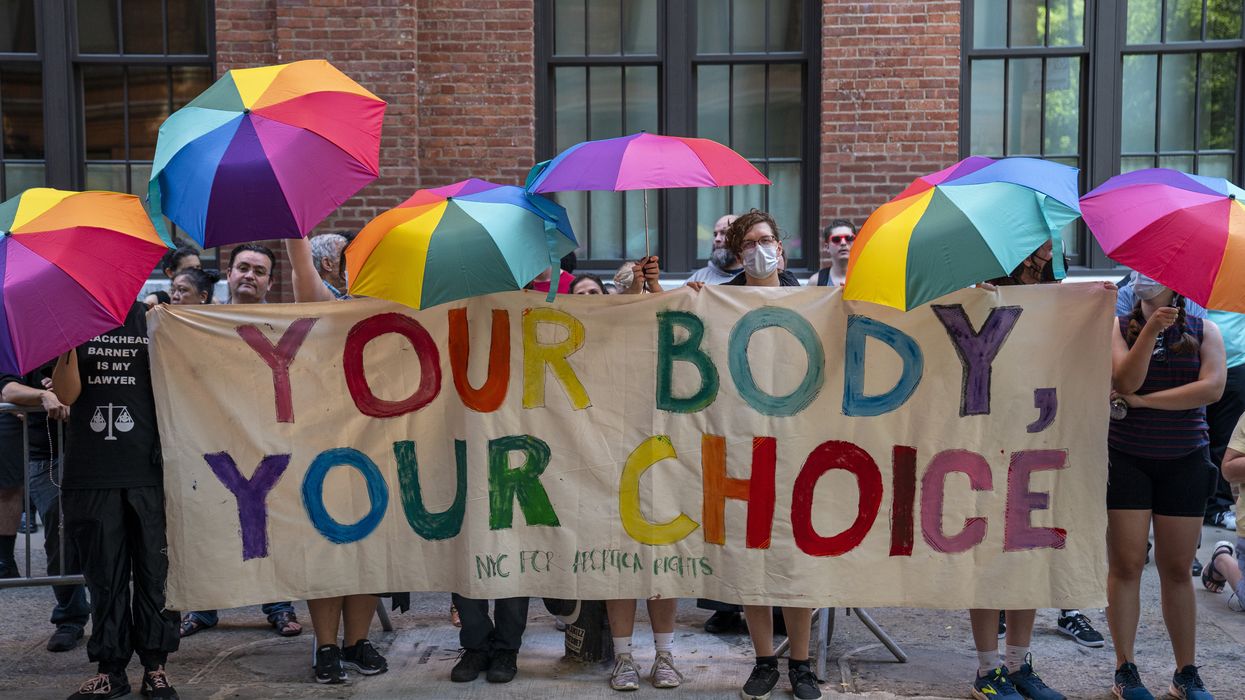
I had the honor of joining over 100 incredible storytellers in Washington, D.C. for the Our Voices, Our Stories, Our Future: Free & Just Storyteller Summit, to mark three years since the deadly Dobbs decision.
In emergencies, minutes matter. I’ve been in those rooms. And I can tell you: When someone is crashing in front of you, the last thing you should be doing is calling legal.
I am still in awe of the number of people who were courageous enough to travel from across the country to tell their stories and fight for reproductive freedom. We laughed together, we cried together, and we shared our visions for a better future.
We also came to D.C. to meet with lawmakers to remind them that Dobbs didn’t just overturn Roe: It changed lives.
Although the fall of Roe didn’t end abortion in this country, it made it exponentially harder to access. It made it scarier. It deepened the segregation of healthcare access in America. If you’re wealthy enough to travel for care, you might still be okay. But if you’re not—if you’re young, uninsured, working class, Black, or Brown—you’re at greater risk. And we know abortion bans lead to higher maternal mortality, especially for Black women.
Let’s be clear: The anti-abortion zealots behind Dobbs were never going to stop there. In the three years since, I’ve watched extremists celebrate it as a win for “states’ rights,” while women are forced to flee their home states for basic care. “Leaving it to the states” doesn’t mean freedom. It means chaos. It means harm. It means people die.
That’s not an exaggeration—that’s reality.
And President Donald Trump? He doesn’t need to sign a national abortion ban to wreak havoc. He and his allies are already gutting protections through rollbacks, legal loopholes, and silence where there should be leadership.
Recently, Trump’s Supreme Court ruled that states can block people relying on Medicaid from choosing Planned Parenthood as their trusted healthcare provider, a devastating blow to abortion rights and reproductive healthcare—specifically, the freedom of millions of people who use Medicaid to choose Planned Parenthood as their healthcare provider.
The court put millions of Americans’ essential right to reproductive care at risk, and it will devastate communities all across the country just so Republicans in Congress can completely gut Medicaid for millions more Americans. Earlier this month, the Trump administration rescinded federal guidance that protected abortion access in emergencies. That guidance made clear what EMTALA—our federal emergency care law—already guarantees: If a pregnant patient shows up to the ER in crisis and needs an abortion to survive, they must get care.
Now that guidance is gone. And providers are left wondering if they’ll be sued—or even arrested—for doing their jobs.
In emergencies, minutes matter. I’ve been in those rooms. And I can tell you: When someone is crashing in front of you, the last thing you should be doing is calling legal.
And now they’ve set their sights on medication abortion—specifically mifepristone. This medication has been safely used by more than 8 million people over the last 20+ years. It’s not only essential for abortion care—it’s critical for miscarriage management too. But extremists don’t care about science, or safety. They care about control.
If they succeed in restricting mifepristone, it won’t just impact abortion access. It will gut miscarriage care. It could force providers to delay or deny treatment. And it could shut down clinics that rely on it to function—clinics already hanging on by a thread.
This is how they win. Not just with bans, but with quiet sabotage. With red tape. With fear. With confusion. With back-handed backdoor restrictions on our rights to bodily autonomy.
This is a critical moment in history for both patients and physicians alike to stay informed—because the moves happening now could reshape access to reproductive healthcare nationwide.
That’s why I started Take Back Trust—because people need more than outrage. They need answers, and they need tools. Patients need to walk into an ER or a clinic and know what to say, what to ask, and what their rights are.
Take Back Trust is a national resource hub helping people navigate this broken system. Whether you’re facing a miscarriage, scheduling a birth control visit, or trying to figure out if your state still protects you—we’ve got your back.
I am inspired by the words of former Vice President Kamala Harris, who surprised us via video at the Summit. “I know these are difficult times, and it requires a whole lot of courage, and it requires a level of optimism, to remember that we’re fighting for something, not against something,” the former Vice President reminded us. “And in that way we are doing good and important work that is about upholding fundamental rights, such as the freedom of an individual to make decisions about her own body and not have her government tell her what to do.”
As a clinician, a content creator, and a full-time reproductive rights advocate working at the intersection of medicine and movement, I’ll keep showing up. I’ll keep saying the quiet parts out loud. Because we’re not going back—and we’re not backing down.
We can’t afford to.
Lives are on the line. Not someday, today.

"These anti-choice fanatics will stop at nothing. They don't think their work is finished even after such a horrible and wide-ranging decision as Dobbs," warned the Senate's top Democrat.
Reproductive freedom advocates on Tuesday marked the third anniversary of the U.S. Supreme Court reversing Roe v. Wade by calling out Republican decision-makers—including President Donald Trump—for the harmful impacts of the Dobbs v. Jackson Women's Health Organization decision.
"Three years after the Supreme Court's devastating Dobbs decision stripped away constitutional protections for reproductive freedom, we face not only the predicted economic catastrophe but a terrifying escalation of political violence targeting women's rights advocates," said Equal Rights Advocates executive director Noreen Farrell, pointing to the recent assassination of former Minnesota House Speaker Melissa Hortman (DFL-61) and attempted murder of state Sen. John Hoffman (DFL-34).
"Equal Rights Advocates warned that Dobbs would unleash more than legal restrictions—it would legitimize extremism. Now we see the tragic fulfillment of that prediction," Farrell continued. "This administration's policies represent calculated economic warfare against women, particularly low-income women and women of color. The case of Adriana Smith last week illustrates the extreme consequences of the Dobbs decision—a pregnant Black woman denied medical care, becoming a brain-dead incubator for a fetus against her medical directive and her family's wishes."
"In the 21 states with abortion bans and extreme restrictions, women continue to die, and along with their providers, are being threatened, targeted, and criminalized."
The Georgia law doctors at Emory University Hospital cited to keep Smith on life support—allegedly without the input or consent of her family—until her fetus could be delivered is one of various anti-choice state laws that took effect after Dobbs.
"For the last three years, we have witnessed firsthand what happens when politicians try to control the rights of people to practice basic bodily autonomy—with dire results," said Dr. Jamila Perritt, an OB-GYN and abortion provider who serves as president and CEO of Physicians for Reproductive Health, in a Tuesday statement.
"We have seen countless people forced to leave their communities to get basic healthcare, forced to remain pregnant when they wouldn't have otherwise, criminalized for experiencing pregnancy loss, and ultimately, we have seen people dying after being turned away when seeking emergency abortion care," Perritt detailed.
The Guttmacher Institute on Tuesday released new data about the 155,000 abortion patients who traveled out of state to obtain care last year. The group said that "similar to 2023, Illinois remained a critical access point in 2024, with 35,470 patients traveling from across the South and Midwest to obtain abortion care in the state."
Guttmacher Institute data scientist and study lead Isaac Maddow-Zimet noted that "while these findings show us where and how far patients are traveling, they are not able to capture the numerous financial, logistical, social, and emotional obstacles people face. In addition to the travel costs, driving or flying across state lines often requires taking time off work, navigating complex logistics and arranging childcare, not to mention paying for the abortion itself."
As states continue to pass restrictions post-Dobbs, patients' options are dwindling. For example, Guttmacher director of state policy Candace Gibson explained that "Florida had been an important access point for abortion in the Southeast, so when the state's six-week ban went into effect in May 2024, it was not just Floridians who were impacted, but also the thousands of out-of-state patients who would have traveled there for care."
While running to retake the White House last year, Republican President Donald Trump—who appointed three of the Supreme Court's six right-wing justices during his first term—came out against a Florida ballot measure that would end his state's strict abortion ban and bragged about his role in reversing Roe but also tried to downplay the importance of reproductive rights to voters.
"It's been three years since people in the United States have lost their federal constitutional right to abortion; three years since President Trump's handpicked Supreme Court justices stripped Americans of this fundamental right to freedom," Alexis McGill Johnson, president and CEO of Planned Parenthood Action Fund, said in a Tuesday statement. "The consequences have been devastating, even lethal."
"We can't know all the names of the women who have died because of abortion bans, but we will never forget that people have endured injury, pain, and suffering because of the Dobbs decision," she declared. "We continue to fight President Trump and his backers' attacks on reproductive rights, including their effort to 'defund' Planned Parenthood in Congress and end abortion access for everyone, everywhere. Planned Parenthood Action Fund will never stop advocating for a country where all people have the power to control their own bodies, lives, and futures."
Reproductive Freedom for All president and CEO Mini Timmaraju was similarly determined on Tuesday, launching a campaign to mobilize against Trump and the GOP.
"In the 21 states with abortion bans and extreme restrictions, women continue to die, and along with their providers, are being threatened, targeted, and criminalized," Timmaraju said. "And while the Trump administration continues to gut our fundamental freedoms, we continue to fight against the GOP's attacks on Planned Parenthood, Medicaid, and essential reproductive care."
Congressional Democrats—who have minorities in both chambers—joined advocacy group leaders in using the Dobbs anniversary to direct anger at the president and Republican policymakers working to strip away reproductive freedom from people nationwide.
During a Tuesday press conference, Senate Minority Leader Chuck Schumer (D-N.Y.) said the high court's June 2022 ruling "will go down in history as one of the worst, most harmful, most regressive decisions in modern history" and stressed that "people are dying as a result of the Dobbs decision."
Noting that many patients have had to travel or wait for care, Schumer said that "this is abominable. We know that this is what Republicans want, a total ban on abortion. These anti-choice fanatics will stop at nothing. They don't think their work is finished even after such a horrible and wide-ranging decision as Dobbs. Reproductive freedom is under attack on all sides. Extremists are banning and restricting abortion, criminalizing providers, defunding care, and interfering with lifesaving medicines."
"These attacks are also devastating our economy. With fewer reproductive healthcare protections, fewer women are participating in the workforce. State-level restrictions on abortion access combined with the lack of federal protection cost the economy more than $133 billion nationally," he continued. "The 16 states with the most restrictive abortion policies were responsible for $64 billion in economic loss."
The Senate's top Democrat also called out his GOP colleagues for what he called "a Republican backdoor abortion ban done in the reconciliation bill," taking aim at "two nasty provisions to defund Planned Parenthood and eliminate coverage for comprehensive reproductive care" from the Affordable Care Act marketplace.
"I'm here to say that Democrats are going to fight like hell to strip these cruel provisions from the Republican bill, including in the Byrd bath, which will be occurring today or tomorrow," he pledged, referring to the Senate parliamentarian's review of the GOP megabill. "Just as we fought back against attacks on abortion before, we will fight these nasty provisions with every fiber in our being."