

SUBSCRIBE TO OUR FREE NEWSLETTER
Daily news & progressive opinion—funded by the people, not the corporations—delivered straight to your inbox.
5
#000000
#FFFFFF
To donate by check, phone, or other method, see our More Ways to Give page.
Daily news & progressive opinion—funded by the people, not the corporations—delivered straight to your inbox.
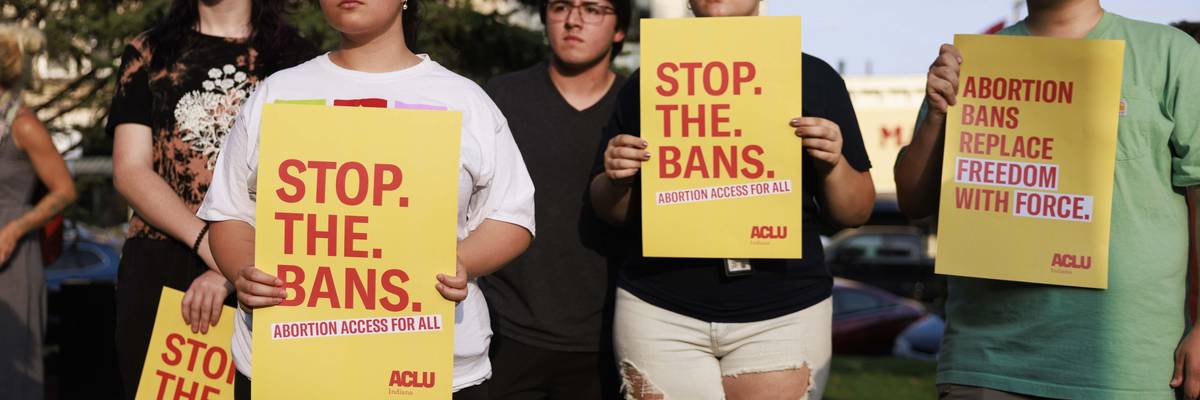
"They are playing with people's lives with this law," said one Florida woman who suffered a pregnancy complication and was denied care.
The harrowing experiences of two close friends in Florida who experienced serious pregnancy complications days apart are among the latest to show the reality faced by pregnant people in states with forced pregnancy laws—and the future the Republican Party is pushing for across the United States, rights advocates said Monday.
As The Washington Post reported, two women who had suffered miscarriages and bonded over their mutual experiences with infertility, Anya Cook and Shanae Smith-Cunningham, developed the same complication days apart in December when they were just 16 and 19 weeks pregnant, respectively—weeks before their fetuses were considered viable by doctors.
The two friends both experienced preterm prelabor rupture of the membranes (PPROM), which affects less than 1% of pregnancies and causes the pregnant person to lose amniotic fluid, making it extremely unlikely that their fetus will survive.
PPROM can cause hemorrhaging and serious infections, and the standard of care recognized by the American College of Obstetricians and Gynecologists (ACOG) is an induction of labor or a surgical abortion—but with Florida's 15-week abortion ban in effect since the right-wing majority on the U.S. Supreme Court overturned Roe v. Wade last year, doctors did not offer Cook those options when she went to a hospital in Coral Springs, Florida one night after realizing she has losing amniotic fluid.
Cook only received antibiotics and was told to wait at home for her symptoms to for her condition to progress. The next day, in the bathroom of a nail salon, she delivered her 16-week-old fetus and immediately began hemorrhaging—eventually losing nearly half the blood in her body.
The treatment she eventually was given after being rushed to the hospital a second time left her with complications that may make it even more difficult for her to carry a pregnancy to term.
She narrowly avoided a hysterectomy, which would have made a future pregnancy impossible.
"In what world is that pro-life?" asked Slate journalist Mark Joseph Stern.
Florida's 15-week abortion ban—which Republicans are pushing to make even more extreme by banning abortion care for people who are more than six weeks pregnant—includes so-called "exceptions" only to "save the pregnant woman's life," "avert a serious risk of substantial and irreversible physical impairment of a major bodily function," or in the case of "fatal fetal anomaly."
A study conducted in Texas last year showed that 57% of patients who experienced pre-viability PPROM in the state, where abortion is also banned, faced a "serious maternal morbidity" such as an infection or hemorrhage, putting them at risk for the same outcome Cook experienced. By comparison, 33% of patients with the complication in states without abortions experienced those medical emergencies as a result of PPROM.
Despite this, the six-week abortion ban proposal that has already passed in the Florida state Senate and is expected to pass in the Republican-controlled state House, does not include an exception for PPROM.
The devastation Cook and Smith-Cunningham faced as they lost their pregnancies "will only get worse with a six-week ban," said state Rep. Anna Eskamani (D-42).
Smith-Cunningham was visiting family in Jamaica when she developed PPROM shortly after her friend did, and quickly traveled back home to Florida to get medical treatment.
Once she got there, she was sent home from her local hospital twice despite her symptoms, with a doctor "explicitly" mentioning the overturning of Roe v. Wade as the reason "she couldn't do anything to help."
She was told she couldn't receive the standard of care recognized by doctors across the country unless her cervix dilated further than the four centimeters it already had, or she began having an active miscarriage.
Instead, she stayed bedridden at home, terrified that she would begin hemorrhaging like her friend just had, until she finally became dilated enough to receive medical care.
"They are playing with people's lives with this law," Smith-Cunningham told the Post.
The two friends' experiences, said HuffPost reporter Jonathan Cohn, demonstrate "what a 15-week abortion ban looks like in real life," with doctors refusing to care for patients out of fear of breaking the law, even if "exceptions" are included.
"The laws are working as intended," New York Times columnist Jamelle Bouie added.
State Sen. Lauren Book (D-32), who represents both Smith-Cunningham and Cook, warned that "women will die" if the six-week ban is passed.
"Despite denials from across the aisle, the truth is clear," said Book. "Florida mothers who suffer miscarriages are ALREADY being forced to the brink of death before receiving needed abortion care."
Dear Common Dreams reader, It’s been nearly 30 years since I co-founded Common Dreams with my late wife, Lina Newhouser. We had the radical notion that journalism should serve the public good, not corporate profits. It was clear to us from the outset what it would take to build such a project. No paid advertisements. No corporate sponsors. No millionaire publisher telling us what to think or do. Many people said we wouldn't last a year, but we proved those doubters wrong. Together with a tremendous team of journalists and dedicated staff, we built an independent media outlet free from the constraints of profits and corporate control. Our mission has always been simple: To inform. To inspire. To ignite change for the common good. Building Common Dreams was not easy. Our survival was never guaranteed. When you take on the most powerful forces—Wall Street greed, fossil fuel industry destruction, Big Tech lobbyists, and uber-rich oligarchs who have spent billions upon billions rigging the economy and democracy in their favor—the only bulwark you have is supporters who believe in your work. But here’s the urgent message from me today. It's never been this bad out there. And it's never been this hard to keep us going. At the very moment Common Dreams is most needed, the threats we face are intensifying. We need your support now more than ever. We don't accept corporate advertising and never will. We don't have a paywall because we don't think people should be blocked from critical news based on their ability to pay. Everything we do is funded by the donations of readers like you. When everyone does the little they can afford, we are strong. But if that support retreats or dries up, so do we. Will you donate now to make sure Common Dreams not only survives but thrives? —Craig Brown, Co-founder |
The harrowing experiences of two close friends in Florida who experienced serious pregnancy complications days apart are among the latest to show the reality faced by pregnant people in states with forced pregnancy laws—and the future the Republican Party is pushing for across the United States, rights advocates said Monday.
As The Washington Post reported, two women who had suffered miscarriages and bonded over their mutual experiences with infertility, Anya Cook and Shanae Smith-Cunningham, developed the same complication days apart in December when they were just 16 and 19 weeks pregnant, respectively—weeks before their fetuses were considered viable by doctors.
The two friends both experienced preterm prelabor rupture of the membranes (PPROM), which affects less than 1% of pregnancies and causes the pregnant person to lose amniotic fluid, making it extremely unlikely that their fetus will survive.
PPROM can cause hemorrhaging and serious infections, and the standard of care recognized by the American College of Obstetricians and Gynecologists (ACOG) is an induction of labor or a surgical abortion—but with Florida's 15-week abortion ban in effect since the right-wing majority on the U.S. Supreme Court overturned Roe v. Wade last year, doctors did not offer Cook those options when she went to a hospital in Coral Springs, Florida one night after realizing she has losing amniotic fluid.
Cook only received antibiotics and was told to wait at home for her symptoms to for her condition to progress. The next day, in the bathroom of a nail salon, she delivered her 16-week-old fetus and immediately began hemorrhaging—eventually losing nearly half the blood in her body.
The treatment she eventually was given after being rushed to the hospital a second time left her with complications that may make it even more difficult for her to carry a pregnancy to term.
She narrowly avoided a hysterectomy, which would have made a future pregnancy impossible.
"In what world is that pro-life?" asked Slate journalist Mark Joseph Stern.
Florida's 15-week abortion ban—which Republicans are pushing to make even more extreme by banning abortion care for people who are more than six weeks pregnant—includes so-called "exceptions" only to "save the pregnant woman's life," "avert a serious risk of substantial and irreversible physical impairment of a major bodily function," or in the case of "fatal fetal anomaly."
A study conducted in Texas last year showed that 57% of patients who experienced pre-viability PPROM in the state, where abortion is also banned, faced a "serious maternal morbidity" such as an infection or hemorrhage, putting them at risk for the same outcome Cook experienced. By comparison, 33% of patients with the complication in states without abortions experienced those medical emergencies as a result of PPROM.
Despite this, the six-week abortion ban proposal that has already passed in the Florida state Senate and is expected to pass in the Republican-controlled state House, does not include an exception for PPROM.
The devastation Cook and Smith-Cunningham faced as they lost their pregnancies "will only get worse with a six-week ban," said state Rep. Anna Eskamani (D-42).
Smith-Cunningham was visiting family in Jamaica when she developed PPROM shortly after her friend did, and quickly traveled back home to Florida to get medical treatment.
Once she got there, she was sent home from her local hospital twice despite her symptoms, with a doctor "explicitly" mentioning the overturning of Roe v. Wade as the reason "she couldn't do anything to help."
She was told she couldn't receive the standard of care recognized by doctors across the country unless her cervix dilated further than the four centimeters it already had, or she began having an active miscarriage.
Instead, she stayed bedridden at home, terrified that she would begin hemorrhaging like her friend just had, until she finally became dilated enough to receive medical care.
"They are playing with people's lives with this law," Smith-Cunningham told the Post.
The two friends' experiences, said HuffPost reporter Jonathan Cohn, demonstrate "what a 15-week abortion ban looks like in real life," with doctors refusing to care for patients out of fear of breaking the law, even if "exceptions" are included.
"The laws are working as intended," New York Times columnist Jamelle Bouie added.
State Sen. Lauren Book (D-32), who represents both Smith-Cunningham and Cook, warned that "women will die" if the six-week ban is passed.
"Despite denials from across the aisle, the truth is clear," said Book. "Florida mothers who suffer miscarriages are ALREADY being forced to the brink of death before receiving needed abortion care."
The harrowing experiences of two close friends in Florida who experienced serious pregnancy complications days apart are among the latest to show the reality faced by pregnant people in states with forced pregnancy laws—and the future the Republican Party is pushing for across the United States, rights advocates said Monday.
As The Washington Post reported, two women who had suffered miscarriages and bonded over their mutual experiences with infertility, Anya Cook and Shanae Smith-Cunningham, developed the same complication days apart in December when they were just 16 and 19 weeks pregnant, respectively—weeks before their fetuses were considered viable by doctors.
The two friends both experienced preterm prelabor rupture of the membranes (PPROM), which affects less than 1% of pregnancies and causes the pregnant person to lose amniotic fluid, making it extremely unlikely that their fetus will survive.
PPROM can cause hemorrhaging and serious infections, and the standard of care recognized by the American College of Obstetricians and Gynecologists (ACOG) is an induction of labor or a surgical abortion—but with Florida's 15-week abortion ban in effect since the right-wing majority on the U.S. Supreme Court overturned Roe v. Wade last year, doctors did not offer Cook those options when she went to a hospital in Coral Springs, Florida one night after realizing she has losing amniotic fluid.
Cook only received antibiotics and was told to wait at home for her symptoms to for her condition to progress. The next day, in the bathroom of a nail salon, she delivered her 16-week-old fetus and immediately began hemorrhaging—eventually losing nearly half the blood in her body.
The treatment she eventually was given after being rushed to the hospital a second time left her with complications that may make it even more difficult for her to carry a pregnancy to term.
She narrowly avoided a hysterectomy, which would have made a future pregnancy impossible.
"In what world is that pro-life?" asked Slate journalist Mark Joseph Stern.
Florida's 15-week abortion ban—which Republicans are pushing to make even more extreme by banning abortion care for people who are more than six weeks pregnant—includes so-called "exceptions" only to "save the pregnant woman's life," "avert a serious risk of substantial and irreversible physical impairment of a major bodily function," or in the case of "fatal fetal anomaly."
A study conducted in Texas last year showed that 57% of patients who experienced pre-viability PPROM in the state, where abortion is also banned, faced a "serious maternal morbidity" such as an infection or hemorrhage, putting them at risk for the same outcome Cook experienced. By comparison, 33% of patients with the complication in states without abortions experienced those medical emergencies as a result of PPROM.
Despite this, the six-week abortion ban proposal that has already passed in the Florida state Senate and is expected to pass in the Republican-controlled state House, does not include an exception for PPROM.
The devastation Cook and Smith-Cunningham faced as they lost their pregnancies "will only get worse with a six-week ban," said state Rep. Anna Eskamani (D-42).
Smith-Cunningham was visiting family in Jamaica when she developed PPROM shortly after her friend did, and quickly traveled back home to Florida to get medical treatment.
Once she got there, she was sent home from her local hospital twice despite her symptoms, with a doctor "explicitly" mentioning the overturning of Roe v. Wade as the reason "she couldn't do anything to help."
She was told she couldn't receive the standard of care recognized by doctors across the country unless her cervix dilated further than the four centimeters it already had, or she began having an active miscarriage.
Instead, she stayed bedridden at home, terrified that she would begin hemorrhaging like her friend just had, until she finally became dilated enough to receive medical care.
"They are playing with people's lives with this law," Smith-Cunningham told the Post.
The two friends' experiences, said HuffPost reporter Jonathan Cohn, demonstrate "what a 15-week abortion ban looks like in real life," with doctors refusing to care for patients out of fear of breaking the law, even if "exceptions" are included.
"The laws are working as intended," New York Times columnist Jamelle Bouie added.
State Sen. Lauren Book (D-32), who represents both Smith-Cunningham and Cook, warned that "women will die" if the six-week ban is passed.
"Despite denials from across the aisle, the truth is clear," said Book. "Florida mothers who suffer miscarriages are ALREADY being forced to the brink of death before receiving needed abortion care."

