SUBSCRIBE TO OUR FREE NEWSLETTER
Daily news & progressive opinion—funded by the people, not the corporations—delivered straight to your inbox.
5
#000000
#FFFFFF
To donate by check, phone, or other method, see our More Ways to Give page.
Daily news & progressive opinion—funded by the people, not the corporations—delivered straight to your inbox.
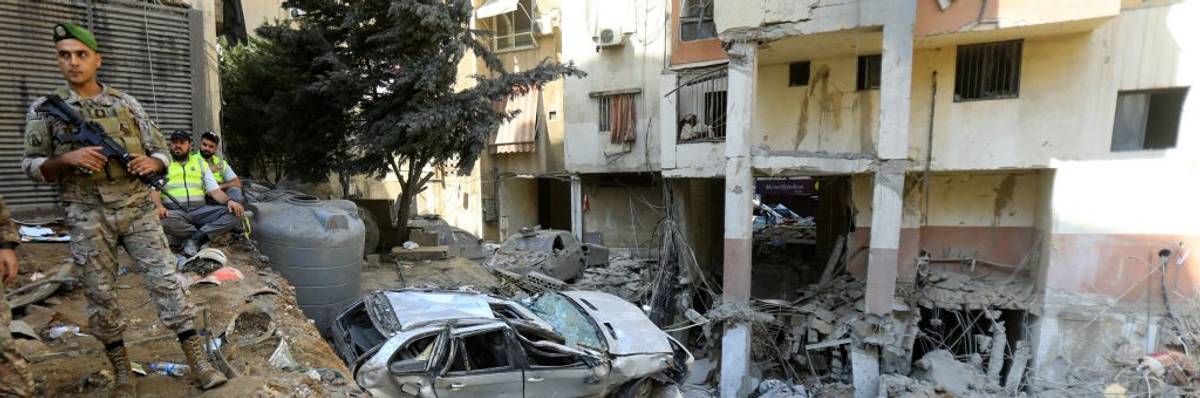
A Lebanese soldier stands guard at the scene of an Israeli airstrike on Beirut as search and rescue operations continue on September 21, 2024.
However, there was no hint of de-escalation as Israeli warplanes bombed Beirut, killing dozens of people including senior Hezbollah commanders and women and children.
As Israel followed up its remote bombings of communications devices in Lebanon with airstrikes on Beirut, the United Nations Security Council held an emergency session Friday during which officials urgently called for an immediate cease-fire and warned that the Middle East is on "the brink of catastrophe."
"We risk seeing a conflagration that could dwarf even the devastation and suffering witnessed so far," U.N. Under-Secretary-General for Political and Peacebuilding Affairs Rosemary DiCarlo told representatives of the 15-member Security Council (UNSC) during the session.
"It is not too late to avoid such folly. There is still room for diplomacy," DiCarlo stressed. "I also strongly urge member states with influence over the parties to leverage it now."
"It is not too late to avoid such folly. There is still room for diplomacy."
Officials voiced alarm over this week's remote bombings of pagers, walkie-talkies, and other devices Israel said belonged to members of Hezbollah, the Lebanese political and paramilitary group, which killed at least 37 people including two children and wounded thousands more. While Israel has not claimed responsibility for the attacks, U.S. officials have attributed the attacks to their key ally.
"These attacks represent a new development in warfare, where communication tools become weapons," U.N. High Commissioner for Human Rights Volker Türk told the council.
"This has unleashed widespread fear, panic, and horror among people in Lebanon, already suffering in an increasingly volatile situation since October 2023 and crumbling under a severe and longstanding economic crisis," Türk added. "This cannot be the new normal."
Speaking during the meeting, Lebanese Foreign Minister Abdallah Bou Habib said the "unfathomable" Israeli electronic attacks "represent a serious unprecedented event in the history of wars" and warned that "no one in this world is safe anymore."
Habib demanded the council condemn Israel's "terrorist attack" and asserted that "accepting what happened amounts to opening a Pandora's box," with countries and militant groups carrying out similar bombings around the world.
"This is the moment of truth," he added.
French U.N. Ambassador Nicolas de Rivière told the Security Council that "the risk of an open war with potentially tragic consequences is growing every day."
"Such a prospect must be avoided at all costs," he added. "It is urgent that all parties work towards de-escalation."
Deputy U.S. U.N. Ambassador Robert Wood defended Israel, asserting that "no member of this council facing a terrorist organization on its border would tolerate daily rocket attacks on its territory."
However, some experts
said that the Israeli device bombings were acts of terrorism under international law.
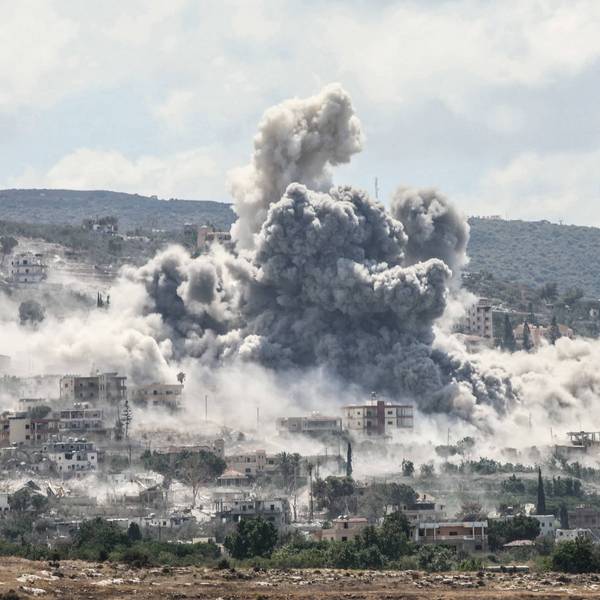
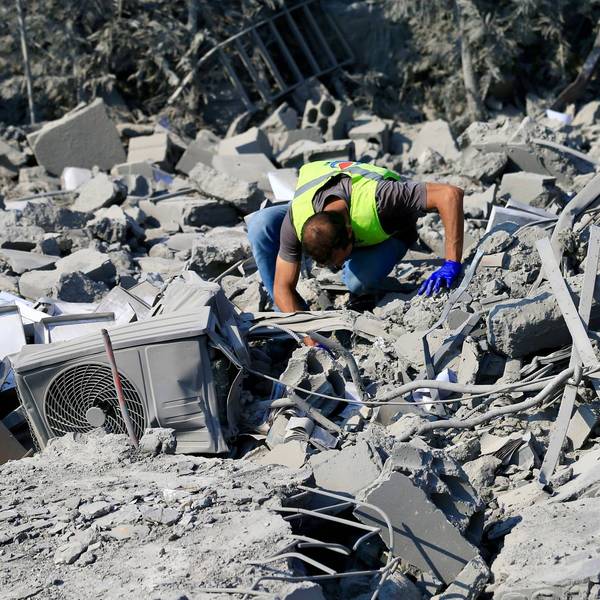
There was no hint of de-escalation as Israeli warplanes bombed a residential area of Beirut on Friday, killing at least 31 people, including multiple Hezbollah commanders, and wounding at least dozens of others. Lebanon's Ministry of Health said that the dead include three women and seven children.
During a Saturday television interview, Israeli Minister of Education Yoav Kisch falsely proclaimed that "there is no difference between Hezbollah and Lebanon."
"The way things are progressing at the moment, Lebanon will be annihilated," he vowed. Pressed on the genocidal implications of the word "annihilated," Kisch said, "Lebanon as we know it will not exist."
Hezbollah and Israeli forces have traded limited—yet deadly and destructive—cross-border fire since October 7, when Israel retaliated for Hamas-led attacks by launching a war for which it is currently on trial for genocide at the U.N. International Court of Justice in The Hague.
According to the Gaza Ministry of Health, Israel's bombs, bullets, and blockade have killed and maimed more than 147,000 Palestinians in Gaza over the past 351 days. Nearly all of Gaza's 2.3 million people have been forcibly displaced by Israel's bombardment and invasion, which, along with the "
complete siege" on the coastal enclave, has fueled widespread and sometimes deadly starvation and disease.
Dear Common Dreams reader, It’s been nearly 30 years since I co-founded Common Dreams with my late wife, Lina Newhouser. We had the radical notion that journalism should serve the public good, not corporate profits. It was clear to us from the outset what it would take to build such a project. No paid advertisements. No corporate sponsors. No millionaire publisher telling us what to think or do. Many people said we wouldn't last a year, but we proved those doubters wrong. Together with a tremendous team of journalists and dedicated staff, we built an independent media outlet free from the constraints of profits and corporate control. Our mission has always been simple: To inform. To inspire. To ignite change for the common good. Building Common Dreams was not easy. Our survival was never guaranteed. When you take on the most powerful forces—Wall Street greed, fossil fuel industry destruction, Big Tech lobbyists, and uber-rich oligarchs who have spent billions upon billions rigging the economy and democracy in their favor—the only bulwark you have is supporters who believe in your work. But here’s the urgent message from me today. It's never been this bad out there. And it's never been this hard to keep us going. At the very moment Common Dreams is most needed, the threats we face are intensifying. We need your support now more than ever. We don't accept corporate advertising and never will. We don't have a paywall because we don't think people should be blocked from critical news based on their ability to pay. Everything we do is funded by the donations of readers like you. When everyone does the little they can afford, we are strong. But if that support retreats or dries up, so do we. Will you donate now to make sure Common Dreams not only survives but thrives? —Craig Brown, Co-founder |
As Israel followed up its remote bombings of communications devices in Lebanon with airstrikes on Beirut, the United Nations Security Council held an emergency session Friday during which officials urgently called for an immediate cease-fire and warned that the Middle East is on "the brink of catastrophe."
"We risk seeing a conflagration that could dwarf even the devastation and suffering witnessed so far," U.N. Under-Secretary-General for Political and Peacebuilding Affairs Rosemary DiCarlo told representatives of the 15-member Security Council (UNSC) during the session.
"It is not too late to avoid such folly. There is still room for diplomacy," DiCarlo stressed. "I also strongly urge member states with influence over the parties to leverage it now."
"It is not too late to avoid such folly. There is still room for diplomacy."
Officials voiced alarm over this week's remote bombings of pagers, walkie-talkies, and other devices Israel said belonged to members of Hezbollah, the Lebanese political and paramilitary group, which killed at least 37 people including two children and wounded thousands more. While Israel has not claimed responsibility for the attacks, U.S. officials have attributed the attacks to their key ally.
"These attacks represent a new development in warfare, where communication tools become weapons," U.N. High Commissioner for Human Rights Volker Türk told the council.
"This has unleashed widespread fear, panic, and horror among people in Lebanon, already suffering in an increasingly volatile situation since October 2023 and crumbling under a severe and longstanding economic crisis," Türk added. "This cannot be the new normal."
Speaking during the meeting, Lebanese Foreign Minister Abdallah Bou Habib said the "unfathomable" Israeli electronic attacks "represent a serious unprecedented event in the history of wars" and warned that "no one in this world is safe anymore."
Habib demanded the council condemn Israel's "terrorist attack" and asserted that "accepting what happened amounts to opening a Pandora's box," with countries and militant groups carrying out similar bombings around the world.
"This is the moment of truth," he added.
French U.N. Ambassador Nicolas de Rivière told the Security Council that "the risk of an open war with potentially tragic consequences is growing every day."
"Such a prospect must be avoided at all costs," he added. "It is urgent that all parties work towards de-escalation."
Deputy U.S. U.N. Ambassador Robert Wood defended Israel, asserting that "no member of this council facing a terrorist organization on its border would tolerate daily rocket attacks on its territory."
However, some experts
said that the Israeli device bombings were acts of terrorism under international law.
There was no hint of de-escalation as Israeli warplanes bombed a residential area of Beirut on Friday, killing at least 31 people, including multiple Hezbollah commanders, and wounding at least dozens of others. Lebanon's Ministry of Health said that the dead include three women and seven children.
During a Saturday television interview, Israeli Minister of Education Yoav Kisch falsely proclaimed that "there is no difference between Hezbollah and Lebanon."
"The way things are progressing at the moment, Lebanon will be annihilated," he vowed. Pressed on the genocidal implications of the word "annihilated," Kisch said, "Lebanon as we know it will not exist."
Hezbollah and Israeli forces have traded limited—yet deadly and destructive—cross-border fire since October 7, when Israel retaliated for Hamas-led attacks by launching a war for which it is currently on trial for genocide at the U.N. International Court of Justice in The Hague.
According to the Gaza Ministry of Health, Israel's bombs, bullets, and blockade have killed and maimed more than 147,000 Palestinians in Gaza over the past 351 days. Nearly all of Gaza's 2.3 million people have been forcibly displaced by Israel's bombardment and invasion, which, along with the "
complete siege" on the coastal enclave, has fueled widespread and sometimes deadly starvation and disease.
As Israel followed up its remote bombings of communications devices in Lebanon with airstrikes on Beirut, the United Nations Security Council held an emergency session Friday during which officials urgently called for an immediate cease-fire and warned that the Middle East is on "the brink of catastrophe."
"We risk seeing a conflagration that could dwarf even the devastation and suffering witnessed so far," U.N. Under-Secretary-General for Political and Peacebuilding Affairs Rosemary DiCarlo told representatives of the 15-member Security Council (UNSC) during the session.
"It is not too late to avoid such folly. There is still room for diplomacy," DiCarlo stressed. "I also strongly urge member states with influence over the parties to leverage it now."
"It is not too late to avoid such folly. There is still room for diplomacy."
Officials voiced alarm over this week's remote bombings of pagers, walkie-talkies, and other devices Israel said belonged to members of Hezbollah, the Lebanese political and paramilitary group, which killed at least 37 people including two children and wounded thousands more. While Israel has not claimed responsibility for the attacks, U.S. officials have attributed the attacks to their key ally.
"These attacks represent a new development in warfare, where communication tools become weapons," U.N. High Commissioner for Human Rights Volker Türk told the council.
"This has unleashed widespread fear, panic, and horror among people in Lebanon, already suffering in an increasingly volatile situation since October 2023 and crumbling under a severe and longstanding economic crisis," Türk added. "This cannot be the new normal."
Speaking during the meeting, Lebanese Foreign Minister Abdallah Bou Habib said the "unfathomable" Israeli electronic attacks "represent a serious unprecedented event in the history of wars" and warned that "no one in this world is safe anymore."
Habib demanded the council condemn Israel's "terrorist attack" and asserted that "accepting what happened amounts to opening a Pandora's box," with countries and militant groups carrying out similar bombings around the world.
"This is the moment of truth," he added.
French U.N. Ambassador Nicolas de Rivière told the Security Council that "the risk of an open war with potentially tragic consequences is growing every day."
"Such a prospect must be avoided at all costs," he added. "It is urgent that all parties work towards de-escalation."
Deputy U.S. U.N. Ambassador Robert Wood defended Israel, asserting that "no member of this council facing a terrorist organization on its border would tolerate daily rocket attacks on its territory."
However, some experts
said that the Israeli device bombings were acts of terrorism under international law.
There was no hint of de-escalation as Israeli warplanes bombed a residential area of Beirut on Friday, killing at least 31 people, including multiple Hezbollah commanders, and wounding at least dozens of others. Lebanon's Ministry of Health said that the dead include three women and seven children.
During a Saturday television interview, Israeli Minister of Education Yoav Kisch falsely proclaimed that "there is no difference between Hezbollah and Lebanon."
"The way things are progressing at the moment, Lebanon will be annihilated," he vowed. Pressed on the genocidal implications of the word "annihilated," Kisch said, "Lebanon as we know it will not exist."
Hezbollah and Israeli forces have traded limited—yet deadly and destructive—cross-border fire since October 7, when Israel retaliated for Hamas-led attacks by launching a war for which it is currently on trial for genocide at the U.N. International Court of Justice in The Hague.
According to the Gaza Ministry of Health, Israel's bombs, bullets, and blockade have killed and maimed more than 147,000 Palestinians in Gaza over the past 351 days. Nearly all of Gaza's 2.3 million people have been forcibly displaced by Israel's bombardment and invasion, which, along with the "
complete siege" on the coastal enclave, has fueled widespread and sometimes deadly starvation and disease.