SUBSCRIBE TO OUR FREE NEWSLETTER
Daily news & progressive opinion—funded by the people, not the corporations—delivered straight to your inbox.
5
#000000
#FFFFFF
To donate by check, phone, or other method, see our More Ways to Give page.
Daily news & progressive opinion—funded by the people, not the corporations—delivered straight to your inbox.
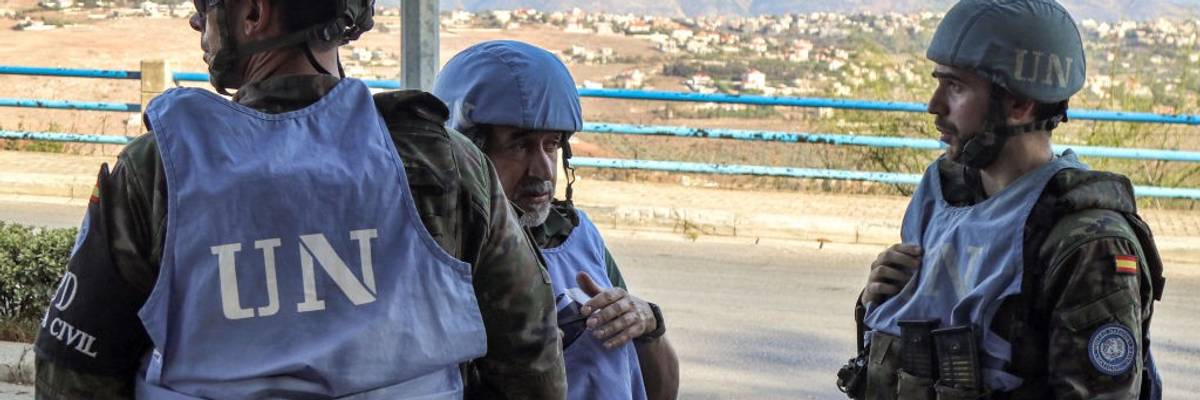
Spanish peacekeepers of the United Nations Interim Force in Lebanon coordinate their patrol with the Lebanese Military Police, in Marjayoun in south Lebanon on October 8, 2024.
"Attacking U.N. personnel and property is a major violation of International Humanitarian Law," said the foreign minister of Indonesia.
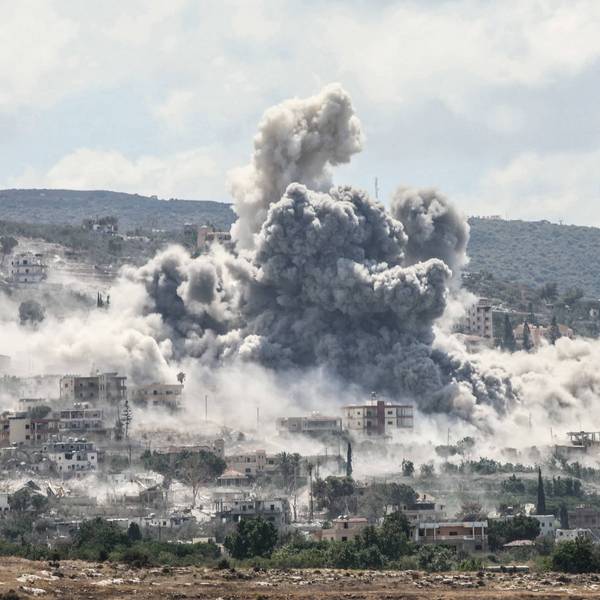
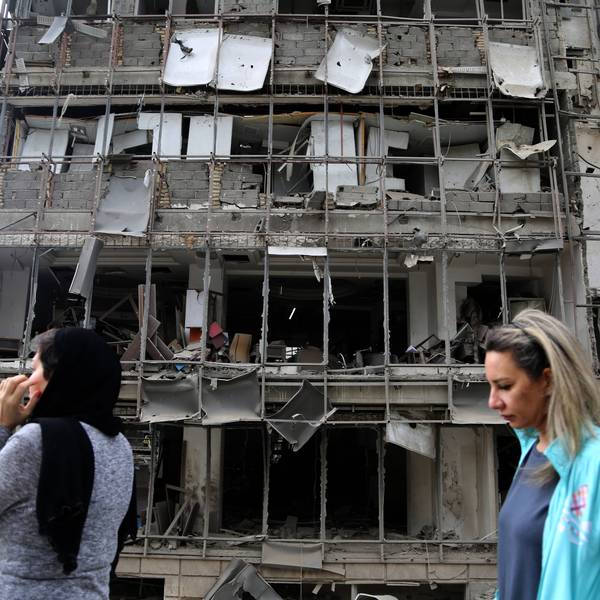
United Nations Secretary-General António Guterres on Friday joined human rights organizations and the foreign ministers of major countries in condemning the Israeli military's targeting of U.N. peacekeeping forces stationed in Lebanon, where Israel has killed more than 2,000 people in bombings and ground attacks in recent weeks.
"This incident is intolerable and cannot be repeated," said Guterres after the U.N. Interim Peacekeeping Force in Lebanon (UNIFIL)—an international body of more than 10,000 military and civilian personnel from dozens of countries—issued a statement accusing Israel of "deliberately" targeting the operation's positions. UNIFIL has been present in southern Lebanon since 1978.
On Thursday, UNIFIL said, "two peacekeepers were injured after an IDF Merkava tank fired its weapon toward an observation tower at UNIFIL's headquarters in Naqoura, directly hitting it and causing them to fall." The two injured soldiers were from Indonesia.
"Indonesia strongly condemns the attack," Retno Marsudi, the country's foreign affairs minister, said in response. "Attacking U.N. personnel and property is a major violation of International Humanitarian Law."
Global outrage soon followed, with the top diplomats of Spain, France, Italy, China, Turkey, and other nations issuing statements forcefully condemning the attack.
The United States, Israel's top ally and arms supplier, offered a more muted response, with the Biden White House saying it was "deeply concerned" by the attack while repeating Israel's claim that it is conducting "targeted operations" against Hezbollah, the Lebanese paramilitary group and political party.
Asked about the attack during a briefing on Thursday, Pentagon Press Secretary Patrick Ryder said he would "refer you to the IDF to talk about their operations in that regard."
Israel's attack on the peacekeeping force came after the IDF requested that UNIFIL relocate from the Israel-Lebanon border—a request that the U.N. mission denied.
"The peacekeepers are currently staying in their position, all of them," Jean-Pierre Lacroix, U.N. under-secretary-general for peace operations, told reporters last week. "The parties have an obligation to respect the safety of and security of peacekeepers, and I want to insist on that."
Israel has killed U.N. personnel in unprecedented numbers since late last year, mostly in the Gaza Strip. Human Rights Watch (HRW) on Friday demanded an urgent international probe of Israel's attack on peacekeepers in Lebanon, calling it an "apparent violation of the laws of war."
"With over 2,000 people killed and over a million people displaced in Lebanon since mid-September, it is crucial for UNIFIL to be allowed to fulfill its civilian protection and humanitarian functions," Lama Fakih, HRW's Middle East and North Africa director, said in a statement. "Attacks on UNIFIL not only impede the peacekeeping forces' work but also the ability of civilians in the south to access much-needed humanitarian aid."
Dear Common Dreams reader, It’s been nearly 30 years since I co-founded Common Dreams with my late wife, Lina Newhouser. We had the radical notion that journalism should serve the public good, not corporate profits. It was clear to us from the outset what it would take to build such a project. No paid advertisements. No corporate sponsors. No millionaire publisher telling us what to think or do. Many people said we wouldn't last a year, but we proved those doubters wrong. Together with a tremendous team of journalists and dedicated staff, we built an independent media outlet free from the constraints of profits and corporate control. Our mission has always been simple: To inform. To inspire. To ignite change for the common good. Building Common Dreams was not easy. Our survival was never guaranteed. When you take on the most powerful forces—Wall Street greed, fossil fuel industry destruction, Big Tech lobbyists, and uber-rich oligarchs who have spent billions upon billions rigging the economy and democracy in their favor—the only bulwark you have is supporters who believe in your work. But here’s the urgent message from me today. It's never been this bad out there. And it's never been this hard to keep us going. At the very moment Common Dreams is most needed, the threats we face are intensifying. We need your support now more than ever. We don't accept corporate advertising and never will. We don't have a paywall because we don't think people should be blocked from critical news based on their ability to pay. Everything we do is funded by the donations of readers like you. When everyone does the little they can afford, we are strong. But if that support retreats or dries up, so do we. Will you donate now to make sure Common Dreams not only survives but thrives? —Craig Brown, Co-founder |
United Nations Secretary-General António Guterres on Friday joined human rights organizations and the foreign ministers of major countries in condemning the Israeli military's targeting of U.N. peacekeeping forces stationed in Lebanon, where Israel has killed more than 2,000 people in bombings and ground attacks in recent weeks.
"This incident is intolerable and cannot be repeated," said Guterres after the U.N. Interim Peacekeeping Force in Lebanon (UNIFIL)—an international body of more than 10,000 military and civilian personnel from dozens of countries—issued a statement accusing Israel of "deliberately" targeting the operation's positions. UNIFIL has been present in southern Lebanon since 1978.
On Thursday, UNIFIL said, "two peacekeepers were injured after an IDF Merkava tank fired its weapon toward an observation tower at UNIFIL's headquarters in Naqoura, directly hitting it and causing them to fall." The two injured soldiers were from Indonesia.
"Indonesia strongly condemns the attack," Retno Marsudi, the country's foreign affairs minister, said in response. "Attacking U.N. personnel and property is a major violation of International Humanitarian Law."
Global outrage soon followed, with the top diplomats of Spain, France, Italy, China, Turkey, and other nations issuing statements forcefully condemning the attack.
The United States, Israel's top ally and arms supplier, offered a more muted response, with the Biden White House saying it was "deeply concerned" by the attack while repeating Israel's claim that it is conducting "targeted operations" against Hezbollah, the Lebanese paramilitary group and political party.
Asked about the attack during a briefing on Thursday, Pentagon Press Secretary Patrick Ryder said he would "refer you to the IDF to talk about their operations in that regard."
Israel's attack on the peacekeeping force came after the IDF requested that UNIFIL relocate from the Israel-Lebanon border—a request that the U.N. mission denied.
"The peacekeepers are currently staying in their position, all of them," Jean-Pierre Lacroix, U.N. under-secretary-general for peace operations, told reporters last week. "The parties have an obligation to respect the safety of and security of peacekeepers, and I want to insist on that."
Israel has killed U.N. personnel in unprecedented numbers since late last year, mostly in the Gaza Strip. Human Rights Watch (HRW) on Friday demanded an urgent international probe of Israel's attack on peacekeepers in Lebanon, calling it an "apparent violation of the laws of war."
"With over 2,000 people killed and over a million people displaced in Lebanon since mid-September, it is crucial for UNIFIL to be allowed to fulfill its civilian protection and humanitarian functions," Lama Fakih, HRW's Middle East and North Africa director, said in a statement. "Attacks on UNIFIL not only impede the peacekeeping forces' work but also the ability of civilians in the south to access much-needed humanitarian aid."
United Nations Secretary-General António Guterres on Friday joined human rights organizations and the foreign ministers of major countries in condemning the Israeli military's targeting of U.N. peacekeeping forces stationed in Lebanon, where Israel has killed more than 2,000 people in bombings and ground attacks in recent weeks.
"This incident is intolerable and cannot be repeated," said Guterres after the U.N. Interim Peacekeeping Force in Lebanon (UNIFIL)—an international body of more than 10,000 military and civilian personnel from dozens of countries—issued a statement accusing Israel of "deliberately" targeting the operation's positions. UNIFIL has been present in southern Lebanon since 1978.
On Thursday, UNIFIL said, "two peacekeepers were injured after an IDF Merkava tank fired its weapon toward an observation tower at UNIFIL's headquarters in Naqoura, directly hitting it and causing them to fall." The two injured soldiers were from Indonesia.
"Indonesia strongly condemns the attack," Retno Marsudi, the country's foreign affairs minister, said in response. "Attacking U.N. personnel and property is a major violation of International Humanitarian Law."
Global outrage soon followed, with the top diplomats of Spain, France, Italy, China, Turkey, and other nations issuing statements forcefully condemning the attack.
The United States, Israel's top ally and arms supplier, offered a more muted response, with the Biden White House saying it was "deeply concerned" by the attack while repeating Israel's claim that it is conducting "targeted operations" against Hezbollah, the Lebanese paramilitary group and political party.
Asked about the attack during a briefing on Thursday, Pentagon Press Secretary Patrick Ryder said he would "refer you to the IDF to talk about their operations in that regard."
Israel's attack on the peacekeeping force came after the IDF requested that UNIFIL relocate from the Israel-Lebanon border—a request that the U.N. mission denied.
"The peacekeepers are currently staying in their position, all of them," Jean-Pierre Lacroix, U.N. under-secretary-general for peace operations, told reporters last week. "The parties have an obligation to respect the safety of and security of peacekeepers, and I want to insist on that."
Israel has killed U.N. personnel in unprecedented numbers since late last year, mostly in the Gaza Strip. Human Rights Watch (HRW) on Friday demanded an urgent international probe of Israel's attack on peacekeepers in Lebanon, calling it an "apparent violation of the laws of war."
"With over 2,000 people killed and over a million people displaced in Lebanon since mid-September, it is crucial for UNIFIL to be allowed to fulfill its civilian protection and humanitarian functions," Lama Fakih, HRW's Middle East and North Africa director, said in a statement. "Attacks on UNIFIL not only impede the peacekeeping forces' work but also the ability of civilians in the south to access much-needed humanitarian aid."