January, 27 2021, 11:00pm EDT
First Biden-Harris Executive Orders on Health Care
Today, the Biden-Harris Administration issued their first executive orders and presidential memorandums addressing access to health care, including reproductive health care. President and CEO Dr. Jamila Perritt responded:
WASHINGTON
Today, the Biden-Harris Administration issued their first executive orders and presidential memorandums addressing access to health care, including reproductive health care. President and CEO Dr. Jamila Perritt responded:
"Today's actions of rescinding the global gag rule and taking the important first step of undoing the harmful domestic gag rule are critical for patients accessing health care in the U.S. and around the world. The domestic gag rule forbidding discussion of abortion put Title X providers in an untenable position - withhold vital information and violate professional ethics or leave the program. Pregnant people need accurate information about their options and referrals right away. No one should be denied information, no matter where they're receiving care, their source of insurance, their income, or the health care services needed-especially time sensitive care like pregnancy care.
I look forward to the additional steps that the Biden-Harris administration will take to protect and expand access to health care, including reproductive health care.
"We are pleased to see the Biden-Harris administration opening a special enrollment period to provide people needing health care coverage during the pandemic an opportunity to sign-up and will direct agencies to re-examine policies that undermine Medicaid and reduce access to coverage. These executive orders are welcome news for patients.
"This is just the beginning. I look forward to the additional steps that the Biden-Harris administration will take to protect and expand access to health care, including reproductive health care. We call on the administration to omit harmful coverage bans on abortion care like the Hyde Amendment in the Presidential budget, remove medically unnecessary restrictions on medication abortion, continue to restore the Affordable Care Act and expand its reach to provide communities equitable, fair health care coverage, and act swiftly to get communities the COVID-19 relief they need.
"That is why we call on Congress and the Administration to implement the Blueprint for Reproductive Health, Rights and Justice, a comprehensive and proactive policy agenda endorsed by more than 100 bold, progressive organizations.
"The last four years have been incredibly harmful when it comes to health care, racial justice, immigrant rights, LGBTQ rights, and many other issues. It will take time and work to reverse the damage and improve outcomes for all people. As physician advocates we are excited to partner with the Biden-Harris administration to achieve our vision of a world where people can access care they need regardless of their zip code, income level, or source of insurance."
Physicians for a National Health Program is a single issue organization advocating a universal, comprehensive single-payer national health program. PNHP has more than 21,000 members and chapters across the United States.
LATEST NEWS

'Flat-Out Lying,' Israel Claims Palestinian Farmers, Brad Lander Entered Restricted Area Before Detention
Aside from the indignity of Israel forcing Palestinians to get permission to work their own land, the farmers and those with them—including a US congressional candidate—were not even in an area requiring coordination.
Oct 21, 2026
An official Israeli military map belies claims made Wednesday by Israel's government that Palestinian olive harvesters accompanied by activists and US congressional candidate Brad Lander had entered a restricted area of the illegally occupied West Bank prior to their detention earlier in the day.
Israeli occupation forces detained Lander and scores of other people—including Israeli leftists, members of Rabbis for Human Rights, and Jewish American activists—near the town of Nahalin as they accompanied Palestinians who sought to harvest the olives that provide economic and cultural sustenance to their families and communities.
Lander, the Democratic nominee for New York's 10th Congressional District, was released after roughly three hours with what he called a "warning." Many of the other detainees remained in custody, according to The Times of Israel.
The Israel Defense Forces (IDF) and Israeli Foreign Ministry initially said that harvesting in the area required prior coordination with the authorities. But a map distributed to Palestinian farmers by Israel's Civil Administration, the military's administrative arm in the occupied territory, showed that the location did not require coordination.
The discrepancy prompted questions about why the farmers and their supporters were detained at all—and condemnation of an illegal occupation and apartheid system that forces Palestinians to get permission to work their own land.
"The occupation is a crime under international law. Harvesting olives isn’t a crime under any law I know," Lander posted on social media.
Responding to an Israeli Foreign Ministry social media post claiming "Brad Lander's latest stunt" was "not about harvesting olives," but rather "harvesting headlines," Palestinian human rights activist Ihab Hassan retorted, "If you stopped Israeli settler terrorists from storming Palestinian villages and communities, murdering civilians, stealing olives, setting homes on fire, and seizing land, there would be no headlines to harvest."
Hassab said in a separate post: "The Israeli Foreign Ministry is flat-out lying about Lander and the other activists entering a restricted area. The IDF’s own map shows they were not in a restricted area."
Some observers responded with mockery, like Jerusalem attorney Daniel Seidemann, who quipped that the apprehended Palestinians were guilty of "aggravated harvesting in the first degree."
New York social worker David Grossman posted a photo of an SUV belonging to World Central Kitchen that was bombed by Israeli forces in Gaza in one of multiple Israeli massacres of workers and volunteers for the food charity during the ongoing genocide.
Israeli journalist Haim Goldich acknowledged on X that "there's a chance there's a big mess here and 80 people were detained for no reason."
Wednesday's events took place against a backdrop of a particularly violent olive harvest season. The United Nations Office for the Coordination of Humanitarian Affairs (OCHA) said Monday that between September 1 and October 12, Israeli settlers carried out 199 attacks connected to the harvest, killing one Palestinian, injuring 124, and damaging more than 2,500 trees and saplings.
OCHA documented more than 2,060 settler attacks resulting in Palestinian death, injury, or property damage across the occupied West Bank since the beginning of 2026—an average of seven attacks a day.
According to OCHA, at least 1,138 Palestinians—at least 250 of them children—have been killed by Israeli soldiers and settlers in the West Bank since October 2023.
While Israeli leaders have sometimes condemned individual attacks—even while casting aspersions on victims like US photojournalist Heidi Levine—critics argue that the state's broader policies enable the violence. Settlements receive state infrastructure and protection, while Palestinians face restrictions on movement, land access, construction, and agricultural activity.
The result is a system in which Palestinians can face military detention for attempting to harvest their own trees, even as settlers attack Palestinian farmers and destroy their livelihood with impunity.
“The harvest orders tell the story of the government’s criminal policy: Settlers are illegally seizing more and more hilltops with government encouragement and support, while the military, for its part, closes off vast areas to Palestinians under the pretext of defending those illegal outposts," the Israeli group Peace Now said last week.
"This is a system of dispossession and plunder," the group continued, "and it is a disgrace to the State of Israel.”
Keep ReadingShow Less
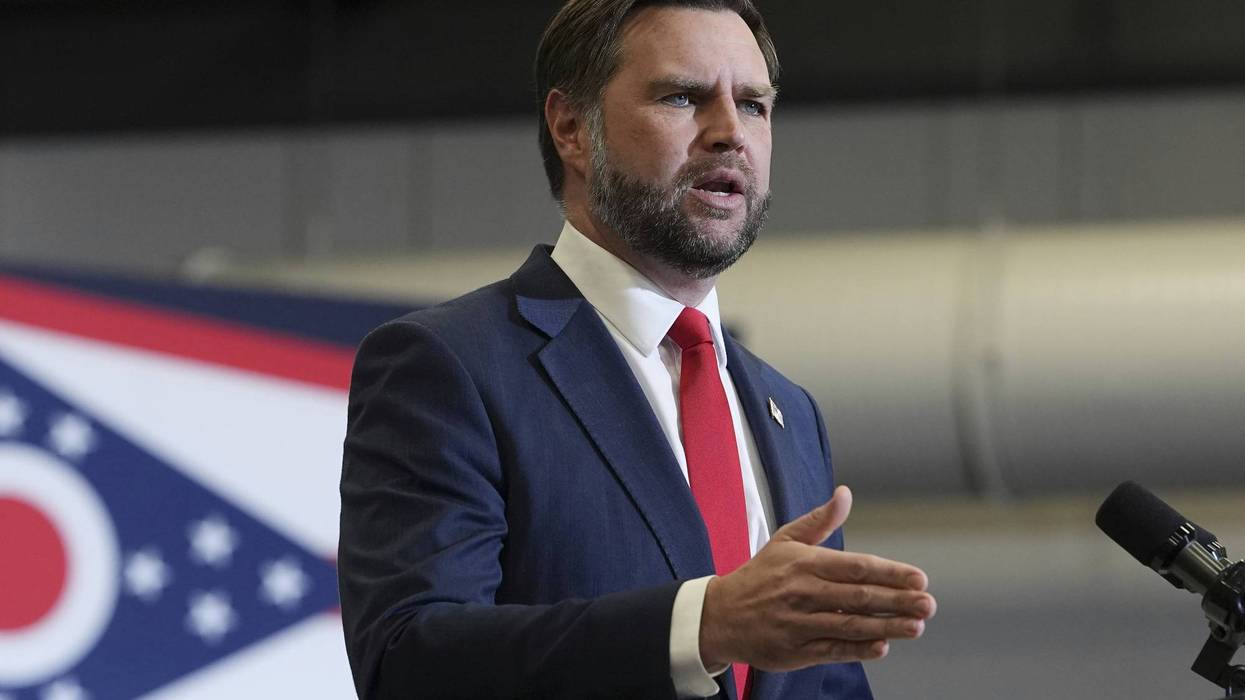
Vance Defends 'Vile' Ramaswamy Ad, Offering Preview of 'Venom' He's Likely to Deploy in 2028 Race
Vivek Ramaswamy's ad exposed him as "digusting, vile, and unfit," said one former Republican lawmaker, but "JD Vance arrives to show there’s someone even worse."
Oct 21, 2026
A day after the Republican gubernatorial candidate in Ohio, Vivek Ramaswamy, stunned political observers by releasing an ad that featured the estranged mother of his opponent, Amy Acton, calling Acton "a liar," Vice President JD Vance told reporters during an appearance in the state that he was "disgusted."
But the vice president, widely viewed as the likely heir to President Donald Trump's far-right MAGA movement, wasn't disturbed by the content of the ad, in which Acton's biological mother, Donna Arthur, accused Acton of lying about experiencing homelessness as a child.
He wasn't troubled by the fact that Ramaswamy's campaign had enlisted the help of Arthur even though she lost custody of her children and hadn't seen Acton since 1978, when the Democratic candidate was 12 and testified in court that her stepfather, Arthur's husband, had raped Acton. And he didn't express horror over the fact that Arthur fled the state with her husband to avoid legal liability and stayed married to him until his death in 2004 despite his alleged abuse of her daughter, only to be featured in an ad attacking Acton more than two decades later.
Instead, Vance reserved his "disgust" for Republicans who condemned the ad, which Ramaswamy's campaign is now planning to spend $4 million streaming ahead of Election Day.
While the ad has been called "the most disgusting, pathetic ad ever created in the history of political ads" by one observer and has resulted in calls for an end to Ramaswamy's political career, Vance shrugged off the content of the 60-second video by saying, "Politics is a tough business."
He called on his fellow Republicans, some of whom have denounced the ad, to put aside concerns about attacking Acton, whose allegations are backed up by court records—and to focus instead on the dangers posed by Democratic candidates like Acton who have called to expand healthcare access, lower costs for working Americans, and support workers' rights.
"My message to my fellow elected Republicans is if you actually believe in the things you say you believe in, stop whining about an advertisement and go win the race in 13 days," Vance told reporters in Cincinnati.
WOW -- Vance *defends* Ramaswamy's reprehensible ad 👇Q: Ramaswamy's campaign put out a controversial ad featuring his opponent's mother. Some Republicans are backing away from that. Do you think that ad was appropriate?JD VANCE: Well, I'll be honest with you. Whether the ad was appropriate or not is not really my concern. My concern is who is gonna govern. I have to admit I'm a little bit disgusted when I see Republicans who are whining more about that ad than they are about what the Democrats want to do.
— Aaron Rupar (@atrupar) October 21, 2026
The vice president added that "whether the ad was appropriate or not is not really my concern" and said he was "disgusted" to see Republicans "who are whining more about that advertisement than they are about what the congressional Democrats and other Democrats want to do to the United States of America."
Vance's position on Ramaswamy's tactics—deployed as Acton was leading him by seven points in one poll by Marist College—brought to mind, for some observers, his comments in 2024 about the Trump campaign's spreading of racist, baseless lies about the Haitian population of Springfield, Ohio eating their neighbors' pets during the presidential race.
Vance told CNN at the time that he was willing “to create stories so that the... media actually pays attention to the suffering of the American people."
"Vance's earlier Haitian pet-eating lie and his current embrace of Vivek's weaponization of child abuse are providing a pretty ugly picture of what the Vance 2028 presidential campaign is going to look like," said Jessica Reidl of the Brookings Institution. "Just venom, lies, and smears all the way down."
Republicans who have attempted to distance themselves from Ramaswamy's ad include US Sen. John Husted of Ohio and the state's secretary of state, Frank LaRose, both of whom said they would not have chosen to run such an advertisement. LaRose said his office was reviewing complaints about the video.
An aide for Sen. Mike Lee (R-Utah) deleted a social media post sharing the video and apologized for amplifying it “after researching it, and the disturbing allegations.” Casey Putsch, who ran against Ramaswamy in the GOP primary, said he would cross party lines to "vote for Amy and end Vivek's political future in America" in light of the ad, while former United Nations Ambassador Nikki Haley, who sparred with Ramaswamy during the 2024 race, also denounced the video.
After Vance's press conference, former US Rep. Barbara Comstock (R-Va.) said that while the ad had exposed Ramaswamy as "digusting, vile, and unfit, JD Vance arrives to show there’s someone even worse."
In addition to the press conference, Vance spoke about the ad and doubled down on attacking Acton at a rally in his home state on Wednesday.
"Now the media and the Democrats in the state of Ohio are obsessed because guess what, Vivek Ramaswamy had the audacity to run a TV commercial which calls it out like it is and calls Amy Acton a liar," said Vance.
WOW -- Vance *defends* Ramaswamy's reprehensible ad 👇Q: Ramaswamy's campaign put out a controversial ad featuring his opponent's mother. Some Republicans are backing away from that. Do you think that ad was appropriate?
JD Vance: "Now the media and the Democrats in the state of Ohio are obsessed because Vivek Ramaswamy had the audacity to run a TV commercial which calls it out like it is and calls Amy Acton a liar" https://t.co/iWKrOKclmW
— Aaron Rupar (@atrupar) October 21, 2026
He then said that Ohio voters "see through" Acton's "fraudulent activity" before egging on an audience member who suggested the Democratic candidate is an alcoholic.
"Somebody said alcohol," the vice president said with a grin. "You can say it sir, I can't."
Gillian Branstetter, a communications strategist with the ACLU, said that with less than two weeks to go until Election Day, Vance's closing midterm argument amounts to "please help us smear a child rape victim to overcome the electoral hurdle of our failing president."
As families across the US struggle with rising prices at the gas pump, grocery store, and doctor's office—linked to Trump's war on Iran, tariff policy, and Republicans' healthcare cuts—the president's approval rating stands at 32%, according to a recent Reuters poll.
Ryan Grim of Drop Site News called Vance's attacks on Acton "truly despicable given JD’s own upbringing" by his mother, who struggled with substance use disorder, which he wrote about in the memoir Hillbilly Elegy.
"JD Vance doubling down on the claim that Amy Acton and her brother are lying about being abused as children. If he is so sure, then why did the state strip custody?" said Grim. "What if his mom was still an addict and did an ad calling JD a liar for his book? Would he be ok with that? Soulless behavior."
The vice president, said journalist Pedro L. Gonzalez, is giving voters a choice "between a party that downplays child sexual abuse and attempts to discredit the victims or the party that doesn’t do that."
"That is his closing pitch," said Gonzalez, "and I hope the only thing people remember him for."
Keep ReadingShow Less
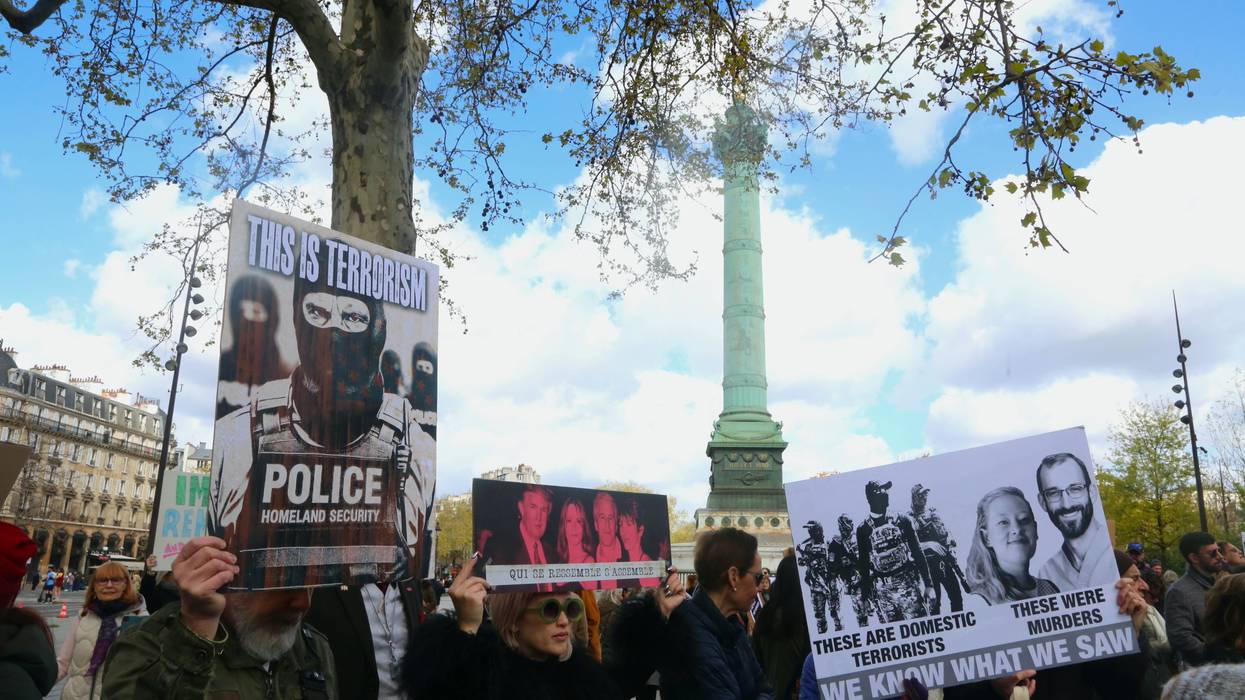
'Nothing and No One Is Off the Table for NSPM-7,' Warns Analysis of Trump Crackdown on Dissent
“The NSPM-7 blueprint enables efficient coordination across federal agencies to disrupt our democracy and go after the greatest number of people through surveillance, investigation, and prosecution."
Oct 21, 2026
The Trump administration is using a sweeping "national security" framework to investigate and potentially prosecute political opponents, civil society groups, and people engaged in constitutionally protected activities, according to an analysis published Wednesday warning that the crackdown on dissent could intensify ahead of next month's midterm elections.
The report, “Enemies of the State: NSPM-7 and the Trump Plan to Crush Dissent,” was co-authored by Shilpa Jindia and Nora Benavidez at the advocacy group Free Press. The publication examines the yearlong implementation of President Donald Trump’s National Security Presidential Memorandum 7 (NSPM-7), which ostensibly targets domestic terrorism and organized political violence.
Over 28 pages, the analysis examines how the administration is coordinating federal agencies to target people whose political beliefs or activism conflict with Trump’s agenda. Activities potentially caught up in the crackdown include protesting immigration enforcement, distributing information about constitutional rights, monitoring immigration officials, and supporting election integrity.
“The NSPM-7 blueprint enables efficient coordination across federal agencies to disrupt our democracy and go after the greatest number of people through surveillance, investigation, and prosecution,” said Jindia, who is Free Press' policy counsel. “The aim is to levy the heaviest penalties across agencies to achieve the harshest sentences."
"While the methods, severity, and application of the blueprint are explicit, the framework sets no standards for application—whether physical, geographic, thematic, or constitutional," she added. "As a result, nothing and no one is off the table for NSPM-7 to sweep up and target.”
Although NSPM-7 by itself does not grant the government new legal powers, the report contends that the framework enables more aggressive coordination among existing agencies, empowering prosecutors and investigators to work together against perceived political adversaries.
Benavidez, Free Press' senior counsel, warned that the approaching midterm elections—whose integrity Trump has baselessly attacked in a similar manner to his "Big Lie" that Democrats "stole" the 2020 presidential contest—offer particularly dangerous opening for the administration to intensify its crackdown on dissent.
“The midterm elections are at our doorstep; the president is eagerly pursuing election-fraud narratives, telling voters he will pay them off if they vote for Republicans—and leveraging his executive power to sway election results if he can,” she said. “Already [Department of] Homeland Security officials have investigated more than 150 nonprofit organizations under the guise of ‘election integrity.’"
"It’s by no means outside the realm of possibility that NSPM-7 becomes the vehicle to shut down civic engagement and political expression in the weeks and months to come," Benavidez added.
The analysis urges Congress and civil society groups to take action to defend constitutional freedoms and prevent further expansion of the crackdown.
Earlier this year, dozens of Democrats in the House of Representatives launched an inquiry into the US State Department's "ideologically driven visa restriction policy" and the Treasury Department's "pledged financial enforcement mechanisms directed against civil society."
"Trump has made clear his intentions to interfere in the November midterm elections," Jindia and Benavidez wrote. "Losing control of Congress could subject the administration to investigations and hearings, including potential impeachment hearings of Trump and his Cabinet officials."
Keep ReadingShow Less
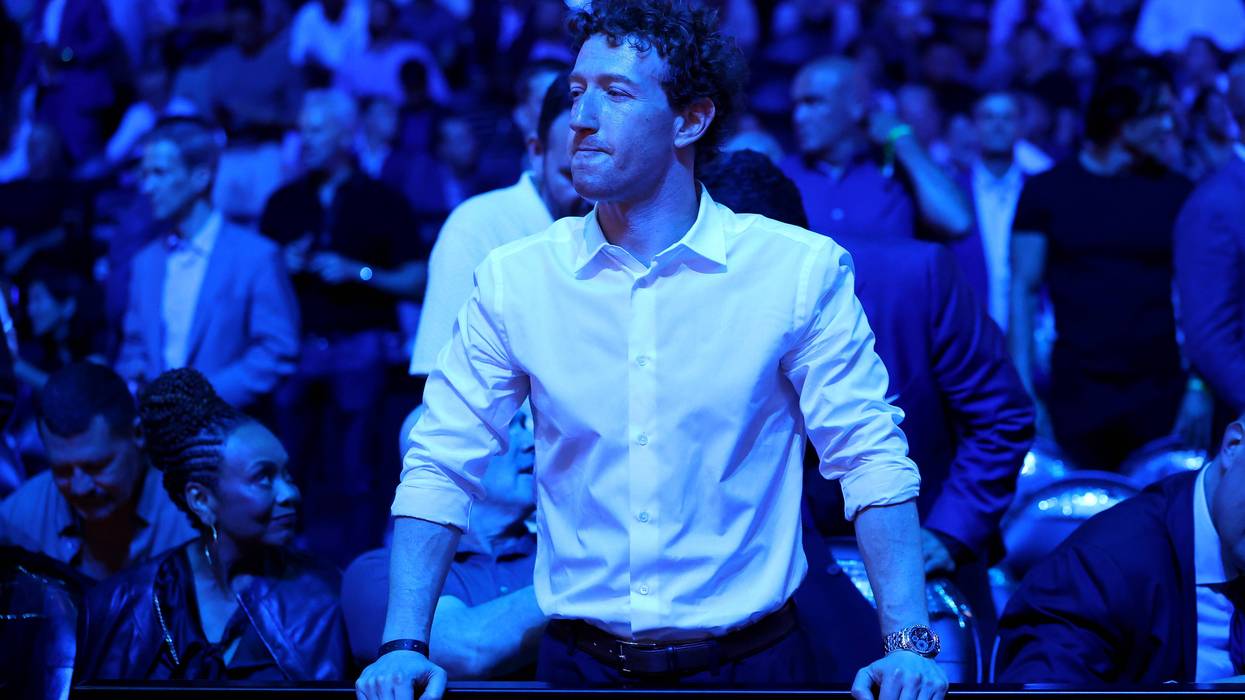
'Historic Day': New Mexico Judge Orders Meta to Pay $25 Billion in Data Privacy Case
"For too long, powerful technology companies have operated as though their size and influence put them beyond the reach of the law," the attorney general said.
Oct 21, 2026
A New Mexico judge on Wednesday ordered Meta to pay $25 billion for misleading users about data privacy—and while state Attorney General Raúl Torrez's office touted it as "one of the largest financial penalties against a corporation in US history," it's also just a fraction of the $219.5 billion warranted under the law.
The case stems from the Cambridge Analytica scandal, over which New Mexico sued in 2021. The New York Times reported that the order from Judge Francis J. Mathew of the State District Court in Santa Fe "is the biggest blow yet to Meta, which owns Facebook, Instagram, and WhatsApp, as it has racked up court losses over the harms that its social media platforms have caused users."
Reuters noted that "in 2019, the company was hit with a $5 billion penalty by the US Federal Trade Commission stemming from the same scandal. Six other states settled their lawsuits related to Cambridge Analytica for $459.2 million as part of a $17.1 billion multistate settlement Meta reached in August to resolve states' claims that the company's platforms had harmed teen mental health."
However, Torrez's state wasn't part of that settlement—and last month, a jury found that Meta had committed over 43 million violations of the New Mexico Unfair Practices Act.
That led to the order in which Mathew wrote that "the extraordinary number of willful violations found by the jury, the duration and repetition of the conduct, the breadth of subjects on which violations occurred, the involvement of senior Facebook leadership, the size of New Mexico audiences reached, and the clear intentional and systematic nature of Facebook's repeated misstatements established in the trial record support the highest level of penalty allowed by the New Mexico Unfair Practices Act—$5,000 per violation found by the jury."
Although the judge ultimately reduced the penalty to just over 11% of what Meta could have faced, the tech giant is still trying to dodge it. Chief legal officer CJ Mahoney said in a statement that the company is "confident" that it will "prevail on appeal."
"This ruling, and the attorney general’s approach to this enforcement, makes it all but impossible to do business in the state of New Mexico," Mahoney said. "At its core, this lawsuit seeks to impose a tax on speech to enforce new rules for what people can say online."
Meanwhile, Torrez celebrated "a historic day for New Mexico and for consumers across the country."
"For too long, powerful technology companies have operated as though their size and influence put them beyond the reach of the law," the attorney general said. "A New Mexico jury found nearly 44 million violations of our consumer protection statute, and this penalty order demonstrates that those violations carry real consequences. We took on one of the largest companies in the world because New Mexicans deserve honesty, accountability, and the protection of their personal information. Today’s result makes clear that no corporation is too powerful to be held accountable."
"This case has always been about more than one company or one scandal,” Torrez stressed. "It is about whether corporations can mislead consumers about what happens to their personal information without facing meaningful consequences. New Mexico stood its ground, took this case to trial, and secured a verdict establishing millions of violations of our law. This outcome reinforces a fundamental principle, companies that do business in our state must follow our laws and respect the rights of our people."
It isn't Torrez's first victory against Meta. In August, Judge Bryan Biedscheid of the State District Court in Santa Fe tacked on $567 million in damages for a state case in which the company already faced $375 million in civil penalties for enabling harm to youth.
Keep ReadingShow Less

'Working People Will Pay a High Price': Report Warns AI Bubble Is 'Primed to Pop'
"Policymakers need to act now to shore up the financial system and make clear that taxpayers will not be forced to bail out the companies and financiers responsible."
Oct 21, 2026
A report released on Wednesday warns that the investment boom in artificial intelligence is a financial bubble that is "primed to pop" and harm working-class Americans if lawmakers don't take concrete steps to shield them from the damage.
The report, produced by Open Markets Institute and Americans for Financial Reform Education Fund, warns that Big Tech companies are using increasingly risky debt-fueled financing methods to keep plowing money into AI infrastructure, which has resulted in global stock markets growing overvalued to "a historic degree."
The report highlights the role played by so-called circular financing agreements, in which one company agrees to fund another company’s AI project in exchange for the firm receiving the money buying the investing firm’s products.
"The AI industry’s extensive ecosystem of circular financing and purchase agreements makes it very hard for outsiders to determine how much bona fide revenue the technology is generating," the report notes, "and very easy for companies to artificially inflate the revenues and deflate the expenses they release to the public."
While such financing deals aren't inherently unlawful, the report continues, they can "be used to create a false impression of strong demand and disguise the true state of the involved companies’ finances, particularly when circular arrangements drive a substantial portion of the companies’ revenues."
The report also urges lawmakers to avoid the same mistakes the federal government made during the presidencies of George W. Bush and Barack Obama, when it bailed out financial institutions in the wake of the 2008 housing crash.
"If they face collapse, neither AI-related firms nor their leadership should be shielded from the financial or legal consequences of their mismanagement," the report states. "Under no circumstances should failing AI-related firms receive government support to remain going concerns. Instead, failed AI firms should be moved through legal proceedings for liquidating and/or dissolving firms in an orderly manner."
Instead of saving the AI firms and their financiers, the report emphasizes lawmakers "must prioritize the recovery and protection of workers and families by directing federal assistance to workers, households, and communities harmed by the crisis."
Maya Jenkins, senior policy analyst at Americans for Financial Reform Education Fund and co-author of the report, accused President Donald Trump and his administration of making the AI bubble more dangerous by "rolling back guardrails that protect investors and financial stability."
"If nothing changes, working people will pay a high price for an AI crash," Jenkins emphasized. "Policymakers should be taking urgent action to reduce the risks. And they should be committing now to not bail out the AI companies or banks and financial firms that caused the problems."
Matthew Scherer, fellow at Open Markets Institute and report co-author, similarly emphasized the AI bubble's potential cost to working-class Americans and urged lawmakers to take a proactive approach to mitigating harms.
"Workers could lose their jobs, families could see their retirement savings evaporate, and communities could face the fallout from another financial crisis. Policymakers need to act now to shore up the financial system and make clear that taxpayers will not be forced to bail out the companies and financiers responsible."
The AI bubble report came one day after Reuters reported that frontier AI lab Anthropic recorded a net loss of $80 billion in the first half of 2026, more than six times the $13 billion loss the company posted a year earlier.
Despite bleeding money, the company is seeking an initial public offering next month worth $1.5 trillion, according to Reuters.
Keep ReadingShow Less
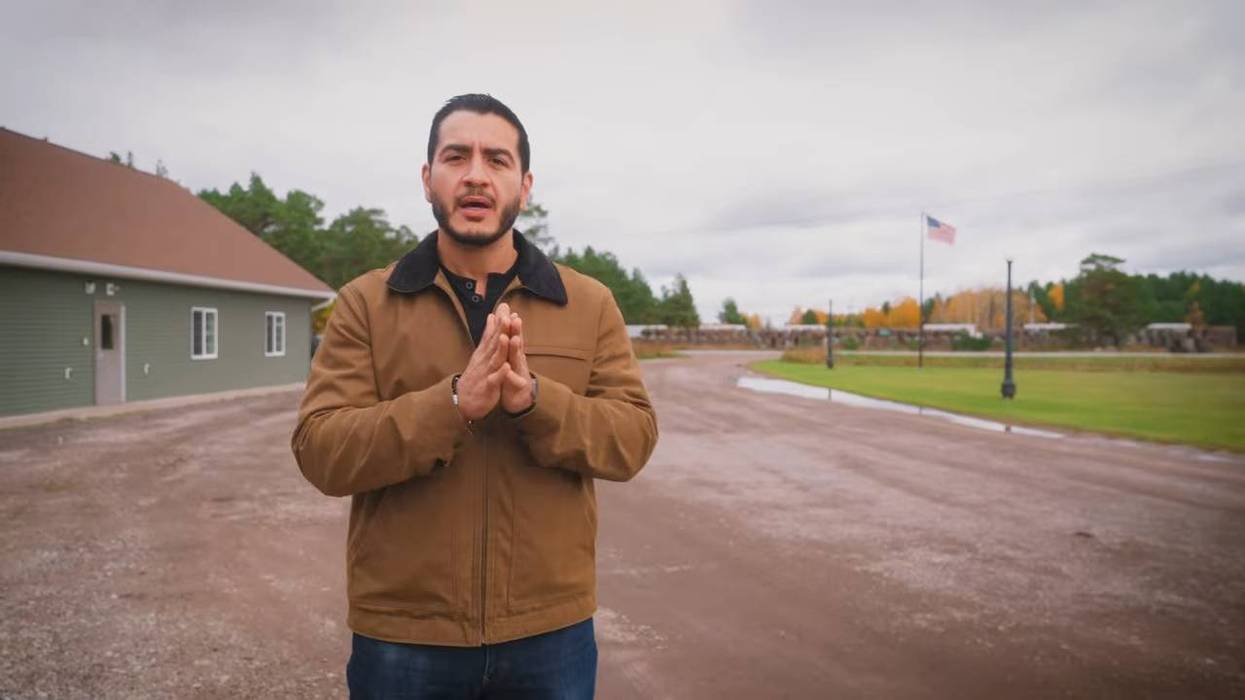
El-Sayed Says Bitcoin Data Center Next to Nature-Based School in Michigan Exemplifies Need for Regulation
Students at Lake Superior Academy are supposed to spend hours outside each day. But the superintendent said constant noise from the nearby Bitcoin mining operation “forced us to stay within our classrooms."
Oct 21, 2026
At a Michigan elementary school built around outdoor learning, noise from a Bitcoin mine across the street has forced students’ lessons indoors. Abdul El-Sayed, the state’s Democratic candidate for the US Senate, says it’s a prime example of why data centers proliferating across the nation need regulation.
On Wednesday, El-Sayed—a former Detroit public health official—posted a video of himself at Lake Superior Academy in Dafter Township just south of Sault Ste. Marie in Michigan’s Upper Peninsula. The tuition-free Montessori school provides around 100 students in kindergarten through fifth grade with multiple hours of outdoor learning each day. At least, it did.
"It was incredible until about two years ago, when that monstrosity behind me moved in," El-Sayed said, pointing to the series of large metal pods just across the street, behind rows of stacked hay bales.
The hay bales were put up last year to block out the noise from the facility's cooling fans, which constantly hovered around 70-75 decibels—approximately as loud as a vacuum cleaner.
“The students often, daily, say, 'When is this going to stop?’” superintendent Susie Schlehuber told Michigan Public Radio. “Our special needs students, some will come out and cover their ears.”
The students attending Lake Superior Academy were supposed to spend their days reading and journaling outdoors, learning to garden, and photographing wildlife. But after the facility began operating in March 2025, Schlehuber said, the noise had “forced us to stay within our classrooms, close our windows, and not enjoy nature."
"Our whole school philosophy, everything we were founded on, has been disrupted because of the noise," she said.
School officials sought answers from the township and the mine’s operators, but struggled to establish who was responsible. Workers at the facility refused to identify its owner. And at a town meeting, where residents had come to voice concerns about noise, pollution, and other nuisances, a representative for the site reportedly refused to name the owner or provide his own last name.
"We left with more questions than what we had when we arrived," Schlehuber said.
This lack of transparency has been a pattern since the facility was first permitted in October 2024. The application described the project as a "storage/warehouse" facility but remained vague about what would happen inside—saying it would merely contain computers managing data. This allowed it to be approved without a review of cryptocurrency mining’s potential effects on nearby properties, including Lake Superior Academy.
Business records revealed that the Florida-based holding company Odessa Partners LLC owned the site and the Florida-based Bitcoin mining operator Alpha Watt owned the computer equipment.
Named in the filings is Michael Carbonara, a Florida businessman running as a Republican to represent Florida's 22nd Congressional District in the US House. Carbonara has opposed an effort to build an artificial intelligence data center in Palm Beach, known as Project Tango, but has insisted that his facility in Michigan is different.
"I have built a data center, but it's not an AI data center. It's actually a Bitcoin mining operation,” he said. “I've been attacked by the George Soros and the No Kings people... so it's been quite a ride because they want to attack innovation."
The school filed a nuisance lawsuit against both companies, resulting in a temporary shutdown in June 2025. The operators then countersued, alleging that the shutdown had resulted in $184,000 in lost revenue. They claimed the hay bales they'd erected reduced the noise. Reporting from October 2025 said the noise level had fallen to about 50 decibels.
The school's lawsuit remained pending in the Chippewa County Circuit Court as of September 2026.
During his visit to the school this month, El-Sayed said he could still hear a constant "high-pitched din."
"This is a place that is supposed to be a healing environment, a nurturing environment for kids that has to contend with this sound of a Bitcoin mining operation," he said. "The fact that we don't have zoning regulations, the fact that we don't have terms of engagement to protect where, and how, and under what circumstances these kinds of operations can be located, is exactly why they can put it right next to a school and then force this school into litigation that lasts for years."
While this facility mines Bitcoin, communities around the country have been increasingly pushing back against the rapid expansion of data centers powering the artificial intelligence boom. Those facilities have prompted similar noise complaints, along with concerns about driving up electric bills, sucking up local water supplies, and causing dangerous pollution. Residents have often found that local governments approve these facilities with little transparency or public input.
As the midterm elections approach, data centers have become politically toxic, with 75% of voters across party lines saying they'd oppose new ones built near their homes, according to an August poll. More than three dozen communities around the country have ballot measures in November that could ban data centers, according to Stateline.
Even El-Sayed’s opponent, Republican former US Rep. Mike Rogers, who months ago endorsed the Trump administration’s plan to accelerate data center construction, has appeared to recognize it as a losing issue, recently calling for a one-year moratorium in Michigan.
El-Sayed has put opposition to unchecked data center expansion at the forefront of his campaign. He has called for local and state pauses on data center development until federal safeguards are established.
His proposed "terms of engagement" seek to give residents a meaningful role in approvals, require enforceable community benefits agreements, protect households from higher energy costs, safeguard water supplies, and hold developers to promises that facilities will create jobs.
He said the Bitcoin mining facility that has disrupted Lake Superior Academy is "what our terms of engagement is intended to protect folks from."
Keep ReadingShow Less
UN Report Shows How Killing Progress on Climate Pollution Is 'Trump's Real Legacy'
One campaigner said the United Nations Environment Program report "shows that America's retreat isn't just a political embarrassment. It has real consequences for the planet and for millions of people around the world."
Oct 21, 2026
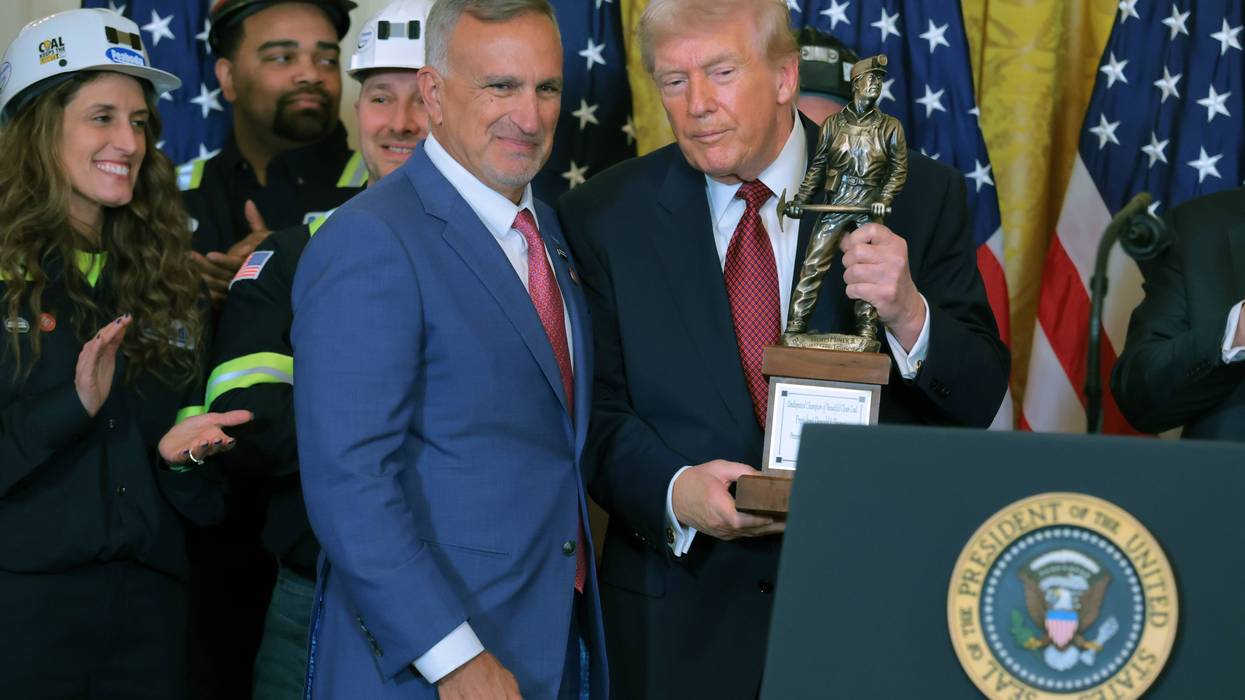
President Donald Trump's pro-fossil fuel agenda not only is "making everyone's lives more expensive" but also is expected to have deadly and destructive consequences far beyond the borders of the United States, as made clear in a global emissions report released Wednesday.
The United Nations Environment Program (UNEP) put out "The Emissions Gap Report 2026: The Point of Return" in preparation for the next UN Climate Change Conference in Türkiye. It warns that the world's chance to meet the Paris Agreement's goal of limiting temperature rise this century to 1.5°C above preindustrial levels "with 'no or limited' overshoot has been lost."
While that is a global failure, a key factor is Trump's return to power in the United States last year. After pledging to roll back his predecessor's meager climate action policies if fossil fuel executives pumped money into his campaign, the Republican president has pursued a range of polluting actions, which include abandoning the Paris Agreement, again.
"Most of the climate-related policies from the Inflation Reduction Act have been repealed under the One Big Beautiful Bill Act," the report says, referring to Republicans' 2025 budget package, which Trump signed into law. "Additionally, several long-standing Environmental Protection Agency regulations concerning power plant and vehicle emission standards, electric vehicle support, methane emissions, and renewable energy proliferation have also been rolled back."
It also notes that the Trump administration recently moved to completely repeal limits on greenhouse gas (GHG) emissions from fossil fuel-fired power plants, which was criticized as "the largest deregulatory action of the USA power sector in history," though "a significant number of these attempts are in a judicial state of uncertainty, as they are being challenged in courts."
Countries that remain parties to the Paris Agreement develop plans to reduce emissions, called nationally determined contributions. The report explains that "if all NDCs are delivered and similar efforts continue, there is a 66% chance that warming will be limited to 2.6°C by 2100. This is a worse outcome than expected last year, as a result of the formal withdrawal of the United States of America from the Paris Agreement and revised estimates of historical emissions."
Historically, the United States is the world's worst climate polluter. The publication points out that "currently, the six largest emitters in terms of total GHG emissions are China, the United States of America, India, the European Union, the Russian Federation, and Indonesia."
While the US, Indonesia, and China all had increases in emissions last year, the document details, "in terms of magnitude, the increase in the United States of America (133 megatons of CO2 equivalent, MtCO2e) far exceeded that of all other countries, and was driven by increased electricity demand and a rebound of coal power generation."
Studies show that recent policy changes under Trump "have significantly altered the projections" for the years ahead, the report says, "with 2030 emissions projections now estimated to be almost 0.9 GtCO2e higher than projections based on policies in place under the previous administration."
As The Associated Press reported:
Report lead author Anne Olhoff, director of UNEP Copenhagen Climate Center, said the US policy change will likely add one-tenth of a degree Celsius (nearly two-tenths of a degree Fahrenheit) to global temperatures by the end of the century.
"This report shows that America's retreat isn't just a political embarrassment. It has real consequences for the planet and for millions of people around the world,” said Mohamed Adow, director of Power Shift Africa, a climate organization. "An extra tenth of a degree might sound insignificant, but in climate terms it is enormous. It means more dangerous heatwaves, more destructive floods, more failed harvests, and more lives lost. For vulnerable communities in Africa, already living on the frontlines of the climate crisis, every fraction of a degree matters. These are not abstract numbers. They are human lives."
The Trump administration doubled down on its position, with White House spokesperson Taylor Rogers telling The New York Times that the United Nations was “pushing the woke Green Energy Scam, pressuring countries across the world to jeopardize their economic and national security in order to meet arbitrary climate goals."
Meanwhile, climate advocates and scientists joined Adow in ripping the administration's devastating agenda.
"All governments have a job to do, but in particular it is time for major fossil fuel producers such as the US and Saudi Arabia, which produce 20-25% of fossil fuels globally, to stop playing politics and face the scientific reality," said Bill Hare, CEO of the think tank Climate Analytics. "Right now they are looking at the fire, denying it exists, and pouring more petrol on it, while their own citizens increasingly face searing heat, wildfires, and other impacts."
Scott Forbes, an ecology professor at Canada's University of Winnipeg, said on social media that "America is now the biggest impediment to climate action. Of all the evil that Trump has done, this may top it all."
Keep ReadingShow Less
Majority of Swing State Voters Say Stop Sending US Bombs to Israel
"Politicians who prioritize winning over catering to the fringe demands from AIPAC should take note."
Oct 21, 2026
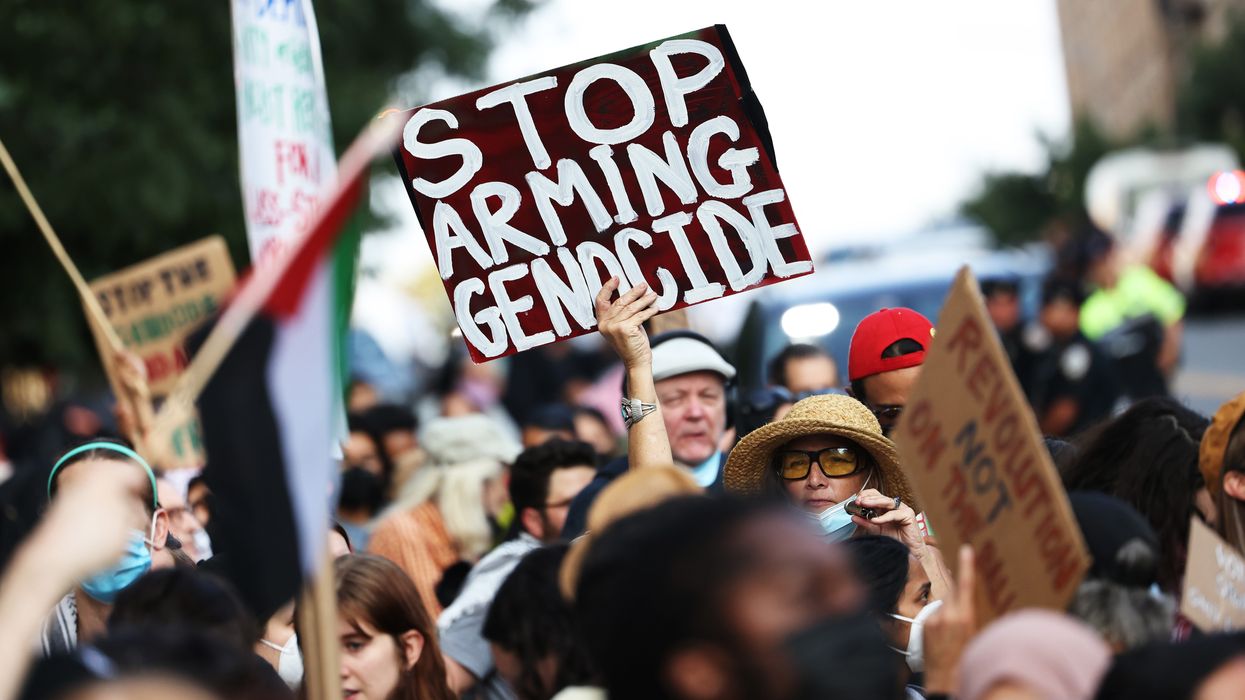
Polling published Wednesday revealed that a majority of voters in six key swing states that are expected to decide who controls the Senate after next month's midterm elections want their senators to block the transfer of US bombs to Israel as it wages a genocidal war on Gaza.
YouGov queried more than 3,200 voters in Georgia, Iowa, Maine, North Carolina, Ohio, and Texas for the Institute of Middle East Understanding (IMEU) Policy Project poll. A majority of respondents in all six states said they approve of "Senate measures to block the transfer of bombs to Israel." Approval ranged from 51% in North Carolina to 65% in Maine. In no state did the percentage of people who disagreed with blocking bomb transfers to Israel exceed 31%.
Respondents were also asked if they "approve or disapprove of cutting $3.3 billion in taxpayer-funded weapons to Israel." In all six states, approval of cutting armed aid far exceeded disapproval. Two states—Georgia and Ohio—had a margin of 22%, while the gap between those who support and oppose cutting off weapons transfers to Israel was widest in Maine, at 40 percentage points.
NEW POLLS: A majority of likely voters in six states expected to decide control of the US Senate - Georgia, Iowa, Maine, North Carolina, Ohio, and Texas - support Senate measures to block the transfer of bombs to Israel.
[image or embed]
— IMEU Policy Project (@imeupolicy.bsky.social) October 21, 2026 at 8:11 AM
Furthermore, survey respondents in all six states said that President Donald Trump's illegal Iran War benefits Israel more than the United States.
Among Democratic respondents, support for blocking bomb transfers to Israel ranged between 75% in North Carolina to 86% in Maine, while independent backing of the policy was lowest in Iowa and Maine (54%) and highest in Ohio (75%). Republican approval of cutting off bomb transfers to Israel ranged from 26% in North Carolina to 45% in Maine.
“Not only has ending weapons to Israel become the near-consensus view of Democratic voters, but we’re now seeing that voters across the spectrum, including most independents and a substantial number of Republicans, are tired of seeing their government use our tax dollars to supply Israel with bombs when millions struggle to afford the basics here at home,” IMEU Policy Project executive director Margaret DeReus said in a statement.
“These results are strong evidence that the endless giveaways to Israel will be a liability this November—and in 2028," she said, looking forward to the next presidential election.
"Politicians who prioritize winning over catering to the fringe demands from AIPAC should take note," DeReus added, referring to the American Israel Public Affairs Committee, the nation's largest Israel lobby.
According to the political intelligence platform PoliStack, the Senate candidate in the six surveyed states who has received the most campaign contributions from AIPAC's United Democracy Project (UDP) during the 2026 election cycle is Sen. Susan Collins (R-Maine), who took in over $410,000. Sen. Joni Ernst (R-Iowa) received more than $130,000.
While AIPAC's largesse has proved decisive in some races, it has also been increasingly ineffective in others. For example, UDP spent roughly $30 million this year in Michigan's US Senate Democratic primary, including about $10.5 million supporting Congresswoman Haley Stevens and more than $20 million opposing Abdul El-Sayed, who won.
The IMEU Policy Project survey adds to the growing body of polling showing a significant shift in US attitudes toward Israel amid the Gaza genocide, which has left more than 250,000 Palestinians dead or wounded, as well as increasing violence by Israeli troops and Jewish settler colonists in the West Bank, where Israel is ethnically cleansing Palestinians in pursuit of what critics—and even some Israeli leaders—say is the annexation of the illegally occupied territory.
Keep ReadingShow Less
‘This Is Dangerous’: Alarm as Trump FCC Chair Threatens Broadcasters Over Poll Coverage
"We are sliding into a dictatorship," said one critic.
Oct 21, 2026
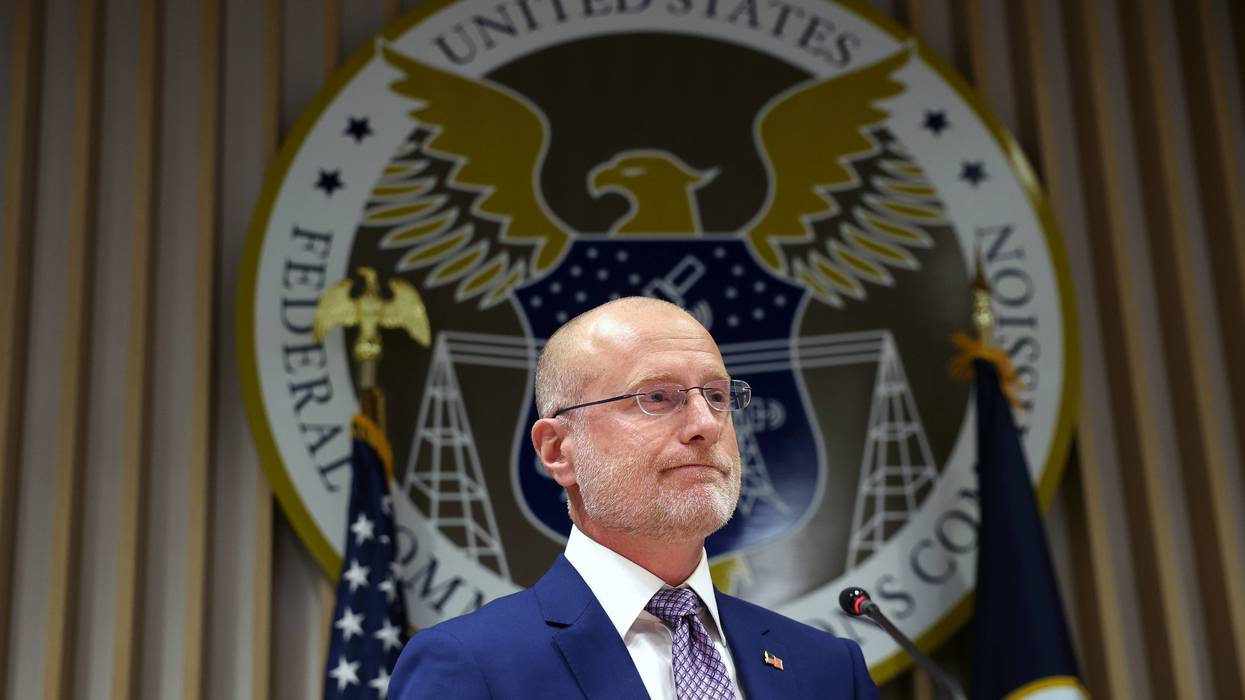
Federal Communications Commission Chairman Brendan Carr on Wednesday threatened broadcasters that cover what he described as "fake polls," which he said hurt "voter turnout and enthusiasm."
In a social media post, Carr attacked news outlets for "amplifying or airing these polls without regard to basic journalistic ethics and without informing the public that those polls lack a scientific, accurate, or even real basis."
Carr did not provide a single specific example of a "fake" opinion poll, nor did he name a broadcaster who has promoted one. President Donald Trump, who nominated Carr to head the FCC, has repeatedly decried polls as "fake" as they've shown his approval ratings at record lows.
Later in the post, Carr hinted that the FCC would take direct action against broadcasters for informing their viewers about opinion polls.
"The FCC takes these issues seriously," said Carr. "Broadcasters are prohibited by the terms of their federal licenses from engaging in news distortion or promoting broadcast hoaxes. It is important that broadcasters comply with their public interest obligations."
Carr's post drew a swift rebuke from Democratic FCC commissioner Anna Gomez.
"Pollsters who intentionally mislead the public should answer for it," wrote Gomez, "but broadcasters who report publicly available polling data should never be punished when a poll is wrong. FCC rules on news distortion or hoaxes do not apply to a station that reports this data in good faith."
Steve Herman, former White House bureau chief at Voice of America, wrote in a social media post that Carr's assertions about "news distortion" are "stretching specific regulations far beyond their legal definitions," as "the FCC can't mandate how a broadcaster contextualizes a poll."
"The FCC threatening broadcasters for airing specific political data is a chilling content-based restriction on speech," Herman added, "which federal courts subject to extreme judicial review and the commission would almost certainly lose such cases, according to First Amendment scholars."
Former TV meteorologist Chris Gloninger predicted that Carr's post would have a chilling effect on local news stations.
"Holy shit, this is dangerous," Gloninger wrote. "Two weeks before an election, the FCC chair is threatening broadcaster licenses over polls he calls 'fake.' No GM will risk that, so polls vanish."
Mark Jacob, former metro editor at the Chicago Tribune, called Carr "anti-free-speech" for "threatening to punish news outlets that publish polls showing Trump's deep unpopularity."
"We are sliding into a dictatorship," Jacob said, "and it would be helpful if major media would do their duty and warn the public."
Adam Klasfeld, editor-in-chief at All Rise News, described Carr as the president's "censorship czar" who is warning news outlets against "the dissemination of data disfavored by the state."
Princeton historian Kevin Kruse argued Carr's threats warranted his impeachment and removal from office.
"The president shouting 'fake news' is bad enough," wrote Kruse, "but the FCC commissioner threatening to punish broadcasters for promoting 'fake news' like 'the president is historically unpopular' is so much worse."
Carr's post drew ridicule from Democratic strategist Adam Parkhomenko, who informed the FCC chair that "it’s not illegal to tell the American people that Trump is a failed president."
Max Steele, senior director of communications at gun safety advocacy organization Everytown, similarly ridiculed Carr.
"It is ILLEGAL to say the brave and smart President Trump is at historic polling lows!!!" he wrote sarcastically.
Keep ReadingShow Less
'Bald-Faced Lies': GOP Called Out for Running on Saving the Rural Health System They're Destroying
"Republicans across the country are desperately trying to pull the wool over voters’ eyes."
Oct 21, 2026
With the US midterm elections less than two weeks away, Republicans across the country are posturing as defenders of the country's ailing rural healthcare system even as hospitals and providers nationwide buckle under the financial strain imposed by President Donald Trump and the GOP's unprecedented cuts to Medicaid.
The advocacy group Protect Our Care said Wednesday that Republicans in key congressional races "are touting bald-faced lies" by highlighting their support for a $50 billion rural health fund that pales in comparison to the roughly $900 billion in Medicaid cuts that Trump signed into law last summer. The health policy organization KFF estimates that the Republican law will cut $137 billion in Medicaid spending for rural areas over the next decade.
Protect Our Care calls out multiple Republicans by name for misleadingly promoting their support for rural health funds, including Sens. Roger Marshall of Kansas, Jon Husted of Ohio, Susan Collins of Maine, and Ted Cruz of Texas, as well as Reps. Juan Ciscomani of Arizona, Jeff Crank of Colorado, Mariannette Miller-Meeks of Iowa, Jason Smith of Missouri, and Derrick Van Orden of Wisconsin.
"Republicans across the country are desperately trying to pull the wool over voters’ eyes, touting their so-called 'rural health investments' as if they make up for the $1 trillion they ripped away from Medicaid and the Affordable Care Act. It doesn’t come close," said Protect Our Care. "Rural Americans are rapidly losing the care they need, and over 1,250 hospitals, clinics, and essential service providers are closing, cutting services, or are at risk of doing so."
"These investments," the group said of the $50 billion rural health fund, "will do nothing to stop the gushing wound Republicans hacked in the American healthcare system."
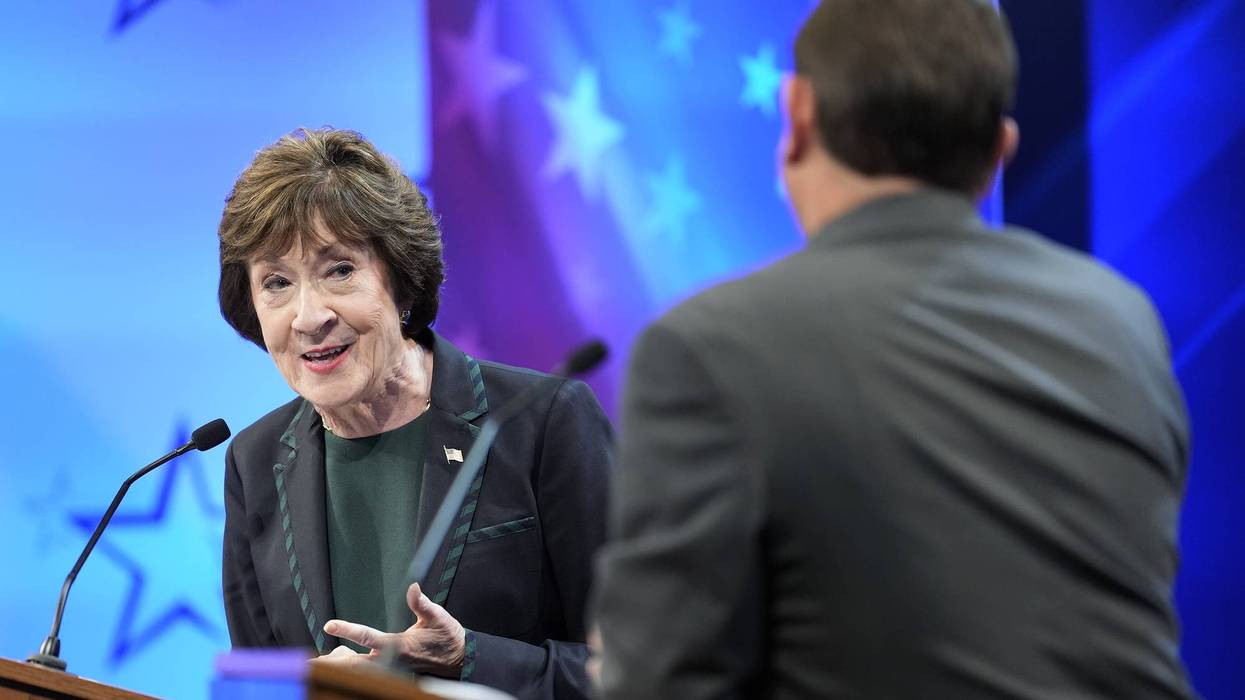
As Common Dreams reported over the summer, Collins—who is running for a sixth term against former Maine Senate President Troy Jackson—has played up her role in securing the Rural Health Transformation Program as part of the sprawling One Big Beautiful Bill Act. Collins voted against final passage of the bill, citing its cuts to Medicaid, but she provided her party with critical support to advance the measure through the Senate.
"Senator Collins is like an arsonist who helped set the fire, and then she wants credit for bringing a cup of water to put it out," Jackson said during a debate earlier this month.
Maine has so far received $190 million from the rural health fund—a fraction of the roughly $3 billion in Medicaid cuts facing the state over the next decade.
Several of Maine’s rural hospitals are at risk of closure thanks to Trump's disastrous One Big Beautiful Bill.Our healthcare system cannot survive another Susan Collins term.https://t.co/cE1Z3ujjfp
— Troy Jackson (@TroyJackson207) August 25, 2026
Sen. Jon Ossoff (D-Ga.), who is running for reelection against Rep. Mike Collins (R-Ga.), similarly homed in on his GOP opponent's support for Medicaid cuts that are wreaking havoc across the country and forcing healthcare facilities to cut back on services—or close entirely.
"Mike Collins and Donald Trump passed the biggest Medicaid cut in history," said Ossoff during an October 8 debate. "A hospital in Mike Collins' own district had to shut down its labor-and-delivery unit, citing those Medicaid cuts. How can a sitting congressman vote to shut down a labor-and-delivery unit in his own district?"
While Republicans have characterized the $50 billion in funding as a key lifeline for rural hospitals, KFF noted in a recent analysis that the money "could mitigate but will not fully offset estimated cuts to federal Medicaid spending in rural areas." The policy group observed that, "unlike most of the federal Medicaid spending cuts, the fund is also time limited." States must spend the funds they receive by the end of fiscal year 2032.
"While the fund was established in part to address concerns about the impact of the reconciliation law on rural hospitals, the funding is being used for a much broader set of purposes, and there are restrictions on how hospitals can benefit," the group said, pointing out that the money cannot be put toward "propping up struggling hospitals with temporary relief."
In a fact sheet released on Wednesday, Protect Our Care pointed to comments made earlier this year by Jed Hansen, the executive director of the Nebraska Rural Health Association, who said in March that the GOP's rural health funding wouldn't go to "rural hospitals, rural clinics, and rural providers in a meaningful way.”
“Rural Health Transformation will not save a single hospital in our state,” said Hansen. “I don’t think it will save a hospital nationally.”
Keep ReadingShow Less
See More
Most Popular