SUBSCRIBE TO OUR FREE NEWSLETTER
Daily news & progressive opinion—funded by the people, not the corporations—delivered straight to your inbox.
5
#000000
#FFFFFF
To donate by check, phone, or other method, see our More Ways to Give page.
Daily news & progressive opinion—funded by the people, not the corporations—delivered straight to your inbox.
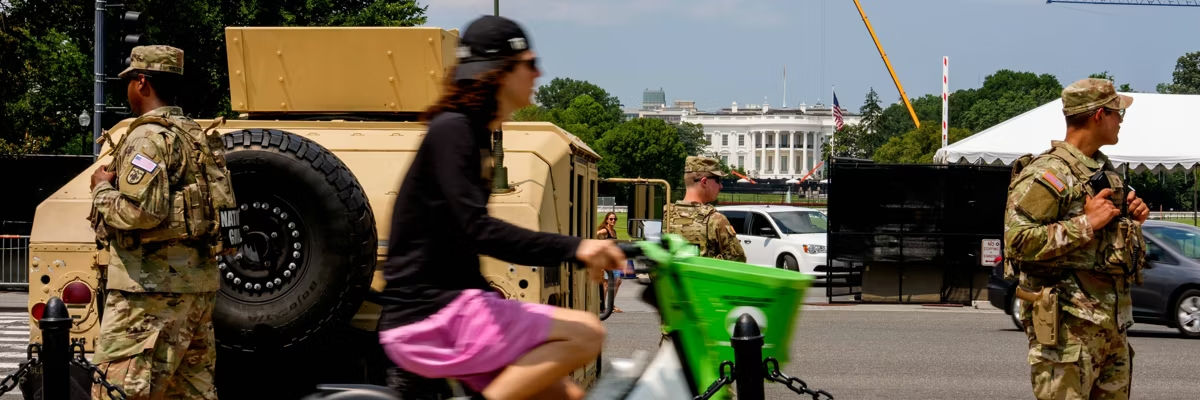
The White House is visible as National Guard troops stand next to a military Humvee along Constitution Avenue on August 12, 2026, in Washington, DC.
Though National Guard troops now outnumber police officers in the capital, Reuters found they’ve been involved in just over 1% of criminal cases in the city, and most of them have been for minor offenses.
It's been about a year since President Donald Trump began his military occupation of Washington, DC. But while costing taxpayers millions of dollars per day, a new investigation reveals that his National Guard deployments have done almost nothing to stop violent crime.
Crime in DC was already at its lowest level in decades when Trump sent in the troops last August, as was the case in many of the cities that came under unprecedented federal occupation.
But while Trump claimed that these soldiers—who can only detain suspects but must call police officers to make arrests—were the only force capable of saving DC from "crime, bloodshed, bedlam, and squalor," a Reuters investigation out Wednesday found that they’ve had a role in responding to only a tiny fraction of criminal cases.
Since their arrival last August, National Guard members have been mentioned in only about 1.3% of the criminal cases filed in the Superior Court of the District of Columbia, which handles nearly all the city's criminal prosecutions.
And though Trump has repeatedly credited his troops with protecting residents from being murdered and mugged, charging documents show that his soldiers "mostly responded to minor incidents in neighborhoods that are wealthier, whiter, and less dangerous than the rest of the capital."
Many of the cases where troops intervened, Reuters found, were to stop offenses like subway fare evasion and shoplifting.
Reuters said it "could find no reference in court records to soldiers doing any kind of law enforcement in the neighborhoods where about 82% of the city’s 859 murders occurred over the past five years."
The investigation describes a pattern of soldiers simply standing around while crimes occurred and waiting for police to arrive. In one instance, police officers arrived to arrest a man stomping on a woman outside a nightclub.
According to one of the officers who responded to the scene, "There was approximately 15 National Guard members in the area on routine patrol who did not take any action.”
In another case, soldiers called emergency services after finding a man who'd been stabbed in an upscale waterfront area. But believing him to have only been intoxicated, they left him lying on the ground without performing emergency measures.
They only realized once the police arrived that he'd been "stabbed so severely his intestines were spilling out." He died two hours later after being brought to the hospital.
The administration has portrayed the mere presence of troops as a "deterrent" against crime. But violent crime in the city has actually risen slightly in the year since they arrived. Data from the Metropolitan Police Department (MPD) shows 1,712 violent crimes in 2026 versus 1,645 at the same point in 2025—a 4% increase.
Meanwhile, the grassroots group Free DC has been documenting hostile encounters between guard troops and city residents. The group has cataloged several instances in which troops have detained people, including those protesting their presence, with what it says was “absolutely no cause.”
"They harass people a lot more than they are actually doing police work,” said the Rev. Norman Nixon, the pastor of the Union Temple Baptist Church, who spoke with Reuters.
DC now has over 4,500 troops patrolling the streets. Despite lacking the ability to perform many ordinary police functions, they now outnumber the city’s police force, and maintaining the National Guard's presence is costing more each day.
According to a report from the nonpartisan Niskanen Center, a deployed Guard member costs around $607 per day, compared with about $384 for an MPD officer. The Trump administration has estimated that keeping the Guard deployed until the end of Trump's term in 2029 will cost about $1.4 billion.
The troops also played a role in the administration’s campaign to remove homeless people from DC and help federal agents dismantle encampments last summer as part of what Trump described as a war against “vagrancy.”
Last year, researcher Hanna Homestead of the National Priorities Project estimated that the deployments, which then cost an estimated $1.1 million per day, was costing four times as much as it would to provide an affordable housing unit for every homeless person in the city, which was pegged at about $257,000 per day.
The Defense Department has since estimated that the cost of the deployments was nearly $1.7 million per day. But that was before the number of troops doubled.
Applying Homestead's methodology today would mean that deploying the National Guard is now nearly 9-10 times as costly as providing housing for the Washington, DC's homeless population, all while providing little apparent benefit to public safety.
"I can think of many other ways that federal resources could have been invested to make the nation’s capital safer," said Clinique Chapman, the CEO of the DC Justice Lab, in a letter to the editor of the Washington Post earlier this summer.
“For what it costs to deploy the Guard in [the] US for just six days,” Chapman said, taxpayers could have instead paid for the annual cost of running trauma recovery centers in each ward to help crime survivors heal and connect them to treatment and support.
For five days of the expenditure, the US could fund a mental health crisis response program like Denver's, which responds to hundreds of calls for service each month and reduces arrests, for one year.
For 41 days of what the National Guard deployment costs, the District could fund a year of living-wage jobs and pay the rent on a one-bedroom unit for every US resident returning home from the Bureau of Prisons.
ACLU-DC executive director Monica Hopkins emphasized that the point of the deployments was never to improve the lives of DC residents or enhance public safety, but a “political prop.”
"The Pentagon’s acknowledgment that the deployment will continue until 2029 confirms what we’ve said all along—there is no real emergency here," she said in a statement to mark the one-year anniversary of the deployment. "As was true one year ago, armed military troops are not needed and are not wanted on our streets."
"Because the nation's capital is not legally recognized as a state, extremist politicians have used DC as a testing ground for anti-democratic orders," she added. "We cannot let military deployment on the streets of the United States become normal or acceptable as a part of daily life here or anywhere else."
Dear Common Dreams reader, It’s been nearly 30 years since I co-founded Common Dreams with my late wife, Lina Newhouser. We had the radical notion that journalism should serve the public good, not corporate profits. It was clear to us from the outset what it would take to build such a project. No paid advertisements. No corporate sponsors. No millionaire publisher telling us what to think or do. Many people said we wouldn't last a year, but we proved those doubters wrong. Together with a tremendous team of journalists and dedicated staff, we built an independent media outlet free from the constraints of profits and corporate control. Our mission has always been simple: To inform. To inspire. To ignite change for the common good. Building Common Dreams was not easy. Our survival was never guaranteed. When you take on the most powerful forces—Wall Street greed, fossil fuel industry destruction, Big Tech lobbyists, and uber-rich oligarchs who have spent billions upon billions rigging the economy and democracy in their favor—the only bulwark you have is supporters who believe in your work. But here’s the urgent message from me today. It's never been this bad out there. And it's never been this hard to keep us going. At the very moment Common Dreams is most needed, the threats we face are intensifying. We need your support now more than ever. We don't accept corporate advertising and never will. We don't have a paywall because we don't think people should be blocked from critical news based on their ability to pay. Everything we do is funded by the donations of readers like you. When everyone does the little they can afford, we are strong. But if that support retreats or dries up, so do we. Will you donate now to make sure Common Dreams not only survives but thrives? —Craig Brown, Co-founder |
It's been about a year since President Donald Trump began his military occupation of Washington, DC. But while costing taxpayers millions of dollars per day, a new investigation reveals that his National Guard deployments have done almost nothing to stop violent crime.
Crime in DC was already at its lowest level in decades when Trump sent in the troops last August, as was the case in many of the cities that came under unprecedented federal occupation.
But while Trump claimed that these soldiers—who can only detain suspects but must call police officers to make arrests—were the only force capable of saving DC from "crime, bloodshed, bedlam, and squalor," a Reuters investigation out Wednesday found that they’ve had a role in responding to only a tiny fraction of criminal cases.
Since their arrival last August, National Guard members have been mentioned in only about 1.3% of the criminal cases filed in the Superior Court of the District of Columbia, which handles nearly all the city's criminal prosecutions.
And though Trump has repeatedly credited his troops with protecting residents from being murdered and mugged, charging documents show that his soldiers "mostly responded to minor incidents in neighborhoods that are wealthier, whiter, and less dangerous than the rest of the capital."
Many of the cases where troops intervened, Reuters found, were to stop offenses like subway fare evasion and shoplifting.
Reuters said it "could find no reference in court records to soldiers doing any kind of law enforcement in the neighborhoods where about 82% of the city’s 859 murders occurred over the past five years."
The investigation describes a pattern of soldiers simply standing around while crimes occurred and waiting for police to arrive. In one instance, police officers arrived to arrest a man stomping on a woman outside a nightclub.
According to one of the officers who responded to the scene, "There was approximately 15 National Guard members in the area on routine patrol who did not take any action.”
In another case, soldiers called emergency services after finding a man who'd been stabbed in an upscale waterfront area. But believing him to have only been intoxicated, they left him lying on the ground without performing emergency measures.
They only realized once the police arrived that he'd been "stabbed so severely his intestines were spilling out." He died two hours later after being brought to the hospital.
The administration has portrayed the mere presence of troops as a "deterrent" against crime. But violent crime in the city has actually risen slightly in the year since they arrived. Data from the Metropolitan Police Department (MPD) shows 1,712 violent crimes in 2026 versus 1,645 at the same point in 2025—a 4% increase.
Meanwhile, the grassroots group Free DC has been documenting hostile encounters between guard troops and city residents. The group has cataloged several instances in which troops have detained people, including those protesting their presence, with what it says was “absolutely no cause.”
"They harass people a lot more than they are actually doing police work,” said the Rev. Norman Nixon, the pastor of the Union Temple Baptist Church, who spoke with Reuters.
DC now has over 4,500 troops patrolling the streets. Despite lacking the ability to perform many ordinary police functions, they now outnumber the city’s police force, and maintaining the National Guard's presence is costing more each day.
According to a report from the nonpartisan Niskanen Center, a deployed Guard member costs around $607 per day, compared with about $384 for an MPD officer. The Trump administration has estimated that keeping the Guard deployed until the end of Trump's term in 2029 will cost about $1.4 billion.
The troops also played a role in the administration’s campaign to remove homeless people from DC and help federal agents dismantle encampments last summer as part of what Trump described as a war against “vagrancy.”
Last year, researcher Hanna Homestead of the National Priorities Project estimated that the deployments, which then cost an estimated $1.1 million per day, was costing four times as much as it would to provide an affordable housing unit for every homeless person in the city, which was pegged at about $257,000 per day.
The Defense Department has since estimated that the cost of the deployments was nearly $1.7 million per day. But that was before the number of troops doubled.
Applying Homestead's methodology today would mean that deploying the National Guard is now nearly 9-10 times as costly as providing housing for the Washington, DC's homeless population, all while providing little apparent benefit to public safety.
"I can think of many other ways that federal resources could have been invested to make the nation’s capital safer," said Clinique Chapman, the CEO of the DC Justice Lab, in a letter to the editor of the Washington Post earlier this summer.
“For what it costs to deploy the Guard in [the] US for just six days,” Chapman said, taxpayers could have instead paid for the annual cost of running trauma recovery centers in each ward to help crime survivors heal and connect them to treatment and support.
For five days of the expenditure, the US could fund a mental health crisis response program like Denver's, which responds to hundreds of calls for service each month and reduces arrests, for one year.
For 41 days of what the National Guard deployment costs, the District could fund a year of living-wage jobs and pay the rent on a one-bedroom unit for every US resident returning home from the Bureau of Prisons.
ACLU-DC executive director Monica Hopkins emphasized that the point of the deployments was never to improve the lives of DC residents or enhance public safety, but a “political prop.”
"The Pentagon’s acknowledgment that the deployment will continue until 2029 confirms what we’ve said all along—there is no real emergency here," she said in a statement to mark the one-year anniversary of the deployment. "As was true one year ago, armed military troops are not needed and are not wanted on our streets."
"Because the nation's capital is not legally recognized as a state, extremist politicians have used DC as a testing ground for anti-democratic orders," she added. "We cannot let military deployment on the streets of the United States become normal or acceptable as a part of daily life here or anywhere else."
It's been about a year since President Donald Trump began his military occupation of Washington, DC. But while costing taxpayers millions of dollars per day, a new investigation reveals that his National Guard deployments have done almost nothing to stop violent crime.
Crime in DC was already at its lowest level in decades when Trump sent in the troops last August, as was the case in many of the cities that came under unprecedented federal occupation.
But while Trump claimed that these soldiers—who can only detain suspects but must call police officers to make arrests—were the only force capable of saving DC from "crime, bloodshed, bedlam, and squalor," a Reuters investigation out Wednesday found that they’ve had a role in responding to only a tiny fraction of criminal cases.
Since their arrival last August, National Guard members have been mentioned in only about 1.3% of the criminal cases filed in the Superior Court of the District of Columbia, which handles nearly all the city's criminal prosecutions.
And though Trump has repeatedly credited his troops with protecting residents from being murdered and mugged, charging documents show that his soldiers "mostly responded to minor incidents in neighborhoods that are wealthier, whiter, and less dangerous than the rest of the capital."
Many of the cases where troops intervened, Reuters found, were to stop offenses like subway fare evasion and shoplifting.
Reuters said it "could find no reference in court records to soldiers doing any kind of law enforcement in the neighborhoods where about 82% of the city’s 859 murders occurred over the past five years."
The investigation describes a pattern of soldiers simply standing around while crimes occurred and waiting for police to arrive. In one instance, police officers arrived to arrest a man stomping on a woman outside a nightclub.
According to one of the officers who responded to the scene, "There was approximately 15 National Guard members in the area on routine patrol who did not take any action.”
In another case, soldiers called emergency services after finding a man who'd been stabbed in an upscale waterfront area. But believing him to have only been intoxicated, they left him lying on the ground without performing emergency measures.
They only realized once the police arrived that he'd been "stabbed so severely his intestines were spilling out." He died two hours later after being brought to the hospital.
The administration has portrayed the mere presence of troops as a "deterrent" against crime. But violent crime in the city has actually risen slightly in the year since they arrived. Data from the Metropolitan Police Department (MPD) shows 1,712 violent crimes in 2026 versus 1,645 at the same point in 2025—a 4% increase.
Meanwhile, the grassroots group Free DC has been documenting hostile encounters between guard troops and city residents. The group has cataloged several instances in which troops have detained people, including those protesting their presence, with what it says was “absolutely no cause.”
"They harass people a lot more than they are actually doing police work,” said the Rev. Norman Nixon, the pastor of the Union Temple Baptist Church, who spoke with Reuters.
DC now has over 4,500 troops patrolling the streets. Despite lacking the ability to perform many ordinary police functions, they now outnumber the city’s police force, and maintaining the National Guard's presence is costing more each day.
According to a report from the nonpartisan Niskanen Center, a deployed Guard member costs around $607 per day, compared with about $384 for an MPD officer. The Trump administration has estimated that keeping the Guard deployed until the end of Trump's term in 2029 will cost about $1.4 billion.
The troops also played a role in the administration’s campaign to remove homeless people from DC and help federal agents dismantle encampments last summer as part of what Trump described as a war against “vagrancy.”
Last year, researcher Hanna Homestead of the National Priorities Project estimated that the deployments, which then cost an estimated $1.1 million per day, was costing four times as much as it would to provide an affordable housing unit for every homeless person in the city, which was pegged at about $257,000 per day.
The Defense Department has since estimated that the cost of the deployments was nearly $1.7 million per day. But that was before the number of troops doubled.
Applying Homestead's methodology today would mean that deploying the National Guard is now nearly 9-10 times as costly as providing housing for the Washington, DC's homeless population, all while providing little apparent benefit to public safety.
"I can think of many other ways that federal resources could have been invested to make the nation’s capital safer," said Clinique Chapman, the CEO of the DC Justice Lab, in a letter to the editor of the Washington Post earlier this summer.
“For what it costs to deploy the Guard in [the] US for just six days,” Chapman said, taxpayers could have instead paid for the annual cost of running trauma recovery centers in each ward to help crime survivors heal and connect them to treatment and support.
For five days of the expenditure, the US could fund a mental health crisis response program like Denver's, which responds to hundreds of calls for service each month and reduces arrests, for one year.
For 41 days of what the National Guard deployment costs, the District could fund a year of living-wage jobs and pay the rent on a one-bedroom unit for every US resident returning home from the Bureau of Prisons.
ACLU-DC executive director Monica Hopkins emphasized that the point of the deployments was never to improve the lives of DC residents or enhance public safety, but a “political prop.”
"The Pentagon’s acknowledgment that the deployment will continue until 2029 confirms what we’ve said all along—there is no real emergency here," she said in a statement to mark the one-year anniversary of the deployment. "As was true one year ago, armed military troops are not needed and are not wanted on our streets."
"Because the nation's capital is not legally recognized as a state, extremist politicians have used DC as a testing ground for anti-democratic orders," she added. "We cannot let military deployment on the streets of the United States become normal or acceptable as a part of daily life here or anywhere else."