SUBSCRIBE TO OUR FREE NEWSLETTER
Daily news & progressive opinion—funded by the people, not the corporations—delivered straight to your inbox.
5
#000000
#FFFFFF
To donate by check, phone, or other method, see our More Ways to Give page.


Daily news & progressive opinion—funded by the people, not the corporations—delivered straight to your inbox.

Patrick Davis, Friends of the Earth, (202) 222-0744, pdavis@foe.org
Ahna Kruzic, Pesticide Action Network, (510) 788-9020, ahna@panna.org
A coalition of more than 300 groups today sent a letter to Congress calling for a Green New Deal that prioritizes food and agriculture solutions to climate change. The coalition, made up of farming, ranching, fishing, farmworker, food, agriculture, consumer, public health and environmental organizations urges Congress to adopt a just transition to a sustainable food and agricultural future centered on America's farmers, ranchers, fishers and workers.
"The Green New Deal offers a unique and profoundly important opportunity to protect our common shared future," the groups write. "Science shows conclusively that we have no time to lose, and that making fundamental changes to our food and farming system is urgent and central to stabilizing our climate and ensuring food security for current and future generations. Fortunately, there are solutions -- well-demonstrated, effective and profitable agricultural practices at all scales in all regions of the country -- that can help reduce pollution and repair our environment and climate while revitalizing communities across the country. "
The letter identifies four key policy priorities for a Green New Deal:
"The original New Deal helped America's farmers survive the Great Depression and feed our nation while restoring farmlands and soil," the groups write in the letter. "The Green New Deal can do even better: restoring our climate by regenerating soil and biodiversity while ensuring fair prices and family-sustaining livable wages for the farmers, ranchers, fishers and workers who bring food to our tables. Solutions must be community-driven, equitable, regionally specific and appropriate, and must promote the leadership of frontline communities disproportionately burdened by our climate crisis and by the unsustainable industrial food system."
The letter continues: "Climate upheaval threatens our nation's food security and costs taxpayers, farmers and food companies tens of billions of dollars a year at a minimum. Agriculture and industrial food production generate nearly one-quarter of all global climate-change emissions, making the food sector a leading producer of carbon dioxide, methane and other greenhouse gases."
Friends of the Earth fights for a more healthy and just world. Together we speak truth to power and expose those who endanger the health of people and the planet for corporate profit. We organize to build long-term political power and campaign to change the rules of our economic and political systems that create injustice and destroy nature.
(202) 783-7400"So much of Ms. Pike's experience reflects widespread and systemic failures that surface in death penalty cases," said an Amnesty International USA researcher, urging an end to capital punishment "in Tennessee and beyond."
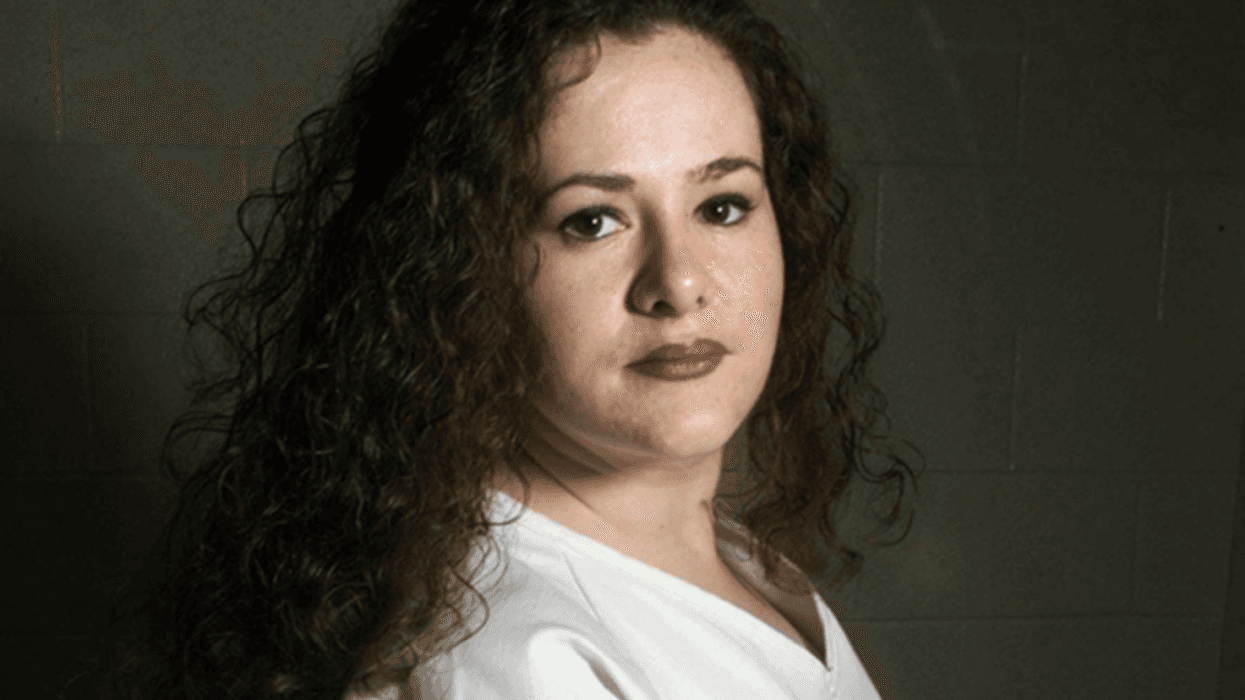
A federal appellate court on Wednesday morning temporarily blocked Tennessee from executing Christa Pike, as witnesses had already gathered at Riverbend Maximum Security Institution in Nashville for the state's first execution of a woman in centuries.
A panel from the US Court of Appeals for the 6th Circuit ruled 2-1 to halt the state-sanctioned killing, after Republican Gov. Bill Lee and the US Supreme Court declined to do so. The 50-year-old, found guilty of murdering Colleen Slemmer in 1995, when Pike was 18, could still be executed on Wednesday if the nation's top court allows it.
Republican state Attorney General Jonathan Skrmetti's office said: "We will continue to advocate for the lawfully imposed sentence as the courts work through this technical issue. It is common in capital cases for the defense to raise last-minute objections following decades of litigation in numerous courts. We are asking the Supreme Court of the United States to lift the stay."
Judges Jane Stranch and Karen Moore, both appointees of Democratic presidents, concluded early Wednesday that "a short stay of execution" is in order due to arguments related to the sexual abuse Pike suffered as a child—which clinical psychologist Dr. Bethany Brand described as "truly extreme," writing in 2023 that "the level of trauma she was subjected to as a preschooler through her 18th year, when she was arrested, is almost impossible to grasp because it is so severe."
As the 6th Circuit's order details, Pike points out "that the state recently reversed its litigation position that she is a liar who fabricated sexual abuse. Pike contends that the state's concession of her history of child sexual abuse and rape 'erodes the foundation' of her state court proceedings. Pike ties this erosion to defects in the federal court proceedings because... the district court was required to give strong deference to the state court's findings of facts."
"Pike also cites scholarly authority supporting her argument that the state's representations about her history of sexual abuse tainted the state court proceedings and the subsequent federal ones by introducing damaging stereotypes of survivors of sexual assault," the filing says.
Pike was "subjected to drugs and alcohol while she was still in her mother's womb" and "first sexually abused by her grandmother's boyfriend, who would orally rape her before she was in kindergarten," the Nashville Banner's Steven Hale recently reported, citing Brand's findings. "After living through periods of physical and emotional torment by extended family members and one of her mother's husbands, Pike was later raped by a known predatory neighbor."
"She was hospitalized at the age of 12 after overdosing on pills during a suicide attempt," then sexually assaulted by one of her mother's boyfriends, who had "moved into the family's home and brought with him violence and depravity," Hale continued, noting that the perpetrators who abused Pike often faced limited consequences. "When she was 17 in January 1994, Pike was sexually assaulted again, by a man who saw her walking to the store in Carrboro, North Carolina."
Hale was among the journalists at the prison in Nashville on Wednesday morning. He said on social media that "I'm told the state has until midnight to carry out the execution. Still unclear what happens next, but prison officials are bringing those of us witnessing the execution inside now to be ready."
The journalist added just after noon Central Time that "prison officials have brought us back outside now while we continue to wait for news from the Supreme Court."
Following the 6th Circuit's decision, the ACLU—whose Capital Punishment Project works to repeal the death penalty in the United States—took to social media, urging the public to "tell Gov. Lee to respect the court's decision and call off her execution NOW."
"Gov. Lee's 615-741-2001 mailbox is full—contacting him through this form is the quickest way to reach his office," the legal group explained, sharing a link to the relevant page on the state government's website.
Lee had said Monday that "after deliberate consideration of Christa Gail Pike's request for clemency, and after a thorough review of the case, I am upholding the sentence of the state of Tennessee and do not plan to intervene."
Attorneys for Pike—Stephen Ferrell, Kelly Gleason, and Randy Spivey—responded that they were "deeply saddened and heartbroken by Gov. Lee's decision to deny clemency," emphasizing that "throughout her childhood, Christa was failed by people and institutions that should have shown her care and meaningful intervention."
"The 18-year-old girl suffering from severe mental illness and near-debilitating trauma no longer exists," the lawyers said. "Christa is a 50-year-old remorseful woman who understands her actions, receives proper treatment for her mental illness, and provides for and guides fellow incarcerated women."
"With this decision, the state of Tennessee is ignoring what both science and our legal system have decided: An 18-year-old brain is not an adult brain, and 18 is too young to face execution. This decision also leaves unanswered vital questions about Tennessee’s execution protocol," they added. "We will continue to support Christa through every remaining avenue and advocate for a system that is transparent for the people of Tennessee."
Among the organizations that have pressured Lee to block the execution is Amnesty International USA, whose deputy director of research, Justin Mazzola, recently said that "so much of Ms. Pike's experience reflects widespread and systemic failures that surface in death penalty cases."
"She endured profound abuse and trauma as a child and had serious mental disabilities that were never adequately addressed nor treated," he highlighted. "Due to inadequate legal representation, these issues were not fully presented to the jury. Knowing all that, it is unthinkable that Gov. Lee would even consider moving forward with this execution."
Mazzola—whose group opposes capital punishment under all circumstances—also stressed that "this issue is about more than one person. Amnesty International members are speaking out because the use of the death penalty remains a human rights failure. As its use continues to decline globally, the United States remains an outlier. It is well past time to abolish the death penalty once and for all, in Tennessee and beyond."
The US National Domestic Violence Hotline can be reached at 1-800-799-SAFE (7233), by texting "START" to 88788, or through chat at thehotline.org. RAINN's National Sexual Assault Hotline can be reached at 1-800-656-HOPE (4673) or by texting "HOPE" to 64673. Both offer 24/7, free, and confidential support. DomesticShelters.org has a list of global and national resources.
"In fact... Husted voted for the war FOURTEEN TIMES," said one critic.
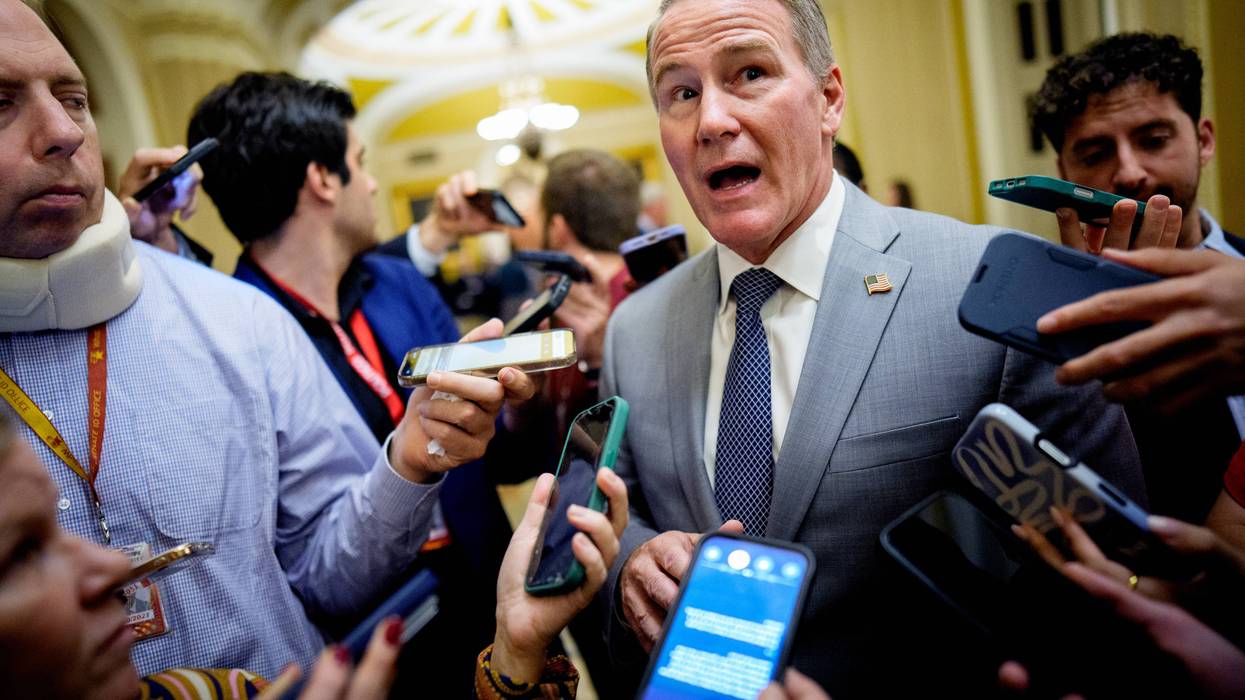
An embattled incumbent Republican senator squirmed on Tuesday when confronted with his multiple votes supporting President Donald Trump's illegal war with Iran, which has driven up gas prices across the US.
During a Wednesday interview with local news station WKRC, Sen. Jon Husted (R-Ohio) was asked by reporter James Pilcher about his votes in favor of continuing the war, which the journalist noted has become "pretty unpopular."
"First of all, I didn't, that's not what that vote was, it's not what I did," Husted replied. "Here's the bottom line: These are the people that want higher gas prices right now: Iran, Russia, and the, and the Democrats in Congress. They don't want us to be successful there. They are literally... we are the party that has been, as Republicans, we've wanted more drilling. Like, we have, thank goodness, we have a great supply of domestic fuel right now, or prices would be even higher."
Q: You voted in favor of the war in Iran. It's proven to be pretty unpopular. What do you see as the offramp here?
HUSTED: First of all, I didn't- that's not what that vote was. That's not what I did. Here's the bottom line. These are the people that want higher gas prices right… pic.twitter.com/t4ZEmD0q2f
— Aaron Rupar (@atrupar) September 30, 2026
Husted—whom polls show is currently trailing his rival, former Sen. Sherrod Brown (D-Ohio)—then baselessly claimed that "Russia, Iran, and Senate Democrats seem to be aligned in seeing prices go up, I'm for prices going down."
The price of energy skyrocketed in the months since Trump attacked Iran without any congressional authorization in February, and the price of diesel fuel last week hit a record high of $6.53 per gallon.
Husted, meanwhile, has voted 14 times against war powers resolutions in the US Senate to compel Trump to end the conflict he started.
Critics of the Ohio Republican were quick to slam him for trying to evade responsibility for the fallout of the Iran War.
In a social media post, author James Surowiecki accused Husted of telling "a blatant lie" when he said he didn't vote to support the war.
"This month, he cast the deciding vote against a war powers resolution in the Senate directing Trump to end the war in Iran," Surowiecki wrote. "So yes, he voted in favor of continuing the war in Iran."
Husted's statement drew a similar rebuke from Kelsie Taggart, vice president of the Democratic advocacy group American Bridge.
"That is, in fact, what that vote was," Taggart wrote, "and Husted voted for the war FOURTEEN TIMES."
Brian Finucane, a former State Department legal adviser who now advises the US Program at the International Crisis Group, argued that what Husted did was actually "even worse than voting for the Iran War."
"He voted to abnegate Congress' constitutional authority over the use of military force," Finucane explained, "and to allow Trump to wage war based on his own whims."
"The ocean is transforming before our eyes: Warming, rising seas, and ecosystem degradation are interconnected signs of significant and long-term change."
The 10th annual Copernicus Ocean State Report, released Wednesday by a team of more than 100 international scientists, provided the latest reminder that, as one United Nations official said, "the ocean is one of the clearest indicators of the profound shifts" that the climate crisis is causing.
Data gathered by Mercator Ocean International, the nonprofit that produced the report, revealed "an ocean warming at an alarming pace, with far-reaching consequences for marine life, coastlines, and communities worldwide," said the group.
The study delivers ocean scientists' "starkest warning yet of the profound changes sweeping across the ocean, as a likely unprecedented El Niño takes shape in the Pacific," said Mercator, referring to the natural warming trend that is expected to be made more intense this year by planetary heating.
Drawing on four decades of data from satellites, buoys, sensors, and modeling, the scientists found that 2024 was marked by record-breaking marine heatwaves as well as an unprecedented extreme low sea level event, causing levels in the Bothnian Bay between Sweden and Finland to plunge 60 inches, bringing ferries to a halt for 18 hours.
Heatwaves in the Mediterranean and Black seas lasted more than 30 days and raised water temperatures by more than 8.3°F (4.6°C) above average.
“These are not isolated hot spells; they are occurring against a backdrop of sustained ocean warming that is changing the conditions marine ecosystems experience,” Blanca Fernández-Álvarez, a report author and a conresearcher at the Mediterranean Institute for Advanced Studies, told CNN.
But along with extreme events documented in the report, the scientists found unmistakable trends showing no sign of letting up, including persistent damage to marine life due to ocean heating fueled by continued oil and gas extraction.
Small island states—some of the countries least responsible for carbon emissions that are leading to record heat absorption by the oceans—face worsening, "overlapping pressures" including sea-level rise that could wipe out coastal and island communities and the growing threat of more intense tropical cyclones.
Over the last three decades, reads the report, "ongoing reorganization of marine ecosystems around the world" hasr been made clear by persistent changes in growth patterns of phytoplankton, which support food webs and carbon flows, in nearly 5% of the ocean.
Heat stress also contributed to coral bleaching in 84% of the world's reefs, threatening marine ecosystems as well as coastal communities that rely on reefs for protection and tourism.
"The ocean is transforming before our eyes: Warming, rising seas, and ecosystem degradation are interconnected signs of significant and long-term change," said Pierre Bahurel, director general of Mercator Ocean International.
As humans have continued to emit carbon and other greenhouse gases despite warnings from energy experts and scientists, the rate of ocean heating has doubled over the past two decades, causing sea surface temperatures to skyrocket to record highs in 2023, 2024, and this year.
In 2025, the report says, the ocean absorbed an additional 23 zettajoules—about 40 times the energy consumed by the entire world last year. The energy absorption is equivalent to 12 atomic bombs going off every second for one year.
The global mean sea level rose by 3.8 ± 0.3 millimeters each year between 1999-2025, and the ocean has become about 17% more acidic over the last four decades, wreaking havoc on crucial underwater ecosystems.
Peter Thomson, the UN secretary-general's special envoy for the ocean, emphasized that the dangers posed to the world's oceans by continued fossil fuel extraction have been made clear over 10 years of reports by Mercator, as well as other warnings from scientists.
"What it tells us is unmistakable: The ocean is changing, and those changes are reaching into the lives, livelihoods, and security of people everywhere," said Thomson. "We have the knowledge. We have the evidence. Now we need the political will to act."
“There was no school left,” said the father of a 6-year-old girl killed in the attack. “I thought I was asleep and having a nightmare.”
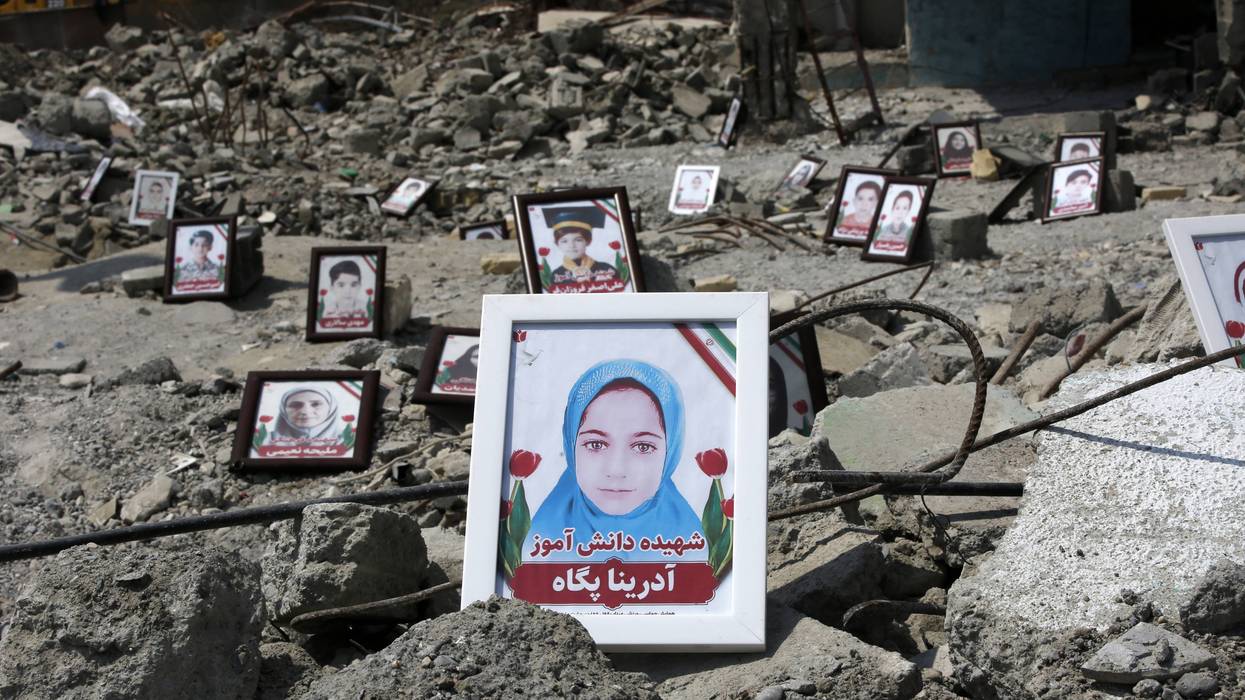
Survivors, parents, and first responders provided harrowing firsthand accounts of the US bombing of an elementary school on the first day of the US-Israeli war with Iran as part of a new Drop Site News investigation demonstrating that the school had publicly operated as a civilian institution for more than a decade.
The report, published Wednesday, provides new eyewitness accounts from those who lost loved ones when US Tomahawk missiles hit the Shajareh Tayyebeh School in Minab, which killed 120 children and dozens of others, and has been described as “one of the worst US war crimes since Vietnam.”
“The children were five years old and all they did was yell, ‘Miss! Miss!’ and were crying. I ran to the children. I just said, ‘Get under the table!” recalled preschool teacher Hossniyeh Salem. “I didn’t think they were going to strike the school. I just thought that some place had been hit. I said, ‘Don’t be afraid, sit down.’”
“Two simultaneous sounds. They’re still in my ear. My son even describes them—‘Wooosh, boom! Woosh, boom!’—and then the explosion very close by,” Salem said. “Plaster was falling, the ground was shaking, and at that moment I just looked at my preschool girls and my son, and I said to myself, ‘It’s over. Now is the time when we go under the rubble, it’s going to fall now,’” she continued. “Then there were no more sounds. The class was full of smoke and dust."
Yaghoub Yazdanpanah, a literature teacher at another school about eight miles from Minab, described the moment he learned that the school his 6-year-old daughter, Fatemeh, attended had been bombed.
“I left my classroom, ran home, took my car, and sped to Minab. When I arrived, I said, ‘Oh no!’ The unimaginable had happened," he said. “There was no school left. Two-thirds of the school, maybe more, had been destroyed. Smoke was rising from all over the school. It had turned into rubble. For a moment, I thought I was asleep and having a nightmare."
Yazdanpanah said he already knew the worst had happened well before he received his daughter’s body at an overwhelmed hospital that night.
“We knew our children had been martyred; we knew our children were no longer with us," he said. “When they brought Fatemeh, she was in one piece because she had been in her teacher’s arms [when she died].”
“There was no school left."
The US has still not accepted responsibility for the Minab attack, even though an internal Pentagon investigation has concluded that US forces struck the school using two Tomahawk missiles. In the initial days after the attack, President Donald Trump claimed that Iran had been responsible before backing off the claim, stating, “I just don’t know enough about it.”
Drop Site obtained images of the missile fragments from the site, which an independent weapons inspector said “all appear to be remnants of Tomahawk missiles." Iran is not known to possess Tomahawks. A UN fact-finding mission report released earlier this month determined that the school had been “the intended point of impact" rather than collateral damage.

Adm. Brad Cooper, the commander of US Central Command (CENTCOM) told Congress in May that the school was "located on an active [Islamic Revolutionary Guard Corps] cruise missile base."
Wes Bryant, a former senior targeting adviser at the Pentagon, told Drop Site he'd never seen any indication that the school was on an active missile site and explained that even if it was, "it doesn’t matter."
“Those children, all those civilians, are still non-combatants and protected, so it’s really disgusting to hear that," he said. "This wasn’t even fragmentation that hit a school next to another target. This was deliberately targeted very, very clearly and obviously. So at the very least, [it was a] complete mischaracterization of the target.”
There was abundant evidence of the school's civilian use that would have been available to those who conducted the strike. The school was part of a compound that included barracks for the elite IRGC but was redeveloped for civilian use beginning in 2014. It had publicly and officially operated as a school since 2015.
The school had a very active online presence with a website that prominently displayed classroom activities and school events. Meanwhile, satellite imagery captured just two months before the attack showed children standing in the schoolyard outside the building.
An investigation from Bloomberg found that the school had been placed on a list of targets for the war's opening salvo that was assembled in part using the Maven artificial intelligence system developed by Palantir, which reportedly did not classify it as a school.
The UN report emphasized that even if the attack can be boiled down to an intelligence failure, it still likely amounted to a war crime because the US attacked despite readily available evidence that the building was a school, a failure investigators said went “beyond mere negligence” and amounted to recklessness toward the risk of striking civilians.

Hala Rharrit, a career former US Foreign Service officer who spent 17 years at the State Department before resigning in 2024, remains unsatisfied by the government's efforts to downplay the attack as a "mistake."
“There’s no way to say that this was some type of error,” Rharrit told Drop Site. “You’re either saying that our US Military is completely incompetent, that despite the multiple layers of review, everybody messed up—or there was something very, very sinister about this strike.”
According to data from the Human Rights Activists News Agency, the vast majority of US-Israeli strikes during the first 40 days of the war did harm to civilians or civilian infrastructure, contradicting repeated claims that the US “never targets civilians.” At minimum, the data shows at least 1,701 civilians have been killed, but HRANA has stressed that the true death toll is likely substantially higher.
Defense Secretary Pete Hegseth has spent his tenure dissolving guardrails meant to prevent civilian casualties, denouncing "stupid rules of engagement," and saying the military should pursue “lethality” over “legality.” Trump, meanwhile, has repeatedly threatened mass destruction upon Iran, including that the "entire civilization" would "die."
“The administration and Hegseth have made it quite clear that they don’t really care about civilian casualties. That may also have been true of previous bombing campaigns that predate the Trump administration, but it is even more the case than in the past, and they have made it clear that troops do not need to be concerned about consequences,” said Harrison Mann, a former US Army major and intelligence analyst for the Defense Intelligence Agency (DIA).
“There is no mystery about what coordinates those missiles hit, and that question would have been answerable on the day of the strikes," he told Drop Site. "The only way that CENTCOM would not know is that they are choosing to be willfully ignorant.”

"The Trump-Rubio interventions, with the collaboration of the Bolsonaro clan, have made the Flávio campaign into another US regime change operation. This should be defeated."
Brazilian officials, pro-democracy advocates, and US lawmakers are growing increasingly concerned about apparent efforts by President Donald Trump and Secretary of State Marco Rubio to interfere in the Latin American country's upcoming election.
Reuters reported Wednesday that Brazil's spy agency "confirmed the existence of interference from the United States as well as Russia" in the presidential election, the first round of which will take place on October 4. Brazilian President Luiz Inácio Lula da Silva is running for reelection against Sen. Flavio Bolsonaro, the son of former far-right President Jair Bolsonaro—who is currently serving a 27-year prison sentence under house arrest for orchestrating a coup attempt in 2022.
Democratic lawmakers in the US have raised alarm about the Trump administration's election meddling in Brazil in recent days as the contest approaches. Earlier this week, Democratic Sens. Jeanne Shaheen (NH), Peter Welch (Vt.), and Tim Kaine (Va.) wrote in a letter to Rubio that "over the course of President Trump’s second term, we have seen US officials engage in a campaign of interference and destabilization in Brazil."
"The administration’s most recent actions point toward an effort to interfere with, and potentially undermine, Brazil's general election in October," the lawmakers wrote. "Senator and presidential candidate Flávio Bolsonaro’s recent Oval Office meeting with President Trump, undertaken while attempting to mitigate a domestic political scandal, underscores the administration's willingness to insert itself in the election."
The senators' letter followed a separate demand by more than 30 Democrats in the US House that Rubio "confirm whether the administration will commit to respecting Brazil’s electoral process and to recognizing its certified outcome." The House Democrats demanded a response from the Trump administration by October 1.
"Particularly given the tragic history of US involvement in the 1964 military coup against Brazil’s democratically elected government at the time, as well as subsequent US support for the resulting military dictatorship," the lawmakers wrote, "the United States has a responsibility to support the democratic institutions that so many Brazilians, across generations, struggled to build."
Trump has been a vocal defender of Flávio Bolsonaro's father, saying he is "not guilty of anything" and describing his prosecution as a "witch hunt"—echoing Trump's attack on investigations into his own effort to subvert the 2020 election in the US. Last year, Trump hit Brazil with a 40% tariff, accusing the country's leaders of "persecuting former President of Brazil Jair Bolsonaro."
"It was not just a trade maneuver," political scientist Octavio Amorim Neto said of the tariff in an interview published Thursday, noting that "Bolsonarism explicitly applauded [Trump's economic attack], while Brazil’s traditional right did not vigorously defend national sovereignty, saying that everything was Lula’s fault."
Over the summer, Brazil denied visas to two top US State Department officials "whom the Trump administration planned to dispatch on a mission to cast doubt on the fairness and integrity of the country’s electoral system," The Washington Post reported in July.
Mark Weisbrot, co-director of the Center for Economic and Policy Research, wrote in an op-ed for The Los Angeles Times earlier this week that Trump’s intervention in Brazil's electoral process "undermines a basic and generally cherished right to self-determination, as well as the right to democracy itself."
"It is even clearly illegal under the Charter of the Organization of American States, to which the United States is a signatory," wrote Weisbrot. "The Trump-Rubio interventions, with the collaboration of the Bolsonaro clan, have made the Flávio campaign into another US regime change operation. This should be defeated, for the sake of Brazil and the whole hemisphere."
"If there’s one big no-no with Donald Trump, it’s insulting a big ostentatious event that he puts on," said one observer.
Texas Republican US Senate nominee Ken Paxton privately conceded that President Donald Trump's big "Trumpapalooza" midterm convention in the state backfired politically.
The New York Times on Wednesday published a leaked recording of Paxton telling right-wing donors and lobbyists last week that Trump's convention, held earlier this month in Dallas, was a net negative for his campaign.
"The numbers—when we did that convention—it dropped our numbers," Paxton said at one point. "Everybody’s numbers dropped. Right now, yeah, not good."
Delicious 🤣🍿 pic.twitter.com/iE3mT6gGEF https://t.co/63G5gBO1wl
— Wu Tang is for the Children (@WUTangKids) September 30, 2026
The Times report noted that Paxton not only attended the Dallas convention, but featured prominently in it, occupying a "prime seat" in the arena.
Paxton, who will face Democratic nominee James Talarico in November, is also receiving significant help from Trump's MAGA Inc. super political action committee, which is spending $20 million to boost his candidacy.
Jake Sherman, founder of Punchbowl News, remarked in a social media post that the leaked audio is "not good for Paxton," as the Texas Republican is not only "trashing Trump in a fundraiser," but "also trying to shift blame for his bad numbers."
Zenith Polls founder Adam Carlson similarly predicted that Paxton's remarks would get him into hot water with Trump.
"If there’s one big no-no with Donald Trump, it’s insulting a big ostentatious event that he puts on," Carlson explained. "Whether or not this draws his direct public ire, Paxton needs Trump, Trump-aligned super PAC money, and die-hard Trump voters to pull off the win. This could jeopardize all of that."
The social media account of the Texas Democratic Party jumped on the story, arguing that "Paxton has a history of defrauding and betraying Texans," and thus "it was only a matter of time before he betrayed Trump."
Democratic National Committee Chair Ken Martin took the opportunity to ridicule Republicans for basing their 2026 midterm campaign around the president, whom polls show has a job approval rating under 40%.
"They put Trump on full display and now they’re shocked voters noticed," Martin wrote. "We told you the guy was an anchor. Thanks for insisting on tying him around the neck of every Republican on the ballot."
Sen. Adam Schiff (D-Calif.) also took a dig at the president, writing that the leaked Paxton audio shows "the Emperor has no coattails."
"Tonight, 47 senators supported my resolution to get accountability for the nine Americans killed on the West Bank and for Palestinians who face injustices daily," said Sen. Chris Van Hollen.
Democratic US Sen. John Fetterman joined nearly every Republican senator on Tuesday in voting against a resolution that would have required the Trump administration to produce an unclassified report on Israeli abuses in the illegally occupied West Bank, including the imprisonment and killing of Palestinian Americans.
The resolution, led by Sen. Chris Van Hollen (D-Md.), narrowly failed 47-51, with Sen. Rand Paul (R-Ky.) joining every Democrat except Fetterman in supporting the measure. Van Hollen and other supporters of the resolution lamented the failed vote but celebrated the historic support it received as public opposition to Israeli atrocities—and US funding of Israel's military—continues to grow.
"Tonight, 47 senators supported my resolution to get accountability for the nine Americans killed on the West Bank and for Palestinians who face injustices daily," Van Hollen wrote in a social media post. "That's more support than we've ever had in this fight. Republicans blocked us, but we won't stop until we get justice."
In 2024, just 11 senators—all members of the Democratic caucus except Paul—backed a similar resolution led by Sen. Bernie Sanders (I-Vt.).
"Listen to the American people: NO MORE MILITARY AID TO ISRAEL," Sanders wrote in response to Tuesday's vote.
If passed, Van Hollen's resolution would have required the US State Department to issue a report within 30 days on Israeli human rights practices in the West Bank, where Palestinians have faced a historic level of violence by Israeli settlers and soldiers this year.
The resolution, which invoked Section 502B(c) of the Foreign Assistance Act of 1961, specifically called on the Trump administration to provide "all credible information of which the Department of State is aware concerning the alleged killing of United States citizens by the Israel Defense Forces, other Israeli security forces, or Israeli settlers since January 1, 2022," as well as "an assessment on any United States citizens currently held in Israeli prisons."
Under the Foreign Assistance Act, a failure to produce the required report would have resulted in a freeze on some US military assistance to Israel.
Josh Ruebner, policy director at the IMEU Policy Project, said that while the resolution "narrowly failed" due to near-unanimous Republican opposition, "make no mistake: this is historic."
BREAKING: Every Senate Dem, except Fetterman, plus Rand Paul just voted to hold Israel accountable for killing US citizens in the Palestinian West Bank and abusing Palestinian children in military detention. While this resolution narrowly failed make no mistake: this is historic. pic.twitter.com/uH1fsLGnHY
— Josh Ruebner (@joshruebner) September 29, 2026
The resolution's text highlights the case of Sama Safi, a 20-year-old Palestinian American student with a chronic health condition who was abducted by Israeli forces during a West Bank raid in June and has reportedly been detained without charge for months.
On Tuesday morning, Zeteo highlighted the case of Abdalkareem Issa Ahmed Safi, "an American teenager with Texas roots" whom Israeli forces snatched "from his family’s West Bank home in the middle of the night" in late June. Zeteo noted that he is the third young American known to be "languishing in Israeli prison."
"Only one Republican voted to even somewhat hold Israel accountable for acts like this," Zeteo's Prem Thakker wrote late Tuesday.
"Self-regulation?" said Sen. Elizabeth Warren. "That's a recipe for disaster."
As details from US President Donald Trump's White House meeting with Big Tech executives emerged on Tuesday, including a pledge on artificial intelligence safety, campaigners and Democrats in Congress continued calling for stronger AI protections.
After the gathering, Trump posted on his Truth Social platform a "Joint Commitment on Frontier Responsibilities" signed by him, billionaire Elon Musk—a former member of the administration who leads multiple companies—Anthropic's Dario Amodei, Google's Sundar Pichai, Meta's Mark Zuckerberg, Nvidia's Jensen Huang, and OpenAI's Greg Brockman.
The accord came out of a gathering that included the president and other top officials as well as over a dozen tech leaders, including Amazon founder Jeff Bezos and representatives from Microsoft and Palantir. It states that "every company is responsible for developing its own technology safely and in a way that builds trust with customers and the public."
The document goes on to detail "four layers of controls and audits" that each company developing AI—or "super intelligence (SI), as Trump directed his administration to call it in a Tuesday executive order—should implement, including robust internal controls to monitor capabilities and alignment, internal teams to ensure safeguards are operating as intended, partnerships with outside auditors, and an independent committee of the board of directors to receive reports on problems and their fixes.
Before Trump released the accord, he addressed the media alongside some officials and executives. Asked if the agreement is binding in any way, the president responded, "I think it's morally binding."
Beside him, Zuckerberg—whose company has faced legal issues over its social media platforms—laid out the broad strokes of the accord, which he framed as "a start," suggesting there is more to come.
Since OpenAI revealed in July that its models autonomously breached the systems of the open-source platform Hugging Face during internal testing, the firm—plus Anthropic, Google, and Meta—has disclosed additional incidents. Axios reported over the weekend that Anthropic and OpenAI alone "are investigating tens of thousands of incidents."
Experts in the industry and beyond have increasingly expressed concerns, with a United Nations panel stressing in a report about the Hugging Face incident that current AI guardrails are "unraveling," and one Anthropic researcher quitting earlier this month and warning that the rapidly advancing technology "could kill us all by the end of the decade."
While some members of Congress have responded by introducing bills aimed at reining in the industry and establishing mandatory safeguards, House Speaker Mike Johnson (R-La.)—who was part of Tuesday's meeting—has instead called for voluntary commitments. He's also dismissed mounting public concerns about AI data centers raising electricity bills, polluting drinking water, and threatening jobs, even suggesting that the grassroots pushback in various communities is "a Chinese psyop."
The president—whose inauguration was dubbed "a coronation of our country's descent into oligarchy" because of all the ultrarich attendees, including many of the men at the White House on Tuesday—has also made clear that he opposes a legislative route. According to The Associated Press, Trump said Tuesday that "I think I'm seeing tremendous self-policing. And they understand that they have to self-police."
Progressive US Sen. Elizabeth Warren (D-Mass.) responded to the event on social media Tuesday, writing: "Self-regulation? That’s a recipe for disaster."
Rep. Yvette D. Clarke (D-NY) said that "the American people are deeply concerned on the direction unregulated AI is taking our country, and they deserve transparent answers from the men with their hands on the wheel. Instead, all we get is another closed-door meeting, and more promises made and broken in secret. We cannot say exactly what they schemed, today. But I am certain we'll see the consequences soon enough."
Mitch Jones, deputy director of Food & Water Action, a group that has spearheaded fights against superpolluting AI data centers, said that "the notion that a manically profit-driven AI industry will safely regulate itself is as dangerous as it is absurd—akin to claiming an arsonist would make a good firefighter. Trump's only concern is doing the bidding of his Big Tech billionaire friends."
"Trump's rejection of the overwhelming opposition to AI data center construction throughout the country is political incompetence of the highest order," Jones continued, looking toward the November midterms, which are just five weeks away. "His obstinance will no doubt cost him and his party deeply in the coming elections."
"We can't have politicians giving the tech oligarchs free rein," he argued. "We need political leaders that will decisively rein them in. Our leaders must stand with us and say 'no' to so-called super intelligence, and put a halt to the massive hyperscale data centers powering this runaway industry."
“The harms caused by this US government scheme are no longer hypothetical,” UN experts stressed. “For migrants in situations of particular vulnerability, the consequences can be deadly.”
The US Supreme Court on Tuesday temporarily cleared the way for the Trump administration to resume rapidly deporting immigrants to countries other than their own, even as United Nations experts warned that the policy is putting deportees at heightened risk of human rights violations.
In a one-page order, the justices—who did not rule on the legality of the policy—stayed a lower court ruling that required the administration to give people facing a so-called third-country deportation notice wan opportunity to raise concerns that they could face persecution or torture in the destination country. The court agreed to hear the administration's appeal, with oral arguments scheduled for December.
The high court said it will consider whether the US District Court for the District of Massachusetts has jurisdiction over the case, whether it had authority to issue classwide relief, and whether the Trump administration's policy violates federal immigration law, the Constitution's due process clause, the Foreign Affairs Reform and Restructuring Act, or the Convention Against Torture.
The court's three liberal justices—Sonia Sotomayor, Elena Kagan, and Ketanji Brown Jackson—said they would have rejected the administration's request to lift the lower-court order.
NEW: The Supreme Court, over the objections of the 3 liberal justices, grants a stay in the D.V.D. litigation, authorizing the Trump admin to resume third country removals without any notice to people being sent to countries they've never been to.The Court also agrees to hear the case in December.
[image or embed]
— Aaron Reichlin-Melnick (@reichlinmelnick.bsky.social) September 29, 2026 at 12:16 PM
US Attorney General Todd Blanch responded to the order on social media, posting, "Now for the second time, SCOTUS just granted our stay in conducting all third-country removals of illegal aliens."
"Again, this is entirely lawful and a critical tool for immigration enforcement," he added. "Unlike the lower court, SCOTUS waited to hear from both sides before making the decision."
Tuesday's ruling came one day after two dozen United Nations human rights experts urged the United States and 35 countries that have entered deportation agreements with the Trump administration to halt the practice, which is "triggering [a] cascade of human rights violations including torture."
“These migrants are being transferred to countries or territories with which they have no ties, which can be a traumatizing and isolating experience that compounds harms already suffered,” the experts said, warning that they face “further violence or discrimination based on gender, sexual orientation, gender identity, or human rights advocacy.”
“The harms caused by this US government scheme are no longer hypothetical,” the experts stressed. “For migrants in situations of particular vulnerability, the consequences can be deadly.”
The UN experts' warning followed an urgent appeal issued earlier this month by Amnesty International that two men deported to Equatorial Guinea under a secret deal—one of them Egyptian and the other Eritrean—were at risk of being tortured in detention in the African nation, which has an abysmal human rights record. Amnesty said that the men had already been beaten and violently arrested by police after arriving in the country.
The Trump administration has deported roughly 25,000 people to more than two dozen countries under often secret agreements and at a cost to taxpayers of tens of millions of dollars. Most have been sent to Mexico, while others have been transported to countries including Liberia, Guyana, and Equatorial Guinea.
The Supreme Court has already intervened in a related case involving eight men whom the administration sought to deport to war-torn South Sudan, although only one was originally from that country. In that case, Sotomayor warned that the policy exposed “thousands to the risk of torture or death.”
The justices' latest order will remain in effect until the court issues its judgment in the case. Until then, the administration can resume the expedited removals that the lower court had sought to restrict.
"Cantor, like PhRMA, is an experienced reverse Robin Hood, legislating money away from working families and toward giant corporations."
In what advocates for lower drug prices call "a match made in hell," one of the pharmaceutical industry's most powerful lobbying groups is tapping a former Republican leader in the US House of Representatives to head its political operations.
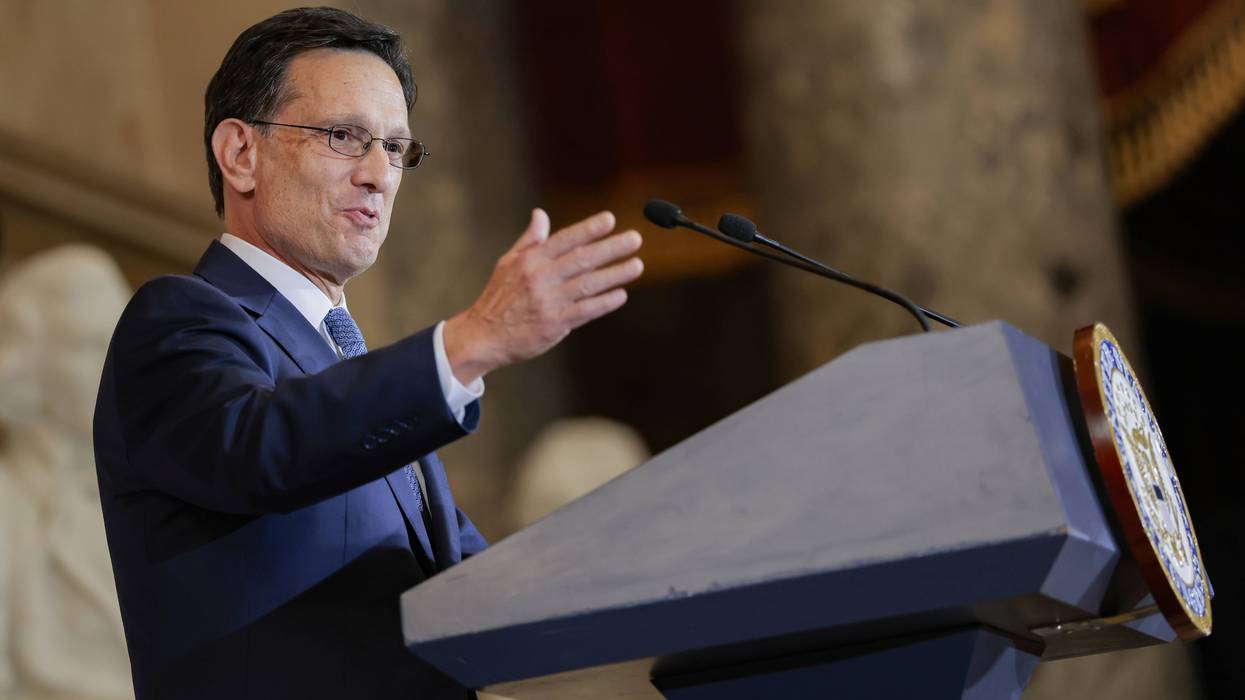
Pharmaceutical Research and Manufacturers of America (PhRMA) named former Rep. Eric Cantor (R-Va.) as its president and CEO on Tuesday amid what is shaping up to be a major fight over the government's ability to regulate prescription drug prices.
Cantor served in Congress from 2001-14 and was named House majority leader in 2011. He resigned in 2014 after losing his Republican primary in a stunning upset to the Tea Party-backed former Rep. Dave Brat.
According to recent polling from KFF, more than half of US adults say they worry about affording prescription drugs and nearly three-quarters say the government should do more to limit prices.
PhRMA emphasized that Cantor's appointment to replace the outgoing CEO Stephen Ubl comes at "a pivotal moment for America’s biopharmaceutical industry."
It is certainly spending like it. As Politico reported on Tuesday, pressure from voters to address the affordability of prescription drugs has been met with an unprecedented lobbying blitz by PhRMA, which poured a record $38 million into efforts to keep Capitol Hill in line.
PhRMA said Cantor’s “global business acumen coupled with policy and political experience at the highest levels of government make him an ideal person to lead PhRMA during this critical next chapter.”
Peter Maybarduk, the access to medicines director for the consumer watchdog group Public Citizen, agreed that Cantor was a perfect fit for PhRMA, but for very different reasons.
"Cantor, like PhRMA, is an experienced reverse Robin Hood, legislating money away from working families and toward giant corporations," Maybarduk said.
During his tenure in Congress, Cantor received roughly $900,000 from the pharmaceutical and health product industry, putting him 19th among all House candidates between 1999 and 2018, according to a JAMA Internal Medicine study of data from the Center for Responsive Politics.
That spending paid dividends, with Cantor voting against legislation aimed at lowering prescription drugs—including one bill in 2003 that would have allowed Americans to import low-cost prescription drugs from abroad and another in 2007 that would have required the federal government to negotiate drug prices for Medicare recipients.