SUBSCRIBE TO OUR FREE NEWSLETTER
Daily news & progressive opinion—funded by the people, not the corporations—delivered straight to your inbox.
5
#000000
#FFFFFF
To donate by check, phone, or other method, see our More Ways to Give page.
Daily news & progressive opinion—funded by the people, not the corporations—delivered straight to your inbox.
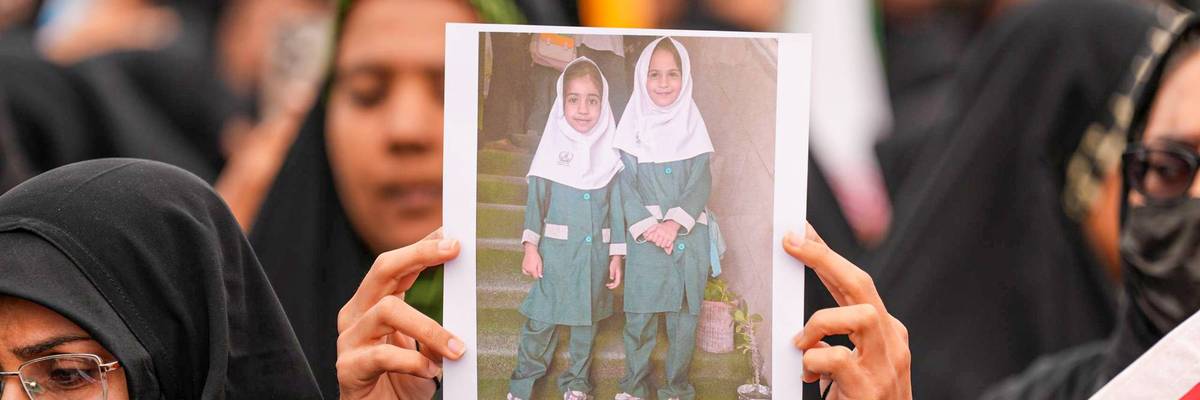
Mourners hold a portrait of a students on March 3, 2026 in Minab, Iran during a funeral ceremony for children who were killed when their school was bombed by the US.
The report points to statements by Defense Secretary Pete Hegseth that signaled the "deprioritization of civilian harm mitigation and of compliance with international law."
Human rights experts who led a United Nations fact-finding mission in Iran are set to submit their findings to the UN Human Rights Council that the United States likely committed war crimes in the early days of the US-Israeli war there.
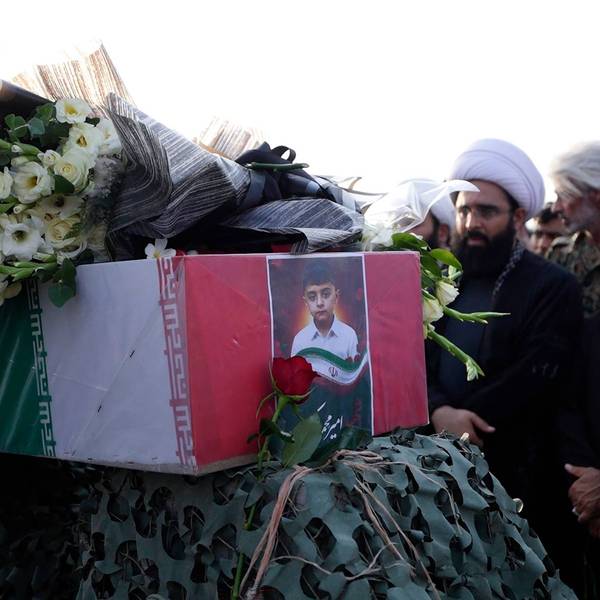
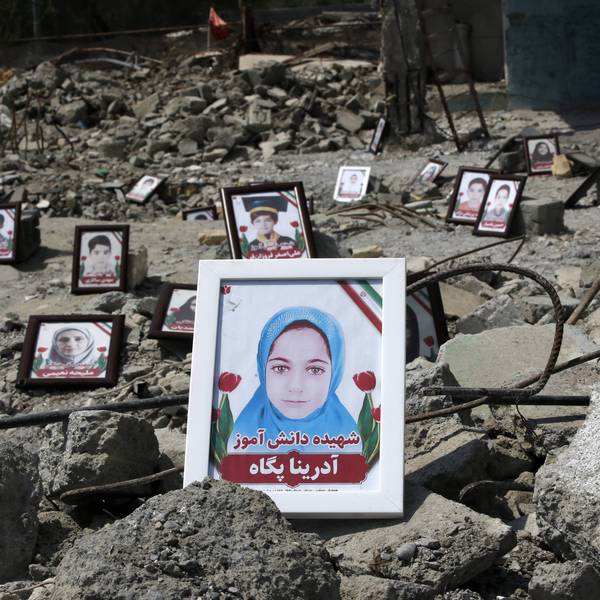
The experts examined evidence regarding two airstrikes that killed at least 178 civilians, including 120 children, according to Iranian authorities—the bombing of the Shajareh Tayyebeh School in Minab and an attack on a sports complex and residential area in Lamerd, both of which took place on February 28.
The report notes that the Pentagon has not released findings of its own investigation into the Minab school bombing and the US has not accepted responsibility for the attack, although Reuters reported on an internal probe that found US forces were likely behind the strike.
Despite the lack of a response from the US to the fact-finding mission's requests for information, the experts said they found "reasonable grounds to believe that the US committed the war crime of launching an indiscriminate attack resulting in loss of life or injury to civilians or damage to civilian objects."
The report pointed to the Trump administration's "deprioritization of civilian harm mitigation and of compliance with IHL [international humanitarian law], expressed through public statements by senior US leadership, including the president and the secretary of defense."
Secretary of Defense Pete Hegseth said early in the war that the US would dispense with “stupid rules of engagement”—which are meant to protect civilians under international law—and said US forces would rain "death and destruction from the sky all day long."
The Pentagon also relied on "outdated targeting data" when deciding to bomb the school in Minab, which was clearly identified as a school for young children, said the report.
"The mission considers that the United States' failure to update information in relation to the school in its targeting databases and to verify that the building was a military objective before launching the attack went beyond mere negligence," reads the report. "Rather, the US directed the strikes at the building of the school while being aware of a substantial risk of striking a civilian object and acting recklessly as regards the possibility that this would happen."
More than 150 people were killed in the attack, including 120 children.
The experts also said the sports complex and residential area in Lamerd on February 28 were "clearly identifiable" as civilian targets, and that the weapon used in the attack—Lockheed Martin-manufactured Precision Strike Missiles (PrSM) that disperse tungsten pellets over a wide area—show that the strike "constituted an indiscriminate attack in violation of the principle of distinction" between civilians and military targets.
The missiles, said the experts, "could not be directed at a specific military objective and their effects on civilians and civilian objects could not be limited as required by IHL. The US was under the IHL obligation to employ weapons systems and ammunition that satisfied these requirements."
The UN team said 22 civilians were killed in the attack in Lamerd, including four schoolchildren and a two-year-old girl who was killed while playing in front of her home.
US Central Command has denied responsibility for the attack, but top US officials in March boasted that the military had "made history" by using the PrSM for the first time in the war.
This country and this world are at a monumental crossroads. US voters have an opportunity to beat back the forces of fascism and confront the billionaires who are rigging the economy, our media system, and our democracy, making it increasingly impossible for ordinary people to get by. We’re not just talking about the election. We’re talking about what must be done once these fascist elements are vanquished from power. We need a bolder set of solutions than what either major party has so far been willing to offer and a working-class movement ready to fight like hell for it. Trump didn't emerge from nowhere. The conditions that fueled MAGA authoritarianism were created by decades of radical neoliberal economic policies and a corrupt political system dominated by corporate interests. They slashed taxes on the super-rich, promising that the benefits would trickle down. They said giveaways to the corporate titans would make life more affordable for the rest of us. It was all bullshit. And when a bitter, betrayed populace searches for someone to blame, right-wing demagogues have little trouble finding scapegoats. People know when they're being lied to, but you won't hear any of this from the corporate media. Only independent journalism—powered and funded by people who believe in building a better world—can deliver truly trustworthy daily news. If you share our vision, please contribute whatever you can to sustain our work. |
Human rights experts who led a United Nations fact-finding mission in Iran are set to submit their findings to the UN Human Rights Council that the United States likely committed war crimes in the early days of the US-Israeli war there.
The experts examined evidence regarding two airstrikes that killed at least 178 civilians, including 120 children, according to Iranian authorities—the bombing of the Shajareh Tayyebeh School in Minab and an attack on a sports complex and residential area in Lamerd, both of which took place on February 28.
The report notes that the Pentagon has not released findings of its own investigation into the Minab school bombing and the US has not accepted responsibility for the attack, although Reuters reported on an internal probe that found US forces were likely behind the strike.
Despite the lack of a response from the US to the fact-finding mission's requests for information, the experts said they found "reasonable grounds to believe that the US committed the war crime of launching an indiscriminate attack resulting in loss of life or injury to civilians or damage to civilian objects."
The report pointed to the Trump administration's "deprioritization of civilian harm mitigation and of compliance with IHL [international humanitarian law], expressed through public statements by senior US leadership, including the president and the secretary of defense."
Secretary of Defense Pete Hegseth said early in the war that the US would dispense with “stupid rules of engagement”—which are meant to protect civilians under international law—and said US forces would rain "death and destruction from the sky all day long."
The Pentagon also relied on "outdated targeting data" when deciding to bomb the school in Minab, which was clearly identified as a school for young children, said the report.
"The mission considers that the United States' failure to update information in relation to the school in its targeting databases and to verify that the building was a military objective before launching the attack went beyond mere negligence," reads the report. "Rather, the US directed the strikes at the building of the school while being aware of a substantial risk of striking a civilian object and acting recklessly as regards the possibility that this would happen."
More than 150 people were killed in the attack, including 120 children.
The experts also said the sports complex and residential area in Lamerd on February 28 were "clearly identifiable" as civilian targets, and that the weapon used in the attack—Lockheed Martin-manufactured Precision Strike Missiles (PrSM) that disperse tungsten pellets over a wide area—show that the strike "constituted an indiscriminate attack in violation of the principle of distinction" between civilians and military targets.
The missiles, said the experts, "could not be directed at a specific military objective and their effects on civilians and civilian objects could not be limited as required by IHL. The US was under the IHL obligation to employ weapons systems and ammunition that satisfied these requirements."
The UN team said 22 civilians were killed in the attack in Lamerd, including four schoolchildren and a two-year-old girl who was killed while playing in front of her home.
US Central Command has denied responsibility for the attack, but top US officials in March boasted that the military had "made history" by using the PrSM for the first time in the war.