

SUBSCRIBE TO OUR FREE NEWSLETTER
Daily news & progressive opinion—funded by the people, not the corporations—delivered straight to your inbox.
5
#000000
#FFFFFF
To donate by check, phone, or other method, see our More Ways to Give page.
Daily news & progressive opinion—funded by the people, not the corporations—delivered straight to your inbox.

Marissa Knodel, Friends of the Earth, (202) 222-0729, mknodel@foe.org
Blake Kopcho, Center for Biological Diversity, (805) 708-3435, bkopcho@biologicaldiversity.org
The U.S. House of Representatives Committee on Natural Resources will vote on a bill today that could alter the longstanding practice of holding offshore fossil fuel lease sales in person and instead relegate them to an internet-based system. Proposed under the guise of efficiency, the switch will marginalize public input and comes amid rising public pressure to end new oil and gas leasing on public lands and oceans in the face of the growing climate crisis.
The House Committee on Natural Resources is scheduled to vote on House Resolution 5577 at 10 a.m. today.
A coalition of community-based groups from the Gulf Coast and Alaska, supported by national allies, sent a letter strongly opposing the bill, warning that the change would threaten wildlife, coastal communities and the climate.
"Government leasing decisions must be as transparent and accountable to the American people as possible. This can only be ensured by allowing the public to openly and directly participate in every step of the leasing process, from the environmental review to the sale itself," reads the letter from 23 groups.
Gulf Coast residents this year launched an unprecedented effort to demand no new leases in the Gulf of Mexico. They were joined by groups who have been waging a national "Keep It in the Ground" campaign calling for an end to new fossil fuels leases on federal lands and waters at a large demonstration on March 23 in New Orleans. At the Superdome hundreds joined a boisterous demonstration against expanding offshore drilling. Another offshore lease sale is scheduled for New Orleans on Aug. 24, and significant protests are being organized.
"If Representative Graves and other congressmen were acting on behalf of regular people, they would introduce a bill to make the oil industry pay for its century of destruction along the Gulf Coast," said Anne Rolfes, founding director of the Louisiana Bucket Brigade. "Instead it's business as usual -- protecting Big Oil at the expense of the public."
"The people of the Gulf South who live, work and play along the Gulf of Mexico are ready to transition into clean energy sources that lessen impacts to the environment, create a sustainable job market, and protect human and non-human health," said Mary Gutierrez, executive director of Earth Ethics, Inc. "We will no longer allow big industry or the government to dictate the type of energy source we want for our communities. We want our voices heard. We have a responsibility to advocate for and implement changes. We are ready to accept those responsibilities. We are ready for action."
"How are indigenous communities closest to federal oil and gas land leases going to participate in what's supposed to be a public process? The answer is: They won't be able to," said Dallas Goldtooth of the Indigenous Environmental Network. "This bill is nothing but a farce pandering to the interests of Big Oil and Gas. All dealings of federal land leases must remain physically public to ensure transparency and equity for remote indigenous communities."
"People are demanding climate action and an end to offshore drilling, fracking, oil spills, and treating coastal communities like sacrifice zones. This is a vibrant, growing movement that deserves to be heard," said Blake Kopcho, a Center for Biological Diversity organizer who has been working with groups in the Gulf. "If we're going to sell off public resources and worsen the climate crisis, the decisions should be made out in the open, in the bright light of day and with the full participation of the American public."
"New fossil fuel leasing is wrong for people and the planet. Moving lease sales online will only make it easier for fossil fuel companies to get away with turning our public lands and waters into energy sacrifice zones," said Marissa Knodel, climate campaigner at Friends of the Earth. "Across the nation, the movement to keep fossil fuels in the ground is gaining strength and momentum. Congress must listen to the voices of the people calling for a safe climate future and just transition to a renewable energy economy, not the fossil fuel industry."
Friends of the Earth fights for a more healthy and just world. Together we speak truth to power and expose those who endanger the health of people and the planet for corporate profit. We organize to build long-term political power and campaign to change the rules of our economic and political systems that create injustice and destroy nature.
(202) 783-7400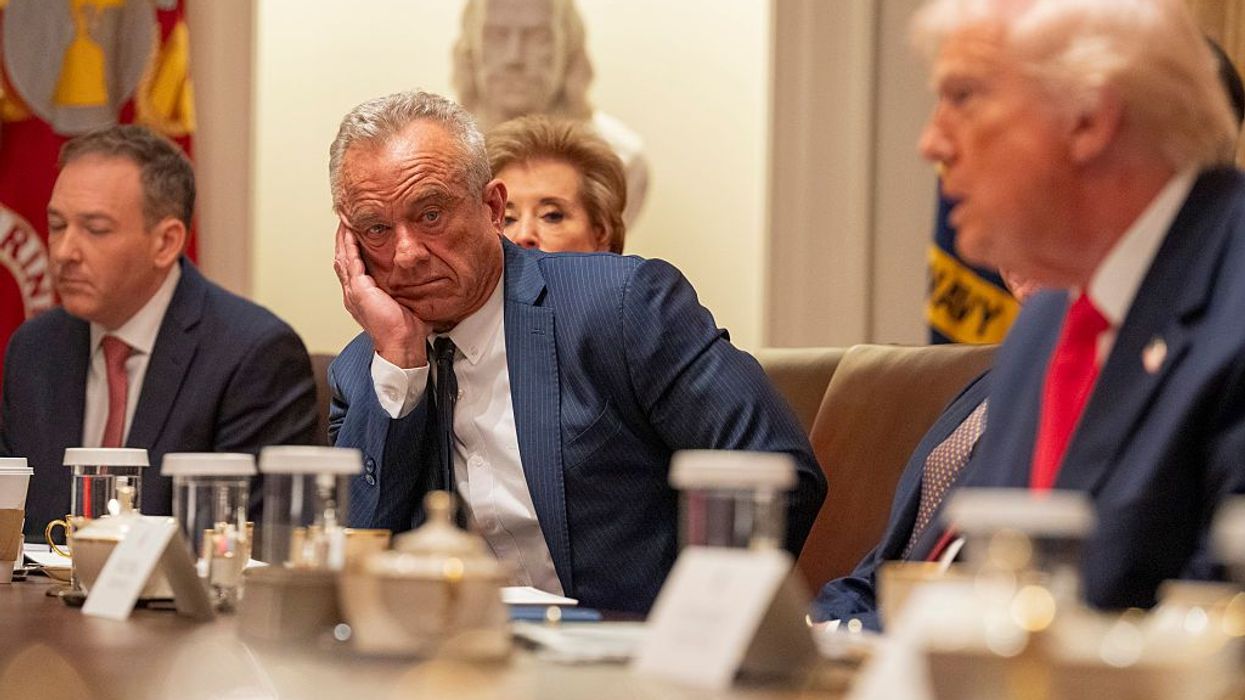
"If Trump gets his way and waters down the child vaccine schedule over the debunked autism myth, more American kids will suffer and die of preventable disease."
With the US already experiencing public health crises involving measles and explosive diarrhea, President Donald Trump reportedly believes it's time to further undermine Americans' faith in the safety of vaccines.
The Wall Street Journal reported on Monday that Trump in May asked US Health and Human Services (HHS) Secretary Robert F. Kennedy Jr. why he wasn't doing more to research disproven claims linking childhood vaccination with increased incidence of autism.
Trump specifically said he'd like to see Kennedy cut the number of shots the CDC recommends for children on the idea that doing so would make "autism rates drop, even if any such effect could take years."
Kennedy, despite being best known as an anti-vaccine conspiracy theorist before being appointed as the nation's top health official, was reportedly "taken aback" by Trump's demands, as White House political advisers had asked him to tone down his rhetoric about vaccinations.
During a White House meeting roughly a month later, the Journal reported, Trump complained that Kennedy "wasn't doing enough" to reduce the number of childhood vaccinations.
Multiple high-quality medical studies have found no link between vaccines and autism.
Brad Woodhouse, president of Protect Our Care, expressed horror at the president leading the charge against childhood vaccinations, which are estimated by the US Centers for Disease Control and Prevention (CDC) to prevent 4 million deaths per year worldwide.
"The reality is ugly," said Woodhouse. "If Trump gets his way and waters down the child vaccine schedule over the debunked autism myth, more American kids will suffer and die of preventable disease. We’re already in the middle of a record-breaking measles crisis thanks to vaccine lies amplified loudly by this administration, yet Trump is determined to do more damage."
Gavin Yamey, director of the Center for Policy Impact in Global Health at Duke University, declared himself "livid" at Trump's latest efforts to undermine confidence in vaccines.
"Ahead of the midterms, RFK Jr. and Trump... are ALL IN on their dangerous anti-vaxx activism and conspiracy theories," Yamey wrote in a social media post. "There is a wealth of high quality evidence that vaccines do not cause autism."
Claremont McKenna College political scientist Jack Pitney noted that Trump's false belief in a link between vaccines and autism stretches back years.
"For decades, Trump has pushed the lie that vaccines cause autism," Pitney wrote. "Now he reportedly wants RFK Jr. to push it even harder. The result? More US measles cases in the past 18 months than in the previous 20 years combined."

"A ceasefire should ensure that hostilities are paused, weapons are silenced, and that people are safe from strikes across the strip."
Nearly 10 months into a "ceasefire" in the Gaza Strip, as Israel on Tuesday killed at least one Palestinian man with an airstrike on the Nuseirat refugee camp, Doctors Without Borders declared that "the wounds of war are not only unhealed—they are still being inflicted."
"This is not a ceasefire," said the medical charity, also known as Médecins Sans Frontières (MSF), in a statement. "It is a continuation of the genocide, calibrated to be violent enough to keep Palestinians suffering every day, yet silent enough to avoid stirring international outrage."
Israeli forces have killed more than 73,300 Palestinians in Gaza and wounded over 174,009 since the Hamas-led October 7, 2023 attack on Israel—with global experts warning the true toll is likely far higher. Local authorities have documented at least 1,200 deaths and 3,900 injuries since the ceasefire was agreed to over nine months ago.
Experts with the United Nations and others around the world have denounced the Israeli assault and blockade as a genocide, and South Africa is leading a related case at the International Court of Justice. The International Criminal Court has also issued arrest warrants for Israeli Prime Minister Benjamin Netanyahu and his former defense minister, Yoav Gallant, over the mass slaughter.
Nearly all of Gaza's roughly 2 million survivors have been forcibly displaced, starved, or sickened. MSF said that "the destruction of homes has not stopped with the announcement of the ceasefire. Sudden and arbitrary orders for people to flee their homes and shelters continue to be used as a tool of psychological warfare by Israeli forces."
Rajaa Jendiya, who was widowed in the "flour massacres," is living in a tent at a school-turned-displacement camp with her children. She told Middle East Eye that she often takes them to the hospital because of illnesses.
"Inside and around the school, you often see sewage water overflowing, while rubbish accumulates, attracting flies and insects," Jendiya said. "These conditions become even worse with the heat, and many times my children have developed skin diseases."
In such makeshift shelters across Gaza, "scabies, respiratory infections, rat bites, and other diseases are rife," according to MSF.
Accessing healthcare has also become difficult in the coastal strip, as Israel has killed and detained Palestinian medical providers, and bombed civilian infrastructure such as hospitals, including in the months since the ceasefire deal was reached.
As MSF detailed Tuesday:
On July 16, an Israeli strike near an MSF clinic in Al-Mawasi sent four injured people to our teams. The following day, two apartment buildings housing our staff in Gaza City were struck without warning, trapping families inside as explosions shattered windows. In one building, rubble and bodies crashed into the lower-floor apartment of an MSF staff member.
The same day, MSF teams in Deir al-Balah, central Gaza, treated 12 people—seven of whom were children—who were injured after Israeli forces struck a funeral in Al-Nuseirat. In total, this strike killed eight people and injured 20. Among those killed was the 21-year-old son of an MSF staff member. Our colleague got the news while working in another emergency room.
"These were not isolated incidents," the organization stressed, "but merely a snapshot of 48 hours in Gaza."
Israel has also limited the flow of food and medicine into the war-torn territory. Calling out the country for using humanitarian assistance "as an instrument of oppression," MSF emphasized that "the Israeli state has an obligation under international law to ensure Palestinians in Gaza have access to aid, regardless of political negotiations, military agreements, or conduct of hostilities."
Since October, when the Israel Defense Forces controlled about half of Gaza, the "yellow line" indicating IDF occupation has kept shifting, to push Palestinians into "an ever-shrinking area," MSF explained. "Today, almost 2 million Palestinians are confined to approximately 30% of the strip."
After speaking with residents in Deir al-Balah, Khan Younis, Rafah, and Gaza City's Zeitoun, Tuffah, and Shejaia neighborhoods, Reuters reported Tuesday that "Israeli forces have advanced the yellow block markers during the past 10 days, triggering new waves of displacement in areas already devastated by months of conflict."
While loading bags and mattresses onto a truck in Zeitoun, Assem Dawla told the news agency: "The whole war is displacement, displacement. You can't stay anywhere without [Israel] telling you, 'Get out of here, we want to come in.'"
Staying near the yellow line comes with risks. MSF said that "just this week, one mother told our teams that her 14-year-old son, who has Down syndrome, was shot five times by Israeli snipers near the yellow line while he was playing near his home."
"A ceasefire should ensure that hostilities are paused, weapons are silenced, and that people are safe from strikes across the strip," the group asserted. "Using it as a weapon of war and reinforcing the confinement to a fraction of Gaza cannot be justified."
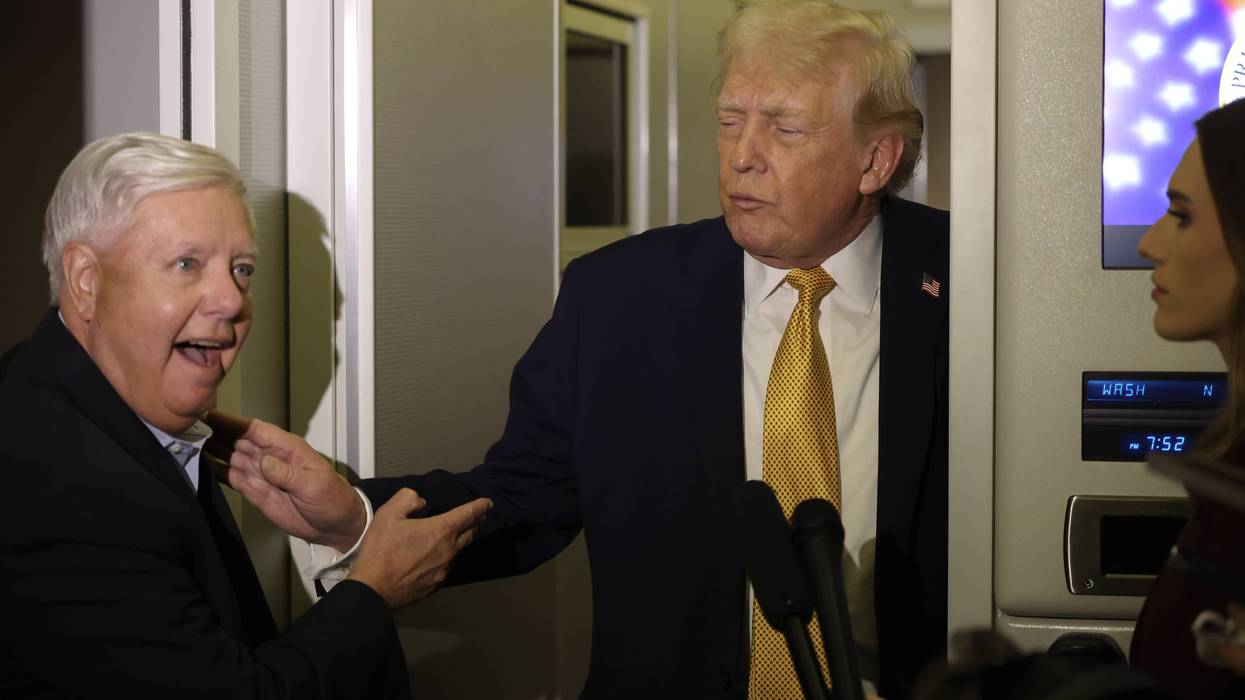
"He's never seen a war that he didn't like."
US President Donald Trump on Tuesday recalled Lindsey Graham's warmongering ways ahead of the late Republican senator's funeral, while once again threatening to commit more atrocities in Iran if an agreement to stop the war he and Israel started there is not reached soon.
Trump phoned in to Fox News' "Fox and Friends" morning show to laud his "great friendship" with the senator from South Carolina, who died on July 11 at the age of 71. Previously unreleased video published over the weekend shows Graham jubilant over Trump's decision to attack Iran in February and saying the president "loves blowing stuff up."
The president told "Fox and Friends" hosts: "He was very much a hawk, as you would say, on Iran. Lindsey liked war, to be honest with you."
"I said, you're a nice guy, how can you like war so much?" the president added. "He was a guy that liked war. I jokingly say—and there's nothing funny about it—but he's never seen a war that he didn't like."
Trump on Lindsey Graham: "He's never seen a war that he didn't like. He was very much into that -- you know, for good reason. He felt that way, some other people feel that way." pic.twitter.com/YbAttT8h8s
— Aaron Rupar (@atrupar) July 28, 2026
Graham had pushed for attacking Iran since at least 2010, both for strategic and financial reasons; in March, he boasted that the United States was "gonna make a ton of money" from the war.
While Graham isn't the only Republican in Congress to make inflammatory comments about Iran—just over the weekend, Sen. John Kennedy of Louisiana opined that "sometimes you have to kill a few chickens to scare the monkeys"—he was the most consistent cheerleader for continuing attacks on the Mideast nation.
Trump also discussed Israeli Prime Minister Benjamin Netanyahu's visit to Washington, DC to attend Graham's funeral and make the case for continued war on Iran. Netanyahu is Trump's partner in the illegal war of choice, and is additionally wanted by the International Criminal Court in The Hague for alleged war crimes and crimes against humanity in Gaza.
Graham was accused of incitement to genocide for advocating the total destruction of Gaza.
Moving on during Tuesday's interview, Trump said that if the Iranian government does not agree to a deal to end the 150-day war, "then I go back and I finish the job."
Trump and Netanyahu have both been accused of sabotaging negotiations with Iran when agreements seemed nearly at hand.
The president again said he would destroy Iranian bridges and power plants if a deal is not reached soon, his latest in a string of war crime threats that has included an earlier genocidal vow to wipe out the "whole civilization" of Iran.
"I could take out most of their bridges in less than an hour," Trump claimed on Tuesday. "I could knock out the power plants within one day."
"I think of 91 million people without power, without the bridges," he said. "And there's always the desalination plants. And who am I hurting there? I'm hurting the people. So I'm not looking to do that, [but Iran] cannot have a nuclear weapon."
US and Israeli intelligence have said for decades—including during both Trump administrations—that Iran is not trying to develop nuclear weapons.

"As more of our servicemembers are killed in Iran, and energy prices continue to skyrocket here at home, Congress cannot sit on its hands."
A Democratic lawmaker in the US House of Representatives on Tuesday introduced legislation that would cut off funding for President Donald Trump's illegal war with Iran.
In announcing the "No Funds for Illegal Wars Act," Rep. John Larson (D-Conn.) said that it was time for the legislature to take the next steps to end the unlawful conflict Trump started in February without congressional authorization.
"As more of our servicemembers are killed in Iran, and energy prices continue to skyrocket here at home, Congress cannot sit on its hands. We have voted to end this illegal war not once, but twice—and we need to enforce the law."
Larson emphasized that his bill would not merely end funding for the illegal Iran war, which has cost tens of billions of dollars and thousands of lives. The legislation, the Connecticut Democrat said, would also “block Donald Trump or any future president from waging war without explicit approval from Congress, as both the Constitution and War Powers Act require.”
Larson last week joined Rep. Gregory Meeks (D-NY) in filing a resolution that would require House Speaker Mike Johnson (R-La.) to “initiate or intervene in litigation” to enforce the war powers resolution that passed in both chambers of Congress last month and compel the president to end the conflict.
Trump predicted that the Iran war would only last a few weeks when it began, but the conflict is now in its sixth month and the president last week said he was considering authorizing what he described as a "massive attack" on Iran that he vowed would be "bigger than ever before."

In the final debate before Michigan's pivotal Democratic Senate primary, Abdul El-Sayed continued to hammer on the idea that his opponent, Rep. Haley Stevens, is "bought off" by AIPAC and corporate-funded super PACs.
Progressive US Senate hopeful Dr. Abdul El-Sayed spent Monday night's final Democratic primary debate in Michigan continuing to hammer on his centrist opponent Rep. Haley Stevens' backing from big money donors.
With just a week before Michiganders head to the polls, Stevens has emphasized her supposed electability against presumptive Republican nominee former Rep. Mike Rogers for the seat, which could decide the balance of power in the Senate.
While El-Sayed has consistently dominated in fundraising from individual contributors, particularly small-dollar donors, he is still dramatically outgunned by Stevens in terms of overall financial support.
Six aligned super PACs have reserved roughly $60 million to run ads boosting her—more than half of which comes from the American Israel Public Affairs Committee (AIPAC)-affiliated super political action committee (PAC) the United Democracy Project.
This tidal wave of outside funding has appeared to help Stevens remain competitive with El-Sayed after initially trailing him. But on the debate stage Monday, former Detroit public health official El-Sayed—who has made removing big money from politics a central campaign plank—argued that the spending cuts against Stevens' claim that she is more "electable" than him.
Along with the Senate filibuster, which he said would allow Republicans to stymy ambitious agenda items like Medicare for All and labor protection bills like the PRO Act, El-Sayed argued that "money in politics" was among the biggest "risks to our democracy."
He pointed to the super PAC-funded "attack ads that you've seen, probably in the last commercial break itself" that "change our political system." He then called out Stevens directly.
"When you ask $60 million to come into a race for you, and then say that somehow you're electable, I think you don't quite understand what electability means," El-Sayed said. "If you need a $60 million crutch, you probably can't be elected on your own terms."
Both El-Sayed and Stevens are shown to be slightly ahead of Rogers in polls for a hypothetical November matchup.
While Stevens has claimed that Rogers views El-Sayed as an easier opponent, one aggregate of four recent polls by 270ToWin shows El-Sayed leading the Republican by about 2.5 percentage points on average compared to Stevens, who leads by about 1.3 points on average.
El-Sayed, who has made a point of swearing off corporate backers, hit on the idea that Stevens was "bought off" repeatedly throughout the night.
He noted the $45,000 in direct support her campaigns had received since 2019 from the increasingly loathed Michigan energy monopoly DTE, as well as her support from super PACs backed by donors in the health insurance and tech industries.
Responding to Stevens’ message about the need to lower prices for ordinary people, El-Sayed said, “I don’t take money from the corporations who are jacking up your prices in the first place.”
He also pointed to her vote last week to preserve $3.3 billion in military aid for Israel while more than half of her Democratic colleagues voted for an amendment that would have cut off the support.
El-Sayed said it showed that AIPAC, which has grown overwhelmingly unpopular with Democratic voters disgusted by Israel's actions, had dumped $46 million behind Stevens because “they know she’ll be a reliable vote."
Stevens largely sidestepped questions about her super PAC support, instead hitting back at El-Sayed for campaigning with "senators who’ve come in here from the coast," like Bernie Sanders (I-Vt.), Elizabeth Warren (D-Mass.) and Chris Van Hollen (D-Md.), who she said lack an understanding of "what makes our state tick."
She emphasized her "experience" over El-Sayed as a four-term congresswoman and as “Michigan’s manufacturing geek” who'd bring a "unique understanding" of the state's issues to Congress.
"I don't think there's much difference between super PACs going in for Abdul or super PACs going in for me," Stevens said, ignoring that outside spending to back Stevens throughout the primary outpaces the amount supporting El-Sayed by about 18-to-1, according to the latest totals from AdImpact.
While polling for next Tuesday's primary has been all over the map, showing leads for both El-Sayed and Stevens in recent weeks, an unscientific online poll from Fox 2 Detroit indicated that El-Sayed was viewed overwhelmingly as the winner of Monday's debate.

“The trauma, frustration, and despair are palpable—but so too is the demand for justice, which I heard resoundingly," said Volker Türk after visiting Lebanon.
Pointing to the mass forced displacement of at least 1 million Lebanese people, the denial of returns, and the widespread destruction of homes and civilian infrastructure since the Israel Defense Forces began attacking the armed group Hezbollah in the regional conflict stemming from the Israeli-US war on Iran, the United Nations' top human rights official reported Monday that the assault on Lebanon could amount to "war crimes."
Volker Türk, the UN high commissioner for human rights, spoke after a trip to Lebanon where he met with government representatives, local and international civil society groups, and people who have been forced to flee their homes due to the conflict, in which Israel is continuing to occupy parts of southern Lebanon and to attack residential neighborhoods despite a ceasefire that was brokered on June 26.
"The Israeli military continues to kill and injure people in Lebanon, with continued airstrikes and ground operations," said Türk. "My office has recorded large-scale violations of international humanitarian law, some possibly amounting to war crimes. Under certain circumstances, they may also constitute crimes under international law."
When Israel began retaliating against Hezbollah on March 2 for the group's attacks that had been in response to the war on Iran, the IDF issued "evacuation warnings to residents of more than 53 villages and densely populated areas in Lebanon and intensified airstrikes forced families across Lebanon to flee within minutes," according to the UN Refugee Agency.
Israeli officials have said they aim to model their operations in Lebanon on the destruction of Gaza over the past 32 months. The IDF has also established a self-declared "security zone," advancing six miles into Lebanon and taking control of about one-fifth of the country's territory, first ordering people in southern Lebanon to move north of the Litani River and then pushing past that point.
Israeli Defense Minister Israel Katz recently boasted about the IDF's demolishing of 24 villages "that had existed for hundreds of years," saying: "The army systematically flattened the villages with bulldozers and explosives. 90% of the houses are gone. Between 15,000 and 20,000 homes have been destroyed.”
On Sunday the Lebanese military said Israeli forces were continuing shelling in the southern part of the country, preventing the military from taking control of the villages there as the agreement reached last month had stipulated.
Al Jazeera reported that residents of the town of Zawtar al-Gharbiya "had returned to homes of rubble" after having been displaced.
More than 4,300 people in Lebanon have been killed in Israeli attacks and more than 12,000 have been injured. More than 135 healthcare workers are among those who have been killed, Türk emphasized on Monday, as well as a number of journalists and media workers.
“I am struck by the widespread damage and compounded suffering that I have seen," Türk said. “The trauma, frustration, and despair are palpable—but so too is the demand for justice, which I heard resoundingly.”
The human rights official spoke about a victim he met during his visit to a school that had been repurposed as a shelter for about 1,000 people who'd fled violence. The man had lost his mother and brother in Israeli strikes on their residential building in Beirut, and was determined to seek justice and accountability.
“Even from this darkness, there is an opportunity. We are mobilizing in a way that we have not done before, through documenting [violations]," the man told Türk.
Türk also heard about how "ongoing demolitions have flattened homes, schools, healthcare facilities, water distribution networks, electricity infrastructure, places of worship, and agricultural land."
The official gave his assessment of Israel's destruction of Lebanon days after Israel and its top military funder, the US, attempted unsuccessfully to sink his nomination to serve a second term as the UN's human rights commissioner.
Türk has condemned Israel's US-backed destruction of Gaza, the war on Iran, and President Donald Trump's “abuse and denigration of migrants and refugees” in the US.
Despite the powerful countries' objections and attempts to delay the vote, UN member states on Friday voted 144-10, with 13 abstentions, to give Türk another four-year term.
“Human rights are the antidote to today’s turbulence and defeatism," said Türk after the vote. "I will give my all for the rights of everyone, everywhere."

"A trip to the grocery store shouldn’t spell dread for New Yorkers," said New York City Mayor Zohran Mamdani.
New York City Mayor Zohran Mamdani pledged on Monday that city-run grocery stores set to debut next year will offer 30% cheaper prices on staple items such as eggs, chicken, and fruits and vegetables.
The discount could save New Yorkers—who have been hit hard by rising food costs—around $1,000 per year, the city's Economic Development Corporation has estimated.
“Every week, New Yorkers walk into a grocery store hoping the prices haven’t gone up again," Mamdani said during a press conference at the Campaign Against Hunger's food distribution center in Brooklyn.
"A trip to the grocery store shouldn’t spell dread for New Yorkers," the mayor continued. "That’s why we are guaranteeing a 30% discount on the most common and most critical groceries for families across the five boroughs—including eggs, milk, chicken, and fresh fruits and vegetables. In a city that’s defined by unpredictability, you deserve stability—no matter what aisle you’re in.”
New York City officials have presented the municipal grocery stores—which are not a novel idea but became a signature plank of Mamdani's mayoral campaign—as a potential model for other major American cities whose residents are struggling with high costs.
"This administration is building a grocery store model that puts affordability first, with a 30% discount on essential foods and quality jobs for the people who run these stores," Julie Su, New York City's deputy mayor for economic justice, said on Monday. "That’s what it means to make this city work for working people.”
New York City has committed $70 million in capital to fund store construction. According to officials, the city "will provide the foundation and deliver grocery-ready sites, cover rent and property taxes, fund initial buildout, and establish a single public brand for all NYC Groceries locations."
The first store is set to open in 2027 in the Bronx.
"All five stores—one per borough—will be open by the end of the mayor’s first term, including La Marqueta in East Harlem," Mamdani's office said on Monday.

"The White House and Pentagon have so far refused any accountability or transparency," said CNN host Jake Tapper.
Tuesday marks five months since the US carried out a deadly attack on the Shajareh Tayyebeh Elementary School in the city of Minab, Iran, which killed more than 150 schoolchildren along with over a dozen teachers.
The US Department of Defense (DOD), however, has yet to release the results of the investigation it said it was conducting on the strike.
In a Tuesday social media post, CNN host Jake Tapper highlighted the DOD's silence about the school attack, noting that "the White House and Pentagon have so far refused any accountability or transparency."
Tapper then posted a timeline of accumulated evidence that the US was responsible for the deadly strike, while also including a quote from Rachel VanLandingham, a retired official from the Judge Advocate General's Corps (JAG), who said "it's atrocious that we haven't had an acknowledgement, an explanation, and an apology yet" from the Pentagon.
Earlier this month, CNN reported that the investigation into the school bombing was essentially complete, and it found that US military commanders "bypassed warnings" indicating that their database of strike targets inside Iran was badly out of date shortly before authorizing the attack on the building.
Two of CNN’s sources said senior commanders ignored the warnings out of “expediency,” as they did not want to significantly delay providing target lists during the outset of the war, which Trump illegally launched in February without authorization from the US Congress.
A group of experts at the United Nations last week renewed calls for the US to release the findings of its probe into the school bombing, noting that the US has "obligations under international humanitarian law and international human rights law."
“Five months following the school bombing in Minab, the US and Israel have not made any findings public, raising valid questions regarding the impartiality, effectiveness and transparency of any investigation that may be underway,” they said. “Justice delayed is justice denied.”
Two weeks ago, a group of 25 Democratic US senators sent a letter to Defense Secretary Pete Hegseth pressing him to release the results of the Pentagon investigation and to submit to Congress a "prevention and remediation plan that identifies the specific corrective actions the Department will take to ensure this does not happen again."
"The United States military has a legal and moral obligation to take all feasible precautions to prevent civilian harm," the senators wrote. "When a U.S. strike kills civilians, the Department owes Congress, the American people, and the victims’ families a clear accounting of what happened and a credible plan to prevent future failures."

"Since Trump took office last year, his office has been repeatedly blocked from sharing previously public data," said one expert of Marc Rosenblum.
A top immigration policy expert accused a right-wing online news source of spreading an "outrageous lie" on Monday about the US Department of Homeland Security's top statistician, who resigned over the weekend and cited President Donald Trump's "war on immigrants" as a major reason for his departure.
America First Post wrote in a post on social media that Marc Rosenblum, who until recently was the executive director of the DHS Office of Homeland Security Statistics (OHSS), "easily could’ve been underreporting deportations or illegal populations, ruining data."
Aaron Reichlin-Melnick, senior fellow at the American Immigration Council, countered that Rosenblum sought under both the first Trump administration and the Biden administration to publish "the most transparent data on immigration enforcement ever; monthly information on [US Immigration and Customs Enforcement and Customs and Border Protection] arrests and removals, stuff that had NEVER been published before."
Such data has not been published since the first days of Trump's second term in the White House, said Reichlin-Melnick, as the president has ramped up deportation operations and federal agents have violently carried out his anti-immigration agenda—arresting more than 10,000 people in a recent five-day span and killing at least 11 people during enforcement operations.
In a post on LinkedIn, Rosenblum wrote that over 10 years, the team he managed at OHSS grew from 11 people to 45 people under the Biden administration.
"We matured official data processing to update monthly," wrote Rosenblum. "We launched new lines of daily and weekly internal reports. We massively expanded our analytic capacity."
"My OHSS co-workers are outstanding career federal civil servants. They are smart, mission-focused experts who produce high-quality results in a challenging and often hostile work environment," he continued. "But it will come as no surprise that I’m thrilled to end my relationship with the current administration. Between the war on immigrants, the war on feds, and the war on facts (not to mention the crazy war in Iran and the brazen corruption), I just need a change."
Daniel Delgado, a former DHS deputy assistant secretary for immigration policy, said the department was "far better off for the work that Marc accomplished, no matter how hard the current incompetent leadership try to hide it."
David Bier, director of immigration studies at the libertarian Cato Institute—which has found that the majority of immigration arrests made last year were of people who had no criminal convictions—told NOTUS last November that under the Trump administration, DHS was providing "no accountability, no way to assess, no public understanding about what’s really going on that is not curated by a press release from the agency."
Reichlin-Melnick has also frequently spoken out about the lack of data being publicly released by DHS to back up its claims about immigration arrests.
While DHS has repeatedly claimed in public statements that its agents are getting "the worst of the worst off our streets," the agency's own "Worst of the Worst" database released late last year showed less than 10,000 people who had been arrested—a tiny fraction of the 220,000 people who had been detained by federal agents up to that point.
"Marc Rosenblum was one of the most dedicated civil servants I’ve ever met, a man who spent his career working to get DHS to share more data," said Reichlin-Melnick. "Since Trump took office last year, his office has been repeatedly blocked from sharing previously public data."
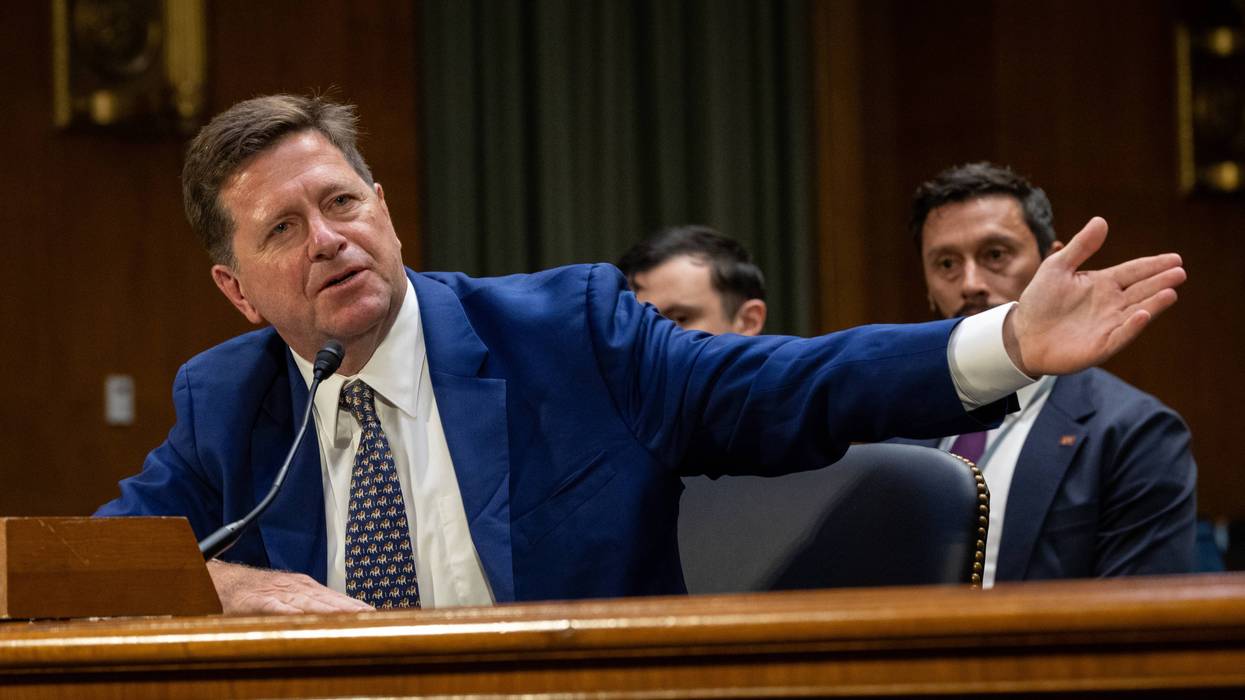
Hundreds of former officials warned that Clayton "has consistently shown an unwillingness to draw clear lines between the interests of the intelligence community and the political interests of the president."
Sen. Susan Collins, widely seen as the most vulnerable Republican senator up for reelection in November, voted on Monday to advance President Donald Trump's pick to lead the US intelligence community as he faced opposition from former national security officials and press freedom organizations.
Monday's 51-43 vote along party lines all but guarantees that Jay Clayton, currently the US attorney for the Southern District of New York, will be confirmed as director of national intelligence on Tuesday.
Collins (R-Maine), who is commonly portrayed as a moderate despite almost always voting with Trump, waved away Clayton's election denial during his Senate confirmation hearing earlier this month, when he refused to say Trump lost in 2020.
"The Office of the Director of National Intelligence does not certify elections, and he made very clear over and over again that Joe Biden had been certified as the winner of the election," Collins told reporters after the hearing. (When facing questions under oath, Trump nominees and officials often say Biden was "certified" as the 2020 winner to avoid directly contradicting the president's false claim that the election was stolen.)
Collins, who is running for a sixth Senate term, went on to say she believes Clayton "brings the experience" to the role and "did a good job" during his confirmation hearing.
Asked Susan Collins about Jay Clayton’s refusal to say Biden won in 2020.
The DNI “does not certify elections, and he made very clear over and over again that Joe Biden had been certified as the winner of the election. I'm not sure what my colleagues were seeking further.” pic.twitter.com/dlZxVS8LwY
— Manu Raju (@mkraju) July 16, 2026
Monday's procedural vote came as hundreds of former US national security and intelligence officials issued an open letter opposing Clayton's nomination, warning that he "has consistently shown an unwillingness to draw clear lines between the interests of the intelligence community and the political interests of the president who nominated him."
"Equally troubling is Mr. Clayton’s defense, during his hearing, of subpoenas issued to four journalists at The New York Times while he served as United States attorney for the Southern District of New York," the letter states. "The director of national intelligence sits at the intersection of secrecy and accountability, deciding what the public may know about the government’s most sensitive activities. A nominee who justifies forcing journalists to testify, instead of recognizing the First Amendment’s protections for a free press, does not demonstrate the sound judgment required for the office."
The Freedom of the Press Foundation (FPF), which also opposes Clayton's nomination, argued Monday that Clayton appears to have lied to lawmakers during his testimony about the subpoenas for Times journalists. The subpoenas targeted journalists who reported on the new Air Force One, a $400 million luxury jet donated by Qatar.
During his Senate testimony, Clayton insisted that he followed "the procedures we have in place to protect the First Amendment and protect the freedom of the press" prior to signing the subpoenas. But Trevor Timm, FPF's executive director, wrote Monday that "this was likely impossible."
"Given the Times’ story came out on a Wednesday and the subpoenas were issued on a Friday (after an hourslong White House meeting discussing the case with FBI Director Kash Patel), there was almost no way 'all reasonable attempts' were made before the subpoenas were issued. These investigations usually take months," Timm wrote. "It sure seemed like false testimony to us."
"But on Friday, the Department of Justice itself seems to have confirmed that Clayton lied to Congress," Timm noted. "In a court hearing in the Times subpoena case, a federal judge castigated government lawyers for an hour for making a multitude of errors when issuing the subpoenas, misleading the court, and not following the law... The DOJ didn’t even attempt to argue they took any investigative steps before issuing the subpoenas. Instead, they claimed there was an “exception” to that rule that allowed them to bypass it entirely, which left the judge flabbergasted."
"Clayton should be immediately called back to the Senate to answer for his seemingly false statement," he added.