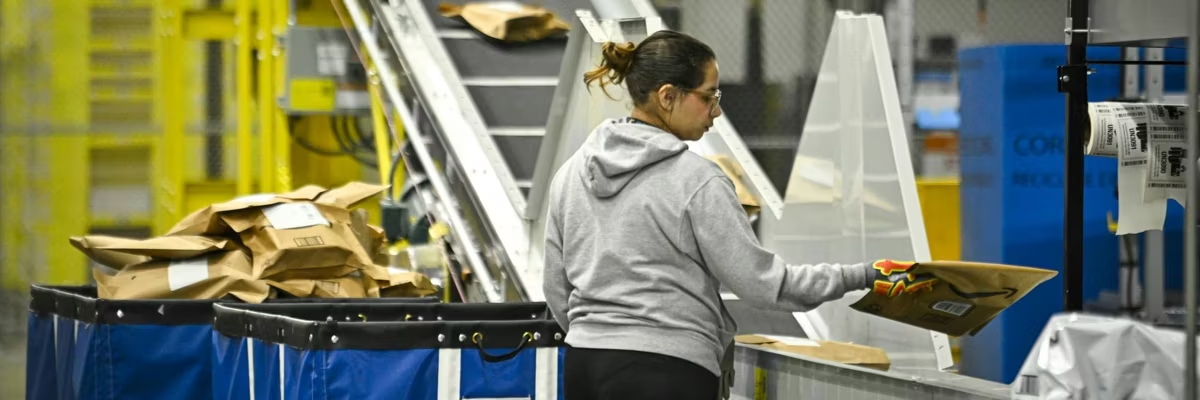
An Amazon employee works to fulfill same-day orders during Cyber Monday, one of the company's busiest days, at an Amazon fulfillment center on December 2, 2024 in Orlando, Florida.
'Starvation Wages' at Giant US Corporations Force Workers to Seek Taxpayer-Funded Aid
"No one who works for a company making billions in profits should be living in poverty," said Sen. Bernie Sanders.
US Sen. Bernie Sanders recently commissioned a government analysis of federal aid programs and how much employees of some of the largest and most politically influential corporations in the country are relying on food and healthcare benefits due to the chronically low wages paid by Amazon, Walmart, and other firms.
On Wednesday, the nonpartisan Government Accountability Office (GAO) released the results of its research, revealing trends that Sanders (I-Vt.), a longtime critic of economic inequality and poverty wages and the ranking member of the Senate Health, Education, Labor, and Pensions Committee, called "beyond unacceptable."
Six years after the GAO first analyzed low-wage workers' use of Medicaid and the Supplemental Nutrition Assistance Program (SNAP), the report found that the number of Amazon employees who required federal assistance has nearly tripled since 2020, despite the fact that the e-commerce giant has increased its annual profits from $11.59 billion to $77.67 billion in that time.
The analysis focused on 11 states—Arkansas, Georgia, Indiana, Maine, Massachusetts, Nebraska, North Carolina, Oklahoma, Rhode Island, Tennessee, and Washington—whose combined populations comprise about one-fifth of the US population.
Last year, 12,346 of Amazon's employees needed SNAP assistance, for which households must earn less than 130% of the federal poverty level to qualify. A family of three would have to make around $35,000 or less to qualify for the program. Millions of people were shut out of the crucial program by the One Big Beautiful Bill Act (OBBBA), which required states to impose strict limits on eligibility.
More than 11,000 Amazon workers also relied on Medicaid last year in the states surveyed.
"Corporations underpay workers, don't provide healthcare, and outsource core worker needs to the government," said the labor-focused media organization More Perfect Union.
While Walmart topped the list of corporations whose employees used Medicaid benefits, as it did in 2020, its share of workers who rely on the two federal programs went up only slightly over the five-year period, while Amazon's share grew significantly.
Amazon spokesperson Rachael Lighty told The Washington Post—owned by billionaire Amazon founder Jeff Bezos—that the company's hiring spree since the coronavirus pandemic contributed to its increased share of Medicaid and SNAP beneficiaries, and noted that Amazon offers "part-time options for those who want them," which makes more employees eligible for the benefits.
But the Post noted that many people who may want full-time employment and the higher wages it offers can only find part-time work. The Federal Reserve Bank of St. Louis has found an increase in part-time employment since the pandemic.
Sanders noted that Walmart increased its annual profits from $14.88 billion in 2020 to $21.89 billion in 2025, but the number of workers who relied on Medicaid grew by 55% to more than 16,000 people in the 11 states sampled by the GAO.
“American taxpayers should not be forced to subsidize the starvation wages of large corporations like Walmart and Amazon," said the senator. "These corporations are making record-breaking profits, paying their CEOs exorbitant compensation packages, and spending billions of dollars on stock buybacks to enrich their wealthy shareholders. It is beyond unacceptable that these corporations, owned by some of the wealthiest people on the planet, are receiving corporate welfare from the federal government."
Rideshare and delivery apps like Uber and DoorDash, which were not significantly featured in the GAO's 2020 report, are now the top employers of people who use SNAP benefits and are in the top three employers of workers on Medicaid.
Nicole Moore, president of Rideshare Drivers United, told the Post that gig workers across the country struggle to make ends meet with "absolutely precarious income."
The analysis comes a year after the passage of the OBBBA, which delivered $4.5 trillion in tax cuts to corporations and the rich and which Republican proponents said was partially focused on eliminating waste and fraud in government programs like Medicaid. The law includes work requirements for the program and is expected to slash $1 trillion from Medicaid over the next decade.
Republicans have intensified their fixation on "fraud" in social services in recent months after fraudulent payments were found in Minnesota's public programs.
Warren Gunnels, the minority staff director for the Senate HELP Committee, said the GAO analysis shows that "the problem isn't the single mom getting $6 a day in food stamps."
"The problem is Jeff Bezos, worth $269 billion, more than doubled his wealth since 2020 while paying wages so low the number of Amazon workers on food stamps and Medicaid nearly tripled," said Gunnels. "Bezos is the welfare queen."
Sanders called on Bezos and the Walton family, which owns Walmart, "to get off of welfare and pay their workers a living wage with good benefits."
"No one who works for a company making billions in profits should be living in poverty," said the senator. "This is especially true after these corporations and their multibillionaire owners received a massive tax break from President Trump’s so-called ‘Big, Beautiful Bill,’ paid for by the largest cuts to Medicaid and nutrition assistance in history.”
We are at a crossroads
This country and this world are at a monumental crossroads. In a few short weeks, US voters will have an opportunity to beat back the forces of fascism and confront the billionaires who are rigging the economy, our media system, and our democracy, making it increasingly impossible for ordinary people to get by. We’re not just talking about the election. We’re talking about what must be done once these fascist elements are vanquished from power. We need a bolder set of solutions than what either major party has so far been willing to offer and a working-class movement ready to fight like hell for it. Trump didn't emerge from nowhere. The conditions that fueled MAGA authoritarianism were created by decades of radical neoliberal economic policies and a corrupt political system dominated by corporate interests. They slashed taxes on the super-rich, promising that the benefits would trickle down. They said giveaways to the corporate titans would make life more affordable for the rest of us. It was all bullshit. And when a bitter, betrayed populace searches for someone to blame, right-wing demagogues have little trouble finding scapegoats. People know when they're being lied to, but you won't hear any of this from the corporate media. Only independent journalism—powered and funded by people who believe in building a better world—can deliver truly trustworthy daily news. Our Fall Campaign is underway, and we need your help. To power our newsroom through the rest of the year, we need to raise $125,000 by midnight on October 31. So if you share our vision, please contribute whatever you can to sustain our work. |
US Sen. Bernie Sanders recently commissioned a government analysis of federal aid programs and how much employees of some of the largest and most politically influential corporations in the country are relying on food and healthcare benefits due to the chronically low wages paid by Amazon, Walmart, and other firms.
On Wednesday, the nonpartisan Government Accountability Office (GAO) released the results of its research, revealing trends that Sanders (I-Vt.), a longtime critic of economic inequality and poverty wages and the ranking member of the Senate Health, Education, Labor, and Pensions Committee, called "beyond unacceptable."
Six years after the GAO first analyzed low-wage workers' use of Medicaid and the Supplemental Nutrition Assistance Program (SNAP), the report found that the number of Amazon employees who required federal assistance has nearly tripled since 2020, despite the fact that the e-commerce giant has increased its annual profits from $11.59 billion to $77.67 billion in that time.
The analysis focused on 11 states—Arkansas, Georgia, Indiana, Maine, Massachusetts, Nebraska, North Carolina, Oklahoma, Rhode Island, Tennessee, and Washington—whose combined populations comprise about one-fifth of the US population.
Last year, 12,346 of Amazon's employees needed SNAP assistance, for which households must earn less than 130% of the federal poverty level to qualify. A family of three would have to make around $35,000 or less to qualify for the program. Millions of people were shut out of the crucial program by the One Big Beautiful Bill Act (OBBBA), which required states to impose strict limits on eligibility.
More than 11,000 Amazon workers also relied on Medicaid last year in the states surveyed.
"Corporations underpay workers, don't provide healthcare, and outsource core worker needs to the government," said the labor-focused media organization More Perfect Union.
While Walmart topped the list of corporations whose employees used Medicaid benefits, as it did in 2020, its share of workers who rely on the two federal programs went up only slightly over the five-year period, while Amazon's share grew significantly.
Amazon spokesperson Rachael Lighty told The Washington Post—owned by billionaire Amazon founder Jeff Bezos—that the company's hiring spree since the coronavirus pandemic contributed to its increased share of Medicaid and SNAP beneficiaries, and noted that Amazon offers "part-time options for those who want them," which makes more employees eligible for the benefits.
But the Post noted that many people who may want full-time employment and the higher wages it offers can only find part-time work. The Federal Reserve Bank of St. Louis has found an increase in part-time employment since the pandemic.
Sanders noted that Walmart increased its annual profits from $14.88 billion in 2020 to $21.89 billion in 2025, but the number of workers who relied on Medicaid grew by 55% to more than 16,000 people in the 11 states sampled by the GAO.
“American taxpayers should not be forced to subsidize the starvation wages of large corporations like Walmart and Amazon," said the senator. "These corporations are making record-breaking profits, paying their CEOs exorbitant compensation packages, and spending billions of dollars on stock buybacks to enrich their wealthy shareholders. It is beyond unacceptable that these corporations, owned by some of the wealthiest people on the planet, are receiving corporate welfare from the federal government."
Rideshare and delivery apps like Uber and DoorDash, which were not significantly featured in the GAO's 2020 report, are now the top employers of people who use SNAP benefits and are in the top three employers of workers on Medicaid.
Nicole Moore, president of Rideshare Drivers United, told the Post that gig workers across the country struggle to make ends meet with "absolutely precarious income."
The analysis comes a year after the passage of the OBBBA, which delivered $4.5 trillion in tax cuts to corporations and the rich and which Republican proponents said was partially focused on eliminating waste and fraud in government programs like Medicaid. The law includes work requirements for the program and is expected to slash $1 trillion from Medicaid over the next decade.
Republicans have intensified their fixation on "fraud" in social services in recent months after fraudulent payments were found in Minnesota's public programs.
Warren Gunnels, the minority staff director for the Senate HELP Committee, said the GAO analysis shows that "the problem isn't the single mom getting $6 a day in food stamps."
"The problem is Jeff Bezos, worth $269 billion, more than doubled his wealth since 2020 while paying wages so low the number of Amazon workers on food stamps and Medicaid nearly tripled," said Gunnels. "Bezos is the welfare queen."
Sanders called on Bezos and the Walton family, which owns Walmart, "to get off of welfare and pay their workers a living wage with good benefits."
"No one who works for a company making billions in profits should be living in poverty," said the senator. "This is especially true after these corporations and their multibillionaire owners received a massive tax break from President Trump’s so-called ‘Big, Beautiful Bill,’ paid for by the largest cuts to Medicaid and nutrition assistance in history.”
US Sen. Bernie Sanders recently commissioned a government analysis of federal aid programs and how much employees of some of the largest and most politically influential corporations in the country are relying on food and healthcare benefits due to the chronically low wages paid by Amazon, Walmart, and other firms.
On Wednesday, the nonpartisan Government Accountability Office (GAO) released the results of its research, revealing trends that Sanders (I-Vt.), a longtime critic of economic inequality and poverty wages and the ranking member of the Senate Health, Education, Labor, and Pensions Committee, called "beyond unacceptable."
Six years after the GAO first analyzed low-wage workers' use of Medicaid and the Supplemental Nutrition Assistance Program (SNAP), the report found that the number of Amazon employees who required federal assistance has nearly tripled since 2020, despite the fact that the e-commerce giant has increased its annual profits from $11.59 billion to $77.67 billion in that time.
The analysis focused on 11 states—Arkansas, Georgia, Indiana, Maine, Massachusetts, Nebraska, North Carolina, Oklahoma, Rhode Island, Tennessee, and Washington—whose combined populations comprise about one-fifth of the US population.
Last year, 12,346 of Amazon's employees needed SNAP assistance, for which households must earn less than 130% of the federal poverty level to qualify. A family of three would have to make around $35,000 or less to qualify for the program. Millions of people were shut out of the crucial program by the One Big Beautiful Bill Act (OBBBA), which required states to impose strict limits on eligibility.
More than 11,000 Amazon workers also relied on Medicaid last year in the states surveyed.
"Corporations underpay workers, don't provide healthcare, and outsource core worker needs to the government," said the labor-focused media organization More Perfect Union.
While Walmart topped the list of corporations whose employees used Medicaid benefits, as it did in 2020, its share of workers who rely on the two federal programs went up only slightly over the five-year period, while Amazon's share grew significantly.
Amazon spokesperson Rachael Lighty told The Washington Post—owned by billionaire Amazon founder Jeff Bezos—that the company's hiring spree since the coronavirus pandemic contributed to its increased share of Medicaid and SNAP beneficiaries, and noted that Amazon offers "part-time options for those who want them," which makes more employees eligible for the benefits.
But the Post noted that many people who may want full-time employment and the higher wages it offers can only find part-time work. The Federal Reserve Bank of St. Louis has found an increase in part-time employment since the pandemic.
Sanders noted that Walmart increased its annual profits from $14.88 billion in 2020 to $21.89 billion in 2025, but the number of workers who relied on Medicaid grew by 55% to more than 16,000 people in the 11 states sampled by the GAO.
“American taxpayers should not be forced to subsidize the starvation wages of large corporations like Walmart and Amazon," said the senator. "These corporations are making record-breaking profits, paying their CEOs exorbitant compensation packages, and spending billions of dollars on stock buybacks to enrich their wealthy shareholders. It is beyond unacceptable that these corporations, owned by some of the wealthiest people on the planet, are receiving corporate welfare from the federal government."
Rideshare and delivery apps like Uber and DoorDash, which were not significantly featured in the GAO's 2020 report, are now the top employers of people who use SNAP benefits and are in the top three employers of workers on Medicaid.
Nicole Moore, president of Rideshare Drivers United, told the Post that gig workers across the country struggle to make ends meet with "absolutely precarious income."
The analysis comes a year after the passage of the OBBBA, which delivered $4.5 trillion in tax cuts to corporations and the rich and which Republican proponents said was partially focused on eliminating waste and fraud in government programs like Medicaid. The law includes work requirements for the program and is expected to slash $1 trillion from Medicaid over the next decade.
Republicans have intensified their fixation on "fraud" in social services in recent months after fraudulent payments were found in Minnesota's public programs.
Warren Gunnels, the minority staff director for the Senate HELP Committee, said the GAO analysis shows that "the problem isn't the single mom getting $6 a day in food stamps."
"The problem is Jeff Bezos, worth $269 billion, more than doubled his wealth since 2020 while paying wages so low the number of Amazon workers on food stamps and Medicaid nearly tripled," said Gunnels. "Bezos is the welfare queen."
Sanders called on Bezos and the Walton family, which owns Walmart, "to get off of welfare and pay their workers a living wage with good benefits."
"No one who works for a company making billions in profits should be living in poverty," said the senator. "This is especially true after these corporations and their multibillionaire owners received a massive tax break from President Trump’s so-called ‘Big, Beautiful Bill,’ paid for by the largest cuts to Medicaid and nutrition assistance in history.”