

SUBSCRIBE TO OUR FREE NEWSLETTER
Daily news & progressive opinion—funded by the people, not the corporations—delivered straight to your inbox.
5
#000000
#FFFFFF
To donate by check, phone, or other method, see our More Ways to Give page.
Daily news & progressive opinion—funded by the people, not the corporations—delivered straight to your inbox.

“Cuba is suffering through a man-made economic and humanitarian catastrophe, caused in significant part by deliberate policy choices of the United States."
Dozens of advocacy groups this week urged House Democratic leaders to force a vote on an existing war powers resolution aimed at endingr President Donald Trump's unauthorized aggression toward Cuba, including his administration's deadly de facto US oil embargo.
“Cuba is suffering through a man-made economic and humanitarian catastrophe, caused in significant part by deliberate policy choices of the United States," 45 groups said in a letter dated September 9 to House Minority Leader Hakeem Jeffries (D-NY) and Foreign Affairs and Rules Committee Ranking Members Gregory Meeks (D-NY) and Jim McGovern (D-Mass.).
"Since January 2026, the Trump administration has imposed an oil blockade that has cut off the island from nearly all fuel imports, allowing only a single tanker to dock over the past seven months alongside minor US sales that are wholly insufficient to sustain the country’s economy and basic services," the letter continues.
"The consequences have been devastating and far-reaching, and the crisis is deepening," the groups stressed. "Cuba has endured at least six nationwide grid collapses this year—at times leaving over 9h million people without power, with outages stretching well beyond 20 hours in much of the country. Fuel shortages have stalled transportation, disrupted food and water supplies, and pushed a once-renowned universal healthcare system toward collapse and the rationing of care."
The groups behind the letter—which include American Friends Service Committee, Center for Economic and Policy Research, Demand Progress, Indivisible, National Nurses United, Pax Christi USA, RootsAction, United Church of Christ, and Win Without War—called for an immediate vote on Rep. Nydia Velázquez's (D-NY) Cuba War Powers Resolution, H.Con.Res. 106.
The privileged resolution—which can be called for a vote without approval from House Speaker Mike Johnson (R-La.)—would direct the removal of US armed forces from hostilities within or against Cuba absent congressional authorization. The measure targets the de facto US oil blockade on Cuba, which proponents argue amounts to unauthorized hostilities against Cuba.
Velázquez's resolution came amid the Trump administration's escalating aggression against Cuba, including threats to attack or even invade the island, economic strangulation including the oil embargo and decades-old blockade that critics said were causing the deaths of infants and sick people, and the US Department of Justice indictment of former Cuban President Raúl Castro for his alleged role in the 1996 shoot-down of planes operated by a hostile US-based counterrevolutionary group following repeated warnings that they had violated Cuban airspace.
In April, US senators voted 51-47—with Democratic Sen. John Fetterman of Pennsylvania joining all but two of his Republican colleagues, Sens. Susan Collins of Maine and Rand Paul of Kentucky—to block a war powers resolution introduced in March by Sens. Tim Kaine (D-Va.), Adam Schiff (D-Calif.), and Ruben Gallego (D-Ariz.).
"Despite falling short of the majority, this was among the strongest votes in congressional history against the use of blockades, and one of the most important stands Congress has taken against US economic sanctions toward Cuba in over six decades," the 45 groups said in their letter. "The House should take a similarly forceful action at this crucial moment."

"The Missouri Supreme Court should throw the secretary of state in jail if this extremist continues to defy the law and multiple court orders," said US House Minority Leader Hakeem Jeffries.
Democracy defenders in Missouri and across the United States celebrated on Thursday after the US Supreme Court delivered its second blow to President Donald Trump's gerrymandering quest in as many days, tossing out the state GOP's desired congressional map.
The order had no noted dissents, despite the court's right-wing supermajority, which includes three Trump appointees. Among them is Justice Brett Kavanaugh, who had rejected the GOP's emergency effort to uphold the map on Tuesday evening, as US District Judge Stephen Clark, another appointee of the president, said that Missouri can't revert to its old map for the November midterms.
The high court's new order appears to allow the state to use the old map for the upcoming elections, in which Trump's Republican Party is trying to hold on to its narrow majorities in both chambers of Congress amid widespread voter dissatisfaction with an affordability crisis fueled by the president's tariff regime and illegal war on Iran.
On the heels of the Texas GOP's map-rigging effort last year, Missouri Republicans targeted the 5th Congressional District—currently held by Rep. Emanuel Cleaver (D), who has joined hundreds of thousands of state voters in opposing the new political lines.
Cleaver called Thursday's decision "a win for justice. A win for democracy. A win for the people of Missouri."
"It is my hope that state officials will start following court orders and end this shameful attempt to break Missouri law and silence Missouri voters," he said.
Opposition to the map has been spearheaded by the nonpartisan coalition People Not Politicians Missouri, whose executive director, Richard von Glahn, declared Thursday that "the law is the law, the Missouri Constitution is clear, as was the Missouri Supreme Court."
"Over 305,000 Missouri voters—Republicans, Democrats, and Independents—took action to block this political power grab last fall. People, not politicians, will have the final say when they vote NO on Proposition A this November," he continued, referring to a veto referendum on the GOP's map.
Von Glahn also took aim at Missouri's Republican secretary of state, Denny Hoskins, who faces a contempt hearing at the state's top court, saying that he "has shown that he cannot effectively do the job he was elected to do—administer elections."
"First he refused to certify a referendum the Missouri Supreme Court unanimously said he had no legal basis to block," Von Glahn explained. "Then, even after that court barred the 2025 map outright, he told local election officials to use it anyway, leaving election clerks scrambling with early voting two weeks away. That isn't leadership, it's chaos of his own making, and it's why he's now facing a contempt hearing in front of the very court whose order he chose to defy."
"Missourians don't need a secretary of state who manufactures confusion; they need one who follows the law," he added. "Denny Hoskins has had every chance to do that and chose not to. The courts have settled this, now it's up to Missouri voters to finish the job and vote NO on Proposition A."
US House Minority Leader Hakeem Jeffries (D-NY) also called out Hoskins after the Thursday decision, suggesting on social media that "the Missouri Supreme Court should throw the secretary of state in jail if this extremist continues to defy the law and multiple court orders."
"You lost," he said. "The people of Missouri have won. It's over."
The Missouri Supreme Court on Thursday found that Hoskins was in contempt of court for defying an order blocking the new map, but also that he is now in compliance because he directed the use of the 2022 districts.
This article has been updated with comment from US Rep. Emanuel Cleaver (D-Mo.) and Adam Cochran, and with the Missouri Supreme Court's decision.

"They're afraid to get honest about who they really work for here. Spoiler alert: It's not working people."
Rep. Delia Ramirez on Tuesday hit back at colleagues in the US House of Representatives who voted for a resolution condemning socialism "in all its forms."
During a speech on the House floor, Ramirez (D-Ill.) slammed the anti-socialism resolution, which passed with the support of eight Democrats joining all Republicans, as a meaningless distraction.
"Today my colleagues thought it was a good use of people's time... to come after a working people's platform and the people working to make that platform a reality," Ramirez said. "You know why? Because they're afraid to get honest about who they really work for here. Spoiler alert: It's not working people."
Whether it’s “socialism”, a Twitch streamer, working-class candidates, or immigrants, my colleagues always have a boogeyman to condemn… Why? They're afraid to be honest about who they really work for and spoiler alert: it's not working people.
I call on my colleagues to put… pic.twitter.com/r4k4KWZg2S
— Congresswoman Delia C. Ramirez (@repdeliaramirez) September 1, 2026
The Illinois Democrat rattled off a list of Republican policies that benefit big corporations and the wealthy at the expense of working people, including cuts to Medicaid and support for President Donald Trump's illegal war with Iran.
Ramirez then accused Republicans of pushing the resolution "because you're so afraid of working-class people coming into the next Congress" after the 2026 midterm elections.
"So let me be clear," she concluded. "Not only do I call on my colleagues to vote against this stupid resolution... but also to put this much energy into creating a world, a system that actually works for working people."
Ramirez was far from the only Democrat to rip the anti-socialism resolution.
Rep. Mark Pocan (D-Wis.) likewise condemned the "stupid resolution," which he said "ignores Americans who are more concerned about the cost of living than obsessing about socialism."
Rep. Valerie Foushee (D-NC) suggested that a better use of Congress' time would be to "condemn the 34-count felon in the White House, not a bunch of people who just want universal healthcare."
Darializa Avila Chevalier, the Democratic nominee for the US House seat in New York's 13th congressional district, slammed the eight Democrats who voted with Republicans to pass the resolution.
"Democrats love talking about a 'big tent,' but then they vote in line with Republicans hell-bent on destroying our democracy," she wrote. "This resolution was aimed squarely at democratic socialists like me."
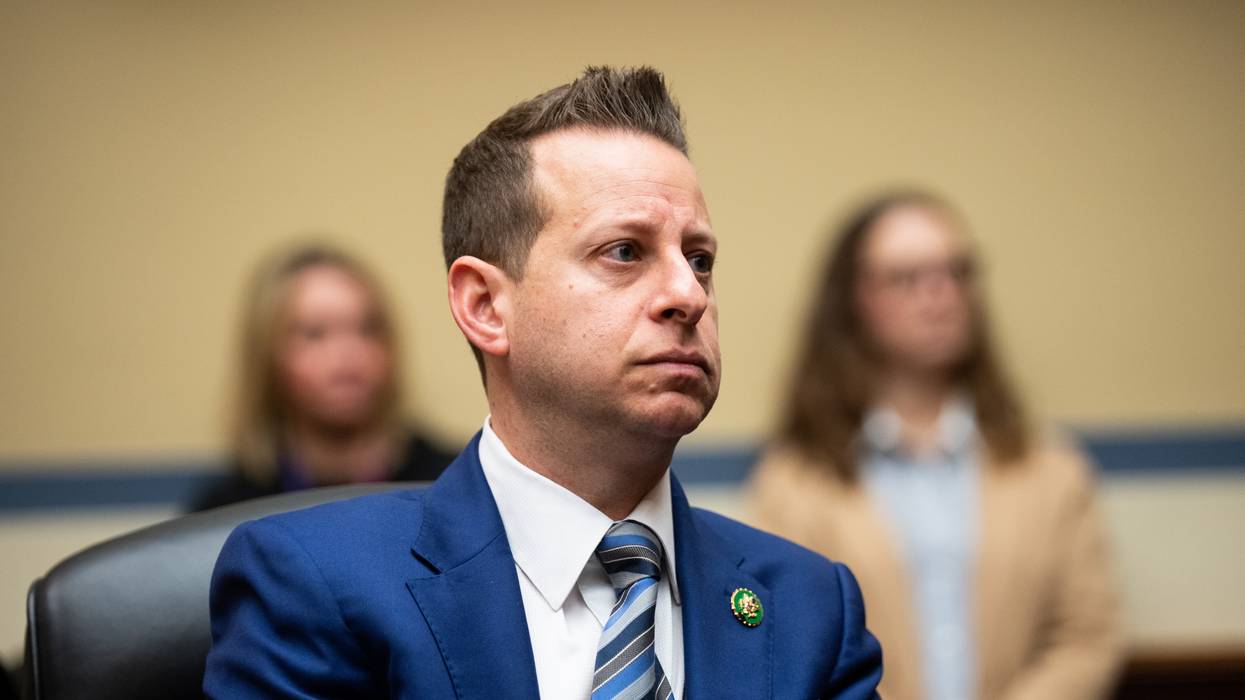
"How much damage will Democratic leaders cause to their own brand and party for AIPAC money?" asked one critic.
Progressive and pro-Palestine critics on Tuesday accused House Democratic leaders of ignoring the majority of party voters who oppose US military aid to Israel by appointing one of the most pro-Israel members of Congress as the top Democrat on a key Mideast subcommittee.
Rep. Gregory Meeks (D-NY), the leading Democrat on the House Foreign Affairs Committee, announced the appointment of Rep. Jared Moskowitz (D-Fla.) as ranking member of the Middle East and North Africa Subcommittee. Rep. Debbie Wasserman Schultz (D-Fla.) was assigned to the Oversight and Intelligence Subcommittee, Mark Pocan (D-Wis.) joined the Africa Subcommittee, and Wesley Bell (D-Mo.) was named to the Western Hemisphere Subcommittee.
Moskowitz thanked Meeks and House Minority Leader Hakeem Jeffries (D-NY) on social media "for this important responsibility" and, in a separate post, vowed to "work to strengthen America’s relationships with Israel and our Gulf allies, expand regional peace, advance American diplomacy, and ensure our foreign policy is grounded in strength, security, and reality."
During his two terms in Congress, Moskowitz—who last week survived a primary challenge by pro-Palestine progressive Oliver Larkin—has repeatedly argued against conditioning armed aid to apartheid Israel on compliance with international law or protection of Palestinian civilians amid the ongoing genocide in Gaza and Israel's illegal occupation, colonization, and ethnic cleansing in the West Bank.
Moskowitz was one of only 12 Democrats who voted for a 2023 Republican aid package to Israel—which receives billions of dollars in annual US funding—as the Israeli military killed thousands of Palestinian civilians in Gaza following the October 7, 2023 Hamas-led attack.
Critics argued that placing one of Congress’ most outspoken supporters of Israel in a key Middle East policy position shows that Democratic leadership remains badly out of step with its own voters, a majority of whom concur with a United Nations commission of inquiry, human rights groups, scholars, and around 20 national governments who say Israel is committing genocide in Gaza.
Moskowitz denies the Gaza genocide, has conflated criticism of Israeli crimes with hatred of Jews, and was denounced by House progressives including Rep. Rashida Tlaib (D-Mich.), the only Palestinian American in Congress, for authoring an amendment to ban US officials from using State Department funds to cite official Gaza casualty figures—which now include more than 250,000 Palestinians killed, wounded, or missing during Israel's onslaught.
Meeks' appointments come at a time when 3 in 4 Democratic voters oppose US aid to Israel—up from just 45% three years ago—and after the issue was a factor in former Vice President Kamala Harris' defeat by President Donald Trump in the 2024 presidential election.
In response to Moskowitz's appointment, the progressive organizing group Demand Progress issued a statement noting that the congressman "has consistently opposed placing conditions on military aid to Israel, repeatedly voted against the majority of House Democrats to sanction International Criminal Court officials, and earlier this year said he would oppose an Iran war powers resolution."
Demand Progress senior policy adviser Cavan Kharrazian said:
By making a hard-line Israel supporter their point person on Middle East policy, House Democratic leaders are doubling down on a failed approach to Israel that shows contempt for the clear and growing majority of Democratic voters who want to stop cutting blank checks for the Israeli government. Donald Trump’s ongoing wars in the Middle East and his commitment to keeping the US joined at the hip to Israel are wildly unpopular and have been a disaster for the nation. Elevating someone who consistently sides with Trump in support of Israel, and who has a long record as an Iran hawk, represents clear political malpractice on behalf of House Democratic leaders.
Palestine defenders and Democrats concerned about the possible fallout of elevating an Israel hawk to a top subcommittee post as the party seeks to win back control of Congress in November's midterm elections bdenounced the appointment of Moskowitz.
ReThinking Foreign Policy president Mitchell Plitnick called Meeks' move "very bad news."
"Moskowitz is a completely inappropriate choice, given how wildly out of step he is with Democratic voters on Mideast issues," he said on X. "It's yet another indication of why it is so desperately important that Democratic 'leaders' like Hakeem Jeffries and Gregory Meeks be replaced as soon as possible."
Erik Sperling, executive director at Just Foreign Policy, called the decision to appoint Moskowitz "shocking."
"Meeks and Jeffries are apparently intending to signal that the anti-war and pro-Palestinian movements are unwelcome in the [Democratic] Party?"
Writer Wajahat Ali asked on X, "How much damage will Democratic leaders cause to their own brand and party for AIPAC money?"
Ali was referring to the American Israel Public Affairs Committee, whose campaign contributions have been a deciding factor in electing pro-Israel candidates to Congress and defeating those who advocate for Palestinian rights. So far, AIPAC has poured more than $100 million into the 2026 midterm elections—including around $30 million against Michigan Democratic US Senate nominee Abdul El-Sayed.
According to the watchdog group Track AIPAC, Moskowitz has received $833,288 in campaign contributions from the Israel lobby over the course of his career, Wasserman Schultz has taken $1,542,327, and Bell—who ousted former Rep. Cori Bush (D-Mo.)—a staggering $18,126,578. Pocan, a pro-Palestine progressive, rejects AIPAC funding.
As for Jeffries and Meeks, Track AIPAC reports the former has taken $1,495,709 and the latter $986,946 in campaign contributions from the Israel lobby.
The local grassroots group NY Dumps AIPAC lamented Meeks' appointment of what it called "one of the most Islamophobic genocide cheerleaders in Congress to be the top House Dem overseeing Middle Eastern foreign policy."
"In doing so, Meeks is compromising world peace for the sake of AIPAC," the group said.
Some observers, including Zeteo News reporter Prem Thakker, noted that Tuesday's moves followed Jeffries' recent secret meeting with Jared Kushner, Trump's son-in-law and special envoy for peace missions.
Responding to Moskowitz's promotion, Matt Duss, executive vice president at the Center for International Policy and a former foreign policy adviser to US Sen. Bernie Sanders (I-Vt.), highlighted polling published Monday by the Institute for Middle East Understanding Policy Project showing that "Democrats in the first six states to vote in the 2028 presidential primary overwhelmingly demand sanctions and a total weapons embargo against Israel."
"At what point," asked Duss, "can Democratic voters finally have foreign policy committee leadership that actually represents the party’s anti-war majority instead of its small and thankfully dwindling hawkish minority?"
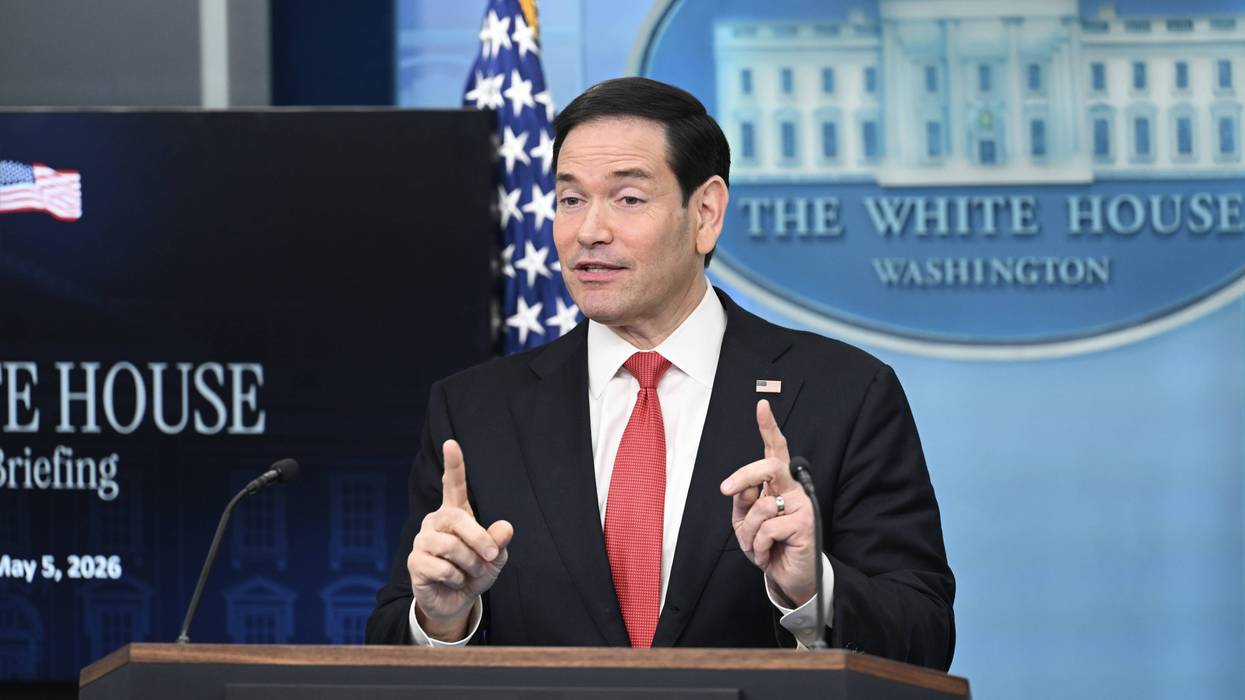
"We are deeply troubled by public commitments to deploy the full force of the State and Treasury departments against loosely defined 'far-left networks' and their alleged 'enablers.'"
Dozens of Democrats in the US House of Representatives this week announced a congressional inquiry into the use of a widely decried memo from President Donald Trump to persecute "political dissent" and target "left-leaning political groups."
Democratic Reps. Jim McGovern (Mass.), Ayanna Pressley (Mass.), and Delia Ramirez (Ill.) revealed Tuesday that they, along with over 20 others, wrote to Secretary of State Marco Rubio and Treasury Secretary Scott Bessent earlier this month to demand answers about the recent "Ministerial on the Resurgence of Political Terrorism" and directives under National Security Presidential Memorandum 7 (NSPM-7).
"Specifically, we are alarmed by the Department of State's new ideologically driven visa restriction policy and the Department of Treasury's pledged financial enforcement mechanisms directed against civil society," they wrote. "These policies dramatically escalate the administration's deliberate and targeted attempts to silence any person, organization, or institution critical of its policies and abuses of power on a global scale."
"We are deeply troubled by public commitments to deploy the full force of the State and Treasury departments against loosely defined 'far-left networks' and their alleged 'enablers' and urge you to immediately reverse course," the lawmakers continued. "Rather than relying on law enforcement data—which consistently identifies right-wing violent extremists and white supremacist organizations as the predominant domestic terrorism threat—this administration has instead taken actions that manufacture an ideological enemy."
The visa policy "bars foreign nationals from entry who 'finance, recruit, incite, or otherwise enable terrorist, violent, and criminal far-left terrorist networks' and defines 'far-left terrorist networks' as those with explicit aims to 'undermine the political foundations of free and self-governing societies,'" the letter details. "This rhetoric and policy embody the core characteristics of fascist statecraft—using the security apparatus of the state to repress and criminalize political opponents and dissenters rather than specific violent acts."
The letter notes the impacts of the administration's policies beyond the United States, warning that "seeking to export an ideological mandate to more than 65 countries creates a dangerous precedent that authoritarian governments will eagerly exploit to delegitimize and criminalize political dissent and justify their own crackdowns on peaceful opposition."
"Foreign nationals fleeing political persecution abroad—including persecution by governments that label peaceful dissidents 'leftist terrorists' to discredit them—may find themselves barred from the United States under the very same vague and subjective standard," the lawmakers wrote. "Expanding transnational intelligence-sharing under this ill-defined and hyper-politicized definition of violent extremism opens the door to transnational repression—including cross-border monitoring and harassment—of international activists, researchers, and political dissidents, as well as potentially any individual within their networks."
"We also risk fracturing critical alliances with governments whose own laws strictly protect political speech, civil liberties, and human rights—protections that these very policies are undermining here at home," the Democrats stressed.
The letter also calls out White House Deputy Chief of Staff Stephen Miller's description of leftists as "the enemies of civilization" and a "cancer" that can "destroy a society," as well as Bessent's comparison of leftists to the Islamic State and al-Qaeda—when he said that "the unified front between international Marxism and the radical Islamic movement need not share the same ultimate vision to share the same immediate enemy of free and self-governing societies."
Rubio has similarly called leftists "the enemies of civilization" and recently faced criticism for a "McCarthyite" State Department report claiming that the Cuban government has, for decades, "infiltrated the highest reaches of the US government, recruited and cultivated generations of American activists, backed an unprecedented wave of left-wing terrorism on American soil, and carried out one of the most durable and damaging foreign intelligence penetrations in American history." The document is seen as a signal that Trump may deliver on his threat to try to take over the island nation by force.
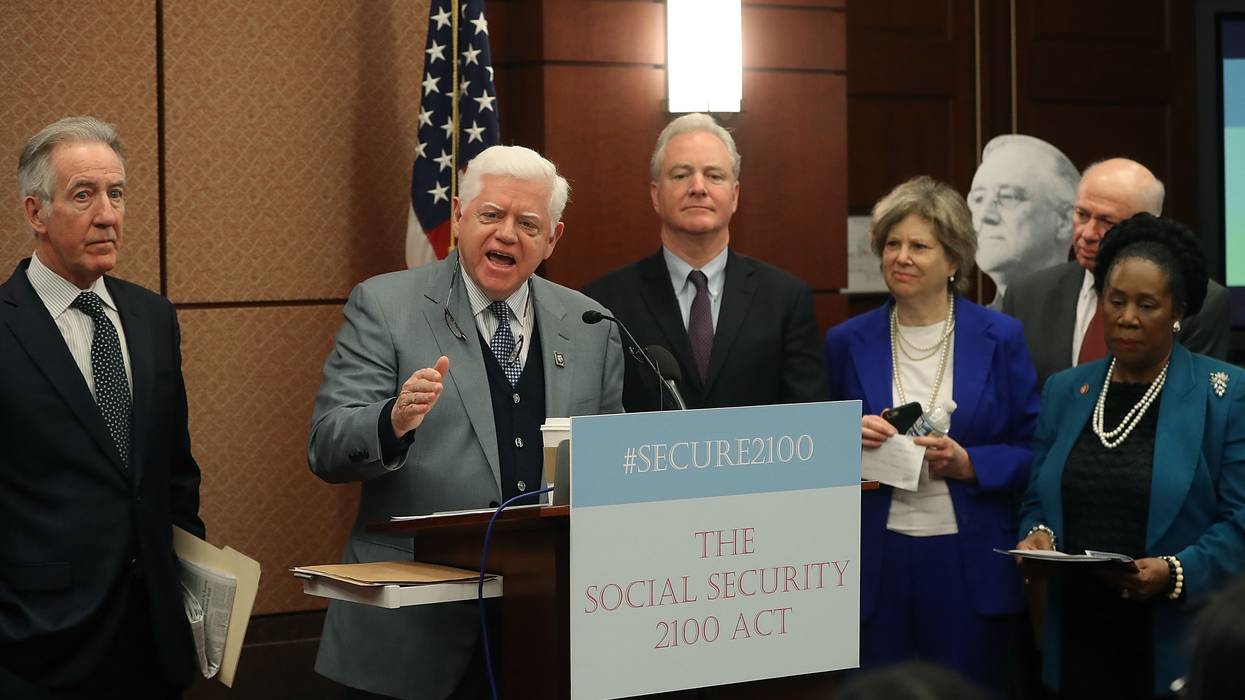
Larson understands how essential it is to protect and expand Social Security’s modest benefits, and he has the road map needed to get there.
Democratic Connecticut Congressman John Larson is a bulldog on behalf of the over 70 million Americans who rely on Social Security’s earned benefits, and the millions more Americans who will rely on those benefits in the future. As advocates for Social Security, who represent seniors, working families, and people with disabilities, we have had the opportunity to work alongside Rep. Larson. We can testify to the depth of his commitment: When it comes to fighting for Social Security, no one has worked harder than Rep. Larson.
A determined and relentless champion of Social Security beneficiaries, Larson has consistently pounded the pavement in his outreach to members across the entire ideological reach of the Democratic Party from the progressive Squad to moderate New Democrats to Democratic leadership and virtually everyone in between. In the last Congress, Larson’s Social Security 2100 Act earned in the last Congress support from over 90% of House Democrats, representing all corners of the Democratic coalition. His legislation would keep Social Security strong for decades to come, and increase benefits for everyone.
Rep. Larson refuses to give up. When faced with a political consensus that assumed it was necessary to cut Social Security’s hard-earned benefits, Larson worked to change the entire conversation about Social Security. Thanks to his hard work, Democrats are now united around strengthening Social Security by making the wealthy pay their fair share, and even some Republicans are beginning to come on board. Larson is working closely with Democratic Minority Leader Rep. Hakeem Jeffries (NY) on plans to bring a Social Security expansion bill up for a vote once Democrats regain control of the US House.
Importantly, Larson has gone face to face with Elon Musk’s so-called “Department of Government Efficiency” and has stood up to them, fighting for every inch when it comes to protecting Social Security from vicious DOGE attacks.
Larson understands that Social Security’s future is a question of values, not affordability.
Rep. John Larson’s enviable ability to propel a positive, far-reaching vision in the public debate, while working pragmatically with his colleagues to ensure consensus, is a rare combination of attributes. Larson understands how essential it is to protect and expand Social Security’s modest benefits, and he has the road map needed to get there.
One thing is certain: Congress must act on Social Security during the next few years. Without action, Social Security faces an automatic benefit cut of roughly 20% around the year 2032. Larson has a crucial role to play in ensuring that Congress addresses this the right way—by making the wealthy pay in at the same rate as the rest of us.
He will lead the charge. When the Democrats win back the gavel in the House of Representatives, Larson will chair the Social Security Subcommittee of the all-powerful Ways and Means Committee. That comes from his seniority. Whether Social Security is expanded or cut will be decided by the leaders in Congress. His voice, together with his knowledge, his tireless work effort, and his personal connections to colleagues achieved over his years of service, will make the difference whether benefits are increased or cut.
Larson understands that Social Security’s future is a question of values, not affordability. He possesses the moral vision to fight for the type of society that treasures everyone, especially people living through their most difficult and vulnerable moments. By pairing this sense of direction and purpose with a canny ability to understand and persuade his colleagues, Larson is indispensable to make sure legislation to protect and expand Social Security goes the distance.

One group said the people of Detroit "will soon have a representative who prioritizes the people of the district over Israel’s genocide."
Michigan state Rep. Donavan McKinney has defeated incumbent Congressman Shri Thanedar in Tuesday's 13th Congressional District Democratic primary, delivering yet another rebuke to corporate-backed Democrats and their support for Israel as it continues its US-backed genocidal assault on Gaza.
The Associated Press called the race for McKinney (D-11) just before 10:00 am local time on Wednesday, with preliminary results showing the 34-year-old Detroit sonative received 51.9% of the vote, while Thanedar—whose close ties to corporate interests made him a frequent target of progressive criticism—received 48.1%, with 99% of all votes tallied.
McKinney—a 34-year-old organizer backed by social democrats including US Sen. Bernie Sanders (I-Vt.) and Rep. Rashida Tlaib (D-Mich.)—ran a campaign centered on working-class issues like affordable housing, healthcare, labor rights, and environmental justice.
He also sharply criticized US support for Israel's war in Gaza—which a United Nations Commission of Inquiry last year called a genocide—joining a growing number of progressive candidates calling for an end to the billions of dollars in annual armed aid the US provides Israel and a permanent ceasefire. His stance won him widespread support in a district with a significant and growing Arab American and Muslim population.
Congratulations to @donavanmckinney.bsky.social Mi-13 will soon have a representative who prioritizes the people of the district over Israel's genocide.Donavan is a real fighter who doesn't just talk about change, he delivers it!Let’s go!!!
[image or embed]
— PAL PAC (@votepalpac.bsky.social) August 5, 2026 at 7:08 AM
“Detroit, I am honored beyond measure to be your Democratic nominee to represent the Mighty 13th in Congress," McKinney said in a statement published by Michigan Advance. "I am so proud that our community is sending me to Congress to fight for a better future—because that means our movement has shown them a fighter is what they truly deserve in Washington."
“Today, we showed why being always with the people is more than a slogan—it’s a roadmap for the Democratic Party on how to move forward to defeat the fascism and divisiveness harming our country, and to deliver the leadership the Mighty 13th deserves," he added. "Taking back our seat and taking back our power has always been at the core of our movement, and I’m so excited for all that our community will accomplish together.”
Democratic Socialists of America congratulated McKinney—a DSA member—in a Bluesky post touting his progressive platform.
Congratulations to Donavan McKinney on winning his congressional primary, unseating a millionaire AIPAC stooge! Donavan is a former union member fighting to get money out of politics, a green new deal, and union jobs. @donavanmckinney.bsky.social @detroitdsa.bsky.social
[image or embed]
— Democratic Socialists of America (@demsocialists.bsky.social) August 5, 2026 at 7:33 AM
Indivisible, which organizes against what it calls a "fascistic clown show of a regime"—the Trump administration—hailed McKinney's victory as "a huge win for working families."
"In addition to overcoming millions in outside spending, Donavan defeated a multimillionaire incumbent who enriched himself in office and voted to enrich [President Donald Trump]," the group added. "This is how we build a better Democratic Party!"
McKinney's victory came amid a wave of wins for progressives in Michigan and across the country.
Michigan voters also nominated progressive Abdul El-Sayed for the US Senate after he narrowly defeated Congresswoman Haley Stevens (D-Mich.) despite tens of millions of dollars in outside spending, much of it from pro-Israel groups like the American Israel Public Affairs Committee (AIPAC) and its United Democracy Project.
Meanwhile, Sunrise Movement co-founder Will Lawrence won the Democratic nomination in Michigan's battleground 7th Congressional District, underscoring what supporters called the strength of climate-focused and working-class organizing.
Progressive candidates also notched victories in several Michigan state legislative contests backed by the DSA, Working Families Party, Our Revolution, and other left-leaning groups.
In metro Detroit, Chris Gilmer-Hill unseated incumbent state Rep. Helena Scott (D-8) after running on a platform centered on labor rights, housing affordability, and universal healthcare. In a closely watched state Senate primary, Abbas Alawieh—a co-founder of Michigan's Uncommitted movement, which emerged in protest of the Biden administration's support for Israel's annihilation of Gaza—handily won the Democratic nomination over state Rep. Erin Byrnes (D-15). Joanna Whaley, a former megachurch pastor, is set to become the first transgender member of the state Legislature after comfortably winning her race against opponents including former state Rep. Frank Liberati (D-13), who tried to disqualify Whaley because she did not run under her deadname.
Reacting to the wins, Our Revolution executive director Joseph Geevarghese said Wednesday that "Michigan voters rejected the idea that elections can simply be bought, and they rejected a politics that asks them to settle for the status quo."
Tuesday's victories in Michigan point to a Democratic electorate that is apparently becoming more willing to reject candidates aligned with corporate donors and AIPAC in favor of unapologetic working-class progressives. While establishment Democrats and outside groups continue to wield enormous financial power—and have scored victories of their own, including incumbent Rep. Wesley Bell's defeat of former Congresswoman Cori Bush in Missouri—Tuesday's wins added to mounting evidence that working-class, pro-Palestine candidates are reshaping the Democratic agenda from coast to coast, including in crucial battleground states.
"Ordinary people understand what's happening in this country. They know the economy is rigged against working families," Geevarghese said. "They know our campaign finance system allows billionaires and special interests to buy power. And they're tired of a political establishment that too often protects that broken system instead of confronting it."

Lawrence said his win showed that voters "are tired of Silicon Valley billionaires and DC insiders determining the future of our towns and our country."
Dr. Abdul El-Sayed was not the only Michigan progressive to take down a well-funded establishment opponent in a Democratic primary on Tuesday night.
In central Michigan’s 7th Congressional District, Democratic voters picked William Lawrence, a co-founder of the youth-led Sunrise Movement climate activist group, to represent them over two centrist candidates—retired Navy SEAL Matt Maasdam and former ambassador to Ukraine Bridget Brink—as the party seeks to flip one of the nation’s most vulnerable GOP-controlled seats in November.
Many of the same obstacles El-Sayed faced en route to his party's Senate nomination were also faced by Lawrence, who triumphed over a split opposition with nearly 44% of the vote on Tuesday.
He faced over $4.5 million in outside spending aimed at defeating him and boosting his opponents, according to Federal Election Commission filings, including over $1 million from a pass-through group for Democratic Majority for Israel.
While rejecting corporate PAC money, Lawrence championed Medicare for All, legislation to curb money in politics, and an end to arms sales to Israel.
But he also distinguished himself by harnessing voters’ growing fear and frustration with the expansion of artificial intelligence data centers, framing them as an imposition by unaccountable “tech billionaires” without regard for the public’s concerns about rising energy prices, diminishing water supplies, and pollution.
According to Politico’s E&E News, 12 data centers are already operating or have been proposed in Michigan’s 7th District alone. In contrast with his opponents, Lawrence took the clearest position on the issue, calling for a 12-month federal moratorium on new data-center construction and joining local opposition movements as proposed sites sprang up across his district.
“Tonight the people of Michigan’s 7th District sent a clear message: They are tired of Silicon Valley billionaires and DC insiders determining the future of our towns and our country,” Lawrence said in a statement following his victory. “They want an unbought representative who isn’t afraid to stand up to leaders of both parties and fight for working people.”
Lawrence will seek to knock off first-term Republican Rep. Tom Barrett in November's general election, whom the Cook Political Report describes as one of the most vulnerable GOP incumbents as Democrats seek to flip the House.
While Democratic politicians have been much more vocal opponents of data centers, stopping the expansion of the facilities has proven to be a bipartisan issue among the electorate, including in Michigan.
In an April poll sponsored by the Detroit Regional Chamber, 55% of likely general election voters said they'd oppose a data center within 25 miles of their home, while just 33% said they'd be open to it. While nearly two-thirds of Democrats expressed opposition, so did more than half of Republicans.
It's likely that fierce opposition to data centers will remain central to Lawrence's broader message about fighting a cost-of-living crisis increasingly tied to an unpopular President Donald Trump.
“I think anyone who has concerns should come out and knock on doors,” Lawrence recently told The New York Times when asked about his ability to garner support from swing voters. “What they’ll hear is people are furious about data centers. Trump voters are getting off the Trump train because of Iran. Nobody could afford the essentials. They’re sick of corporate-funded politicians. That’s why we’ve built the momentum.”
Like El-Sayed’s battle with Republican former Rep. Mike Rogers, Lawrence’s bid to oust Barrett, a MAGA hardliner with a deep stable of wealthy backers, will prove yet another front in the ongoing war between the insurgent left wing of the Democratic Party and its establishment over whether tacking to the center is necessary to win competitive races against Republicans.
Lawrence's win is also a victory for Sen. Bernie Sanders (I-Vt.), who campaigned with him, El-Sayed, and the progressive Michigan state Rep. Donovan McKinney, who ousted incumbent US Rep. Shri Thanedar on Tuesday in the 13th Congressional district in Detroit.
Lawrence, whose campaign knocked on over 100,000 doors across the district during the primary, said his victory on Tuesday night showed that "only organized people can beat organized money."

"Brian Poindexter—a working-class ironworker and champion for all—is going to make sure Max Miller doesn't get another term in the halls of power," said one Democratic campaigner.
Democratic congressional candidate Brian Poindexter on Sunday joined a growing chorus of people across the political spectrum arguing that Republican Rep. Max Miller shouldn't remain a member of the US House of Representatives over domestic abuse allegations.
"No one credibly accused of holding a gun to his wife's head and breaking their 2-year-old daughter's collarbone belongs in the halls of power," said Poindexter, a union ironworker challenging the GOP incumbent in Ohio's 7th Congressional District, in a post on the platform X. "Help defeat Max Miller in November."
Poindexter's social media post, which links to his fundraising webpage, came after he told Ohio journalist Jessie Balmert on Saturday night, "These allegations are very serious, and I don't know if he should resign or not, but what I would say is that if these allegations are true, he should be in jail."
The Democrat's post also came as Miller wrapped up a nearly 20-minute livestream on X in which he makes clear that he is not dropping out of the race (the deadline for Republicans to replace him on the ballot is Wednesday). Miller also denied abusing his ex-wife Emily Moreno—the daughter of US Sen. Bernie Moreno (R-Ohio)—and their child.
Emily Moreno discovered bruises on their young daughter and took her to the emergency department. As Mother Jones' Abby Vesoulis reported last month, "Records of the investigation into potential child abuse show that Moreno told detectives that Miller had previously thrown hot water at her, shoved her, and held a gun to her head; therefore, she couldn't rule out that Miller caused their daughter’s fracture."
The Cuyahoga County Division of Children and Family Services found that any potential child abuse was unsubstantiated—meaning there wasn't enough evidence to determine neglect or abuse—but Mother Jones reviewed legal filings in which "Moreno alleges that Miller was an absentee father and abusive husband whose history of violence and misconduct dates back more than a decade."
Responding to the Sunday morning video, Emily Moreno's spokesperson, Stefan Mychajliw, said that "it is shameful that Max Miller decided to go on a bizarre and lie-filled rant about his ex-wife to desperately try to save his political career. There is a documented trove of evidence that Miller has a history of violent and dangerous behavior and no amount of victim shaming will change that."
"It is despicable and abhorrent that Miller lied on an unhinged and humiliating video for their daughter to watch one day," the spokesperson continued. "No loving parent would have ever used their daughter as a PR pawn to save their own political career. Miller can lie and spin on X, but he cannot do so under oath in a court of law. We are confident that justice will prevail in court."
Her senator father also weighed in with a lengthy post on X, saying in part that "our priority has always been protecting our daughter and our granddaughter. Out of concern for the safety of my family, I hoped to keep this matter private, but Max Miller’s increasingly erratic and dangerous behavior has made that impossible... He should not serve in the House of Representatives. I believe Max Miller needs to seek professional help to end the clear pattern of abuse he has left in his wake."
Miller replied to the senator directly, writing: "If my daughter said the same thing to me, I personally wouldn't wait two years before holding him accountable. You know this isn't true, and the only reason you are speaking out now is to hide from your own media circus. This is all political."
As Mother Jones' Vesoulis noted Sunday:
Emily Moreno is not the only woman that Miller has been accused of perpetrating violence against. In 2021, Politico cited multiple witnesses in reporting that Miller had thrown a woman down the stairs after she rejected his advances. That woman recently told Mother Jones that the night in question remains “one of the more traumatic nights of my life.”
During the first Trump administration, Miller’s behavior toward women also came under scrutiny when former White House press Secretary Stephanie Grisham accused a fellow Trump staffer of assaulting her. Miller sued Grisham for defamation at the time, stating in his lawsuit that people knew she was referring to him. Miller denied hurting her, too, and the two reached a confidential settlement in the lawsuit. Grisham is now suing Miller for violating the terms of that settlement.
The video sparked a fresh wave of support for Poindexter. Cameron Kasky, a mass shooting survivor and gun violence prevention advocate who previously ran for Congress as a Democrat, said Sunday: "Miller stated: 'If I had assaulted her, would she have offered to cook me dinner six days later?' Ruin this man's life. And donate to his opponent."
Adam Carlson, founding partner of the polling firm Zenith Research, shared a link for donating to Poindexter alongside a short clip of Miller's video and said that "OH-07 is a flippable district," pointing to statewide election results going back to 2018.
Former Republican Illinois Congressman Adam Kinzinger replied to the video by blasting Miller as "an evil clown."
Calling the video "an absolutely appalling 'defense,'" US Rep. Sarah McBride (D-Del.) said that "Max Miller is clearly unfit to hold power, including as a member of Congress."
Mari Manoogian, a former Democratic Michigan state legislator who now leads The Next 50, a group focused on electing younger Democrats, said that "Brian Poindexter—a working-class ironworker and champion for all—is going to make sure Max Miller doesn't get another term in the halls of power. Brian will be one hell of a congressman."
The US National Domestic Violence Hotline can be reached at 1-800-799-SAFE (7233), by texting "START" to 88788, or through chat at thehotline.org. It offers 24/7, free, and confidential support. DomesticShelters.org has a list of global and national resources.

"I think all kids and people should have medical care, I don't think anyone needs a billion dollars ever, I think all kids should be safe from violence, I think parents should be able to afford high-quality childcare if they want it."
The online child educator known as Ms. Rachel on Friday used her massive platform on Instagram to promote a dozen progressive Democrats running for seats in the US Senate and House of Representatives.
"These are the folks I believe care about all kids," wrote Rachel Accurso, whose wildly popular videos are designed to encourage language development. She asked her more than 5 million followers to share "which candidates you're voting for and why."
Accurso is supporting:
"I think politicians shouldn't attack each other and I don't think big groups should be able to use millions to attack candidates," Accurso asserted. From her home state of Maine to Michigan, super political action committees (PACs) and billionaires have spent big to boost "moderate" Democrats and Republicans amid a recent series of progressive primary victories.
"I'm for peace and kindness always but that doesn't mean not telling the truth and not standing up against injustice," said the educator, who has outraged right-wingers for speaking out against Israel's assault on Palestinian children in the Gaza Strip.
Accurso wrote that "I'm for the kids, I'm for the people—I think all kids and people should have medical care, I don't think anyone needs a billion dollars ever, I think all kids should be safe from violence, I think parents should be able to afford high-quality childcare if they want it/a parent should be able to stay home if they want to."
"I think everyone should be able to feed their kids and have high-quality schools without stress—I just love literally everyone," she added.
Balint is seeking a third term in the House. As the presumptive Democratic nominee, she is expected to face the Republican who wins the August 11 primary—likely Gerald Malloy, an Army veteran and defense contractor who previously ran for Senate, according to recent polling.
Bush—who was previously part of the progressive "Squad" in Congress—is hoping to reclaim the seat she lost last cycle to Democratic Rep. Wesley Bell, who was financially backed by the American Israel Public Affairs Committee's super PAC, the United Democracy Project (UDP). Their primary is August 4.
During this cycle, UDP is targeting El-Sayed, who is facing Congresswoman Haley Stevens in Michigan's August 4 Democratic primary. After Accurso contributed $3,000 to El-Sayed, Samantha Cantrell, a spokesperson for the National Republican Senatorial Committee told the New York Post last Saturday that "Abdul El-Sayed and Ms. Rachel are one and the same, forcing their socialist, they/them, anti-America agenda on our children, and parents should be worried when they head to the ballot box."
Flanagan, Minnesota's lieutenant governor, is running to replace Democratic Sen. Tina Smith, who decided not to seek reelection and is supporting the progressive. Polling conducted in the lead-up to the August 11 primary for the Democratic-Farmer-Labor Party shows Flanagan ahead of Congresswoman Angie Craig.
Maine Democrats last weekend nominated Jackson, a former state Senate president and logger, to challenge longtime Republican Sen. Susan Collins in November. He replaced Graham Platner, who stepped aside after sexual assault allegations, which he denied. Platner's surge in popularity and series of scandals have drawn national attention to the race.
Keohokalole is running to oust incumbent Democratic Rep. Ed Case, who is currently leading in polls. According to Hawaii Public Radio, the state senator "decided to run for Congress after seeing how Case reacted to immigration agents holding teachers at gunpoint on Maui." Their primary is August 8.
Larkin is challenging another Democratic incumbent: Florida Congressman Jared Moskowitz. As the South Florida Sun Sentinel reported Friday, Larkin is "a democratic socialist inspired to get involved in politics by progressive icon US Sen. Bernie Sanders," a Vermont Independent. Their primary is August 18.
Lawrence, a co-founder of the youth-led climate organization Sunrise Movement, is hoping to beat former Navy SEAL Matt Maasdam and Bridget Brink, who was previously US ambassador to Slovakia and Ukraine, in Michigan's primary on August 4.
Manley aims to represent a Florida district impacted by Republicans' mid-decade map-rigging at the request of President Donald Trump. Longtime Democratic Congresswoman Debbie Wasserman Schultz has faced criticism for opting to run in this primary, scheduled for August 18.
Backed by progressives in Congress including Sanders and Rep. Rashida Tlaib (D-Mich.), McKinney is running to unseat Democratic Michigan Congressman Shri Thanedar, who has support from key party leaders in the House. The pair faces off in the August 4 primary.
Nixon "is running an unapologetically progressive campaign" against Alex Vindman, a retired US Army lieutenant colonel who was a key witness in Trump's first impeachment trial. The winner of the August 18 primary will face Republican Sen. Ashley Moody, who was appointed last year and is now seeking a full term.
Pearson, known nationally for being expelled from the Tennessee House of Representatives by Republicans over his protest for stricter gun laws, is running in the Memphis district targeted by GOP gerrymandering efforts. After the redistricting, Democratic Rep. Steve Cohen opted to retire. The primary is August 6.