


SUBSCRIBE TO OUR FREE NEWSLETTER
Daily news & progressive opinion—funded by the people, not the corporations—delivered straight to your inbox.
5
#000000
#FFFFFF
To donate by check, phone, or other method, see our More Ways to Give page.
Daily news & progressive opinion—funded by the people, not the corporations—delivered straight to your inbox.
Living in not just the bleakest but dumbest timeline, we must now witness the "off the charts clownfuckery" that is the spectacle of quivering, grown-ass Trump lackeys faithfully, fearfully shuffling around the halls of power in his fave "old-man-from-Queens" shoes - most ill-sized - foisted on them in some weird submission ritual by a sociopath with daddy issues. What he evidently doesn't know: A. They're made in China, B. Their company is suing him for his illegal tariffs. Up next: Kim Jong Un haircuts for all.
The latest manifestation of Trump's petty megalomania came to light when astute observers noticed that first Lil Marco Rubio, then other White House minions were sporting the same often-too-large shoes, which all turned out to be the $145, black oxford Florsheims regularly worn and touted by Trump. In a cringe origin story recounted by cringe JD Vance, the Favorite Florsheims Saga began at a December meeting in the Oval Bordello when Trump, always laser-focused, began staring at people’s feet and abruptly declared, "You guys have shitty shoes." He asked their shoe sizes. He (likely) ignored/forgot them. The shoes started arriving. He mercilessly badgered them: "Did you get the shoes?" And the dutiful flunkies, having already "left their manhood pickled in a golden jar on Trump’s desk," took on the latest indignity of clomping around in their sadist dad's shoes.
Rubio, Vance, Hegseth, Duffy, Lutnick, Lindsey Graham, Sean Hannity. "All the boys have them,” said a female White House official. "It's hysterical, because everybody’s afraid not to wear them." Beware Trump bearing gifts: Armchair analysts took the shoe pageantry and ran with it. It's an ugly game of subjugation, an abuser's way of exhibiting dominance like the belligerent handshake, belittling nicknames, savage put-downs if any inferior dares to question or stray. It's a piece of "exquisite and complex satire" about the juvenile male anxiety over penis size. It's a humiliation ritual by a small, hollow, clueless, malignant narcissist with "a black hole of insecurity for a dog shit soul" whose only vestige of identity is a vulgar, outlandish brand - fake hair, fake tan, golf cap, red tie, beloved outdated "mall shoes" - he flaunts before his cowering vassals.
Historically, it's also a classic move by totalitarian leaders intent on establishing political and psychological fealty. See Mao jackets, Heil Hitlers, Stalin humiliating the clumsy Khrushchev by making him dance at his parties, Trump's Cabinet meetings become groveling, ring-and-ass-kissing circle jerks. Shoes can be a potent symbol in a performance: Khrushchev, in power, banging his shoe at the UN to punctuate his threat, "We will bury you"; an Iraqi protester hurling one, then two, in Arab culture "ritually unclean" shoes at Bush - who deftly dodged - at a Baghdad presser to show ultimate contempt; clowns of any variety, circus to MAGA, rendered most foolish in flapping massive flotsam. Imagine preening Pete Hegseth, who just banned un-hot photos of himself, with his tight suits and he-man Nazi tattoos, squeezed into or swimming in sloppy clunkers.
Adding insult to injury for these lame heroes of the manosphere, Florsheims are deeply uncool, "a brand you last saw when you were cleaning out your dead grandpa’s room and they were under his bed." Like most things, they're also the brainchild of immigrants, launched in Chicago in 1892 by German immigrant Sigmund Florsheim and his eldest son Milton. At its peak through two World Wars, a $5 pair of "genuine Florsheims" reportedly sold every 4 seconds; a timely gag in the great Chinatown, set in 1937, has Jack Nicholson's Jake Gittes wading through diverted muddy water and scowling, "Goddamn Florsheims!" Its website boasts of "a reputation for being at the forefront of the newest trends while staying true to a legacy (of) quality craftsmanship"; in truth, they're now mostly found in downscale shopping malls and discount stores, struggling to escape a rep as relics of the past.
Today, Florsheim's belongs to parent company Weyco Group Inc. Unsurprisingly - so much again for the Klan-redolent "America First" mantra - they're made overseas in India, China, Cambodia, Dominican Republic. They seem to have a reasonably modern (sorry, "woke") worldview, with Black models and a Sustainability In Action program. And they're suing Trump - atypically, not just multiple federal agencies, but Trump himself - seeking refunds plus interest for the "unprecedented power grab" of his unlawful, unilaterally levied tariffs "without notice, public comment or Congressional authorization." SCOTUS already struck them down last month, citing the possible "mess" of upcoming "refunds of billions of dollars"; on March 4, a U.S. Trade Court judge basically said have at it when he ordered the regime to start paying those ill-begotten billions.
For now, the case is stayed. But many other companies are demanding their money back, and so is a coalition of two dozen states. As the pitchforks come out, online wags stay busy devising shoe puns: toeing the line, holding your tongue, comments laced with wit, heels with no soles, an ad for Sieg Heels: "Nobody puts the step in goosestep like Sieg Heels!” Meanwhile, our Führer's debased lickspittles stumble across the world stage, tripping on their own moral cowardice en route to the apocalypse. They need to remember Solzhenitsyn’s elemental advice in Gulag Archipelago: “Don’t ever be the first to stop applauding." Or, God forbid, flapping their fucking, war-mongering, world-razing clown shoes.
- YouTube www.youtube.com
From declaring an energy emergency and ditching global climate initiatives to abducting the Venezuelan leader to seize control of the country's nationalized oil industry, President Donald Trump has taken various actions to serve his fossil fuel donors since returning to power last year. Now, his and Israel's war on Iran could soon lead to US liquefied natural gas giants pocketing tens of billions in windfall profits.
"The Persian Gulf has some of the world's largest oil and gas producers," Oil Change International research co-director Lorne Stockman explained in a Tuesday blog post, "and a large proportion of that production, around 20% of global petroleum, must pass through a relatively narrow corridor controlled by Iran to reach global markets: the Strait of Hormuz," between the Persian Gulf and the Gulf of Oman.
Stockman—whose advocacy group works to expose the costs of fossil fuels and facilitate a just transition to clean energy—noted that "crude oil, refined petroleum products, and liquefied natural gas (LNG) traverse the strait in vast quantities every day. But not since Saturday. With missiles, fighter jets, and drones circling, shipping has ground to a halt, and Iran reportedly threatened to close the strait by force on Monday."
As the conflict in the Persian Gulf continues, fossil fuel companies are preparing for record-breaking profits while billions of people face soaring energy bills and "energy poverty."We’re tired of a world where our energy system fuels war and destroys our climate. oilchange.org/blogs/trumps...
[image or embed]
— 350.org (@350.org) March 4, 2026 at 4:43 AM
Based on ship-tracking data from MarineTraffic, Reuters estimated Wednesday that "at least 200 ships, including oil and liquefied natural gas tankers as well as cargo ships, remained at anchor in open waters off the coast of major Gulf producers including Iraq, Saudi Arabia, and Qatar," and "hundreds of other vessels remained outside Hormuz unable to reach ports."
Stockman warned that "depending on how long the violence and its atrocious human toll continues—Trump said it may take weeks until his undefined objectives are achieved—this will have huge implications for energy markets. Oil and gas companies may achieve huge windfall profits in a year that previously looked far less lucrative for them, and billions of people could see their energy bills soar."
Since Trump and Israeli Benjamin Netanyahu launched "Operation Epic Fury" on Saturday, over 1,000 people had been killed as of Wednesday, according to the Iranian government, and oil prices have surged—highlighting how, as Greenpeace International executive director Mads Christensen put it earlier this week, "as long as our world runs on oil and gas, our peace, security and our pockets will always be at the mercy of geopolitics."
Qatar exports about 20% of the global LNG supply, second only to the United States. All of that LNG goes through the Strait of Hormuz. An Iranian drone attack on Monday targeted Qatari LNG facilities, leading state-owned QatarEnergy to declare force majeure on exports. Two unnamed sources told Reuters that QE "will fully shut down gas liquefaction on Wednesday," and "it may take at least a month to return to normal production volumes."
The Qatari shutdown is expected to boost the US LNG industry, which exported about 108 million metric tons last year. Already, shares of the two largest LNG producers in the United States, Cheniere and Venture Global, have surged.
"We've got an acute contraction of global LNG supply," Alex Munton, an expert on natural gas markets at consulting firm Rapidan Energy, told CNBC. "The world is now down 20% from where it was, and that leaves the world short."
As CNBC reported Tuesday:
US producers can't ramp LNG production beyond current levels, Munton said. "They're basically running at capacity," he said.
But since their customer contracts don't have fixed destinations, they can reroute LNG to meet demand, he said. The flexible capacity at US LNG producers like Venture and Cheniere plays a crucial role in moments of crisis, the analyst said. It's a unique feature of the US LNG industry, he added.
"The volumes are able to reroute to where the demand is greatest," Munton said. "We saw this in 2022 after Russia's invasion of Ukraine. Suddenly, Europe was left short, and it was able to call on US LNG and utilize the inherent flexibility of US LNG.
US LNG cannot replace lost supply from Qatar, but buyers who really need the gas and are willing to pay a high enough price will get it, Munton said.
Seb Kennedy, the energy journalist and market analyst behind the newsletter Energy Flux, estimated Wednesday that "American LNG exports could generate up to $4 billion in windfall profits if the force majeure remains in effect for one month. This figure could rise as high as $20 billion per month if the market is deprived of Qatari supply until the summer."
"Over the first four months, US LNG profits could reach more than $33 billion above the pre-Iran average. Over eight months, that figure rises to $108 billion," he continued. "And if, in an extreme scenario, Qatari LNG is shut-in for a full year, the excess profits raining down on US LNG exports could stack up to almost $170 billion—a figure that would represent one of the most concentrated commodity windfalls of the post-2000 era."
"To put that in context, the 12-month Ukraine war windfall accruing to US LNG exporters, from August 2021 through August 2022, is estimated at $84 billion," Kennedy noted. "Iran could, in certain circumstances, eclipse that total in just over six months."
My latest for Energy Flux:💥 War profits, quantified 💥As Middle East regional war upends global gas markets, US LNG exporters stand to pocket a multi-billion-dollar windfallCheck it out 👉 www.energyflux.news/war-profits...
[image or embed]
— Seb Kennedy (@sebkennedy.bsky.social) March 4, 2026 at 11:58 AM
As the US Senate prepared for a vote on a war powers resolution that is not expected to pass but would swiftly halt Trump's assault on Iran, Defense Secretary Pete Hegseth said Wednesday that the war could last at least eight weeks. He also announced that an American submarine fired a torpedo that sank an Iranian naval ship off the coast of Sri Lanka.
On Tuesday, Trump had responded to Iran's attempt to shut down the Strait of Hormuz with a post on his Truth Social platform: "Effective IMMEDIATELY, I have ordered the United States Development Finance Corporation (DFC) to provide, at a very reasonable price, political risk insurance and guarantees for the Financial Security of ALL Maritime Trade, especially Energy, traveling through the Gulf. This will be available to all Shipping Lines. If necessary, the United States Navy will begin escorting tankers through the Strait of Hormuz, as soon as possible. No matter what, the United States will ensure the FREE FLOW of ENERGY to the WORLD. The United States’ ECONOMIC and MILITARY MIGHT is the GREATEST ON EARTH—More actions to come."
However, as the New York Times highlighted Wednesday, "shipping company officials and analysts are skeptical" of Trump's promised fixes, and "some industry executives also worried how quickly these could get up and running."
For example, Helima Croft, the global head of commodity strategy at RBC Capital Markets, wrote to clients on Tuesday that "we think the insurance proposal is likely in a concepts-of-a-plan stage," and she questioned whether there are enough US naval assets in the region to actually provide escorts.
It's been two weeks since Big Tech companies gathered at the White House to sign a nonbinding pledge saying they will not pass on higher utility costs to consumers as the rapid build-out of energy-intensive artificial intelligence data centers sends electricity bills skyrocketing—but polling out Wednesday showed a majority of Americans reject President Donald Trump's plan to leave corporations responsible for tackling the affordability crisis.
Those same companies, said most respondents to a survey by Data for Progress and Groundwork Collaborative, are responsible for higher costs that have hit households across the country, and can't be trusted to ensure life is more affordable for families.
Instead, said 61% of respondents, "cracking down on price gouging" from both utility and energy companies would be the most effective way to lower the cost of electricity. In comparison, just 35% said building more energy infrastructure to meet demands was the answer to high costs.
While Trump has been forced in recent weeks to acknowledge that "energy demands from AI data centers could unfairly drive up" people's energy costs, as he admitted in his State of the Union address while announcing AI companies would sign his "ratepayer protection pledge," the president has largely deflected blame regarding the affordability crisis—or denied its existence altogether.
Trump claimed at a rally in Kentucky last week that "the economy is roaring back," even as his $1 billion-per-day, unprovoked war on Iran inflamed tensions across the Middle East and drove up oil prices.
Groundwork said in its analysis of the poll that following Trump's announcement of the ratepayer protection pledge, "Americans reject this reliance on corporations to do the right thing."
Elizabeth Pancotti, managing director of policy and advocacy for Groundwork Collaborative, said that "utility prices are up and consumers know the truth: These price increases are being driven by corporate greed and unchecked AI data center growth."
Trump has pushed to accelerate the construction of new data centers by fast-tracking the permitting process.
Two-thirds of those surveyed said their monthly electricity payments have gone up in the past year, with nearly a quarter of respondents saying they had increased by "a lot." More than 40% of people said they are now paying between $101-$200 per month for electricity.
As Common Dreams reported last November, Trump's demand for AI companies to build massive, energy-sucking data centers in communities across the US has been linked to rising costs of consumers, with the average overdue balance on utility bills surging by 32% in the last three years and states with high concentrations of AI data centers seeing electricity prices skyrocket by as much as 16% from 2024-25.
Sixty percent of respondents told Data for Progress and Groundwork Collaborative that the energy demand of large commercial users like AI data centers is to blame for higher consumer prices, and the same percentage of people also blamed high compensation for utility company executives. Sixty-three percent of those polled said high profits for utility companies and their investors were to blame.
Joint Economic Committee Democrats revealed Tuesday that the average annual US electric bill increased by $110 last year.
A 2022 analysis by Accountable.US found that the nine largest US energy utility companies raked in nearly $14 billion in combined profits in the first three quarters of that year and handed out $11 billion to shareholders while tens of millions of households struggled with rising utility bills.
Nearly 60% of the 1,149 people polled by the two progressive think tanks also said the public sector must take a leadership role on providing energy, "because the public sector doesn't collect profits and can pass on savings to customers," and 60% said the public sector should be responsible for upgrading and modernizing the electric grid because it is a "public resource that should serve all Americans equally, not generate profits for shareholders."
Alex Jacquez, chief of policy and advocacy for Groundwork and a former Biden administration official, said the poll revealed that "the people believe in public power."
The groups also polled respondents on their opinions of "energy superusers," including cryptocurrency companies, AI data centers, and AI firms.
Crypto companies were the least popular, with 54% disapproving compared to 26% who approved. Voters disapproved of AI data centers by a 16-point margin and AI companies in general by an 8-point margin.
Nearly two-thirds said they believe new AI data centers would raise their energy costs, and voters across the political spectrum opposed new data centers in their communities.
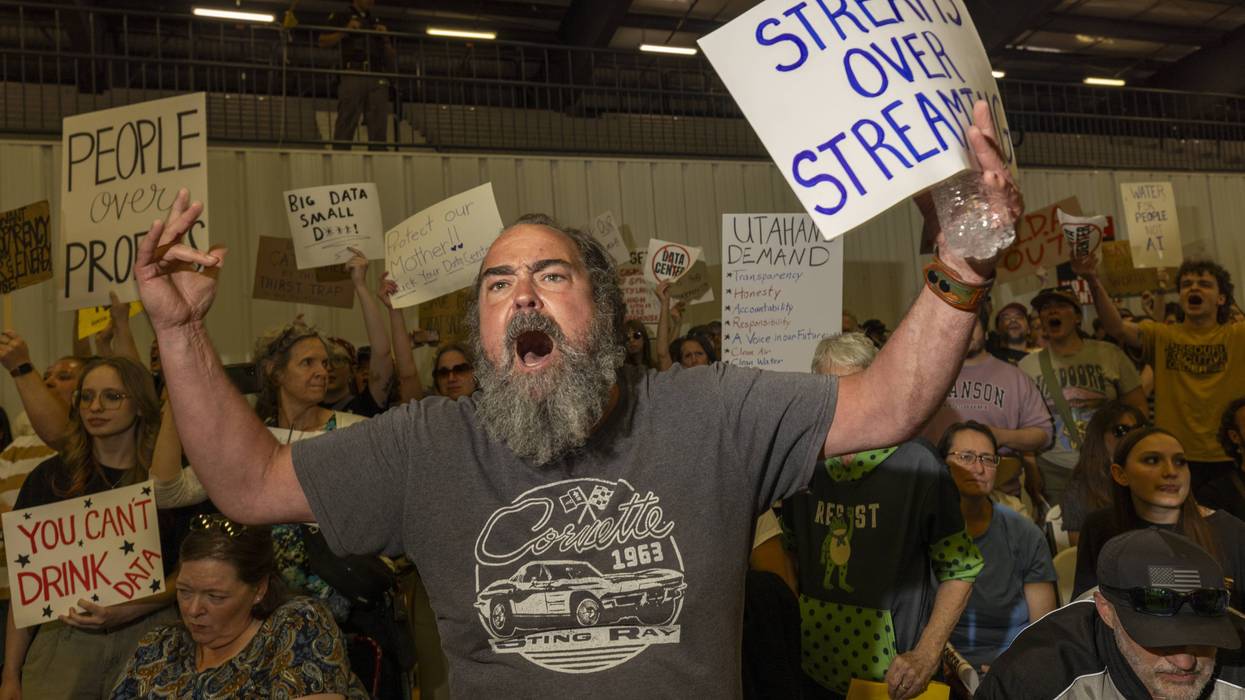
Grassroots efforts have taken off in states including Michigan, Wisconsin, and New Jersey as community members have rejected the construction of data centers on the grounds that they would consume massive amounts of water as well as electricity, threaten jobs, and take up space that could otherwise be used for affordable housing and small businesses.
"Voters feel ripped off by the corporations who hold their utilities hostage and are calling on lawmakers to put an end to the profiteering racket," said Pancotti. "It’s time for regulators and policymakers to answer the call to protect working families from predatory utility corporations and Big Tech.”
The American Israel Public Affairs Committee failed on Tuesday to secure wins in the two Illinois US House primaries it invested the most money in, the latest electoral flop for the pro-Israel lobbying organization whose brand has become increasingly noxious to Democratic voters amid Israel's genocidal assault on Gaza.
In Illinois' 7th and 9th Congressional Districts, AIPAC spent millions backing Chicago treasurer Melissa Conyears-Ervin, who finished second, and Democratic State Sen. Laura Fine, who finished third. In the latter race, AIPAC pivoted from initially attacking Evanston Mayor Daniel Biss—who ultimately won—to concentrate on defeating Justice Democrats-backed Kat Abughazaleh.
AIPAC, which faced backlash for trying to conceal its spending in the Illinois contests using shell organizations, tried to spin the 9th Congressional District results as a win, despite spending more against Biss than against Abughazaleh.
"Though Kat narrowly lost this race, we are proud to have backed this campaign that helped ensure the people of IL-09 would not be represented by another AIPAC shill," Alexandra Rojas, executive director of Justice Democrats, said in a statement. "This outcome is a massive loss for AIPAC as they lose more and more influence within the Democratic Party. No amount of shell PACs or covert funding can hide their toxicity from Democratic voters, their monopoly over this party’s agenda is coming to an end.”
Two AIPAC-backed candidates did prevail Tuesday: Cook County Commissioner Donna Miller in the 2nd Congressional District and former Rep. Melissa Bean in the 8th Congressional District.
AIPAC's mixed results came amid broad alarm over outside spending that flooded Tuesday's midterm primary elections in Illinois, driven by pro-Israel, crypto, and AI special interest groups. Overall, more than $92 million was spent on campaign ads in Tuesday's contests in Illinois, a state record.
"I think we can safely say that almost $100 million spent in a handful of primaries is a full-spectrum disaster for democracy," wrote David Dayen, executive editor of The American Prospect, which called the torrent of spending "a corruption of democracy that is relatively unprecedented in modern elections."
The National Journal reported Tuesday that when the national midterm cycle is over, "the price tag for the Illinois primary will be an important footnote in what’s projected to be the most expensive midterm election ever."
"The nonpartisan research firm AdImpact estimates that more than $10.8 billion will be spent on ads alone this cycle," the Journal observed. "Even as the competitive map gets smaller, the price tag keeps increasing as more outside deep-pocketed groups invest more in primaries."
Super PACs, entities that can spend unlimited sums boosting their preferred candidates, pumped roughly $31 million into Tuesday's US House primaries in Illinois. AIPAC-linked organizations accounted for around $22 million of the total.
"It’s time to kick AIPAC and other billionaire-funded super PACs out of Democratic primaries," US Sen. Bernie Sanders (I-Vt.) wrote ahead of Tuesday's races.
Unionized workers with CBS News' streaming channel began a bicoastal one-day walkout Tuesday morning after unsuccessful negotiations for a "fair and just" contract under Bari Weiss, who has faced intense criticism on a range of topics since taking over as editor-in-chief.
CBS News is part of the media behemoth Paramount Skydance, which was formed in a controversial merger last August. Two months later, the company acquired Weiss' The Free Press, and CEO David Ellison appointed her to also lead all of CBS News, despite her lack of television experience.
The latest contract for the streaming channel, CBS News 24/7, expired last week, after which the workers delivered a strike pledge. Tuesday's 24-hour walkout—with rallies at CBS News Broadcast Center in New York City and at KPIX-TV CBS News Bay Area in San Francisco, California—kicked off at 6:00 am Eastern time.
"CBS News 24/7 journalists are walking off the job on both coasts today because management refuses to agree to a new contract with essential work protections and fair wages," the bargaining committee and contract action team said in a statement from Writers Guild of America East (WGAE).
"Despite multiple days of good-faith negotiations and a strike pledge signed by 95% of our members to emphasize the seriousness of our demands, management continues to offer us worse terms than in our last contracts," the team said. "We chose this field to cover the news, but we believe this work stoppage is necessary to achieve a fair contract. We eagerly await an acceptable contract offer from Paramount—which just shelled out tens of billions of dollars to acquire Warner Bros. Discovery."
Deadline explained that "the newsroom has undergone rounds of layoffs and buyouts, and more are expected. There also are fears of further downsizing when Paramount completes its deal to buy Warner Bros. Discovery, given that will leave the company with two global news outlets, CBS News and CNN."
Beth Godvik, WGAE vice president of broadcast/cable/streaming news, called out Paramount for striking a $110 billion deal with Warner Bros. Discovery while it "still hasn't guaranteed fair wages and basic job protections for the workers who make their streaming news operation run."
"Our members are walking out today to show management they stand united in their demand for a fair contract—and the WGAE is with them every step of the way," said Godvik.
As The Wrap noted:
The battle puts Weiss, an opinion journalist who had no TV news experience before she became CBS News' editor-in-chief last October, in the position of negotiating with a union under her purview for the first time. The union dispute comes as the network has already been rocked by star departures and scrutiny over its coverage.
The Free Press, the anti-woke outlet Weiss cofounded and still leads, is not unionized, while CBS News has four main bargaining units, including the Writers Guild of America-backed CBS News 24/7, which launched in 2014 and rebroadcasts CBS News shows like "60 Minutes" and "CBS Mornings" along with original shows like "The Takeout with Major Garrett."
A CBS News spokesperson told The Guardian that "we continue to negotiate in good faith and hope to reach a fair resolution quickly."
Meanwhile, multiple members of Congress expressed support for the work stoppage on social media.
"If Paramount can shell out billions of dollars to acquire Warner Bros. Discovery, then they can pay their unionized CBS staff a fair wage," said Rep. Alexandria Ocasio-Cortez (D-NY). "I stand with the CBS staff who walked out today as they fight these corporate giants for essential protections and fair contracts."
Rep. Jerry Nadler (D-NY) declared that "American workers deserve fair pay and basic protections—full stop. I stand with the 60 CBS News 24/7 journalists walking off the job today in New York and San Francisco. Paramount is finalizing a $110 BILLION deal but can't give its own workers a fair contract?"
As President Donald Trump says he's "not afraid" of a Vietnam-style invasion of Iran and is reportedly considering sending thousands more US troops to the Middle East, polling published Thursday reveals that most American voters strongly oppose boots on the ground in a war a majority believe isn't worth it.
Just over two-thirds—68%—of respondents to the Data for Progress survey said they oppose deploying US ground troops to Iran, while just 26% support such action. Among Democratic respondents, 86% were against a ground invasion, which is also opposed by 71% of Independents. Republicans were split, with 48% supporting and 48% opposing sending troops into Iran.
Slightly more than half (52%) of those polled said they agree with the statement "going to war with Iran is not worth the risk because it will cost billions of dollars and result in the deaths of civilians and more American service members," 13 of whom have been killed during a war whose globally defining moment thus far has been the massacre of around 175 children and staff at a girls' school bombed by the US.
Among Democrats, 77% of survey respondents said the war isn't worth it. Conversely, 64% of Republicans said the war on Iran is worthwhile.
NEW: A strong majority of voters (68%) would oppose the U.S. putting boots on the ground in Iran.This includes 85% of Democrats, 71% of Independents, and about half of Republicans.
[image or embed]
— Data for Progress (@dataforprogress.org) March 19, 2026 at 8:38 AM
The Data for Progress survey follows Wednesday's publication of a Quincy Institute for Responsible Statecraft poll revealing that nearly 8 in 10 people who voted for Trump in 2024—when he campaigned heavily on a "no new wars" platform—want a swift end to the war on Iran.
Nearly three weeks into the US-Israeli war that Trump said was "won" more than a week ago, Iran remains undefeated, launching missiles and drones at targets throughout the Middle East, paralyzing international shipping in the Strait of Hormuz, and demonstrating continuity of government as Israel assassinates one of its leaders after another.
As the war grinds on with no clear objective or exit strategy, the Pentagon is reportedly seeking more money and more troops for the fight. Democratic senators have warned that the US is "on a path" to a land invasion of Iran. Defense Secretary Pete Hegseth has reportedly approved the deployment of more warships and thousands of Marines to the region.
Asked Wednesday by a reporter if he is afraid of "another Vietnam"—where more than 58,000 US troops and around 50 times as many Vietnamese, Cambodians, and Laotians were killed over two decades—Trump replied, "I'm really not afraid of anything."
The Pentagon is now reportedly asking Congress to authorize another $200 billion for a war that's already costing taxpayers around a billion dollars a day.
This, as American workers and families struggle to make ends meet as the price of gas and other consumer goods spike amid an expensive betrayal of Trump's campaign promise to "make America affordable again."
"Written by Big Tech, for Big Tech," said Rep. Yvette Clarke of the Trump administration proposal.
The Trump administration on Friday released its national policy framework for regulating artificial intelligence, and critics said it gave Silicon Valley a massive gift by coming out in favor of barring state regulation of the technology.
Specifically, Big Tech critics pointed to the framework's recommendation that the federal government preempt state laws regulating AI that could otherwise "act contrary to the United States’ national strategy to achieve global AI dominance."
"States should not be permitted to regulate AI development," the framework stated, "because it is an inherently interstate phenomenon with key foreign policy and national security implications."
The Trump administration's paper also argued that states "should not unduly burden Americans’ use of AI for activity that would be lawful if performed without AI" and "should not be permitted to penalize AI developers for a third party’s unlawful conduct involving their models."
Robert Weissman, co-president of Public Citizen, slammed the AI policy framework, which he said appeared designed "to protect Big Tech at the expense of everyday Americans."
"Trump’s AI framework is a hollow document with only one tough and meaningfully binding provision, delivering Big Tech’s top policy priority: It aims to preempt all state laws and rules dealing with AI," said Weissman. "Preemption would effectively mean no US regulation of AI at all, with the narrow exception of rules to deal with nonconsensual intimate deepfakes, because there are no national rules in place—and this framework would impose no additional standards of consequence."
Weissman added that while states' actions to regulate AI are inadequate, they are at least "trying to meet the novel and enormous challenges of the moment," which "is exactly why Big Tech wants to shut down their efforts."
Brad Carson, president of Americans for Responsible Innovation, called the White House's preemption of state AI laws a mistake, predicting that it would lead to even worse problems than the ones created by unregulated social media over the past two decades.
"I think it's like this: if you think the current state of play in social media guardrails are A-OK, then you'll be fine with the framework," he wrote. "If—like most—you believe we made catastrophic mistakes re social media, then you should fervently oppose this vacuous 'framework.'"
Rep. Don Beyer (D-Va.) singled out the proposed ban on state AI regulations as a particularly troubling aspect of the framework.
"The White House National AI Policy Framework reinforces the Trump administration’s commitment to preempting state-level AI laws without the establishment of clear, enforceable federal guardrails to address the urgent risks posed by AI systems," he wrote. "It even seeks to limit congressional regulatory action. But until federal action ensures safe and responsible AI development, deployment, and use, states must retain the ability to implement policies to protect the American public."
Matt Stoller, an antitrust researcher and author of the BIG newsletter, argued that the Trump AI framework should be one of the first things a future Democratic president throws in the garbage after taking office.
Rep. Yvette Clarke (D-NY) delivered a pithy analysis of the White House framework, describing it as being "written by Big Tech, for Big Tech."
"Despite its move to leave the ICC, Hungary is still a member country and is still obligated to arrest and surrender individuals wanted by the court," one campaigner stressed.
Hungarian Prime Minister Viktor Orbán announced plans to ditch the International Criminal Court nearly a year ago, during a visit from Israeli Prime Minister Benjamin Netanyahu, the subject of an ICC arrest warrant. With Netanyahu set to return to Hungary on Saturday, and the country's exit from the tribunal not final for a few more months, Orbán faces fresh pressure to arrest Netanyahu.
"Despite its move to leave the ICC, Hungary is still a member country and is still obligated to arrest and surrender individuals wanted by the court," Alice Autin, international justice researcher at Human Rights Watch (HRW), said in a Friday statement.
"By flouting this obligation, for the second time in less than a year," Autin argued, "Hungary would further entrench impunity for serious crimes in Palestine and once again betray victims who have been denied justice for far too long."
HRW: Hungarian authorities should arrest Israeli Prime Minister Benjamin Netanyahu if he enters Hungarian territory. He is expected to travel to Hungary on March 21 to speak at the Conservative Political Action Conference, shortly before national electionswww.hrw.org/news/2026/03...
[image or embed]
— Bassam Khawaja (@khawaja.bsky.social) March 20, 2026 at 7:33 AM
In November 2024, the ICC issued warrants for Netanyahu and former Israeli Defense Minister Yoav Gallant for crimes against humanity and war crimes in the Gaza Strip since the Hamas-led October 2023 attack on Israel. Despite a ceasefire deal reached over five months ago, the Israeli assault on the Palestinian territory continues. There are at least 72,253 Palestinians confirmed dead, and 171,912 more have been injured, though global experts warn the true death toll is likely far higher.
After Netanyahu visited Hungary last April without being arrested, the Hungarian government formally notified United Nations Secretary-General António Guterres that it would withdraw from the Hague-based court in exactly one year, on June 2, 2026.
Soon after that notification, ICC judges found that "Hungary failed to comply with its international obligations" under the Rome Statute, the treaty that established the tribunal, "by not executing the court's request to provisionally arrest Mr. Netanyahu while he was present on Hungarian territory," and referred the matter to the Assembly of States Parties.
Highlighting that the assembly, the court's oversight and legislative body, "noted the judicial finding but failed to take more decisive action" during its annual session in December, HRW called on ICC state parties to "strengthen their responses to noncooperation."
The group specifically pressured members of the European Union, which have declined to "take sufficient measures to prevent Hungary's undermining of the ICC and Orbán’s broader attack on the rule of law," beyond the European Parliament's 2018 decision to initiate a procedure under Article 7 of the EU treaty to assess the bloc member.
According to HRW:
The European Commission indicated in May 2025 that it was "in the process of analyzing Hungary's announced withdrawal from the ICC in the light of the EU's acquis," that is, the body of EU law which includes respect for human rights, democracy, and the rule of law. But there is no indication that the commission's assessment has progressed.
EU leadership and member states, along with other ICC member countries, should press Hungary to reverse its withdrawal from the court, publicly remind Hungary of its ongoing obligations as an ICC member, and urge Hungarian authorities to cooperate with the court by arresting Netanyahu. If the visit takes place, they should strongly condemn Hungary's continued failure to cooperate with the court and unambiguously reaffirm their own commitment to execute all pending ICC warrants, regardless of whom they target.
The European Commission and EU member states should also consider Hungary’s decision to leave the ICC as a further risk of serious breach of fundamental EU values, and consider including the withdrawal in the scope of the current procedure under Article 7. They should also assess what other measures and action should be taken. This could include initiating a procedure that could lead to a finding that Hungary has infringed EU law.
"Orbán's government is about to roll out the red carpet again for Netanyahu, when it is obligated to arrest him," said Autin. "Silence and persistent inaction from the EU risks sending a dangerous message of acquiescence as the Israeli government continues to be responsible for atrocities."
Netanyahu notably skipped the signing of the charter for US President Donald Trump's so-called "Board of Peace" for Gaza in Davos, Switzerland, in January, after the Swiss government affirmed its commitment to arresting him.
The Israeli prime minister is set to speak at the Conservative Political Action Conference (CPAC) Hungary on Saturday, though there is a chance he will not appear in person due to security concerns related to his and Trump's war on Iran, which they launched nearly three weeks ago.
Since the US-Israeli campaign began on February 28, Israel has also ramped up its bombing of alleged Hezbollah targets in Lebanon, despite a November 2024 ceasefire agreement, and again cut off the flow of humanitarian aid into Gaza.
There have also been rumors that Trump—who has previously sent exclusive video messages to CPAC Hungary—may make an appearance, despite the security concerns. The US president has responded to the arrest warrants for Netanyahu and Gallant by sanctioning ICC judges.
One advocacy group leader highlighted that "$200 billion is enough to materially change the lives of Americans," from establishing universal pre-K education to building over 100,000 housing units.
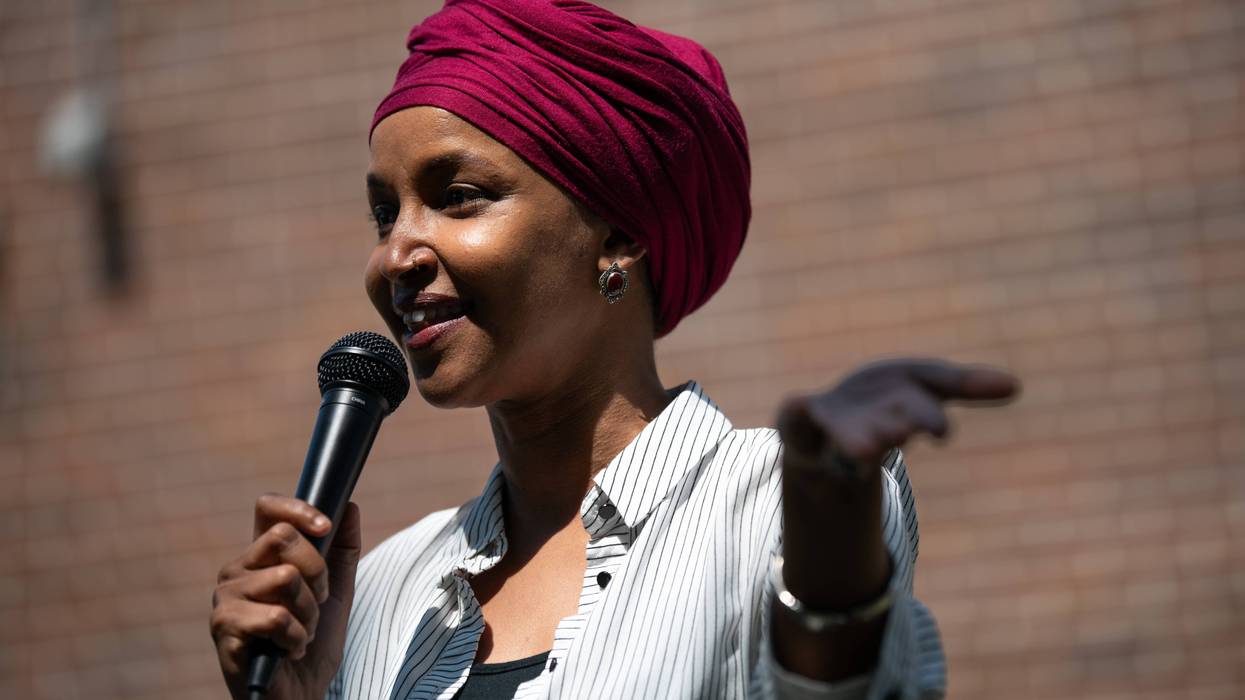
As US President Donald Trump on Thursday confirmed reporting that he's seeking $200 billion more from Congress to continue waging his unpopular war of choice on Iran, Rep. Ilhan Omar was among those forcefully pushing back.
"We're told there's no money for universal healthcare or to end hunger in this country. But somehow $200 billion more for war will likely move through Congress without question," said the progressive Minnesota Democrat, who fled civil war in Somalia as a child. "Not another penny for another endless war."
Since Trump and Israeli Prime Minister Benjamin Netanyahu started bombing Iran late last month—creating a spiraling crisis that has now killed and injured thousands of people across the Middle East, plus damaged civilian infrastructure in multiple countries—anti-war lawmakers and organizations have delivered similar messages.
"While they kick 17 million Americans off their healthcare, Republicans want to spend billions on Trump's reckless war of choice," Rep. Greg Casar (D-Texas), chair of the Congressional Progressive Caucus, said in early March. "Hell no."
Last week, shortly after Pentagon officials told Congress that just the first six days cost Americans more than $11.3 billion, over 250 groups collectively told lawmakers on Capitol Hill to "vote against any additional funding for Trump's unconstitutional war."
At the time, the reported figure was a quarter of what it is now: $50 billion. The coalition noted that the funding "would be enough to restore food assistance for 4 million Americans that was taken away in the tax and budget reconciliation bill, establish universal pre-K education, and pay for the annual construction of more than 100,000 units of housing, among other possible priorities."
After Trump confirmed that he wants four times more than expected, one coalition member, the Institute for Middle East Understanding (IMEU) Policy Project, took to social media to highlight other ways the money could be spent to improve the lives of working Americans, from school meals and paid leave to funding all levels of education.
Another coalition member, Public Citizen, released a Thursday statement in which co-president Robert Weissman ripped Trump's spending request as "grotesque beyond words."
According to Weissman:
It should properly be understood not just as a request to replenish supplies, but to expand, escalate, and perpetuate the illegal, unconstitutional, unpopular and devastating war on Iran. Congress should understand that approving any portion of this funding opens the gates for one, two, and potentially many more war funding requests in the future.
How dare the administration propose this gargantuan sum to expand an illegal war of choice at the same time it has rammed through deep cuts in healthcare and food assistance, refuses to spend foreign assistance at a cost of millions of lives, and has cut spending on protecting clean air, maintaining our national parks, investing in health research, protecting consumers from fraud, and so much more.
$200 billion is enough to materially change the lives of Americans and truly make our country stronger. It would be enough to restore food assistance to the 4 million Americans and Medicaid to the 15 million Americans who will lose those crucial supports under the Republican reconciliation bill; establish universal pre-K education; pay for the annual construction of more than 100,000 units of housing; double the budget of the Environmental Protection Agency; and expand Medicare to cover dental, vision, and hearing.
Weissman argued that "every member of Congress should announce, right now, that they will reject this monstrous war funding proposal, before it is formalized."
Despite rising casualties across the Middle East and polls showing that the US assault on Iran is unpopular, even with Trump voters, a few Democrats voted with nearly all Republicans in the Senate and House of Representatives earlier this month to reject war powers resolutions intended to end Trump's Operation Epic Fury. The upper chamber blocked a similar effort late Wednesday.