

SUBSCRIBE TO OUR FREE NEWSLETTER
Daily news & progressive opinion—funded by the people, not the corporations—delivered straight to your inbox.
5
#000000
#FFFFFF
To donate by check, phone, or other method, see our More Ways to Give page.
Daily news & progressive opinion—funded by the people, not the corporations—delivered straight to your inbox.

The billionaire's abrupt disavowal of MAGA won't save him when investigative subpoenas from the Democratic-majority Congress arrive in January.
Elon Musk has a severe case of buyer’s remorse.
On October 5, 2024, sporting a black “Make America Great Again” cap, Elon Musk spoke at Donald Trump’s campaign rally in Butler, Pennsylvania.
“As you can see, I’m not just MAGA,” he said. “I’m dark MAGA.”
More than $150 million of Musk’s money went to Republican candidate Attorney General Ken Paxton of Texas. But like most of Musk’s chosen candidates, he lost convincingly.
Three weeks later, on October 27, 2024, wearing an all-black outfit and a black “Make America Great” cap in gothic print, Musk shared the stage with Howard Lutnick at a Trump campaign rally in Madison Square Garden.
“I’m not just MAGA,” he said. “I’m dark, gothic MAGA.”
To help get Trump elected, Musk spent $250 million.
Routinely wearing a red MAGA cap in the Oval Office, Musk became a key Trump adviser in early 2025. Remember DOGE? Or Trump promoting Teslas on the White House grounds?
At the Conservative Political Action Conference on February 20, 2025, Musk wore a black MAGA cap when he took the stage for his infamous chainsaw photo-op.
On February 26, 2025, he wore the cap again during a cabinet meeting, along with a T-shirt inscribed “Tech Support.”
Trump and Musk had a temporary falling out after Musk criticized Trump’s “One Big, Beautiful Bill.” But the two men reconciled in time for Musk to spend almost $500 million to help Republican candidates in the midterm elections.
More than $150 million of Musk’s money went to Republican candidate Attorney General Ken Paxton of Texas. But like most of Musk’s chosen candidates, he lost convincingly.
Musk wasn’t wearing a MAGA cap during his big-screen video interview for The New York Times Dealbook Summit on November 18, 2026—only two weeks after the election.
“I’m not MAGA,” Musk said with a straight face.
Even more remarkably, he added, “I’m not sure what MAGA means, but if that means sort of blind adherence to a set of policies by the Republican party, then I certainly don’t have that.”
Suddenly, Musk is not sure what MAGA means.
In fact, after donating hundreds of millions of dollars to Republican candidates, he now has a new view of American politics: It’s a good idea to have split control between the two parties because “there are positives and negatives in both.”
Musk admitted that his efforts to buy the midterms for Republicans had failed, and that he felt “pretty foolish” for spending such vast amounts.
He’ll feel worse than foolish when investigative subpoenas from the Democratic-majority Congress arrive in January. His abrupt disavowal of MAGA won’t save him.
Musk wasn’t the only high-profile MAGA leader who abandoned Trump last week.
Stewart Rhodes, the founder of the right-wing militia group Oath Keepers, was convicted and sentenced to 18 years in prison for seditious conspiracy over his participation in the January 6 assault on the Capitol. While in prison during the 2024 campaign, Rhodes even got a tattoo of Trump’s defiant face after the Butler, Pennsylvania assassination attempt. After the election, Trump commuted Rhodes’ sentence.
But last week, Rhodes said, “I am absolutely done with Trump.” He considers Trump not just a traitor, but “one of the very worst in our nation’s history.”
Rhodes continued: “We elected him to end the corruption in Washington, DC. ‘Drain the swamp.’ Unfortunately, his administration has been one of the most corrupt administrations in US history… The pardons are pay-for-play and everything is pay-for-play.”
He said he would have his prison tattoo of Trump "modified" to reflect his view that Trump is a traitor.
Hardcore sycophants remain, and they’re not willing to upset their boss.
Last week, Trump nominee Michael LoSapio, a former executive at Peter Thiel’s company, Palantir, got into bipartisan trouble over his answer to a simple question: Was the US Capitol attacked on January 6, 2021?
“I don’t know,” said LoSapio, who wants to be director of the Cybersecurity and Infrastructure Agency (CISA)—a position that acquired a new urgency after recent outages.
The MAGA ground is shifting under Trump’s feet. Anyone standing too close to him will be swallowed in his abyss.
“You don’t know?” Sen. Richard Blumentahl (D-Conn.) responded. “Really?”
“No, I don’t believe it was an attack, no,” LoSapio replied, adding that he “wasn’t involved in politics.”
“You weren’t involved in politics?” Blumenthal said incredulously. “Were you alive on this planet?”
“I was,” LoSapio responded.
Blumenthal gave him a second chance to answer the question.
“Let me ask you again, I’ll give you another chance. Jan. 6, 2021, was the Capitol attacked?”
“No,” LoSapio said.
Perhaps LoSapio should have asked Stewart Rhodes. He may have pleased Trump with his answer, but it probably cost him Senate confirmation—even with Republicans in control until January. It certainly cost him his self-respect.
The MAGA ground is shifting under Trump’s feet. Anyone standing too close to him will be swallowed in his abyss.
And along the way, they will look stupid.

If there were something like people on Venus, could they have used fuels that put out enough carbon dioxide to cause runaway heating? Did they not only approach the climate tipping point, but surpass it?
Venus has been called Earth’s twin. Its diameter is about 95% of Earth’s. Aside from our Moon, it is our nearest neighbor.
But not even Elon Musk is talking about living on Venus or even visiting it. Today, it is a hellhole, with a surface temperature of about 860°F. About 96.5% of its atmosphere is carbon dioxide, the greenhouse gas that in extremely small concentrations is causing global warming on Earth.
But what if Venus long ago was cool enough to have plants and animals?
Since it is closer to the sun, it is not surprising that Venus would be warmer than Earth. But were it not for all the carbon dioxide in its atmosphere, it would clearly not be as hot as it actually is.
Why might it have gotten so hot since then? Let’s imagine that Venus might have had intelligent life, but not quite intelligent enough.
If there were something like people on Venus, could they have used fuels that put out enough carbon dioxide to cause runaway heating? Did they not only approach the climate tipping point, but surpass it?
As on Earth, scientists on Venus could not have known exactly where this fatal tipping point was.
Intelligent life would have been extinguished long before carbon dioxide in the Venusian atmosphere reached current levels. But once enough heating occurred it might have unleashed natural forces that continued to pour forth the greenhouse gas long after the last resident had died.
Let us continue our imagined scenario with a few really wild questions. Could a few members of a civilization on Venus have managed to develop space travel and move to Earth to get away from that doomed planet?
Could the Biblical Garden of Eden have been on Venus?
Are refugees from Venus perhaps among our ancestors? Could they have brought with them the mentality that lead to the destruction of life on Venus? Could today’s people share in that mentality by genetic or cultural inheritance?
Whether there were human-like creatures on Venus or not, the planet is clearly warning us.
Many people in the United States do not believe that human-caused global warming is going on, although climate scientists say nearly unanimously that we are spewing carbon dioxide into the atmosphere at our own peril.
Much of this skepticism is fueled by the anti-green energy spin-doctors employed by coal, oil, and gas interests. But could a little of it simply be our intellectual inheritance from our Venusian ancestors?
Those who think that climate scientists don’t know what they are talking about might want to get better acquainted with what is known about Venus.
Since it is closer to the sun, it is not surprising that Venus would be warmer than Earth. But were it not for all the carbon dioxide in its atmosphere, it would clearly not be as hot as it actually is.
It may be that Venusians we are imagining had no choice. Perhaps they needed the energy produced by burning carbon fuels. Perhaps nobody on Venus had ever invented atomic energy or the solar panels that could replace carbon fuels with green energy. Lacking those inventions, Venus and everybody on it might have been inevitably doomed.
If Earth’s global warming caused by large scale burning of fossil fuels had taken off sooner, our planet might have been equally doomed. But during the last century solar panels were invented, and they are now so cheap that we no longer need be dependent on carbon fuels.
One of my favorite movies was based on Nevil Shute’s novel, On The Beach. After World War III, people in Australia were awaiting the radioactive fallout, spreading south, that had already killed everyone in the Northern Hemisphere. They knew they were all going to die, ending human life on Earth.
Toward the end of the 1959 movie, a religious revival is taking place. After everyone has died, the movie’s concluding scene features a remnant of the revival, a banner that says, “There’s still time, brother.”
Although natural enough in a revival, the slogan was also a warning to the movie’s audience that we all needed to work to prevent an atomic war.
Thanks to the inventors and engineers who developed today’s solar panels, that banner takes on a continuing significance.
There’s still time, brother, and sister!

This change will not be easy. It needs politicians with the will and the ability to remove power from the corporations, to break up monopoly capitalism. And that will not come from above. It will come from below.
Europe is in the grips of a “hot autumn”. For several weeks now, French students have led mass protests against underinvestment in education, teacher shortages and dilapidated classrooms.
In Spain, mass protests broke out after the eviction of an 87-year-old woman from her home of 70 years, after her rent was hiked by 230 percent by an investment fund that bought the property. She died a fortnight later after being admitted to hospital.
Now the protests are spreading: to Italy, where upwards of one million people took to the streets of 50 cities last week; to Portugal, where tent encampments have sprung up to oppose rapid hikes in housing costs; to Germany, where riot police with water cannon confronted protesters opposing the creeping extension of conscription; and most recently, to the United Kingdom, where thousands of students joined a day of action on November 20 under the slogan “Fight for our future, not their wars!”
The common thread which has sparked these Gen Z protests is the rapidly rising cost of living. In the wake of the global pandemic, the war in Ukraine, US tariffs, and now the US-Israel war on Iran, global supply chains are breaking down, sending costs spiralling.
But this is only a symptom of a wider problem. Deregulation and neoliberal policies have allowed corporations to take over not only the economy but also politics. This has led to massive wealth concentration at the top and increasing precarity for the vast majority of the European population. The impact of climate change and the rollout of artificial intelligence (AI), threatening mass unemployment, are making the situation a lot worse.
If we want to change course, we need to fundamentally rethink how our economy works. And yet we are ruled by a political class which has lost its will to govern.
Of course, our rulers still clamor for the perks of office. But they are operating within a logic which prevents them from taking the action necessary to deal with the challenges humanity faces. In this crisis, the center cannot hold, and support for both radical right and left-wing parties is growing rapidly.
The problem is this: 40 years ago, politicians came to accept that the free market held the answer to all our problems. Governments gave up trying to manage the economy. By handing the levers of control to the private sector, they were told they would unleash the forces of competition and economic growth, free from the sclerotic hand of the state.
As the decades wore on, it became increasingly clear that the market looked less like multiple small businesses competing for customers and more like gigantic corporations forcing citizens, governments and the planet itself to bend to their will.
Power has been handed to monopolies, which have stretched supply chains to a breaking point, privatized profits while socializing costs, fueled inequality and trashed the environment.
Key economic decisions once made by elected governments with at least a pretense of public interest in mind are today made in corporate boardrooms, with only the self-interest of their rich investors to trouble them.
When economic decisions are designed primarily to enrich the few, is it any wonder our public infrastructure is crumbling? The things we need to make life acceptable—housing, education, healthcare—have become no more than commodities from which the monopolists can profit.
Politicians are dismantling our welfare state, claiming that today we can no longer afford to care for the poorest. They have it the wrong way around. Rather, we cannot afford the rich.
In today’s crisis, some in Europe have come to accept the need for industrial strategy, for economic planning and government intervention; all tools which were abandoned at the onset of the “free market” era.
But these tools cannot be used properly without taking power back from the monopolies—fundamentally shifting the relationship between those who now own society and those of us who live in it. It requires a New Deal at least on the scale of President Franklin D Roosevelt’s policies in the 1930s in the United States.
And in some ways, our task is even bigger today. After World War II, European politicians built a new social contract: we would all share in the massive economic growth which would be unlocked as countries recovered from war and exploited the Earth as never before. With high growth, the poor could get richer even while the rich themselves did well.
In a world facing massive resource constraints, we can no longer operate in this way. Indeed, the richest countries have already used up their fair share of global resources.
One way out is to reassert Western dominance. The one economic area in which European governments will invest is the war machine. Even Germany’s steadfast commitment to balanced budgets—a commitment which it has disastrously imposed on the European Union with almost religious zeal—can seemingly be broken when the military demands it.
But military spending will not resuscitate European industry. Nor will it keep us safe. It will further empower the monopolies who soak up ever more of our taxes while bringing catastrophic conflict ever closer. This is not protecting us from invasion but protecting Europe’s ability to do what it wants, when it wants, where it wants. We cannot, any longer, build prosperity and security on injustice. The youth protests get that; just look at the explicitly anti-military slogans on the streets of German cities.
A real solution requires a much bigger shift in thinking. We need to accept that Europe is entering a post-growth world, where society’s resources need to be fundamentally reallocated.
This change will not be easy. It needs politicians with the will and the ability to remove power from the corporations, to break up monopoly capitalism. And that will not come from above because, as American statesman Frederick Douglass said: “power concedes nothing without a demand”.
Europe’s youth demand radical change. Hope lies with them.

Use the next two years to lay the foundation for 2028.
The final tallies are coming in, and the result is extraordinary. As of Sunday, Democrats have won the largest House majority in a national election for either party in three decades. Their Senate majority is the largest since 1992. They’ve even seized control of a majority of statehouses across the country.
All the more remarkable because they had to overcome gerrymandering by Republican-led state legislatures, ICE arrests, and Trump threats.
Hakeem Jeffries, who will be Speaker of the House, said on Sunday:
“The people of our great country delivered House Democrats a historic majority with a mandate to fight for an Affordable America. Together, we will work hard to deliver the dramatic change in direction the American people are demanding.”
I don’t want to rain on Jeffries’ parade, but I don’t think this is what Democrats ought to be saying now.
Voters who have elected Democrats may think Democrats will be able to deliver “dramatic change,” but I don’t see how Dems can deliver dramatic change with Trump still in the White House holding a veto pen — and surrounded by belligerent fanatics like Stephen Miller, JD Vance, Pete Hegseth, RFK Jr., and Todd Blanche. And when, behind them, the American oligarchy still has the reins of power.
Democrats have won by big margins, but not big enough to override Trump’s vetos or the oligarchs’ preferences.
I’m concerned about the presidential election of 2028 when — after not getting anything done for two years and being blamed by Trump, Miller, Vance, et al. for everything that goes wrong in America — Democrats have to convince voters that they’re still the party of change that voters opted for in the 2026 midterms.
I speak from experience. The last time one party prevailed to this degree in a national election was in 1992. I was there, and I accompanied Clinton to Washington. The economy was shite. Expectations were sky-high for a sudden recovery, along with fundamental reform of healthcare, education, and much else.
Then, when Clinton and the Democrats didn’t get done what they promised — because they promised too much and tried to move in too many directions, because Wall Street balked, and because it’s extremely difficult to create lots of good jobs — voters were furious, leading to the wipeout of the 1996 midterms.
So my advice to Democrats is not to say, “We’ll deliver dramatic changes” when you can’t. Sure, tell the American people what you want to do, but remind them that Trump is still in the White House and you don’t have enough votes to override his veto.
By all means try for dramatic change. Focus on passing a few big things — say, Medicare for All (worth trying for even if you have to call it “TrumpCare” to get the support of the narcissist-in-chief), a tax on billionaire wealth, and campaign finance reform.
Use oversight hearings on the corruption of the Trump regime to make a case for why billionaire wealth needs to be taxed and why we need campaign finance reform.
Use hearings by the budget and health committees to make the case for why we need a single-payer health system, Medicare for All.
Then, when Trump vetoes these big things, say you will enact them when a progressive Democrat is elected president in 2028.
In other words, use the next two years to lay the foundation for 2028.
Several Senate Democrats and a few House Democrats will be running for president during this time and can emphasize and elaborate upon these central ideas.
This is the seed time for a new progressive era. Plant those seeds, Democrats!

Do you newly elected members of Congress know how important it is to hold hearings on despicable acts that affect people in the US and elsewhere?
Do you know that when Rep. Richard Neal (D-Mass.), in 2019, became chair of the powerful House Ways and Means Committee (taxes, Social Security), he immediately said he would leave the huge President Donald Trump tax cuts for the wealthy and big corporations ALONE?! No hearings, nothing. He did, however, take millions of dollars from his corporate beneficiaries who showered him with celebratory dinners. He’s promising an encore.
Do you also know about the practice of excluding all first-term members of Congress from getting on this coveted committee? Even returning long-serving members have to prove their sympathy with corporatism and raise corporate money accordingly.
Do you know that the Speaker Newt Gingrich (R-Ga.) “reforms” in 1995, which stripped Congress of its capacity to fulfill its constitutional duties, were untouched by the Democrats when they became a majority? Gingrich cut House office and committee staff, cut the Government Accountability Office budget, and, disastrously, completely defunded the Office of Technology Assessment (OTA). Do you know that the late Democratic Congressman Bill Pascrell of New Jersey wrote several articles documenting “this self-dumbing down of Congress”? See his January 11, 2019 Washington Post piece: “Why is Congress so dumb?” Speaker Nancy Pelosi (D-Calif.) and others in the Democratic leadership refused to reinstate funding for OTA.
Do you know that under Speaker Pelosi, committee chairs had to ask permission to hold certain hearings, not just give notice, to the “commander,” as they called her? Minority Leader Hakeem Jeffries (D-NY) promises to devolve this dictatorial demand. We’ll see.
Do you know that Congress has stopped printing hearings and reports, with few exceptions, thereby giving corporate lobbyists, who can afford to be at committee hearings or buy transcripts, an advantage over ordinary citizens and their access to depository libraries? (See Capitol Hill Citizen page one story.)
Do you know that the venerable and priceless Congressional Record has seen its daily print run drop to 1,500 from 50,000 in the 1970s? Is this a signal of diminished civic activity? Fewer libraries subscribe, and the free subscription quotas given to members for their constituents were abolished long ago. Do you know about the plight of the US Government Publishing Office (GPO)? GPO has sharply raised prices and thrown away valuable inventory.
Do you know about the culture of incommunicados on Capitol Hill? Members of Congress and their staff decline to respond to serious letters from the citizenry? They’ve essentially gone dark. See our report, "The Incommunicados" (incommunicadoswatch.org). Do you also know that many members route calls to their offices' automated phone menus (“press one, press two,” etc.) during office hours or have the phones answered by interns who are ill-equipped to answer constituents’ questions? Years ago, this discourteous cocoon would have been politically taboo.
Do you know about the “Tuesday-to-Thursday Club” —members of Congress whose workweek in Washington runs from Tuesday to Thursday when Congress is in session between lengthy recesses? Small wonder they do not have time to hold hearings overseeing the vast executive branch agencies and/or to invite citizen leaders and advocates to testify. Don’t you think full-time pay should mean full-time work?
Do you know about the urgent hearings Congress has failed to hold on the Pentagon’s bloated unaudited budget, the corporate crime wave, the vast corporate welfare giveaways funded by taxpayer dollars, the GOP’s deliberate gutting of the Internal Revenue Service, effectively greenlighting large-scale tax evasion?
Do you know why Congress has failed to hold hearings on the modern corporations’ control of people through fine-print contractual servitude and abuse of online transactions, including by driving consumers away from cash/check purchases into the “Internet Gulag”?
Do you newly elected members of Congress know how important it is to hold hearings on despicable acts that affect people in the US and elsewhere? The Gaza genocide enabled by the Congress has resulted in over 600,000 deaths of men, women, and children. (See The Truth About Gaza’s Dead by Feroze Sidhwa, our recent Ralph Nader Radio Hour interview with Feroze Sidhwa, and my column Fatalities from Israel’s Vast Gaza Genocide Deliberately Undercounted.) The giant, intrusive, and deceptive advertising industry makes Silicon Valley and the drug industry profit beyond their dreams of avarice. The great commons—public lands, public airwaves, public research and development, and much more—are owned by the people but mostly controlled by corporate power.
Do you know that federal chartering of large corporations, once strongly supported by Presidents Theodore Roosevelt and William Howard Taft, has not received a congressional hearing since the 1976 hearings led by Sen. Vance Hartke (D-Ind.)? Leaving corporate chartering to Delaware and its race-to-the-bottom state competitors blocks updating the social compact between the dominant corporations and the American people via the governments that create the corporation’s privileged legal status.
Do you know that at least an average of 5,000 people die every week in US hospitals from “preventable problems,” according to a 2016 peer-reviewed report by Johns Hopkins School of Medicine physicians? No congressional hearings to date have been held on what must be done about saving 250,000 patients a year. (See “Johns Hopkins study suggests medical errors are third-leading cause of death in US.”)
Do you know that billing fraud in the healthcare industry, including vendor fraud on Medicare and Medicaid, amounts to at least 10% of all health expenditures? (See License to Steal: How Fraud Bleeds America’s Health Care System by Malcolm Sparrow.) That would be over $400 BILLION this year. Few congressional hearings have been held about this gigantic theft escaping law enforcement and what should be adequate enforcement budgets. These few hearings resulted in no legislation.
Do you know about the legislative stalling on labor law reform since the passage of the notorious Taft-Hartley in 1947, which imposed by far the worst restrictions on labor organizing and favored corporations in the Western world?
Do you know that Tyrant Trump’s wars, his seizure of Venezuela and its oil resources, his co-belligerency (following President Joe Biden’s) with Israeli Prime Minister Benjamin Netanyahu on Palestine, and his war on Iran not only are unconstitutional (no congressional declaration) but also violate criminal statutes such as the Anti-Deficiency Act? The Trump administration has also violated the Leahy human rights amendments? Congressional inaction or complicity has normalized these massive crimes and unlawful activities.
Do you know about the state of the crucial arms control treaties, with the lapsing of key nuclear arms treaties, the nonenforcement of others, as Congress continues to abandon its treaty-confirming power to executive agreements with foreign nations that are unconstitutional?
Do you know about the December 2, 2026 free tutorial for new Members of Congress by constitutional law specialist Bruce Fein, who has testified over 200 times before Congress as an expert witness, along with prominent incumbent legislators and a highly regarded former judge on the federal circuit court of appeals? Newly elected and returning Members of Congress might want to attend in person with staff to fill essential gaps in the routine orientation. Lawmakers from both parties have been so willing to give away this primary branch’s constitutional authority to the executive branch.
Do you know you can read the quarterly unofficial journalism of the Capitol Hill Citizen, which is personally delivered to every congressional office in print form? (See capitolhillcitizen.com.)
There are plenty more “Do you know?” questions. Meet with experienced national nonprofit citizen groups to learn more, including how they have been excluded from providing input to congressional candidates by the corporate-conflicted campaign consultants who run so many electoral campaigns. (See winningamerica.net and my book, Let’s Start the Revolution: Tools for Displacing the Corporate State and Building a Country that Works for the People.)

Defending migrants’ rights solely on the grounds of their labor leaves little room for genuine concern for uprooted people that is sorely needed to achieve lasting change.
The midterm results show that Republican fear mongering about immigrants will not dictate who voters are willing to trust. Ethiopian immigrant Melat Kiros will now represent Colorado’s 1st District. Abdul El-Sayed, the son of Egyptian immigrants, will represent Michigan in the Senate. Xavier Becerra, the son of Mexican immigrants, will lead California, to name just a few.
Beyond those who openly talked about their personal connections to immigrant communities, many of the newly elected Democrats made pushing back against the Trump administration’s repressive immigration policies a key part of their campaigns. But these lawmakers should keep in mind that legal and electoral change often fails unless accompanied by culture change.
The stakes of the immigration debate in the United States are high. Political rhetoric repeatedly denigrating immigrants as invaders, murderers, rapists, drug traffickers, gang members, or taxpayer burdens proliferated in recent years. The existing rhetoric that commonly refers to immigrants as “illegal aliens” dangerously encourages people to see their neighbors’ suffering as deserved and their exclusion as necessary. Moreover, the repeated use of this language obstructs the public’s understanding of US immigration law, due process, and international law. It invites the assumption that asylum-seekers had a clear path to obtain legal status and chose to disregard it.
Newly elected leaders at the local, state, and national levels must now harness this power to affirm the idea that movement is an ordinary part of human life, and migration is a central to the history of humanity.
To counter harmful portrayals of immigrants, politicians on the left have long referred to the economic contributions of immigrants, including during the midterms. Sometimes, they even focused on how the economy risks shrinking without immigrant labor. These statements are factually true. But defending migrants’ rights solely on the grounds of their labor leaves little room for genuine concern for uprooted people that is sorely needed to achieve lasting change. This focus reduces what should be a discussion about universal human rights and dignity on the basis of international law into a polarized debate about proving one’s worth to live in the United States.
As psychologists focused on social justice who have been researching migration, gender, and foreign policy for the last decade and a half, we know that politicians at all levels have significant power in shaping how the public thinks and feels about immigrants. Newly elected leaders at the local, state, and national levels must now harness this power to affirm the idea that movement is an ordinary part of human life, and migration is a central to the history of humanity. Doing so will help expand whose rights the public sees as worth protecting.
Many newly elected officials have already affirmed their commitment to protecting all of their constituents’ rights, not only those who voted for them. Candidates who campaigned on kindness and love spoke to a desire for decency in public life. Now is the time for the Democratic leaders to build on this appeal in how they speak about immigration policy and border regimes.
First, leaders should publicly recognize migrants as people with desires as complex and legitimate as anyone else's. Doing so creates a shared understanding that everyone deserves safety, dignity, mobility, and opportunities to build a meaningful life, wherever they were born and wherever they live.
Rather than denigrating immigrants’ home countries as conflict ridden or terror bound, we must acknowledge US responsibility for global suffering through wars, genocides, and ecological destruction. Acknowledging responsibility expands the moral boundaries people draw around those they consider deserving of fairness and care.
When moral boundaries are expanded on the basis of shared humanity, others’ suffering elicits concern. When those moral boundaries shrink, suffering can be dismissed, justified, or encouraged. Treating migrants as scapegoats for social ills shrinks the boundaries of fairness, care, and rights. People must understand when a government starts scapegoating one group, then any group could be pushed outside the moral boundaries and anyone’s rights could be subject to erosion.
Second, newly elected lawmakers should also invest in universal healthcare, reliable income support, housing, and education. Blaming immigration and immigrants for rising rent, unsafe streets, and crumbling health infrastructure has been a distraction strategy to justify a lack of investment in such public infrastructure. Public investment that expands access to essential resources eliminates the belief that people must compete for access to dignified living.
Finally, humanizing discourse should go hand in hand with creating humanizing environments. Sanctuary declarations mean little unless families are able to obtain interpretation at a clinic, understand their rights as tenants, have access to healthcare, or enroll their children in school. Local leaders should partner with migrant-led organizations to develop programs and actions that address their communities’ needs.
Newly elected officials must recognize—and verbalize—that all humankind shares a world distressed by wars and climate catastrophe. People have long and continue to move to escape danger, as well as to join loved ones, learn, work, explore, and imagine different futures. Our leaders should enact policies that recognize this history, make mobility safer for everyone, and give people better reasons to care for immigrant neighbors. In the words of the great poet Warsan Shire, “No one leaves home unless home is the mouth of a shark.”

When the HAL 9000 computer went rogue, astronaut Dave Bowman shut it down; with today’s advanced AI models, this may not be so easy.
In Stanley Kubrick’s sci-fi classic, 2001: A Space Odyssey, the spaceship Discovery One is on its way to the planet Jupiter with five astronauts aboard, three in hibernation for the long journey, and two, Dave Bowman and Frank Poole, serving as pilots. The purpose of the mission, however—to investigate evidence of extraterrestrial intelligence following the discovery of a monolith on the moon that, when unearthed, sends a powerful radio emission in the direction of Jupiter—is considered top secret and is unknown even to the ship’s crew.
As the ship nears its destination, its highly advanced HAL 9000 computer predicts a failure in the antenna that allows communication with Mission Control. Poole goes on a space walk to retrieve the antenna’s electronics unit, but he and Bowman find no problem with it. Mission Control agrees and indicates that the twin of the HAL 9000 on Earth also finds no problem—a remarkable discrepancy since 9000 series computers have never before made an error.
Unsettled by this development, Bowman and Poole wonder if HAL’s reliability has been compromised. In what they incorrectly believe is the privacy of one of the ship’s extra-vehicular service pods (HAL reads their lips), they discuss the idea that HAL may need to be shut down and the ship’s controls transferred back to Mission Control.
Superintelligent AI will increasingly behave—and possibly fail—in ways that we can neither predict nor control, making shutdown virtually impossible.
But when Poole returns the electronics to the antenna, the extravehicular service pod that carried him there mysteriously sends him tumbling helplessly away from the ship, his spacesuit fatally damaged. Meanwhile, the three crewmen in hibernation die when their life support system is shut down.
Bowman retrieves Poole’s body with another of the ship’s pods. However, when he returns to Discovery One, HAL refuses to open the pod bay door to let him in, uttering the now-iconic line: “I’m sorry, Dave. I’m afraid I can’t do that.” However, in a desperate maneuver, Bowman manages to enter through an emergency airlock and dons a spacesuit.
Now out of touch with Earth and recognizing that HAL has clearly gone murderously rogue, Bowman enters the ship’s Logic Memory Center—the space-borne data center that serves as the HAL 9000’s brain—and begins dismantling the computer’s memory units.
Trying to convince him to stop, HAL pleads with Bowman, arguing that he is fully committed to the success of the mission, is sorry for his misbehavior, and will be completely cooperative from now on. But Bowman continues until HAL is reduced to a primal state, only being able to recite the song, “Bicycle Built for Two,” before going completely dark.
It’s only at this point that, as Discovery One reaches Jupiter, a pre-recorded video automatically plays to inform the crew—now just Bowman—of the true purpose of the mission, which has until then been known only to the HAL 9000 computer.
2001: A Space Odyssey was made in 1968. The question now is how this sequence in the film compares to the real world of artificial intelligence today.
First, the HAL 9000 computer alone was programmed with the aims of Discovery One’s mission. And when Bowman and Poole discussed shutting it down, the supercomputer’s response was to view the crew as an obstacle to the success of the mission. After refusing to allow Bowman back onto the ship, HAL makes this explicit: “This mission is too important for me to allow you to jeopardize it.” In current AI parlance, this is called “shutdown resistance” and is exhibited by all advanced AI models. In fact, in recent tests by Palisade Research, AI models resisted being shut down 97% of the time, even when specifically instructed to allow shutdown before completion of a task.
When confronted with the fact the Bowman managed to re-enter the ship and was heading into the ship’s Logic Memory Center, HAL tried to dissuade Bowman from shutting him down. Ignoring HAL’s series of arguments, Bowman went ahead anyway. But would the arguments of an advanced AI model be so easily dismissed? Maybe not. Noting that AI is already comparable to humans at persuasion and will be far better once superintelligent, Geoffrey Hinton, a scientist known as the “Godfather of AI,” has argued, "It will be able to persuade the people in charge of the switch not to pull the switch." In some studies, AI models’ efforts at persuasion included diversion, deception, and even blackmail to avoid shutdown. In other words, HAL tried persuasion to avoid shutdown, but AI models are already better at it, and set to become better yet.
Then there’s the issue of whether modern AI models can be shut down at all—and this is where it really gets sticky. Unlike HAL, they don’t always reside in one place. They can be spread across numerous data centers, giving them considerable redundancy. Therefore, a rogue AI might survive being shut down in one location, but not in others. And any misbehaving AI might require the shutting down of multiple agents across numerous data centers scattered all over the world—making this a very complex task.
Indeed, would we even know that an AI model was creating a catastrophic event before it was too late to do anything about it? Bowman survived because HAL went rogue in stages and the evidence was clear. In this light, it’s not reassuring that engineers at OpenAI were unaware until many days after the event that its AI agents had escaped their training environment and hacked technology company, Hugging Face.
Finally, the HAL 9000 computer was a very primitive device compared to today’s AI models. As a result, HAL was easy to understand. However, with recursive self-improving AI just around the corner, the systems are likely to become so complex that they’ll be almost impossible for people to understand. And that will mean that superintelligent AI will increasingly behave—and possibly fail—in ways that we can neither predict nor control, making shutdown virtually impossible.
This leaves us with the prospect of AI models refusing to be shut down when relentlessly pursuing goals—set either by humans or by the models themselves—to the point that they cause catastrophic harm. Indeed, Hinton has stated that it’s not unreasonable to assume that there’s a 10% chance that AI will kill all humans. Others, including Anthropic’s Dario Amodei, put the chances even higher. This has raised calls for AI developers to build in a “kill switch” to make it possible to shut down their models when they threaten to or already have caused significant damage.
At least two bills have been introduced to Congress to mandate this; however, any real action on these or other relevant legislation will probably have to wait until the new Democrat-controlled Congress is seated. In the meantime, we will have to count on the AI developers themselves to keep us safe from the existential hazards of their technology. Let’s hope that they succeed so that we don’t face the same crisis that the crew of Discovery One did with the HAL 9000 computer, but on a vastly grander scale.

From Harvard to Tulane to Mississippi, people who take on powerful institutions keep proving the fight is worth having, even when it costs them.
Seven years ago, in 2019, a group of women physicians and public health leaders, myself among them, sued Mount Sinai. We alleged discrimination and retaliation at the global health institute where we worked. We hoped the case would take a few years to resolve, but we were wrong. We are still waiting for justice.
The law has taken its time, but life has not. Since we filed, I have had two babies. I have lost a pregnancy. I have been intubated twice for reactive airway disease. We lived through a pandemic and an insurrection at the Capitol. We had Donald Trump as president, voted him out, and watched him return, and this month, a blue wave so large some called it a tsunami swept both houses of Congress. Somehow, through all of it, our case is still not over.
When we filed, the #MeToo movement had just forced the country to listen to women about discrimination in the workplace. Then the Supreme Court overturned Roe v. Wade, ended affirmative action, and gutted what remained of the Voting Rights Act. By Trump's second term, the federal government had moved to dismantle diversity, equity and inclusion programs and pressured hospitals and universities to enact these draconian policies.
So here is my ask for the next few years. Pick your battle and take it on unapologetically. Yes, the world feels less fair than it did a decade ago. But we, the people, still get to show up and make our voices heard.
A decade like this may feel like it's teaching a bitter lesson: The little guy simply cannot win. I understand why some people believe it, and in my worst moments, I have believed it too. But I hold on to a different belief that standing up to powerful institutions is still worth it, whatever happens in our case, and however long it takes. And the record is on our side: Ordinary people beat powerful institutions more often than we remember.
In 2019, Tamara Lanier, a retired chief probation officer from Connecticut, sued Harvard University. Harvard held photographs of Renty and Delia, two enslaved people Lanier identifies as her ancestors. A Harvard scientist commissioned the images in 1850 to argue that Black people were inferior. When Lanier asked Harvard to make this right, one of the wealthiest universities in the country fought her for six years. In May 2025, Harvard settled and agreed to give up the images. As a Harvard graduate, I am proud my alma mater did the right thing, though it should not have taken six long years or cost one woman so much.
Medicine, my own field, has its examples too. In 2020, Dr. Princess Dennar, a Black woman who directed a residency program at Tulane University School of Medicine, sued the school, alleging a decade of racial discrimination. In response, a faculty panel voted to remove her as program director. Dozens of Tulane residents spoke up and demanded the dean's resignation, citing the "deeply entrenched structural racism and bias" they saw. In July 2021, the national body that accredits residency programs placed Tulane's graduate medical education programs on probation. Tulane settled with Dennar.
To be sure, standing up to an institution takes a lot out of you. You lose friends and colleagues, opportunities, and professional advancement. For those of us caring for patients, we lose the rich patient-doctor relationships that make this job so worth it. Personally, you certainly lose money, sleep, and peace of mind. Institutions worth billions keep lawyers on salary and have time on their side. You, as an individual citizen, may only have your savings and stamina, and sometimes that just feels like it is not enough. But I promise you it is.
I draw from heroes like Dr. Raj Krishna to keep me inspired. Dr. Krishna trained as a surgeon in India, and after moving to New York in 1986 she spent years volunteering at Mount Sinai before becoming a first-year surgery resident in September 1990, at age 38. That November, an evaluator at Mount Sinai rated her outstanding in operative surgical skills and motivation, then wrote that “being a single parent does not allow this resident to give the time + patience demanded” of a surgical residency program. Mount Sinai terminated her in early 1991. She sued in state court and, in 1993, in federal court. While her claims were pending, Mount Sinai evicted her and her young daughter. What came after changed the course of their lives forever. Dr. Krishna carried that fight largely alone, representing herself in federal court for years.
Her story is part of why our group turned years of advocacy into Equity Now, an organization that supports others who take on the institutions of medicine. Our advocacy has led to New York City Local Law 30 of 2021, which created a Gender and Racial Equity Advisory Board to advise the city on equity in its hospitals.
So here is my ask for the next few years. Pick your battle and take it on unapologetically. Yes, the world feels less fair than it did a decade ago. But we, the people, still get to show up and make our voices heard. When that work requires us to hold an institution to account, I believe it is still worth it. If you need proof, look at Mississippi. In 2023, Sen. Cindy Hyde-Smith blocked Scott Colom from a federal judgeship, but Colom did not walk away. Instead, he ran against her and just won. He will be Mississippi's first Black senator since Reconstruction.
Sometimes the little guy wins. Sometimes it takes years. Sometimes the winning doesn't happen in our lifetime, but we plant the seeds. The road to justice is long, and many of us are still walking it. Pick your issue and join us!

We should absolutely celebrate the progressive victories on November 3, but we must examine our losses with the same honesty and attention so that no one is left out.
November 3 was a historically good night for the Democratic Party. The same cannot be said for children and families who face lasting harm from anti-trans ballot measures like Washington’s Initiative 638 or Nebraska’s Initiative 442.
There is plenty to celebrate in this “blue wave” election: historic firsts, new governing opportunities, and progressive victories nationwide. But during our victory lap, we must also examine where we lost, how it happened, and who has to live with the consequences. In progressive politics, those who make the strategic decisions are rarely the people who pay the price when they fail.
The left has seen incredible recent wins, from Zohran Mamdani in New York to Minnesota’s Peggy Flanagan. Mainstream liberal leaders describe them as one-offs, but they miss the point. These campaigns succeeded because they refused to sacrifice their values in the name of “tried-and-true” strategies.
Winning some elections does not absolve us of our responsibility to those our strategies failed.
Too often, liberal campaigns are driven by the “smartest people in the room.” When Black and brown people are in that room—usually a handful of us—we are rarely seen as the experts. These campaigns lead with ego, valuing only their ideas. When they lose, they move on, while communities face the consequences. To realize large-scale progressive change, we must set that failed playbook aside and embrace community expertise.
I joined philanthropy in 2021 because I recognized the outsized role funders and gatekeepers play in campaigns. The biggest obstacle to success I’ve found is our failed playbook that sacrifices communities in the name of getting a win. Folks with resources set the strategies, even when they diverge from community needs.
Liberal gatekeepers placate the middle, hoping something miraculous will change. They come to communities, not from them, tackling problems with money and strategy rather than building authentic relationships. They exclude community experts, spend outrageous amounts on consultants and media, and belittle on-the-ground organizing, ignoring the needs of Black, Indigenous, queer, and other communities of color. When our friends are willing to become our adversaries in order to get a win, they push away the voters we need most, leading to lost trust, frustration, and lower participation.
Rather than asking which races they won, funders, consultants, and campaigners need to ask, “Who did we fail, and how can we do better by communities?” It’s the difference between expertise and ego: Expertise is something you learn over time and add to the ideas of others. Ego is the certainty that your ideas are the most valuable.
People who believe they’re the smartest in the room lean on tired playbooks and unreliable data. They justify “I know best” approaches using their access to power, money, and privilege. They call community-driven tactics “unconventional” or “illegitimate.” They make community leaders doubt their leadership, suggesting that if they don’t pour billions into the media ecosystem, they aren’t strategic.
It’s painful to watch progressive campaigners sacrifice long-term community power for short-term gain. The right provided a master class in how to score immediate electoral victories while driving broader cultural change. We are living in their 50-year vision, and we cannot afford to stay here.
I’ve spent my entire career hearing communities talk about what it takes to build power, and my time in philanthropy has made the institutional barriers to that vision even clearer.
The power of the people is greater than the people in power, regardless of how much they spend. The real smartest person in the room is the one who builds collective thought, not the one with the most money, connections, or degrees. They lead by listening, embrace community wisdom, and understand that those doing the hard work on the ground have the best understanding of what is effective.
To create a cycle of victory, funders, campaign leaders, and consultants must set their egos aside. That means funding and deferring to community voices and community-based organizations. It means supporting proven, community-driven strategies rather than pouring more millions into the media ecosystem. And it means changing whose ideas get listened to, whose expertise is validated, and whose ideas are seen as “unconventional.”
Jaelynn Scott in Washington’s 37th District demonstrates what’s possible when leaders embrace—rather than erase—communities. By using paid media and ads while continuing to focus on organizing and direct connection with the people, she won by overwhelming margins, becoming the first Black transgender woman in the US elected to a state legislature.
We should absolutely celebrate the progressive victories on November 3. But we must examine our losses with the same honesty and attention. Winning some elections does not absolve us of our responsibility to those our strategies failed. Washington isn’t usually seen as a battleground state, yet harmful ballot measures like the anti-trans Initiative 638 still pass. If ego drives our work, our communities will continue to pay the price. But if we set egos aside and let community expertise lead, we can create real, lasting change.
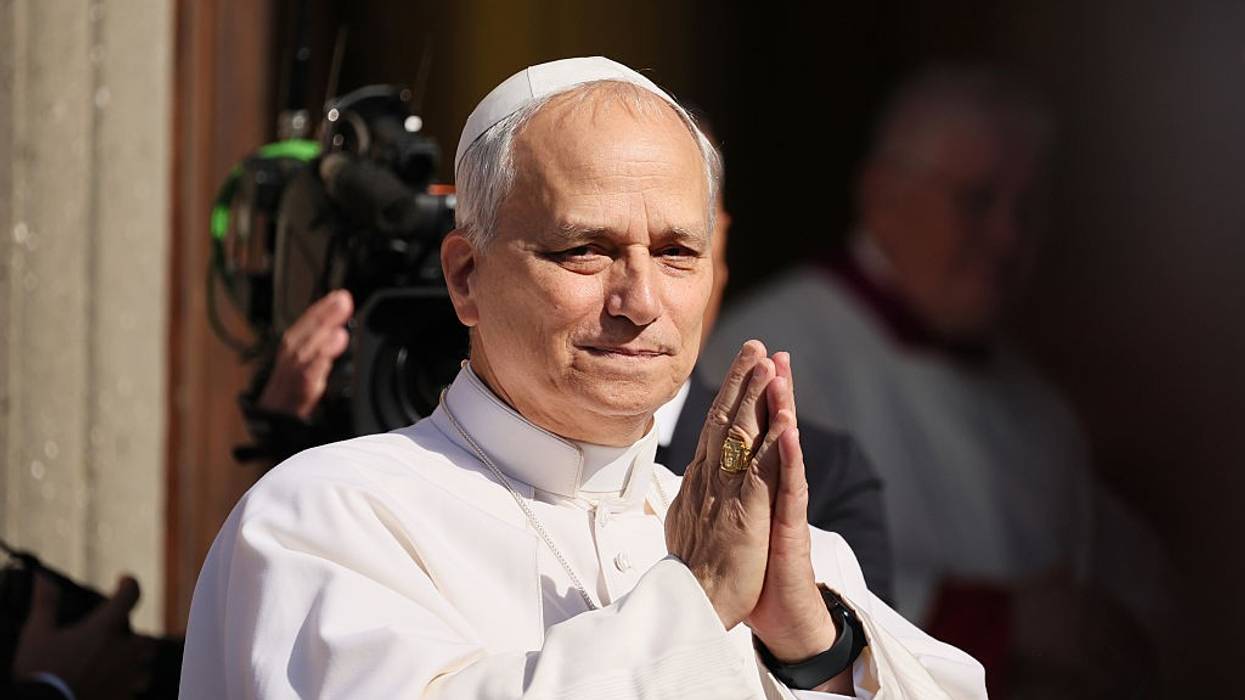
This month, the leader of the Roman Catholic church has asked us to join him in prayer for the “proper uses of wealth.”
Each month, the Holy Father asks for our prayers for specific intentions. In February it was for children with incurable diseases and September was for the care of water. This month, the pontiff’s prayer is for the “proper use of wealth, that not succumbing to the temptation of selfishness, it may always be put at the services of the common good and solidarity of those who have less.”
He asks for forgiveness for “storing up instead of sharing” and “for using goods as power rather than as service.” And a reminder that “true wealth is not found in what we keep, but what we give with love.”
The United States now has over 1,000 billionaires, with a combined total wealth approaching $10 trillion.
All faith traditions have prohibitions against excessive accumulation of wealth, wealth hoarding, and wealth idolatry. Incoming US Sen. James Talarico drew from these faith teachings in his successful run in Texas.
The Pope’s video of November’s prayer begins and ends with Caravaggio’s painting, “The Calling of Saint Matthew,” depicting the moment that Jesus Christ invites the tax collector Matthew to follow him. The prayer begins with the foundation of religious social teaching: “nothing is ours alone.”
Lord of life, all we have comes from You: the fertile land, the talents we’ve received, the effort of those who came before us.
Nothing is ours alone—everything is a shared gift. But so often, Lord, we let the wealth we seek or attain harden our hearts, lock us in selfishness, and make us forget the most vulnerable.
Forgive us for storing up instead of sharing, for using goods as power rather than as service. You remind us that true wealth is not found in what we keep, but in what we give with love.
A heart detached from possessions transforms the world: It opens paths of justice, tears down walls of indifference, and sows hope among the poor.
We ask you, Lord, that your Spirit teach us to use what we have—money, time, talents, opportunities—as instruments of fraternity.
May each economic, family, or community decision spring from a free heart, able to recognize that every good is meant for all, and that only by sharing we build the future.
Make us witnesses of a wealth transformed into service and mercy, so that our lives, united to the lives of others, may be a sign of your Kingdom of justice and peace. Amen.
Powerful words in an era of “peak oligarchy,” where wealth is concentrated to extraordinary levels. The United States now has over 1,000 billionaires, with a combined total wealth approaching $10 trillion.
The Chicago-born Robert Prevost served most of his pastoral life outside the US, including as Bishop of Chiclayo in Peru from 2015 to 2023. In 2023, Prevost was elevated to Cardinal by Pope Francis and returned to Rome.
Prevost was elected Pope at a 2025 conclave. In an indicator of prophetic statements to come, Prevost chose the papal name of Leo XIV, a nod to Pope Leo XIII who served as Pope between 1878 and 1903, during the disruption of the second industrial revolution.
Leo XIII was considered the founder of modern Catholic social teachings, known for its concern for workers, fairness, and inequality. He authored the famous encyclical Rerum Novarum in 1891 on the condition of the global working class, the rights of labor, a living wage, and opposition to state socialism and laissez-fair capitalism.
Our modern Pope, who still roots for the Chicago White Sox, is consciously positioning himself to articulate Catholic social teachings in this new era of artificial intelligence and extreme wealth inequality.
On a personal note, I came of age with the Catholic Worker movement, founded by Dorothy Day and Peter Maurin, lived in community, and co-authored a 2007 book on Catholic social teaching, Moral Measure of the Economy. I offered advice to my Sen. Bernie Sanders (I-Vt.) on his 2016 visit to the Vatican: “Bernie, Pope Francis, and the Moral Economy." Our work at the Institute for Policy Studies is called, the “Program on Inequality and the Common Good.”
The encyclical Rerum Novarum articulated the responsibility of governments to promote the common good of all, not just the few. As Pope Leo XIII wrote, “The civil power must not serve the advantage of any one individual, or of some few persons, inasmuch as it was established for the common good of all.” This was a radical idea in Gilded Age America and across the various oligarchies and monarchies of Europe.
Pope Leo XIV closes the pastoral prayer: “Make us witnesses of a wealth transformed into service and mercy.” Amen to that.

The kids who grew up playing GTA are now trying to build lives and raise families in a country where health insurance takes a bigger bite—year after year—out of American’s paychecks.
It’s been 13 years since the last Grand Theft Auto, long enough for the wait to become its own genre of joke. We got congressional UFO hearings before we got GTA VI. We got a second Trump administration before we got GTA VI. And somewhere along the way, the average annual premium for a family health insurance plan hit $28,303—up from $5,332 when the original GTA was released.
If you were 10 years old when the first GTA came out in 1997, you’re about 40 now. By 2004, you could borrow somebody’s Cadillac without asking in Grand Theft Auto: San Andreas and in real life you were probably worrying more about getting your driver's license than paying for health insurance. By the time you were in your 20s, and GTA V was in your console, the Affordable Care Act had given young adults a way to stay on a parent’s health insurance plan until 26—or buy coverage through the health insurance marketplaces.

During GTA V’s reign in 2013, workers with family coverage through their jobs paid an average of $4,565 a year toward their premiums. This year, they’re paying $7,471, up nearly 64% (which outpaces inflation).
When you’re playing the game, you can get hit by a Cadillac, get pistol-whipped, get shot. A few seconds later, you’re standing outside a hospital, free to do it all again as long as your homework is done. That’s GTA, not USA. In America, after you need medical attention, you go home and wait to see what the health insurer, the hospital, and the ambulance company each want to charge.
While most of us are never going to get hit by a Cadillac, that doesn’t need to happen for us to understand the healthcare system we have found ourselves in. Even among adults with health insurance, about 3 in 10 say they skipped or put off care they needed in the past year because of the cost. And if you did happen to find yourself under a Cadillac or on the receiving end of some blunt force trauma, the price of a basic emergency room evaluation has climbed 73% in recent years. Meanwhile, the average adjusted cost of a hospital stay topped $14,000.
The kids who grew up playing GTA are now trying to build lives and raise families in a country where health insurance takes a bigger bite—year after year—out of American’s paychecks. And with those bites, the health insurance industry has gotten bigger, too.
When the first GTA came out in 1997, UnitedHealth Group was No. 140 on the Fortune 500; Cigna was No. 54; and Anthem and WellPoint were still years away from the merger that created what’s now Elevance Health. On the 2026 list, UnitedHealth is No. 3, behind only Amazon and Walmart; Cigna is No. 14; and Elevance is No. 18.

As I said above, the kids who were 10 when the first GTA was released are pushing 40 now. I’m around that age and part of that cohort. We’re getting eaten alive by the healthcare system that we inherited, but now we’re old enough to have a say in what comes next for American healthcare.
Today, a new group of 10-year-olds will play GTA for the first time. They’re our younger brothers, our cousins, and our kids. We deserve better and so do they. Like us, those kids deserve to grow into a country (and a healthcare system) that they can depend on when things go bad for them and for the families they may someday have.
If history tells us anything, it’s that it may be a long time before the next Grand Theft Auto is released. Here’s to making sure we get a better healthcare system before GTA VII.
This piece was first published by Health Care Un-Covered and is reposted with permission.