

SUBSCRIBE TO OUR FREE NEWSLETTER
Daily news & progressive opinion—funded by the people, not the corporations—delivered straight to your inbox.
5
#000000
#FFFFFF
To donate by check, phone, or other method, see our More Ways to Give page.
Daily news & progressive opinion—funded by the people, not the corporations—delivered straight to your inbox.
Entrepreneurs are beginning to challenge business as usual, infusing ethics into the notoriously ruthless corporate world. In State of the World 2014, contributing author Colleen Cordes discusses the small, but growing, impact of benefit corporations and other triple-bottom-line companies--- which strive to have positive social and environmental impacts, as well as to earn a profit--- in the transition to a sustainable economy (www.worldwatch.org).
"Put simply, the conventional economic model--- amoral capitalism--- and the willingness of so many investors and consumers to tolerate it are two of the most challenging threats to preserving a livable human future," writes Cordes, public policy consultant and director of outreach and development for The Nature Institute of Ghent, New York.
In the last few years, however, public restlessness has been growing as the environmental and social abuses of the conventional economic model are revealed. And while activists and labor groups, investors and consumers, and national and international nonprofit groups are pushing for more corporate transparency, corporations themselves are still central to speeding the urgently needed transition to sustainable economies.
"A remarkable new breed of business is volunteering to be held publicly or even legally accountable to a triple bottom line: prioritizing people and the planet, while also promoting profits," writes Cordes. Led mostly by small and medium-sized companies in the United States (and to a lesser extent in Canada and Chile), many of these companies have been pushing to be officially responsible for their social and environmental effects, not just their financial success.
Almost all of these companies are privately held, although a few major corporations have recently become connected to the triple-bottom-line movement through subsidiaries they have acquired. On the one hand, such acquisitions can expand the movement's reach. On the other, they also raise questions about whether the movement's identity and potential will be diluted if large corporations acquire smaller, triple-bottom-line companies but are not strongly committed to their new subsidiaries' particular social and ecological values.
Given this and other challenges, the rise of companies seeking public accountability for their social and environmental impacts is a small revolution. But a few larger companies, like Patagonia and King Arthur Flour, have already joined the ranks. And there is considerable potential to entice other companies to enter the movement and to inspire the public to demand that other companies follow.
"Although it could take years for a Fortune 500 benefit corporation to emerge, such conversations--- and broader advocacy by citizens and public interest groups--- could begin now to firm up and speed up that possibility," writes Cordes.
Worldwatch's State of the World 2014 investigates the broad concept of "governance" for sustainability, including action by national governments, international organizations, and local communities. State of the World 2014 also highlights the need for economic and political institutions to serve people and preserve and protect our common resources. For more information on the project, visit https://www.worldwatch.org/state-world-2014-governing-sustainability.
The Worldwatch Institute was a globally focused environmental research organization based in Washington, D.C., founded by Lester R. Brown. Worldwatch was named as one of the top ten sustainable development research organizations by Globescan Survey of Sustainability Experts. Brown left to found the Earth Policy Institute in 2000. The Institute was wound up in 2017, after publication of its last State of the World Report. Worldwatch.org was unreachable from mid-2019.
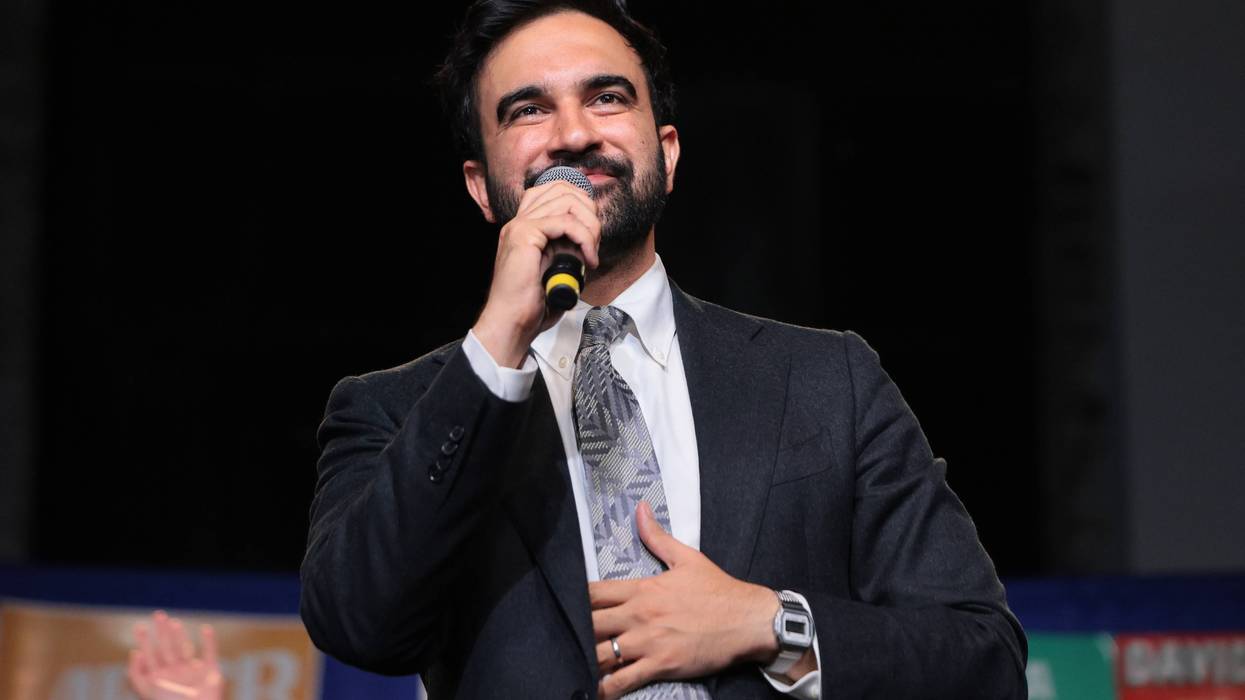
"Above all, it means time returned to New Yorkers who don't have nearly enough of it."
New York City Mayor Zohran Mamdani touted progress on fulfilling one of his top campaign promises on Wednesday by highlighting a new plan to speed up the city's bus service.
During a press event, Mamdani talked about the improvements that commuters are projected to see from the new "Faster Buses, Better Service" plan, a joint initiative created by the mayor and New York Gov. Kathy Hochul.
The plan's goal is to speed up buses by an average of six minutes per ride on priority routes, which Mamdani said would make a major long-term difference in New Yorkers' lives.
"Now if you take the bus to work, that adds up fast," he said. "But in six months, you will have spent 24 fewer hours on the bus. By the time a year rolls around, you will have saved more than two days of commuting time."
Mamdani: By the time a year rolls around, you will have saved more than two days of commuting time. That means breakfast with your family. That means getting home in time for bedtime. It means agreeing with your friends that Egypt was robbed yesterday. pic.twitter.com/DQtn5PqNwx
— Acyn (@Acyn) July 8, 2026
The mayor put this into perspective by listing other activities that New Yorkers can do when they don't have to spend as much time on the bus.
"That means breakfast with your family," he said. "It means having the time to argue balls and strikes at your kids' little league game. It means getting home for bedtime... Above all, it means time returned to New Yorkers who don't have nearly enough of it."
The 51-page Mamdani-Hochul plan envisions a number of changes to the bus system to speed up service.
Among other things, the plan includes building five "rapid bus corridors" in Brooklyn and Queens by 2030; adding 28 more priority bus lanes throughout the city by the end of the year; allowing "all-door boarding" on all buses to ease passenger bottlenecks by the end of 2027; and establishing dozens of "queue jump" traffic signals that give buses a head start over other vehicles.
"New York City sets a global standard for culture, innovation, and excellence," Mamdani said in a statement accompanying the plan. "Let us set the same standard for bus service—and prove that government can deliver real results for the people who call this city home."
The bus plan earned a thumbs up from Tahra Hoops, director of economic analysis at Chamber of Progress, who wrote in a Wednesday social media post that it could have a real positive impact on city life.
"A focus on faster, more reliable service is of more use to New Yorkers," Hoops wrote. "Nothing is more frustrating than after a long day at work to wait 30 minutes plus for the Q55 to come and then all of a sudden four show up at once."
In addition to speeding up buses, Mamdani vowed during his mayoral campaign to make them free to ride, which could be more difficult to deliver. The Metropolitan Transit Authority has estimated that delivering free bus service in the city would cost roughly $1 billion per year.
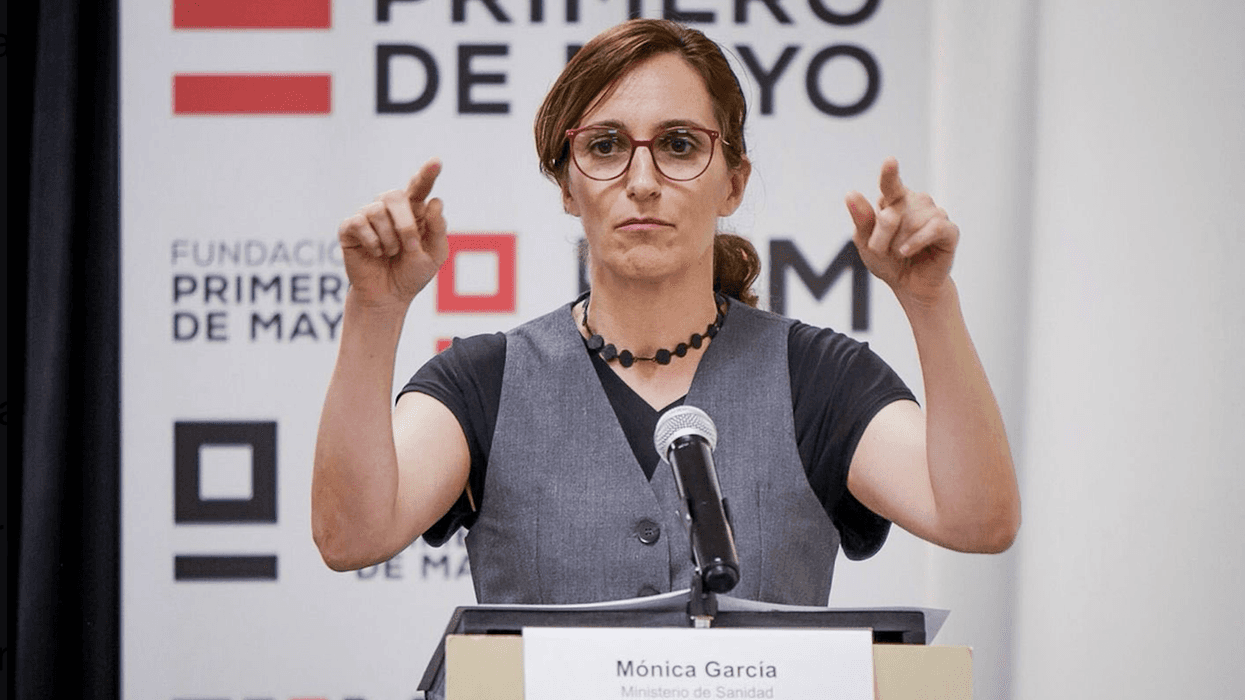
"Trump calls Spain a 'terrible partner' because it accepts neither blackmail nor threats. Because we are a sovereign, democratic country that defends multilateralism and peace."
US President Donald Trump's call on Wednesday to "cut off all trade with Spain" over what he said is the NATO ally's failure to pull its own weight in the alliance was shrugged off by Spanish Prime Minister Pedro Sánchez as "business as usual," but a member of the leftist leader's Cabinet responded to the largely infeasible threat by declaring that her government will not succumb to bullying.
Sitting alongside NATO Secretary-General Mark Rutte at the alliance's summit in the Turkish capital Ankara, Trump told reporters that “Spain is a wasted cause."
"We don’t want to do any trade business with Spain anymore, by the way,” the Republican president continued. “Spain is a terrible partner in NATO. They don’t participate. They don’t pay. I don’t want anything to do with Spain. Cut off all trade with Spain, please, including visits. Watch them come running back. Oh, they’ll come running back."
President Trump says he is "not happy" with NATO and demands to cut trade ties with Spain: "I don't want anything to do with Spain... cut off all trade with Spain please, including visits... watch them come running back." pic.twitter.com/3WCTAZU5mA
— CSPAN (@cspan) July 8, 2026
According to NATO's official estimates for 2025, Spain spends 2% of its gross domestic product (GDP) on defense, equivalent to about $35.7 billion, the seventh-highest amount in the alliance. Five other NATO members—Belgium, Czechia, Luxembourg, North Macedonia, and Portugal—also spend 2% of their GDP on their militaries, the lowest percentage in the alliance. NATO members have agreed to meet a defense spending goal of 3.5% of GDP by 2035, while Trump has repeatedly urged alliance nations to budget 5%.
Sánchez brushed off Trump's tirade as "business as usual" while touting Spain's "excellent" trade relations with the United States and vowing to respond "with calm and patience" to the president's threat.
"When you step back a bit from these kinds of actions, what you see is that relations between the United States and Spain are very, very positive socially, culturally, economically, and politically," he said.
"Spain is a country that strives to maintain the best possible relations with all countries, especially allied countries, with whom we have very consolidated ties that have transcended the ideological orientation of the administrations that have governed Spain or the United States over the decades," Sánchez added.
Spanish Health Minister Mónica García was more blunt in her response to Trump's remarks.
"Trump calls Spain a 'terrible partner' because it accepts neither blackmail nor threats," she said on social media. "Because we are a sovereign, democratic country that defends multilateralism and peace. What's terrible is confusing diplomacy with bullying."
Experts say that while the International Emergency Economic Powers Act grants US presidents broad authority to block or limit trade with countries, they must prove that targeted nations pose an "unusual or extraordinary threat" to national or economic security, which Spain clearly does not. Furthermore, as a European Union member, any trade negotiations must be conducted via Brussels, not Madrid.
This isn't the first time that Trump has floated cutting off commercial relations with Spain. Earlier this year, he threatened a full trade embargo on Spain over its refusal to allow use of its military bases to wage the illegal US-Israeli war on Iran. Spain's rejection of Trump's call for NATO members to spend 5% of their GDPs on defense, its formal support for South Africa's Gaza genocide case against Israel at the International Court of Justice, and its broader pro-Palestine stance have also angered the US leader.
Responding to Trump's renewed airstrikes on Iran and apparent abandonment of a frayed three-month ceasefire, Sánchez said Wednesday that "what we want is to avoid war."
"Wars are always bad news," the prime minister added, "especially for civilians, particularly children and women."

"Children were murdered in the first days of Trump’s illegal, pointless war that has wreaked havoc across the world," said Rep. Yassamin Ansari.
The House Democrat who introduced articles of impeachment against Pentagon Secretary Pete Hegseth earlier this year revived her call for his removal on Wednesday following news that top US military commanders bypassed warnings about the reliability of their targeting information before authorizing the bombing of an Iranian school, killing more than 150 people—mostly young children.
"This is unconscionable," Rep. Yassamin Ansari (D-Ariz.), one of two Iranian Americans in Congress, wrote on social media in response to CNN's reporting on the US commanders' catastrophic decision. "Children were murdered in the first days of [President Donald] Trump’s illegal, pointless war that has wreaked havoc across the world. It is an abomination. It is a war crime. And it is why I’ve introduced articles of impeachment against Pete Hegseth."
Ansari urged her colleagues to support the Hegseth impeachment articles, which state that the Pentagon chief "has authorized, condoned, or failed to prevent the use of military force in a manner inconsistent with the law of armed conflict" and "demonstrated a willful disregard for the Constitution," among other alleged violations.
Currently, just 16 House Democrats are listed as co-sponsors of Ansari's impeachment articles against Hegseth, who dismantled the Pentagon's civilian harm mitigation programs before the Trump administration attacked Iran in late February. According to ProPublica, "Hegseth made deep cuts to the Civilian Harm Mitigation and Response programs and slashed CHMR staff at military commands by more than 90%."
"That included removing civilian harm specialists from target development strike teams and reducing the team of 10 at Central Command to only one full-time staffer," the outlet added.
CNN reported on Tuesday that senior US military commanders ignored warnings that intelligence pertaining to possible targets in Iran "was severely out of date and approved some strikes"—including the bombing of Shajareh Tayyebeh Elementary School in Minab, an attack that human rights groups say should be investigated as a war crime.
Months later, the Pentagon has not publicly released the findings of its investigation into the strike, and Trump recently said he doesn't believe the US was responsible for the Minab school attack, despite now-abundant evidence to the contrary. The attack is seen as one of the worst massacres of civilians in recent US military history.
Last week, The Associated Press reported that when news of the school bombing emerged on the first day of the US-Israeli assault on Iran, "the US military knew they had conducted strikes in the vicinity—though it took the military time to verify the Iranian claims that a school was struck and begin a formal investigation."
"One former Pentagon official, similarly speaking on condition of anonymity, said the bombing came as a natural result of changes made by the Trump administration to reduce staff to mitigate civilian harm and Hegseth’s emphasis on lethality," the outlet noted. "When Hegseth took charge, he slashed the size of an office called the Civilian Protection Center of Excellence, created at the direction of Congress in late 2022. That stopped the office’s work on updating 'no-strike lists,' which are lists of protected sites such as hospitals, schools, churches, and mosques, that the Pentagon keeps."