5
#000000
#FFFFFF
To donate by check, phone, or other method, see our More Ways to Give page.
Daily news & progressive opinion—funded by the people, not the corporations—delivered straight to your inbox.
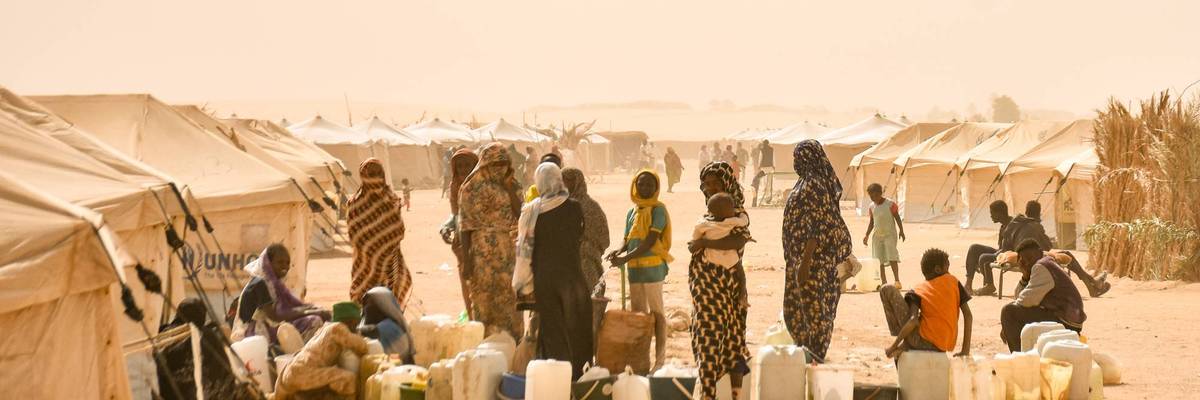
Families gather at a refugee camp in Al-Dabbah, Sudan on January 13, 2026.
"This is such a large number that it can be numbing, but it is made up of parents and children, grandparents and neighbors, people going to work, caring for families, and living their lives."
A report published Wednesday by researchers at the University of Chicago's Climate Impact Lab estimates that extreme heat fueled by this year's "Super El Niño" event could kill more than 450,000 people in the coming months, in addition to deaths from drought, wildfires, and other extreme weather.
The report notes that "anomalously warm conditions" caused by the record-shattering El Niño—which refers to the warming of ocean-surface temperatures in the Pacific—"will resemble the higher temperatures that climate change is projected to deliver 20 years in the future... and will lead to 44% more extremely hot days than we would expect in a normal year."
Climate Impact Lab researchers projected that the extreme heat will result in 451,000 more lives lost through February 2027, compared to a typical year.
"This is about 65 times larger than the 6,800 people believed to be dead or missing from the recent Nepal flash flood," the new report observes. "With current forecasts suggesting El Niño will remain in place through spring 2027, we expect all of these numbers to grow even higher, particularly as impacts such as higher-than-average temperatures and heat-related deaths will linger into June and July."
Nigeria is expected to see the largest number of El Niño-related deaths over roughly the next five months, at 31,400. Indonesia, Sudan, India, and Brazil will see more than 10,000 deaths each through February, according to the Climate Impact Lab.
"This is such a large number that it can be numbing, but it is made up of parents and children, grandparents and neighbors, people going to work, caring for families, and living their lives,” Michael Greenstone, a co-founder of the Climate Impact Lab, said in a statement. "This report allows decisionmakers to see exactly where emergency actions can be taken now to save tens of thousands of lives in the coming months."
The impact lab's report describes this year's El Niño as a "postcard from our future," noting that "it is bringing temperatures climate change is projected to deliver 20 years in the future."
"Twenty years from now, once today’s extreme temperatures become the new normal," said Tamma Carleton, faculty head of research for the Climate Impact Lab and co-author of the new report. "We don’t want to be in a constant state of emergency."
The report was released shortly after United Nations Secretary-General António Guterres warned in his final address to the UN General Assembly in New York on Tuesday that "a supersized El Niño" is "speeding straight for humanity."
"As tragic events have shown, impacts are arriving sooner, hitting harder, and spreading further than many anticipated," said Guterres. "Now we face a near-certain breach of the 1.5°C limit."
On Saturday, The Washington Post observed, the average ocean-surface temperature in a portion of the central equatorial Pacific Ocean reached 3.05°C, "the highest peak sea surface temperature anomaly on record."
"The record anomalous reading occurred two months earlier in the year than the previous peak in November 2015 and an El Niño in 1877 that contributed to a famine that wiped out 3 to 4% of the global population," the Post added.
Dear Common Dreams reader, It’s been nearly 30 years since I co-founded Common Dreams with my late wife, Lina Newhouser. We had the radical notion that journalism should serve the public good, not corporate profits. It was clear to us from the outset what it would take to build such a project. No paid advertisements. No corporate sponsors. No millionaire publisher telling us what to think or do. Many people said we wouldn't last a year, but we proved those doubters wrong. Together with a tremendous team of journalists and dedicated staff, we built an independent media outlet free from the constraints of profits and corporate control. Our mission has always been simple: To inform. To inspire. To ignite change for the common good. Building Common Dreams was not easy. Our survival was never guaranteed. When you take on the most powerful forces—Wall Street greed, fossil fuel industry destruction, Big Tech lobbyists, and uber-rich oligarchs who have spent billions upon billions rigging the economy and democracy in their favor—the only bulwark you have is supporters who believe in your work. But here’s the urgent message from me today. It's never been this bad out there. And it's never been this hard to keep us going. At the very moment Common Dreams is most needed, the threats we face are intensifying. We need your support now more than ever. We don't accept corporate advertising and never will. We don't have a paywall because we don't think people should be blocked from critical news based on their ability to pay. Everything we do is funded by the donations of readers like you. When everyone does the little they can afford, we are strong. But if that support retreats or dries up, so do we. Will you donate now to make sure Common Dreams not only survives but thrives? —Craig Brown, Co-founder |
A report published Wednesday by researchers at the University of Chicago's Climate Impact Lab estimates that extreme heat fueled by this year's "Super El Niño" event could kill more than 450,000 people in the coming months, in addition to deaths from drought, wildfires, and other extreme weather.
The report notes that "anomalously warm conditions" caused by the record-shattering El Niño—which refers to the warming of ocean-surface temperatures in the Pacific—"will resemble the higher temperatures that climate change is projected to deliver 20 years in the future... and will lead to 44% more extremely hot days than we would expect in a normal year."
Climate Impact Lab researchers projected that the extreme heat will result in 451,000 more lives lost through February 2027, compared to a typical year.
"This is about 65 times larger than the 6,800 people believed to be dead or missing from the recent Nepal flash flood," the new report observes. "With current forecasts suggesting El Niño will remain in place through spring 2027, we expect all of these numbers to grow even higher, particularly as impacts such as higher-than-average temperatures and heat-related deaths will linger into June and July."
Nigeria is expected to see the largest number of El Niño-related deaths over roughly the next five months, at 31,400. Indonesia, Sudan, India, and Brazil will see more than 10,000 deaths each through February, according to the Climate Impact Lab.
"This is such a large number that it can be numbing, but it is made up of parents and children, grandparents and neighbors, people going to work, caring for families, and living their lives,” Michael Greenstone, a co-founder of the Climate Impact Lab, said in a statement. "This report allows decisionmakers to see exactly where emergency actions can be taken now to save tens of thousands of lives in the coming months."
The impact lab's report describes this year's El Niño as a "postcard from our future," noting that "it is bringing temperatures climate change is projected to deliver 20 years in the future."
"Twenty years from now, once today’s extreme temperatures become the new normal," said Tamma Carleton, faculty head of research for the Climate Impact Lab and co-author of the new report. "We don’t want to be in a constant state of emergency."
The report was released shortly after United Nations Secretary-General António Guterres warned in his final address to the UN General Assembly in New York on Tuesday that "a supersized El Niño" is "speeding straight for humanity."
"As tragic events have shown, impacts are arriving sooner, hitting harder, and spreading further than many anticipated," said Guterres. "Now we face a near-certain breach of the 1.5°C limit."
On Saturday, The Washington Post observed, the average ocean-surface temperature in a portion of the central equatorial Pacific Ocean reached 3.05°C, "the highest peak sea surface temperature anomaly on record."
"The record anomalous reading occurred two months earlier in the year than the previous peak in November 2015 and an El Niño in 1877 that contributed to a famine that wiped out 3 to 4% of the global population," the Post added.
A report published Wednesday by researchers at the University of Chicago's Climate Impact Lab estimates that extreme heat fueled by this year's "Super El Niño" event could kill more than 450,000 people in the coming months, in addition to deaths from drought, wildfires, and other extreme weather.
The report notes that "anomalously warm conditions" caused by the record-shattering El Niño—which refers to the warming of ocean-surface temperatures in the Pacific—"will resemble the higher temperatures that climate change is projected to deliver 20 years in the future... and will lead to 44% more extremely hot days than we would expect in a normal year."
Climate Impact Lab researchers projected that the extreme heat will result in 451,000 more lives lost through February 2027, compared to a typical year.
"This is about 65 times larger than the 6,800 people believed to be dead or missing from the recent Nepal flash flood," the new report observes. "With current forecasts suggesting El Niño will remain in place through spring 2027, we expect all of these numbers to grow even higher, particularly as impacts such as higher-than-average temperatures and heat-related deaths will linger into June and July."
Nigeria is expected to see the largest number of El Niño-related deaths over roughly the next five months, at 31,400. Indonesia, Sudan, India, and Brazil will see more than 10,000 deaths each through February, according to the Climate Impact Lab.
"This is such a large number that it can be numbing, but it is made up of parents and children, grandparents and neighbors, people going to work, caring for families, and living their lives,” Michael Greenstone, a co-founder of the Climate Impact Lab, said in a statement. "This report allows decisionmakers to see exactly where emergency actions can be taken now to save tens of thousands of lives in the coming months."
The impact lab's report describes this year's El Niño as a "postcard from our future," noting that "it is bringing temperatures climate change is projected to deliver 20 years in the future."
"Twenty years from now, once today’s extreme temperatures become the new normal," said Tamma Carleton, faculty head of research for the Climate Impact Lab and co-author of the new report. "We don’t want to be in a constant state of emergency."
The report was released shortly after United Nations Secretary-General António Guterres warned in his final address to the UN General Assembly in New York on Tuesday that "a supersized El Niño" is "speeding straight for humanity."
"As tragic events have shown, impacts are arriving sooner, hitting harder, and spreading further than many anticipated," said Guterres. "Now we face a near-certain breach of the 1.5°C limit."
On Saturday, The Washington Post observed, the average ocean-surface temperature in a portion of the central equatorial Pacific Ocean reached 3.05°C, "the highest peak sea surface temperature anomaly on record."
"The record anomalous reading occurred two months earlier in the year than the previous peak in November 2015 and an El Niño in 1877 that contributed to a famine that wiped out 3 to 4% of the global population," the Post added.