

SUBSCRIBE TO OUR FREE NEWSLETTER
Daily news & progressive opinion—funded by the people, not the corporations—delivered straight to your inbox.
5
#000000
#FFFFFF
To donate by check, phone, or other method, see our More Ways to Give page.
Daily news & progressive opinion—funded by the people, not the corporations—delivered straight to your inbox.

"This is a landmark win for every journalist who refuses to be silenced."
A group dedicated to defending the rule of law from authoritarianism and corruption said it had succeeded in its "monumental defense of the First Amendment" on Monday after an independent arbitrator ruled that The Washington Post had wrongfully fired columnist Karen Attiah last September over social media posts she wrote about assassinated right-wing activist Charlie Kirk, and ordered the newspaper to rehire Attiah.
"The ruling marks a landmark moment for press freedom, confirming that corporate media institutions cannot use retaliatory discipline to silence journalists who address uncomfortable truths," said Democracy Defenders Fund, which signed on to represent Attiah, along with the W ashington-Baltimore News Guild, when she filed a grievance against the Post arguing she had been wrongfully terminated.
The arbitrator, Sarah Miller Espinosa, said in the binding decision that the Post "did not have good and sufficient cause to terminate" Attiah's employment, which it did after then-opinion editor Adam O'Neal complained about her social media posts to a human resources officer and then-CEO Will Lewis.
Espinosa ordered the Post to provide Attiah with full back pay and benefits. Attiah has said she would be “willing to go back” to the newspaper.
In her posts, Attiah suggested that while influential figures on the far right demanded what she called "performative mourning" for Kirk, who was known for "debating" liberal college students and was fatally shot at an event at Utah Valley University, America had "shrugged and moved on" after other acts of political violence.
"Part of what keeps America so violent is the insistence that people perform care, empty goodness, and absolution for white men who espouse hatred and violence," said Attiah, who worked at the Post for 11 years, on Bluesky. "Refusing to tear my clothes and smear ashes on my face in performative mourning for a white man that espoused violence is... not the same as violence."
The Post executives met without Attiah and decided to fire her, with chief human resources officer Wayne Connell accusing her in writing of "gross misconduct" and violations of the Post's social media policies that could "harm the integrity of our organization."
Espinosa noted in her decision that, as the Washington-Baltimore News Guild argued during the arbitration proceedings, “there
were clearly external pressures to fire Ms. Attiah after the Kirk murder," as "there were widespread calls to fire people who expressed opinions at all critical of Charlie Kirk, including by prominent elected officials such as Vice President JD Vance.”
A Reuters investigation in November 2025 estimated that about 600 people were fired, investigated, disciplined, or suspended from their jobs in the weeks after Kirk was assassinated.
Attiah testified at an arbitration hearing in June that her posts had been part of her work as an opinion columnist, where it was within her duties to comment "on our discourse on political violence."
The arbitrator's decision, said Attiah, "confirms what we've said from the start: I was doing my job as an opinion journalist, and doing that job is not misconduct.
"After spending over a decade of my career at the Post as an editor and an opinion columnist focusing on race, gender, and global human rights, I’m relieved to finally have that record set straight," she continued. "I am grateful to everyone at the Guild and Democracy Defenders who stood behind me through this nearly yearlong battle. I hope that this win sends a message to journalists and media institutions everywhere that freedom of expression is always worth fighting for.”
Espinosa said in her ruling that the Post failed to make a convincing case that Attiah had "disparaged white men" as a group in her social media posts or that she was "responsible for potentially endangering her colleagues" and for "threats of violence made by bad actors" against the Post.
The Post's implication that Attiah had endangered the newspaper and its staff was "wholly rejected as justification for the termination," wrote Espinosa.
Norm Eisen, co-founder and executive chair of Democracy Defenders Fund, said the decision was "a thunderous victory for Karen Attiah, an award-winning journalist fired for doing her job, over Bezos’ Washington Post," referring to Jeff Bezos, the billionaire Amazon founder who purchased the newspaper in 2013 and last year called for the opinion section to focus on "personal liberties and free markets.”
"The Post tried to pass off retaliation as discipline, but the rule of law has exposed it for what it truly is: wrongful termination," said Eisen. "This is a landmark win for every journalist who refuses to be silenced."
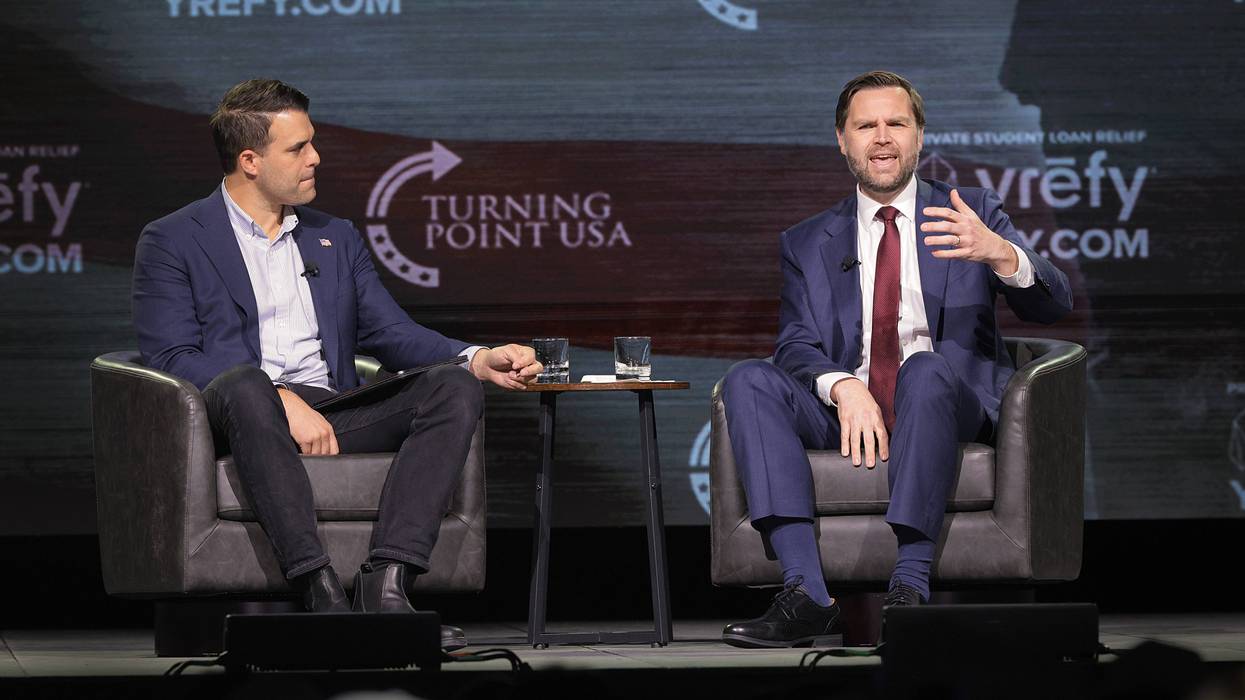
Audience members also booed the vice president, who claimed the Trump administration "solved" Israel's war on Gaza.
US Vice President JD Vance was repeatedly heckled over the Trump administration's support Israel's genocide in Gaza and the US-Israeli war on Iran as he spoke at a Turning Point USA event in Georgia, underscoring frustration among a MAGA base betrayed by promises of a peace presidency.
Vance was discussing his disagreement with Pope Leo XIV's criticism of the Trump administration's xenophobic immigration policies and record-breaking warmongering when someone in the audience at the Akins Ford Arena near the University of Georgia in Athens yelled out, "Jesus Christ doesn't support genocide!"
"I agree," said Vance. "Jesus Christ certainly does not support genocide, whoever yelled that out from the dark. He certainly does not. I think that's pretty easy."
Some audience members booed Vance's response, and the heckler shouted, "You're killing children!"
U.S. Vice President JD Vance faced hecklers during a speech at a Turning Point USA event, where he said Pope Leo should "be careful when he talks about matters of theology."
[image or embed]
— Reuters (@reuters.com) April 14, 2026 at 9:54 PM
Hundreds of children have been killed by US-Israeli bombing of Iran, including 168 students and staff at a girls' school in Minab who were massacred in a February 28 US cruise missile strike. More than 20,000 Palestinian children have been killed by Israel's war and siege on Gaza, according to local officials and international advocacy groups.
While Jesus never supported genocide in the New Testament of the Bible, his purported father commands his followers to commit genocide several times in the Old Testament. Israeli leaders including Prime Minister Benjamin Netanyahu—who is wanted by the International Criminal Court for alleged crimes against humanity and war crimes—have invoked God's biblical command to "slay" everyone in the Hebrews' ancient enemy of Amalek, "man and woman, infant and suckling," as divine sanction to lay waste to Gaza.
Attorneys in the South Africa-led International Court of Justice case against Israel have pointed to Israeli leaders' references to Amalek as evidence of genocidal intent, a key legal requisite for proving genocide.
Vance responded to the heckler, asserting that when President Donald Trump took office, "the humanitarian situation in Gaza was an absolute catastrophe."
"So if you want to complain about what happened in Gaza," he continued, "why don't you complain about Joe Biden in the last administration? We're the administration that solved that problem."
On January 20, 2025, former President Joe Biden's last day in office, the Gaza Health Ministry said at least 47,035 people had been killed by Israeli forces in the coastal strip since the Hamas-led attacks of October 7, 2023. Since Trump's return to power, Israeli forces have killed at least 25,280 more Palestinians in Gaza.
The Biden and Trump administrations have both supported Israel with tens of billions of dollars in armed aid, diplomatic cover including vetoes of numerous United Nations Security Council ceasefire resolutions, and repeated denials that the leading US ally in the Middle East is committing genocide.
While there is growing unease among many in the MAGA base over Trump's broken promises of no new wars and lower gasoline prices on "day one," critics note that this opposition does not indicate a full anti-war shift, as many of the president's supporters just want the war to end as quickly and cheaply as possible.
Turning Point USA was co-founded by far-right firebrand Charlie Kirk, who was shot dead last year while trying to deflect blame for US gun violence on gangs. Kirk explicitly opposed any US regime change war in Iran.
In a bid to counter Gen Z's rightward shift during the 2024 election, progressive activist Elise Joshi on Wednesday launched More Perfect University, which aims to mobilize young voters by focusing on the economic issues that affect them.

"Only by coming together and flexing our collective power as students, workers, tenants, and community members will we build a world for the 99%."
Gen Z's rightward shift in the 2024 election and the influence of Turning Point USA, the right-wing college organization co-founded by assassinated activist Charlie Kirk, have garnered considerable attention in the press—but a new project launched Wednesday by the labor-focused media group More Perfect Union makes the case that young voters across the country want an opportunity to strengthen "our collective power as the 99%."
While Turning Point USA has cast itself as an antidote to liberal viewpoints and "wokeness" on college campuses, Elise Joshi, who is leading the More Perfect University initiative, emphasized in The New York Times that Turning Point has demonstrated a steadfast “refusal to champion working-class issues.”
More Perfect University aims to mobilize young people in a movement centered on economic populism—turning their attention to the outsized power of corporations and ultrarich political donors while Turning Point USA is holding conventions where CEO Erika Kirk implores 20-something women to focus on finding a husband and condemns pro-immigration protesters as "demonic."
“The same corporations that are rigging the economy against young people are bankrolling the right’s campus operation,” Joshi told the Times.
In More Perfect University's launch video, released on Wednesday, Joshi said today's college students are "being robbed by Big... Everything."
From oil companies to private equity firms buying up housing, said Joshi, "elites have rigged the entire game. While they get billions in handouts, they squeeze us for profit, track our every move, and keep us too divided and exhausted to fight back."
NEW: More Perfect Union is opening up our newsroom, connecting with students everywhere, and equipping them with the tools needed to unrig our broken economic system. pic.twitter.com/oQT6sRqKC8
— MPUniversity (@MPUniversityUS) April 15, 2026
According to the group's website, More Perfect University will hold campus events that bring "all corners of campus life together" to build community and organize around efforts to fight for working people, offer virtual trainings where students can "connect with organizers already building power and winning," and open up More Perfect Union's newsroom to students, training them "to tell local stories that take on unchecked power."
"Mainstream media and establishment politicians are captured by corporate interests," said Joshi. "It's up to us to cover the issues our communities are facing and how everyday people are coming together to combat them.
The "student storytellers" with whom More Perfect University works, Joshi told the Times, will “understand our economy is not broken by accident.”
On April 20, US Sen. Bernie Sanders (I-Vt.) is set to co-host a virtual launch party for More Perfect University with journalist John Russell. The group is also planning an online event with former Federal Trade Commission chair Lina Khan, an outspoken critic of corporate monopolies and corruption.
The initiative comes as young voters express growing dissatisfaction with President Donald Trump's administration, less than a year and a half after voters ages 18-29 voted for former Democratic Vice President Kamala Harris by only four percentage points, signifying a major shift to the right following the 2020 election. Former President Joe Biden won the demographic by a 25-point margin in 2020.
The Yale Youth Poll, released on Wednesday, found that the views of voters ages 18-34 are heavily impacting Trump's overall sinking approval ratings. Sixty-eight percent of voters ages 18-22 disapprove of the president, according to the poll, as well as 72% of 23- to 29-year-olds.
More Perfect University is also launching as the Trump administration wages attacks on academic freedom on college campuses. Last month the US Department of Justice filed a lawsuit against Harvard University, alleging the school has "allowed antisemitism to flourish on campus."
Universities including Columbia and Northwestern have been criticized by students and faculty for capitulating to Trump, striking deals and agreeing to policy changes in order to restore federal funding that was cut.
"Mainstream media, politicians, and universities are capitulating to the 1%," reads More Perfect University's website. "The responsibility to tackle authoritarianism and corporate greed falls on us. We cannot do that scattered and isolated. Only by coming together and flexing our collective power as students, workers, tenants, and community members will we build a world for the 99%."
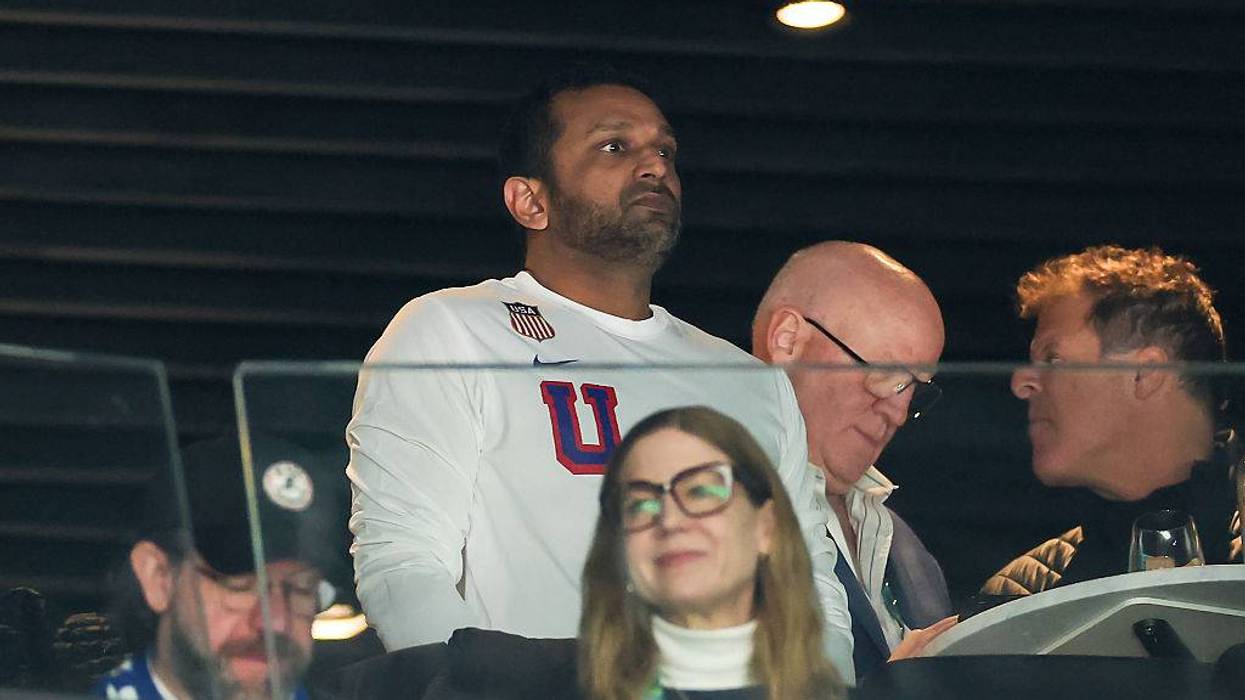
"The FBI cannot afford to have its resources further stretched by a director who views its staff and aircraft as a means to support his jet-setting lifestyle."
A whistleblower is claiming that FBI Director Kash Patel's frequent use of one of the agency's two jets has led to the delay of a high-profile murder probe.
Sen. Dick Durbin (D-Ill.) on Tuesday revealed he had received new whistleblower disclosures related to his investigations into Patel's use of FBI aircraft for personal travel, and he said they showed Patel's decisions regarding the use of FBI planes had delayed investigations not only into the murder of right-wing activist Charlie Kirk but also the November 2025 mass shooting at Brown University.
In the case of Kirk, Durbin said that the FBI shooting reconstruction team's deployment to Utah "was delayed by at least a day because of a bureau plane and pilot shortage caused by the director's personal flights."
Durbin said that he also received information showing how Patel bungled the aftermath of the Brown shooting by putting the FBI's Hostage Rescue Team (HRT) on standby to respond to the incident.
"The director’s decision caused immediate confusion," Durbin said, "because that order was not communicated to HRT; it upended the responsibility typically assigned to the local field office closest to the incident in question—in this case Boston or New York City—to provide immediate support; and it froze the aircraft’s usage by any other FBI team until the director removed the hold."
Durbin then said that the whistleblower described how his team "had to drive from Quantico, Virginia to Providence, Rhode Island overnight during a winter storm to reach the scene by 9:00 am the following morning to immediately process evidence."
Durbin noted he received this information shortly after Patel was seen chugging down a beer in the locker room of the gold medal-winning US men's Olympic hockey team on Sunday, after the director once again used an FBI plane to fly to Milan, Italy.
The Democratic senator said that Patel's trip to Italy could have seriously hampered the FBI's ability to investigate what may have been an assassination attempt on President Donald Trump.
"It also cannot be ignored that the director’s latest personal jaunt occurred on the same weekend an armed intruder attempted to breach President Trump’s Mar-a-Lago residence," Durbin explained. "The man was allegedly carrying a gas can and a shotgun, and he was killed on the scene by law enforcement."
Durbin concluded by saying that "the FBI cannot afford to have its resources further stretched by a director who views its staff and aircraft as a means to support his jet-setting lifestyle."
MS NOW reported that an FBI spokesperson has "disputed" the whistleblower's claims that Patel's decisions had caused delays to investigations, but added that they need to "check into the matter more deeply to gather information."