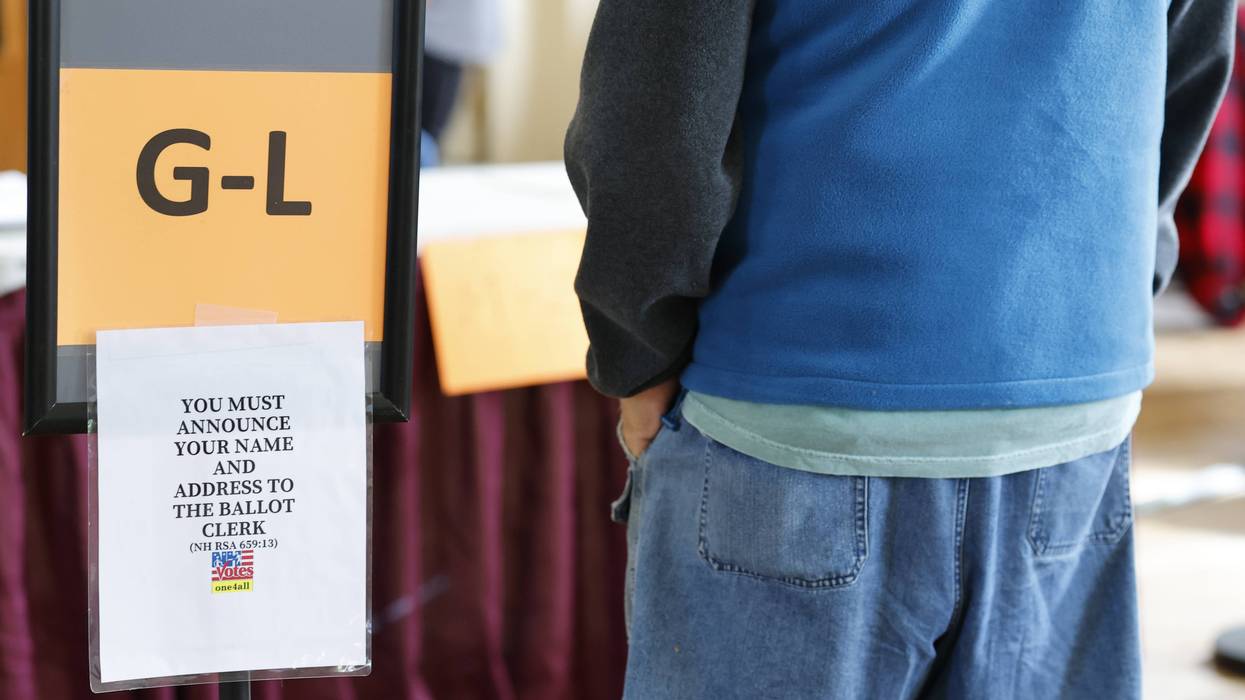
Days Before Midterms, US Supreme Court Lets New Hampshire Bar Student IDs for Voting
"The Supreme Court thinks corporations can buy our elections but a college kid can’t use a student ID to vote."
The US Supreme Court ruled Thursday, less than two weeks before the midterm elections, that New Hampshire officials can bar students from using their school ID cards as a form of identification when voting.
Liberal Justice Ketanji Brown Jackson was the lone dissenter, expressing support for a lower-court decision ordering New Hampshire election officials to consider student IDs as evidence of a prospective voter's identity. Jackson wrote that "when an election is looming," she "would not disturb a clearly justifiable federal-court order issued to ensure that the public receives accurate information about a state’s electoral processes."
Josh Orton, president of the advocacy group Demand Justice, condemned the high court's decision as "absurd," saying that "the Supreme Court thinks corporations can buy our elections but a college kid can’t use a student ID to vote."
“This November we vote in numbers they can’t ignore," said Orton. "Long term, we must expand the Court and end this corrupt majority for good.”
The Supreme Court's brief decision came after New Hampshire officials, with the support of national Republicans, filed an emergency request urging the justices to block the lower-court order allowing election officials to take student IDs into consideration when a voter is trying to prove their identity. The lower-court order limited an April directive from New Hampshire's Republican secretary of state, David Scanlon, who said that "student IDs cannot be used as proof" under a recently enacted state voter ID law.
Retiring Sen. Jeanne Shaheen (D-NH), whose seat is up for grabs in a competitive race on November 3, wrote in a social media post that she "strongly" disagrees with the Supreme Court's decision and is "troubled by any efforts to limit access at the ballot box."
"With midterm elections days away," Shaheen added, "the Supreme Court just made it harder for our Granite State students to vote."
The counsel for the Coalition for Open Democracy, which sued over the New Hampshire voter ID law, said in a statement that the Supreme Court's decision was "wrong," arguing it injects "confusion into the election" and authorizes "an unconstitutional policy that will deprive young voters of their right to vote."
"We applaud Justice Jackson for her dissent," the statement continued. "We will continue to vigorously litigate this case in the defense of the fundamental right to vote of young voters across New Hampshire."

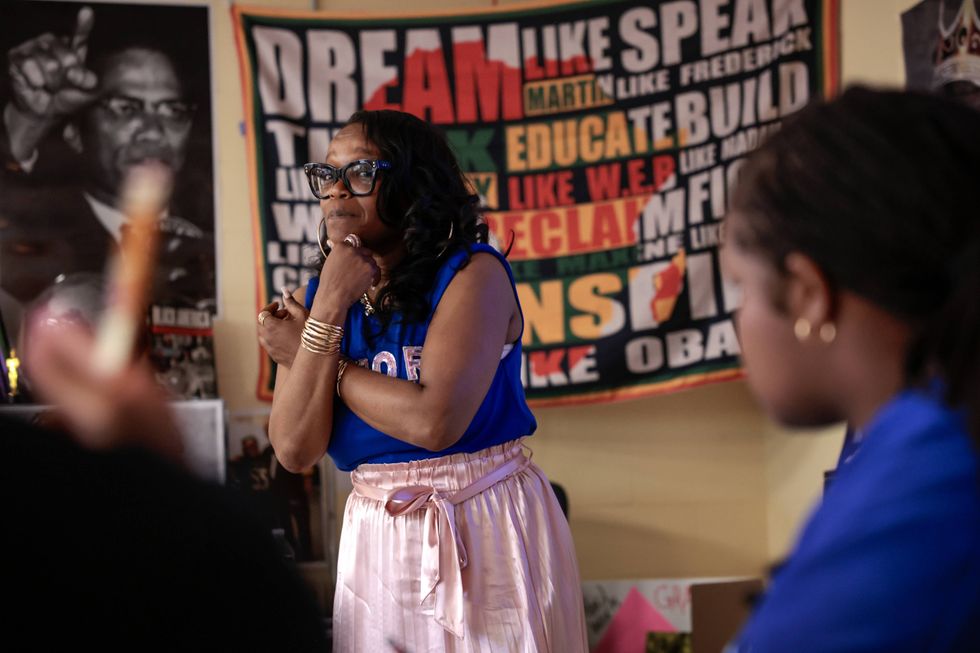 Tanisha Milton teaches a lesson on busing and the desegregation of Boston, Massachusetts public schools during an 8th grade civics class at TechBoston Academy on May 22, 2024. (Photo by Craig F. Walker/The Boston Globe via Getty Images)
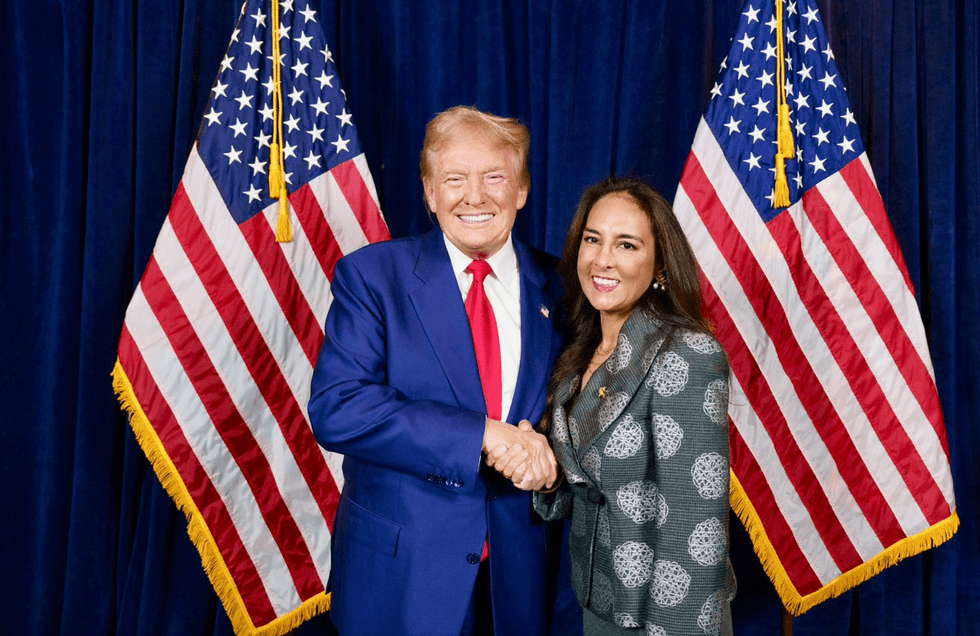 Harmeet Dhillon shakes hands with Republican US President-elect Donald Trump in a photo she posted on social media on October 31, 2024. (Photo: Harmeet Dhillon/X)