Protest Camps Against American Military Bases in Japan and Italy
The presence of the US military, 63 years after World War II, is a huge source of anger for the citizens of Japan, Korea, Germany and Italy. On the northern Japanese island of Hokkaido, the US military uses an artillery firing range known as Yausubetsu. The artillery range is small in comparison to ranges in the United States and Germany, only 30 kilometers by 10 kilometers, but the source of irritation to the Japanese farmers whose land was taken for the range and for those who live nearby the range is large. The peaceful rolling hills and valleys of the area are the home of the dairy industry of Hokkaido. The Japanese have used a cartoon of an angry dairy cow with boxing gloves as their symbol of protest of the US military's use of the range.
The Japanese government pressured all the farmers in the area to sell their land when the artillery range was established in 1962. All but three families eventually sold out. Mr. Kawase, refused to sell or move, and instead has built three structures that are used by activists year round to protest Japanese and American use of Yausubetsu for artillery practice. Mr. Kawase, a very spry 82 years old, build a huge Quonset hut on his property where 100 activists can sleep on mats, make posters and banners and listen to speakers. In the kitchen of the building, activists cook huge meals from the plants and vegetables of the Hokkaido countryside and serve fresh milk and cheeses from the angry local dairy herds.
On the roof of the building for all military aircraft flying over and for those on the land to see, Mr. Kawase has painted in huge Japanese script, the text of Article 9 of the Japanese constitution:
"Aspiring sincerely to an international peace based on justice and order, the Japanese people forever renounce war as a sovereign right of the nation and the threat or use of forces as means of settling international disputes. In order to accomplish the aim of the preceding paragraph, land, sea and air forces, as well as other war potential, will never be maintained. The right of belligerency of the state will not be recognized."
That is a big statement, both morally and physically. Mr. Kawase painstakingly painted every character on the roof himself.
The majority of Japanese citizens approve the spirit of Article 9, but some believe that Japan should commit Self-Defense Forces to international collective defense efforts, such as the authorization by the UN Security Council for an international military operation to remove Sadaam Hussein from Kuwait. In 2007 Japanese Prime Minister Shinzo Abe, in marking the 60th anniversary of the Japanese constitution, called for a review of the document to allow Japan to take on a larger role in global security, appealing to the Japanese people to consider this as a means to revive national pride.
Article 9 of the Japanese constitution is under seige by the Bush administration. They want Japan to provide more military support for the Iraq and Afghanistan wars and the "war on terror." In torpedoing Article 9, the Japanese government kowtowed to the force of the Bush administration and sent a refueling ship to the Indian Ocean to provide fuel to US warships and more recently have flown military transport aircraft into Iraq. Those actions have outraged millions of Japanese who do not want their country to become involved in the wars of other nations.
Japanese courts have become involved as Japanese citizens have brought legal actions against their government for "infringing on their right to live peacefully." The latest lawsuit was brought by 1100 Japanese citizens who argued that a continuing airlift mission of the Air Self-Defense Force to Baghdad was unconstitutional. The Nagoya High Court ruled on April 17, 2008 that the mission partially violated Article 9 of the Constitution but allowed the continuation of the Air Force mission.
The people of Kushiro, Hokkaido remember well the militarization of their country during World War II. 82 year old Shingichi Miyake, now head of the Kushiro Peace Association, recounted the role his eastern city of Kushiro played during that period. The aircraft carrier with the airplanes that bombed Pearl Harbor on December 7, 1941 left Japan from the harbor of Kushiro. Kushiro also was the anchor port for the "One Thousand Mile War," a brutal campaign from 1942-43 over control from Attu to Dutch Harbor in the Aleutian Islands. Kushiro, the largest city in the chain of islands stretching from northern Japan into the American Aleutian islands, was protected from invasion from the United States by hundreds of patrol or "picket" boats.
Ironically, despite the legacy of militarization of the island of Hokkaido and the city of Kushiro over 60 years ago, the wetlands around the city of Kushiro are home to the Japanese cranes, the symbol of peace for Japan and for the world. The cranes represent the spirit of Article 9, a denunciation by the Japanese people of war and a desire to live in peace.
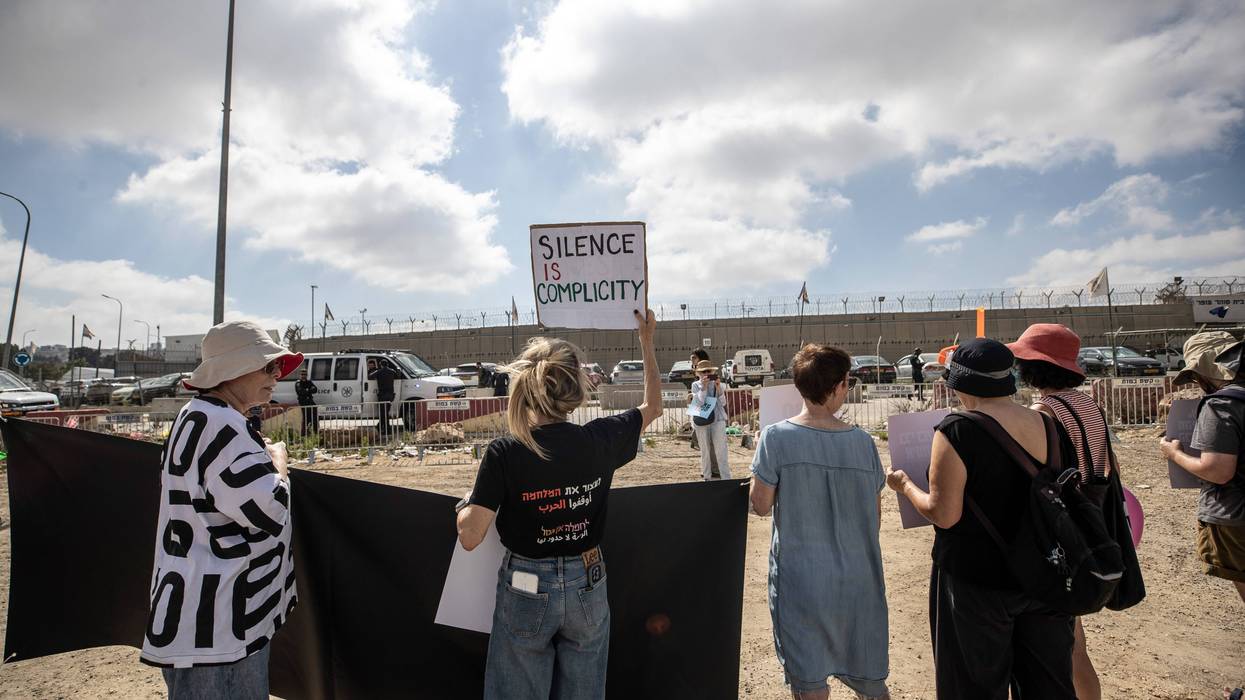
The citizens of Hokkaido join citizens from other parts of the world who are protesting the continuing presence and expansion of US military. The citizens of Vicenza, Italy for two years have protested the expansion of the US Army base into the only remaining green area in the city. Protest central in Vicenza is tent erected at the end of the abandoned airfield which will become the expanded home of the US Army. Like in Hokkaido, citizens of Vicenza use the tent as a visible presence symbol of protest and objection to continued US military presence 60 years after World War II.
The US military argues that "forward deployed bases" are critical for projection of US power, a warning to others that the US can be on their doorstep in minutes or hours. We, as citizens of the United States, must decide if it is the military we wanted projected, or whether it is in the best interest of our national security that some aspects of our country be "projected."
I think the continued aggressive projection of military power by the United States is undermining our national security rather than strengthening it
Ann Wright is a retired US Army Reserves Colonel with 29 years of military service. She also was a US diplomat who served in Nicaragua, Grenada, Somalia, Uzbekistan, Kyrgyzstan, Sierra Leone, Micronesia and Mongolia. She was on the small team that reopened the US Embassy in Kabul, Afghanistan in December, 2001. She resigned from the US diplomatic corps in March, 2003 in opposition to the Bush administration's decision to invade and occupy Iraq. She is the co-author of "Dissent: Voices of Conscience," profiles of government insiders who have spoken and acted on their concerns of their governments' policies.
Twitter
StumbleUpon
Facebook
Delicious
Digg
Newsvine
Google
Yahoo
Technorati
13 Comments so far
Show All"Think he was protesting the fitting out of those carriers? Think he was protesting the deployment of those carriers to attack America?" - Thomas More
Mr. More, am I hearing you right in that you appear to express that you have some hurt feelings about Japan's role in WWII? I'd be interested to have a clearer picture of your perspective.
"I mistrust people that change their tune after the fact." - T. Moore
I agree with CJM: "Smart people learn from their mistakes.
Really smart people learn from other people's mistakes" ...this is now a scientifically verifiable fact, based on the Weber-Fechner law of physics (Feldenkrais, Body and Mature Behavior).
Of course of importance to me here is my curiosity around wanting to know more about your feelings of "mistrust", and to finding out more about the needs behind the desire for a consistency of action, not changing a tune. My feeling is that this could be helpful for my exploration of clarifying how the "war on terror" was brought about and is continued to be conducted; my need being the creative expression cultured by the stability and consistency of peace, as opposed to the destruction of creative space and expression due to the instability and chaos of war.
A few weeks ago, on 30th April, hidden by a thick dawn fog, 3 New Zealand peace activists from the AnzacPloughshares group and "Christians Against All Terrorisms" succeeded in entering the secure area and puncturing and deflating one of the kevlar domes covering one of the Waihopai spy satellites. These two white domes have cost the New Zealand taxpayer hundreds of millions of dollars and are surrounded by unaccountable secrecy about their purposes. The Prime Minister, Helen Clark, once a protestor against US nuclear warships invading our ports, said that the deflating of the dome was a "senseless act of criminal vandalism" but everyone else thought it was a brilliant and highly symbolic act of non-violent protest against NZ's hosting of this electronic US spy satellite.
Read all about it here:http://ploughshares.org.nz/images/
From Nicky Hagar's 1996 book "Secret Power" http://www.fas.org/irp/eprint/sp/
we learn that the New Zealand Government does not have command over the Waihopai satellite base. The communications information intercepted by the 2 huge satellite dishes at Waihopai, is fed directly to the 4 other Echelon partners. The USA/ NSA is the central authority, who is not even accountable to the US congress!
The Anti-Bases campaign has been protesting against the Waihopai spybase on New Zealand soil for over 20 years:
http://www.converge.org.nz/abc/waihopai.html
"They popped the Waihopai balloon of power with humble sickles
With courage, they pricked the inflated sphere of spies,
The kiwi farmer, the teacher and the preacher
Exposed our government's hypocrisy and lies....
Misty fog of peace sheltered three shadowes in the dawn gloom
as the fog of war leads our planet to doom.
On the damp morning earth they knelt to pray
for the victims of all wars,
for the voiceless ones,
silenced by depleted uranium firestorms,
by hideous torture sans evidence of crime,
for the innocent children bombed into pitiless evaporation
because they were home - in the wrong place -
at the wrong time.
"They shall beat their swords into ploughshares"
"Blessed be the Peacemakers"
The expansion of the Vicenza base seems unnecessary, but then again so was the Iraq War, so necessity is not a validation for our wars, which just happen to be directed at oil-rich nations.
The Military Industrial Complex needed the Cold War to be profitable. When the Cold War came to an end in 1990, Dick Cheney and others fashioned a document around a unipolar world controlled exclusively by the US. The thinking was that everyone would have to go along with our uncontested supremacy and submit to our will and that of our proxies. (Rumsfeld separated new and old Europe around their willingness to obey our war on terror mandate.)
The outgrowth of this imperial hubris has been unrestricted militarism, neglect of soft power and diplomacy--cornerstones of effective foreign policy. Israel shapes our Middle Eastern policy. As our proxy, it receives unconditional support as the West Bank is systematically cleansed.
The reaction to our military interventions justifies further reprisal and so on. A cycle of violence renews itself wherein the US increasingly relies on military means to the exclusion of other methods.
The goal for Japan, Korea, Germany and Italy is to get the US military OUT.
"to keep the masses quiet".
At least the caesars had to pony up for bread and circuses . For the fawning masses , all Bush aka Clinton aka Obama aka McCain has to say is "I'll keep America the best for you because you deserve it "
It always amazes me that Americans continue to think other countries would fall apart without US bases to "protect" them, as if the people in those countries begged the US to put bases there. This is truly one of the most common erroneous beliefs that Americans have, and very indicative of the twisted US mindset.
Our obligation to protect Japan? Who are we fooling here? Since when does the U.S. military establish bases to "protect" others?
Thomas More May 9th, 2008 5:23 pm
"I mistrust people that change their tune after the fact.'
Smart people learn from their mistakes.
Really smart people learn from other people's mistakes.
And then there's the rest...
"82 year old Shingichi Miyake, now head of the Kushiro Peace Association"
Think he was protesting the fitting out of those carriers? Think he was protesting the deployment of those carriers to attack America? I mistrust people that change their tune after the fact.
unkanny May 9th, 2008 3:33 pm
Has it pretty much right.
As I understood it, this was an exchange - they gave up having a decent military for the guarantee we'll stomp anyone that messes with them. Either they expand their military (and change their Constitution to allow that), in which case they don't need our bases anymore or they have to put up with at least a minimal footprint (bootprint?) of US military bases.
What constitutes "minimal" is obviously going to be a subject of much debate. Japan may feel little threat whereas US military will look at it as never being put in the position of having to fight their way into Japan to save it. That would be really expensive in all sorts of ways. Ultimately, Japan has the right to limit our bases to zero. At that point we should be under no obligation to protect Japan.
I suspect that in an alternate universe, had Japan been allowed to rebuild their military, the locals would be raging at the Japanese government for taking their land. This way is a relief to the Japanese government, the locals end up raging at the US instead.
Thanks Ann.
American militarism is the scourge of the world. Its cancerous tentacles supports Bush's 'democracy and freedom' campaign, which, in reality, is neither. Like so much else related to this malignant administration - they say exactly the opposite of what they mean. They label others with epitaphs that accurately depict the actions of Bush et al. It is a game they play - all transmission of thought is simply propaganda to keep the masses quiet.
In a few years you won't be able to pay for the overseas bases, given the desire of your 'elites' not to pay taxes...
Don't worry. In a few years Blackwater will provide all the fighting men the empire needs. We won't need all those bases around the world full of enlisted men who live off the dogpatches that grow up around the bases while terrorizing local citizens.
Hoa binh