

SUBSCRIBE TO OUR FREE NEWSLETTER
Daily news & progressive opinion—funded by the people, not the corporations—delivered straight to your inbox.
5
#000000
#FFFFFF
To donate by check, phone, or other method, see our More Ways to Give page.
Daily news & progressive opinion—funded by the people, not the corporations—delivered straight to your inbox.
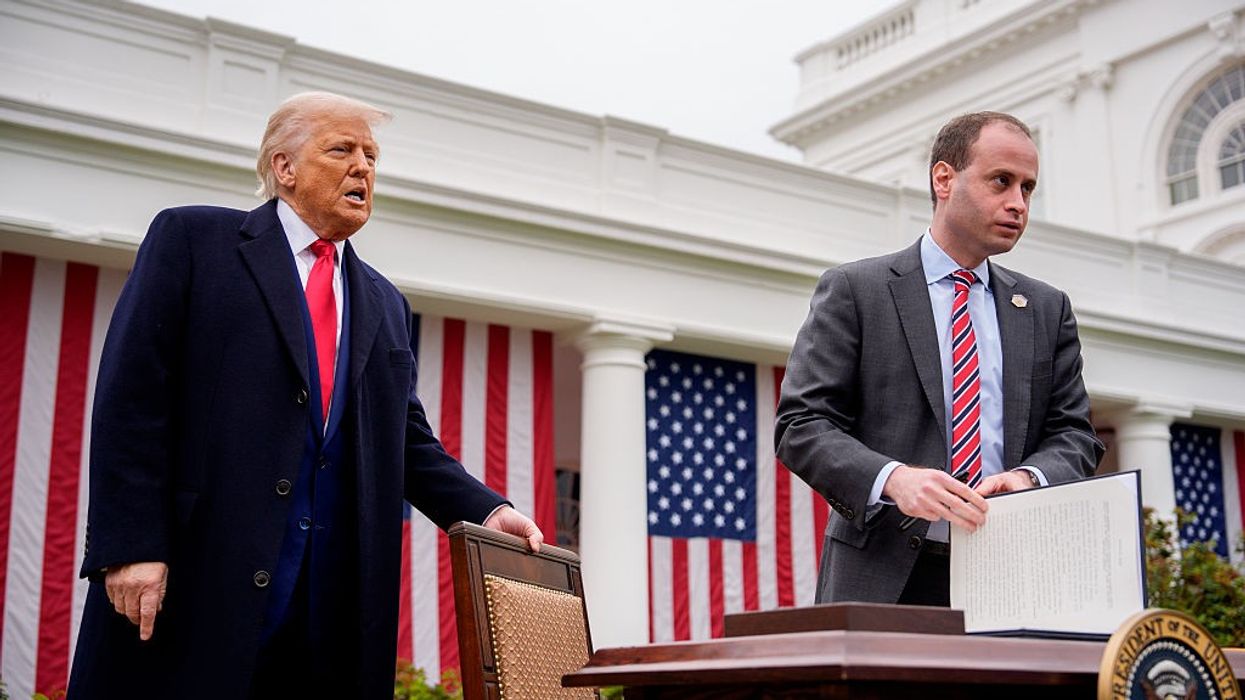
"What Republicans are trying to jam through Congress right now is a level of economic recklessness we’ve never seen before," said a group of Democratic lawmakers.
A new analysis indicates Republicans' plan to extend soon-to-expire provisions of their party's 2017 tax law, as well as their push to tack on additional tax breaks largely benefiting the rich and big corporations, would cost $7 trillion over the next decade, a figure that a group of congressional Democrats called "staggering."
The analysis from the nonpartisan Joint Committee on Taxation (JCT), published on Thursday, updates previous estimates that suggested the GOP effort to extend expiring provisions of the 2017 law would cost $4.6 trillion over a 10-year period. The new assessment shows that extending the law's temporary provisions—which disproportionately favored the wealthy—would cost $5.5 trillion over the next decade.
The projected cost of the GOP agenda balloons to $7 trillion after adding Senate Republicans' call for $1.5 trillion in additional tax cuts in the budget resolution they advanced in a party-line vote on Thursday. The GOP has come under fire for using an accounting trick to claim their proposed tax cuts would have no budgetary impact.
"The Republican handouts to billionaires and corporations will come at a staggering cost, and it's unconscionable that their plan to pay for those handouts includes kicking millions of Americans off their health insurance, hiking the cost of living with tariffs, and driving up child hunger," Sen. Ron Wyden (D-Ore.), Sen. Jeff Merkley (D-Ore.), Rep. Richard Neal (D-Mass.), and Rep. Brendan Boyle (D-Pa.) said in a joint statement issued in response to the JCT figures.
"Even after making painful cuts that will inflict hardship on typical American families, Republicans will still risk sending us into a catastrophic debt spiral that does permanent harm to our economy," the Democrats added. "What Republicans are trying to jam through Congress right now is a level of economic recklessness we've never seen before."
The JCT's updated cost analysis came as President Donald Trump plowed ahead with what's been characterized as the biggest tax hike in U.S. history, one that will hit working-class Americans in the form of price increases on household staples and other goods.
Trump administration officials, not known for providing reliable numbers, have claimed the president's sweeping new tariffs could produce roughly $6 trillion in federal revenue over the next decade. The Trump tariffs have sent financial markets into a tailspin, heightened recession fears, and prompted swift retaliation from targeted nations, including China.
In an appearance on MSNBC on Thursday, Boyle—the top Democrat on the House Budget Committee—said Trump's tariffs represent "the single largest tax increase in American history."
"It's a tax that everyone will pay in this country, based on the goods that they buy," said Boyle. "However, it's also a tax that is highly regressive—the poorest amongst us will end up paying a higher percentage of their income."
A previous version of this story incorrectly stated the analysis was conducted by the Congressional Budget Office. It was conducted by the Joint Committee on Taxation.
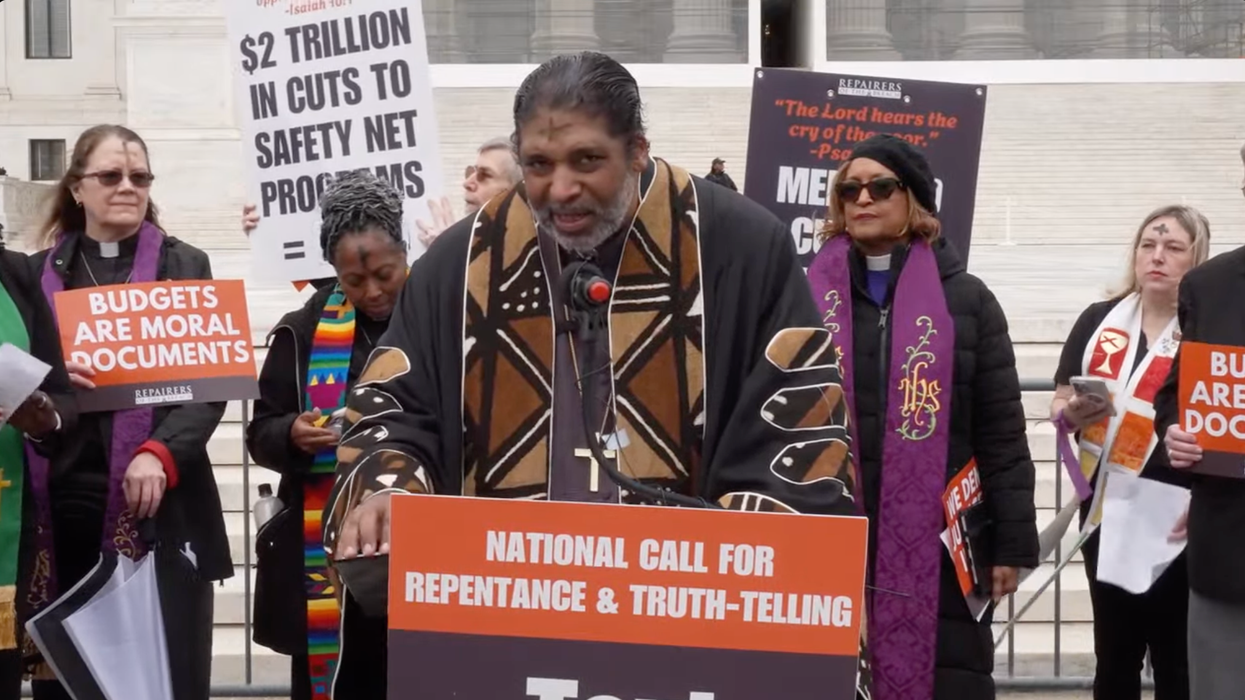
"We are releasing this powerful report to expose for the American people how immoral, dangerous, and insane the administration's proposed economic decisions are," said Bishop William Barber.
Leaders from various faiths came together in Washington, D.C. on Christians' Ash Wednesday to share an open letter and report calling out efforts by U.S. President Donald Trump's administration and Republicans in Congress to rip resources away from the working class to fund tax giveaways for the ultrarich.
"Budgets are moral documents," said Bishop William J. Barber II, president and senior lecturer of Repairers of the Breach, in a statement. "We are releasing this powerful report to expose for the American people how immoral, dangerous, and insane the administration's proposed economic decisions are and how they are going to hurt people."
"At this critical moment in our nation's history, we need a government that promotes unity and love towards all members of the human family, not division and hatred," added Barber, whose group released the report in partnership with the Economic Policy Institute (EPI) and the Institute for Policy Studies (IPS).
"The Trump-GOP agenda would tilt the playing field even further away from poor and low-income people in favor of the wealthy and big corporations."
The report—titled The High Moral Stakes of the Policy Battles Raging in Washington—explains that "social safety net and housing programs are under attack from two fronts," pointing to both Republican lawmakers' pursuit of cuts and Elon Musk, the unelected leader of Trump's so-called Department of Government Efficiency (DOGE).
The document details attacks on Medicaid, Medicare, Social Security, and the Supplemental Nutrition Assistance Program (SNAP), commonly called food stamps. It also warns that other "vital" initiatives such as the early childhood education program Head Start and federal rental assistance "could be on the chopping block."
EPI president Heidi Shierholz said that "as this report shows, these cuts will be profoundly destructive to incomes and economic security for this country's most vulnerable households—and they are being done for the sole purpose of providing tax cuts that will go overwhelmingly to the wealthiest households."
"This is an upside-down agenda that literally takes from struggling families to line the pockets of billionaires," she stressed. "We stand against this—and we stand for moral economic policies that lift up the most vulnerable, strengthen our communities, and ensure prosperity is shared by all."
Specifically, the GOP aims to extend expiring provisions of the 2017 Trump-GOP tax law that, as the report notes, "delivered huge windfalls to the rich and large corporations and contributed to the exploding wealth and power of our country's billionaire class."
"The Trump-GOP agenda puts recent improvements in the U.S. unemployment rate, low-income workers' real wages, and labor protections at risk. They have already rolled back some gains and indicated opposition to raising the federal minimum wage," the report continues, highlighting that while some states have higher hourly rates, the nationwide minimum wage has been $7.25 since 2009.
The publication also blasts Trump's anti-immigrant policies, emphasizing that "immigrants are a vital part of our communities and economy," and the president's mass deportations "would devastate undocumented and authorized immigrants and citizens alike."
The document concludes with a section on Trump's "alarming moves toward more widespread use of the U.S. war machine both around the world, and within the United States," citing his declaration of a national emergency at the Mexican border, attempt to dismantle the United States Agency for International Development, and proposed takeovers of the Gaza Strip, Greenland, and the Panama Canal.
"This report's data make clear that the Trump-GOP agenda would tilt the playing field even further away from poor and low-income people in favor of the wealthy and big corporations," said IPS executive director Tope Folarin. "We will see more families go hungry, lose healthcare, and struggle to pay rent while Republicans give huge tax windfalls and unprecedented political power to the wealthiest Americans and throw more tax dollars into the machines of war and mass deportation."
Former IPS director John Cavanagh, who is now a senior adviser, joined faith leaders outside the U.S. Supreme Court in D.C. for a gathering to discuss the new report and the letter, which Barber read to the crowd and which can be signed on his group's website.
"We write to issue this call for repentance and truth-telling because our most basic moral commitments have been betrayed by our political leaders," the letter declares. "We have struggled to realize a republic committed to equality and freedom for all of us."
"We write today to confess that we have become subject to the tyranny of technology," it continues. "Awed by the possibilities of progress and the promise of limitless growth, our political leaders have allowed corporate power to go unchecked for decades. Our courts have ruled that corporations should be treated like people while everyday people have been increasingly treated like things. In the richest nation in the history of the world, poverty has become epidemic as the fourth leading cause of death."
"As people of faith, we stand together in the public square to say, 'We repent.' We are not afraid of the false god of efficiency, and we will not bow to any tyranny that claims control of our common life," the letter states. "We invite our colleagues to assemble on the town square, at city hall, or on the state house lawn in communities across this land and join this call. As we have in Washington today, we invite communities to study the report on the true state of our nation."
The livestreamed event was followed by a march to the U.S. Capitol to deliver the documents to congressional leadership.
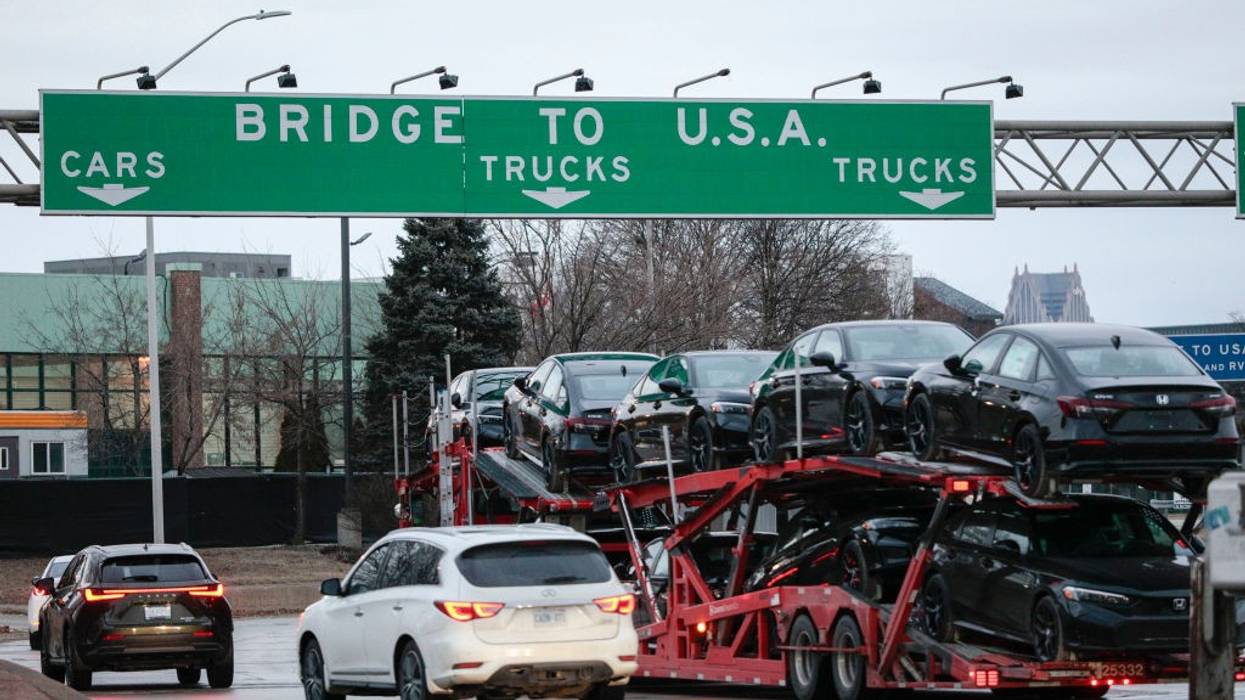
"The trade war Trump is igniting will weaken our economy and cause chaos in our marketplace as Americans pay the cost in the form of higher prices on everyday items," said Rep. Don Beyer.
As U.S. President Donald Trump's new tariffs took effect on Tuesday, Congressman Don Beyer released a Joint Economic Committee report showing that the policies could cost the average working-class family in the United States at least $1,600 annually.
"The tariffs Trump just imposed on Canada, Mexico, and China will raise costs by up to $2,000 per year for an average American family," Beyer (D-Va.) said in a statement. "The trade war Trump is igniting will weaken our economy and cause chaos in our marketplace as Americans pay the cost in the form of higher prices on everyday items."
Dean Baker, co-founder and senior economist of the Center for Economic and Policy Research, warns that Trump's tariffs could cost families even more than the estimates from Beyer's report, which cites figures from the Budget Lab at Yale University.
"While our report does not touch on this, these tariffs will also lead to retaliation that badly harms American producers," Beyer said. "And they will fail to achieve any of the pretextual objectives Trump has stated for imposing them. Less than two months into his term, Trump is running the economy into the ground and raising a real and growing risk of a recession."
Ignoring experts' warnings about impacts on consumers and the economy, Trump on Tuesday doubled his previous tariff for Chinese imports to 20% and—after a monthlong delay—hit Canadian and Mexican imports with 25% tariffs. As The Associated Press reported, the moves sparked "swift retaliation" from "America's three biggest trading partners."
Leaders from those countries had warned of their responses if Trump followed through on his threats. There was also evidence of what would happen from the tariffs that the president imposed on China during his first term. At the time, Beyer's report notes, "U.S. importers and consumers paid almost entirely for Trump's tariffs through higher prices."
Trump has recently claimed that his plan will force production in the United States, but the report points out that the new "tariffs also impact the price of domestically produced goods by causing U.S. producers to raise prices if their supply chain relies on imported raw materials subject to the tariffs."
Using figures released Monday by the Budget Lab, Beyer's report warns that this time:
"In addition to harming the national economy, Trump's tariff policies will significantly impact state and local economies," the report says. "In fact, small counties in the South and Midwest tend to have economies that are most reliant on international trade. Those states that are heavily dependent on trade for statewide business may also be particularly impacted."
Despite the anticipated impacts of the tariffs that Trump has already imposed, he is expected to go even further, targeting the European Union and beyond. The Tax Policy Center warned in October that "a 20% worldwide tariff and a 60% tariff on Chinese goods, one of many import tax ideas floated by... Trump, would increase household taxes by an average of nearly $3,000 in 2025."
Beyer—who serves on the panel behind the report and the House Ways and Means Subcommittee on Trade—noted Tuesday that "Republicans in Congress could stop this at any time by passing legislation I and others have offered to rein in Trump's abuses of tariff authorities, but they appear content to help Trump raise prices and risk economic disaster."
Separately, Beyer and every other Democrat on the subcommittee released a joint statement stressing that "Americans simply cannot afford to be caught in endless trade wars" and that they "are united in rejecting these irresponsible tariffs designed to increase revenue for more tax cuts for the ultrawealthy."
Republicans control not only the White House but also both chambers of Congress, and GOP House members last month advanced a budget resolution that would fund an extension of Trump's 2017 tax cuts for the rich by slashing health and food assistance programs that help millions of working-class Americans.
Beyer and his subcommittee colleagues called on House Republicans "to work with us to reassert Congress' role in setting strategic, stable trade policies and to invest in the American economy, instead of abdicating their responsibilities to President Trump and Elon Musk," the billionaire leading the administration's effort to gut the federal government.
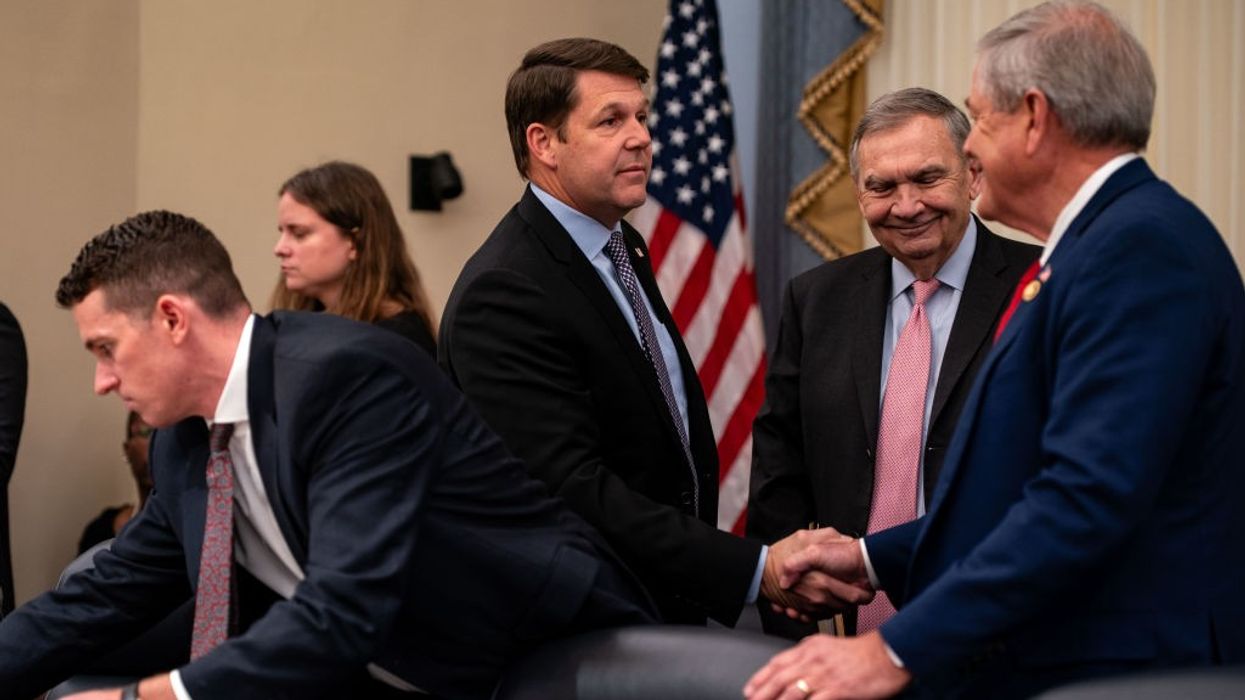
"Instead of choosing to protect the American people, they chose to protect billionaires and corporations," said the top Democrat on the House Budget Committee.
House Republicans advanced their budget plan out of committee Thursday night after a 12-hour markup session during which they rejected dozens of Democratic amendments, including proposed changes that would have protected Medicaid and federal nutrition benefits from the deep cuts the GOP hopes to impose to help finance trillions of dollars in tax breaks for the richest Americans.
The House Budget Committee advanced the Republican resolution, unveiled earlier this week, in a 21-16 vote along party lines. Prior to the vote, GOP members agreed to adopt an amendment offered by Rep. Lloyd Smucker (R-Pa.) that, according to Politico, effectively caps "the cost of the tax cuts at $4 trillion, with a dollar-for-dollar increase in that ceiling if Republicans cut more spending, up to a total of $2 trillion in cuts."
Democrats on the panel offered more than 30 amendments to the budget resolution, all of which Republicans rejected.
"Each of our amendments was a direct effort to shield the American people from the reckless cuts embedded in this proposal, cuts that will hurt the most vulnerable while giving trillions of dollars of handouts to the ultra-rich," Rep. Brendan Boyle (D-Pa.), the top Democrat on the House Budget Committee, said in his closing remarks at Thursday's hearing. "We fought to protect Medicaid and Medicare, ensuring that seniors, low-income families, children, and people with disabilities don't see their healthcare stripped away."
"We proposed amendments to maintain funding for public education, ensuring that schools remain adequately resourced and that teachers don't bear the burden of budget shortfalls," Boyle continued. "And we stood up for veterans who risked their lives for this country and deserve more than empty rhetoric. They deserve fully funded healthcare, food assistance, and the benefits they earned through their service. Yet, despite the clear benefits of these proposals, Republicans oppose all of them."
"Instead of choosing to protect the American people," he added, "they chose to protect billionaires and corporations."
"This isn't government of, by, and for the people; it's government of, by, and for billionaires."
The Republican budget blueprint calls for more than a trillion dollars in cuts to Medicaid and the Supplemental Nutrition Assistance Program (SNAP), which provide healthcare and food aid to tens of millions of low-income Americans.
"These aren't just numbers," Sharon Parrott, president of the Center on Budget and Policy Priorities, stressed in response to the House GOP resolution. "The loss of Medicaid means, for example, a parent can't get cancer treatment, and a young adult can't get insulin to control their diabetes. Cuts to food assistance mean a parent skips meals so their children can eat or an older person who lost their job has no way to buy groceries."
In addition to advancing the GOP's far-right ideological project, such cuts would partly offset the costs of Republicans' proposed tax breaks—which would disproportionately benefit the wealthiest people in the country, including the billionaires in President Donald Trump's Cabinet.
"Republicans are cutting Medicaid and SNAP to pay for tax breaks for the richest 1% of Americans," the progressive advocacy group Americans for Tax Fairness wrote in a social media post on Thursday. "They are literally taking $1.1 TRILLION away from you, and giving it to the wealthiest people in the country."
Thursday's vote marks a first step toward passage of a sprawling, filibuster-proof budget reconciliation package that will include a slew of Republican priorities.
But the House GOP must resolve its differences with Senate Republicans, who are pushing for two bills instead of one. The Senate plan, which Republicans advanced out of committee earlier this week, also calls for major cuts to Medicaid and SNAP.
"This Republican budget opens the door to massive cuts for families," Sen. Jeff Merkley (D-Ore.), ranking member of the Senate Budget Committee, said Thursday. "Democrats on the committee offered amendment after amendment to protect healthcare, housing, and education—all of the foundations working families need to thrive—and Republicans blocked every single one of them, all to later divert those cuts into massive tax breaks for the richest Americans."
"This is the Great Betrayal," Merkley added. "Trump campaigned on protecting families, but President Trump and Senate Republicans are all about protecting their billionaire friends. This isn't government of, by, and for the people; it's government of, by, and for billionaires."

"Congress has a choice—they can either extend a failed policy or create tax reform that actually works for Main Street and communities."
As the Trump administration and congressional Republicanspursue trillions of dollars in new tax giveaways for wealthy individuals and corporations, economists and pollsters this week are warning about how devastating the GOP's plan would be for small businesses and working families.
There Will Be Pain is the matter-of-fact title of a Thursday report from Josh Bivens, chief economist at the Economic Policy Institute (EPI). It details how extending the expiring provisions from the tax law that Republican lawmakers passed and Trump signed in 2017 "will have painful trade-offs for the U.S. economy and most Americans."
"The U.S. 'fiscal gap'—how much taxes need to be raised or spending cut to keep public debt stable as a share of gross domestic product—was entirely created by the Republican tax cuts of 2001, 2003, and 2017," Bivens wrote. "The 'tax gap'—the amount of taxes owed but not paid each year—is currently larger than the overall fiscal gap. It is driven by the richest U.S. households and businesses cheating the law and underpaying taxes."
Extending the Tax Cuts and Jobs Act (TCJA) provisions, currently set to expire at the end of this year, "would increase the fiscal gap by nearly 50%, from 2.1% to 3.3%," Bivens explained. "No matter how these tax cuts are financed, the result will hurt most working families, especially low-income households."
"Cuts to key social insurance and income support programs like Supplemental Nutrition Assistance Program (SNAP, commonly called food stamps) or Medicaid would do substantial damage to the nation's future workforce by depriving millions of children today of key health and developmental supports," he warned.
"Further, cuts of this size, if phased in quickly, would at minimum require the Federal Reserve to aggressively cut interest rates to avoid a recession," Bivens continued, "and could quite easily overwhelm any attempt by the Fed to buffer the economy from their effect, leading to recession and job losses."
The Republican playbook offers normal people crumbs and gives the cake to the rich. Extending Trump's 2017 tax cuts will give the bottom 60% $1.10 per day - but will give the top 1% $165 per day. Paying for this generosity to the top will cost working families dearly.
— Economic Policy Institute ( @epi.org) February 13, 2025 at 12:21 PM
Bivens argued that "expanding public investment and raising federal revenue via taxes that mostly come from high-income households is the most optimal way to close fiscal gap, boost economic productivity, and produce a fairer economy."
"If TCJA expansions for the rich are inevitable, this leaves three options: running deficits, increasing regressive taxes (in the form of tariffs, for example), or spending cuts," he added. "While none of these options is ideal, running deficits has the potential to be less harmful for American families, whereas regressive taxation and spending cuts will categorically cause the most harm."
The think tank published Bivens' report as a national coalition, Small Business for America's Future, released its findings from a survey of 863 small business owners' sentiments on the tax code, conducted from mid-December to late January.
The survey shows that just 3% of small business owners hired more workers as a result of the TCJA, 6% increased investments or employee wages, and 9% were able to pay down debts. Meanwhile, 43% reported no positive impact from the 2017 law.
The coalition found that small business owners are critical of the U.S. tax code in general and the TCJA specifically. Of those surveyed, 91% of said the tax code "favors large corporations over small businesses" and 76% report that wealthy individuals and big companies benefited most from the 2017 law, which critics have long called the "GOP Tax Scam."
The TCJA's small business pass-through deduction lets owners exclude up to 20% of their qualified business income from federal income tax. However, critics have called it complex and the survey shows that 39% of owners weren't sure if they claim the benefit.
The survey also highlights solutions that are popular with owners, such as exempting the first $25,000 of profit from federal income tax, creating a simplified standard deduction, making the tax code less complicated, and modernizing the Internal Revenue Service. Additionally, 61% of respondents support raising the corporate tax rate to pay for new small business tax benefits.
"By slashing the corporate tax rate permanently from 35% to 21%, while offering most small business owners only a temporary and complex 20% tax deduction, the TCJA created a two-tier tax system that overwhelmingly favored large corporations," said Walt Rowen, co-chair of Small Business for America's Future and president of the Susquehanna Glass Company in Pennsylvania.
"This isn't just hurting business owners—it's failing workers, families and local economies in every community across the country," Rowen added. "Now, Congress has a choice—they can either extend a failed policy or create tax reform that actually works for Main Street and communities."
The GOP controls the White House and both chambers of Congress, but those surveyed by the coalition were divided in terms of political parties: 23% said they didn't know or preferred not to say while 29% identified as Republicans, 25% as Democrats, and 19% as Independents. More than three-quarters were age 55 or older, 56% were white, and just over half were men. A quarter of owners listed themselves as the only employee, and nearly half had just 1-10 workers.
"Small businesses create jobs, drive innovation, and provide essential services in every community across America. But this law has done nothing to help them fulfill their potential," said Anne Zimmerman, a coalition co-chair and certified public accountant in Ohio. "When nearly 40% of small business owners can't even determine if they received the law's main small business tax deduction, while large corporations got an immediate and permanent tax cut, something is fundamentally wrong with our approach."
The small business survey and EPI's report followed polling released Tuesday by Data for Progress, Groundwork Collaborative, and the Student Borrower Protection Center that shows a majority of Americans believe not only that the rich pay too little in taxes but also that lawmakers shouldn't slash popular programs to give them more tax cuts.
"Americans might not always see eye to eye, but one thing's clear: Nearly every voter—across party lines—wants to protect Medicare, Medicaid, Social Security, and SNAP," said Groundwork Collaborative. "Meanwhile, the GOP is pushing to gut them for even more tax breaks for the wealthy."
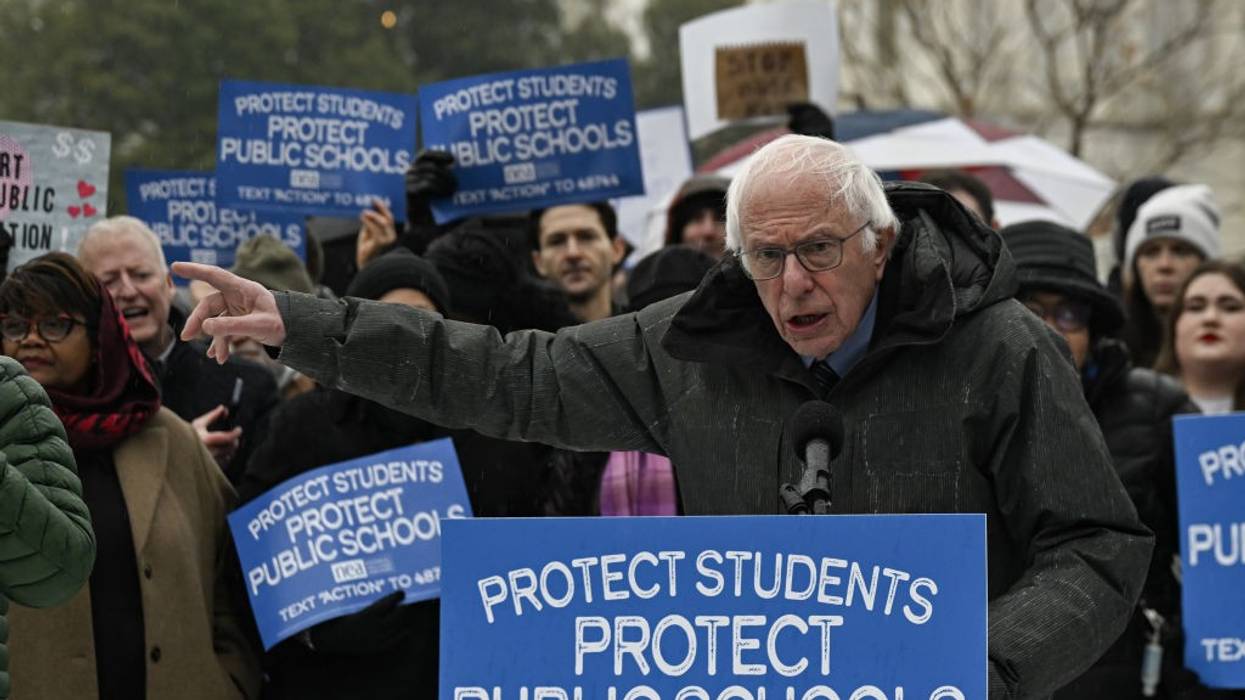
"Today, the oligarchs and the billionaire class are getting richer and richer and have more and more power," the senator said. "This country belongs to all of us, not just the few. We must fight back."
As Republicans in Congress and the Trump administration scour the federal public services infrastructure looking for cuts to healthcare, food assistance, and consumer protections that could offset the $4.6 trillion deficit hole the GOP is intent on creating by extending tax cuts for the rich, U.S. Sen. Bernie Sanders is preparing for a "National Tour to Fight Oligarchy."
With Americans inundated with news about Trump's billionaire megadonor, Tesla CEO Elon Musk, ransacking federal agencies through the Department of Government Efficiency—and little to no news about President Donald Trump's supposed plans to reduce the cost of living—Sanders (I-Vt.) is intent on speaking directly to voters during his nationwide town hall tour, titled, "Fighting Oligarchy: Where We Go From Here."
The senator, who garnered support from working-class Americans and young voters during his Democratic presidential runs in 2016 and 2020, will kick off the tour with stops in Omaha, Nebraska on February 21 and Iowa City, Iowa on February 22.
The first stop lies in the House district represented by Rep. Don Bacon (R-Neb.), who this week expressed some hesitation about voting for a GOP budget proposal that could include steep spending cuts, including potentially to Medicaid. Bacon's district was carried by former President Joe Biden in 2020 and former Vice President Kamala Harris in 2024.
A Sanders aide told Politico that the senator aims to influence the Republicans' fight over the budget, which has reportedly made some GOP members of the House, where the party holds a slim majority, uneasy about backlash from voters in upcoming elections in 2026 and 2028.
As Common Dreams reported on Tuesday, a recent poll by progressive think tank Data for Progress showed voters from across the political spectrum don't want lawmakers to make cuts to federal student loans, Medicare, Medicaid, the Supplemental Nutrition Assistance Program, or renewable energy programs—all of which the GOP has eyed as it aims to do the bidding of wealthy donors and extend the 2017 tax cuts which primarily benefited the country's top earners.
In a statement, Sanders on Wednesday said his town hall tour will help Americans make sense of how they "can fight back against President Trump and Elon Musk," who are "quickly moving the country toward authoritarianism, oligarchy, and kleptocracy."
"Today, the oligarchs and the billionaire class are getting richer and richer and have more and more power," Sanders said. "Meanwhile, 60% of Americans live paycheck to paycheck and most of our people are struggling to pay for healthcare, childcare, and housing. This country belongs to all of us, not just the few. We must fight back."
Allies of the progressive senator said his direct engagement with voters is also likely a response to Democratic leaders' approach to the first weeks of Trump's second term in office. While Democratic lawmakers have spoken out against Musk's attempted takeover of federal agencies and some have pushed for strategic opposition to the Trump agenda, leaders in the party complained in a closed-door meeting this week about progressive advocacy groups that have urged the Democrats to act as a genuine, cohesive opposition party.
In a press conference this week, House Minority Leader Hakeem Jeffries (D-N.Y.) appeared perplexed by the idea that Democrats should try to counter Trump's agenda, saying Republicans control both chambers of Congress and the White House, and Senate Minority Leader Chuck Schumer (D-N.Y.) said the party is "not going to go after every single issue" as it fights the president.
Last week, Jeffries garnered scorn for meeting with more than 150 donors in Silicon Valley in an effort to "mend fences" as numerous high-profile tech executives have aligned themselves with Trump.
The House leader also appeared unmoved by "The Weekly Show" host Jon Stewart's suggestion in an interview this week that the Democrats have "gotten away from New Deal values" and should focus on pushing for policies that help the working class rather than simply improving "messaging."
Anna Bahr, a spokesperson for Sanders, told Politico that "it may be hard to believe, but at least one person in Washington is more interested in talking with working-class people than running for office or fundraising."
"Sen. Sanders is doing what he has always done: meeting people all over the country to discuss our failed healthcare system, housing crisis, and the wealth and income inequality that is only intensifying," said Bahr.
Rep. Ro Khanna (D-Calif.), who co-chaired the senator's 2020 presidential campaign, told the outlet that the Democratic Party needs Sanders "in strategic states making the case to define the future of our party for the next 20 years."
"Sen. Sanders has been a prophet for where the Democratic Party needs to go in standing up for working-class Americans," said Khanna, "and opposing the unholy alliance of wealth and power."
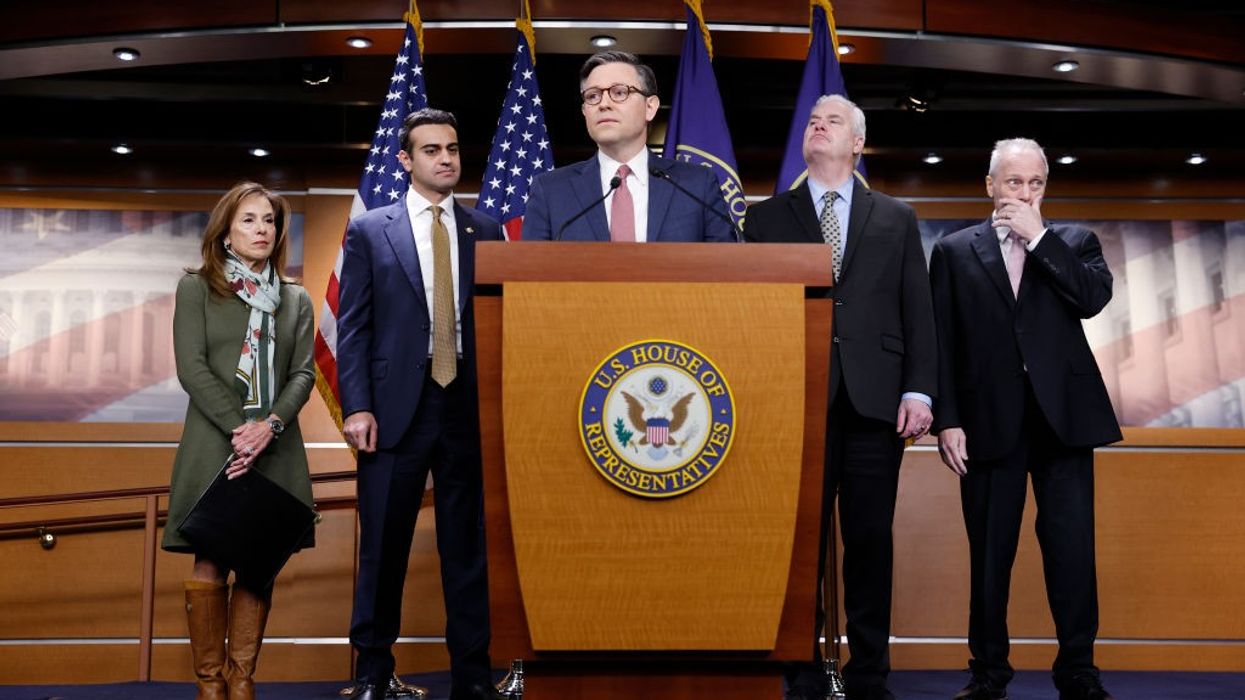
"House Republican leadership put a giant bullseye on Medicaid, with the intent to strip Americans of their healthcare benefits to pay for tax cuts for billionaires and big corporations."
House Republicans unveiled a draft budget resolution on Wednesday that calls for $4.5 trillion in tax breaks that would disproportionately benefit the wealthy while proposing $2 trillion in cuts to Medicaid, federal nutrition assistance, and other programs.
Lawmakers are set to mark up the House GOP's budget blueprint on Thursday as Republicans look to craft a sprawling reconciliation bill that can pass both chambers of Congress with a simple-majority vote. Last week, Senate Republicans released their own budget resolution that proposed significant cuts to Medicaid, the Supplemental Nutrition Assistance Program (SNAP), and other spending that benefits working-class families.
"Instead of tackling rising prices and delivering relief for American families, House Republicans are charging ahead with trillions of dollars in deeply unpopular tax breaks for billionaires like Donald Trump and Elon Musk," Alex Jacquez, chief of policy and advocacy at the Groundwork Collaborative, said Wednesday in response to the House GOP resolution.
"And, they're paying for their billionaire handouts by ransacking healthcare, food assistance, and other vital programs that American workers and families rely on," Jacquez added.
The new resolution released by the Republican-controlled House Budget Committee specifically calls on the chamber's energy and commerce panel to "submit changes in laws within its jurisdiction to reduce the deficit by not less than" $880 billion over the next decade. The House Energy and Commerce Committee has jurisdiction over Medicaid.
The measure also instructs the House Committee on Agriculture, which has jurisdiction over SNAP, to cut no less than $230 billion in spending between fiscal years 2025 and 2034.
"They wanna do a giant tax cut that disproportionately helps the rich while taking away people's health insurance and food while still adding trillions to the debt," Bobby Kogan, a former Senate Budget Committee staffer who is now senior director of federal budget policy at the Center for American Progress, wrote in response to the resolution.
Overall, the House GOP's budget resolution calls for $2 trillion in cuts to "mandatory spending" over the next decade, taking aim at a category that includes Medicaid, Medicare, Social Security, and SNAP. While Social Security benefits cannot be cut through the reconciliation process, Supplemental Security Income (SSI) can.
Congressional Republicans have outlined a number of ways they could slash Medicaid and SNAP, including punitive new work requirements that analysts say would strip benefits from tens of millions of low-income people.
But Families USA executive director Anthony Wright said Wednesday that "we don't need to know the mechanisms of how Medicaid would be cut to know the impact would be catastrophic: The sheer size of the proposed cuts means millions of Americans losing coverage, hospitals and clinics plunged into budget shortfalls, and healthcare services we all depend on being eliminated."
"This budget resolution is a five-alarm fire alert for our healthcare," said Wright. "House Republican leadership put a giant bullseye on Medicaid, with the intent to strip Americans of their healthcare benefits to pay for tax cuts for billionaires and big corporations."
Kobie Christian, a spokesperson for the progressive coalition Unrig Our Economy, issued a similarly scathing statement on Wednesday, arguing that House Republicans "showed us that what they value is more tax breaks for greedy billionaires and giant corporations with everyday people paying the price."
"At a time when everyday Americans face increasingly higher prices, Speaker Johnson and his stooges want to write billionaires a check and force working-class people to foot the bill for their outrageous tax breaks for corporations and the ultra-wealthy," said Christian. "Everyday Americans will not stand for these games—it's time for Republicans in Congress to end their campaign that puts the ultra-wealthy first on the backs of the rest of us."

Following "recent Republican chaos, we're now back to their regularly scheduled programming: Cutting taxes for millionaires," said Democratic Rep. Bill Pascrell. "They did it in 2017 and now Republicans are again pushing tax cuts for the rich."
House Republicans are poised to advance regressive taxation measures that would increase the federal deficit just weeks after they nearly blew up the global economy over ostensible concerns about the U.S. government's debt, eliciting condemnation from Democratic lawmakers and progressive advocates.
The Republican-led House Ways and Means Committee held a hearing Tuesday to mark up the so-called American Families and Jobs Act (AFJA), which packages three bills: the Tax Cuts for Working Families Act, the Small Business Jobs Act, and the Build It in America Act.
This trio of bills—dubbed the "GOP Tax Scam 2.0" by the panel's ranking member, Rep. Richard Neal (D-Mass.)—would expand Trump-era tax cuts whose benefits flow overwhelmingly to corporations and the wealthy. In the wake of demanding—and winning—sharp reductions in anti-poverty spending along with other reactionary reforms during negotiations to raise the debt ceiling, the GOP-controlled House is now moving to starve the federal government of essential revenue.
"It didn't take long for the MAGA majority's alleged debt 'concerns' to go right out the window in pursuit of more wasteful tax breaks for their billionaire donors and corporations."
"It didn't take long for the MAGA majority's alleged debt 'concerns' to go right out the window in pursuit of more wasteful tax breaks for their billionaire donors and corporations that ship jobs overseas," Liz Zelnick, director of Economic Security & Corporate Power at Accountable.US, said in a statement.
"If the recent past is prologue, the MAGA majority will try to pay for their trillion-dollar corporate tax giveaway on the backs of average Americans, including devastating cuts aimed at seniors, veterans, and the food insecure," said Zelnick. "Once again, the MAGA House majority has only corporations and the wealthy in mind."
Zelnick's sentiment was echoed by Democrats on the House Ways and Means Committee.
"This is the most ill-considered piece of legislation that I've witnessed in years in front of this committee," said Neal. "Just 10 days after our Republican colleagues were prepared to bring the nation to the brink of default... to the precipice, if not over the edge, they now come back with a tax cut."
"Apparently, the debt only matters if it's about spending, never about tax cuts," said Neal, who lamented "$10 trillion of tax cuts" enacted in 2001, 2003, and 2017—years when Republicans held both chambers of Congress and the White House.
Rep. Bill Pascrell (D-N.J.) derided what he called the GOP's "tax scam 2.0" as one of the worst sequels in history.
"After months of some of you actually liking the idea of keeping other people hostage, some of you are back to the single issue that unites your party: Tax cuts for the well-off," Pascrell said in a message to Republicans on the panel. "It's far past time to retire" the argument that "tax cuts 'pay for themselves.' They just don't. You can't prove it."
Among other things, the AFJA would expand corporate and business tax breaks enacted in the Tax Cuts and Jobs Act (TCJA) approved by congressional Republicans and signed into law by then-President Donald Trump in 2017.
If the new proposal were to pass, the richest 1% of U.S. households would receive $28.4 billion in tax cuts (an average of $16,560) next year, compared with $1.4 billion for the poorest 20% ($40, on average), according to Steve Wamhoff, federal policy director at the Institute on Taxation and Economic Policy. Because foreign investors own a substantial share of stock in U.S. corporations, they would also receive $23.8 billion next year under the legislation.
House Ways and Means Chair Jason Smith (R-Mo.) has claimed that the cost of the tax cuts would be offset through a repeal of the Inflation Reduction Act's clean energy tax credits. But as Wamhoff explained in an analysis published earlier this week, deliberately hindering the nation's renewable energy transition would impose additional costs "in the form of greater climate damage."
Moreover, "the true costs are hidden by budget gimmicks," Wamhoff noted. "The most important budget gimmick is that the legislation enacts the biggest tax cuts for only two years even though its proponents plan to extend them in the future, making them, in effect, permanent."
According to the Committee for a Responsible Federal Budget: "The bill would cost $80 billion over a decade with interest ($19 billion before interest), including $320 billion through the end of fiscal year (FY) 2025. The smaller 10-year cost is driven by several factors but mainly by the fact that most of the bill's tax cuts expire at the end of 2025. We estimate that the plan would cost over $1.1 trillion ($950 billion without interest) through 2033 if these temporary tax cuts and extensions were made permanent."
The benefits of the 2017 TCJA "never trickled down," Americans for Tax Fairness tweeted. "Instead, the rich got richer and corporations made bigger profits. We should be repealing the Trump tax cuts, not making them permanent."
In a blog post published Tuesday, Chuck Marr and Samantha Jacoby of the Center on Budget and Policy Priorities also urged lawmakers to "reject this bill and pursue tax policy that works better for the country as a whole—not just wealthy investors and high-income households."
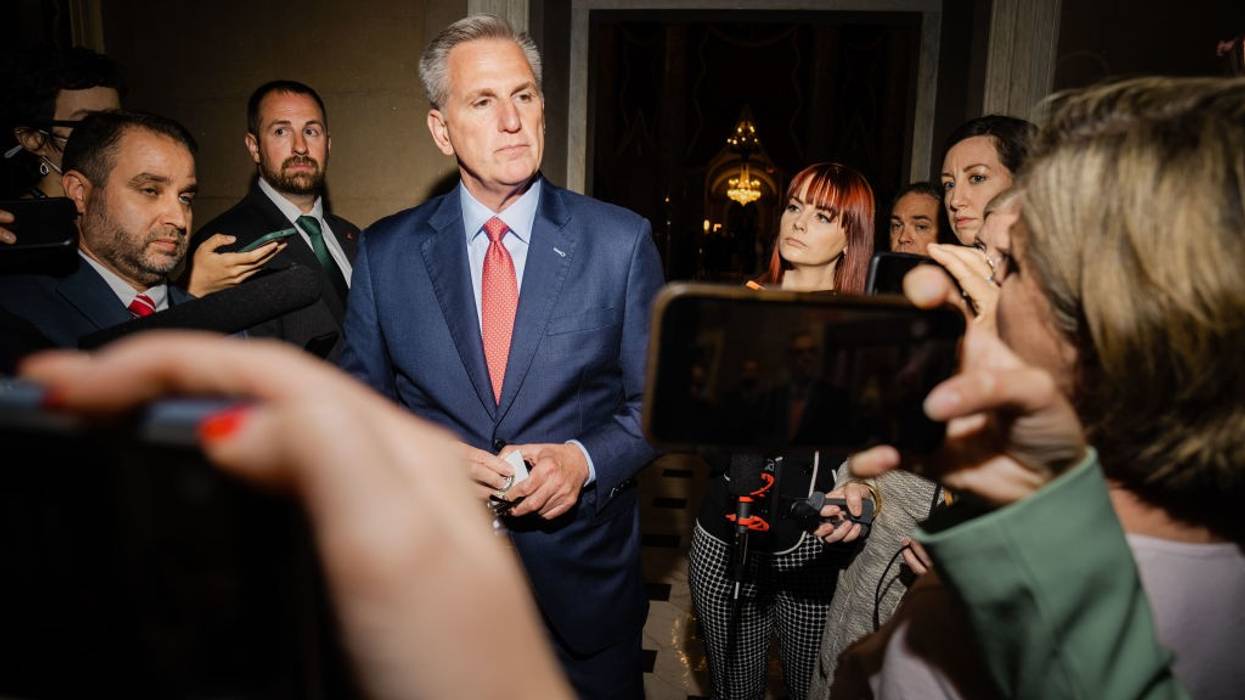
Republican tax cuts for the rich have been the single largest driver of the federal deficit over the last two decades, followed by bipartisan military spending.
The news sure makes it sound like President Joe Biden and Republicans have been haggling over the national debt. But that’s not what’s really happening—not at all.
Biden wants to spend more money and run up the deficit, the story goes. Republican House Speaker Kevin McCarthy (R-Calif.) wants to rein the Democrats’ “addiction to spending” and reduce the debt.
This is wrong—enormously so—for several reasons.
“If McCarthy wanted to reduce the debt, he could simply pass President Biden’s proposed budget.”
First, as my Institute for Policy Studies colleague Karen Dolan has written: “If McCarthy wanted to reduce the debt, he could simply pass President Biden’s proposed budget.”
She’s right!
Biden’s budget continues and modestly expands many important social services, jobs programs, and clean energy investments, Karen’s written. But because it also reverses some of President Donald Trump’s tax cuts for corporations and the very wealthy, Biden’s budget would reduce the deficit by $3 trillion over 10 years.
Republican tax cuts for the rich have been the single largest driver of the federal deficit over the last two decades. The Bush and Trump tax cuts together are responsible for 57% of the increase in our ratio of debt to gross domestic product, the Center for American Progress found—and 90% outside of emergency spending during the recession and pandemic.
But Republicans don’t want to raise taxes for the rich. In fact, they’re planning to introduce a bill to make those massive tax cuts for the rich permanent—at a cost of trillions. That’s a lot more debt.
The other major driver of debt? Unfunded wars and military spending.
Together with nuclear weapons, border enforcement, and so on, the IPS National Priorities Project found recently that “militarized spending” takes up nearly two-thirds of the budget Congress sets each year.
That’s a bipartisan problem—Biden’s own budget proposal unwisely hikes Pentagon spending even after the end of a 20-year war. But here again, Republicans have refused to cut any of this funding as part of their spending crackdown. In fact, they’re calling to increase it far above even Biden’s proposal.
So Republicans rejected a budget proposal that would bring down the deficit. And they rejected addressing either the high-end tax cuts or out of control military spending that drives the debt—in fact, they’re pushing for more debt in both categories.
What does that leave? The barely one-third of discretionary spending that covers education, corporate regulation, scientific research, many anti-poverty programs, and other worthwhile items.
Republicans are demanding deep cuts here that could mean more homeless veterans and hungry seniors, hundreds of thousands of Americans who can’t afford an education, tens of thousands of kids who can’t get into Head Start, more pollution, fewer green jobs, and worse besides.
And unless they get those cuts, they’ve threatened to default on America’s debt by refusing to raise the debt ceiling.
The debt ceiling doesn’t reduce the debt by one dime—it only determines whether we pay the debts we already owe. Republicans raised it three times under Trump without complaint even as he ran up one of the biggest deficits in history.
Defaulting would do nothing about the debt—but it would destroy millions of jobs, wipe out trillions of household wealth, and send interest rates skyrocketing for home, car, and credit card loans.
The current debate has nothing at all to do with debt. It’s about whether we invest in programs the American people count on—or if we kneecap those programs to fund more tax cuts for rich people and handouts to military contractors.
Let’s choose wisely.

"This hostage crisis has never been about deficits for the GOP," said Rep. Ilhan Omar. "It has always been about wealth transfer—taking away food and healthcare from the poor and middle class to give away $3 trillion more in tax cuts to their rich friends."
With the U.S. careening toward a default crisis that they manufactured, House Republicans are reportedly crafting a major tax cut package that would overwhelmingly benefit the rich and corporations while blowing a multitrillion-dollar hole in the federal deficit.
The fresh push for tax cuts, according to Rep. Ilhan Omar (D-Minn.), further shows that "this hostage crisis has never been about deficits for the GOP."
"It has always been about wealth transfer—taking away food and healthcare from the poor and middle class to give away $3 trillion more in tax cuts to their rich friends," Omar, the deputy chair of the Congressional Progressive Caucus, tweeted Tuesday.
Politico reported earlier this week that Republicans on the House Ways and Means Committee hope to finish work on their emerging tax legislation by June 16, just over two weeks after the so-called "X-date"—the day on which the Treasury Department expects the federal government to run out of money to cover its obligations unless Congress raises the debt limit or President Joe Biden acts unilaterally.
"Key parts of the [tax cut] package... will likely include a full restoration of research and development deductions, full bonus depreciation, removing caps on business interest expensing, and a doubling of the $1.08 million limitation on the section 179 deduction (which, like bonus depreciation, allows a company to deduct an asset's cost up-front)," Politico noted.
The outlet added that Rep. Vern Buchanan's (R-Fla.) legislation aimed at making the 2017 Trump-GOP tax cuts for individuals and some businesses permanent "also has a strong likelihood of getting marked up in a broader package." The bill, known as the TCJA Permanency Act, currently has nearly 100 Republican co-sponsors in the House.
Buchanan, one of the wealthiest members of Congress, personally benefited from the 2017 tax law that he's working to extend.
"Republicans are holding our economy hostage because they want to cut programs for working families," Sen. Tina Smith (D-Minn.) said Tuesday. "Their next big move? Massive tax cuts for their rich corporate buddies. They may call it fiscal responsibility—I call it extortion."
The Congressional Budget Office (CBO) estimated last week that extending the individual provisions of the 2017 tax cuts—which are currently set to expire in 2025—would add $2.5 trillion to the deficit over the next decade. The original law made the cut to the corporate tax rate from 35% to 21% permanent.
"The hypocrisy of Republicans in Washington is truly breathtaking," Sen. Bernie Sanders (I-Vt.) wrote in a Fox News op-ed on Wednesday. "Over and over again, we hear from the Republican leadership about how deeply concerned they are about the large deficit and national debt that we have. Really?"
"If that's the case," Sanders asked, "why are they pushing for an extension of the Trump tax breaks that disproportionately benefit the wealthy and large corporations and would increase the federal deficit by $3.5 trillion?"
The Institute on Taxation and Economic Policy (ITEP) estimated earlier this month that just 1% of the benefits of the TCJA Permanency Act would go to the poorest fifth of Americans.
The richest fifth, by contrast, would receive nearly two-thirds of the tax benefits, ITEP found.
"The average tax cut for the richest 1%," the organization noted, "would be 25 times that of the middle 20% and more than 250 times that of the bottom 20% of Americans."
Republicans are preparing to launch their push for new tax cuts as they continue to hold the U.S. and global economies hostage in pursuit of steep federal spending reductions, all under the guise of lowering the deficit.
"We're not going to raise taxes," House Speaker Kevin McCarthy (R-Calif.) said earlier this week. "It's a spending problem."
But research published in March by the Center for American Progress (CAP) found that the GOP austerity crusade "does not address the true cause of rising debt"—tax cuts.
"Tax cuts initially enacted during Republican trifectas in the past 25 years slashed taxes disproportionately for the wealthy and profitable corporations, severely reducing federal revenues," noted Bobby Kogan, CAP's senior director of federal budget policy. "In fact, relative to earlier projections, spending is down, not up. But revenues are down significantly more."
"If not for the Bush tax cuts and their extensions—as well as the Trump tax cuts—revenues would be on track to keep pace with spending indefinitely, and the debt ratio (debt as a percentage of the economy) would be declining," Kogan observed. "Instead, these tax cuts have added $10 trillion to the debt since their enactment and are responsible for 57% of the increase in the debt ratio since 2001."