SUBSCRIBE TO OUR FREE NEWSLETTER
Daily news & progressive opinion—funded by the people, not the corporations—delivered straight to your inbox.
5
#000000
#FFFFFF
To donate by check, phone, or other method, see our More Ways to Give page.


Daily news & progressive opinion—funded by the people, not the corporations—delivered straight to your inbox.
Some called her a traitor; others insisted she was a hero. Whatever, she blew the whistle ultimately revealing the truth behind the build-up to the Iraq War--regime change, disguised as terrifying threats of weapons of mass destruction.
Exaggerating threats to provoke a war? Sound familiar?
Never mind that invading another country for the purpose of regime change is illegal according to international laws to which the United States is a signatory. The team of hawks circling George Bush had long wanted to take out Saddam Hussein, as did Bush. Some of those same birds are still flapping wings in the skies above Washington. The concern among many Americans is that claims of an unprovoked, deadly attack by Iran are exaggerated. The issue is provocation. Who, one must ask, is provoking whom?
Much to the distress of our former partners in the Iran nuclear deal, Donald Trump pulled the United States out of the agreement and announced tougher sanctions. This, despite credible evidence that Iran was in full compliance with terms of the agreement. Provocation? Now, Trump says, he wants to see Iran back at the negotiating table. Iran, of course, isn't interested in dealing with him. Perhaps they don't trust him to keep his word.
Iran has been filmed loading missiles aboard some of its vessels. Is this a matter of threatening to launch a war, or is it a matter of responding to the US positioning itself for war? The increasing presence of US Navy ships and a B-52 bomber task force in their neighborhood might provoke the Iranians to load up their missiles. However, the Pentagon says the US deployment is "in response to indications of heightened Iranian readiness to conduct offensive operations against US forces and our interests."
Iran, meanwhile, says it doesn't want war, but will defend itself. Donald Trump also is saying he doesn't want war, which is probably true. He loves a battle, when it's done with words, boasts, and threats. The other kind of fight could be frightening and politically risky.
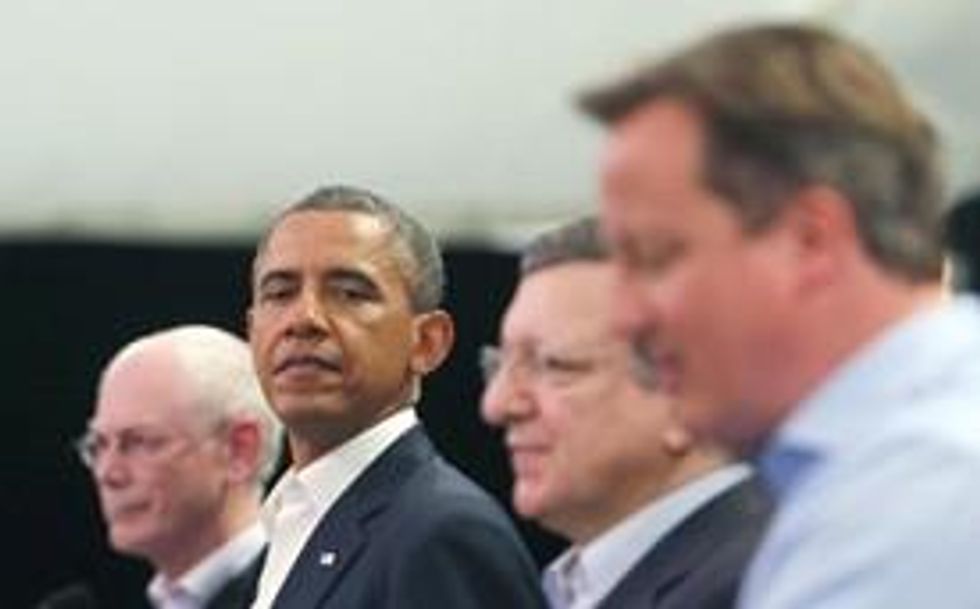
One is reminded of the January 31, 2003 Oval Office meeting with George Bush, Tony Blair, and Condoleeza Rice, in which the topic of provoking Iraq to start a war was particularly revealing. Perhaps a plane painted in UN colors could be shot down over Iraq. Not good enough, the trio decided. To legitimize an invasion and get rid of Saddam, a new UN Security Council resolution, going beyond SC1441 and specifically sanctioning the invasion, was the answer.
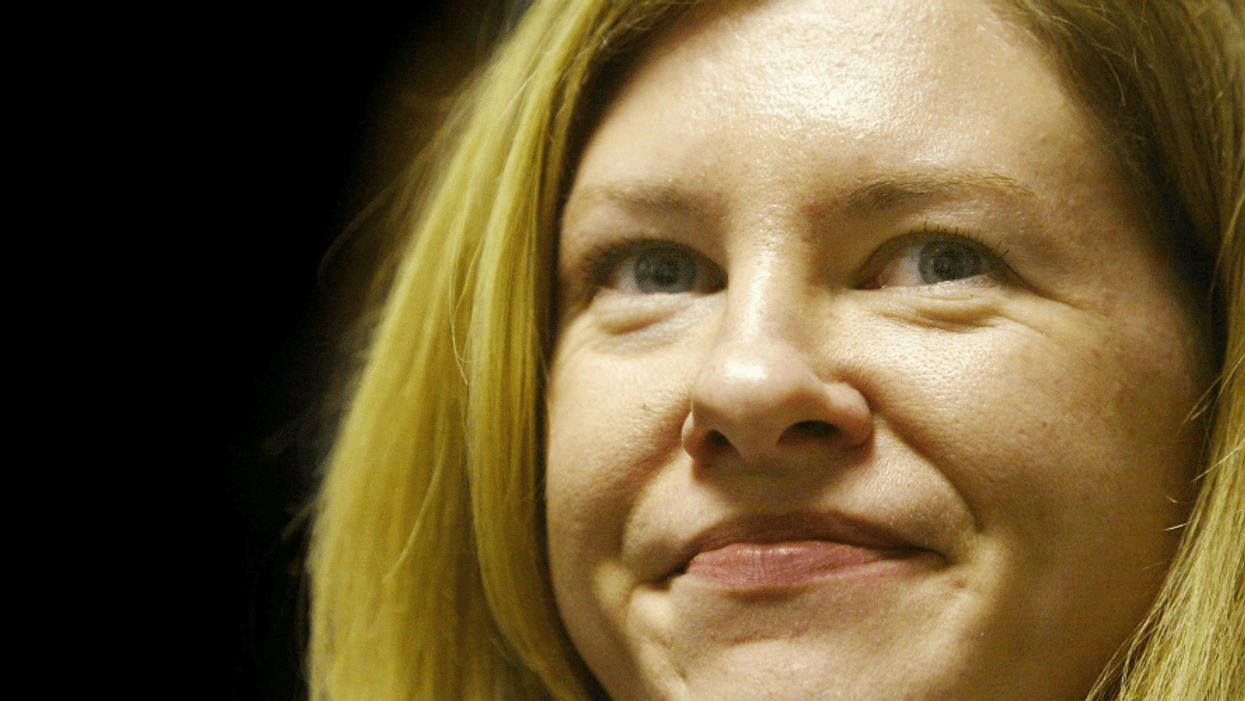
Enter Katharine Gun. Her story, which reveals what a country will do when it wants war and claims it does not, is told in an updated book and a major motion picture soon to be released--Official Secrets (Keira Knightly is Katharine). British Secret Service Officer Katharine, then a young bride, risked everything to leak details of the Bush-Blair plan to coerce (possibly blackmail) members of the UN Security Council in order to win their votes to legalize invading Iraq. The spin in this country and in the UK was the threat of deadly weapons ready to be deployed by Saddam. The truth was that in April of 2002, the two world leaders secretly had agreed on a plan to take out Saddam, all the while giving speeches insisting that the only motivation for even considering war was that horrific stockpile of deadly weapons.
And then there is the Gulf of Tonkin incident that led America deeply into war against North Vietnam. Actually, there were two incidents at sea, blamed originally on the North Vietnamese. Eventually, it was widely held that at least one of the reports of the attacks, and perhaps even both, were false. A manufactured provocation. By design.
The point of all of this is painfully obvious. We must not be flummoxed by exaggerated claims of threats against America and our interests. This is not to say that Iran does not have a trick up its sleeve, or that wild-eyed Iranian hawks aren't circling its leaders. It is to say that a government, for its own reasons may, either by design or through miscalculation, lead a country into an unnecessary and brutal war. It is to say that we need to know the truth behind the decisions to act or not to act.
We need a truth-sayer. We need another Katharine Gun. An insider with courage.
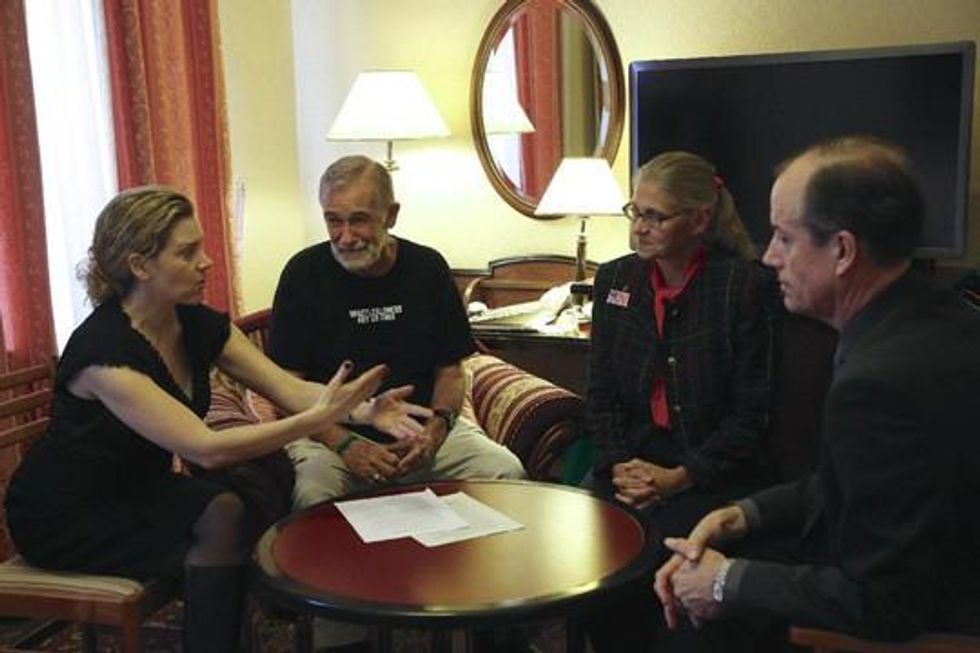
Here is Karen Kwiatowski's acceptance speech for the 2018 Sam Adams Award at a ceremony in Washington on Saturday night, preceded by the citation, that was read by former CIA analyst Ray McGovern.
Know all ye by these presents that Karen Kwiatkowski is hereby honored with the traditional Sam Adams Corner-Brightener Candlestick Holder, in symbolic recognition of her courage in shining light into dark places.
"If you see something, say something," we so often hear. Karen Kwiatkowski took that saying to heart.
She saw her Pentagon superiors acting as eager accomplices to the Cheney/Bush administration's deceit in launching a war of aggression on Iraq. And she said something--and helped Knight Ridder reporters Warren Strobel and Jonathan Landay see beneath the official lies and get the sordid story right before the war.
Karen's courage brings to mind the clarion call of Rabbi Abraham Heschel against the perpetrators of an earlier war--Vietnam. "Few are guilty," he said, "but all are responsible. Indifference to evil is more insidious than evil itself." Karen would not be indifferent to evil.
Ed Snowden, Sam Adams awardee in 2013, noted that we tend to ignore some degree of evil in our daily life, but, as Ed put it, "We also have a breaking point and when people find that, they act." As did Karen. As did 16 of Karen's predecessors honored with this award.
With all the gloom and doom enveloping us, we tend to wonder whether people with the conscience and courage of Ed or Karen still exist in and outside our national security establishment. Our country is in dire need of new patriots of this kind.
Meanwhile, we call to mind the courageous example not only of Karen and Ed, but also of Coleen Rowley and Elizabeth Gun, our first two awardees, who took great risks in trying to head off the attack on Iraq. And we again honor Chelsea Manning and Julian Assange who is now isolated in what the U.N. has called "arbitrary detention," for exposing the war crimes resulting from that war.
Karen Kwiatkowski has made her own unique contribution to this company of conscience and courage, and Sam Adams Associates are pleased to honor her.
Presented this 8th day of December 2018 in Washington by admirers of the example set by the late CIA analyst, Sam Adams.
'Thoughts on the Sam Adams Award': Remarks by Lt. Col. Karen Kwiatowski
I am honored beyond belief to be the 2018 recipient of the Sam Adams Award, and I thank Ray McGovern and the Sam Adams Associates for Integrity in Intelligence, Veteran Intelligence Professionals for Sanity, Warren Strobel, and Jonathan Landay of Knight Ridder during the run up to the second invasion of Iraq, and Rob Reiner for putting together a great movie that was so consistently truthful, that for me, it looked almost like a documentary. I want to also thank the late David Hackworth, a man I never met who published my first anonymous essays from the Pentagon, and of course, Lew Rockwell, who has published so many of my essays examining and trying to understand our government and our offensive policies over the past 15 years.
It is in our country's interest--as security professionals, as intelligence professionals, as soldiers and citizens, as writers and newsmakers--to be sensitive to the lawlessness, the immorality, and the wrongdoing of the bureaucracies and the leaders of the organizations we are a part of.
There have been many American patriots and truth-tellers who have received the honor you have given me tonight--and I am going to name them here because I stand in awe of all of them:
Coleen Rowley of the FBI; Katharine Gun of British Intelligence; Sibel Edmonds of the FBI; Craig Murray, former U.K. ambassador to Uzbekistan; Sam Provance, former U.S. Army Sgt; Maj. Frank Grevil of Danish Army Intelligence; Larry Wilkerson, Col., U.S. Army (ret.), former chief of staff to Colin Powell at State; Julian Assange, of WikiLeaks: Thomas Drake, of NSA; Jesselyn Radack, formerly of Dept. of Justice and now National Security Director of Government Accountability Project; Thomas Fingar, former Deputy Director of National Intelligence and Director, National Intelligence Council, and Edward Snowden, former contractor for the National Security Agency; Chelsea Manning, U.S. Army Private who exposed (via WikiLeaks) key information on Afghanistan and Iraq, as well as State Department activities; and to retired National Security Agency official William Binney, who challenged decisions to ignore the Fourth Amendment in the government's massive--and wasteful--collection of electronic data.
Again, I am very humbled and almost speechless tonight.
But not entirely speechless. My backstory is pretty well-known to most people here, and to anyone who was interested in understanding U.S. war policy in the early 2000s. I had a small role to play, in concert with a number of other truth-tellers in media and in the national security bureaucracy. For every one of us, there were probably 20 to 50 people working beside us and around us, who understood a lot about what was happening, and who probably got a funny feeling about being in an organization where we all swore to uphold the Constitution, but in fact were engaged in promulgating lies of both omission and commission, mistruths and misdirection, aimed not at our enemies abroad but against the American people. We were lying, with the help of a compliant and war-supportive media, to patriots young and old. Millions of Americans were eager to enlist, to fight, to sacrifice their life and health--for a made-up government fairy tale.
A sense of unease, I believe, was shared by many, many people who never blew a whistle, and never said a word. To their credit, some of these people passively resisted within their organizations, and tried to set things straight where they could. Some of these people simply called their assignments guy and got orders out of the Pentagon, others were removed if they resisted too much. There is always a cost when you seriously question the directions or actions of the bureaucracy that employs you.
It is in our country's interest--as security professionals, as intelligence professionals, as soldiers and citizens, as writers and newsmakers--to be sensitive to the lawlessness, the immorality, and the wrongdoing of the bureaucracies and the leaders of the organizations we are a part of. That is the first thing we must cultivate and encourage--a sensitivity to and an awareness of something as simple as right and wrong. This is fundamental. From knowing right and wrong, we move to the factor that motivates so many whistleblowers, something that we all share as human beings, and that is an idea of justice.
The truth-tellers who have been honored with Sam Adams Award, and thousands of others we may not be aware of around the world, share a concept of justice. For those who try to correct our U.S. government, particularly in its initiation and exercise of war, state-sanctioned murder, and physical devastation of whole societies, we as American have tools that many others around the world don't have. We have a Constitution that many of us swore to uphold. Americans tend to have a good grounding in the fundamentals of right and wrong, derived from religion or tradition, or both. We live in something that calls itself a republic, and it is a fine form of government, with a solid set of rules.
But how do we get from a certain moral discomfort, from seeing something going on around us that is wrong, to trying to do something about it? How do we decide if we want to leave the room, turn our backs, put our head down, or instead take some sort of action that will put us on a collision course with very powerful people? What if we, as truth-tellers, are like blind men describing an elephant--we see only one part of a larger story? How do we decide that our faith in our leadership is misplaced, and that more is at stake then just our jobs?
When you look at the experiences of people who made the dangerous and difficult decision to act, like Daniel Ellsberg, and Sam Adams, and Sibel Edwards, Jesselyn Raddick, Colleen Rowley, Thomas Drake, Ed Snowden, Julian Assange, and many others, you realize that speaking up and doing the right thing had a primary impact. That impact wasn't improved transparency, a more informed democracy, a more aware and alert citizenry, and better government decisions by our elected leaders. Those were all secondary impacts, and in many cases tenuous, as the improved level of national understanding seems to last for less than a single generation. No, the primary impact was the unimaginable wrath of the state aimed at the life, livelihood, reputation, family, character, and credibility of the truth-teller. In several cases, this included physical and psychological abuse, prison time, gag orders, and even more devious programs. The rage of the state against these truth-tellers is not impulsive and short-lived--it is a forever project funded by tax dollars, and fueled by very profitable agendas.
Knowing all of this, can we really expect to see a healthy and growing flow of truth tellers, whistleblowers, and simply bold honest people speaking out about government lies?
I think we can, and I am optimistic about the possibilities of better government through honest, bold, and forthright people working in and around this government.
To start with, as I mentioned, we as government employees and uniformed service-members need to have a solid sense of right and wrong. We need to cultivate a sense of justice. In a wonderful way, our younger generations are well prepared for this, at least in terms of cultivating a sense of justice. The young people we see portrayed, often disparagingly, as young socialists may not completely understand the nature of government or the state, but they do cherish ideas of justice.
The more of us--specifically those working with and inside the U.S. government today--who tell the truth, the less likely that government embarrassment will result in harm to a whistleblower, and the less likely in the long run that we will see whistleblowers as we tend to see them today.
We also need people in government service who are sensitive to what is going on in their organizations, and how people are feeling and behaving around them. It is not coincidence that many of the people who have been honored by this award are women, who may be paying closer attention to the mood and morality of their organizations. There's a country song that has a line in it about "Old men talking about the weather, and old women talking about old men." We need both in our organizations, to be in tune with what is happening, and who is leading us.
We need people in government service who are willing to walk away from a job, and to say or even broadcast why they are leaving, without worrying about the next job, without worrying about being blacklisted, without worrying that they can't make their next house payment or college tuition payment, or the alimony or child support payment. We need people in government who travel light, so to speak, and do their job because they love what they are doing and what it stands for. This grounding and lack of rigid self-identification with their employing bureaucracy is extremely important. Thanks to technology and societal evolution, the younger generations of Americans are very likely to walk away from a job that they believe to be immoral, to act to correct what they see as wrong or unjust, and incidentally, are less likely to own a home, and more likely to define themselves by what they believe and stand for, not where they work, and how many promotions they had planned for themselves in that organization.
But even with our younger generations coming into government service--with a good sense of justice, a strong sense of self, and a willingness to speak openly about what they believe and know--there is risk when someone questions the collective government story.
There is risk in the act of challenging authority and one's peer group, risk of being wrong and suffering loss of credibility. There is the rational and real risk of incurring the rage of the state, and being jailed, harmed, ruined and even killed on the whispers of an incensed or threatened agency.
There is another risk that we really don't talk about much. I think most concerning for many people is the risk that you are actually right, that you have discovered something damning and dark in your country, in your government, in your organization. Once this happens, if it happens, your life is irreversibly changed, and nothing is ever going to be the same. Understanding how your government actually works, in particular how it works to create and provoke war and murder, how it works to extract the wealth of the nation and use this blessing to commit Constitutional crimes and untold evil, in your name--for many this understanding is not a gift, but a curse. I estimate at least 10 percent of our country, 20-30 million Americans, many of them veterans the U.S. Empire's global adventures in the past 50 years, feel this curse, and many of them deal with it by turning away from the dark side of Washington D.C., and not talking, writing, or speaking about what they know.
If anyone has followed the case of former Marine Sergeant Brandon Raub a few years ago, you realize that the government keeps a close and paranoid eye on what veterans are doing and saying. Given how things work today, they may be wise to turn away silently from the truth they know.
I think this is why it is often hard for us to demand more truth-tellers come forward, especially in the defense and security and intelligence arena, when we should be shouting it from the rooftops.
Some years ago, I did an online radio program where I would interview interesting people, like Ray McGovern and Sam Provance and Sibel Edmonds, among many others. One person, in our conversation, expressed surprise that I was a short (formerly) brown haired woman, when he thought I would be a tall blonde. I was reminded of this when watching Shock and Awe, because Rob Reiner and the writers did not know who I was, and they portrayed me as a tall light-haired woman, a modern day Viking of sorts. Notwithstanding that this is a popular and attractive stereotype, I think there is something to be learned here. We want to believe that anyone who stands up to authority, who knows his or her own mind, who is willing to enter into a battle of wills with the state, and to take a risk is somehow taller, stronger, bolder, and braver than the rest of us.
But it isn't true. There is something remarkably childlike and simple in being honest, in observing without fear what is happening around you, and reporting this to the person who pays the bills. In the case of the national security arena, the bill payer is the American people. To tell the truth is simple, honorable, and good for the health of the republic. The fact that it drives the security apparatus and the government crazy is just icing on the cake. Granted, we all need jobs, and our mental health, and we don't want to be imprisoned, tortured, or killed. But the more of us--specifically those working with and inside the U.S. government today--who tell the truth, the less likely that government embarrassment will result in harm to a whistleblower, and the less likely in the long run that we will see whistleblowers as we tend to see them today. In a world of that values honesty, they would be receiving the public commendation of a proud Congress, a grateful media and President, and a contented population.
We--average Americans--are increasingly controlled, spied on, monitored, tracked, threatened, boxed in, and shut down by tools that were first used and tested on some contrived wartime enemy.
I'm not a Pollyanna, and I'm worried about the role the U.S. government is playing at home and abroad. The kind of devastation that the U.S. tolerates, supports and initiates around the world--Afghanistan, Iraq, Libya, Syria, of course Yemen comes to mind, the horrendous situation that Julian Assange is still facing as we speak--is not limited to "overseas." The industrial warfare state is as dangerous to Americans as it is to Iraqis, Syrians, and Yemenis. The arts of the warfare state are already being practiced here, against Americans. We--average Americans--are increasingly controlled, spied on, monitored, tracked, threatened, boxed in, and shut down by tools that were first used and tested on some contrived wartime enemy.
You don't need me to tell you this, it's in every newspaper every day, on every page. It is our modern reality. Truth and transparency are its only antidote, and truth and transparency needs all of us. To live in a society, to be a citizen, to love your country -- you cannot sleepwalk through it.
People who value wisdom, people who value common sense, people who value justice and people who believe that being woke is a good thing--congratulations! You are the majority! You are alive, you are in charge of this country, and you can choose. America is worth preserving, healing, and saving - and if she is to be saved we will do it by first learning the difference between the truth and a lie, and then speaking the truth loudly, boldly, to anyone who will listen, over and over and over again.
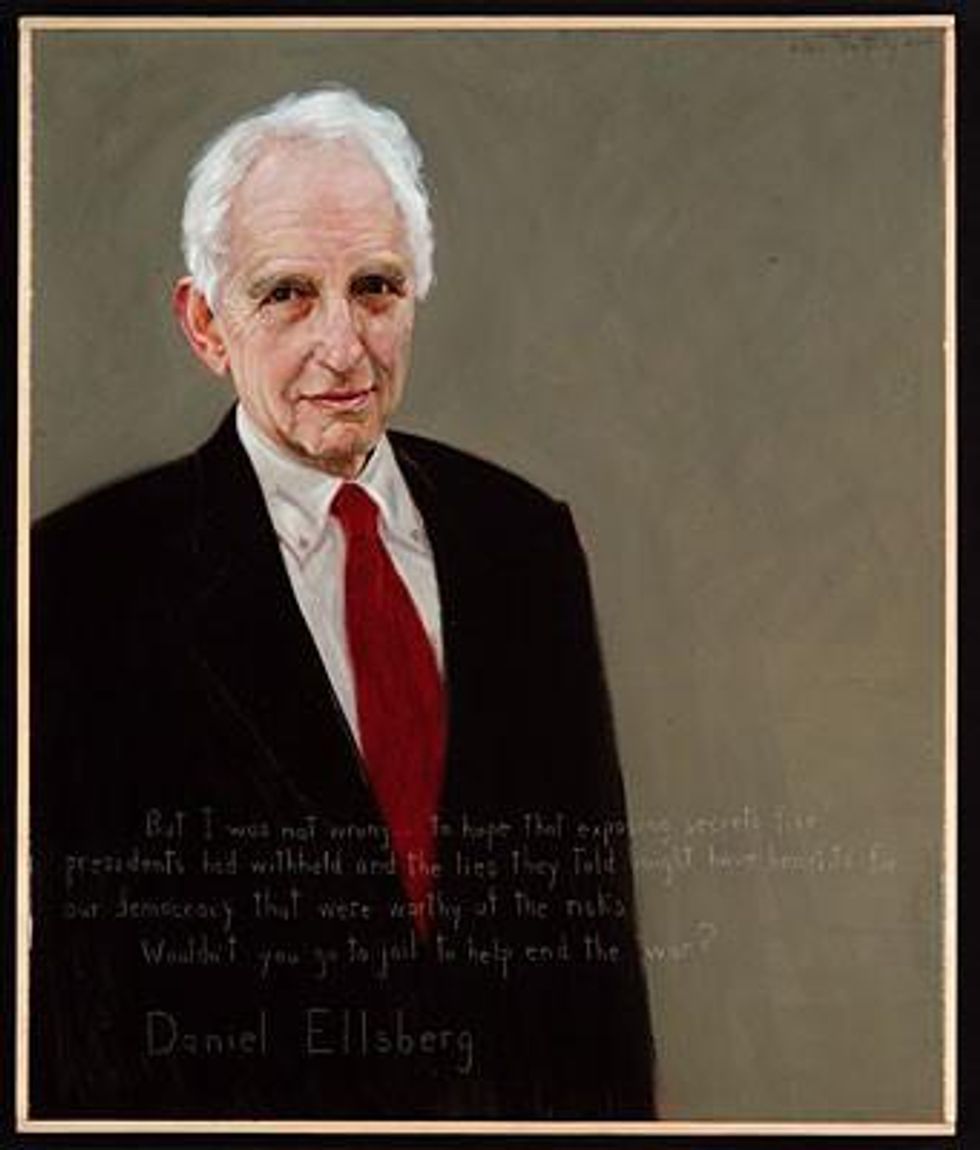
Daniel Ellsberg has a message that managers of the warfare state don't want people to hear.
"If you have information that bears on deception or illegality in pursuing wrongful policies or an aggressive war," he said in a statement released last week, "don't wait to put that out and think about it, consider acting in a timely way at whatever cost to yourself.... Do what Katharine Gun did."
If you don't know what Katharine Gun did, chalk that up to the media power of the war system.
Ellsberg's video statement went public as this month began, just before the 15th anniversary of when a British newspaper, the Observer, revealed a secret NSA memo -- thanks to Katharine Gun. At the UK's intelligence agency GCHQ, about 100 people received the same email memo from the National Security Agency on the last day of January 2003, seven weeks before the invasion of Iraq got underway. Only Katharine Gun, at great personal risk, decided to leak the document.
If more people had taken such risks in early 2003, the Iraq War might have been prevented. If more people were willing to take such risks in 2018, the current military slaughter in several nations, mainly funded by U.S. taxpayers, might be curtailed if not stopped. Blockage of information about past whistleblowing deprives the public of inspiring role models.
That's the kind of reality George Orwell was referring to when he wrote: "Who controls the past controls the future; who controls the present controls the past."
Fifteen years ago, "I find myself reading on my computer from the Observer the most extraordinary leak, or unauthorized disclosure, of classified information that I'd ever seen," Ellsberg recalled, "and that definitely included and surpassed my own disclosure of top-secret information, a history of U.S. decision-making in Vietnam years earlier." The Pentagon Papers whistleblower instantly recognized that, in the Observer article, "I was looking at something that was clearly classified much higher than top secret.... It was an operational cable having to do with how to conduct communications intelligence."
What Ellsberg read in the newspaper story "was a cable from the NSA asking GCHQ to help in the intercepting of communications, and that implied both office and home communications, of every member of the Security Council of the UN. Now, why would NSA need GCHQ to do that? Because a condition of having the UN headquarters and the Security Council in the U.S. in New York was that the U.S. intelligence agencies promised or were required not to conduct intelligence on members of the UN. Well, of course they want that. So, they rely on their allies, the buddies, in the British to commit these criminal acts for them. And with this clearly I thought someone very high in access in Britain intelligence services must dissent from what was already clear the path to an illegal war."
But actually, the leak didn't come from "someone very high" in GCHQ. The whistleblower turned out to be a 28-year-old linguist and analyst at the agency, Katharine Gun, who had chosen to intervene against the march to war.
As Gun has recounted, she and other GCHQ employees "received an email from a senior official at the National Security Agency. It said the agency was 'mounting a surge particularly directed at the UN Security Council members,' and that it wanted 'the whole gamut of information that could give U.S. policymakers an edge in obtaining results favorable to U.S. goals or to head off surprises.'"
In other words, the U.S. and British governments wanted to eavesdrop on key UN delegations and then manipulate or even blackmail them into voting for war.
Katharine Gun took action: "I was furious when I read that email and leaked it. Soon afterwards, when the Observer ran a front-page story--'U.S. dirty tricks to win vote on Iraq war'--I confessed to the leak and was arrested on suspicion of the breach of section 1 of the Official Secrets Act."
The whistleblowing occurred in real time. "This was not history," as Ellsberg put it. "This was a current cable, I could see immediately from the date, and it was before the war had actually started against Iraq. And the clear purpose of it was to induce the support of the Security Council members to support a new UN resolution for the invasion of Iraq."
The eavesdropping was aimed at gaining a second--and this time unequivocal--Security Council resolution in support of an invasion. "British involvement in this would be illegal without a second resolution," Ellsberg said. "How are they going to get that? Obviously essentially by blackmail and intimidation, by knowing the private wants and embarrassments, possible embarrassments, of people on the Security Council, or their aides, and so forth. The idea was, in effect, to coerce their vote."
Katharine Gun foiled that plan. While scarcely reported in the U.S. media (despite cutting-edge news releases produced by my colleagues at the Institute for Public Accuracy beginning in early March of 2003), the revelations published by the Observer caused huge media coverage across much of the globe-- and sparked outrage in several countries with seats on the Security Council.
"In the rest of the world there was great interest in the fact that American intelligence agencies were interfering with their policies of their representatives in the Security Council," Ellsberg noted. A result was that for some governments on the Security Council at the time, the leak "made it impossible for their representatives to support the U.S. wish to legitimize this clear case of aggression against Iraq. So, the U.S. had to give up its plan to get a supporting vote in the UN." The U.S. and British governments "went ahead anyway, but without the legitimating precedent of an aggressive war that would have had, I think, many consequences later."
Ellsberg said: "What was most striking then and still to me about this disclosure was that the young woman who looked at this cable coming across her computer in GCHQ acted almost immediately on what she saw was the pursuit of an illegal war by illegal means.... I've often been asked, is there anything about the release of the Pentagon Papers on Vietnam that you regret. And my answer is yes, very much. I regret that I didn't put out the top-secret documents available to me in the Pentagon in 1964, years before I actually gave them to the Senate and then to the newspapers. Years of war and years of bombing. It wasn't that I was considering that all that time. I didn't have a precedent to instruct me on that at that point. But in any case, I could have been much more effective in averting that war if I'd acted much sooner."
Katharine Gun "was not dealing only with historical material," Ellsberg emphasizes, she "was acting in a timely fashion very quickly on her right judgement that what she was being asked to participate in was wrong. I salute her. She's my hero. I think she's a model for other whistleblowers. And for a long time I've said to people in her position or my old position in the government: Don't do what I did. Don't wait till the bombs are falling or thousands more have died."
By making her choice, Gun risked two years of imprisonment. In Ellsberg's words, she seemed to be facing "a sure conviction--except that the government was not willing to have the legality of that war discussed in a courtroom, and in the end dropped the charges."
As this month began, Katharine Gun spoke at a London news conference, co-sponsored by ExposeFacts and RootsAction.org (organizations I'm part of) and hosted by the National Union of Journalists. Speaking alongside her were three other whistleblowers--Thomas Drake, Matthew Hoh and Jesselyn Radack--who have emerged as eloquent American truth tellers from the NSA, State Department and Justice Department. The presentations by the four are stunning to watch.
Their initiatives, taken at great personal risk, underscore how we can seize the time to make use of opportunities for forthright actions of conscience. This truth is far from confined to what we call whistleblowing. It's about possibilities in a world where silence is so often consent to what's wrong, and disruption of injustice is imperative for creating a more humane future.
Ecclesiastes says there is a time to be silent and a time to speak. The fortieth anniversary of the ugly end of the U.S. adventure in Vietnam is a time to speak - and especially of the squandered opportunities that existed earlier in the war to blow the whistle and stop the killing.
While my friend Daniel Ellsberg's leak of the Pentagon Papers in 1971 eventually helped to end the war, Ellsberg is the first to admit that he waited too long to reveal the unconscionable deceit that brought death and injury to millions.
Ecclesiastes says there is a time to be silent and a time to speak. The fortieth anniversary of the ugly end of the U.S. adventure in Vietnam is a time to speak - and especially of the squandered opportunities that existed earlier in the war to blow the whistle and stop the killing.
While my friend Daniel Ellsberg's leak of the Pentagon Papers in 1971 eventually helped to end the war, Ellsberg is the first to admit that he waited too long to reveal the unconscionable deceit that brought death and injury to millions.
I regret that, at first out of naivete and then cowardice, I waited even longer - until my own truth-telling no longer really mattered for the bloodshed in Vietnam. My hope is that there may be a chance this reminiscence might matter now - if only as a painful example of what I could and should have done, had I the courage back then. Opportunities to blow the whistle in time now confront a new generation of intelligence analysts - whether they work on Iraq, Syria, Afghanistan, ISIS or Iran.
Incidentally, on Iran, there was a very positive example last decade: courageous analysts led by intrepid (and bureaucratically skilled) former Assistant Secretary of State for Intelligence Thomas Fingar showed that honesty can still prevail within the system, even when truth is highly unwelcome.
The unanimous intelligence community conclusion of a National Intelligence Estimate of 2007 - that Iran had stopped working on a nuclear weapon four years earlier - played a huge role in thwarting plans by President George W. Bush and Vice President Dick Cheney to attack Iran in 2008, their last year in office. Bush says so in his memoir; and, on that one point, we can believe him.
After a half-century of watching such things closely, this is the only time in my experience that the key judgment of an NIE helped prevent a catastrophic, unwinnable war. Sadly, judging from the amateurism now prevailing in Washington's opaque policymaking circles, it seems clear that the White House pays little heed to those intelligence officers still trying to speak truth to power.
For them I have a suggestion: Don't just wring your hands, with an "I did everything I could to get the truth out." Chances are you have not done all you can. Ponder the stakes - the lives ended too early; the bodies and minds damaged forever; the hatred engendered against the United States; and the long-term harm to U.S. national interests - and think about blowing the whistle publicly to prevent unnecessary carnage and alienation.
I certainly wish I had done so about what I learned of the unconscionable betrayal by senior military and intelligence officers regarding Vietnam. More recently, I know that several of you intelligence analysts with a conscience wish you had blown the whistle on the fraud "justifying" war on Iraq. Spreading some truth around is precisely what you need to do now on Syria, Iraq, Ukraine and the "war on terror," for example.
I thought that by describing my own experience - negative as it is - and the remorse I continue to live with, I might assist those of you now pondering whether to step up to the plate and blow the whistle now, before it is again too late. So below is an article that I might call "Vietnam and Me."
My hope is to spare you the remorse of having to write, a decade or two from now, your own "Ukraine and Me" or "Syria and Me" or "Iraq and Me" or "Libya and Me" or "The War on Terror and Me." My article, from 2010, was entitled "How Truth Can Save Lives" and it began:
If independent-minded Web sites, like WikiLeaks or, say, Consortiumnews.com, existed 43 years ago, I might have risen to the occasion and helped save the lives of some 25,000 U.S. soldiers, and a million Vietnamese, by exposing the lies contained in just one SECRET/EYES ONLY cable from Saigon.
I need to speak out now because I have been sickened watching the herculean effort by Official Washington and our Fawning Corporate Media (FCM) to divert attention from the violence and deceit in Afghanistan, reflected in thousands of U.S. Army documents, by shooting the messenger(s) -- WikiLeaks and Pvt. Bradley Manning.
After all the indiscriminate death and destruction from nearly nine years of war, the hypocrisy is all too transparent when WikiLeaks and suspected leaker Manning are accused of risking lives by exposing too much truth. Besides, I still have a guilty conscience for what I chose NOT to do in exposing facts about the Vietnam War that might have saved lives.
The sad-but-true story recounted below is offered in the hope that those in similar circumstances today might show more courage than I was able to muster in 1967, and take full advantage of the incredible advancements in technology since then.
Many of my Junior Officer Trainee Program colleagues at CIA came to Washington in the early Sixties inspired by President John Kennedy's Inaugural speech in which he asked us to ask ourselves what we might do for our country. (Sounds corny nowadays, I suppose; I guess I'll just have to ask you to take it on faith. It may not have been Camelot exactly, but the spirit and ambience were fresh -- and good.)
Among those who found Kennedy's summons compelling was Sam Adams, a young former naval officer out of Harvard College. After the Navy, Sam tried Harvard Law School, but found it boring. Instead, he decided to go to Washington, join the CIA as an officer trainee, and do something more adventurous. He got more than his share of adventure.
Sam was one of the brightest and most dedicated among us. Quite early in his career, he acquired a very lively and important account -- that of assessing Vietnamese Communist strength early in the war. He took to the task with uncommon resourcefulness and quickly proved himself the consummate analyst.
Relying largely on captured documents, buttressed by reporting from all manner of other sources, Adams concluded in 1967 that there were twice as many Communists (about 600,000) under arms in South Vietnam as the U.S. military there would admit.
Dissembling in Saigon
Visiting Saigon during 1967, Adams learned from Army analysts that their commanding general, William Westmoreland, had placed an artificial cap on the official Army count rather than risk questions regarding "progress" in the war (sound familiar?).
It was a clash of cultures; with Army intelligence analysts saluting generals following politically dictated orders, and Sam Adams aghast at the dishonesty -- consequential dishonesty. From time to time I would have lunch with Sam and learn of the formidable opposition he encountered in trying to get out the truth.
Commiserating with Sam over lunch one day in late August 1967, I asked what could possibly be Gen. Westmoreland's incentive to make the enemy strength appear to be half what it actually was. Sam gave me the answer he had from the horse's mouth in Saigon.
Adams told me that in a cable dated Aug. 20, 1967, Westmoreland's deputy, Gen. Creighton Abrams, set forth the rationale for the deception. Abrams wrote that the new, higher numbers (reflecting Sam's count, which was supported by all intelligence agencies except Army intelligence, which reflected the "command position") "were in sharp contrast to the current overall strength figure of about 299,000 given to the press."
Abrams emphasized, "We have been projecting an image of success over recent months" and cautioned that if the higher figures became public, "all available caveats and explanations will not prevent the press from drawing an erroneous and gloomy conclusion."
No further proof was needed that the most senior U.S. Army commanders were lying, so that they could continue to feign "progress" in the war. Equally unfortunate, the crassness and callousness of Abrams's cable notwithstanding, it had become increasingly clear that rather than stand up for Sam, his superiors would probably acquiesce in the Army's bogus figures. Sadly, that's what they did.
CIA Director Richard Helms, who saw his primary duty quite narrowly as "protecting" the agency, set the tone. He told subordinates that he could not discharge that duty if he let the agency get involved in a heated argument with the U.S. Army on such a key issue in wartime.
This cut across the grain of what we had been led to believe was the prime duty of CIA analysts -- to speak truth to power without fear or favor. And our experience thus far had shown both of us that this ethos amounted to much more than just slogans. We had, so far, been able to "tell it like it is."
After lunch with Sam, for the first time ever, I had no appetite for dessert. Sam and I had not come to Washington to "protect the agency." And, having served in Vietnam, Sam knew first hand that thousands upon thousands were being killed in a feckless war.
What to Do?
I have an all-too-distinct memory of a long silence over coffee, as each of us ruminated on what might be done. I recall thinking to myself; someone should take the Abrams cable down to the New York Times (at the time an independent-minded newspaper).
Clearly, the only reason for the cable's SECRET/EYES ONLY classification was to hide deliberate deception of our most senior generals regarding "progress" in the war and deprive the American people of the chance to know the truth.
Going to the press was, of course, antithetical to the culture of secrecy in which we had been trained. Besides, you would likely be caught at your next polygraph examination. Better not to stick your neck out.
I pondered all this in the days after that lunch with Adams. And I succeeded in coming up with a slew of reasons why I ought to keep silent: a mortgage; a plum overseas assignment for which I was in the final stages of language training; and, not least, the analytic work -- important, exciting work on which Sam and I thrived.
Better to keep quiet for now, grow in gravitas, and live on to slay other dragons. Right?
One can, I suppose, always find excuses for not sticking one's neck out. The neck, after all, is a convenient connection between head and torso, albeit the "neck" that was the focus of my concern was a figurative one, suggesting possible loss of career, money and status - not the literal "necks" of both Americans and Vietnamese that were on the line daily in the war.
But if there is nothing for which you would risk your career "neck" - like, say, saving the lives of soldiers and civilians in a war zone - your "neck" has become your idol, and your career is not worthy of that. I now regret giving such worship to my own neck. Not only did I fail the neck test. I had not thought things through very rigorously from a moral point of view.
Promises to Keep?
As a condition of employment, I had signed a promise not to divulge classified information so as not to endanger sources, methods or national security. Promises are important, and one should not lightly violate them. Plus, there are legitimate reasons for protecting some secrets. But were any of those legitimate concerns the real reasons why Abrams's cable was stamped SECRET/EYES ONLY? I think not.
It is not good to operate in a moral vacuum, oblivious to the reality that there exists a hierarchy of values and that circumstances often determine the morality of a course of action. How does a written promise to keep secret everything with a classified stamp on it square with one's moral responsibility to stop a war based on lies? Does stopping a misbegotten war not supersede a secrecy promise?
Ethicists use the words "supervening value" for this; the concept makes sense to me. And is there yet another value? As an Army officer, I had taken a solemn oath to protect and defend the Constitution of the United States from all enemies, foreign and domestic.
How did the lying by the Army command in Saigon fit in with that? Were/are generals exempt? Should we not call them out when we learn of deliberate deception that subverts the democratic process? Can the American people make good decisions if they are lied to?
Would I have helped stop unnecessary killing by giving the New York Times the not-really-secret, SECRET/EYES ONLY cable from Gen. Abrams? We'll never know, will we? And I live with that. I could not take the easy way out, saying Let Sam Do It. Because I knew he wouldn't.
Sam chose to go through the established grievance channels and got the royal run-around, even after the Communist countrywide offensive at Tet in January-February 1968 proved beyond any doubt that his count of Communist forces was correct.
When the Tet offensive began, as a way of keeping his sanity, Adams drafted a caustic cable to Saigon saying, "It is something of an anomaly to be taking so much punishment from Communist soldiers whose existence is not officially acknowledged." But he did not think the situation at all funny.
Dan Ellsberg Steps In
Sam kept playing by the rules, but it happened that - unbeknown to Sam - Dan Ellsberg gave Sam's figures on enemy strength to the New York Times, which published them on March 19, 1968. Dan had learned that President Lyndon Johnson was about to bow to Pentagon pressure to widen the war into Cambodia, Laos and up to the Chinese border - perhaps even beyond.
Later, it became clear that his timely leak - together with another unauthorized disclosure to the Times that the Pentagon had requested 206,000 more troops - prevented a wider war. On March 25, Johnson complained to a small gathering, "The leaks to the New York Times hurt us. ... We have no support for the war. ... I would have given Westy the 206,000 men."
Ellsberg also copied the Pentagon Papers - the 7,000-page top-secret history of U.S. decision-making on Vietnam from 1945 to 1967 - and, in 1971, he gave copies to the New York Times, Washington Post and other news organizations.
In the years since, Ellsberg has had difficulty shaking off the thought that, had he released the Pentagon Papers sooner, the war might have ended years earlier with untold lives saved. Ellsberg has put it this way: "Like so many others, I put personal loyalty to the president above all else - above loyalty to the Constitution and above obligation to the law, to truth, to Americans, and to humankind. I was wrong."
And so was I wrong in not asking Sam for a copy of that cable from Gen. Abrams. Sam, too, eventually had strong regrets. Sam had continued to pursue the matter within CIA, until he learned that Dan Ellsberg was on trial in 1973 for releasing the Pentagon Papers and was being accused of endangering national security by revealing figures on enemy strength.
Which figures? The same old faked numbers from 1967! "Imagine," said Adams, "hanging a man for leaking faked numbers," as he hustled off to testify on Dan's behalf. (The case against Ellsberg was ultimately thrown out of court because of prosecutorial abuses committed by the Nixon administration.)
After the war drew down, Adams was tormented by the thought that, had he not let himself be diddled by the system, the entire left half of the Vietnam Memorial wall would not be there. There would have been no new names to chisel into such a wall.
Sam Adams died prematurely at age 55 with nagging remorse that he had not done enough.
In a letter appearing in the (then independent-minded) New York Times on Oct. 18, 1975, John T. Moore, a CIA analyst who worked in Saigon and the Pentagon from 1965 to 1970, confirmed Adams's story after Sam told it in detail in the May 1975 issue of Harper's magazine.
Moore wrote: "My only regret is that I did not have Sam's courage. ... The record is clear. It speaks of misfeasance, nonfeasance and malfeasance, of outright dishonesty and professional cowardice.
"It reflects an intelligence community captured by an aging bureaucracy, which too often placed institutional self-interest or personal advancement before the national interest. It is a page of shame in the history of American intelligence."
Tanks But No Thanks, Abrams
What about Gen. Creighton Abrams? Not every general gets the Army's main battle tank named after him. The honor, though, came not from his service in Vietnam, but rather from his courage in the early day of his military career, leading his tanks through German lines to relieve Bastogne during World War II's Battle of the Bulge. Gen. George Patton praised Abrams as the only tank commander he considered his equal.
As things turned out, sadly, 23 years later Abrams became a poster child for old soldiers who, as Gen. Douglas McArthur suggested, should "just fade away," rather than hang on too long after their great military accomplishments.
In May 1967, Abrams was picked to be Westmoreland's deputy in Vietnam and succeeded him a year later. But Abrams could not succeed in the war, no matter how effectively "an image of success" his subordinates projected for the media. The "erroneous and gloomy conclusions of the press" that Abrams had tried so hard to head off proved all too accurate.
Ironically, when reality hit home, it fell to Abrams to cut back U.S. forces in Vietnam from a peak of 543,000 in early 1969 to 49,000 in June 1972 -- almost five years after Abrams's progress-defending cable from Saigon. By 1972, some 58,000 U.S. troops, not to mention two to three million Vietnamese, had been killed.
Both Westmoreland and Abrams had reasonably good reputations when they started out, but not so much when they finished.
And Petraeus?
Comparisons can be invidious, but Gen. David Petraeus is another Army commander who has wowed Congress with his ribbons, medals and merit badges. A pity he was not born early enough to have served in Vietnam where he might have learned some real-life hard lessons about the limitations of counterinsurgency theories.
Moreover, it appears that no one took the trouble to tell him that in the early Sixties we young infantry officers already had plenty of counterinsurgency manuals to study at Fort Bragg and Fort Benning. There are many things one cannot learn from reading or writing manuals -- as many of my Army colleagues learned too late in the jungles and mountains of South Vietnam.
Unless one is to believe, contrary to all indications, that Petraeus is not all that bright, one has to assume he knows that the Afghanistan expedition is a folly beyond repair. So far, though, he has chosen the approach taken by Gen. Abrams in his August 1967 cable from Saigon. That is precisely why the ground-truth of the documents released by WikiLeaks is so important.
Whistleblowers Galore
And it's not just the WikiLeaks documents that have caused consternation inside the U.S. government. Investigators reportedly are rigorously pursuing the source that provided the New York Times with the texts of two cables (of 6 and 9 November 2009) from Ambassador Eikenberry in Kabul. [See Consortiumnews.com's "Obama Ignores Key Afghan Warning."]
To its credit, even today's far-less independent New York Times published a major story based on the information in those cables, while President Barack Obama was still trying to figure out what to do about Afghanistan. Later the Times posted the entire texts of the cables, which were classified Top Secret and NODIS (meaning "no dissemination" to anyone but the most senior officials to whom the documents were addressed).
The cables conveyed Eikenberry's experienced, cogent views on the foolishness of the policy in place and, implicitly, of any eventual decision to double down on the Afghan War. (That, of course, is pretty much what the President ended up doing.) Eikenberry provided chapter and verse to explain why, as he put it, "I cannot support [the Defense Department's] recommendation for an immediate Presidential decision to deploy another 40,000 here."
Such frank disclosures are anathema to self-serving bureaucrats and ideologues who would much prefer depriving the American people of information that might lead them to question the government's benighted policy toward Afghanistan, for example.
As the New York Times/Eikenberry cables show, even today's FCM (fawning corporate media) may sometimes display the old spunk of American journalism and refuse to hide or fudge the truth, even if the facts might cause the people to draw "an erroneous and gloomy conclusion," to borrow Gen. Abrams's words of 43 years ago.
Polished Pentagon Spokesman
Remember "Baghdad Bob," the irrepressible and unreliable Iraqi Information Minister at the time of the U.S.-led invasion? He came to mind as I watched Pentagon spokesman Geoff Morrell's chaotic, quixotic press briefing on Aug. 5 regarding the WikiLeaks exposures. The briefing was revealing in several respects. Clear from his prepared statement was what is bothering the Pentagon the most. Here's Morrell:
"WikiLeaks's webpage constitutes a brazen solicitation to U.S. government officials, including our military, to break the law. WikiLeaks's public assertion that submitting confidential material to WikiLeaks is safe, easy and protected by law is materially false and misleading. The Department of Defense therefore also demands that WikiLeaks discontinue any solicitation of this type."
Rest assured that the Defense Department will do all it can to make it unsafe for any government official to provide WikiLeaks with sensitive material. But it is contending with a clever group of hi-tech experts who have built in precautions to allow information to be submitted anonymously. That the Pentagon will prevail anytime soon is far from certain.
Also, in a ludicrous attempt to close the barn door after tens of thousands of classified documents had already escaped, Morrell insisted that WikiLeaks give back all the documents and electronic media in its possession. Even the normally docile Pentagon press corps could not suppress a collective laugh, irritating the Pentagon spokesman no end. The impression gained was one of a Pentagon Gulliver tied down by terabytes of Lilliputians.
Morrell's self-righteous appeal to the leaders of WikiLeaks to "do the right thing" was accompanied by an explicit threat that, otherwise, "We shall have to compel them to do the right thing." His attempt to assert Pentagon power in this regard fell flat, given the realities.
Morrell also chose the occasion to remind the Pentagon press corps to behave themselves or face rejection when applying to be embedded in units of U.S. armed forces. The correspondents were shown nodding docilely as Morrell reminded them that permission for embedding "is by no means a right. It is a privilege." The generals giveth and the generals taketh away.
It was a moment of arrogance -- and press subservience -- that would have sickened Thomas Jefferson or James Madison, not to mention the courageous war correspondents who did their duty in Vietnam. Morrell and the generals can control the "embeds"; they cannot control the ether. Not yet, anyway.
And that was all too apparent beneath the strutting, preening, and finger waving by the Pentagon's fancy silk necktie to the world. Actually, the opportunities afforded by WikiLeaks and other Internet Web sites can serve to diminish what few advantages there are to being in bed with the Army.
What Would I Have Done?
Would I have had the courage to whisk Gen. Abrams's cable into the ether in 1967, if WikiLeaks or other Web sites had been available to provide a major opportunity to expose the deceit of the top Army command in Saigon? The Pentagon can argue that using the Internet this way is not "safe, easy, and protected by law." We shall see.
Meanwhile, this way of exposing information that people in a democracy should know will continue to be sorely tempting -- and a lot easier than taking the risk of being photographed lunching with someone from the New York Times.
From what I have learned over these past 43 years, supervening moral values can, and should, trump lesser promises. Today, I would be determined to "do the right thing," if I had access to an Abrams-like cable from Petraeus in Kabul. And I believe that Sam Adams, if he were alive today, would enthusiastically agree that this would be the morally correct decision.
My article from 2010 ended with a footnote about the Sam Adams Associates for Integrity in Intelligence (SAAII), an organization created by Sam Adams's former CIA colleagues and other former intelligence analysts to hold up his example as a model for those in intelligence who would aspire to the courage to speak truth to power.
At the time there were seven recipients of an annual award bestowed on those who exemplified Sam Adam's courage, persistence and devotion to truth. Now, there have been 14 recipients: Coleen Rowley (2002), Katharine Gun (2003), Sibel Edmonds (2004), Craig Murray (2005), Sam Provance (2006), Frank Grevil (2007), Larry Wilkerson (2009), Julian Assange (2010), Thomas Drake (2011), Jesselyn Radack (2011), Thomas Fingar (2012), Edward Snowden (2013), Chelsea Manning (2014), William Binney (2015).
Ecclesiastes says there is a time to be silent and a time to speak. The fortieth anniversary of the ugly end of the U.S. adventure in Vietnam is a time to speak - and especially of the squandered opportunities that existed earlier in the war to blow the whistle and stop the killing.
While my friend Daniel Ellsberg's leak of the Pentagon Papers in 1971 eventually helped to end the war, Ellsberg is the first to admit that he waited too long to reveal the unconscionable deceit that brought death and injury to millions.
I regret that, at first out of naivete and then cowardice, I waited even longer - until my own truth-telling no longer really mattered for the bloodshed in Vietnam. My hope is that there may be a chance this reminiscence might matter now - if only as a painful example of what I could and should have done, had I the courage back then. Opportunities to blow the whistle in time now confront a new generation of intelligence analysts - whether they work on Iraq, Syria, Afghanistan, ISIS or Iran.
Incidentally, on Iran, there was a very positive example last decade: courageous analysts led by intrepid (and bureaucratically skilled) former Assistant Secretary of State for Intelligence Thomas Fingar showed that honesty can still prevail within the system, even when truth is highly unwelcome.
The unanimous intelligence community conclusion of a National Intelligence Estimate of 2007 - that Iran had stopped working on a nuclear weapon four years earlier - played a huge role in thwarting plans by President George W. Bush and Vice President Dick Cheney to attack Iran in 2008, their last year in office. Bush says so in his memoir; and, on that one point, we can believe him.
After a half-century of watching such things closely, this is the only time in my experience that the key judgment of an NIE helped prevent a catastrophic, unwinnable war. Sadly, judging from the amateurism now prevailing in Washington's opaque policymaking circles, it seems clear that the White House pays little heed to those intelligence officers still trying to speak truth to power.
For them I have a suggestion: Don't just wring your hands, with an "I did everything I could to get the truth out." Chances are you have not done all you can. Ponder the stakes - the lives ended too early; the bodies and minds damaged forever; the hatred engendered against the United States; and the long-term harm to U.S. national interests - and think about blowing the whistle publicly to prevent unnecessary carnage and alienation.
I certainly wish I had done so about what I learned of the unconscionable betrayal by senior military and intelligence officers regarding Vietnam. More recently, I know that several of you intelligence analysts with a conscience wish you had blown the whistle on the fraud "justifying" war on Iraq. Spreading some truth around is precisely what you need to do now on Syria, Iraq, Ukraine and the "war on terror," for example.
I thought that by describing my own experience - negative as it is - and the remorse I continue to live with, I might assist those of you now pondering whether to step up to the plate and blow the whistle now, before it is again too late. So below is an article that I might call "Vietnam and Me."
My hope is to spare you the remorse of having to write, a decade or two from now, your own "Ukraine and Me" or "Syria and Me" or "Iraq and Me" or "Libya and Me" or "The War on Terror and Me." My article, from 2010, was entitled "How Truth Can Save Lives" and it began:
If independent-minded Web sites, like WikiLeaks or, say, Consortiumnews.com, existed 43 years ago, I might have risen to the occasion and helped save the lives of some 25,000 U.S. soldiers, and a million Vietnamese, by exposing the lies contained in just one SECRET/EYES ONLY cable from Saigon.
I need to speak out now because I have been sickened watching the herculean effort by Official Washington and our Fawning Corporate Media (FCM) to divert attention from the violence and deceit in Afghanistan, reflected in thousands of U.S. Army documents, by shooting the messenger(s) -- WikiLeaks and Pvt. Bradley Manning.
After all the indiscriminate death and destruction from nearly nine years of war, the hypocrisy is all too transparent when WikiLeaks and suspected leaker Manning are accused of risking lives by exposing too much truth. Besides, I still have a guilty conscience for what I chose NOT to do in exposing facts about the Vietnam War that might have saved lives.
The sad-but-true story recounted below is offered in the hope that those in similar circumstances today might show more courage than I was able to muster in 1967, and take full advantage of the incredible advancements in technology since then.
Many of my Junior Officer Trainee Program colleagues at CIA came to Washington in the early Sixties inspired by President John Kennedy's Inaugural speech in which he asked us to ask ourselves what we might do for our country. (Sounds corny nowadays, I suppose; I guess I'll just have to ask you to take it on faith. It may not have been Camelot exactly, but the spirit and ambience were fresh -- and good.)
Among those who found Kennedy's summons compelling was Sam Adams, a young former naval officer out of Harvard College. After the Navy, Sam tried Harvard Law School, but found it boring. Instead, he decided to go to Washington, join the CIA as an officer trainee, and do something more adventurous. He got more than his share of adventure.
Sam was one of the brightest and most dedicated among us. Quite early in his career, he acquired a very lively and important account -- that of assessing Vietnamese Communist strength early in the war. He took to the task with uncommon resourcefulness and quickly proved himself the consummate analyst.
Relying largely on captured documents, buttressed by reporting from all manner of other sources, Adams concluded in 1967 that there were twice as many Communists (about 600,000) under arms in South Vietnam as the U.S. military there would admit.
Dissembling in Saigon
Visiting Saigon during 1967, Adams learned from Army analysts that their commanding general, William Westmoreland, had placed an artificial cap on the official Army count rather than risk questions regarding "progress" in the war (sound familiar?).
It was a clash of cultures; with Army intelligence analysts saluting generals following politically dictated orders, and Sam Adams aghast at the dishonesty -- consequential dishonesty. From time to time I would have lunch with Sam and learn of the formidable opposition he encountered in trying to get out the truth.
Commiserating with Sam over lunch one day in late August 1967, I asked what could possibly be Gen. Westmoreland's incentive to make the enemy strength appear to be half what it actually was. Sam gave me the answer he had from the horse's mouth in Saigon.
Adams told me that in a cable dated Aug. 20, 1967, Westmoreland's deputy, Gen. Creighton Abrams, set forth the rationale for the deception. Abrams wrote that the new, higher numbers (reflecting Sam's count, which was supported by all intelligence agencies except Army intelligence, which reflected the "command position") "were in sharp contrast to the current overall strength figure of about 299,000 given to the press."
Abrams emphasized, "We have been projecting an image of success over recent months" and cautioned that if the higher figures became public, "all available caveats and explanations will not prevent the press from drawing an erroneous and gloomy conclusion."
No further proof was needed that the most senior U.S. Army commanders were lying, so that they could continue to feign "progress" in the war. Equally unfortunate, the crassness and callousness of Abrams's cable notwithstanding, it had become increasingly clear that rather than stand up for Sam, his superiors would probably acquiesce in the Army's bogus figures. Sadly, that's what they did.
CIA Director Richard Helms, who saw his primary duty quite narrowly as "protecting" the agency, set the tone. He told subordinates that he could not discharge that duty if he let the agency get involved in a heated argument with the U.S. Army on such a key issue in wartime.
This cut across the grain of what we had been led to believe was the prime duty of CIA analysts -- to speak truth to power without fear or favor. And our experience thus far had shown both of us that this ethos amounted to much more than just slogans. We had, so far, been able to "tell it like it is."
After lunch with Sam, for the first time ever, I had no appetite for dessert. Sam and I had not come to Washington to "protect the agency." And, having served in Vietnam, Sam knew first hand that thousands upon thousands were being killed in a feckless war.
What to Do?
I have an all-too-distinct memory of a long silence over coffee, as each of us ruminated on what might be done. I recall thinking to myself; someone should take the Abrams cable down to the New York Times (at the time an independent-minded newspaper).
Clearly, the only reason for the cable's SECRET/EYES ONLY classification was to hide deliberate deception of our most senior generals regarding "progress" in the war and deprive the American people of the chance to know the truth.
Going to the press was, of course, antithetical to the culture of secrecy in which we had been trained. Besides, you would likely be caught at your next polygraph examination. Better not to stick your neck out.
I pondered all this in the days after that lunch with Adams. And I succeeded in coming up with a slew of reasons why I ought to keep silent: a mortgage; a plum overseas assignment for which I was in the final stages of language training; and, not least, the analytic work -- important, exciting work on which Sam and I thrived.
Better to keep quiet for now, grow in gravitas, and live on to slay other dragons. Right?
One can, I suppose, always find excuses for not sticking one's neck out. The neck, after all, is a convenient connection between head and torso, albeit the "neck" that was the focus of my concern was a figurative one, suggesting possible loss of career, money and status - not the literal "necks" of both Americans and Vietnamese that were on the line daily in the war.
But if there is nothing for which you would risk your career "neck" - like, say, saving the lives of soldiers and civilians in a war zone - your "neck" has become your idol, and your career is not worthy of that. I now regret giving such worship to my own neck. Not only did I fail the neck test. I had not thought things through very rigorously from a moral point of view.
Promises to Keep?
As a condition of employment, I had signed a promise not to divulge classified information so as not to endanger sources, methods or national security. Promises are important, and one should not lightly violate them. Plus, there are legitimate reasons for protecting some secrets. But were any of those legitimate concerns the real reasons why Abrams's cable was stamped SECRET/EYES ONLY? I think not.
It is not good to operate in a moral vacuum, oblivious to the reality that there exists a hierarchy of values and that circumstances often determine the morality of a course of action. How does a written promise to keep secret everything with a classified stamp on it square with one's moral responsibility to stop a war based on lies? Does stopping a misbegotten war not supersede a secrecy promise?
Ethicists use the words "supervening value" for this; the concept makes sense to me. And is there yet another value? As an Army officer, I had taken a solemn oath to protect and defend the Constitution of the United States from all enemies, foreign and domestic.
How did the lying by the Army command in Saigon fit in with that? Were/are generals exempt? Should we not call them out when we learn of deliberate deception that subverts the democratic process? Can the American people make good decisions if they are lied to?
Would I have helped stop unnecessary killing by giving the New York Times the not-really-secret, SECRET/EYES ONLY cable from Gen. Abrams? We'll never know, will we? And I live with that. I could not take the easy way out, saying Let Sam Do It. Because I knew he wouldn't.
Sam chose to go through the established grievance channels and got the royal run-around, even after the Communist countrywide offensive at Tet in January-February 1968 proved beyond any doubt that his count of Communist forces was correct.
When the Tet offensive began, as a way of keeping his sanity, Adams drafted a caustic cable to Saigon saying, "It is something of an anomaly to be taking so much punishment from Communist soldiers whose existence is not officially acknowledged." But he did not think the situation at all funny.
Dan Ellsberg Steps In
Sam kept playing by the rules, but it happened that - unbeknown to Sam - Dan Ellsberg gave Sam's figures on enemy strength to the New York Times, which published them on March 19, 1968. Dan had learned that President Lyndon Johnson was about to bow to Pentagon pressure to widen the war into Cambodia, Laos and up to the Chinese border - perhaps even beyond.
Later, it became clear that his timely leak - together with another unauthorized disclosure to the Times that the Pentagon had requested 206,000 more troops - prevented a wider war. On March 25, Johnson complained to a small gathering, "The leaks to the New York Times hurt us. ... We have no support for the war. ... I would have given Westy the 206,000 men."
Ellsberg also copied the Pentagon Papers - the 7,000-page top-secret history of U.S. decision-making on Vietnam from 1945 to 1967 - and, in 1971, he gave copies to the New York Times, Washington Post and other news organizations.
In the years since, Ellsberg has had difficulty shaking off the thought that, had he released the Pentagon Papers sooner, the war might have ended years earlier with untold lives saved. Ellsberg has put it this way: "Like so many others, I put personal loyalty to the president above all else - above loyalty to the Constitution and above obligation to the law, to truth, to Americans, and to humankind. I was wrong."
And so was I wrong in not asking Sam for a copy of that cable from Gen. Abrams. Sam, too, eventually had strong regrets. Sam had continued to pursue the matter within CIA, until he learned that Dan Ellsberg was on trial in 1973 for releasing the Pentagon Papers and was being accused of endangering national security by revealing figures on enemy strength.
Which figures? The same old faked numbers from 1967! "Imagine," said Adams, "hanging a man for leaking faked numbers," as he hustled off to testify on Dan's behalf. (The case against Ellsberg was ultimately thrown out of court because of prosecutorial abuses committed by the Nixon administration.)
After the war drew down, Adams was tormented by the thought that, had he not let himself be diddled by the system, the entire left half of the Vietnam Memorial wall would not be there. There would have been no new names to chisel into such a wall.
Sam Adams died prematurely at age 55 with nagging remorse that he had not done enough.
In a letter appearing in the (then independent-minded) New York Times on Oct. 18, 1975, John T. Moore, a CIA analyst who worked in Saigon and the Pentagon from 1965 to 1970, confirmed Adams's story after Sam told it in detail in the May 1975 issue of Harper's magazine.
Moore wrote: "My only regret is that I did not have Sam's courage. ... The record is clear. It speaks of misfeasance, nonfeasance and malfeasance, of outright dishonesty and professional cowardice.
"It reflects an intelligence community captured by an aging bureaucracy, which too often placed institutional self-interest or personal advancement before the national interest. It is a page of shame in the history of American intelligence."
Tanks But No Thanks, Abrams
What about Gen. Creighton Abrams? Not every general gets the Army's main battle tank named after him. The honor, though, came not from his service in Vietnam, but rather from his courage in the early day of his military career, leading his tanks through German lines to relieve Bastogne during World War II's Battle of the Bulge. Gen. George Patton praised Abrams as the only tank commander he considered his equal.
As things turned out, sadly, 23 years later Abrams became a poster child for old soldiers who, as Gen. Douglas McArthur suggested, should "just fade away," rather than hang on too long after their great military accomplishments.
In May 1967, Abrams was picked to be Westmoreland's deputy in Vietnam and succeeded him a year later. But Abrams could not succeed in the war, no matter how effectively "an image of success" his subordinates projected for the media. The "erroneous and gloomy conclusions of the press" that Abrams had tried so hard to head off proved all too accurate.
Ironically, when reality hit home, it fell to Abrams to cut back U.S. forces in Vietnam from a peak of 543,000 in early 1969 to 49,000 in June 1972 -- almost five years after Abrams's progress-defending cable from Saigon. By 1972, some 58,000 U.S. troops, not to mention two to three million Vietnamese, had been killed.
Both Westmoreland and Abrams had reasonably good reputations when they started out, but not so much when they finished.
And Petraeus?
Comparisons can be invidious, but Gen. David Petraeus is another Army commander who has wowed Congress with his ribbons, medals and merit badges. A pity he was not born early enough to have served in Vietnam where he might have learned some real-life hard lessons about the limitations of counterinsurgency theories.
Moreover, it appears that no one took the trouble to tell him that in the early Sixties we young infantry officers already had plenty of counterinsurgency manuals to study at Fort Bragg and Fort Benning. There are many things one cannot learn from reading or writing manuals -- as many of my Army colleagues learned too late in the jungles and mountains of South Vietnam.
Unless one is to believe, contrary to all indications, that Petraeus is not all that bright, one has to assume he knows that the Afghanistan expedition is a folly beyond repair. So far, though, he has chosen the approach taken by Gen. Abrams in his August 1967 cable from Saigon. That is precisely why the ground-truth of the documents released by WikiLeaks is so important.
Whistleblowers Galore
And it's not just the WikiLeaks documents that have caused consternation inside the U.S. government. Investigators reportedly are rigorously pursuing the source that provided the New York Times with the texts of two cables (of 6 and 9 November 2009) from Ambassador Eikenberry in Kabul. [See Consortiumnews.com's "Obama Ignores Key Afghan Warning."]
To its credit, even today's far-less independent New York Times published a major story based on the information in those cables, while President Barack Obama was still trying to figure out what to do about Afghanistan. Later the Times posted the entire texts of the cables, which were classified Top Secret and NODIS (meaning "no dissemination" to anyone but the most senior officials to whom the documents were addressed).
The cables conveyed Eikenberry's experienced, cogent views on the foolishness of the policy in place and, implicitly, of any eventual decision to double down on the Afghan War. (That, of course, is pretty much what the President ended up doing.) Eikenberry provided chapter and verse to explain why, as he put it, "I cannot support [the Defense Department's] recommendation for an immediate Presidential decision to deploy another 40,000 here."
Such frank disclosures are anathema to self-serving bureaucrats and ideologues who would much prefer depriving the American people of information that might lead them to question the government's benighted policy toward Afghanistan, for example.
As the New York Times/Eikenberry cables show, even today's FCM (fawning corporate media) may sometimes display the old spunk of American journalism and refuse to hide or fudge the truth, even if the facts might cause the people to draw "an erroneous and gloomy conclusion," to borrow Gen. Abrams's words of 43 years ago.
Polished Pentagon Spokesman
Remember "Baghdad Bob," the irrepressible and unreliable Iraqi Information Minister at the time of the U.S.-led invasion? He came to mind as I watched Pentagon spokesman Geoff Morrell's chaotic, quixotic press briefing on Aug. 5 regarding the WikiLeaks exposures. The briefing was revealing in several respects. Clear from his prepared statement was what is bothering the Pentagon the most. Here's Morrell:
"WikiLeaks's webpage constitutes a brazen solicitation to U.S. government officials, including our military, to break the law. WikiLeaks's public assertion that submitting confidential material to WikiLeaks is safe, easy and protected by law is materially false and misleading. The Department of Defense therefore also demands that WikiLeaks discontinue any solicitation of this type."
Rest assured that the Defense Department will do all it can to make it unsafe for any government official to provide WikiLeaks with sensitive material. But it is contending with a clever group of hi-tech experts who have built in precautions to allow information to be submitted anonymously. That the Pentagon will prevail anytime soon is far from certain.
Also, in a ludicrous attempt to close the barn door after tens of thousands of classified documents had already escaped, Morrell insisted that WikiLeaks give back all the documents and electronic media in its possession. Even the normally docile Pentagon press corps could not suppress a collective laugh, irritating the Pentagon spokesman no end. The impression gained was one of a Pentagon Gulliver tied down by terabytes of Lilliputians.
Morrell's self-righteous appeal to the leaders of WikiLeaks to "do the right thing" was accompanied by an explicit threat that, otherwise, "We shall have to compel them to do the right thing." His attempt to assert Pentagon power in this regard fell flat, given the realities.
Morrell also chose the occasion to remind the Pentagon press corps to behave themselves or face rejection when applying to be embedded in units of U.S. armed forces. The correspondents were shown nodding docilely as Morrell reminded them that permission for embedding "is by no means a right. It is a privilege." The generals giveth and the generals taketh away.
It was a moment of arrogance -- and press subservience -- that would have sickened Thomas Jefferson or James Madison, not to mention the courageous war correspondents who did their duty in Vietnam. Morrell and the generals can control the "embeds"; they cannot control the ether. Not yet, anyway.
And that was all too apparent beneath the strutting, preening, and finger waving by the Pentagon's fancy silk necktie to the world. Actually, the opportunities afforded by WikiLeaks and other Internet Web sites can serve to diminish what few advantages there are to being in bed with the Army.
What Would I Have Done?
Would I have had the courage to whisk Gen. Abrams's cable into the ether in 1967, if WikiLeaks or other Web sites had been available to provide a major opportunity to expose the deceit of the top Army command in Saigon? The Pentagon can argue that using the Internet this way is not "safe, easy, and protected by law." We shall see.
Meanwhile, this way of exposing information that people in a democracy should know will continue to be sorely tempting -- and a lot easier than taking the risk of being photographed lunching with someone from the New York Times.
From what I have learned over these past 43 years, supervening moral values can, and should, trump lesser promises. Today, I would be determined to "do the right thing," if I had access to an Abrams-like cable from Petraeus in Kabul. And I believe that Sam Adams, if he were alive today, would enthusiastically agree that this would be the morally correct decision.
My article from 2010 ended with a footnote about the Sam Adams Associates for Integrity in Intelligence (SAAII), an organization created by Sam Adams's former CIA colleagues and other former intelligence analysts to hold up his example as a model for those in intelligence who would aspire to the courage to speak truth to power.
At the time there were seven recipients of an annual award bestowed on those who exemplified Sam Adam's courage, persistence and devotion to truth. Now, there have been 14 recipients: Coleen Rowley (2002), Katharine Gun (2003), Sibel Edmonds (2004), Craig Murray (2005), Sam Provance (2006), Frank Grevil (2007), Larry Wilkerson (2009), Julian Assange (2010), Thomas Drake (2011), Jesselyn Radack (2011), Thomas Fingar (2012), Edward Snowden (2013), Chelsea Manning (2014), William Binney (2015).
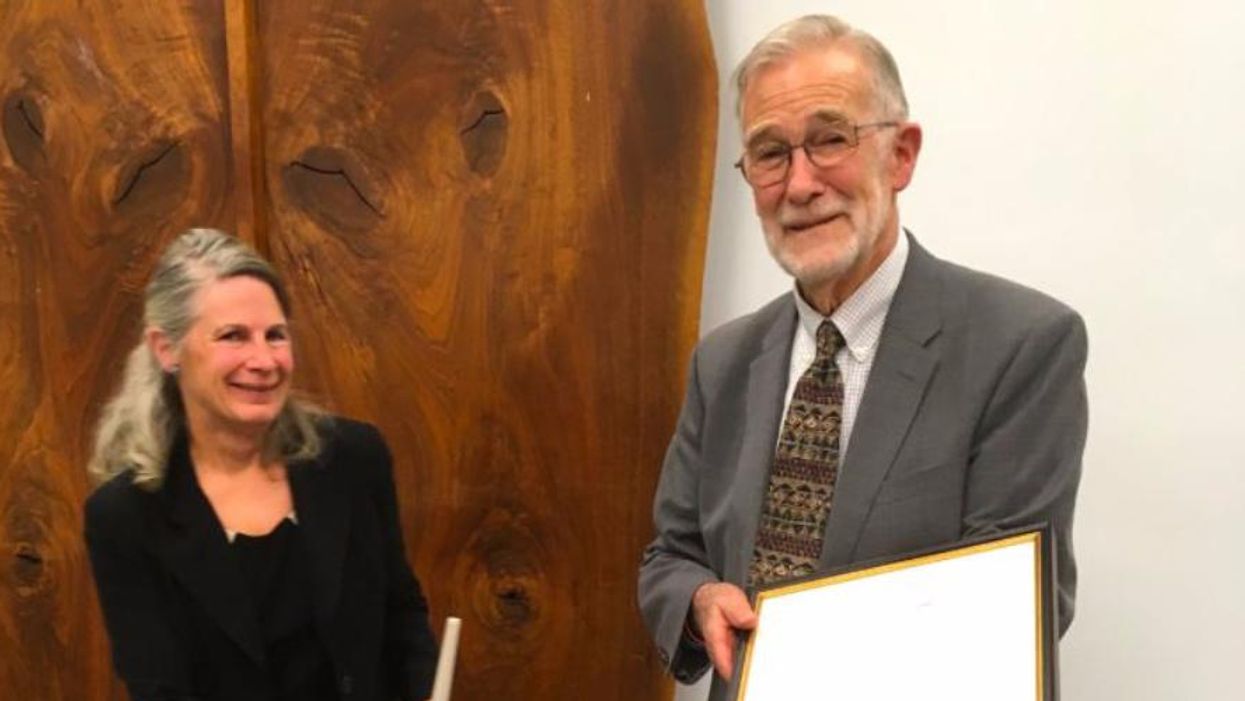
U.S. intelligence veterans recall the real story of how New York Times reporter Judith Miller disgraced herself and her profession by helping to mislead Americans into the disastrous war in Iraq. They challenge the slick, self-aggrandizing rewrite of history in her new memoir.
MEMORANDUM FOR: Americans Malnourished on the Truth About Iraq
FROM: Veteran Intelligence Professionals for Sanity (VIPS)
SUBJECT: A New "Miller's Tale" (with apologies to Geoffrey Chaucer)
U.S. intelligence veterans recall the real story of how New York Times reporter Judith Miller disgraced herself and her profession by helping to mislead Americans into the disastrous war in Iraq. They challenge the slick, self-aggrandizing rewrite of history in her new memoir.
MEMORANDUM FOR: Americans Malnourished on the Truth About Iraq
FROM: Veteran Intelligence Professionals for Sanity (VIPS)
SUBJECT: A New "Miller's Tale" (with apologies to Geoffrey Chaucer)
On April 3, former New York Times journalist Judith Miller published an article in the Wall Street Journal entitled "The Iraq War and Stubborn Myths: Officials Didn't Lie, and I Wasn't Fed a Line." If this sounds a bit defensive, Miller has tons to be defensive about.
In the article, Miller claims, "false narratives [about what she did as a New York Times reporter] deserve, at last, to be retired." The article appears to be the initial salvo in a major attempt at self-rehabilitation and, coincidentally, comes just as her new book, The Story: A Reporter's Journey, is to be published today.
In reviewing Miller's book, her "mainstream media" friends are not likely to mention the stunning conclusion reached recently by the Nobel Prize-winning International Physicians for the Prevention of Nuclear War and other respected groups that the Iraq War, for which she was lead drum majorette, killed one million people. One might think that, in such circumstances - and with bedlam reigning in Iraq and the wider neighborhood - a decent respect for the opinions of mankind, so to speak, might prompt Miller to keep her head down for a while more.
In all candor, after more than a dozen years, we are tired of exposing the lies spread by Judith Miller and had thought we were finished. We have not seen her new book, but we cannot in good conscience leave her WSJ article without comment from those of us who have closely followed U.S. policy and actions in Iraq.
Miller's Tale in the WSJ begins with a vintage Miller-style reductio ad absurdum: "I took America to war in Iraq. It was all me." Since one of us, former UN inspector Scott Ritter, has historical experience and technical expertise that just won't quit, we asked him to draft a few paragraphs keyed to Miller's latest tale. He shared the following critique:
Miller's Revisionist History
"Judith Miller did not take America to war in Iraq. Even a journalist with an ego the size of Ms. Miller's cannot presume to usurp the war power authorities of the President of the United States, or even the now-dormant Constitutional prerogatives of Congress. What she is guilty of, however, is being a bad journalist.
"She can try to hide this fact by wrapping herself in a collective Pulitzer Prize, or citing past achievements like authoring best-selling books. But this is like former Secretary of State Colin Powell trying to remind people about his past as the National Security Advisor for President Reagan or Chairman of the Joint Chiefs of Staff under Presidents George H. W. Bush and Bill Clinton.
"At the end of the day Mr. Powell will be judged not on his previous achievements, but rather on his biggest failure - his appearance before the United Nations Security Council touting an illusory Iraqi weapons-of-mass-destruction threat as being worthy of war. In this same vein, Judith Miller will be judged by her authoring stories for the 'newspaper of record' that were questionably sourced and very often misleading. One needs only to examine Ms. Miller's role while embedded in U.S. Army Mobile Exploitation Team Alpha, hunting for weapons of mass destruction during the 2003 invasion, for this point to be illustrated.
"Miller may not have singlehandedly taken America and the world to war, but she certainly played a pivotal role in building the public case for the attack on Iraq based upon shoddy reporting that even her editor at the New York Times has since discredited - including over reliance on a single-source of easy virtue and questionable credibility - Ahmed Chalabi of the Iraqi National Congress. The fact that she chose to keep this 'source' anonymous underscores the journalistic malfeasance at play in her reporting.
"Chalabi had been discredited by the State Department and CIA as a reliable source of information on Iraq long before Judith Miller started using him to underpin her front-page 'scoops' for the New York Times. She knew this, and yet chose to use him nonetheless, knowing that then Secretary of Defense Donald Rumsfeld was fully as eager to don the swindlers' magic suit of clothes, as was the king in Hans Christian Anderson's fairy tale. In Ms. Miller's tale, the fairy-tale clothes came with a WMD label and no washing instructions.
"Ms. Miller's self-described 'newsworthy claims' of pre-war weapons of mass destruction stories often were - as we now know (and many of us knew at the time) - handouts from the hawks in the Bush administration and fundamentally wrong.
"Like her early reporting on Iraq, Ms. Miller's re-working of history to disguise her malfeasance/misfeasance as a reporter does not bear close scrutiny. Her errors of integrity are hers and hers alone, and will forever mar her reputation as a journalist, no matter how hard she tries to spin the facts and revise a history that is highly inconvenient to her. Of course, worst of all, her flaws were consequential - almost 4,500 U.S. troops and 1,000,000 Iraqis dead."
Relying on the Mistakes of Others
In her WSJ article, Miller protests that "relying on the mistakes of others and errors of judgment are not the same as lying." It is almost as though she is saying that if Ahmed Chalabi told her that, in Iraq, the sun rises in the west, and she duly reported it, that would not be "the same as lying."
Miller appears to have worked out some kind of an accommodation with George W. Bush and others who planned and conducted what the post-World War II Nuremburg Tribunal called the "supreme international crime," a war of aggression. She takes strong issue with what she calls "the enduring, pernicious accusation that the Bush administration fabricated WMD intelligence to take the country to war."
Does she not know, even now, that there is abundant proof that this is exactly what took place? Has she not read the Downing Street Memorandum based on what CIA Director George Tenet told the head of British Intelligence at CIA headquarters on July 20, 2002; i. e., that "the intelligence and facts were being fixed around the policy" of making war for "regime change" in Iraq?
Does she not know, even at this late date, that the "intelligence" served up to "justify" attacking Iraq was NOT "mistaken," but outright fraud, in which Bush had the full cooperation of Tenet and his deputy John McLaughlin? Is she unaware that the Assistant Secretary of State for Intelligence at the time, Carl Ford, has said, on the record, that Tenet and McLaughlin were "not just wrong, they lied ... they should have been shot" for their lies about WMD? (See Hubris: The Inside Story of Spin, Scandal, and the Selling of the Iraq War by Michael Isikoff and David Corn.)
Blame Blix
Miller's tale about Hans Blix in her WSJ article shows she has lost none of her edge for disingenuousness: "One could argue ... that Hans Blix, the former chief of the international inspectors, bears some responsibility," writes Miller. She cherry-picks what Blix said in January 2003 about "many proscribed weapons and items," including 1,000 tons of chemical agent, were still "not accounted for."
Yes, Blix said that on Jan. 27, 2003. But Blix also included this that same day in his written report to his UN superiors, something the New York Times, for some reason, did not include in its report:
"Iraq has on the whole cooperated rather well so far with UNMOVIC in this field. The most important point to make is that access has been provided to all sites we have wanted to inspect and with one exception it has been prompt. We have further had great help in building up the infrastructure of our office in Baghdad and the field office in Mosul. Arrangements and services for our plane and our helicopters have been good. The environment has been workable.
"Our inspections have included universities, military bases, presidential sites and private residences. Inspections have also taken place on Fridays, the Muslim day of rest, on Christmas day and New Years day. These inspections have been conducted in the same manner as all other inspections." [See "Steve M." writing (appropriately) for "Crooks and Liars" as he corrected the record.]
Yes, there was some resistance by Iraq up to that point. Blix said so. However, on Jan. 30, 2003, Blix made it abundantly clear, in an interview published in The New York Times, that nothing he'd seen at the time justified war. (The byline was Judith Miller and Julia Preston.)
The Miller-Preston report said: "Mr. Blix said he continued to endorse disarmament through peaceful means. 'I think it would be terrible if this comes to an end by armed force, and I wish for this process of disarmament through the peaceful avenue of inspections,' he said. ...
"Mr. Blix took issue with what he said were Secretary of State Colin L. Powell's claims that the inspectors had found that Iraqi officials were hiding and moving illicit materials within and outside of Iraq to prevent their discovery. He said that the inspectors had reported no such incidents. ...
"He further disputed the Bush administration's allegations that his inspection agency might have been penetrated by Iraqi agents, and that sensitive information might have been leaked to Baghdad, compromising the inspections. Finally, he said, he had seen no persuasive indications of Iraqi ties to Al Qaeda, which Mr. Bush also mentioned in his speech. 'There are other states where there appear to be stronger links,' such as Afghanistan, Mr. Blix said, noting that he had no intelligence reports on this issue."
Although she co-authored that New York Times report of Jan. 30, 2003, Judith Miller remembers what seems convenient to remember. Her acumen at cherry picking may be an occupational hazard occasioned by spending too much time with Chalabi, Rumsfeld and other professional Pentagon pickers.
Moreover, Blix's February 2003 report showed that, for the most part, Iraq was cooperating and the process was working well:
"Since we arrived in Iraq, we have conducted more than 400 inspections covering more than 300 sites. All inspections were performed without notice, and access was almost always provided promptly. In no case have we seen convincing evidence that the Iraqi side knew in advance that the inspectors were coming. ...
"The inspections have taken place throughout Iraq at industrial sites, ammunition depots, research centres, universities, presidential sites, mobile laboratories, private houses, missile production facilities, military camps and agricultural sites. ...
"In my 27 January update to the Council, I said that it seemed from our experience that Iraq had decided in principle to provide cooperation on process, most importantly prompt access to all sites and assistance to UNMOVIC in the establishment of the necessary infrastructure. This impression remains, and we note that access to sites has so far been without problems, including those that had never been declared or inspected, as well as to Presidential sites and private residences. ...
"The presentation of intelligence information by the US Secretary of State suggested that Iraq had prepared for inspections by cleaning up sites and removing evidence of proscribed weapons programmes.
"I would like to comment only on one case, which we are familiar with, namely, the trucks identified by analysts as being for chemical decontamination at a munitions depot. This was a declared site, and it was certainly one of the sites Iraq would have expected us to inspect.
"We have noted that the two satellite images of the site were taken several weeks apart. The reported movement of munitions at the site could just as easily have been a routine activity as a movement of proscribed munitions in anticipation of imminent inspection."
Blix made it clear that he needed more time, but the Bush administration had other plans. In other words, the war wasn't Blix's fault, as Judy Miller suggests. The fault lay elsewhere.
When Blix retired at the end of June 2004, he politely suggested to the "prestigious" Council on Foreign Relations in New York the possibility that Baghdad had actually destroyed its weapons of mass destruction after the first Gulf War in 1991 (as Saddam Hussein's son-in-law, Hussein Kamel, who had been in charge of the WMD and rocket programs assured his debriefers when he defected in 1995). Blix then allowed himself an undiplomatic jibe:
"It is sort of fascinating that you can have 100 per cent certainty about weapons of mass destruction and zero certainty of about where they are."
For the Steering Group, Veteran Intelligence Professionals for Sanity (VIPS)
William Binney, former Technical Director, National Security Agency (ret.)
Thomas Drake, former Senior Executive, NSA
Daniel Ellsberg, former State and Defense Department official, associate VIPS
Frank Grevil, former Maj., Army Intelligence, Denmark, associate VIPS
Katharine Gun, former analyst, GCHQ (the NSA equivalent in the UK), associate VIPS
Matthew Hoh, former Capt., USMC, Iraq & Foreign Service Officer, Afghanistan, associate VIPS
Brady Kiesling, former Political Counseler, U.S. Embassy, Athens, resigned in protest before the attack on Iraq, associate VIPS.
Karen Kwiatkowski, former Lt. Col., US Air Force (ret.), at Office of Secretary of Defense watching the manufacture of lies on Iraq, 2001-2003.
Annie Machon, former officer, MI5 (the CIA equivalent in the UK), associate VIPS
David MacMichael, former Capt., USMC & senior analyst, National Intelligence Council (ret.)
Ray McGovern, former Capt., Army Infantry/Intelligence & CIA presidential briefer (ret.)
Elizabeth Murray, former Deputy National Intelligence Officer for the Near East, National Intelligence Council (ret.)
Todd E. Pierce, Maj., former U.S. Army Judge Advocate (ret.)
Scott Ritter, former Maj., USMC, former UN Weapon Inspector, Iraq
Coleen Rowley, Division Council & Special Agent, FBI (ret.)
Greg Thielmann, former Office Director for Strategic, Proliferation, and Military Affairs in the State Department's Bureau of Intelligence and Research
Peter Van Buren, former diplomat, Department of State, associate VIPS
Ann Wright, Col., US Army (ret.) & US diplomat (resigned in March, 2003 in opposition to the war on Iraq)
During a standing-room-only event held at Unter den Linden 52 in the shadow of Berlin's Brandenburg Gate, Sam Adams Associates for Integrity in Intelligence (SAAII) presented its 14th annual award to ex-National Security Agency official William Binney on Jan.
During a standing-room-only event held at Unter den Linden 52 in the shadow of Berlin's Brandenburg Gate, Sam Adams Associates for Integrity in Intelligence (SAAII) presented its 14th annual award to ex-National Security Agency official William Binney on Jan. 22. Binney ended his 36-year career in intelligence after 9/11 when he learned that NSA Director Michael Hayden had removed Fourth Amendment privacy protections from the agency's surveillance of Americans.
More than half of the former Sam Adams award recipients, who were free to travel, took part in the award ceremony. In the not-free-to-travel category, Edward Snowden (recipient in 2013) took part via live-stream video from Russia; former Army Pvt. Chelsea (Bradley) Manning (2014) is serving a 35-year sentence for releasing to WikiLeaks video and classified messages revealing, among other things, U.S. war crimes in Iraq. And WikiLeaks publisher Julian Assange (2010) is well into his third year of confinement in Ecuador's London embassy where he has political asylum.
As the Berlin ceremony began, Sam Adams Associates made its first posthumous award to U.S. Ambassador to El Salvador Robert White, who died on Jan. 13, 2015. Longtime SAAII veteran David MacMichael accepted the award on Ambassador White's behalf and will give it to his widow.
White, like other foreign service officers who have been honored by SAAII, personified integrity by sacrificing his career in the early days of the Reagan administration rather than cover up torture, murder and other human rights crimes by Salvadoran "death squads" working with the U.S.-supported Salvadoran army.
Most memorably, White demanded justice for four American churchwomen who were raped and murdered in December 1980, upsetting the incoming Reagan administration's plans to downplay that case and other atrocities. [To hear Ambassador White discuss another atrocity, the murder of Salvadoran Archbishop Oscar Romero, click here. (Courtesy of journalist Don North)]
As a CIA analyst, MacMichael encountered similar attempts to conceal human rights crimes by U.S.-backed forces in Central America, an early example of the "politicized" intelligence pushed by Reagan's CIA Director William Casey and his deputy, Robert Gates. MacMichael quit his senior CIA position and testified at The Hague to the truth about the Reagan administration's secret war to overthrow Nicaragua's leftist Sandinista government.
The actions of White and MacMichael fit with the legacy of previous SAAII award recipients, such as former UK Ambassador to Uzbekistan Craig Murray (2005), who pleaded in vain for London to refuse to accept "intelligence" gotten by the most extreme kinds of torture, and U.S. Assistant Secretary of State for Intelligence Thomas Fingar (2012), whose professionalism and courage played a huge role in exposing the myth that Iran was working on a nuclear weapon.
[To watch the award event, click here and scroll down to the bottom of the article for the video coverage, which begins at minute 8:00 and ends at 1 hour, 26 minutes. (Courtesy of RT) Included are short presentations by Annie Machon, former UK MI5 whistleblower; Katharine Gun (awardee in 2003), GCHQ (the British NSA) whistleblower; Craig Murray (2005), former UK ambassador to the terror-friendly regime in Uzbekistan; Coleen Rowley (2002), FBI whistleblower about mistakes before 9/11; Thomas Drake (2011), former senior NSA executive; Jesselyn Radack (2011), former Department of Justice ethics adviser and first whistleblower on U.S torture and now attorney for other whistleblowers; Todd Pierce, Major, U.S. Army Judge Advocate (ret.) and defense counsel at Guantanamo; and Edward Snowden (2013), exposer of NSA abuses (via video live stream); Bill Binney with an engaging acceptance speech after the award citation was read aloud by Annie Machon (in English) and Elizabeth Murray (in German), after which SAAII's Berlin host Joerg Dreger gave closing remarks.]
Text of the citation follows:
The Sam Adams Associates for Integrity in Intelligence Presents its INTEGRITY AWARD for 2015 to: William Binney Know all ye by these presents that William Binney is hereby honored with the traditional Sam Adams Corner-Brightener Candlestick Holder, in symbolic recognition of Mr. Binney's courage in shining light into dark places.
Bill Binney represents the patriotic side of a duel between two unequal adversaries: an exceedingly powerful and ruthless state and Bill, an official who would not break his solemn oath to defend its Constitution. Like Tom Drake and Ed Snowden, he was determined to preserve his integrity, his privacy, and his personal honor.
On both sides of the Atlantic we hear the mantra: "After 9/11/2001 EVERYTHING CHANGED;" just like "everything changed" after the burning of the Reichstag on 2/27/1933. That event led many Germans into what the writer Sebastian Haffner called "sheepish submissiveness" -- with disastrous consequences.
As a young German lawyer in Berlin at the time, Haffner wrote in his diary one day after the Reichstag fire that Germans had suffered a nervous breakdown. "No one saw anything out of the ordinary in the fact that, from now on, one's telephone would be tapped, one's letters opened, and one's desk might be broken into."
What was missing, wrote Haffner, was "a solid inner kernel that cannot be shaken by external pressures and forces, something noble and steely, a reserve of pride, principle, and dignity to be drawn on in the hour or trial."
We are grateful that these traits were NOT missing in Bill Binney. Nor were they missing in Edward Snowden, whose patriotic risk-taking opened the way for Bill and his colleagues to expose the collect-it-all fanatics and the damage they do to privacy everywhere.
What Ed Snowden called "turnkey tyranny" can still be prevented. But this can only happen, if patriots like Bill Binney can jolt enough people out of "sheepish submissiveness." Goethe understood this 200 years ago when he warned, "No one is more a slave than he who thinks himself free, but is not."
"Niemand ist mehr Sklave, als der sich fur frei halt, ohne es zu sein*.
Presented this 22nd day of January 2015 in Berlin by admirers of the example set by the late CIA analyst, Sam Adams.
In German: The Sam Adams Associates for Integrity in Intelligence AUSZEICHNUNG FUER INTEGRITAET, 2015: William Binney
Nehmen Sie bitte alle zur Kenntnis, dass hiermit William Binney mit dem traditionsgemaessen Sam Adams Corner-Brightener (Ecken beleuchtenden) Kerzenstaender ausgezeichnet wird, als symbolische Ehrung fuer Mr Binney's Mut, auch dunkelste Ecken zu beleuchten.
Bill Binney repraesentiert die patriotische Seite eines Duells zwischen zwei ungleichen Gegnern: einem ueberaus maechtigen und ruecksichtslosen Staat auf der einen Seite und Bill, einem Beamten, der seinen Amtseid die Verfassung zu verteidigen nicht bricht. Wie Tom Drake und Edward Snowden war auch er entschlossen, seine Integritaet, Privatsphaere und persoenliche Ehre zu wahren.
Auf beiden Seiten des Atlantiks hoeren wir das Mantra: "Nach 9/11 wurde alles anders;" genauso wie "alles auf einmal anders war" nachdem der Reichstag am 27. Februar 1933 brannte. Letzteres fuehrte viele Deutsche in etwas, was Sebastian Haffner einst als "schafsmaessige Ergebenheit" bezeichnete, mit schrecklichen Konsequenzen.
Haffner war damals ein junger Anwalt in Berlin, und er schrieb einen Tag nach dem Reichstags-Brand in sein Tagebuch, dass die Deutschen gerade "einen kollektiven Nervenzusammenbruch" erlitten haetten. "Keiner fand etwas Besonderes dabei, dass man in Zukunft seine Telefongespraeche belauschen, seine Briefe oeffnen und seinen Schreibtisch erbrechen durfte."
Was fehlte, schrieb Haffner, war "ein fester Kern," der nicht durch aeusseren Druck und Zwang erschuettert werden konnte. "Eine gewisse adlige Haerte, eine Reserve an Stolz, Gesinnung, Selbstgewissheit, Wuerde," aus der man in Zeiten der Herausforderung schoepfen konnte.
Wir sind sehr dankbar, dass diese Eigenschaften Bill Binney nicht fehlten. Auch Edward Snowden zeigte sie reichlich, als seine patriotische Risikobereitschaft den Weg fuer Bill und seine Kollegen ebneten, damit sie den Schaden aufdecken konnten, den die Sammelwut der Fanatiker zur Folge hat, und beweisen konnten, dass die Privatsphaere ueberall gefaehrdet ist.
Was Ed Snowden als "Fertiggericht Tyrannei" (turnkey tyranny) bezeichnete, kann immer noch verhindert werden. Aber das kann nur passieren, wenn Patrioten wie Bill Binney genuegend Menschen aus der "schafsmaessigen Ergebenheit" aufwecken koennen. Goethe hat das schon vor 200 Jahren gewusst, als er gewarnt hat: "Niemand ist mehr Sklave, als der sich fuer frei haelt, ohne es zu sein."
Roster of SAAII awardees:
1 -- Coleen Rowley -- 2002
2 -- Katharine Gun -- 2003
3 -- Sibel Edmonds -- 2004
4 -- Craig Murray -- 2005
5 -- Sam Provance -- 2006
6 -Frank Grevil -- 2007
7 -- Larry Wilkerson -- 2009
8 -- Julian Assange -- 2010
9 -- Thomas Drake -- 2011
10 -Jesselyn Radack -- 2011
11 -Thomas Fingar -- 2012
12 -Edward Snowden - 2013
13 -Chelsea Manning - 2014
14 -William Binney - 2015
In a plea made directly to the thousands of civil servants whose daily occupation feeds the ever-growing spy state, a group of former whistleblowers published an open letter Wednesday in the Guardian urging those individuals to join Edward Snowden and the other brave truth-tellers "to follow your conscience and let us know what's being done in our names."

"Edward Snowden just showed you what one person can do," they continue. "But Snowden shouldn't have to stand alone, and his revelations shouldn't be the only ones."
In an open call to those whose days are spent "hidden away" in government offices and intelligence agencies spying, lying to the public and "destroying everything we as a society pretend to care about," the group declares: "You can be part of the solution."
The letter comes at the end of a year when whistleblowers in the United States made great waves and great sacrifice. Edward Snowden remains trapped in Russia facing charges under the Espionage Act after his disclosures revealed the full extent of the American and British surveillance mechanisms. In August, Chelsea Manning was sentenced to 35 years in prison after being charged with aiding the enemy for exposing the brutality and illegality of the American military. And at the beginning of the year, former CIA official John Kiriakou was sentenced to 30 months for exposing the practice of waterboarding to journalists.
Despite promises of protection, the Obama administration has overseen more prosecutions of whistleblowers than all other presidents combined and, along with the 'Insider Threat' peer spying program, has established a culture of threats and intimidation that extends throughout government agencies.
In the face of these threats, the former whistleblowers promise "strength in numbers." They write, "You won't be the first - nor the last - to follow your conscience and let us know what's being done in our names. Truth is coming - it can't be stopped. [...] It's in your hands to be on the right side of history and accelerate the process."
The complete text of the letter is below:
At least since the aftermath of September 2001, western governments and intelligence agencies have been hard at work expanding the scope of their own power, while eroding privacy, civil liberties and public control of policy. What used to be viewed as paranoid, Orwellian, tin-foil hat fantasies turned out post-Snowden, to be not even the whole story.
What's really remarkable is that we've been warned for years that these things were going on: wholesale surveillance of entire populations, militarization of the internet, the end of privacy. All is done in the name of "national security", which has more or less become a chant to fence off debate and make sure governments aren't held to account - that they can't be held to account - because everything is being done in the dark. Secret laws, secret interpretations of secret laws by secret courts and no effective parliamentary oversight whatsoever.
By and large the media have paid scant attention to this, even as more and more courageous, principled whistleblowers stepped forward. The unprecedented persecution of truth-tellers, initiated by the Bush administration and severely accelerated by the Obama administration, has been mostly ignored, while record numbers of well-meaning people are charged with serious felonies simply for letting their fellow citizens know what's going on.
It's one of the bitter ironies of our time that while John Kiriakou (ex-CIA) is in prison for blowing the whistle on US torture, the torturers and their enablers walk free.
Likewise WikiLeaks-source Chelsea (nee Bradley) Manning was charged with - amongst other serious crimes - aiding the enemy (read: the public). Manning was sentenced to 35 years in prison while the people who planned the illegal and disastrous war on Iraq in 2003 are still treated as dignitaries.
Numerous ex-NSA officials have come forward in the past decade, disclosing massive fraud, vast illegalities and abuse of power in said agency, including Thomas Drake, William Binney and Kirk Wiebe. The response was 100% persecution and 0% accountability by both the NSA and the rest of government. Blowing the whistle on powerful factions is not a fun thing to do, but despite the poor track record of western media, whistleblowing remains the last avenue for truth, balanced debate and upholding democracy - that fragile construct which Winston Churchill is quoted as calling "the worst form of government, except all the others".
Since the summer of 2013, the public has witnessed a shift in debate over these matters. The reason is that one courageous person: Edward Snowden. He not only blew the whistle on the litany of government abuses but made sure to supply an avalanche of supporting documents to a few trustworthy journalists. The echoes of his actions are still heard around the world - and there are still many revelations to come.
For every Daniel Ellsberg, Drake, Binney, Katharine Gun, Manning or Snowden, there are thousands of civil servants who go by their daily job of spying on everybody and feeding cooked or even made-up information to the public and parliament, destroying everything we as a society pretend to care about.
Some of them may feel favourable towards what they're doing, but many of them are able to hear their inner Jiminy Cricket over the voices of their leaders and crooked politicians - and of the people whose intimate communication they're tapping.Hidden away in offices of various government departments, intelligence agencies, police forces and armed forces are dozens and dozens of people who are very much upset by what our societies are turning into: at the very least, turnkey tyrannies.
One of them is you.
You're thinking:
* Undermining democracy and eroding civil liberties isn't put explicitly in your job contract.
* You grew up in a democratic society and want to keep it that way
* You were taught to respect ordinary people's right to live a life in privacy
* You don't really want a system of institutionalized strategic surveillance that would make the dreaded Stasi green with envy - do you?
Still, why bother? What can one person do? Well, Edward Snowden just showed you, what one person can do. He stands out as a whistleblower both because of the severity of the crimes and misconduct that he is divulging to the public - and the sheer amount of evidence he has presented us with so far - more is coming. But Snowden shouldn't have to stand alone, and his revelations shouldn't be the only ones.
You can be part of the solution; provide trustworthy journalists - either from old media (like this newspaper) or from new media (such as WikiLeaks) with documents that prove what illegal, immoral, wasteful activities are going on where you work.
There IS strength in numbers. You won't be the first - nor the last - to follow your conscience and let us know what's being done in our names. Truth is coming - it can't be stopped. Crooked politicians will be held accountable. It's in your hands to be on the right side of history and accelerate the process.
Courage is contagious.
Signed by:
Peter Kofod, ex-Human Shield in Iraq (Denmark)
Thomas Drake, whistleblower, former senior executive of the NSA (US)
Daniel Ellsberg, whistleblower, former US military analyst (US)
Katharine Gun, whistleblower, former GCHQ (UK)
Jesselyn Radack, whistleblower, former Department of Justice (US)
Ray McGovern, former senior CIA analyst (US)
Coleen Rowley, whistleblower, former FBI agent (US)
_____________________

MOSCOW - National Security Agency whistleblower Edward Snowden, from his asylum in Russia, accepted an award on Wednesday from a group of former U.S. intelligence officials expressing support for his decision to divulge secrets about the NSA's electronic surveillance of Americans and people around the globe.
The award, named in honor of the late CIA analyst Sam Adams, was presented to Snowden at a ceremony in Moscow by previous recipients of the award bestowed by the Sam Adams Associates for Integrity in Intelligence (SAAII). The presenters included former FBI agent Coleen Rowley, former NSA official Thomas Drake, and former Justice Department official Jesselyn Radack, now with the Government Accountability Project. (Former CIA analyst Ray McGovern also took part.)
Snowden received the traditional Sam Adams Corner-Brighteneer Candlestick Holder, in symbolic recognition of his courage in shining light into dark places. Besides the presentation of the award, several hours were spent in informal conversation during which there was a wide consensus that, under present circumstances, Russia seemed the safest place for Snowden to be and that it was fortunate that Russia had rebuffed pressure to violate international law by turning him away.
Snowden showed himself not only to be in good health, but also in good spirits, and very much on top of world events, including the attacks on him personally. Shaking his head in disbelief, he acknowledged that he was aware that former NSA and CIA Director Michael Hayden, together with House Intelligence Committee Chair Mike Rogers, had hinted recently that he (Snowden) be put on the infamous "Kill List" for assassination.
In brief remarks from his visitors, Snowden was reassured -- first and foremost -- that he need no longer be worried that nothing significant would happen as a result of his decision to risk his future by revealing documentary proof that the U.S. government was playing fast and loose with the Constitutional rights of Americans.
Even amid the government shutdown, Establishment Washington and the normally docile "mainstream media" have not been able to deflect attention from the intrusive eavesdropping that makes a mockery of the Fourth Amendment. Even Congress is showing signs of awaking from its torpor.
In the somnolent Senate, a few hardy souls have gone so far as to express displeasure at having been lied to by Director of National Intelligence James Clapper and NSA Director Keith Alexander -- Clapper having formally apologized for telling the Senate Intelligence Committee eavesdropping-related things that were, in his words, "clearly erroneous" and Alexander having told now-discredited whoppers about the effectiveness of NSA's intrusive and unconstitutional methods in combating terrorism.
Coleen Rowley, the first winner of the Sam Adams Award (2002), cited some little-known history to remind Snowden that he is in good company as a whistleblower -- and not only because of previous Sam Adams honorees. She noted that in 1773, Benjamin Franklin leaked confidential information by releasing letters written by then-Lt. Governor of Massachusetts Thomas Hutchinson to Thomas Whatley, an assistant to the British Prime Minister.
The letters suggested that it was impossible for the colonists to enjoy the same rights as subjects living in England and that "an abridgement of what are called English liberties" might be necessary. The content of the letters was so damaging to the British government that Benjamin Franklin was dismissed as colonial Postmaster General and had to endure an hour-long censure from British Solicitor General Alexander Wedderburn.
Who's the Traitor?
Like Edward Snowden, Franklin was called a traitor for whistleblowing the truth about what the government was doing. As Franklin's biographer H.W. Brands wrote: "For an hour and a half [Wedderburn] hurled invective at Franklin, branding him a liar, a thief, an outcast from the company of all honest men, an ingrate. ... So slanderous was Wedderburn's diatribe that no London paper would print it."
Hat tip for this interesting bit of history to Tom Mullen and his Aug. 9 article in the Washington Times titled "Obama says Snowden no patriot. How would Ben Franklin's leak be treated today?" Ms. Rowley also drew from Mullen's comment:
"Tyrants slandering patriots is nothing new. History decided that Franklin was a patriot. It was not so kind to the Hutchinsons and Wedderburns. History will decide who the patriots were in the 21st century as well. It will not be concerned with health care programs or unemployment rates. More likely, it will be concerned with who attacked the fundamental principles of freedom and who risked everything to defend them."
The award citation to Snowden read, in part, "Sam Adams Associates are proud to honor Mr. Snowden's decision to heed his conscience and give priority to the Common Good over concerns about his own personal future. We are confident that others with similar moral fiber will follow his example in illuminating dark corners and exposing crimes that put our civil rights as free citizens in jeopardy. ...
"Heeding the dictates of conscience and patriotism, Mr. Snowden sacrificed his career and put his very life at risk, in order to expose what he called 'turnkey tyranny.' His whistleblowing has exposed a National Security Agency leadership captured by the intrusive capabilities offered by modern technology, with little if any thought to the strictures of law and Constitution. The documents he released show an NSA enabled, rather than restrained, by senior officials in all three branches of the U.S. government.
"Just as Private Manning and Julian Assange exposed criminality with documentary evidence, Mr. Snowden's beacon of light has pierced a thick cloud of deception. And, again like them, he has been denied some of the freedoms that whistleblowers have every right to enjoy.
"Mr. Snowden was also aware of the cruel indignities to which other courageous officials had been subjected -- whistleblowers like Sam Adams Award honorees (ex aequo in 2011) Thomas Drake and Jesselyn Radack -- when they tried to go through government channels to report abuses. Mr. Snowden was able to outmaneuver those who, as events have shown, are willing to go to ridiculous lengths to curtail his freedom and quarrel with his revelations. We are gratified that he has found a place of sanctuary where his rights under international law are respected.
"Whistleblower Daniel Ellsberg, a Sam Adams 'Awardee Emeritus,' has asserted that Mr. Snowden's whistleblowing has given U.S. citizens the possibility to roll back an 'executive coup against the Constitution.' This is a mark of the seriousness and importance of what Mr. Snowden has done.
"Like other truth-tellers before him, Edward Snowden took seriously his solemn oath to support and defend the Constitution of the United States against all enemies foreign and domestic. He was thus legally and morally obliged to let his fellow Americans know that their Fourth Amendment rights were being violated.
"The past few years have shown that courage is contagious. Thus, we expect that still others will now be emboldened to follow their consciences in blowing the whistle on other abuses of our liberties and in this way help stave off 'turnkey tyranny.'
"Presented this 9th day of October 2013 by admirers of the example set by the late CIA analyst, Sam Adams."
The Sam Adams associates also expressed gratitude for those who made this unusual gathering possible: Anatoly Kucherena, a lawyer for Snowden and founder and head of The Institute for Democracy and Cooperation in Moscow; WikiLeaks' Julian Assange (SAAII award winner in 2010); Sarah Harrison, also of WikiLeaks, who facilitated Mr. Snowden's extrication from Hong Kong and has been a constant presence with him since; other Internet transparency and privacy activists rendering encouragement and support, and, of course, Mr. Snowden himself for agreeing to host the first such visit to express solidarity with him in Russia.
The Sam Adams Award, named in honor of the late CIA analyst Sam Adams, has been given in previous years to truth-tellers Coleen Rowley of the FBI; Katharine Gun of British Intelligence; Sibel Edmonds of the FBI; Craig Murray, former UK ambassador to Uzbekistan; Sam Provance; former U.S. Army Sergeant at Abu Ghraib; Maj. Frank Grevil of Danish Army Intelligence; Larry Wilkerson, Colonel, U.S. Army (ret.), former chief of staff to Colin Powell at State; Julian Assange of WikiLeaks; Thomas Drake, former senior NSA official; Jesselyn Radack, Director of National Security and Human Rights, Government Accountability Project; and Thomas Fingar, former Assistant Secretary of State and Director, National Intelligence Council.
Sam Adams Associates for Integrity in Intelligence was established in 2002 by colleagues and admirers of the late CIA intelligence analyst Sam Adams to recognize those who uphold his example as a model for those in intelligence who would aspire to the courage to speak truth to power. In honoring Adams's memory, SAAII confers an award each year to someone in intelligence or related work who exemplifies Sam Adam's courage, persistence, and devotion to truth -- no matter the consequences.
It was Adams who discovered in 1967 that there were more than a half-million Vietnamese Communists under arms. This was roughly twice the number that the U.S. command in Saigon would admit to, lest Americans learn that claims of "progress" were bogus.
An earlier version of this article first appeared at Consortiumnews.com
How inconvenient for Great Britain. Just as world leaders of the G-8 countries gather for a meeting in Northern Ireland, The Guardian front-pages the news that the last time they got together in territory controlled by the UK, the British subjected them to the kind of intrusive eavesdropping that most folks still think is reserved for "suspected terrorists" or "foreign enemies."
Even though this kind of monitoring is now widely seen by governments as de rigueur - whether in London, Washington, New York or wherever - we can assume that the new eavesdropping disclosure makes things a bit uncomfortable as G-8 leaders sit down together for friendly discussions about the global economy and other matters. Conceivably, it could even cause some embarrassment to the British government, even though the bar to embarrassment is already at an unprecedentedly high level.

Special help came from NSA to handle the tougher technical challenges - like eavesdropping on then-Russian President Dmitry Medvedev as his phone calls passed through satellite links to Moscow. Even though Russian President Vladimir Putin has larger fish and chips to fry in this week's UK visit, it will be difficult for him to resist the temptation to make political hay out of the eavesdropping disclosure.
Arriving in Northern Ireland today, British Prime Minister David Cameron refused to answer media questions about UK/US eavesdropping on his VIP colleagues. Meanwhile, "independent" UK media seem to be under some constraint - witness the bizarre behavior recently encountered by some of my British colleagues in Sam Adams Associates for Integrity in Intelligence (SAAII).
Not surprisingly, two of them - Katharine Gun (formerly of GSHQ) and Craig Murray (former UK ambassador to Uzbekistan) - were eagerly sought for interviews to provide expertise and insight regarding the revelations about spying on visiting VIPs and other disclosures of joint GCHQ/NSA snooping emanating from documents leaked by American Edward Snowden.
Both Gun and Murray have a history of speaking truth to power. Gun disclosed NSA spying on (or attempted blackmailing of) UN Security Council members whose votes were sought to give some legal cover to the 2003 invasion of Iraq, and Murray exposed human rights crimes in Uzbekistan. (For their risky truth-telling, both were recipients of SAAII awards.)
Despite the timeliness of getting their comments on the Guardian reports, the British media was having trouble trying to "manage" - as the British like to say - their efforts to flesh out the story. Here's the text of Katharine Gun's e-mail to SAAII members. (This is provided, in part, as a courtesy to GCHQ and NSA which, busy as they are today, probably have not yet had time to do anything more than collect and store the metadata.)
Katharine Gun wrote: "Anyone read the latest headlines in The Guardian today? Kind of strange, although don't know if this sort of thing is perfectly normal. I got a call from Sky News, they wanted to interview me today regarding the latest releases, they said they would send a TV truck, then a call back to say the truck had technical problems.
"Next they propose to use the local TV studio, but needed to make sure there was a cameraman available; just got call back to say, 'no cameraman, so have to call it off.' Left it vaguely that they would be in touch perhaps at a later date."
Ambassador Murray commented: "I had precisely the same experience and precisely the same excuse, last week with the BBC. They don't have difficulty finding satellite trucks to film Prince William's wife attending a gardening class."
And, as if more were needed to prompt Edmund Burke, the great defender of the British press, to roll over in his grave, this just in from Annie Machon, another Sam Adams Associate for Integrity in Intelligence and former officer of Britain's FBI equivalent, MI5. Her note strikes a discordant note regarding the BBC's jealously guarded and broadly vaunted "fierce independence," suggesting that the BBC has some sort of allergy to information originating with whistleblower Snowden that reflects poorly on the UK and its intelligence services.
She wrote: "Last Monday I got bumped at the last minute from BBC Newsnight at the height of the initial Snowden frenzy - Newsnight is the flagship UK evening news program. They were keen to get me on, booking a studio in Dusseldorf (routine to do), and I was all ready to go, taxis arranged, etc., only to have the following message:
"'I'm sorry also to say that the way things are looking, I don't think we'll actually need you for the discussion tonight. Everything has been up in the air, but the plans have just been finalized and they're a little different to what we had in mind earlier, so I think we probably have to stand you down.' This, after lots of emails and skype chats throughout the afternoon and evening."
Back to Northern Ireland. Would it not be fascinating to be a fly on the wall as David Cameron tries to convince Putin and the others - out of earshot of President Obama - "The Americans made me do it."
An earlier version of this article first appeared in Consortiumnews.com