

SUBSCRIBE TO OUR FREE NEWSLETTER
Daily news & progressive opinion—funded by the people, not the corporations—delivered straight to your inbox.
5
#000000
#FFFFFF
To donate by check, phone, or other method, see our More Ways to Give page.
Daily news & progressive opinion—funded by the people, not the corporations—delivered straight to your inbox.
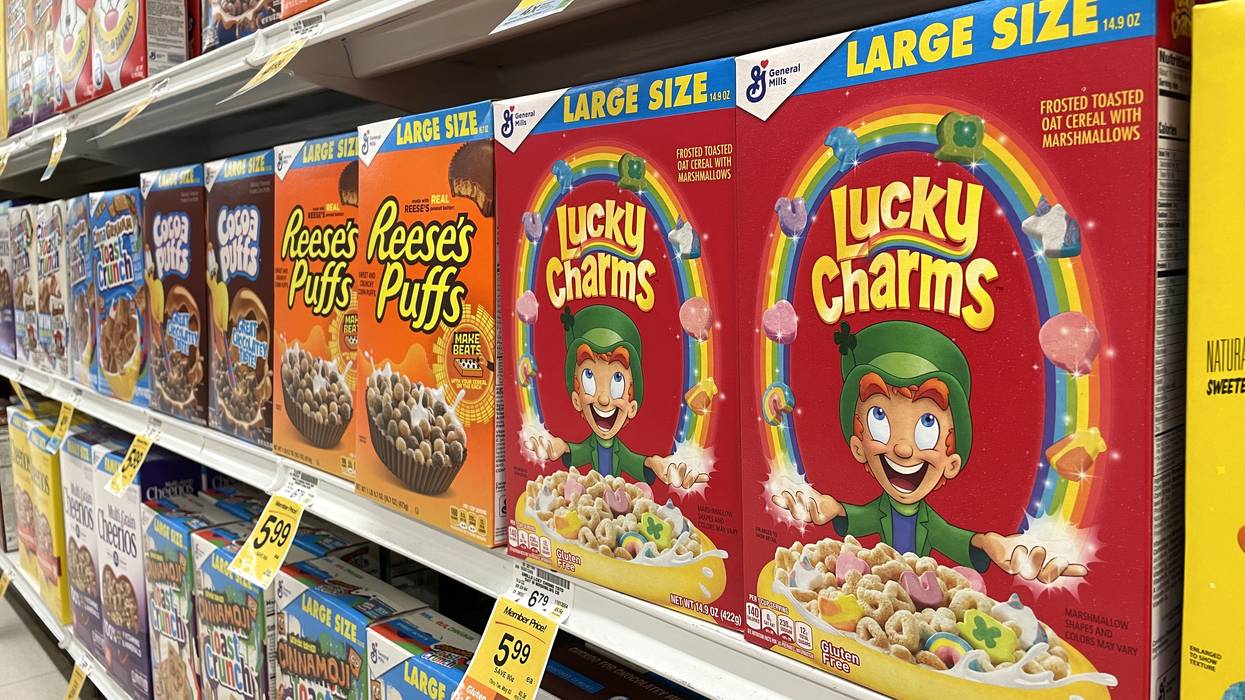
"It's shameful that Americans are left food insecure and have to skip meals while corporations and their wealthy shareholders enjoy the spoils of supersized profits under unjustified price hikes."
As the U.S. government on Wednesday released its latest inflation report, the watchdog Accountable.US put out a new analysis detailing how Americans face food insecurity while major food corporations are padding their profits with price hikes.
"Big Food's staggering increase in earnings shows they did not need to raise prices so high on consumers but did so anyway to maximize record profits," said Liz Zelnick, director of Economic Security and Corporate Power at Accountable.US, in a statement.
"It's shameful that Americans are left food insecure and have to skip meals while corporations and their wealthy shareholders enjoy the spoils of supersized profits under unjustified price hikes," she added. "It's clear that the food industry will not hold itself accountable. It's time Congress do more to rein in corporate greed, one of the main factors currently driving up costs for families."
"It's time Congress do more to rein in corporate greed, one of the main factors currently driving up costs for families."
The Accountable.US report takes aim at General Mills, Kraft Heinz, and Mondelez—three of the top "at home" food companies in the United States based on market capitalization—focusing on January through March, the first quarter of this calendar year.
General Mills is one of a few companies that dominate the U.S. breakfast cereal market, with brands including Cocoa Puffs, Cookie Crisp, and Lucky Charms. Kraft Heinz is known for not only ketchup and macaroni and cheese but also Jell-O, Kool-Aid, and Philadelphia Cream Cheese. Mondelez's top brands include Chips Ahoy! and belVita.
The companies' combined net earnings for the quarter rose by 51% year-over-year (YoY) to a combined $3.47 billion, and the trio collectively spent over $1.3 billion on shareholder dividends, Accountable.US found. Of the three, only General Mills saw its earnings drop from the first three months of 2022 to the same period in 2023—though the company still spent more on dividends this year compared with last year.
The first three months of this calendar year were the third quarter of General Mills' 2023 fiscal year. Accountable.US cited Reuters' March 23 report that the company "raised its fiscal 2023 forecasts for a fourth time after beating estimates for quarterly results, helped by price increases and steady demand for its packaged-food products."
The watchdog also highlighted that General Mills "saw its net earnings increase by nearly $2 billion YoY for the first nine months of FY 2023, as the company spent over $2.16 billion on its shareholders through a combination of dividends and stock buybacks."
For Kraft Heinz, the watchdog referenced Reuters reporting earlier this month that it "raised its full-year profit forecast on Wednesday on the back of higher prices and sustained demand for its packaged food items." The analysis adds that the company "saw its Q1 2023 net income increase by 7.1% YoY to $837 million and spent $491 million on shareholder dividends."
Accountable.US noted that during the first quarter of this year, "Mondelez—which touted price hikes for its double-digit increases in revenue and earnings—returned $928 million to shareholders through a combination of dividends and stock buybacks, after reporting $2.1 billion in profits, a 143% increase from last year."
The group used its new analysis to call out the Federal Reserve, saying that "the findings are the most recent evidence that while inflation is slowing, the Fed's single-minded policy of repeated interest rate hikes [is] doing little to contain the primary driver of rising costs—corporate greed."
The report also emphasizes recent admissions from economists that corporate greed is driving inflation—which progressive organizations and experts have been stressing for months in response to the Fed's interest rate hikes.
As the analysis points out, The Wall Street Journal reported earlier this month:
Consumers have... been unusually willing to accept higher prices lately. Paul Donovan, chief economist at UBS Global Wealth Management, said businesses are betting that consumers will go along because they know about supply bottlenecks and higher energy prices.
"They are confident that they can convince consumers that it isn't their fault, and it won't damage their brand," Mr. Donovan said.
According to the consumer price index report released Wednesday by the U.S. Bureau of Labor Statistics, "the food at home index fell 0.2%" from March to April. While cereals and bakery products saw a slight increase, there were decreases for milk; nonalcoholic beverages; fruits and vegetables; and meats, poultry, fish, and eggs.
However, the bureau's report also provides context from the past year: "The food at home index rose 7.1% over the last 12 months. The index for cereals and bakery products rose 12.4% over the 12 months ending in April. The remaining major grocery store food groups posted increases ranging from 2.0% (fruits and vegetables) to 10.4% (other food at home)."
The Accountable.US analysis notes that in January and February, "food-equity advocates warned that 'food insecurity for millions of American consumers is worsening' despite overall inflation easing, with higher numbers of food stamp recipients reporting 'skipping meals, eating less, and going to food banks to manage costs.'"
The U.S. Census Bureau has estimated throughout 2023 that based on household surveys, roughly 25 million people sometimes or often did not have enough to eat in the previous seven days. The U.S. Department of Agriculture reports that nearly 34 million people live in food-insecure households—though research published last month suggests that figure is likely an undercount.
Additionally, food insecurity figures don't provide a full picture of how many families struggle to stay fed, as Claire Babineaux-Fontenot, CEO of food bank network Feeding America, explained to CNN in March: "The nuance is that some people are not 'food insecure' because they get access to the charitable food system. That doesn't mean they're able to achieve self-sufficiency."
U.S. households are also contending with losing assistance related to the Covid-19 pandemic—including the end of the expanded child tax credit, universal free school meals, and increased Supplemental Nutrition Assistance Program (SNAP) benefits, formerly known as food stamps.
As Common Dreams reported in late February, while experts warned that the end to boosted SNAP benefits would cause a rise in U.S. poverty, Public Citizen president Robert Weissman declared that "a decent society would not let this happen."
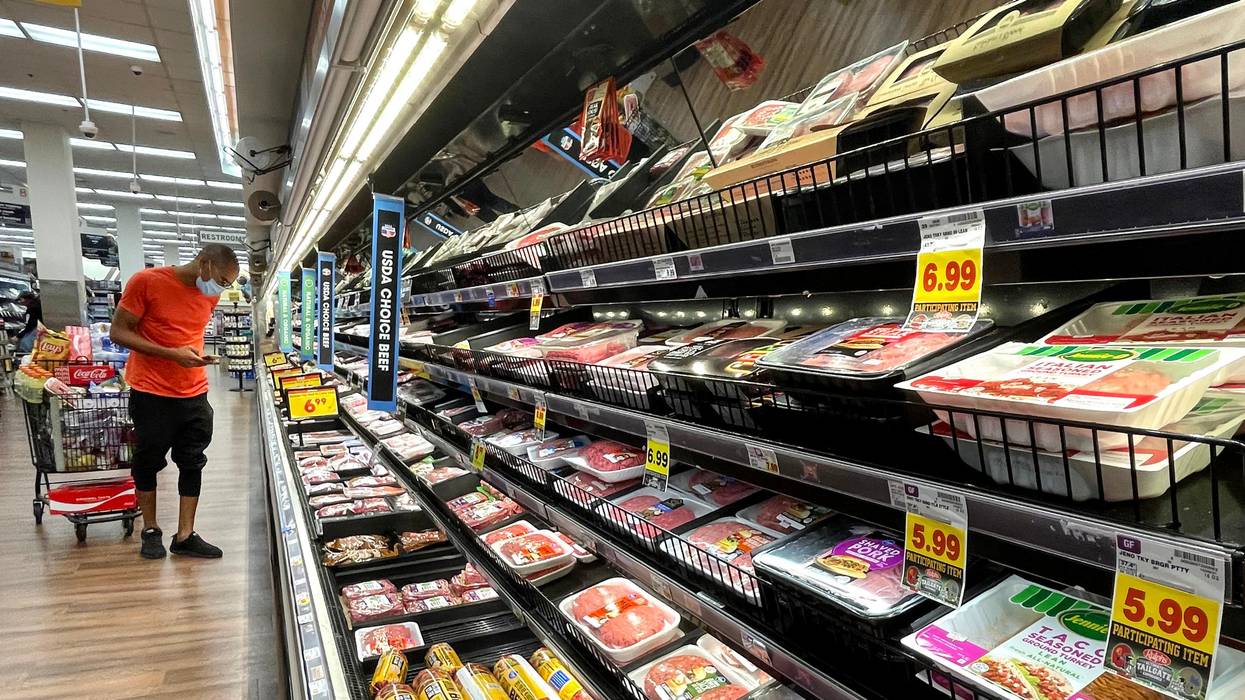
A new analysis released Tuesday ahead of a congressional hearing on pandemic-era price gouging shows that U.S. corporations in the food and energy sectors--from Tyson to Exxon Mobil--are pushing higher costs onto consumers while raking in ever-increasing revenues and handing executives massive pay packages.
Conducted by the advocacy group Food & Water Watch (FWW), the analysis spotlights the fact that skyrocketing food and energy--specifically gasoline--prices have been major contributors to the overall rise of inflation in the U.S. Between December 2019 and December 2021, the nation's Consumer Price Index (CPI) jumped by 8.5%.
"Many companies have subsequently fattened executive compensation while worker wages have stagnated."
According to FWW, overall energy costs rose 20% over that period while the price per gallon of unleaded gasoline increased by 31.7%.
Meanwhile, FWW found, "the cost to feed a family of four on a 'thrifty' food plan has increased by 33.5%," driven by the rising prices of ground beef (+19.2%), bacon (+31.7%), chicken breasts (+19.7%), milk (+17.4%), and eggs (+16.5%).
The analysis emphasizes that such "egregious" price increases come as leading corporations in the U.S. food and energy sectors are reporting growing revenues and huge profits. Tyson Foods--the second-largest chicken, beef, and pork processor in the world--has seen its revenue grow 11% above pre-pandemic levels.
The corporation also rewarded its top executives with higher pay in 2021 even as it raised prices for consumers, blaming supply chain issues.
Amanda Starbuck, research director at Food & Water Watch, argued in a statement Tuesday that "companies are hiding behind the pandemic and supply chain disruptions as an excuse to gouge consumers."
"In reality, 2021 revenues among the largest food and energy corporations topped pre-pandemic levels," said Starbuck. "Many companies have subsequently fattened executive compensation while worker wages have stagnated or even dropped."
FWW's analysis was published on the eve of a House Energy and Commerce Committee hearing scheduled for Wednesday titled, "Pandemic Profiteers: Legislation to Stop Corporate Price Gouging."
"We spent a half-century allowing business executives and financiers to take control of our supply chains."
One of the witnesses set to testify at the hearing is Groundwork Collaborative chief economist Rakeen Mabud, who on Monday co-authored an article in The American Prospect arguing that recent product shortages and price hikes were "brought to life through bad public policy coupled with decades of corporate greed."
"We spent a half-century allowing business executives and financiers to take control of our supply chains, enabled by leaders in both parties," wrote Mabud and David Dayen, the Prospect's executive editor. "They all hailed the transformation, cheering the advances of globalization, the efficient network that would free us from want. Motivated by greed and dismissive of the public interest, they didn't mention that their invention was supremely ill-equipped to handle inevitable supply bottlenecks."
"And the pandemic exposed this hidden risk," they added, "like a domino bringing down a system primed to topple."
Mabud is expected to reiterate that conclusion before lawmakers at Wednesday's House hearing. According to her prepared testimony, Mabud will contend that "big corporations have taken advantage of shifting demand to raise prices on essentials like Covid tests, masks, and hand sanitizer, all to generate record profits."
"Our economy works best when it works for all of us, but deeply entrenched concentrated corporate power has systematically stripped down supply chains and undermined consumers' bargaining power," Mabud plans to say. "The path towards an inclusive, resilient economy must include policies that foster competitive markets where consumers, working people, and smaller competitors all have meaningful bargaining power."
Correction: An earlier version of this story misidentified Dr. Rakeen Mabud of the Groundwork Collaborative.
Every year, the Food Chain Workers Alliance marks International Food Workers Week in November. As peoples' thoughts turn to holiday feasts, it's a time to recognize the labor that people working from field to factory contribute to feeding the world. What started as an awareness campaign in 2012 by organized food and farmworkers leveraging end-of-year holidays around the need to raise the minimum wage and improve working conditions from farm to table, the campaign has become more relevant than ever in 2021.
Too often, workers' calls for justice and all of our calls for a fair food system are met with false solutions.
Corporate greed has long been at the root of human rights violations in workplaces along the supply chain. Throughout the COVID-19 pandemic, big food companies that control much of the U.S. food supply and its infrastructure have posted record profits. Meanwhile, food and farmworkers were deemed "essential"--even as they struggled to get basic protections and fair pay at work. What we have witnessed throughout the pandemic is nothing new. There's a long history of over-exploiting and under paying the people who do the vital, yet too often unseen, work that keeps grocery stores stocked with food. But there's an equally long history of resistance led by those same people.
So often in the grocery store, those stories of resistance are made invisible. What we know of the struggles for human rights and dignity gets boiled down to an ethical label on a bar of chocolate or a tub of yogurt, and a simple question, "buy this, or buy that?" Over the years, my organization, Fair World Project, has produced many resources to help answer and expand on that question. But as the stories of #FoodWorkersRising this International Food Workers Week remind us, there are so many more ways we can build towards a fairer food system too.
In our "For a Better World" podcast, I have the honor of speaking to worker organizers, as well as others working to transform the food system. Right now, in the dairy barns of upstate New York, there's a years-long struggle going on for safe working conditions and for dignity. Workers tending the cows whose milk goes to Chobani have been calling on the yogurt maker to meet with them and negotiate. Organizing with the Workers Center of Central New York, these workers have moved legislative mountains, winning historic protections for union organizing and wage protections that too many farmworkers nationwide lack.
Now is a critical time in their campaign for justice. Instead of meeting with workers, Chobani has gone its own way, working with Fair Trade USA to develop a "fair trade dairy" label--without the participation or support of the workers it claims to benefit. In the words of organizer Crispin Hernandez, "We've spoken with workers on several of the farms participating in this program and without fail they are all confused about the program--how it works, who's running it, what their rights and benefits are, and how to get more information. Meanwhile working conditions and housing issues have not changed. We haven't seen any benefit to workers."
Too often, workers' calls for justice and all of our calls for a fair food system are met with false solutions like this label that try to rebrand the exploitative status quo as ethical. But there is another way.
Throughout the fall, we have seen wave upon wave of national strikes and labor actions as workers at national brands like Nabisco, Kellogg's and Hello Fresh joined thousands of others to stand up for fair pay and better working conditions. When actor Danny DeVito tweeted "No Contract, No Snacks," he set an example for what we can all do, regardless of our jobs. Our power and our participation in the food system doesn't start and stop in the grocery aisle. This International Food Workers' Week, we can amplify the demands of worker-led campaigns who are sharing their calls for action at #FoodWorkersRising2021. Together, we can support a food system grounded in justice that nourishes us all.
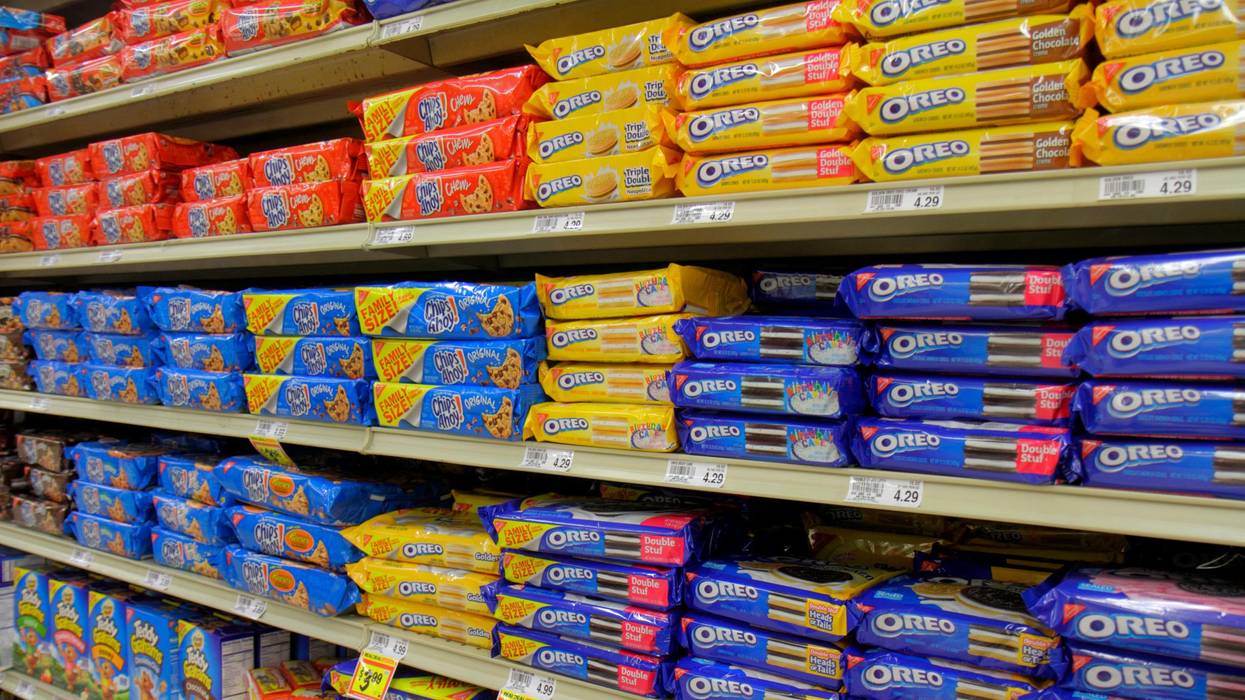
Employees at Nabisco's flagship plant in Chicago walked off the job Thursday, joining workers at three of the leading snack maker's other U.S. plants who are demanding better working conditions, an end to foreign outsourcing, and the withdrawal of a company plan that would scrap the company's current guaranteed overtime pay system.
"They don't care about frontline workers. They only care about the almighty dollar. We're tired of getting stepped on and treated like trash. We've had enough."
--Rusty Lewis, Nabisco worker
The strike began August 10 when around 200 members of the Bakery, Confectionery, Tobacco Workers, and Grain Millers' (BCTGM) International Union Local 364 walked out of a Nabisco factory in Portland, Oregon that makes Oreo and Chips Ahoy! cookies, as well as Ritz, Premium saltines, and other crackers.
Workers at Nabisco plants in Aurora, Colorado and Richmond, Virginia followed suit, saying they planned to strike until Nabisco's parent company, multinational confectionery corporation Mondelez International, agrees to negotiate a new contract. The most recent agreement expired in May.
With U.S. snack consumption rising during the pandemic, Mondelez's 2020 revenue increased to $26.6 billion, according to Chicago Business Journal, with profits of $3.6 billion and a 6% annual increase in share price. Dirk Van de Put, Mondelez's new CEO, could earn more than $17 million in compensation, plus a $38 million one-time windfall, this year.
Meanwhile, Nabisco workers have been forced to work 12 to 16 hour shifts, six to seven days a week, during the pandemic, while the company seeks to eliminate overtime pay by altering employee schedules so that weekend shifts become part of the 40-hour work week. Workers are also rejecting a Mondelez proposal to create different employee health plans under which new hires would pay more, including deductibles--which do not exist under the current system.
Nabisco workers stress that they are not asking for more pay or benefits.
"This fight is about maintaining what we already have," Mike Burlingham, vice president of BCTGM Local 364 in Portland, told Today. "During the pandemic, we all were putting in a lot of hours, demand was higher, people were at home, and the snack food industry did phenomenally well. Mondelez made record profits and they want to thank us by closing two of the U.S. bakeries and telling the rest of us we have to take concessions, what kind of thanks is that?"
"We make them a lot of money," added Burlingham. "It's very disheartening. How is that supposed to make us feel?"
Workers say the proposed changes are the latest in a long line of affronts that began in 2016 when Mondelez laid off 600 workers while shutting down half of Nabisco's Chicago production lines and relocating operations to Mexico. In 2018, the company eliminated the pensions of thousands of workers and retirees, and this year over 1,000 jobs were lost when plants in Georgia and New Jersey were shuttered.
"They couldn't care less about us," striker Donna Marks, who has worked 17 years at the Portland plant, said of Mondelez in an interview with nwLaborPress.
"I used to enjoy this job, it used to be like a family to me," Marks told Willamette Week. "Now, they want us to work more and pay us less, and everything that we have, we have because we negotiated. They want to take away what we fought for with no negotiation. They act as if they gave us something."
Rusty Lewis, a striking worker at Nabisco's Aurora distribution center, told Motherboard that workplace conditions have been deteriorating during his 25-year tenure.
"It's gotten worse. It's gotten horrible. Horrible hours," he said. "They don't care about frontline workers. They only care about the almighty dollar. We're tired of getting stepped on and treated like trash. We've had enough."
Mondelez said in a statement that its goal "has been--and continues to be--to bargain in good faith with the BCTGM leadership across our U.S. bakeries and sales distribution facilities to reach new contracts that continue to provide our employees with good wages and competitive benefits, including quality, affordable healthcare, and [a] company-sponsored Enhanced Thrift Investment 401(k) Plan, while also taking steps to modernize some contract aspects which were written several decades ago."
The strike has drawn solidarity and support from BCTGM workers at Frito-Lay's Topeka, Kansas factory--who ended their nearly seven-week strike on Wednesday--as well as from other unions, activists, politicians, and celebrities.
"I stand in solidarity with BCTGM workers in Oregon, Colorado, and Virginia who are on strike for a fair contract and for decent working conditions," Sen. Bernie Sanders (I-Vt.) tweeted Wednesday. "If Nabisco can rake in billions of dollars in corporate profits, they can afford to treat their workers with dignity and respect."
Here is my National Mandate. Close all fast-food chains. Put orange cone roadblocks on all Dunkin' Donuts drive-thrus. Ban the sale of Coca-Cola and Pepsi. The war was not between those two Colas; it was a war against the human body.
The masks mask the elephant in the room. No human being can make a potent immune system with a diet of processed food and sugar. This promiscuous virus seems to have a field day with the obese and the immune-compromised. The national and worldwide addiction to sugar presents a feeding frenzy for a virus that, like all viruses, feeds on sugar. Where are the scientists and leaders who can guide the populations of the world to actually combat the virus by starving it and also by strengthening its targets? We are told to behave like boxers in a corner with our gloves up to our faces as we are pummeled.
We need to resuscitate the slogan Resist and put it at the center of our actual physical bodies. The Thymus gland makes T-cells. Thymus is a Greek word for courage and anger; two strong words that will strengthen resistance.
Ireland determined recently that the rolls produced by the fast-food chain Subway have too much sugar in it to be called bread. This just begins to tell the tale. Biden, Fauci, and the posse of "experts" say nothing about what evolution and nature has made clear - T-cells are our Personal Protective Device. You cannot make powerful T-cells from a Big Mac, fries and Coke or a cream filled, white flour doughnut. A virus can present itself to a human body and a human body armed with healthy T-cells will most likely evict it quickly and not give it a chance to colonize and inflame. The primary exhortation from the top should be about about this aspect of human health.
Government guidance and a support stipend is the best path forward. Like Victory gardens during WWII, there ought to be individual citizen projects of cultivating potent health as the wall of resistance to this virus which, like a predator, will pick out the weak targets in a herd.
I can't speak for the rest of the world but America seems to have a romance with disease. Cable stations exist to sell drugs and as they do, they romanticize disease. The wistful looks of the stricken, the sentimental music, the loving looks of spouse and family on the patient all work to make the disease seem to be a pathway to love and enlightenment, and the patented drug you must take forever will keep you alive long enough to bask in this glow. Hopefully one day we will look at these commercials the way we look at doctor-recommended cigarette ads from the 1950's we now watch on Youtube with horror and macabre amusement.
In the case of COVID, we are presented with numbers and charts and interviews with beleaguered hospital workers. Experts tell us what they know and what they don't know both ending up by the end of the interview to be useless. By omission or myopia, these experts seem to be saying to all of us is, "Eat any junk you want and live any way you care to but wear a mask and wash your hands and stay six feet apart." This has always had the echo of six feet under - a distance that has the hint of death to it.
The ultimate infantilizing of the citizenry - mask, wash up, and go to your room. Not to say that these prescriptions don't have a place at this moment but to me, if this is all you've got, it smacks of impotence and surrender and a serious abdication.
Driving here in Connecticut in the morning I will pass a line at the drive-thru at Dunkin' Donuts - 20 cars long. Burger King will do "no contact delivery." It's not the contact that's the real or only risk factor it's what is being delivered. Processed, sugar-laced food is like sludge in a human body and a human body can only make new cells with what it is being given. The revolution does indeed start in the kitchen.
Until the feckless and myopic experts begin to take this point as seriously as they do the mask instruction, no matter how much obedience they are able to influence, we will continue to have more spikes than the shoe franchise at a Trump golf course.
Nestle, the world's largest food company, is known for scandal. It earned the nickname "babykiller" in the 1970s for causing infant illness and death in low-income communities by promoting bottle feeding of its infant formula and discouraging breastfeeding. In recent years, similar charges have been made against the company for contributing to soaring rates of obesity and diabetes in poor communities by targeting them for sales of ultra-processed junk foods. But there's another scandal of equally grim proportions that is contained within the company's accounting sheets.
On April 23, 2020, with the world in the grips of the Covid-19 pandemic and the FAO warning of a looming global food crisis, Nestle's shareholders and executives awarded themselves a record dividend payout of US$8 billion. In a time of a global health and food crisis, this handout is worth more than the entire annual budget for the UN's World Food Programme and would be enough to cover the average annual expenditures on health care for more than 100 million people in Africa.
Nestle's massive 2020 dividend payment was, in fact, just a fraction higher than the previous year's. Such large payouts for shareholders and executives is standard practice for the company-- as it is for all the big transnational food and agribusiness companies, even at times of global health catastrophes. Other notable shareholder dividends, announced in April this year, include a US$2.8 billion payout by the world's largest seed and agrochemical company Bayer AG, a US$600 million payout by the world's largest poultry producer Tyson and a US$500 million payout by the world's largest pork company, the WH Group. Cargill, the word's largest agribusiness company, is on track to top last year's record payout of US$640 million, which it makes to just a small number of Cargill family members. Increased e-commerce, particularly of food items, during the Covid-19 crisis increased the net worth of Jeff Bezos, the founder of e-commerce giant Amazon, by a shocking US$24 billion. It is even a rich time for the shareholders of smaller players in the industry, like the oil palm and rubber plantation company SOCFIN. The two French and Belgian families that essentially own the company, received EUR20 million (around US$22.5 million) in dividends and remunerations from SOCFIN's group operations while communities where it operates in Nigeria, Ghana and Cameroon cannot access clean or safe water.
All this greed at the top leaves devastation and little to trickle down to the bottom, where its consequences are deadly.
A powerful industry in the midst of a "perfect storm"
The labourers in the corporate food system, those who are quite literally dying on the frontlines to sustain the lifestyles of shareholders and executives, are not faring well. The supply chains of the big food companies, which have always been dangerous places for workers, have now become hotspots for Covid-19 infections and transmission. Across the world, there have been deadly outbreaks in meat plants, port facilities, warehouses, fish canneries, oil palm plantations, fruit farms, supermarkets and all other points along the chains that these companies command-- with the exception of their office towers, of course.
The big meat companies have perhaps been the worst offenders. With the Covid-19 pandemic in full bloom, they aggressively sped up their assembly lines to ramp up exports to China, where meat prices are unusually high. This decision was taken in full knowledge that these increases in processing made social distancing impossible and put their workers and the surrounding communities at risk of mass virus outbreaks. By the end of May, the results in the biggest meat exporting nations were horrific: hundreds of migrant meat plant workers sick with Covid-19 in Germany and Spain, thousands of cases of workers ill with Covid-19 in Brazil's meat packing industry, and over 20,000 workers infected with Covid-19 in US meat packing plants, with at least 70 deaths. Meanwhile, hundreds of thousands of animals are being culled, under atrocious conditions because these massive plants have had to shut production down, and the small abattoirs that could have taken in the livestock, have long since been forced out of business.
The carnage in Latin America, the new epicentre of the Covid-19 pandemic, has been particularly severe. With the global economy at a near standstill, agribusiness in the region has continued functioning with total impunity, deepening its impact and harm on communities and ecosystems. In almost all the countries in the region, agro-industrial activities have been exempted from quarantine, as they are considered "essential", even though their focus is on exports, not on providing food to local people.
For example, Ecuador's government issued a state of emergency decree paralysing the country, but ensuring that "all export chains, agricultural industry, livestock [industry] ... will continue to function." As a result, workers in the banana and palm plantations, seafood factories, flower farms, and many more, were forced to continue working as if the country was not under a health emergency, thereby exposing themselves to the risk of contracting Covid-19.
Similarly, the Bolsonaro government in Brazil declared that the production, transport and general logistics of export food chains were essential activities that must continue functioning without restrictions. In this context, exports of meat, soybeans and other commodities are surging - as are the numbers of people exposed to Covid-19 along the export chains. In the Brazilian state of Rio Grande do Sul, a meat export hub, more than a quarter of the confirmed novel coronavirus cases in May were among meat plant workers. Labour prosecutors are now fighting to close infested plants and force companies to implement even basic measures to protect and care for their workers during the pandemic.
Brazil's soybean exports, which are up 38 percent from last year, are another potential hotspot for Covid-19, especially at the ports where trucks and workers are constantly circulating. When the local government of the port town of Canarana in Mato Grosso tried to take action by issuing a decree to pause the export of soybeans and other grains in the absence of proper health and safety conditions, the agribusiness giants Louis Dreyfus and Cargill intervened and were able to reverse the decree within a few days. Canarana is now, in early June, seeing a surge in Covid-19 infections.
All this export frenzy has a tremendous impact on the ground. According to Deter, the real-time detection system of the Brazilian national space research institute, deforestation of the Amazon in Brazil has increased by more than 50 percent in these first three months of 2020 - at the height of the coronavirus pandemic, in comparison to the previous year's first quarter. Taking advantage of the pandemic smoke screen, with fewer inspection agents able to carry out inspection, agribusiness and mining operations are advancing on protected areas and indigenous territories, increasing the contagion of Covid-19 in indigenous populations. Many observers fear a genocide as a result of these reckless advances of agribusiness and mining operations during the pandemic.
Such brazen corporate profiteering is creating a legitimacy crisis for the corporate food system.Amidst the national quarantine in Argentina, soybean exports and forest clearings have not ceased either. In one of the most preserved forests in the entire Gran Chaco ecosystem, an area of 8,000 hectares is being prospected for clearing. Furthermore, based on monitoring with satellite imagery, Greenpeace denounced that almost 10,000 hectares were cleared in the North of the country since the lockdown began.
Such brazen corporate profiteering is creating a legitimacy crisis for the corporate food system. Although the lockdowns make it difficult to measure, the ground appears to be shifting: we see workers in the food industry speaking out, organising and getting more support and solidarity from others; we see increasing interest among consumers in healthy, local foods and the well-being of food producers and farmers; and there's been an undeniable boom in community-oriented efforts to get food to where it's needed through solidarity, mutual aid, volunteer work and cooperatives. There's even been some victories at the policy level, such as the German government's recent decision to ban sub-contracted labour in meat plants and another to prevent companies taking public aid from paying out dividends.
But this is a powerful industry, with ample amounts of cash and political connections at its disposal, and there is no doubt that it will do everything it can to use this moment of confusion and lockdowns to advance its interests. We have already seen this with the executive order that US President Trump issued at the behest of JBS, Tyson, Cargill and other meat corporations to keep their Covid-infested plants running. We have also seen it in Brazil where the Bolsonaro government approved a record 96 new pesticides in the first months of 2020, more than all the approvals for 2019. The same government deliberately used the cover of the pandemic to try and pass a law that would legalise land grabs and deforestation covering 80 million hectares in the Amazon and Cerrado regions. The pandemic has also been used as an opportunity to rapidly expand e-commerce in food retail and push ahead with Genetically Modified Organisms (GMOs) in Ethiopia and in Bolivia, where the de-facto government claimed that the Covid-19 health emergency made GM seeds a necessity for the country.
Agribusiness as big winner from new wave of structural adjustment
Worse is yet to come. Many governments are employing global consulting firms, like McKinsey, to shape their plans to open their economies back up. These secretive firms which are deeply connected to the world's largest corporations, including those from the food and agribusiness sector, will no doubt influence who emerges as winners and losers from the pandemic responses-- workers or bosses, farmers' markets or e-commerce giants, fisherfolk or the trawling industry.
We are also seeing the IMF and World Bank use their Covid-19 emergency funds to push countries into implementing agribusiness-friendly reforms. In the Ukraine, for example, a law privatising farmland was implemented despite the opposition of a majority of Ukrainians. In the coming months, such pressures will escalate. Dozens of countries are heading for defaults, and those debts will have to be negotiated not only with the IMF and bilateral lenders, but also with private creditors who have already indicated that they are not interested in even delaying debt and interest payments during this health crisis. A new wave of structural adjustment is on the way that will focus heavily on increasing foreign agribusiness investment and exports of agricultural commodities to pay off the vultures.
This time, however, governments are going to find it incredibly difficult to impose a new round of agro-imperialism on populations that have already had more than enough of it, and that are increasingly hungering for the alternatives that social movements have been advancing for decades.
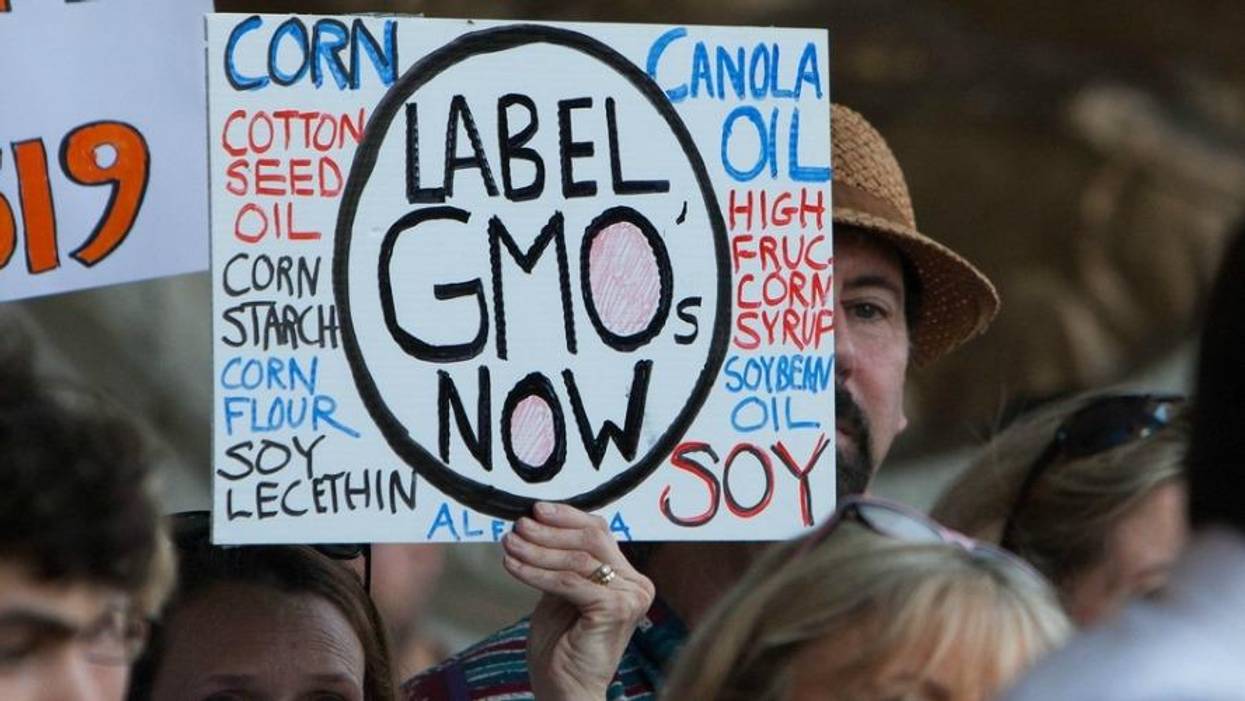
At the height of the GMO labeling battle, we not-so-fondly referred to the Grocery Manufacturers Association (GMA) as "Monsanto's Evil Twin."
Last week, a former GMA executive told Politico that to him, the food industry lobbying group seems like "the dinosaur waiting to die."
For consumers who blame the GMA for engineering the defeat of four state ballot initiatives that would have required labels on genetically engineered foods, then teaming up with Monsanto and some Big Organic brands to ram through federal legislation that stripped states of the right to pass GMO labeling laws, visions of the GMA drawing its last bullying breath are accompanied by the sweet taste of karma.
Consumers can take satisfaction in the fact that they've played a role in what some say is the diminishing power of the GMA over Washington policy.
For many, gratification--even the delayed variety--is worth stirring up trouble in the marketplace if it results in brands cleaning up their acts on issues of health, transparency and accountability.
#GMAExit--a 'burgeoning trend'?
On Friday, Dec. 1, Mars, Inc., the sixth-largest privately held food company in the U.S., confirmed reports it will exit the GMA.
Mars is the fourth Big Food company to exit GMA this year. The first was Campbell Soup Co., which said in July that it wouldn't renew its membership. Campbell CEO Denise Morrison said at the time that Campbell's had found itself "at odds with some of [GMA's] positions."
One of those positions was GMO labeling. Campbell was the first company to publicly break with Monsanto and the GMA by announcing it would label GMO ingredients, even though not required to do so.
Nestle, the world's largest food company, followed Campbell out the GMA door, announcing in October its own plans to quit the GMA at the end of this year (2017).
Last week Dean Foods "quietly" exited the trade group.
GMA executives interviewed by Politico downplayed the loss of some of the group's big-name members. But Politico was quick to point out that as one of the GMA's top dues-paying members, Nestle's exit could deal "a tough blow" to the GMA's operating budget. Campbell's doled out about $317,000/year to belong to the trade association Politico said, citing the company's financial disclosures.
It remains to be seen how many more companies will join the #GMAExit, or what the financial consequences may be for the GMA. But Politico calls the recent announcements "part of a burgeoning trend" as opposed to just a few "one-offs."
GMO labeling at the heart of consumer demand for transparency
What's behind the "splintering" of the food lobby.
Politico reports that "complacency and a lack of leadership" are factors. But it also blamed "an upheaval at the grocery store, where iconic brands are stagnating as millennials and moms seek healthier and more transparent products."
Nowhere was the issue of "transparency" more apparent than during the more-than-four-year battle for labels on GMO foods. More than 90 percent of consumers consistently supported laws requiring labels on GMO foods. Consumers felt so strongly that many were willing to boycott their favorite organic and natural brands, if those brands were owned by members of the GMA which poured $46 million into defeating GMO labeling in California alone.
Shortly after the narrow defeat of California's Prop 37 in May 2012, the Organic Consumer Association (OCA) launched its "Traitor Boycott." Initially, Campbell's (Plum Organics, Wolfgang Puck), Dean Foods (Horizon Organic, Silk) and Nestle (Gerber Organic, Sweet Leaf Tea)--which combined had dumped almost $4 million into the campaign to defeat labeling in California--made OCA's boycott list.
Campbell's, which like many other companies subsequently contributed to defeat labeling in Washington State (2013), was eventually dropped from the list when the company decided not to financially support campaigns to thwart GMO labeling initiatives in Oregon and Colorado (2014).
Unilever, which remains a GMA member, stopped throwing money at subsequent efforts to defeat GMO labeling initiatives, presumably because the multi-national food giant didn't like that its poster child for "social responsibility," Ben & Jerry's, was taking heat from consumers unhappy with Unilever's unholy alliance with the GMA. (Ben & Jerry's told consumers the Vermont-based brand supported labeling, yet it never contributed financially to the cause. OCA launched a new boycott of Ben & Jerry's in July, demanding that the ice cream brand go 100% organic).
After the Traitor Boycott was launched in May 2012, food companies were more skittish about ponying up donations to defeat labeling in Washington--so much so, that the GMA broke the law by collecting donations from companies like Pepsi, Nestle, Coke, General Mills, ConAgra, Campbell and others, and hiding the source of those donations from the public. In a win for consumers, Washington fined the GMA $18 million last year for violating state campaign finance laws.
Today, the GMA says it has about 250 members--down from the 300 it claimed in 2012. According to Politico:
The membership used to be listed on GMA's website, but it was taken down after a nasty battle over GMO labeling in California, during which a handful of GMA member companies were boycotted for spending millions to defeat a ballot initiative there.
OCA archived the list in 2012--here it is.
Out with the old, in with the truth
GMO labeling isn't the only reason consumers have lost their taste for Big Food brands. Consumers have become increasingly wary of labels like "natural," "all-natural" and "100% natural." Absent any regulatory or industry definition for the term "natural," those labels are used by food companies (some of which have been sued by OCA) on products containing everything from Monsanto's Roundup weedkiller to drugs like ketamine.
Increasingly, consumers are also questioning claims like "antibiotic- and hormone-free" and "pasture-raised."
According to a recent report in Food Dive:
Almost half of consumers don't feel like they know enough about a product despite reading the label, and two-thirds of them think the manufacturer or brand should be communicating important information to help them make an educated purchasing decision, . . .
Only 12 percent of consumers trust brands to tell them what's in their food. Most consumers do their own independent research, via phones and personal computers.
Other consumer trends according to Food Dive?
Nearly 60 percent of consumers think brands need to advocate for them and their interests, and 24 percent said they have refused to buy a company's produce when its actions didn't align with their values. The most important issue area was the environment, where 71 percent said produce brands should be active.
By those standards Big Food, represented by the GMA, isn't doing too well--and it shows. From Politico:
The top 20 U.S. food and beverage companies lost roughly $18 billion in market share between 2011 and 2017, according to a recent analysis by Credit Suisse.
Is it any wonder Big Food is also experiencing a mass exodus of CEOs?
The #GMAExit, plummeting market shares and CEOs jumping ship (or being pushed overboard) are signs that consumers are having a big pact. And advances like the proposed Regenerative Organic Certification, which intends to help consumers identify products produced to "beyond organic" standards, signal that more consumers are willing to reward producers whose methods promote soil health, animal welfare and social fairness, in addition to truthfully labeled, nutritious food.
We can't do much about the current state of affairs in Washington, DC these days--but as consumers, we can exercise our power over food corporations, and the lobbying groups that represent them.
Clearly, we're succeeding.
A recent investigation by the anti-poverty advocacy organization Oxfam reveals how the world's top ten food and beverage companies are failing to protect environmental and human rights defenders caught in the companies' supply chains.
The Oxfam report, Pathways to Deforestation-Free Food, demonstrates how Associated British Foods, Danone, Coca-Cola, General Mills, Kellogg, Mars, Mondelez, PepsiCo, Nestle and Unilever have committed to tackling deforestation caused by their companies, but crucially lack policies to protect local activists and environmentalists within their supply networks from violence, threats, and attacks.
"A glaring policy gap across all the companies analyzed," the Oxfam report found, "is that none have policies to protect human rights defenders, nor require their suppliers to put in place policies of zero threats, intimidation or attacks against human rights defenders and local communities."
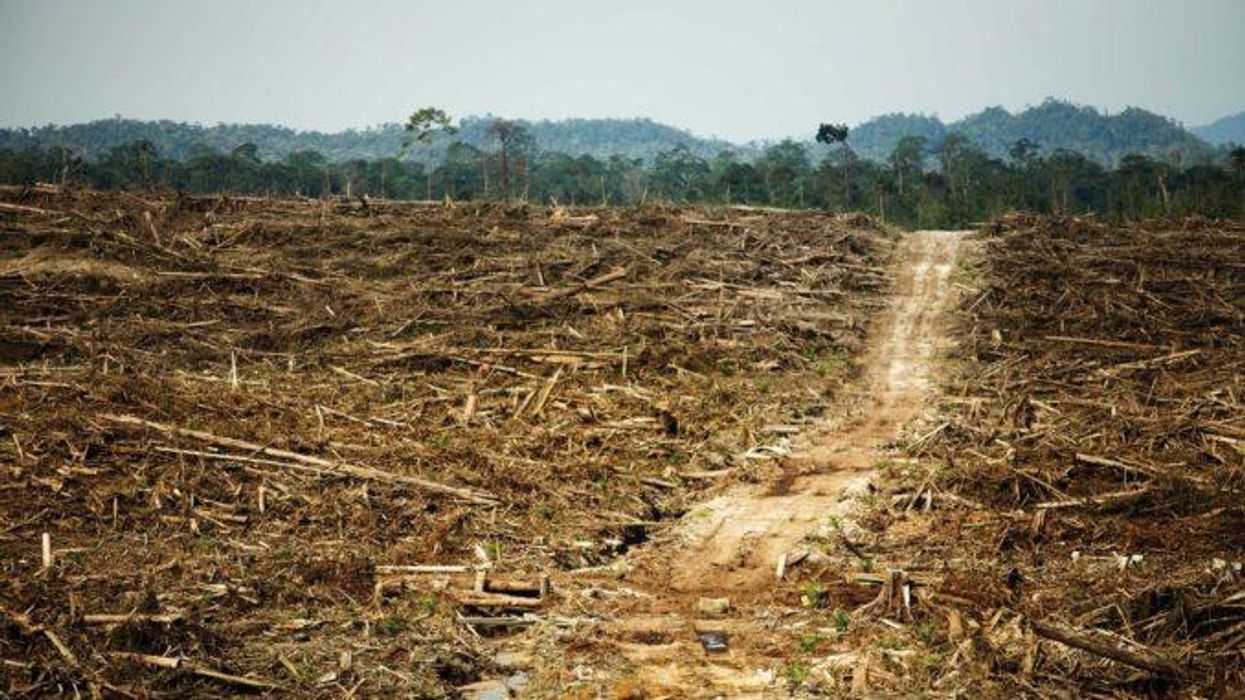
Industrial farming of food ingredients such as soy and palm oil, for example, have led to massive deforestation and displacement of rural communities in Indonesia, Brazil, Colombia, and elsewhere throughout the globe. Activists standing up against such industries in defense of forests, rivers, land, and the livelihoods of local communities have been threatened and murdered at an increased rate in recent years.
Four environmental activists were murdered each week in 2016 for defending their communities and environment from the impacts of agribusiness, mining, and logging industries, according to a report from the human rights organization Global Witness.
In Colombia, activists standing up against the impacts of El Cerrejon, Latin America's largest open-pit mine, have faced regular threats and violence.
Jakeline Romero has organized against the water shortages and displacement caused by this mine, which is owned by Glencore, BHP Billiton, and Anglo-American.
"They threaten you so you will shut up," Romero told Global Witness. "I can't shut up. I can't stay silent faced with all that is happening to my people. We are fighting for our lands, for our water, for our lives."
The world's leading food and beverage companies are not doing enough to stem the violence against environmental activists in their own supply chains, the new Oxfam report found.
"In many countries where agribusiness companies are investing, the rights of community activists are under attack because of their work to defend the rights of their communities--the right to forests and natural resources, to their land and water, their livelihood and their way of life," Oxfam stated.
"From violent crackdowns on protests and criminalization of speech, to arbitrary arrests and assaults or, in some cases, murder of human rights defenders, as well as restrictions on activities of civil society organizations, such attacks seek to delegitimize the voice and interests of communities," Oxfam explained.
Across the world, from Indonesia to Honduras, environmental defenders are facing down multinational corporations and the devastating impacts of their industries on local communities, rivers, forests, and indigenous ways of life.
Honduran activist and social justice leader Berta Caceres was murdered in March, 2016 for her environmental activism and leadership of the Civic Council of Popular and Indigenous Organizations of Honduras (COPINH).
In an interview on the legacy of her mother's struggle, Berta Caceres' daughter Berta Zuniga Caceres, explained the vision of COPINH and how it challenges the economic model guiding multinational corporations and their political allies.
"It's a very rich vision and one that exists among many indigenous peoples," Caceres explained. "It has to do with building a logic that's completely opposed to the hegemonic way of thinking that we're always taught. The vision and proposals are defiant, totally different than the academic, patriarchal, racist, positivist vision of the world. They include relations between people that are much more communitarian and collective, and that also have a strong relationship to the global commons and to nature, defying the dominant anthropocentric vision. They relate to spirituality and the relationships we have with all living beings - a holistic vision of life."
"Indigenous people find themselves battling extractivism, companies, mining, because that's the battleground where these different ways of knowing, of feeling, of cosmovision play out," she said. "This is the wealth of indigenous peoples. But it also represents a threat for the economic model that's based on profits and money, and that's developed through repression and exclusion."
Citing the environmental and public health risks of factory farming, a $1.25 trillion coalition of multinational investors has called on 16 global food corporations--including Kraft Heinz, Nestle, Unilever, Tesco, and Walmart--to cut their reliance on meat and diversify into plant-based sources of protein.
The campaign launched Monday is backed by a new briefing from the FAIRR (Farm Animal Investment Risk & Return) Initiative and responsible investment organization ShareAction, entitled, The Future of Food: The Investment Case for a Protein Shake-Up (pdf).
Our current food system is unsustainable, the report states, listing greenhouse gas emissions, resource depletion, and growing antibiotic resistance as among the negative consequences of "the factory farming model and the increasing overconsumption of animal products."
In fact, the briefing warns, if livestock production and consumption are not swiftly reduced, it will be impossible to reach the goals set out in the Paris climate agreement. An Oxford University study released in March projected that by 2050, food-related greenhouse gas emissions could account for fully half the emissions the world can afford if global warming is to be limited to less than 2degC.
According to the FAIRR/ShareAction report:
[T]he livestock sector currently accounts for 14.5 percent of global anthropogenic GHG emissions: more than the global transport sector. While there are certainly improvements to be made in production and distribution efficiencies, research indicates that these have only a small part to play; with, for instance, a reduction in food waste likely to lower food-related emissions by just 1 to 3 percent. In contrast, adopting global dietary guidelines with lower meat consumption would cut food-related emissions by 29 percent, vegetarian diets by 63 percent, and vegan diets by 70 percent.
"The world's over-reliance on factory farmed livestock to feed the growing global demand for protein is a recipe for a financial, social, and environmental crisis," said FAIRR founder Jeremy Coller, who also serves as chief investment officer for Coller Capital, one of 40 firms participating in the campaign. "Intensive livestock production already has levels of emissions and pollution that are too high, and standards of safety and welfare that are too low. It simply can't cope with the projected increase in global protein demand."
But while the current meat model is unsustainable, prospects are bright in the plant-based protein market, which Coller said is "set to grow by 8.4 percent annually over the next five years."
In turn, the investors want to know what companies are doing to avoid what Coller dubs the "protein bubble."
The FAIRR/ShareAction report points to strategies ranging from the further development of plant-based protein alternatives to more creative marketing around "less-meat" options--for example, "inspiring a modified dietary approach through appealing on-packet recipe suggestions that do not default to meat."
As ShareAction campaigns manager Clare Richards declared in a press statement: "Evidence suggests that plant-based protein sources are better for your health, your wallet, and the planet. Consumers increasingly recognize these benefits; and now this coalition of forward-thinking investors are doing the same."
In an op-ed published by Forbes last week, a pro-biotechnology mouthpiece who used to work for the tobacco industry wrote a provocative piece arguing that a recent U.S. Supreme Court decision imperiled the constitutionality of mandatory genetically engineered food labeling. The claim is flat out wrong and shows no understanding of constitutional law or the issue of labeling of genetically engineered foods. Before rebutting it, some context is helpful.
Genetically Engineered Foods
Right now Americans in every state are working to secure labeling for genetically engineered (GE) foods, which have been subject to significant controversy since their introduction in 1996. Polls regularly show that over 90% of Americans support their mandatory labeling. Unfortunately, unlike sixty-four countries across the globe--including all of the Europe Union, Japan, New Zealand, Australia, Brazil, Russia, China, and many others--the United States has so far declined to require labeling for genetically engineered foods, leaving the public in the dark about whether the foods we buy are transgenic.
"People are recognizing that genetically engineered crops are a key cog of inherently unsustainable industrial agriculture, and cause significant adverse environmental impacts."
What is driving this nationwide outcry for labeling? Consumers are becoming more aware that while few whole foods are genetically engineered, a substantial majority of processed foods are now produced with genetic engineering. The public recognizes that having thousands of processed foods produced with genetic engineering, yet unlabeled, is deceptive, or at best confusing, to consumers.
Further, Americans are increasingly aware of the risks and negative impacts of genetically engineered crops, correctly seeing through several decades of myths that were carefully constructed by agrochemical companies to promote their products. On the human health side, the public is realizing that the U.S. Food and Drug Administration (FDA) does not actually test the food safety of engineered foods or "approve" them; rather, it has confidential meetings with industry in which it merely reviews the industry's own testing--and even that is voluntary. Americans are also realizing that no long-term or epidemiological studies in the United States have examined the safety of human consumption of genetically engineered foods, and that without labeling, there is no accountability or traceability to link such foods to proliferating public health problems.
On the environmental side, people are recognizing that genetically engineered crops are a key cog of inherently unsustainable industrial agriculture, and cause significant adverse environmental impacts. Genetically engineered crops are essentially a pesticide-promoting technology: They are overwhelmingly engineered to be resistant to pesticides or produce pesticides, and consequently have dramatically increased overall pesticide output into our environment. Monsanto's Roundup Ready varieties, resistant to glyphosate, have made glyphosate the most used pesticide in history, with over 280 million pounds applied in U.S. agriculture in 2012 alone. Earlier this year, the World Health Organization's International Agency for Research on Cancer concluded that glyphosate is probably carcinogenic to humans.
On the agricultural side, transgenic contamination of traditional crops from engineered crops has caused U.S. farmers billions of dollars in market losses. And the widespread adoption of crops engineered for pesticide resistance has proliferated an epidemic of resistant "superweeds" now covering more than 60 million acres of U.S. farmland.
Juxtaposed against these risks and impacts, the U.S. public is discovering that industry's hype is false. Namely, despite billions of dollars in research and nearly two decades of commercialization, there are no crops that are engineered to increase crop yields, reduce world hunger, or mitigate global warming; instead, the agrochemical companies that engineer crops have largely succeeded in making these crops resistant to their own products--pesticides. Nor is there any "consensus" that such foods are safe.
Labeling GE Foods
For these reasons, into the federal breach, state-required labeling efforts have proliferated, in the venerable "states-as-laboratories" tradition of American federalism. Overall over 30 states in 2014-2015 introduced labeling bills. Connecticut and Maine passed labeling laws in 2013, albeit with clauses tying their effective dates to similar laws in other states, and in May 2014, Vermont became the first state to pass a stand-alone labeling law, which goes into effect in July 2016. And despite spending over $100 million dollars, crushing election spending records, biotech industry has also barely beaten back three state ballot initiatives, in California (2012), Washington (2013), and Oregon (2014), by increasingly narrow 51%-49% margins (Oregon lost by 812 votes, total).
Industry's All Out Assault on Democracy and Your Right to Know
Industry immediately challenged the Vermont GE labeling law, Act 120, seeking an injunction stopping its implementation, but after a year of litigation, in May of this year the Federal District Court for the District of Vermont resoundingly rejected their arguments, upholding the law. The Court agreed with what many labeling supporters have argued for years, concluding that state labeling was not preempted by federal law, that it did not impermissibly interfere with interstate commerce, and that food manufacturers did not have any First Amendment right to keep consumers in the dark about whether their food is genetically engineered. The Court found the reasons Vermont gave for the mandated disclosure labeling--those described above, promoting public health and environment protection, and preventing consumer confusion and deception--were substantial state interests to support requiring labeling. Industry appealed, with briefing over this summer and the Second Circuit Court of Appeals set to hear argument on October 8 in New York City.
Meanwhile, the chemical industry and "Big Food" have continued to pour millions into their assault on States' Rights and the People's Right to Know in Washington, DC, making their top priority legislation that would prohibit all state labeling (and any oversight of genetically engineered crop production), known as the "Denying Americans The Right to Know" or DARK Act. It passed the House of Representatives in July, and is headed for a Senate showdown this fall.
And the industry's onslaught has been in the media too: following the tobacco industry playbook, Big Food and agrochemical companies deliberately mislead the public on the facts about genetically engineered crops by spending hundreds of millions of dollars, creating front groups, and paying for the help of neutral-appearing academics. Among other scare-tactics is the claim that labeling will increase food prices, which has now been debunked by independent studies by Consumer Reports.
Reed v. Town of Gilbert, Commercial Speech and GE Labeling
The decision Reed v. Town of Gilbert, Arizona described in the Forbes article received little media attention. Like many towns, the town of Gilbert, Arizona had passed a code prohibiting the display of outdoor signs without a permit, while exempting several sign categories. Applying the code, the town cited a local church for posting signs about the time and place of their weekly service, but based on the code's exceptions, other types of signs, such as election signs, were not similarly ticketed. The church successfully challenged the ordinance as violating of their 1st Amendment Freedom of Speech rights. Reversing the lower court decision, Justice Thomas's opinion striking down the ordinance explained that the town's sign code was a "content-based" speech restriction, and thus subject to the highest level of 1st Amendment judicial scrutiny, strict scrutiny, which it failed
The level of judicial scrutiny, or how closely the court will examine a law, is often the critical question in in free speech cases. Strict scrutiny requires a government to show that its restriction on speech furthers a compelling governmental interest, and is narrowly tailored to achieve that interest. Gilbert offered the aesthetic appeal of curbsides and traffic safety for interests. The court found these interests too insufficient and too under inclusive in their application in the sign code to survive strict scrutiny. Justices Breyer, Ginsberg, and Kagan concurred only in the judgement and wrote separately, explaining that while Gilbert's sign law would fail under any test (noting that "does not pass strict scrutiny, intermediate scrutiny, or even the laugh test"), they disagreed with Justice Thomas's broad language of when and how strict scrutiny was the appropriate standard.
With even a cursory understanding of these facts, attempts to apply this case to the GE labeling context quickly fall apart. The first thing to understand-- that is not present in Reed, nor ever mentioned in the Forbes piece--is that commercial speech, like consumer product labeling, is fundamentally different than other forms of traditionally protected speech, like political or religious speech. Commercial speech is a lesser form of speech, generally entitled to less protection; in fact, until 1978, commercial speech was not protected under the First Amendment at all. The Supreme Court has subsequently explained that the "extension of First Amendment protection to commercial speech is justified principally by the value to consumers of the information such speech provides," not any inherent constitutional rights of manufacturers. As a consequence, laws regarding commercial speech do not receive strict scrutiny review, instead courts apply lesser burdens on governments in such circumstances.
Indeed, the crux of Vermont's GE labeling litigation has been whether an intermediate form of scrutiny should apply instead of rational basis review, not whether strict scrutiny should apply. The district court in the GE labeling litigation held that the lowest level of judicial review, rational basis review, was the proper standard for laws requiring the labeling of genetically engineered foods. Tellingly, industry has not even argued that content-based review or strict scrutiny should apply to the Court of Appeals.
The second major doctrinal point is the difference between a speech prohibition, like the sign postings in Reed, and a speech disclosure, like product labeling. This is also entirely absent from the Forbes piece. In speech doctrine there are material differences between disclosure requirements and prohibitions, with prohibitions having more 1st Amendment protection, for obvious reasons: any interests affected by a disclosure are substantially weaker than those suppressed, particularly in the commercial speech context, where the whole point of the constitutional protection is the value to consumers that speech provides. Thus a company's interests in "not providing any particular factual information" are merely "minimal." Balanced against that are the many substantial reasons in favor of labeling discussed above--health, environment, and preventing consumer deception and confusion--all of which courts have long held to be substantial governmental interests for purposes of mandated product disclosures.
In short, it is difficult to imagine that forty years of commercial speech precedent would be implicitly overturned by a non-commercial speech case, without the Court even mentioning the sea-change it was making. There is not a single case in which a court has found a commercial disclosure, like a product label, to be "content based" and thus subject to strict scrutiny. Based on the position presented by the Forbes piece, all kinds of commercial product labeling requirements would be potentially be struck down, because all factual disclosure requirements require specific content. However, that doesn't mean they are "content-based" for purposes of strict scrutiny, and Reed does not say otherwise. It is extremely unlikely that the Supreme Court would hide such an elephant in such a mouse hole.