

SUBSCRIBE TO OUR FREE NEWSLETTER
Daily news & progressive opinion—funded by the people, not the corporations—delivered straight to your inbox.
5
#000000
#FFFFFF
To donate by check, phone, or other method, see our More Ways to Give page.
Daily news & progressive opinion—funded by the people, not the corporations—delivered straight to your inbox.

The head of one affiliated organization called Trump's sanctions "a slap in the face to victims and survivors of grave crimes everywhere who depend on the ICC as a court of last resort.”
A quartet of US human rights groups filed a federal lawsuit on Tuesday challenging the Trump administration’s sanctions targeting members of the International Criminal Court for their roles in seeking to hold Israeli leaders accountable for alleged crimes against humanity in Gaza.
The American Friends Service Committee (AFSC), the Center for Constitutional Rights (CCR), Human Rights Watch (HRW), and the Open Society Institute (OSI) filed suit in the US District Court for the Southern District of New York challenging the Trump administration’s sanctions against ICC prosecutors and judges, a United Nations human rights expert, and three Palestinian human rights groups.
The groups argue that US President Donald Trump's February 2025 executive order that imposed sanctions on the ICC are a “blatantly illegal attack on international justice and should be struck down."
James Goldston, executive director of the Open Society Justice Initiative, called the sanctions "a slap in the face to victims and survivors of grave crimes everywhere who depend on the ICC as a court of last resort.”
Trump's sanctions follow the ICC's November 2024 issuance of arrest warrants for Israeli Prime Minister Benjamin Netanyahu and Yoav Gallant, his former defense minister, for alleged crimes against humanity and war crimes in Gaza, including murder and forced starvation. The tribunal simultaneously issued warrants for the arrest of three Hamas leaders for the same categories of crimes allegedly committed on and after the October 7, 2023 attack on Israel. However, Israel extrajudicially assassinated all three of the men.
The groups' complaint argues that the Trump administration has effectively transformed human rights advocacy into a potential criminal offense. Organizations can face severe civil and criminal penalties for providing what the government may determine are “services” to sanctioned individuals or groups.
That threat, they contend, has already had tangible consequences. The plaintiffs say the sanctions have disrupted their ability to represent victims of war crimes, submit evidence and legal arguments to the ICC, and collaborate with sanctioned Palestinian organizations on research, litigation, advocacy, and humanitarian work.
Targeted groups and individuals have experienced "frozen or closed bank accounts, rejection of financial transactions, denial of access to digital services, and travel bans," CCR notes. "US organizations, including the plaintiffs, can face punishment of up to 20 years of imprisonment and exorbitant fines for providing services to sanctioned persons or entities."
CCR called the sanctions "one of many" actions taken by the Trump administration "against free speech, protest, and advocacy in support of the human rights of Palestinians."
“For many years, I have represented victims in pressing for justice for crimes committed by the powerful, and finally saw much-needed, even if overdue, investigations opened at the ICC," said CCR senior staff attorney Katherine Gallagher. "In response, the Trump administration took the extraordinary step to not only deny Palestinians and victims of US torture equal access to justice, but to criminalize and punish them, their lawyers and advocates, and their partners."
Israeli officials and their supporters argue that the ICC and the International Court of Justice—where Israel is facing a genocide case filed by South Africa and formally supported by nearly 20 nations—have unfairly singled out Israel. However, the ICC has launched 18 investigations involving conflicts in countries including Afghanistan, the Central African Republic, the Democratic Republic of Congo, Libya, the Philippines, Sudan (Darfur), and Ukraine.
Trump’s order asserts that ICC efforts involving US or allied nationals constitute a threat to American national security. But the new complaint argues that there is no genuine “national emergency” that can lawfully justify invoking the International Emergency Economic Powers Act against the court’s routine judicial work.
"The US government’s efforts to dismantle the ICC and punish people seeking justice for grave human rights violations harm far more than the individuals and groups facing sanctions," AFSC general secretary Joyce Ajlouny said in a statement Tuesday. “It is an affront to all victims and survivors of war crimes and genocide."
Ajlouny asserted that the Trump administration "seeks to intimidate human rights defenders and deter people of conscience from advocating for the rights and dignity of others."
"We are joining this lawsuit because we refuse to stay silent when the pursuit of justice is criminalized," she added.
Tuesday's complaint is the latest in a string of lawsuits challenging Trump's sanctions.
Francesca Albanese, the UN special rapporteur on the situation of human rights in the Palestinian territories occupied since 1967, earlier this year sued Trump and three of his senior Cabinet officials over sanctions imposed on her and her family. Although a federal district judge temporarily blocked the move on First Amendment grounds, an appeals court quickly reinstated the sanctions via an administrative stay.
In April 2025, two human rights advocates sued over sanctions against then-ICC Prosecutor Karim Khan, arguing that the restrictions violated their First Amendment rights. A federal judge subsequently found the advocates were likely to succeed on their constitutional claims and issued a preliminary injunction protecting their communications with the court.
In June, three sanctioned ICC judges—Judges Kimberly Prost of Canada, Solomy Bossa of Uganda, and Reine Alapini-Gansou of Benin—filed suit against the Trump administration, arguing that the president's order directly violated the Administrative Procedure Act, which prohibits the government from making arbitrary and capricious policy changes.
Last month, Democracy for the Arab World Now (DAWN) and the Taxpayer Alliance Against Genocide also sued Trump and senior administration officials over the ICC sanctions.
“The Trump administration is using the blunt instrument of economic sanctions not only to punish human rights defenders but to police the political expression of millions of Americans,” DAWN executive director Omar Shakir said at the time. “The government is violating the constitutional rights of American citizens in order to shield officials of a foreign government who have committed a genocide.”
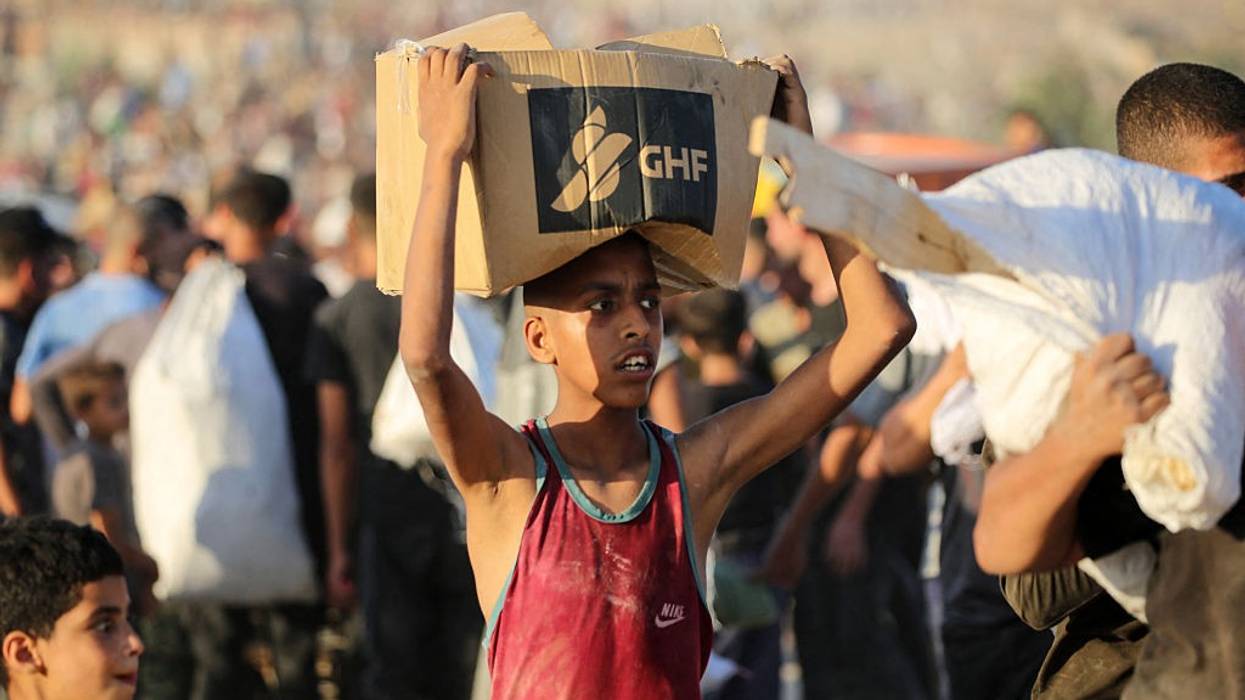
Distribution points run by the group, warns the NGO coalition, "have become sites of repeated massacres in blatant disregard for international humanitarian law."
More than 165 nongovernmental organizations on Tuesday issued a joint call to shut down the "deadly Israeli distribution scheme" for humanitarian assistance in the Gaza Strip, return to relief efforts coordinated by the United Nations, and end Israel's blockade on aid and commercial supplies into the destroyed Palestinian enclave.
The U.S.- and Israel-backed Gaza Humanitarian Foundation (GHF) began operations in late May, over widespread objections. As the joint statement explains, "The 400 aid distribution points operating during the temporary cease-fire across Gaza have now been replaced by just four military-controlled distribution sites, forcing 2 million people into overcrowded, militarized zones where they face daily gunfire and mass casualties while trying to access food and are denied other lifesaving supplies."
"Starved and weakened civilians are being forced to trek for hours through dangerous terrain and active conflict zones, only to face a violent, chaotic race to reach fenced, militarized distribution sites."
"The weeks following the launch of the Israeli distribution scheme have been some of the deadliest and most violent since October 2023," the statement notes. The Gaza Health Ministry says Israel's nearly 21-month assault has killed at least 56,647 Palestinians—and, as of Sunday, at least 583 of those deaths occurred while people sought food at GHF sites.
Another 4,186 Palestinians have been injured at the aid sites, according to the ministry. Overall, at least 134,105 have been wounded by the Israel Defense Forces' campaign since the Hamas-led October 7, 2023 attack. Some IDF troops told Haaretz last week that commanders ordered them to shoot and shell aid-seeking Palestinians, even when they posed no threat.
"For 20 months, more than 2 million people have been subjected to relentless bombardment, the weaponization of food, water, and other aid, repeated forced displacement, and systematic dehumanization—all under the watch of the international community," the NGOs detailed. "The Sphere Association, which sets minimum standards for quality humanitarian aid, has warned that the Gaza Humanitarian Foundation's approach does not adhere to core humanitarian standards and principles."
"Under the Israeli government's new scheme, starved and weakened civilians are being forced to trek for hours through dangerous terrain and active conflict zones, only to face a violent, chaotic race to reach fenced, militarized distribution sites with a single entry point," the groups wrote. "There, thousands are released into chaotic enclosures to fight for limited food supplies."
"These areas have become sites of repeated massacres in blatant disregard for international humanitarian law," the coalition continued. "Orphaned children and caregivers are among the dead, with children harmed in over half of the attacks on civilians at these sites. With Gaza's healthcare system in ruins, many of those shot are left to bleed out alone, beyond the reach of ambulances and denied lifesaving medical care."
Today, over 130 NGOs have called for the restoration of unified, UN-led aid coordination and distribution in #Gaza based on international humanitarian law, inclusive of UNRWA.👉 www.oxfam.org/en/press-rel...@oxfaminternational.bsky.social @nrc-global.bsky.social @savechildrenintl.bsky.social
[image or embed]
— UNRWA (@unrwa.org) July 1, 2025 at 7:53 AM
The NGOs asserted that "the humanitarian system is being deliberately and systematically dismantled by the government of Israel's blockade and restrictions, a blockade now being used to justify shutting down nearly all other aid operations in favor of a deadly, military-controlled alternative that neither protects civilians nor meets basic needs."
The organizations also stressed that "experienced humanitarian actors remain ready to deliver lifesaving assistance at scale."
In addition to calling on other countries to "uphold their obligations under international humanitarian and human rights law," and to "reject the false choice between deadly, military-controlled food distributions and total denial of aid," the groups reiterated their demands for "an immediate and sustained cease-fire, the release of all hostages and arbitrarily detained prisoners, full humanitarian access at scale, and an end to the pervasive impunity that enables these atrocities and denies Palestinians their basic dignity."
Signatories include ActionAid, American Friends Service Committee, Amnesty International, B'Tselem, Greenpeace, Islamic Relief Worldwide, Jewish Network for Palestine, Médecins Sans Frontières (Doctors Without Borders), Norwegian Refugee Council, Oxfam International, PAX, Physicians for Human Rights Israel, Save the Children, War Child Alliance, and War on Want.
Their statement follows a similar one released last week by a coalition of 15 leading human rights and legal organizations, which urged all parties involved in GHF, including countries, corporations, donors and individuals, "to immediately suspend any action or support that facilitates the forcible displacement of civilians, contributes to starvation or other grave breaches of international law, or undermines the core principles of international humanitarian law."
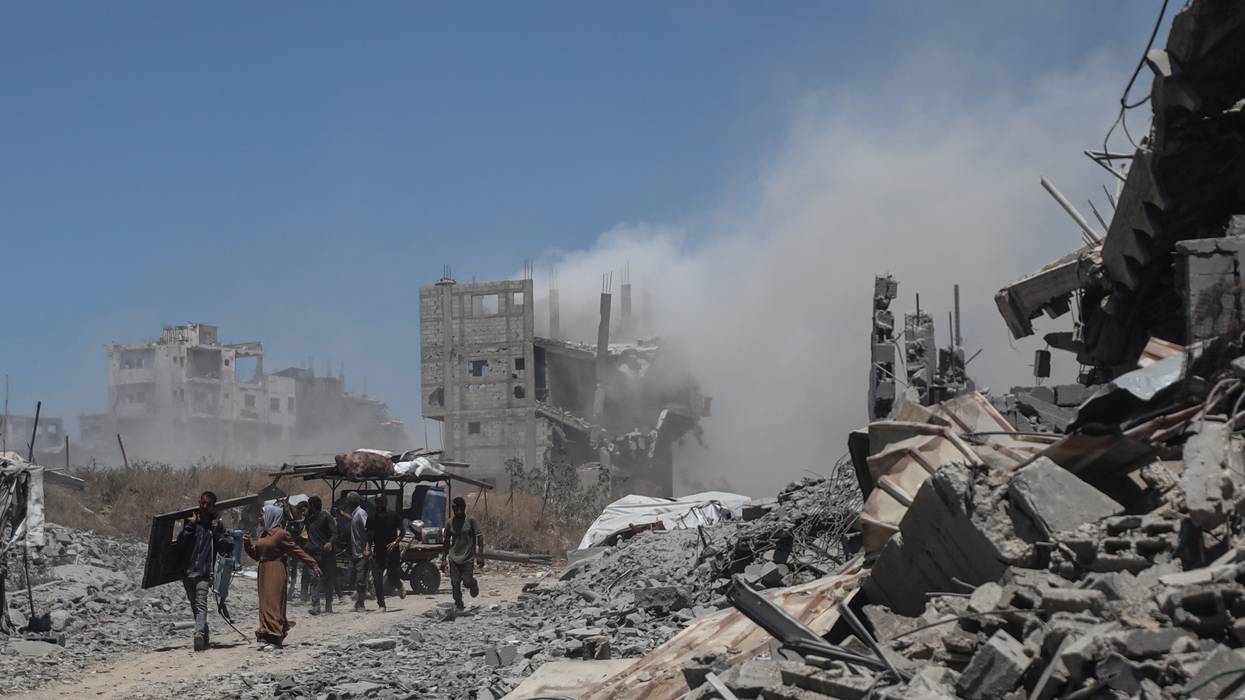
"The world is witnessing Israel relentlessly starve and bomb Palestinians with total impunity," said one humanitarian worker in the region.
A new report by a leading Quaker social justice organization urges observers of Israel's bombardment and starvation of Palestinians in Gaza and its accelerated annexation of the West Bank to see the "escalating violations" not as isolated pushes for control of the occupied territories but something much more sinister and profound.
According to the American Friends Service Committee (AFSC), SC), the policies and violence Israel is perpetrating on people across the territories are "systematic and risk the erasure of Palestinians."
The group joined leading humanitarian organizations that have spent years providing aid and services to Palestinians in Gaza—only to have their work impeded and made deadly by the Israel Defense Forces' (IDF) attacks—in releasing The Edge of Erasure, a comprehensive look at the humanitarian situation in the occupied Palestinian territories.
The AFSC surveyed 46 international and Palestinian organizations on their experiences trying to deliver aid and services across Gaza and the West Bank, including East Jerusalem, from March 26-May 28.
The groups were up against Israel's total blockade on humanitarian aid in Gaza, which was imposed starting March 2, two weeks before the IDF broke a temporary ceasefire and began intensifying attacks in the enclave.
In late May Israel began allowing in a tiny fraction of the amount of 500 aid trucks that entered Gaza on a daily basis before the war; advocates have said the trickle of relief is far from enough.
During the AFSC's survey, 93% of the groups said they had exhausted or were close to exhausting their aid supply in Gaza, including food, flour, fuel, hygiene kits, medications, and other essentials.
"In the face of such systematic devastation, only a comprehensive, multi-sectoral response at scale can even start to address the overwhelming, man-made humanitarian crisis."
Seven of the groups said their dwindling supplies were partially the result of Israeli attacks, with groups forced to leave materials behind due to forced displacement orders. Others said their supplies are in trucks stuck in Jordan or Egypt without the ability to enter Gaza, and some said that once they've gotten aid deliveries to distribute, they've been unable to hand out medicines because they're already expired.
More than a third of the organizations said their facilities had been directly or indirectly struck by IDF attacks, despite acknowledgement from the Israeli military that humanitarian groups must be "deconflicted."
"In several instances, no prior notification was given before the strikes," the AFSC said.
At least 452 humanitarian workers are among the more than 54,000 people who have been killed in Gaza since October 2023, and eight of the groups reported staff being injured, while five reported workers being killed in Israeli attacks during the reporting period.
While intensifying its bombing campaign and imposing a blockade that international experts said in May had pushed the entire population into a food insecurity emergency, with half a million people facing starvation, Israel has also turned at least 81% of Gaza into "no-go" militarized zones in recent months.
More than two-thirds of the groups said during the survey period that they were no longer able to access certain areas, particularly in northern Gaza as well as the southern cities of Khan Younis and Rafah.
"Recent Israeli forces' attacks have continued to dissect Gaza into increasingly isolated zones, cutting communities off from basic needs necessary for survival," reads the report. "In many cases, remaining residents have been literally unable to move, due to exhaustion, injury, illness, infirmity, disability, contamination with unexploded ordnance, or lack of alternatives. Some areas are formally cut off or declared inaccessible, while others have been subject to such intensive shelling and forces' attacks that they have been practically unreachable for aid delivery. These conditions effectively impose sieges within the siege, with parts of Gaza inaccessible for humanitarian operations."
Gaza's population is now confined to just 19% of the enclave due to "increasingly expansive forced displacement orders," and people are facing "simultaneous and intersecting crises" including displacement, destruction of housing, destruction of water and sanitation networks, starvation, the loss of 95% of school buildings which had been used as shelters after the war began, and a decimated healthcare system.
Palestinians have also been left without ways to maintain self-sufficiency, with less than 5% of Gaza's cropland now available for cultivation due to the Israeli military's access restrictions and damage.
"The world is witnessing Israel relentlessly starve and bomb Palestinians with total impunity," said Hanady Muhiar, Palestine/Israel country representative for the AFSC. "Israel is weaponizing hunger and destroying a principled humanitarian aid system that could be providing lifesaving goods at scale to the Palestinian people in Gaza. We all have an obligation to prevent genocidal crimes. It is urgent that states, organizations, and individuals take immediate action to stop it."
Meanwhile, the IDF has intensified attacks and demolitions of buildings in the West Bank, with 85% of structures in Masafer Yatta destroyed and over 100 homes in Nour Shams and Tulkarm refugee camps recently ordered demolished. Israeli settlers have also escalated attacks in the territory.
"The deliberate and excessive use of violence, demolitions, and displacement is not merely hindering aid delivery," reads the report, "it risks forcible transfer and entrenching annexation, and the erasure of Palestinians from their land."
Ninety-three percent of organizations in the West Bank reported "a sharp increase in movement restrictions throughout the reporting period."
The Israeli military has rejected the groups' attempts to coordinate humanitarian work, denying nearly 70% of aid movement requests between April 30-May 6.
A 51-year-old woman who spent three decades running a program for children with disabilities at Nour Shams refugee camp described being forced by Israeli soldiers to leave her home.
"The Israeli forces gave me only two hours to collect my things," said the woman. "I was afraid to find someone hiding there. They cut the electricity, so it was dark. Everything is lost. There was a picture of me, a painting made by some artist. They stomped on it and ruined it... Everything is lost now. The parents are desperate. They don't know what to do. I try to give them advice, but it’s not
the same."
The AFSC demanded a permanent cease-fire; an end to the humanitarian aid blockade—which "states with influence" must "use all possible measures" to achieve; an end to Israel's "unlawful presence" in the occupied territories; and boosted funding for the relief response.
"In the face of such systematic devastation," reads the report, "only a comprehensive, multi-sectoral response at scale can even start to address the overwhelming, man-made humanitarian crisis."
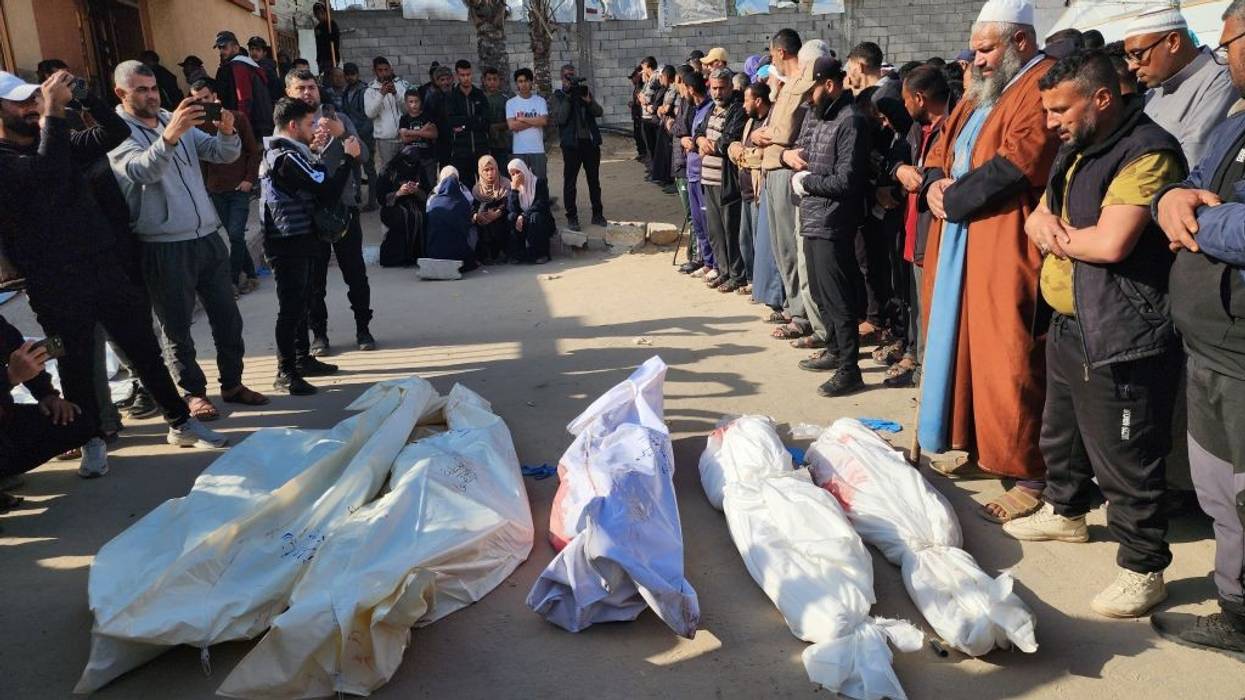
"All of this is made possible by the U.S. government, which has funded and fueled these atrocities," said Jewish Voice for Peace.
Once again, entire families are being wiped out by Israeli airstrikes on the Gaza Strip after U.S. President Donald Trumpreportedly gave the green light for the key American ally to resume its assault on the Palestinian enclave.
Israel unilaterally abrogated the crumbling eight-week cease-fire early Tuesday, unleashing a wave of ferocious strikes on the already flattened Gaza Strip, killing at least 404 people—including 174 children, 89 women, and 32 elders—and wounding at least 562 others, with the death toll expected to rise, according to the Gaza Health Ministry.
"We were shocked late at night to see strikes and attacks on Gaza like in the early days of the war," Momen Qoreiqeh, who lost more than two dozen relatives in an Israeli airstrike on their Gaza City home, told Al Jazeera. "I was with my family and suddenly there was a huge attack on our residential block. The attack killed so many people from my family, some of them we still haven't recovered from under the rubble."
"So far we've managed to recover about 26 bodies from my family and 20 other people who were with us," he added.
Ramy Abdu, founder and chair of the Geneva-based Euro-Mediterranean Human Rights Monitor—which has published numerous reports on alleged Israeli war crimes and acts of genocide in Gaza—said his sister's family was killed in an Israeli strike on their home in Gaza City.
"This morning, Israel killed my sister, my heart, Nesreen, and her beloved sons and daughters: Ubaida, Omar, and Lian, along with Ubaida's wife, Malak, and their children, Siwar and Mohammed," Abdu said on social media.
According to Al Jazeera, the family had survived many Israeli airstrikes over the years.
"Israel may kill us at will, burn us alive, and tear us apart, but it will never succeed in uprooting us from our land," Abdu
wrote in a separate post. "Justice and accountability await—no matter how long it takes."
Al Jazeera also reported that Dr. Majda Abu Aker, an OB-GYN at a Rafah clinic run by the United Nations Relief and Works Agency for Palestine Refugees in the Near East, and more than a dozen other people were killed in a strike on her house in Rafah's al-Jenaina neighborhood. At least 10 of the dead were from the same family; the youngest victim was a girl who was just three days old.
Fifteen people, most of them members of the Barhoum family, were reportedly killed when Israeli forces bombed al-Mawasi.
Six members of the same family were also reportedly killed while trying to flee in a car in Abasan, east of Khan Younis.
Ahmed Abu Rizq, a teacher who survived Tuesday's airstrikes, described to Al Jazeera the horror and chaos he witnessed at a local hospital, where he saw "blood everywhere" and arriving families carrying the "remains of their children."
Al-Shifa Hospital director Muhammad Abu Salmiya said that "every minute, a wounded person dies due to a lack of resources," as Israel has imposed a " complete siege" on Gaza since October 2023 that has been blamed for widespread starvation and sickness. The South Africa-led genocide case against Israel currently before the International Court of Justice cites the siege, which has been called a "genocidal act" by an independent United Nations commission and human rights groups.
Israeli Prime Minster Benjamin Netanyahu, who is wanted by the International Criminal Court for alleged war crimes and crimes against humanity in Gaza, said later in the day that Tuesday's strikes are "only the beginning" and will continue until Hamas frees all the remaining hostages it took on October 7, 2023 and is destroyed.
During a meeting with the U.S. Zionist lobby group American Israel Public Affairs Committee in Jerusalem, Israeli Foreign Minister Gideon Saar affirmed that Tuesday's bombings were not a "one-day attack."
Palestine defenders around the world took to the streets to protest the renewed Israeli onslaught. In London, thousands of demonstrators turned out for an emergency protest organized by the Palestine Solidarity Campaign. Protests also took place in cities including Ramallah, Dublin, Berlin, Jerusalem, Manchester, and Belfast, and are planned for Washington, D.C., Chicago, New York, and elsewhere.
United Nations officials condemned Tuesday's strikes, with U.N. Secretary-General António Guterres writing: "I am outraged by the Israeli airstrikes in Gaza. I strongly appeal for the cease-fire to be respected, for unimpeded humanitarian assistance to be reestablished, and for the remaining hostages to be released unconditionally."
Human rights groups also condemned Israel's renewed aggression, with Amnesty International secretary general Agnès Callamard calling Tuesday "a desperately dark day for humanity."
"Israel brazenly resumed its devastating bombing campaign in Gaza... again wiping out entire families in a matter of hours," she said. "Palestinians in Gaza—who have barely had a chance to start piecing together their lives and continue to grapple with the trauma of Israel's past attacks—have woken up once more to the hellish nightmare of intense bombardment."
"Today, we are back to square one," Callamard lamented. "Since March 2, Israel has reimposed a total siege on Gaza blocking the entry of all humanitarian aid, medicine, and commercial supplies, including fuel and food, in flagrant violation of international law. Israel has also cut off electricity to Gaza's main operational desalination plant. And today the Israeli military has once again started issuing mass 'evacuation' orders displacing Palestinians."
Omar Shakir, Human Rights Watch's Israel and Palestine director, said: "The reported killings of hundreds of Palestinians amid Israel's renewed assault on Gaza is alarming. The Israeli authorities have committed war crimes, crimes against humanity, including forced displacement and extermination, and acts of genocide during the assault on Gaza."
"Other countries should urgently act to prevent further mass atrocities, including by suspending arms transfers to Israel, supporting the International Criminal Court and executing its arrest warrants, and imposing targeted sanctions on officials responsible for laws-of-war violations," Shakir added.
The American Human Rights Council (AHRC) condemned "the restart of the Israeli genocidal policy of starving and bombing the Palestinians in Gaza" and noted that "the victims of the Israeli genocidal acts are primarily infants, children, women, and the elderly."
"AHRC urges the Trump administration to uphold its peace promise," the group added. "The current Israeli escalation of war crimes and the ongoing Israeli weaponization of food, water, and medicine are resulting in avoidable deaths and suffering. The U.S. can put a permanent end to this war but for political expediency is choosing not to."
Nihad Awad, executive director of the Council on American-Islamic Relations, the largest U.S. Muslim civil rights group, said that "President Trump must stop the madness after the government of indicted war criminal Benjamin Netanyahu renewed its genocide and slaughtered hundreds of Palestinians, including women and children, during the holy month of Ramadan."
"Without strong actions to push back against this renewed orgy of slaughter, mass destruction, forced starvation, and ethnic cleansing, the Israeli government will continue to act with impunity and our government will remain as complicit with genocide as it was under the Biden administration," Awad added.
The U.S. group Jewish Voice for Peace (JVP)—which has organized numerous protests against the assault on Gaza—said: "This is a campaign of extermination. This is genocide."
"All of this is made possible by the U.S. government, which has funded and fueled these atrocities," JVP noted. "Over the last 17 months, the U.S. has spent over $17 billion in military funding to the Israeli government's campaign of extermination and apartheid against the Palestinian people, and continues to sell the Israeli military more weapons."
The American Friends Service Committee (AFSC)—a Quaker organization that has worked in Palestine for decades—said that "there are no words adequate to express the devastation of watching bombs rain down again on people who have already endured more than 17 months of a U.S.-backed genocide."
"Our hearts are with AFSC staff, families, partners, friends, and all Palestinians in Gaza—we are holding you in the Light and we will continue the relentless struggle to end these atrocities," the group added.
Progressive U.S. lawmakers also denounced the renewed Israeli assault and demanded an end to American armed aid, with Rep. Rashida Tlaib (D-Mich.), the only Palestinian American member of Congress, writing on social media that "the Israeli apartheid regime has resumed its genocide, carrying out airstrikes all across Gaza and killing hundreds of Palestinians."
"This comes after a complete blockade of food, electricity, and aid," Tlaib added. "They will never stop until there are sanctions and an arms embargo."
Netanyahu has not allowed any food, water, or fuel into Gaza in two weeks. Now he has resumed bombing, killing hundreds of people and breaking the ceasefire that had given Gaza a chance to live again. NO MORE MILITARY AID TO ISRAEL.
— Senator Bernie Sanders ( @sanders.senate.gov) March 18, 2025 at 7:57 AM
The Gaza Health Ministry says that at least 48,964 Palestinians have been killed by Israeli forces over the past 529 days. At least 112,481 others have been wounded, and an estimated 14,000 more are missing and believed dead and buried beneath the rubble of hundreds of thousands of bombed buildings.

"Without accountability and a commitment to protecting humanitarian operations, we risk repeating the same cycles of impunity and neglect," said one campaigner.
A survey published Tuesday of 35 organizations working in Gaza found that Israel has failed to improve access to lifesaving humanitarian aid in the embattled Palestinian enclave—despite three separate orders from the International Court of Justice to do so over the past year.
The first of those ICJ directives, issued on January 26, 2024, ordered Israel to prevent genocidal acts in Gaza and provide basic services and humanitarian assistance to its approximately 2.3 million people. The overwhelming majority of Gazans have been forcibly displaced—often multiple times—sickened, or starved, their suffering exacerbated by Israel's "complete siege." According to Gaza officials, Israel's 15-month assault has left around 170,000 Palestinians dead, maimed, or missing.
"As the survey shows, Israel completely failed to improve humanitarian conditions."
Groups participating in the survey—including Oxfam, Islamic Relief, Médecins du Monde, ActionAid, American Friends Service Committee (AFSC), and the Norwegian Refugee Council—found that Israel has "systematically denied and restricted aid, supplies, and services both into and within Gaza" since the ICJ's January 2024 order. This tracks with previous reporting from human rights groups warning that Israel has flouted all three ICJ directives, which were also issued in March and May.
Among the survey's findings:
The survey results came a week into a fragile cease-fire between Hamas and Israel—which has already been accused of breaking the truce, including by killing civilians, a 5-year-old girl among them, and firing on medical workers.
"Given the volume of aid now entering Gaza, it is clear how much Israel has been obstructing the humanitarian response for the last 15 months," Oxfam policy lead Bushra Khalidi said in a statement. "As the survey shows, Israel completely failed to improve humanitarian conditions, in disregard of international law, while systematically preventing lifesaving aid from getting in."
"It is vital to assess past failures, even amid a cease-fire," Khalidi added. "Without accountability and a commitment to protecting humanitarian operations, we risk repeating the same cycles of impunity and neglect, leaving millions without hope of a better future."
The survey also coincides with hundreds of thousands of Gazans trying to return to their obliterated neighborhoods. Returning refugees report being blocked by both rubble and Israeli troops, who are sometimes using deadly force. More—but nowhere near enough—aid is finally reaching Gazans following the cease-fire.
"Now that aid is getting into Gaza, the next weeks will be critical but challenging, given the level of destruction Israel has rained down upon Gaza and its near-total decimation of the humanitarian infrastructure and operational capacity," Médecins du Monde president Dr. Jean-François Corty said on Tuesday.
The agencies that produced the survey are calling for continued and unimpeded access to humanitarian aid in Gaza, as well as for Israel to be held accountable for alleged war crimes, and crimes against humanity. The ICJ is currently weighing a South Africa-led genocide case against Israel. Last November, the International Criminal Court issued arrest warrants for Israeli Prime Minister Benjamin Netanyahu, former Israeli Defense Minister Yoav Gallant, and Hamas leader Mohammed Diab Ibrahim Al-Masri.
"The international community must abide by its obligations under international law and ensure that the cease-fire becomes permanent, so Palestinians in Gaza have access to everything they need to survive without conditions and rebuild their lives equally as every human being deserves," AFSC Palestine/Israel country representative Hanady Muhiar stressed.
"Without meaningful accountability, the suffering will only deepen, and the path to justice and peace will remain blocked."
The communication and advocacy coordinator at ActionAid, Occupied Palestinian Territories, Riham Jafari, asserted that "it is essential that humanitarian access is not only immediate but sustained and unimpeded."
"The rights of Palestinians in Gaza must be protected from acts of genocide, and Israel must be held to account for its continued violations of international law," Jafari added. "Without meaningful accountability, the suffering will only deepen, and the path to justice and peace will remain blocked."
"Palestinians and allies have been silenced and marginalized in the media for decades as these institutions choose silence over accountability," said the secretary-general of the American Friends Service Committee.
The American Friends Service Committee, a Quaker organization, announced Wednesday that it has cancelled planned advertising with The New York Times after the outlet rejected one of the group's proposed ads that read: "Tell Congress to stop arming Israel's genocide in Gaza now! As a Quaker organization, we work for peace. Join us. Tell the President and Congress to stop the killing and starvation in Gaza."
AFSC alleges that after receiving the text of ad, the Times suggested they swap the word "genocide" for the word "war." The word war has "an entirely different meaning both colloquially and under international law," the Quaker group wrote.
AFSC said they rejected this proposed approach and then received an email from outlet's "Ad Acceptability Team" which read, in part, according to AFSC: "Various international bodies, human rights organizations, and governments have differing views on the situation. In line with our commitment to factual accuracy and adherence to legal standards, we must ensure that all advertising content complies with these widely applied definitions."
"New York Times Advertising works with parties submitting proposed ads to ensure they are in compliance with our acceptability guidelines. This instance was no different, and is entirely in line with the standards we apply to all ad submissions," a spokesperson for the Times said in an email to Common Dreams.
AFSC counters that a number of entities and individuals, such as the international human rights organizations Amnesty International and Human Rights Watch, have determined that Israel is committing genocide or acts of genocide in Gaza.
"The New York Times advertises a wide variety of products and advocacy messages on which there are differing views. Why is it not acceptable to publicize the meticulously documented atrocities committed by Israel and paid for by the United States?" said Layne Mullett, director of media relations for AFSC, in a statement.
Joyce Ajlouny, general secretary of AFSC, said that "the refusal of The New York Times to run paid digital ads that call for an end to Israel's genocide in Gaza is an outrageous attempt to sidestep the truth. Palestinians and allies have been silenced and marginalized in the media for decades as these institutions choose silence over accountability."
The AFSC has been a loud voice calling for a cease-fire and ending U.S. military support for Israel. For example, in April, the group announced a Tax Day campaign, a day of action where people held events and met with their members of Congress to demand they stop voting to spend U.S. tax dollars on military assistance to Israel.
AFSC staff in Gaza have also provided 1.5 million meals, hygiene kits, and other units of humanitarian aid to internally displaced people since October 2023, according to the Wednesday statement.
This article was updated to include an emailed statement from The New York Times.
"If this process doesn't stop immediately, hundreds of thousands of people will become refugees, entire communities will be destroyed and the moral and legal stain of this crime will cling to and pursue every Israeli."
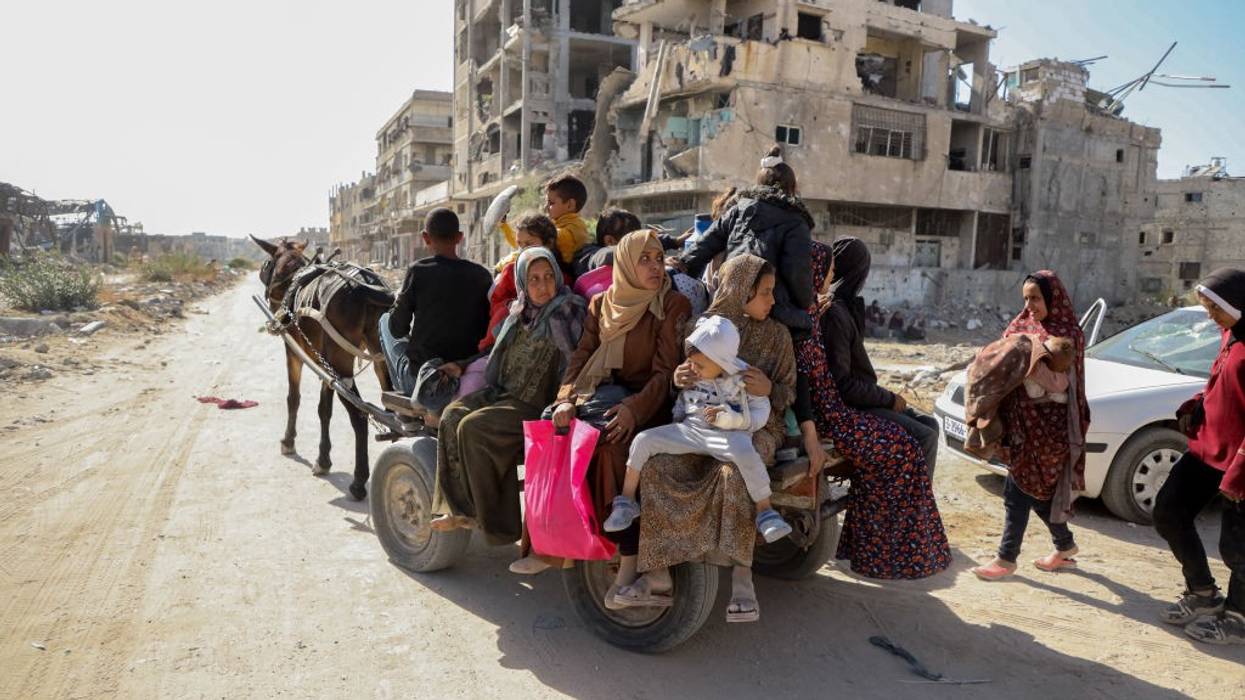
The editors of Israel's oldest newspaper on Wednesday published an editorial decrying the ethnic cleansing of Palestinians from northern Gaza amid a ferocious Israeli offensive there that's killed more than 1,000 people over the past three weeks.
"For three and a half weeks, Israeli forces have been besieging the northern Gaza Strip," the editors of the left-wing newspaper Haaretz wrote in Wednesday's lead editorial. "Israel has almost completely blocked the entry of humanitarian aid, thereby starving the hundreds of thousands of people who live there. Information emerging from the besieged area is only partial, because ever since the war began, Israel has barred journalists from entering Gaza."
"Israel says it told the residents that they needed to leave northern Gaza, and even now, they can still move southward on routes the army has designated for this purpose," the editors noted. "Thus the residents, many of whom have already been uprooted two or three times or even more from the places to which they have fled the terrors of war, are now being asked to move again. Yet Israel has refrained from giving the displaced any guarantee that they will be able to return once the war ends."
"Given this," they added, "it's no wonder that grave suspicions have arisen that Israel is effectively perpetrating ethnic cleansing in northern Gaza and that this operation is intended to permanently empty this area of Palestinians."
"This suspicion fits with both the principles of the 'Generals' Plan' being pushed by Maj. Gen. (Res.) Giora Eiland—a plan Defense Minister Yoav Gallant has denied implementing—and the demands of the Jewish supremacist parties in the governing coalition that are openly pursuing a policy of mass expulsions and the renewal of Jewish settlement in northern Gaza," the editorial states.
Last week, senior Israeli officials including members of Prime Minister Benjamin Netanyahu's Cabinet and far-right Knesset lawmakers gathered near the Gaza border for a conference dedicated to the ethnic cleansing of Arabs and Jewish recolonization in the embattled Palestinian enclave.
"We came here with one clear purpose: to settle the entire Gaza Strip... Every inch from north to south," settler leader Daniella Weiss told attendees of the rally, which was backed by Netanyahu's Likud party. "Each of you will witness how Jews go to Gaza and Arabs will disappear from Gaza."
As the Haaretz editors noted:
Ethnic cleansing is both a moral crime and a legal one. Criminal law treats mass expulsions as both a war crime and a crime against humanity. Horrifyingly, some members of Benjamin Netanyahu's government want to commit these crimes. As soon as the war began, they began calling for "erasing Gaza" and for perpetrating a "second Nakba." But many Israelis made light of such statements, and the law enforcement system, headed by Attorney General Gali Baharav-Miara, refrained from dealing with this incitement to commit crimes.
Now, we can see the results: Israel is sliding into ethnic cleansing; its soldiers are carrying out the criminal policies of the messianic, Kahanist right; and even the opposition on the center and center-left isn't making a peep. This consensus behind ethnic cleansing is shameful, and every public leader who doesn't demand an end to the de facto expulsion is supporting this crime and has become a party to it.
"If this process doesn't stop immediately," the editors stressed, "hundreds of thousands of people will become refugees, entire communities will be destroyed and the moral and legal stain of this crime will cling to and pursue every Israeli."
Israel was founded in 1948, largely through the ethnic cleansing of more than 750,000 Arabs from Palestine during the Nakba, or "catastrophe." Zionist militias—the two most violent of which were led by future Israeli prime ministers—utilized terror tactics including massacres and a death march to force the Indigenous Arabs from their homeland.
Israeli ethnic cleansing continued over the following eight decades and, according to critics, currently involves home demolitions and expulsions in the illegally occupied West Bank and East Jerusalem, systematic land theft, and pogroms and other violent attacks by Jewish settler colonists backed—and sometimes joined—by Israel Defense Forces troops.
United Nations officials and international human rights groups said this week's Knesset vote to ban the life-saving U.N. Relief and Works Agency for Palestine Refugees in the Near East (UNRWA) will exacerbate Israeli crimes in Gaza, including ethnic cleansing.
"Efforts to eliminate UNRWA are illegal under international law and will only amplify the genocide and ethnic cleansing Israel is enacting in Gaza while also undermining long-term prospects for peace," the American Friends Service Committee, a Quaker group, said Tuesday. "The Israeli government is not only deliberately blocking humanitarian and medical aid to people who are starving and dying, it is undermining support for Palestine refugees and the international legal framework protecting their rights."
On Monday, Francesca Albanese, the U.N.'s special rapporteur on Palestine, published a
report "contextualizing the situation within
a decadeslong process of territorial expansion and ethnic cleansing aimed at liquidating the Palestinian presence in Palestine."
Albanese's report was released a day after Israeli Finance Minister Bezalel Smotrich—who supports the "total annihilation" of Gaza and said that killing 2 million Palestinians would be "justified and moral"—reiterated his call for Israeli annexation of the entire West Bank and the expulsion of the occupied territory's Palestinians.
Israel's policies and practices in Gaza—where more than 150,000 Palestinians have been killed or wounded by Israeli forces since the Hamas-led attack on Israel on October 7, 2023—are the subject of an ongoing South Africa-led genocide case before the International Court of Justice in The Hague.
"Over 11 months, we have reached shocking levels of conflict, displacement, disease, and hunger," said one campaigner.
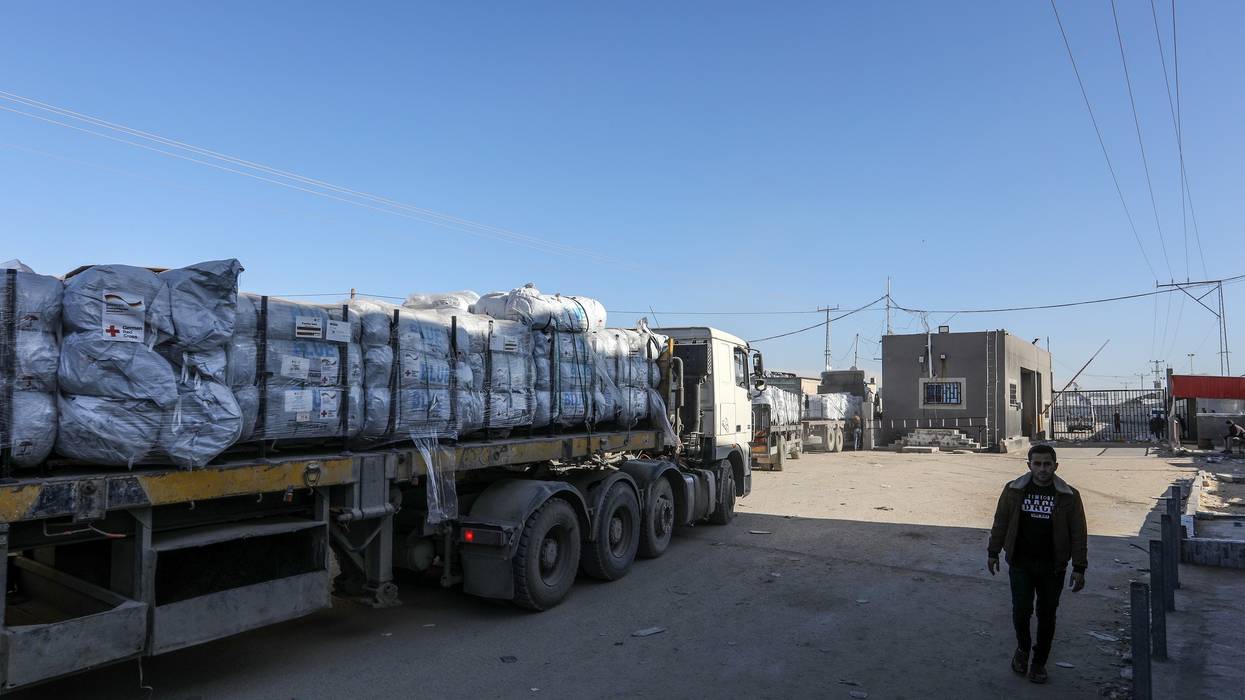
Israel's "complete siege" of the Gaza Strip "is driving a humanitarian disaster," with 83% of required food aid failing to enter the embattled enclave, where the entire population is facing hunger and disease and almost half a million Palestinians are at risk of starvation, an analysis published Monday revealed.
The analysis by 15 international aid organizations noted that a record-low average of just 69 aid trucks are entering the Gaza Strip each day, compared with an already insufficient 500 daily truckloads a year ago. Additionally, the groups said that "only 17 out of Gaza's 36 hospitals remain partially functional, and "critical infrastructure such as water networks, sanitation facilities, and bread mills" have been destroyed.
"While Israeli military attacks on Gaza intensify, lifesaving food, medicine, medical supplies, fuel, and tents have been systematically blocked from entering for almost a year," the aid groups—which include ActionAid, American Friends Service Committee, CARE International, Christian Aid, Islamic Aid, Oxfam International, and Save the Children—said in a statement.
The publication highlights numerous ways that "lifesaving aid is systematically obstructed on a daily basis" in Gaza.
"These include the denial of safety, with more than 40,000 Palestinians and nearly 300 aid workers killed since last October; the sharp tightening of a 17-year blockade to a full siege, which prevents aid from entering Gaza; delays and denials which restrict the movement of aid around Gaza; tightly restrictive and unpredictable control of imports; the destruction of public infrastructure such as schools and hospitals; and the displacement of civilians and humanitarian workers," the analysis' authors wrote.
Zenab, a 33-year-old Palestinian woman pregnant with her second child, said that her pregnancy "has been the hardest time of my life."
"It was also hard to get the medication I needed," she continued. Sometimes I had to walk for hours to different pharmacies, hospitals, and health centers to see if anyone had my medication available. For me as a pregnant woman, there has been hardly any healthcare support, no proper hygiene and sanitation, and no suitable mattress to sleep on."
"I was suffering from complications during my pregnancy," Zenab added. "We didn't have enough water to drink, and had hardly any food. The doctors again told me that my pregnancy was in danger."
Among the report's key findings:
"There is a shortage of all humanitarian items. We are overwhelmed [with] these needs and [these] urgent requirements," said Amjad Al Shawa, director of the Palestinian NGOs Network. "People [are] starving due to the shortage of aid. One hundred percent of the population depends on humanitarian aid."
The authors of the analysis—which was released ahead of this week's United Nations General Assembly in New York—are demanding that Israel secure an immediate and lasting cease-fire. They are also calling for an arms embargo on Israel and Israeli compliance with the recent International Court of Justice (ICJ) advisory opinion, which found that the occupation of Palestine is an illegal form of apartheid that must end immediately. Israel is on trial for genocide in a separate ICJ case.
"The situation was intolerable long before last October's escalation and is beyond catastrophic now."
"The situation was intolerable long before last October's escalation and is beyond catastrophic now," CARE International West Bank and Gaza country director Jolien Veldwijik said in a statement. "Over 11 months, we have reached shocking levels of conflict, displacement, disease, and hunger."
That includes dozens of children who have died due to malnutrition, dehydration, and lack of adequate medical care.
"Aid is still not getting in, and humanitarian workers are risking their lives to do their jobs while attacks and violations of international law intensify," Veldwijik added. "Aid, which is urgently required for 2.2 million people at risk of dying in the coming weeks and months, should never be politicized. We demand an immediate and sustained cease-fire, and the free flow of humanitarian aid into and throughout Gaza."
The basic idea of divestment is simple: Stop investing in corporations or other entities that are doing harm.
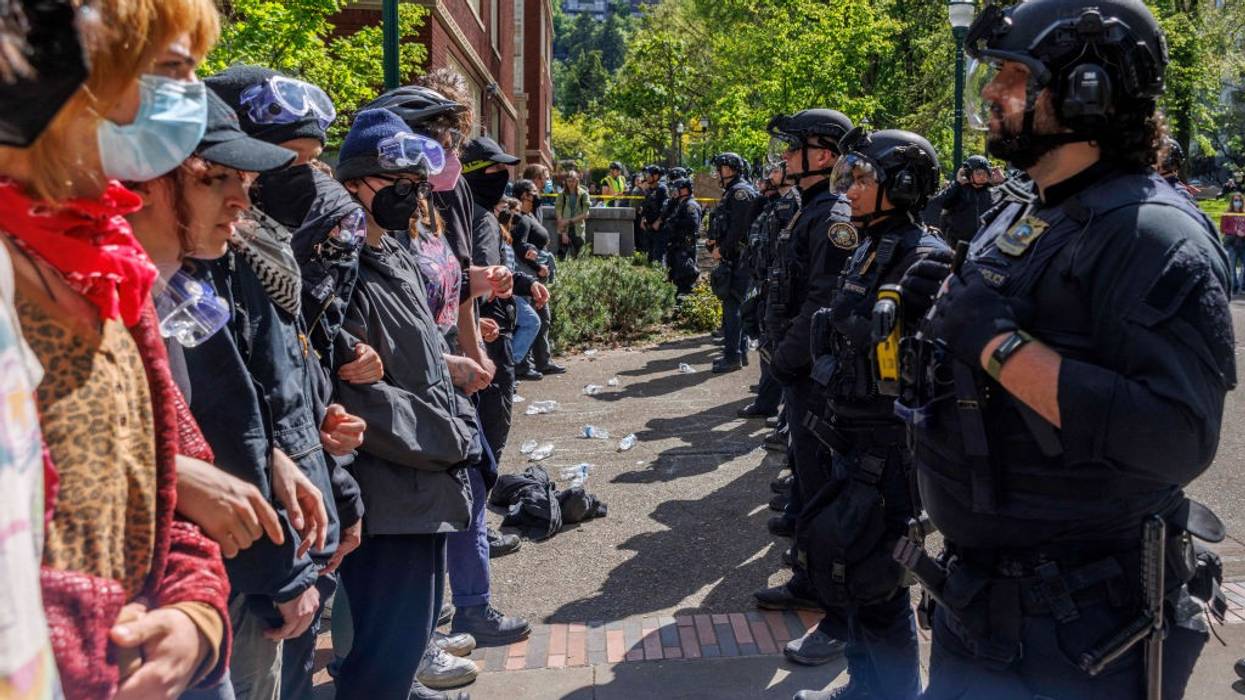
Almost every day this spring, students used their graduation ceremonies as a platform to demand their universities and colleges divest from genocide in Gaza. Though I have been to hundreds of protests and events in my lifetime—in Palestine and in the U.S.—I find something particularly moving about students risking their own academic achievements to shine a light on the suffering and struggle of Palestinians.
I watched the first news reports of the Columbia University encampment from my family home in Ramallah, on the West Bank, during a work trip to the region. As the movement spread to other colleges and universities, I was meeting with staff from the American Friends Service Committee (AFSC)—a Quaker organization I lead—in Ramallah and Amman. I met with teachers, farmers, activists, and politicians. They were so moved by the student encampments; it was all they wanted to talk about.
Our staff in Gaza have continued their lifesaving humanitarian aid work despite multiple displacements and the deaths of many friends and family members. They too were encouraged by the student protests. People in Rafah were painting messages of support and thanks for the students on the walls of their tents.
Missiles and bombs should have no place in a university’s investment portfolio, just as they should never be dropped on universities—in Gaza or anywhere in the world.
In the face of so much death and destruction, the protests bring hope to people in Palestine and around the world. But on my return to the U.S., many people seemed confused about what the demand for divestment actually meant.
The basic idea of divestment is simple: Stop investing in corporations or other entities that are doing harm. When large corporations profit from war and occupation, or poor labor conditions and environmental destruction, they tend to use their political influence to deepen and entrench these harmful activities—for example, the defense industry hires lobbyists and makes campaign contributions to influence politicians and policies to buy and use more weapons. Institutions like colleges and universities generally have large endowments that are invested in the stock market—and their portfolios may include such companies.
Divestment campaigns put pressure on these institutions to withdraw their money from companies engaging in harmful activities. When colleges and universities withdraw their investments from companies profiting from violence and exploitation, they also withdraw their political and financial support for these institutions and help create new behavior standards that respect human life, human rights, peace, and sustainability.
There is a long history of divestment as part of successful nonviolent movements for change. At AFSC, we’ve used divestment strategies in the anti-apartheid movement, farmworkers’ rights campaigns, the movement for nuclear disarmament, peace and anti-militarism campaigns, and struggles against mass incarceration and for the rights of immigrants.
We also practice what we preach. Using our investment screen, AFSC has divested our own funds from fossil fuels, Israeli occupation and apartheid, mass incarceration and mass surveillance in the U.S., and the militarization of borders, among other oppressive systems. Like many other organizations that invest responsibly, we have not seen any negative impact on our returns. The investors that insist on continuing to invest in social harm and human suffering are motivated by political will, not financial acumen.
Today we are joining with thousands of people across the U.S. to call for divestment from companies profiting from Israel’s brutal attacks on Gaza and its refusal to allow sufficient lifesaving humanitarian aid to enter. In fact, we are calling for divestment from all companies that are consistently, and knowingly complicit in grave human rights violations and violations of international law—wherever they occur.
The International Court of Justice, in response to South Africa’s request for additional measures in its genocide case, ordered an immediate halt to the assault on Rafah. Instead, Israel is bombing tent encampments in areas they have declared “safe zones,” killing children while they sleep. Institutions that choose to keep profiting from or supporting these atrocities are themselves complicit. The students occupying their universities are doing what student movements have done courageously for decades. They are leveraging their position to challenge their academic institutions to do the right thing. While the details of the demands vary from campus to campus, the message is the same: No one should profit from genocide, and we all must take action to stop it.
This includes divesting from publicly traded weapons manufacturers like Boeing, Elbit Systems, General Dynamics, Lockheed Martin Corp, and Northrop Grumman, all of whom have provided weapons used in Israeli attacks on Gaza. It also includes companies like Valero, an oil and gas company that has been supplying military-grade jet fuel for the Israeli Air Force, and Palantir, a high-tech mass surveillance company that has been providing its AI-powered tools to the Israeli security forces.
Missiles and bombs should have no place in a university’s investment portfolio, just as they should never be dropped on universities—in Gaza or anywhere in the world. Yet as many student protestors have pointed out, every university in Gaza has been destroyed by Israeli airstrikes. Academic institutions should be investing in the wellbeing and intellectual development of the next generation, not its destruction.
"This scale of devastation is only possible because of financial, political, and military support from the United States," said one Quaker campaigner.
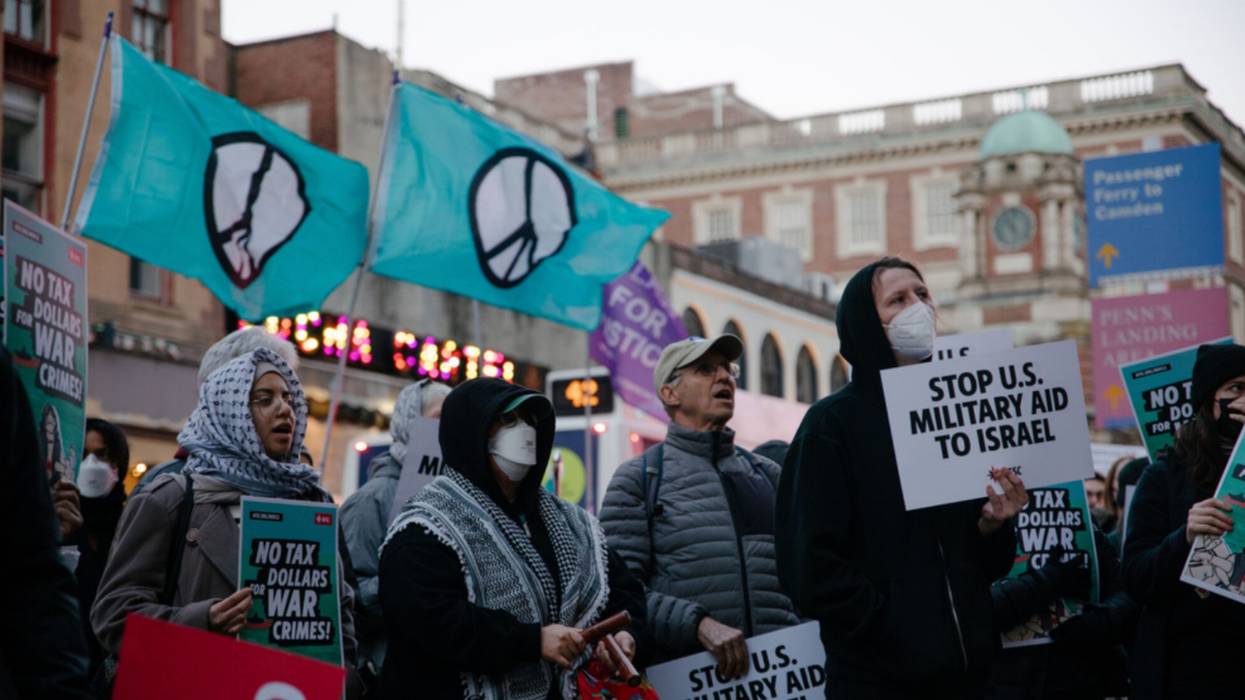
With the April 15 U.S. federal income tax filing deadline just around the corner, the American Friends Service Committee on Thursday announced a Tax Day campaign to demand members of Congress stop funding Israel's genocidal war on Palestinians in Gaza.
AFSC—a Quaker group that has been active in Gaza since the Nakba, or Israeli ethnic cleansing of Arabs from Palestine in 1948—said it seeks to highlight how U.S. taxpayer dollars "are misused to fund war and militarism instead of life-sustaining programs."
This year, the group's focus is on U.S. military aid to Israel amid the ongoing Gaza genocide, in which at least 109,500 Palestinians have been killed or wounded by Israeli forces, often using weapons supplied by Washington—including 2,000-pound bombs that can level entire city blocks. The majority of Palestinians killed during the war have been women and children, including more than 13,000 minors.
According to AFSC:
Over the last six months, tens of thousands of Palestinians in Gaza have been killed using weapons provided by the United States. Humanitarian aid workers delivering vital assistance continue to be attacked and killed at unprecedented rates. The blockade and killing of humanitarian aid workers are causing widespread famine and starvation in Gaza.
"This scale of devastation is only possible because of financial, political, and military support from the United States," Jennifer Bing, who heads the AFSC's Palestine Activism Program, said in a statement. "We need our members of Congress to listen to their constituents and their conscience and say no to any additional military funding for Israel and yes to a cease-fire and humanitarian access."
AFSC general secretary Joyce Ajlouny said: "The U.S. government is deeply complicit in the deaths of thousands of Palestinian children and families. Our tax dollars are buying the bombs dropping on their loved ones and the tanks that are destroying their cities."
"As a Quaker and a Palestinian I know that this violence will never bring peace," Ajlouny added. "We need an immediate cease-fire, an end to military funding from the U.S., and a political process that will end the apartheid system and bring true peace and justice for both Israelis and Palestinians."
The U.S., which already gave Israel around $4 billion in annual military aid before the October 7 attacks, has approved more than 100 arms shipments to the key Middle Eastern ally over the past six months. President Joe Biden—who since October 7 has repeatedly circumvented Congress in order to expedite weapons transfers to Israel—is seeking an additional $14.3 billion in armed assistance to the country.
This, despite multiple domestic laws and the Biden administration's own rules barring arms transfers to countries that violate human rights.
Israel imports nearly 70% of its arms from the United States. Common Dreams reported earlier this month that the Biden administration is pushing Congress to approve the sale of $18 billion worth of F-15 fighter jets to Israel.