October, 29 2026, 12:27pm EDT

For Immediate Release
Contact: Jose.Puente@mail.house.gov (Casar), Herline.Mathieu@mail.house.gov (Waters)
Reps. Casar, Waters Lead Democratic Resolution Opposing A.I. Bubble Bailout for Big Tech, Commit to Protecting American People Instead
Today, Congressional Progressive Caucus (CPC) Chair Rep. Greg Casar (TX-35) and House Financial Services Committee Ranking Member Rep. Maxine Waters (CA-43) co-led the introduction of a resolution warning of the economic risks posed by an artificial-intelligence-related asset bubble, opposing a bailout of corporations or their business executives impacted by the collapse of an A.I. bubble, and affirming their support for aggressive federal action to protect workers, retirees, and low-income communities who will be harmed by an economic downturn.
They were joined by Representatives Danny Davis (IL-07), Chris Deluzio (PA-17), Valerie P. Foushee (NC-04), Jesús “Chuy” García (IL-04), Pramila Jayapal (WA-07), Analilia Mejia (NJ-11), Delia Ramirez (IL-03), André Carson (IN-07), Jan Schakowsky (IL-09), Brad Sherman (CA-32), and Rashida Tlaib (MI-12).
“Big Tech billionaires are making increasingly reckless bets on A.I. They got richer off Trump’s deregulation and Republican tax breaks. Now they expect taxpayers to bail them out if those bets go bad. We won’t let them," said CPC Chair Casar. "A.I. companies that fail should go bankrupt, and executives who commit fraud should be held accountable. Federal help should go to workers and retirees.”
“Big tech and Wall Street are taking enormous risks with billions in borrowed money to fuel the AI boom, despite growing warning signs of a dangerous bubble and if it all comes crashing down they should not expect taxpayers to rescue them,” said Ranking Member Waters. “We saw what happened in 2008 when reckless Wall Street practices brought our economy to its knees. The banks got bailed out while millions of hardworking Americans lost their jobs, homes, and retirement savings. We cannot let history repeat itself. The American people should never again be forced to foot the bill for billionaires’ reckless bets.”
In the resolution, the Democratic lawmakers note that “artificial intelligence-related firms hold trillions of dollars in debt, much of which is raised in opaque and unregulated private credit markets,” and “the price-to-earnings ratio of the stock market is currently almost as high as it was at the peak of the 1990s tech bubble.”
The Democratic legislators also point out that “federal regulators have avoided applying robust scrutiny and oversight regarding enormously complicated debt and equity schemes used by artificial intelligence firms” and highlight the Trump White House’s deregulatory focus and conflicts of interest related to A.I.
The resolution’s cosponsors commit to avoiding a federal response similar to what occurred during the financial crisis of 2008, where the financial sector received trillions of dollars in liquidity without accountability for senior executives involved in illegal and fraudulent behaviors. Meanwhile, 10 million homeowners lost their houses and tens of millions of workers went years without adequate employment while too-big-to-fail banks enjoyed a massive bailout.
The resolution urges the Federal Government, including Congress and key Federal agencies to oppose:
- Any measure to rescue insolvent artificial intelligence-related firms or to shield their senior executives from accountability for reckless conduct;
- Special assistance like emergency lending or direct capital infusions to prop up insolvent A.I. companies’ operations or prevent their orderly resolutions through ordinary bankruptcy processes;
- “Golden parachutes” for corporate executives involved in risky or illegal behaviors that lead to their firms’ insolvency, instead requiring them to be held fully accountable under civil and criminal law and be obligated to return ill-gotten gains like mansions, vacation homes, private planes and yachts, and other assets.
The resolution also calls on the Federal Government to support:
- Aggressive, direct federal action to support ordinary Americans through federal spending to create jobs, protect state and local government services, and robust unemployment insurance, nutrition support, and housing assistance;
- The protection of pension and retirement fund holders who may face devastating losses in the event of a collapse of an A.I. bubble;
- Far-reaching reforms to prevent future speculative bubbles, including additional transparency and accountability requirements;
- Automatic economic stabilizers—investments in people that start to flow immediately in the event of an economic downturn—that support workers and consumers when financial crises, asset bubbles and other harms create downturns and recessions.
The resolution was endorsed by American Federation of Teachers, American Economic Liberties Project, Americans for Financial Reform, the Center for Responsible Lending, Demand Progress Action, Future of Life Institute, Guardrails Action, Indivisible, Interfaith Centre on Corporate Responsibility, Investor Alliance for Human Rights, Jobs With Justice, P Street, and Social Security Works.
“Americans are already paying for the AI build-out through higher power bills and a stock market propped up by a handful of companies,” said Morgan Harper, Director of Policy & Advocacy for American Economic Liberties Project. They should not pay a second time with a bailout. When Wall Street’s bets went bad during the financial crisis, the banks got rescued and ordinary people got foreclosure notices. Congressional members are right to reject AI bailouts in advance, and commit to saving real help for those who will be left holding the bag—the American people.”
“Tech billionaires and their Wall Street backers are using dangerous tactics reminiscent of the 2008 financial crisis to make trillion dollar bets on AI—and they are putting working people’s money at risk,” said Maya Jenkins, a senior policy analyst at Americans for Financial Reform. “This resolution charts a critically important path for defending people’s economic security from the bubble’s blast radius, opposing billionaire bailouts, and holding corporate executives to account. This is the kind of approach needed to confront mounting financial risks and emerge from the aftermath of the AI bubble with an economy that is fairer and more stable.”
“When the housing market collapsed in 2008, the financial industry was prepared to act to ensure that there was a bailout that benefited them,” said Dean Baker, senior economist at the Center for Economic and Policy Research. “It is important that the Congressional Progressive Caucus is stepping forward to make sure that any bailout from the collapse of the AI bubble is designed to benefit the country as whole, rather than the billionaire AI boys who created the problem in the first place.”
“Chair Casar, Ranking Member Waters, and the Progressive Caucus should be praised for this resolution and recognized as being at the tip of the spear in ensuring that AI policy focuses on working-class impacts and isn’t simply left to the desires of the handful of billionaires and their courtesans in Congress, said Maya Handa, Senior Advisor, Guardrails Action. “The AI industry is trying to buy our elections and write their own regulations while its biggest players line up IPOs at record valuations. If this turns into a bubble, working-class Americans must not be forced to pay the tab for big tech CEOs’ recklessness and greed. Simply put: there can be no bailout for big AI execs or their financial enablers.”
“AI companies and their billionaire executives shouldn’t get to gamble with our economy and democracy, then expect working people to bail them out when their bets on AI go bust,” said Andrew O’Neill, National Advocacy Director of Indivisible. “We learned in 2008 what happens when the government puts impunity for corporate corruption ahead of working families. This resolution draws a clear line: will lawmakers protect AI tech bros or the people they’re supposed to represent?”
Read the resolution here.
The Congressional Progressive Caucus (CPC) is made up of nearly 100 members standing up for progressive ideals in Washington and throughout the country. Since 1991, the CPC has advocated for progressive policies that prioritize working Americans over corporate interests, fight economic and social inequality, and advance civil liberties.
(202) 225-3106LATEST NEWS
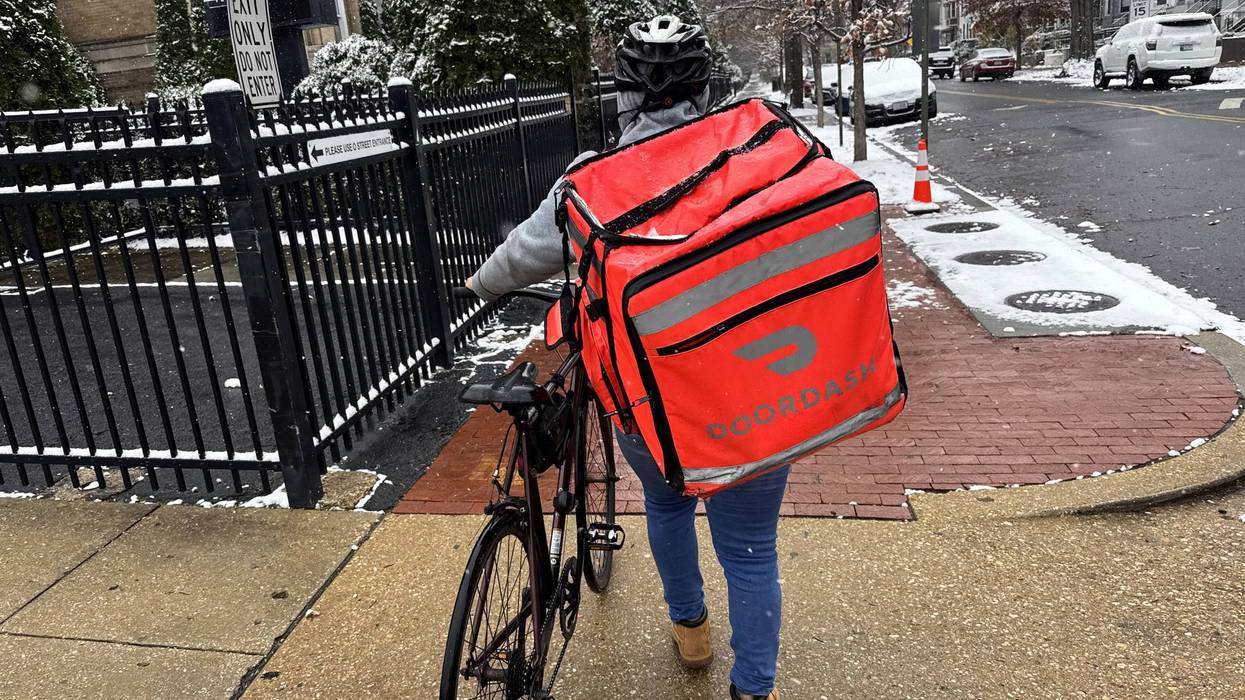
Trump FTC Urged to Prevent 'Two of the Biggest Ripoff Machines in America' From Merging
"Instacart and DoorDash have spent the better part of a decade bullying main street businesses and denying fair pay and benefits to their combined 9 million workers."
Oct 29, 2026
The US Federal Trade Commission on Thursday faced immediate calls to block DoorDash's proposed $17 billion acquisition of rival Instacart, with opponents of the merger arguing it would create a "food delivery monopoly" with disastrous consequences for workers, consumers, and small businesses.
“This is a brazen merger given the amount of heat on both companies for ongoing harms to restaurants, grocers, delivery drivers, and consumers,” Lee Hepner, senior legal counsel at the American Economic Liberties Project, said in a statement, alluding to investigations that DoorDash and Instacart are facing at the state and federal levels. On Wednesday, the FTC ordered DoorDash, Instacart, and other companies to provide the agency with detailed information about their "use of personal data to set prices and compensation."
"Instacart and DoorDash have spent the better part of a decade bullying main street businesses and denying fair pay and benefits to their combined 9 million workers," said Hepner. "This merger represents the next frontier of data-driven abuse, exploiting massive asymmetries of power to squeeze worker compensation on the way in and drain consumer wallets on the way out."
Last year, the Groundwork Collaborative and other groups released a report accusing Instacart of deploying "increasingly opaque pricing practices" that are "blowing a hole in families’ wallets."
Lindsay Owens, Groundwork's president and CEO, said in response to DoorDash's proposed acquisition of Instacart that "a grocery company that made its fortune running experiments on shoppers to determine how much they can overcharge them is now merging with a delivery company that built tech to track its customers’ every click and scroll to charge them as much as it can."
"The FTC knows these two companies are at the forefront of unfair and deceptive pricing technology, which is why it ordered them to open up their pricing labs just yesterday," said Owens. "Two of the biggest ripoff machines in America should not be allowed to become one. The FTC must block this merger."
News of the proposed merger comes a month after DoorDash agreed to a historic $131.5 million settlement with New York City for shortchanging delivery drivers.
In a social media post on Thursday, New York City Mayor Zohran Mamdani wrote that "just last month, DoorDash couldn’t seem to find the money to pay their deliveristas—until our administration forced them to give back $131M+ in stolen wages and penalties."
"This week, they’ve managed to find $17 billion to acquire one of their main competitors," wrote Mamdani. "Corporate consolidation means higher prices, harsher exploitation, and greater economic inequality for New Yorkers. We’ve stood up to these giants before. That doesn’t stop now."
The Trump administration's antitrust record during his second White House term doesn't inspire confidence that the Republican-controlled FTC will intervene to block DoorDash's acquisition of Instacart. States could choose to sue over the merger in the absence of federal action.
“There’s no useful mitigation short of blocking this outright, which the FTC or any state attorney general must now do," said Hepner of the American Economic Liberties Project.
Keep ReadingShow Less
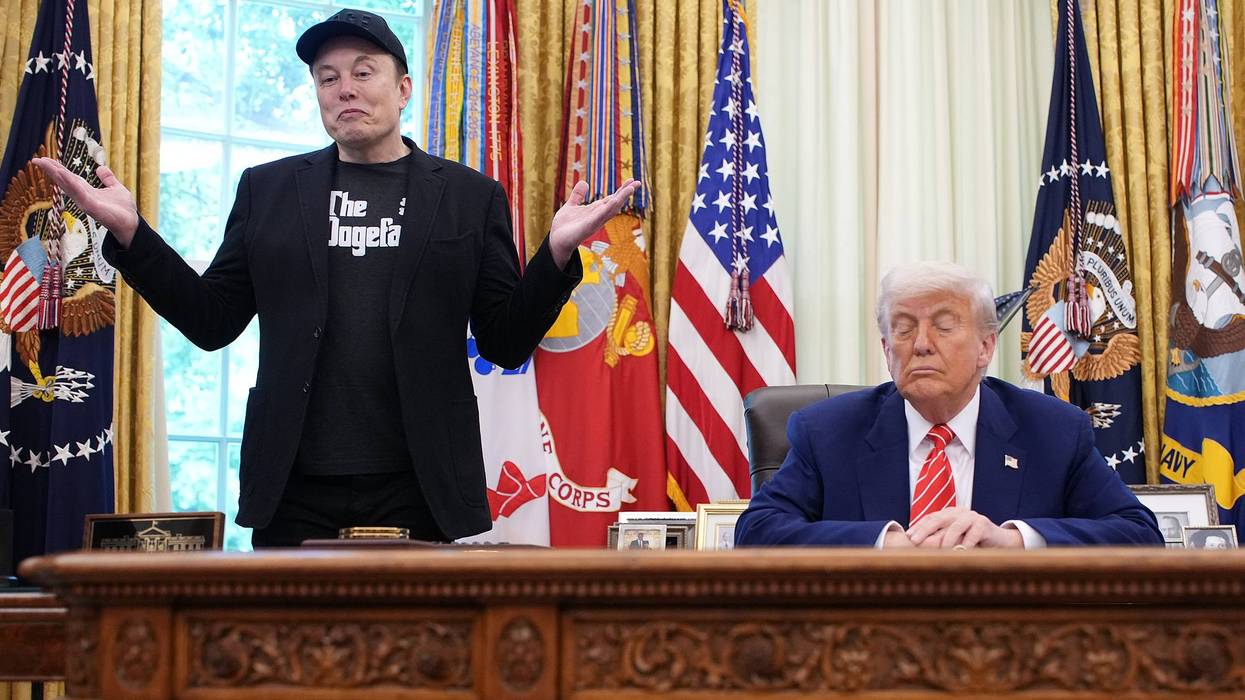
Democrats Ask Trump: Did You Use Elon Musk's Grok AI Chatbot to Help Plan Maduro Kidnapping?
“If the American President is relying on the policy advice of a Musk-designed, Hitler-friendly chatbot with a predilection for child pornography in order to carry out his official duties, Americans have a right to know."
Oct 29, 2026
A pair of top Democrats in the US House of Representatives on Thursday are asking new questions about the influence that artificial intelligence chatbots may have had in the deliberations or planning of President Donald Trump's unlawful military operations against Venezuela earlier this year that resulted in the kidnapping of the country's president, Nicolas Maduro.
In a letter sent directly to Trump, Rep. Jamie Raskin (D-Md.), ranking member of the House Judiciary Committee, and Rep. Robert Garcia (D-Calif.), ranking member of the House Committee on Oversight and Government Reform, called on the president to preserve any and all of his conversations with artificial intelligence chatbots and asked for confirmation on whether or not he had specifically engaged with Elon Musk’s Grok chatbot concerning the US military assault on Venezuela.
The committee Democrats pointed to public reporting about a meeting between Trump and Musk that took place prior to the US military operation in Venezuela that raises serious questions about the role the president's interaction may have played in shaping his understanding of the situation in the country and fallout from such an audacious—and "100% illegal"—plan.
As TechCrunch summarized earlier this month:
In December 2025, about a month before the US invaded Venezuela and captured its president, Nicolás Maduro, President Trump had a secret meeting with Elon Musk, Time magazine reports. This was roughly seven months after Musk left his role in the Trump administration at the Department of Government Efficiency (DOGE).
During this meeting, Trump “spent hours” talking to Musk’s Grok chatbot, including asking how Venezuelans would respond to the capture of their president, a source told Time. Just a few months earlier, in September, Trump began ordering U.S. military strikes against Venezuelan boats that Trump alleged were involved in drug trafficking.
People had apparently been turning to Grok asking about the boat strikes and political climate in Venezuela, as The Atlantic reported at the time. So Grok told Trump that Maduro was a “deeply unpopular dictator and that many Venezuelans would likely celebrate his downfall,” Time reported.
If such reporting is accurate, Raskin and Garcia said in their letter to Trump that the "episode is deeply troubling," and offered three key reasons.
"First, you consulted Grok—but not Congress—on your military deployment to Venezuela, circumventing Congress’s constitutional power to declare war and introducing instead into American foreign policy decision making a technology that is highly manipulable and demonstrably error-prone," the pair wrote.
"Second," the letter continues, "the unsecured use of AI chatbots by you and your closest advisors exposes the United States to acute national security risks. Your Administration’s disdain for operational security is well-documented. Secretary of Defense Pete Hegseth famously used unsecured channels to relay information about impending U.S. military strikes to his wife, brother, and personal lawyer."
The third reason, they said, is that Trump and his advisors’ "use of AI exposes the country to malign influence from unknown and unaccountable third parties."
The letter details a series of specific controversies with the Grok chatbot model, including its ability to create sexualized images of people—including children—without their permission and creating pro-Nazi content and advocating for a "second Holocaust" based, unsurprisingly, on what the model itself attributed to public comments by Musk.
"These disturbing examples illustrate why the White House’s AI prompts and outputs must be preserved," said Raskin and Garcia in the letter.
"If the American President is relying on the policy advice of a Musk-designed, Hitler-friendly chatbot with a predilection for child pornography in order to carry out his official duties, Americans have a right to know," they wrote. "If the United States military killed dozens of innocent schoolchildren based on the faulty advice of an AI chatbot, we have a right to know that too. And if an unelected oligarch is influencing U.S. policy through his AI-generated alter ego, Americans have a right to know how governmental decisions are being reached."
In service of that message, the lawmakers told Trump that any and all "AI prompts submitted by you and your staff, as well as the outputs you received, plainly fall within the definition of presidential records," and should be properly preserved in accordance with existing statute.
In addition, "to ensure that the American public’s rights to presidential records are being adequately protected," the pair requested a closed-door briefing regarding the use of AI chatbot technologies by the president, his staff, and other relevant personnel. They also asked a series of detailed questions on the subject for which they requested answers, in writing, by November 11.
Keep ReadingShow Less

US Journalist and Activist Detained After Israeli Settler Attack in West Bank
Jasper Nathaniel and Andrey Khrzhanovskiy recently came to the aid of Washington Post reporter Heidi Levine after she was beaten by Israeli settlers, and spoke out about the attack.
Oct 29, 2026
An American journalist and an activist who reportedly suffered a concussion from being beaten by armed Israeli settlers remained in detention Wednesday night, hours after Israeli police arrested them following the attack.
Adele Shoko, a Russian activist, reported that settlers had attacked her, Israeli-Russian activist Andrey Khrzhanovskiy, and US journalist Jasper Nathaniel late Wednesday in the Palestinian village of Umm al-Khair, in the Masafer Yatta area of the occupied West Bank.
"They beat us, threatened to shoot us, stole Andrey's phone and my glasses, and pepper-sprayed Jasper," Shoko said on the social media platform X.
According to Shoko, Khrzhanovskiy was denied medical treatment after losing consciousness "several times in front of police." He and Nathaniel were taken to a police station, where they remained hours later.
Nathaniel was heard yelling, "I just got beat up!" while being led away by police.
"Andrey was severely beaten and lost consciousness several times in front of police," said Shoko. "Despite this, he was denied hospital treatment. He was put in an ambulance—but instead of being taken to hospital, he was taken to a police station. He is still there, arrested and being denied medical care."
One video appeared to show Khrzhanovskiy losing consciousness.
Drop Site News cited Shoko as she reported that Nathaniel and Khrzhanovskiy eventually were able to speak with a lawyer, but remained at a police station. They were reportedly "physically okay."
"Israeli state terrorism knows no boundaries," said historian Zachary Foster of the footage of the attack.
The assault came less than two weeks after both Nathaniel and Khrzhanovskiy came to the aid of Heidi Levine, a Washington Post journalist, after she was brutally beaten and robbed by Israeli settlers while she was covering an attack by dozens of masked men on Palestinian olive groves in the West Bank.
State-backed settler attacks on Palestinians in the West Bank have ramped up significantly since October 2023, when the Israel Defense Forces (IDF) also began a military campaign against Gaza in retaliation for a Hamas-led attack on southern Israel. More than 74,000 Palestinians have been killed in Gaza in what leading human rights groups have called a genocide, and a United Nations commission said this week that at least 1,080 Palestinians have been killed in the West Bank in the last three years.
Top officials in Prime Minister Benjamin Netanyahu's government have pushed to further annex the West Bank as the IDF has backed settler raids on villages and attacks on Palestinian communities as well as recent assaults on journalists, US lawmakers, and a group of European diplomats.
Nathaniel, who has spent years covering the Israeli occupation of the West Bank for outlets including Drop Site and Zeteo News, spoke recently to The New Yorker about the attack on Levine, emphasizing that Palestinians had thrown stones at her attackers to allow her colleagues to reach her.
"The IDF soldiers who have been there, who’ve been tear-gassing the Palestinians and providing cover for the settlers, stormed the village," Nathaniel said of the assault on Levine. "Rather than go after the settlers who have just nearly killed a woman, they stormed the village and started firing their weapons, and they shot a Palestinian man in the leg."
On Substack this week, Khrzhanovskiy wrote that "all the Palestinian villages in the West Bank are under siege," and that Netanyahu's government aimed to use a recent strike against Israeli soldiers "to start a war in the West Bank."
"The only way to stop this is pressure from all directions. We know it works," said Khrzhanovskiy. "Call your representative, hold a demonstration, organize direct action against the occupation’s assets abroad. Keep attention on the West Bank."
Keep ReadingShow Less
Billionaire Trump Cabinet Secretary Spends $43,000 on New Furniture While Gutting Education Department
"It is unjustifiable to buy new furniture while students lose access to education services you are illegally dismantling and suffer from painful funding cuts."
Oct 29, 2026
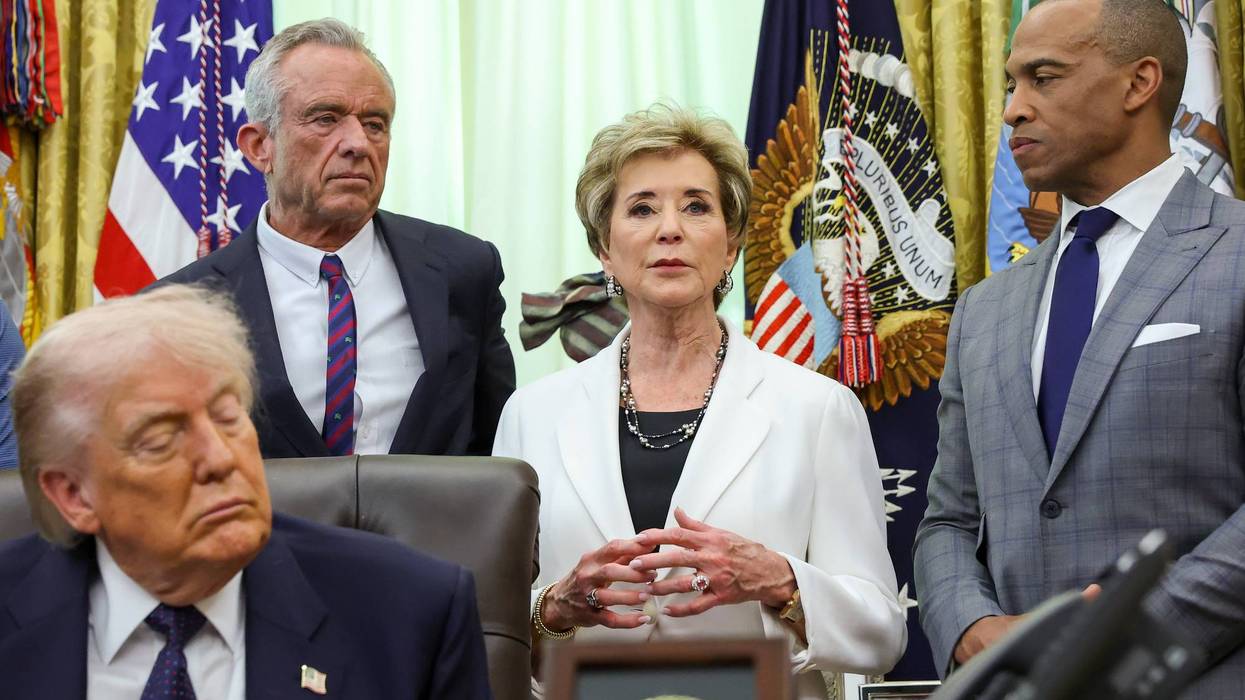
Linda McMahon, President Donald Trump's billionaire education secretary, faced backlash on Wednesday over her plans to spend more than $43,000 of taxpayer money on new furniture for her government office as she works to illegally dismantle the department she leads, harming students across the country.
Democratic Sens. Patty Murray (Wash.) and Tammy Baldwin (Wis.) wrote in a letter to McMahon that "it is unjustifiable to buy new furniture while students lose access to education services you are illegally dismantling and suffer from painful funding cuts that were not authorized by Congress."
A senior official at the Education Department, whose staff has been gutted during Trump's second term, told The New York Times that the roughly $43,000 in costs "included a new desk, conference table, chairs and other items." The department informed lawmakers that existing furniture can't be "aesthetically integrated into the agency’s new office space"—a privately owned building that housed the US Agency for International Development before the Trump administration shut it down.
Murray and Baldwin wrote in their letter to McMahon, a former professional wrestling executive whose net worth is estimated to be around $3 billion, that "you have asked students, families, and teachers across the country to endure extraordinarily painful cuts in the name of 'fiscal responsibility,' and you have pushed out nearly half of the staff at the department in a chaotic, illegal campaign to fire employees tasked with protecting students with disabilities in the classroom and going after predatory student lenders."
"This year, you have asked Congress to slash funding for important K-12 programs and to cut funding for higher education programs by nearly $5 billion—including by destroying programs like TRIO and Federal Work Study," the senators added. "But it is clear that you do not think that you should have to abide by the same rules you want to apply to others."
The senators noted that as McMahon moves to spend taxpayer dollars on new furniture for her office, other department employees are working in spaces that have been deemed "unsafe and in disrepair, with water leaking from ceilings, mold in kitchens, extreme temperatures from a failing HVAC system, insect traps filled with dead bugs, and live insects in lactation rooms and work areas."
"The American people are sick of the corruption, sick of the waste, and sick of the hypocrisy coming out of all corners of this administration," Murray and Baldwin wrote. "They deserve a full accounting of how and why their tax dollars are being used to buy new office furniture for a secretary whose stated mission is to put themselves out of a job."
McMahon's office makeover plans were revealed days after reports indicated that she planned to remove the Federal Student Aid office from the Department of Education—without congressional approval—and create a new independent agency to manage roughly $1.6 trillion in debt owed by more than 40 million borrowers. The planned move marks the latest step in McMahon's push to effectively abolish the Education Department, fulfilling a Trump campaign promise.
Mike Pierce, executive director of the advocacy group Protect Borrowers, said in response that "changing the name on the agency letterhead will do nothing to lower costs for working-class families squeezed by rising student loan bills and surging college tuition."
"More than 3 million student loan borrowers defaulted on a loan last year, and more than 3 million more are on track to do the same this year," said Pierce. "Due to the Trump administration’s reckless actions, millions have seen their credit scores ruined. As a result, a generation of Americans will be locked out of the mortgage market, denied a typical car loan, and pay far more for a credit card because Linda McMahon cannot be bothered to fix the broken student loan system."
Keep ReadingShow Less
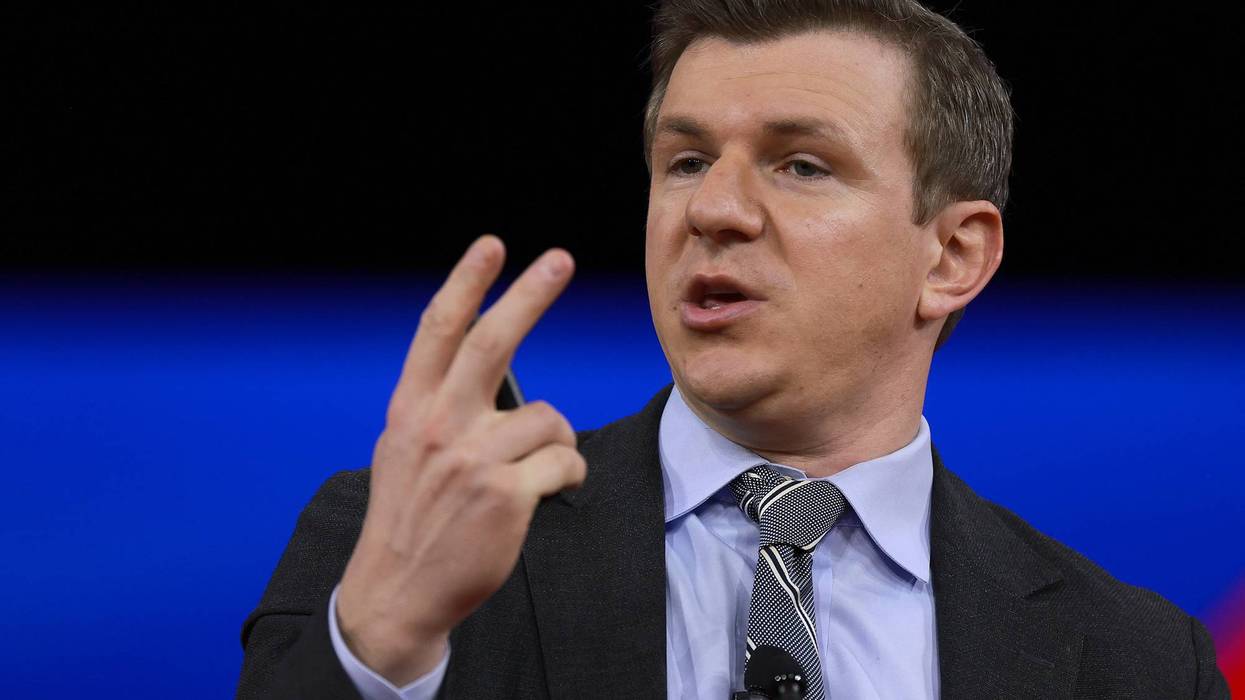
MAGA 'Ratfucker' James O'Keefe Charged After Trying to Prove Voter Fraud by Allegedly Committing It
"By going undercover to prove how easy it is to commit voter fraud," said one observer, O'Keefe "ends up proving how hard it is to commit voter fraud, and then catches charges for unlawful voting."
Oct 28, 2026
In a right-wing political stunt gone ironically awry, MAGA provocateur James O’Keefe and an associate were criminally charged Wednesday in Minneapolis with unlawful voting and identity theft after allegedly impersonating registered voters in a Minnesota election while attempting to demonstrate how "easy" it is to commit voter fraud.
The Hennepin County Attorney's Office (HCAO) announced that O'Keefe, 42, and Cam Higby, 26—both with the Citizen Justice League—are facing felony charges "for their conduct during the Minnesota primary election on August 11."
According to HCAO, O'Keefe and Higby "filmed themselves and posted the videos to social media to try to sow doubt about Minnesota’s secure voting systems."
The pair "visited multiple precincts in Hennepin County and misrepresented their identities by giving election judges names of registered voters in the precinct without those voters’ knowledge or permission," according to the prosecutor's statement.
Under Minnesota law, "no individual shall intentionally misrepresent the individual’s identity in applying for a ballot, depositing a ballot in a ballot box, or attempting to vote by means of a voting machine or electronic voting system."
Neither man is accused of actually casting a ballot—their alleged offense, according to prosecutors, was misrepresenting their identities while applying for ballots.
Announcing the charges in Minneapolis, Democratic Hennepin County Attorney Mary Moriarty said: "Elections are the bedrock of democracy and their protection is one of our highest priorities. Individuals engaging in unlawful conduct related to our elections will be held accountable."
Minnesota Public Radio reported:
Videos posted by O'Keefe’s operation show them wearing burkas outside precincts during the primary. Moriarty said the voter names they used included some residents who were dead and at least one who voted.
In the videos, O’Keefe, using an accent, asks workers at polling places if he can vouch for other voters. The election workers explain the law around vouching as one of his team members films, and then his team walks out.
“Polling places are the heart of our democracy and should be places of safety and peace," Minnesota Secretary of State Steve Simon, also a Democrat, said on Wednesday. "Any attempt to disrupt or deceive our election workers will not be tolerated."
While the story practically writes its own punchline, plenty of observers weighed in with their own takes on the pair's predicament.
so priceless that prolific ratfucker James O'Keefe, by going undercover to prove how easy it is to commit voter fraud....ends up proving how hard it is to commit voter fraud, and then catches charges for unlawful votingchef's kiss, stellar work all around www.startribune.com/conservative...
[image or embed]
— Christopher Mathias (@letsgomathias.bsky.social) October 28, 2026 at 10:27 AM
"James O'Keefe is a generational dumbass," Marisa Kabas, who publishes the progressive newsletter The Handbasket, said on Bluesky.
The irony is particularly rich given the years that conservative activists—with O'Keefe featuring prominently among them—have spent stridently claiming US elections are plagued by fraud, almost always without producing evidence to support their assertions.
Higby denied any wrongdoing and accused prosecutors of waging "lawfare" against him. O'Keefe had not yet commented on the charges as of Wednesday evening.
O'Keefe first rose to national prominence in 2009 with undercover videos targeting ACORN, a community organizing network serving low-income people. Posing as a pimp alongside collaborator Hannah Giles, who played a prostitute, O’Keefe published dubiously edited video footage of ACORN employees discussing what he claimed was illegal activity. O'Keefe later agreed to pay former ACORN employee Juan Carlos Vera $100,000 to settle a lawsuit over the recording.
Later, O'Keefe founded Project Veritas, which targeted Planned Parenthood, labor unions, journalists, Democrats, and other groups and people he opposed through hidden camera stings riddled with selective editing, deceptive tactics, and misleading narratives—all under the guise of investigative journalism.
Project Veritas was also involved in the "Stop the Steal" movement, which claimed Democrats stole the 2020 presidential election from President Donald Trump, while attempting to subvert the contest's results. Movement leaders, and Trump, were leading inciters of the deadly January 6, 2021 Capitol insurrection.
Keep ReadingShow Less
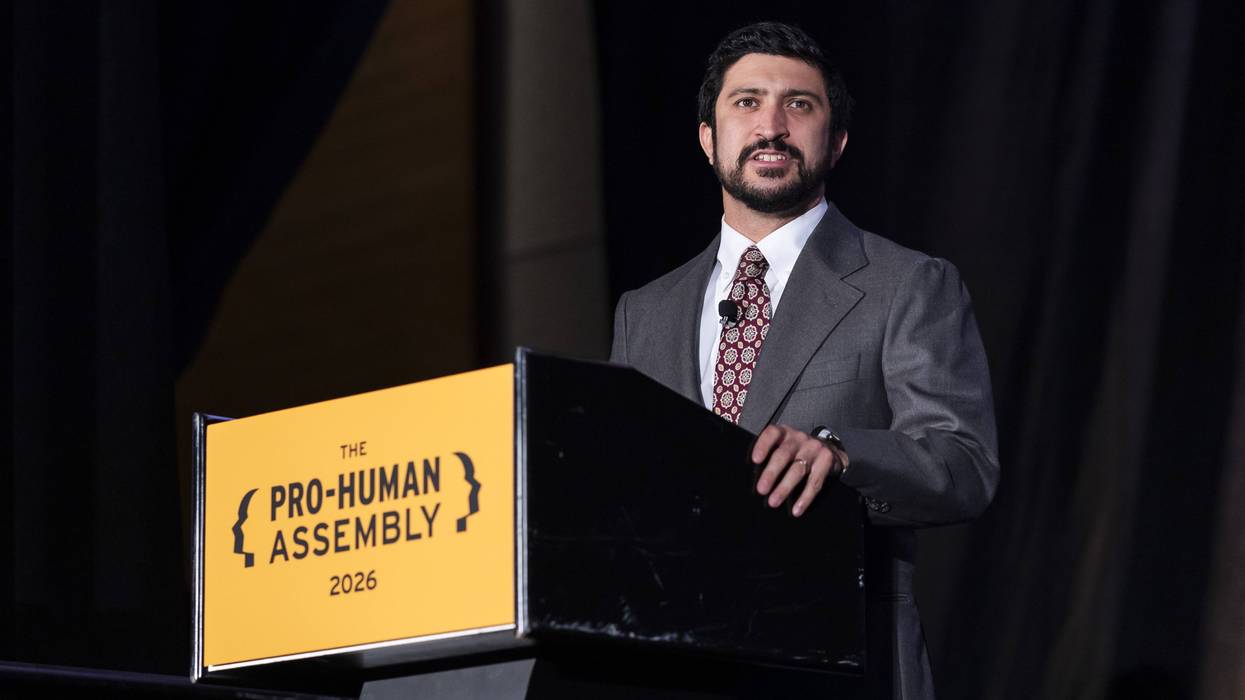
'We Cannot Let History Repeat Itself': Progressive US Lawmakers Oppose AI Bailouts
"The House Progressive Caucus is ready for the collapse of the AI bubble. The rest of us should be also," said one economist.
Oct 28, 2026
As a progressive US senator warned Wednesday that Anthropic going public could leave "Americans holding the bag" if the artificial intelligence bubble bursts, The American Prospect revealed that key Democrats in the House of Representatives have crafted a resolution opposing federal bailouts for AI giants like the ones "too-big-to-fail banks" got nearly two decades ago.
The seven-page resolution obtained by Prospect executive editor David Dayen frames the 2008 global financial crisis as a result of "profit-driven financial risk-taking, fueled by Wall Street's speculative fervor and unleashed by years of zealous deregulation," as well as an example of what not to do when it comes to the booming AI sector.
"The economic harm of a multitrillion-dollar housing bubble caused by predatory lending, reckless financialization and securitization, and off-balance-sheet lending led to a massive surge in layoffs, with the unemployment rate hitting almost 10% at the trough of the Great Recession in 2009," the seven-page measure recalls. "The weak labor market persisted for nearly a decade."
Now, AI firms "hold trillions of dollars in debt, much of which is raised in opaque and unregulated private credit markets," the resolution continues. Financing terms of many "data centers as well as the costs and revenues of major artificial intelligence firms are not publicly available and... corporate borrowing to fund data center investments are multiples higher than projected revenues."
AI-related stock prices "have inflated even more than the tech giants of the 1990s," the measure notes, warning that "a collapse of an artificial intelligence bubble could have serious consequences for the economy, similar if not more significant than the end of the 1990s tech bubble or the 2008 global financial crisis."
Thus, it argues, "Congress must refuse to provide any additional funds or exceptional regulatory support to companies or financial institutions facing insolvency or financial collapse due to exposures to acute stress within the artificial intelligence market and must provide support to all harmed Americans instead."
While politicians from both parties have been ripped for their ties to Big Tech and AI specifically, the resolution explicitly calls out related failures under Republican President Donald Trump, who recently gathered industry leaders at the White House to sign a "self-policing" accord that critics said was "as dangerous as it is absurd."
House progressives' measure points out that "federal regulators have avoided applying robust scrutiny and oversight regarding enormously complicated debt and equity schemes used by artificial intelligence firms or the circular financing mechanisms involved" in the AI data center build-out.
Additionally, "the White House's artificial intelligence and cryptocurrency czar was personally invested in at least 449
companies" tied to AI "while pushing to eliminate government obstacles," the resolution says, "reflecting the administration's broad deregulatory focus and conflicts of interest" when it comes to this industry.
The House Progressive Caucus is ready for the collapse of the AI bubble. The rest of us should be also. No bailouts for the AI billionaires prospect.org/2026/10/28/h...
[image or embed]
— Dean Baker (@deanbaker13.bsky.social) October 28, 2026 at 7:53 AM
Though the resolution has not yet been introduced, Dayen reported on it less than a week before the midterm elections that will determine control of Congress for the remainder of Trump's second term. It's spearheaded by Congressional Progressive Caucus Chair Greg Casar (D-Texas) and House Financial Services Committee Ranking Member Maxine Waters (D-Calif.).
"Big Tech and Wall Street are taking enormous risks with billions in borrowed money to fuel the AI boom, despite growing warning signs of a dangerous bubble," Waters told him. "We cannot let history repeat itself. The American people should never again be forced to foot the bill for billionaires' reckless bets."
Casar, a 37-year-old former labor organizer, highlighted that "many of us, myself included, came into political life watching as many people who caused the crisis in 2008 or cheered it on weren't held accountable."
"We know that the American people were appalled at these Wall Street executives nearly two decades ago, and they're even more pissed off at these tech oligarchs today. We shouldn't be trying to make them whole," said the congressman, who also leads the Ban Artificial Superintelligence Act with Sen. Bernie Sanders (I-Vt.).
Polling released this past summer by Data for Progress found that among the "bad actors" Americans blame for the country’s concerning conditions, billionaires rank No. 1, but AI companies and social media giants are in the top 10.
The progressives' proposal "is a nonbinding 'sense of the House' measure," Dayen explained. "But it sets a marker that no bailout funds should be made available to AI companies. Casar wants the measure to be voted on early in the next Congress if Democrats take power, if not sooner, to get everyone on the record about an AI bailout."
Welcoming the resolution on social media, economist Leslie Ehrlich called it "both correct and good politics," adding, "Let the Republicans vote against it and be pro-bailouts."
Keep ReadingShow Less
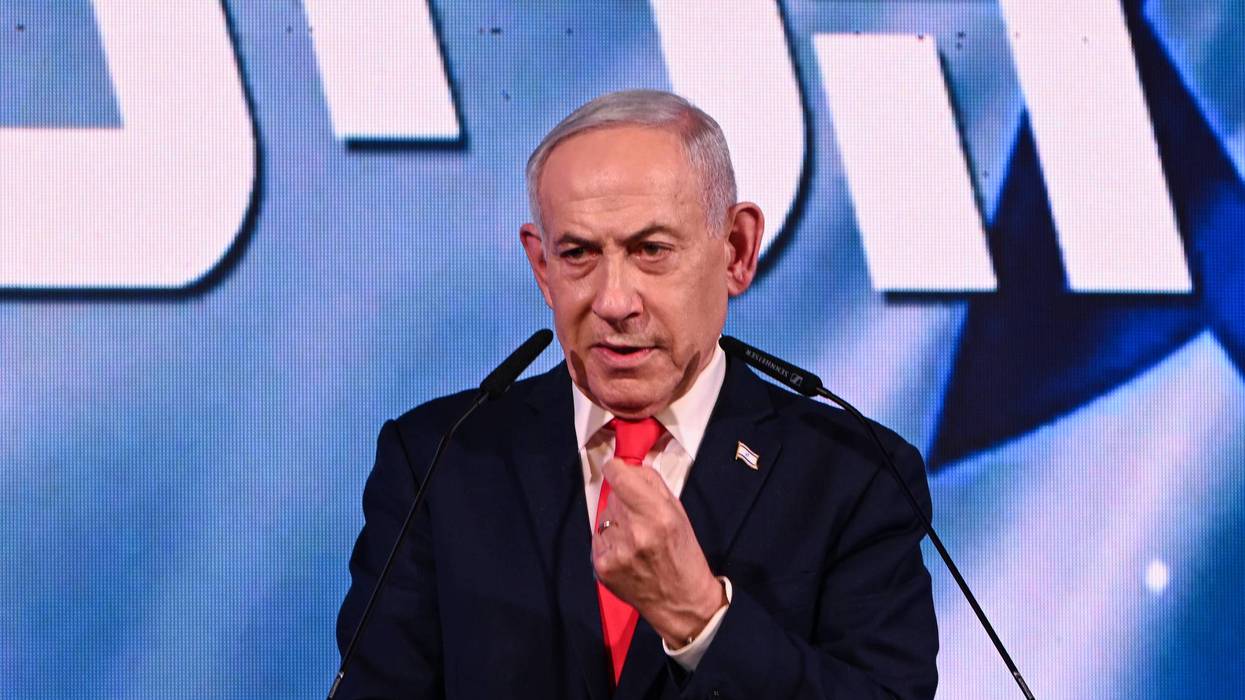
'Simply Disgusting': Netanyahu's Likud Baselessly Claims Arab Parties Stole Israeli Election
"If they don't want to let us vote, they should say so," said the mayor of one Bedouin town.
Oct 28, 2026
With Israel’s governing coalition projected to lose its majority in the Knesset following Tuesday’s vote, Israeli Prime Minister Benjamin Netanyahu’s Likud Party made the unsubstantiated claim Wednesday that Arab parties “stole” the election.
“The elections in the state of Israel were stolen by Arab parties that support terrorism and the elimination of the Jewish state through serious criminal offenses of bribery, threats, violence, forgeries, and the use of prohibited software to mobilize voters,” the party said in a statement that was shared by Netanyahu on social media.
Without going into detail, the party said it was handing “hundreds of testimonies and pieces of evidence regarding election theft in many Arab polling stations" to investigators, including what it claimed were “thousands of envelopes” containing cash and ballot slips for Ra’am, one of two Arab factions that saw surging support Tuesday.
Three Ra’am activists were arrested before polls opened Tuesday in connection with an alleged vote-buying scheme; around 24,000 shekels were recovered in envelopes containing ballot papers. Netanyahu has claimed without evidence that the men were “senior officials” in the party. It remains unclear whether investigators have found any evidence that votes were changed as a result.
Likud also said Wednesday that it had provided the police and Shin Bet with evidence of “threats and violence against polling station members” in predominantly Arab communities, as well as “multiple voting behind the curtain, voting with double identities, discrepancies between the number of envelopes and the number of voters, the use of prohibited mobilization software, and more.” The post did not include specific evidence of the claims.
"Law enforcement agencies must act with an iron fist and in an immediate manner," the party said.
Israel’s Central Elections Committee said Tuesday that it had seen no indications of systematic tampering with ballot papers and was addressing individual complaints as they arose.
Talal al-Krenawi, the mayor of the Bedouin town of Rahat, rejected Likud’s fraud allegations Wednesday, calling them “disgusting… lies and falsehoods” and accusing Netanyahu of “incitement against the Bedouins.”
"We voted properly, with the ballot papers and identity cards," he said. "I have never seen elections as clean as these. It is a disgrace and a shame."
 Voters wait to cast their ballots at a polling station in the predominantly Arab city of Tayibe during Israel’s legislative election on October 27, 2026. (Photo by Ahmad Gharabli/AFP via Getty Images)
Alongside the far-right Jewish Power party led by National Security Minister Itamar Ben-Gvir, Likud tried to ban the two main Arab factions from participating in the elections, but the Supreme Court ultimately reversed that move earlier this month.
"Now that we have exercised our democratic right, we have stolen the elections? If they don't want to let us vote, they should say so," al-Krenawi said. "What they are doing is ugly. They are portraying us as thieves and cheats. It is simply disgusting."
Before voting even began, Israeli outlets reported that Likud had planned to declare the result fraudulent if Netanyahu did not emerge victorious. Likud dispatched thousands of right-wing activists to monitor polling places and undertook a program to surveil Arab voters. Haaretz reported that the party "may use the footage as false evidence for a conspiracy theory that the election was rigged."
The Yashar party, led by Gadi Eisenkot, warned Tuesday that Netanyahu was “panicking and has begun making up stories and claiming that the election is being stolen.”
Arab voters turned out in unprecedented numbers Tuesday despite reports of delays and intimidation at polling sites. Ra’am Leader Mansour Abbas accused Netanyahu of “lying and inciting against” his voters, using strong Arab turnout as a “scare tactic” to mobilize his own anti-Arab voters.
The two Arab-majority factions, Ra’am and the Joint List, were projected to win 19 seats in the 120-seat Knesset on Tuesday, potentially giving them leverage in determining whether the Jewish anti-Netanyahu opposition can form a coalition government to oust him from power.
Netanyahu’s allegations bear an eerie resemblance to US President Donald Trump’s efforts to overturn his defeat in the 2020 presidential election and to right-wing Brazilian candidate Flávio Bolsonaro’s attempt earlier this week to claim that the reelection of Brazilian President Luiz Inácio Lula da Silva was the result of fraud.
“What a disgusting terrorist and war criminal this close Trump family friend is,” remarked author and political analyst Seth Abramson, who has noted how other right-wing populists have copied the US president’s election denial strategy.
"You have to know nothing about complex government investigations to think... the Netanyahu regime—which hates all Arabs and wants them erased—was magically able to get credible evidence of a historic nationwide criminal conspiracy in hours," he wrote on social media.
"I hear those who say Netanyahu's replacements aren't much better," he said, "but at least—unlike Netanyahu—they're not facing years in prison on corruption charges... in most cases haven't (yet) ordered genocidal attacks, and aren't (yet) proven sociopaths."
Keep ReadingShow Less
Ahead of COP31, 146 Scientists Urge UN to Declare Climate Change a Global Health Emergency
"The health harms of climate change are growing faster than the world's response to them, and in many cases even accelerating."
Oct 28, 2026
With less than two weeks to go until the 31st United Nations Climate Change Conference, or COP31, brings world leaders to Antalya, Türkiye to discuss the need to transition away from fossil fuels, nearly 150 international experts warned that climate change brought on by greenhouse gas emissions constitutes a "global health emergency" whose harms are accelerating.
The "2026 Lancet Countdown on Health and Climate Change," written by researchers at University College London and the World Health Organization (WHO) and published in The Lancet, tracks dozens of indicators that link climate change to public health, including drought, extreme hurricanes and flooding, and economic losses.
But one top indicator that planetary heating has caused a worsening public health crisis is the extreme heat that was blamed for more than 50,000 deaths across Europe this summer, and which could lead to 450,000 excess deaths in the coming months as the climate emergency is compounded by this year's "Super El Niño."
According to the report, annual average heat-related deaths have surged by nearly 36% since the Paris climate agreement was signed in 2015, securing pledges from governments to draw down fossil fuel emissions, compared to the decade preceding the deal.
More than 70% of the 710,000 heat-related deaths recorded in 2023 were found to be attributed to climate change, and between 2016-23, 68% of the world's 540,800 heat-related deaths were linked to the warming planet. The previous decade, 55% of deaths caused by extreme heat were blamed on the climate emergency.
"These numbers point to a clear emergency," said climate health researcher Marina Romanello, the executive director of the Lancet Countdown. "The risks become even more profound when you consider how different hazards interact and compound. At the same time, drought is spreading, and the world is swinging to water extremes, some drying out, while others are flooding."
"Progress has been too slow, too small, and isn't reaching those who need it most."
The report was published less than two months after a glacial collapse killed at least 1,000 people in Nepal and Tibet as it sent sudden extreme flooding down a mountain into a number of towns.
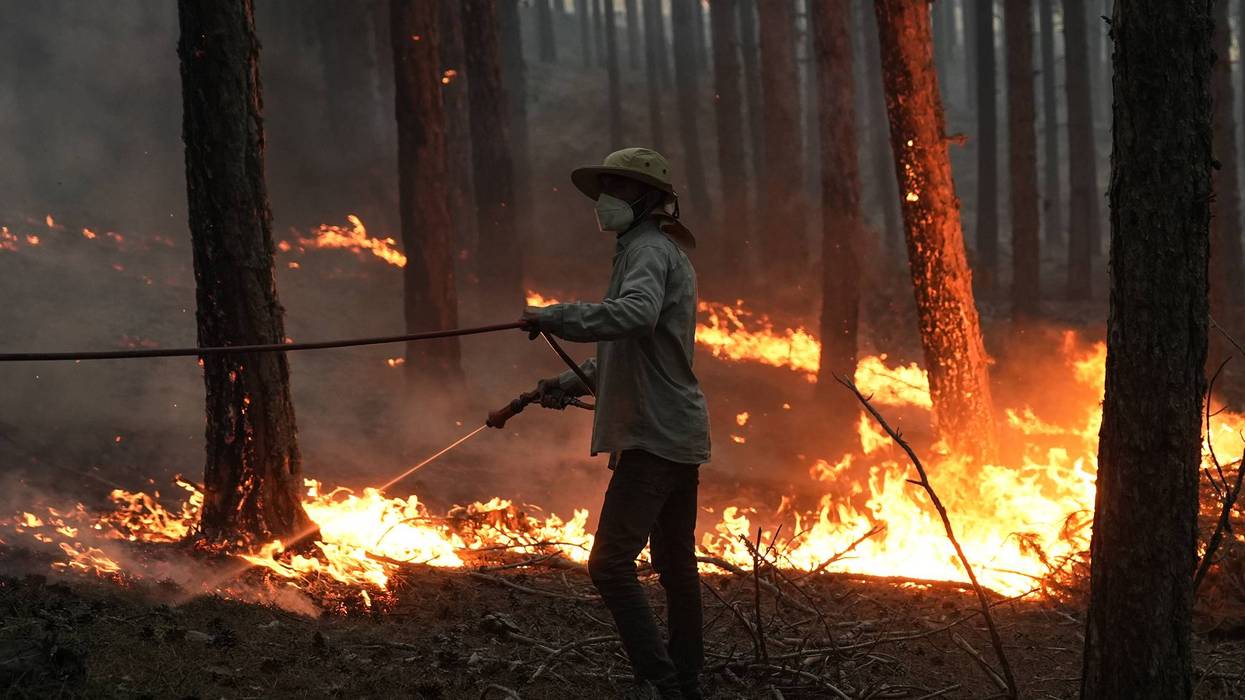
Türkiye, where COP31 is set to begin on November 9, was one place where massive wildfires spread rapidly this summer, while hundreds of thousands of people in Spain and France were also displaced by fast-moving blazes.
And in August, more than 5,000 square miles of forest burned in the Northwest Territories in Canada, sparking public health concerns when smoke drifted thousands of miles south to the continental United States.
"A decade after the Paris Agreement, our findings are unambiguous: The health harms of climate change are growing faster than the world's response to them, and in many cases even accelerating," said Romanello.
Diarmid Campbell-Lendrum, head of the climate change and health unit at WHO, said the report "demonstrates that climate action is a health intervention. Cleaner energy, stronger health systems and early warning systems are saving lives today. As countries prepare for COP31, placing health at the center of climate policies can help protect communities, strengthen resilience, and deliver immediate benefits for people’s health and wellbeing."
The 146 scientists who authored the report noted that strides have been made in some countries in expanding clean energy infrastructure, passing health protection regulations, and preparing health systems for climate-related crises and conditions.
But in the US, the largest historic emitter of greenhouse gases, the Trump administration has blocked renewable energy projects and rolled back regulations meant to reduce people's exposure to harmful emissions.
"Progress has been too slow, too small, and isn't reaching those who need it most," said Romanello. "That is why we are calling for climate change to be formally recognized as a global health emergency, with health placed at the center of every climate decision."
The report was released a week after the UN Environment Program warned that achieving the Paris Agreement's goal of limiting planetary heating to 1.5°C above preindustrial temperatures is no longer possible, and that world leaders must now focus efforts on ensuring the overshoot is as short-lived as possible.
In the Lancet Countdown, the researchers called on the UN to declare that climate change is a public health emergency of international concern, which could require an international response.
"Priorities," said WHO, "include accelerating reductions in greenhouse gas emissions, increasing support for adaptation, and expanding investments that strengthen health system resilience."
Keep ReadingShow Less
Latest Ted Cruz Attack on Abdul El-Sayed Denounced as 'Straight-Up Incitement'
"This is the most nakedly bigoted American political campaign of this century," said one observer.
Oct 28, 2026
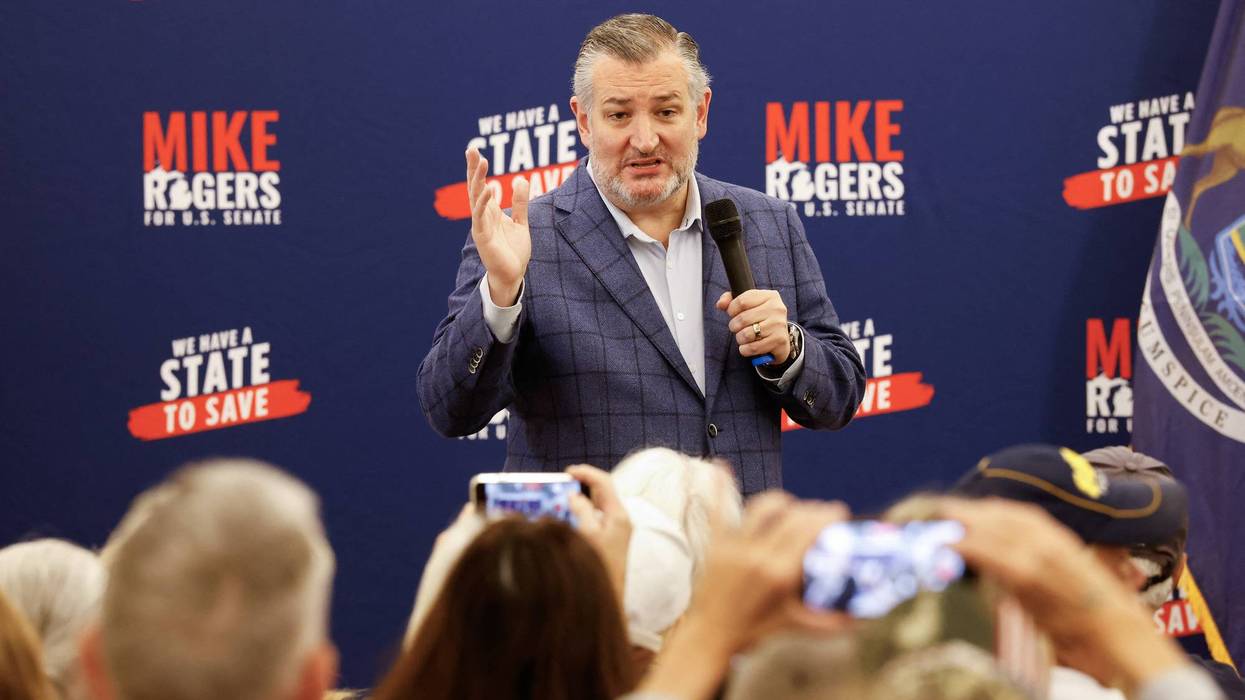
Sen. Ted Cruz claimed Wednesday that Americans could die if Abdul El-Sayed, the progressive Democratic nominee for US Senate in Michigan, wins next week's midterm election, prompting a fresh round of denunciation of Republicans' Islamophobic bigotry.
“If Abdul El-Sayed becomes the senator for Michigan, there is absolutely nothing to stop Chuck Schumer from placing Abdul El-Sayed on the Senate Intelligence Committee,” Cruz (R-Texas) said, envisioning a scenario in which Republicans lose control of the upper chamber of Congress and Schumer (D-NY), currently the top Democrat, becomes majority leader.
“And if I am correct that he is a passionate supporter of the Muslim Brotherhood, there is a very real risk that Americans will die as a result," Cruz added.
Cruz wasn't done—he also called El-Sayed a "jihadist leprechaun," an apparent swipe at the doctor's physical stature.
The Texas senator, whose comments came while campaigning for Republican Michigan US Senate candidate Mike Rogers, was excoriated for his remarks, and not just by Democrats.
"There really is nothing Ted Cruz won't say if he thinks there is political benefit to be had," American Conservative senior editor Luke Nicastro said on social media.
Matt Duss, a former top aide to US Sen. Bernie Sanders (I-Vt.) and the current executive vice president at the Center for International Policy think tank, took aim at not only Cruz but also C-SPAN, which aired a clip of the comments.
"This is straight-up incitement, and it’s fucking disgusting that C-SPAN is clipping and promoting it," Duss wrote on X.
The increasingly ugly Michigan Senate campaign has seen President Donald Trump repeatedly target El-Sayed’s name, religion, and alleged political affiliations, as well as his wife. The president has called El-Sayed a “jihadist” and claimed without providing evidence that he belongs to the Muslim Brotherhood, while mocking his Arabic name.
Rogers has also questioned El-Sayed’s loyalties, asking whether he is “for America, or... for these terrorist groups overseas?”
US Health and Human Services Secretary Robert F. Kennedy Jr. also drew condemnation after making sweeping, demonstrably false claims about Arabs and Muslims during a Monday campaign event for Rogers in Grand Rapids.
"This," opined More Perfect Union's Paul Blest following Kennedy's remarks, "is the most nakedly bigoted American political campaign of this century."
Keep ReadingShow Less
Siding With DNC a Week Before Midterms, Judge Blocks Trump's Taxpayer-Funded 'Propaganda Campaign'
The administration had allocated $20 million in public funds to pay for ads celebrating Trump weeks before the midterms.
Oct 28, 2026
Less than a week before Election Day, another federal judge on Wednesday blocked the Trump administration from using taxpayer funds to run ads promoting the president.
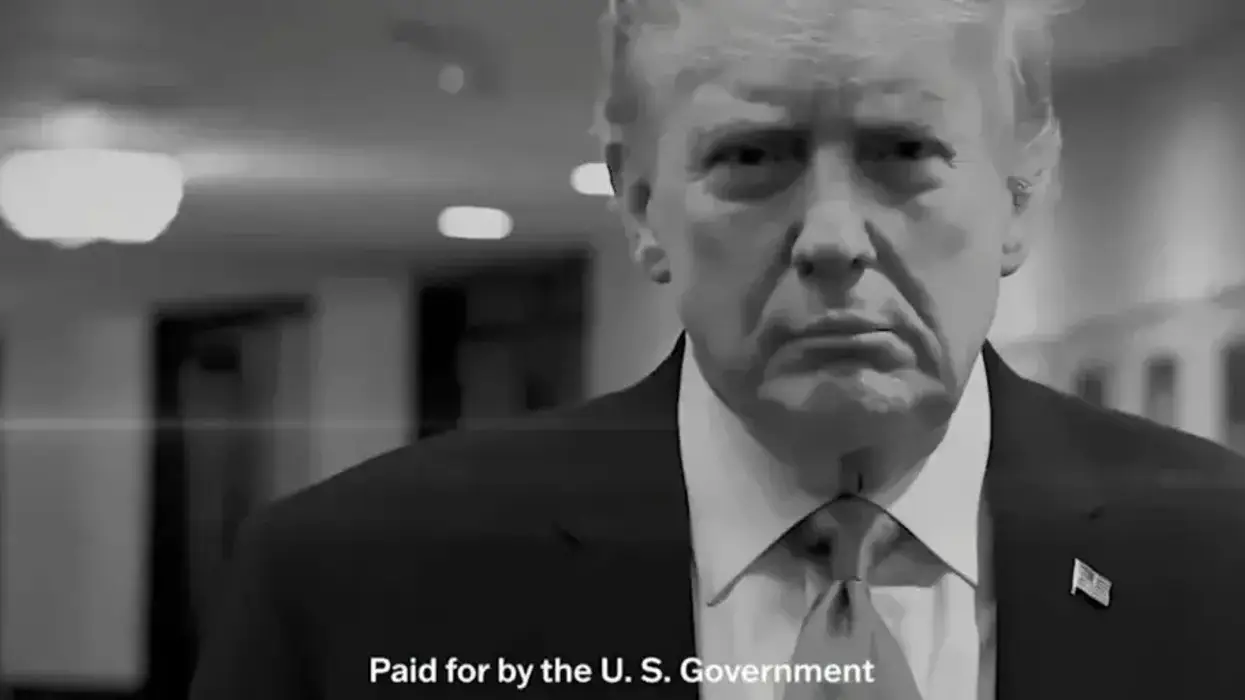
US district judge Loren AliKhan froze the White House Office of Management and Budget’s $20 million allocation to run the ads, saying the administration likely “used public dollars to unlawfully finance a national media campaign in the final weeks before the November 2026 elections.”
The ruling follows a lawsuit filed earlier this month by the Democratic National Committee (DNC), which accused President Donald Trump of using funds to “finance a national propaganda campaign.”
The ads, which stated that they were “paid for by the US government,” attacked Trump’s enemies as “Marxists,” celebrated his military operations in Iran and Venezuela, and promoted his personal declaration that his presidency marked the beginning of a “golden age of America.” Another ad that was reportedly prepared but never aired declared that “God made Trump.”
Following public outcry over the ads, Trump promised that future ads would be paid for with money he raised for his super political action committee MAGA Inc.
“That promise went unfulfilled,” wrote AliKhan, an appointee of former President Joe Biden. “The ads continued to air with the ‘Paid for by the US government’ disclosure for at least another week.”
The US Department of Justice has also acknowledged that the ads continued to run hundreds of times after a court order issued on October 11 requiring them to be canceled.
Federal law prohibits using federal appropriations for “publicity or propaganda purposes within the United States not heretofore authorized by Congress.”
The DNC argued that the administration's use of public funds illegally “deprives the DNC of a fair electoral process by adding public funds to the resources available to support Republican candidates.”
AliKhan agreed that there was "little doubt that defendants’ unlawful use of public funds makes it more difficult for the DNC to achieve its mission of ‘electing Democratic candidates in federal, state, and local elections across the country.’”
“The court just delivered a victory for the rule of law and for American taxpayers," DNC chair Ken Martin said following the ruling on Wednesday. "Trump and his administration can no longer misuse Americans’ hard-earned dollars to run political ads while working families can’t even afford to pay for their gas and groceries."
Martin added that “Trump’s illegal and desperate attempt to save his cratering approval ratings ahead of the midterm elections only underscores how out of touch he is with the American people, who will hold him and Republicans accountable for their destructive agenda at the ballot box next week.”
Keep ReadingShow Less
See More
Most Popular