

SUBSCRIBE TO OUR FREE NEWSLETTER
Daily news & progressive opinion—funded by the people, not the corporations—delivered straight to your inbox.
5
#000000
#FFFFFF
To donate by check, phone, or other method, see our More Ways to Give page.
Daily news & progressive opinion—funded by the people, not the corporations—delivered straight to your inbox.

A vote need not endorse a party’s entire agenda. It can demand answers from those responsible for war.
On September 24, the Senate rejected a resolution directing the president to remove US forces from hostilities with Iran. In American politics, the end of military operations does not necessarily end a war’s political consequences. Some wars enter a decisive phase when the public judges their costs. Missiles may fall silent, troops return to their bases, and governments announce agreements or claim victory, but questions remain: Who decided? Why was war necessary? How transparent was the decision? What did it cost taxpayers, soldiers, allies, and America’s credibility? Who should answer for it?
Elections do more than transfer power between parties. They are among the few institutional channels through which Americans can translate dissatisfaction with foreign policy into political action. A vote need not express partisan loyalty or simple opposition to a president. It can demand answers for decisions whose consequences outlast any administration.
One of American democracy’s fundamental contradictions is that the government makes decisions with far-reaching international consequences while citizens often have little direct power to shape them. Launching or expanding military operations, deploying troops to crisis zones, and allocating billions to foreign wars involve executive and congressional powers, security considerations, and classified intelligence. This setting can distance decision-makers from those who bear the economic, human, and geopolitical consequences. War becomes a question about the quality of political representation: Can democratic institutions balance government power with the public’s right to know, question, and judge?
Voting cannot solve every problem. Its value lies in its capacity to turn passive observers of foreign policy into participants who take positions on government direction and the limits of its authority.
A government that goes to war in the name of national security must explain its objectives, costs, and prospects for an end. A war that begins with a specific justification but continues without a clear endpoint, public evaluation of its outcomes, or political accountability can turn an emergency policy into a permanent condition. It may persist because of the political difficulty of admitting failure, the cost of withdrawal, or institutional and security interests, rather than a new necessity.
This is where elections matter. If citizens cannot intervene when a war begins, can they judge how it is managed, prolonged, or ended? Choosing a candidate can also convey a demand about war, military spending, or presidential powers without endorsing every part of that candidate’s platform.
A vote can register dissatisfaction, demand a change of direction, and warn officials who believe they can manage the political costs of war without public accountability. Someone may approve of a government’s economic policies while opposing its war, or disagree with parts of a party’s social agenda while seeking limits on the incumbent administration’s military powers. Elections allow these conflicting preferences to find expression through political choices, primary contests, civic participation, and pressure on representatives.
America’s two-party system, money in politics, the influence of interest groups, and the many issues bundled into electoral contests can prevent a single concern from translating clearly into a political outcome. Those limits do not necessarily leave citizens with a powerless ballot. They make deliberate use of the vote more important.
Foreign wars are often shaped within security, military, and executive circles whose language centers on threats, deterrence, national interests, and urgent action. During crises, that language can narrow public debate: Opposition may be accused of undermining national security, while demands to end a war may be portrayed as retreat. Democracy requires that national security remain open to scrutiny. Citizens are entitled to know the objectives, measures of success, how costs are financed, and when responsibility for decisions will be assessed.
Supporting the armed forces does not require unconditional acceptance of decisions about their use. Respecting soldiers is compatible with criticizing the politicians who send them to war. Those who hold political power remain responsible for defining missions, setting objectives, and explaining why they must continue.
The long-term costs of Middle Eastern wars, the social consequences of deployments abroad, and doubts about whether interventions were worth their costs can fuel public dissatisfaction. But war fatigue alone does not necessarily change policy. Discontent must move beyond scattered emotions and become a political demand that can be pursued and sustained. Elections offer one route.
When war becomes an electoral issue, candidates and parties face pressure to explain military costs, objectives, and the limits of foreign commitments. Congressional decisions on defense budgets, authorizations for military force, and oversight of foreign operations can affect voters’ trust and lawmakers’ futures. These are not merely technical matters detached from public opinion. A protest vote may not end a war, but it can form part of a chain of pressure through civil society, the media, Congress, and oversight institutions, raising the political cost of leaving questions unanswered.
Accountability must extend beyond ending a particular conflict. Even after fighting ends, the question of how the United States enters future wars remains. If politicians can invoke ambiguous threats, shifting objectives, and vague promises to enter wars, then move past their consequences without clear explanations, changing administrations will not necessarily change how decisions are made.
Are presidential war powers subject to sufficient congressional oversight? Do voters have the information needed to evaluate foreign policy? Are war costs transparent in the budget? Do officials remain accountable after fighting ends? These questions concern the architecture of power, the limits of executive authority, public oversight, and the meaning of representation.
When war decisions can cost billions, endanger lives, reshape regional orders, and have consequences lasting generations, political indifference carries a cost beyond withdrawing from an electoral contest. Beyond deciding who occupies the White House or controls Congress, citizens can remind officials acting in their name that power without accountability eventually becomes detached from representation.
For Americans who see endless wars as a rupture between the public’s will and foreign-policy decisions, voting can express a clear demand: National security must not become a blank check for unlimited wars. Politicians must not be allowed to hide responsibility behind geopolitical complexity, classified information, or partisan competition.
Voting cannot solve every problem. Its value lies in its capacity to turn passive observers of foreign policy into participants who take positions on government direction and the limits of its authority. It is not a final answer to endless wars. It can begin to reclaim a right that opaque decisions and unaccountable foreign policy have pushed beyond the public’s reach: the right to ask why a war began, why it continued, and who should be held responsible for its consequences.
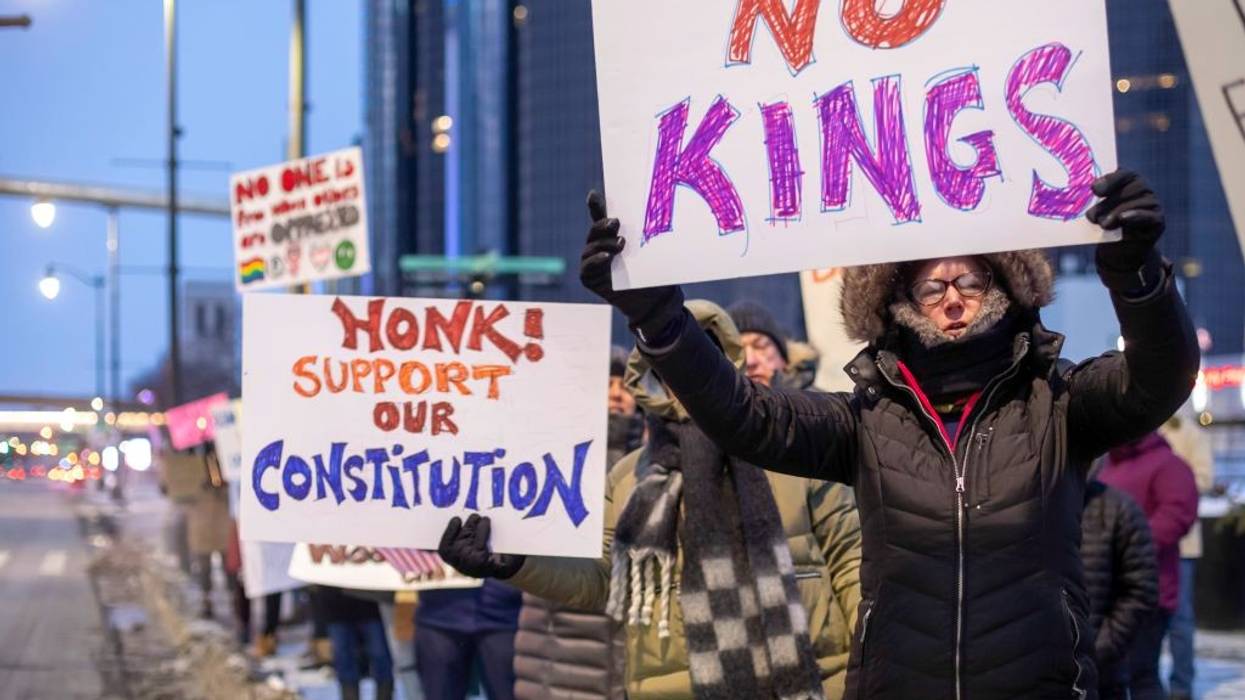
"The cost of our groceries, our utility bills, our healthcare—all of it is shaped by the people we elect and the decisions they make, which is why our participation matters," said two coalition members.
"On October 17th, No Kings: Vote Early will show the billionaire elites attempting to destroy our country that We the People have the power by mobilizing turnout to make our elections too big for the evils of fascism and oligarchy to rig," according to Sarah Parker, a spokesperson for the 50501 movement.
The movement is part of the No Kings Coalition that has held a trio of protests across the United States since President Donald Trump returned to power last year.
Now, with the midterm elections less than two months away, the coalition is planning a fourth day of action. Parker, who's also executive director of Voices of Florida Fund, declared Tuesday that "the people, united, will never be defeated."
The first round of protests was held in June 2025, on Trump's birthday. The ACLU's chief political and advocacy officer, Deirdre Schifeling, said at the time that "No Kings is really about standing up for democracy, standing up for people's rights and liberties in this country, and against the gross abuse of power that we've seen consistently from the Trump administration."
As with those first demonstrations, millions of people took to US streets again last October. Then, Lisa Gilbert, co-president of the consumer advocacy group Public Citizen, told Common Dreams that "what we're seeing from this administration is authoritarian slip. We are seeing them attack judges, attack nonprofits, trying to attack the media, stifle First Amendment protected speech, and arrest sitting members of Congress for doing their oversight" of US Immigration and Customs Enforcement (ICE).
The third action, in March, followed ICE's deadly invasion of Minnesota's Twin Cities, and Trump launching his illegal war on Iran. The three themes of those demonstrations, said Indivisible co-executive director Leah Greenberg, were "no kings, no ICE, no war."
Her co-executive director, Ezra Levin, said Tuesday that "since the first No Kings in June of last year, millions of people have demonstrated they are not afraid and they will not bow to any would-be American king. We've sent that message loud and clear—but we're not just sending a message with this next No Kings."
"We're taking back power for the people using our constitutional right to organize and our constitutional right to vote," Levin stressed. "While corrupt politicians and elected officials line their pockets, families across America are struggling to put food on the table and gas in the car. No Kings: Vote Early is about making sure every eligible voter has a plan to vote, knows their options, and is ready to make their voice heard."
Schifeling, from the ACLU, noted that "this year, voters are facing coordinated efforts from their own government to make it harder for eligible voters to vote and have their vote counted. That's why this next chapter of No Kings is focused on encouraging all voters to make a plan to vote as early as possible."
"In a democracy, elected officials are supposed to be accountable to their constituents; voting is one of the best ways to ensure they are," she continued. "No Kings will be on the ground in communities across the country making sure that all eligible voters can and do vote."
Public Citizen's Gilbert said that "the importance of as many people as possible voting early cannot be overstated."
"Early voting can make the difference between voting and not voting for people who are traveling, who are working on Election Day, who need options for childcare while voting, and more," she highlighted. "Voting is democracy in action at a time when authoritarianism and oligarchy are looming large, and standing together to cast our vote is one of the most patriotic things we can do right now."
In addition to Trump's authoritarian policies, US voters are contending with high prices tied to the president's policies, from the Iran War to his legally dubious tariffs. Cliff Albright and LaTosha Brown, co-founders of Black Voters Matter Fund, noted that "the cost of our groceries, our utility bills, our healthcare—all of it is shaped by the people we elect and the decisions they make, which is why our participation matters."
"America belongs to the people—not to kings, billionaires, or politicians," Albright and Brown emphasized.
Other coalition members include the American Federation of Teachers, MoveOn, State Voices, and Voto Latino, whose executive director, Beatriz Lopez, vowed that "on October 17th, we will show up, vote early, and vote like our future depends on it because American democracy has no kings."

"In utter defiance of the Constitution, President Trump is attempting to use the Postal Service to decide who can and cannot receive a ballot just days before mail-in voting begins in some of the states," said Rep. Jamie Raskin.
With the midterm elections less than two months away, more than 250 current and former Members of Congress came together on Tuesday to pressure the US Supreme Court to block Republican President Donald Trump's March executive order on voting and its resulting United States Postal Service rule.
All 47 members of the Senate Democratic Caucus, over 90% of the party's members in the House of Representatives, and 15 former GOP lawmakers submitted an amicus brief to the nation's top court—whose right-wing supermajority includes three Trump appointees—just two days after the administration asked the justices to pause a judge's ruling that blocks parts of the USPS rule.
The 261 Americans behind the brief "took an oath to uphold and defend the Constitution of the United States—including its guarantee of the separation of powers," and they "have a particular interest in defending the institutional role of the legislative branch under Article I of the Constitution and in vindicating the long-settled principle that the Constitution commits ultimate regulatory authority over federal elections to Congress," the filing states.
"The Constitution does not contemplate the executive branch acting unilaterally to assert power over federal elections," the document continues. "Yet that is what the order and final rule do. The district court correctly concluded that respondents are likely to succeed on the merits of their claims that USPS lacked authority to issue the final rule, that the final rule unconstitutionally imposes mail-ballot requirements on the states, and that the final rule unconstitutionally bars noncompliant state and local election officials from using USPS to mail ballots at all."
"The order and final rule unconstitutionally infringe on Congress' authority under the elections clause and the postal clause and unlawfully direct federal agencies to act beyond—and in conflict with—what Congress has clearly authorized by law," the filing asserts, urging the high court to deny Trump's request to allow the new USPS policy for the midterms.
The Supreme Court last month cleared the way for Trump's order by concluding that the Democratic state attorneys general—just one of the coalitions challenging the order—had sued too early. However, the justices did not weigh in on the legality of the order or the rule, and in the wake of USPS publishing its policy, the legal battles have continued.
The lawmakers' brief came a day before Justice Ketanji Brown Jackson's deadline for new filings and as the Department of Justice—which is fighting District Judge Indira Talwani's preliminary injunction that blocks USPS from enforcing the rule—argued to the US Court of Appeals for the 1st Circuit that the policy is "modest" and lawful.
In a statement announcing the brief, Senate Minority Leader Chuck Schumer (D-NY) pointed to the drawn-out legal battles over the order and related rule, saying that "Donald Trump is once again asking the highest court in the land to silence voters and destroy the precious integrity of the American electoral process."
"Mail-in voting is proven safe and secure, and Trump's continued efforts to obstruct America's free and fair elections are blatant, unconstitutional attempts at interfering with the November midterms," he declared. "Trump's message to the American people is clear: He isn't worried about voter fraud, he's afraid of voter accountability. I urge the court to uphold the Constitution and reject Trump's baseless attempt at poisoning our democracy."
On the Senate side, in addition to Schumer, the brief is led by the ranking members of three key panels: Sens. Alex Padilla (D-Calif.) of the Committee on Rules and Administration, Dick Durbin (D-Ill.) of the Judiciary Committee, and Gary Peters (D-Mich.) of the Homeland Security and Governmental Affairs Committee.
“The law is clear: States and Congress have authority over our elections—not the president and certainly not the Postal Service. Protecting the right to vote-by-mail is critical to ensure every eligible voter can make their voices heard in the November midterm elections and in future elections," said Padilla.
"Despite the Trump administration's attempts to eliminate vote-by-mail and suppress voter participation, voting by mail remains one of the safest and most secure ways to vote, especially for service members, rural voters, and Americans living abroad," he noted. In fact, despite trying to strip millions of Americans of the right to mail their ballots, even Trump has repeatedly voted this way, including in Florida's August Republican primary.
In the lower chamber, the brief was spearheaded by Committee on House Administration Ranking Member Joe Morelle (D-NY) along with the co-chairs of Democrats' Litigation Task Force: Assistant Leader Joe Neguse (D-Colo.), Judiciary Committee Ranking Member Jamie Raskin (D-Md.), and Oversight Committee Ranking Member Robert Garcia (D-Calif.).
Like his colleagues, Raskin—a constitutional scholar who led Trump's historic second impeachment after the president's supporters stormed the US Capitol on January 6, 2021—stressed that "the Constitution is clear that the states and Congress make the rules for federal elections, not the president."
"Yet, in utter defiance of the Constitution, President Trump is attempting to use the Postal Service to decide who can and cannot receive a ballot just days before mail-in voting begins in some of the states," he said. "This is a naked power grab by a historically unpopular president—who himself regularly votes by mail—to inject confusion and chaos into our elections in a last-ditch effort to keep his party in power."
"It will not work," Raskin added. "I'm proud to stand with a strong bipartisan, bicameral group of current and former colleagues in urging the court to continue rejecting this lawless election interference."
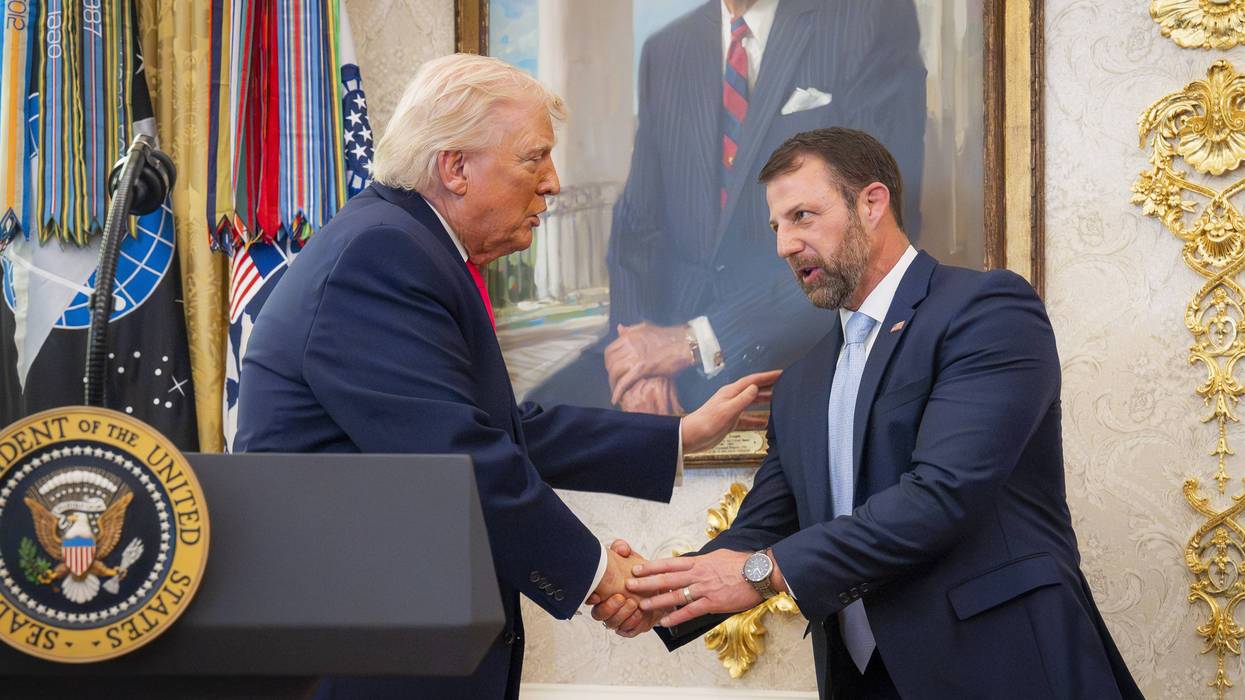
"Trump is pulling DHS agents from human trafficking and terrorism cases to chase his made-up voter fraud conspiracies," said one congressman.
The New York Times' Wednesday reporting on a US Department of Homeland Security "blitz to find elusive voter fraud" by noncitizens is heightening fears that President Donald Trump will try to meddle in the country's midterm elections, which are just over two months away.
The newspaper revealed that as part of a "hunt for noncitizens among the nation's registered voters" internally called the Unlawful Voter Initiative, hundreds of DHS agents "are scouring voter rolls managed by the states, and are using personally identifiable information about individual voters, such as their dates of birth and partial Social Security numbers, to look them up on those rolls."
"In some cases, investigators are effectively posing as individual voters by plugging their names and personal information into public-facing websites run by the top election official in each state. Some of these sites declare they are meant for individual use, potentially raising privacy concerns," according to the Times, which reviewed related documents and training videos.
While DHS said in a statement that it "is committed to ensuring that only US citizens vote in US elections," and Trump and Homeland Security Secretary Markwayne Mullin "have made the integrity and security of our elections a top priority," the newspaper noted the "absence of evidence of widespread fraud," and that the department "is pulling agents from their normal duties, which include investigating such serious crimes as human trafficking and terrorism."
Trump infamously refused to accept his 2020 loss, launching various unsuccessful legal battles and even motivating some of his supporters to storm the US Capitol on January 6, 2021. Since returning to power last year, the president has imposed a mass detention and deportation campaign that has killed both immigrants and US citizens while pushing various policies that critics warn are intended to limit legitimate participation in elections, from photo identification requirements to restrictions on voting by mail.
Sharing the reporting on social media Wednesday, American Immigration Council senior fellow Aaron Reichlin-Melnick wrote: "In other words, hundreds of federal agents are being diverted away from their jobs going after serious criminals and instead told to find needles in a haystack—all to find evidence for Trump's predetermined conclusions. It's a great time to be a criminal in Trump's America."
Democrats on the US House of Representatives' Homeland Security Committee similarly declared that "instead of hunting terrorists and human traffickers, DHS is pulling agents away to investigate a conspiracy theory that has been debunked year after year."
A member of the panel, Rep. James Walkinshaw (D-Va.), also stressed that "Trump is pulling DHS agents from human trafficking and terrorism cases to chase his made-up voter fraud conspiracies."
"Even the conservative Heritage Foundation's data shows noncitizen voting is vanishingly rare," he highlighted, referring to the right-wing think tank's database that identifies around 100 cases of noncitizen voting since 2000.
Walkinshaw warned that "Trump is laying the groundwork for election meddling in November."
Daniel Delgado, who served as deputy assistant secretary for immigration policy at DHS during the Biden administration, emphasized that "every agent that's being forced into this witch hunt means one less agent working on critical missions like curbing the flow of fentanyl into the country, or stopping human trafficking and combating terrorism, etc. The administration is deliberately making America less safe."
Cynthia Travieso, executive vice president of state campaigns and programs at the nonprofit All Voting Is Local, ripped the "McCarthy-era-like hunt" as "a waste of resources and a desperate and pathetic attempt to control elections by scapegoating immigrants and spreading lies which can keep specific groups from voting, including Black, Brown, and new Americans."
Travieso continued:
This move by DHS to pull agents that investigate "such serious crimes as human trafficking and terrorism" is based on false claims and debunked conspiracy theories that put thousands of American voters at risk of losing their voter eligibility. Equally outrageous is that the effort also risks potential privacy breaches due to the unclear use of driver's license data, birth dates, and Social Security numbers. It's especially ironic that President Trump’s DHS is expanding its immigrant voter hunt at the same time as the US Postal Service's purported effort to sabotage vote-by-mail, which would harm naturalized citizens who vote by mail at a rate of nearly 8 percentage points higher than native-born citizens. This is part of the blueprint that demonstrates how badly the White House administration wants to control our elections.
States run elections, not the president and not DHS. State election officials have checks and balances in place to verify an individual's voter eligibility and keep voter rolls accurate, and they work incredibly hard to ensure that every eligible voter can vote and that every vote is counted.
Instead of fueling election conspiracy lies, the Trump administration should focus on protecting voters from barriers to the ballot. Any efforts otherwise are a desperate attempt to undermine the will of the people and sow confusion and distrust. We won't let them gaslight us.
Separately on Wednesday, the Coalition for Humane Immigrant Rights (CHIRLA) filed a lawsuit against DHS, Mullin, and US Attorney General Todd Blanche, accusing them of illegally targeting citizens who were not born in the United States to prevent them from lawfully voting.
"Naturalized citizens are Americans," CHIRLA executive director Angelica Salas said at a news conference in Los Angeles, according to Spectrum News. "They took the oath. They earned their citizenship, and they have the same rights as every other American citizen."
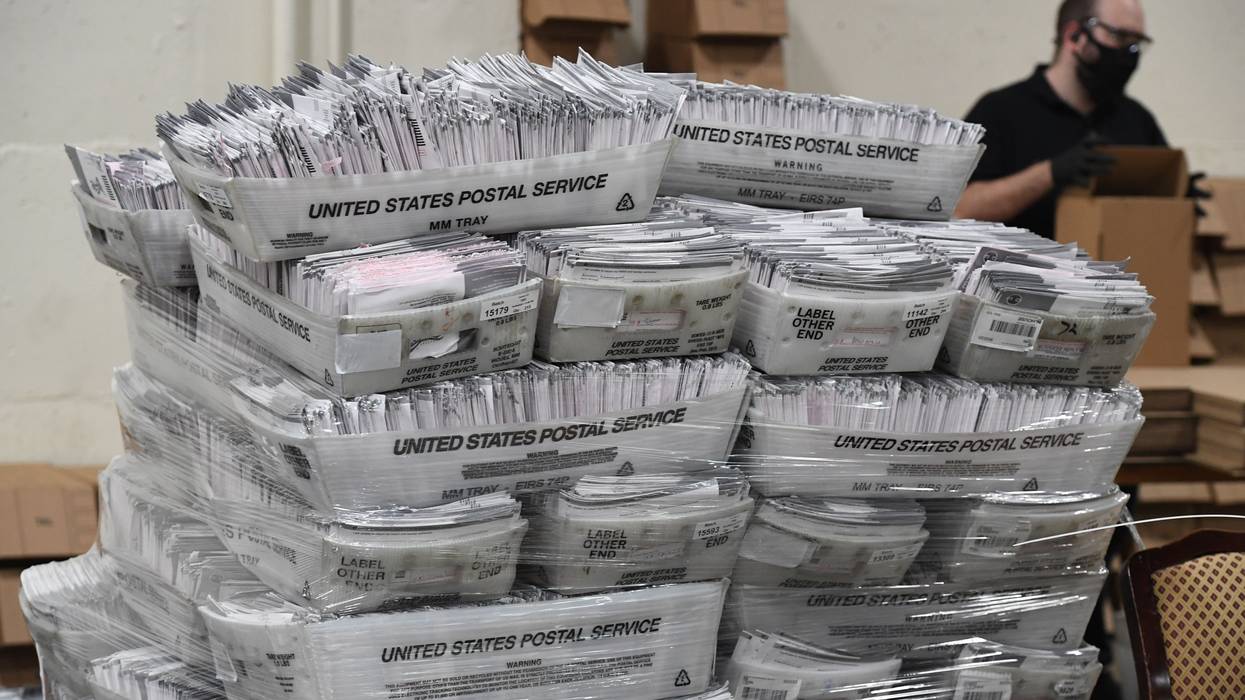
"This is chaos by design, and voters are the ones who will pay for it," warned the ACLU's Voting Rights Project director.
The battle over President Donald Trump's attack on voting by mail continued on Wednesday, as a federal judge in Massachusetts lifted her injunction on the Republican's March executive order and the coalition behind that case took action against a related US Postal Service rule.
Despite repeatedly voting by mail himself, Trump ordered various federal actions to restrict participation in elections, including the creation of the rule that the USPS finalized last week amid various ongoing legal fights. Among them is the case in Boston, under US District Judge Indira Talwani, an appointee of former Democratic President Barack Obama.
Talwani on Tuesday found that the Trump administration violated her injunction by finalizing the Postal Service rule, but she declined to take any action. Then, on Wednesday, she lifted her injunction—which, as MS NOW noted, "was the only remaining roadblock to implementing the executive order."
The judge cited the US Supreme Court's Monday ruling in a separate case brought by Democratic state attorneys general. Rather than weighing the constitutionality of Trump's order, the six right-wing justices ruled that AGs had filed their lawsuit prematurely and lifted another lower court's injunction.
Refusing to back down, the Democratic AGs on Wednesday filed a lawsuit against the newly finalized USPS rule—following in the footsteps of other Democratic Party leaders and a "pro-voter" coalition that filed separate challenges to the policy on Tuesday.
The coalition that had compelled Talwani to issue her injunction also took aim at the USPS rule on Wednesday, submitting to her court a supplemental complaint as well as a request for a new injunction blocking the policy for the November midterms.
Voting rights organizations today supplemented the complaint in their lawsuit challenging President Trump’s executive order restricting mail voting to add claims against the US Postal Service’s (USPS) newly-finalized mail ballot rule Full statement: https://bit.ly/4cd8nDq
[image or embed]
— League of Women Voters of the US (@lwv.org) August 26, 2026 at 4:50 PM
"The court has already found that the executive order unconstitutionally usurps the authority of the states and Congress to regulate elections, and the newly finalized rule eliminates any doubt about the harms stemming from these unlawful acts," the groups and their attorneys said in a joint statement.
"Implementing the newly finalized rule less than 70 days before the general election would dramatically impair plaintiffs' core voter engagement work and pose a grave risk of disenfranchisement," they added. "We are asking the court for emergency relief to prevent this harm and to affirm the public’s confidence in the systems voters rely on to conduct our elections."
The plaintiffs are the Association of Americans Resident Overseas, Delta Sigma Theta Sorority, League of Women Voters, LWV of Massachusetts, OCA - Asian Pacific American Advocates, and US Vote Foundation. They are represented by the state and national ACLU, Asian Americans Advancing Justice, Brennan Center for Justice, LatinoJustice PRLDEF, and Legal Defense Fund.
"USPS's decision to rush this blatantly unconstitutional rule into effect just weeks before an election is the latest step in a rollout that has sown confusion at every turn and now threatens to disenfranchise voters who did everything right. This is chaos by design, and voters are the ones who will pay for it," declared Sophia Lin Lakin, director of the ACLU's Voting Rights Project.
"No administration should be able to manufacture confusion around how we vote and undermine confidence in our elections in the process," she added. "Rather than serving voters, this rule threatens access to the ballot and treats voters as collateral damage. We will continue to use every legal tool available to block this illegal power grab and ensure voters can cast mail ballots with the confidence that their votes will be counted."

AI is already inside election administration; before it moves deeper into the count, results have to stay verifiable.
Tallying the results of Washington, DC’s first ranked-choice election in June took about 10 days—longer than many voters are used to. In an age when artificial intelligence can generate an answer in seconds, waiting days for election results can feel old-fashioned, inefficient, even suspicious. And it is about to matter far more widely. This November, 17 states, cities, and counties will use ranked-choice voting, including Maine and Alaska statewide, in races that could help decide control of Congress. More voters than ever will watch results take days to resolve, and more will be asked to trust a count they cannot see.
But that slowness may be one of its most democratic features.
I come to this question from health informatics, where I study how even AI-generated information that sounds clear, fluent, and helpful still requires careful review before it reaches a patient. The same verification problem applies to elections. The more authoritative a system sounds, the more important it becomes to make sure the output can be checked.
DC’s June 16 primary followed a system that requires more than a simple tally: Voters rank candidates, and if no candidate receives more than 50% of first-choice votes, lower-performing candidates are eliminated, and votes are redistributed according to voters’ next choices. New York City already uses ranked-choice voting in local primary and special elections.
AI may soon be able to produce election results in seconds. That does not mean it should.
There is nothing wrong with ranked-choice voting, but it must be carried out with verifiable results. Because election counting is not just a math problem; it is a trust problem, especially in the US today, where election workers face harassment, routine counting delays are recast as fraud, and many voters already doubt institutions before a single ballot is counted.
In this climate, counting ranked-choice votes in a way that allows for public verification might take longer than people are used to. Every ballot must be tied to a voter-verifiable record. Every round of tabulation must be explainable. Every disputed outcome must be auditable by people who can inspect the evidence themselves.
AI is not yet counting votes, but AI and machine-assisted systems are already touching elections before ballots are counted, including information voters receive, and how their signatures are reviewed. In 2024, X’s Grok chatbot gave users false information about ballot deadlines; after election officials from five states complained, X changed Grok so election-related questions directed users to Vote.gov, the federal government’s official voting information website. In North Carolina, 10 counties piloted automated signature-verification software for absentee-by-mail ballots in 2024. The pilot did not affect whether any ballot was counted, but later reporting found reliability problems: The software failed to match about 11% of signatures, most software-flagged signatures were approved after human review, and technical issues complicated the test. Neither example is the same as artificial intelligence counting votes, but both show how software can shape what voters are told or what happens before a ballot enters the count.
I have seen the problem in my own research. AI systems can cite studies that do not exist, with titles, authors, and journals that look real until you check them. A 2026 Nature analysis warned that hallucinated citations are polluting scientific literature, and OpenAI researchers have warned that some training and evaluation systems reward guessing over acknowledging uncertainty. A system that gives a confident answer may look more useful, even when that confidence is misplaced, than one that says, “I don’t know.”
That matters because elections often turn on ballot conditions that are not immediately machine readable and need human review: stray marks, undervotes, overvotes, damaged ballots, or ambiguous voter intent. In races where the margin between the candidates is narrow, a few disputed ballots can change the result. These questions should not be resolved by a system whose rules, error rates, or decision process the public cannot understand or meaningfully examine. They should be handled through documented procedures, human review, paper records, and public audits.
Human counting is also imperfect. But precisely because humans are fallible, democratic systems have developed safeguards such as paper ballots, bipartisan observation, chain-of-custody rules, cure processes, recounts, and post-election audits. Risk-limiting audits, for example, hand check samples of paper ballots and can trigger a fuller count if the sample does not support the reported result. Colorado was the first state to conduct a statewide risk-limiting audit in 2017; today, all Colorado counties conduct one before results are certified. Other states have since adopted, required, or piloted risk-limiting audits.
The best election systems do not ask voters to trust either a person or a machine. They produce evidence. That is where current policy is behind the curve. States have moved quickly to regulate AI-generated deepfakes in campaign communications, because fake videos and robocalls can mislead voters. But far less attention has been paid to the AI inside election administration itself. That gap should close before AI moves deeper into election administration, especially into decisions that could affect whether a ballot is accepted, cured, rejected, or counted.
Federal and state governments should establish clear standards for AI used in anything election related. The Brennan Center for Justice has called for such safeguards around quality, transparency, consistency, certification, and monitoring. Election offices should have to explain to the public what an AI system does, who checks it, and how voters can verify the evidence. AI systems whose rules, error rates, or decision process the public cannot understand or meaningfully examine should not make final decisions about whether a ballot counts.
Voters have a role, too. Ask your local election officials whether AI tools are being used anywhere in election administration and how those decisions can be audited. Ask how voters will know if the AI setup gets something wrong. And volunteer as a poll worker. You don't need a background in elections; local officials train you. Democracy needs more people who understand how ballots are handled, checked, and verified.
AI may soon be able to produce election results in seconds. That does not mean it should. The labor of democracy is not a bottleneck in need of streamlining. It is part of the safeguard.
The objective of President Trump's warnings about election integrity are no longer merely to challenge an outcome, but to suggest that only a result delivering victory to Trump or his movement is legitimate.
Less than 10 days after President Donald Trump described the electoral system as “dangerous and under threat,” a federal appeals court blocked his administration from enforcing an order tightening mail-in voting rules in 23 states. The ruling showed that the dispute is not only about cybersecurity or foreign threats, but also about the rules that will determine the legitimacy of the 2026 midterms. Democracies begin to erode when citizens no longer believe the ballot box reflects their genuine will. Electoral legitimacy depends less on a flawless voting process than on public acceptance of rules that allow even the losing side to accept the outcome.
Viewed from this perspective, the most significant element of Trump’s White House speech was not his claims about China, Russia, Iran, or North Korea, but the way he portrayed the American electoral system itself. Trump described it as “dangerous and under threat”—a characterization that goes beyond a warning about cybersecurity or foreign interference. It raises a fundamental question: Is the principal problem the external threats facing America’s electoral system, or the effort to persuade Americans that the system itself can no longer be trusted?
To support his claim, Trump presented a series of alleged threats. He said declassified intelligence documents showed that China obtained information from 220 million American voter-registration records and that intelligence officials concealed the matter. He also warned that China, Russia, Iran, and North Korea can penetrate America’s electoral infrastructure. Yet these countries are not the center of his narrative. Rather, they serve as evidence for a broader claim: that the US electoral system is vulnerable, insecure, and needs fundamental redesign.
The distinction between issuing a security warning and discrediting an electoral system becomes clear here. Few deny that foreign powers attempt to influence rival states’ political and information environments. Like many democracies, the United States faces cyber threats and influence operations. But there is a crucial difference between strengthening election security and cultivating the belief that the entire electoral process is fundamentally unreliable. The former protects democratic institutions; the latter erodes public trust.
If a society believes elections are valid only when they produce one faction’s preferred outcome, the problem is no longer a particular election; it is the erosion of democratic competition and the transformation of elections from a solution to political conflict into a source of crisis.
The significance becomes clearer when Trump’s remarks are placed within the US political context. The 2026 midterms are not an ordinary contest for the president. Declining approval ratings, public dissatisfaction with the consequences of the war with Iran and rising energy prices, and the risk of losing the House have placed Republicans in a difficult position. If Democrats regain the House, another effort to impeach Trump could follow—a possibility he has raised. For Trump, who refused to accept the outcome of the 2020 election, elections are not merely an institutional process; they are part of a struggle over his political legitimacy.
This backdrop helps explain the Trump administration’s effort to expand the federal role in election administration. The White House’s pressure on congressional Republicans to pass the SAVE America Act—which would require proof of citizenship at registration, photo identification when voting, and the sharing of voter information with the federal government—rests on a single assumption: that the existing system requires sweeping changes to improve security and public confidence. The question is not whether electoral reforms are open to debate, but how they are presented: as reforms to improve a functioning system, or an attempt to rescue one that has already failed?
Here the meaning of Trump’s speech becomes more apparent. Before the election, he is constructing a framework through which the outcome is interpreted. If Republicans prevail, the election will be presented as proof of the system’s integrity. But if the result contradicts White House expectations, explanations are already prepared: foreign governments, the intelligence community, structural weaknesses, or the electoral process itself. This is political failure insurance.
Failure insurance does not require conclusive proof of a conspiracy. It consists of building a narrative that reduces the political cost of defeat before it occurs. Within this framework, losing is no longer necessarily the consequence of voters’ choices; it can be attributed to a “dangerous and under threat” electoral system. This is the key difference from 2020. Then, Trump’s allegations emerged after the results were announced. Now, the narrative of distrust is being constructed before voting begins. The objective is no longer merely to challenge an outcome, but to suggest that only a result delivering victory to Trump or his movement is legitimate.
Democracies have never been built on the assumption that elections are flawless. They rest on the principle that political disputes can be resolved within a shared institutional framework and that even the losing side accepts the legitimacy of the process. If a society believes elections are valid only when they produce one faction’s preferred outcome, the problem is no longer a particular election; it is the erosion of democratic competition and the transformation of elections from a solution to political conflict into a source of crisis.
The irony is that, for decades, the United States applied this standard when assessing elections in other countries. Washington argued that without public trust, even legally conducted elections cannot enjoy political legitimacy. Today, however, the president is invoking the same logic to describe America’s own electoral system. This is more than a domestic dispute; it raises questions about the credibility of the democratic model America has long sought to project abroad.
Ultimately, the central question raised by Trump’s recent speech may not be whether China gained access to voter-registration data, or how capable Russia, Iran, and North Korea are of penetrating America’s electoral infrastructure. The fundamental question is why, on the eve of one of the most consequential elections of his presidency, the president of the United States has chosen to convince millions of Americans—before the first ballot is cast—that their electoral system is “dangerous and under threat.”
Placed alongside political realities, the implications are troubling. Trump’s speech cannot be understood as a warning about election security or dismissed as another chapter in the disputes following the 2020 election. It represents an attempt to redefine the relationship between the voter and the ballot box—a relationship in which electoral legitimacy derives not from public trust and established institutions, but from the narrative advanced by those in power. This is how democracy begins to erode from within, long before fraud or foreign interference damages it. The greatest threat to American elections may lie not in Beijing, Moscow, Tehran, or Pyongyang, but in the moment when the president, seeking to insure himself against defeat, persuades his own citizens that the ballot box can no longer be trusted.
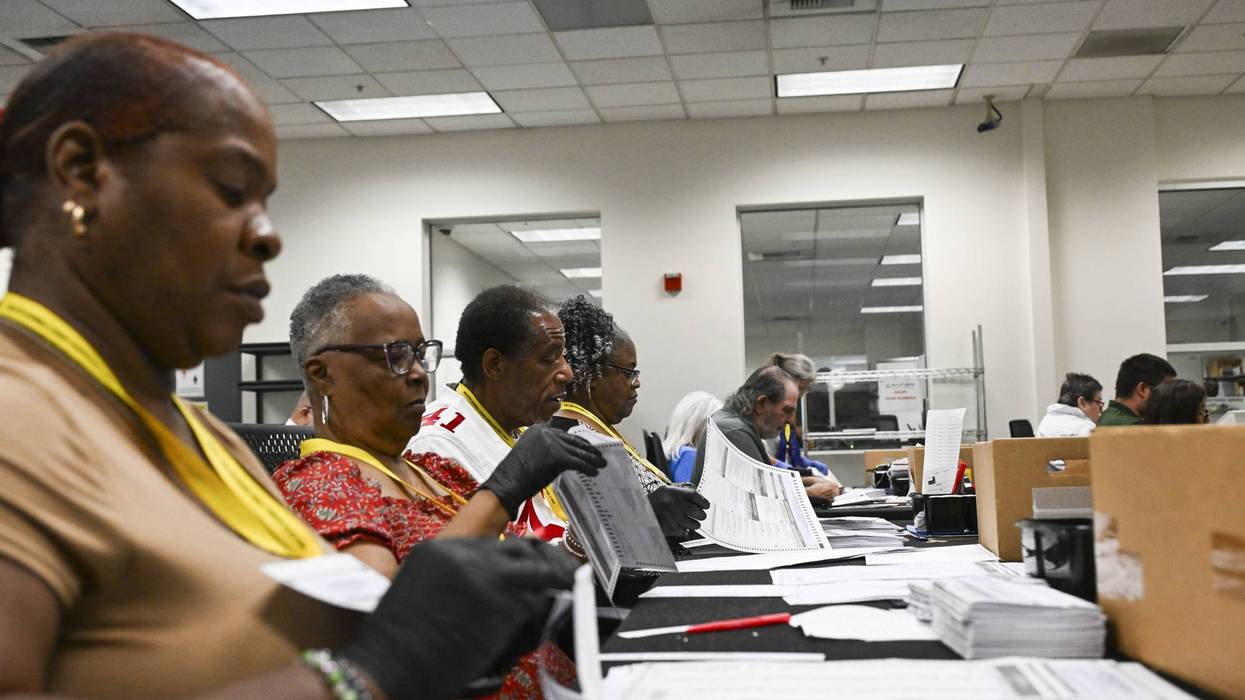
A majority of the three-judge appellate panel called part of the president's March executive order "an unprecedented federal incursion into states’ exclusive power to determine voter eligibility."
A federal appellate panel on Saturday rejected the Trump administration's request to lift a lower court's injunction blocking the US Postal Service from enforcing President Donald Trump's March executive order targeting mail-in ballots as part of Republicans' broader attack on voting rights.
A three-judge panel of the Boston-based 1st US Circuit Court of Appeals ruled 2-1 against a motion by the administration seeking a pause on US District Judge Indira Talwani's June order blocking major portions of Trump's directive, which is aimed at restricting postal voting, including by directing the USPS to ensure that mailed ballots have unique barcodes and envelope logos.
"Under the Constitution, state and local officials are responsible for administering federal elections," Judges Gustavo Gelpí and Julie Rikelman—both appointed by former President Joe Biden—wrote in a joint opinion. "In the spring of 2026, President Trump issued an executive order with nationwide effects on how state and local officials can administer federal elections, including the upcoming primary and general elections in September and November. In particular, the executive order directed substantial involvement by the United States Postal Service in deciding which ballots sent to and from voters would be delivered."
Judge Joshua Dunlap, a Trump appointee, partially dissented from the majority. The decision applies to the 23 states and District of Columbia that filed a lawsuit challenging the executive order.
The ruling also focuses on the executive order’s threats to criminally punish any state or local officials who refuse to comply. Under the order, the USPS would only send mail ballots to states that send their unredacted voter files to [the US Department of Homeland Security], which would approve voter eligibility via a national voter registration database. This is an unprecedented federal incursion into states’ exclusive power to determine voter eligibility as deemed by the US Constitution.
Saturday's ruling comes just over three weeks after Judge Emmet Sullivan of the US District Court for the District of Columbia halted the USPS' implementation of Trump's executive order. Sullivan granted a request by the NAACP to enforce a 2021 settlement agreement requiring the USPS to protect mail-in voting and prioritize delivery of mail related to elections through 2028.
That decision followed a June ruling by Chief US District Judge Denise Casper in Massachusetts that blocked portions of the president's order requiring people to show proof of citizenship when registering to vote.
Trump's March order is part of a broader attack on voting rights that includes pushing an updated version of Republicans' so-called SAVE America Act, which would mandate proof of citizenship and strict photo ID requirements to register to vote in federal elections. The legislation, which was passed by the House of Representatives in February, is stalled in the narrowly split Senate, where it lacks the support of 60 lawmakers needed to avoid a Democrat filibuster.

“USPS’ plan was unwise, unlawful, and a threat to the millions of voters who rely on mailed ballots to participate in our democracy," said one case litigant.
In a ruling hailed by democracy defenders, a federal court on Wednesday halted the US Postal Service's implementation of President Donald Trump's March executive order targeting mail-in ballots as part of his administration's broader attack on voting rights.
Judge Emmet Sullivan of the US District Court for the District of Columbia granted a request by the NAACP to enforce a 2021 settlement agreement requiring the USPS to protect mail-in voting and prioritize delivery of mail related to elections through 2028.
The request followed the Postal Service's publication last month of a proposed rule that would block the delivery of mail-in ballots to voters in states where election officials refused to provide certain information to USPS or use a specific envelope design. That proposal came after Trump's March executive order directing federal agencies to create a nationwide list of eligible voters using federal data.
The directive also requires the Postal Service to verify that mail-in ballots are sent and returned only by eligible voters, preserve election-related records for a longer period, and exercise heightened oversight of mailed ballots.
The Public Citizen Litigation Group and Legal Defense Fund (LDF) filed a motion on behalf of the NAACP asserting that the proposed rule "manifests USPS’ intent not to deliver certain mail-in ballots, establishing a process that directly violates its obligations under the agreement."
“The court today correctly recognized that USPS’ plan to create roadblocks to mail-in voting was inconsistent with its commitment to timely deliver election mail,” Public Citizen Litigation Group director Allison Zieve said in a statement following Sullivan's ruling. “USPS’ plan was unwise, unlawful, and a threat to the millions of voters who rely on mailed ballots to participate in our democracy.”
🚨BREAKING: In the latest blow to President Donald Trump’s anti-voting agenda, a federal court on Wednesday granted the NAACP’s request to halt the U.S. Postal Service’s (USPS) implementation of his executive order against mail voting. www.democracydocket.com/news-alerts/...
[image or embed]
— Marc Elias (@marcelias.bsky.social) July 1, 2026 at 1:41 PM
LDF associate director-counsel Sam Spital said, “Today’s decision recognizes that USPS cannot disregard its legal obligation to timely deliver mail-in ballots to all voters."
"We are glad that the court blocked a blatant attempt to renege on this commitment through a proposed rule that ran the risk of undermining the fairness of our national elections, creating particular dangers for Black voters," Spital continued. "LDF will continue to defend our democracy and combat unlawful restrictions of the right to vote.”
Anthony P. Ashton, senior associate general counsel at the NAACP, called the decision "a critical step in protecting the rights of voters who rely on the timely delivery of mail-in ballots to participate in our democracy."
Ashton continued:
The proposed USPS changes would have created unnecessary and unlawful barriers, in direct violation of the USPS’ mandate to prioritize election mail. Those barriers could have disproportionately harmed Black voters, who are more likely to rely on mail voting due to long-standing inequities in access. Put simply, the use of mail-in voting helps reduce voter intimidation at the polls and election day dirty tricks. This decision makes clear that access to the ballot cannot be tied to arbitrary requirements. The NAACP will continue to hold this government accountable when it attempts to undermine fair and equal access to the electoral process.
Wednesday's order—from a judge who's been appointed to various positions by Republican and Democratic presidents throughout his career—is the latest in a string of federal court rulings against Trump's attacks on voting rights, crowned by Monday's Watson v. Republican National Committee US Supreme Court decision, in which the justices affirmed that states may count ballots received after Election Day if they were postmarked in time.
Last week, a federal judge in Massachusetts sided with Democratic state attorneys who challenged Trump's March 2025 executive order that requires Americans to show proof of citizenship when registering to vote, while another judge in the same district blocked parts of the president's March 2026 order, which included the USPS directive.
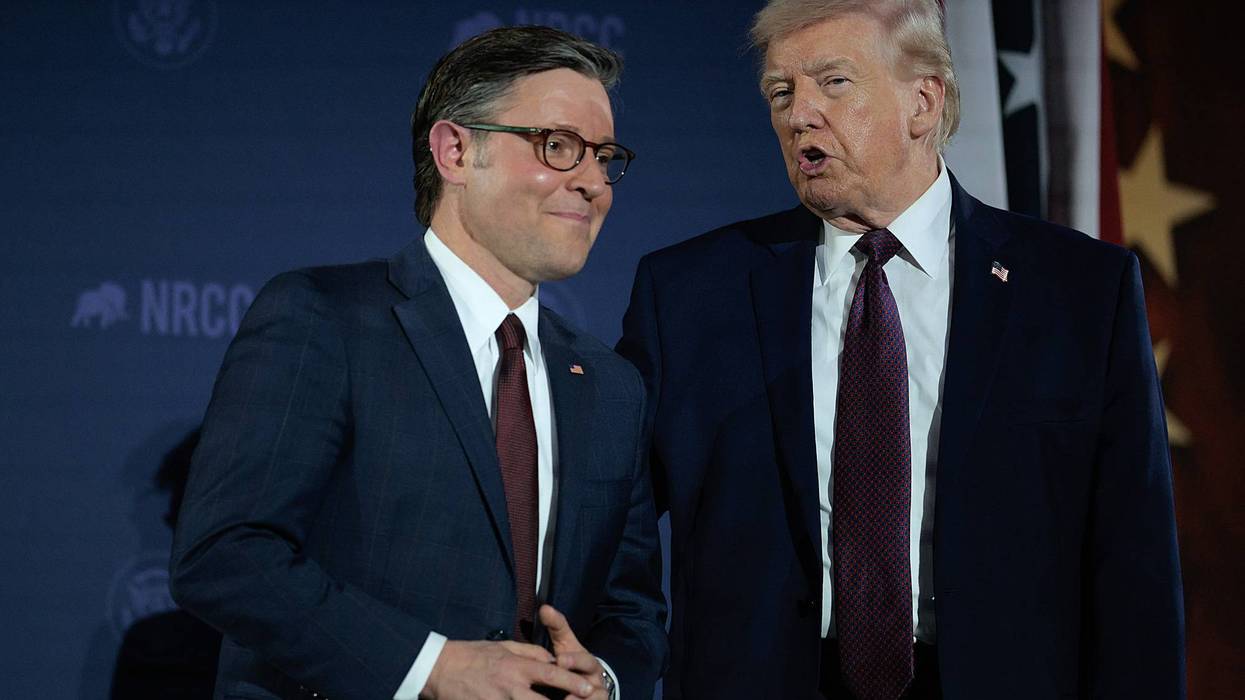
"A yawn? Try telling that to the families who can't afford rent, can't afford to buy gas or groceries, and are one paycheck away from losing everything."
Democrats in the US House of Representatives quickly fired back on Monday after President Donald Trump called pending affordable housing legislation a "big yawn" compared to the attack on voting rights that he wants Republicans to pass.
Trump last Wednesday canceled a planned signing ceremony for the 21st Century ROAD to Housing Act and demanded that Congress, which is narrowly controlled by Republicans, pass the Safeguard American Voter Eligibility, or SAVE America, Act.
House Speaker Mike Johnson (R-La.) on Monday sent Trump the bipartisan housing bill—which will become law with no action by the president after 10 days.
Asked by reporters whether he'll sign the housing legislation, Trump replied: "It hasn't been sent to me yet. It's coming, I understand, and then I'll make a de—Here's what I would like to say... It's a yawn. Some people say it's wonderful. To me, compared to the SAVE America Act, just about everything is a big yawn."
Sharing a clip of the president's remarks on social media, House Minority Whip Katherine Clark (D-Mass.) declared, "He truly doesn't give a damn about you."
Other Democrats delivered similar responses. Congresswoman Pramila Jayapal (Wash.) said that "Trump does not care about lowering housing prices," while Rep. Becca Balint (Vt.) wrote of his comments, "Donald Trump literally does not care about your cost of living, part one million."
Democratic Colorado Congresswoman Brittany Pettersen said: "A yawn? Try telling that to the families who can't afford rent, can't afford to buy gas or groceries, and are one paycheck away from losing everything. Believe him when he tells you who he is."
Rep. Christian D. Menefee, a Texas Democrat, charged that "Trump cares more about rigging elections than Americans affording homes."
The Democratic National Committee's (DNC) rapid response director, Kendall Witmer, said in a statement that "Donald Trump continues to mock what everyday Americans are experiencing. Time and again, Trump has had the chance to lower costs for working families, but without fail, he has chosen to prioritize his own interests and those of his wealthy friends."
"As Americans struggle to put a roof over their heads and afford basic necessities," Witmer added, "Trump continues to double down on his disastrous policies and self-serving agenda—and Americans are fed up."
Trump's comments came just over four months away from the November midterm elections, in which Democrats aim to regain control of both chambers of Congress.
In the lead-up to the midterms, Trump has ramped up pressure on Republicans in Congress to pass the SAVE America Act, which would force Americans to show proof of citizenship when registering to vote, and photo identification at the ballot box. Critics have warned that the former requirement could disenfranchise millions of Americans who may not have access to documents such as a birth certificate or passport with their current name.
Johnson said Sunday on Fox News that "we're going to try to pass it again, and this time we’re going to try to put it on a reconciliation bill," which "prevents the necessity of 60 votes in the Senate."
The speaker on Monday also sent a message to his GOP colleagues who might block unrelated legislation in a bid to pressure senators to pass the SAVE America Act: "Whomever is thinking that stopping the work of House Republicans to make Americans safer right now and to bring down the cost of living—impeding that progress just because stubborn Senate Democrats won't do the job of the American people is self-defeating. It doesn't make any sense."
Punchbowl reported on Monday that GOP leadership has also expressed interest in creating a $4 billion grant program that would incentivize states to enact parts of the bill. Some Republican state lawmakers have already pursued copycat legislation.
As elected Republicans attack voting rights at the national level, the US Supreme Court—whose right-wing supermajority has often rubber-stamped Trump's agenda—delivered a surprise victory for voting rights on Monday: Two conservatives joined the three liberal justices in rejecting the Republican National Committee's (RNC) challenge to states counting mailed ballots that are postmarked by Election Day but received afterward.
"The DNC is proud to have stood with the state of Mississippi to defeat the RNC's latest attack on Americans’ voting rights," said the Democrats' chair, Ken Martin. "Trump and Republicans are attacking our elections and trying to rig the system in their favor because they know the American people are ready to reject their chaos and corruption this November."