

5
#000000
#FFFFFF
To donate by check, phone, or other method, see our More Ways to Give page.
Daily news & progressive opinion—funded by the people, not the corporations—delivered straight to your inbox.
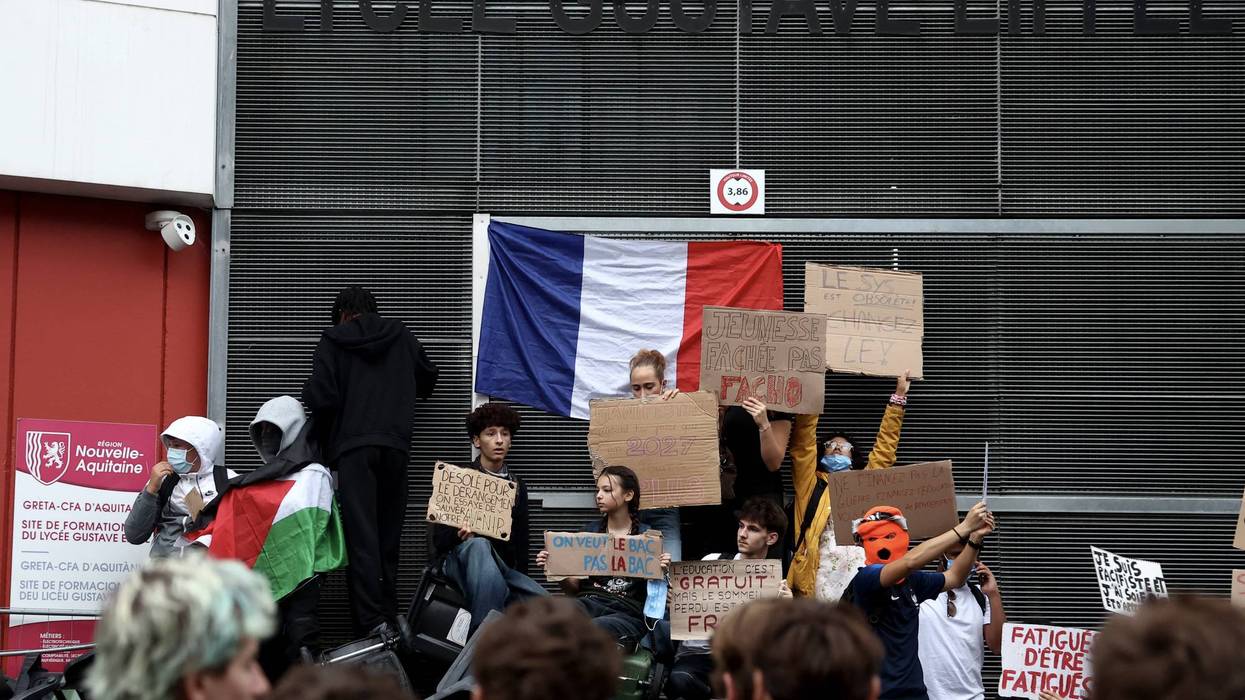
The American Revolution helped inspire France’s struggle for liberty. Now, France’s students are offering Americans an example we ought to consider: A generation can defend its future together instead of being told, one person at a time, to adjust its expectations.
France’s October 6 mobilization challenges Americans to defend their future through peaceful collective action.
Call me a Jacobin. Call me whatever you want.
On October 6, students, teachers, and parents took to the streets across France in a national day of action over missing teachers, overcrowded classrooms, and deteriorating schools. Americans should pay attention to what they are demanding—and what their pressure has already helped put on the political agenda.
Our circumstances differ from France’s, but the gap between a promised future and a delivered one is familiar.
When I watch young people in France insist that their futures deserve more than another promise, I feel something like the hope Thomas Jefferson felt watching the beginnings of the French Revolution: the possibility that ordinary people might demand a greater say in the society they inhabit.
History does not offer a clean comparison. Jefferson’s enthusiasm led him to excuse terrible bloodshed, and I will not follow him there. What moves me today is the courage of students organizing peacefully, walking out, and refusing to treat deteriorating conditions as the natural order of things.
The American Revolution helped inspire France’s struggle for liberty. Now, France’s students are offering Americans an example we ought to consider: A generation can defend its future together instead of being told, one person at a time, to adjust its expectations.
The immediate grievances are concrete. Reuters has reported on French high school students protesting overcrowded classrooms, deteriorating buildings, and teacher shortages. One 17-year-old aspiring teacher described taking her French examination without having had a French teacher. A younger student carried a sign declaring, “Our address should not decide our future.” [Source]
That is a demand for the promise of education to mean something.
We tell young people to attend class, work hard, and prepare for a career. We tell them that education is their route to stability. Then, when the institutions responsible for providing that education fail them, we act surprised that they refuse to keep participating quietly.
Their sacrifice deserves acknowledgment. Walking out can mean missed instruction, disciplinary consequences, and added pressure around examinations. These students have futures to build. Their willingness to interrupt that work should make us ask why continuing as usual feels like the greater risk.
And with teachers missing, some students were already losing instruction. A government cannot count every hour lost to protest while overlooking the hours its own failures have taken.
The violence must be named plainly. By October 2, Education Minister Édouard Geffray reported at least 65 injured staff members, including 40 principals, about 170 wounded students, and more than 100 severely damaged high schools. By October 6, the prime minister reported 215 injured teenagers and 85 injured school staff. Schools have been set on fire. Reuters reported that two teachers in Marseille were inadvertently splashed with gasoline as a student tried to throw it into a trash bin. A regional education spokesperson separately reported a youth spraying gasoline at a teacher in La Ciotat; Reuters could not verify that incident’s circumstances.
Burning a school and endangering its staff betray the demand for a better education. Whoever commits those acts should be held accountable. Students, teachers, and principals deserve protection.
Officials also dispute the movement’s origins. Justice Minister Gérald Darmanin said outsiders had hijacked it; Interior Minister Laurent Nuñez described troublemakers moving between schools to incite violence. According to a government source cited by Reuters, intelligence agencies attributed its initiation to La France Insoumise and far-left allies. LFI denied the allegation. Those claims deserve scrutiny, rather than being treated as proof that every student’s complaint is manufactured.
Some Paris-area students told Reuters they were staying away because of the escalating violence. That is a loss of their voice, too. A peaceful movement needs to protect their ability to participate. Nonviolence must remain a commitment, especially when anger is justified. The society we want to build has to be visible in the way we fight for it.
If the police are more interested in silencing you than hearing your complaint, then that society deserves protesting, in my view. Police officers cannot resolve every political grievance, but they can respect the right to express one. When authorities answer peaceful dissent with intimidation or unjustified force, their response becomes another reason to protest.
A student should not have to fall silent to be treated as someone worth protecting.
But calls for order must come with an answer to the conditions that brought students into the streets. Returning everyone to the classroom will not resolve a teacher vacancy. Ending a blockade will not repair a neglected building.
If leaders want stability, they have to give young people a reason to believe the institutions around them can deliver it.
Promises alone cannot do that anymore.
There has already been a concrete retreat. On October 1, Education Minister Édouard Geffray announced that the government would withdraw proposed annual registration fees for students without scholarships in BTS technical programs and preparatory classes for the Grandes Écoles. The proposed charges were €178 and €270, respectively. He cited discussions with unions and the prime minister.
That reversal came amid the student mobilization. It does not prove that street protests alone caused the decision, and it does not repair a classroom. But it shows that a government proposal can be challenged and withdrawn. Pressure can produce something more tangible than another invitation to be patient.
Students deserve commitments they can evaluate: which positions will be filled, which buildings will be repaired, what resources will reach underserved schools, and when those changes will happen. A consultation can help identify a problem. It cannot become a permanent substitute for fixing it.
American Gen Z should take note.
Consider our fight over student debt. In June 2023, the Supreme Court struck down the Biden administration’s plan to cancel up to $10,000 in eligible federal student debt, or $20,000 for eligible Pell Grant recipients. The court held that the administration lacked authority under the law it had invoked. Borrowers who had been offered relief were left without that promised cancellation.
The legal question matters. So does the political responsibility to deliver a workable solution. Telling young Americans that education is the path to stability, then leaving them to navigate its financial consequences, is hardly an invitation to trust another announcement. Our circumstances differ from France’s, but the gap between a promised future and a delivered one is familiar.
Peaceful collective action gives that frustration somewhere to go. Student associations, unions, public meetings, demonstrations, and the ballot can turn private discouragement into demands people can act on together.
I do not expect every young American to take the same risk. Some cannot afford to miss a shift or a class. A serious movement makes room for them, too. Solidarity should widen participation and help people bear its costs.
What I admire in France is the refusal to surrender the idea that public institutions owe the next generation a fair chance.
God bless France. God bless the students peacefully standing up for the society they want to inherit.
And may America’s young people recognize that they deserve a voice in shaping theirs.
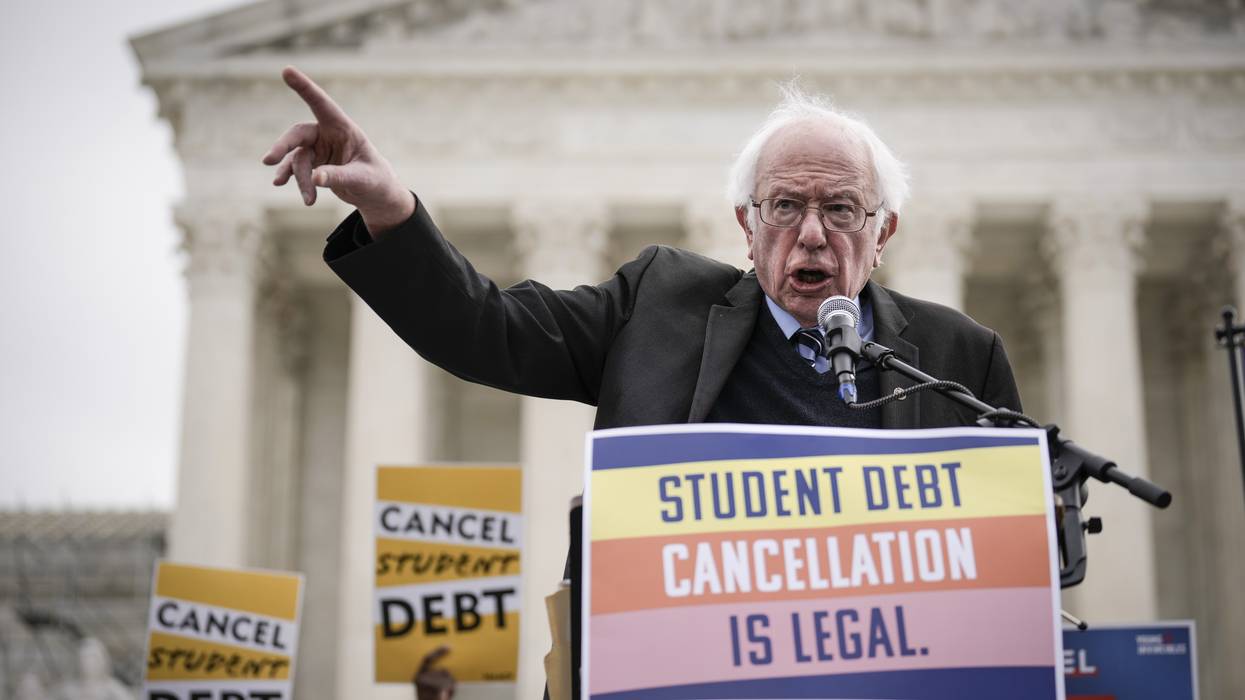
“In the richest country in the history of the world, no senior should have their Social Security payments taken away from them to pay back student debt."
US Sen. Bernie Sanders on Monday introduced legislation that would prohibit the federal government from garnishing Social Security payments from older Americans and people with disabilities who default on their student loans, a move that comes amid a debt crisis made worse by education cuts in President Donald Trump's so-called One Big Beautiful Bill Act.
The Stop Social Security Garnishment Act, co-sponsored by Sens. Elizabeth Warren (D-Mass.) and Ed Markey (D-Mass.), would bar the Treasury Department from seizing Social Security payments, including Social Security Disability Insurance, to collect on defaulted federal student debt.
“As a result of Trump’s disastrous cuts to education, an increasing number of seniors are in danger of having their Social Security checks garnished to pay back student loans they took out decades ago. That is beyond unacceptable,” Sanders (I-Vt.) said in a statement.
“In the richest country in the history of the world, no senior should have their Social Security payments taken away from them to pay back student debt," the senator added. "This is especially true when seniors throughout the country already cannot afford the skyrocketing price of healthcare, prescription drugs, groceries, and housing. Congress must pass this legislation.”
Sanders' bill comes as more than 9 million Americans are in default on their federal student loans, according to the latest Department of Education data. Republicans' One Big Beautiful Bill, which was signed into law by Trump last year, contains the biggest cuts to education in US history while making federal student loans less forgiving for borrowers, in part by attacking repayment protections that could help avert defaults.
Student loan delinquency reached 10.6% in the second quarter of 2026, up from 10.3% in the first quarter, according to the Federal Reserve Bank of New York. Meanwhile, the Trump administration is moving millions of borrowers off the Biden-era SAVE repayment plan, raising concerns among borrowers that higher monthly payments could push more people into delinquency and default.
Under current law, borrowers can generally enter default and be subjected to collection measures after missing payments for 270 days.
All told, student borrowers are collectively on the hook for nearly $2 trillion in loan debt, according to the Federal Reserve Bank of St. Louis. Over $233 billion of that amount is in default.
Sanders aims to "put an end to this absurdity and ensure no Social Security payments are taken away from older adults or individuals with disabilities due to student loan debt."
The Stop Social Security Garnishment Act is endorsed by organizations including the American Federation of Teachers, Protect Borrowers, Student Debt Crisis Center, American Association of University Women, Debt Collective, Social Security Works, and the Alliance for Retired Americans.
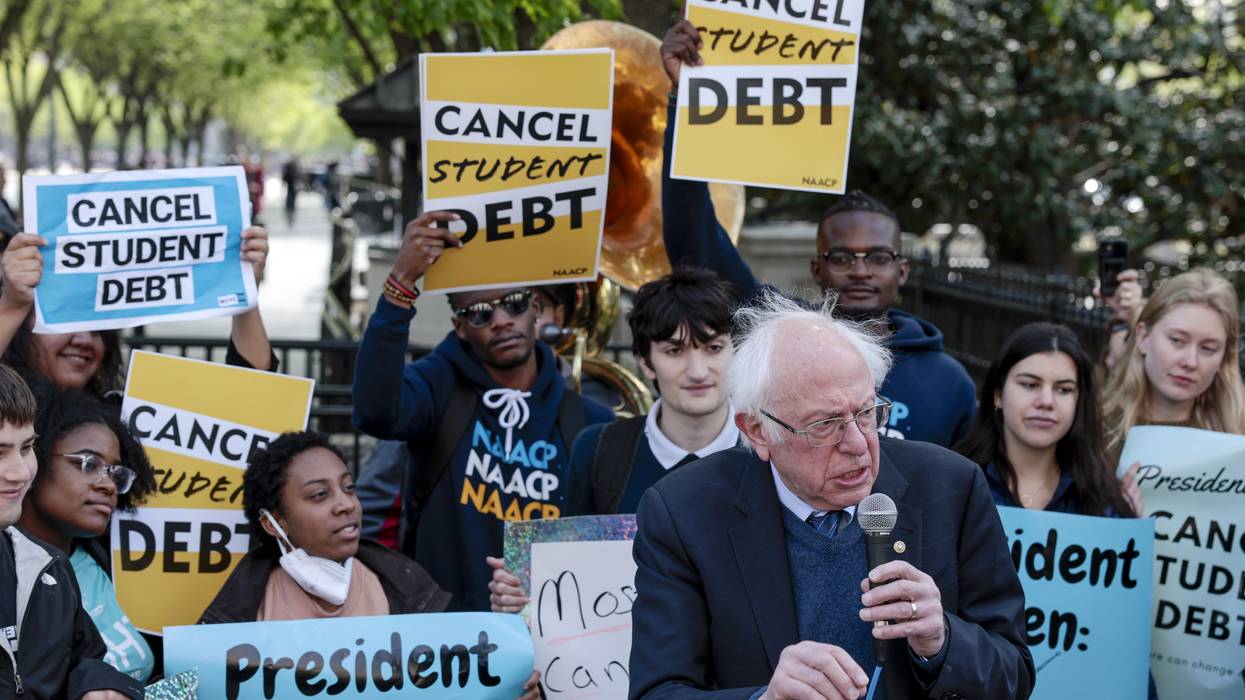
The largest bill increase any single person may get this year is a student loan bill, so why have Dems left it out of their messaging?
With just 100 days left until the midterms, Minority Leader Hakeem Jeffries appeared on CNN to deliver Democrats’ closing message. “Life in this country is far too expensive,” said Jeffries, rolling out a new "Fighting for an Affordable America" tagline. Americans do not have “enough food on the table, not enough gas in the tank,” and they’re “unable to actually regularly and consistently afford to pay the rent or pay the mortgage.” Jeffries blamed President Donald Trump’s costly war of choice in Iran, tariffs that have cost everyday Americans thousands of dollars per year, and the largest cut to Medicaid in American history.
Later that afternoon, in a steel workers union hall in Bethlehem, Pennsylvania, Jeffries joined Gov. Josh Shapiro at a joint campaign event for Bob Brooks, a LeHigh Valley firefighter running for Congress in Pennsylvania’s seventh Congressional District. Together, the three Democrats pointed to both the corruption plaguing our national politics and the high financial cost Americans have been forced to bear since Trump took office as causes of the affordability crisis. They implored voters in the “swingiest swing state in the country” to shift the tides of Washington, DC by voting against Republicans’ cost-raising policies and for Democrats’ cost-lowering solutions in November.
Democrats are right to highlight the impacts of giant cuts to Medicaid and the Supplemental Nutrition Assistance Program, along with the rising cost of gas and utilities fueled by wars abroad and billionaire-backed corruption schemes at home. Uniting a broad electorate around an “affordability” agenda, akin to the messaging and policy success of New York City Mayor Zohran Mamdani, will bode well for Democrats around the nation going into an intense midterm election where the winds of Immigration and Customs Enforcement’s terror, mobilization against AI data centers, and widespread opposition to war is at the left’s back.
But mysteriously missing from Democrats' messaging about costs that have gone up as a result of Trump's One Big Beautiful Bill Act is a key expense that 40 million Americans are battling in the shadows—student loans. For many student debtors, the increase in their monthly student loan bill will be their largest bill increase of the year by a significant margin. This leaves a massive hole in Democrats’ messaging cadence that must be filled immediately. A successful affordability message requires engaging with the true reality of Americans’ purses, and holds a mirror to the specific financial burdens that working people lose sleep over each night.
A willingness to ignore such a massive systemic cost increase reveals that Democrats, at least in this moment, are not taking their own "affordability" messaging seriously—posing grave electoral problems.
Take a typical student debtor in a family of four who earns a median US household income of $81,000. Under former President Joe Biden’s SAVE plan, their monthly student debt payment was $36. Under Trump’s Repayment Assistance Plan (RAP) plan, that payment would increase to $440—well over 1,000% more than under SAVE. In an internal Debt Collective survey of more than 1,500 student debtors on the SAVE plan, 50% of student debtors reported an average expected payment increase of $500 a month—just a few bucks shy of the average monthly payment for a newly used car. Yet despite this grave expense, of which Trump and his Republican allies are solely to blame, student loan bill increases have seldom made it to Democrats’ November stump speeches. Except for a few sparing moments of attention—Sen. Bernie Sanders (I-Vt.) has used his platform to showcase the absurdity of rising student debt for seniors—student loan bills have largely fallen off the radar for congressional Democrats. But for the millions on the receiving end of the Department of Education’s confusing and frightening emails, student loans dominate workers’ ability to make financial decisions.
Massive errors have rendered the student debt system dysfunctional at an unprecedented level. Millions of debtors have payments gone uncounted by their servicer, inaccurate balances, are awaiting cancellation for relief programs they’ve been eligible for, or are in limbo to simply enroll in a repayment plan that works for them. Weeks ago, Secretary Linda McMahon’s Department of Education admitted to a massive glitch in which thousands of student debtors were wrongfully told their monthly payment would be $50 a month, only to find out weeks later that the plan they’re now stuck in requires a monthly payment hundreds of dollars more. In recent days, debtors serviced by MOHELA were wrongfully sent delinquency notices asserting that they owed back-payments for the months in which courts have legally paused their payments. Separate ongoing litigation moving its way through a DC district court has called out a “shadow repeal” of the REPAYE plan, asserting that the Trump administration's refusal to allow student debtors to enroll in a repayment plan that may be their best option is illegal. Today, no member of Congress has called on the Trump administration to reopen the plan.
Worse than remaining quiet on student debt, some Democrats have seemingly regressed on the issue. In July, a dangerous student debt bill that would exempt—yes, exempt—state-based lenders from transparency laws passed in the Senate Health, Education, Labor, and Pensions Committee. If the vote advances further, the new law of the land could give schools a financial incentive to push predatory loan products onto desperate students seeking to use private loans to pay for school. Nine out of 11 Democrats sided with Republicans on this measure, ensuring bipartisan support for deepening the student debt crisis and worsening the lending system.
Democrats' silence on the rising costs of student debt will fall flat with voters in November, many of whom are already dejected from the Biden administration’s botched attempt to cancel student debt broadly and the Supreme Court’s decision to side against debtors. A willingness to ignore such a massive systemic cost increase reveals that Democrats, at least in this moment, are not taking their own "affordability" messaging seriously—posing grave electoral problems.
The Debt Collective—the nation’s first union of debtors whom I organize with—is calling on Congressional Democrats to step up to the plate. At this moment, Democrats could call for an immediate pause on student debt payments—which Trump was the first to administer through executive authority in 2020—amid significant administrative errors, a costly rise in payments amid a worsening economy, and ongoing litigation. Without mentioning the one monthly bill that, for millions of Americans, rivals their mortgage, the blue wave Democrats will need to take back the House may resemble something more like a small splash.
The GOP's tax-and-spending bill includes an overhaul of critical federal student aid programs that will destroy many young people’s dreams of pursuing higher education—again, all to finance tax breaks for corporations and the rich.
President Donald Trump has declared that he has “won affordability.” In his State of the Union speech, he even bragged that he’s bringing costs “way down on healthcare and everything else.“
In reality, the Trump administration is making it much harder for working families to both meet their daily needs—and to fulfill their long-term dreams of higher education.
The Republican tax-and-spending plan adopted last year—the so-called “Big Beautiful Bill”—includes huge tax giveaways to the rich, paid for with deep cuts to programs for working people. The Congressional Budget Office expects 7.5 million Americans to lose their Medicaid insurance and 4 million to lose some or all of their SNAP food aid benefits.
Slashing these public assistance programs will make it even harder for working families to save money for college. In fact, the same tax law also includes an overhaul of critical federal student aid programs that will destroy many young people’s dreams of pursuing higher education—again, all to finance tax breaks for corporations and the rich.
President Trump didn’t even mention student aid in his State of the Union address. But this issue is central to the health of our union. It’s about whether we as a nation believe working families deserve opportunity—or just survival.
This problem is not abstract to me. It’s personal. I am a first-generation college student and now a doctoral student. My hard-working Black family and my broader community poured everything they had into me because they believed—against every obstacle—that education could be my ladder up.
Federal student aid programs like Pell Grants and the Grad Plus subsidized loan program helped me as I struggled up that ladder. It still wasn’t easy. I worked two part-time jobs and still could barely make ends meet. But without that help, I wouldn’t be where I am today.
Now, the aid programs that I’ve depended on are under attack. Students are facing tighter borrowing limits and dramatically reduced repayment options, making it even more difficult to get out from under heavy debts. Under the new borrowing caps, the government plans to slash about $44 billion in aid over the next 10 years, affecting roughly 25% to 40% of graduate borrowers.
Making matters worse, the Pell Grant program, which helps more than 6 million low-income students a year pay for college, is facing a potential shortfall crisis. If Congress doesn’t put in new funds, the program’s deficit will skyrocket to $11.5 billion in 2027, and those grants could very well dry up.
Across the country, families who believed education was their way forward are feeling their dreams fade away. I’ve spoken to aspiring and current graduate students who are unsure if staying in school is still an option. I’ve talked to borrowers who fear they will live the rest of their lives crushed by student debt and parents who are worried they’ll never be able to afford to send their babies to college.
President Trump didn’t even mention student aid in his State of the Union address. But this issue is central to the health of our union. It’s about whether we as a nation believe working families deserve opportunity—or just survival. It’s about whether we as a nation value the futures of our young people—or only the futures of billionaires.
Higher education was supposed to be the great equalizer. But if we continue to shortchange student aid, working families will see it as either a hopeless fantasy or a life-long debt sentence.
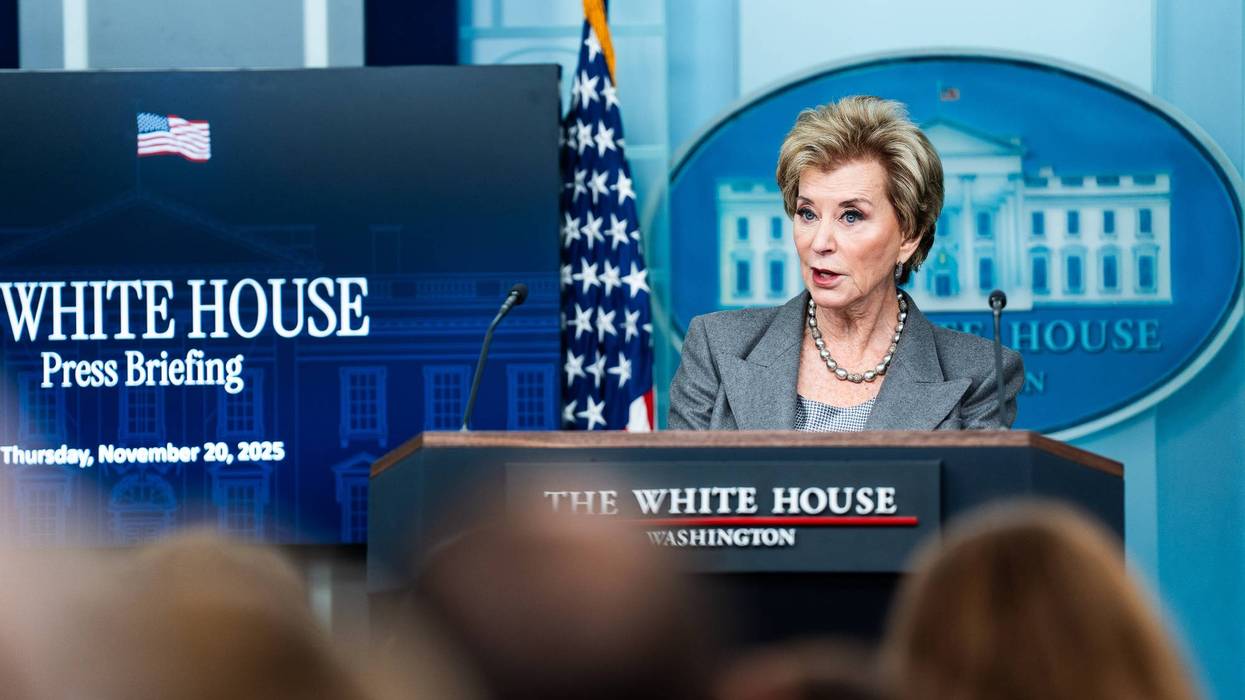
Advocates warned wage garnishment "would have risked pushing nearly 9 million defaulted borrowers even further into debt."
Billionaire US Education Secretary Linda McMahon has temporarily suspended the Trump administration's plan to resume garnishing the wages of defaulted student loan borrowers, a reversal that came after advocates warned the pay seizures would have had devastating economic consequences for people across the country amid a worsening cost-of-living crisis.
McMahon, who is actively working to dismantle her department from within, told reporters earlier this week that wage garnishment efforts have "been put on pause for a bit," without providing specifics. The Trump administration, which last summer ended a pause on student loan repayments that had been in place since the start of the Covid-19 pandemic, was reportedly set to begin notifying defaulted borrowers of plans to withhold a portion of their wages last week.
Aissa Canchola Bañez, policy director at the advocacy group Protect Borrowers, said in a statement Friday that "after months of pressure and countless horror stories from borrowers, the Trump administration says it has abandoned plans to snatch working people’s hard-earned money directly from their paychecks simply for falling behind on their student loans."
"Amidst the growing affordability crisis, the administration’s plans would have been economically reckless and would have risked pushing nearly 9 million defaulted borrowers even further into debt," Canchola Bañez added. "Earlier this month, a coalition of partners sent an urgent letter to ED urging them to do just this. We are pleased to see they have heeded our calls.”
That letter—sent on January 7 by Protect Borrowers, the American Federation of Teachers, Debt Collective, and other groups—called the administration's earlier decision to resume wage garnishment "calloused and unnecessary," warning that it came at a time when "struggling borrowers have been forced to wait amidst a nearly 1 million application backlog to enroll in an Income-Driven Repayment (IDR) plan, and as mass layoffs at the department have made it even harder for borrowers to get help with their student loans or if they are experiencing issues with their student loan servicer."
According to an analysis by Protect Borrowers, 3.6 million new student loan borrowers fell into default during the first year of President Donald Trump's second term in the White House. That's one new default every nine seconds.
"Nearly two-thirds of the borrowers who defaulted during the Trump administration—more than 2.6 million people—live in states that President Trump won in the 2024 election," the analysis found.
Under federal law, the Education Department can withhold up to 15% of a borrower's after-tax income to pay down defaulted debt. The Trump administration has already begun seizing income tax refunds from student borrowers in default.
The National Consumer Law Center (NCLC) noted in a Thursday blog post that "if you have received a notice of proposed garnishment, there are steps you can take to object to the garnishment notice and request a hearing, which is typically conducted through a written review of your objections."
"You must act quickly to avoid a potential garnishment order from being sent to your employer," the group stressed.
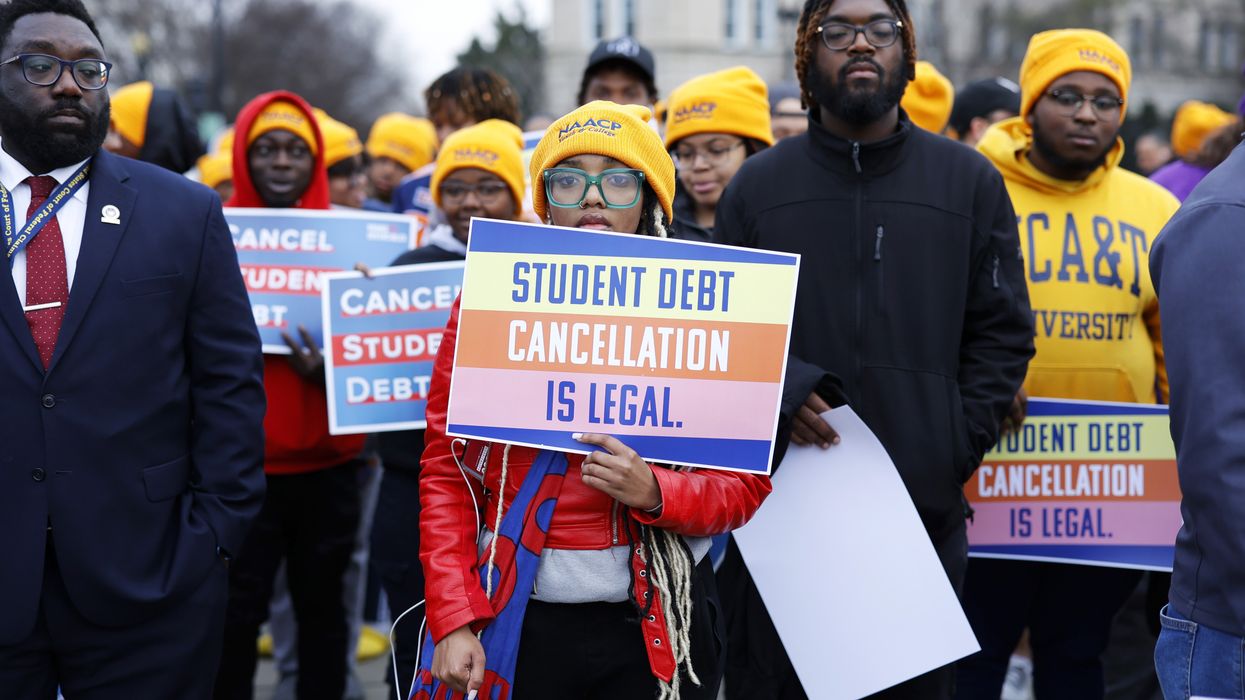
One group noted "the irony of a billionaire being in charge of collecting pennies from debtors."
The US Education Department confirmed Monday that, starting next month, it will resume seizing the pay of student loan borrowers in default as the Trump administration wages a broader war on debt relief and cancellation efforts.
The department, led by billionaire Linda McMahon—who is working to gut the agency from the inside—told the Washington Post that "it will notify about 1,000 defaulted borrowers of plans to withhold a portion of their wages to pay down their past-due debt," beginning the week of January 7, 2026.
"After that, the department said, notices will be sent to larger numbers of borrowers each month," the Post reported. "There were about 5.3 million borrowers who had not made a payment on their federal student loans for at least 360 days as of June 30, according to the latest available data from the Education Department. Many of them were in default before the federal government stopped collecting defaulted loans because of the pandemic nearly six years ago."
Persis Yu, deputy executive director and managing counsel of the advocacy group Protect Borrowers, said in a statement Tuesday that "at a time when families across the country are struggling with stagnant wages and an affordability crisis, this administration's decision to garnish wages from defaulted student loan borrowers is cruel, unnecessary, and irresponsible."
"As millions of borrowers sit on the precipice of default, this administration is using its self-inflicted limited resources to seize borrowers' wages instead of defending borrowers' right to affordable payments," said Yu. "There are still nearly a million unprocessed Income-Driven Repayment applications, and this administration has admitted to denying en masse borrowers who applied and requested the US Department of Education’s help in accessing the most affordable payment option."
“Finally, during the last Trump administration, hundreds of thousands had their wages improperly taken at the peak of the pandemic because the US Department of Education was unable to control this tool," Yu added. "It is irresponsible to turn on a debt collection tool that the administration cannot turn off."
In May, the Trump administration ended a pause on student loan repayments that had been in place since the onset of the Covid-19 pandemic in 2020.
The administration has also attacked student debt relief efforts launched under former President Joe Biden. Earlier this month, the Trump Education Department cut a deal to effectively end the Saving on a Valuable Education (SAVE) plan, jacking up monthly payments for millions of borrowers enrolled in the Biden-era program.
"While millions of student loan borrowers struggle amidst the worsening affordability crisis—as the rising costs of groceries, utilities and healthcare continue to bury families in debt—billionaire Education Secretary Linda McMahon chose to strike a backroom deal with a right-wing state attorney general and strip borrowers of the most affordable repayment plan that would help millions to stay on track with their loans while keeping a roof over their head," Yu said in a statement after the deal was announced.
"The real story here," Yu added, "is the unrelenting, right-wing push to jack up costs on working people with student debt."
"The federal government also wields vast extrajudicial powers to collect student debt, including garnishing wages and seizing Social Security payments."
The Education Department is legally allowed to withhold up to 15% of a borrower's after-tax income to pay down defaulted debt. As the Post noted, the Trump administration has already resumed seizing tax refunds and Social Security benefits student loan borrowers in default.
The Debt Collective, the first debtors' union in the US, noted "the irony of a billionaire being in charge of collecting pennies from debtors."
"The Department of Education pushes debtors toward payment to get out of default," the group added. "They don’t want you to know that you have other options. These include traditional repayment options, nonpayment options, and lesser-known options."
The Trump administration's decision to resume garnishing borrowers' wages comes as advocates are warning of a "default cliff" as borrowers struggle to afford basic necessities, leaving them unable to keep up with loan repayments. A Data for Progress survey released earlier this month found that more than 40% of borrowers report making tradeoffs between covering basic needs and staying current on student loan debt payments."
"Student loan default comes with severe and punitive consequences," Michele Zampini, associate vice president of federal policy and advocacy at the Institute for College Access and Success, wrote in a blog post earlier this month.
"In addition to ongoing credit score damage and hefty collection fees, the federal government also wields vast extrajudicial powers to collect student debt, including garnishing wages and seizing Social Security payments and tax refunds that are targeted to households with very low incomes, including the Child Tax Credit and the Earned Income Tax Credit," Zampini added. "These seizures compound financial hardship for those who can least afford it."
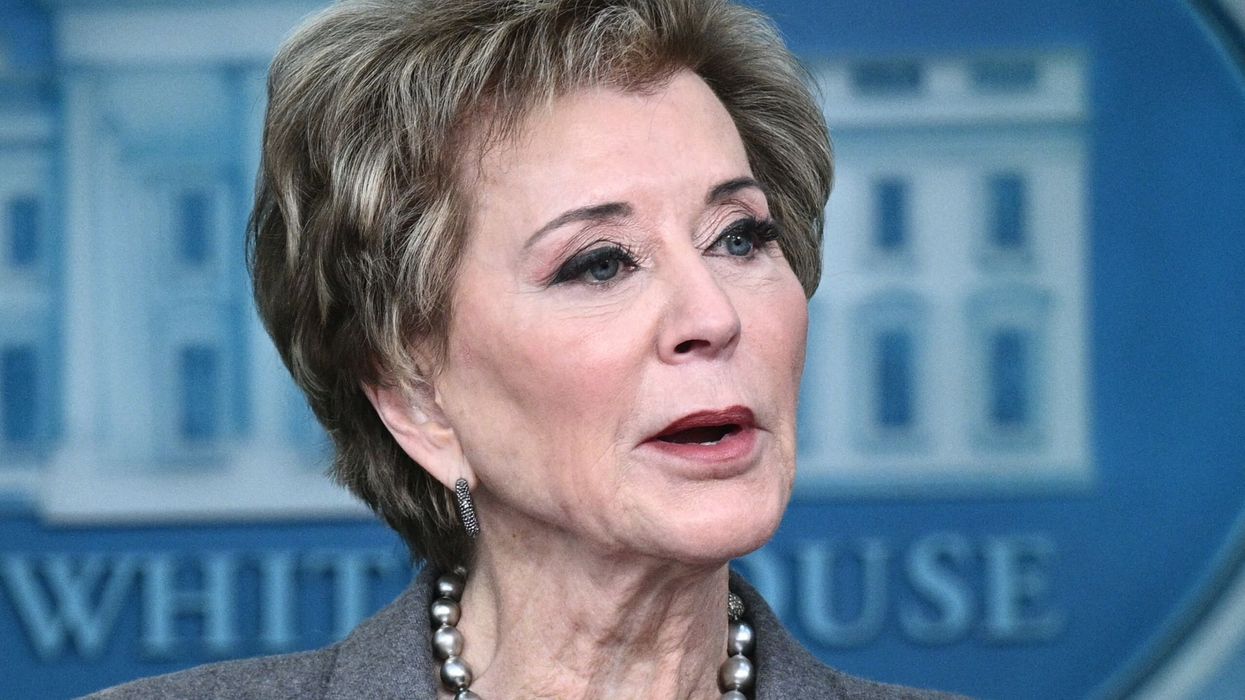
Amid a cost-of-living crisis, millions of low-income borrowers may now be forced to spend several hundred more dollars a month paying for student loans.
As student debt exacerbates the financial struggles of millions of Americans, the Trump administration has taken a major step toward killing the Biden administration's student loan forgiveness program.
On Tuesday, the Department of Education announced that it had reached a settlement with the state of Missouri to end the Saving on a Valuable Education (SAVE) program, which allowed more than 7 million mostly low-income Americans to reduce their federal student loan payments.
Rather than setting monthly payments based on income, the SAVE program bases them on how much borrowers earn and the size of their families, which is referred to as an income-driven repayment option, or IDR. SAVE cut most enrollees' monthly loan payments in half and left 4.5 million of them, mostly those earning between 150–225% of the federal poverty level, paying $0 per month.
In March 2024, a coalition of 11 states led by Kansas Attorney General Kris Kobach sued in federal court to stop the SAVE plan. The next month a similar lawsuit was filed by another coalition of seven states led by Missouri's former attorney general, Andrew Bailey.
In February, the 8th Circuit Court of Appeals ruled in favor of the states, blocking 8 million borrowers from accessing lower payments under the program. Now President Donald Trump's administration which aggressively opposes student loan forgiveness, has agreed to settle the lawsuit, effectively killing SAVE.
“For four years, the Biden administration sought to unlawfully shift student loan debt onto American taxpayers, many of whom either never took out a loan to finance their postsecondary education or never even went to college themselves, simply for a political win to prop up a failing administration,” said Undersecretary of Education Nicholas Kent. "The Trump administration is righting this wrong and bringing an end to this deceptive scheme. The law is clear: if you take out a loan, you must pay it back."
The settlement also includes a provision requiring that, for the next 10 years, the Department of Education notify the state of Missouri at least 30 days in advance before instituting broad-based student debt relief.
As the Debt Collective, a membership-based debtors' union, explained in a post on social media: "30 days is enough notice that Missouri will find standing to sue for relief before it even happens. So not only is Trump gutting the SAVE plan, they're essentially putting a moratorium on cancellation for the next 10 years with this agreement."
"What Republicans admit is that the executive administration does have authority to cancel federally held student debt," the group added. "They just want to make it so that it will be administratively and practically impossible to deliver it because of this technicality. It's stealing in advance."
SAVE was already slated to end in 2028 following July's passage of Republicans' One Big Beautiful Bill Act, which replaced it with a pair of less generous income-based repayment plans that require many debtors to pay hundreds more per month. The deadline to switch to one of the new plans will now move up, though the administration has not yet clarified when borrowers will have to switch.
The Debt Collective predicted that the end of SAVE "means many more debtors will likely be forced to default on their loans," which the group added "is bad for millions of families and our economy."
According to an analysis of federal student loan data from the American Enterprise Institute, a libertarian think tank, more than 12 million borrowers in the US are already in default or otherwise behind on their student loan payments.
Since their introduction, former President Joe Biden's student loan forgiveness policies have been chipped away at bit by bit through litigation. In 2023, the conservative US Supreme Court struck down the administration's plans to forgive up to $20,000 in student loan debt for millions of Americans, ruling that the plan exceeded the administration's executive authority. A year later, it halted SAVE as well while it considered the merits of the Missouri lawsuit.
The group Protect Borrowers, which supports student loan forgiveness, argues that SAVE is "not a novel use of executive power," noting that Congress gave the Education Department the authority to create IDRs in 1993 and that several other programs have been created since.
"This settlement is pure capitulation—it goes much further than the suit or the 8th Circuit order requires," said Persis Yu, the group's deputy executive director and managing counsel. "The real story here is the unrelenting, right-wing push to jack up costs on working people with student debt.”
A September survey by Data For Progress found that student loans make it more difficult for many borrowers to keep up with other bills amid a growing cost-of-living crisis: 42% of respondents said their debt payments had a negative impact on their ability to pay for food or housing. More than a third, 37%, said it had a negative impact on their ability to cover healthcare costs for themselves or their dependents, while the majority, 52%, said it had a negative impact on their ability to save for retirement.
“While millions of student loan borrowers struggle amidst the worsening affordability crisis as the rising costs of groceries, utilities, and healthcare continue to bury families in debt," Yu said, "billionaire Education Secretary Linda McMahon chose to strike a backroom deal with a right-wing state attorney general and strip borrowers of the most affordable repayment plan that would help millions to stay on track with their loans while keeping a roof over their head."
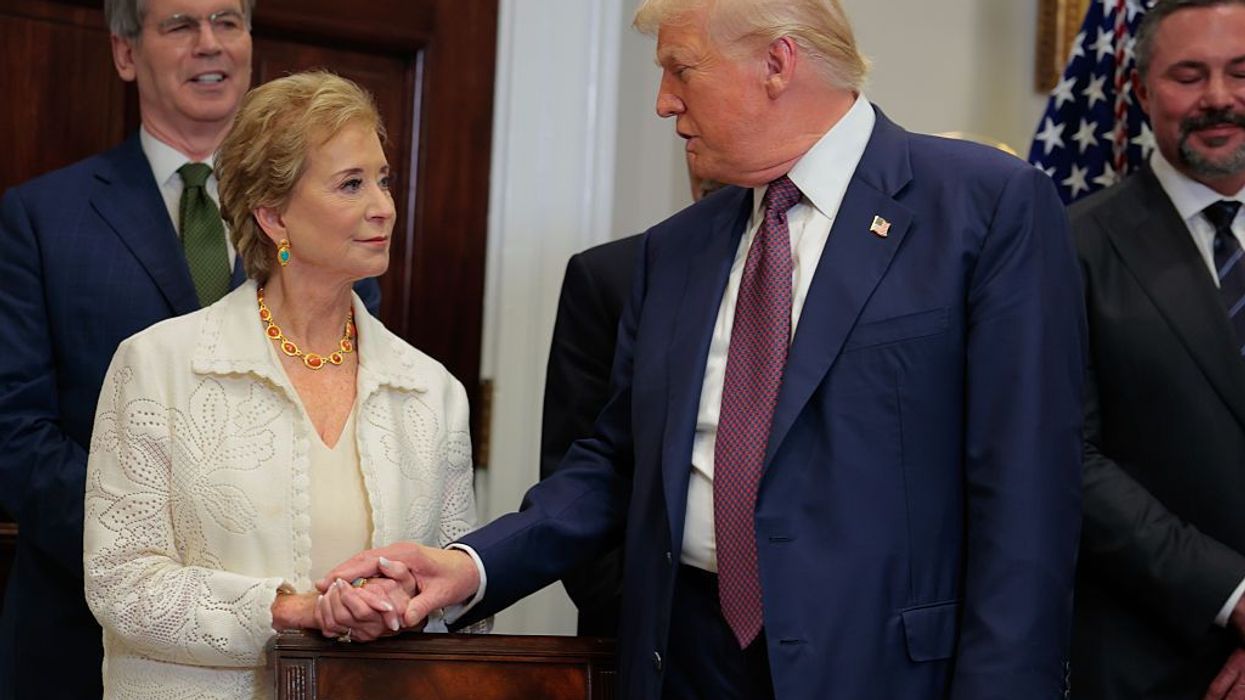
One advocate said privatization "will limit access for students from the most underrepresented communities, raise borrowing costs, and eliminate vital protections that current federal borrowers rely on."
The Trump administration is reportedly weighing the privatization of federal student loans, fulfilling yet another Project 2025 agenda item.
Politico reported on Tuesday:
Trump administration officials are exploring options to sell off parts of the federal government's $1.6 trillion student loan portfolio to the private market, according to three people familiar with the matter.
The discussions have taken place among senior Education Department and Treasury Department officials and have focused on selling high-performing portions of the government's massive portfolio of student debt, which is owed by about 45 million Americans.
Since retaking office, Trump has already enacted numerous changes to student loan policy that have squeezed borrowers, including resuming wage garnishments for millions of borrowers with overdue debt payments after a five-year reprieve.
Meanwhile, he has slashed programs that helped those in debt pay their loans. These include the Biden-era Saving on a Valuable Education (SAVE) Plan, which provided payment assistance to over 8 million student debtors based on income level. The One Big Beautiful Bill Act (OBBBA) set the SAVE program to formally shut down in July 2028, giving borrowers until then to find a new payment plan.
With little notice, the administration also paused forgiveness from the Income-Based Repayment (IBR) system, which was established in 2007 and enabled 2 million more borrowers to pay rates pegged to their income, with the promise of forgiveness after 20 to 25 years.
The OBBBA included a total $300 billion worth of cuts to higher education programs, primarily through federal student loans.
As Persis Yu, the deputy executive director and managing counsel at the advocacy group Protect Borrowers, explained, this included "the elimination of certain loans for graduate students, new annual and lifetime limits on federal loans for parents, cuts to Pell Grant eligibility, and new, stingier repayment options that will spike monthly costs and push borrowers further into debt."
The idea of bringing in private consultants to determine the value of the government's debt holdings and selling some student loan debt to private investors was floated during the first Trump term, but never came to fruition. However, this idea was fleshed out more thoroughly in the Heritage Foundation's Project 2025 playbook, which states that "student loans and grants should ultimately be restored to the private sector."
While details of how exactly the administration may plan to sell off this debt are scarce, critics have warned that privatization will put even more borrowers in precarious situations.
"Private student loans generally have more onerous repayment terms than federal loans, lacking options such as Income-Driven Repayment and often limiting and imposing fees for the use of forbearances," Yu said. "Private loans also lack vital cancellation protections found in federal student loans, such as disability and death discharges, or Public Service Loan Forgiveness."
"Private loans will not merely replace federal student loans," she continued. "Instead, they will limit access for students from the most underrepresented communities, raise borrowing costs, and eliminate vital protections that current federal borrowers rely on."
Private loans are also more rife with abuse. According to the Century Foundation, while private loans account for just 8% of all student loan debt, they have accounted for more than 40% of student loan-related complaints to the Consumer Financial Protection Bureau. One third of those complaints come from borrowers who say they are unable to afford their monthly loan payments.
At the same time, even while the Trump administration claims privatizing debt would save money for taxpayers, Preston Cooper, a senior fellow at the conservative American Enterprise Institute, told Politico that savings would likely be minimal because investors would be unlikely to pay more for the loans than they are worth.
"The only way for [Trump's plan] to make economic sense is to structure the deal in a way that really short-changes borrowers," said Eileen Connor, executive director of the Project on Predatory Student Lending.
Yu says that the goal of privatization rests on a faulty premise: "The argument that free markets will control the cost and improve the quality of higher education underestimates the harm that can be caused by setting private lenders loose on students and fundamentally misunderstands the relationship between these market participants. In a debt-financed higher education system, students are not the consumer; they are the commodity."
Sara Partridge, associate director for Higher Education Policy for the Center for American Progress, said, "Once again, this Administration seeks to line the pockets of private companies at student borrowers’ expense while moving away from a system that provides consumer protections under the law."
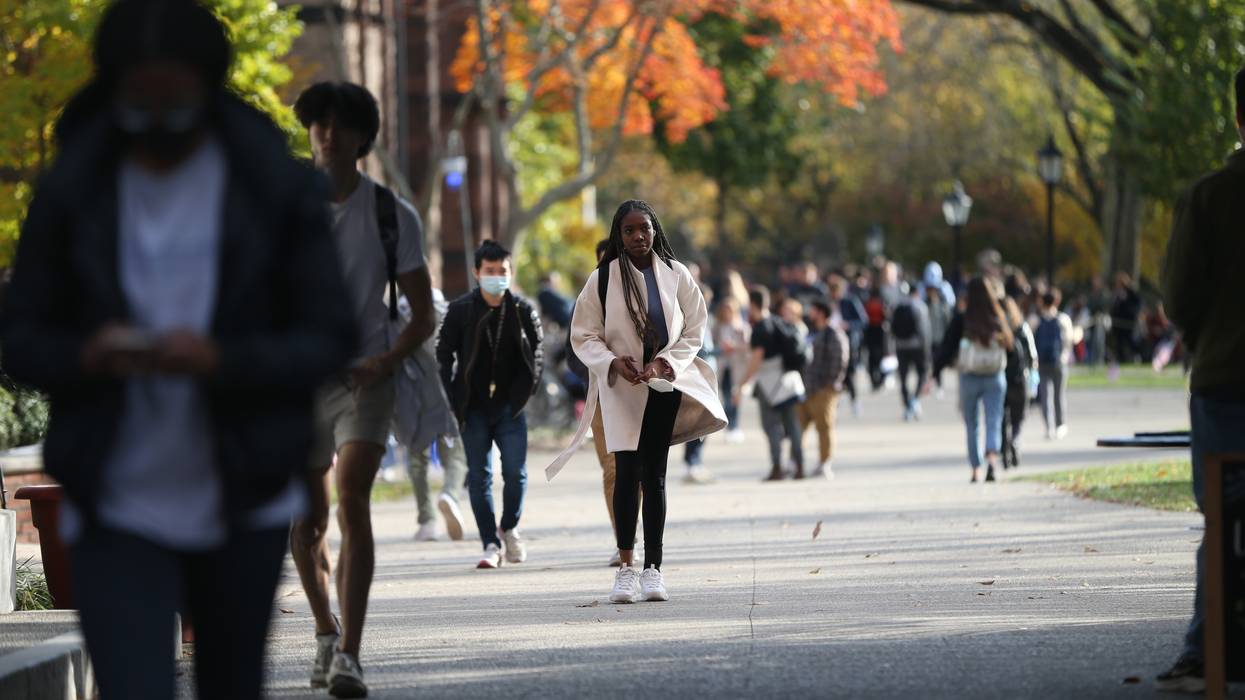
This compact goes against every democratic principle our country and our schools should uphold, and we reject the Trump administration’s attempt to cajole universities into compliance through explicit bribery.
We are students at the nine universities most recently targeted by President Donald Trump. We've spent years demanding that our universities improve conditions for students, lower tuition, and create spaces for the free exchange of ideas. No one told us the way to influence our universities was simply to bribe them with millions of dollars of federal funding.
On October 1, the Trump administration sent our schools a 10-point memo titled "Compact for excellence in higher education." If adopted, the compact would limit international student enrollment, force universities to share student information with the federal government, enforce the adoption of a specific definition of gender and threaten affinity spaces, and take action against actors that “punish, belittle, and even spark violence against conservative ideas.” In return, our universities are promised increased access to federal funding opportunities. If they don't comply? Well, any school can “elect to forgo federal benefits.”
This compact goes against every democratic principle our country and our schools should uphold, and we reject the Trump administration’s attempt to cajole universities into compliance through explicit bribery. It should go without saying that extorting universities to comply with ideological demands and quell freedom of speech is antidemocratic, but here we are.
In a public statement, White House Official May Mailman claimed that our nine universities—Brown, the University of Texas at Austin, the University of Arizona, Dartmouth, MIT, the University of Pennsylvania, Vanderbilt, the University of Virginia, and the University of Southern California—were chosen because they are "good actors." In other words, the Trump administration expects our universities to fold. And they expect to use our compliance as a green light to force universities across the country into similar agreements.
If any one of our universities agrees to this compact, it risks creating a chain reaction for the higher education system at-large to side with tyrants over students.
Here's the thing—we cannot deny that Trump's compact pointed out some very real issues in our higher education system. It is true that "too many young adults have become saddled with life-altering debt." It is true that "truth-seeking is a core function of institutions of higher education." For decades, young people have borne the brunt of our country's refusal to invest in education. As federal funding has fallen, administrator salaries have ballooned while faculty, staff, and graduate worker wages have stagnated and tuition prices have skyrocketed. Today, many of our schools are run more like hedge funds than like centers of learning. That's why we have continuously demanded that our government and our universities make higher education more accessible, and allow us to freely share our viewpoints on campus.
Trump's memo, however, does not actually sincerely seek to confront these issues. It is a thinly-veiled attempt to undermine fundamental principles of university independence and attack vulnerable students, and it is a clear instance of authoritarian overreach. Trump claims to value "truth-seeking," yet limits what "truth" can be sought. The compact places surveillance on what ideas can and cannot be present in the campus setting, requiring screening of international students for "anti-American" values. Under the guise of promoting campus discourse, it gives institutions the tools to gut departments that the Trump administration could frame as "belittling" conservative ideas. What counts as an "anti-American" value or "belittling" conservative ideas is malleable to the Trump administration's vantage point. The compact also effectively bans peaceful campus protest, a crucial part of civil discourse on our campuses.
To define a "free marketplace of ideas" by its adherence to a specific set of ideas and exclusion of a specific set of individuals is not creating a free marketplace at all: It's breeding authoritarianism.
This compact also asks our universities to commit to repression of LGBTQ+ students, including "biological" definitions of sex and gender, that would strip our queer students of protections and resources crucial to their right to a free and safe education. For LGBTQ+ students, this compact is not just a "political" attack; it is an immediate threat to our education and survival.
And this comes after a speech-chilling effect has already taken over our campuses. Students who dared to speak out in support of Palestine, especially, have faced extreme repression on campus, including police sweeps, expulsions, and attempted deportations. Over the summer, we watched as Brown University and the University of Pennsylvania signed agreements that sold students' personal information to the Department of Justice, excluded trans students from university life, and stripped them of their healthcare. We watched as the University of Virginia acquiesced to the Department of Justice's demands to dissolve diversity, equity, and inclusion offices against the wishes of the university community and forced President Jim Ryan to step down. We've watched our peers, Mahmoud Khalil and Rumeysa Öztürk, taken for daring to speak against Israel's genocide, and we continue to watch as Immigraton and Customs Enforcement takes our community members on and near our campuses.
The founding principles of our universities—quality education free from censorship, workforce development, and shared governance of university structures—have been under attack for decades. The solution is not to take a bribe from a wannabe-dictator who wants to trojan-horse exclusionary policies under the guise of protecting American students. The solution is to listen to the students, faculty, and staff who actually make our schools run.
This memo was sent out during a government shutdown. While key government programs are stopped and unknown numbers of federal employees are furloughed, the Trump administration is seeking ways to expand its power. If any one of our universities agrees to this compact, it risks creating a chain reaction for the higher education system at-large to side with tyrants over students. We demand that our universities do not fold, and do not sign.

"As Americans plead for their government to help with soaring costs," one expert said, "Trump is not just ignoring their struggles, he's actively making them worse with reckless policies that drive up prices on essentials."
Yet another poll exposes the pain that working-class Americans are enduring thanks to US President Donald Trump's policies, the economic justice advocates behind the new survey said Tuesday.
Polling released in recent months has highlighted how most Americans don't believe that merely working hard is enough to get ahead, a majority blames Trump for the country's economic woes, and large shares are concerned about the price of groceries, housing, and unexpected medical expenses.
The new survey—conducted by Data for Progress less than two weeks ago for Groundwork Collaborative and Protect Borrowers—shows that "American families are trapped in a cycle of debt," the groups said.
Specifically, the Data for Progress found that 55% of likely voters have at least some credit card debt, and another 18% said that they "had this type of debt in the past, but not anymore." Additionally, over half have or previously had car loan or medical debt, more than 40% have or had student debt, and over 35% are or used to be behind on utility payments.
More than two-thirds of respondents said that the federal government's resumption of student loan collections had an impact on their family's finances, and almost a quarter said they would need a one-time infusion of cash, "such as from inheritance, lottery, government assistance, etc.," to be able to pay off all of their debt.
The pollsters also found nearly 30% have or had "buy now, pay later" debt. Nearly 1-in-3 said they had taken out this type of loan—through options such as Afterpay or Klarna—in the past year to pay for basic needs and monthly expenses.
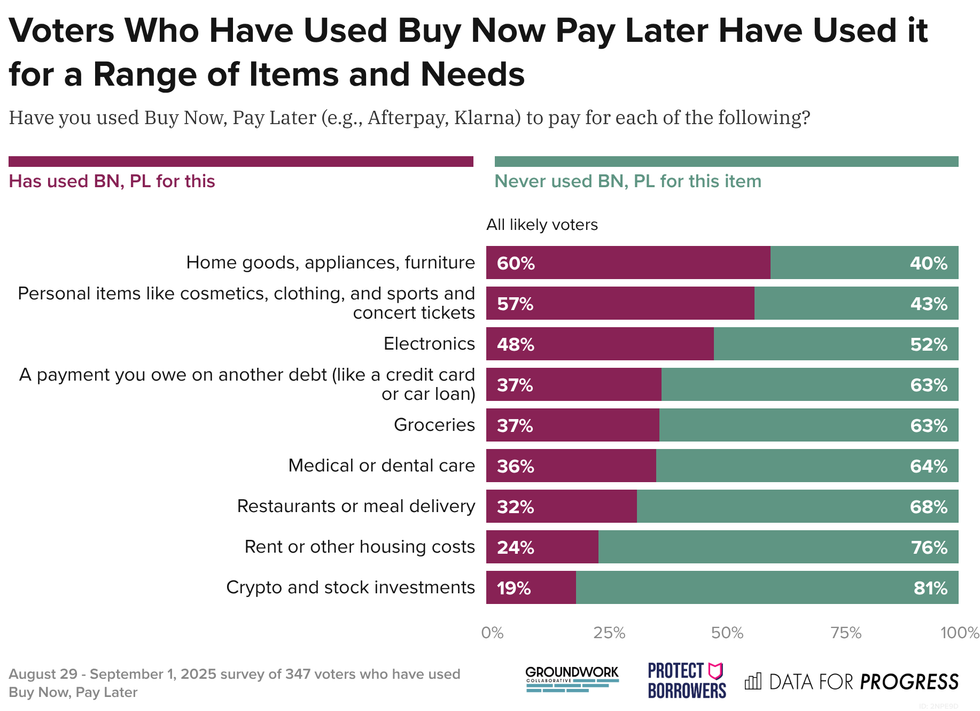
"Today's poll reveals a troubling rise in families relying on buy now, pay later loans just to stay afloat, trapping hardworking Americans in a cycle of debt that some fear will take years to climb out of," said Groundwork's executive director, Lindsay Owens. "As Americans plead for their government to help with soaring costs, President Trump is not just ignoring their struggles, he's actively making them worse with reckless policies that drive up prices on essentials like food and energy."
Trump's legally dubious tariffs—which are headed to the US Supreme Court after another legal loss last month—have negatively impacted Americans' wallets by elevating the costs of basics while also failing to deliver on his campaign promise to turn the United States back into a "manufacturing powerhouse."
"Today's poll exposes a startling new reality in Donald Trump's economy: As prices climb and money gets tight, Americans are going into debt to buy groceries, make rent, get healthcare, and even make payments on other debt," said Protect Borrowers executive director Mike Pierce. "Driving families into debt is a policy choice—voters across party lines are demanding lawmakers act now to deliver debt relief and help working families make ends meet."
The GOP controls both chambers of Congress and the White House. This summer, Republicans on Capitol Hill passed and Trump signed their so-called One Big Beautiful Bill Act, which is expected to further imperil working-class families by kicking millions of people off their healthcare and federal food assistance to give more tax cuts to the ultrarich.
To combat that agenda, "fight for families in debt, and hold corporations and corrupt politicians accountable," Protect Borrowers officially relaunched on Tuesday, rebranding from the Student Borrower Protection Center, which focused on educational debt.
"As the Trump administration turns its back on working-class families," said Pierce, "Protect Borrowers will fight back—exposing the greedy financial companies cutting backroom deals with regulators, taking corrupt government officials and corporations to court, and advancing new laws to hold the system accountable to working people."
Protect Borrowers announced 17 new members of its advisory board, including people who previously served in the Consumer Financial Protection Bureau (CFPB), Federal Trade Commission, National Labor Relations Board, and White House.
The group is also backed by US Sen. Elizabeth Warren (D-Mass.), a bankruptcy expert and the mastermind behind the CFPB.
"With wages flat and costs skyrocketing, families are drowning in debt—mortgages, credit cards, student loans, buy now, pay later, you name it," Warren said in a statement to Politico. "Protect Borrowers is exposing how rigged our economy is, and how the Trump administration is making it worse. I'm glad to stand with them in this fight."