SUBSCRIBE TO OUR FREE NEWSLETTER
Daily news & progressive opinion—funded by the people, not the corporations—delivered straight to your inbox.
5
#000000
#FFFFFF
To donate by check, phone, or other method, see our More Ways to Give page.
Daily news & progressive opinion—funded by the people, not the corporations—delivered straight to your inbox.
Amid a cost-of-living crisis, millions of low-income borrowers may now be forced to spend several hundred more dollars a month paying for student loans.
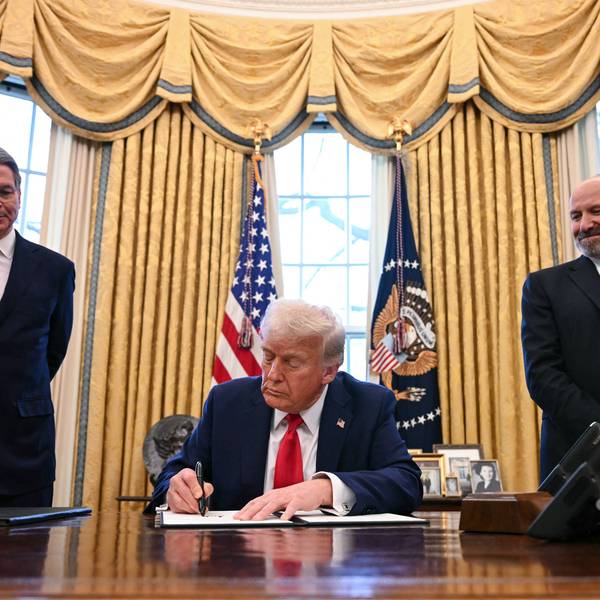
As student debt exacerbates the financial struggles of millions of Americans, the Trump administration has taken a major step toward killing the Biden administration's student loan forgiveness program.
On Tuesday, the Department of Education announced that it had reached a settlement with the state of Missouri to end the Saving on a Valuable Education (SAVE) program, which allowed more than 7 million mostly low-income Americans to reduce their federal student loan payments.
Rather than setting monthly payments based on income, the SAVE program bases them on how much borrowers earn and the size of their families, which is referred to as an income-driven repayment option, or IDR. SAVE cut most enrollees' monthly loan payments in half and left 4.5 million of them, mostly those earning between 150–225% of the federal poverty level, paying $0 per month.
In March 2024, a coalition of 11 states led by Kansas Attorney General Kris Kobach sued in federal court to stop the SAVE plan. The next month a similar lawsuit was filed by another coalition of seven states led by Missouri's former attorney general, Andrew Bailey.
In February, the 8th Circuit Court of Appeals ruled in favor of the states, blocking 8 million borrowers from accessing lower payments under the program. Now President Donald Trump's administration which aggressively opposes student loan forgiveness, has agreed to settle the lawsuit, effectively killing SAVE.
“For four years, the Biden administration sought to unlawfully shift student loan debt onto American taxpayers, many of whom either never took out a loan to finance their postsecondary education or never even went to college themselves, simply for a political win to prop up a failing administration,” said Undersecretary of Education Nicholas Kent. "The Trump administration is righting this wrong and bringing an end to this deceptive scheme. The law is clear: if you take out a loan, you must pay it back."
The settlement also includes a provision requiring that, for the next 10 years, the Department of Education notify the state of Missouri at least 30 days in advance before instituting broad-based student debt relief.
As the Debt Collective, a membership-based debtors' union, explained in a post on social media: "30 days is enough notice that Missouri will find standing to sue for relief before it even happens. So not only is Trump gutting the SAVE plan, they're essentially putting a moratorium on cancellation for the next 10 years with this agreement."
"What Republicans admit is that the executive administration does have authority to cancel federally held student debt," the group added. "They just want to make it so that it will be administratively and practically impossible to deliver it because of this technicality. It's stealing in advance."
SAVE was already slated to end in 2028 following July's passage of Republicans' One Big Beautiful Bill Act, which replaced it with a pair of less generous income-based repayment plans that require many debtors to pay hundreds more per month. The deadline to switch to one of the new plans will now move up, though the administration has not yet clarified when borrowers will have to switch.
The Debt Collective predicted that the end of SAVE "means many more debtors will likely be forced to default on their loans," which the group added "is bad for millions of families and our economy."
According to an analysis of federal student loan data from the American Enterprise Institute, a libertarian think tank, more than 12 million borrowers in the US are already in default or otherwise behind on their student loan payments.
Since their introduction, former President Joe Biden's student loan forgiveness policies have been chipped away at bit by bit through litigation. In 2023, the conservative US Supreme Court struck down the administration's plans to forgive up to $20,000 in student loan debt for millions of Americans, ruling that the plan exceeded the administration's executive authority. A year later, it halted SAVE as well while it considered the merits of the Missouri lawsuit.
The group Protect Borrowers, which supports student loan forgiveness, argues that SAVE is "not a novel use of executive power," noting that Congress gave the Education Department the authority to create IDRs in 1993 and that several other programs have been created since.
"This settlement is pure capitulation—it goes much further than the suit or the 8th Circuit order requires," said Persis Yu, the group's deputy executive director and managing counsel. "The real story here is the unrelenting, right-wing push to jack up costs on working people with student debt.”
A September survey by Data For Progress found that student loans make it more difficult for many borrowers to keep up with other bills amid a growing cost-of-living crisis: 42% of respondents said their debt payments had a negative impact on their ability to pay for food or housing. More than a third, 37%, said it had a negative impact on their ability to cover healthcare costs for themselves or their dependents, while the majority, 52%, said it had a negative impact on their ability to save for retirement.
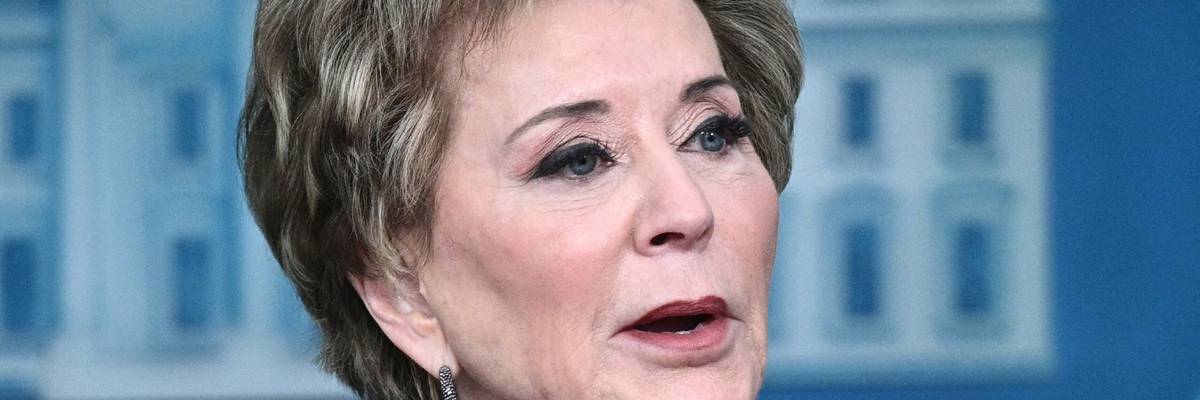
“While millions of student loan borrowers struggle amidst the worsening affordability crisis as the rising costs of groceries, utilities, and healthcare continue to bury families in debt," Yu said, "billionaire Education Secretary Linda McMahon chose to strike a backroom deal with a right-wing state attorney general and strip borrowers of the most affordable repayment plan that would help millions to stay on track with their loans while keeping a roof over their head."
Dear Common Dreams reader, It’s been nearly 30 years since I co-founded Common Dreams with my late wife, Lina Newhouser. We had the radical notion that journalism should serve the public good, not corporate profits. It was clear to us from the outset what it would take to build such a project. No paid advertisements. No corporate sponsors. No millionaire publisher telling us what to think or do. Many people said we wouldn't last a year, but we proved those doubters wrong. Together with a tremendous team of journalists and dedicated staff, we built an independent media outlet free from the constraints of profits and corporate control. Our mission has always been simple: To inform. To inspire. To ignite change for the common good. Building Common Dreams was not easy. Our survival was never guaranteed. When you take on the most powerful forces—Wall Street greed, fossil fuel industry destruction, Big Tech lobbyists, and uber-rich oligarchs who have spent billions upon billions rigging the economy and democracy in their favor—the only bulwark you have is supporters who believe in your work. But here’s the urgent message from me today. It's never been this bad out there. And it's never been this hard to keep us going. At the very moment Common Dreams is most needed, the threats we face are intensifying. We need your support now more than ever. We don't accept corporate advertising and never will. We don't have a paywall because we don't think people should be blocked from critical news based on their ability to pay. Everything we do is funded by the donations of readers like you. When everyone does the little they can afford, we are strong. But if that support retreats or dries up, so do we. Will you donate now to make sure Common Dreams not only survives but thrives? —Craig Brown, Co-founder |
As student debt exacerbates the financial struggles of millions of Americans, the Trump administration has taken a major step toward killing the Biden administration's student loan forgiveness program.
On Tuesday, the Department of Education announced that it had reached a settlement with the state of Missouri to end the Saving on a Valuable Education (SAVE) program, which allowed more than 7 million mostly low-income Americans to reduce their federal student loan payments.
Rather than setting monthly payments based on income, the SAVE program bases them on how much borrowers earn and the size of their families, which is referred to as an income-driven repayment option, or IDR. SAVE cut most enrollees' monthly loan payments in half and left 4.5 million of them, mostly those earning between 150–225% of the federal poverty level, paying $0 per month.
In March 2024, a coalition of 11 states led by Kansas Attorney General Kris Kobach sued in federal court to stop the SAVE plan. The next month a similar lawsuit was filed by another coalition of seven states led by Missouri's former attorney general, Andrew Bailey.
In February, the 8th Circuit Court of Appeals ruled in favor of the states, blocking 8 million borrowers from accessing lower payments under the program. Now President Donald Trump's administration which aggressively opposes student loan forgiveness, has agreed to settle the lawsuit, effectively killing SAVE.
“For four years, the Biden administration sought to unlawfully shift student loan debt onto American taxpayers, many of whom either never took out a loan to finance their postsecondary education or never even went to college themselves, simply for a political win to prop up a failing administration,” said Undersecretary of Education Nicholas Kent. "The Trump administration is righting this wrong and bringing an end to this deceptive scheme. The law is clear: if you take out a loan, you must pay it back."
The settlement also includes a provision requiring that, for the next 10 years, the Department of Education notify the state of Missouri at least 30 days in advance before instituting broad-based student debt relief.
As the Debt Collective, a membership-based debtors' union, explained in a post on social media: "30 days is enough notice that Missouri will find standing to sue for relief before it even happens. So not only is Trump gutting the SAVE plan, they're essentially putting a moratorium on cancellation for the next 10 years with this agreement."
"What Republicans admit is that the executive administration does have authority to cancel federally held student debt," the group added. "They just want to make it so that it will be administratively and practically impossible to deliver it because of this technicality. It's stealing in advance."
SAVE was already slated to end in 2028 following July's passage of Republicans' One Big Beautiful Bill Act, which replaced it with a pair of less generous income-based repayment plans that require many debtors to pay hundreds more per month. The deadline to switch to one of the new plans will now move up, though the administration has not yet clarified when borrowers will have to switch.
The Debt Collective predicted that the end of SAVE "means many more debtors will likely be forced to default on their loans," which the group added "is bad for millions of families and our economy."
According to an analysis of federal student loan data from the American Enterprise Institute, a libertarian think tank, more than 12 million borrowers in the US are already in default or otherwise behind on their student loan payments.
Since their introduction, former President Joe Biden's student loan forgiveness policies have been chipped away at bit by bit through litigation. In 2023, the conservative US Supreme Court struck down the administration's plans to forgive up to $20,000 in student loan debt for millions of Americans, ruling that the plan exceeded the administration's executive authority. A year later, it halted SAVE as well while it considered the merits of the Missouri lawsuit.
The group Protect Borrowers, which supports student loan forgiveness, argues that SAVE is "not a novel use of executive power," noting that Congress gave the Education Department the authority to create IDRs in 1993 and that several other programs have been created since.
"This settlement is pure capitulation—it goes much further than the suit or the 8th Circuit order requires," said Persis Yu, the group's deputy executive director and managing counsel. "The real story here is the unrelenting, right-wing push to jack up costs on working people with student debt.”
A September survey by Data For Progress found that student loans make it more difficult for many borrowers to keep up with other bills amid a growing cost-of-living crisis: 42% of respondents said their debt payments had a negative impact on their ability to pay for food or housing. More than a third, 37%, said it had a negative impact on their ability to cover healthcare costs for themselves or their dependents, while the majority, 52%, said it had a negative impact on their ability to save for retirement.
“While millions of student loan borrowers struggle amidst the worsening affordability crisis as the rising costs of groceries, utilities, and healthcare continue to bury families in debt," Yu said, "billionaire Education Secretary Linda McMahon chose to strike a backroom deal with a right-wing state attorney general and strip borrowers of the most affordable repayment plan that would help millions to stay on track with their loans while keeping a roof over their head."
As student debt exacerbates the financial struggles of millions of Americans, the Trump administration has taken a major step toward killing the Biden administration's student loan forgiveness program.
On Tuesday, the Department of Education announced that it had reached a settlement with the state of Missouri to end the Saving on a Valuable Education (SAVE) program, which allowed more than 7 million mostly low-income Americans to reduce their federal student loan payments.
Rather than setting monthly payments based on income, the SAVE program bases them on how much borrowers earn and the size of their families, which is referred to as an income-driven repayment option, or IDR. SAVE cut most enrollees' monthly loan payments in half and left 4.5 million of them, mostly those earning between 150–225% of the federal poverty level, paying $0 per month.
In March 2024, a coalition of 11 states led by Kansas Attorney General Kris Kobach sued in federal court to stop the SAVE plan. The next month a similar lawsuit was filed by another coalition of seven states led by Missouri's former attorney general, Andrew Bailey.
In February, the 8th Circuit Court of Appeals ruled in favor of the states, blocking 8 million borrowers from accessing lower payments under the program. Now President Donald Trump's administration which aggressively opposes student loan forgiveness, has agreed to settle the lawsuit, effectively killing SAVE.
“For four years, the Biden administration sought to unlawfully shift student loan debt onto American taxpayers, many of whom either never took out a loan to finance their postsecondary education or never even went to college themselves, simply for a political win to prop up a failing administration,” said Undersecretary of Education Nicholas Kent. "The Trump administration is righting this wrong and bringing an end to this deceptive scheme. The law is clear: if you take out a loan, you must pay it back."
The settlement also includes a provision requiring that, for the next 10 years, the Department of Education notify the state of Missouri at least 30 days in advance before instituting broad-based student debt relief.
As the Debt Collective, a membership-based debtors' union, explained in a post on social media: "30 days is enough notice that Missouri will find standing to sue for relief before it even happens. So not only is Trump gutting the SAVE plan, they're essentially putting a moratorium on cancellation for the next 10 years with this agreement."
"What Republicans admit is that the executive administration does have authority to cancel federally held student debt," the group added. "They just want to make it so that it will be administratively and practically impossible to deliver it because of this technicality. It's stealing in advance."
SAVE was already slated to end in 2028 following July's passage of Republicans' One Big Beautiful Bill Act, which replaced it with a pair of less generous income-based repayment plans that require many debtors to pay hundreds more per month. The deadline to switch to one of the new plans will now move up, though the administration has not yet clarified when borrowers will have to switch.
The Debt Collective predicted that the end of SAVE "means many more debtors will likely be forced to default on their loans," which the group added "is bad for millions of families and our economy."
According to an analysis of federal student loan data from the American Enterprise Institute, a libertarian think tank, more than 12 million borrowers in the US are already in default or otherwise behind on their student loan payments.
Since their introduction, former President Joe Biden's student loan forgiveness policies have been chipped away at bit by bit through litigation. In 2023, the conservative US Supreme Court struck down the administration's plans to forgive up to $20,000 in student loan debt for millions of Americans, ruling that the plan exceeded the administration's executive authority. A year later, it halted SAVE as well while it considered the merits of the Missouri lawsuit.
The group Protect Borrowers, which supports student loan forgiveness, argues that SAVE is "not a novel use of executive power," noting that Congress gave the Education Department the authority to create IDRs in 1993 and that several other programs have been created since.
"This settlement is pure capitulation—it goes much further than the suit or the 8th Circuit order requires," said Persis Yu, the group's deputy executive director and managing counsel. "The real story here is the unrelenting, right-wing push to jack up costs on working people with student debt.”
A September survey by Data For Progress found that student loans make it more difficult for many borrowers to keep up with other bills amid a growing cost-of-living crisis: 42% of respondents said their debt payments had a negative impact on their ability to pay for food or housing. More than a third, 37%, said it had a negative impact on their ability to cover healthcare costs for themselves or their dependents, while the majority, 52%, said it had a negative impact on their ability to save for retirement.
“While millions of student loan borrowers struggle amidst the worsening affordability crisis as the rising costs of groceries, utilities, and healthcare continue to bury families in debt," Yu said, "billionaire Education Secretary Linda McMahon chose to strike a backroom deal with a right-wing state attorney general and strip borrowers of the most affordable repayment plan that would help millions to stay on track with their loans while keeping a roof over their head."