SUBSCRIBE TO OUR FREE NEWSLETTER
Daily news & progressive opinion—funded by the people, not the corporations—delivered straight to your inbox.
5
#000000
#FFFFFF
To donate by check, phone, or other method, see our More Ways to Give page.


Daily news & progressive opinion—funded by the people, not the corporations—delivered straight to your inbox.
Amid the aromatic sizzle of traditional Election Day "democracy sausages," Australians ended nine years of right-wing rule in Saturday's compulsory federal vote, with climate campaigners and progressives around the world cheering what many called a "greenslide" as the left-wing Greens enjoyed unprecedented ballot box success.
"Millions of Australians have put climate first. Now, it's time for a radical reset on how this great nation of ours acts upon the climate challenge."
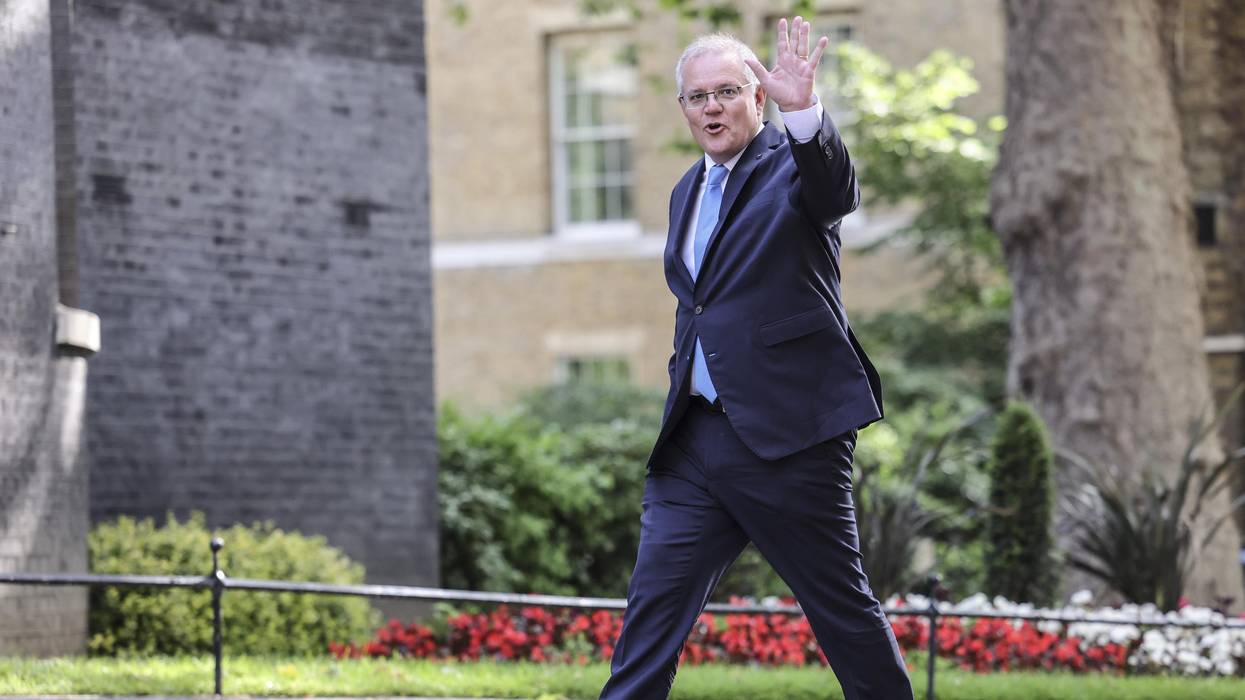
Liberal Prime Minister Scott Morrison conceded defeat late Saturday night to Labor leader Anthony Albanese, a career politician who called himself the first candidate with a "non-Anglo-Celtic name" to ever run for the nation's highest office.
Albanese delivered a victory speech in which he first committed to the Uluru Statement From the Heart--a pro-Indigenous declaration--before vowing to "seek our common purpose and promote unity and not fear."
In stark contrast to the administration of fossil fuel champion Morrison, Albanese said that "together we can end the climate wars. Together we can take advantage of the opportunity for Australia to be a renewable energy superpower."
Amanda McKenzie, CEO of the research group the Climate Council, declared that the real winner in Saturday's election was climate action.
"Millions of Australians have put climate first," she said in a statement. "Now, it's time for a radical reset on how this great nation of ours acts upon the climate challenge."
With uncertainty over whether Labor would control the 76 seats needed to form a parliamentary majority--the party held 72 seats as of Saturday evening--Australian Greens leader Adam Bandt, who was re-elected in his Melbourne House district by more than 20 points over Labor challenger Keir Paterson, signaled his party is "willing to talk" with Albanese about a possible coalition.
"The Greens are on track for our best result ever," Bandt told The Guardian, which reports the party's primary vote has increased nationally by 1.9% to 12.3%. "People have backed the Greens in record numbers and delivered a massive mandate for action on climate and inequality."
"Today's the day we kick Scott Morrison out, and today's the day to change the government, and support for the Greens is growing," Bandt said Saturday morning.
"People are voting... to push the next government to go further and faster on climate, and also tackle the housing affordability crisis and get dental and mental health in Medicare," he added, a reference to Australia's publicly-funded healthcare insurance program.
Bandt told The Sydney Morning Herald that "with so many people switching to the Greens this election, the signs are that we will be in balance of power in the Senate, potentially in our own right."
There are currently nine Greens serving in the 76-member Senate and one in the 151-member House of Representatives.
Greens deputy leader Larissa Waters, a senator representing the northeastern state of Queensland--arguably the nation's most conservative--hailed Saturday's early results there as "looking very, very promising for a real greenslide."
"We have more people than ever flock to want to help us to campaign to win those seats," she told the Morning Herald. "In many... areas people have elected Greens at both other levels of government, and they really liked what they got and so it emboldened them to consider Greens federally as well."
After launching a massive grassroots get-out-the-vote campaign that hammered home the imperative of climate action amid devastating drought, heatwaves, wildfires, flooding, and destruction of the Great Barrier Reef, the Greens appeared likely to win three House seats in Queensland.
"We've just had three years of droughts and then fires and then floods and then floods again and people can see that this is happening," said Bandt. "I think increasingly what we're seeing is that that cuts across all voting persuasions, it cuts across all demographics--people know it's happening."
In a major power shift, architect Elizabeth Watson-Brown wrested control of the Liberal stronghold of Ryan in the western suburbs of Brisbane--Queensland's capital and the nation's third-largest city--from one-term incumbent Julian Simmonds after securing a swing of more than 10 points on preferences in Australia's ranked-choice system. The district had been held by the right-wing Liberal-National coalition since 1972.
"We are witnessing a tectonic shift in Australian politics," Watson-Brown told The Guardian, "and Queensland is leading the way."
In the key seat of central Brisbane, Stephen Bates was leading Liberal incumbent Trevor Evans by more than 10 points late Saturday.
Bates said he was inspired to enter politics while working in the United States, where he "experienced the consequences of a government that legislates people into poverty" and where he saw a colleague "crying because she had to make a decision--pay for her insulin or her rent."
"In this moment, a fire was lit inside of me and I knew I had to make sure this situation could never happen to anyone back home in Australia," he said.
In another key seat, Griffith, Max Chandler-Mather--who campaigned on a platform that includes tuition-free university, abolishing student loan debt, and building one million units of public housing-- was leading Liberal candidate Olivia Roberts and Labor incumbent Terri Butler.
"Let's be very clear, we are only just getting started," vowed Chandler-Mather. "Think about how far we've come and imagine were we can go over the next 10 to 15 years if we continue on this trajectory. The biggest asset that the political establishment has is low expectations. Well tonight, we raised those expectations."
As military tensions mount between the United States and China over the Solomon Islands' decision to pursue a security pact with Beijing, former Pacific Island nation leaders on Friday reaffirmed that rising sea levels driven by climate change--not great-power geopolitical jostling--is the region's biggest threat.
"These nations have done very little to address their own greenhouse gas emissions."
The Pacific Elders Voice Group--whose members include the former leaders of the Marshall Islands, Palau, Kiribati, and Tuvalu; a Fijian ex-minister; and a former congressional delegate from the U.S. colony of Guam--issued a statement saying it "reiterates that the primary security threat to the Pacific is climate change."
"The growing military tension in the Pacific region created by both China and the United States and its allies, including Australia, does little to address the real threat to the region caused by climate change," the group asserted. "These nations have done very little to address their own greenhouse gas emissions, despite statements of intent."
According to The Guardian:
Climate-induced migration has already begun from the Pacific, with people across the region forced to leave a number of island groups that are disappearing or becoming uninhabitable due to rising sea levels.
Last year's report by the Intergovernmental Panel on Climate Change said global heating above 1.5degC would be "catastrophic" for Pacific Island nations and could lead to the loss of entire countries due to sea level rise within the century.
The former leaders' statement comes amid increasingly tense relations between the United States, Australia, and other allies on one side and China on the other over the latter's recent signing of a bilateral security agreement with the Solomon Islands.
While insisting that Ukraine has the sovereign right to pursue closer ties with NATO and the West, the United States has refused to rule out an invasion of the Solomon Islands if its leaders allow China to establish a military base there.
Meanwhile, as Australian media amplify calls to bomb and invade the Solomon Islands, right-wing Prime Minister Scott Morrison last week threatened that a Chinese base on the archipelago would constitute a "red line."
Firing back at Australian objections to a perceived lack of transparency surrounding the security agreement, Solomon Islands Prime Minister Manasseh Sogavare said Friday that, "I learnt of the AUKUS treaty in the media," a reference to the new trilateral treaty between the U.S., U.K., and Australia.
Related Content

"The AUKUS treaty will see nuclear submarines in Pacific waters," said Sogavare. "One would expect that as a member of the Pacific Family, Solomon Islands... would have been consulted," he added, referring to Australia's oft-derided description of regional relations, in which Canberra plays the dominant role.
Numerous analysts say AUKUS--which Beijing denounced as a return to a "Cold War" mentality that would "undermine peace and stability" in the region--was the main impetus for the China-Solomon Islands pact.
"The security and future of the Pacific must be determined primarily by Pacific Island countries and not by external powers competing over strategic interests within our region," the Pacific Elders Voice Group said in its statement. "We call on all nations to respect the sovereignty of all Pacific Island countries and the right of Pacific peoples to develop and implement their own security strategies without undue coercion from outsiders."
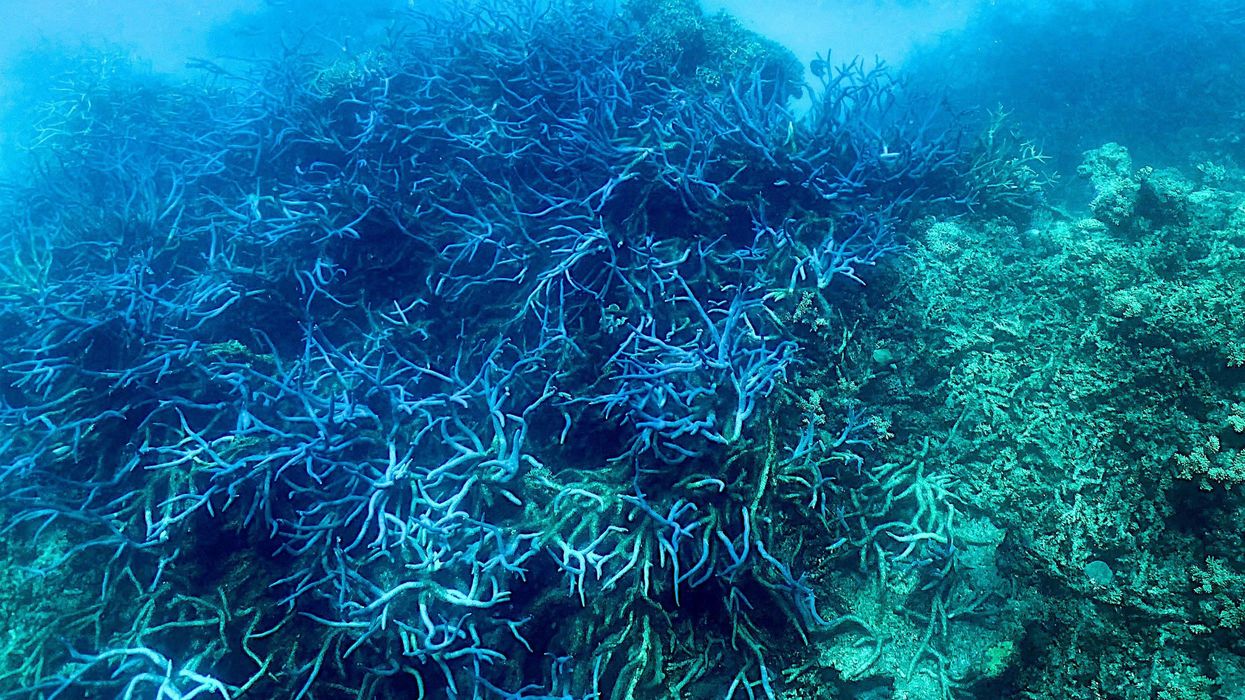
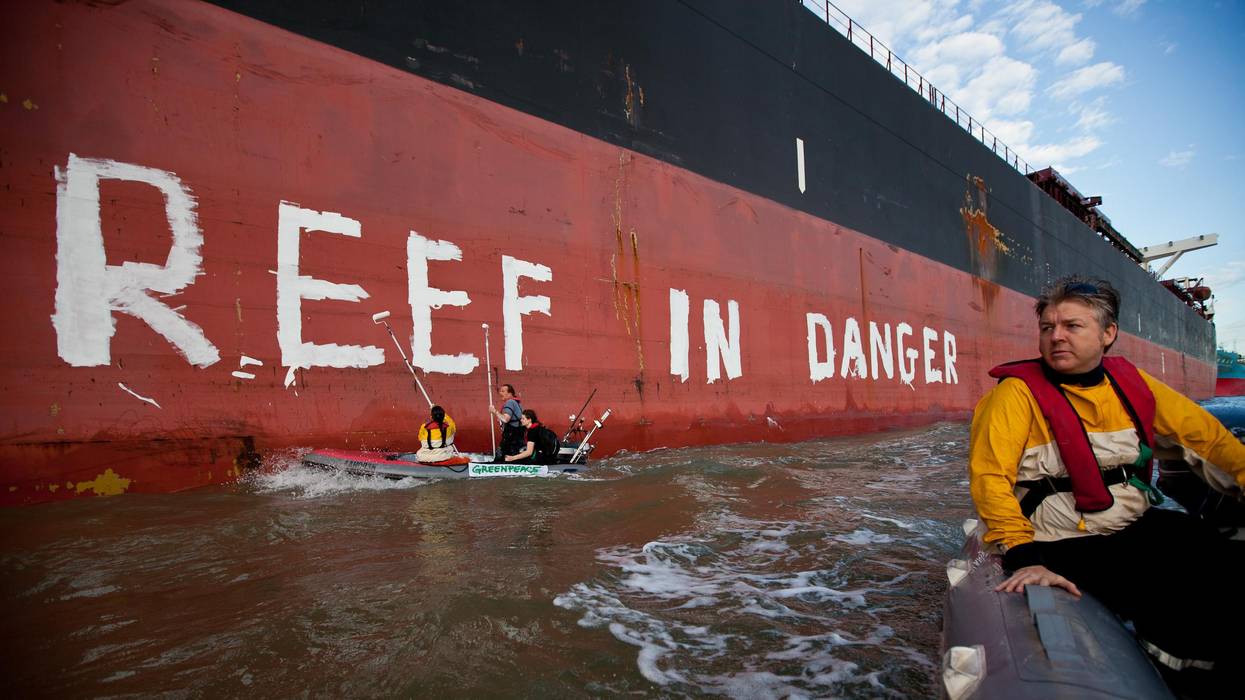
An assessment of the Great Barrier Reef's health released Friday reveals widespread bleaching of the world's largest coral organism, sparking fresh demands for the Australian government to ditch fossil fuels and finally commit to protecting both the UNESCO site and planetary health.
"Corals on the Great Barrier Reef are not supposed to bleach in cooler La Nina summers. 2022 is a first, thanks to anthropogenic heating."
"While not yet officially declared a mass bleaching event, this is still disastrous news for our reef, the marine life, and communities that rely on its health," said Dr. Lissa Schindler, Great Barrier Reef campaign manager with the Australian Marine Conservation Society (AMCS).
The March 18 update from the Great Barrier Reef Marine Park Authority suggests a fourth major bleaching event since 2016 is underway and points to warmer than average sea surface temperatures--0.5-2degC above average throughout the park, with some areas ranging 2-4degC above average.
"Bleaching has been detected across the marine park--it is widespread but variable, across multiple regions, ranging in impact from minor to severe," the assessment states.
"Most observations of bleaching have been of paling or fluorescing," the update continues, "but several locations have whole colonies bleached white"--a status "consistent with the patterns of heat stress experienced on the reef this summer."
Of particular note, say reef defenders, is that the widespread bleaching comes during a La Nina year, which can help cool waters.
"This is a sure sign that climate change caused by burning coal, oil, and gas is threatening the very existence of our reef," declared Greenpeace Australia Pacific climate impacts campaigner Martin Zavan.
According to bleaching expert Prof. Terry Hughes, "Corals on the Great Barrier Reef are not supposed to bleach in cooler La Nina summers. 2022 is a first, thanks to anthropogenic heating."
Hughes also pointed to the marine park authority's aerial surveys that "reveal (so far) a footprint of mass bleaching similar to 2017, when the central 500km region was hardest hit."
"How many more maps will it take to trigger real reductions in greenhouse gas emissions?" he asked.
The right-wing government of Prime Minister Scott Morrison has faced sustained criticism from climate campaigners for doubling down on fossil fuel projects amid the planetary emergency. The prime minister also drew sharp criticism last year after launching a successful lobbying effort to keep the reef off a list of World Heritage Sites considered "in danger." Reporting earlier this month that the Australian government pushed for the Intergovernmental Panel on Climate Change to soften its assessment of the reef being "in crisis" sparked additional criticism.
In a lengthy Twitter thread Friday, Greenpeace Australia Pacific CEO David Ritter debunked Morrison's claims of having protected the reef and pointed to the government's multiple climate failures.
"Preserving the reef would require clear and meaningful climate action, like a meaningful net-zero plan and a moratorium on new coal, oil, and gas projects," said Ritter. "Instead, Australia was recently ranked last out of 170 nations for climate action."
Ritter also noted that last year his group "delivered legal notice directly to Scott Morrison [and] advised he is in breach of his World Heritage Treaty obligations to protect the reef."
"So, it's time to cut the crap," he added. "We know the reef is in danger, but we also know how to protect it."
Addressing the prime minister, Ritter said, "Do your job to safeguard Australians and our magnificent natural heritage, by speeding up our transition to clean energy and urgently phasing out fossil fuels."
The update was released just days before UNESCO's reef monitoring mission begins.
AMCS's Schindler said that the mission delegates must "witness the severity and widespread nature of this devastating event and while out there the Morrison government should explain to the mission why they continue to approve and cut red tape for fossil fuel projects."
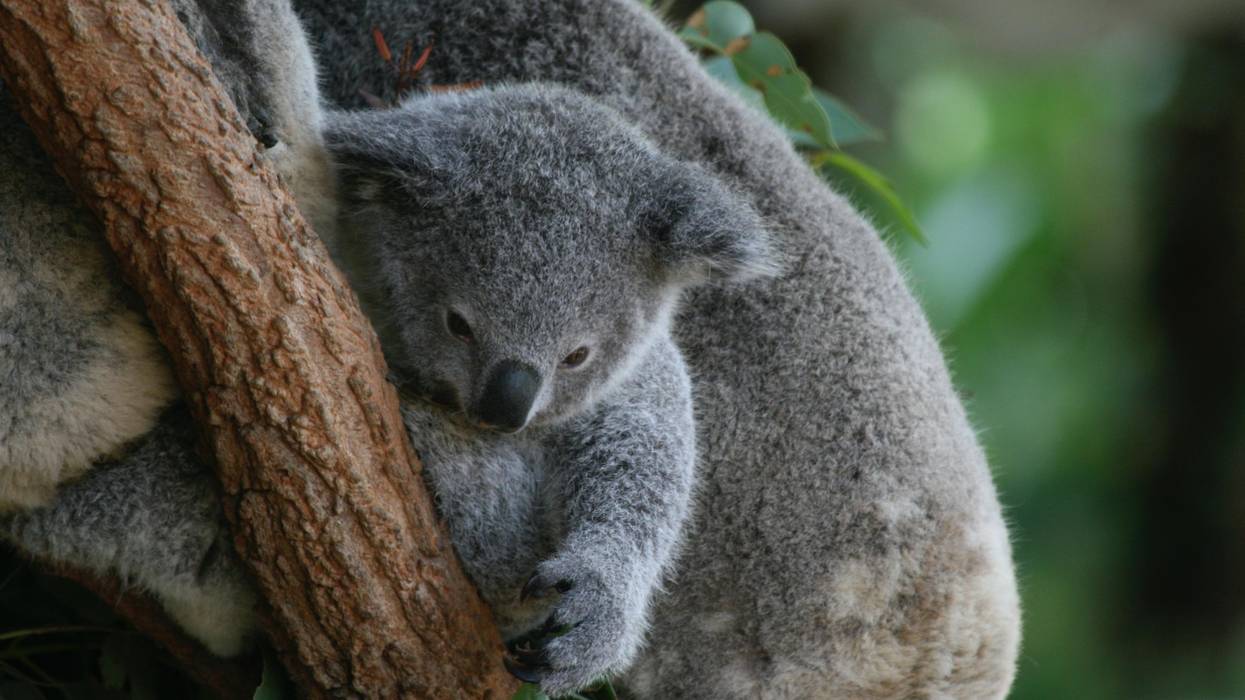
While mostly welcoming the Australian government's decision to officially list the koala as endangered in parts of the country, conservationists on Friday reaffirmed the need for legislation to truly protect the iconic marsupials and--even more importantly--the imperative to address the root causes of species loss.
"What we need is a Koala Protection Act."
The announcement by Australian Environment Minister Sussan Ley affects koala populations in the eastern states of New South Wales (NSW) and Queensland, as well as in the Australian Capital Territory, and upgrades the species from its previous designation of "vulnerable."
Ley cited "the impact of prolonged drought, followed by the black summer bushfires, and the cumulative impacts of disease, urbanization, and habitat loss over the past 20 years" as reasons for the reclassification.
Rebecca Keeble, Oceania regional director at the International Fund for Animal Welfare (IFAW), said in a statement that "this decision is a double-edged sword. We should never have allowed things to get to the point where we are at risk of losing a national icon."
"This must be a wake-up call to Australia and the government to move much faster to protect critical habitat from development and land-clearing and seriously address the impacts of climate change," she added.
Deborah Tabart of the Australian Koala Foundation (AKF) tweeted that the "change in status is nothing but a token gesture that results in no legislative change to save the koala."
"What we need is a Koala Protection Act," she added, referring to proposed legislation modeled on the U.S. Bald and Golden Eagle Act, which is credited with bringing the national symbol of the United States back from the brink of extinction.
The AKF also slammed the government's decision to not include koalas in the state of Victoria in the new listing.
Due largely to climate-driven weather events--including devastating wildfires--and habitat destruction for urban and industrial development, koala populations have plummeted in eastern Australia. A 2020 IFAW report revealed a 50% decline in the koala population of the northeastern state of Queensland; a parallel analysis by the group found as much as a 61% drop in the marsupial's numbers in neighboring NSW.
Koalas have been protected under Australia's Environment Protection and Biodiversity Conservation Act (EPBCA) for a decade.
However, "since then, koalas have suffered relentless ongoing pressure," says WWF Australia. "Land clearing has ramped up, increasing 13-fold in NSW since the government weakened native vegetation laws in 2016. South East Queensland's koala population is also projected to shrink to fewer than 8,000 by 2032."
Protecting habitats critical to species' survival is a key element of the EPBCA; however, according to the AKF, "there are a litany of instances where industry is still free to destroy 'habitat critical to the survival of the Koala.'"
In April 2020, the administration of right-wing Prime Minister Scott Morrison--an ardent booster of the nation's AU$47 billion ($33.5 billion) coal industry--quietly overhauled a mining assessment process to allow corporations, which previously had to find replacement habitats for species threatened by their activities, to pay the government to do it for them.
A scathing government audit subsequently found Morrison was failing to safeguard the environment. Greenpeace Australia said the new policy had "big implications for Australia's threatened species and ecological communities, including our iconic koala."
In July 2020, a report on koala populations and habitats published by the parliament of the southeastern state of NSW concluded that, "without urgent government intervention," the species would be extinct there by 2050.
Related Content

Last month, Morrison government announced it would invest a record AU$50 million ($35.7 million) "to boost the long-term protection and recovery efforts for Australia's koalas."
However, green groups said that amount is insufficient, and that the government can't tackle the biodiversity crisis with money alone.
IFAW's Keeble called AU$50 million "a drop in the bucket."
"If we don't address the root cause of their decline, which is habitat loss and climate change," she warned, "we're just plugging holes in a sinking ship."
Prime Minister Scott Morrison's government on Tuesday announced Australia's plan for net-zero emissions by 2050--a plan that includes no further ambition toward 2030 targets, relies on unproven carbon capture technology, and does not phase out fossil fuels.
"We need to slash emissions today, tomorrow, this year, and this decade--not in 2050."
"We need to slash emissions today, tomorrow, this year, and this decade--not in 2050," said 350 Australia CEO Lucy Manne in a statement. "This is the climate policy equivalent of showing up late to a party, refusing to bring what the host asked you to, and then trying to ruin the party for everyone."
Among the principles guiding the conservative government's plan, according to the document, are "technology not taxes" and to "expand choices not mandates."
In an op-ed shared on the government website, Morrison took a defiant stance, saying, "We won't be lectured by others who do not understand Australia."
"We want our heavy industries, like mining, to stay open, remain competitive, and adapt," he added, "so they remain viable for as long as global demand allows."
Reuters, which noted that Australia is "one of the world's largest emitters of greenhouse gases on a per capita basis and a major exporter of fossil fuels such as coal," reported that the government "will not legislate the [2050] goal and instead rely on consumers and companies driving emission reductions."
The plan--issued just days before the United Nations COP 26 climate summit begins in Scotland and less than a week after leaked documents revealed Australia is among a group of fossil fuel-producing nations seeking to water down a key U.N. climate report--came in for heavy criticism from groups like Greenpeace Australia Pacific.
"This is a political scam, not a serious plan," said the organization's CEO David Ritter, who likened the pledge to "effectively just another fig leaf for inaction."
"If Morrison expects to front up to COP 26 with this sorry excuse for a net-zero emissions target and no increase in formal ambition on Australia's 2030 target, he'll be laughed out of the room," said Ritter, and "Australia will face the economic and diplomatic consequences of his failure to act on climate change."
Related Content

For Richie Merzian, climate and energy program director at the Australia Institute, the plan amounts to "fraud" if it's not joined by an end to coal and gas extraction and a transition to clean energy.
"The world is gathering in Glasgow in only a few days to increase efforts and targets until 2030, the decisive decade according to President Biden," said Merzian. "The prime minister has missed the brief and is going to COP 26 with an empty net-zero by 2050 pledge with no immediate impact and every intention of expanding fossil fuel production."
Defying a "code red" warning about the climate crisis and sustained pressure to take urgent action on the planetary emergency, the conservative government of Australian Prime Minister Scott Morrison on Thursday vowed to continue coal mining.
Asked at a press conference whether his government would put a time limit on the coal industry, Morrison responded that the mining sector is "absolutely critical to Australia's future. And we'll keep on mining. Of course we'll keep on mining."
Pressed about coal specifically, Morrison said that the nation would "keep mining the resources that we're able to sell on the world market. Now, we obviously anticipate that over time, world demand for these things may change."
Australia's Minister for Resources and Water Keith Pitt also doubled down on coal this week, declaring that it has a future in the country "well beyond 2030."
"The reality," Pitt said in a Thursday statement, "is that global demand for Australian coal is increasing and forecast to continue rising into the next decade at least."
"The latest science, and extreme floods, fires, and heatwaves being experienced here and around the world, tell us climate change is accelerating."--Australian civil society groups
He further touted the unproven ability of carbon capture and storage technology to mitigate coal's climate impact, asserted that coal exported to Asia is "creating economic and social opportunities for millions of people," and said industry royalties and taxes would help the economic recovery from the pandemic.
The ministers' comments came as a study published Wednesday in the journal Nature estimated that 90% of the world's coal must remain in the ground in order to have a 50% shot at meeting a 1.5degC target limit of warming.
The remarks also came amid a push directed at Australia from United Nations Special Adviser on Climate Change Selwin Hart for Australia to ditch coal.
"We fully understand the role that coal and other fossil fuels have played in Australia's economy, even if mining accounts for a small fraction--around 2%--of overall jobs," Hart said in a pre-recorded speech to an Australian National University forum held Monday. "But it's essential to have a broader, more honest and rational conversation about what is in Australia's interests."
"We are at a critical juncture in the climate crisis," he added, warning that failure to change business-as-usual approaches to energy "will soon send Australia's high living standards up in flames."
The Morrison government has also faced pressure from advocacy groups to stop propping up fossil fuels.
In a joint statement last month, a diverse collection of groups including Australia's Climate Council and the Australian Marine Conservation Society said that "there is no 'safe' level of global warming."
"Already, at a global average temperature rise of 1.2degC, we're experiencing more powerful storms, destructive marine and land heatwaves, and a new age of megafires," the groups said. "The latest science, and extreme floods, fires, and heatwaves being experienced here and around the world, tell us climate change is accelerating."
"Our response," the groups said, "must match the scale and urgency of this worsening crisis."
Just ahead of a United Nations World Heritage Committee meeting weighing updated classifications for U.N. Educational, Scientific, and Cultural Organization sites, new reporting on Wednesday reveals how Australia is working to thwart the Great Barrier Reef being designated as "in danger."
According to The Guardian, Saudi Arabia and Bahrain are co-sponsoring amendments that reject UNESCO's finding, released last month, that the reef is in danger and would prevent such a designation until 2023 or later.
"Imagine teaming up with fossil fuel pariah states to delay saving Australia's greatest natural wonder," quipped Jo Robb, a Green Party councillor for South Oxfordshire in England. Prime Minister "Scott Morrison's Australia is a disgrace."
In its draft recommendation in June, UNESCO said (pdf) the reef should be inscribed on the List of World Heritage in Danger as it's facing "ascertained danger," language the body uses to refer to "specific and proven imminent threats." The draft pointed to ongoing deterioration from threats including the climate emergency and suffering from significant coral bleaching events in 2016, 2017, and 2020.
That recommendation drew immediate criticism from Morrison's government, which continues to prop up the fossil industry. Climate campaigners, however, said the recommendation was totally unsurprising. "The UNESCO warning could not be any clearer," Greenpeace Australia Pacific spokesperson Martin Zavan said last month. "The Great Barrier Reef is in danger because of the Morrison government's failure to act on climate change."
As The Guardian noted, Morrison's government is engaging in a multi-pronged effort to keep the reef off the "in danger" list, or at least delay the decision. Apart from the proposed amendments, Australia's government is hosting a snorkeling trip in the reef for ambassadors from several countries including nine that have voting rights at the two-week World Heritage Committee meeting starting July 16. The committee is set to consider Australia's designation on July 23.
Further efforts come from Australian Environment Minister Sussan Ley--who last month accused UNESCO of carrying out an "appalling" process in making its "in danger" assessment of the reef. She is now in Europe lobbying ambassadors to vote against the designation.
"The government is sparing no effort, or expense, trying to develop conceal the dire situation faced by the Great Barrier Reef," wrote Lesley Hughes, a Climate Council spokesperson and distinguished professor of biology at Macquarie University, in an op-ed Wednesday at The Age. "Imagine if the federal government displayed the same zeal and urgency in trying to fix the root cause of the reef's poor health: climate change, driven by the burning of fossil fuels like coal, oil, andarent' gas."
The Guardian reported Wednesday:
In the amendments, the committee is being asked to reject UNESCO's official finding the reef was facing "ascertained danger"--a trigger for entry onto the "in danger" list.
A UNESCO mission would be held to "develop a set of corrective measures" before Australia sends a report to the U.N. organization by December 2022, rather than the original February 2022 date.
Instead of asking the committee to decide next week on the "in danger" inscription, the amendments state that should not be considered until 2023 at the earliest.
The revelations come just a days after a coalition of leading Australian environmental groups sent a joint letter to World Heritage Committee members that the "science is clear: the Great Barrier Reef is in danger from rising sea temperatures and ocean acidification, driven by increasing greenhouse gas emissions."
"The World Heritage Committee placing the Great Barrier Reef on the List of World Heritage in Danger must prompt decisive action from the Australian government," the groups said, "united with the global community, to protect the Outstanding Universal Value of one of the most beautiful and biodiverse places on Earth. "
In her op-ed, Hughes said that the committee is facing "a high-stakes decision" and warned that "if the factors endangering the reef aren't addressed, it could eventually be removed from the World Heritage list all together, which would be both humiliating and economically devastating for Australia."
"Every country needs to play a role in the global effort to rapidly bring down greenhouse gas emissions and address climate change, so as to ensure a safe future for people, flora, and fauna, and precious places like the Great Barrier Reef," she added. "The world is noticing that Australia is not."
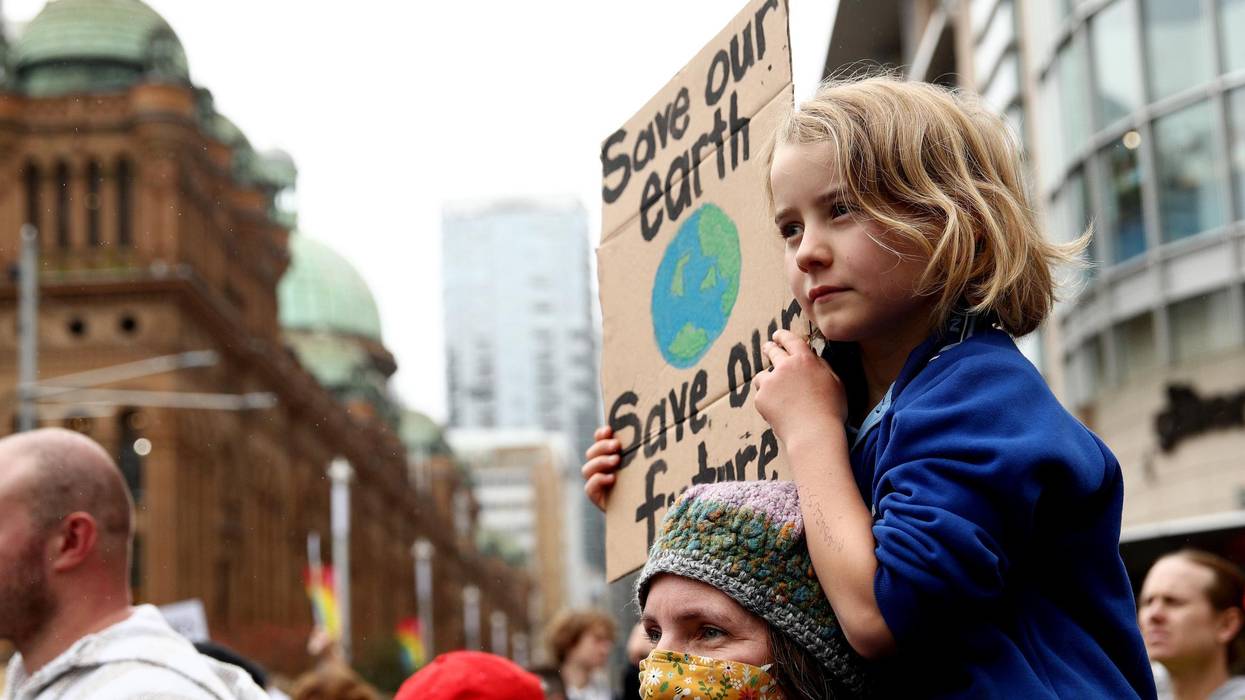
Tens of thousands of demonstrators took part in protests across Australia on Friday, demanding Prime Minister Scott Morrison stop funding fossil fuels and start treating the climate crisis as an emergency.
Actions were scheduled to take place at nearly 50 locations including in Perth, Sydney, Adelaide, and Hobart.
School Strike 4 Climate Australia, which heralded the in-person actions as "the biggest climate strike since pre-pandemic," said that Morrisson "can't ignore the tens of thousands of students, First Nations people, union workers, and others who were marching through the streets today!"
Among the youth "striking" from school to take part in the Sydney rally was 17-year-old David Soriano.
"We're scared and concerned," Soriano told the BBC.
"We're doubtful that there might not be a future in store for the generations after us, and even our own generation," he said.
According to organizers' event description:
The Morrison government could be protecting our climate, land, and water, and creating thousands of new jobs by growing Australia's renewable energy sector and backing First Nations solutions to protect [our] country.
Instead, they are lining the pockets of multinational gas companies, which are fueling the climate crisis, devastating our land and water, wrecking our health, and creating very few jobs.
On May 21, we're striking to tell the Morrison government that if they care about our future, they must stop throwing money at gas.
Further catalyzing anger at Morrison's government was its recent announcement that it's committing $600 million of public funds to a new gas-fired power plant New South Wales--a plan that makes "zero sense," according to the Climate Council --and that, while aligning with his government's push for a "gas-led recovery," stood in stark contrast to the International Energy Agency's declaration the same day that there is "no need for investment in new fossil fuel supply in our net-zero pathway."
Erin Shutter, a high school student in Brisbane, welcomed demonstrators young and not-so-young who came out for the protests on Friday.
"Our future is incredibly important and currently our government isn't doing enough to protect and fight for it," she told The Age, "but clearly a lot of people will."
Declaring "enough is enough," over 100,000 Australian women and their allies took to the nation's streets Sunday and Monday during a nationwide #March4Justice to denounce sexual violence and gender discrimination.
"I watched as the prime minister of Australia publicly apologized to me through the media, while privately the media team actively undermined and discredited my loved ones."
--Brittany Higgins, survivor
Over 110,000 people in at least 40 cities and towns took part in the demonstrations, according to event organizers. Janine Hendry, the main organizer, told the New York Times that "there are huge numbers of women around the country that have had enough, quite frankly, of their appalling response to sexual assault and harassment."
"We want change and we want it now," she said.
The organizers handed Parliament a petition addressed to Prime Minister Scott Morrison demanding four immediate actions, reported by the Sydney Morning Herald as:
Morrison's conservative Liberal Party has been roiled by recent sexual assault allegations. Earlier this month, Australian Attorney-General Christian Porter confirmed he stands accused of raping a 16-year-old in 1988 who, after writing down what she said happened to her, killed herself last year. Porter denies the allegation.
On the lawn of Parliament House in the capital city of Canberra, Brittany Higgins--a former Liberal staffer who says she was raped by a male colleague in a government minister's office in 2019--delivered a powerful address that brought many in the audience to tears.
"We are here because it is unfathomable that we are still having to fight this same stale, tired fight," said Higgins. "My story was on the front page for the sole reason that it was a painful reminder to women that it can happen in Parliament House and can truly happen anywhere."
"I was raped inside Parliament House by a colleague and for so long it felt like the people around me did not care about what happened because of what it might mean for them," she continued. "It was so confusing because these people were my idols. I watched as the prime minister of Australia publicly apologized to me through the media, while privately the media team actively undermined and discredited my loved ones. I tuned into Question Time to see my former bosses, people that I had dedicated my life to, downplay my lived experience."
Biff Ward, a founding member of the 50-year-old Canberra Women's Liberation Group, also spoke outside Parliament House.
"I have been crying for weeks because I thought I would never see this day," said Ward. "It feels like a tidal wave of rage is sweeping the land."
In Melbourne, demonstrators laid out a 100-foot-long list containing the names of nearly 900 women and children killed by men since 2008.
In the Tasmanian capital of Hobart, Grace Tame--an activist, sexual assault survivor, and 2021 Australian of the Year--told demonstrators that "evil thrives in silence."
"Behavior unspoken, behavior ignored, is behavior endorsed," added Tame. "But if one of these barriers to progress is silence... it gives me hope because the start of the solution is also quite simple--making noise!"
The Australian protests came days after the World Health Organization released a report on the largest-ever study of the prevalence of violence against women. According to the report, one in three females worldwide, or around 736 million women, have been subjected to physical or sexual violence, mostly by intimate partners.
In the United States, the National Domestic Violence Hotline is 1-800-799-SAFE (7233) and a live chat service is available at www.thehotline.org. Both offer 24/7, free, and confidential support.
In Australia, if you or someone you know is in immediate danger, dial 000. Click here for a list of national and state crisis line numbers.
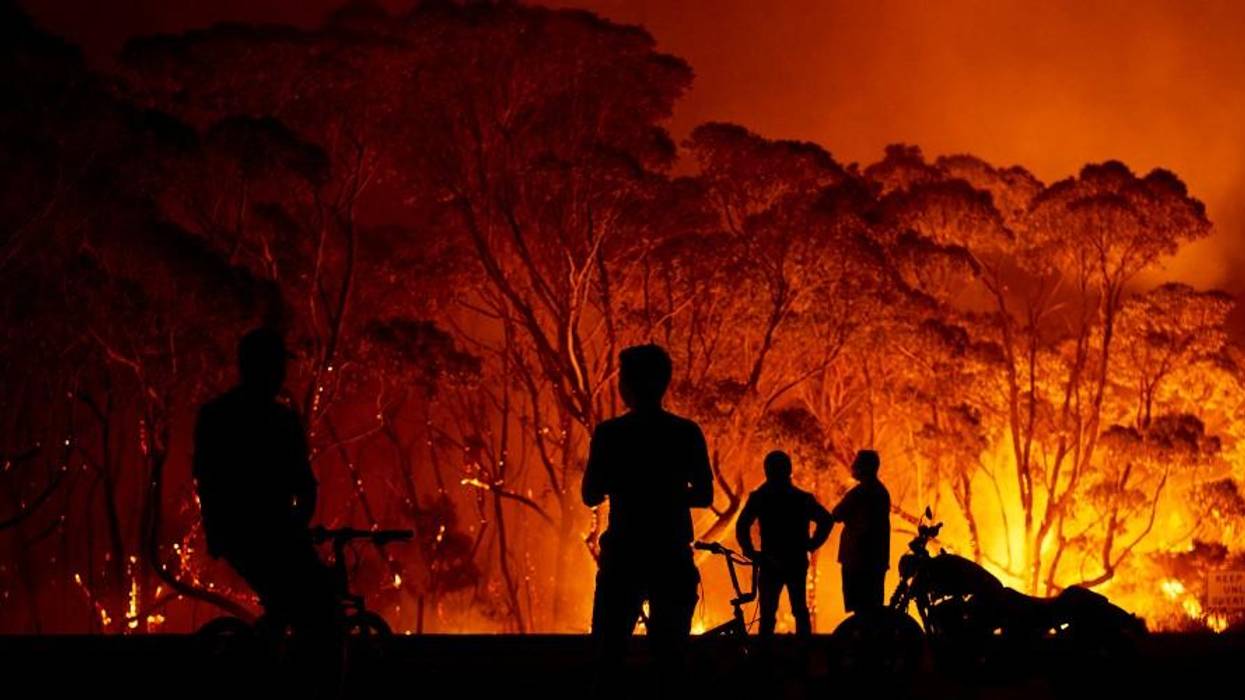
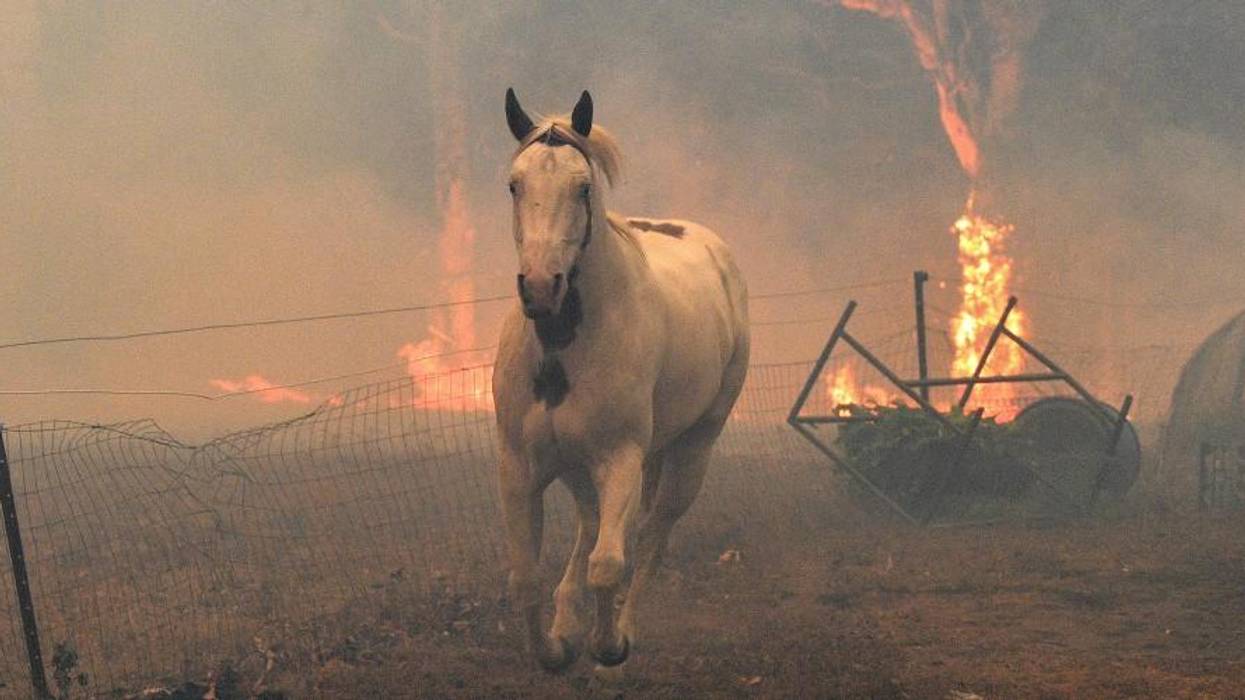
It will be a long hot summer in Australia. Fires of almost biblical proportions have swept across the country, devastating land, property and wildlife. More than 30 people have been killed, a billion animals have died, and more than 3,000 homes have been burned down. The cost of the bushfires has been estimated at $2bn and could climb even further.
Although heavy rain and lower temperatures this month have helped put out some fires, the threat of the blaze coming back is still imminent.
Meanwhile, Australian Prime Minister Scott Morrison's response to this environmental catastrophe has been to refuse to expand measures to combat climate change. In December, as the death toll was climbing and Australian fire brigades struggled to control the fires, the prime minister left the country for a holiday in Hawaii.
His attitude and actions illustrate quite well just how the wealthy and their political allies plan to rule our burning planet.
The harrowing and apocalyptic scenes coming out of Australia are only the beginning of a new normal in which climate change will result in climate apartheid. Those with the means and the resources will leave climate catastrophe zones or otherwise protect themselves from the worst effects of climate change, while poor communities and nations of the Global South, indigenous people and people of colour will bear the brunt.
Australia is not the only country with a history of brutal colonialism which has taken a cynical, cruel and nihilistic approach to the environment, climate activists and vulnerable populations.
Meanwhile, global corporations will continue to lobby governments to take little action on climate change and continue to undermine the efforts of climate activists.
In a July 2019 report, Philip Alston, the UN Special Rapporteur on extreme poverty and human rights, warned that climate change will push 120 million more people into poverty by 2030, causing displacement, food insecurity and worsening health, and posing "dire threats" to democracy and human rights. "Perversely, while people in poverty are responsible for just a fraction of global emissions, they will bear the brunt of climate change and have the least capacity to protect themselves," Alston wrote.
In Australia, this is already apparent. The country has had devastating bush fires for years, which have disproportionately affected impoverished areas. Aboriginal communities continue to be subjected to discrimination, marginalisation and dispossession, their land seized to make way for more resource extraction.
Although the country - one of the world's top coal exporters - is clearly suffering from the devastating consequences of climate change, more coal mines are being built on aboriginal land and more coal is being exported.
Meanwhile, the ruling political elite of the country has consistently refused to take major action on climate change, dismantle the coal industry, and undertake a massive divestment from fossil fuels. Its attitude of climate change denial has been buttressed by a regressive media establishment dominated by Rupert Murdoch's media empire.
Australia is not the only country with a history of brutal colonialism which has taken a cynical, cruel and nihilistic approach to the environment, climate activists and vulnerable populations.
Six months ago, another country was experiencing devastating fires - Brazil. There the Amazon forest, which is considered a bulwark against climate change, was burning under the watch of Brazilian President Jair Bolsonaro, another climate denialist.
In Brazil, 98 percent of indigenous land falls within the Amazon, which means that forest fires also disproportionately affect indigenous communities.
Bolsonaro not only did not take adequate action against the blaze, but his aggressive anti-environment rhetoric was also seen as encouraging farmers to start fires and clear land for more farms and pastures. Even worse, he has been accused of inciting genocide, as his political stances have emboldened acts of violence and murder against indigenous people.
Bolsonaro has also implemented a number of troubling policies that will hurt efforts to preserve the environment. Those include cutting the budget of the Brazilian environmental protection agency, easing fines for illegal pollution and deforestation, and lifting bans on growing sugarcane in the Amazon and protected tropical wetlands.
The situation in the US is not that much different, either. Last year, US President Donald Trump, another proponent of climate change denialism, threatened to cut funding for forest fire management in California after the state went through another wave of devastating fires. There, too, impoverished communities have faced the worst of the blaze.
Trump also personally intervened to cut and withhold billions of dollars in funding to Puerto Rico, which was devastated by Hurricane Maria and a recent earthquake, because he claims the territory is corrupt and ungrateful. In doing so he followed in the footsteps of President George W Bush, whose administration launched a pathetic response to the devastation in predominantly black communities in New Orleans from Hurricane Katrina in 2005.
Trump rolled back nearly 100 rules designed to protect the air, land and water, and is removing environmental protection for half of the nation's streams and wetlands. Under his watch, the US Department of Homeland Security labelled climate activists as extremists alongside mass killers and white supremacists.
Apart from these regressive policies in Australia, Brazil and the US, wealthy nations around the globe are increasingly militarising their borders to prevent a growing number of climate refugees from seeking asylum on their territories. European nations, for example, have increasingly relied on harsh measures and dubious deals with repressive regimes and violent non-state actors to keep refugees away from their borders.
These climate apartheid proponents behave as if their walled fortresses, air-conditioned and high-altitude enclaves will insulate them from the worst ravages of climate change and its most devastated front-line victims. But the reality is that there is no bailout from a climate catastrophe, even for the rich.
By now it is clear that change will not come from the top. The business and political elites are bent on maintaining the status quo, however deadly it may be.
For this reason, it is the grassroots that has to mobilise to defy climate apartheid and push for urgent climate change that includes not only divesting from fossil fuels and cutting back on global emissions, but also reforming the world economy away from the growth frenzy that currently drives it. Also, we must fight for robust economic and social rights, including a strong social safety net, social security, access to food, shelter, healthcare and decent work for all.
Global grassroots mobilisation is the only way to prevent climate apartheid from taking root and taking adequate action to save the human civilisation from dying out because of its own folly.