SUBSCRIBE TO OUR FREE NEWSLETTER
Daily news & progressive opinion—funded by the people, not the corporations—delivered straight to your inbox.
5
#000000
#FFFFFF
To donate by check, phone, or other method, see our More Ways to Give page.
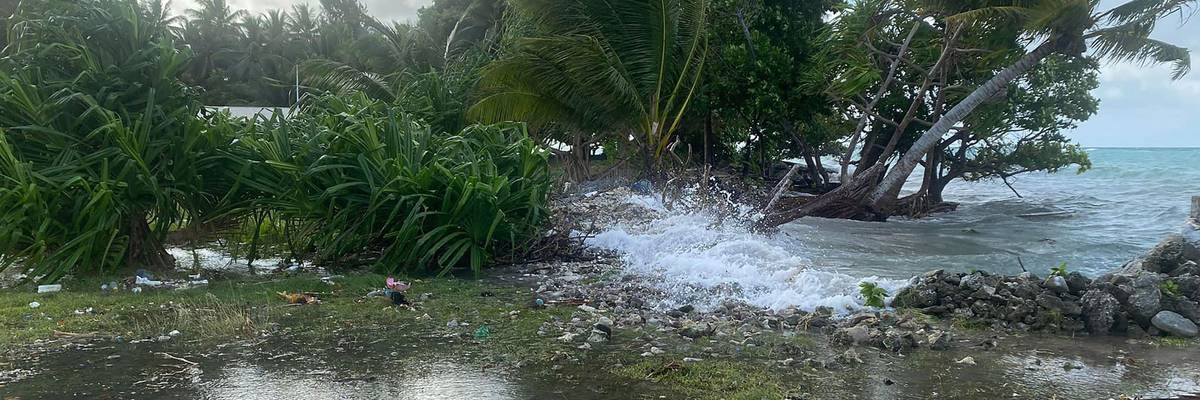
As military tensions mount between the United States and China over the Solomon Islands' decision to pursue a security pact with Beijing, former Pacific Island nation leaders on Friday reaffirmed that rising sea levels driven by climate change--not great-power geopolitical jostling--is the region's biggest threat.
"These nations have done very little to address their own greenhouse gas emissions."
The Pacific Elders Voice Group--whose members include the former leaders of the Marshall Islands, Palau, Kiribati, and Tuvalu; a Fijian ex-minister; and a former congressional delegate from the U.S. colony of Guam--issued a statement saying it "reiterates that the primary security threat to the Pacific is climate change."
"The growing military tension in the Pacific region created by both China and the United States and its allies, including Australia, does little to address the real threat to the region caused by climate change," the group asserted. "These nations have done very little to address their own greenhouse gas emissions, despite statements of intent."
According to The Guardian:
Climate-induced migration has already begun from the Pacific, with people across the region forced to leave a number of island groups that are disappearing or becoming uninhabitable due to rising sea levels.
Last year's report by the Intergovernmental Panel on Climate Change said global heating above 1.5degC would be "catastrophic" for Pacific Island nations and could lead to the loss of entire countries due to sea level rise within the century.
The former leaders' statement comes amid increasingly tense relations between the United States, Australia, and other allies on one side and China on the other over the latter's recent signing of a bilateral security agreement with the Solomon Islands.
While insisting that Ukraine has the sovereign right to pursue closer ties with NATO and the West, the United States has refused to rule out an invasion of the Solomon Islands if its leaders allow China to establish a military base there.
Meanwhile, as Australian media amplify calls to bomb and invade the Solomon Islands, right-wing Prime Minister Scott Morrison last week threatened that a Chinese base on the archipelago would constitute a "red line."
Firing back at Australian objections to a perceived lack of transparency surrounding the security agreement, Solomon Islands Prime Minister Manasseh Sogavare said Friday that, "I learnt of the AUKUS treaty in the media," a reference to the new trilateral treaty between the U.S., U.K., and Australia.
Related Content

"The AUKUS treaty will see nuclear submarines in Pacific waters," said Sogavare. "One would expect that as a member of the Pacific Family, Solomon Islands... would have been consulted," he added, referring to Australia's oft-derided description of regional relations, in which Canberra plays the dominant role.
Numerous analysts say AUKUS--which Beijing denounced as a return to a "Cold War" mentality that would "undermine peace and stability" in the region--was the main impetus for the China-Solomon Islands pact.
"The security and future of the Pacific must be determined primarily by Pacific Island countries and not by external powers competing over strategic interests within our region," the Pacific Elders Voice Group said in its statement. "We call on all nations to respect the sovereignty of all Pacific Island countries and the right of Pacific peoples to develop and implement their own security strategies without undue coercion from outsiders."
As military tensions mount between the United States and China over the Solomon Islands' decision to pursue a security pact with Beijing, former Pacific Island nation leaders on Friday reaffirmed that rising sea levels driven by climate change--not great-power geopolitical jostling--is the region's biggest threat.
"These nations have done very little to address their own greenhouse gas emissions."
The Pacific Elders Voice Group--whose members include the former leaders of the Marshall Islands, Palau, Kiribati, and Tuvalu; a Fijian ex-minister; and a former congressional delegate from the U.S. colony of Guam--issued a statement saying it "reiterates that the primary security threat to the Pacific is climate change."
"The growing military tension in the Pacific region created by both China and the United States and its allies, including Australia, does little to address the real threat to the region caused by climate change," the group asserted. "These nations have done very little to address their own greenhouse gas emissions, despite statements of intent."
According to The Guardian:
Climate-induced migration has already begun from the Pacific, with people across the region forced to leave a number of island groups that are disappearing or becoming uninhabitable due to rising sea levels.
Last year's report by the Intergovernmental Panel on Climate Change said global heating above 1.5degC would be "catastrophic" for Pacific Island nations and could lead to the loss of entire countries due to sea level rise within the century.
The former leaders' statement comes amid increasingly tense relations between the United States, Australia, and other allies on one side and China on the other over the latter's recent signing of a bilateral security agreement with the Solomon Islands.
While insisting that Ukraine has the sovereign right to pursue closer ties with NATO and the West, the United States has refused to rule out an invasion of the Solomon Islands if its leaders allow China to establish a military base there.
Meanwhile, as Australian media amplify calls to bomb and invade the Solomon Islands, right-wing Prime Minister Scott Morrison last week threatened that a Chinese base on the archipelago would constitute a "red line."
Firing back at Australian objections to a perceived lack of transparency surrounding the security agreement, Solomon Islands Prime Minister Manasseh Sogavare said Friday that, "I learnt of the AUKUS treaty in the media," a reference to the new trilateral treaty between the U.S., U.K., and Australia.
Related Content
"The AUKUS treaty will see nuclear submarines in Pacific waters," said Sogavare. "One would expect that as a member of the Pacific Family, Solomon Islands... would have been consulted," he added, referring to Australia's oft-derided description of regional relations, in which Canberra plays the dominant role.
Numerous analysts say AUKUS--which Beijing denounced as a return to a "Cold War" mentality that would "undermine peace and stability" in the region--was the main impetus for the China-Solomon Islands pact.
"The security and future of the Pacific must be determined primarily by Pacific Island countries and not by external powers competing over strategic interests within our region," the Pacific Elders Voice Group said in its statement. "We call on all nations to respect the sovereignty of all Pacific Island countries and the right of Pacific peoples to develop and implement their own security strategies without undue coercion from outsiders."
As military tensions mount between the United States and China over the Solomon Islands' decision to pursue a security pact with Beijing, former Pacific Island nation leaders on Friday reaffirmed that rising sea levels driven by climate change--not great-power geopolitical jostling--is the region's biggest threat.
"These nations have done very little to address their own greenhouse gas emissions."
The Pacific Elders Voice Group--whose members include the former leaders of the Marshall Islands, Palau, Kiribati, and Tuvalu; a Fijian ex-minister; and a former congressional delegate from the U.S. colony of Guam--issued a statement saying it "reiterates that the primary security threat to the Pacific is climate change."
"The growing military tension in the Pacific region created by both China and the United States and its allies, including Australia, does little to address the real threat to the region caused by climate change," the group asserted. "These nations have done very little to address their own greenhouse gas emissions, despite statements of intent."
According to The Guardian:
Climate-induced migration has already begun from the Pacific, with people across the region forced to leave a number of island groups that are disappearing or becoming uninhabitable due to rising sea levels.
Last year's report by the Intergovernmental Panel on Climate Change said global heating above 1.5degC would be "catastrophic" for Pacific Island nations and could lead to the loss of entire countries due to sea level rise within the century.
The former leaders' statement comes amid increasingly tense relations between the United States, Australia, and other allies on one side and China on the other over the latter's recent signing of a bilateral security agreement with the Solomon Islands.
While insisting that Ukraine has the sovereign right to pursue closer ties with NATO and the West, the United States has refused to rule out an invasion of the Solomon Islands if its leaders allow China to establish a military base there.
Meanwhile, as Australian media amplify calls to bomb and invade the Solomon Islands, right-wing Prime Minister Scott Morrison last week threatened that a Chinese base on the archipelago would constitute a "red line."
Firing back at Australian objections to a perceived lack of transparency surrounding the security agreement, Solomon Islands Prime Minister Manasseh Sogavare said Friday that, "I learnt of the AUKUS treaty in the media," a reference to the new trilateral treaty between the U.S., U.K., and Australia.
Related Content
"The AUKUS treaty will see nuclear submarines in Pacific waters," said Sogavare. "One would expect that as a member of the Pacific Family, Solomon Islands... would have been consulted," he added, referring to Australia's oft-derided description of regional relations, in which Canberra plays the dominant role.
Numerous analysts say AUKUS--which Beijing denounced as a return to a "Cold War" mentality that would "undermine peace and stability" in the region--was the main impetus for the China-Solomon Islands pact.
"The security and future of the Pacific must be determined primarily by Pacific Island countries and not by external powers competing over strategic interests within our region," the Pacific Elders Voice Group said in its statement. "We call on all nations to respect the sovereignty of all Pacific Island countries and the right of Pacific peoples to develop and implement their own security strategies without undue coercion from outsiders."