

SUBSCRIBE TO OUR FREE NEWSLETTER
Daily news & progressive opinion—funded by the people, not the corporations—delivered straight to your inbox.
5
#000000
#FFFFFF
To donate by check, phone, or other method, see our More Ways to Give page.
Daily news & progressive opinion—funded by the people, not the corporations—delivered straight to your inbox.

"Congressional Republicans' efforts to cut IRS funding show that they prioritize letting the wealthiest Americans and big corporations evade their taxes over cutting the deficit," said the director of the National Economic Council.
The Internal Revenue Service says it could collect around $560 billion largely from rich tax cheats and big corporations over the next decade—as long as congressional Republicans don't succeed in clawing back a recent funding increase that allowed the agency to ramp up enforcement.
The Inflation Reduction Act (IRA), which President Joe Biden signed into law in 2022 without any Republican support, gave the IRS an $80 billion funding boost after years of budget cuts inflicted by the GOP.
The cuts severely compromised the agency's ability to audit the wealthy and big businesses, which often have more complex returns. According to an IRS and Treasury Department analysis released Tuesday, "the audit rate on millionaires fell by more than 70% from 2010 to 2019, and the audit rate on large corporations fell by more than 50% over the same period."
The IRA funding boost has given the agency much more capacity to pursue rich tax cheats. Last month, the IRS said it has collected more than $500 million from wealthy tax dodgers since 2022.
"Anyone trying to rescind funding from the IRS just wants to let wealthy and corporate tax cheats off the hook."
The new Treasury-IRS analysis estimates that if the IRA funding boost remains in place, federal revenue would increase by as much as $561 billion over the next 10 years—a significant return on the IRA's $80 billion investment.
"The administration has proposed extending and maintaining IRS investments after the IRA funds are exhausted, which would enable the IRS to collect $851 billion over 2024-2034," the agencies said.
But if $20 billion of the $80 billion funding boost is rescinded, the IRS would bring in over $100 billion less in revenue over the next decade than it would with the increase intact, the analysis shows.
"This analysis demonstrates that President Biden's investment in rebuilding the IRS will reduce the deficit by hundreds of billions of dollars by making the wealthy and big corporations pay the taxes they owe," Lael Brainard, director of the White House National Economic Council, said in a statement Tuesday. "Congressional Republicans' efforts to cut IRS funding show that they prioritize letting the wealthiest Americans and big corporations evade their taxes over cutting the deficit."
As part of a debt ceiling agreement with Republicans last year, President Joe Biden and Democratic congressional leaders agreed to rescind $20 billion from the IRS funding boost enacted by the IRA—a deal that drew outrage from progressives.
Democratic and Republican lawmakers subsequently agreed to implement the $20 billion rescission all at once in 2024 instead of spreading out the cuts over two years, and House Speaker Mike Johnson (R-La.) has made clear that he intends to pursue additional IRS cuts, which would further undermine the agency's ability to crack down on tax dodging and modernize its technology.
"Anyone trying to rescind funding from the IRS just wants to let wealthy and corporate tax cheats off the hook," the advocacy group Americans for Tax Fairness wrote on social media Wednesday.

"Everyone involved in Biden's decision to renominate him must apologize," said one watchdog.
The Federal Reserve was the primary regulator of both Silicon Valley Bank and Signature Bank, whose back-to-back collapses sparked panic in financial markets and concerns about cascading impacts on the U.S. economy.
But despite immediate questions about the possible supervisory failures that allowed the banks' crises to fester, Fed Chair Jerome Powell personally intervened over the weekend to block any mention of regulatory slipups in a joint statement on the federal government's response to the situation.
The New York Times reported late Thursday that some Biden administration officials "wanted to include that lapses in bank regulation and supervision had contributed to the problems that helped fell" Silicon Valley Bank, whose collapse marked the second-largest bank failure in U.S. history.
But Powell, an ex-investment banker originally nominated by former President Donald Trump, "pushed to take the line on regulation out of the statement because he wanted to focus on the actions being taken to shore up the financial system," according to the
Times, which cited an unnamed person familiar with the matter.
The resulting statement issued Sunday by the Fed, the Treasury Department, and the Federal Deposit Insurance Corporation (FDIC) appeared to conform to Powell's demand, not mentioning what Sen. Elizabeth Warren (D-Mass.) and watchdogs have described as glaring failures in supervision by the central bank.
The joint statement vaguely highlights "reforms that were made after the financial crisis that ensured better safeguards for the banking industry"—but neglects to mention that the Fed and Congress rolled back some of those rules in subsequent years, decisions that experts say set the stage for SVB and Signature Bank's collapse.
"That sounds a lot like putting the institutional interests of Fed and personal interests of the chair above financial stability," Americans for Financial Reform (AFR) said in response to news of Powell's intervention, which—according to The American Prospect's David Dayen—ended up delaying the release of the statement for "an indeterminate period of time."
Dayen also reported Friday that the Fed "tried to influence" President Joe Biden's statement on the bank failures and bailout that followed.
Jeff Hauser, director of the Revolving Door Project, wrote on Twitter that "Biden should have never renominated Powell," calling the Fed chair "an abomination."
While Biden's Sunday statement doesn't specifically mention regulatory failures, the president—who renominated Powell in late 2021—said in prepared remarks the following day that "there are important questions of how these banks got into these circumstances in the first place."
"During the Obama-Biden administration, we put in place tough requirements on banks like Silicon Valley Bank and Signature Bank, including the Dodd-Frank Law, to make sure the crisis we saw in 2008 would not happen again," Biden said. "Unfortunately, the last administration rolled back some of these requirements. I'm going to ask Congress and the banking regulators to strengthen the rules for banks to make it less likely that this kind of bank failure will happen again and to protect American jobs and small businesses."
Biden was referring to a 2018 measure passed by the then-Republican-controlled Congress with the support of dozens of Democrats—and with a public endorsement from Powell.
Emboldened by the Republican-authored law—which weakened regulations for banks with between $50 billion and $250 billion in assets—the Fed under Powell's leadership proceeded to go well beyond the measure's mandates "by relaxing regulatory requirements for domestic banking institutions that have assets in the $250 to $700 billion range," then-central bank governor Lael Brainard noted in October 2018.
Brainard went on to caution, presciently, that the Fed's deregulatory actions would "weaken the buffers that are core to the resilience of our system" and result in "increased risk to financial stability and the taxpayer."
"Make no mistake: your decisions aided and abetted this bank failure, and you bear your share of responsibility for it."
As Dayen wrote Friday, "Silicon Valley Bank had billions in unrealized losses on its balance sheet that it hoped to avoid having to surface."
"It also had a tightly correlated, mostly uninsured depositor base, all largely from one industry and connected to each other, that represented significant flight risk if there were any signs of trouble," he added. "The rapid growth at the bank and its significant mismatch for liquidity purposes should have had the system flashing red."
Dennis Kelleher, the president of Better Markets, expressed a similar sentiment earlier this week, noting that "the Fed has much more and superior knowledge, information, expertise, and access to banks than short sellers, rating agencies, and the media, yet they all appear to have done a much better job at identifying the very serious risks at SVB than the Fed."
In a letter to Powell on Thursday, Warren—one of the Fed chair's most outspoken critics in Congress—laid out in detail what she characterized as the central bank's "astonishing list of failures" that contributed to the collapse of Silicon Valley Bank and Signature Bank.
"As chair of the Fed, you have led and vigorously supported efforts to weaken the regulations that would have subjected banks like SVB and Signature to stronger liquidity requirements, more robust stress testing, and routine resolution planning obligations," the Massachusetts Democrat wrote. "Make no mistake: your decisions aided and abetted this bank failure, and you bear your share of responsibility for it."
In response to the Times' reporting, Warren tweeted Friday that "the Fed chair's outrageous attempt to muzzle the rest of the government about his role in contributing to this current crisis is completely inappropriate—and it won't work."
"Congress needs to step in to fix these mistakes before things get even worse," added Warren, who introduced legislation earlier this week that would repeal a key section of the 2018 bank deregulation law.
This story has been updated to include Sen. Elizabeth Warren's reaction to the reporting on Fed Chair Jerome Powell's intervention.
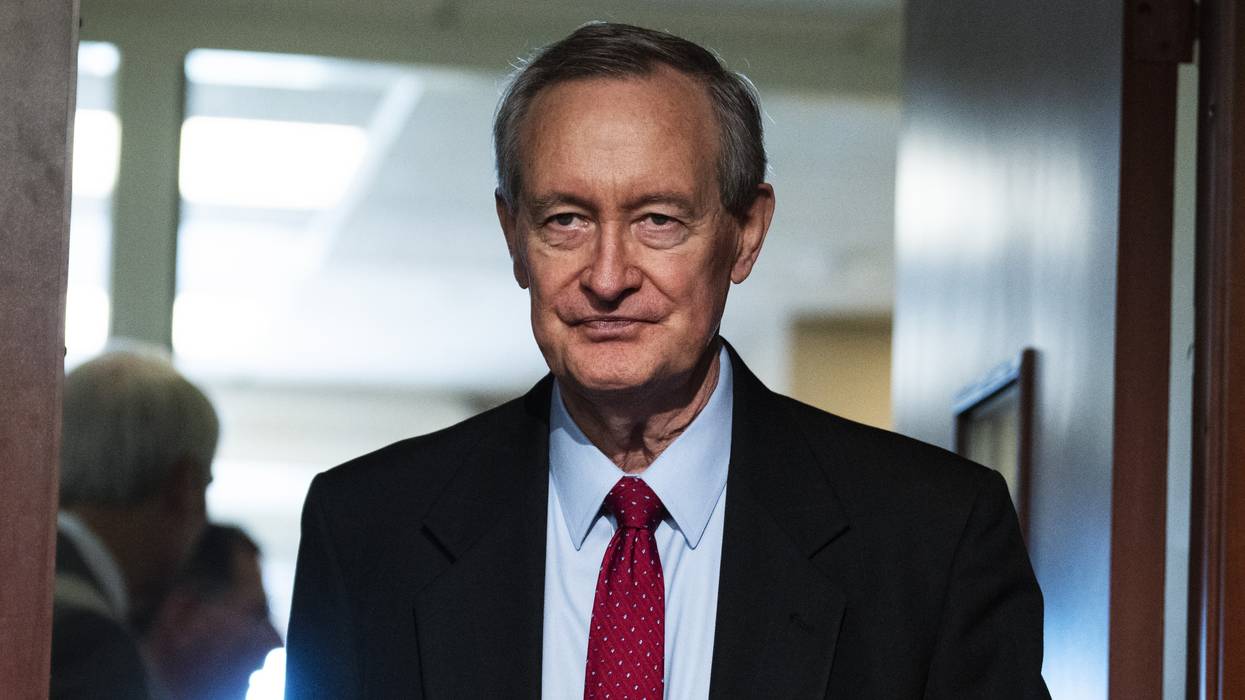
"You have to be hard-core committed to mindless free-market fundamentalism—or truly in thrall to your donors—to insist there's no need for new regulations after Silicon Valley Bank," said one critic.
Republican Sen. Mike Crapo, the lead author of a 2018 bank deregulation law that weakened key guardrails designed to prevent another financial crisis, insisted this week that there is "no need" to impose more strict rules following two of the largest bank collapses in U.S. history.
"There is no need for regulatory reform," said Crapo, who chaired the Senate Banking Committee when Congress passed the 2018 law despite vocal warnings from experts that it would destabilize the banking sector. Dozens of Democrats supported the measure.
In a Fox Business appearance on Tuesday, the Idaho Republican deflected blame for the failures of Silicon Valley Bank and Signature Bank, both of which were in the category of firms that saw regulatory relief thanks to the 2018 law.
"The fact is that President Biden—through all of the spending that he did in the last Congress and the last two years—has driven inflation up to the point where wage earners have to get a 14.8% wage increase just to hold even with this kind of inflation," said Crapo. "And when the Fed responded to push interest rates up, that's what caused a liquidity crisis for these two banks."
While analysts agree that the Fed's aggressive interest rate hikes are at least partly to blame for the collapse of SVB and Signature Bank, they also argue that the 2018 law's removal of enhanced capital requirements and stress tests for banks with between $50 billion and $250 billion in assets—reforms implemented by the post-financial crisis Dodd-Frank Act—also played a significant role.
"You have to be hard-core committed to mindless free-market fundamentalism—or truly in thrall to your donors—to insist there's no need for new regulations after Silicon Valley Bank," wrote Robert Weissman, the president of Public Citizen. (Crapo received more than $880,000 in donations from the securities and investment industry between 2017 and 2022, according to OpenSecrets.)
In effect, the 2018 law ( S.2155) removed the "systemically important" designation and the associated regulations from SVB and Signature Bank—a change that didn't stop the Fed and the Biden administration from rushing in to backstop the financial system and prevent "contagion" after the firms collapsed.
"Congress gave regulators permission to take their eyes off of these mid-sized regional banks."
SVB's announcement last week that it sold its bond portfolio at a major loss and was trying to raise funds led venture capitalists to advise startups—SVB's primary clientele—to withdraw their money, setting off a bank run that ultimately resulted in the firm's failure and takeover by regulators.
"The federal government then stepped in to guarantee the deposits, a dramatic move designed to prevent the panic from spreading to other banks," HuffPost's Arthur Delaney noted Wednesday. "But this kind of intervention... was not supposed to be necessary. The enhanced prudential standards under Dodd-Frank include liquidity requirements that would have automatically covered Silicon Valley Bank if Congress hadn't relaxed the law in 2018."
As former FDIC attorney Todd Phillips told The Washington Post earlier this week, "Congress gave regulators permission to take their eyes off of these mid-sized regional banks."
Hilary Allen, a law professor at American University, similarly observed that the 2018 law "did indeed reduce regulatory requirements for banks like Silicon Valley Bank."
"While it is impossible to say categorically that legislative rollback equals the bank’s collapse," Allen added, "it does seem that it made it more likely."
The Fed, as then-central bank governor Lael Brainard lamented in 2019, proceeded to take the Republican-authored law and run with it, further weakening safeguards against financial chaos.
"I see little benefit to the banks or the system from the proposed reduction in core resilience that would justify the increased risk to financial stability in the future," Brainard said in a statement at the time.
On Tuesday, dozens of lawmakers led by Sen. Elizabeth Warren (D-Mass.) and Rep. Katie Porter (D-Calif.) introduced legislation that would repeal the section of the 2018 law that relaxed regulations for banks with less than $250 billion in assets.
In a floor speech, Warren said that "both SVB and Signature Bank suffered from a toxic mix of poor risk management and weak supervision."
"If Congress and the Federal Reserve had not rolled back key provisions of Dodd-Frank, these banks would have been subject to stronger liquidity and capital requirements to help withstand financial shocks," Warren continued. "These threats never should have been allowed to materialize. Now, we must prevent them from occurring again by reversing the dangerous bank deregulation of the Trump era."

Federal Reserve Chair Jerome Powell fielded questions for around 40 minutes on Wednesday following the central bank's decision to impose another large interest rate hike, but not a single reporter asked about the extent to which record-high corporate profits are fueling inflation even as companies openly boast about their pricing power.
Progressive economists have estimated that corporate profits are to blame for at least 40% of price increases during the recovery from the pandemic-induced downturn, a disproportionate contribution to the stubbornly high inflation that is eating away at workers' wages. Some have put the number at over 50%.
"Ignoring the role of profits makes inflation analyses a lot weaker."
The notion that corporate price hikes are putting upward pressure on inflation--which has myriad causes--is hardly fringe. Lael Brainard, the Fed's vice chair, acknowledged in a speech last month that "since the pandemic, significant supply and demand imbalances have coincided with large increases in retail trade margins in several sectors."
"In some sectors, the increase in the retail trade margin exceeds the contemporaneous increase in wages paid to the workers engaged in retail trade, although this is not true in food and apparel," Brainard said. "The return of retail margins to more normal levels could meaningfully help reduce inflationary pressures in some consumer goods, considering that gross retail margins are about 30 percent of total sales dollars overall."
But corporations' conscious decisions to raise consumer prices well beyond the actual costs of their goods and services didn't receive any attention during Powell's press conference.
Instead, the Fed chair and reporters from corporate outlets such as The Wall Street Journal, Fox Business, The Washington Post, and The New York Times focused on workers' wages and the labor market, which Powell is explicitly trying to weaken. Reporters also pushed Powell on the risks of recession, which he admitted are growing, and the stock market's reaction to the Fed's latest announcement.
"Despite the slowdown in growth, the labor market remains extremely tight, with the unemployment rate at a 50-year low, job vacancies still very high, and wage growth elevated," the Fed chair said during his opening statement. "Although job vacancies have moved below their highs and the pace of job gains has slowed from earlier in the year, the labor market continues to be out of balance, with demand substantially exceeding the supply of available workers."
While Powell--who has previously said one of his objectives is to "get wages down"--conceded Wednesday that he doesn't see recent wage growth as the "principal story of why prices are going up," he and other Fed officials continue to enact aggressive rate hikes that will ultimately have the effect of cutting wages and potentially throwing millions out of work.
During his remarks Wednesday, Powell made clear that the Fed intends to raise interest rates further in the coming months and keep them elevated for the foreseeable future. Any talk of pausing the rate hikes to assess their impact on the economy, Powell said, would be "very premature."
The Fed's sixth interest rate increase of the year--the fastest pace of hikes since the Volcker era--heightened already widespread concerns that the central bank is pushing the U.S. and potentially the global economy into a terrible downturn.
"The Federal Reserve's decision today to raise interest rates by 0.75% will have a direct and harmful impact on working people and our families," said Liz Shuler, the president of the AFL-CIO. "The Fed's actions will not address the underlying causes of inflation--the war in Ukraine, climate change's effect on harvests, and corporate profits."
"Working people should not be the target of lowering inflation--it should be corporations that are earning record profits," Shuler added.
In recent weeks, despite the lack of attention to corporate profits during Powell's Wednesday press conference and his previous appearances, mainstream media outlets and newspapers have increasingly highlighted the link between company price hikes and inflation that progressive publications and lawmakers have been emphasizing for months.
Earlier this week, The New York Times ran a story noting that major food companies and restaurants "have continued to raise prices on consumers even after their own inflation-related costs have been covered."
"Although food companies are prominent examples of how rapid inflation is being passed from producers to consumers, the trend is evident across a wide variety of industries," the Times observed. "Executives from banks, airlines, hotels, consumer goods companies, and other firms have said they are finding that customers have money to spend and can tolerate higher prices."
Previously, when it wasn't being ignored or waved away, the connection between high corporate profits and inflation was mocked as a fantasy. In the op-ed pages of the Jeff Bezos-owned Washington Post, columnist Catherine Rampell called the idea that corporate greed is pushing up prices a "conspiracy theory."
But as the Economic Policy Institute's Josh Bivens argued in response to Rampell's May column, "Ignoring the role of profits makes inflation analyses a lot weaker."
"As a simple matter of fact," Bivens wrote, "the rise in profits has been historic and has explained far, far more of the rise in prices over the past year than labor costs or import tariffs, and this makes it odd indeed to label calls to address this as 'conspiracy theories.'"

As data released Thursday shows inflation kept climbing in September even after the U.S. Federal Reserve raised interest rates yet again, progressives reiterated that the nation's central bank is ill-equipped to tackle the root causes of rising prices and urged Congress to rein in corporate greed before further rate hikes throw millions of people out of work and help crash the global economy.
"It's time for Chair Powell and the Fed to step aside and for Congress to step in."
According to the Bureau of Labor Statistics, the overall consumer price index (CPI) rose 0.4% last month and is up 8.2% from a year earlier. The monthly increase was driven by soaring rent, grocery, and healthcare prices. The annual rate of change has been fueled largely by historic spikes in the cost of food and energy, which critics attribute to price gouging and the destabilizing effects of the Covid-19 pandemic, the war in Ukraine, and the climate crisis on global supply chains.
Core CPI, which excludes food and energy, increased 0.6% for a second consecutive month and is up 6.6% compared with last year, reaching its highest level since 1982.
"Today's inflation report is proof of what we've been saying for months: Raising interest rates isn't working," Rakeen Mabud, chief economist at the Groundwork Collaborative, said in a statement.
"Supply chain bottlenecks, a volatile global energy market, and rampant corporate profiteering can't be solved by additional rate hikes," Mabud continued. "The Fed's overly aggressive actions are shoving our economy to the brink of a devastating recession."
While core CPI reached a 40-year high last month, corporate profit margins are also at record levels.
As Sarah Baron, campaign director for the advocacy group Unrig Our Economy, detailed in a Wednesday column at OtherWords, companies are boosting their profits by keeping prices artificially high:
General Mills hiked its prices five times since June of 2021 alone, and the company saw its net earnings climb 31% to $820 million in the first quarter of the 2023 fiscal year. Darden Restaurants, the company which owns popular chains such as Olive Garden and Longhorn Steakhouse, saw its net sales increase by $140 million to over $2.4 billion in the first quarter of FY 2023. As AutoZone saw record sales growth over the past two years, with net income increasing to $810 million, their CEO admitted the company is not racing to lower prices. Instead, they boosted their shareholder handouts by spending $1 billion on stock buybacks during the quarter, bringing their total to $4.4 billion during FY 2022.
During Monday's meeting of the National Association for Business Economics, Fed Vice Chair Lael Brainard acknowledged that "large increases in retail trade margins in several sectors" is a significant factor behind surging prices.
"The return of retail margins to more normal levels," said Brainard, "could meaningfully help reduce inflationary pressures in some consumer goods."
Nevertheless, Fed Chair Jerome Powell has indicated that the central bank's plan for reducing prices is to depress consumer demand by continuing to raise interest rates to drive up unemployment and push down wages.
Thursday's CPI report has only intensified expectations of further rate hikes, with investors anticipating more turbulence in financial markets. Meanwhile, Labor Department data also published Thursday shows that jobless claims rose last week for the second consecutive week, and researchers are warning of more impending layoffs.
Provoking a recession that causes an estimated 1.5 million Americans to lose their jobs by the end of next year and undermines the bargaining power of labor is, according to Powell's estimation, acceptable if it tames inflation.
But as Mabud and others have argued, including in front of House lawmakers last month, the blunt instrument of interest rate hikes leaves the underlying causes of supply shortages and profiteering unaddressed.
It is possible to curb skyrocketing prices without hurting workers by intentionally plunging the nation--and potentially the world--into a recession, progressives contend, if Congress takes action.
"The inflation crisis we're facing today is due to decades of deregulation and privatization--resulting in brittle supply chains that can't handle shifts in our economy without supply shortages and bottlenecks," Mabud recently told members of the House Committee on Oversight and Reform. "A ruthless pursuit of efficiency and short-term profits... left us vulnerable to profiteering and price increases."
"Giant corporations' control over our supply chains has supplanted the functioning, resilient system we could have built through robust public investment and free and fair competition," she continued. "Big corporations are getting away with pushing up prices to fatten their profit margins, and families are quite literally paying the price. It's time to rein them in."
During the same hearing, former U.S. Labor Secretary Robert Reich urged Congress and the Biden administration to confront corporate profiteering directly through a windfall profits tax of the sort introduced months ago by Sen. Bernie Sanders (I-Vt.), stronger antitrust enforcement, and temporary price controls.
In her Thursday statement, Mabud said, "Now that Fed officials are finally recognizing the role of profiteering, it's time for Chair Powell and the Fed to step aside and for Congress to step in."
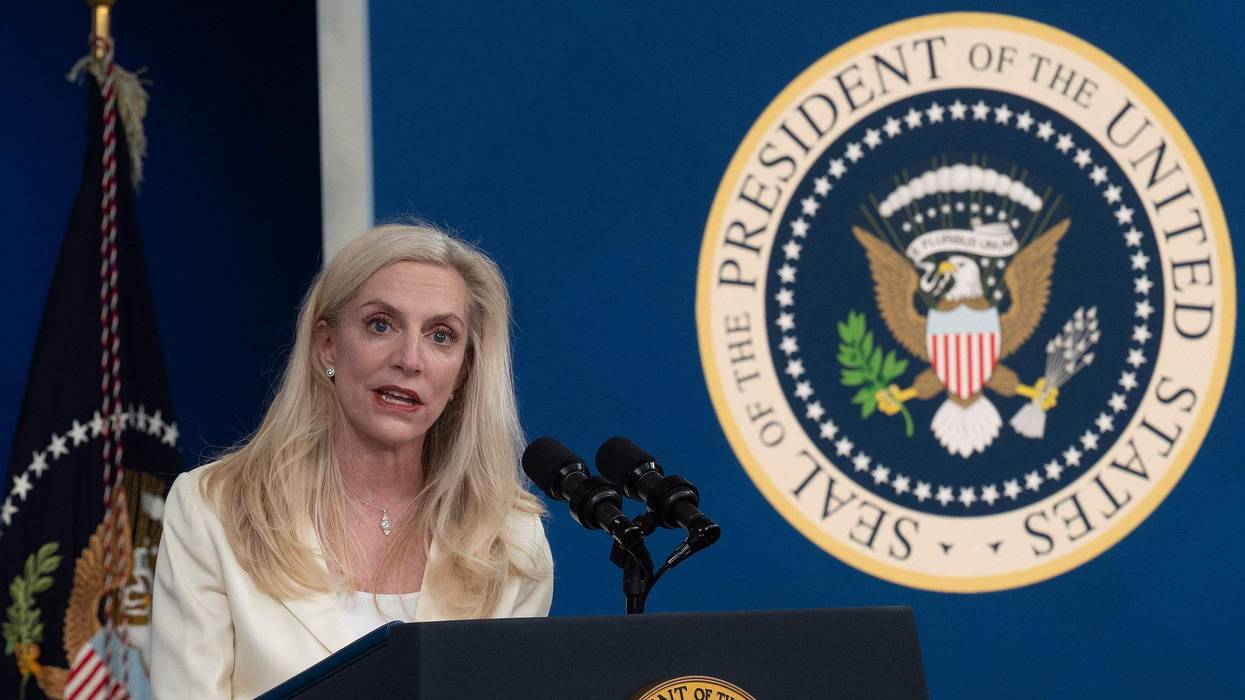
Progressives on Monday pointed to remarks by Federal Reserve Vice Chair Lael Brainard acknowledging the role of corporate profiteering in exacerbating inflation to underscore their opposition to interest rate hikes and other monetary tightening that favors Big Business over workers.
"The retail margin for motor vehicles sold at dealerships has increased by more than 180% since February 2020."
While attributing high inflation to the ongoing Covid-19 pandemic and Russia's invasion of Ukraine, Brainard--who was addressing a meeting of the National Association for Business Economics in Chicago--asserted that "there is ample room for margin recompression to help reduce goods inflation" in the retail economy.
"Retail margins have increased 20% since the onset of the pandemic, roughly double the 9% increase in average hourly earnings by employees in that sector," she noted. "In the auto sector, where the real inventory-to-sales ratio is 20% below its pre-pandemic level, the retail margin for motor vehicles sold at dealerships has increased by more than 180% since February 2020, 10 times the rise in average hourly earnings within that sector."
Brainard's nod to what one observer called "the elephant in the room" was secondary to her insistence that monetary tightening in the form of higher interest rates is the best way to tackle inflation.
"It will take time for the cumulative effect of tighter monetary policy to work through the economy broadly and to bring inflation down," she said. "In light of elevated global economic and financial uncertainty, moving forward deliberately and in a data-dependent manner will enable us to learn how economic activity, employment, and inflation are adjusting to cumulative tightening in order to inform our assessments of the path of the policy rate."
Noting that "the labor market's recovery from the pandemic-induced recession was a historic rebound," the progressive podcast "Pitchfork Economics" warned that "if the Fed keeps pursuing outdated, harmful solutions, they will push us into a longer, deeper recession with consequences that reverberate for years to come."
Meanwhile on Monday, Chicago Federal Reserve President Charles Evans said that the central bank's number one priority is reducing inflation--even if monetary tightening costs people their jobs.
"Ultimately, inflation is the most important thing to get under control. That's job one," Evans argued during an interview on MSNBC. "Price stability sets the stage for stronger growth in the future."
Members of the Fed's board of governors are widely expected to raise interest rates by 0.75% for the fourth consecutive time when they meet next month.
Last month, a trio of progressive political economists told members of the U.S. House Committee on Oversight and Reform that the most effective way to curb rising prices is to take on the corporate profiteering fueling inflation.
"Even as input costs come down, corporate executives are gleefully reporting how they plan on keeping prices high," one of the economists, Rakeen Mabud of the Groundwork Collaborative, told the lawmakers. "Megacorporations are taking advantage of recent crises to make record profits for themselves and their shareholders."
Related Content

Another one of the economists, former U.S. labor secretary and University of California, Berkeley professor Robert Reich, testified that "the inflation we are now experiencing is not due to wage gains; it is due to increases in corporate profits."
"And it's excessive profits, not wages, that need to be controlled," he added.
Reich and others have urged Congress and U.S. President Joe Biden to pass windfall profits tax legislation like the Ending Corporate Greed Act introduced in March by Sens. Bernie Sanders (I-Vt.) and Ed Markey (D-Mass.) in the Senate and Rep. Jamaal Bowman (D-N.Y.) in the House. If passed, the measure would impose a 95% tax on the windfall profits of major corporations.
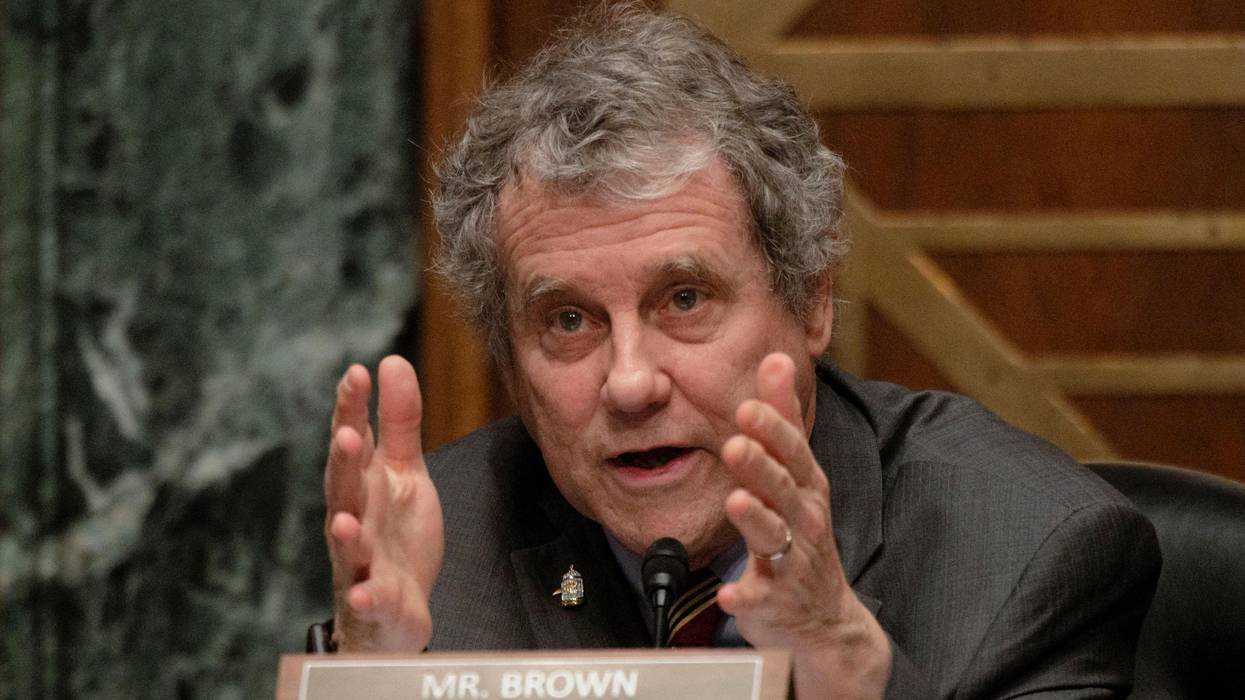
Activists and Democratic senators were outraged Tuesday after some Senate Republicans skipped a key committee vote, delaying the confirmation of President Joe Biden's five Federal Reserve nominees to protest his pick for the top banking regulator.
"The Federal Reserve is at a critical juncture where it must have the expertise to tackle the compound crisis of Covid, inflation, and unemployment, and the realities of the climate crisis in our communities."
The boycott was led by Sen. Pat Toomey (R-Pa.), ranking member of U.S. Senate Committee on Banking, Housing, and Urban Affairs, which was was set to vote on all five nominations. The panel's rules require that a majority of members are present for such actions, which can advance nominees to the full chamber for final confirmation vote.
"Shame on Sen. Toomey and Republicans of the Senate Banking Committee for boycotting today's vote and delaying the confirmation of this highly qualified slate of Federal Reserve board nominees," declared 350 U.S. campaign manager Brooke Harper.
"This boycott is pure politics, and a rejection of the serious skill, competence, and experience this slate would bring to the Federal Reserve," said Harper, whose group criticized Biden's renomination of Fed Chair Jerome Powell but welcomed the others.
"Combined, we believe that Lael Brainard as Federal Reserve vice-chair, along with Sarah Bloom Raskin, Lisa Cook, and Phillip Jefferson are a strong ensemble that can reinforce the critical independence of the Federal Reserve, while at the same time bringing long-overdue diversity of thought, experience, and perspective to the Board of Governors," the campaigner added.
GOP members of the panel opposed voting on Bloom Raskin--a former Fed board member and the wife of Rep. Jamie Raskin (D-Md.)--as vice chair for bank supervision.
Sen. Sherrod Brown (D-Ohio), who chairs the committee, said in a statement that "Ranking Member Toomey chose to abdicate his duty to the American people and put our economic recovery at risk, instead of doing his job and showing up to vote on Ms. Bloom Raskin, Dr. Cook, Dr. Jefferson, Gov. Brainard, and Chair Powell's nominations."
"Americans depend on us to get these nominees on the job as soon as possible. If my colleagues are as concerned about inflation as they claim to be, they will end the theatrics," Brown said. "Any actions to delay this vote will hurt workers, their families, and our recovery."
Speaking to panel members Tuesday, the chair also defended Bloom Raskin:
Let me be clear: Ms. Bloom Raskin has been the subject of an unrelenting smear campaign and fear mongering by the ranking member and Republicans--something that's become all too common.
They've distorted her words and painted her as some sort of radical. As we heard during her nomination hearing, in her own words, Ms. Bloom Raskin is a mainstream economic thinker. She is not in the business of telling banks whom to lend to. Her views on climate are not extreme. They are about accounting for risks that that threaten our financial system, wherever we find them. As she has said over and over again, this is about economic and financial system resilience.
But the attacks on Ms. Bloom Raskin haven't stopped there. They've become more personal. They can't attack her on substance, so they've engaged in malicious character assassination--in innuendo--without offering a shred of evidence.
"Now Republicans have fled the room--hiding rather than vote on a fair and experienced nominee," Brown added. "I urge my Republican colleagues to return to the table, to vote their conscience, and let the Senate fulfill its solemn duties."
Sen. Elizabeth Warren (D-Mass.), a committee member, delivered a fiery speech about the boycott on the Senate floor Tuesday, denouncing the GOP for what she called "particularly desperate attacks" and "bad faith attempts to take down a highly qualified candidate who is committed to actually doing the job of regulating the biggest financial institutions."
"Raskin has unparalleled expertise in both the monetary policy and financial regulatory components of the job," Warren said. "Few people in the entire nation are as qualified for this role as she is."
The White House also slammed the walkout. Echoing Brown, Press Secretary Jen Psaki said that "some Senate Republicans are playing politics with the American economy by blocking a vote on the chairman of the Federal Reserve and an entire slate of well-qualified nominees."
"Such an extreme step would be totally irresponsible at a time when it's never been more important to have confirmed leadership at the Fed to help continue our recovery and maintain price stability," Psaki added.
The press secretary also stood up for the embattled nominee, calling Bloom Raskin "one of the most qualified individuals to ever be nominated to the Federal Reserve" and noting that she "has made the strongest ethics commitments in the history of the Fed."
As The New York Times reported Tuesday:
Sarah Binder, a professor of political science at George Washington University who co-wrote a book on the politics of the Fed, said Democrats would need to come up with a strategy for overcoming the Republicans' block or the nominees could get stuck in limbo.
"It is really a delay--it might yet scupper Raskin," she said, noting that Democrats could break the nominations up or could try to garner enough support among the full Senate to override committee rules, though that might be a challenge. "It's pretty unchartered, and they're going to have to find a way."
Last year, 350 launched a campaign calling on the Fed to end bank fossil fuel financing, align its own spending and asset purchases with the Paris agreement's 1.5degC goal, and encourage investment to limit global temperature rise, with a focus on low-income regions and communities of color.
Harper emphasized Tuesday that "the Federal Reserve is at a critical juncture where it must have the expertise to tackle the compound crisis of Covid, inflation, and unemployment, and the realities of the climate crisis in our communities."
"These nominees can get the Federal Reserve back to work and address these serious crises through smart regulation," she said, urging Senate Majority Leader Chuck Schumer (D-N.Y.) to move forward with a floor vote to "confirm these highly qualified economic champions now."

U.S. climate campaigners and other critics of Jerome Powell's record as Federal Reserve chair responded with frustration Monday to President Joe Biden's renomination of him to the post despite opposition from progressive activists, economists, and lawmakers.
"Powell as chair of the Federal Reserve will make it more difficult for Biden to ultimately be a successful president."
In a statement announcing the move--as well as the president picking Lael Brainard as vice chair of the Federal Reserve's board of governors--the White House praised Powell's "steady leadership" during the coronavirus pandemic and said that both nominees "share the administration's focus on ensuring that economic growth broadly benefits all workers."
By contrast, the Revolving Door Project at the Center for Economic and Policy Research said in a statement that it was "extremely disappointed" by the renomination.
"Biden has an ambitious and urgent agenda on climate, financial stability, and addressing racial and economic inequality," the project said. "Powell as chair of the Federal Reserve will make it more difficult for Biden to ultimately be a successful president."
The project added that "this choice means the president now owns what is--and what will be--known about Powell's own trading scandal and his tightlipped, insufficient response to the whole slate of Federal Reserve scandals."
David Arkush, managing director of Public Citizen's Climate Program, declared that the decision "doubles down on reckless Wall Street deregulation and dangerous dawdling on climate-related threats to the financial system, flouting Biden's own whole-of-government approach to stemming climate threats."
"As the 2008 financial crisis showed, fecklessness by financial regulators doesn't appear terribly dangerous until catastrophe suddenly materializes," he said. "That is the path Powell has put us on."
Other critics echoed climate-related concerns. Akiksha Chatterji, a digital campaigner at Positive Money U.S., said that "by renominating Powell, who has repeatedly minimized central banks' role in addressing the climate crisis, Biden has missed a rare opportunity to appoint diverse and transformational leaders to the Fed."
The advocacy group 350.org in July launched the "Fossil Free Federal Reserve" campaign; its demands included Biden appointing a chair who is a "climate champion." Brooke Harper, a campaigner with the organization, said in an email Monday that Powell's renomination "confirms what I feared the most. Biden is NOT the climate president he claims to be."
"While we're disappointed in Powell's incrementalism on climate, we're making our demands heard: the Federal Reserve must steer the economy away from high-risk fossil fuel investments, incorporate a climate stress test across policies and lending, and prioritize racial justice, including through full employment," she added in a statement. "Powell's mandate to protect our economy includes protecting our communities from climate catastrophe."
Powell was initially nominated to the Fed board in 2012 by then-President Barack Obama, under whom Biden served as vice president. He was confirmed as chair by the Senate with an 84-13 bipartisan vote in January 2018, after being chosen by Biden's predecessor, former President Donald Trump.
Biden faced pressure from progressives in both chambers of Congress to pick someone else once Powell's term expired--including from Sen. Jeff Merkley (D-Ore.), who along with Sen. Ed Markey (D-Mass.) is sponsoring legislation that would make the Fed impose new restrictions on financial institutions to cut off funding for fossil fuel projects.
"We need a focus on climate action in all facets of the federal government, including the Federal Reserve," Merkley tweeted Monday. "Jerome Powell has already proven... he won't answer calls for climate action. I will vote no."
Sen. Elizabeth Warren (D-Mass.) warned in September that renominating Powell would mean "gambling that for the next five years, a Republican majority at the Federal Reserve with a Republican chair who has regularly voted to deregulate Wall Street won't drive this economy over a financial cliff again."
"It's no secret I oppose Chair Jerome Powell's renomination, and I will vote against him," Warren said Monday. "I will support the president's nomination of Lael Brainard as vice chair."
Activists also welcomed Biden's selection of Brainard, who has served on the U.S. central bank's board since 2014. Arkush called it "the silver lining," adding that she "has shown significantly more leadership across the Fed's missions and has influenced Powell for the better."
The Revolving Door Project agreed that "it is somewhat encouraging" Biden chose Brainard as vice chair while reiterating that the role "is little more than a ceremonial title if the chair disagrees with her preferences on monetary or regulatory policy."
Noting that Biden has more Fed positions to fill, Arkush argued that "he should quickly nominate individuals like" Michigan State University economist Lisa Cook and Sarah Bloom Raskin--a former deputy treasury secretary and Fed governor as well as the wife of Rep. Jamie Raskin (D-Md.)--"who will improve the board's diversity and work to fulfill its full mission."
"Powell should defer to the leadership of Brainard and others on financial regulation and climate," Arkush added. "If he refuses, they should use their majority votes to steer the Fed toward responsible action."
Sierra Club Fossil-Free Finance campaign manager Ben Cushing--who also welcomed Brainard's elevation to the role of vice chair--concurred that "it is essential that President Biden nominate additional board members, including the vice chair of supervision, that will act to address climate-related threats to our economy."
"To ensure a fair recovery going forward, it's extremely important to bring in strong champions of financial regulatory protections and economic equality to the remaining open seats."
Alexis Goldstein, director of financial policy at Open Markets Institute, similarly emphasized the importance of Biden picking candidates "with the ability to tackle the critical issues of our time: corporate concentration that harms working people, independent businesses, innovation, and growth, and that increases climate risk; racial economic inequality, unemployment, climate change, wasteful and dangerous speculation, and predatory lending."
"To ensure a fair recovery going forward, it's extremely important to bring in strong champions of financial regulatory protections and economic equality to the remaining open seats," Goldstein said, advocating for Cook and Bloom Raskin as "the kind of leaders the Federal Reserve needs to guarantee that the economic recovery works for all people."
Warren also acknowledged one of the open seats, saying that "Powell's failures on regulation, climate, and ethics make the still-vacant position of vice chair of supervision critically important."
"This position must be filled by a strong regulator with a proven track record of tough and effective enforcement," the senator said, "and it needs to be done quickly."

With President Joe Biden reportedly nearing a decision on his pick to head the Federal Reserve, progressive lawmakers and advocacy groups are ramping up their criticism of the central bank's current chair over his refusal to treat the climate crisis as a systemic threat.
"The Fed's pandemic bailouts under Jerome Powell kept the fossil fuel industry afloat."
On Friday, Sens. Jeff Merkley (D-Ore.) and Sheldon Whitehouse (D-R.I.) issued a joint statement announcing that they would oppose the renomination of Jerome Powell--a Trump appointee--for a second term as Fed chair.
"Powell refuses to recognize climate change as an urgent and systemic economic threat," the senators said. "During his tenure, Chair Powell first ignored climate change and then resisted calls for the Fed to use its tools to fight it, arguing that climate change 'is really an issue that is assigned to lots of other government agencies, not so much the Fed.'"
"Climate is not a long-term challenge for the Fed; it demands action now," they added. "Climate effects exacerbate supply chain struggles and commodity price volatility... President Biden must appoint a Fed chair who will ensure the Fed is fulfilling its mandate to safeguard our financial system and shares the administration's view that fighting climate change is the responsibility of every policymaker. That person is not Jerome Powell."
Sen. Elizabeth Warren (D-Mass.)--who said in September that Powell's record of weakening Wall Street regulations makes him a "dangerous man"--and progressive House Democrats have also spoken out against the incumbent Fed chair, whose current term expires in February.
Biden has reportedly interviewed both Powell and Fed governor Lael Brainard for the job, and the president could announce his pick as soon as this weekend. Given that Powell--a Republican--would likely have significant support from the Senate GOP, Democrats would need more than three senators to prevent him from staying on for another term.
On Friday evening, the Revolving Door Project (RDP)--which has vocally opposed Powell's renomination for a number of reasons--raised fresh concerns about the Fed chair's potential conflicts of interest, which the group characterized as "disqualifying."
In a statement, RDP director Jeff Hauser said that "Powell explicitly claimed to have received approval from the Office of Government Ethics to continue to hold municipal bonds as the Federal Reserve undertook extraordinary pandemic response efforts, including in the muni bond market."
"But an inquiry from the Revolving Door Project has revealed the absence of any records of any communications of any kind between Powell and the Office of Government Ethics, suggesting that Powell received no such approval, and seemingly contradicting his earlier statement to the press," said Hauser. "These revelations are yet another indictment of Powell's disregard for ethics rules and disrespect for the public he is meant to serve."
While voicing alarm over his possible ethics violations, Powell's progressive critics have largely focused on his climate record at the Fed, which one observer warned is "sleepwalking through climate chaos" and failing to utilize the tools at its disposal to mitigate risks posed by extreme weather and other consequences of planetary heating.
The Wall Street Journal reported Friday that fossil fuel corporations "were disproportionate beneficiaries of Fed programs meant to buoy U.S. businesses during the pandemic."
" Oil and gas companies have raked in record amounts of private-sector financing since the Fed's 2020 interest-rate cuts and corporate bond-buying programs, upending years of declining investment in fossil fuels," the Journal noted.
Yevgeny Shrago, policy counsel at the consumer advocacy group Public Citizen, tweeted in response to the Journal's reporting that "the Fed's pandemic bailouts under Jerome Powell kept the fossil fuel industry afloat--bailouts that were broadened under Republican political pressure to specifically include many of these companies."
If Joe Biden wins in November, he will have no time to spare to shift our trajectory away from climate disaster. He will need to move quickly to install forward thinking, dynamic, and aggressive advocates for climate action, especially in his Treasury Department.
What does the Treasury department have to do with climate change? The short answer is the fossil fuel industry depends on financial institutions to survive. And banks, for their part, pull in big profits from underwriting climate disaster. The Treasury Secretary has untapped capacity to push Wall Street to take the risks of the climate crisis seriously. Biden's choice for Treasury Secretary is arguably among his most important climate policy decisions.
Wielding the tools of Treasury will require a Secretary who is committed to embracing climate action as a key part of their goals in office. A few names have been floated as potential Biden picks, including progressives like Sarah Bloom Raskin and Senator Elizabeth Warren, who have both made it clear that they would use all the tools available to a Treasury Secretary to combat climate change.
Also in the running is Lael Brainard, who has been one of the more influential, if under the radar, names in Democratic policy-making circles for the past two decades. The former Massachusetts Institute of Technology professor has served the past two Democratic Presidents and is a protege of the infamous deficit hawk and former Goldman Sachs executive Robert Rubin. During the Obama Administration, Brainard played a key role in the development and implementation of trade deals that were widely panned by labor and environmental groups.
Currently a member of the Federal Reserve's Board of Governors, Brainard has been touted as a savvy pick for Treasury Secretary in a potential Biden administration. In her role at the Fed, Brainard has pushed for sensible monetary policy that weighs unemployment rates at a similar level as inflation targets. Additionally, she has adopted a lonely position advocating for the continuation of strict regulatory measures that were introduced in the wake of the Great Recession.
Her energy on these fronts, however, makes her relative quiet on climate-related issues all the more conspicuous. Last year Brainard gave a speech outlining the impacts of climate change on monetary policy, financial stability, and community reinvestment. But when it came time to put words into action, she came up woefully short.
The COVID-19 pandemic's economic fallout has left the Fed as the arbiter at the center of practically every aspect of our economy, including the fossil fuel industry. When it chose to prop up that sector, Brainard went along with the wishes of Federal Reserve Chairman Jerome Powell. In fact, Brainard voted in favor of allowing the Fed's Main Street Lending Program (MSLP) to expand its lending criteria in a way that would enable more loans to fossil fuel companies, prompting criticism from environmentalists, lawmakers, and policy experts.
Brainard also supported expanding the Fed's Secondary Market Corporate Credit Facility (SMCCF). Administered by the notorious fossil fuel industry investor BlackRock, the Fed's SMCCF has purchased the debt of fossil fuel companies invested in some of the most notorious pipelines, including the Dakota Access Pipeline. Since the Fed's bailout, oil and gas companies have borrowed $100 billion from the bond market, according to a new report published by Friends of the Earth, Bailout Watch, and Public Citizen. The report also found that the Fed has purchased debt from 19 oil and gas companies, 12 of which have received downgrades on their securities from major credit rating agencies.
These decisions not only buoyed an industry that is contributing to the destruction of our environment, they also expose taxpayers to massive financial losses. If Brainard was being true to her words in her 2019 speech, she would have used her vote to dissent in 2020.
We cannot afford a Treasury Secretary who doesn't pursue every avenue to fight climate change. Whoever Biden picks must take aggressive action to prevent, mitigate, and prepare for the effects of climate change or else face a massive economic collapse on top of environmental disasters. Treasury has a number of tools at its disposal to ensure our economy remains stable in the face of a worsening climate crisis and an inevitable transition to green energy:
First and foremost, a Biden Treasury Department should use its research capacity to assess the risk of climate change on the economy and financial markets. Treasury's Financial Stability Oversight Council (FSOC), established by the 2010 Dodd-Frank financial overhaul law to monitor our nation's economic stability, can perform a thorough analysis of the economic effects of both the physical damage caused by environmental disasters and financial losses resulting from a transition away from fossil fuels. Financial regulators, including the Office of the Comptroller of Currency (OCC), the Federal Deposit Insurance Corporation (FDIC), the Securities and Exchange Commission (SEC) and the Federal Reserve, can then use this analysis to justify running stress tests to ensure financial institutions can endure losses associated with environmental disaster.
FSOC can also coordinate with financial regulators to implement regulation that ensures financial institutions are integrating climate risk analysis in their investment portfolios. This could include a number of measures, such as requiring banks to submit detailed public disclosures on their exposure to climate risks and their investments in the fossil fuel industry and conduct regular stress tests and, and increasing capital requirements. If it deems fossil fuel investments to be risky, FSOC can even give approval to the Fed to require financial institutions to divest completely from these assets, or urge the SEC to require credit rating agencies to integrate climate risk into their enforcement standards, according to a report published by The Great Democracy Initiative.
As the leading shareholder of the World Bank and a leader in other global financial institutions, Biden's Treasury Department should take a clear stance against fossil fuel investment on the international stage. This should include taking strong positions on emissions standards and spearheading efforts to invest in green energy development.
And of course the Treasury Secretary will help lead the administration's development of a plan to end the deep recession. We need a Treasury Secretary who overcomes the Bill Clinton and early Obama era Democratic technocrat's fixation on budget deficits that Brainard peers and colleagues like Robert Rubin and Tim Geithner exhibited. Austerity and the investments needed for a successful Biden Green New Deal are inherently incompatible.
Brainard has proved that she won't go to bat on climate issues at the Fed. How can we trust that she will, as Treasury Secretary?