SUBSCRIBE TO OUR FREE NEWSLETTER
Daily news & progressive opinion—funded by the people, not the corporations—delivered straight to your inbox.
5
#000000
#FFFFFF
To donate by check, phone, or other method, see our More Ways to Give page.


Daily news & progressive opinion—funded by the people, not the corporations—delivered straight to your inbox.
"The climate crisis is too urgent for the U.S. or any country to allow outdated trade rules... to distract us from enacting bold climate policies," argued one campaigner.
As the Chinese government on Tuesday formally challenged what it termed "discriminatory" U.S. electric vehicle subsidies, climate action advocates warned that antiquated trade policies and international bickering must not be allowed to hamper the urgently needed green energy transition.
"Immediate climate action must take priority over compliance with outdated trade rules that were inked long before governments worldwide began taking the climate crisis seriously," said Trade Justice Education Fund executive director Arthur Stamoulis in response to the move by Beijing.
Melinda St. Louis, director of Public Citizen's Global Trade Watch, agreed that "the climate crisis is too urgent for the U.S. or any country to allow outdated trade rules—written long before governments were taking climate change seriously—to distract us from enacting bold climate policies."
"Existing trade rules need to be rewritten so that trade pacts can become tools for helping the world advance towards a clean, just, and sustainable economy—but we don't have time to wait."
China—which has heavily subsidized its own electric vehicle industry—on Tuesday filed a complaint against the United States at the World Trade Organization (WTO), taking aim at rules for EV tax credits included in the Inflation Reduction Act (IRA), a sweeping package signed by President Joe Biden in 2022.
"Under the pretext of 'responding to climate change' and 'environmental protection,' the U.S. has formulated discriminatory policies through its Inflation Reduction Act regarding new energy vehicles, excluding products from China and other WTO members from subsidies," said a Chinese Ministry of Commerce spokesperson, according to a translation by the South China Morning Post.
"Such exclusions distort fair competition, disrupt global industrial and supply chains, and violate WTO principles such as national treatment and most-favored-nation treatment," added the spokesperson. "We urge the U.S. to abide by WTO rules, respect the development trend of the global new energy vehicle industry, and rectify its discriminatory policies."
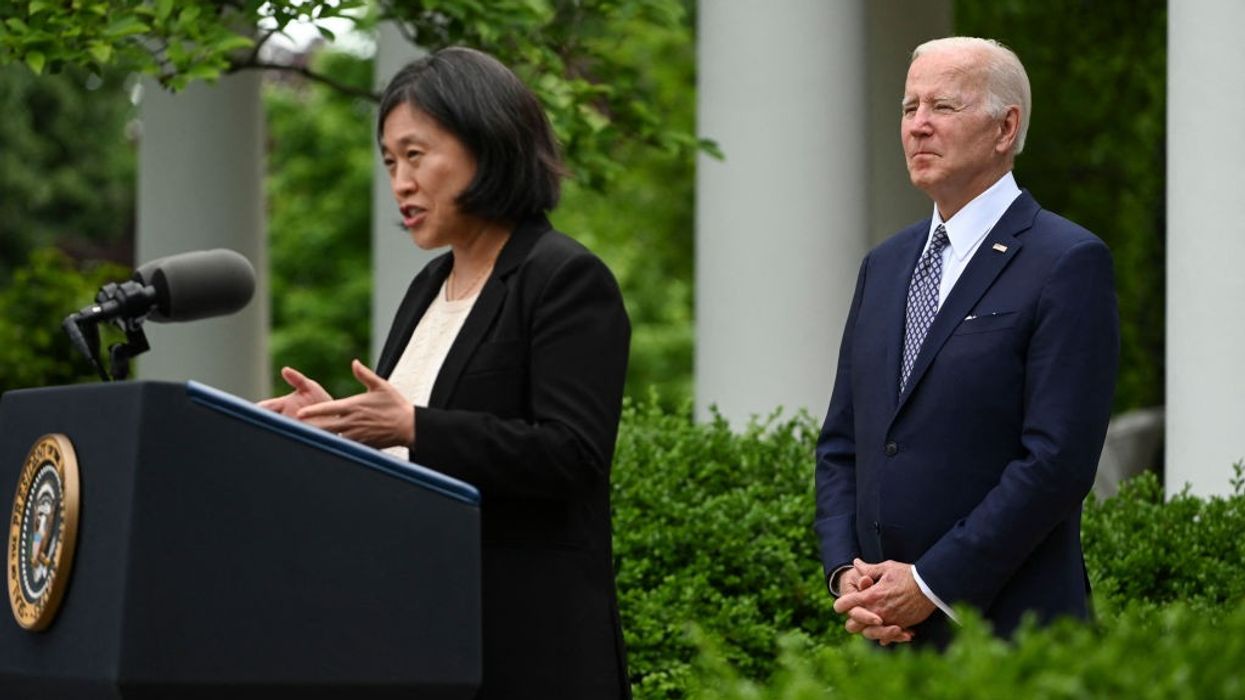
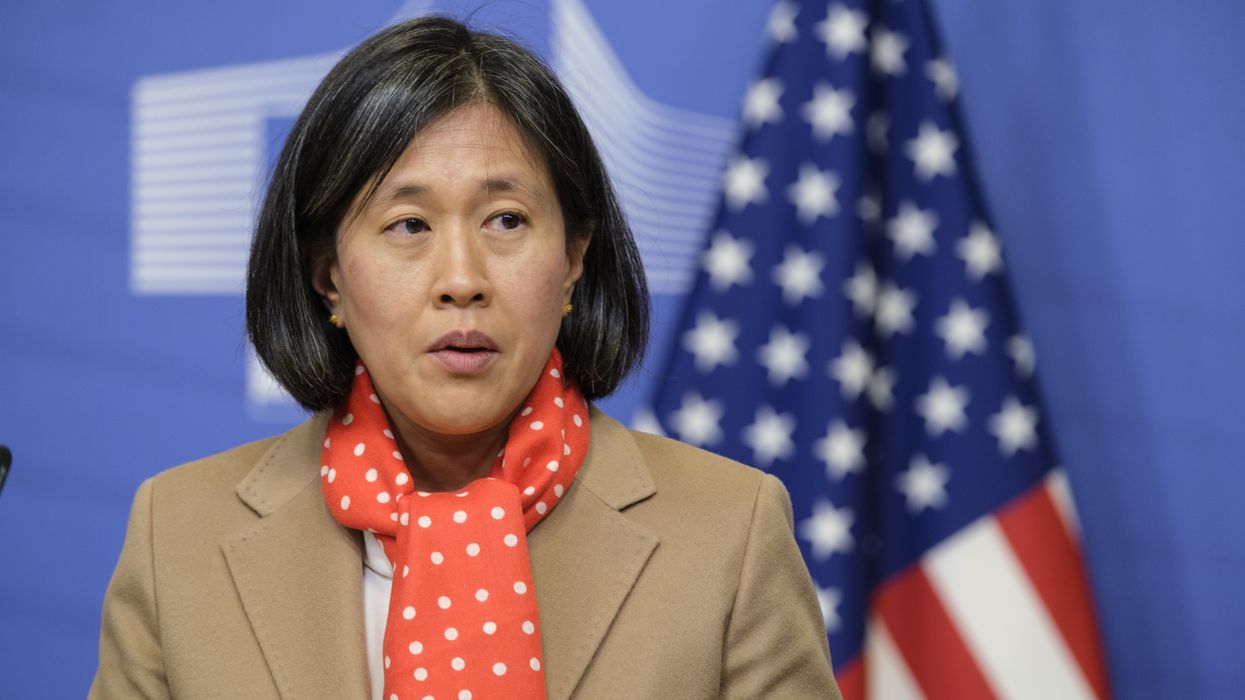
U.S. Trade Representative Katherine Tai said that "we are carefully reviewing the consultation request" and called out the People's Republic of China for using "unfair, nonmarket policies and practices to undermine fair competition and pursue the dominance of the PRC's manufacturers both in the PRC and in global markets."
Tai also praised "President Biden's leadership," represented by the passage of the IRA, which she described as "a groundbreaking tool for the United States to seriously address the global climate crisis and invest in U.S. economic competitiveness." She said the U.S. would "continue to pursue major new investments in clean energy technology, from solar and wind to batteries and electric vehicles and beyond."
The Associated Press reported Tuesday that "the real-world impact of the case is uncertain. If the United States loses and appeals the ruling, China's case likely would go nowhere. That is because the WTO's Appellate Body, its supreme court, hasn't functioned since late 2019, when the U.S. blocked the appointment of new judges to the panel."
St. Louis said that "China's threatened trade attack against climate provisions in the U.S. Inflation Reduction Act is another example of why the U.S. and other nations should begin working with one another towards an immediate moratorium on the use of trade challenges against clean energy transition and other climate measures."
"We've been warning since before the passage of the Inflation Reduction Act that antiquated WTO rules would threaten our ability to realize the green transition," she noted. "Prominent labor, environmental, and consumer groups have urged the U.S. government to boldly implement the IRA as intended despite trade pact attacks—and to make a commitment not to use such trade rules to challenge other countries' climate policies."
Stamoulis pointed out that "governments worldwide are wasting considerable amounts of time and political capital attempting to squeeze potential climate measures into compliance with outdated trade and investment rules."
"Ultimately, existing trade rules need to be rewritten so that trade pacts can become tools for helping the world advance towards a clean, just, and sustainable economy—but we don't have time to wait," he continued. "A 'climate peace clause' that brings an immediate end to the ongoing trade attacks against climate measures is a necessary interim step towards helping governments transition to clean energy on the rapid timeline that is required to head off the worse possible impacts of climate change."
"A moratorium on the use of international trade agreements to challenge climate policies would: (1) help governments safeguard existing climate mitigation and transition measures by protecting them from trade challenge; (2) create the space for governments to adopt the bolder climate policies that justice and science demand without fear or threat of new trade challenges; and (3) incentivize and offer countries time to work together and resolve the underlying tensions between current trade law and the imperative for climate action," he explained.
St. Louis also called for implementing a climate peace clause to "temporarily halt cases like this one so countries can prioritize the green transition and revise the WTO rules currently creating unnecessary hurdles."
"We must move forward with IRA implementation and work to enact even bolder policies to transform our economy for a clean energy future, and support other countries that do the same," she asserted.
China's WTO complaint comes on the heels of the hottest year in human history—which concluded with a United Nations climate summit that scientists called a "tragedy for the planet" because the conference's final agreement didn't demand a phaseout of fossil fuels that are driving global heating.
Soaring temperatures have continued this year, with European Union scientists recently announcing that last month was the warmest February on record. Carlo Buentempo, director of the E.U.'s Copernicus Climate Change Service, stressed that "the climate responds to the actual concentrations of greenhouse gases in the atmosphere so, unless we manage to stabilize those, we will inevitably face new global temperature records and their consequences."
"U.S. agribusiness exporters, the biotech industry, and their allies in Congress are pushing this case, intent on compelling Mexico to accept U.S. exports without debate," said one expert.
After two-and-a-half months of failed negotiations, the U.S. government on Thursday intensified its effort to quash Mexico's limits on genetically modified corn imports by calling for the formation of a dispute settlement panel under a North American trade deal.
In a 2020 decree backed by agricultural, consumer, environmental, public health, and worker groups, Mexican President Andrés Manuel López Obrador (AMLO) announced plans to phase out genetically modified (GM) corn and the herbicide glyphosate by January 2024.
Under pressure from the U.S. government and impacted industries, he issued a new decree in February reiterating plans to block GM corn imports for human consumption by then but lifting the deadline for imports intended for livestock feed and industrial use.
"The Mexican government will show what has occurred: Its cherished tortillas are being contaminated with glyphosate and GM corn. And they intend to put a stop to that."
While AMLO's move was seen as a concession to the U.S. and lobbyists challenging his policies, the Biden administration in June still requested 75 days of formal negotiations. After talks ended Wednesday, U.S. Trade Representative (USTR) Katherine Tai confirmed the decision to form a panel under the United States-Mexico-Canada Agreement (USMCA).
"Through the USMCA dispute panel, we seek to resolve our concerns and help ensure consumers can continue to access safe and affordable food and agricultural products," Tai said Thursday. "It is critical that Mexico eliminate its USMCA-inconsistent biotechnology measures so that American farmers can continue to access the Mexican market and use innovative tools to respond to climate and food security challenges. Our bilateral relationship with Mexico, one of our oldest and strongest trading partners, is rooted in trust and honesty, and there are many areas where we will continue to cooperate and work together."
U.S. Agriculture Secretary Tom Vilsack similarly said that "Mexico's approach to biotechnology is not based on science" and "the United States is continuing to exercise its rights under the USMCA to ensure that U.S. producers and exporters have full and fair access to the Mexican market."
The Mexican Ministry of Economy responded in a statement that "Mexico does not agree with the position of the United States" and "is prepared to defend the Mexican position before this international panel and demonstrate: 1) that the national regulation is consistent with the commitments signed in the treaty; and 2) that the challenged measures do not have commercial effects."
The Institute for Agriculture and Trade Policy (IATP) has previously supported Mexico's efforts to phase out GM corn and glyphosate and on Thursday challenged claims by U.S. officials and agribusiness about Mexican obligations under the treaty and the potential economic impact of the policies.
"U.S. agribusiness exporters, the biotech industry, and their allies in Congress are pushing this case, intent on compelling Mexico to accept U.S. exports without debate. It is an assault on Mexico's food sovereignty," said Karen Hansen-Kuhn, IATP director of trade and international strategies. "Trade rules should provide a forum to protect and advance rights, rather than block them."
Hansen-Kuhn on Thursday authored an op-ed about Mexico's rights under the USMCA while ITAP senior adviser Timothy A. Wise wrote about "exaggerated claims of economic damage" that "sprang from a convenient set of assumptions, all of which are flawed and now outdated in light of the more recent presidential decree."
"As Mexican Economy Minister Raquel Buenrostro stated in response to the USTR request for technical consultations, Mexico's decree is based on science, and she will challenge the U.S. government in the consultations to show 'quantitatively, with numbers, something that has not occurred: that the corn decree has commercially affected U.S. exporters,'" Wise also said.
"The Mexican government will show what has occurred: Its cherished tortillas are being contaminated with glyphosate and GM corn," he continued. "And they intend to put a stop to that."
As Reuters detailed Thursday:
Under USMCA's dispute settlement rules, a five-person panel, chosen from a roster of pre-approved experts, must be convened within 30 days, with a chair jointly chosen and the U.S. side choosing two Mexican panelists and Mexico choosing two American panelists. The panel will review testimony and written submissions and its initial report is due 150 days after the panel is convened.
Previous USMCA dispute panels last year ruled in the U.S.'s favor in a dispute over Canadian dairy quotas, and against the U.S. on automotive rules of origin, siding with Mexico and Canada.
There have been other disagreements between the U.S. and Mexico, most notably over energy in which the U.S. has argued that Mexico's nationalist policy prejudices foreign companies.
Arturo Sarukhán, a former Mexican ambassador to the United States, said on social media Thursday that "of the two consultation processes—energy and yellow corn—this is the one that is politically most relevant for the White House in 2024," given the significance of agricultural states such as Michigan, Minnesota, and Wisconsin to Democratic U.S. President Joe Biden, who is seeking reelection, and the GOP nominee, which could be former President Donald Trump, who signed the USMCA.
"Outdated trade rules continue being used to attack climate programs at the federal and sub-federal levels," said an organizer with the Trade Justice Education Fund, which is pushing for a "Climate Peace Clause."
Amid key talks in Seattle, Washington, 234 U.S. environmental organizations on Tuesday pressured the Biden administration to work on ensuring that international trade deals don't thwart efforts to combat the global climate emergency.
Echoing previous letters from state legislators and national groups—including 350.org, Food & Water Watch, Greenpeace USA, Sierra Club, and Trade Justice Education Fund—the coalition wrote to U.S. Trade Representative Katherine Tai demanding a "Climate Peace Clause" in trade deals.
"As state and local organizations working to protect our climate and environment, we call on you and the Biden administration to please take decisive action to prevent climate policies in our states from being attacked and undermined via outdated trade agreements," the letter to Tai states, noting the U.S. commitment to the Paris agreement's 1.5°C temperature goal.
"Please work with other countries to secure a 'Climate Peace Clause': a commitment to refrain from using dispute settlement mechanisms in international trade agreements to challenge climate mitigation and/or clean energy transition measures."
The new letter highlights how countries and the European Union have threatened provisions of the Inflation Reduction Act—a law signed by President Joe Biden last year that is intended to support the renewable energy transition and includes electric vehicle credits. It also points out that the U.S. and India have gone after each other's solar efforts.
"Cases like these not only directly threaten climate policies, but could dissuade state legislatures from passing and governors from signing future climate policies," the letter stresses. "While we greatly appreciate your recent announcement that India and the U.S. will be dropping trade attacks on each other's renewable energy programs within the World Trade Organization (WTO), we still need a broader and longer-term solution to the ongoing conflict between outdated trade rules and the imperative for ambitious climate action."
"Therefore, we urge you to take additional action to help bring trade attacks on climate action and a liveable future to an immediate end," the document adds. "Specifically, we join with state legislators from all 50 states in asking that you and the administration please work with other countries to secure a 'Climate Peace Clause': a commitment to refrain from using dispute settlement mechanisms in international trade agreements to challenge climate mitigation and/or clean energy transition measures."
The coalition is calling on Tai's office "to pursue a Climate Peace Clause within the texts of pending bilateral and regional trade agreements such as the Indo-Pacific Economic Framework, the U.S.-E.U. Trade & Technology Council and the Americas Partnership for Economic Prosperity, as well as within other venues," like the Group of Seven.
Signatories to the letter include Conservation Alabama, Dallas Peace and Justice Center, Greater Boston Trade Justice, Hawaii Wildlife Fund, Kentucky Environmental Foundation, Mazaska Talks, New Mexico Climate Justice, Save Our Illinois Land, Washington Fair Trade Coalition, and WE ACT for Environmental Justice as well as several chapters of 350.org, Climate Reality Project, Extinction Rebellion, Indivisible, Our Revolution, Physicians for Social Responsibility, and Sierra Club.
"Outdated trade rules continue being used to attack climate programs at the federal and sub-federal levels," Trade Justice Education Fund climate organizer Clayton Tucker said Tuesday. "A moratorium on the use of trade agreements to challenge climate mitigation and clean energy transition policies would enable local, state, and national governments to safeguard existing climate measures and adopt the additional policies urgently needed to prevent the worst outcomes from climate change."
"We were glad when the administration recently announced a reciprocal agreement ending India's trade attacks again U.S. states' solar programs and vice versa," Tucker added. "Unfortunately, other clean energy initiatives in the U.S. and elsewhere are still being threatened and future climate policies remain at serious risk. A Climate Peace Clause would provide assurances that other climate programs won't be delayed or weakened by trade attacks moving forward."
"Stopping trade talks would send a message to countries around the world that the United States does not tolerate the violation of LGBTQI+ rights."
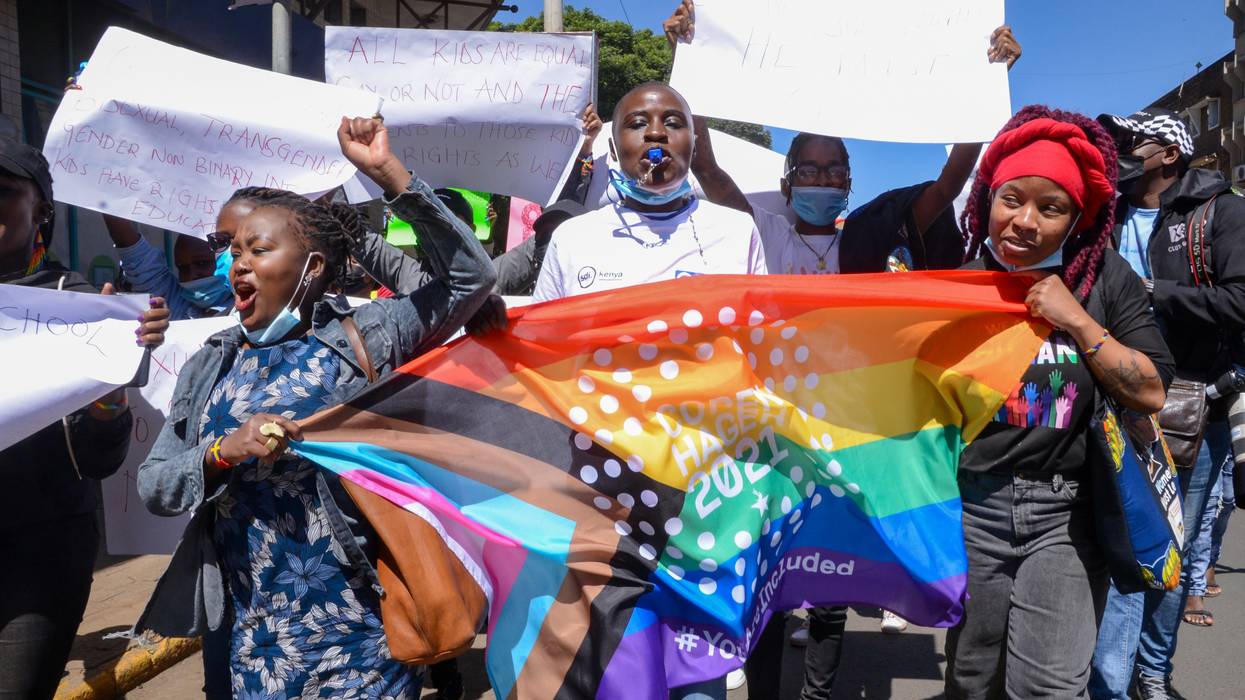
Dozens of advocacy groups on Monday called on the administration of U.S. President Joe Biden to suspend talks on a bilateral trade deal with Kenya until the African nation's president vetoes draconian anti-LGBTQ+ legislation inspired by Uganda's new "Kill the Gays" law.
Kenya's so-called Family Protection Act would criminalize same-sex sexual acts between consenting adults with a minimum of 10 years in prison while imposing the death penalty for "aggravated homosexuality," defined as "engaging in homosexual acts with a minor or disabled person and transmitting a terminal disease through sexual means."
"Pausing the trade talks aligns with the Biden administration's position of defending LGBTQI+ rights globally."
The proposed legislation would also mandate the deportation of LGBTQ+ refugees and asylum-seekers from Kenya.
Kenya's penal code already punishes same-sex acts with up to 14 years behind bars.
In a letter timed to coincide with the launch of the United States-Kenya Strategic Trade and Investment Partnership (STIP), the U.S. civil society groups ask United States Trade Representative Katherine Tai—who is visiting Kenya this week—to "pause STIP negotiations until President [William] Ruto commits to vetoing this bill."
The center-right Ruto has previously said that "Kenya is a republic that worships God. We have no room for gays and the others," and in March he criticized a ruling by the nation's highest court allowing an activist to officially register an LGBTQ+ rights group.
"Pausing the trade talks aligns with the Biden administration's position of defending LGBTQI+ rights globally," the groups' letter continues. "This move would advance a worker-centered, inclusive trade policy."
"Moreover, stopping trade talks would send a message to countries around the world that the United States does not tolerate the violation of LGBTQI+ rights," the signers asserted. "Leaving this leverage on the table does not further the administration's expressed priorities and sets a frightening precedent for future trade deals."
The letter's signers are asking Tai to:
"We urge you to stand up for the rights of LGBQTI+ people and to cease STIP negotiations until the Family Protection Bill is defeated," the letter concludes.
"We urge you to stand up for the rights of LGBQTI+ people and to cease STIP negotiations until the Family Protection Bill is defeated."
Mohamed Ali, a member of Kenya's National Assembly who supports the Family Protection Act, said he seeks to "kick LGBT people out of Kenya completely," according to Reuters.
Ali does not believe gay Africans exist—despite a rich history of LGBTQ+ people on the world's longest-inhabited continent. While Ali says homosexuality is a Western invention forced upon Africans, it was actually European powers that outlawed same-sex relations during colonization.
In May, Yoweri Museveni, president of neighboring Uganda, signed into law a similar bill criminalizing same-sex sexual acts between consenting adults and imposing the death penalty for "aggravated homosexuality."
Similar legislation is making its way through the parliaments of Tanzania and South Sudan.
"The broken ISDS system has time and time again worked in favor of big business interests while infringing on the rights and sovereignty of our trading partners and their people."
U.S. Sen. Elizabeth Warren and Rep. Lloyd Doggett on Wednesday led nearly three dozen progressive members of Congress in demanding an end to the Investor-State Dispute Settlement system, a key feature of corporate-managed trade agreements signed, and often initiated, by the United States.
"Large corporations have weaponized, and continue to weaponize, this faulty and undemocratic dispute settlement regime to benefit their own interests at the expense of workers, consumers, and small businesses globally," says Warren (D-Mass.) and Doggett's (D-Texas) letter to U.S. Trade Representative Katherine Tai and Secretary of State Antony Blinken.
After praising President Joe Biden's 2020 campaign pledge to exclude ISDS from future trade deals—such as the Americas Partnership for Economic Prosperity and the Indo-Pacific Economic Framework the White House has been negotiating—along with Tai's indication that she "will pursue a trade agenda in line with that commitment," the letter asks Tai's office and Blinken's department to "investigate any and all options at your disposal to eliminate ISDS liability from existing trade and investment agreements."
ISDS mechanisms enable multinational corporations to sue the governments of foreign trading partners for profits they claim have been forfeited as a result of domestic policies designed to protect workers, consumers, and ecosystems. Such lawsuits challenge meaningful labor, product safety, and environmental standards, and the mere threat of them can even preempt the enactment of robust regulations, placing ISDS at the heart of what critics have called neoliberal globalization's "race to the bottom."
The ISDS measures that corporations "successfully lobbied" to include in past trade deals grant them "special rights and privileges that ordinary citizens do not receive," the letter points out. "Under ISDS, disputes are handled not through the judicial system but by industry-friendly arbitration tribunals that can require taxpayers to shell out massive sums to big corporations, with no opportunity to appeal."
"Unlike the courts, 'tribunals have no set procedures or precedents. Standards of evidence are nonexistent, and mistruths or exaggerations go unpunished,'" the letter continues, citing journalist Sarah Lazare. "These provisions tilt the playing field even further in favor of large corporations, incentivizing offshoring and undermining the sovereignty of the United States and other governments."
A pending ISDS case launched recently by a Delaware-based company upset because Honduras' democratically elected government overturned a law that allowed corporations to establish self-regulated private cities inside the impoverished Central American nation exemplifies why the Biden administration needs "to take action to remove this problematic corporate handout from existing agreements," the letter says.
"Late last year," the members of Congress explained, "U.S. company Honduras Próspera launched an ISDS claim under the Dominican Republic-Central America Free Trade Agreement (CAFTA-DR) against the newly elected government of Honduras, seeking nearly $11 billion, equal to roughly two-thirds of the country's entire national budget this year."
They continued:
The jaw-dropping sum sought by Próspera is not the only reason that this case raises serious concerns. Honduran President Xiomara Castro secured a major victory for democracy last year when the National Congress of Honduras repealed the country's Zonas de Empleo y Desarrollo Económico law (ZEDE, or "Economic Development and Employment Zones"). The legal name misleadingly implies that ZEDEs constitute standard special economic zones, areas within a country's borders that, while politically and fiscally part of the host nation, are governed by separate economic regulations as "a mechanism for attracting foreign direct investment, accelerating industrialization, and creating jobs." However, the legislation enabled the creation of far more radical private governance zones, which have "functional and administrative autonomy" from the national government.
The zones allowed investors to create their own governance systems and regulations and establish separate courts. And investors have used the law to create jurisdictions where companies can propose their own regulations and where most Hondurans cannot enter without authorization. In the case of Próspera, a ZEDE located largely on the Honduran island of Roatán, investors have created a governing council where 44% of members are appointed by the private company and 22% are elected by landowners in a system where their number of votes is proportional to the size of their property.
This anti-democratic policy, approved under the leadership of previous officials, including former president Juan Orlando Hernández, who have since been indicted on drug trafficking and firearms charges, was highly controversial. Honduran labor unions, small farmers, Indigenous organizations, and even the nation's largest business groups expressed vehement opposition. According to the U.S. State Department, the zones "were broadly unpopular, and viewed as a vector for corruption." The Honduran Congress unanimously approved President Castro's proposal abolishing this policy.
Próspera has repeatedly threatened to initiate ISDS arbitration under CAFTA-DR to bully the Honduran government into allowing them to continue operating under the abolished ZEDE framework. In December 2022, the company announced that it filed a CAFTA-DR claim with the International Center for Settlement of Investment Disputes (ICSID), which will force the government of Honduras to potentially spend millions of dollars defending itself for responding to the will of its people and asserting its sovereignty over these special governance jurisdictions operating in its territory.
The lawmakers asked Tai and Blinken to "intervene—through a statement of support, amicus brief, and any other means at your disposal—in support of Honduras' defense in the Próspera ISDS case and to ensure that such egregious cases can no longer disrupt democratic policymaking by working to eliminate ISDS liability in preexisting agreements in our hemisphere."
Notably, the suit against Honduras "is just the most recent example of the worrying trend of increased ISDS use in the Americas, both in the number of cases and the sky-high value of the claims," the letter observes. "Governments throughout Latin America have paid billions of dollars in compensation to foreign companies at their taxpayers' expense, simply for putting in place sound public policy to protect the environment and the health and economic well-being of their communities. Governments—and therefore taxpayers—throughout the region have been ordered by ISDS tribunals to pay close to $28 billion to corporations, with far more in pending ISDS claims."
Decrying how "the broken ISDS system has time and time again worked in favor of big business interests while infringing on the rights and sovereignty of our trading partners and their people," the lawmakers urged the Biden administration to "refrain from negotiating new trade agreements with ISDS, and also to address the existing ISDS mechanisms that corporations continue to exploit."
Melinda St. Louis, director of Public Citizen's Global Trade Watch, said in a statement that her group has been keeping a close eye on the "truly shocking" case against Honduras, "as well as the explosion of ISDS cases in the region."
Public Citizen "is coordinating with civil society groups across the hemisphere working to remove these increasingly unpopular ISDS provisions from trade agreements and investment treaties," said St. Louis. "President Biden's commitment to exclude ISDS in new agreements must be matched by immediate action to dismantle ISDS in existing agreements—or else shameful cases like the $11 billion one against Honduras will continue."
Warren and Doggett's letter was signed by Independent Sen. Bernie Sanders (Vermont) and 30 Democratic lawmakers, including Sens. Sherrod Brown (Ohio) and Sheldon Whitehouse (R.I.), as well as Reps. Jamaal Bowman (N.Y.), Cori Bush (Mo.), Greg Casar (Texas), Jesús G. "Chuy" García (Ill.), Pramila Jayapal (Wash.), Ro Khanna (Calif.), Barbara Lee (Calif.), Summer Lee (Pa.), Donald Norcross (N.J.), Ilhan Omar (Minn.), Mark Pocan (Wis.), and Rashida Tlaib (Mich.).
The coalition urged the U.S. to ensure the Indo-Pacific Economic Framework "prioritizes working people, combats global climate change, and reins in Big Tech abuses."
A coalition of 403 progressive advocacy groups on Thursday outlined conditions they say must be met for a pending Indo-Pacific trade pact to achieve important labor and environmental objectives and urged the White House to promote them during upcoming negotiations.
"As organizations whose constituencies continue to experience the harm caused by past corporate-centered trade agreements, we have a strong desire to work with your administration to advance goals you have described for the Indo-Pacific Economic Framework (IPEF)—particularly in terms of a long overdue shift in direction for U.S. trade policy that finally places working people and climate action at the center," the coalition wrote in a letter to President Joe Biden.
The letter comes in the wake of a two-week Asia-Pacific Economic Cooperation (APEC) meeting in Palm Springs—where trade justice campaigners rallied for a "worker-centered and climate-friendly" IPEF—and shortly before U.S. Trade Representative Katherine Tai's office is expected to unveil Washington's proposals for the agreement's labor, environment, and digital trade chapters during a key negotiating round later this month in Bali, Indonesia.
In order to secure a final deal that "corrects the errors of past trade pacts and becomes a useful model for future agreements that deliver real benefits to people and the planet," the groups explained their shared priorities for those three issues:
"A wide range of organizations across the United States are ready to fight for an Indo-Pacific trade deal that furthers the president's vision of creating a new model for trade and international cooperation that prioritizes working people, combats global climate change, and reins in Big Tech abuses," said Arthur Stamoulis, executive director of Citizens Trade Campaign, which organized the letter.
"Whatever labor, environmental, and digital positions the U.S. ultimately introduces," he added, "will play a big role in determining whether IPEF is helpful in advancing these goals."
Signatories include the Amazon Labor Union, Asian Pacific American Labor Alliance, Communications Workers of America, Greenpeace USA, International Association of Machinists and Aerospace Workers, International Brotherhood of Teamsters, National Family Farm Coalition, Public Citizen, Rethink Trade, Trade Justice Education Fund, and United Steelworkers.
"A wide range of organizations across the United States are ready to fight for an Indo-Pacific trade deal that furthers the president's vision of creating a new model for trade and international cooperation."
"We are heartened by and appreciate reports that IPEF will not include some of the damaging provisions found in past trade agreements, such as the anti-worker, anti-environment, and anti-democratic investor-state dispute settlement (ISDS) system and public procurement terms that could undermine 'Buy America,' 'buy local,' and 'buy green' programs," the letter says.
However, "the list of countries selected as initial IPEF partners... includes many with records of labor rights violations, including unionist assassinations, human trafficking, forced labor, child labor, and more," it continues.
The Biden administration announced this week that it plans to crack down on the exploitation of child migrants in the U.S., following a bombshell New York Times report exposing a surge in child labor law violations committed by several corporations.
The coalition's letter stresses that "so-called 'Good Regulatory Practice' provisions must not replicate the terms of past trade proposals aimed at delaying, weakening, and destroying future public interest policies before they are even created."
Moreover, "any agricultural provisions should allow for the creation of strategic food and grain reserves and other public investment in agricultural resilience and local food systems; include measures to stop land grabs and otherwise protect the human rights of farmers and farm workers; and set floors, rather than ceilings, when it comes to food safety and fair price measures for producers and consumers," states the letter.
Finally, the letter emphasizes the need to make the IPEF negotiating process more transparent and participatory:
The United States' requirement that IPEF negotiating parties sign confidentiality agreements undermines the ability for an informed citizenry to provide input on policy that impacts their livelihoods and communities; we urge you to terminate these confidentiality agreements. We also urge you to publish upcoming U.S. IPEF proposals for public comment prior to tabling them, including those on critical chapters like labor, the environment, and digital trade that we understand will be tabled soon, in addition to all other texts. And we urge the United States and other countries to publish proposals and any draft composite texts at the close of each IPEF negotiating round. A more transparent and participatory negotiating process for IPEF would allow for a wider set of interests to provide informed input and ensure equitable treatment of communities which are not part of the official U.S. trade advisor system, mostly representing corporations who now have access to U.S. proposals and other confidential IPEF texts.
"Reversing an unnecessarily bureaucratic and obtuse trade negotiating regime requires operating in a transparent manner and would facilitate broader public support and confidence among civil society organizations," the letter adds.
Ahead of talks last summer between the U.S. and 13 Asian and Australiasian nations, Jane Kelsey, a trade justice campaigner with Aotearoa in New Zealand, said that if the Biden administration "can produce a real alternative that puts people and the planet front and center, and can convince our governments to genuinely support that new paradigm, we will work to make it succeed."
"But if IPEF is just another way to promote the old corporate agenda, and a proxy for the U.S.'s geopolitical goals," she warned, "we will campaign against it like we did with the Trans-Pacific Partnership."