

SUBSCRIBE TO OUR FREE NEWSLETTER
Daily news & progressive opinion—funded by the people, not the corporations—delivered straight to your inbox.
5
#000000
#FFFFFF
To donate by check, phone, or other method, see our More Ways to Give page.
Daily news & progressive opinion—funded by the people, not the corporations—delivered straight to your inbox.
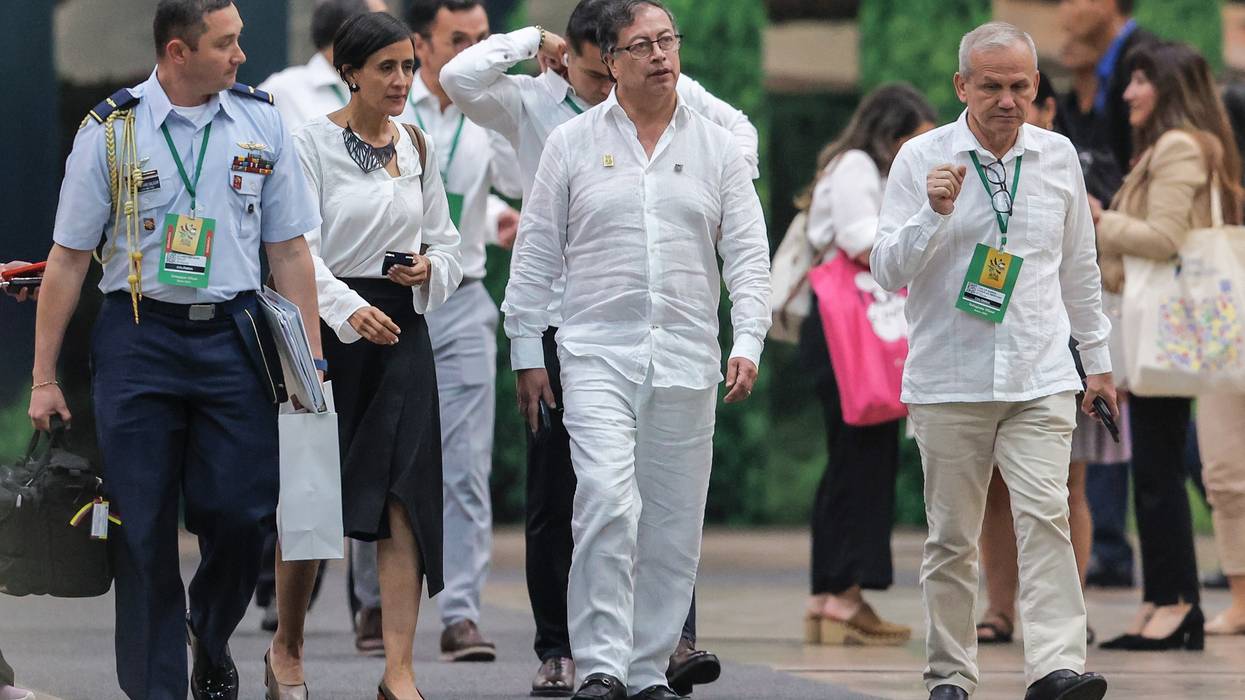
Investor-state dispute settlement has become a powerful weapon for multinational firms to challenge policies aimed at phasing out fossil fuels, often resulting in massive financial penalties for states that attempt to regulate or transition their economies.
As Colombia prepares to host the world’s first Global Conference on Transitioning Away from Fossil Fuels this April, a powerful coalition of more than 220 leading economists, legal scholars, and policymakers is calling on President Gustavo Petro to take bold action.
In a public letter presented on Monday in Bogota, promoted by the Center for Economic and Policy Research, Boston University Global Development Policy Center, and the NGO Public Citizen, signatories including Nobel laureate Joseph Stiglitz, economist Thomas Piketty, and Paris Agreement architect Laurence Tubiana urge Colombia to lead an international effort to dismantle investor-state dispute settlement (ISDS), a system embedded in thousands of trade and investment agreements worldwide, including in Colombia.
As of 2025, Colombia had over $13 billion in pending ISDS charges, about one-seventh of its annual budget. To compare, it would cost $42 billion to fully implement the 2017 peace agreement, while it would cost about $25 billion for the country to have universal healthcare. Without confronting ISDS, meaningful state action may be impossible.
ISDS, sometimes referred to by economists as “litigation terrorism,” allows foreign corporations to sue governments in private arbitration tribunals over public-interest regulations, including environmental protections. It has become a powerful weapon for multinational firms to challenge policies aimed at phasing out fossil fuels, often resulting in massive financial penalties for states that attempt to regulate or transition their economies.
If the world is serious about confronting the climate crisis, it must also confront the legal and economic structures that entrench fossil fuel dependence. Dismantling ISDS is a precondition for meaningful change.
“Investor-State Dispute Settlement has a track record of being very favorable to foreign corporations at the expense of local communities, the environment, and economic development,” Stiglitz noted. For countries seeking to move away from fossil fuels, ISDS creates a chilling effect; governments hesitate to enact ambitious climate policies for fear of triggering billion-dollar lawsuits.
Stiglitz added that "investor-state dispute settlements don’t just mean growing debt burdens for countries: they are also a barrier to action on the climate crisis.”
Colombia is especially exposed. The country has 129 oil and gas projects covered by ISDS provisions, leaving it vulnerable to a wave of potential claims as it pursues its energy transition.
Petro has signaled his intent to reduce reliance on these mechanisms, but has yet to follow the path of countries such as South Africa, India, and Indonesia, which have terminated ISDS-linked agreements outright after concluding they undermined national sovereignty.
Across Latin America, ISDS has quietly transferred enormous public wealth to foreign corporations. Governments have been forced to pay out tens of billions of dollars in arbitration awards, particularly in countries like Argentina, Peru, and Venezuela, which, not coincidentally, have also faced severe economic and energy crises.
This system vastly privileges foreign investors over domestic firms, bypasses national courts, and effectively grants corporations veto power over public policy. As development economist Jayati Ghosh argues, bilateral investment treaties have “weaponized” corporate influence, restricting the ability of governments to act in the public interest without delivering clear benefits in terms of increased investment.
Colombia’s upcoming conference offers a rare opportunity to challenge this global regime. The letter’s authors propose the creation of an international alliance committed to unwinding ISDS and restoring democratic control over economic policy. The European Union’s recent withdrawal from the Energy Charter Treaty, due to its protections for fossil fuel investments, signals that even advanced economies are beginning to recognize the incompatibility of ISDS with climate goals.
Yet, even as Petro pushes for a fossil fuel phaseout and questions the legitimacy of ISDS, other governments in the hemisphere are moving in the opposite direction. Ecuador’s conservative President, Daniel Noboa, a billionaire businessman dogged by allegations of corruption, authoritarianism, and links to drug traffickers, has aggressively pursued new trade and investment agreements with the United Arab Emirates, Canada, and the United States. These deals include ISDS provisions, despite both the Ecuadorian Constitution and the Ecuadorian people outright banning ISDS.
Other right-wing politicians in the region, including anarcho-capitalist Argentine President Javier Milei, have also expressed support for expanding ISDS, to further the entrenchment of corporate power in the region.
As Andrés Arauz of the Center for Economic and Policy Research puts it, ISDS creates a “fast-track legal system” that grants corporations a “license to kill” public-interest regulation through the threat of massive financial penalties.
The coalition’s message to Colombia is salient; if the world is serious about confronting the climate crisis, it must also confront the legal and economic structures that entrench fossil fuel dependence. Dismantling ISDS is a precondition for meaningful change.
In Santa Marta this April, Colombia has a chance to lead, and turn the region away from complete surrender to foreign corporate interests, instead attempting to build economies around popular prosperity, dynamic democracy, and robust constitutionalism.

The decision blocks the right-wing president's unconstitutional attempt to bypass the National Assembly. Still, this is just one step in Ecuador's continued fight for its Constitution and its democracy.
In a major rebuke to President Daniel Noboa, Ecuador's Constitutional Court ruled unanimously on March 9 that his controversial Bilateral Investment Treaty with the United Arab Emirates cannot be fast-tracked and must be approved by the National Assembly.
The decision blocks the right-wing president's unconstitutional attempt to bypass the National Assembly. Still, this is just one step in Ecuador's continued fight for its Constitution and its democracy.
This treaty is the test case for a far broader corporate coup, one that aims to resurrect a legal weapon Ecuador’s people have repeatedly rejected: Investor-State Dispute Settlement (ISDS).
The treaty, signed in a rushed ceremony in December 2025, was littered with errors, referencing the non-existent "United Arab States" and citing provisions that aren't there. When Ecuador’s pro-corporate Constitutional Court rightly demanded a corrected text, it asked for an English version, a bizarre move in a Spanish-speaking republic.
“We are witnessing a government ignoring its own Constitution and the will of its people to serve the interests of transnational capital."
In response, Noboa issued an extraordinary decree authorizing Ecuador’s ambassador to unilaterally correct the text, bypassing normal diplomatic and legal channels.
The court has now sided with Ecuador’s progressive Constitution. However, that is not where this fight ends; instead, the treaty will have to be taken through a two-stage review process, unless Noboa decides to ignore the court altogether—a move that would be unsurprising given the young autocrat’s continued destruction and dismissal of Ecuador’s other branches of government.
The Constitutional Court will have 30 days to conduct a second, deeper review of the treaty's content to verify its full conformity with the Constitution. If the treaty survives that scrutiny (or if the court does not respond in 30 days), it will go to the National Assembly, where it requires absolute majority approval. Currently, Noboa’s party only has two-fifths of the total assembly seats, with leftist, pro-Indigenous, and some centrist parties occupying the rest.
The urgency of this corporate agenda explains the government's simultaneous brutal crackdown on democratic opposition. In a move that has drawn international condemnation, an electoral judge, on the request of the Noboa-aligned prosecutor general, suspended the country's largest opposition party, the left-wing Revolución Ciudadana (RC), for nine months.
The RC would not be able to conduct any political activities, or run in the 2027 local elections. The left-wing party, which won 44% of the vote in the last presidential election, controls the country's largest cities, including Quito and Guayaquil.
Interestingly, the right-wing pro-Trump billionaire president has himself been credibly accused of electoral fraud, corruption, and stakes in the drug-trafficking trade.
The case against RC relies on the testimony of an individual awaiting trial for child sexual abuse, who was given preferential treatment in prison in exchange for implicating the party on cooked-up money laundering charges. This follows the February pre-trial detention of Guayaquil's Mayor, Aquiles Alvarez, another opposition leader targeted by the prosecutor general. This thus follows a long pattern of Noboa's crackdown on opposition. The right is also cutting off the opposition's ability to vote against Noboa's measures in the assembly.
The UAE BIT contains ISDS provisions that grant foreign investors the right to sue Ecuador in international tribunals for billions over laws or policies that harm their profits, and those they expect to make in the future, including environmental and health regulations that protect local and marginalized populations. This is explicitly prohibited by Article 422 of Ecuador’s Constitution, a prohibition upheld by the people in national referenda in 2024 and again in 2025.
“This is all very clearly unconstitutional,” says Ladan Mehranvar, a senior legal researcher at the Columbia Center on Sustainable Investment who focuses on international investment law and human rights. “They are trying to push the BIT through by sidestepping constitutional safeguards, including the requirement of prior approval by the National Assembly,” she added.
“We are witnessing a government ignoring its own Constitution and the will of its people to serve the interests of transnational capital,” said Pedro Labayen Herrera and Mario Osorio, both researchers with the Center for Economic and Political Research (CEPR) in Washington. “They are fast-tracking the UAE treaty by claiming it requires only executive ratification, thus avoiding the scrutiny of the Ecuadorian legislature and the public. That is simply false.”
There are serious concerns about the court’s independence. One justice, Claudia Salgado, nominated by Noboa, comes from a family of legal and arbitration specialists and has previously written on Ecuador’s constitutional ban on ISDS. Her apparent shift, alongside pressure from an executive that has publicly attacked and threatened the Constitutional Court judges, paints a picture of a state institution under siege. “Either the Constitutional Court is captured, or it feels threatened,” Mehranvar noted.
So why such a reckless, rushed push for a treaty with the UAE? Because it is the blueprint and the battering ram for something far more consequential, namely, a Free Trade Agreement with Canada and other pro-corporate actions that would permanently lock in ISDS for the (mostly foreign) mining industry.
There is also significant personal corruption at play. The Noboa family holds a significant stake in Silvercorp, a Canadian mining company, as well as other financial holdings with direct interests in ISDS and the president’s deregulation crusade.
An ISDS chapter in a Canada-Ecuador FTA would directly benefit the president’s own financial interests, allowing corporate actors, potentially including his family’s holdings, to sue the Ecuadorian state. “ISDS is a tool for the Noboa family to protect their own financial interest,” said Herrera and Osorio.
This agenda is being synchronized with a brutal domestic deregulation campaign. In late January, Noboa proposed gutting Ecuador’s Mining Law by replacing the mandatory environmental license with a simplified authorization, which local Indigenous groups say decimates their constitutional right to prior consultation, a key tool they use to oppose harmful extractive projects. Ecuador is one of the most biodiverse countries on Earth; about half of its territory is made up of the Amazon rainforest and Indigenous lands.
Combined with ISDS, this creates a vicious trap—remove environmental safeguards now, deter future governments from reinstating them, and use international tribunals to sue any future government that tries to reinstate them for “indirect expropriation” of future profits.
Companies could do this even without any intent to finish the projects, or invest while knowing that the projects are legally or politically untenable, winning out on billions of dollars in Ecuadorian taxpayer funds, at a time when Ecuador is facing a historic financial, energy, and security crisis, and remains one of the poorest countries in the Western Hemisphere.
The United Nations special rapporteur on human rights and the Environment has argued that ISDS has catastrophic consequences for climate action and human rights. Nobel prize-winning economist Joseph Stiglitz has even argued ISDS is “litigation terrorism,” while even the libertarian Cato Institute has said the mechanism actually threatens the rule of law, growth, and investment.
This deal and its progenitors represent the fusion of state and corporate power against democracy. It was preceded by the violent crushing of protests against subsidy removals, the criminalization of water defenders, and the continued advancement of mining projects in sensitive ecosystems like the Amazon and near the Yasuní National Park, despite, once again, popular referenda opposing them. The Noboa government has conducted a war against democracy, the rule of law, and human rights.
If the court and National Assembly allow this breach, the floodgates open for a corporate takeover dressed as trade policy, with only global mining capital standing to gain. Ecuador’s people have resisted corporatocracy many times over. Their government is now trying to force it on them by decree, while suppressing all opposition. At a time when global democracy and rights are falling off a cliff, the world must heed this crucial test.
If world leaders who are coming to the U.N. Summit on September 22 and 23 are serious about protecting the future of humanity and the planet, they should dismantle an anti-democratic investment system.
The United Nations is hosting world leaders on September 22 and 23 for a “Summit of the Future.” Unfortunately, the draft action plan for the summit, while full of lofty language and some good intentions, does not challenge the neoliberal model or corporate control of the global economy.
On the contrary, it proposes, for example, to “facilitate access of developing countries to the WTO and promote trade and investment liberalization.”
It’s astounding that this plan, which is supposed to serve as the basis for an inter-governmental agreement, is so stuck in the past. For decades now, social movements and elected officials in many countries have become increasingly opposed to trade and investment rules that grant enormous privileges and power to transnational corporations.
The increase in demand for minerals for euphemistically named “green” energy transitions means that governments will be at greater risk of facing multi-million dollar lawsuits, as these processes are generating social reactions worldwide.
In many ways, these old rules directly contradict the U.N. summit’s overall goal of creating “a world that is safe, sustainable, peaceful, inclusive, just, equal, orderly, and resilient.”
They also make a mockery of the summit’s stated commitment to the U.N. Charter principle of “full respect for the sovereign equality of all Member States” and the principle of “equal rights and self-determination of peoples.”
Just take a look at how the natural resource extractive industries have used the existing investor-state dispute settlement (ISDS) system to undercut national sovereignty and sustainability and to foment conflict. The mining sector, in particular, has used this system, enforced through almost 3,000 treaties, to sue governments in supranational tribunals, bypassing national legal systems.
The vast majority of ISDS claims are directed against countries in the so-called “Global South,” and most suits are targeted at Latin American countries. ISDS allow corporations to suppress the opposition of local and Indigenous communities fighting for their territorial and environmental rights. When governments respond in favor of communities resisting mining projects, companies often use these lawsuits to blackmail governments into backing down and granting permits for environmentally destructive projects or pay “compensation” for the loss of expected corporate profits.
Investment treaties even include “full protection and security” clauses that give companies the right to demand that governments repress communities that oppose their mining projects. In Guatemala, for instance, the Nevada-based mining company KCA claims that the government failed to provide access to a mining site blocked by Indigenous protesters, and is suing the country for more than $400 million.
The increase in demand for minerals for euphemistically named “green” energy transitions means that governments will be at greater risk of facing multi-million dollar lawsuits, as these processes are generating social reactions worldwide. The Transnational Institute, the Institute for Policy Studies, and other organizations recently published extensive information on mining (and other) company lawsuits against governments in an “ISDS-Tracker” site.
Panama is facing a particularly scandalous example of these ISDS lawsuits. The people of this country have risen up against the Canadian mining company First Quantum and in November 2023 succeeded in having Panama’s Supreme Court declare the renewal of the company’s copper mine license unconstitutional. This led the Panamanian National Assembly to approve a mining moratorium law.
According to reports, First Quantum has sued Panama for the unpayable sum of $30 billion at the International Chamber of Commerce in Paris, and has threatened another $20 billion arbitration under the Canada-Panama Free Trade Agreement.
Other transnational mining companies affected by the cancellation of licenses have followed First Quantum’s example and, in total, Panama faces ISDS claims for at least $57 billion, equivalent to more than half of its GDP.
As we demonstrate in our recent report “ISDS: A portrait of transnational power in Mexico, the investment protection regime, and its consequences,” Mexico is facing lawsuits totaling at least $13 billion, with more than half of them related to mining. This figure is partial, as it corresponds only to claims at the World Bank’s International Centre for the Settlement of Investment Disputes (ICSID), which publishes information about them. On the other hand, the International Chamber of Commerce, where Panama has been sued, and other supranational tribunals do not publish information on cases.
The ISDS system has been dismantled among some rich countries. For instance, the United States and Canada eliminated it among themselves in the United States-Mexico-Canada Agreement. The European Union eliminated it among its member states and is exiting the Energy Charter Treaty, which also allowed these investor-state suits.
If world leaders who are coming to the U.N. Summit on September 22 and 23 are serious about protecting the future of humanity and the planet, they should dismantle this anti-democratic investment system (ISDS) for all countries.

"Outdated trade rules like ISDS can pose a real threat to states' sustainable energy initiatives and the good-paying jobs they create," said one lawmaker from Maine.
More than 300 state lawmakers signed a letter Monday calling on U.S. President Joe Biden to "eliminate the threat of Investor-State Dispute Settlement from all U.S. trade and investment agreements," joining hundreds of civil society groups and dozens of members of Congress in speaking out against rules that allow foreign corporations to challenge state laws.
The legislators—who include Democrats, Republicans, and Independents—expressed support for the official position of the National Conference of State Legislatures (NCSL) regarding ISDS, as the conference convened its annual summit in Louisville, Kentucky.
The NCSL opposes trade deals "with investment chapters that provide greater substantive or procedural rights to foreign companies than U.S. companies enjoy under the U.S. Constitution."
The Biden administration has agreed with the NCSL's call to exclude ISDS from any new trade agreements, but the U.S. is currently a party to more than 50 trade and investment deals that contain the rules.
"It's long overdue that we change course. Getting rid of ISDS, which embodies the runaway corporate power embedded in our trade deals, is a great place to start.
ISDS rules empower corporations to sue governments if they claim their profit margins are harmed by public programs, such as public health regulations, environmental rules, food safety guidelines, or climate laws aimed at reducing fossil fuel emissions.
"The outcomes of these cases, which can result in billions of U.S. tax dollars paid to foreign corporations in compensation, are
determined in unaccountable tribunals presided over by unelected corporate lawyers whose rulings are not subject to appeal," reads the Monday letter from state lawmakers, including North Carolina state Rep. Pricey Harrison (D-61), New York state Sen. Liz Krueger (D-28), and Florida Rep. Anna Eskamani (D-42).
According to the letter, "even cases that get dismissed can result in countries paying millions in tribunal costs."
Harrison said in a statement that "the era of corporate-dominated trade policy" has contributed to a loss of 40% of North Carolina's manufacturing jobs.
"It's long overdue that we change course," said Harrison. "Getting rid of ISDS, which embodies the runaway corporate power embedded in our trade deals, is a great place to start. These extreme corporate rights undermine democracy and critical public interest protections here at home and around the globe. I'm glad to see so many colleagues from across the political spectrum joining me in this effort."
Last November, 200 civil society groups demanded the elimination of ISDS within APEP, and three dozen members of Congress wrote to U.S. Trade Representative Katherine Tai and Secretary of State Antony Blinken last May saying the U.S. should end the system's use in its trade agreements.
Allowing corporations to sue over laws that cut into their profits, wrote the lawmakers on Monday, "threatens the policy space we need to maintain high-level public health standards, create clean energy jobs, protect the digital privacy and data-security of those we represent, and much more."
Maine state Sen. Craig Hickman (D-14) expressed concern about ISDS both as a lawmaker and "an organic farmer committed to curtailing the severe impacts of climate change and strengthening rural economies."
"Outdated trade rules like ISDS can pose a real threat to states' sustainable energy initiatives and the good-paying jobs they create,"
said Hickman. "I urge the administration to eliminate this antiquated mechanism that stands in the way of sustainable food systems and the clean energy economy we need to build for our children and grandchildren."
Note: This article has been edited to correct a reference to U.S. trade deals containing ISDS and the Americas Partnership for Economic Prosperity.
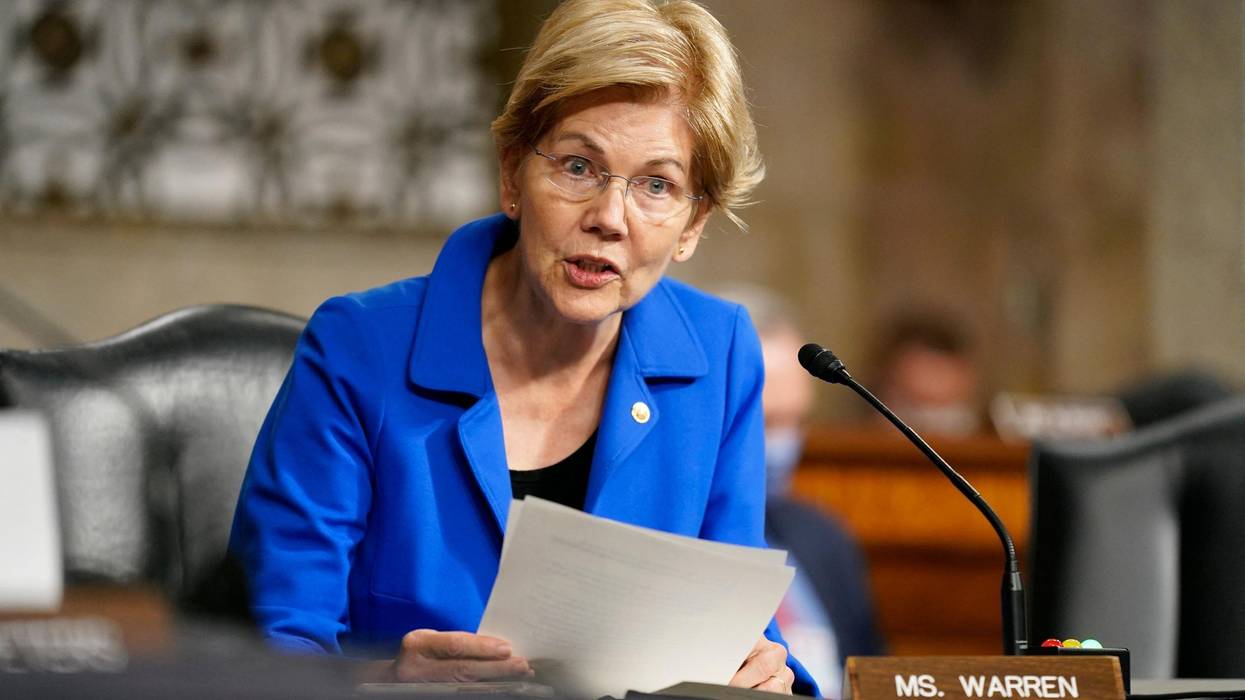
"Giant corporations have and continue to weaponize ISDS—a secretive and rigged arbitration system," said Sen. Elizabeth Warren. "It's time to shut the door and eliminate ISDS from all existing trade agreements once and for all."
Prominent Democrats on Wednesday called for ending corporate-backed arbitration provisions in trade agreements as the Sierra Club issued a report showing that fossil fuel companies use the provisions to block climate action.
The report calls for the U.S. government to not only stop signing trade agreements with Investor-State Dispute Settlement (ISDS) provisions, as President Joe Biden has already done since taking office, but also end or modify existing agreements that have them. ISDS provisions allow companies to protect their investments in a foreign country and seek compensation from an ad hoc arbitration tribunal, rather than the country's courts, if they are threatened by legislation, regulation, or the cancellation of a project.
"While it has correctly rejected ISDS for future trade agreements, the Biden administration has made no effort to remove these egregious provisions from existing agreements," Rep. Lloyd Doggett (D-Texas) said in a Sierra Club statement. "Powerful multinational corporations continue abusing ISDS to intimidate countries from strengthening environmental and human rights protections."
Many ISDS cases pit powerful corporations against low- and middle-income countries, but wealthy nations are also liable to be sued. TC Energy, a multinational fossil fuel company, sued the US for $15 billion following the discontinuation of the Keystone XL pipeline project, and Canada faces a $20 billion suit over a canceled liquefied natural gas project in Québec. Overall, nearly 20% of the world's 1,206 known ISDS arbitration cases have been brought by fossil fuel companies, according to the Sierra Club report.
The investor-state dispute settlement (ISDS) regime gives polluters license to sue governments for their public interest policies, including those that would reduce the production of fossil fuels.
Now is the time to end ISDS for good.
— Iliana Paul (@iliana_m_paul) May 29, 2024
"ISDS mechanisms corruptly advance the power of big corporate polluters over the interests of the public and the planet. This new report from the Sierra Club makes it clear that ISDS's time is up," Sen. Sheldon Whitehouse (D-R.I.) said in the group's statement. He, too, is pushing the Biden administration to remove ISDS provisions from existing agreements.
While the Sierra Club report focuses on ISDS's climate impacts, the authors argue that the effects of the provisions, which give corporations extraordinary power, are much broader. "The dangers of ISDS are stark not just for climate change, but for a broad swath of public interest policies including ones related to public health, labor protections and workers' rights, green jobs policies, and more," they wrote.
Democrats voiced agreement about the broad consequences of the provisions, which have been the subject of a growing chorus of criticism by politicians and public interests groups.
"Giant corporations have and continue to weaponize ISDS—a secretive and rigged arbitration system that multinational companies use to bypass domestic courts and challenge protections for the environment, workers, and consumers around the world. It's time to shut the door and eliminate ISDS from all existing trade agreements once and for all," said Sen. Elizabeth Warren (D-Mass.) in the Sierra Club statement.
In November, Sierra Club, Public Citizen, the AFL-CIO and more than 200 other organizations called on the Biden administration to dismantle ISDS provisions between the U.S. and countries in the Americas, saying that the president should "free public interest policies from the shadow of ISDS."
That followed an April letter to Biden in which more than 300 law and economics professors, including Nobel laureate and Columbia University professor Joseph Stiglitz, called for an end to ISDS in existing trade agreements, arguing that there's a "bipartisan consensus" for such reform.

"The ISDS regime is undemocratic: It was created for and by powerful, well-organized corporations, and has served their interests almost exclusively," said one critic.
More than 200 civil society groups on Thursday called on the Biden administration to protect climate, health, and other public interest policies across the Americas by dismantling a trade regime that the United States spearheaded nearly three decades ago—giving corporations broad authority to sue governments if they claim their profit margins are harmed by public programs.
Public Citizen, Sierra Club, and the AFL-CIO led hundreds of organizations in sending the letter to President Joe Biden, urging him to take legal action to terminate the Investor-State Dispute Settlement (ISDS) system within the Americas Partnership for Economic Prosperity (APEP), a trade framework between the U.S. and 11 countries in Central and South America and the Caribbean.
As Lori Wallach and Daniel Rangel, the director and research director of ReThink Trade, explained in a column in July, "ISDS elevates multinational corporations and foreign investors to equal status with national governments."
Under 43 ISDS-enforced agreements among the 12 APEP countries, corporations have launched more than 230 legal attacks, including a demand for $15 billion from the U.S. government—funded by taxpayers—by the Canadian firm that proposed the Keystone XL pipeline.
"The ISDS regime is undemocratic: It was created for and by powerful, well-organized corporations, and has served their interests almost exclusively," said Mario Osorio, senior fellow at the Center on Inclusive Trade and Development at Georgetown University Law Center. "It also poses a real threat to the world's climate action efforts, having already been used against them."
There are currently 73 pending ISDS cases totaling $47 billion in corporate claims, the civil society groups noted on Thursday.
"ISDS claims are often in the millions or billions of dollars," the groups wrote in the letter. "An unaccountable three-person tribunal decides the fate of each case. The tribunal can even decide a company should be paid for the 'expected future profits' it may have earned in the absence of the government policy in question. The ISDS regime has been especially detrimental to public health, climate and environmental protections, Indigenous land rights, financial regulations, and democratic sovereignty."
The system, said Cathy Feingold, international director at the AFL-CIO, "creates an unfair playing field that prioritizes the needs of corporations over those of workers, their families, and the environment."
"ISDS should be removed from our trade framework and replaced with policies that promote good jobs, strong communities, and a sustainable environment," Feingold added.
The organizations acknowledged that Biden has thus far followed through on a campaign promise to not pursue new trade and investment agreements with ISDS, but as Sen. Elizabeth Warren (D-Mass.) said in a statement supporting a report on the system released last week by ReThink Trade, "future agreements are only part of the battle."
"The United States is still locked into many preexisting agreements that allow corporations to weaponize ISDS when we do something that they don't like. I'm going to keep on fighting until every last one of our trade agreements is ISDS-free," said Warren, who has previously criticized the scheme.
The senator also sent a letter to Biden this week, along with more than 40 colleagues, calling on him to remove ISDS from existing APEP agreements.
Thursday's letter came a day before Biden was scheduled to host the heads of state of Latin American countries for an APEP meeting.
The report by ReThink Trade detailed legal mechanisms that the U.S. and its APEP partners can use to terminate ISDS liability, including:
Joseph Stiglitz, economics professor at Columbia University, noted that the call to exit ISDS is "especially relevant" because Biden launched APEP partially with the aim of "fighting climate disaster and economic inequality, improving public health, [and] strengthening democracy."
"To achieve any of these goals, ISDS has to go. It is a direct hindrance," said Stiglitz. "Launching this as a group exit would be very helpful in protecting our neighbors from one of the factors that leads some countries not to exit. That is the fear, not grounded actually with much evidence but still it's a fear, that investors will see an individual country leaving the system as a signal of some sort that they're not committed to good investment. When a bloc of countries exit together, there's safety in numbers."
The civil society groups noted that "the tide is turning" against ISDS in other countries, with 10 European countries abandoning the Energy Charter Treaty due to its ISDS rights for fossil fuel companies, and countries such as South Africa, Indonesia, and India working to exit similar agreements.
"Continued movement away from ISDS by the United States," said the groups, "would be a powerful signal to other governments considering taking similar action."

"The broken ISDS system has time and time again worked in favor of big business interests while infringing on the rights and sovereignty of our trading partners and their people."
U.S. Sen. Elizabeth Warren and Rep. Lloyd Doggett on Wednesday led nearly three dozen progressive members of Congress in demanding an end to the Investor-State Dispute Settlement system, a key feature of corporate-managed trade agreements signed, and often initiated, by the United States.
"Large corporations have weaponized, and continue to weaponize, this faulty and undemocratic dispute settlement regime to benefit their own interests at the expense of workers, consumers, and small businesses globally," says Warren (D-Mass.) and Doggett's (D-Texas) letter to U.S. Trade Representative Katherine Tai and Secretary of State Antony Blinken.
After praising President Joe Biden's 2020 campaign pledge to exclude ISDS from future trade deals—such as the Americas Partnership for Economic Prosperity and the Indo-Pacific Economic Framework the White House has been negotiating—along with Tai's indication that she "will pursue a trade agenda in line with that commitment," the letter asks Tai's office and Blinken's department to "investigate any and all options at your disposal to eliminate ISDS liability from existing trade and investment agreements."
ISDS mechanisms enable multinational corporations to sue the governments of foreign trading partners for profits they claim have been forfeited as a result of domestic policies designed to protect workers, consumers, and ecosystems. Such lawsuits challenge meaningful labor, product safety, and environmental standards, and the mere threat of them can even preempt the enactment of robust regulations, placing ISDS at the heart of what critics have called neoliberal globalization's "race to the bottom."
The ISDS measures that corporations "successfully lobbied" to include in past trade deals grant them "special rights and privileges that ordinary citizens do not receive," the letter points out. "Under ISDS, disputes are handled not through the judicial system but by industry-friendly arbitration tribunals that can require taxpayers to shell out massive sums to big corporations, with no opportunity to appeal."
"Unlike the courts, 'tribunals have no set procedures or precedents. Standards of evidence are nonexistent, and mistruths or exaggerations go unpunished,'" the letter continues, citing journalist Sarah Lazare. "These provisions tilt the playing field even further in favor of large corporations, incentivizing offshoring and undermining the sovereignty of the United States and other governments."
A pending ISDS case launched recently by a Delaware-based company upset because Honduras' democratically elected government overturned a law that allowed corporations to establish self-regulated private cities inside the impoverished Central American nation exemplifies why the Biden administration needs "to take action to remove this problematic corporate handout from existing agreements," the letter says.
"Late last year," the members of Congress explained, "U.S. company Honduras Próspera launched an ISDS claim under the Dominican Republic-Central America Free Trade Agreement (CAFTA-DR) against the newly elected government of Honduras, seeking nearly $11 billion, equal to roughly two-thirds of the country's entire national budget this year."
They continued:
The jaw-dropping sum sought by Próspera is not the only reason that this case raises serious concerns. Honduran President Xiomara Castro secured a major victory for democracy last year when the National Congress of Honduras repealed the country's Zonas de Empleo y Desarrollo Económico law (ZEDE, or "Economic Development and Employment Zones"). The legal name misleadingly implies that ZEDEs constitute standard special economic zones, areas within a country's borders that, while politically and fiscally part of the host nation, are governed by separate economic regulations as "a mechanism for attracting foreign direct investment, accelerating industrialization, and creating jobs." However, the legislation enabled the creation of far more radical private governance zones, which have "functional and administrative autonomy" from the national government.
The zones allowed investors to create their own governance systems and regulations and establish separate courts. And investors have used the law to create jurisdictions where companies can propose their own regulations and where most Hondurans cannot enter without authorization. In the case of Próspera, a ZEDE located largely on the Honduran island of Roatán, investors have created a governing council where 44% of members are appointed by the private company and 22% are elected by landowners in a system where their number of votes is proportional to the size of their property.
This anti-democratic policy, approved under the leadership of previous officials, including former president Juan Orlando Hernández, who have since been indicted on drug trafficking and firearms charges, was highly controversial. Honduran labor unions, small farmers, Indigenous organizations, and even the nation's largest business groups expressed vehement opposition. According to the U.S. State Department, the zones "were broadly unpopular, and viewed as a vector for corruption." The Honduran Congress unanimously approved President Castro's proposal abolishing this policy.
Próspera has repeatedly threatened to initiate ISDS arbitration under CAFTA-DR to bully the Honduran government into allowing them to continue operating under the abolished ZEDE framework. In December 2022, the company announced that it filed a CAFTA-DR claim with the International Center for Settlement of Investment Disputes (ICSID), which will force the government of Honduras to potentially spend millions of dollars defending itself for responding to the will of its people and asserting its sovereignty over these special governance jurisdictions operating in its territory.
The lawmakers asked Tai and Blinken to "intervene—through a statement of support, amicus brief, and any other means at your disposal—in support of Honduras' defense in the Próspera ISDS case and to ensure that such egregious cases can no longer disrupt democratic policymaking by working to eliminate ISDS liability in preexisting agreements in our hemisphere."
Notably, the suit against Honduras "is just the most recent example of the worrying trend of increased ISDS use in the Americas, both in the number of cases and the sky-high value of the claims," the letter observes. "Governments throughout Latin America have paid billions of dollars in compensation to foreign companies at their taxpayers' expense, simply for putting in place sound public policy to protect the environment and the health and economic well-being of their communities. Governments—and therefore taxpayers—throughout the region have been ordered by ISDS tribunals to pay close to $28 billion to corporations, with far more in pending ISDS claims."
Decrying how "the broken ISDS system has time and time again worked in favor of big business interests while infringing on the rights and sovereignty of our trading partners and their people," the lawmakers urged the Biden administration to "refrain from negotiating new trade agreements with ISDS, and also to address the existing ISDS mechanisms that corporations continue to exploit."
Melinda St. Louis, director of Public Citizen's Global Trade Watch, said in a statement that her group has been keeping a close eye on the "truly shocking" case against Honduras, "as well as the explosion of ISDS cases in the region."
Public Citizen "is coordinating with civil society groups across the hemisphere working to remove these increasingly unpopular ISDS provisions from trade agreements and investment treaties," said St. Louis. "President Biden's commitment to exclude ISDS in new agreements must be matched by immediate action to dismantle ISDS in existing agreements—or else shameful cases like the $11 billion one against Honduras will continue."
Warren and Doggett's letter was signed by Independent Sen. Bernie Sanders (Vermont) and 30 Democratic lawmakers, including Sens. Sherrod Brown (Ohio) and Sheldon Whitehouse (R.I.), as well as Reps. Jamaal Bowman (N.Y.), Cori Bush (Mo.), Greg Casar (Texas), Jesús G. "Chuy" García (Ill.), Pramila Jayapal (Wash.), Ro Khanna (Calif.), Barbara Lee (Calif.), Summer Lee (Pa.), Donald Norcross (N.J.), Ilhan Omar (Minn.), Mark Pocan (Wis.), and Rashida Tlaib (Mich.).

The global economy hit a new milestone in 2022 by surpassing $100 trillion. This expansion, which has experienced only the occasional setback such as the 2020 Covid shutdowns, has been accelerated by trade. The world trade volume experienced 4,300% growth from 1950 to 2021, an average 4% increase every year. This linked growth of the global economy and international trade took off in the 1980s as governments embraced the project of globalization, which prioritized the reduction of barriers to trade such as tariffs.
The mechanism by which globalization spread throughout the world, the key strand of its DNA, has been the "free trade" treaty.
"We've had 30 years of free trade agreements and bilateral investment treaties," points out Luciana Ghiotto, a researcher at CONICET-Argentina and associate researcher with the Transnational Institute. "They've created this enormous legal architecture, what one friend of ours calls the ‘corporate architecture of impunity,' which has spread like grass and gives legal security and certainty to capital. It has nothing to do with the protection of human rights or environmental rights."
Indeed, among the many problems associated with the expansion of world trade has been environmental degradation in the form of land, air, and water pollution. More recently, however, attention has turned to the more specific problem of carbon emissions, which are largely responsible for climate change. According to the World Trade Organization, the production and transport of goods for export and import account for 20-30% of global carbon emissions.
Embedded in many of the treaties governing trade and investment are clauses that give corporations the right to sue governments over regulations, particularly those addressing the environment and climate change, that adversely affect the expected profit margins of those businesses. These investor-state dispute settlement (ISDS) provisions have a "chilling effect on the regulatory system because governments, worried that they will be sued, decide to delay reforms related to climate change," points out Manuel Perez Rocha, an associate fellow of the Institute for Policy Studies in Washington. "There have been several cases around the world where companies were able to defeat regulatory changes that favor the climate."
Trade rules that privilege corporations over the environment are particularly influential in the realm of agriculture, which is an extractive industry no less powerful than mining.
"The global system of trade and investment contributes to the monopoly control by just a few transnational corporations over fossil fuel-guzzling agribusiness, whose products are often transported thousands of miles before they reach a dinner table," relates Jen Moore, an associate fellow at the Institute for Policy Studies. "At the same time. the system has been decisive in making the lives of millions of small-scale farmers more precarious, undermining their role as a better alternative to mass monoculture operations."
Carbon emissions are not the only byproduct of the agribusiness that global trade sustains. "There's also methane emissions," adds Karen Hansen-Kuhn, program director at the Institute for Agriculture & Trade Policy. "A lot of methane comes from meat production. Nitrous oxide, which is 265 times more potent than carbon and stays in the atmosphere over 100 years, results from chemical fertilizers."
These perspectives on global trade—and more environmentally sound alternatives to the "free trade" model—were presented at a December 2022 webinar sponsored by Global Just Transition project of the Institute for Policy Studies and the Ecosocial and Intercultural Pact of the South.
Throughout the modern era, states throughout the world protected their domestic economies through tariffs on foreign goods and restrictions on foreign investment. Behind these protective walls, states helped local farmers and businesses compete against cheaper imports and deep-pocketed investors.
But states that depended increasingly on exports of cheap industrial goods and surplus food—aided by transnational companies eager to boost their profits—lobbied for the reduction of these barriers. Arguments for "free trade," traditionally linked to the presumed benefits of globalization, emerged within the most powerful economies in the nineteenth century, but it was more recently, in the 1970s, that states and international institutions dramatically revived this discourse under the banner of "neoliberalism."
"When we talk about the circulation of capital, we're talking about trade," explains Luciana Ghiotto. "That is, import and export for states and the circulation of thousands of vessels and planes for the transport of commodities all around the world. One of the aims of capital is to make that circulation faster, simpler, and easier. Who would not want to make trade easier or faster? Well, the state."
Faster and more efficient trade, while more profitable for corporations, also has meant a number of negative consequences for states such as job loss among domestic producers. Because of the wide array of free trade agreements and bilateral investment treaties now in force—and the power invested in international bodies to enforce these agreements—states have lost many of the tools they once used to protect or develop national industries.
The spread of the free-trade orthodoxy has had a major impact on the energy industry, which has in turn pushed up carbon emissions. Ghiotto points to the efforts of fossil-fuel corporations to protect their investments in Russia after the collapse of the Soviet Union as a primary motivation to negotiate an Energy Charter Treaty (ECT) in the early 1990s, which guaranteed a free trade in global energy markets. The ECT was originally signed by 53 European and Central Asian countries. Today, another 30 countries from Burundi to Pakistan are in the queue for membership.
"The ECT is actually a treaty made specially to protect fossil fuel Industries," Ghiotto continues. "It's already been used by investors to protect their investments in the face of state policies. But that was 30 years ago. Now, because of the global climate crisis, states are pushing for other kinds of regulations that are jeopardizing the investments of these corporations."
Energy companies have taken states to dispute settlement in 124 cases, with around 50 against Spain alone because of its reforms in the renewable energy sector. Companies "have used the ECT as a legal umbrella in order to increase business and profits, or simply to protect their investments against state regulation," Ghiotto adds. Italy, for instance, instituted a ban on offshore drilling only to be hit by a suit from the U.K. energy company Rockhopper. In November 2022, the ECT arbitration panel ordered the Italian government to pay the company 190 million Euros plus interest.
"Investors in the mining and oil sector have launched 22% of the claims against Latin American states," she reports. "There was the big case of Chevron against Ecuador. But there have been others. For instance, Ecuador had to pay a $374 million penalty to the French oil company Parenco after the state changed some clauses regarding the amount of taxes the company had to pay in order to give back some of the revenues to the Ecuadorian people."
Global food production generates 17 billion tons of greenhouse gasses every year. That's about a third of the 50 billion tons of such gasses emitted annually. The production of beef and cow milk are the worst offenders, largely because of the methane that's released by the animals themselves. But other major contributors include soil tillage, manure management, transportation, and fertilizer.
"Along with Greenpeace and Grain, our institute has been working with scientists to think about how increased fertilizer use is affecting climate change," Karen Hansen-Kuhn reports. "Fertilizer use has been increasing all over the world. It's a key part of Green Revolution practices. The scientists we worked with found that the use of nitrogen fertilizer, bringing together the natural gas and the energy used in production along with transportation and the impacts in the field, amounts to more than 21% of emissions from agriculture, and it's been growing."
According to a map of excess nitrogen per hectare of cropland, countries like China, Netherlands, Saudi Arabia, Pakistan, Egypt, and Venezuela are using more nitrogen for fertilizers than the crops can even absorb. "This excess contributes to more emissions and causes other problems, for instance with run-off into waterways," she continues. "The incentives right now in the agricultural system are for extreme overproduction, especially around commodity crops, like corn, soybeans, and wheat, which require these cheap chemical inputs."
Many of these commodity crops are produced for export. Netherlands is the world's second-largest exporter of food; China is the second-largest importer of food but also the sixth larger exporter. The challenge is to continue to feed the world while reducing the use of so much fertilizer. "Many countries are advancing important agroecological solutions like crop rotation, using plants that fix nitrogen in the soil, and doing more composting," Hansen-Kuhn adds. "These techniques are under the control of farmers, so they don't rely on imports or trade in these chemical inputs."
Another strategy, embraced by the European Union, has been to use trade rules to reduce the carbon content of imports and exports. "In Europe, they are currently in the process of finalizing a Carbon Border Adjustment Mechanism," she reports. "The CBAM mostly applies to things like aluminum, steel, and cement, but fertilizer is part of it as well. A lot of firms in Europe are modernizing their plants so they'll be more energy efficient. And they say they need protection in order to do that. Under this plan, fertilizer imports coming from other countries that don't have the same environmental standards would be subject to a fee tied to the price of carbon."
In theory, the CBAM would push exporting countries to raise their environmental standards and/or make their fertilizer production more efficient. "Maybe these plants will become more efficient," she adds. "But maybe some firms will just decide to produce fertilizer in other countries. Or maybe in cases where a country has two factories, it will just export from the efficient factory, and there's no change in emissions."
On top of that, the CBAM will affect countries very differently. "Most of the fertilizer imports into the E.U. come from nearby countries like Russia or Egypt," she continues. "But some imports come from countries like Senegal, where the fertilizer exports to Europe amount to 2-5% of their entire GDP. So, the CBAM would be a huge problem for such countries. And there's nothing in this initiative that would give countries the technology they need to make changes. In fact, there are strong incentives against that in the trade deals. The CBAM provision specifically says that all of the resources generated by the carbon fee will be kept internally to foster the transition within Europe."
Although CBAM may make European trade greener, it may also widen the "green gap" between Europe and the rest of the world. "We need a transition to agroecology, but what we're getting in the trade deals lock in new incentives to continue with business as usual," Hansen-Kuhn concludes. "If we look at the renegotiated NAFTA, there's a new chapter on agricultural biotechnology that streamlines the process for approving both GMOs and products of gene editing. There are also restrictions on seed saving and sharing. And this new NAFTA will probably be the model for other agreements like the Indo-Pacific Economic Framework."
Civil society organizations have been pushing for a legally binding treaty at the U.N. level to make business responsible for human rights violations and environmental crimes connected to their operations.
"Since the U.N. is made up of states, the more industrialized countries who can invest in the world are opposed to such a binding treaty," Luciana Ghiotto points out. "In the United States, Canada, and Japan, we've seen debates about holding companies responsible for human rights violations throughout the production chain. It's a relatively new political process. But it's an example of civil society organizations putting a question of human rights and environmental rights at the center of discussion."
Efforts at the international level are very complicated, Manuel Perez Rocha concedes: "For instance, the World Bank has the International Centre for the Settlement of Investment Disputes (ICSID) through which corporations can sue states." He recommends a more regional approach. "We have proposed a dispute resolution center for Latin America that countries could use after pulling out of ICSID. "Unfortunately, most progressive countries have not embraced this," he reports.
One of the challenges to persuading governments to embrace these alternatives is corruption. "There's a tremendous circle of corruption," he adds. "We're talking here about the revolving door where public officials who negotiate these treaties then become private lawyers or counselors or board members of the corporations who are lobbying for their adoption. This corruption helps explain why governments sign these treaties even if they're going to be sued."
He points as well to the issue of access to critical minerals needed in the green energy transition. "The Biden administration is trying to combat fossil fuels at the cost of communities that live around the deposits of critical minerals like lithium and cobalt," Perez Rocha explains. "There are a lot of concerns among native populations about how to make this transition to a so-called clean economy without violating human rights and destroying the environment."
Trade has been a mechanism to make deals around these minerals. "These efforts at near-shoring and friend-shoring have been ways to control the supply chains around minerals and metals," notes Jen Moore. "The United States in particular but also Canada have made themselves clear: to be identified as a 'friend' is to have an FTA or a bilateral investment treaty."
There have been other actions at the global level related to climate issues and jobs. For instance, the United States brought action against India in the WTO in 2014 over domestic content provisions in its effort to boost solar energy. India returned the favor two years later over similar domestic content provisions in state-level solar policy. "The WTO deemed both rules illegal," Karen Hansen-Kuhn recalls. "In the United States, the programs continued, I don't think any changes were made. But when we think of a just transition, it has to be about not just reducing emissions but about creating jobs."
Resistance to the corporate-friendly trade architecture has come from many corners of the globe. "From the perspective of my work with mining-affected people," Jen Moore reports, "there's been a rise in resistance from farmers, indigenous peoples, and other communities facing the detrimental Impacts of this highly destructive model of capitalist development that's been accompanied by violent repression and militarization and often targeted violence against land and environment defenders."
For example, after buttressing the fossil fuel status quo for three decades, the Energy Charter Treaty is no longer unassailable. In November, the German cabinet announced that the country would withdraw from the ECT. It joins a number of European countries—Italy, France, the Netherlands, Poland, Spain, Slovenia, and Luxembourg—that have made similar announcements. "In times of climate crisis, it is absurd that companies can sue for lost profits from fossil investments and compensation for coal and nuclear phase-outs," points out the deputy leader of the parliamentary group of the Greens in the German parliament.
The treaty has a surprise for countries that want out: signatories withdrawing from the ECT are still bound by the treaty for 20 years. There's also a related problem involving the provisions of other trade treaties.
"European countries are pushing to update treaties with Mexico, Chile, and others to include clauses like the investor-state dispute mechanism, which also allow energy corporations to sue governments," notes Manuel Perez Rocha. "This is nothing short of neocolonialism being exercised against countries on the periphery." In response, he urges the "strengthening of national judicial systems so that companies will feel more protected by national systems and not pursue options at the supranational level."
The backlash to the ECT is nothing new. "The system has created a lot of resistance and critiques since practically day one," Luciana Ghiotto adds. "I was raised in the spotlight of the battle of Seattle in 1999 against the WTO and the struggles against the Free Trade Area of the Americas."
Karen Hansen-Kuhn agrees that it's necessary to claim victories. "Civil society helped weaken the ISDS system," she notes. "With the Transatlantic Trade and Investment Partnership, massive opposition to ISDS was a major reason it fell apart.."
Another form of pushback comes from the field itself. "On our website, we've started tracking the adoption of agroecological approaches, which are not just about the inputs but instead look at the fuller picture including food sovereignty, namely each community's right to choose the food systems it wants," Hansen-Kuhn continues. She points to Mexico phasing out GMO corn, which relies heavily on the pesticide glyphosate. The government made that decision because of input from civic movements. After objections from the U.S. government, Mexico backtracked somewhat on that commitment by applying the phase-out only to corn for human consumption.
"Mexico is making some concessions, for example allowing GMO for animal feed, but otherwise it's standing firm despite enormous pressure," she concludes. "That's not a complete transition to agroecology, but here's a country deciding that it will make a change in a food system regardless of what the trade deals say."
"It's important to recall the totality of the system supporting corporate control around the world," Jen Moore says. "Sometimes it feels like we make only piecemeal attempts to go after it."
Manuel Perez Rocha agrees. "We need to discuss alternatives from different perspectives, which would put an end to the patriarchal, neocolonial capitalist system," he suggests. "But while we strive for a utopian vision, we also should discuss more realistic, more feasible, and more concrete alternatives. For instance, companies can sue states. Why shouldn't states have the right to sue companies? Affected communities should also have access to dispute resolutions. We should eliminate the privileges of foreign investors, like the 'national treatment' clause, that tie governments down in their efforts to promote local, regional, and national development."
The Global South has begun to develop a unified voice in the debate on a just energy transition. "In Latin America, we have said that there is no new green deal with FTAs and bilateral investment treaties," Luciana Ghiotto reports. The region has seen the rise of a number of dynamic organizations from the rural activists in Via Campesina to various indigenous movements and feminist movements articulating a feminist economy. Meanwhile, certain countries have taken the lead. "In its constitution, Ecuador prohibited entry into any international agreements that include international arbitration that compromises the country's sovereignty," she adds. "The new neoliberal government is struggling with dozens of lawyers to find a way around it, but they still can't."
Another example of successful resistance is the growth of the climate justice movement, which goes well beyond environmental protection and has linked activists across struggles from economic justice and human rights to agroecology and post-growth economics.
"After the disruptions of the last couple years, we can come together more in person," Karen Hansen-Kuhn notes. "Movements require building relationships in person. We need to come together to build these alternatives."