SUBSCRIBE TO OUR FREE NEWSLETTER
Daily news & progressive opinion—funded by the people, not the corporations—delivered straight to your inbox.
5
#000000
#FFFFFF
To donate by check, phone, or other method, see our More Ways to Give page.
Daily news & progressive opinion—funded by the people, not the corporations—delivered straight to your inbox.
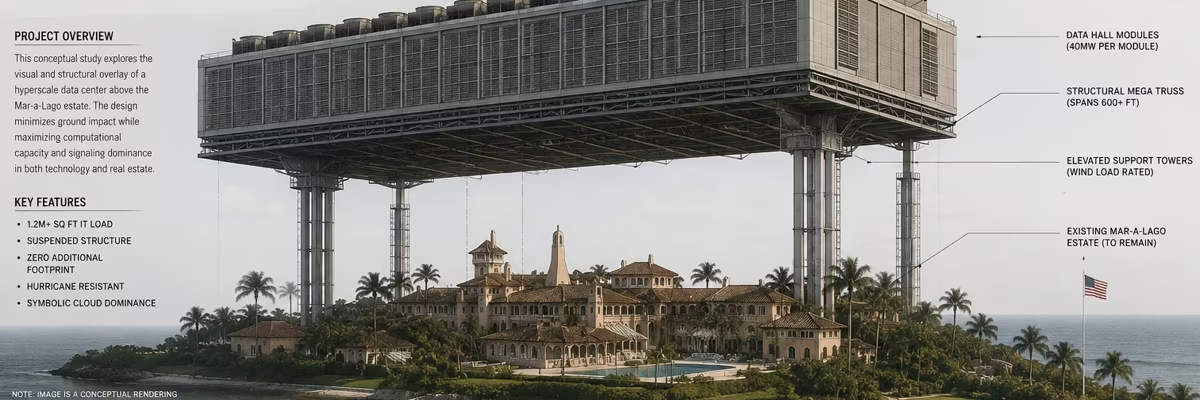
An AI-generated mockup of a data center suspended over President Donald Trump's Mar-a-Lago estate in Florida.
"Trump thinks that every community in America should welcome a data center." If so, said Sanders, "Lead by example."
Despite growing opposition to Big Tech data centers from coast to coast, US President Donald Trump said this week that every community should want one, and Sen. Bernie Sanders (I-Vt.) responded on Friday.
"Trump thinks that every community in America should welcome a data center," said Sanders. "Great idea. Lead by example. Have your friend Elon build one at Mar-a-Lago."
Poll after poll has shown people in the US are not comfortable with the rapid expansion of data centers, built by large tech companies to manage the computing power and energy needed for artificial intelligence and an increasingly digitized world.
With local protests popping up in states nationwide against plans to establish large-scale data centers without proper guardrails or regulations in place, the issue has become a lightning rod in the midterms with the deep pockets of Silicon Valley—including tech giants like Google, OpenAI, Meta, and other behemoths—emerging as villains willing to spend millions in campaign contributions and lobbying efforts to sway candidates and lawmakers toward their profit-seeking aims.
In Congress, Sanders has led the charge for deeper conversations about the impact AI and demanded that any buildout of the technology, including data center construction, be done with the health of workers, communities, and society overall front and center.
A poll released Thursday showed that 75% of Americans oppose large data centers being built in their community, with 61% of those saying they are "strongly" opposed.
In July, Trump said local elected officials have to convince their constituents that data centers are good for them and that opposition is futile. "You can't fight it," Trump said. "You have to go with it."
Asked earlier this week what he thinks about the growing opposition, Trump suggested people didn't know what was good for them, saying, “If I were the mayor of a town or the governor of a state, and I had a chance to get a big plant in, an AI plant, or a data center, I would absolutely want it." Trump said the industry needed better public relations, but said nothing about the need for stronger regulations or better ways for the corporations behind these centers to actually mitigate the legitimate concerns people have.
Trump: "If I were the mayor of a town or the governor or a state, and I had a chance to get a big data center, I would absolutely want it" pic.twitter.com/9caqZ8L76b
— Aaron Rupar (@atrupar) August 19, 2026
On Friday, Trump was asked again about his support for data centers and said more of the same.
Trump: “If I were a community, I would want the data center.”
This has been completely underreported but the reason Trump is pushing data centers is that he is profiting from them.
His financial records show he holds or has traded millions of dollars in shares of companies… pic.twitter.com/KbicUGBrYn
— Power to the People ☭🕊 (@ProudSocialist) August 21, 2026
It was these comments which apparently led to Sanders and other critics to denounce Trump's position as either insincere or out of touch.
While Palm Beach County is home to a number of relatively small data centers—which are ubiquitous across the US—it has no large-scale or hyperscale data centers, which are the ones drawing so much scrutiny and opposition nationwide.
As The Guardian reported, a proposal for a "huge" hyperscale data center in Palm Beach County, known as Project Tango, actually exemplifies why such projects are so controversial, largely due to how they may impact air and water quality, as well as the potential for them to eat up water resources and impact energy costs for local utility customers.
"Local environmentalists warn that the proposed 600MW data center in western Palm Beach County could damage the wetlands," reported the newspaper, "which the federal government and the state of Florida have spent a combined $6bn to restore after decades of drainage and development."
Opponents of Project Tango—including educators, homeowners, conservationists, and local lawmakers—cite threats to local drinking water, algae blooms in the nearby, fragile Everglades ecosystem, increased air pollution, and concerns about impacts on health and family budgets as worrying factors.
“We don’t want our bills to go up, but it’s more than that,” Sue Ellen Loyzelle, who lives in the planned community of Arden next door to the Project Tango site and is a founding member of Western Palm Beach Community Alliance, explained to The Guardian.
“I would like to not see them at all," she said, but if "there was to be one, it would have to be far away from homes because of the sound and the health impacts of air pollution. But the water, I don’t think Florida could handle it anywhere with the water issues.”
On July 15, after 12 hours of public testimony from citizens, a majority of whom were outraged over the proposal, including many who identified as Republicans otherwise aligned with Trump politically, the county commissioners voted 5-1 against the proposed expansion.
Dear Common Dreams reader, It’s been nearly 30 years since I co-founded Common Dreams with my late wife, Lina Newhouser. We had the radical notion that journalism should serve the public good, not corporate profits. It was clear to us from the outset what it would take to build such a project. No paid advertisements. No corporate sponsors. No millionaire publisher telling us what to think or do. Many people said we wouldn't last a year, but we proved those doubters wrong. Together with a tremendous team of journalists and dedicated staff, we built an independent media outlet free from the constraints of profits and corporate control. Our mission has always been simple: To inform. To inspire. To ignite change for the common good. Building Common Dreams was not easy. Our survival was never guaranteed. When you take on the most powerful forces—Wall Street greed, fossil fuel industry destruction, Big Tech lobbyists, and uber-rich oligarchs who have spent billions upon billions rigging the economy and democracy in their favor—the only bulwark you have is supporters who believe in your work. But here’s the urgent message from me today. It's never been this bad out there. And it's never been this hard to keep us going. At the very moment Common Dreams is most needed, the threats we face are intensifying. We need your support now more than ever. We don't accept corporate advertising and never will. We don't have a paywall because we don't think people should be blocked from critical news based on their ability to pay. Everything we do is funded by the donations of readers like you. When everyone does the little they can afford, we are strong. But if that support retreats or dries up, so do we. Will you donate now to make sure Common Dreams not only survives but thrives? —Craig Brown, Co-founder |
Despite growing opposition to Big Tech data centers from coast to coast, US President Donald Trump said this week that every community should want one, and Sen. Bernie Sanders (I-Vt.) responded on Friday.
"Trump thinks that every community in America should welcome a data center," said Sanders. "Great idea. Lead by example. Have your friend Elon build one at Mar-a-Lago."
Poll after poll has shown people in the US are not comfortable with the rapid expansion of data centers, built by large tech companies to manage the computing power and energy needed for artificial intelligence and an increasingly digitized world.
With local protests popping up in states nationwide against plans to establish large-scale data centers without proper guardrails or regulations in place, the issue has become a lightning rod in the midterms with the deep pockets of Silicon Valley—including tech giants like Google, OpenAI, Meta, and other behemoths—emerging as villains willing to spend millions in campaign contributions and lobbying efforts to sway candidates and lawmakers toward their profit-seeking aims.
In Congress, Sanders has led the charge for deeper conversations about the impact AI and demanded that any buildout of the technology, including data center construction, be done with the health of workers, communities, and society overall front and center.
A poll released Thursday showed that 75% of Americans oppose large data centers being built in their community, with 61% of those saying they are "strongly" opposed.
In July, Trump said local elected officials have to convince their constituents that data centers are good for them and that opposition is futile. "You can't fight it," Trump said. "You have to go with it."
Asked earlier this week what he thinks about the growing opposition, Trump suggested people didn't know what was good for them, saying, “If I were the mayor of a town or the governor of a state, and I had a chance to get a big plant in, an AI plant, or a data center, I would absolutely want it." Trump said the industry needed better public relations, but said nothing about the need for stronger regulations or better ways for the corporations behind these centers to actually mitigate the legitimate concerns people have.
Trump: "If I were the mayor of a town or the governor or a state, and I had a chance to get a big data center, I would absolutely want it" pic.twitter.com/9caqZ8L76b
— Aaron Rupar (@atrupar) August 19, 2026
On Friday, Trump was asked again about his support for data centers and said more of the same.
Trump: “If I were a community, I would want the data center.”
This has been completely underreported but the reason Trump is pushing data centers is that he is profiting from them.
His financial records show he holds or has traded millions of dollars in shares of companies… pic.twitter.com/KbicUGBrYn
— Power to the People ☭🕊 (@ProudSocialist) August 21, 2026
It was these comments which apparently led to Sanders and other critics to denounce Trump's position as either insincere or out of touch.
While Palm Beach County is home to a number of relatively small data centers—which are ubiquitous across the US—it has no large-scale or hyperscale data centers, which are the ones drawing so much scrutiny and opposition nationwide.
As The Guardian reported, a proposal for a "huge" hyperscale data center in Palm Beach County, known as Project Tango, actually exemplifies why such projects are so controversial, largely due to how they may impact air and water quality, as well as the potential for them to eat up water resources and impact energy costs for local utility customers.
"Local environmentalists warn that the proposed 600MW data center in western Palm Beach County could damage the wetlands," reported the newspaper, "which the federal government and the state of Florida have spent a combined $6bn to restore after decades of drainage and development."
Opponents of Project Tango—including educators, homeowners, conservationists, and local lawmakers—cite threats to local drinking water, algae blooms in the nearby, fragile Everglades ecosystem, increased air pollution, and concerns about impacts on health and family budgets as worrying factors.
“We don’t want our bills to go up, but it’s more than that,” Sue Ellen Loyzelle, who lives in the planned community of Arden next door to the Project Tango site and is a founding member of Western Palm Beach Community Alliance, explained to The Guardian.
“I would like to not see them at all," she said, but if "there was to be one, it would have to be far away from homes because of the sound and the health impacts of air pollution. But the water, I don’t think Florida could handle it anywhere with the water issues.”
On July 15, after 12 hours of public testimony from citizens, a majority of whom were outraged over the proposal, including many who identified as Republicans otherwise aligned with Trump politically, the county commissioners voted 5-1 against the proposed expansion.
Despite growing opposition to Big Tech data centers from coast to coast, US President Donald Trump said this week that every community should want one, and Sen. Bernie Sanders (I-Vt.) responded on Friday.
"Trump thinks that every community in America should welcome a data center," said Sanders. "Great idea. Lead by example. Have your friend Elon build one at Mar-a-Lago."
Poll after poll has shown people in the US are not comfortable with the rapid expansion of data centers, built by large tech companies to manage the computing power and energy needed for artificial intelligence and an increasingly digitized world.
With local protests popping up in states nationwide against plans to establish large-scale data centers without proper guardrails or regulations in place, the issue has become a lightning rod in the midterms with the deep pockets of Silicon Valley—including tech giants like Google, OpenAI, Meta, and other behemoths—emerging as villains willing to spend millions in campaign contributions and lobbying efforts to sway candidates and lawmakers toward their profit-seeking aims.
In Congress, Sanders has led the charge for deeper conversations about the impact AI and demanded that any buildout of the technology, including data center construction, be done with the health of workers, communities, and society overall front and center.
A poll released Thursday showed that 75% of Americans oppose large data centers being built in their community, with 61% of those saying they are "strongly" opposed.
In July, Trump said local elected officials have to convince their constituents that data centers are good for them and that opposition is futile. "You can't fight it," Trump said. "You have to go with it."
Asked earlier this week what he thinks about the growing opposition, Trump suggested people didn't know what was good for them, saying, “If I were the mayor of a town or the governor of a state, and I had a chance to get a big plant in, an AI plant, or a data center, I would absolutely want it." Trump said the industry needed better public relations, but said nothing about the need for stronger regulations or better ways for the corporations behind these centers to actually mitigate the legitimate concerns people have.
Trump: "If I were the mayor of a town or the governor or a state, and I had a chance to get a big data center, I would absolutely want it" pic.twitter.com/9caqZ8L76b
— Aaron Rupar (@atrupar) August 19, 2026
On Friday, Trump was asked again about his support for data centers and said more of the same.
Trump: “If I were a community, I would want the data center.”
This has been completely underreported but the reason Trump is pushing data centers is that he is profiting from them.
His financial records show he holds or has traded millions of dollars in shares of companies… pic.twitter.com/KbicUGBrYn
— Power to the People ☭🕊 (@ProudSocialist) August 21, 2026
It was these comments which apparently led to Sanders and other critics to denounce Trump's position as either insincere or out of touch.
While Palm Beach County is home to a number of relatively small data centers—which are ubiquitous across the US—it has no large-scale or hyperscale data centers, which are the ones drawing so much scrutiny and opposition nationwide.
As The Guardian reported, a proposal for a "huge" hyperscale data center in Palm Beach County, known as Project Tango, actually exemplifies why such projects are so controversial, largely due to how they may impact air and water quality, as well as the potential for them to eat up water resources and impact energy costs for local utility customers.
"Local environmentalists warn that the proposed 600MW data center in western Palm Beach County could damage the wetlands," reported the newspaper, "which the federal government and the state of Florida have spent a combined $6bn to restore after decades of drainage and development."
Opponents of Project Tango—including educators, homeowners, conservationists, and local lawmakers—cite threats to local drinking water, algae blooms in the nearby, fragile Everglades ecosystem, increased air pollution, and concerns about impacts on health and family budgets as worrying factors.
“We don’t want our bills to go up, but it’s more than that,” Sue Ellen Loyzelle, who lives in the planned community of Arden next door to the Project Tango site and is a founding member of Western Palm Beach Community Alliance, explained to The Guardian.
“I would like to not see them at all," she said, but if "there was to be one, it would have to be far away from homes because of the sound and the health impacts of air pollution. But the water, I don’t think Florida could handle it anywhere with the water issues.”
On July 15, after 12 hours of public testimony from citizens, a majority of whom were outraged over the proposal, including many who identified as Republicans otherwise aligned with Trump politically, the county commissioners voted 5-1 against the proposed expansion.