

SUBSCRIBE TO OUR FREE NEWSLETTER
Daily news & progressive opinion—funded by the people, not the corporations—delivered straight to your inbox.
5
#000000
#FFFFFF
To donate by check, phone, or other method, see our More Ways to Give page.
Daily news & progressive opinion—funded by the people, not the corporations—delivered straight to your inbox.
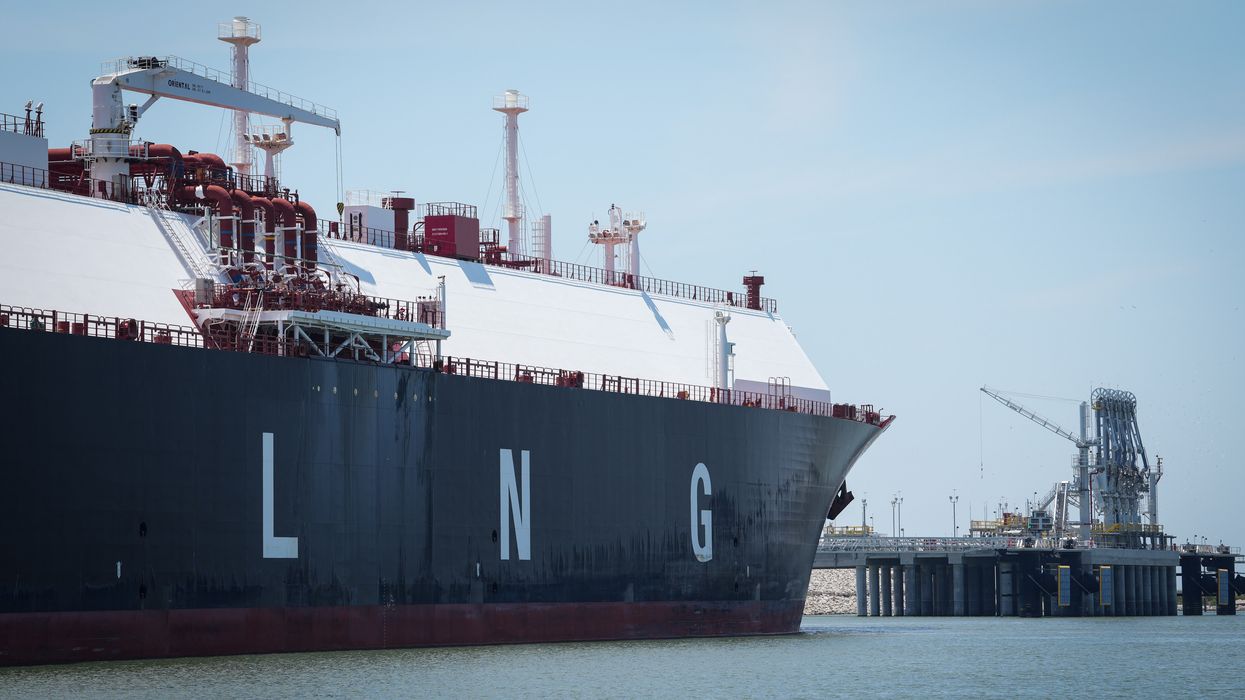
President Trump made it clear in his campaign that his apparent priority was to uplift struggling Americans. This is simply and totally at odds with his promise to “drill, baby, drill.”
On Day One of his second term, U.S. President Donald Trump signed an assortment of executive orders to reverse steps taken by the Biden administration to mitigate climate change. He replaced those steps with orders meant to enrich a variety of corporate interests, the most prevalent being the oil and gas industry. In less than 24 hours, Trump froze crucial clean energy funds that America needs from the Inflation Reduction Act, presented the Arctic to corporate polluters on a silver platter, and prepared to turbocharge dirty energy exports.
One of the most striking executive orders is one that calls for the unfettered expansion of methane gas exports, or LNG. In this order, there is very specific, seemingly-tailored language that policy researchers confirmed is meant to expedite the approval of Delfin LNG, a floating offshore facility that the former administration refused to greenlight due to widespread changes in “project ownership, design, financing, and operations” that had been made since the project’s original approval in 2017. In short, it’s a carbon bomb project that would be responsible for 92 million metric tons of pollution annually—equivalent to 24 coal plants.
Last week during a confirmation hearing for transportation secretary, Sen. Ted Cruz (R-Texas) made sure to call on nominee former Rep. Sean Duffy (R-Wis.) to approve permits for several oil and gas export terminals while accusing the Biden administration of “slow walking” the Delfin project. It seems that this executive order will only help aid this company in a quick turnaround to move forward while disregarding environmental review.
As rapid oil and gas expansion will burden Americans with higher prices and dump even more pollution into our air and water, Big Oil and their political mouthpieces will line their pockets more than ever before.
However, Delfin is just one of 14 pending LNG export facilities poised to be rapidly approved by the Trump administration. In new research from Friends of the Earth and Public Citizen, we examined announced supply agreements between exporters and LNG buyers to find that 76 million metric tons per year of LNG is under agreement to be sold from all of these facilities. The supply agreements executed so far represent an obscene amount of climate pollution—at least 510 million metric tons per year, equivalent to that of 135 coal plants.
These numbers are staggering not just for the climate impact, but for the impact on American consumers. Before the second Trump term even began, former Energy Secretary Jennifer Granholm warned that LNG exports could outpace global fuel demand. More LNG exports could precipitate a sharp increase in domestic gas prices leaving American consumers with higher energy bills.
While these 14 pending LNG projects have publicly disclosed buyers, there are several more pending LNG projects that could also pick up speed in the next few months. Another major executive order, “Unleashing Alaska’s Extraordinary Resource Potential,” will have the Trump administration rolling back several of the Biden administration's achievements aimed at protecting the Arctic. It would also prioritize the development of the Alaska LNG facility.
The long delayed project, which is set to be one of the largest LNG export terminals in the U.S., was approved by the Biden administration in 2022. But the massive $44 billion boondoggle, which involves building an 800-mile pipeline across Alaska, has always been too risky for the private sector. That’s why the state of Alaska has been lobbying for public financing—including via a scheme to loot clean energy loan funding from the Inflation Reduction Act. If the Trump administration successfully steers our tax dollars towards Alaska LNG, it will mean lighting the fuse of a carbon bomb 10 times dirtier than the Willow Project.
President Trump made it clear in his campaign that his apparent priority was to uplift struggling Americans. This is simply and totally at odds with his promise to “drill, baby, drill”—as rapid oil and gas expansion will burden Americans with higher prices and dump even more pollution into our air and water, Big Oil and their political mouthpieces will line their pockets more than ever before. These Day One executive orders, and the giveaways to oil and gas they offer, confirm that Trump has already abandoned the people he once again pledged to serve and put profit first instead.
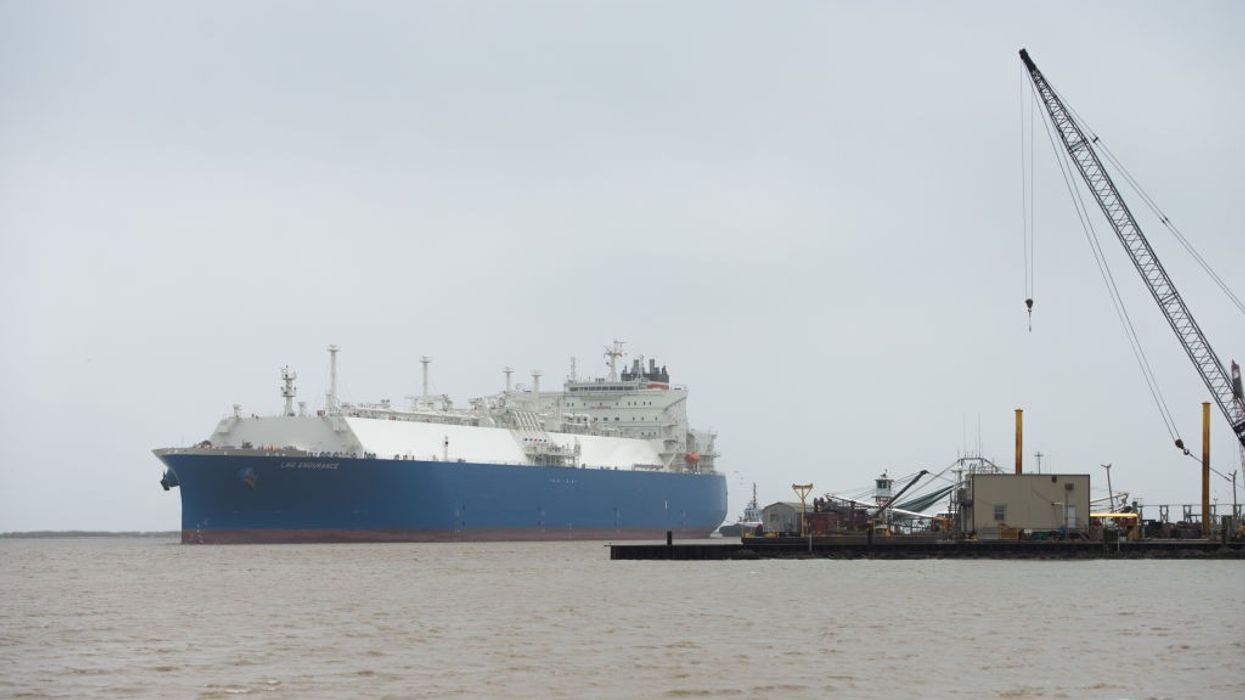
"This study mirrors the Biden administration's entire four-year approach to advancing a clean energy future: weak and half-hearted," one advocate said.
Approving more liquefied natural gas exports would raise domestic energy prices, increase the pollution burden placed on local communities, and exacerbate the climate crisis, the Biden administration concluded in a long-awaited report released Tuesday.
However, the Department of Energy (DOE) stopped short of denying any pending or future approvals, passing the buck to the administration of President-elect Donald Trump, who has vocally supported the LNG boom.
"This study mirrors the Biden administration's entire four-year approach to advancing a clean energy future: weak and half-hearted," Food & Water Watch policy director Jim Walsh said in a statement. "Liquid natural gas exports systematically poison the most vulnerable frontline communities, pollute our air and water, and drive up domestic energy prices. We cannot continue to be victimized by the profit-driven agenda of fossil fuel corporations. President Biden must listen to the warnings of his own government by banning further LNG exports and rejecting pending LNG permits before he leaves office."
"DOE's long-awaited environmental and economic analyses demonstrate what environmental justice and frontline communities have been saying for years—liquefied natural gas export facilities are not in the public interest."
U.S. LNG exports have tripled in the last five years, making the country the leading gas exporter in the world. At the same time, the latest climate research has shown that—due to methane leaks across the LNG life cycle—the so-called "bridge fuel" is in fact worse for the climate than coal.
Following pressure from climate and environmental justice advocates, the Biden administration in January announced a pause on approving LNG exports to non-Free Trade Agreement countries while the DOE updated the studies it uses to determine whether or not gas exports are in the public interest, as Congress has authorized it to do under the Natural Gas Act.
Those updated studies were released Tuesday, along with a statement from Energy Secretary Jennifer Granholm. Climate, consumer, and frontline advocates welcomed the findings themselves, which they said were largely consistent with their warnings and experience.
"DOE's long-awaited environmental and economic analyses demonstrate what environmental justice and frontline communities have been saying for years—liquefied natural gas export facilities are not in the public interest," Leslie Fields, the chief federal officer at WE ACT for Environmental Justice, said in a statement. "Not only do these projects compound public health and safety harms to communities, especially in the Gulf and for communities of color, but they also exacerbate the climate crisis and raise energy prices here at home."
Jamie Henn, the director of Fossil Free Media, said on social media that Granholm's statement was "even stronger than I expected."
In it, Granholm emphasized five key findings from the updated studies:
"Today's study makes clear that all pending export applications must be denied as being inconsistent with the public interest, and should result in a reassessment of existing exports to determine compatibility with the public interest," Tyson Slocum, director of Public Citizen's Energy Program, said in a statement. "Using LNG exports to provide energy abundance for China at the expense of higher utility bills for working Americans is not in the public interest."
Granholm stated clearly that "the effect of increased energy prices for domestic consumers combined with the negative impacts to local communities and the climate will continue to grow as exports increase."
Yet she also said the Biden administration would not act on the findings of the updated studies due to the timing of their release: The report's publication now triggers a 60-day comment period, and the inauguration is only a little more than a month away.
"Given that the comment period for the study will continue into the next administration—and that there are a limited number of applications that are concurrently ready for the DOE 'public interest' review—decisions about the future of LNG export levels will necessarily be made by future administrations," she said. "Our hope is that we can now assess the future of natural gas exports based on the facts and ensure authorizations are reviewed in a manner that truly advances the public interest of all the American people."
While the purpose of the DOE's updated studies had never been to deny or approve exports—rather to inform those decisions—advocates have been pushing the Biden administration to act on its findings. In particular, frontline Gulf groups are concerned about Calcasieu Pass 2 and Commonwealth LNG, two pending export facilities that are currently subject to supplemental environmental impact statements by the Federal Energy Regulatory Commission due to concerns about their local impacts.
"We were hoping that this study would be released and with this study would come the denial of permits for these projects," frontline leader Roishetta Ozane of the Vessel Project of Louisiana said in a press briefing.
"It'll be hard for the Trump administration to completely ignore the finding that exports drive up costs for consumers. That's political dynamite."
Several groups responded to the study with renewed calls for permit denials.
"This study confirms that Donald Trump's plans to supercharge LNG exports will come at the expense of consumers and the climate," said Friends of the Earth senior energy campaigner Raena Garcia. "We cannot afford to prop up an industry that continues to threaten our people and the planet for profit. Over the next few weeks, it is not too late for the Biden administration to curb the deadly LNG export boom."
Walsh of Food & Water Watch said: "Secretary Granholm's admission that continuing LNG exports will drive up costs and harm vulnerable communities is a sad reflection on what we have been saying for the last decade. It is time for this administration to start matching its rhetoric with action, and reject new LNG exports while it still can."
But Henn told Common Dreams that this might be a losing battle.
"The administration has indicated it wants to follow the regular process and not jump ahead and deny permits before they leave office, only to have Trump reapprove them," Henn said. "We disagree and think denials would send a strong political signal and potentially strengthen legal challenges. It's unlikely we'll sway them with so little time left, but we're going to try."
Still, campaigners emphasized that the DOE's findings will strengthen the case of any community or group opposing LNG exports going forward.
"This report will serve as a tool for us in fighting against these projects," Ozane said.
This remains the case despite the Trump administration's pro-fossil fuel stance and history of running roughshod over rules and regulations.
"Trump will of course try and ignore the study, but it gives us new political, legal, and diplomatic arguments," Henn told Common Dreams. "Politically, it'll be hard for the Trump administration to completely ignore the finding that exports drive up costs for consumers. That's political dynamite. Legally, if Trump just ignores the findings of this report and rushes approval, that opens the door for challenges."
Natural Resources Defense Council senior attorney Gillian Giannetti pointed out in a press briefing that "because these studies are in the public record, the failure to properly consider them and their relevance would be unlawful under the Administrative Procedure Act."
Slocum of Public Citizen said that groups like his have legal intervention status and can ask a court to review any Trump decision.
"Any court is going to want to know—what does the administrative record say?" he noted. "And this report greatly strengthens the case that requested LNG exports are not consistent with the public interest. So a court can toss out a Trump admin approval."
"These studies show clearly that LNG exports are in gas executives' best interest and nobody else's."
Henn added that the findings could slow the LNG buildout both diplomatically and economically.
"Diplomatically, the climate data in this report makes it less likely that our allies, all of whom have signed the Paris agreement, will be as interested in importing dirty U.S. gas," he told Common Dreams.
"Finally," he concluded, "this report will cause tremors on Wall Street. This report and Secretary Granholm's strongly worded letter indicate that future Democratic administrations won't likely support new export facilities. Since these are long-term investment decisions, that uncertainty will slow down financing for new projects."
The report also undermines Trump's economic argument that more fossil fuel production is better for everyone, revealing it instead for another giveaway to the wealthy.
"Despite claims from the incoming Trump administration that it wants to lower prices, the truth is they are putting billionaire fossil fuel donors ahead of everyday Americans," Greenpeace USA deputy climate program director John Noël said in a statement. "The record is crystal clear: Increasing LNG exports will drive up costs for domestic businesses and consumers. Full stop. Any further investment in LNG will only exacerbate the cost-of-living crisis, while enriching gas industry CEOs who don't have to experience the fallout of living near an export terminal."
Lauren Parker, an attorney at the Center for Biological Diversity's Climate Law Institute, agreed, saying, "These studies show clearly that LNG exports are in gas executives' best interest and nobody else's."
Parker concluded, "If Trump wants to drive up dangerous gas exports, he's going to have to answer for causing more deadly storms, condemning the Rice's whale to extinction, and socking consumers with higher costs."
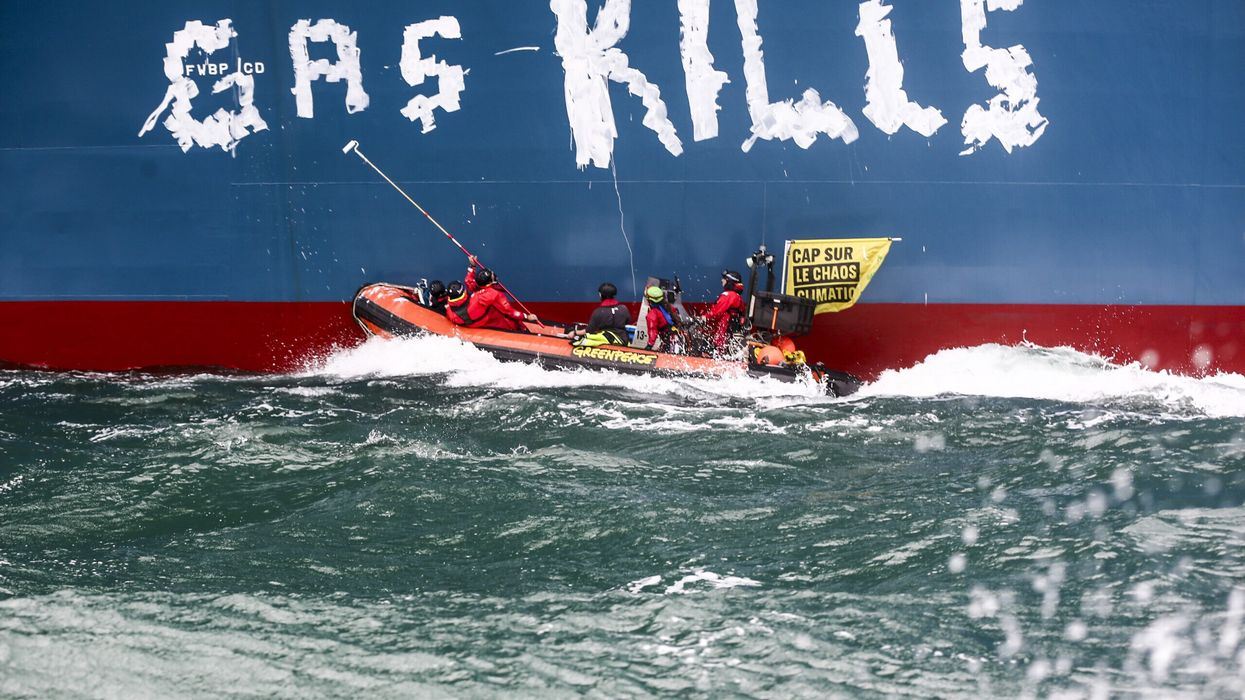
A new report and statement won’t necessarily bind anything, but they do something almost as important: Finally a Democratic administration has been straightforward and honest about natural gas.
Late Monday afternoon Politico, and then The New York Times, reported that the Department of Energy is ready to release the report of it’s nearly year-long study on LNG exports—a study mandated by a large-scale campaign (that very much included this newsletter) which persuaded U.S. President Joe Biden to halt new permits for new terminals along the Gulf of Mexico.
The report, and the equally important statement that came with it, won’t necessarily bind anything—it may complicate somewhat the Trump administration’s plans to approve new export terminals, but probably not fatally. But it does something almost as important. Finally a Democratic administration has been straightforward and honest about natural gas. That may actually matter, both in the short and long-term.
The continued growth of gas exports was “neither sustainable nor advisable,” Granholm said.
The background here is that, ever since the onset of fracking in the ‘oughts, Democrats have embraced the surge in natural gas. The GOP was still in love with coal, but climate change concerns were making that uncomfortable for anyone this side of Joe Manchin (D-Flammable Black Rocks). Along came the sudden surge in natural gas, which allowed the Obama administration both a path toward reviving the post-financial-crisis economy, and a way to cut carbon emissions. If you doubt me, read almost any of former President Barack Obama’s State of the Union addresses, which each contain a paragraph-long paean to the fracking boom.
In 2013, for instance, he enthused:
We produce more natural gas than ever before—and nearly everyone’s energy bill is lower because of it. And over the last four years, our emissions of the dangerous carbon pollution that threatens our planet have actually fallen…
The natural gas boom has led to cleaner power and greater energy independence. We need to encourage that. And that’s why my administration will keep cutting red tape and speeding up new oil and gas permits.
The shift from coal to gas-fired power plants, which was basically the sum of Obama’s climate policy, dropped carbon emissions, something he (and the fossil fuel industry) boasted about endlessly. But the problem was physics: As Cornell professor Bob Howarth started noisily pointing out, carbon dioxide isn’t the only greenhouse gas. CH4, or methane, traps heat even more effectively, and Howarth and others insisted it was escaping into the atmosphere from fracking fields and pipelines in large enough quantity to cancel out the progress on carbon.
They won the scientific battle—study after study has now demonstrated that indeed leak rates are very high. But the political struggle was much harder: No one wanted to give up the idea that there was a pain-free way out of the climate dilemma.
There was so much natural gas in the Permian Basin that America couldn’t soak it up, and in the Trump years we started to export it—that quickly grew to the point where America was the largest source of gas in the world. Both the Biden and Trump administrations approved one export terminal after another, over the outcry of local residents along the Louisiana and Texas coasts who had to deal with these monstrosities. It finally reached the point where environmentalists had to make a stand, and that’s what happened in the fall of 2023—after another Howarth study, this one demonstrating that so much methane leaked from the giant LNG carriers that it was worse than exporting coal.
Hence the pause, and hence the angry outcry from the oil industry (which worked harder than ever to elect a Republican in November), and hence today’s report. The language is truly strong: Energy Secretary Jennifer Granholm, in her letter that accompanies the report, stresses that it would be bad news for American consumers who still depend on gas (supply and demand being what it is). But the more important part is what she says about natural gas and climate. According to the Times, she says that any few facilities should face “rigorous question”
“especially in a world that needs to quickly reduce greenhouse gas emissions.” Under a scenario in which more than the current level of gas exports was approved, the report finds that the additional emissions would be 1.5 gigatons per year by 2050. That’s about a quarter of annual emissions generated by the United States, the world’s second-biggest polluter.
The fossil fuel industry always insists that LNG exports will replace coal, but crucially Granholm and the report made clear that’s not true.
She noted that the study found increased LNG exports would displace more wind, solar, and other renewable energy than coal. The study modeled five scenarios, and in every one, global greenhouse gases were projected to rise, even when researchers assumed aggressive use of technologies to capture and store carbon emissions.
This, in turn, sends a signal to Malaysia and Vietnam and the other Asian countries that would be the main recipients of gas from new terminals. I am guardedly hopeful that the year’s delay—which allowed solar and windpower to drop in price and gain in momentum—may be enough to convince those nations that they don’t want to sign up for 40 years of dependency on imported gas. I sure hope so, in part because of the heroes that led this fight—people like Roishetta Ozane who are defending not just the whole planet but their particular part of it.
The continued growth of gas exports was “neither sustainable nor advisable,” Granholm said. That’s the closest that prominent American politicians have come to telling the truth about the most important component of the climate crisis. If Vice President Kamala Harris had won the election, this might have meant a real sea change. In our current reality it’s at least honest, and honesty is a lot better than its opposite.
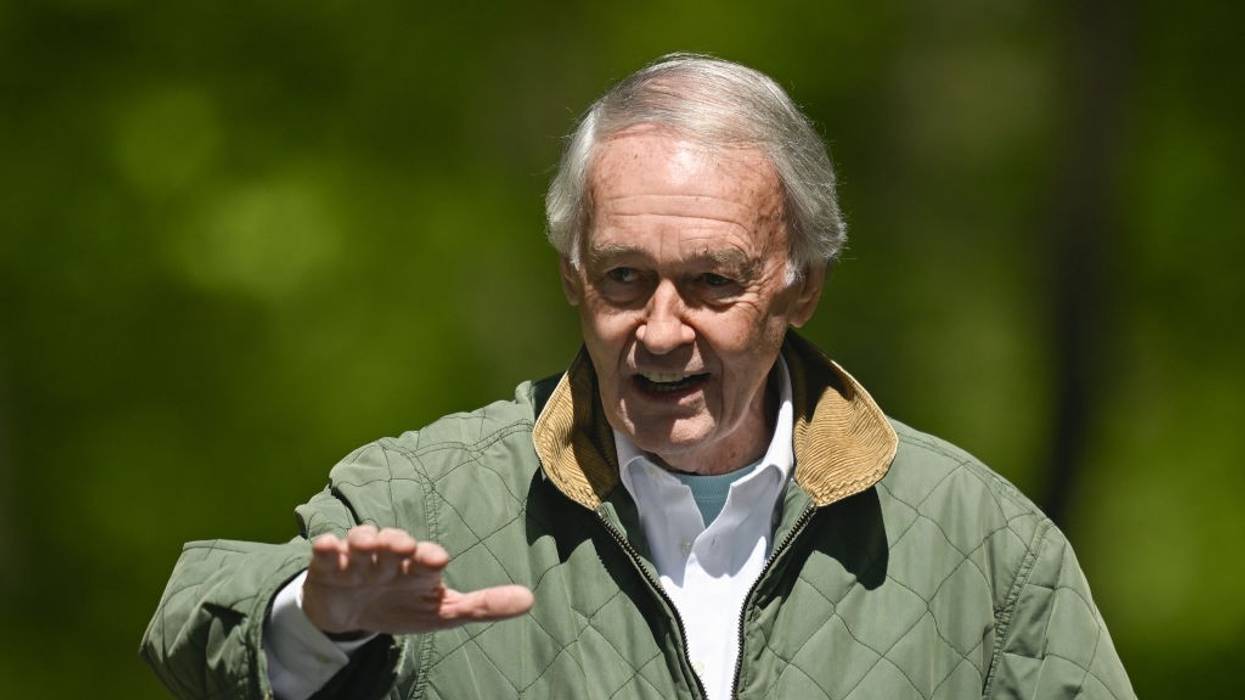
"Every dollar invested in unnecessary, harmful, and expensive LNG infrastructure costs us double—first, by our failure to invest instead in secure, abundant, and cheap renewable energies, and second, by locking in higher greenhouse gas emissions."
With Climate Week underway in New York City, 106 lawmakers from the United States and around the world on Monday urged the Biden administration to reject new liquefied natural gas export permits, stressing that they "are not in the U.S. public interest or necessary for the national or energy security of our allies."
Rejecting new permits, they wrote, "will help protect communities from the environmental harm that fossil gas causes; promote global energy security and encourage investment and trade in clean energy technologies; and help our nations satisfy both national and global climate commitments, including those made at the 2023 U.N. climate change conference COP28 in Dubai."
The letter to U.S. President Joe Biden and Energy Secretary Jennifer Granholm was led by Sens. Ed Markey (D-Mass.) and Jeff Merkley (D-Ore.), Congresswoman Nanette Barragán (D-Calif.), and Lisa Badum, a Greens member of Germany's Bundestag. Along with other American and German lawmakers, it's signed by members of the European Parliament and legislatures in over a dozen other countries.
"Curtailing U.S. LNG export activity will send a strong global signal in favor of new investments in renewable energy."
They explained that in January, the Biden administration paused new export authorizations for liquefied natural gas (LNG) to countries that don't have free trade agreements with the United States, and although a recent federal court ruling blocked the policy, "that misguided decision does not force any immediate export project approvals, prevent the Department of Energy (DOE) from updating its environmental and economic analyses, or impact the factors that DOE already considers in its application review process."
"Far from being a clean 'bridge' fuel, LNG causes significant environmental harm," the lawmakers declared, highlighting the impacts of gas on not only the global climate but also the health of people exposed to nearby hydraulic fracturing, or fracking, operations and infrastructure such as processing plants, import facilities, export terminals, and pipelines.
"In addition to the environmental and health benefits, limiting U.S. LNG exports will actually support global energy security, not jeopardize it," they wrote. "Curtailing U.S. LNG export activity will send a strong global signal in favor of new investments in renewable energy, discouraging overinvestment in a volatile and high-priced fossil fuel."
The letter notes that the United States is "the world's largest exporter of LNG" and warns that such exports "affect the world's regions in various ways, but uniformly, they are negative," with sections on Africa, Asia, the Americas, and Europe.
"Every dollar invested in unnecessary, harmful, and expensive LNG infrastructure costs us double—first, by our failure to invest instead in secure, abundant, and cheap renewable energies, and second, by locking in higher greenhouse gas emissions, with attendant future climate damage," the letter emphasizes. "Continued reliance on LNG means more harm to frontline communities and the environment from extracting, transporting, and shipping fossil gas around the world."
The lawmakers' letter follows one that a coalition of more than 250 climate, environmental, and frontline groups sent to Biden and Granholm earlier this month—during the warmest summer on record and what is on track to be the hottest year on record.
"We are on the verge of seeing global average temperatures exceed 1.5°C warming above preindustrial temperatures, failing the internationally agreed upon goal of the Paris agreement and crossing the threshold upon which ever more catastrophic effects of climate change begin," the green groups wrote. "The only way world leaders can avoid this moral and political failure is to work together to end fossil fuel production."
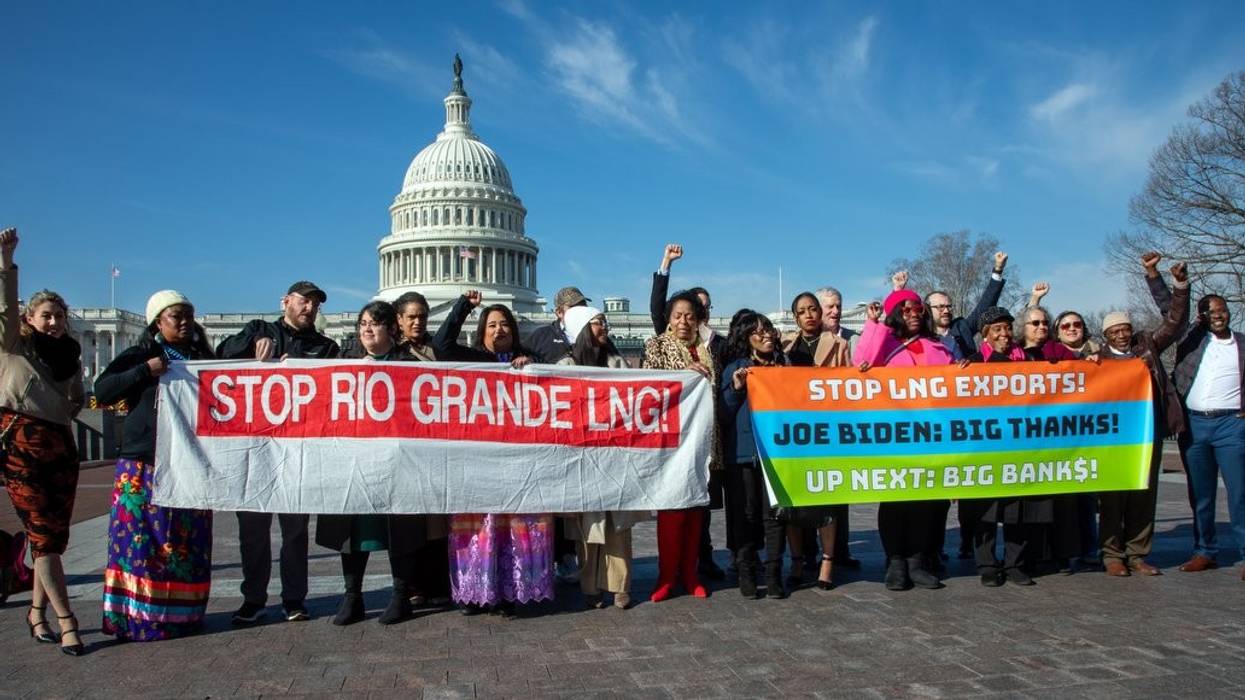
"The science is clearer than ever: LNG exports and natural gas-sourced hydrogen pose grave risks to our planet and will undermine President Biden's own climate goals," said one campaigner.
More than 125 climate, environmental, and health scientists and researchers on Thursday implored the Biden administration to "follow legitimate science and reject the expansion of fossil fuel programs," pointing to a new study showing liquefied natural gas has a 33% greater greenhouse gas footprint than coal.
"As U.S. scientists and researchers we are closely following efforts by the U.S. Department of Energy and the U.S. Department of Treasury to develop greenhouse gas analyses of liquefied natural gas (LNG) and hydrogen, and implore you to use the best available science when conducting this analysis," the scientists wrote in a letter to Energy Secretary Jennifer Granholm and Treasury Secretary Janet Yellen.
"The stakes could not be higher," the letter asserts. "The choices that you make relating to modeling assumptions for the heat-trapping potential of natural gas will determine if the federal government will make decisions based on climate science or wishful thinking."
The scientists continued:
The main constituent in natural gas is methane, a powerful climate-disrupting pollutant that traps more than 80 times more heat in the atmosphere than carbon dioxide over 20 years, the relevant timeframe in which we must act. We agree with President [Joe] Biden's declaration to world leaders that this is the decisive decade. As the climate crisis becomes more urgent, we are rapidly approaching planetary thresholds that, once breached, cannot be reversed.
The fossil fuel industry wants you to distort the scientific evidence and asserts, falsely, that decisions to expand natural gas production and consumption are consistent with U.S. and global climate goals. They are advocating for flawed modeling assumptions that would hide the true climate impact of gas. It is imperative that the Departments of Energy and Treasury reject these efforts.
The letter's signers cite a study published this month by Cornell University climate scientist Robert Howarth which—when properly accounting for LNG's full life cycle, including extraction, liquefaction, transportation, and end-source combustion—found that the fracked gas has a 33% greater greenhouse emissions impact than coal.
"An abundance of scientific evidence now shows that natural gas is at least as damaging to the climate as coal and may be worse due to inevitable leaks and disproves the claim that natural gas can serve as a 'bridge fuel' while renewable energy sources ramp up," the scientists wrote.
Jim Walsh, policy director at Food & Water Watch, said in a statement that "the science is clearer than ever: LNG exports and natural gas-sourced hydrogen pose grave risks to our planet and will undermine President Biden's own climate goals."
"This administration must ignore industry propaganda, follow legitimate science, and reject the expansion of fossil fuel programs like LNG exports and gas-sourced hydrogen," Walsh added.
Noting that "over 20 years, methane is a far more powerful climate villain than ever previously appreciated," Science & Environmental Health Network senior scientist Sandra Steingraber said that "methane is the Houdini of greenhouse gasses, escaping into the atmosphere from all parts of the natural gas system at a pace that far exceeds earlier estimates."
"Taken together, these findings mean that the stakes for the modeling assumptions chosen for estimating the climate impacts of LNG and hydrogen fuels could not be higher," Steingraber stressed. "It's imperative that our Departments of Energy and Treasury base their climate modeling assumptions on the abundance of scientific evidence and not the distorted claims and wishful thinking of the fossil fuel industry."
Despite campaign pledges to center climate action—including by banning new fossil fuel drilling on public lands—Biden oversaw the approval of more new permits for drilling on public land during his first two years in office than former President Donald Trump, the 2024 Republican nominee, did in 2017 and 2018.
The Biden administration has also held fossil fuel lease sales in the Gulf of Mexico and has approved the highly controversial Willow project and Mountain Valley Pipeline. Biden also increased liquefied natural gas production and export before pausing LNG exports earlier this year.
Despite the pause—which activists are calling on the Biden administration to make permanent—the president has also overseen what climate defenders have called a "staggering" LNG expansion, including Venture Global's Calcasieu Pass 2 export terminal in Cameron Parish, Louisiana and more than a dozen other projects that, if all completed, would make U.S. exported LNG emissions higher than the European Union's combined greenhouse gas footprint.

"We deserve a future that protects our families and our planet, not one that fuels further destruction," one frontline advocate said.
A coalition of more than 250 climate, environmental, and frontline community organizations on Monday urged U.S. President Joe Biden and Energy Secretary Jennifer Granholm to reject all requests for approval to export liquefied natural gas to non-fair trade agreement countries.
The demand came in the form of a letter following a recent ruling by Trump-appointed District Judge James D. Cain Jr. to lift a pause that Biden's Department of Energy had placed on new LNG export approvals while it updates the criteria it uses to determine whether these exports are in the public interest. It also comes a week after the DOE signed off on the export of LNG from an offshore New Fortress Energy plant near Altamira, Mexico.
"After the hottest summer on record, on track to be the hottest year, it's clear that expanding climate-heating gas exports is not in the public interest," Lauren Parker, an attorney at the Center for Biological Diversity's Climate Law Institute, said in a statement. "There's no reason on Earth to approve more LNG exports that lock in decades of damage to the climate, human communities, and imperiled species like Rice's whales. The Department of Energy must reject every single one."
"With climate-induced disasters becoming a regular part of our lives, it's hard to understand how anyone can prioritize fossil gas exports over our health and safety."
The Center for Biological Diversity is one of the many signatories of Monday's letter, backed by dozens of large national groups as well as scores of smaller, more local organizations. Other groups include Earthworks, Food and Water Watch, Oil Change International, the Sunrise Movement, Public Citizen, several branches of 350.org and Extinction Rebellion, Port Arthur Community Action Network, and the Vessel Project of Louisiana.
In the letter, the groups applauded the administration for instituting the pause on approvals in the first place and for acknowledging that the data it used to determine whether exports were in the public interest was "outdated and insufficient."
Since the court ruling leaves the department without a deadline for updating its data, the groups urged the DOE "to continue seeking the best available information on the impact of LNG exports on the public, the environment, and economy."
"When the department completes its analyses, the weight of evidence will make it clear that new LNG exports are not in the public interest and that all pending applications to export LNG must be rejected," the groups wrote.
With the world "on the verge" of exceeding the 1.5°C limit enshrined in the 2015 Paris agreement, the coalition warned against new infrastructure and export policies that will only exacerbate the global emissions crisis at a critical moment in history.
"The United Nations' Intergovernmental Panel on Climate Change has warned that global greenhouse gas emissions must peak in the next year, and then steeply decline, for our planet to have the best chance of avoiding this fate," the letter reads. "The only way world leaders can avoid this moral and political failure is to work together to end fossil fuel production."
This goal has been hampered by the record rise in U.S. gas production facilitated by the fracking boom. Whereas global gas production had been predicted to be on the wane, it is now expanding instead. At the same time, new research has shown that, due to methane leaks, gas is not a "bridge fuel" to cleaner energy but in fact just as detrimental to the climate as coal.
Another major concern raised by LNG opponents is the local pollution generated by export facilities. Many of these new facilities are located in, under construction in, or slated for the Gulf South, which is already overburdened by toxic emissions from oil, gas, and petrochemical production.
"As a mom living in a community surrounded by industry, I feel the weight of every decision made about our environment," Vessel Project founder and director Roishetta Ozane said in a statement. "With climate-induced disasters becoming a regular part of our lives, it's hard to understand how anyone can prioritize fossil gas exports over our health and safety. The Department of Energy has the power to reject these LNG export permits, and it's crucial they do so. We deserve a future that protects our families and our planet, not one that fuels further destruction."
The letter suggests the broad environmental movement, both at the local level and nationally, is united behind the demand to halt the LNG buildout as the groups applauded Biden's efforts to curb exports thus far but also asked him to go further.
"We initially urged you to pause approvals of LNG exports," they wrote to Biden and Granholm, "we fiercely celebrated and defended your decision to do so in January, and now we write to let you know we continue to stand behind you as we insist that you take the next step of stopping new LNG exports."

High-level government participation in an oil and gas industry conference shows official disdain for the public interest; it’s time to make fossil fuels politically toxic.
From March 18 to 22, 2024, the oil and gas industry held its major annual conference, CERAWeek, in Houston, Texas.
The conference speakers included the usual rogues’ gallery of fossil fuel CEOs from the U.S. and worldwide, including the heads of Exxon Mobil, Chevron, Shell, Occidental, ConocoPhillips, Saudi Aramco, and Total. These corporations have covered up their responsibility for climate change, poisoned communities, and violated human rights in collusion with repressive governments, from the U.S. to Ecuador to Uganda and beyond.
But the egregious social, environmental, and human rights record of Big Oil did not deter high-level officials from the federal government and some state governments, from both major political parties, from attending and speaking at this event, giving it a stamp of official approval and legitimacy it didn’t deserve.
Our public officials need to get the message that the fossil fuel industry is politically toxic as well as literally toxic—and that they will pay a price for associating with the industry, taking its money, and serving its agenda.
CERAWeek 2024 speakers from the federal executive branch included U.S. Secretary of Energy Jennifer Granholm, who heads the lead energy policy agency of the U.S. government; John Podesta, senior adviser to the president for international climate policy, who will be the public face of the U.S. in international climate negotiations; and John Kerry, who held Podesta’s position until recently.
Speakers also included Sen. Joe Manchin (D-W.Va.), who chairs the Senate Energy and Natural Resources Committee, and Sen. Dan Sullivan (R-Alaska). At least one governor, Mike Dunleavy of Alaska, was a speaker as well, as were other senior officials with the White House and the Department of Energy.
It’s bad enough that they went, but the content of some of their speeches was even worse. Senators Manchin and Sullivan criticized the modest recent step by the Biden administration to pause new export licenses for liquefied natural gas (LNG) in order to complete a new set of criteria for determining public interest.
Meanwhile, Secretary Granholm appeared to undermine her own agency’s review of the public interest test for LNG exports, by characterizing the review as a routine study (instead of an extraordinary study necessitated by the climate crisis), and saying the pause would be “in the rearview mirror” within a year. If the study has any integrity, an outcome that would end the pause and resume exports (implied by Granholm’s phrasing) should be far from assured.
On the contrary, a study aligned with the global scientific consensus, shared by the Intergovernmental Panel on Climate Change (IPCC), the International Energy Agency, the United Nations Environment Program, and others, would conclude that there should be no more expansion of fossil fuel infrastructure, period, and that the pause should be permanent. Granholm’s statements raise serious questions about whether the Department of Energy can be trusted to do this study.
If the U.S. were really concerned about the long-term energy security of lower income countries who import U.S. LNG, such as Bangladesh, Colombia, and Jamaica, we would be paying our fair share for climate mitigation and a just transition from fossil fuels in these countries instead of selling them our poisons.
The only real beneficiaries of LNG exports are the oil and gas industry. LNG exports are the main driver of growth in U.S. natural gas production, since domestic demand is growing only very slowly. According to government data, U.S. gas production grew about 96% between 2008 (the approximate start year of the shale gas, or “fracking,” boom) and 2023. Over the same period, U.S. gas exports grew by a whopping 690% while consumption grew by less than 40%. Clearly, the gas industry is looking at exports as their growth engine.
While industry makes its profits, communities are left to face serious climate change impacts, such as the recent Texas wildfires. Communities in the vicinity of the gas production supply chain, from fracking to pipelines to export terminals—disproportionately Indigenous, Black, brown, or low-income white communities—pay the price for industry’s profits with serious air and water pollution, as well as fire and explosion risks.
Another group harmed by LNG exports are U.S. utility consumers writ large, who face higher gas bills and become more vulnerable to price volatility as a consequence of increased exports.
What of the destination countries for U.S. LNG exports? Many of the leading importers of U.S. LNG, such as the Netherlands, U.K., France, Japan, and Germany, are affluent countries who can very well afford to transition their electric generation, home heating, and other sectors to renewables and electrification.
If the U.S. were really concerned about the long-term energy security of lower income countries who import U.S. LNG, such as Bangladesh, Colombia, and Jamaica, we would be paying our fair share for climate mitigation and a just transition from fossil fuels in these countries instead of selling them our poisons. Concern for “global energy security,” often cited as a justification for LNG exports, is a smokescreen for facilitating fossil fuel profits.
Since LNG exports benefit no one but an irresponsible, polluting industry, why are public officials so eager to cozy up to them?
For some, the answer is obvious. Sen. Manchin (who isn’t running for reelection) received more campaign money from the fossil fuel industry in the previous election cycle than any other candidate for federal office, and owns a coal company himself. Sen. Sullivan has also received sizable campaign contributions from the oil and gas industry.
In other words, they have been bribed and have obvious conflicts of interest that motivate them to side with polluters over people.
In her comments at CERAWeek, Granholm said that “the world will need secure supplies of both traditional and new energy for the foreseeable future,” underscoring the administration’s outdated thinking on energy policy.
With executive branch officials such as Secretary Granholm and John Podesta, the motive is a little less obvious, but can be discerned regardless. Their participation in CERAWeek is certainly consistent with the Biden administration’s record, which is likely being driven by a number of powerful appointees with industry ties in key positions.
Under Biden, the Department of the Interior has issued more oil and gas drilling permits on public lands than under former President Donald Trump, including a deeply unpopular “carbon bomb” oil drilling project in Alaska. The Department of Energy has issued export licenses to a number of controversial LNG terminals in Alaska and on the Gulf Coast.
These backwards actions are being driven by flawed thinking. In her comments at CERAWeek, Granholm said that “the world will need secure supplies of both traditional and new energy for the foreseeable future,” underscoring the administration’s outdated thinking on energy policy. This is merely a restatement of the Obama administration’s infamous “all of the above” energy policy, and is in direct conflict with the global scientific consensus that we need a rapid phaseout of fossil fuels.
Our public officials need to get the message that the fossil fuel industry is politically toxic as well as literally toxic—and that they will pay a price for associating with the industry, taking its money, and serving its agenda.
To do that successfully, our movements need to deepen popular understanding of the malfeasance of this industry, escalate our messaging against it, and make it clear to public officials that we are monitoring their ties with the industry closely. Cutting the ties between fossil fuels and the government will be immensely helpful in shifting U.S. government policy on climate and energy in a positive direction.

One project in particular, the CP2 export terminal, "would be the most harmful facility built in the United States," one frontline activist said as campaigners delivered petition signatures.
Climate and environmental justice campaigners on Thursday delivered more than 200,000 petition signatures calling on the Biden administration to reject the Calcasieu Pass 2, or CP2, liquefied natural gas export facility as well as all other planned LNG infrastructure.
Environmental advocates and progressive lawmakers have been increasingly raising the alarm about CP2 and the broader expansion in LNG exports, pointing out that they put both the U.S. climate goals and frontline Gulf Coast communities at risk. CP2, for example, would emit 20 times as many greenhouse gases as the controversial Willow oil drilling project in Alaska.
"CP2, the proposed liquefied natural gas project that is proposed to come right in my backyard, where me and my children live, would be the most harmful facility built in the United States," Roishetta Ozane, founder and director of the Louisiana-based mutual aid organization Vessel Project, said in front of the U.S. Department of Energy (DOE).
The petition, circulated by Fossil Free Media, urged President Joe Biden and Energy Secretary Jennifer Granholm to halt all new approvals for LNG export projects until the DOE changes how it determines whether such projects serve the public interest.
"It is critical that DOE assess the climate, environmental justice, and consumer impacts when determining whether exports are in the public interest, especially as the agency considers its current pipeline of nearly 20 LNG export projects under review," the petition reads in part.
It first argues that exporting LNG will hurt U.S. energy customers, since exporting the fuel would raise domestic prices. Second, it points to a Sierra Club analysis finding that existing and proposed LNG export facilities would have the same impact on the climate over their lifetimes as 675 coal plants.
"We are already overburdened and overflowing with fossil fuel extractive industry."
"Every time the United States approves a new LNG facility, that is giving us 30 more years of pollution," Ozane said Thursday. "How are we going to meet our climate goals? We are contributing to this climate catastrophe that we are in."
The petition also points out that CP2 and other LNG export facilities would only increase the local pollution burden on communities in the Gulf Coast already disproportionately impacted by the oil, gas, and petrochemical activities. Frontline activists have highlighted that Venture Global, the company behind CP2, has a history of environmental violations. Its Calcasieu Pass terminal, after which CP2 would be modeled, violated its air permit more than 2,000 times during its first year of operations.
During the petition delivery, Ozane said that she has to call her children inside every time that gas or smoke flares from one of the 12 petrochemical facilities in her vicinity, adding that she was "afraid of the air that they are breathing."
"We are already overburdened and overflowing with fossil fuel extractive industry," Ozane said. "We don't need any more."
After delivering the signatures to the DOE, the activists then presented them at the headquarters of Venture Global.
Ozane noted that the petition delivery comes as world leaders gather for the United Nations Climate Change Conference (COP28) in the United Arab Emirates. Ozane said that she would attend the conference next week to let the delegates know that the U.S. was not keeping its climate promises as it plans to expand LNG exports.
350.org and Third Act co-founder Bill McKibben, who publicized the fight against the LNG buildout in a September New Yorker article, has noted that, while climate accounting rules don't count a country's fossil fuel exports as part of its total emissions, they still contribute to the climate crisis.
"If this buildout continues, and if you counted the emissions from this gas against America's totals, it would mean that American greenhouse gas emissions would not have budged since 2005," McKibben wrote on his Substack.
But climate activists like McKibben and Ozane are hoping that the Biden administration will heed their warnings and stop the LNG expansion.
"With the agency's pending decision on the CP2 export application, in particular, the stakes could not be higher," the petition concludes. "Please do the right thing and stop approving these projects that hurt our climate, communities, and economy."
McKibben celebrated Thursday's action on social media.
"200,000 signatures is nothing to sneeze at," he tweeted, "and my sense is this fight is just going to grow!"

In a letter to U.S. Energy Secretary Jennifer Granholm, more than 60 lawmakers questioned the department's "outdated" methods for assessing gas export licenses.
More than 60 congressional Democrats and Independent Sen. Bernie Sanders on Tuesday urged the Biden administration to reconsider whether approving new licenses for liquefied natural gas exports is in the interest of the U.S. public, given the threat such projects pose to the climate, frontline communities, and U.S. consumers.
In a letter to U.S. Energy Secretary Jennifer Granholm, the lawmakers argued that the federal government's methods for assessing the climate impacts of proposed LNG export projects are "outdated and insufficient." The letter points specifically to the Energy Department's assumption that all LNG exports produce net climate benefits, a view that runs counter to volumes of scientific research, including recent evidence cited by the signers.
"Scientific reports, including a recent peer-reviewed study, from Brown University and RMI, have found that natural gas can be as bad for the climate as coal, when only small methane leaks are factored in," the lawmakers wrote. "Analysis from the Sierra Club has found that lifecycle emissions of all existing and proposed LNG export terminals would be equivalent to 681 coal plants or 548 million gasoline-powered cars annually, putting domestic and global climate targets out of reach."
The lawmakers also challenged the Department of Energy's case-by-case approach to examining proposed LNG export licenses, which they said "ignores the aggregate impact that the explosive growth in U.S. LNG exports is having on climate, communities, and our economy."
"DOE has never rejected an LNG export application on the basis of adverse impacts to the American people, and we urge DOE to consider at what point additional export licenses are no longer consistent with the public interest," the members of Congress added.
Long-time environmentalist and 350.org co-founder Bill McKibben applauded the lawmakers for speaking out against LNG exports, calling the issue "super important."
In the first half of 2023, the U.S. exported more LNG than any other country, and the Biden administration is currently weighing whether to approve the Calcasieu Pass 2 (CP2) LNG export hub on Louisiana's coast. If completed, the project would have the capacity to export up to 24 million tons of LNG per year.
Around the world, fossil fuel companies are planning to expand LNG capacity by 162%, according to a database released Wednesday. Such an expansion would endanger hopes of constraining planetary warning and preventing the worst of the climate emergency.
"It is critical that DOE assess the climate, environmental justice, and consumer impacts when determining whether exports are in the public interest, especially as the agency considers its current pipeline of 16 LNG export projects under review," the lawmakers wrote in their letter to Granholm, specifically mentioning CP2 and urging the administration to open the process up for public comment.
"The stakes could not be higher," they added. "It is long past time for DOE to update and clarify how it determines whether LNG export projects are in the public interest, starting with the CP2 project. No public interest determination will be viewed as credible unless the perspectives of the public are heard, understood, and reflected in DOE’s decision on CP2 and across the board."
Sen. Jeff Merkley (D-Ore.), an outspoken critic of CP2, spearheaded the letter. In late September, Merkley described the proposed LNG export terminal as the "next climate litmus test" and urged President Joe Biden to reject it.
"CP2 would poison communities and fly in the face of our climate goals," the senator wrote on social media.
In addition to emphasizing the climate justice impacts of surging LNG exports, the lawmakers' letter makes the case that the gas export boom is bad for U.S. consumers.
"LNG exports drive up household energy burdens across the country," they wrote. "The [U.S. Energy Information Administration] found that 'higher LNG exports create a tighter domestic natural gas market... increasing domestic natural gas prices,' and this link was on clear display when an explosion at Freeport LNG sent domestic gas prices plummeting and its announced restart caused them to rise sharply again."
"DOE's public interest determination for LNG exports should consider the effect that these additional exports will have on U.S. consumers already suffering from inflation, particularly low-income households, whose energy burden is typically three times higher than non-low-income households," the lawmakers argued.
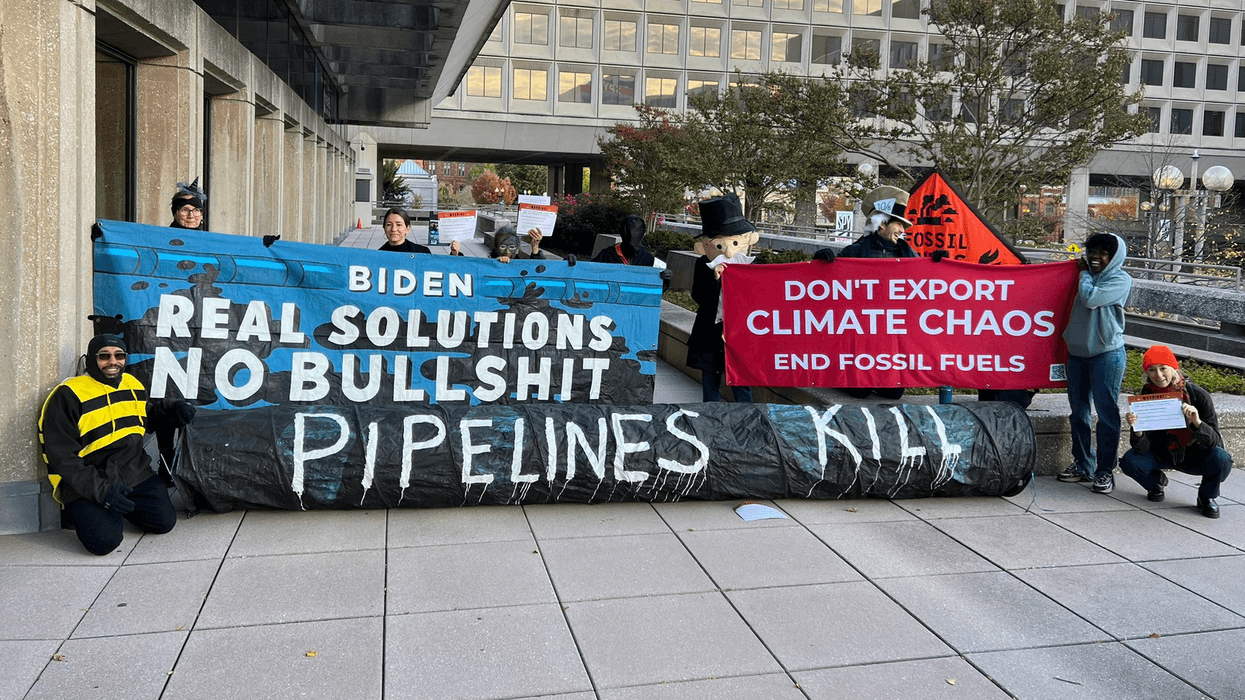
"Now more than ever, we need real leadership from the Department of Energy to end fossil fuels," said one organizer.
Climate advocates on Tuesday donned Halloween costumes to greet attendees of the U.S. Department of Energy's "Justice Week," but the organizers assembled outside the agency will be urging guests to demand far more from Energy Secretary Jennifer Granholm and the Biden administration, who they say are "greenwashing" efforts to further equity and environmental justice.
The department's Office of Economic Impact and Diversity is holding the five-day event, where officials plan to highlight efforts to move "toward a more equitable, clean, and just energy future."
The week will include discussions of the Low-Income Communities Bonus Credit Program, which pushes for more access to renewable energy facilities in underserved communities, and executive actions President Joe Biden has taken to promote environmental justice.
All those actions, however, have happened alongside the administration's push in favor of so-called climate "solutions" that scientists say are unproven and serve only to perpetuate fossil fuel extraction under the false assumption that it can do so while still addressing greenhouse gas emissions and planetary heating.
The DOE, noted Basav Sen, a climate justice project director at the Institute for Policy Studies (IPS) who took part in the action, is "the biggest funder of false solutions such as carbon capture and storage, hydrogen, and direct air capture."
"These are scams. We know that the real solution to the climate crisis is to keep fossil fuels in the ground and make a rapid, just transition to real renewable energy controlled by communities," said Sen, wearing zombie face paint at the direct action. "Instead what were seeing from the Department of Energy is a continuation of the fossil fuel economy."
As Common Dreams reported in May, analysts say that just running the machinery to operate a carbon capture and storage project—like the ones the Biden DOE announced a $1.2 billion investment in earlier this year—would increase energy consumption by 20%, adding to carbon dioxide emissions.
Smog, benzene, and formaldehyde emissions also increase with carbon capture technology, biologist Sandra Steingraber said—three types of pollution that disproportionately affect people in low-income neighborhoods, the very communities the DOE says it's targeting with environmental justice programs and events like "Justice Week."
Additionally, noted Sen, the DOE is continuing to license exports of fossil gas.
"We are here today to tell attendees of the Department of Energy's Justice Week that the version of environmental and energy justice that they're going to hear from the Department of Energy in the event is greenwashing, pure and simple," said Sen. "The Department of Energy cannot pretend to be on the side of environmental justice while they are actively licensing more fossil gas exports, which means more fracking, more air and water pollution, more pipelines, more export terminals, more sacrifice zones in frontline communities."
Some of the campaigners displayed the organizers' message succinctly on a banner reading, "Real Solutions. No Bullshit."
"Now more than ever, we need real leadership from the Department of Energy to end fossil fuels, quit peddling climate scams and advance energy justice," said Climate Justice Alliance (CJA), one of the groups behind the action.
Addressing Granholm, the group added that the secretary "can't cover up [her] record with greenwashing events like Justice Week 2023 while undermining real climate and environmental justice with [her] actions."
"We demand an end to fracked gas exports, carbon capture, and hydrogen energy," CJA said.