

SUBSCRIBE TO OUR FREE NEWSLETTER
Daily news & progressive opinion—funded by the people, not the corporations—delivered straight to your inbox.
5
#000000
#FFFFFF
To donate by check, phone, or other method, see our More Ways to Give page.
Daily news & progressive opinion—funded by the people, not the corporations—delivered straight to your inbox.
Kamala Harris needs to lead the country in addressing this biggest of all problems: our climate crisis and the dominance of the fossil fuel industry in our politics and policies.
President Joe Biden lost a lot of support, especially among young voters and climate voters, when he approved the foolish Willow Project. The Mountain Valley Pipeline (MVP) was equally unpopular with those groups but they rightfully placed most of the blame for that project on Sen. Joe Manchin (D-W.V).
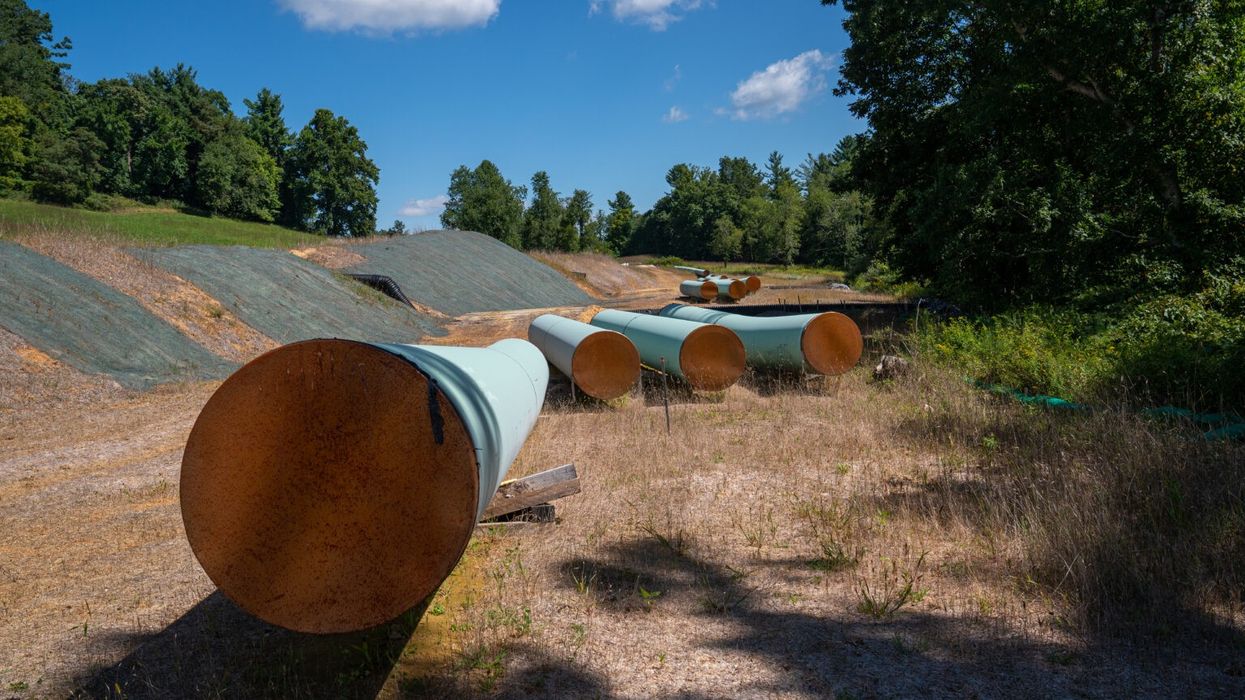
What a lot of people, including reporters, don’t realize is that Pete Buttigieg, as Secretary of Transportation, had (and still has) the power to stop MVP. The Pipeline and Hazardous Materials Safety Administration (PHMSA) reports to Buttigieg and PHMSA, as its name implies, has the authority and responsibility to ensure the pipelines are built and operated safely. But the MVP was not built—nor is it operating—safely. That is not an opinion pulled out of thin air by a climate activist. Rather it is the conclusion of a study done by TC Energy (formerly TransCanada), the company that wanted to build the Keystone XL Pipeline (KXL). That study was the subject of an article (pg 16) in the Jan/Feb 2020 issue of Corrosion Management, a journal of the Institute of Corrosion.
This topic has been written about extensively for over a year. If reporters and other readers want to understand the particulars they can find them here. The long and short of it is that the TC Energy/KXL study proved that MVP’s corrosion-proof coating is “no longer fit for purpose.” That’s a pretty damning indictment, especially given the enormous diameter (42 inches) of MVP and the extremely high pressure it will be operating under. It’s particularly scary for all those who live within MVP’s blast zone.
MVP is made of thick steel. It isn’t going to corrode extensively tomorrow or anytime right away. But pipelines like MVP are built with the intention that they will operate for many, many decades, which is why legally they MUST have an adequate corrosion-proof coating. Otherwise they will corrode prematurely which could lead to a massive explosion. Delaney Tercero was 3 when a 10 inch gas pipeline exploded near her home because defective coating allowed the pipe to corrode. She died 2 days later in a hospital burn unit. Again, MVP is 42 inches.
The National Association of Pipe Coating Applicators (NAPCA) recommends that the pipe coating that was applied to MVP pipe should not be exposed to the harmful rays of the sun for more than 6 months. MVP pipe sat out in the sun for 6-7 years. A KXL pipeline manager, speaking at an oil and gas forum in Canada, said that, when the coating has deteriorated to such a degree, the pipe either needs to be replaced or sent back to the factory for stripping, cleaning, and recoating. He said this is a problem that can’t be remedied in the field. MVP pipe was neither replaced nor properly recoated. It was just quickly buried and covered up, as if that would make the problem go away.
Pete Buttigieg is obviously a very smart guy. He’s articulate, does his homework and has a knack for making members of Congress look ridiculous when they try to question him. If anyone can explain why the KXL coating study doesn’t apply to MVP, it would be Secretary Buttigieg. But neither he nor PHMSA nor MVP nor anyone else has ever offered that explanation. Buttigieg seems to pop up everywhere these days but he hasn’t met with the people who live next to MVP and been willing to address their fears about the defective pipe coating. And the reason he hasn’t is because he can’t explain away the KXL study’s obvious relevance to MVP which leaves him unable to defend PHMSA’s decision to allow MVP to operate.
And this problem isn’t limited to MVP. Pipeline giant, Williams, has just built pipelines in Louisiana and Pennsylvania using old pipe intended for the now-dead Constitution Pipeline in NY. That pipe has been sitting out in the sun for over a decade. Williams has now buried it right next to houses, schools, playgrounds, ball parks, through golf courses and under interstate highways.
Essentially, despite all their posturing, Pete Buttigieg and PHMSA are just part of the Good Ol’ Boy network that oversees much of our country’s energy regulatory system which remains heavily controlled by the fossil fuel industry. Up and down the chain of command people go along to get along, as pointed out in this article that Bill McKibben called landmark by Mike Soraghan of Politico’s E&E News. That system has resulted in America being the largest oil and gas producer ever, which is deplorable given the scientific consensus regarding climate change. It is why we are so far behind in achieving our climate goals.
Kamala Harris needs to lead the country in addressing this biggest of all problems. She needs to separate herself from the Good Ol’ Boy network. She should start by picking someone other than Pete Buttigieg to be her VP.
"The science is clear: No new oil and gas fields, or the planet gets pushed past what it can handle," said one analyst.
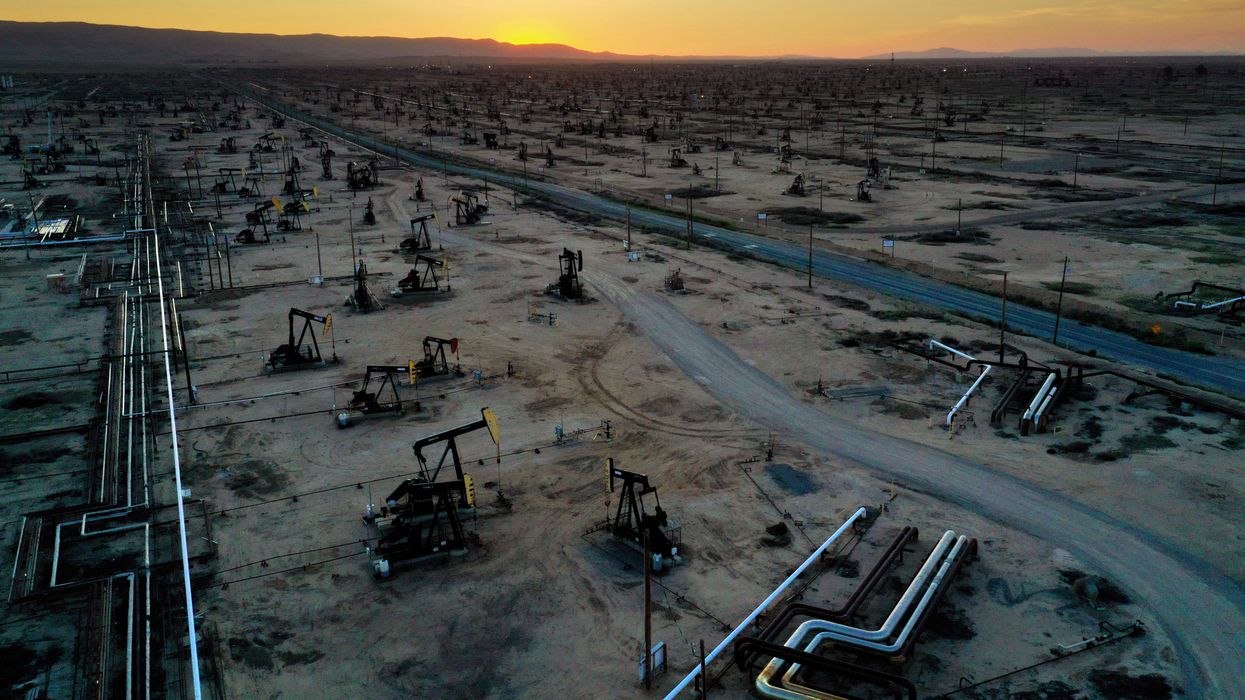
Fossil fuel-producing countries late last year pledged to "transition away from fossil fuels," but a report on new energy projects shows that with the United States leading the way in continuing to extract oil and gas, governments' true views on renewable energy are closer to a statement by a Saudi oil executive Amin Nasser earlier this month.
"We should abandon the fantasy of phasing out oil and gas," the CEO of Saudi Aramco, the world's largest oil company, said at an energy conference in Houston.
A new report published Wednesday by Global Energy Monitor (GEM) suggests the U.S. in particular has abandoned any plans to adhere to warnings from climate scientists and the International Energy Agency (IEA), which said in 2021 that new oil and gas infrastructure has no place on a pathway to limiting planetary heating to 1.5°C.
Despite the stark warning, last year at least 20 oil and gas fields worldwide reached "final investment decision," the point at which companies decide to move ahead with construction and development. Those approvals paved the way for the extraction of 8 billion barrels of oil equivalent (boe).
By the end of the decade, companies aim to sanction nearly four times that amount, producing 31.2 billion boe from 64 oil and gas fields.
The U.S. led the way in approving new oil and gas projects over the past two years, GEM's analysis found.
An analysis by Carbon Brief of GEM's findings shows that burning all the oil and gas from newly discovered fields and approved projects would emit at least 14.1 billion tonnes of carbon dioxide.
"This is equivalent to more than one-third of the CO2 emissions from global energy use in 2022, or all the emissions from burning oil that year," said Carbon Brief.
GEM noted in its analysis that oil companies and the policymakers who continue to support their planet-heating activities have come up with numerous "extraction justifications" even as the IEA has been clear that new fossil fuel projects are incompatible with avoiding catastrophic planetary heating.
The report notes that U.S. Sen. Lisa Murkowski (R-Alaska) "supported ConocoPhillips' Willow oil field, arguing that the Alaskan oil and gas industry has a 'better environmental track record,' and not approving the project 'impoverish[es] Alaska Natives and blame[s] them for changes in the climate that they did not cause.'"
Carbon Brief reported that oil executives have claimed they are powerless to stop extracting fossil fuels since demand for oil and gas exists for people's energy needs, with ExxonMobil CEO Darren Woods telling Fortune last month that members of the public "aren't willing to spend the money" on renewable energy sources.
A poll by Pew Research Center last year found 67% of Americans supported the development of alternative energy sources. Another recent survey by Eligo Energy showed that 65% of U.S. consumers were willing to pay more for renewable energy.
"Oil and gas producers have given all kinds of reasons for continuing to discover and develop new fields, but none of these hold water," said Scott Zimmerman, project manager for the Global Oil and Gas Extraction Tracker at GEM. "The science is clear: No new oil and gas fields, or the planet gets pushed past what it can handle."
Climate scientist and writer Bill McGuire summarized the viewpoint of oil and gas executives and pro-fossil fuel lawmakers: "Climate emergency? What climate emergency?"
The continued development of new oil and gas fields, he added, amounts to "pure insanity."
Biden must end the flow of public money to fossil fuels, sending a clear statement to voters that he is the candidate who will stand up to fossil fuels, and stand up for our future.
I turn 18 just in time for the 2024 election, and I know that the stakes are higher than ever. It’s not just a contest between President Joe Biden and former President Donald Trump; it’s a choice between the only person who can lead the U.S.’ much-needed energy transition and a criminal who’s promised to systematically dismantle environmental protections and our democracy.
As a climate activist the choice should be easy, but my peers aren’t jumping for joy at the prospect of casting a vote for Biden. While the Inflation Reduction Act was a step in the right direction, we’ve also witnessed a string of new oil and gas projects, watered-down language, and broken promises. Biden must do much more to win over young climate voters ahead of this year’s election, and he can start by keeping his promise to stop public money flowing into fossil fuels.
A record number of young people voted in the 2020 election, with as much as 10% increases in young voter turnout across key battleground states like Arizona, Wisconsin, and Georgia. This year, Harvard polling has predicted a lower level of youth turnout, which could be potentially fatal for the Biden-Harris administration. To win, Biden needs a strong turnout from young voters. The White House is now on an all-out offensive to charm young climate voters like me, recently setting up a TikTok page and inviting a group of young climate influencers to the White House.
Youth can help transform the Biden campaign into a powerful political movement, but we are not willing to compromise on the climate crisis.
Despite his efforts to connect with us, Biden’s climate hypocrisy is a line many of us aren’t willing to cross. Last year, Biden approved the Willow project, going directly against his promise to end fossil fuel projects on public land and water. This caused outrage in many youth circles.
The promise-breaking goes beyond Willow. In 2021, the Biden administration and 33 other governments signed up to the Clean Energy Transition Partnership, promising to end international public finance for fossil fuels by the end of 2022. But in the last year alone, the U.S. channeled almost $1 billion into new oil and gas, through the U.S. Export-Import Bank, EXIM. Next week, the EXIM board is voting on a major oil and project in Bahrain. If it is approved, at least $100 million U.S. tax dollars will go toward over 400 new oil wells, contrary to Biden’s fossil fuel pledges.
Export credit agencies like EXIM are government-owned institutions that provide financial services to large infrastructure projects around the world. They are also the world’s largest international public funders of fossil fuels. Each year, Organisation for Economic Cooperation and Development (OECD) countries’ export credit agencies provide over $40 billion of public money to fossil fuels—five times their support for clean energy.
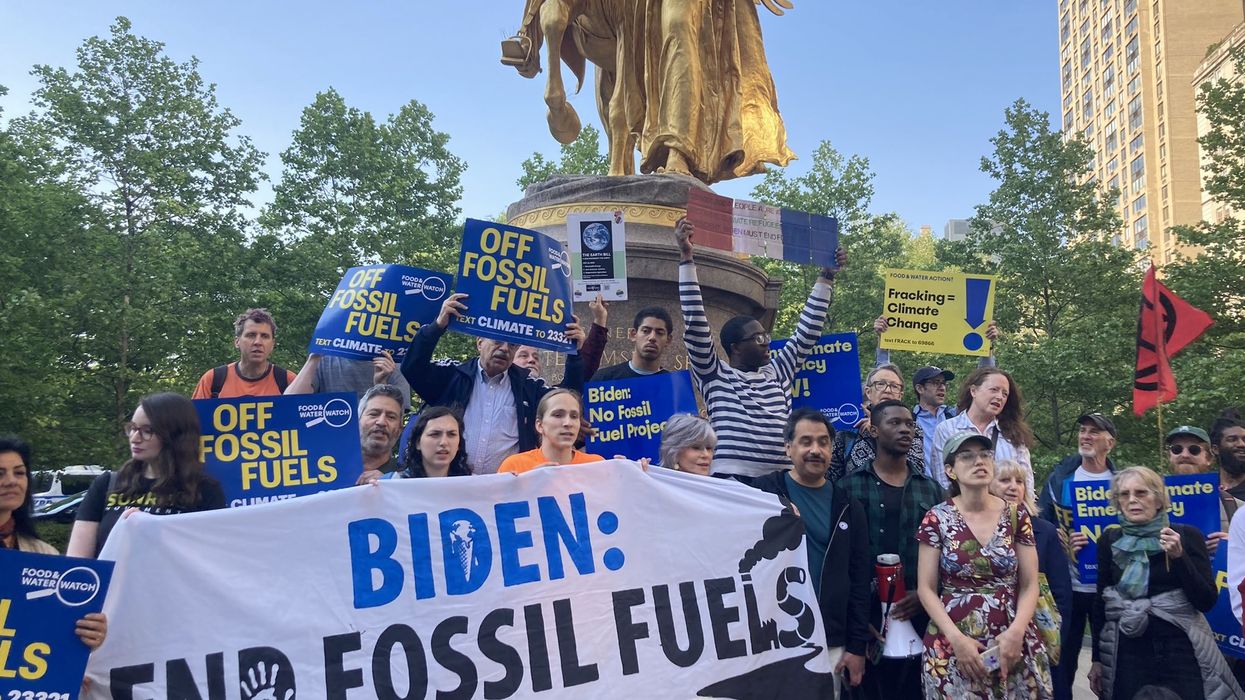
This must stop. With our planet and our democracy in the balance, President Biden needs to fund a just energy transition. It’s not an accident that the largest climate march since the pandemic took place in September last year—young people are fighting for better. To win the youth climate vote, Biden must end the flow of public money to fossil fuels, sending a clear statement to voters that he is the candidate who will stand up to fossil fuels, and stand up for our future. This will get the youth vote out much more than a 30-second TikTok ever could.
This week, the OECD is meeting in Paris to discuss groundbreaking proposals to stop export credit agency support for oil and gas. It’s one of Biden’s last chances to prove himself as a climate leader, and the U.S. will play a critical role. Biden can either support the proposals and put a stop to EXIM, or choose to continue plunging public money into coal, oil, and gas.
Youth can help transform the Biden campaign into a powerful political movement, but we are not willing to compromise on the climate crisis. Many of us grew up believing we would “one day” see the effects of climate change, but in the last year, my education has been stalled or stopped due to flooding and extreme smoke multiple times. I refuse to vote away my health, my community, and my safety.
Our democracy is incredibly fragile, deeply worth protecting, and impressively resilient, much like our planet. I will cast my first-ever vote for Joe Biden, but to get a record youth turnout he needs to do more. Next week, Biden has an opportunity to build momentum from his pause in new LNG permits and match his promises with action, ending the flow of U.S. public money into fossil fuels for good. In the meantime, I will continue to pressure Biden to listen to young people, because I refuse to choose between my future and my vote.
"President Biden must declare a climate emergency and go all-out to stop the climate crisis," said the youth-led movement's campaign director.
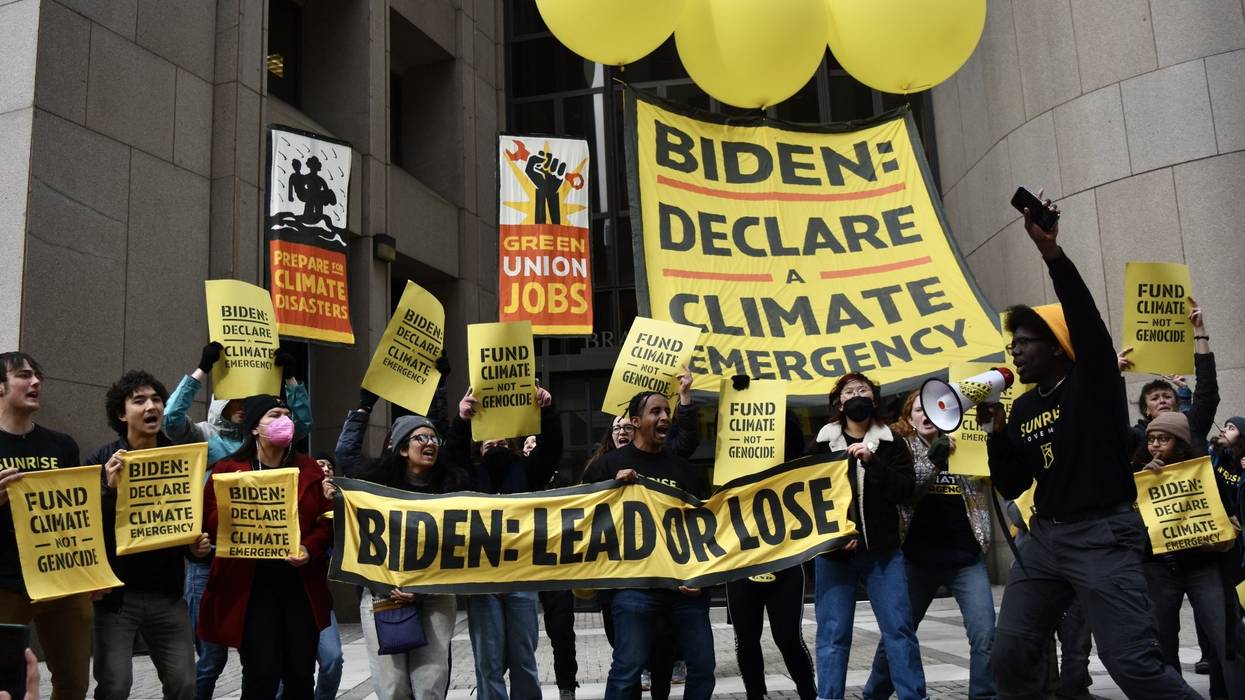
After nearly two dozen Sunrise Movement campaigners were arrested Monday at U.S. President Joe Biden's 2024 campaign headquarters in Wilmington, Delaware, the youth-led climate group is planning over 40 protests across the country.
Next Monday, movement members plan to demonstrate at local Democratic Party offices and city halls to demand that Biden declare a national climate emergency and use the full extent of his powers to tackle the fossil fuel-driven global crisis.
"Biden can't build renewables on Monday, approve fossil fuels on Tuesday, and then claim to be climate president. That's not how science works, and young voters know it," said Sunrise campaign director Kidus Girma in a statement Thursday. "President Biden must declare a climate emergency and go all-out to stop the climate crisis."
"He could end the fossil fuel era by refusing to approve a single oil or gas well in this country."
"There are dozens of things he could sign into law tomorrow if he wanted," Girma noted. "He could make sure that every time a climate disaster hits, no one gets evicted and everyone has access to free healthcare. He could end the fossil fuel era by refusing to approve a single oil or gas well in this country."
Sunrise is calling on the Democratic president to reverse the massive rise in U.S. fossil fuel production—rather than approving projects like Willow in Alaska—and to "create green union jobs by unleashing the full power of the Defense Production Act."
The group's plans for next week's protests were announced as nine Democrats joined Republicans in the U.S. House of Representatives to pass a bill intended to reverse Biden's recent pause on approvals for liquefied natural gas (LNG) exports, and as the Federal Energy Regulatory Commission rubber-stamped the Saguaro Connector Pipeline in Texas.
While Biden has faced intense criticism from campaigners and scientists for various decisions—from backing Willow and Mountain Valley Pipeline to continuing fossil fuel lease sales and skipping last year's United Nations summit—former President Donald Trump, the Republican front-runner, has been far more hostile toward climate policies.
Young voters like those who belong to the Sunrise Movement were key to Biden's defeat of Trump in 2020 and to Democrats preventing the predicted "red wave" in 2022. They are expected to play a key role in this November's elections.
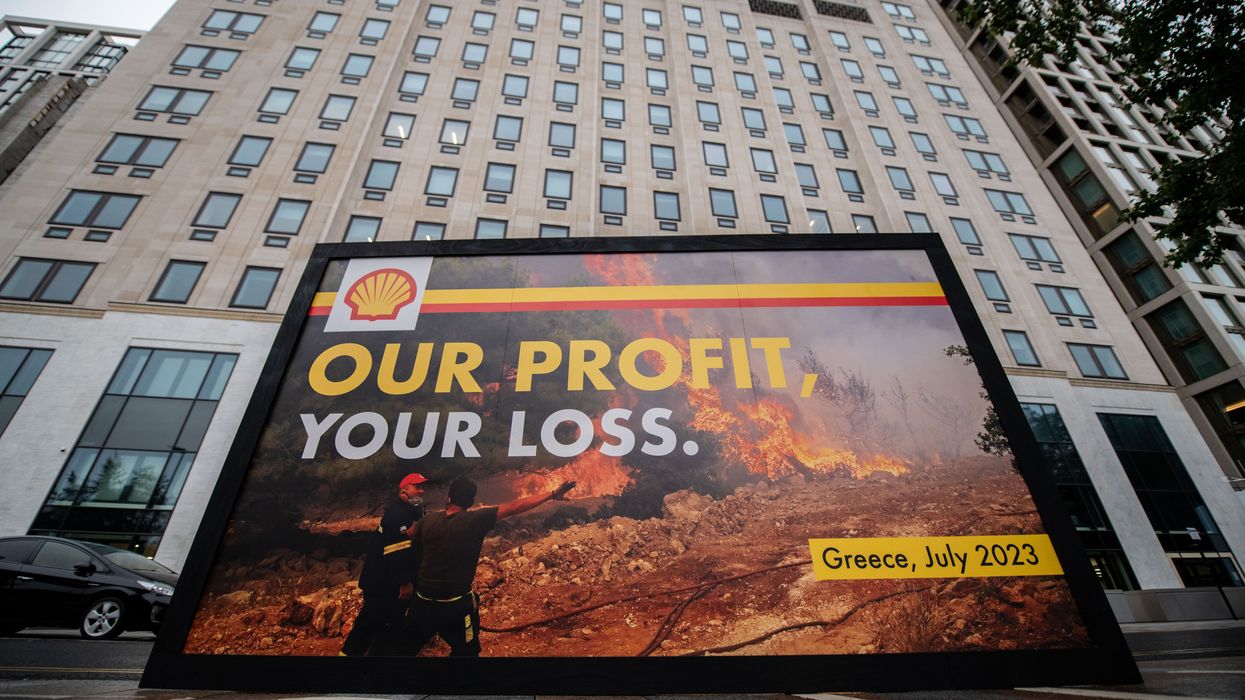
"The global energy crisis has been a giant cash grab for fossil fuel firms," said one campaigner. "And instead of investing their record profits in clean energy, these companies are doubling down on oil, gas, and shareholder payouts."
The year 2023 was marked by weather events that made it increasingly clear that the Earth has entered what United Nations Secretary General António Guterres called the "era of global boiling," with wildfires and prolonged heatwaves impacting millions of people and scientists confirming their suffering was the direct result of fossil fuel extraction and planetary heating.
But for the world's five largest oil giants, the year marked record profits and the approval of several major new fossil fuel projects, allowing the companies to lavish their shareholders with payouts that are expected to exceed $100 billion—signaling that executives have little anxiety that demand for their products will fall, said one economist.
The companies—BP, Shell, Chevron, ExxonMobil, and TotalEnergies—spent $104 billion on shareholder payouts in 2022, and are expected to reward investors with even more in buybacks and dividends for 2023, The Guardian reported.
Shell announced plans in November to pay investors at least $23 billion—more than six times the amount it planned to spend on renewable energy projects—while BP promised shareholders a 10% raise in dividends and Chevron could exceed the $75 billion stock buyback it announced early last year.
Alice Harrison, a campaigner for Global Witness, noted that fossil fuel shareholders will be enjoying their paydays as households across Europe struggle with fuel poverty and the world faces the rising threat of climate disasters brought on by the industry.
"The global energy crisis has been a giant cash grab for fossil fuel firms," Harrison told The Guardian. "And instead of investing their record profits in clean energy, these companies are doubling down on oil, gas, and shareholder payouts. Yet again millions of families won't be able to afford to heat their homes this winter, and countries around the world will continue to suffer the extreme weather events of climate collapse. This is the fossil fuel economy, and it's rigged in favor of the rich."
In 2023 campaigners intensified their demands for accountability from the oil, gas, and coal industries, and as of last month had successfully pressured more than 1,600 universities, pension funds, and other institutions to divest from fossil fuels. In the U.S., provisions in the Inflation Reduction Act, which has been touted as the "largest investment in climate and energy in American history," went into effect.
But Dieter Helm, a professor of economic policy at the University of Oxford, The Guardian that if the industry were truly fearful of policymakers phasing out fossil fuel extraction and expediting a transition to renewable sources, they would be spending far less on new projects and shareholder payouts.
"For this to be the case you would have to believe that the energy transition is happening, and that demand for fossil fuels is going to fall," Helm told The Guardian.
In 2023, U.S. President Joe Biden infuriated climate campaigners by approving the Willow oil drilling project in Alaska, which could lead to roughly 280 million metric tons of heat-trapping carbon dioxide emissions. His administration also included in a debt limit deal language that would expedite the approval of the Mountain Valley Pipeline, which could emit the equivalent of more than 89 million metric tons of carbon dioxide, while the U.K. government greenlit a massive oil drilling field in the North Sea and French company TotalEnergies continued to construct the 900-mile-long East African Crude Oil Pipeline, which would transport up to 230,000 barrels of crude oil per day.
"These companies are investing a huge amount in new projects, and they're handing out bigger dividends because they are confident that they're going to make big returns," Helm said. "And when we look at the state of our current climate progress, who's to say they're wrong?"
Climate campaigner Vanessa Nakate pointed out that the shareholder paydays are expected following a deal on a loss and damage fund at the 28th annual United Nations Climate Change Conference, aimed at helping developing countries to fight the climate emergency. That fund was hailed as "historic" and included a commitment of $700 million from wealthy countries—a sum that is expected to be dwarfed by fossil fuel investors' profits.
"They have picked people's pockets, fueled inflation and pollution, and deepened poverty," U.K. House of Lords member and Tax Justice Network co-founder Prem Sikka said of the oil giants. "Governments do nothing to end their monopolistic control. Need to break-up this cartel."
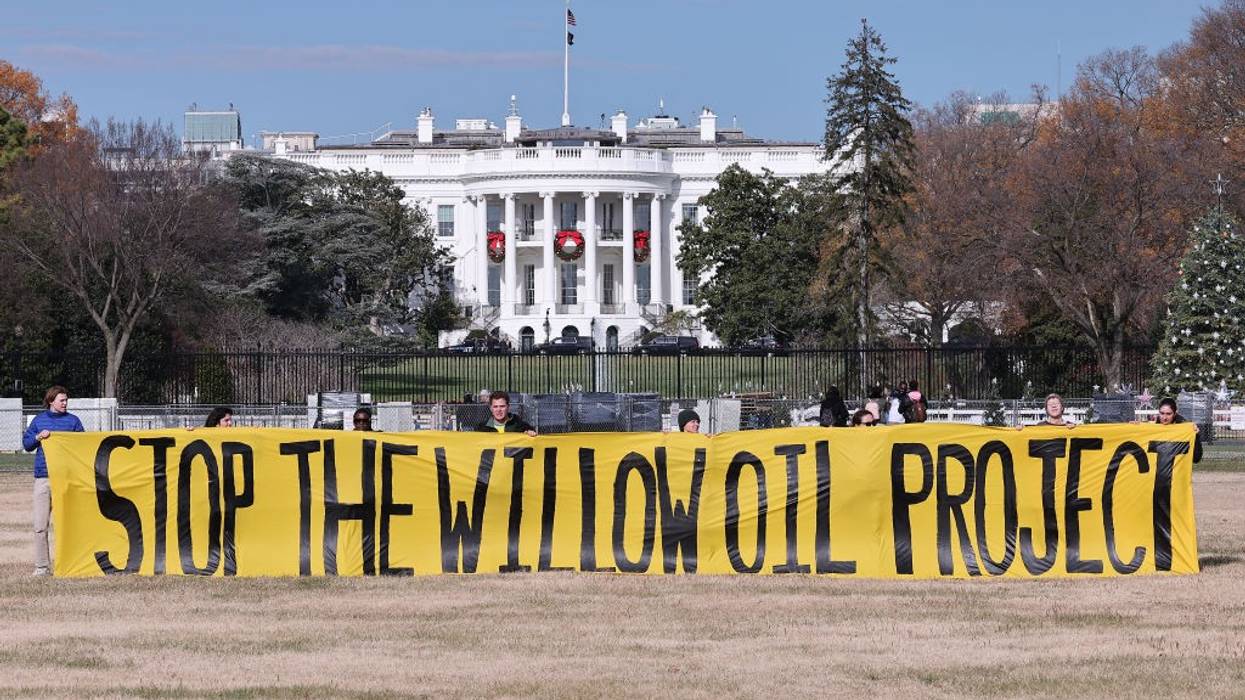
A new report also concludes that the United States should put $97.1 billion per year toward helping poor countries with their energy transitions.
In order to limit global heating to 1.5°C in a way that prioritizes climate justice, wealthy nations like the United States must stop extracting oil, gas, and coal by 2031.
That's the conclusion of a report released Tuesday by the Civil Society Equity Review titled Equitable Phaseout of Fossil Fuel Extraction: Toward a Reference Framework for a Fair and Rapid Global Phaseout. The report, published to coincide with the ongoing United Nations Climate Change Conference (COP28) in the United Arab Emirates, provides both timelines of when it would be fair for different countries to end fossil fuel extraction and payment schedules for how much wealthier nations should provide to help poorer ones finance their energy transitions.
"Limiting warming to 1.5°C requires all countries to reduce their fossil fuel extraction and use, starting now. But fairness dictates that some should reduce faster than others," Greg Muttitt of the International Institute for Sustainable Development and Global Gas and Oil Network said in a statement. "To make a just transition possible in countries whose economies depend heavily on fossil fuel revenues and jobs, wealthy countries should phase out their fossil fuels within just eight years, and provide significant amounts of support to poorer countries."
"The only hope that we'll back away from the brink is a globally fair arrangement that gives poorer countries the time and resources to manage rapid transitions away from fossil fuel production and consumption."
The new report came the day after the publication of the annual Global Carbon Budget report, which found that carbon dioxide emissions from the burning of fossil fuels reached a record 36.8 billion metric tons in 2023 and that, if human societies continue to burn fossil fuels at current rates, they have a 50% chance of pushing temperatures consistently above 1.5°C in around seven years.
"All countries need to decarbonize their economies faster than they are at present to avoid the worse impacts of climate change," Corinne Le Quéré, Royal Society research professor at the University of East Anglia's School of Environmental Sciences, said in response to the Carbon Budget findings.
The Civil Society Equity Review agreed that emissions must fall rapidly everywhere, but argued that "this will be politically achievable only if it is widely accepted as fair."
"The speed and scale of the transformations required to move away from the fossil economy can look daunting, particularly in countries that are dependent on fossil fuel revenues, while millions of people within them depend on fossil fuel extraction for jobs and livelihoods," Anabella Rosemberg, senior adviser on just transition for Climate Action Network International, said in a statement.
The report concluded that
"Everyone knows that countries' mitigation pledges under the Paris agreement are far off track from keeping warming below 1.5°C, or even 2°C. But there is far less awareness that countries' and corporations' plans for producing oil, gas, and coal are even farther off track," said Sivan Kartha of the Stockholm Environment Institute.
"Practically speaking," Kartha continued, "the only hope that we'll back away from the brink is a globally fair arrangement that gives poorer countries the time and resources to manage rapid transitions away from fossil fuel production and consumption."
The report also provides guidelines for those resources based on "fair share" contributions from wealthier nations derived from their capacity and their responsibility for the climate crisis. The U.S., which is the No. 1 historical emitter of carbon pollution, would owe 46.3% of the total, or $97.1 billion per year. The E.U. comes next, owing 20.7% or $43.4 billion per year. It is followed by Japan (9.3% and $19.5 billion), Canada (4.1% and $8.6 billion), and the U.K. (3.8% and $8 billion.)
"The Civil Society Equity Review report clearly shows that the richest countries are largely responsible for the climate crisis. They also have the greatest capacity to deliver the solutions we need," Oxfam International climate policy lead Nafkote Dabi said in a statement. "Rich countries should be the first to commit to the phaseout of fossil fuels. They should also commit to providing crucial financial support to developing countries to facilitate their transition to clean energy."
The Civil Society Equity Review was first convened in 2015 and now has the backing of more than 500 organizations and movements. Its latest report comes amid the greatest push to negotiate a total phaseout of fossil fuels at a U.N. climate conference to date.
"As the climate negotiations pivot, finally, to the central issues of fossil fuel extraction and developmental justice, this report steps back and takes a long-overdue hard look at the overall structure of the problem," Tom Athanasiou of the Climate Equity Reference Project said in a statement. "Its goal is to move the discussion forward and we think that, by giving real numbers—both phaseout dates and support needs—it does just that."
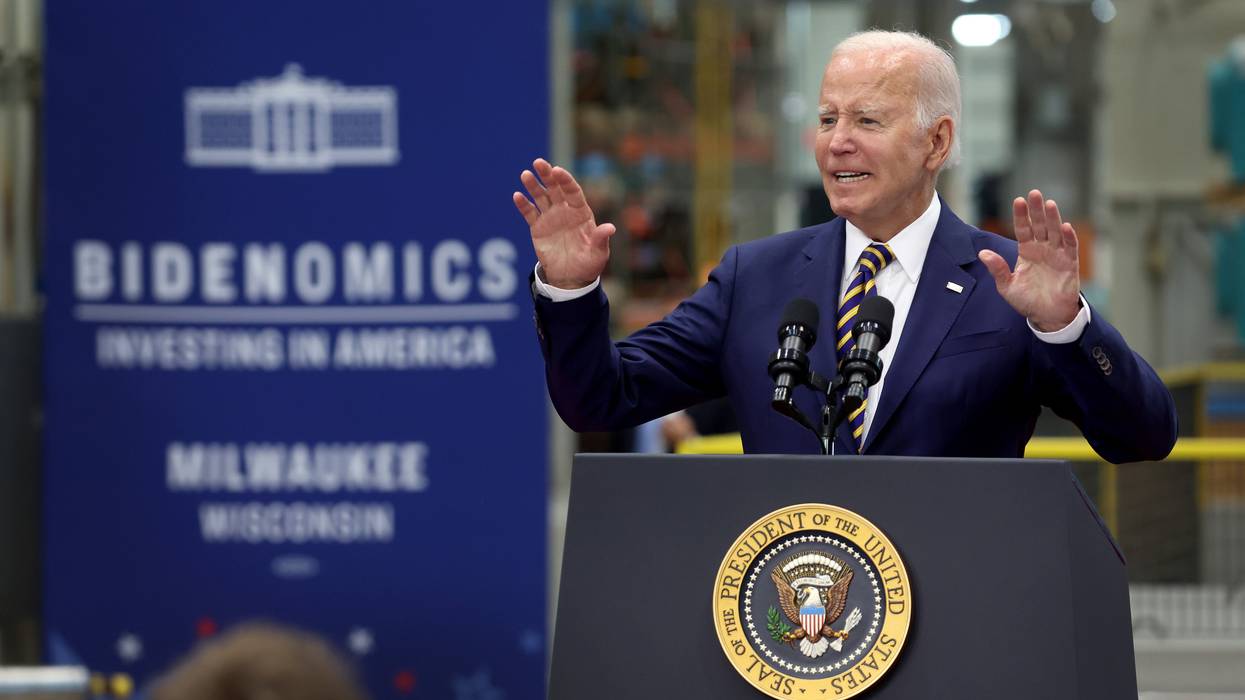
"Approving more fossil fuels not only torches our climate future, but it also harms people's health, degrades ecosystems, and threatens wildlife," said the lead author of a new report.
As the United States is set to break its all-time fossil fuel production record in a year that's likely to be the hottest ever recorded, an analysis published Monday by the Center for Biological Diversity warns that planet-heating oil and gas projects approved by the Biden administration "threaten to erase the climate emissions progress from the Inflation Reduction Act."
According to the CBD report, "The potential carbon emissions from 17 massive fossil fuel projects approved by the Biden administration are larger than the projected emissions reductions from the IRA and other climate policies."
Those 17 projects have the potential to release emissions totaling 1,642 million metric tons of CO2 equivalent per year, or the same as the annual emissions of 440 coal-fired power plants.
The IRA—which was signed by U.S. President Joe Biden in August 2022—"lowers economy-wide CO2 emissions, which includes electricity generation and use, by 35% to 43% below 2005 levels in 2030," according to the U.S. Environmental Protection Agency.
 (Image: Center for Biological Diversity)
As CBD noted:
Under the Biden administration, the United States is the world's largest oil and gas producer. Last year it became the world's biggest exporter of liquefied gas, with exports set to nearly double by 2035. The United States is also leading the world's largest planned expansion of oil and gas through 2050, at the exact moment we need to be moving in the opposite direction.
"The report shows in stark detail how the Biden administration is canceling out its own climate progress by greenlighting major oil and gas projects," CBD climate science director Shaye Wolf, the report's lead author, said in a statement. "This report also shows how President Biden can truly build on the IRA's progress. He can save lives and wildlife by halting the approval of new fossil fuel projects and phasing out drilling on our public lands and waters."
The analysis lists "essential actions" the Biden administration can take:
Climate campaigners have pressed Biden to declare a climate emergency, a move the president has resisted even as he claims that he's "practically" declared one. Activists have also expressed anger and disappointment that Biden approved more permits for oil and gas drilling on public lands during his first two years in office than the Trump administration did in 2017 and 2018.
"Approving more fossil fuels not only torches our climate future, but it also harms people's health, degrades ecosystems, and threatens wildlife," said Wolf. "Many of these projects concentrate more on polluting fossil fuel infrastructure in overburdened communities of color and low-income communities, worsening environmental injustice."
The new CBD analysis comes ahead of Thursday's start of the United Nations Climate Change Conference, or COP28, in Dubai. Biden is reportedly not attending the conference.
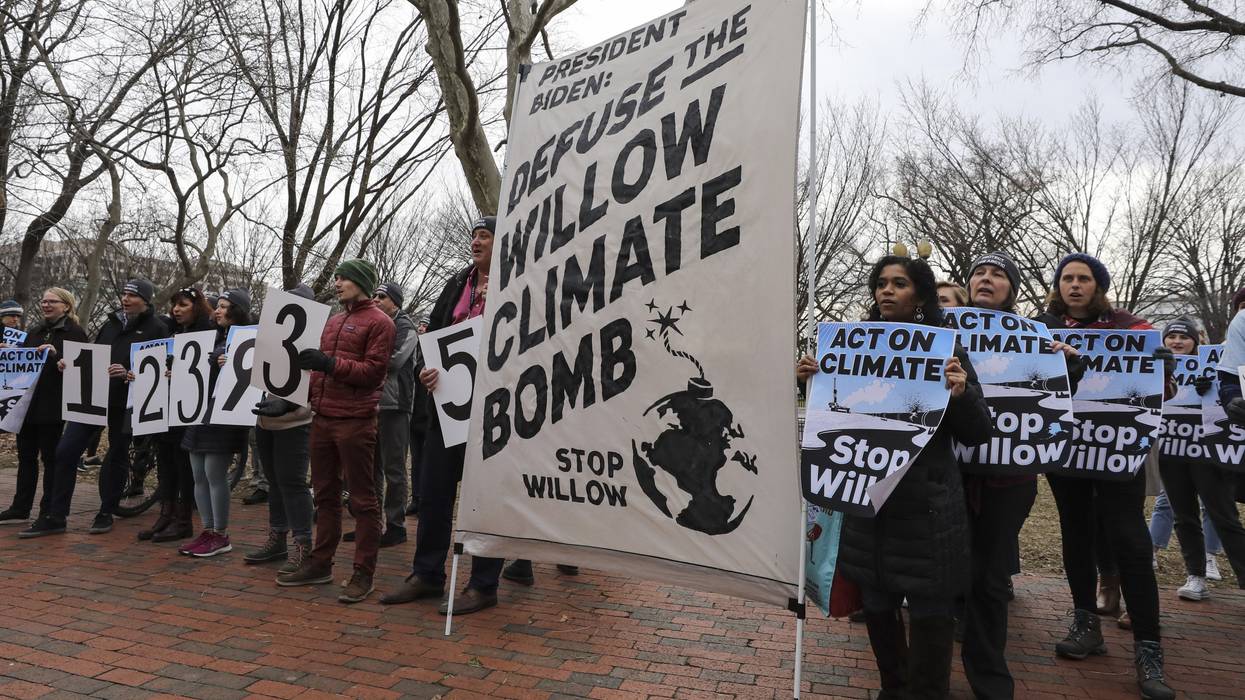
"Beyond the illegality of Willow's approval, Interior's decision to greenlight the project in the first place moved us in the opposite direction of our national climate goals in the face of the worsening climate crisis."
A federal judge in Anchorage ruled Thursday that ConocoPhillips' $8 billion oil drilling project on Alaska's North Slope can proceed, rejecting a pair of lawsuits arguing that the Biden administration failed to adequately consider the initiative's impact on the climate, local communities, and wildlife before approving it earlier this year.
Willow is the largest proposed oil and gas drilling project on public lands in U.S. history, and it comes at a time when scientists are warning that any new fossil fuel extraction is incompatible with preventing catastrophic planetary warming.
But despite warnings about Willow's potentially devastating impact, U.S. District Court Judge Sharon Gleason—an Obama appointee—deemed the Biden administration's environmental assessments of the project sufficient and in line with federal law. The ruling was handed down a day after a U.N.-backed report cautioned that fossil fuel expansion plans by the world's top producers are "throwing humanity's future into question."
Climate groups voiced strong disagreement and outrage in response to Gleason's decision, which gives ConocoPhillips a green light to resume construction of the massive project next month.
"This decision is bad news not just for our clients, but for anyone who cares about the climate and future generations," said Bridget Psarianos, senior staff attorney with Trustees for Alaska, which sued the Biden Interior Department on behalf of the Sovereign Iñupiat for a Living Arctic and others.
"The Biden administration added a little more window dressing when it rubber-stamped the previous Trump approvals, but Interior handed out permits without even looking at options that would reduce the impact on local people or preclude drilling in sensitive ecosystems," Psarianos added. "It again did not consider the accumulation of impacts of greenhouse gas emissions and climate change, nor the way those accumulations harm people, animals, habitat, and the planet in deep and tangible ways."
"While today's ruling is disappointing, we are entirely confident in our claims, and plan to appeal to the higher court."
In March, the Biden Interior Department—headed by Deb Haaland, who criticized the proposed Willow project when she was in Congress—approved what it characterized as a scaled-back version of the ConocoPhillips drilling initiative, drawing protests and criticism from environmentalists, Indigenous groups, and the United Nations.
The administration approved the project with three drilling sites instead of the five that ConocoPhillips wanted. But even the smaller version of Willow will be disastrous for the climate, green groups argued.
According to Earthjustice, which sued the administration on behalf of several climate organizations, the approved project "will still add about 260 million metric tons of carbon emissions into the atmosphere over the next 30 years, the equivalent of an extra two million cars on the road each year for 30 years."
"While today's ruling is disappointing, we are entirely confident in our claims, and plan to appeal to the higher court," Erik Grafe, deputy managing attorney in Earthjustice's Alaska regional office, said in a statement Thursday. "Beyond the illegality of Willow's approval, Interior's decision to greenlight the project in the first place moved us in the opposite direction of our national climate goals in the face of the worsening climate crisis."

"President Biden says that climate change is an existential threat," said one campaigner. "Unfortunately, this decision is yet another sign that his administration is not willing to take actions that would match that rhetoric."
Climate and environmental defenders on Thursday condemned the Biden administration's imminent plan to sell offshore oil and gas drilling rights in the Gulf of Mexico over the next five years.
Bloomberg reported Deputy Interior Secretary Tommy Beaudreau told a Senate panel on Thursday that the Biden administration's five-year offshore drilling rights plan will be released on Friday. Beaudreau said the plan was "definitely informed" by the Inflation Reduction Actction Act, which–while allocating hundreds of billions of dollars in clean energy investments—mandates fossil fuel drilling, a move made to gain the support of corporate Democrats including Sen. Joe Manchin of West Virginia.
"The only way to avert the worst impacts of the climate crisis is by stopping new fossil fuel projects."
The previous drilling plan expired last year. The new one will include details regarding drilling rights in Alaska and the Gulf of Mexico. Congress will have 60 days to review the proposal.
"The only way to avert the worst impacts of the climate crisis is by stopping new fossil fuel projects. The Biden administration knows this, and yet is making the outlandish and irresponsible decision to increase oil production for decades to come," Wenonah Hauter, executive director of the advocacy group Food & Water Watch—which warned the drilling plan would be a "climate nightmare"—said in a statement.
"This decision is yet another reminder that thanks to Sen. Joe Manchin, the Inflation Reduction Act requires oil and gas drilling on public lands in order to develop clean energy sources like wind and solar," she added. "This short-sighted political dealmaking will continue to have grave consequences."
Biden was praised by green campaigners earlier this month for canceling existing oil and gas drilling leases in the Arctic National Wildlife Refuge in Alaska and for banning drilling on 13 million acres of the National Petroleum Reserve.
However, the president—who campaigned on a pledge to phase out fossil fuel extraction on public lands and waters—has been criticized for approving new drilling permits at a faster rate than his predecessor, former President Donald Trump, and for approving major fossil fuel infrastructure including the Willow Project in Alaska, the Mountain Valley Pipeline in West Virginia, and for green-lighting liquefied natural gas export terminals in Alaska and along the Gulf of Mexico.
Numerous green groups also sued the U.S. Interior Department earlier this year over its plan to offer more than 73 million acres in the Gulf of Mexico in a lease sale.
"Approving new offshore drilling is an unconscionable betrayal of future generations who will be forced to live through an intensifying planetary emergency, and will pose direct and severe threats to healthy oceans and marine life," said Hauter.
"President Biden says that climate change is an existential threat," she added. "Unfortunately, this decision is yet another sign that his administration is not willing to take actions that would match that rhetoric."
Last week, the Biden administration and green groups said they would appeal a Louisiana federal judge's ruling blocking the administration from exempting 6 million acres in the Gulf of Mexico from a drilling lease sale initially scheduled for Wednesday but postponed by the Interior Department's Bureau of Ocean Energy Management after the judge's decision.

"Unfortunately, the White House is trying to convince us that they are working hard to put out the fire while they continue pouring gasoline on it," said one campaigner.
Climate campaigners on Tuesday took U.S. President Joe Biden to task following an address before the United Nations General Assembly in which he called on world leaders to urgently "climate-proof" the heating Earth while making what critics said were false claims about his administration's efforts to tackle the planetary emergency.
During his speech, Biden said that increasingly extreme weather events occurring around the world "tell the urgent story of what awaits us if we fail to reduce our dependence on fossil fuels," while claiming that "the United States has treated this crisis as the existential threat from the moment we took office."
Despite such lofty rhetoric and campaign pledges to center climate action—including by stopping new fossil fuel drilling on public lands—Biden has overseen the approval of more new permits for drilling on public land during his first two years in office than former President Donald Trump did in 2017 and 2018. The Biden administration has also held a massive fossil fuel lease sale in the Gulf of Mexico and has approved the highly controversial Willow project, Mountain Valley Pipeline, and increased liquefied natural gas production and export.
Oil Change International recently called the United States—which the climate action group says accounts for more than one-third of planned global oil and gas expansion through 2050—the "planet-wrecker-in-chief."
Outside the White House in Washington, D.C., three climate activists—Beaei Pardo, Kristen McKinney, and Chris Hager—were arrested Tuesday during a nonviolent protest calling on Biden to declare a climate emergency.
"Each day Biden delays in taking this step is precious time lost to save lives and secure a habitable future for humankind and countless other species," Pardo said. "As this summer of record heat and relentless climate disasters nears its end, protestors will appeal to Biden to lead courageously with the love he feels for his grandchildren and act to save all of our families. Together we can help make it happen."
Mitch Jones, managing director of policy and litigation at Food & Water Watch, said in a statement: "This summer sent the clearest message yet that our world is on fire. The only solution is to end the era of fossil fuels, period."
"Unfortunately, the White House is trying to convince us that they are working hard to put out the fire while they continue pouring gasoline on it," Jones added.
Jean Su, energy justice director at the Center for Biological Diversity, said in a statement that "President Biden's U.N. speech rightly recognized the climate dangers of fossil fuels, but Biden ignored his own immense powers to get us off them."
"As leader of the world's largest oil and gas producer, Biden has more power than anyone to rein in the fossil fuels wreaking havoc from Lahaina to Libya," Su continued. "We can't begin to tackle global development goals addressing poverty, famine, and lack of economic opportunity without confronting the climate crisis that intertwines with all of them. Biden must use this moment on the world stage to declare a climate emergency and halt expansion of the fossil fuels raining down chaos on our planet."
Biden also disappointed many activists by opting to not attend this week's U.N. Climate Ambition Summit, which is set to take place Wednesday in New York City. Jeff Ordower, the North American director of 350.org, called Biden's decision a "betrayal."
"I think the reality now is that Biden hasn't been the climate president that he had promised," Alice Hu, senior climate campaigner at New York Communities for Change, told NPR on Sunday as tens of thousands of people took to the streets of Manhattan to demand an end to fossil fuels and a presidential climate emergency declaration.
Jones asserted that "the massive climate demonstrations we saw this weekend in New York and around the world should serve as a wake-up call to President Biden and other world leaders: The time for talking about climate action is over. We need to end the era of fossil fuels now—and that starts with the White House making climate commitments that finally match their rhetoric."
"We need the White House to stop approving fossil fuel drilling permits, to reject new pipelines and power plants, and to use the executive powers that would come with the declaration of a climate emergency," he added. "Instead of exhorting other countries to step up, President Biden should lead by example."