
SUBSCRIBE TO OUR FREE NEWSLETTER
Daily news & progressive opinion—funded by the people, not the corporations—delivered straight to your inbox.
5
#000000
#FFFFFF
To donate by check, phone, or other method, see our More Ways to Give page.


Daily news & progressive opinion—funded by the people, not the corporations—delivered straight to your inbox.
"U.S. agribusiness exporters, the biotech industry, and their allies in Congress are pushing this case, intent on compelling Mexico to accept U.S. exports without debate," said one expert.
After two-and-a-half months of failed negotiations, the U.S. government on Thursday intensified its effort to quash Mexico's limits on genetically modified corn imports by calling for the formation of a dispute settlement panel under a North American trade deal.
In a 2020 decree backed by agricultural, consumer, environmental, public health, and worker groups, Mexican President Andrés Manuel López Obrador (AMLO) announced plans to phase out genetically modified (GM) corn and the herbicide glyphosate by January 2024.
Under pressure from the U.S. government and impacted industries, he issued a new decree in February reiterating plans to block GM corn imports for human consumption by then but lifting the deadline for imports intended for livestock feed and industrial use.
"The Mexican government will show what has occurred: Its cherished tortillas are being contaminated with glyphosate and GM corn. And they intend to put a stop to that."
While AMLO's move was seen as a concession to the U.S. and lobbyists challenging his policies, the Biden administration in June still requested 75 days of formal negotiations. After talks ended Wednesday, U.S. Trade Representative (USTR) Katherine Tai confirmed the decision to form a panel under the United States-Mexico-Canada Agreement (USMCA).
"Through the USMCA dispute panel, we seek to resolve our concerns and help ensure consumers can continue to access safe and affordable food and agricultural products," Tai said Thursday. "It is critical that Mexico eliminate its USMCA-inconsistent biotechnology measures so that American farmers can continue to access the Mexican market and use innovative tools to respond to climate and food security challenges. Our bilateral relationship with Mexico, one of our oldest and strongest trading partners, is rooted in trust and honesty, and there are many areas where we will continue to cooperate and work together."
U.S. Agriculture Secretary Tom Vilsack similarly said that "Mexico's approach to biotechnology is not based on science" and "the United States is continuing to exercise its rights under the USMCA to ensure that U.S. producers and exporters have full and fair access to the Mexican market."
The Mexican Ministry of Economy responded in a statement that "Mexico does not agree with the position of the United States" and "is prepared to defend the Mexican position before this international panel and demonstrate: 1) that the national regulation is consistent with the commitments signed in the treaty; and 2) that the challenged measures do not have commercial effects."
The Institute for Agriculture and Trade Policy (IATP) has previously supported Mexico's efforts to phase out GM corn and glyphosate and on Thursday challenged claims by U.S. officials and agribusiness about Mexican obligations under the treaty and the potential economic impact of the policies.
"U.S. agribusiness exporters, the biotech industry, and their allies in Congress are pushing this case, intent on compelling Mexico to accept U.S. exports without debate. It is an assault on Mexico's food sovereignty," said Karen Hansen-Kuhn, IATP director of trade and international strategies. "Trade rules should provide a forum to protect and advance rights, rather than block them."
Hansen-Kuhn on Thursday authored an op-ed about Mexico's rights under the USMCA while ITAP senior adviser Timothy A. Wise wrote about "exaggerated claims of economic damage" that "sprang from a convenient set of assumptions, all of which are flawed and now outdated in light of the more recent presidential decree."
"As Mexican Economy Minister Raquel Buenrostro stated in response to the USTR request for technical consultations, Mexico's decree is based on science, and she will challenge the U.S. government in the consultations to show 'quantitatively, with numbers, something that has not occurred: that the corn decree has commercially affected U.S. exporters,'" Wise also said.
"The Mexican government will show what has occurred: Its cherished tortillas are being contaminated with glyphosate and GM corn," he continued. "And they intend to put a stop to that."
As Reuters detailed Thursday:
Under USMCA's dispute settlement rules, a five-person panel, chosen from a roster of pre-approved experts, must be convened within 30 days, with a chair jointly chosen and the U.S. side choosing two Mexican panelists and Mexico choosing two American panelists. The panel will review testimony and written submissions and its initial report is due 150 days after the panel is convened.
Previous USMCA dispute panels last year ruled in the U.S.'s favor in a dispute over Canadian dairy quotas, and against the U.S. on automotive rules of origin, siding with Mexico and Canada.
There have been other disagreements between the U.S. and Mexico, most notably over energy in which the U.S. has argued that Mexico's nationalist policy prejudices foreign companies.
Arturo Sarukhán, a former Mexican ambassador to the United States, said on social media Thursday that "of the two consultation processes—energy and yellow corn—this is the one that is politically most relevant for the White House in 2024," given the significance of agricultural states such as Michigan, Minnesota, and Wisconsin to Democratic U.S. President Joe Biden, who is seeking reelection, and the GOP nominee, which could be former President Donald Trump, who signed the USMCA.
"There's no way around it—we have to actually cut fossil fuel emissions," said Food & Water Watch.
Dozens of climate action, Indigenous rights, and public interest groups on Thursday announced an alliance that plans to engage with lawmakers ahead of this year's congressional debate on the Farm Bill, calling on them to pass legislation that rejects carbon offsets, carbon markets, and other policies that perpetuate a planet-heating agricultural system.
Food & Water Watchconvened more than 60 groups including the Farmworker Advocacy Network, the Indigenous Environmental Network (IEN), and the Institute for Agriculture and Trade Policy (IATP), all of whom have been disturbed in recent months by the passage of "at least three pieces of legislation that promote carbon offsets and dirty energy, propping up corporate ag interests and factory farming."
As Congress prepares to debate the Farm Bill, which is passed every five years and includes a range of nutrition, agriculture, forestry, and conservation policies, lawmakers must "transition away from false solutions to the climate crisis," said the alliance. "Carbon trading and offsets are inherently flawed and allow fossil fuels to continue polluting. Therefore, related carbon trading corporate-backed schemes have no place in Farm Bill legislation."
The groups are calling for a Farm Bill that will "further biodiverse, regenerative, sustainable agriculture and food systems; reduce fossil fuels and pesticides in farming practices; and promote a community-based food system that is more resilient to climate change."
"Flawed policies promoted under the guise of 'climate smart agriculture' threaten to entrench the polluting status quo, and worsen the climate crisis."
In such legislation, they said, lawmakers must exclude carbon offsets—tradable "rights" that allow purchasers to claim credit for an activity that removes carbon from the atmosphere or prevents emissions. The groups said the Farm Bill should reject:
Offset proposals are "incompatible with sustainable agriculture and may drive further consolidation of farms and agribusinesses," said the organizations, adding that the methane offset approach "wrongly supposes that significant methane emissions from farms are inevitable, as well as ignores the litany of co-pollutants from farms poisoning the air and water of nearby environmental justice communities."
As the Center for American Progress (CAP) said in a report about fraud in the market last October, there is mounting evidence that "many carbon offsets do not actually represent permanently removed carbon or avoided emissions."
In some cases, forests targeted by carbon offsets have been logged or burned or, "conversely, were never at risk of being deforested," reported CAP. Some businesses have also purchased 40-year contracts to protect forests, rendering the offset unvalid because carbon can remain in the atmosphere for a century.
"Carbon offset markets are fatally flawed," said Ben Lilliston, director of climate strategies at IATP, on Thursday. "The scientific consensus does not support them. They are riddled with fraud. The economics don't work for anyone, least of all farmers and landowners. The urgency of the climate crisis demands that we put this failed experiment aside, and focus on what we know can benefit farmers and the planet."
Jim Walsh, policy director for Food and Water Watch, said carbon markets and offsets are driven by "wishful thinking" that is "fanciful at best."
"Flawed policies promoted under the guise of 'climate smart agriculture' threaten to entrench the polluting status quo, and worsen the climate crisis," said Walsh. "Real climate action in the Farm Bill means breaking up factory farms, decoupling conservation programs from the private sector to directly serve the public good, and putting a stop to the Big Ag monopolies trampling our climate for private gain."
Food and Water Watch suggested carbon offsets and markets aim to help businesses and policymakers avoid making "real climate progress."
The alliance also said the Farm Bill must not include public funding for methane digester technology that "perpetuates pollution and contamination and continues abuses in dairy and meat farms," conservation programs that include carbon credits sales and trade, the overuse of pesticides, and policies that encourage farmers to produce as much as possible even as the practice depresses prices and allows "agribusiness companies to buy raw materials at far below cost, while farmers struggle to pay mounting bills."
The groups said they plan to attend congressional briefings and meet with lawmakers to urge them to pass a Farm Bill that:
"This Farm Bill represents the greatest opportunity in a generation to position American agriculture as a solution to the climate crisis," said Jason Davidson, senior food and agriculture campaigner at Friends of the Earth. "But we cannot do this through carbon markets and offsets underpinned by decades of failure, or through more handouts that further entrench Big Ag's stranglehold on our food system. We need Congress to pursue strategies that support farmers in building a truly regenerative, resilient and equitable food system."
One of the U.S. government's key conservation programs has been subsidizing ecologically harmful agricultural operations to the tune of tens of millions of dollars per year and must be reformed to ensure that only environmentally beneficial practices are supported.
"We need to reexamine what we are spending our money on and whether it deserves the label of 'environmental.'"
That's according to Payments for Pollution: How federal conservation programs can better benefit farmers and the environment, a new report out Thursday from the Institute for Agriculture and Trade Policy (IATP).
Although a pair of U.S. Department of Agriculture (USDA) initiatives--the Environmental Quality Incentives Program (EQIP) and the Conservation Stewardship Program (CSP)--have helped some farmers adopt more sustainable methods, IATP showed last year that just 42% of CSP applicants and 31% of EQIP applicants were awarded contracts from 2010 to 2020.
IATP's new report scrutinizes the implementation of EQIP throughout 12 Midwestern states in 2020. Using state-level USDA data, IATP analyzed the number of contracts awarded, the amount of funding allocated, and the types of practices supported by EQIP in Ohio, Indiana, Illinois, Michigan, Wisconsin, Missouri, Iowa, Minnesota, Kansas, Nebraska, South Dakota, and North Dakota.
It found that while thousands of farmers are being denied access to federal resources that could help them minimize their negative ecological impacts and improve their economic prospects, EQIP funneled more than $56 million toward industrial agricultural practices that worsened the quality of the land, air, and water in just a dozen states in 2020 alone.
"The more EQIP money that goes toward harmful, industrial practices, the less that goes toward good conservation," Micahel Happ, report author and program associate for climate and rural communities at IATP, said in a statement. "When fewer than one-third of EQIP applicants are awarded contracts nationwide, we need to reexamine what we are spending our money on and whether it deserves the label of 'environmental.'"
Citing the latest report from the Intergovernmental Panel on Climate Change, Happ wrote that there is as "urgent need for more resilient systems for farmers and eaters to withstand the shocks of an increasingly unpredictable climate."
"Unfortunately, the current agricultural marketplace does not reward farmers for resilience," Happ continued. "Instead, it pressures farmers to buy into a system of high-cost, industrial farming methods that leave the water and air worse off while keeping many farmers strapped for cash year to year."
"This is where EQIP comes in," wrote Happ. "Since EQIP's inception in the 1996 Farm Bill, it has helped farmers pay for farming methods that can increase both economic and environmental resilience in the face of climate change--helping reimburse farmers for practices focused on increased soil health, cover crops, pasture management, buffers between waterways and tilled farmland, and many other tried-and-true methods of reducing risk in farming."
He added that "at the same time that EQIP pays farmers to improve their land and mitigate climate risks, it is also subsidizing many highly polluting farms that are actively making the climate crisis worse."
"At a large enough scale, any practice can help prop up big factory farms, but there are a handful of EQIP practices that we consider the worst offenders," states the report. After reviewing more than 300 practices supported by EQIP through cost-share payments in the Midwest in 2020, ITAP identified 10 particularly detrimental ones "that perpetuate unnatural systems."
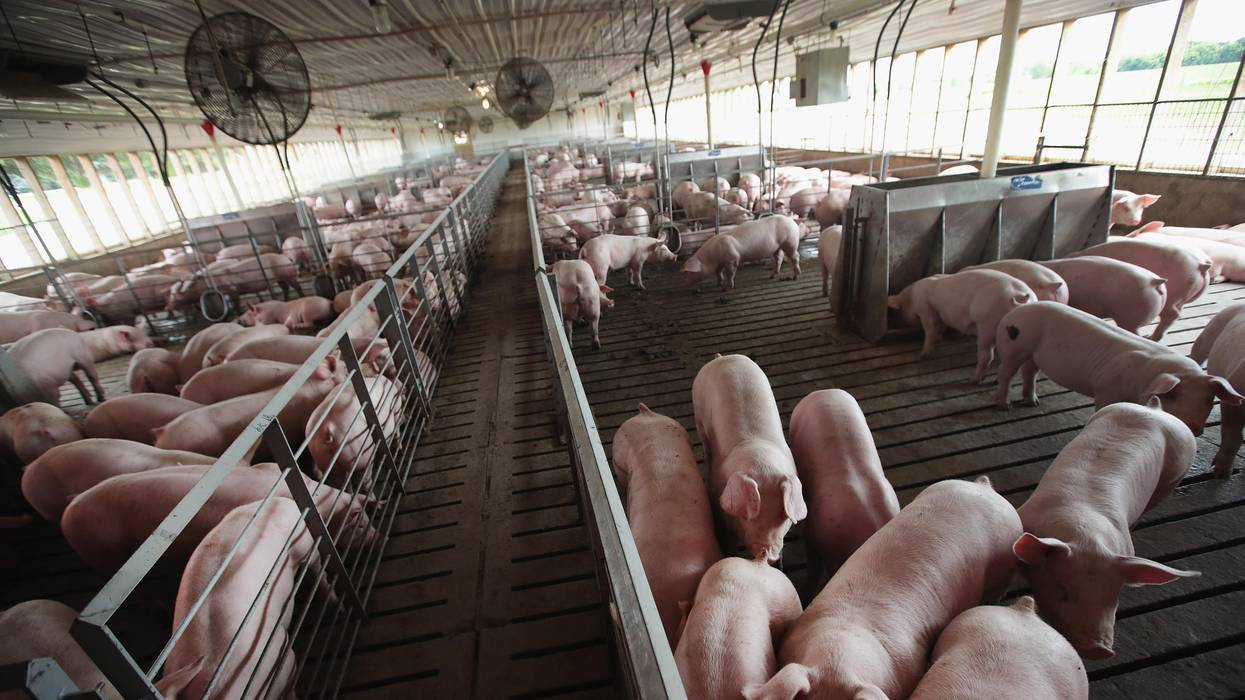
IATP singled out "practices that disrupt the natural flow of water and many practices that incentivize farmers to keep livestock in CAFOs [concentrated animal feeding operations] and away from pastures."
For example, underground outlets, which transport surface water away from fields, make intensive crop production possible. But draining wetlands increases the volume of water in creeks, streams, and rivers, exacerbating erosion and carrying nitrates to the Gulf of Mexico.
Waste storage facilities used by large meat and dairy corporations that dominate the livestock supply chain might prevent seepage into soil and groundwater, but "they are cleaning up the messes created by industrial farming using federal money that would be better used on truly agroecological practices," stressed Happ. Moreover, the growing concentration of animal manure increases the emission of methane and nitrous oxide, two potent greenhouse gases.
According to IATP, the 10 worst EQIP-supported agricultural practices--labeled "industrial" or "factory-farm friendly"--are those that involve:
"Before the 2002 Farm Bill, CAFOs were specifically excluded from EQIP funding," IATP noted. "EQIP was started with the express intent of helping farmers put in place sound conservation on their land, but since the inclusion of CAFO funding in EQIP, more and more resources have gone toward industrial practices."
"As the costs of these industrial practices on the planet become clearer, it becomes less defensible to allow public funds to support them."
"By law, 50% of EQIP funds are earmarked for livestock-specific practices," says the report. "While some of that money does go toward practices like rotational grazing and water conservation-related practices, an inordinate amount goes toward industrial practices."
The amount of EQIP money that each Midwestern state allocates to "factory-farm friendly" practices varies significantly. For instance, Illinois and Minnesota spent 37.3% and 30.8% of their EQIP funds on industrial practices in 2020, respectively, while North Dakota spent just 2.1%."
Unlike other states in the region, North Dakota "continues to have strict protections for family farms and legal definitions of what is considered a farm," the report points out.
To prevent further misdirection of funds to large, polluting operations and to ensure federal conservation money reaches the low-capital farmers who need it most, "including those who integrate more climate-friendly, agroecological practices and systems," the report urges the USDA to:
IATP argued that "while these policy solutions are by no means the only reforms needed for EQIP to betting align the program toward economic and environmental justice for farmers, they are good first steps."
The organization also encouraged farmers and other members of the public to get involved in their state technical advisory committees (STACs), which can help push the implementation various farm bill conservation programs in a more equitable direction.
"EQIP helps pay for crucial practices like erosion controls, better pasture management for livestock, and practices that keep runoff out of our waterways," said Happ. "We need to double down on these beneficial practices and target them toward farmers who need help the most. We can't waste precious resources on expensive structures that clean up messes that shouldn't have been made in the first place."
"As the costs of these industrial practices on the planet become clearer, it becomes less defensible to allow public funds to support them," the report concludes. "While the cost of climate inaction is high, the cost of climate antagonism is higher."
A coalition of 80 U.S. agricultural, consumer, environmental, public health, and worker groups sent a letter Thursday to key figures in the Biden administration calling for them to "respect Mexico's sovereignty and refrain from interfering with its right to enact health-protective policies"--specifically, the phaseout of the herbicide glyphosate and the cultivation of genetically modified corn.
"It is completely unacceptable for U.S. public agencies to be doing the bidding of pesticide corporations like Bayer."
--Kristin Schafer, PANNA
"Mexican President Andres Manuel Lopez Obrador quietly rocked the agribusiness world with his New Year's Eve decree," Timothy A. Wise of the Institute for Agriculture and Trade Policy (ITAP) noted earlier this year. "His administration sent an even stronger aftershock two weeks later, clarifying that the government would also phase out GM corn imports in three years and the ban would include not just corn for human consumption but yellow corn destined primarily for livestock."
"Mexico imports about 30% of its corn each year, overwhelmingly from the United States," Wise added. "Almost all of that is yellow corn for animal feed and industrial uses. Lopez Obrador's commitment to reducing and, by 2024, eliminating such imports reflects his administration's plan to ramp up Mexican production as part of the campaign to increase self-sufficiency in corn and other key food crops."
The groups' letter on the Mexican policies and U.S. interference--published in English (pdf) and Spanish (pdf)--is addressed to recently confirmed U.S. Secretary of Agriculture Tom Vilsack and U.S. Trade Representative Katherine Tai. Its lead author is Kristin Schafer, executive director of Pesticide Action Network North America (PANNA).
"We call on Secretary Vilsack and Trade Representative Tai, as key leaders in the new administration, to respect Mexico's decision to protect both public health and the integrity of Mexican farming," Schafer said in a statement. "It is completely unacceptable for U.S. public agencies to be doing the bidding of pesticide corporations like Bayer, who are solely concerned with maintaining their bottom-line profits."
Fernando Bejarano, director of Pesticide Action Network in Mexico, explained that "we are part of the No Maize No Country Campaign, a broad coalition of peasant organizations, nonprofit NGOs, academics, and consumers which support the presidential decree and fight for food sovereignty with the agroecological transformation of agricultural systems that guarantee the right to produce and consume healthy, nutritious food, free of pesticides and transgenics."
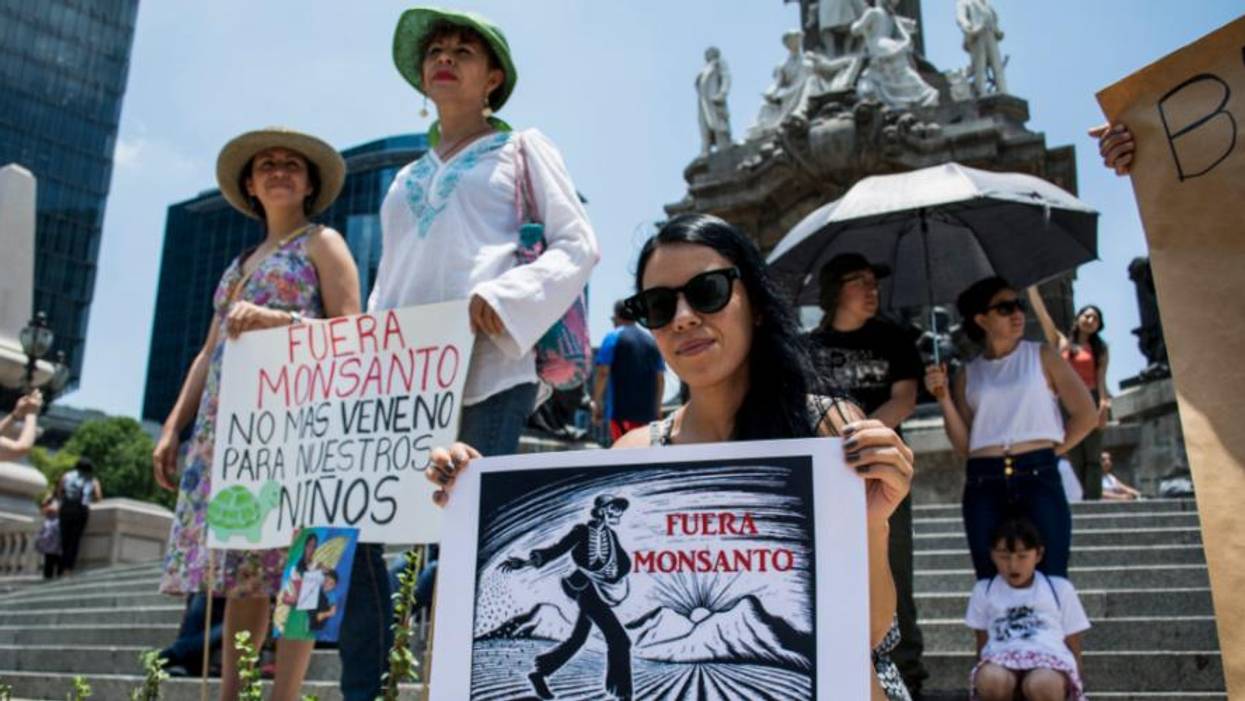
"We reject the pressure from corporations such as Bayer-Monsanto--and their CropLife trade association--which are working in both the United States and Mexico to undermine the presidential decree that phases out the use of glyphosate and transgenic corn," Bejarano said.
The letter highlights Guardian reporting on U.S. government documents obtained by the Center for Biological Diversity through a Freedom of Information Act request. The documents revealed that CropLife America and Bayer AG--which acquired glyphosate-based herbicide developer Monsanto in 2018--worked with U.S. officials to lobby against Mexico's plans.
According to journalist Carey Gillam's mid-February report:
The emails reviewed by the Guardian come from the Office of the U.S. Trade Representative (USTR) and other U.S. agencies. They detail worry and frustration with Mexico's position. One email makes a reference to staff within Lopez Obrador's administration as "vocal anti-biotechnology activists," and another email states that Mexico's health agency (Cofepris) is "becoming a big time problem."
Internal USTR communications lay out how the agrochemical industry is "pushing" for the U.S. to "fold this issue" into the United States-Mexico-Canada Agreement (USMCA) trade deal that went into effect July 1. The records then show the USTR does exactly that, telling Mexico its actions on glyphosate and genetically engineered crops raise concerns "regarding compliance" with USMCA.
Citing discussions with CropLife, the U.S. Environmental Protection Agency (EPA) joined in the effort, discussing in an inter-agency email "how we could use USMCA to work through these issues."
The Guardian also noted correspondence involving the Foreign Agricultural Service of the U.S. Department of Agriculture (USDA).
As the letter to Vilsack and Tai points out: "This interference and pressure from the agrochemical industry is continuing. On March 22nd, industry representatives sent a letter directed to your attention as leaders of USTR and USDA, identifying Mexico's planned phaseout of glyphosate and genetically modified corn as a 'leading concern' for agribusiness interests and the pesticide industry (represented by the pesticide industry's trade group, CropLife America)."
"We strongly object to any interference by U.S. government officials or agribusiness interests in a sovereign state's right to enact policy measures to protect the health and well-being of its people," the letter states. "We urge your agencies to resist and reject these ongoing efforts."
"We welcome the administration's stated commitment to listening to the science, improving public health, protecting the environment, and limiting exposure to dangerous chemicals and pesticides, while holding polluters accountable and prioritizing environmental justice, particularly for communities of color and low-income communities," it adds. "We trust that these stated commitments, as well as your dedication to 'fairness for farmers,' extend equally to other countries and include respect for other nations' and peoples' rights to self-determination."
Other signatories to the letter include the American Sustainable Business Council, Beyond Pesticides, Center for Biological Diversity, Friends of the Earth, Greenpeace USA, Indigenous Environmental Network, ITAP, and Organic Consumers Association.
Last week, IATP joined Food & Water Action and nearly 550 other national and regional organizations including Action Center on Race & The Economy, Center for Biological Diversity and Corporate Accountability in support of the Water Affordability, Transparency, Equity and Reliability (WATER) Act. This legislation was introduced in the House and the Senate last week by Reps. Brenda Lawrence and Ro Khanna and Sen. Bernie Sanders and is backed by 71 other Democratic lawmakers.
Four years ago, this month, we wrote that clean water was one of the first casualties of Trump administration's partisan attacks to roll back regulations. The use of the Congressional Review Act to repeal the Stream Protection Rule, which was established to protect 6,000 miles of streams and 52,000 acres of forests and was passed after extensive public consultation, was indicative of the administration's callous approach to protecting the nation's communities and its environment.
As it is, decades of underinvestment in water infrastructure have been plaguing America's drinking water systems. The Guardian reported last week that federal funding for water systems has fallen by 77% in real terms since its peak in 1977. This has left local utilities scrambling to raise funds to pay for infrastructure upgrades, comply with safety standards for toxic contaminants such as Per-and Polyfluorinated Substances (PFAS), lead and algae blooms, and adapt to extreme weather conditions like drought and floods linked to global heating.
So, it is indeed urgent and necessary that building America's public water infrastructure becomes a priority for the Biden administration. The WATER Act of 2021, as Sen. Sanders puts it, "is the most comprehensive approach to improving our water systems and helping ensure that every person has access to safe and clean water in the United States."
The WATER Act of 2021 "establishes increased yearly mandatory spending", up to $34.85 billion per year for drinking water and clean water infrastructure, creating up to one million jobs throughout the economy. It not only responds to water accessibility and affordability, but also details a path for upgrading public water systems to remove highly toxic and hazardous chemicals like lead and PFAS from drinking water while also maintaining public control over these systems.
The WATER Act is introduced against the background of COVID-19-related crises in the U.S. that has further worsened the inequities in water access, drawing sharper attention to environmental justice concerns.
Most importantly, these programs include a specific focus on providing support for rural and small municipalities, Indigenous communities, and low-income Black and brown communities who face disproportionate water issues. The WATER Act of 2021 will help the United States move towards making the internationally recognized right to water a reality in this country and simultaneously help meet targets linked to several United Nations Sustainable Development Goals (and indicators) especially those on water and sanitation.
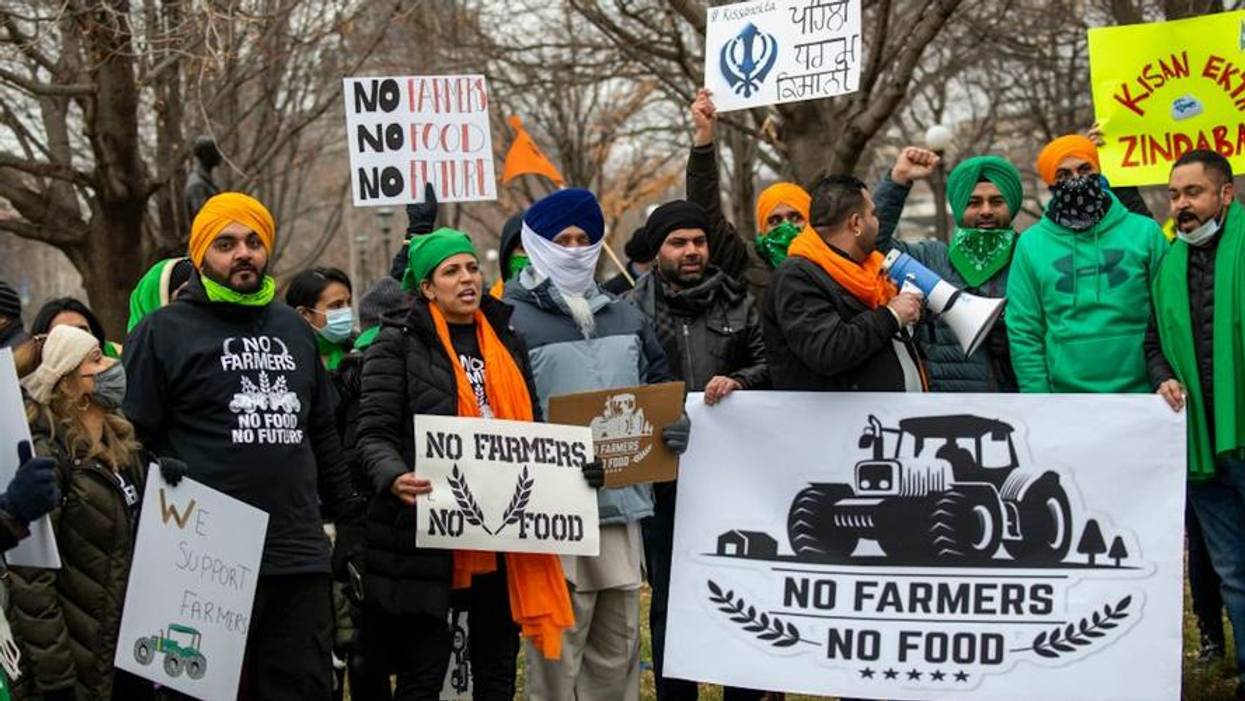
U.S. farmers and food justice advocates on Thursday published a statement of solidarity with Indian farmers protesting deeply unpopular new laws and "the forces of neoliberalism" imposed at the prompting of Prime Minister Narendra Modi's far-right, Hindu nationalist Bharatiya Janata Party.
"India's farmers have mobilized to create one of the world's most vibrant protests in history."
--87 groups
"We stand with India's farmers! Now let's connect the dots between the forces of neoliberalism that stifle farmers, from India to the U.S.," the statement--which was signed by 87 groups--begins.
"India's farmers have mobilized to create one of the world's most vibrant protests in history, camping on the outskirts of New Delhi for more than two and a half months," it says. "Their rallying cry is to repeal the three unjust laws that were passed without their knowledge or consultation."
"We extend our solidarity to countless farmers who are peacefully and boldly standing up for their rights and dignity," the statement continues. Hundreds of millions of Indians have taken to the streets across the country since last November in what has been called the largest protest in human history.
Over 40% of India's workforce of 500 million people is employed in agriculture. More than half of all farming households in the country are in debt, according to a 2018 survey from the National Bank for Agriculture and Rural Development. The ongoing coronavirus pandemic--which has exacerbated India's worst economic slowdown in decades--has driven millions of farmers to desperation.
According to the National Crime Records Bureau, over 300,000 Indian farmers have killed themselves since 1995, often by drinking pesticides, and often due to an inability to repay loans from private lenders charging exorbitant interest.
Many observers claim it is no coincidence that the farmer suicide crisis parallels the period in which neoliberal economic policies have been forced on India's people. The Indian author Arundhati Roy has noted that neoliberalism in rural India often means unconstitutional land seizure, displacement, and human rights crimes perpetrated by state and paramilitary forces.
In her 2007 book The Shock Doctrine: The Rise of Disaster Capitalism, Canadian author Naomi Klein famously examined how governments force neoliberal policies upon their wary citizens during or right after major crises. Three new laws enacted during India's Covid-19 and economic crises are among the main reasons why millions of Indians--who include not not only farmers but students, leftists, labor groups, and others--have protested in recent months.
The three new laws deregulate the sale, pricing, and storage of agricultural goods. Modi, BJP leaders, and others say the "reforms" will make India's agricultural sector less state-controlled and more market-based. However, critics, including former Prime Minister H.D. Deve Gowda, have raised serious concerns about the speed with which the laws were passed and their lack of regulatory safeguards.
The U.S. solidarity statement notes that "one of the key demands of the [protest] movement is for farmers to receive a Minimum Support Price (MSP)--currently assured for just a few crops--for all produce, including vegetables, which are essential for healthy diets."
"This would ensure that farmers in India, already burdened by huge debts, receive a fair price for their produce," it explains.
The statement also acknowledges "the role of the U.S. government in creating the conditions that have led to these repressive laws." It continues:
The U.S. has been a key opponent of India's limited use of MSP at the World Trade Organization. The U.S.--with Australia, Canada, and European allies--has claimed that India's MSP distorts trade. But, that is not surprising: the U.S. government has been eroding the concept of parity (similar to MSP in India) at home for decades.
While the U.S. agricultural sector receives inordinately large support compared to many countries, access to that support remains inequitable. In particular, Black, Indigenous, Latino, Asian-Pacific, and other people of color producers, who lack secure land tenure and are concentrated in vegetable and small-scale cattle sectors, have been excluded historically. Support flows to larger agribusiness farming operations instead of the independent family farmers whose voices we amplify.
"Let us be clear: what the Indian farmers are enduring now happened in the U.S. almost four decades ago," the statement asserts. "The Reagan era furthered the farm crisis through deliberate federal policy changes, with systematic erosion of parity prices and other deregulatory efforts. 'Get big or get out' has been our government's mantra."
"The U.S. government must stop prioritizing the interests of agribusiness over small farmers, abetting further corporatization of the food system here and in other countries."
--87 groups
"Farmers with the means to consolidate have been rewarded for growing monoculture commodities," it continues. "Tribal nations and traditional producers as well as small farmers who have always practiced or shifted to diversified agroecological farming have effectively been subsidizing the U.S. agriculture sector. It is rare for these food producers to make a living without supplemental income. Unsurprisingly, farm suicides in rural America are 45% higher than the rest of the population."
"The U.S. government must stop prioritizing the interests of agribusiness over small farmers, abetting further corporatization of the food system here and in other countries," the statement concludes. "The U.S. must also endorse multilateral governance norms that will support India's transition to climate-resilient, biodiverse, and water-conserving food systems that reach all producers. This would also mean harmonizing trade rules to include parity pricing and public crop procurement."
While Mexican President Andres Manuel Lopez Obrador has given farmers in the country a 2024 deadline to stop using glyphosate, The Guardian reported Tuesday that agrochemical company Bayer, industry lobbyist CropLife America, and U.S. officials have been pressuring Mexico's government to drop its proposed ban on the carcinogenic pesticide.
"Industry executives told U.S. government officials that they feared restricting glyphosate would lead to limits on other pesticides and could set a precedent for other countries to do the same."
--Carey Gillam, The Guardian
The corporate and U.S.-backed attempt to coerce Mexico into maintaining its glyphosate imports past 2024 has unfolded, as journalist Carey Gillam detailed in the newspaper, "over the last 18 months, a period in which Bayer was negotiating an $11 billion settlement of legal claims brought by people in the U.S. who say they developed non-Hodgkin lymphoma due to exposure" to glyphosate-based products, such as Roundup.
Roundup, one of the world's mostly widely-used herbicides, was created by Monsanto which was acquired by Bayer in 2018.
According to The Guardian, which obtained internal documents via a Freedom of Information Act request by the Center for Biological Diversity (CBD), "The pressure on Mexico is similar to actions Bayer and chemical industry lobbyists took to kill a glyphosate ban planned by Thailand in 2019. Thailand officials had also cited concerns for public health in seeking to ban the weed killer, but reversed course after U.S. threats about trade disruption."
In addition to instructing Mexico's farmers to stop using glyphosate by 2024, the Lopez Obrador administration on December 31, 2020 issued a "final decree" calling for "a phase-out of the planting and consumption of genetically engineered corn, which farmers often spray with glyphosate, a practice that often leaves residues of the pesticide in finished food products," the news outlet noted.
The Mexican government has characterized the restrictions as an effort to improve the nation's "food security and sovereignty" and to protect its wealth of biological as well as cultural diversity and farming communities.
Mexico's promotion of human and environmental health, however, "has triggered fear in the United States for the health of agricultural exports, especially Bayer's glyphosate products," Gillam wrote.
Based on its analysis of government emails from the Office of the U.S. Trade Representative (USTR) and other U.S. agencies from 2019 and 2020, The Guardian explained how the U.S., frustrated by the positions that Mexico has taken, is trying to use the United States-Mexico-Canada Agreement (USMCA)--the Trump-led free trade deal that Sen. Bernie Sanders (I-Vt.) dubbed NAFTA 2.0--to force Mexico to abandon its plans to ban glyphosate and phase out GMO corn.
According to The Guardian, Mexico each year imports roughly $3 billion in corn from the U.S., where 90% of corn production relies on GMO seeds.
As the newspaper reported:
One email makes a reference to staff within Lopez Obrador's administration as "vocal anti-biotechnology activists," and another email states that Mexico's health agency (COFEPRIS) is "becoming a big time problem."
Internal USTR communications lay out how the agrochemical industry is "pushing" for the US to "fold this issue" into the United States-Mexico-Canada Agreement (USMCA) trade deal that went into effect 1 July. The records then show the USTR does exactly that, telling Mexico its actions on glyphosate and genetically engineered crops raise concerns "regarding compliance" with USMCA.
Citing discussions with CropLife, the U.S. Environmental Protection Agency (EPA) joined in the effort, discussing in an inter-agency email "how we could use USMCA to work through these issues."
Nathan Donley, a biologist at CBD, told The Guardian that "we're seeing more and more how the pesticide industry uses the U.S. government to aggressively push its agenda on the international stage and quash any attempt by people in other countries to take control of their food supply."
Corporate executives in the agrochemical industry reportedly became alarmed about the Lopez Obrador administration's position on pesticides in late 2019 when Mexican officials explained their decision to refuse imports of glyphosate from China by referring to the "precautionary principle."
Detailing a series of emails between U.S. government officials and industry executives, Gillam described how the latter told the former "that they feared restricting glyphosate would lead to limits on other pesticides and could set a precedent for other countries to do the same."
The emails also indicated worries that "Mexico may also reduce the levels of pesticide residues allowed in food," a development that industry executives warned would undermine U.S. exports of corn and soybeans to Mexico.
As Gillam wrote, CropLife president Chris Novak told U.S. officials that "'if Mexico extends the precautionary principle' to pesticide residue levels in food, '$20 billion in U.S. annual agricultural exports to Mexico will be jeopardized.'"
According to The Guardian, "It is unclear if the efforts to push Mexico to change its policy position are still underway within the new Biden administration."
The Institute for Agriculture and Trade Policy (IATP), a progressive think tank working to build fair and sustainable food, farm, and trade systems, tweeted Tuesday that the USTR has a choice.
"Will they continue the pattern of doing the bidding of global biotech/seed firms like Monsanto?" asked IATP. "Or, will the USTR respect other countries' rights to protect the environment and indigenous crops? Will they recalibrate U.S. trade policy to be more transparent?"
IATP, for its part, has recommended that Katherine Tai, President Joe Biden's pick to lead the USTR office, "break with the corporate free trade model" supported by previous administrations from both major parties.
As the Biden-Harris transition team rapidly fills key cabinet positions and senior leadership, it also is setting priorities for the first 100 days. If the "Build Back Better" mantra is to become reality, particularly in advancing equitable solutions to the climate crisis, the transition team will have to think systemically--not just agency by agency. Systems thinking is especially critical to create a just transition for farming. Our current policy framework supports an industrial system of production that is pushing out farmers while increasing its greenhouse gas (GHG) emissions and climate risk to the food supply. We need a coordinated approach across multiple agencies to support a more resilient farming system.
After four years of climate denial in the executive branch, we need to move quickly. The dramatic Covid-19-related disruptions to meat processing plants and the food supply chain serve as a warning shot for how unprepared the country is for increasingly extreme climate-related events. The massive public payouts to farmers by the Trump administration mask an increasingly vulnerable farm economy where a handful of global players are cashing in while farmers struggle to stay on the land. A just transition for farming must not only consider reforms to farm policy, but also aligned reforms in financial, trade, environmental and competition policy.
With deep ties to natural resource-based economies, farmers and rural communities are on the front lines of the climate crisis. Our experience organizing Rural Climate Dialogues in Minnesota shows there is a growing readiness to take action in rural communities. A Biden-Harris climate policy framework should not be predominantly top-down but should emphasize the importance of community-level, bottom-up solutions and actions.
Here, we propose eight areas of focus for the Biden-Harris administration to transition our farming system to reduce greenhouse gas emissions and build climate resilience, while responding to the economic challenges facing farmers as part of creating a more equitable economy:
The Biden-Harris initial proposed budgets should include much deeper investments in existing conservation programs, particularly working lands programs like the Conservation Stewardship Program and the Environmental Quality Incentives Program (EQIP) with a greater emphasis on whole farm planning. These under-funded programs support practices like planting cover crops, diversifying crop rotations, well-managed rotational grazing and decreasing tillage, all of which can reduce agriculture's climate footprint and increase resilience in the face of climate disruptions. The Conservation Reserve Program (CRP) sets aside marginal farmland and restores natural habitat, but land in CRP has steadily dropped along with price per acre payments and the Trump administration's removal of important incentives. We now have the fewest acres enrolled in CRP since 1998. IATP is a member of the National Sustainable Agriculture Coalition (NSAC) and fully endorses a detailed set of recommendations sent to the transition team by NSAC on how to use better invest public money to expand sustainable, agroecological systems.
Grain and meat markets are too concentrated, often dominated by a handful of global companies that are driving down prices, while increasing costs, for farmers. When highly concentrated systems of production break down, the damage is spread up and down the supply chain--as we saw during Covid-19 outbreaks that caused disruptions directly affecting farmers, workers and consumers. The Biden-Harris administration should act to address excess corporate concentration in agriculture, which has locked in a high GHG emitting system of agriculture while making us more vulnerable to extreme climate events. More than 200 food and agriculture groups have called for a merger moratorium and an investigation into the impacts of past food and agriculture company mergers, a review of existing laws and recommendations on how to improve competition. The Biden-Harris administration's Secretary of Agriculture could immediately return the office in charge of enforcing the Packers and Stockyards Act to a standalone agency and advance rules to establish fairer contracts and protections for farmers in a corporate-controlled marketplace.
We need an updated supply management program with price floors to ensure farmers fair compensation in the marketplace, while addressing the core challenge of overproduction plaguing agriculture markets and hurting the climate. The National Family Farm Coalition and the Wisconsin Farmers Union are calling for an updated supply management program for commodity crops and dairy that would better manage the market and ensure a fair (parity) price. A strong supply management program could reduce climate risk and emissions by building up stocks to manage overproduction and placing some limits on production. It could also put more marginal farmland into conservation to sequester carbon and help spur markets for more climate-friendly systems of production such as organic or grass-fed beef and dairy, and pastured pork. An updated program should also address historical harms in past supply management programs where the USDA, with a long history of systemic racism, often excluded Black farmers. The Justice for Black Farmers Act, with support from over 80 organizations, outlines steps for Black farmers to gain access to farmland and addresses civil rights issues within the USDA.
Increases in agriculture-related emissions in the U.S. mirror the growth in large-scale concentrated animal feeding operations (CAFOs). More than 300 groups are calling for a moratorium on new or expanding CAFOs, with additional funding to transition toward a more climate-friendly, sustainably managed pasture-based systems of production. The Biden-Harris administration could take steps to require CAFOs to report GHG emissions and move toward setting limits for the potent GHG methane. The new Agriculture Secretary could reform two farm programs, EQIP and Farm Service Agency guaranteed loans, that use public dollars to subsidize new and expanding CAFOs. The Trump administration's late move to weaken the National Environmental Policy Act (NEPA) to exempt CAFOs from environmental review (including impact on the climate) when receiving federal loans should be reversed. Several federal programs also support the false climate solution of methane digestors for large-scale manure lagoons. These programs serve as another form of subsidy for factory farms to produce manure and help greenwash a polluting natural gas industry.
Agricultural workers are facing rising heat-related threats. The Occupational Safety and Health Administration (OSHA) currently has no federal regulations protecting workers in extreme heat. Several states have stepped in with new workplace protections, including strong new regulations in California. The new head of OSHA under a Biden-Harris administration should set a federal standard to protect agricultural workers from heat-related stress. Of additional concern is that climate change could be a driver of future pandemics. At least 11,000 farmworkers have tested positive for Covid-19 and will likely face similar risks from future pandemics.
There is rising concern about the degree of financial risk to our economy and to specific corporate actors (including agribusiness) associated with climate change. The Federal Reserve Bank of San Francisco is exploring this risk within the financial industry. The Commodity Futures Trading Commission recently reported on the risks climate change poses to our financial system. In a report published this fall, IATP outlined how the Biden-Harris administration could integrate climate-related financial risk in five segments of U.S. agricultural and agribusiness finance: taxpayer subsidized private crop and livestock insurance; federally regulated public and private agricultural loans; bond issuance to finance those loans; commodity futures markets whose prices should serve as reliable benchmarks for forwarding contracts of grains and oilseed crops; and the disclosure of corporate climate financial risks, particularly of agribusiness, to investors, lenders, credit rating agencies and other interested parties.
The push to expand agricultural trade drives much of U.S. farm policy and an industrial system of production geared towards exports. Trade agreements, including the new NAFTA and at the WTO, constrain congressional power to regulate and raise labor, environmental and other standards. Trade rules grant polluters special legal rights to challenge climate regulations, weaken renewable energy and green jobs programs, and undermine climate-friendly agriculture policy. A new Biden-Harris trade policy should place a moratorium on new trade deals until a review of past trade commitments has been completed and steps taken to reform existing trade rules that undermine responses to the climate crisis. It should also set climate-related goals for future trade deals and ensure consistency with other international environmental treaties and climate commitments. This should include space within trade rules that support supply management policies and other creative approaches that support a transition toward regenerative agriculture. No agreement should be brought for a vote in Congress unless analysis by the International Trade Commission (ITC) and Environmental Protection Agency demonstrate that it makes a positive contribution to reducing GHGs. The ITC/EPA assessment of "likely impacts" of trade agreements should also include how the agreement will facilitate adaptation to climate change in all covered economic sectors and cross-border investments.
Carbon markets worldwide and in the U.S. have failed to directly reduce GHG emissions, and in particular don't work well for agriculture. The use of offset credits can contribute to environmental injustices by allowing polluters to buy their way out of reducing their own pollution, which often directly effects communities of color. Many of these markets include soil carbon offsets, which have a number of serious problems. Soil carbon storage is extremely impermanent; any carbon sequestered in the soil can be released with a change in land management practices or an extreme climate event like flooding or wildfires. In addition, the science and measurement tools are not advanced enough to precisely quantify the amount of GHGs sequestered over time. Farmers need predictable, public support to respond effectively to climate change, not an uncertain, ineffective and volatile carbon market. The Biden-Harris climate plan announced during the campaign is open to carbon markets, including carbon credits for expensive methane digestors on factory farms. The new administration should shelve these ideas and instead focus on smarter investments in more efficient and proven conservation programs that reduce GHGs and enable the adaptation of agriculture to climate change.
The climate crisis is the challenge of our lifetime and of our children and grandchildren's lifetimes. This is new territory for the planet and for policy. Countries around the world are grappling with these same climate policy challenges, including for agriculture. The Biden-Harris administration has an opportunity to build a new roadmap for our food system that reduces emissions, increases resilience and promotes economic equity. A low bar return to Obama-era policies won't be enough.
Today, governments at the United Nations Framework Convention on Climate Change (UNFCCC) are discussing the role of carbon markets in international climate action. The "Article 6" rules, which define how countries can reduce their emissions using international carbon markets, are the last part of the Paris Agreement to be resolved. In preparation for these negotiations, IATP and partners released a briefing paper outlining why agricultural offsets do not work and should be kept out of international carbon markets.
International carbon markets would allow countries struggling to meet their emissions reduction goals to purchase offsets from other countries that cut their emissions more than they pledged. Agricultural offsets, which permit carbon sequestered in the soil to act as an offset for emissions elsewhere, are increasingly being integrated into carbon markets. Unfortunately, agricultural offsets are a false solution. The tools to measure soil carbon to the degree of accuracy and reliability that a market would require do not exist currently. Soil carbon storage is also extremely impermanent; any carbon sequestered in the soil can be released with a change in land management practices or through severe weather events.
In addition to measurement and permanence uncertainties, agricultural offsetting projects are extremely expensive. The FAO estimates that establishing market infrastructure for monitoring, reporting and verifying agricultural carbon credits would cost 3.8 billion euros for the agriculture sector in 2030. These expenses are passed on to the farmer; in the Kenya Agricultural Carbon Project, farmers are expected to receive just over one dollar per year over the 20 years of the project. The main benefit for farmers is presented as increased yields; however, participation in these projects can lock farmers into agricultural practices dependent on synthetic inputs that cost money and cause environmental degradation. Given the high transaction costs associated with many agricultural offset projects, they tend to work best for large-scale farms, which could contribute to further consolidation in agriculture.
Farmers suffer consequences beyond low and volatile prices. Some projects increase farmers' dependency on agribusiness by requiring them to use proprietary seeds or chemical inputs. This can prevent farmers from using traditional knowledge of fighting pests and fertilizing soils and creates a dependency on the multinational corporations that sell the inputs. Farmers may also come to depend on certain companies to buy their products. In the Mount Elgon project in Kenya, Brookside Africa committed to buying all the milk produced by farmers 10 years. Once the project ends, farmers could find themselves without a buyer. This also undercuts communities' ability to develop local markets for local populations.
Agricultural offset projects put the impetus on farmers, especially in the Global South, to change. Putting the responsibility of mitigation on farmers lets companies off the hook for reducing emissions along the entire supply chain. This is especially problematic for offset projects in the Global South, where farmers are the least responsible for causing climate change and are suffering most from its consequences.
Negotiators at the UNFCCC should exclude agriculture from carbon markets under the Paris Agreement. While farmers need to be supported in transitioning to climate-friendly practices, using carbon offsets to compensate for emissions elsewhere does not bring about the necessary changes. Governments should invest in policies and programs that incentivize agroecology, without allowing the achieved emission reductions to justify pollution elsewhere.
In the past two years, calls for addressing greenhouse gas emissions from our food system, livestock in particular, have been growing louder. The solutions proposed focus on either the farmer or the consumer. If only farmers would stop polluting or consumers would eat a lot less meat, we would be fine. Both are part of the solution, but not the drivers of the problem.
Global agribusiness determines much of what, how much and how farmers produce, what consumers buy and what they pay for it. Governments help facilitate or hinder corporate access to land, natural resources and markets. Governments are also tasked with raising their climate ambitions this decade under the Paris climate agreement, our last shot at reining in catastrophic climate change. At the same time, rural communities are in economic distress, with many families leaving farming all together.
Our new study, Milking the Planet: How Big Dairy is heating up the planet and hollowing rural communities, draws a direct line between policies (or lack thereof) that have aided and abetted global dairy corporations to get big and powerful to those that have disempowered dairy farmers and the rural communities where they reside. It connects rising emissions, mergers and acquisitions and rural disenfranchisement. Policies that support over-production and below cost prices for farmers also drive emissions higher and serve these global dairy conglomerates. Responses to the climate crisis must address these inter-connected challenges of keeping farmers on the land and protecting the planet.
It is past time that governments get our agriculture, trade and climate policies in sync with climate and social justice goals that result in thriving farms and decent work. Since the Earth Summit in 1992 when governments committed to tackle climate change, we have waited for private actors to do the right thing by the planet. We have lost 28 years and many farms since. Governments must take concerted action this decade, our last perhaps to contain runaway climate change, to redirect public funds away from industrial agriculture, regulate corporations to internalize the public health and environmental costs of their production and support producers in regenerating soils and communities.