
SUBSCRIBE TO OUR FREE NEWSLETTER
Daily news & progressive opinion—funded by the people, not the corporations—delivered straight to your inbox.
5
#000000
#FFFFFF
To donate by check, phone, or other method, see our More Ways to Give page.


Daily news & progressive opinion—funded by the people, not the corporations—delivered straight to your inbox.
Civil society groups and experts said that "the EU must act now to defend independent oversight, protect fundamental rights, and ensure that spyware abuse in Europe is met with accountability, not impunity."
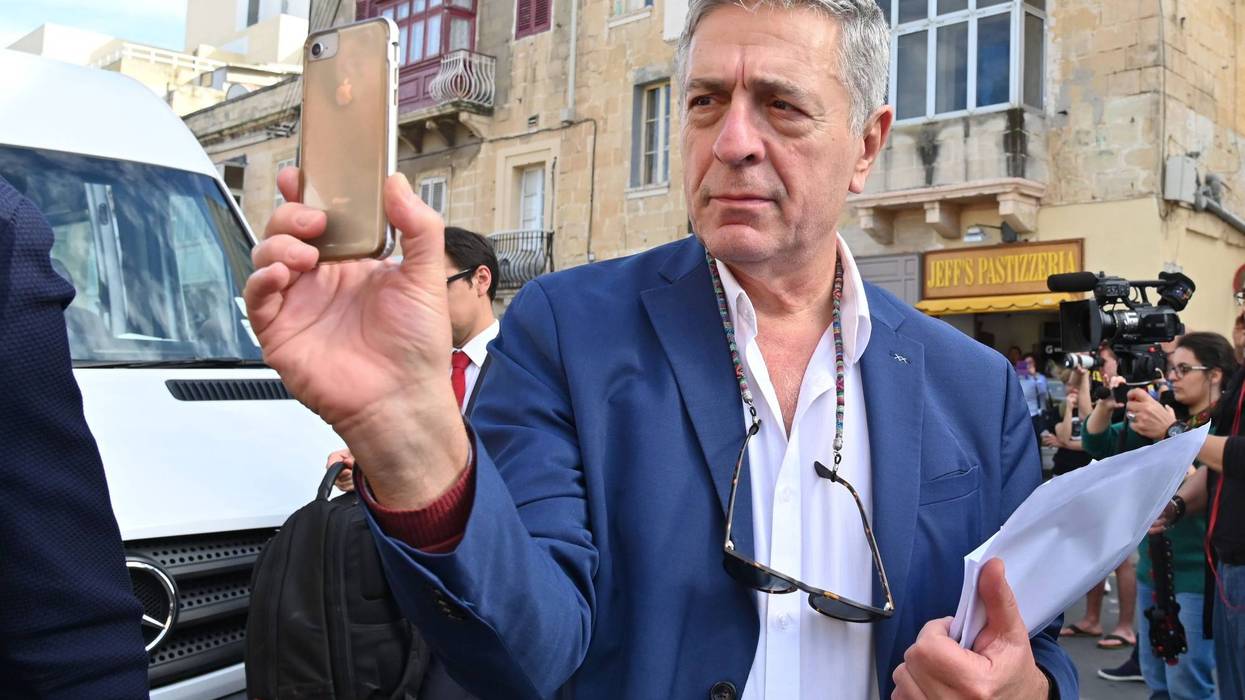
The European Parliament narrowly voted Monday to hold a debate on spyware after recent revelations that the phone of Stelios Kouloglou, a Greek journalist and former member of the European Parliament, "was repeatedly hacked with NSO Group's Pegasus" while he sat on the body's committee investigating abuses of the technology.
The vote came amid a fresh wave of calls for action. Elina Castillo Jiménez, advocacy and policy adviser for Amnesty International's Security Lab, said in a Monday statement that "the brazen targeting of someone in his position underlines how inadequate the current system is, and is yet another wake-up call that the protections that were put in place to prevent this kind of abuse are still not being implemented in Europe."
"Three years ago, the European Parliament's PEGA Committee, on which Stelios Kouloglou sat, issued clear and detailed recommendations for how to close the gaps that allow this abuse to continue. We are still waiting for implementation. Delaying it sends the wrong message about impunity in the surveillance industry."
Castillo Jiménez argued that "European leaders must find the political will needed to protect people from spyware abuse. An independent and impartial investigation into this attack, together with a roadmap for implementing PEGA recommendations, is urgently needed. If an elected member of parliament is not safe from unlawful surveillance, then no one is."
Amnesty was also part of a Monday joint statement with individual experts and organizations including Access Now, Center for Democracy and Technology Europe, Committee to Protect Journalists, Reporters Without Borders, and more, calling out the European Union for failing "to deliver a meaningful, EU-wide response to the proliferation and abuse of commercial spyware."
Global calls for restrictions on surveillance technology have mounted since the Pegasus Project—an international media consortium led by the media nonprofit Forbidden Stories, with tech assistance from Amnesty—published a 2021 exposé of the Israeli firm's software that was developed to secretly infiltrate mobile phones.
Kouloglou, who left the European Parliament two years ago, was appointed to serve as a substitute member of its PEGA Committee on March 24, 2022. That October, his Apple iPhone was infected with the spyware, according to research released Friday by the Citizen Lab at the University of Toronto in Canada.
The first documented hacking occurred while Kouloglou was at a hospital, where he was visited by Greek journalist Thanasis Koukakis—who, as the Citizen Lab explained, "has worked closely on mercenary spyware issues in Greece, has testified to the PEGA committee, and was himself targeted with Intellexa's Predator spyware."
The following March, as Kouloglou left Athens for Brussels, his phone was again infected with Pegasus. The lab noted that the second hacking happened as he and Koukakis were making tentative plans to meet over WhatsApp, "the PEGA Committee was engaged in intense discussions related to the final drafting process," and PEGA Rapporteur MEP Sophie in 't Veld was in Greece with another committee delegation that questioned Greek officials on the country's scandal involving other spyware.
The forensic analysis also found that "Kouloglou received multiple Apple threat notifications about targeting with mercenary spyware on three occasions: March 2, 2023, August 29, 2023, and April 10, 2024," the lab said. "It is important to note that threat notifications from Apple and other companies are not real-time alerts. They are typically sent to users in batches, often months or more after targeting takes place. Kouloglou reports to us that he did not recall receiving the Apple notifications we observed."
The Citizen Lab acknowledged that "we have no indications that this hacking was the work of the Greek government," though it does appear to be the same operator who targeted seven Russian- and Belarusian-speaking independent journalists and opposition activists based in Europe, whose experiences were detailed in its May 2024 joint report with Access Now.
Although there were some known cases of MEPs being targeted with Pegasus before the European Parliament's panel was created, the lab stressed, "this is the first time a member of the PEGA Committee has been publicly identified as a victim" of this particular spyware while serving on it.
Reuters reported that while NSO did not respond to requests for comment, Apple said the vulnerability referred to in the Citizen Lab report has been patched. The European Parliament told the news outlet that its spyware screening tools had been available to all lawmakers since 2022 and its information technology security services "constantly monitor cybersecurity threats as well as potential cyberattacks against its working environment."
However, that's not enough for critics like In 't Veld, who is also no longer an MEP and pointed out to Politico that hundreds of politicians, including European Parliament President Roberta Metsola, have been targeted by various tech.
"If attempts to target the phone of the president of the European Parliament, or members of the European Commission, does not trigger sufficient reaction, [and] is not enough to break the deadlock, then what is?" she asked
The coalition of groups and tech experts similarly said in their Monday statement: "These incidents all point to a structural failure to adequately and seriously respond to the spyware crisis in Europe. This latest revelation should be treated as a rule of law emergency, threatening the very foundations of our society."
"Europe cannot continue moving from scandal to scandal without consequence. The targeting of a member of the European Parliament involved in investigating spyware abuse should mark a turning point," the coalition said. "The EU must act now to defend independent oversight, protect fundamental rights, and ensure that spyware abuse in Europe is met with accountability, not impunity."
John Scott-Railton, a senior researcher at the lab, told The Guardian last week that "this case is the ultimate irony of Europe's spyware crisis. Someone on the very committee tasked with investigating Pegasus gets infected by it. And what has happened since? The parliament looks the other way when new European spyware abuses emerge."
"I can tell you how the next chapter will go: more hacked parliamentarians," he warned. "In fact, I suspect there are members voting and attending high-level meetings with no idea that their phone has been turned into a spy in their pocket."
Scott-Railton welcomed Monday's vote to hold a debate later this week, and listed some key questions on social media:
In addition to urging investigations by European Union institutions, the Citizen Lab recommended that other members and their staff immediately seek forensic screening of their devices, exercise vigilance for state-sponsored attack warnings, and enable Lockdown mode on iPhones and Advanced Protect for Android.

Police in Paris apprehended and briefly detained European Parliament Member Rima Hassan Thursday on suspicion of "apology for terrorism"—an allegation critics slammed as "judicial harassment" aimed at silencing her outspoken criticism of Israel's genocidal war on Gaza and the French government's support for it.
Hassan, who represents the leftist La France Insoumise (LFI, or France Unbowed in English) party in the European Parliament, was summoned as part of an investigation by the National Center for Combating Online Hate (PNLH), Le Parisiene first reported.
The newspaper also reported that "a few grams" of a synthetic drug—possibly 3-MMC—were found on Hassan, allegations that sparked skeptical reactions.
PNLH is probing a since-deleted March 26 post on the social media site X in which Hassan referred to Kōzō Okamoto, a member of the Japanese Red Army who, along with two others, killed 26 people and wounded 80 more in the name of Palestinian liberation during a 1972 massacre at Lod Airport in Israel.
Hassan, a descendant of Palestinians ethnically cleansed from their homeland during the foundation of the modern Israeli state, was born in a refugee camp in Syria and emigrated to France as a child.
The Sorbonne-educated jurist was one of the leaders of the June 2025 Gaza Freedom Flotilla Madleen mission, along with climate campaigner Greta Thunberg and others. Hassan and others aboard the Madleen were intercepted by Israeli forces and arrested in international waters as they attempted to deliver food, children’s prosthetics, and other desperately needed supplies to Gaza’s besieged and starving people. Hassan said that she was beaten in Israeli custody.
While far-right and pro-Israel French lawmakers celebrated Hassan's detention and called for her to be stripped of parliamentary immunity, Palestine defenders condemned the arrest.
"Once again, the offense of glorifying terrorism is being used to repress a Palestinian activist known worldwide for her fight against genocide," said leftist lawyer Elsa Marcel. "While Israel bombs Iran and Lebanon and colonization accelerates in the West Bank, the French state continues to repress the voices fighting for the liberation of Palestine. Immediate release!"
LFI French National Assembly Member Gabrielle Cathala voiced her "full support for Rima Hassan" in a post on X.
"In violation of her parliamentary immunity, she is currently being held in custody for a simple tweet that had nothing to do with 'apology for terrorism,'" she wrote. "This judicial harassment must stop."
"If this is already happening, just imagine what would occur in the event of a vote on the Yadan Law," Cathala added, referring to a highly controversial bill critics say would criminalize anti-Zionism by conflating opposition to Israel with animus toward Jewish people, aligning with the dubious International Holocaust Remembrance Alliance Working Definition of Antisemitism.
Soutien à ma camarade et collègue Rima Hassan, en garde à vue pour un tweet, alors que le génocide à Gaza se poursuit et que les palestinien•nes subissent désormais un apartheid par le gouvernement d’extrême droite israélien.
[image or embed]
— François Piquemal (@francoispiquemal.bsky.social) April 2, 2026 at 6:51 AM
Jean-Luc Mélenchon, the de facto LFI leader and a former European Parliament member, said on Bluesky: "The political police have once again summoned Rima Hassan for questioning regarding a retweet from March. Parliamentary immunity, then, no longer exists in France."
"It is intolerable," he added. "The Yadan Law was not passed—yet is it already being enforced?"
Hassan was previously summoned by authorities following a December 2024 complaint over social media posts, including one in which she asserted, “If Franco-Israelis are allowed to serve in the Israeli army while enjoying the gains of dual citizenship, every Franco-Palestinian must be able to join the Palestinian armed resistance, the legitimacy of which is recognized by [United Nations] resolutions on the right to self-determination of peoples."
Since she started speaking out against the Gaza genocide, Hasan has been subjected to online bullying, including death and rape threats and doxing.
Last week, Hassan was denied entry into Canada—where she was scheduled to speak at multiple conferences in Montréal and meet with left-wing pro-Palestine members of Québec's National Assembly—following concerns from the pro-Israel groups B’nai Brith Canada and the Center for Israel and Jewish Affairs. Hassan attended the conferences remotely.
“The revocation of [Hassan's] travel authorization is part of a worrying trend of restricting freedom of expression and movement of political representatives," LFI said in a statement, "as well as part of a broader pattern of censorship affecting democratic debate."
Other Palestine defenders have been targeted by the French government, including Olivia Zemor, president of the advocacy group Europalestine, who last week was hit with a 24-month suspended sentence for "apology for terrorism" due to her support for Palestinian rights.
Le Pen took advantage of widespread dissatisfaction with Macron. But now the ball is in the court of the left, and the weather forecast is not too bright.
In the last few months, Europe has been in a social and political turmoil of disturbing proportions. The main issues, such as increased migration, the cost of living, and national security, are pushing climate catastrophe and serious alternatives to capitalism to the background. Extreme right-wing parties are on the rise while the left is obviously having trouble reaching potential supporters. Or so it has seemed.
One of the reasons for the rise of right-wing populists is that dissatisfied citizens can relate to their emotional, nostalgic rhetoric about homelands invaded by migrants that endanger “our” way of life and identity by taking away jobs, housing, and security. In addition, these populists are downplaying the need for serious measures to slow down climate change by insisting, simplistically and manipulatively, that they want to spare ordinary people the expense of costly projects.
By contrast, left wing parties are warning that security must be secured for the future, keeping climate change and the resolution of international conflicts in the foreground.
The migration issue remains fertile ground for right-wing mobilization and manipulation. The radical right chooses not to speak about movements of population in general terms. They ignore the fact that migration, as a trend, is as old as humankind. These days it even represents a form of countermovement. After centuries of exploration and later colonialization that started from Europe, people are now coming to the Old Continent for a return visit. Their countries were often left devastated when Europeans decided to leave, and now they are searching for a new beginning on the soil of their conquerors. Or they are refuges from the wars started, helped, or provoked by the West.
When the numbers of newcomers start to be overwhelming, problems are inevitable. In Western Europe, the greatest cumulative impact of the migrations has been in France, Germany, the United Kingdom, Austria, and Sweden. The right-wing parties there are vehemently promising to do something without proposing any workable solution. In fairness, the countries of Europe haven’t been able to come up with any convincing and effective common strategy for many decades. The result is polarization, and a lack of security for all.
In The Netherlands, the far right has turned this perennial problem into an electoral opportunity.
The Dutch elections, in which the big winner was the Party for Freedom (PVV) of Geert Wilders, are seven months in the past, but only a few days ago the new government was sworn in by the king. Long-standing Prime Minister Mark Rutte handed over the keys of the office to his successor Dick Schoof, jumped on his bicycle, and rode happily into the sunset, or more precisely, to his new post as the head of NATO. Schoof was the secretary-general at the Ministry of Justice and Security from 2020 to 2024. He was a member of the Labour Party (PvdA) for over 30 years until he left in early 2021. Now, without party affiliation, he’s in charge of the extra parliamentary cabinet composed of several parties anchored by the PVV.
Schoof’s baptism of fire took place at the beginning of July, during his first address to the House of Representatives. It was not a pleasant occasion and most of the time he was under attack both from the opposition and from members of his cabinet. He failed to reproach two of his ministers, both from PVV, for racist remarks concerning women with headscarves, the replacement of the population, and the spreading of conspiracy theories. The opposition was far from satisfied, and so was Wilders, who expected Schoof to protect his ministers whatever they say. Cracks in the right-wing coalition are already visible, journalists will have no shortage of scandals to report on, and the politically inexperienced Schoof will have difficulty holding everything together.
The EU parliamentary elections have been expected with dread by left and progressive forces. For some time, it seemed inevitable that the right would achieve overwhelming success. The Italian Fratelli d’Italia, the Alternative for Germany, and the French National Rally expected to win the elections. As it happened, they came close. The results point to a strong shift in the political atmosphere in Europe compared to the previous round of votes in 2019, though the center-right European People’s Party (EPP) remains the strongest group in the European Parliament, which is good news for its leader, European Commission President Ursula von der Leyen.
The new parliament is going to be less environmentally friendly, more fragmented, and increasingly unwelcoming toward migrants. The Greens, which made strong gains in the 2019 elections, took a major hit by losing 19 seats. On the other hand, these elections are a sort of referendum for national leaders. German Chancellor Olaf Scholz’s Social Democratic Party (SPD) suffered a defeat, while the extreme-right Alternative for Germany (AfD), scored its best results in history. President Emmanuel Macron is the big loser and Marine Le Pen the big winner, as is Italian Prime Minister Giorgia Meloni. For Hungary’s nationalist leader Viktor Orban’s Fidesz party, it was the worst-ever result in a European Parliament election. His friend Geert Wilders’ far-right party also fell short of expectations and came in behind a Left-Green alliance.
Two recent elections also kept the emotions flying high. In the United Kingdom, the Labour Party won big and the Tories lost after 14 years in power. Tory leader Rishi Sunak has resigned, and he has no obvious job to bike off to. The centrist Liberal Democrats made some gains. Smaller parties like the Greens, the far-right Reform UK party of Nigel Farage, and independent candidates also picked up several seats. Farage is satisfied and optimistic: “This is just the first step of something that is going to stun all of you,” he declared in the early hours of Friday morning.”
Who will be stunned and how is anybody’s guess. But after the victory, the Labour Party will have to move quickly to achieve the change it has promised, such as restoring the health of Britain’s ailing National Health Service, improving transport, curbing the costs of living, strengthening the country’s ties with its European partners, and tackling problems of illegal migration in a gentler way. The center left must still prove itself, and Jeremy Corbyn, further to the left, will no doubt be watching carefully from the seat in the House of Commons that he won again.
The polls indicated a Labour victory in the UK well in advance, while in France the situation was unpredictable up to the last moment. The winners are the newly established New Popular Front (NFP) alliance that brings together leftists from different parties. Their proclaimed goals are to cap prices of essential goods like fuel and food, raise the minimum wage to a net 1,600 euros per month, increase wages for public sector workers, and impose a wealth tax. They want to govern, but it remains to be seen how they will manage. The general atmosphere in France is one of relief that the far right is stopped for the moment. But the key question is whether the “awkward” leftist alliance hastily put together by Communists, Greens, and Socialists will manage to put aside their differences and agree on a common course. National Rally leader Jordan Bardella called the cooperation between anti-RN forces a “disgraceful alliance” that would paralyze France.
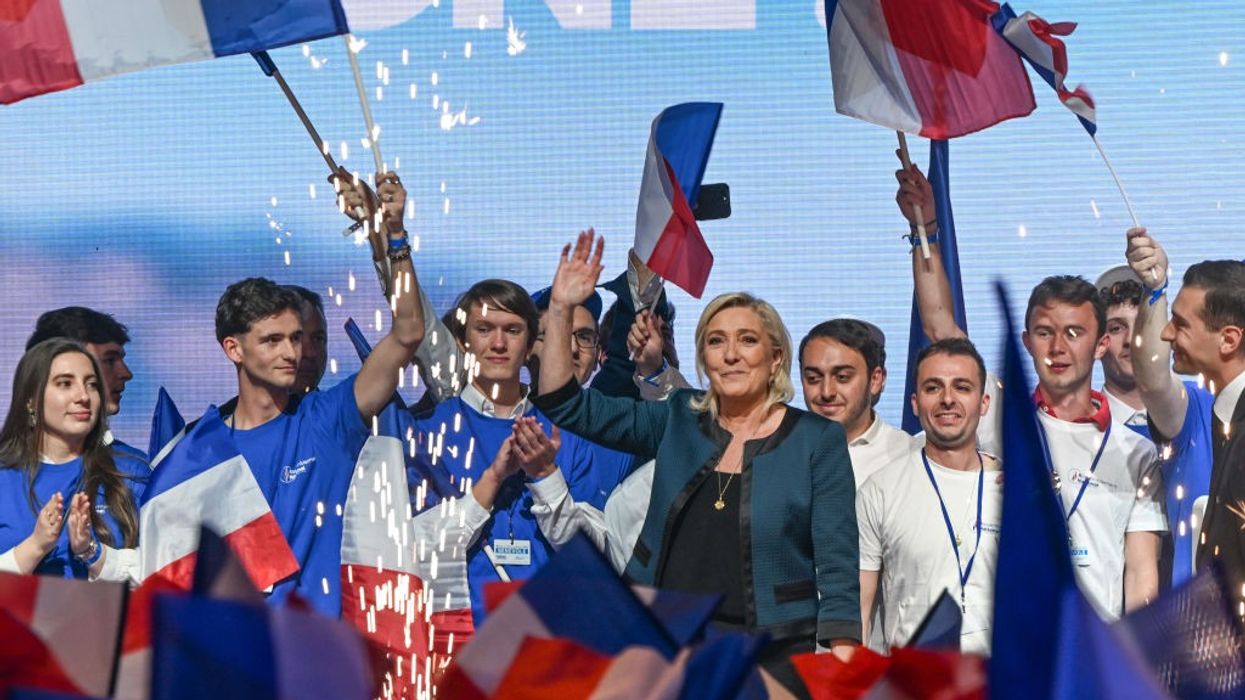
Le Pen took advantage of widespread dissatisfaction with Macron. But now the ball is in the court of the left, and the weather forecast is not too bright. However, the undoubtedly positive message of the French elections is that the left can come together and do well when the motivation is strong enough.
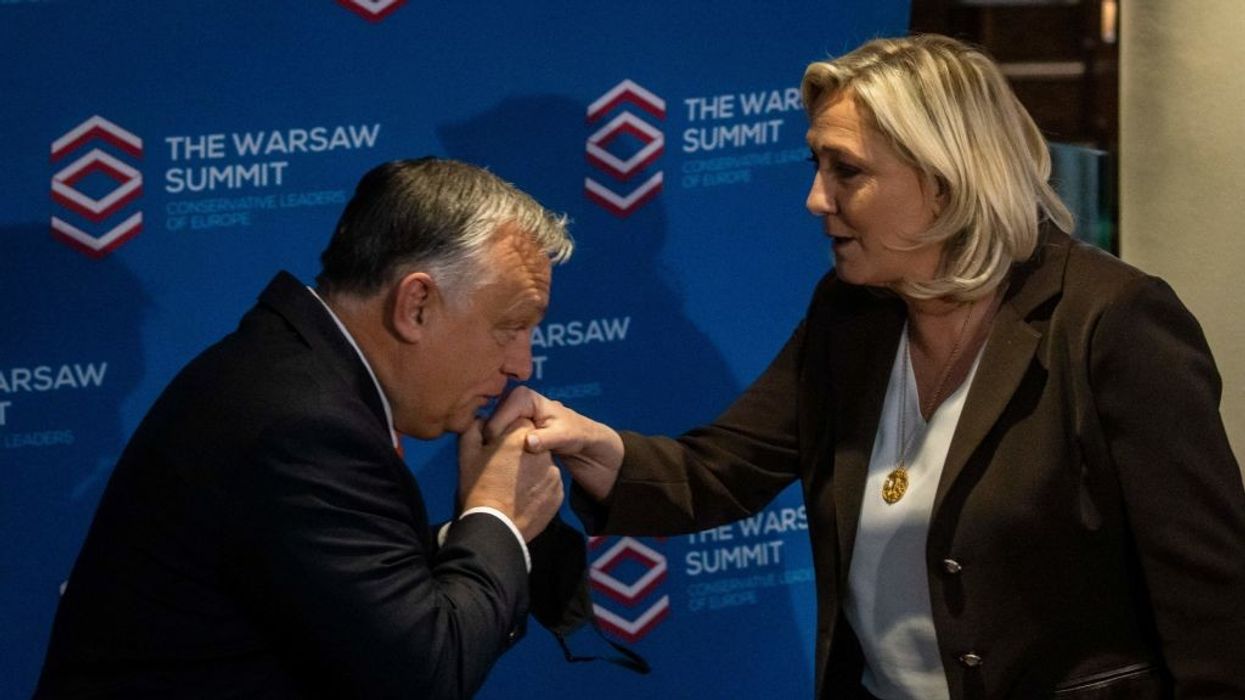
But new right-wing alliances are taking shape. The brand new one that Wilders recently joined a few days ago is Patriots for Europe, formed by right-wing parties from Czechia, Hungary, and Austria. It looks like they are not going to be short of candidates. Marine Le Pan and Matteo Salvini also joined the group. In The Guardian, Petr Fiala issued a withering assessment of the new group: “Let’s call a spade a spade. Patriots for Europe serves the interests of Russia, either consciously or unconsciously, and thus it threatens the security and freedom of Europe.” The Patriots’ Manifesto emphasizes its intention to “protect Europe’s Christian roots,” ensure “the strongest possible protection of Europe’s external borders,” and create a “strong competitive Europe.” The group will become the third-largest force in the European parliament and the largest-ever far-right bloc in the history of the assembly.
In other European countries, inside and outside of the EU, numerous struggles and battles of diverse forms are constantly evolving. Most widespread but somewhat restrained now have been mass demonstrations of climate activists and their supporters and student protests against atrocities in Gaza. With hotter days ahead and the West continuing to send aid and weapons to Israel, these protests are surely going to continue.