

SUBSCRIBE TO OUR FREE NEWSLETTER
Daily news & progressive opinion—funded by the people, not the corporations—delivered straight to your inbox.
5
#000000
#FFFFFF
To donate by check, phone, or other method, see our More Ways to Give page.
Daily news & progressive opinion—funded by the people, not the corporations—delivered straight to your inbox.
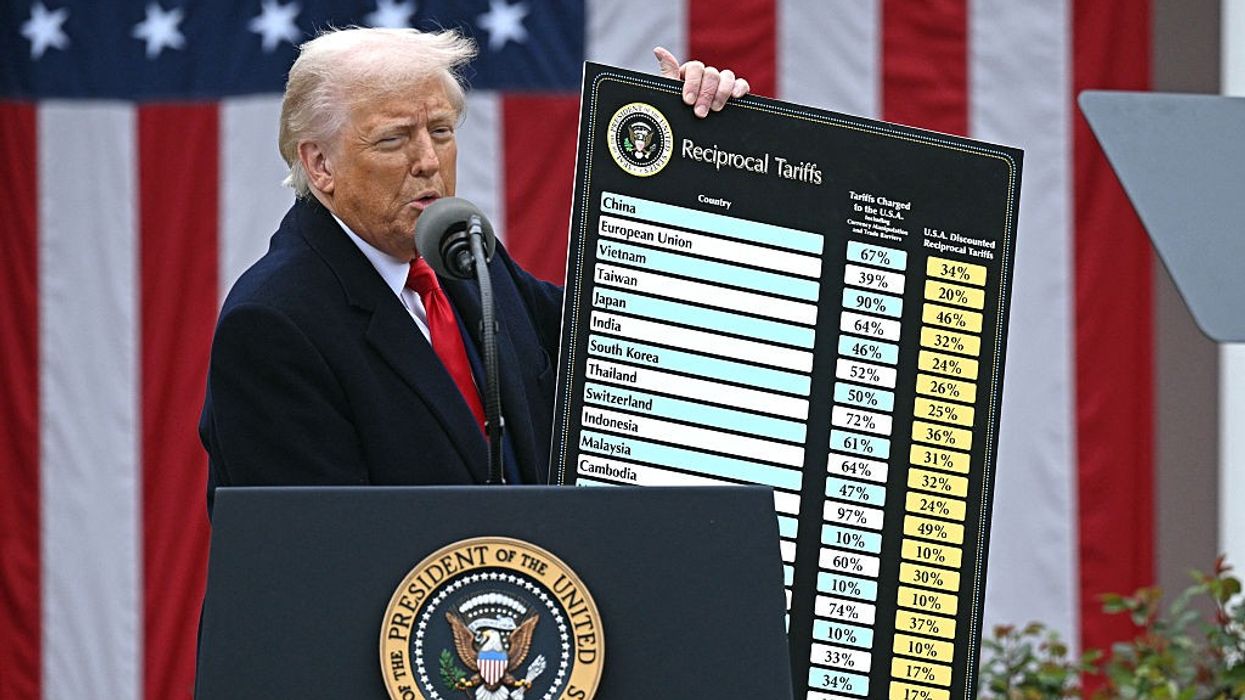
Democrats on the Joint Economic Committee said that "continued uncertainty" caused by the president's policies could reduce manufacturing investments by nearly half a trillion dollars by the end of this decade.
US President Donald Trump's tariff whiplash has already harmed domestic manufacturing and could continue to do so through at least the end of this decade to the tune of nearly half a trillion dollars, a report published Monday by congressional Democrats on a key economic committee warned.
The Joint Economic Committee (JEC)-Minority said that recent data belied Trump's claim that his global trade war would boost domestic manufacturing, pointing to the 37,000 manufacturing jobs lost since the president announced his so-called "Liberation Day" tariffs in April.
"Hiring in the manufacturing sector has dropped to its lowest level in nearly a decade," the Democrats on the committee wrote. "In addition, many experts have noted that in and of itself, the uncertainty created by the administration so far could significantly damage the broader economy long-term."
"Based on both US business investment projections and economic analyses of the UK in the aftermath of Brexit, the Joint Economic Committee-Minority calculates that a similarly prolonged period of uncertainty in the US could result in an average of 13% less manufacturing investment per year, amounting to approximately $490 billion in foregone investment by 2029," the report states.
"The uncertainty created by the administration so far could significantly damage the broader economy long-term."
"Although businesses have received additional clarity on reciprocal tariff rates in recent days, uncertainty over outstanding negotiations is likely to continue to delay long-term investments and pricing decisions," the publication adds. "Furthermore, even if the uncertainty about the US economy were to end tomorrow, evidence suggests that the uncertainty that businesses have already faced in recent months would still have long-term consequences for the manufacturing sector."
According to the JEC Democrats, the Trump administration has made nearly 100 different tariff policy decisions since April—"including threats, delays, and reversals"—creating uncertainty and insecurity in markets and economies around the world. It's not just manufacturing and markets—economic data released last week by the Bureau of Labor Statistics showed that businesses in some sectors are passing the costs of Trump's tariffs on to consumers.
As the new JEC minority report notes:
As independent research has shown, businesses are less likely to make long-term investments when they face high uncertainty about future policies and economic conditions. For manufacturers, decisions to expand production—which often entail major, irreversible investments in equipment and new facilities that typically take years to complete—require an especially high degree of confidence that these expenses will pay off. This barrier, along with other factors, makes manufacturing the sector most likely to see its growth affected by trade policy uncertainty, as noted recently by analysts at Goldman Sachs.
"Strengthening American manufacturing is critical to the future of our economy and our national security," Joint Economic Committee Ranking Member Maggie Hassan (D-N.H.) said in a statement Monday. "While President Trump promised that he would expand our manufacturing sector, this report shows that, instead, the chaos and uncertainty created by his tariffs has placed a burden on American manufacturers that could weigh our country down for years to come."
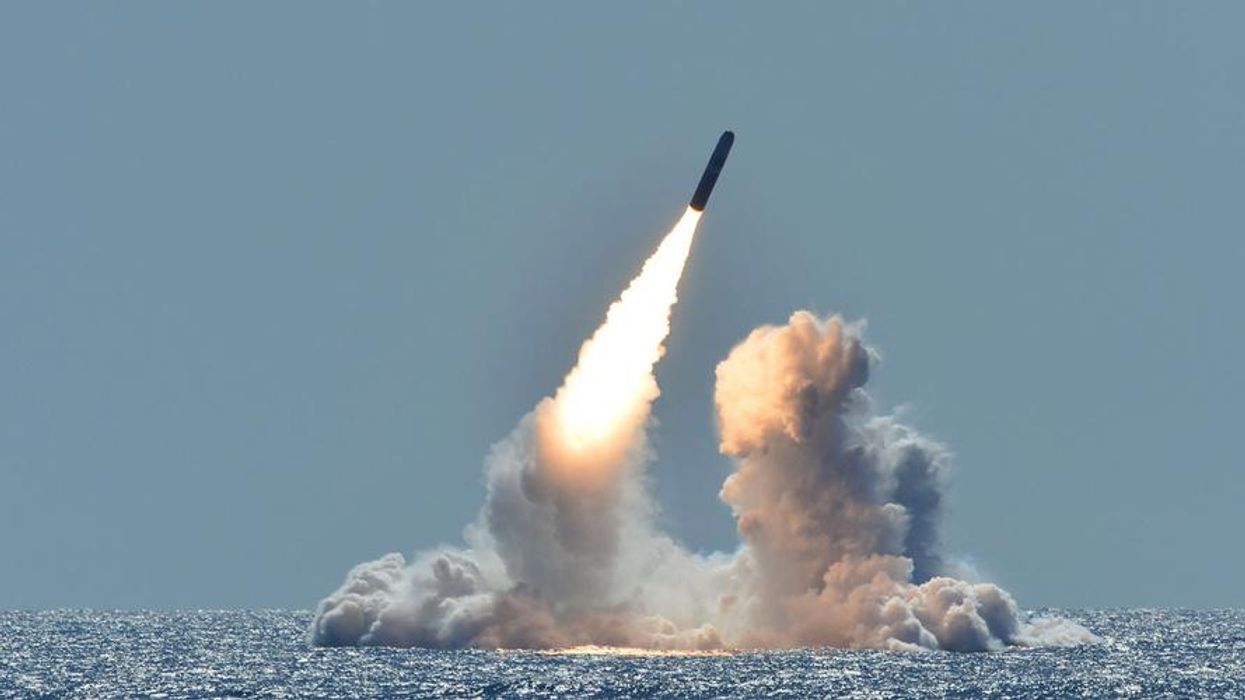
In a move that peace campaigners say violates Britain's disarmament commitment under the Nuclear Non-Proliferation Treaty, United Kingdom Prime Minister Boris Johnson on Tuesday unveiled a plan that would increase the size of the nation's nuclear arsenal by up to 40%.
"A decision by the United Kingdom to increase its stockpile of weapons of mass destruction in the middle of a pandemic is irresponsible, dangerous, and violates international law."
--Beatrice Fihn, ICAN
The integrated defense review--entitled Global Britain in a Competitive Age--describes the Conservative-led government's vision for post-Brexit Britain's role in the world over the next decade.
Under the 2010 Strategic Defense and Security Review (pdf), the U.K. had previously planned to reduce its nuclear stockpile to not more than 180 warheads by the mid-2020s. However, the latest review states the policy has changed "in recognition of the evolving security environment, including the developing range of technological and doctrinal threats," and now "the U.K. will move to an overall nuclear weapon stockpile of no more than 260 warheads."
Britain's nuclear arsenal consists entirely of Trident II D-5 submarine-launched ballistic missiles manufactured by Lockheed Martin in Sunnyvale, California. The missiles--which can each carry as many as 12 independently targeted thermonuclear warheads--are carried by the Royal Navy's four Vanguard-class submarines.
Anti-nuclear activists argue Britain's planned nuclear expansion is a violation of the Nuclear Non-Proliferation Treaty (NPT), under which signatories must commit to gradual disarmament and to which successive British administrations have adhered.
"A decision by the United Kingdom to increase its stockpile of weapons of mass destruction in the middle of a pandemic is irresponsible, dangerous, and violates international law," Beatrice Fihn, executive director of the Geneva-based, Nobel Peace Prize-winning International Campaign to Abolish Nuclear Weapons (ICAN), said in a statement.
"While the majority of the world's nations are leading the way to a safer future without nuclear weapons by joining the Treaty on the Prohibition of Nuclear Weapons, the United Kingdom is pushing for a dangerous new nuclear arms race," added Fihn, referring to the landmark accord ratified earlier this year by over 50 nations--but none of the world's nine nuclear powers.
Noting last month's agreement between the United States and Russia to extend the New START Treaty by five years, Kate Hudson, general secretary of the U.K.'s Campaign for Nuclear Disarmament, told the Financial Times that "ratcheting up global tensions and squandering our resources is an irresponsible and potentially disastrous approach."
"As the world wrestles with the pandemic and climate chaos, it beggars belief that our government is opting to increase Britain's nuclear arsenal," Hudson added.
The Scottish National Party (SNP), which governs the part of Britain where the nation's nuclear arsenal is based, also condemned the government's planned proliferation.
"Renewing Trident nuclear weapons was already a shameful and regressive decision, however, increasing the cap on the number of Trident weapons the U.K. can stockpile by more than 40% is nothing short of abhorrent," SNP defense spokesperson Stewart McDonald told The Independent.
McDonald added that "it speaks volumes of the Tory government's spending priorities that it is intent on increasing its collection of weapons of mass destruction--which will sit and gather dust unless the U.K. has plans to indiscriminately wipe out entire populations--rather than address the serious challenges and inequalities in our society that have been further exposed by the pandemic."
Blaming the victims is never a good look. As Britain finally leaves the European Union, 1,651 days after the Brexit referendum of 2016, we should try to remember that 48% of the turkeys didn't vote for Christmas.
Brexit was not exactly a national act of self-harm; it was really an attack by the nostalgic and nationalist old on the young. 60% of British over-65s voted to leave the E.U., but 61% of the under-35s voted to remain. Having had four years to think it over, most British now think it was a mistake--by a 48-39 majority, according to a YouGov poll in October.
Too late. Boris Johnson is prime minister and he dares not anger the English ultra-nationalists on the right of his own Conservative party. After months of the amateur dramatics that accompany any Johnson decision, on Christmas Day the United Kingdom concluded a pathetically thin 'free trade' deal that reflects the real balance of power between the E.U. and the U.K.
It looks pretty good for manufactured goods and commodities, which make up 20% of Britain's GDP: no tariffs, no quotas. But the E.U. sells far more stuff to the U.K. than the other way around: it has a $45 billion trade surplus in goods. Of course it made a deal on that.
By contrast there is no trade deal at all in services, which account for 80% of the U.K. economy and used to produce a $112 billion surplus for the U.K. The U.K. is entirely vulnerable to whatever restrictions the E.U. may choose to apply to its banks, insurance companies and providers of other professional services.
Johnson will smear lipstick all over this pig of a deal and declare it a triumph. Those who want to believe it will do so, and the only early evidence of the huge defeat that it really is will be some delays at the ports as customs officers learn their new jobs. The real bill will come in later and almost invisibly, in lost trade, investment and opportunities.
The last official British government estimate was that 15 years from now the British economy will be between 5% and 7% smaller than it would have been as an E.U. member (but still a bit bigger than it is now).
That's not the raw material for a counter-revolution--and besides, any projection about the economic situation in 2035 is really pure guesstimate. One Covid more or less could make just as much difference as Brexit.
All one can say is that the British economy will not "prosper mightily" outside the E.U., as Johnson promised, but it won't collapse either. And then, in due course, the younger, pro-E.U. Brits will become the majority thanks to the magic of generational turnover. But until then, if Britain comes knocking at the E.U.'s door asking to be allowed back in, Brussels should say 'no'.
What really happens on December 31 is that the European Union is finally freed to develop in the way that its other major members clearly want. The goal of 'ever closer union', anathema to English exceptionalists, is back on the agenda.
There is ambivalence in every member country about the idea of creating a semi-federal European super-state, but in a world where democracy and the rule of law are under siege most people can see the need to strengthen the European Union. Last July the E.U.'s leaders took a huge step in that direction: for the first time they agreed to borrow collectively on the financial markets.
France and Germany were all for it, and Italy and Spain needed the money to finance a trillion-euro aid program to help them through the coronavirus crisis. Those four countries now contain more than half the E.U.'s population, and they outvoted the 'frugal four' (the Netherlands, Austria, Sweden and Denmark) that opposed taking on debt to support 'feckless' Mediterranean members.
If Britain had still been a member, it would have vetoed the measure because it infringed on the U.K.'s sacred 'sovereignty'. French President Charles de Gaulle, who vetoed British membership applications twice in the 1960s, was right: England does not have a 'European vocation', and it should not be allowed in.
The financial precedent that was set in July opens the door to a future E.U. that acts much more like a state. Even a common defense budget is now within reach--not something vital in military terms, but a European army would be a hugely important symbol of unity.
The United States may be back soon, but the world could certainly use a second powerful advocate for democracy and the rule of law. Brexit may be giving us just that by freeing the E.U. to move on, and we should be grateful.
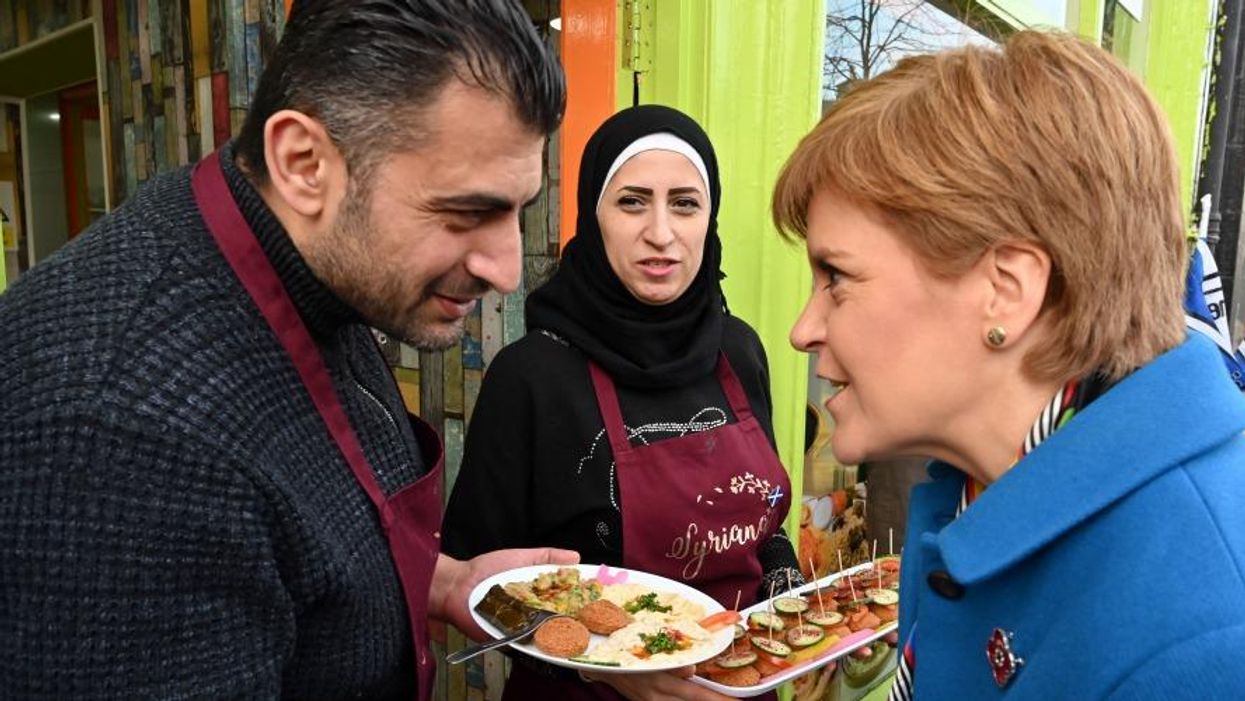
Scottish First Minister Nicola Sturgeon condemned the United Kingdom's new post-Brexit border policy after it was released Wednesday, saying new rules barring people designated as "unskilled" and those who don't speak English will devastate a number of Scotland's industries and worsen the country's depopulation crisis.
The newly-unveiled "points system" dictating who can migrate to the U.K. spurred officials to reiterate their calls for a separate Scottish visa system which immigrants could use just for Scotland, which employs many people from overseas in its tourism, fishing, and healthcare industries.
"It is impossible to overstate how devastating this U.K. government policy will be for Scotland's economy," tweeted Sturgeon, who also called for a new referendum on Scottish independence after the Conservative government won the general election in December. "Getting power over migration in Scottish Parliament is now a necessity for our future prosperity."
Under the new U.K. border policy, migrants would be awarded "points," as they are under Australia's system, based on their skill level and background. Students and workers who don't speak English would not be permitted to migrate.
No temporary or general visas will be given to people identified as "low-skilled workers," and people considered "skilled" would need to have a job offer or endorsement from someone in their field.
"U.K. businesses will need to adapt and adjust to the end of free movement," the British government said of the plan, which officials want to enter into force on January 1, 2021.
The proposal appears intent on damaging the "U.K. manufacturing industry, services, agriculture, and fisheries... [and creating] more economic damage through deliberately causing labor shortages," tweeted Kirsty Hughes, director of the Scottish Center on European Relations.
One in five tourism jobs in Scotland are held by people from overseas, according to The Guardian. Migrants hold 16% of healthcare jobs, while more than 70% of those employed at fish processing plants in northeastern Scotland were born outside the country.
Under the new plan, it's estimated that 70% of the current E.U. workforce would not be awarded enough "points" to move to the United Kingdom. But in Scotland, which is projected to have more deaths than births over the next 25 years and whose population growth over the next two decades has been expected to come entirely from migration, industry leaders say people already in the country won't be able to fill roles that would otherwise go to migrants.
"Locking out some sets of skills from the U.K. will have a devastating impact on many parts of our economy and [is] deeply insulting," tweeted Hannah Bardell, a member of Parliament in Sturgeon's Scottish National Party. "The Tories have had 42 months to develop these proposals and they've come up with a half-finished, disastrous one size-fits-no-one policy that poses a very real threat to Scotland and leaves businesses and the public with just 10 months to prepare."
Scottish officials say the public widely supports a Scottish visa, which the government explained in a video on social media last month.
Industry groups in Northern Ireland echoed Scotland's concerns Wednesday, saying the hospitality sector would suffer a "crippling blow" under the immigration plan.
"We are looking to double the number of jobs in the sector to 25,000, but we just won't have the people to fill them," Colin Neill, chief executive of Hospitality Ulster, told the Irish Times.

Social justice advocates in the United Kingdom are raising concerns over a trade deal being negotiated with the United States by Prime Minister Boris Johnson, after reports surfaced that American leaders are planning to use leverage provided by Brexit to force a scheme of privavitzation and the stripping of protections from British workers.
"These trade talks are being conducted with excessive levels of secrecy," Global Justice Now director Nick Dearden said in a statement Sunday.
After the U.K. left the European Union on Friday through Brexit, Britons were left wondering how the island nation would renegotiate trade deals with its global partners. Johnson is expected to begin formal talks with both the U.S. and E.U. on Monday.
While the U.K. is now officially out of the E.U., the two sides have eleven months to work out what exactly that separation looks like.
The deal with the U.S. is slightly more straightforward, in theory, though Johnson and his government have kept negotiations a secret from the public and Parliament. Documents from the talks leaked in November show a push to privatize the National Health Service to make the U.K.'s popular universal system more like the U.S. private insurance scheme.
Beyond the NHS, Global Justice said in a press release, "U.S.demands are to radically alter the sort of food on sale in Britain after Brexit, undermine farmers' livelihoods, threaten the NHS, make tackling climate change more difficult, and allow big tech companies like Facebook an effective veto over Britain's tax policy; all things which would be impossible if Britain were to retain closer alignment with Brussels."
Labour shadow Brexit secretary Keir Starmer told the Guardian Friday that Johnson's approach to Brexit and subsequent trade deals could sink the U.K. economy and cause major damage to the country's way of life.
"Johnson either doesn't understand or doesn't care about the damage the Brexit deal he is proposing will do to the country," said Starmer.
Global Justice's Dearden said that while a deal with the U.S. "would be a bonanza for big business," it would likely hurt Britons.
"For all of this to happen, Britain would have to move away from our current standards and protections," said Dearden. "That's what Donald Trump is pushing, and the U.K.'s current position suggests that he's succeeded and is pulling the prime minister's strings in these trade talks, pushing us into a 'shock doctrine Brexit.'"

By this time tomorrow, the UK will be out of the European Union. To those who say the UK is better out than in, I beg to differ.
In 1979, I moved to England. This was the year Margaret Thatcher was elected, and just seven years after Conservative Prime Minister Ted Heath - an advocate for EC membership - signed the Accession Treaty that put the UK into what would become the European Union. Make no mistake, the EU has largely been an economic free-trade project, and so claims that that being anti-Europe is a default right-wing position are tinged with more than a little irony. With that economic project, however, have also come certain notions of solidarity and expanded horizons that have proved to be valuable.
1979 UK was a far more insular, parochial place than the UK we see today. The idea of a nation not just cut off from Europe, but happily cut off, was a powerful vein that ran through the popular imagination. It fueled the fires of both British Exceptionalism and national individualism. The idea would sometimes morph into the palpable. "The Continent" (as many in Britain liked to call Europe) felt much further away than the mere 21 miles of water separating English Dover from French Calais.
We need to remember that 1979 UK was still nine years away from the start of the construction of the Channel Tunnel, and 15 years away from its opening. For someone from the UK to get to even the closest point on continental Europe took some effort. A boat. A plane. And this was before low-cost airlines. The psychological impact of that separation - again, a separation that was not always lamented, and often celebrated - can't be underestimated.
In 1979 UK, most young people didn't define themselves as "European." To call someone that was a mild insult. It carried with it the distinct whiff of Otherness. European-ness was about strikes, laziness, odd food, strong cigarettes, weird languages and strange customs. It was also about outright xenophobia, crystallized in the representations of southern Europe and southern Europeans.
Europe in the late 70s also carried the after-shocks of war. When I moved to the UK in the 1979, there were people walking around in the cities, towns and villages who had fought in World War II. And some of these people were still only in their mid-50s. Basil Fawlty's "Don't Mention The War" line wasn't some arcane joke. It was still very much real. This was also residual animosity between formerly competing colonial empires.
Then, things began to change.
The dour 70s and brutal Thatcherite 80s gave way to a vision of the UK as a nation not separated from, but a part of, Europe. This change was not seismic, but gradual. The opposition to Europe was slowly-but-clearly eroding with the winds of history. As time passed, younger UK citizens embraced what it meant to be European. The London of 1999 was a long way from the London of 1979. Europe was now part of the future, not the past. Jokes about "The French" and World War II largely relegated to sad acts of ageing D-list comics.
Nationalist notions of "going it alone" and "bulldog spirit" had lost ground to the simple idea that there was value in solidarity and commonality. This, of course, set off alarm bells for those who considered the UK to be culturally superior. It also, perhaps, helped those in favor of the nationalist project to map out the core strategies for regaining power.
To argue that Britain was better than Europe. That rugged individualism trumps broader solidarity. That there is beauty and purity in isolation. And, perhaps most importantly, that it is "foreigners" - inside of the UK in the form of "immigrants" and "refugees" and outside in the form of Brussels bureaucrats - who had destroyed what had put the "Great" into "Great Britain."
Refugees from Syria fleeing for their lives provided the perfect scapegoats for media and politicians itching to portray, in the most bigoted of fashions, the European project as driven by "multiculturalism" and "diversity." The complicity of the media in the service of this anti-immigrant agenda was blunt, crude and disgraceful. It also hearkened back to the worst days of political disinformation spread by a compromised and weaponized UK tabloid press (with Murdoch's The Sun at the sharp end).
The strategy worked, but mainly with those who grew up in the UK in the years before I arrived. Among UK citizens aged 45-54, 56% voted to leave the EU, with those aged 55-64 (57%) and 65+ (60%) remarkably close. Compare this to 73% in the 18-24 age group, and 62% in the 25-34 age group, who voted to remain in the EU.
As the UK leaves the EU, I think back to 41 years ago when I moved to the UK, what has changed, and how quickly it has been undone. I also think of those who now live in the UK with family backgrounds from other parts of the world, or younger UK citizens wishing for a broader future, who must wake up in an environment of increased hostility and uncertainty.
The future swallowed by the past. That's a sad legacy.
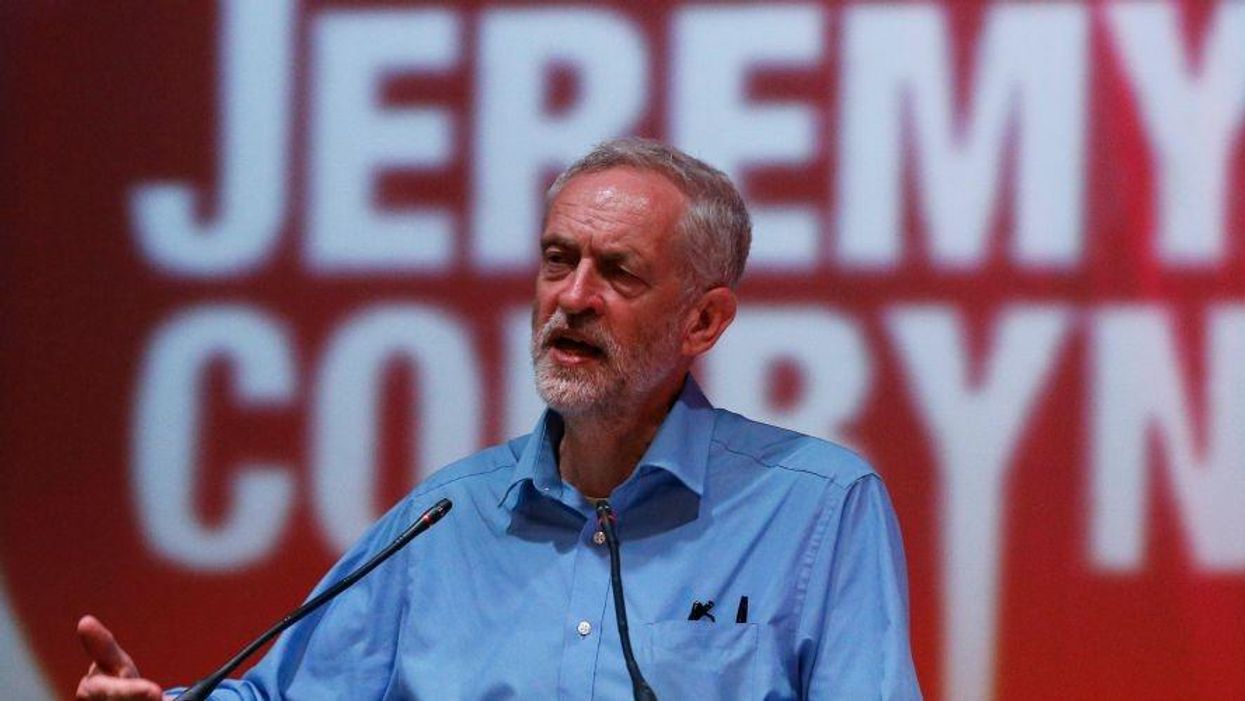
If Corbyn can be defeated with a libel it can work just as well on Sanders.
"Corporate in both countries behave in similar fashion and make a mockery of any claims of a free press."
One year ago this columnist wrote about the Integrity Initiative, an arm of British intelligence masquerading as an NGO. "The Integrity Initiative is a means of undermining the sovereignty of the British people by manipulating them with lies. It engaged in numerous efforts to libel Labour Party leader Jeremy Corbyn and prevent him from ever being elected prime minister." There is no claim of precognition here, just an effort to connect the dots regarding those forces that make the word democracy a sham and a lie.
The Labour party suffered a resounding defeat in the elections held on December 12, 2019. They didn't just lose to the conservative Tories, they lost in a landslide. Constituencies that had dependably voted for Labour for many decades suddenly switched sides.
The 2016 Brexit referendum played a significant role in these events. The region known as the Labour party heartlands voted in favor of leaving the European Union. Jeremy Corbyn originally pledged to support the result even though he favored remaining in the E.U. But he was convinced to change course and promised a second referendum. The Brexiters in his party wanted their choice to be respected and were rightly angry.
"Constituencies that had dependably voted for Labour for many decades suddenly switched sides."
But there is another factor that must be discussed in analyzing this election. Corbyn and his party were relentlessly targeted by the corporate media who worked in collusion with the Tories, the surveillance state, and rightwing forces in the country. He was accused of being a Russian agent and an anti-Semite. The latter charge was often used against him and the entire party. The smear was repeated quite often and created an endless need to respond. Of course, the target is never free in such instances. Corbyn couldn't focus on his message when prominent people like the country's chief rabbi called him "unfit for office." The Archbishop of Canterbury helped shove Corbyn under the bus by asserting that British Jews lived in "fear and insecurity."
Most voters said that the charges of anti-Semitism didn't sway their choices, but propaganda works in an insidious way. Repetition of a lie can change minds, much like subliminal messaging on a constant loop. Eventually the target cannot be thought of in a positive light and is connected with the libel just because it is uttered often enough. The need to challenge a falsehood gives it energy and attention. Even a denial emphasizes the connection of the targeted individual with what he hopes to avoid.
"Repetition of a lie can change minds, much like subliminal messaging on a constant loop."
Corbyn was facing an establishment that had too much to lose if he won. They could not risk him freeing Julian Assange or returning gold illegally stolen from Venezuela or refusing to snatch Iranian oil tankers if the U.S. demanded it. They couldn't risk anyone possibly disrupting the work of MI6, one of the "Five Eyes" intelligence agencies which works in concert with counterparts in the U.S., Canada, New Zealand and Australia.
The U.K. is at the very heart of the surveillance state, acting as America's puppet. The once mighty empire, which subjugated and oppressed millions of people around the world, now exists as Uncle Sam's puppet and partner in crime. It was British intelligence figures like Christopher Steele who provided the foreign interference in the 2016 elections. The two countries work hand in hand to ensure that the people don't get what they want. Corporate media in both countries behave in similar fashion and make a mockery of any claims of a free press.
When Boris Johnson arrived at a Remembrance Day event in 2019 and made a fool of himself, the BBC broadcast fake footage from 2016 so as not to embarrass him. They clearly didn't care that the ruse was so obvious. They weren't going to let Johnson's stupidity stand in his way of being elected prime minister.
"It was British intelligence figures like Christopher Steele who provided the foreign interference in the 2016 elections."
The Tories should have been the party that suffered big losses. The rightwing impoverished millions of people with punishing austerity, deprived the National Health Service of funds, stripped black Britons of their rights in the Windrush scandal, allowed the rich to hide their assets from taxation, and followed every American foreign adventure like good little vassals. The dictates of white supremacy were an extra layer of propaganda.
Johnson has a long history of making racist remarks , on one occasion referring to "pickannies" and "watermelon smiles." Johnson has long been a buffoonish figure of fun in British politics while serving as Mayor of London, Foreign Minister, and Prime Minister. He plays the part of a dumb blonde, but being blonde surely doesn't hurt him. Getting buy-in from the billionaire controlled media gave him protection.
The post-election analysis on this side of the Atlantic parroted all the claims of Corbyn's opponents. We are told that the Democrats can't go too far to the left, that is to say protect the welfare state, because they will end up like Corbyn and the Labour party. Like clockwork, Bernie Sanders is accused of being an anti-Semite. The smear worked so well that there is no need to come up with something new. If Corbyn can be defeated with a libel it can work just as well on Sanders.
"Like clockwork, Bernie Sanders is accused of being an anti-Semite."
Corbyn provides us with a cautionary tale. Sanders will be cheated out of the Democratic Party nomination not just because super delegates will vote against him. The media either disappear him with the "Bernie blackout" or give access only to his detractors. Over and over again Americans are told that they can't have free college or health care or anything else they need and want. Eventually even supporters will question their decisions out of fear of seeing another Donald Trump election. If they are told often enough that what they want is impossible or bad for the Democrats they will reject it.
If Americans are going to make connections with the British elections they must talk about the assault on democracy from the billionaires and their willing minions. They must plan for the inevitable character assassination of anyone who threatens the elites and their established order. If any connection with U.S. politics seems farfetched, consider that an Integrity Initiative operative "volunteered" for Bernie Sanders campaign in 2016. The connections are international, and the elites in one country are fast friends with those in another. The politicians of Corbyn and Sanders ilk will always face an uphill battle. Denying this reality means that the scoundrels will stay in control in the U.S., the U.K. and the whole world.
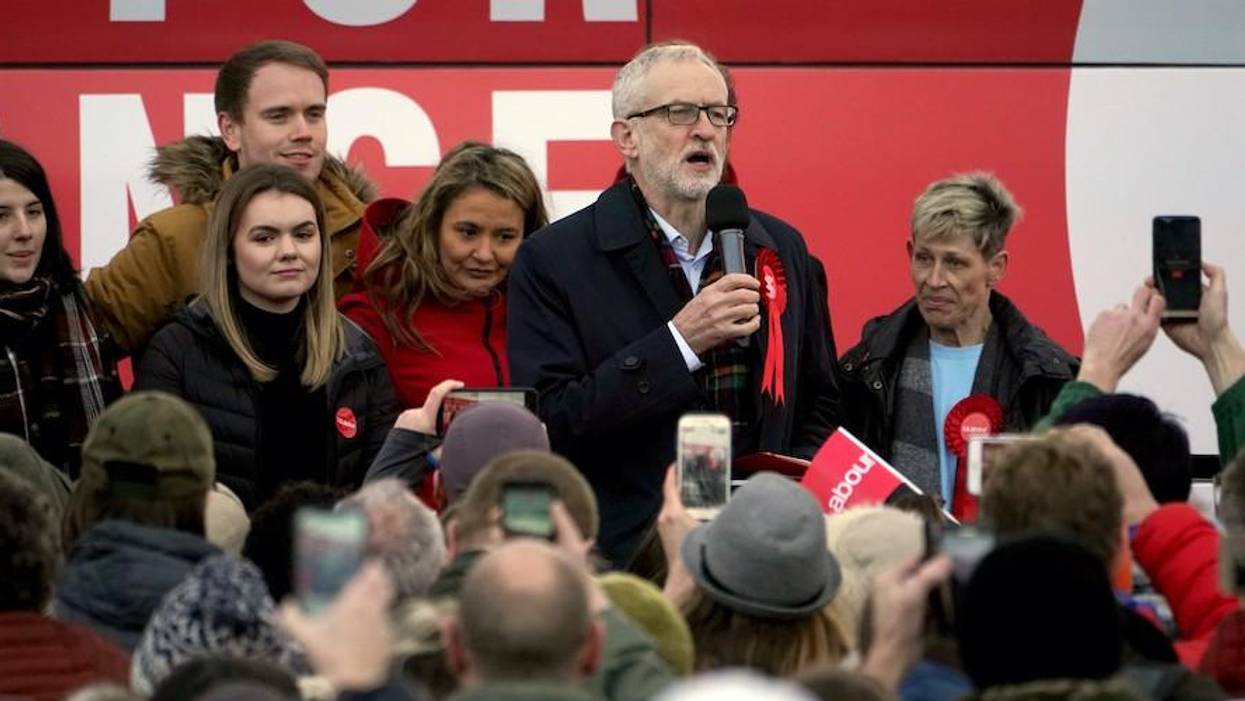
Boris Johnson, despite dodging most debates, lacking any policy platform beyond "Get Brexit Done," and having literally hidden in a refrigerator to avoid a journalist near the end of the campaign, will have a large majority in the U.K. Parliament after last Thursday's election.
The Labour Party's hope that it could turn this election--as it did in 2017--to topics beyond the U.K.'s connection the European Union was dashed. Labour's army of young activists had hoped that Jeremy Corbyn, despite demonization in the press since his 2015 accession to the leadership, could pull off a shocking win or at least a hung Parliament.
They hoped that their thousands of hours traveling to the North and Midlands and South and anywhere that Momentum's mycampaignmap.com told them to go would cut through the noise of Conservative ads and misinformation campaigns. They hoped that the personal connection and the persuasive conversation would win people's trust back.
There are signs that it did--but that the effort was too little, too late. Labour's polls and Corbyn's personal approval ratings steadily ticked upward over the campaign, but not enough to overcome the lead the Conservatives began with. The center--represented by the Liberal Democrats and a handful of splitters from Labour--collapsed even harder than Labour did. And the hot takes and recriminations have come hot and fast in the days since.
Young people in the United Kingdom, like the United States, are less likely to own property, more likely to have student debt, and more likely to be in precarious work.
It's always been foolish to over-compare U.S. and U.K. politics; Brexit simply has no equal in the United States right now. It is not a simple partisan issue: It sliced both the Tories and Labour in slightly imperfect halves, and Corbyn's challenge was to try to win both sides to his program, which was even more radical in 2019 than in 2017. It included not just renationalization of major industries, but a four-day work week, a Green New Deal with a target of decarbonization by 2030, and other policies which, despite Labour's loss, remain popular.
But as Labour activist Philip Proudfoot, from Durham, one of the Northern districts to hemorrhage Labour votes, told me, in those areas people thought they'd already voted for a radical project--Brexit. Voters expected Brexit to bring renewed public spending and political change. And Labour was, to them, ultimately just one more thing holding Brexit back.
Meanwhile in Remain districts, Labour also shed votes to the Liberal Democrats and Greens--not enough to give either of those parties more seats in Parliament, but just enough in a few places for the Tories to squeak through. There was nowhere for Labour to turn, decisively, without losing votes; its attempt to split the difference didn't work.
The splintering around Brexit highlights the way that the working class itself has changed. Too many people, in both the U.S. and U.K., still hear the term "working class" and see images of white men in hard hats, socially conservative and easily turned off by too much radicalism. But the working class is being recomposed; that Labour (like Bernie Sanders) is overwhelmingly popular among young people reflects that recomposition. Young people in the United Kingdom, like the United States, are less likely to own property, more likely to have student debt, and more likely to be in precarious work.
During the campaign, I visited picket lines where the University and College Union lecturers and staff were on strike. At University College London, on December 4, the cleaning workers and security workers, members of Independent Workers Union of Great Britain (IWGB) picketed alongside the lecturers, marching through London arm-in-arm--a reminder that young PhDs in temporary part-time contracts have more in common, economically, these days with the security guard at the door than their senior colleagues.
This is the working class that Labour has captured with the turn to Corbynism. It is diverse, with more women, people of color, and immigrants, and it is more likely to be in service work of some sort than making things.
The recomposition of the working class is geographic as well. Young people leave their homes behind for the cities where the work is, whether that work takes the form of driving for Uber or programming video games--two different types of workers represented by the IWGB. With the industrial jobs disappearing--in places like Dagenham (which Labour held) on London's far east as well as in the North--different kinds of work fill in the gaps.
Care workers often look after those who broke their bodies in the mines or the factories but who live longer thanks to the National Health Service. Labour's offer of a National Care Service was pitched to both these workers and those they care for, and in places like Morley, the Yorkshire town where I followed canvassers the weekend before the election, Labour candidates made much of this promise, and of the fear that Johnson would further privatize the NHS.
Still, older voters that I heard on the doorstep didn't really believe that the NHS could go anywhere. It had, after all, survived Margaret Thatcher. The older voters in what Craig Gent at Novara Media noted is rightly called England's mining belt still have visceral memories of Thatcherism, where the "new common sense" was beaten into people--sometimes literally--during the miners' strike and the mass privatizations that followed.
Labour had for decades relied on those memories for its "red wall," but it turned out that what was the hardest for those voters to do was hope for something better. Corbyn's promises were too much; too many people didn't trust Corbyn to keep them.
The challenge for Labour now is not to over-correct while understanding why it lost a chunk of its traditional base. It must not assume that working-class voters of color or young people with degrees struggling to pay inflated city rents are less worthwhile voters. And it must not make the same mistake with the new working class that the Blairites did with the old and assume they have nowhere to go if the party, say, pivots rightward on immigration.
It was precarious and flexible workers who were able to go on the road to canvass for Labour; it was young people who'd decamped for the cities, who returned to canvass in the places where they grew up, who tried to convince family and neighbors to give the newest incarnation of Labour a chance. Labour must remember how to reach the old working class while continuing to work with the new.
It is painful that the people who best understood the need to rebuild Labour in communities, the need to demonstrate everyday solidarity, are its departing leaders: Corbyn and John McDonnell. Two Londoners, to be sure, but two men who'd spent their backbench lives on picket lines and protests, showing up for boring activist meetings with no hope at resume-building. The community organizing unit that they instituted a little more than a year ago was designed to do just that, active around the country in places where Labour hadn't been seen in years.
Too many people, in both the U.S. and U.K., still hear the term "working class" and see images of white men in hard hats, socially conservative and easily turned off by too much radicalism.
In Putney, where organizer Beth Foster-Ogg worked among residents who feared their housing block could be the next Grenfell--the tower that burned in 2017, killing 72 people--Labour had one of its few gains, putting popular local councillor Fleur Anderson into a previously Tory-held seat. In Sheffield Hallam, where Labour also gained, the community organizer held canvassing trainings and built an activist base for the party. Such organizing was designed not simply to win votes but to give working people the resources to fight more effectively, to build long-eroded trust and the social solidarity that Thatcherism aimed to destroy.
There has been broad consensus since the election that Labour must make the party a presence in the everyday lives of people again by fighting for fair housing, clean water, public transit, even better-managed football teams--it must, in other words, continue the work of the organizers who have begun sinking roots around the country, and expand it massively.
And for U.S. activists watching, the lesson must be that rebuilding trust takes time, base-building, hard work. There is no perfect message that can cut through the social media-amplified noise campaigns the right will run; there is no one you can throw under the bus to solve the problems. Progressive campaigns must reach the working class everywhere it lives--in deindustrialized smaller towns as well as the biggest cities--and they must do more than make promises or show up at election time. They must prove they are around for the long haul.

Hours after celebrating her party's decisive showing and Scotland's rejection of the Conservative Party in the United Kingdom's general election Thursday, Scottish First Minister Nicola Sturgeon on Friday said she would move to put forward a second referendum on Scottish independence.
Sturgeon's Scottish National Party (SNP) won 47 of Scotland's 59 seats in British Parliament Thursday night, with the Tories holding onto just six seats, Labour maintaining one, and the center-left Liberal Democrat party holding onto four seats.
"I have just won an election on the strength of the argument that it's Scotland's right to choose," Sturgeon said Thursday night as she celebrated SNP's landslide.
Sturgeon elaborated on the mandate Friday morning at a podium marked with the words "Scotland's Choice," saying Conservative Prime Minister Boris Johnson must give Scotland the power to vote on independence.
"I accept regretfully that [Johnson] has a mandate for Brexit in England. But he has no mandate whatsoever to take Scotland out of the European Union... Scotland's future must be in Scotland's hands," Sturgeon said. "Given what I fear the Tory government now has in store for Scotland, that right to choose our own future has never been more important or more urgent."
Sturgeon said she had directed the Scottish government to "publish the detailed democratic case for a transfer of power to enable a referendum to be put beyond legal challenge."
The SNP plans to begin moving toward a referendum next week.
Thursday's election results came five years after Scotland's first independence referendum failed, with 55% of Scots voting to remain in the United Kingdom.
Nearly two years after the first referendum in 2014, Scottish voters decisively voted "Remain" in the first vote on the Conservative' Brexit plan.
The first minister pointed out that Tories in Scotland had run almost exclusively on a message of opposing a Scottish independence referendum.
The rejection of that message was "a strong endorsement...of not having to put up with a Conservative government we didn't vote for and not having to accept life as a nation outside the EU," Sturgeon said.
On social media, other supporters of Scottish independence expressed support for Sturgeon's referendum plan.
It means take bolt cutters to the border if you have to Scotland, but just get out of this toxic union. #IndyRef2 https://t.co/BSXFWMe5de
-- Kerry-Anne Mendoza (@TheMendozaWoman) December 13, 2019
After four years of radio silence on Twitter, the Scottish national youth campaign for independence announced its return with a concise message:
As Sturgeon signaled that an independence referendum is likely on the horizon, Ireland's left-wing Sinn Fein party--after winning a majority of Parliament seats--called on the Irish government to "immediately plan for Irish unity" and the British government "to set out in clear and unambiguous terms the circumstance in which a British secretary of state will call a referendum on Irish unity."
Both Ireland and Scotland's signaling of a shift away from the U.K. Brexit plan left some observers considering a possible break-up of the United Kingdom.
"England doesn't care if it loses Scotland and reunites Ireland as long as it gets its Brexit," said one pro-Scottish independence group. "So be it, say Scotland and Ireland."

Exit polls from the United Kingdom's general election Thursday suggest that Prime Minister Boris Johnson's Conservative Party will hold onto its majority by a strong 86 seats, a gut punch to Labour leader Jeremy Corbyn, whose political future could now be in doubt.
"I'm so, so sorry guys," tweeted Labour political activist Owen Jones. "Just utterly devastating."
Though the exit polling is not final, final tallies in the U.K. usually closely resemble exit poll counts.
In addition to live coverage, The Guardian has provided readers with a timeline for results. Early results will come in overnight in the U.K. and there should be a clear view of what the country is looking at as far as leadership by tomorrow morning GMT.
Jeremy Corbyn, the Labour Party leader, took to social media repeatedly during the day to send pithy notes of encouragement to supporters and reminding them to vote.
Turnout, as Common Dreams reported earlier Thursday, was huge. Queues of voters waiting to cast their ballots were reported all around the U.K.
Britons hunkered down to await official results overnight.