

SUBSCRIBE TO OUR FREE NEWSLETTER
Daily news & progressive opinion—funded by the people, not the corporations—delivered straight to your inbox.
5
#000000
#FFFFFF
To donate by check, phone, or other method, see our More Ways to Give page.
Daily news & progressive opinion—funded by the people, not the corporations—delivered straight to your inbox.
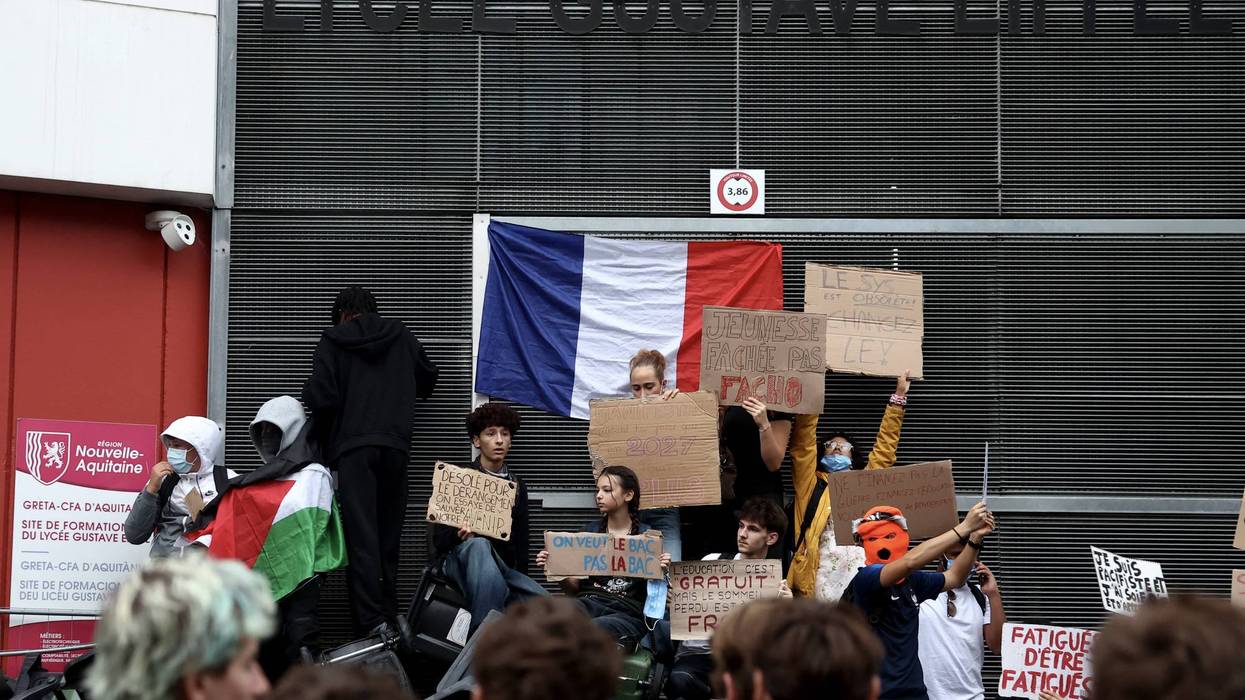
The French student movement has a long history of political activism based on organized protests and occupations not only for the improvement of their learning experience and school conditions but also against capitalism, consumerism, imperialism, and police repression.
France is presently in the throes of nationwide student protests that have turned increasingly violent as the police crack down on students, using tear gas and heavy-handed tactics as students blockade entrances to their schools and even set fire to several schools across France.
The students, aged between 15 and 18, are protesting over poor school conditions (overcrowded classrooms, crumbling infrastructure, heavy workloads, teacher shortages) and demand increased funding for schools. Thousands have been detained, mostly minors, and dozens injured, including some 50 law enforcement officers.
The high school protests begun in Aubervilliers, a low-income Paris suburb, but quickly spread nationwide, as usually happens with students protests in France. University students have now joined high school schools across France, thus creating an even more volatile situation for the French government. Incidentally, the student protests are unfolding alongside massive public-sector protests over pay and working conditions.
French students have also shown that they are always on the side of the workers’ fight for better working conditions and in their struggle for an alternative socioeconomic and political order.
France is indeed in crisis mode, economically, politically, and socially. Weak growth and deteriorating public finances have been the norm for several years now, while austerity is being advanced by the political establishment as the only available solution to the country’s economic problems and financial misery. French Prime Minister Sébastien Lecornu presented an austerity-driven government budget on October 1 that proposes 43 billion euros in new fiscal measures to reduce the deficit.
However, the budget bill is surely expected to face a rough ride as France has a deeply divided parliament that has repeatedly rejected austerity-driven budget proposals, forcing in fact several prime ministers since 2022 to step down. Lecornu’s government may very well be the next one to collapse as it is highly unlikely that either Marine Le Pen’s far-right National Rally (RN) party or Jean-Luc Mélenchon’s left-wing France Unbowed (LFI) party (which France’s Interior Ministry has actually classified as far left) will make compromises, especially in light of the fact that France’s next presidential election is scheduled for April 18 and May 2, 2027, and looks like the run-off election will be between Le Pen and Mélenchon.
In addition, France’s bond market is under growing pressure as its 10-year yield has reached the highest level since 2002. With the cost of borrowing money hitting a peak, France, which has faced sluggish growth for years, is likely to see even slower growth in 2027 than in 2026. This situation seems to be serving the far-right RN party particularly well, which has already scored a “historic victory” by securing enough seats in the recently held Senate election to establish its own caucus for the first time.
In the meantime, the student protests are being used both by Le Pen and government officials to target Jean-Luc Mélenchon’s party for allegedly deploying agitators and using rhetoric to stoke students’ anger.
There is little doubt that the concerns of French students are legitimate. Their grievances with the poor state of schools have been building since this summer’s heatwaves, which exposed “the poor state of schools, with poor insulation and no air conditioning,” according to Vincent Latour, a professor of British Studies at the University of Toulouse-II-Le Mirail. Moreover, the president of Union Syndicale Lycéenne (USL), 19-year old Ryad Rani, said that student grievances had elicited no response from the government and that the movement will continue with the protests until its demands are satisfied.
The French student movement has a long history of political activism based on organized protests and occupations not only for the improvement of their learning experience and school conditions but also against capitalism, consumerism, imperialism, and police repression. It doesn’t need outside agitators in order to mobilize and take action into its own hands and is definitely not controlled by any political party. French students have also shown that they are always on the side of the workers’ fight for better working conditions and in their struggle for an alternative socioeconomic and political order, which is precisely why the current student protests coincided with the public-sector workers strike against the government’s austerity policies. And poor school conditions are not the only reason behind the ongoing student protests. As Mael Breton, a high school student taking part in the protests said, “We want fewer police because we think there is a huge amount of police repression, both against high school student movements and social movements more generally.”
It is true that local MPs from the LFI party were quick to lend support to the protests and the blockades once they started. But those actions were not initiated by the LFI, and students outright rejected “claims that they are manipulated by radical-left politicians.” Once the protests and the blockades started, students utilized various social media platforms to articulate their grievances and make their slogans and the measures taken known to the rest of French society.
The year 1968 was one of great turmoil and unrest. We live in a different world today. But what was true for workers and students in May 68, remains true for today’s generation of French students: “The struggle continues.”
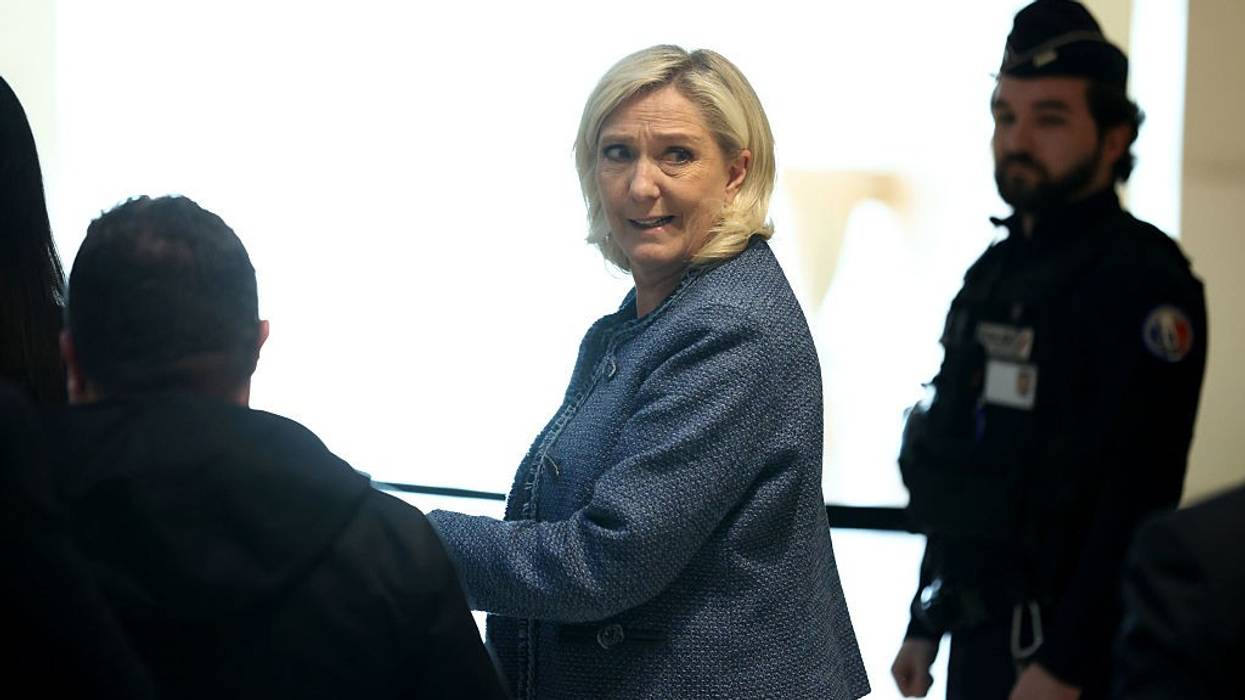
The xenophobic nationalist leader, expected to run for president once again in 2027, was sentenced to 4 years in prison for misuse of party funds over many years.
The far-right French politician Marine Le Pen was convicted on embezzlement charges by a national court on Monday, sentenced to four years in prison and barred from seeking elected office for at least five years—a development that progressives warn could backfire if too many people see the ruling as an attempt to preemptively subvert democracy.
Le Pen's "electoral ineligibility is effective immediately," the New York Times reports and derails her presidential aspirations even as other right-wing politicians, including President Donald Trump in the United States and Hungary Prime Minister Viktor Orban, seek to consolidate their grip on power.
"Je suis Marine!" Orban declared on social media shortly after the verdict was handed down, which resulted in a visibly angry Le Pen storming out of the court room before the proceedings concluded.
"This is nuts. Lawfare is wrong whomever it targets. And it is stupid to boot. France's neofascists will only benefit from this, just as the MAGA lot did." —Yanis Varoufakis
The court suspended two years of Le Pen's sentence, but the other two will be served under a form of house arrest with ankle bracelet monitoring.
While Jordan Bardella, president of the anti-immigrant National Rally (RN) party which Le Pen leads, said "French democracy was killed" by the verdict, the conviction followed a robust investigation and trial into to the RN's payment scheme which siphoned millions of Euros out of taxpayer funds over many years.
According to the Guardian:
Le Pen and 24 party members, including nine former members of the European parliament and their 12 parliamentary assistants, were found guilty of a vast scheme over many years to embezzle European parliament funds, by using money earmarked for European parliament assistants to instead pay party workers in France.
The so-called fake jobs system covered parliamentary assistant contracts between 2004 and 2016, and was unprecedented in scale and duration, causing losses of €4.5m to European taxpayer funds. Assistants paid by the European parliament must work directly on Strasbourg parliamentary matters, which the judges found had not been the case.
Despite the immediate ban imposed on his political enemy, DiEm25 leader Yanis Varoufakis, the leftist former finance minister of Greece who also co-founded Progressive International, warned that barring politicians from running for office via court rulings that have not completed a full appeals process puts democracy on a dangerous road.
"This is nuts," said Varoufakis in response to the conviction and sentencing.
The idea of lawfare, in which politicians or elected officials are targeted with frivolous or manufactured criminal charges in order to thwart their political careers is a well-known tactic that has often been used against left-leaning leaders as well.
"Lawfare is wrong whomever it targets," he continued. "And it is stupid to boot. France's neofascists will only benefit from this, just as the MAGA lot did. A panicking illiberal establishment across the West is diving headlong into a totalitarian pit."
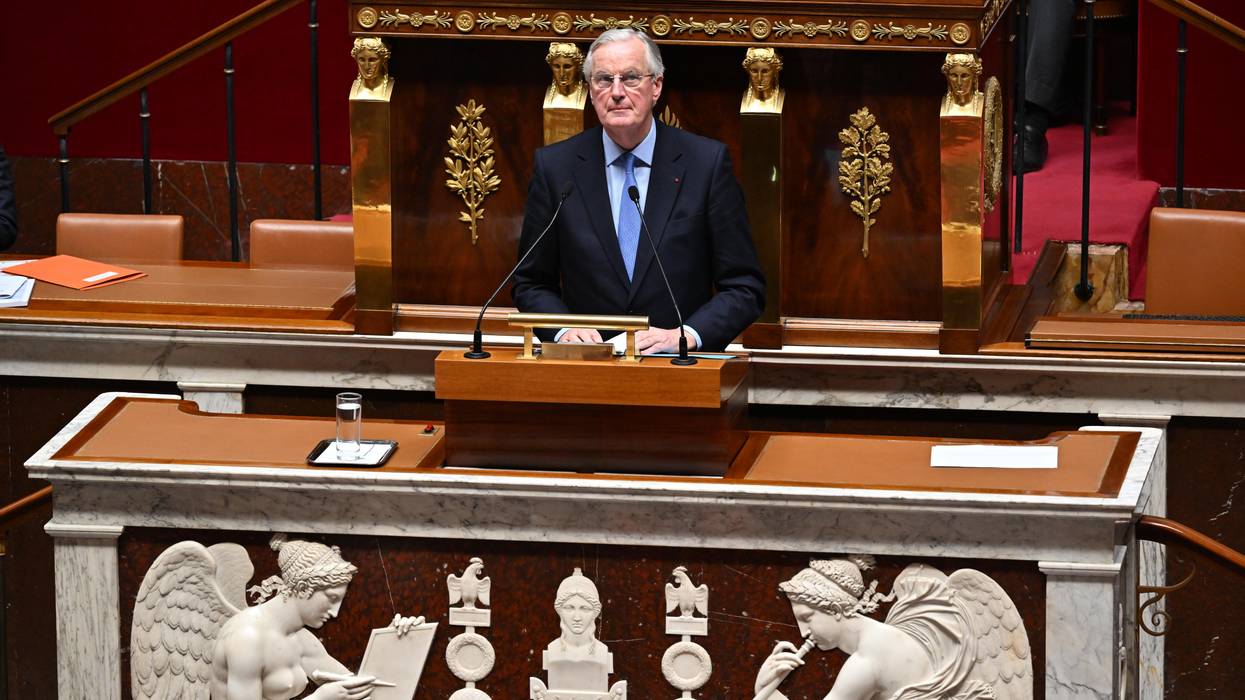
The money isn’t there, and centrist parties in France and Germany are struggling to fend off populist challenges of their own.
Two main lessons are to be drawn from the fall of Michel Barnier’s government in France.
The first is that talk of Europe massively rearming itself and substituting for the U.S. as the chief backer of Ukraine while maintaining existing levels of healthcare and social security is idiocy. The money is simply not there. The second is that the effort by “mainstream” establishments to exclude populist parties from office is doomed in the long run, and in the short run is a recipe for repeated political crisis and increasing paralysis of government.
Two countries are central to the European Union, the European economy, European defense, and any hope of European strategic autonomy: France and Germany. Within a month of each other, both have seen their governments collapse due to battles over how to reduce their growing budget deficits. In both cases, their fiscal woes have been drastically worsened by a combination of economic stagnation and pressure on welfare budgets with the new costs of rearmament and support for Ukraine.
Large parts of the European foreign and security establishments write and talk as if none of this were happening; as if in fact these establishments had been permanently appointed to their positions by Louis XIV and Frederick II, and given by those sovereigns an unlimited right to tax and conscript their subjects.
In both cases, fiscal crisis has fed into the decay of the mainstream political parties that alternated in power for generations—a phenomenon that is to be seen all over Europe (and in the U.S., insofar as President-elect Donald Trump represents a revolt against the Republican establishment). This decay is being fed by the growing backlash against dictation by the E.U. and NATO that is occurring across wide swathes of Europe.
In the French presidential elections of 2017 and 2022, President Emmanuel Macron defeated the Front National (now the Rassemblement National) of Marine Le Pen by essentially uniting the remnants of all the centrist parties in a grand coalition behind himself. The problem with such grand coalitions of the center however is that they leave opposition nowhere to go but the extremes of right and left.
In the case of France, economic stagnation and resistance to Macron’s free market and austerity measures led in June of this year to crushing defeat for his bloc in European parliamentary elections. Macron then called snap French parliamentary elections in the hope that fear of Le Pen and the radical left would terrify French voters back into support for him. The result however was that Le Pen won a plurality of the vote, and while electoral deals with the left gave Macron’s bloc a plurality of seats, they are heavily outnumbered by deputies on the right and left.
Macron then ditched his left-wing allies and stitched up an agreement whereby Le Pen would support a centrist-conservative government under Michel Barnier in return for concessions on immigration policy and other issues. Bizarrely however, this was combined with continued “lawfare” against the Rassemblement National, with the prosecution of Le Pen for allegedly diverting E.U. parliamentary funds to support her party’s deputies. This is something that looks rather like a technicality or peccadillo, given what we know of the past behavior of E.U. parliamentarians—but would mean that, if convicted, she would be barred from running for the presidency in 2027.
This of course gave Le Pen every incentive to bring down Barnier’s government in the hope that it will bring down Macron with it, and thereby lead to early presidential elections; and when Barnier’s austerity budget (pushed through by decree against parliamentary opposition) infuriated the left, Le Pen seized her chance. Given the string of defeats that Macron has now suffered (and remembering that the far greater Charles de Gaulle resigned in 1969 after a far lesser defeat), it would make sense for Macron to step down. This would most probably lead to a presidency of the Rassemblement National; but then again, this is also probable if presidential elections take place on schedule in 2027.
German politics are in certain respects tracking those of France, but some years behind. Not long ago one would have said a generation behind, but European political change is clearly speeding up. After the 2021 general elections, the decline in support for the Social Democratic party, and the rise of the right-wing populist Alternative fuer Deutchland (AfD) and the left-wing populist Sahra Wagenknecht Alliance (BSW) forced the Social Democrats into an uneasy coalition with two deeply ideologically opposed partners, the Liberals (FDP) and the Greens.
As Germany’s economic position worsened, internal battles over the budget also worsened until the coalition eventually collapsed. Opinion polls indicate that the centrist conservative Christian Democrats will come first in elections due in February, but will be far short of an absolute majority. The result will be a grand coalition with the Social Democrats; but if that also falls short of an absolute majority, and the Liberals fail to pass the 5% threshold to enter the German parliament, then (assuming a continued determination to exclude AfD and BSW), the Greens will have to be included.
Not only will this replicate the internal weaknesses and divisions of the last coalition, but it will mean that if Germany’s economic woes continue and the coalition parties’ popularity slumps, AfD and BSW will be the only place for discontented voters to go. These parties, being newer, are not yet nearly as popular as their French equivalents. AfD still has to go much further in the process initiated by Le Pen in the Front National, of purging its more extreme elements; and of course there is the special German historical fear of the radical right. Nonetheless, there are good reasons to think that the future German trajectory will resemble that of France.
Meanwhile, large parts of the European foreign and security establishments write and talk as if none of this were happening; as if in fact these establishments had been permanently appointed to their positions by Louis XIV and Frederick II, and given by those sovereigns an unlimited right to tax and conscript their subjects.
Thus in an article this week for Foreign Affairs, Elie Tenenbaum of the French Institute of International Relations in Paris and a colleague declare that in response to Trump’s election and in order to block a peace deal disadvantageous to Ukraine and “impose conditions of its own,” Europe must “force its way to the negotiating table.” A European coalition force of “at least four to five multinational brigades” should be deployed to eastern Ukraine to guarantee against further Russian aggression. European combat air patrols could be deployed “while the war is still underway.” And “if Russia remains unyielding, Europe must bear the bulk of the financial assistance to support Ukraine in a protracted conflict.”
Where the money and the public support for such a program is to come from is nowhere indicated.
I don’t know an appropriate and printable French response to these daydreams, but the Kremlin may reply with an old Russian saying: “Oh sure—when crabs learn to whistle.”
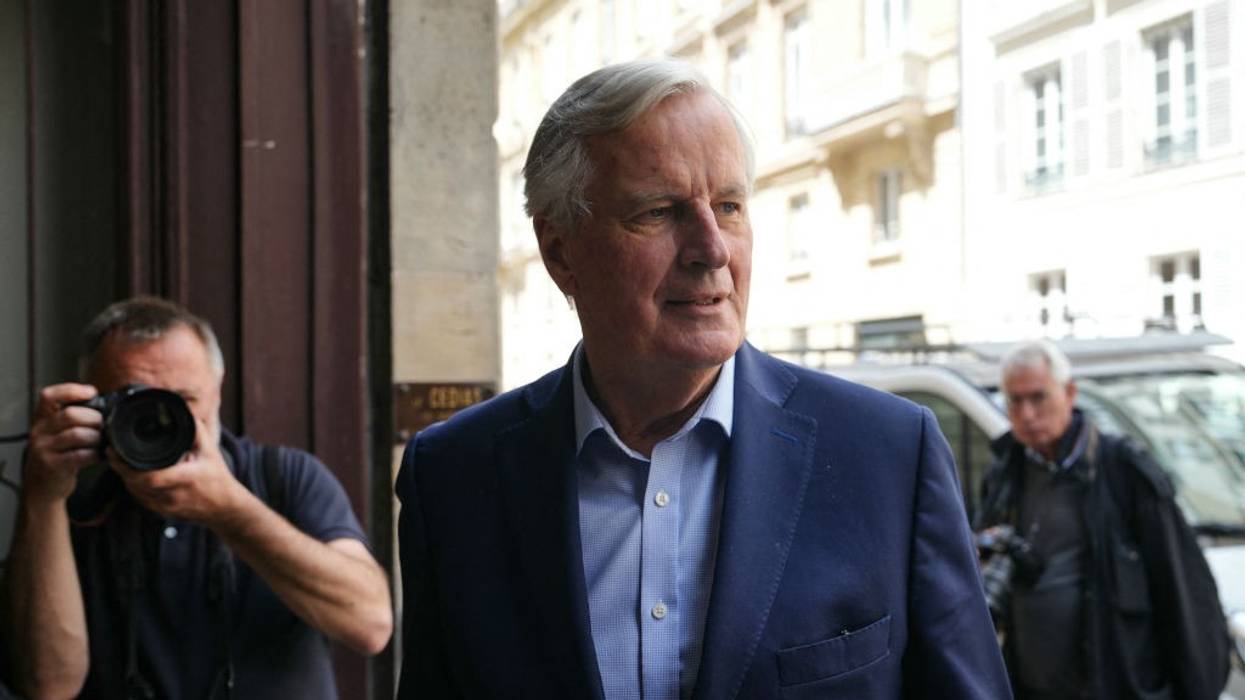
The president drew criticism for rejecting the candidate put up by the left-of-center coalition that won the most seats in parliamentary elections.
French President Emmanuel Macron on Thursday named the right-wing politician Michel Barnier as prime minister, prompting outrage from a coalition of left-of-center parties that won the most seats in recent parliamentary elections and argued that the premier should be chosen from its ranks.
The decision marks the end of an unprecedented period in which France hasn't had an active government following the final round of parliamentary elections on July 7 and the previous prime minister's resignation on July 16.
The election ended with the Nouveau Front Populaire (NFP), the left coalition, winning a plurality of seats at 32.6%, Macron's own Ensemble coalition of centrist neoliberals winning 27.9%, and the far-right Rassemblement National (RN) winning 24.6%. NFP and Ensemble coordinated their efforts in the final round, forming a "republican front" to block the RN—a successful effort that drew praise from left and centrist figures across the world.
Barnier's center-right party, Les Républicains (LR), once a powerful force in France, gained only 8.3% of the seats, yet emerged victorious in the prime ministerial sweepstakes following Macron's negotiations with RN leader Marine Le Pen, who's thought to have agreed to Barnier's appointment. Without RN's support, Barnier could be ousted by a no-confidence vote in parliament.
In late August, Macron rejected the NFP's proposed prime minister, Lucie Castets, a little-known civil servant and economist whose nomination was itself a compromise reached by the parties within the NFP, which include the center-left Parti Socialiste (PS), the left-wing La France Insoumise (LFI), and Les Écologistes, a green party.
Les Écologistes on Thursday condemned Macron's choice, saying he was "obsessed with the preservation of his neoliberal record" and he'd aligned with the far-right.
"By appointing Mr. Barnier, who did not call for a republican blockade and whose positions on immigration resonate with those of the RN, to [Hôtel Matignon, the prime minister's residence], Emmanuel Macron is turning his back on the millions of citizens who have created a historic republican blockade in France," the party said in a statement.
🔴⚡ Un accord a été trouvé entre le président de la République, LR et le RN sur la nomination de @MichelBarnier | Il ne manquait plus que l'accord de Marine Le Pen, le RN confirme ne pas censurer un gouvernement #Barnier. pic.twitter.com/rKlaeE1n1n
— Nouveau Front Populaire 🟢🔴🟡🟣🔴 (ex NUPES News) (@NupesNews) September 5, 2024
Normally, the French president names a prime minister within days of an election for the National Assembly, as the directly-elected house of Parliament is called. However, with no party gaining a majority, and Macron opposed to the NFP—the coalition had run on a platform of rolling back his anti-worker agenda—the negotiations dragged on, especially once the president announced an interlude for the Olympics.
In the French system, the president chooses the prime minister, who has power over governmental ministries, but a majority of the National Assembly must approve of the choice or the deputies, as members of parliament are known, can issue a vote of no confidence. Not since the Fifth Republic formed with constitutional reform in 1958 has the country gone so long without a prime minister.
Barnier, 73, was first elected to the National Assembly in 1978 and worked his way up, serving various key ministerial posts in the 1990s and 2000s under center-right Presidents Jacques Chirac and Nicolas Sarkozy. From 2016 until 2021, he served as the European Union's chief Brexit negotiator.
Barnier was generally regarded as a centrist conservative but moved to the right in 2021, speaking harshly about immigration as he prepared a 2022 presidential run. The effort failed: He didn't receive his party's nomination.
Le Pen emerged in recent days as the "kingmaker" in the prime minister negotiations, according to Le Monde. With the backing of Ensemble and the RN, Barnier will be able to hold on to the job, as together the two blocs have more than 50% of the seats in the National Assembly.
Le Pen indicated at least a modicum of support for Barnier on Thursday, saying that he is "someone who is respectful of the different political forces and capable of addressing the RN."
Castets, on the other hand, said she was "very worried" about Barnier's appointment and called him "reactionary."
"Michel Barnier is the continuation of Macron's policy, or even worse," Castets told Mediapart.
Jean-Luc Mélenchon, standard-bearer of the French left and leader of the LFI, the NFP party holding the most seats, also decried the choice, pointing out that Barnier's party did poorly in the election and hadn't been part of the republican front. He said the "election has been stolen."
Mélenchon has led an effort to impeach Macron for his refusal to name an NFP prime minister but experts say it has little chance of succeeding. Mélenchon's allies are holding a rally on Saturday to call for the ouster of both Macron and Barnier.
Fabien Roussel, the leader of a Communist party that's a smaller member of the NFP, called Macron's move "a middle finger to the French who aspire to change," roughly translated, in a social media post.
The PS, which includes such figures as former President François Hollande and Paris Mayor Anne Hidalgo, hasn't joined the impeachment call but was critical of Macron's process. Olivier Faure, the party's leader, called it an affront to democracy.
"Democratic denial at its peak: a Prime Minister from the party that came in 4th place and who did not even participate in the republican front," Faure said. "We're entering a crisis of regime."
The transfer of power to Barnier was set for 6 pm local time at Hôtel Matignon on Thursday.
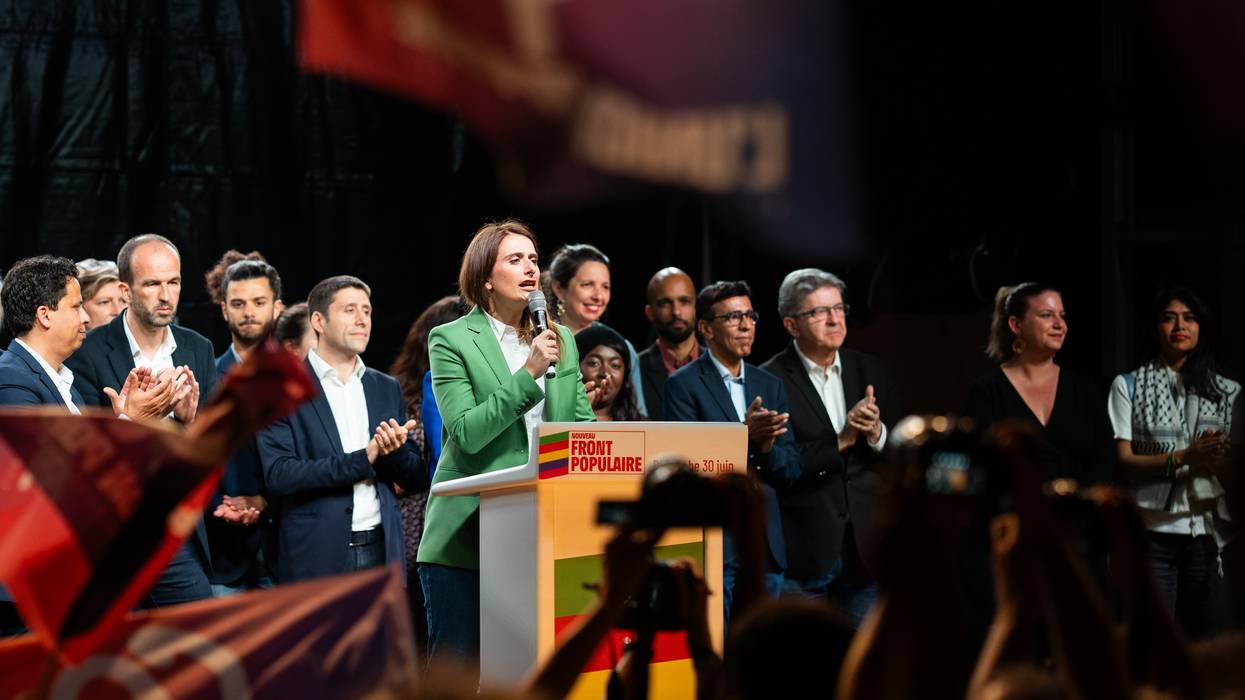
"The people must get rid of Macron for the good of democracy," said the leader of France's Green Party.
Leftist parties in France on Tuesday accused President Emmanuel Macron of election theft and announced mass protests after he rejected Nouveau Front Populaire's proposed candidate for prime minister, even though the left-wing coalition won the most seats in a snap parliamentary contest last month.
The left-wing parties that formed NFP in June to fight off the surging far-right expressed outrage at Macron's decision, with the Jean-Luc Mélenchon-led La France Insoumise (LFI) Party condemning Macron's dismissal of a leftist government as a "coup" and urging a "firm response from French society."
Backing demands from youth-led organizations, the party specifically called for "a large demonstration against Macron's coup on September 7" and expressed "hope that the political, union, and allied forces committed to the defense of democracy will join this call."
Marine Tondelier, the leader of France's Green Party, said Tuesday that "this election is being stolen from us" and declared that "the people must get rid of Macron for the good of democracy."
"He is chaos and instability," Tondelier added.
The French political system has been engulfed in chaos since Macron called snap elections in June after his party performed dreadfully in European Parliament elections in June as Marine Le Pen's far-right, xenophobic National Rally surged.
While the French left and Macron allies successfully teamed up last month to prevent the National Rally from seizing control of the nation's government, NFP's stunning victory in the snap election created a new dilemma for Macron, who has been openly hostile to the left since taking office in 2017.
"Facing a hung parliament in which each of the three almost equal groupings—the left, Macron's centrist bloc, and the far-right National Rally—have ruled out forming a coalition, the president appeared to be back to square one," Reuters reported.
Macron claimed Monday that a leftist-led government "would immediately have a majority of more than 350 MPs against it, effectively preventing it from acting."
"In view of the opinions expressed by the political leaders consulted, the institutional stability of our country means that this option should not be pursued," said Macron, ruling out the NFP's candidate for prime minister, Lucie Castets.
Protesting Macron's decision, leftist leaders boycotted a fresh round of negotiations on Tuesday, with Tondelier saying that "we're not going to continue these sham consultations with a president who doesn't listen anyway... and is obsessed with keeping control."
"He's not looking for a solution, he's trying to obstruct it," said Tondelier.
In a social media post on Monday, Mélenchon pledged to move ahead with an impeachment motion against Macron, calling for a "swift and firm" response to the French president.
"The president of the republic has just created a situation of exceptional gravity," Mélenchon wrote.

A united left is a formidable opponent that cannot only halt the surge of neo-fascism, but can also offer a positive and inspiring vision for the future.
Far-right forces have gained ground across Europe, particularly in Austria, France, Germany, and the Netherlands. In fact, the Netherlands has a new government, a coalition between far right and right, and the far right came first in the first-round of France’s snap election. But fearful of the prospect of a neo-fascist and xenophobic party in government, French voters came out in record numbers and rallied not behind Ensemble—the centrist coalition led by President Emmanuel Macron—but behind the coalition of left forces calling themselves the New Popular Front (NFP), delivering in the end a blow to Marine Le Pen’s National Rally (RN) which had made historic gains in the first round and topped the poll with 33.15 percent of the votes cast. NFP came in first in the run-off election, with 188 seats, but falling short of majority.
France’s snap parliamentary election results help us to make sense of the surge of the far right and offer valuable lessons for the left all over the world, including the U.S. where a centrist democrat and a wannabe dictator face off in November.
First, it is crystal clear that the main reason for the rise of Europe’s far right, authoritarian, and ethnonationalist forces is the status quo of neoliberal capitalism. The neoliberal counterrevolution that begun in the early 1980s and undermined every aspect of the social democracy model that had characterized European political economy since the end of the Second World War has unleashed utterly dangerous political forces that envision a return to a golden era of traditional values built around the idea of the nation by fomenting incessant and socially destructive change.
France’s snap parliamentary election results help us to make sense of the surge of the far right and offer valuable lessons for the left all over the world.
True to its actual aims and intent, neoliberalism has exacerbated capitalism’s tendency to concentrate wealth in the hands of fewer and fewer, reduced the well-being of the population through mass privatization and commercialization of public services, hijacked democracy, decreased the overall functionality of state agencies, and created a condition of permanent insecurity. Moreover, powerful global economic governance institutions—namely, the unholy trinity of the World Bank, the International Monetary Fund, and the World Trade Organization—took control of the world economy and became instrumental in the spreading of neoliberalism by shaping and influencing the policies of national governments. It is under these conditions that ethnonationalism, racism, and neofascism resurfaced in Europe, and in fact all over the world.
In France, the rise of the far right coincided with President François Mitterand’s turn to austerity in the 1980s as his government fell prey to the monetarist-neoliberal ideology of the Anglo-Saxon world. Once Mitterand made his infamous neoliberal turn, the rest of the social democratic regimes in southern Europe (Greece under Andreas Papandreou, Italy under Bettino Craxi, Spain under Felipe Gonzalez, and Portugal under Mario Soares) tagged along, and the eclipse of progressivism was underway.
Less than two decades later, reactionary political forces had emerged throughout Europe as extreme neoliberal economic policies had paved the way for the emergence of political tendencies with an eye to exploiting the catastrophic social and economic impacts of neoliberalism by tapping into a huge reservoir of public anger and discontent with the establishment. Indeed, as neoliberalism tightened its grip on domestic society, far right forces gained more ground. The surge of Marine Le Pen’s RN occurs against the backdrop of Macron’s obsession with converting France into a full-fledged neoliberal society.
A crucial lesson offered by the results of France’s snap election (as well as by Labour’s victory in UK) is that economics remains the rule of the day. Political forces that seek to promote multiculturalism and social rights while pushing at the same time the neoliberal economic agenda will, in the end, get the short end of the stick.
Initially, Macronism was a strategy of trying to appeal to a wide range of center-left and center-right voters by defending secular social rights and even making gestures to LGBTQ people but always with an eye to transforming the social contract and freeing up the “energy of the workforce.” Macron’s “progressive liberalism” philosophy worked up to a point. It backfired in a big way along the way when workers, farmers, and minority groups realized that their economic future was at stake by Macron’s pro-market policies—and that was clearly far more important to them than concerns over social issues and even the environment itself. The “yellow vest” movement that rocked Macron’s presidency in 2018 and left an “indelible mark” on French politics was the first indication that any set of government reforms that carried a disproportionate impact on the working and middle classes was going to be severely challenged.
In the end, Macronism even lost the support it initially had from women’s and LGBTQ organizations, and not simply because Macron’s stance on social policies hardened along the way as part of an opportunistic and desperate attempt on his part to stir conservative voters away from the arms of the far right. It is worth pointing out here that, unlike most social movements which are male-dominated, the “yellow vest” movement was distinguished by the “high proportion of women” that took part in the protests. It was economics that drove French women out into the streets, demonstrating against Macron government’s unjust tax reform measures.
Again, the lesson here is that voters are unlikely to be deceived by the sort of political rhetoric that emphasizes diversity, multiculturalism, and environmental concerns while policies are being pursued in favor of a brutal neoliberal economic setting. Social rights under neoliberalism is a mirage. This is a critical lesson for all left forces in an age in which multiculturalism and the politics of identity play such a prominent ideological role. We see the counter effects of this ultimately “pro-capitalist-stratagem” in the U.S. where voters without college degrees, which amount to over 60 percent of the population, are overwhelmingly on Trump’s camp. A similar tendency can be seen in the Latino community as a growing segment of Hispanic voters are joining Trump’s GOP party.
Voters are unlikely to be deceived by the sort of political rhetoric that emphasizes diversity, multiculturalism, and environmental concerns while policies are being pursued in favor of a brutal neoliberal economic setting.
For the benefit of political expediency and ideological integrity alike, the left should stick to its universalist traditions while remaining of course sensitive to diversity and particularism. But it has no business playing the game of identity politics that has become the hallmark of corporate capitalism and of the liberal political establishment. Last thing we need is a cultural and post-material left morphed into a movement vying for space in a capitalist dominated universe.
More important, as the unique experience of the formation of a coalition of leftist parties in France for the snap parliamentary election attests, the left’s best hope for making major inroads in today’s western societies, which are unquestionably highly complex and diversified, is by introducing and promoting an attractive yet realistic economic agenda that addresses the immediate concerns of average people but without losing sight of the broader objective of the leftist vision which is none other than social transformation.
The “shocking” success of the New Popular Front in the run-off election in France did not materialize simply because French voters wanted to halt the rise of the far right to power, which is the mainstream interpretation. French voters backed NFP for two key reasons: first, because they finally saw the left leaving behind factionalism and, second, because they were lured by its radical manifesto.
For the first time since the 1930s, not only has an anti-fascist alliance been revived in France but there is now hope for the future of the left because of its economic vision, assuming of course that the left can stay united beyond the election. And this is perhaps the greatest lesson leftist forces should draw from the French snap elections: a united left is a formidable opponent that cannot only halt the surge of neo-fascism but can also offer real hope for a humane and sustainable future.
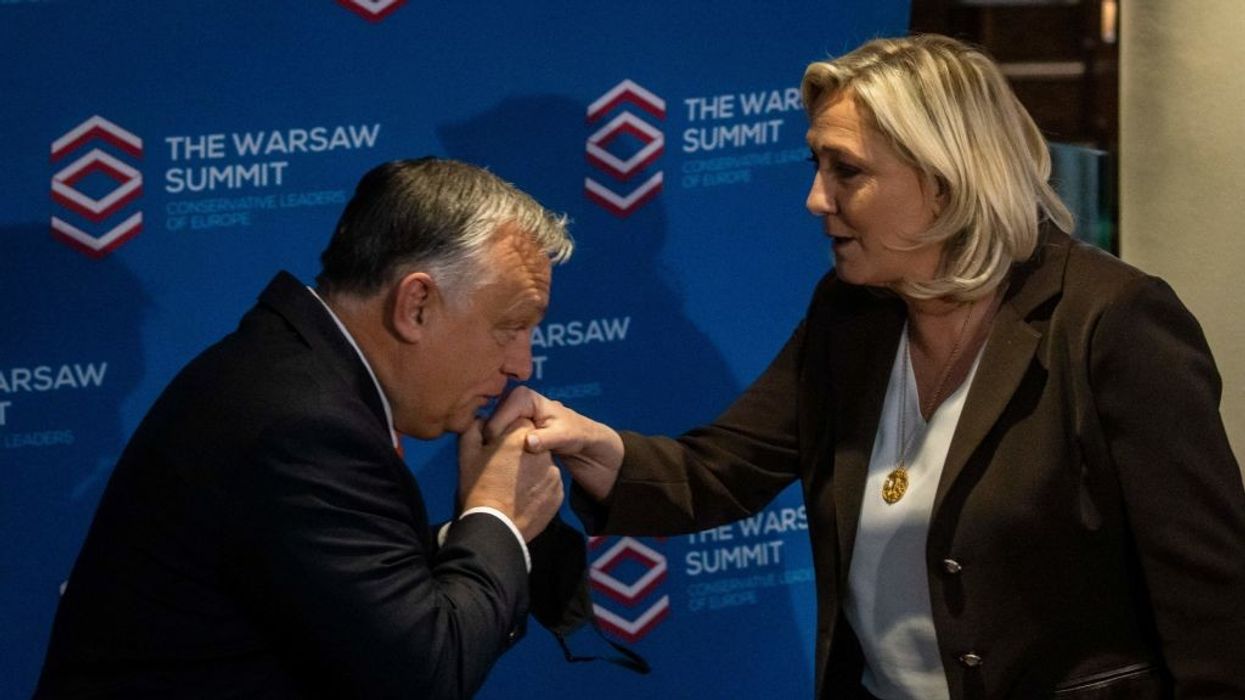
"What do neo-Nazis, fascists, and sycophantic authoritarian bootlickers look like in the European Parliament? This," said one Irish analyst.
Dozens of members of French legislator Marine Le Pen's far-right National Rally—which suffered a crushing defeat at the polls on Sunday—are joining forces with Hungarian Prime Minister Viktor Orbán to form what will be the third-largest bloc in the European Parliament.
Politico reported Monday that 30 members of Le Pen's National Rally (RN) who belonged to the far-right Identity and Democracy bloc are joining Patriots for Europe, which was formed in June by conservative lawmakers including European Parliament members (MEPs) from Orbán's ruling Fidesz party.
Jordan Bardella—the 28-year-old RN MEP who was widely believed to be the frontrunner for French prime minister before his party's thrashing in a national election on Sunday—will serve as the Patriots for Europe's leader in Strasbourg. Patriots for Europe has 84 MEPs representing 12 European Union member states.
"As patriotic forces, we are going to work together in order to retake our institutions and reorient policies to serve our nations and peoples," Bardella said in a statement Monday.
As Euronews reported:
Other national [Patriots for Europe] delegations include Austria's Freedom Party (FPÖ), Spain's far-right Vox, and the Dutch nationalist PVV, each contributing six MEPs. The group also includes three lawmakers from Belgium's Flemish nationalist Vlaams Belang, two from Portugal's Chega!, two from Czechia's Oath and Motorists, two from Greece's Voice of Reason, one from Latvia First party, and one from the Danish People's Party.
Renew Europe, a centrist bloc with 76 European Parliament members, reacted to the new far-right alliance in a social mediapost asserting that "Patriots for Europe are 'patriots' in name only."
"The far right have rebranded. But their mission is the same, to destroy values," Renew Europe added. "Shame on them for supporting the narratives of Europe's enemies."
Commenting on a photo of Patriots for Europe MEPs posted on social media, Irish defense and security analyst Andy Scollick said: "What do neo-Nazis, fascists, and sycophantic authoritarian bootlickers look like in the European Parliament? This."
"Nothing patriotic about them: They would see Europe under the Russian yoke if they got their way," he added. "#PatriotsforEurope = #TraitorsforEurope."

France's left-of-center parties held off a far-right advance in the country's parliamentary elections by building a progressive platform and forming strategic alliances, their supporters say.
Political figures from across the world congratulated France's left-of-center coalition following parliamentary elections on Sunday in which it gained the most seats of any group, outperforming the far-right party that many feared would take control of the National Assembly, in what The Washington Post called "one of the greatest political upsets in recent French history."
In the second and final round of voting, the Nouveau Front Populaire (NFP) won roughly 180 out of the 577 seats in the assembly, far from a majority but more than President Emmanuel Macron's centrist coalition, which won about 160, or Marine Le Pen's far-right Rassemblement National (RN), which won about 140 or 145.
Several parties including the leftist La France Insoumise (LFI), the center-left Parti Socialiste (PS), and Les Écologistes, a green party, joined forces to form the NFP after Macron announced a snap election in early June.
The parties came together out of fear of the RN, which led the polls and had the strongest showing of any party or alliance in the first round of the parliamentary elections on June 30. The NFP also opposed Macron's neoliberal agenda and supported progressive economic policies such as a lower retirement age.
Jeremy Corbyn, member of U.K. parliament and standard-bearer of the British left, said the French results provided "an urgent, valuable lesson."
"Don't concede ground to those who sow division and fear," Corbyn, who himself was reelected a few days ago, wrote on social media. "Build a bold left movement that offers an alternative of inclusion and hope. That is how you defeat the far right."
Similarly, U.S. Sen. Bernie Sanders (I-Vt.) argued that the French results offered confirmation of the popularity of progressive economic platforms like the NFP's.
"Here's a simple fact: If politicians stand with working families, working families will stand with you," Sanders wrote on social media. "As it turns out, lowering the retirement age and raising the minimum wage are very popular. Congratulations to the French left for taking on right-wing extremism and winning."
Ce soir, la justice sociale a gagné.
Ce soir, la justice environnementale a gagné.
Ce soir, le peuple a gagné.
Et ça ne fait que commencer !#VictoireNFP #ElectionsLegislatives2024 pic.twitter.com/3OwoRTdFTG
— Marine Tondelier (@marinetondelier) July 7, 2024
Several members of France's multiracial soccer team, currently competing in the UEFA European Football Championship in Germany, expressed joy and relief at the results of the election back home.
"The victory of the people," midfielder Tchouameni Aurélien wrote on social media.
Forward Marcus Thuram reacted similarly.
"Congratulations to all those who came forward in the face of the danger that hovered over our country," he wrote. "Long live diversity, long live the republic, long live France. The fight continues."
The effort to defeat the far right involved multiple levels of negotiation between left and centrist parties—not just the formation of the NFP, which prevented member parties from running candidates against one another, but also strategic cooperation between the NFP and Ensemble, Macron's own coalition, before Sunday's second round of voting.
Last week, going into the second round, more than 300 of the 577 legislative races had three or more candidates still in contention—in most cases, one NFP candidate, one Ensemble candidate, and one RN candidate. Because of a shared fear of the far right, the NFP and Ensemble negotiated to drop their third-place candidates from more than 220 races so that left and centrist votes wouldn't be split.
The strategy worked, with RN leaders, who last week had been openly speaking about obtaining a parliamentary majority of 289 seats, left with only about half of that figure or less—though even 140 seats marks a significant gain for the party, which had only 88 previously. The tallies are still being finalized, with different media outlets reporting slightly different totals.
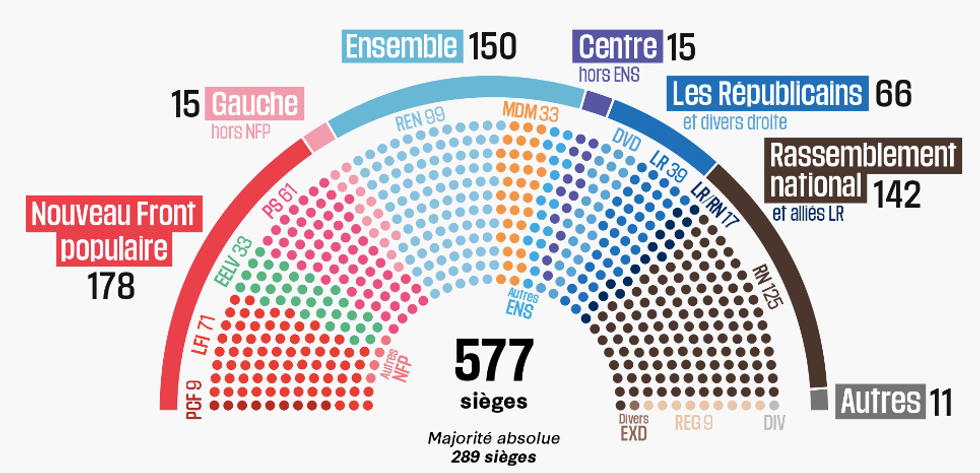 Source: La Libération, based on data from France's interior ministry
Luiz Inácio Lula da Silva, the leftist president of Brazil, praised the "maturity" of the groups that joined together to defeat the far right. Polish Prime Minister Donald Tusk, a centrist, expressed relief in light of the impact an RN victory could have had on the Ukraine war.
"In Paris enthusiasm, in Moscow disappointment, in Kyiv relief," Tusk wrote on social media. "Enough to be happy in Warsaw."
The coalition-building stands as a remarkable accomplishment given the challenges that it entailed: Just building the NFP alliance required tricky negotiation. Left-of-center parties, after decades of discord, formed an alliance for the first time in 2022, but it fell apart last year, and, though the PS was part of that alliance, it was not endorsed by prominent center-left figures such as former President François Hollande, who has backed the NFP.
The NFP parties didn't decide in advance whom they'd put forward for prime minister, and the different factions within the alliance are now jockeying for the position. Many of the more centrist NFP figures have declared that it can't be Jean-Luc Mélenchon, the LFI leader, whom they view as divisive.
In any case, Macron has the power to name the prime minister, and it's not clear if he would be willing to name Mélenchon, who ran against him for president in 2017 and 2022. Macron on Monday declined to accept the resignation of Prime Minister Gabriel Attal, an ally from his own party, explaining that he should stay on "to ensure the stability of the country."
That's likely just a temporary solution: Ensemble had a near-majority in the previous parliament but, having lost more than 80 seats, will no longer be strong enough to avoid a vote of no confidence in the prime minister and his government. Macron will have to name a prime minister that a majority of the incoming National Assembly approve of or risk triggering such votes of no confidence. The newly elected parliamentarians are scheduled to begin their first session on July 18.

Jean-Luc Mélenchon, leader of the leftist La France Insoumise party, called the election results an "immense relief for a majority of people in our country."
This is a developing story… Please check back for possible updates...
Preliminary results from France's parliamentary election on Sunday show that strategic collaboration between the left and allies of President Emmanuel Macron has succeeded in preventing Marine Le Pen's fascist National Rally from winning an absolute majority.
According to projections released shortly after polls closed, Nouveau Front Populaire (NFP)—a coalition of left-of-center parties formed ahead of the snap elections to counter the far-right—is on track to secure the largest number of seats in parliament. The Financial Times reported that NFP is expected to win "anywhere from 170 to 215 seats," while Macron's centrist alliance was "running close behind, with pollsters predicting ranges of 140 to 180 seats, a big drop from the roughly 250 they held in the outgoing National Assembly."
Le Pen's Rassemblement National (RN) is expected to finish third with between 120 and 150 seats.
Following the first round of voting last weekend, hundreds of candidates from Macron's alliance and parties within the NFP dropped out of three-way runoff races in a strategic bid to defeat RN candidates—an effort that appears to have paid off in a major way. RN won the first round of voting and, at the time, appeared to have a chance at an absolute majority.
Jean-Luc Mélenchon, leader of the leftist La France Insoumise party, called the early election results an "immense relief for a majority of people in our country" and urged Macron to resign and allow the left to govern.
"The united left saved the republic," said Mélenchon. "It can begin the ecological and social work that our people, our time, our world, [and] our Europe so badly need."
The Associated Press noted that the leftist leader's speech "is an indication of what's ahead" as coalitions prepare to jockey over who will lead the government.
"He says he will not negotiate with Macron, and Macron has refused to negotiate with him," AP added.

Renowned Canadian author, activist, and filmmaker Noami Klein on Wednesday implored French President Emmanuel Macron to "get out of the way" while urging voters in France to rally behind the left-of-center New Popular Front coalition that analysts say represents the last hope to stop Marine Le Pen's fascist National Rally from taking power.
"There is only one path for French voters to stop the extreme racist right, whose rise has been aided and abetted at every stage by corporatist centrists led by Macron," Klein said on social media. "That path is to support the New Popular Front, running a close second in the polls."
Le Pen's viciously xenophobic National Rally (RN) triumphed in the first round of last week's French elections, winning 33.2% of the vote. New Popular Front (NFP)—an alliance of center-left parties formed last month to thwart a fascist takeover after Macron called snap elections—came in second, with 28%.
Macron's centrist Ensemble coalition finished third with 22.4% of the vote. Critics accused the embattled president of grossly miscalculating support for the far-right.
Leaders of Macron's coalition and the NFP have been scrambling to stymie an RN victory in Sunday's final runoff round, saying they would withdraw candidates from races in districts where other RN opponents have better chances of winning. However, some centrists are more comfortable with far-right rule than they are with progressive left policies, and that worries Klein.
"History tells us that fascism wins when anti-fascist forces refuse to come together to defeat it, with the center fearing a strong left committed to redistribution more than the cruelties of the extreme right," she said. "The NPF has shown that it understands this terrible lesson of European history. It deserves the support of French voters."
"Macron, who created this crisis with years of uninterrupted arrogance, needs to get out of the way," she added.