

SUBSCRIBE TO OUR FREE NEWSLETTER
Daily news & progressive opinion—funded by the people, not the corporations—delivered straight to your inbox.
5
#000000
#FFFFFF
To donate by check, phone, or other method, see our More Ways to Give page.
Daily news & progressive opinion—funded by the people, not the corporations—delivered straight to your inbox.
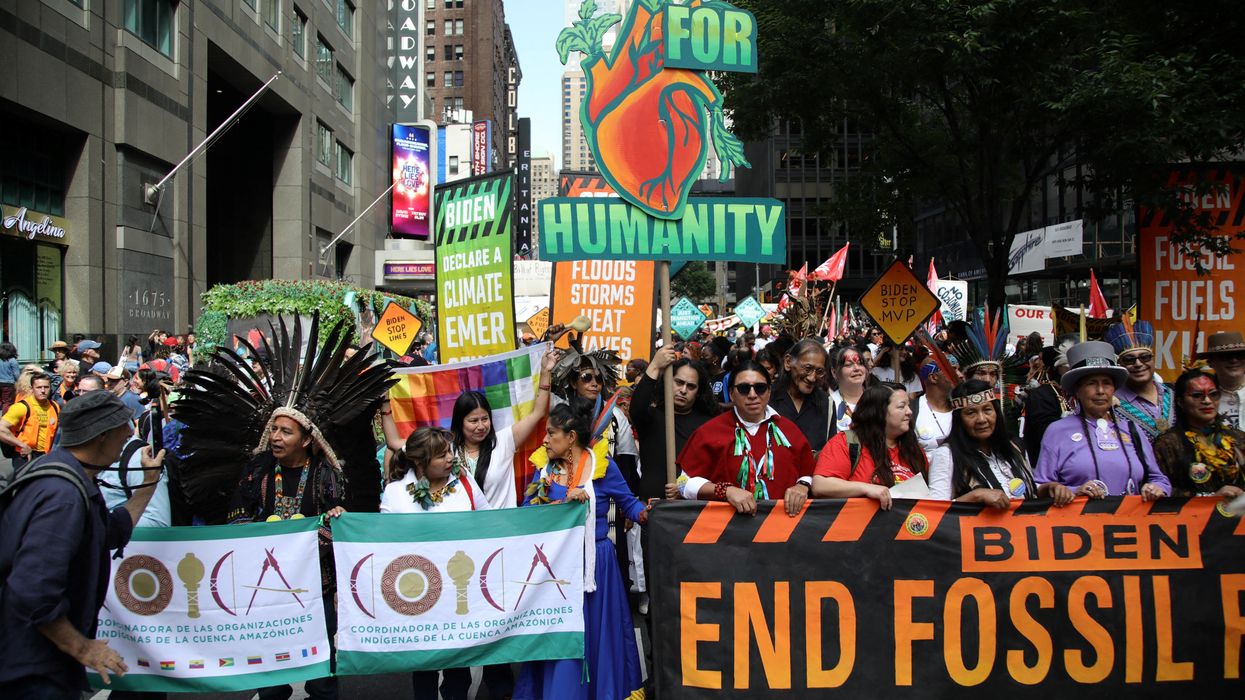
More than a novel, this international public awareness campaign tells the story of how people can rise up and demand change to power our planet in a way that puts human survival before profit.
The apocalypse is not coming. The future is coming, and we don’t yet know what the future holds. Because the future isn’t set yet. It depends on the decisions human beings make right now.
These days, we are seeing more extreme weather events around the world, as the climate crisis escalates. While every individual weather event is a surprise, the overall pattern has long been predicted. Both by our scientists and by our artists. One such artist, Octavia Butler, wrote of a world torn by racism, misogyny, and climate disaster in her 1993 novel, Parable of the Sower.
Lauren Olumina, the protagonist, leads a band of characters to a safe haven on a ravaged planet. Butler had intended to create a Parable series, where the final book focused on climate solutions. Reportedly, she was frustrated in her various attempts to finish the series, because she was unable to envision climate solutions. I find this unsurprising because part of climate disinformation has included obscuring both the problem and all solutions that significantly disrupt the profitability of the fossil fuel industries. Perhaps because she lacked access to this crucial information, Butler never finished the project in her lifetime.
Climate Week was a glimpse of the power that this movement can hold as we move forward.
But a lot has changed since she passed away in 2006. There is a growing climate movement with powerful Black and Indigenous leadership. We have a clear vision of the solutions needed to solve the climate crisis. What we lack is the political will among elected officials and corporate leaders to make the large-scale changes necessary to ensure a livable planet.
And that is where our movements come in. At the Black Hive, we have developed a Black Climate Mandate that lays out the changes needed so that all Black people worldwide can thrive. Ultimately, we believe that our movement for climate justice can be Octavia Butler’s final book—Parable of the Movement. More than a novel, this international public awareness campaign tells the story of how people can rise up and demand change, can build the power to pressure political and industry leaders to divest from fossil fuels and to power our planet in a way that puts human survival before profit. And we don’t just wait for those in power to change—as we build our movement to demand change, we also build structures, networks, and resources for food and energy independence, community care and mutual aid, and climate resiliency.
Meanwhile, in order to ensure a livable future, we need to phase out fossil fuels and other dirty-energy industries, starting with an end to all direct and indirect subsidies and policy incentives these industries receive. As those industries end, we need a just transition for workers—making sure fossil fuel corporations provide retraining and transitioning them to new green jobs, and making sure that they can continue to make a living and support their families as we shift our economy.
We need to prioritize the needs and leadership of those most impacted by the crisis, particularly Indigenous communities. Their local ecological knowledge, lived experiences, and thought leadership are essential to tackling the climate crisis. This includes climate reparations for all frontline communities and workers who are harmed first and worst by both the climate crisis and the polluting industries driving the crisis.
Climate justice is part of a bigger vision of justice. Climate problems and solutions are deeply interconnected with all the other current planetary crises: war, poverty, pollution, forced migration, police and prison violence, and other forms of harm that happen when societies put profit over human safety and survival. All these harms need to be recognized and addressed in all climate policies and climate action strategies.
Recently, the Black Hive participated in New York Climate Week, and over 100,000 people took to the streets. This was an important demonstration to the U.N. Climate Ambition Summit that the people demand change. Our leaders need to listen, and the movement will keep building the pressure until they do.
In Parable of the Sower, the characters find their safe haven. But as the climate crisis escalates, there is no place that can be guaranteed as safe. Now is the time to fight for a bigger picture of justice and safety—one that is worldwide and where no one is left behind. It’s a tall order, and will require a mass movement. Climate Week was a glimpse of the power that this movement can hold as we move forward. Let us aspire to be a Parable of the Movement, Octavia Butler’s final book, the biggest battle in human history, in which—if enough people fight—we can win.
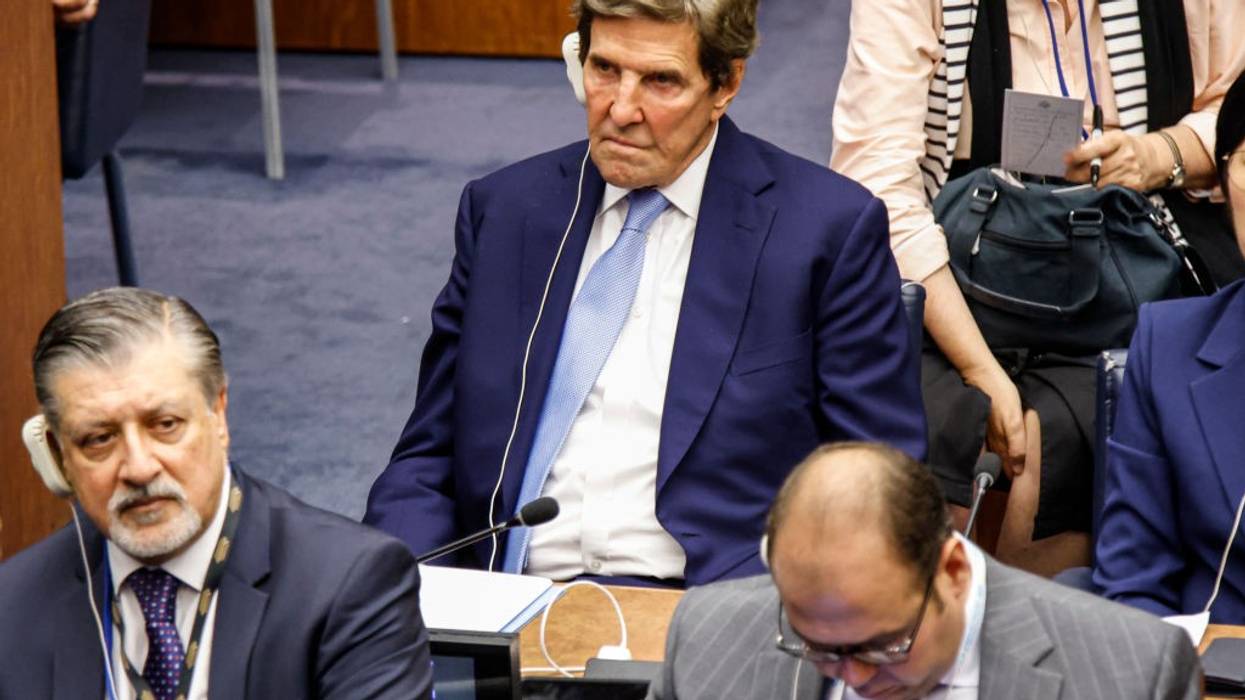
President Joe Biden still has a chance to correct course before COP28.
It was stunning to see U.S. Climate Envoy John Kerry stalking the sidelines of the United Nations’ historic Climate Ambition Summit last week, firmly shut out from the opportunity to speak. The United States isn’t used to being sidelined on the global stage. Indeed it may be the first time in U.N. history that the U.S. was barred from speaking at an international summit.
The U.S. got itself into the climate summit’s “time-out corner” because of its wretched record on fossil fuels. And the stakes couldn’t be higher for President Joe Biden to correct course.
In line with his “Roadmap for a Livable Planet,” U.N. Secretary General António Guterres set strict guidelines for those invited to speak at the summit. Chief among them: concrete plans to phase out fossil fuels.
President Biden can no longer hide his abysmal fossil fuel record behind renewable energy investments. The oil rig in the room has been exposed for all the world to see.
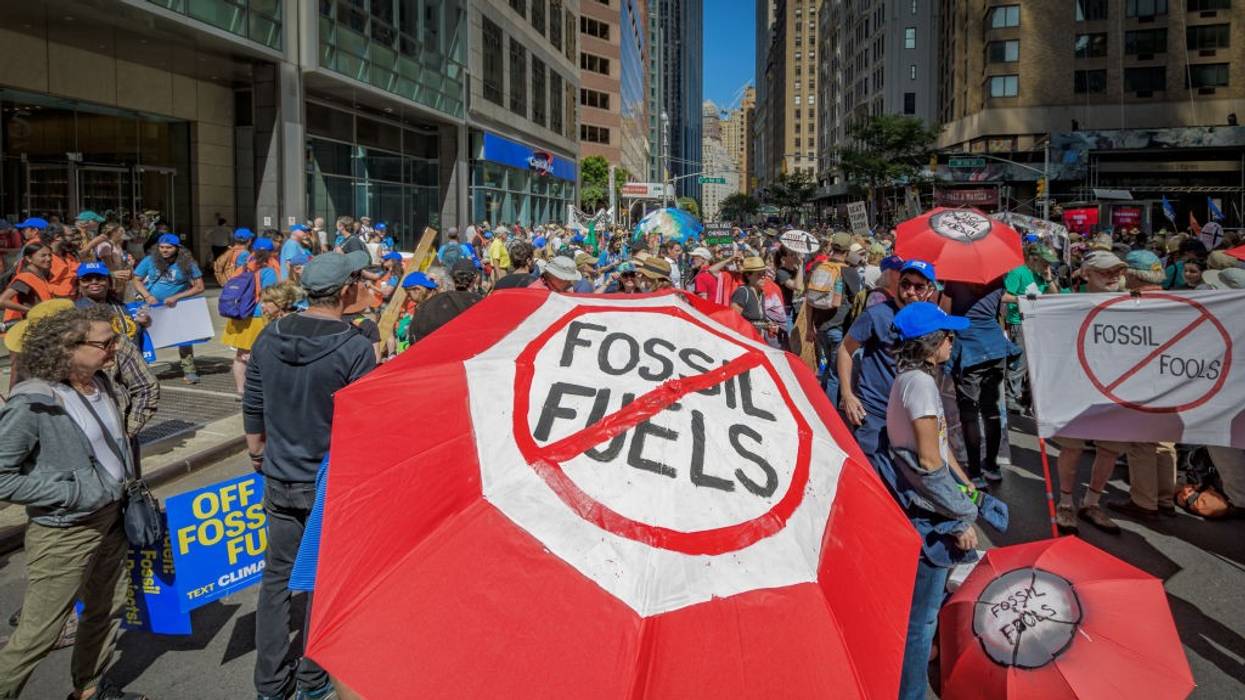
It was that demand that brought us and 75,000 others into the streets on the Sunday ahead of the summit for the “March to End Fossil Fuels.”
After the hottest summer on record and its devastating consequences from Lahaina to Libya, people around the world are waking up to the urgency of ending the extraction and use of oil, gas, and coal, which cause 85% of climate-heating pollution.
That urgency was palpable in Guterres’ opening remarks as he declared to leaders that “the future of humanity is in your hands.”
Indeed, Biden has ample tools at hand to confront fossil fuels and protect humanity. But many of the president’s actions have done more to boost the “foot-dragging, arm-twisting… naked greed of entrenched interests” that Guterres railed against.
Despite its climate rhetoric, the U.S. is the biggest oil and gas producer in the world and the number one exporter of gas.
At a time when the narrow path to a stable climate demands no new fossil fuel expansion, the United States is also the world’s largest expander of oil and gas. The U.S. alone accounts for a full third of planned oil and gas expansion from now through 2050, according to the groundbreaking “Planet Wreckers” report from Oil Change International.
Another new study from Jeremy Symons finds that greenhouse gas emissions from U.S. fossil fuel exports are expected to undermine emissions reductions from the Inflation Reduction Act.
After New York’s historic summit and march, President Biden can no longer hide his abysmal fossil fuel record behind renewable energy investments. The oil rig in the room has been exposed for all the world to see.
It’s telling that while Kerry sat on the sidelines, the only U.S. leader invited to speak was California Gov. Gavin Newsom, whose administration has ramped down oil and gas permitting and just launched a landmark lawsuit against Big Oil. The typically staid U.N. hall erupted in applause when Newsom declared, “This climate crisis is a fossil fuel crisis.”
All this is testament to the incredible strides we’ve made as an advocacy community on fossil fuels. The U.N. Secretary-General holding this summit with its laser focus on fossil fuels is a response to years of vocal clamoring by low-lying nation-states like Tuvalu and Vanuatu, climate scientists, advocacy groups, frontline leaders, and mass mobilizations that have relentlessly pushed the focus from vague ‘climate action’ onto ending oil, gas, and coal.
We have top-down pressure from the U.N. chief, and bottom-up pressure from people around the world who mobilized in 700 actions from the Philippines to Germany, Nepal to the North Pole—all culminating in 75,000 marchers joyfully and resolutely pounding the pavement in New York.
Biden is clearly feeling the pressure. The same day as the summit, the president announced the creation of the American Climate Corps.
Our friend and fellow march organizer, 18-year-old Keanu Arpels-Josiah, astutely pointed out that while it doesn’t address fossil fuels, the move shows “Biden clearly knows he can use his executive powers to take bolder steps on climate.”
In the two months between now and the COP28 climate summit in Dubai, Biden needs to use those powers to make up for drastic missteps and lost time.
The president doesn’t control everything, but he can do much more to protect people and our planet—all without Congress. Essential actions for Biden to take now include:
Biden must also come to COP28 in December with commitments to an updated Nationally Determined Contribution that includes a commitment to stopping all new fossil fuel expansion and phasing out existing production. It should also include a recognition of the greenhouse gas pollution emitted by U.S. fossil fuel exports—a hefty line item that gets put on other countries’ climate balance sheets while evading the U.S.’ emission totals.
Not only will these actions make bold leaps toward a livable future for all, they’ll be hugely beneficial to the economy. The International Energy Agency’s latest report finds that staying below 1.5°C of warming will save $12 trillion worldwide and create more jobs than are lost.
So what is President Biden waiting for to become the global climate leader the world desperately needs?
Taking urgent actions to end fossil fuels can help Biden save face on the world stage and secure his legacy, but he should take them to save people and wildlife from climate catastrophe.
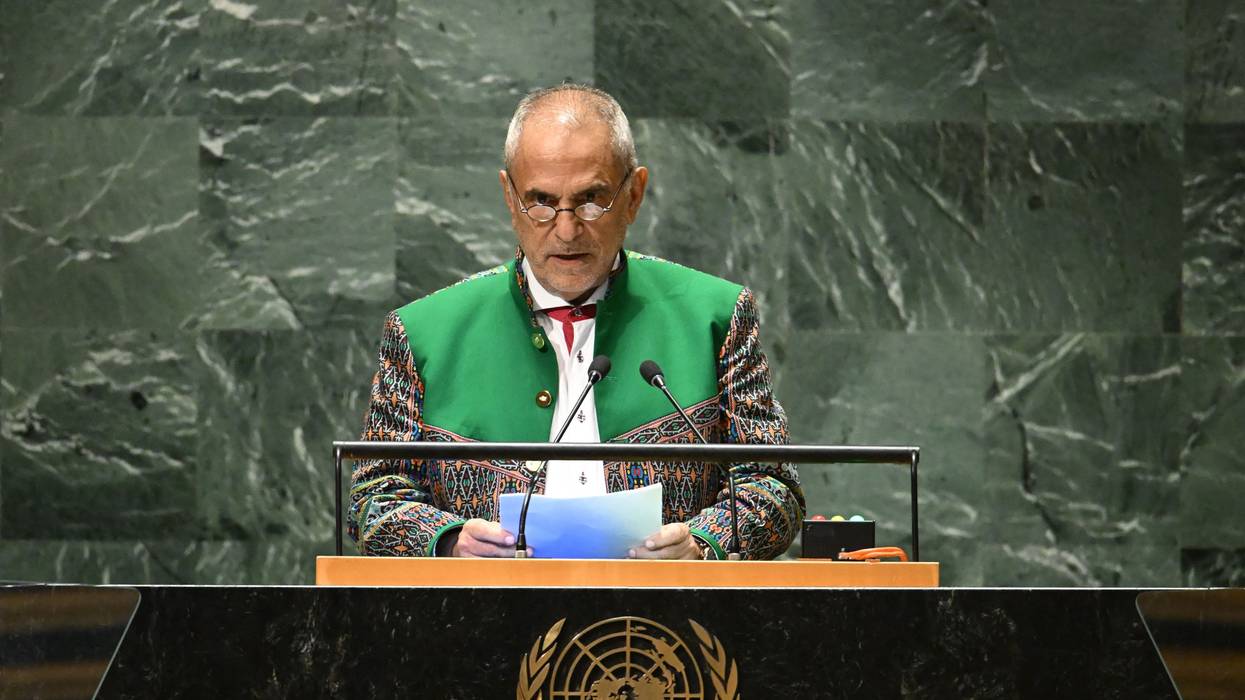
"The endorsement of the fossil fuel treaty proposal by Antigua and Barbuda and Timor-Leste... shows who are the real climate leaders," said the initiative's political director.
Two island nations on Saturday joined the growing bloc of countries endorsing a fossil fuel nonproliferation treaty amid a worsening climate emergency and continued inadequate action by the larger and wealthier polluters most responsible for causing the planetary crisis.
Answering United Nations Secretary-General António Guterres' exhortation at this week's Climate Ambition Summit for countries to accelerate efforts to end fossil fuels, the Caribbean nation of Antigua and Barbuda and Timor-Leste in Southeast Asia announced their support for a binding FFNPT.
Their announcement came on the main stage at the Global Citizen Festival in New York City. The nations became the first non-Pacific island states to support the treaty; Vanuatu, Tuvalu, Tonga, Fiji, the Solomon Islands, and the self-governing New Zealand territory of Niue previously endorsed the agreement.
"The climate crisis is the most existential threat facing all humanity," declared Antigua and Barbuda Prime Minister Gaston Browne. "It doesn't distinguish between European forests and Caribbean waters. Some carry the burden more than others, as in the case of small island developing states. This is why today I'm honored to announce that Antigua and Barbuda join our Pacific friends in calling for a negotiation of a fossil fuel treaty."
"This Treaty will be more than words," Browne continued. "It's a binding plan to end the fossil fuel era, a pledge to a rapid shift to clean energy, a commitment to a future where economies transcend their fossil fuel past, and an assurance that no community is left behind."
"With this endorsement, we send a clear message: unity in purpose, unity in action," he added. "We are proud to become the first Caribbean nation to rally behind this cause, and we invite others to join us."
Timor-Leste President José Ramos-Horta said that his country "stands in solidarity with Pacific nations and is formally joining the call for the negotiation of a fossil fuel treaty."
"Its mission is simple—to halt new fossil fuel ventures, phase out existing ones, and fund a fair shift to clean energy," the Nobel peace laureate added. "It is more than a climate agreement between nations—it is a health, development, and peace accord that can foster genuine wellbeing and prosperity for all."
Timor-Leste's embrace of the FFNPT is considered especially encouraging, as petroleum accounts for the vast majority of the country's export revenue.
Gillian Cooper, political director of the FFNPT Initiative, hailed the development:
At the Climate Ambition Summit, we saw world leaders finally bring fossil fuels to the center stage of climate negotiations. Now the endorsement of the fossil fuel treaty proposal by Antigua and Barbuda and Timor-Leste at the main Global Citizen stage shows who are the real climate leaders. This bold move also shows that even fossil fuel-producing countries want to break free from the grip of oil, gas, and coal, a system imposed on them by wealthy nations. Today Timor-Leste picked a side—and they're clearly saying that we need international cooperation so they are not forced by the fossil fuel industry to continue to expand a product that they know is destablizing the global climate and creating long-term economic dependency and vulnerability.
Launched in 2020 and backed by hundreds of groups, thousands of scientists, and people around the world from youth to grandparents, the FFNPT is based on three pillars:
In addition to the countries mentioned above, the European Parliament, World Health Organization, and scores of cities and other subnational governments have also endorsed the FFNPT, including London, Paris, Los Angeles, Sydney, Lima, Toronto, and the Hawaiian Legislature.
Earlier this month, California became the largest economy in the world to endorse the treaty.
"This climate crisis is a fossil fuel crisis," Democratic California Gov. Gavin Newsom said Wednesday at the Climate Ambition Summit. "It's not complicated. It's the burning of oil. It's the burning of gas. It's the burning of coal. And we need to call that out.
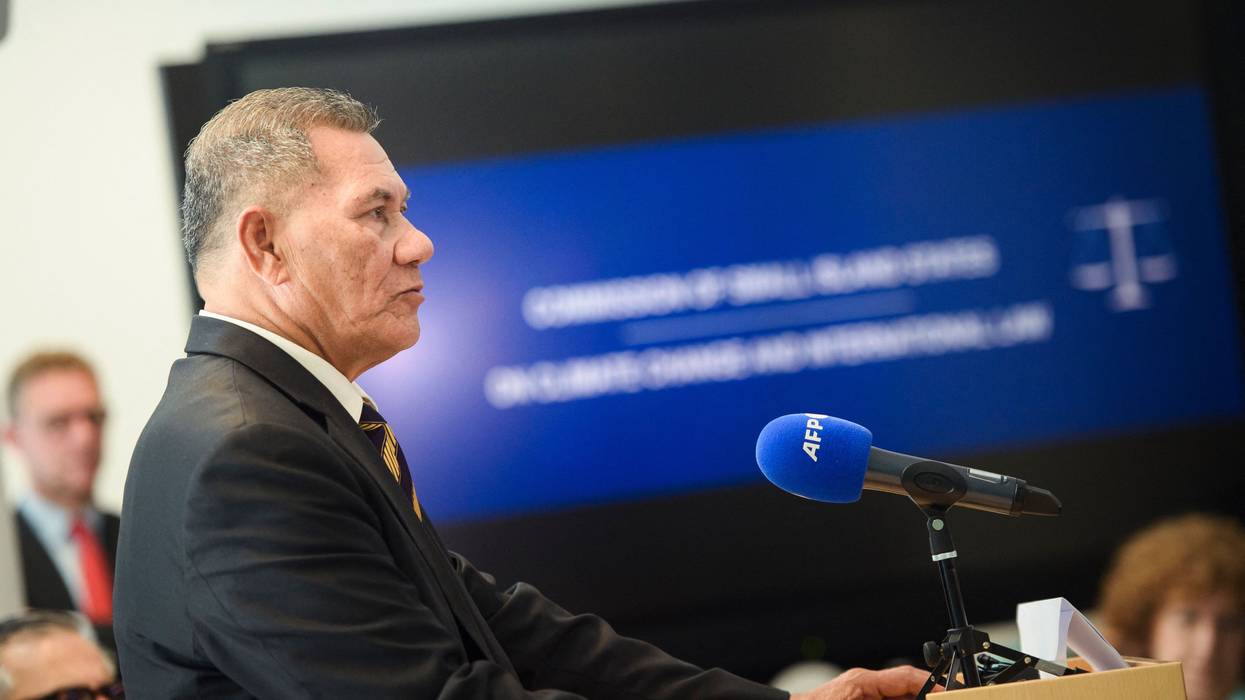
"The longer we remain addicted to fossil fuels, the longer we commit ourselves to mutual decline," Tuvaluan Prime Minister Kausea Natano said at the U.N. Climate Ambition Summit.
As heads of climate-wrecking nations like the United States, China, and Britain declined to attend Wednesday's United Nations Climate Ambition Summit in New York, leaders of Pacific island and other Global South countries renewed the push for a fossil fuel nonproliferation treaty.
The government of Tuvalu is working with neighbors Vanuatu, Fiji, Tonga, the Solomon Islands, and the self-governing New Zealand territory of Niue—all signatories to the Port Vila Call, a framework to a just transition to a fossil-free Pacific—and global partners to draft a FFNPT.
"The longer we remain addicted to fossil fuels, the longer we commit ourselves to mutual decline," Tuvaluan Prime Minister Kausea Natano said at the summit. "A negotiated fossil fuel nonproliferation treaty would complement the Paris agreement and ensure a global just transition.
"We've proven we can mobilize our collective ambition at the multilateral level. The scale of the challenge we face can now only be met with an even greater level of ambition and cooperation," he added. "I traveled thousands of miles over four days to be here today, because I believe in international cooperation and multilateralism. I have faith in our collective humanity and our ability to foster global solidarity to undertake what needs to be done."
Launched in 2020 and backed by hundreds of groups, thousands of scientists, and people around the world from youth to grandparents, the FFNPT is based on three pillars:
In addition to the aforementioned nations, the country of East Timor, the European Parliament, and the World Health Organization have called for a FFNPT. Scores of cities and other subnational governments have also endorsed the FFNPT, including London, Paris, Los Angeles, Sydney, Toronto, and the Hawaiian Legislature.
Earlier this month, California became the largest economy in the world to endorse the treaty.
"This climate crisis is a fossil fuel crisis," Democratic California Gov. Gavin Newsom said at Wednesday's summit. "It's not complicated. It's the burning of oil. It's the burning of gas. It's the burning of coal. And we need to call that out. For decades and decades, the fossil fuel industry has been playing each and every one of us in this room for fools."
Colombian President Gustavo Petro, another supporter of the treaty, said during Wednesday's summit that "the real goal that all countries should have is aiming for zero production and supply of carbon gas and oil. If we don't aim for that as our overarching goal, life will not be saved."
"If we keep on our current track it will be suicide," he added. "We live on coal and gas exports, but if we don't change course it will mean death because those industries are polluting the atmosphere. Fossil capital is a burden for humankind. Fossil fuel subsidies need to be completely eliminated worldwide. That would give us a prospect for the future."
Tzeporah Berman, chair of the Fossil Fuel Nonproliferation Treaty Initiative, said at a press conference Wednesday that "today was a turning point... A growing block of countries is calling for a FFNPT that would ensure an end to expansion of oil, gas, and coal projects, and cooperation on a plan for a managed wind-down that is fast, fair, and financed."
The climate action group Oil Change International blasted what it called wealthy nations' "display of inaction and indifference."
"The handful of rich countries driving oil and gas expansion failed to answer United Nations Secretary-General António Guterres' call for an end to new fossil fuel production," the group noted. "These countries, with the greatest financial means and responsibility to lead a fast and fair global phaseout of production, are instead leading in jeopardizing the global 1.5°C goal."
"Five Global North countries—the United States, Canada, Australia, Norway, and the United Kingdom—are responsible for 51% of carbon dioxide pollution threatened by new oil and gas extraction between 2023 and 2050," Oil Change continued. "If these planet-wreckers were to heed the United Nations secretary-general's call to halt new oil and gas, we could prevent a staggering 100 billion tons of carbon pollution from entering our atmosphere, equivalent to the lifetime emissions of over 620 new coal plants."
"In contrast, countries like Chile, Denmark, France, and Tuvalu were invited to speak at the summit," the group added, "as they have halted fossil fuel expansion and financing as needed to align with 1.5°C."
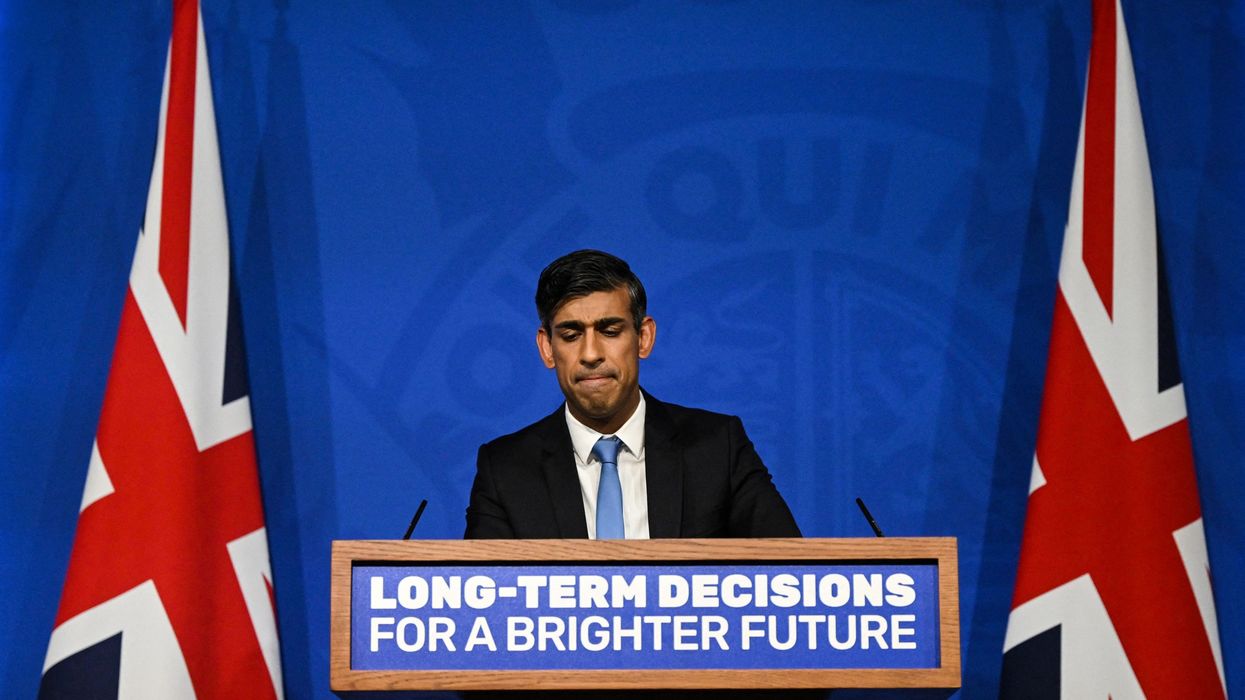
"Sunak's U-turn today will be devastating for the people of the U.K. and for the planet we call home," warned one Scottish Green. "It's nothing short of evil."
Critics across the political spectrum—from Conservative members of Parliament and corporations to Greens and climate campaigners—reacted with anger and resolve Wednesday following the announcement by U.K. Prime Minister Rishi Sunak that his Tory government would retreat from some of its key net-zero commitments.
Speaking Wednesday at the Downing Street Press Briefing Room in London, Sunak said his government is still committed to reaching net-zero by 2050, but in a "more proportionate way" that would bring a "greener planet and a more prosperous future."
The rollback will reportedly include delaying a ban on the sale of petrol- and diesel-powered vehicles from 2030 to 2035, pushing back the phaseout of gas boilers, scrapping energy efficiency targets for some homes, dropping recycling plans, and canceling a planned air travel tax.
"This is a U-turn that will leave the Tories facing in the opposite direction of almost everyone, and finally end their hopes of reelection."
"No one can deny climate change is happening," Sunak said, adding that the county needs "sensible green leadership" instead of false choices that "never go beyond a slogan."
However, Conservative peer Lord Zac Goldsmith—who resigned his ministerial post earlier this summer due to what he called Sunak's climate "apathy"—called the prime minister's reversal "a moment of shame."
"His short stint as PM will be remembered as the moment the U.K. turned its back on the world and on future generations," he added.
Shadow Climate Secretary Ed Miliband led Labour condemnation of the reversal, which he called "a complete farce from a Tory government that literally does not know what they are doing day to day."
Brighton Pavilion Green MP Caroline Lucas slammed what she called Sunak's "coordinated, calculated, and catastrophic rollback."
"What this all reveals is that Sunak really doesn't seem to care about the climate in the slightest—it's little more than an afterthought," Lucas wrote in a Guardian opinion piece published Wednesday.
Sunak must call a general election by January 2025, and his Tories are trailing the opposition Labour Party in opinion polls amid persistently high inflation, slow economic growth, and rising inequality.
"If Sunak mistakenly thinks the climate is merely a political device to draw dividing lines between his party and Labour, he will fail on his own terms," wrote Lucas. "All it will do is draw an ever-greater divide between him and the people he seeks to govern."
Climate campaigners roundly condemned Sunak's decision.
"The government needs to double down now, not U-turn," Kennedy Walker, a U.K. organizer with the climate action group 350.org, said in a statement. "We have the opportunity to show what a transition to a greener economy that works for people and the planet can look like; we need to hold leadership to account to make sure it happens and they follow through on their own promises."
Riffing on the government's "long-term decisions for a brighter future" slogan, Extinction Rebellion U.K. wrote on the social media site X: "Short-term decisions for a shitter future. Remember, this government took £3.5 million in donations from Big Oil and other industries before licensing new gas and oil."
Many companies including automaker Ford and energy giant E.ON joined in criticism of the rollback.
"Our business needs three things from the U.K. government: ambition, commitment, and consistency. A relaxation of 2030 would undermine all three," Ford U.K. chair Lisa Brankin said Wednesday. "We need the policy focus trained on bolstering the EV market in the short term and supporting consumers while headwinds are strong: infrastructure remains immature, tariffs loom, and cost-of-living is high."
Some critics noted that Sunak's announcement came on the same day the leaders of many nations—but not Britain or the world's two top carbon polluters, China and the United States—gathered in New York for the United Nations Climate Ambition Summit.
"We're in a climate emergency. The deadly impacts of climate change are here now and we have to act urgently," Labour London Mayor Sadiq Khan—the only U.K. speaker at the summit—told The Guardian Wednesday. "We have seen record high temperatures in London earlier this month and the hottest ever July. Over the last two years, we have experienced unprecedented wildfires and flash floods, destroying homes and livelihoods."
"This government's response flies in the face of common sense and shows they are climate delayers," Khan added. "It beggars belief that not only are they watering down vital commitments, but they are also passing up the opportunity to create green jobs, wealth, and lower energy bills—as well as failing to give investors the certainty they need to boost the green economy."
Sunak's reversal also infuriated many people in Scotland.
"Rishi Sunak has blood on his hands," National Union of Students Scotland president and Scottish Young Greens co-convener Ellie Gomersall told The National. "His excuse? It's too costly. Well then all the more kudos to the Scottish government who are still moving forward with net-zero policies like low-emission zones, phasing out gas boilers, cheaper public transport, all the while on a budget severely restrained by the confines of devolution."
"And of course when the Scottish government does try to implement simple yet effective measures like a deposit return scheme, Westminster comes along and blocks it," she added. "Sunak's U-turn today will be devastating for the people of the U.K. and for the planet we call home. It's nothing short of evil."
Alistair Heather, a Scottish writer and TV presenter, told The National that he was "almost pleased" by Sunak's announcement.
"This is a U-turn that will leave the Tories facing in the opposite direction of almost everyone, and finally end their hopes of reelection," he explained. "For mainstream voters, who understand that a clear, urgent movement of travel towards a green future is the best chance we have of mitigating the worst effects of the climate collapse, the Tories have made themselves completely unelectable. Good... Fuck the Tories. Mon the independence."
"With the Left AWOL, our species is being quick-marched to extinction."
The outrage was felt far beyond U.K. shores.
"At a time when the U.K. should be providing global leadership in transitioning off fossil fuels, especially in recognition of the impact its historical emissions have had in bringing about the climate crisis, the U.K. government is considering backtracking on already insufficient commitments," 350.org Europe regional director Nicolò Wojewoda said in a statement.
Yanis Varoufakis, a former Greek finance minister who heads the left-wing MeRA25 party, wrote on X that "Sunak's U-turn is a reflection of the total Europe-wide collapse of the market-based, neoliberal consensus on how to tackle the climate crisis. It marks the center‐right's new path."
"And with the Left AWOL," he added, "our species is being quick-marched to extinction."

We can still limit the rise in global temperature to 1.5°C and build a world of clear air, green jobs, and affordable clean power for all.
The following are remarks, as prepared for delivery, given by U.N. Secretary-General António Guterres at the start of his Climate Ambition Summit in New York on September 20, 2023. For Common Dreams' coverage of the speech, see here.
Excellencies, friends,
Our focus here is on climate solutions—and our task is urgent. Humanity has opened the gates of hell. Horrendous heat is having horrendous effects. Distraught farmers watching crops carried away by floods; sweltering temperatures spawning disease; and thousands fleeing in fear as historic fires rage.
Climate action is dwarfed by the scale of the challenge. If nothing changes we are heading toward a 2.8°C temperature rise—toward a dangerous and unstable world.
We must make up time lost to foot-dragging, arm-twisting, and the naked greed of entrenched interests raking in billions from fossil fuels.
But the future is not fixed. It is for leaders like you to write it. We can still limit the rise in global temperature to 1.5°C. We can still build a world of clear air, green jobs, and affordable clean power for all.
The path forward is clear. It has been forged by fighters and trailblazers—some of whom are with us today: activists refusing to be silenced; Indigenous Peoples defending their lands from climate extremes; chief executives transforming their business models and financiers funding a just transition; mayors moving to a zero-carbon future; and governments working to stamp out fossil fuels and protect vulnerable communities.
But if we are to meet the 1.5°C limit and protect ourselves from climate extremes, climate champions, particularly in the developing world, need solidarity. They need support, and they need global leaders to take action. Action to reduce emissions.
The move from fossil fuels to renewables is happening—but we are decades behind. We must make up time lost to foot-dragging, arm-twisting, and the naked greed of entrenched interests raking in billions from fossil fuels.
The proposed Climate Solidarity Pact calls on major emitters—who have benefited most from fossil fuels—to make extra efforts to cut emissions, and on wealthy countries to support emerging economies to do so.
And the Acceleration Agenda I proposed calls on governments to hit fast forward so that developed countries reach net zero as close as possible to 2040, and emerging economies as close as possible to 2050 according to the principle of common but differentiated responsibilities.
It also urges countries to implement a fair, equitable, and just energy transition, while providing affordable electricity to all: by ensuring credible plans to exit coal by 2030 for OECD countries and 2040 for the rest of the world; by ending fossil fuel subsidies—which the IMF estimates reached an incredible $7 trillion in 2022; and by setting ambitious renewable energy goals in line with the 1.5°C limit.
The Acceleration Agenda also calls for climate justice. Many of the poorest nations have every right to be angry. Angry that they are suffering most from a climate crisis they did nothing to create. Angry that promised finance has not materialized. And angry that their borrowing costs are sky-high.
We need a transformation to rebuild trust. Governments must push the global financial system towards supporting climate action. That means putting a price on carbon and overhauling the business models of Multilateral Development Banks so that they leverage far more private finance at reasonable cost to developing countries.
All parties must operationalize the Loss and Damage Fund at COP28. Developed countries must meet the $100 billion commitment, replenish the Green Climate Fund, and double adaptation funding. And everyone must be covered by an early warning system by 2027—by implementing the Action Plan we launched last year.
At the same time, my Acceleration Agenda calls for business and financial institutions to embark on true net zero pathways. Shady pledges have betrayed the public trust. Shamefully, some companies have even tried to block the transition to net zero—using wealth and influence to delay, distract, and deceive. Every company that truly means business must create just transition plans that credibly cut emissions and deliver climate justice, in line with the recommendations of my High-Level Expert Group.
Excellencies, friends,
The future of humanity is in your hands—in our hands.
One Summit will not change the world. But today can be a powerful moment to generate momentum that we build on over the coming months, and in particular at the COP.
We can—and we must turn up the tempo. Turn plans into action. And turn the tide.
Thank you.

"We must make up time lost to foot-dragging, arm-twisting, and the naked greed of entrenched interests raking in billions from fossil fuels."
United Nations Secretary-General António Guterres kicked off his one-day Climate Ambition Summit at U.N. headquarters in New York City on Wednesday with a simple, clear, and resounding message for world leaders: do more.
"Humanity has opened the gates of hell" by unleashing potent levels of greenhouse gas emissions into the environment since the Industrial Revolution, Guterres told the the audience, which notably did not include some leaders of top polluting nations—such as U.S. President Joe Biden, U.K. Prime Minister Rishi Sunak, and Chinese President Xi Jinping—who refused to attend the event.
"Horrendous heat is having horrendous effects," Guterres said, echoing his Tuesday speech at the U.N. General Assembly. "Distraught farmers watching crops carried away by floods; sweltering temperatures spawning disease; and thousands fleeing in fear as historic fires rage."
"Climate action is dwarfed by the scale of the challenge," he continued. Absent dramatic reforms, humanity is heading toward "a dangerous and unstable world," with the global temperature set to soar 2.8°C above preindustrial levels. Already, human activity—especially the burning of fossil fuels—has driven heated the planet by about 1.2°C.
"The future of humanity is in your hands—in our hands."
Under the 2015 Paris climate agreement, nearly every nation on Earth has agreed to work on keeping global temperature rise this century below 2°C, with a target limit of 1.5°C. However, as scientific analyses have repeatedly found over the past eight years, parties to the deal are still way off track.
Current projections are alarming, "but the future is not fixed," Guterres said, emphasizing that the 1.5°C goal is still in reach. "We can still build a world of clear air, green jobs, and affordable, clean power for all."
"The path forward is clear," he declared. "It has been forged by fighters and trailblazers—some of whom are with us today: Activists refusing to be silenced; Indigenous peoples defending their lands from climate extremes; chief executives transforming their business models and financiers funding a just transition; mayors moving towards to a zero-carbon future; and governments working to stamp out fossil fuels and protect vulnerable communities."
Warning that the global community is decades behind where it should be in the shift to renewables, the U.N. chief charged that "we must make up time lost to foot-dragging, arm-twisting, and the naked greed of entrenched interests raking in billions from fossil fuels."
Guterres renewed his call for developed countries to reach net-zero as close as possible to 2040, emerging economies to achieve that as close as possible to 2050, and all nations "to implement a fair, equitable, and just energy transition, while providing affordable electricity to all."
"Many of the poorest nations have every right to be angry—angry that they are suffering most from a climate crisis they did nothing to create; angry that promised finance has not materialized; and angry that their borrowing costs are sky-high," he noted. "We need a transformation to rebuild trust."
Shifting from English to French—another official language of the U.N.—Guterres urged governments to push the global financial system toward supporting climate action, including by overhauling the business models of multilateral development banks to better help developing countries.
He also called for operationalizing the Loss and Damage Fund at COP28, the next U.N. climate summit for Paris agreement parties, hosted in November by the United Arab Emirates—which is under fire for appointing an oil executive as the conference president.
"The future of humanity is in your hands—in our hands," added Guterres, who was forced to leave early on Wednesday for a U.N. Security Council meeting that was scheduled after he announced the climate event. "One summit will not change the world. But today can be a powerful moment to generate momentum, that we build on over the coming months, and in particular at the COP."
"We can—and we must—turn up the tempo," he concluded. "Turn plans into action. And turn the tide."
Governments are being asked to commit to more ambitious emission reduction commitments for 2030 and beyond by 2025, as well as to boost climate finance commitments from rich nations.
On September 20, the U.N. Secretary-General António Guterres is hosting a Climate Ambition Summit seeking to galvanize greater climate action from world leaders. Coming on the heels of the powerful March to End Fossil Fuels last weekend, this summit continues the pressure on governments to meet the urgency of the moment.
Despite this year’s grim series of extreme climate-fueled disasters and record-breaking temperatures—part of a trend of worsening climate impacts—global heat-trapping emissions continue their alarming rise. The big question, though, is whether world leaders will show up and deliver—or will they, once again, fail us?
Back in March of this year, when the sobering IPCC AR6 Synthesis Report was released, the U.N. Secretary-General made a powerful speech calling the scientific report a “how-to guide to defuse the climate time-bomb.” He also called for a quantum leap in climate action and announced an Acceleration Agenda for governments, the financial sector, and businesses. The upcoming Climate Ambition Summit will serve as an opportunity for those who have taken up the challenge to announce specific actions and commitments to deliver on this agenda.
The three tracks for the Acceleration Agenda are Ambition, Credibility, and Implementation, outlined in more detail here.
Governments are being asked to commit to more ambitious emission reduction commitments for 2030 and beyond by 2025, as part of the regular cycle of updates in line with the latest science called for in the Paris agreement, as well as to boost climate finance commitments from rich nations.
Secretary-General Guterres is using the full moral and convening power of his position to shine the light on an urgent global crisis and genuine solutions to address it.
At the same time, businesses, states, and others making commitments to net zero goals are being asked to ensure that these are robust commitments, with high standards for integrity and without harmful loopholes designed to perpetuate business-as-usual fossil fuel use while misleadingly invoking carbon management technologies as a panacea. A session on Loss and Damage is designed to help deliver on this critical climate justice outcome for COP28.
This is not meant to be a talk-fest, full of hot air and meaningless bloviation. This is a summit that is meant to be action-oriented. Secretary-General Guterres has made clear that countries that want to participate prominently in speaking roles must come to the table with a tangible increase in their climate commitments.
Some major world leaders—including U.S. President Joe Biden, British PM Rishi Sunak, and China’s President Xi Jinping—have already indicated that they will not attend the summit. (Special Envoy John Kerry is expected to represent the United States.) That is a worrying political signal about the seriousness with which countries are taking the goals of the summit.
Secretary-General Guterres is using the full moral and convening power of his position to shine the light on an urgent global crisis and genuine solutions to address it. Of course, the U.N. cannot compel national governments to do anything, and national governments have sovereignty over their decisions, but they will certainly feel the heat from their own people if they fail to step up. And meanwhile, climate-vulnerable countries are being forced to contend with impacts they have no choice over—impacts that are also undermining sustainable development goals—because of decisions imposed by richer, major polluters.
As the weekend’s climate march showed, all eyes are on world leaders to do better, and young people especially have run out of patience for half measures as they see their future threatened.
Here in the U.S., despite important progress on clean energy secured through the Inflation Reduction Act and other federal and state policies, fossil fuel production and exports continue to expand and threaten to undermine that forward momentum.
The goals of the summit are for nations—especially richer countries and major emitters—to provide clear plans and commitments to advance climate action, including through:
The Climate Ambition Summit is one important political moment on the way to COP28 later this year. The goals of the summit are very much in accord with what we will be fighting for at COP28. Success at COP28 depends on securing significant footholds ahead of time that can help increase the level of goodwill and cooperation among nations to secure more ambitious and just outcomes at the U.N. climate conference.
In addition to this summit, world leaders must use every opportunity to make multilateral and bilateral progress on climate issues ahead of COP28, to ensure that nations arrive at COP in the best position to consolidate that progress and deliver a robust outcome. These opportunities include a meeting hosted by South Africa and Denmark on responding to the Global Stocktake report on September 21 ahead of a workshop October 12-14; Meetings to address operationalizing the Loss and Damage fund, including a ministerial meeting on September 22 and the fourth Transitional Committee meeting on October 17-20; the conference for the second replenishment of the Green Climate Fund on October 5; and the fall meetings of the World Bank and the IMF on October 9-15.
As a relatively rich country, the largest contributor to historical heat-trapping emissions, and a leading producer and exporter of fossil fuels, the U.S. certainly has an important responsibility to help deliver on global climate goals. The Biden administration and Congress simply must do more, and faster.
It’s in our own self-interest to limit catastrophic climate change, and it is the only way to unlock the necessary reciprocal actions from other countries required to meet our collective global climate goals.
Self-interested and narrow geopolitical fights, as well as obstruction and deception from the fossil fuel industry, remain very significant challenges to addressing the climate crisis. But shame on world leaders if a year like this one—filled with tremendous suffering and exorbitant costs from human-caused climate change, and on track to be one of the hottest on record—is not enough to make them rise to the occasion.

The U.S. president's no-show is "a betrayal to those who have rallied for him and a missed opportunity for him to deliver on his climate commitments," said 350.org's North American director.
U.S. President Joe Biden is drawing anger from environmental groups for opting not to attend this week's Climate Ambition Summit convened by United Nations Secretary-General António Guterres, a gathering billed as an effort to rally countries around plans to urgently phase out planet-warming fossil fuels as the window for action closes.
Biden's climate envoy, John Kerry, is set to attend the Wednesday summit as the U.S. representative, and he is not expected to speak.
"President Biden's decision not to attend is a betrayal to those who have rallied for him and a missed opportunity for him to deliver on his climate commitments," Jeff Ordower, the North American director of 350.org, said in a statement Tuesday.
"It is a disgrace that President Biden is skipping the Climate Ambition Summit," Ordower continued. "The president is dodging accountability to U.N. Secretary-General Guterres by refusing to halt new fossil fuel projects and rejecting Guterres' invitation to be a climate leader and back up his words with substantive action. Biden's inaction reveals how he shamelessly continues to sacrifice some of the most impacted Black, Brown, and Indigenous communities in service to an energy strategy that continues to privilege oil barons over those on the frontlines."
The event will take place on the sidelines of the U.N. General Assembly in New York City just days after more than 75,000 people took to the streets there to demand aggressive climate action from the U.S., the largest historical emitter of greenhouse gases and the world's biggest contributor to planned fossil fuel expansion.
"Showing up would mean exposing his inadequate climate policies and relentless support for fossil fuels on the global stage."
According to a report released last week by Oil Change International (OCI), planned oil and gas extraction in the U.S. accounts for more than a third of prospective fossil fuel expansion worldwide through 2050. OCI dubbed the U.S. "planet-wrecker-in-chief."
Allie Rosenbluth, U.S. program manager at OCI, said it's "no wonder" that Biden has opted to no-show the Climate Ambition Summit, "since showing up would mean exposing his inadequate climate policies and relentless support for fossil fuels on the global stage."
"Biden should be worried about this climate hypocrisy," said Rosenbluth.
In the lead-up to Wednesday's summit, Guterres has expressed hope that the event will help spur a "quantum leap" in the emissions reduction pledges of rich nations, which are disproportionately responsible for greenhouse gas pollution that is fueling increasingly extreme and deadly weather disasters across the planet.
But while Guterres has reportedly received requests from more than 100 countries to speak at the summit, the leaders of some of the world's major polluters—including the U.S., China, and the United Kingdom—aren't expected to attend.
"That is a worrying political signal about the seriousness with which countries are taking the goals of the summit," Rachel Cleetus, policy director of the Union of Concerned Scientists, wrote Monday. "Shame on world leaders if a year like this one—filled with tremendous suffering and exorbitant costs from human-caused climate change, and on track to be one of the hottest on record—is not enough to make them rise to the occasion."
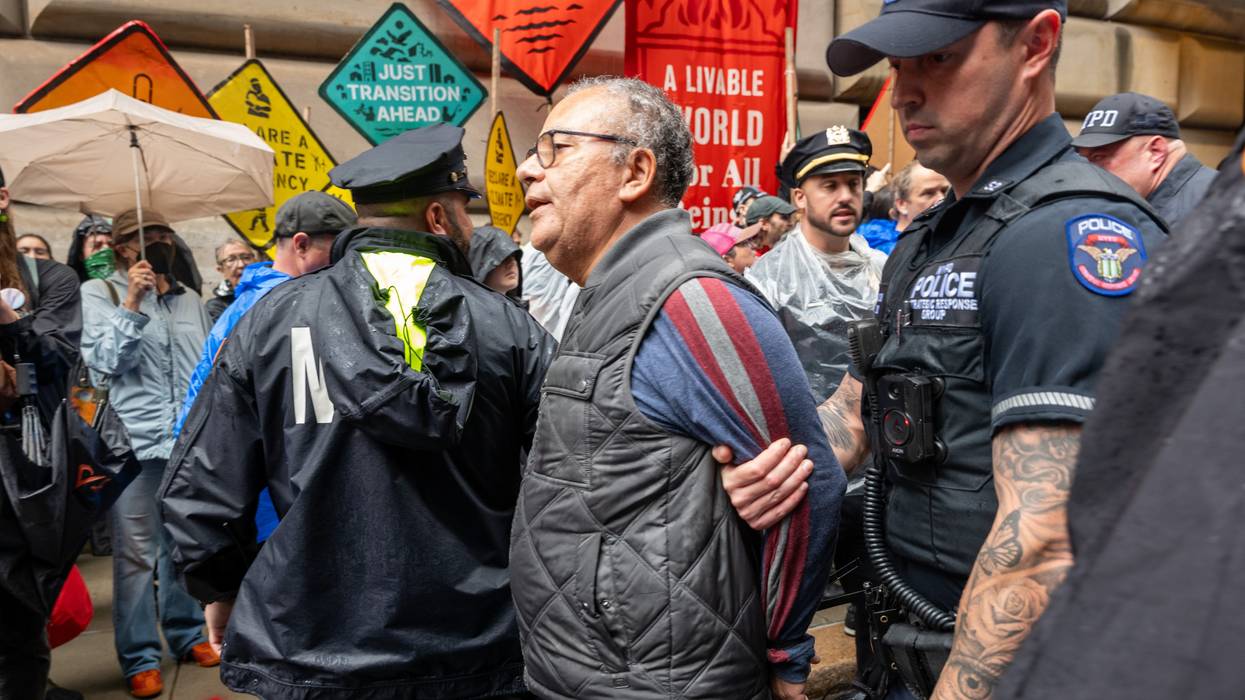
The activist group Climate Defiance asked: "Why are we getting handcuffed while people who literally torch the planet get celebrated for their 'civility' and their 'moderation'?"
A day after tens of thousands of climate activists marched through Manhattan's Upper East Side demanding an end to oil, gas, and coal production, thousands more demonstrators hit the streets of Lower Manhattan Monday, where more than 100 people were arrested while surrounding the Federal Reserve Bank of New York to protest fossil fuel financing.
Protesters chanted slogans like "No oil, no gas, fossil fuels can kiss my ass" and "We need clean air, not another billionaire" as they marched from Zuccotti Park—ground zero of the 2011 Occupy Wall Street movement—to pre-selected sites in the Financial District. Witnesses said many of the activists attempted to reach the New York Stock Exchange but were blocked by police.
"We're here to wake up the regulators who are asleep at the wheel as they continue to let Wall Street lead us into ANOTHER financial crash with their fossil fuel financing," the Stop the Money Pipeline coalition explained on social media.
Local and national media reported New York Police Department (NYPD) officers arrested 114 protesters and charged them with civil disobedience Monday after they blocked entrances to the Fed building. Most of those arrested were expected to be booked and released.
"I'm being arrested for exercising my First Amendment right to protest because Joe Manchin is putting a 300-mile-long pipeline through my home state of West Virginia and President [Joe] Biden allowed him to do it for nothing in return," explained Climate Defiance organizer Rylee Haught on social media, referring to the right-wing Democratic senator and the Mountain Valley Pipeline.
As she was led away by an NYPD officer, a tearful Haught said Biden "sold us out."
"He promised to end drilling on federal lands, and he's selling out Appalachia's future for profit," she added.
Responding to the "block-long" line of arrestees, Climate Defiance asked: "Why are we getting handcuffed while people who literally torch the planet get celebrated for their 'civility' and their 'moderation'?"
Alicé Nascimento of New York Communities for Change told WABC that the protests—which are part of Climate Week and are timed to coincide with this week's United Nations Climate Ambition Summit—are "our last resort."
"We're bringing the crisis to their doorstep and this is what it looks like," said Nascimento.
As they have at similar demonstrations, protesters called on Biden to stop approving new fossil fuel projects and declare a climate emergency. Some had a message for the president and his administration.
"We hold the power of the people, the power you need to win this election," 17-year-old Brooklynite Emma Buretta of the youth-led protest group Fridays for Future told WABC. "If you want to win in 2024, if you do not want the blood of my generation to be on your hands, end fossil fuels."