

SUBSCRIBE TO OUR FREE NEWSLETTER
Daily news & progressive opinion—funded by the people, not the corporations—delivered straight to your inbox.
5
#000000
#FFFFFF
To donate by check, phone, or other method, see our More Ways to Give page.
Daily news & progressive opinion—funded by the people, not the corporations—delivered straight to your inbox.
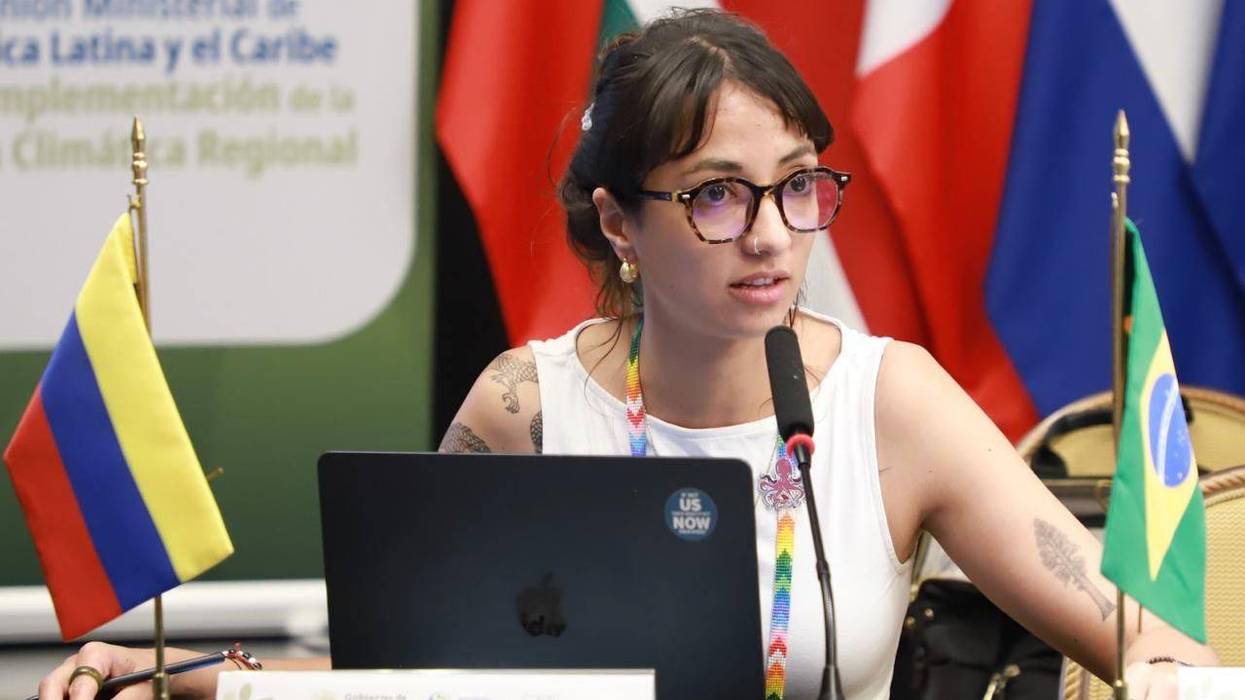
Daniela Durán González’s words felt less like a procedural objection and more like an oracle speaking truth in the court of self-appointed climate policy gods.
The final moments of United Nations climate summits usually follow a familiar script. In the closing plenary, decisions are gaveled through, despite several powerful objections stated by delegates from climate-vulnerable countries and quietly noted by the Conference of Parties presidency, and the appearance of full consensus by all governments is carefully preserved—no matter how compromised the outcome actually is.
At COP30 in Brazil, that script was nearly held with business as usual.
By the final plenary, meaningful references to fossil fuel phaseout, pushed by a growing number of countries, had already been stripped from the presented outcome text. Many months of organizing and campaigning by civil society, increasingly dire scientific warnings, and pressure from leaders in Brazil and some of the most climate-vulnerable nations had been erased. The fossil fuel omission left behind a painful awareness of the continued death and destruction of communities and land that will inevitably result from this inaction. The disappointing outcome was sadly to be expected, but that didn’t make the moment any less heavy.
Civil society engages in COPs year after year, not because we believe these negotiations will save us, but because they are sites of power, and nonengagement would signal the loss of resolve. We come to stop devastating outcomes from getting worse, to confront decision-makers face to face, to hold governments accountable in real time, and to intervene with sustainable and equitable solutions that are rising from frontline and grassroots communities.
The climate emergency is a mirror, reflecting back to humanity that how we are living with the Earth and each other is existentially flawed.
But something unusual happened in the final COP30 plenary that many of us were thrilled to witness. The climate negotiator from Colombia lifted her flag and spoke out.
Daniela Durán González, head of international affairs at the Colombian Ministry of Environment and Sustainable Development, raised a procedural objection and disrupted the final conference procedures. The mood in the room shifted instantly, and what had felt preordained suddenly felt like a seismic eruption. I remember exchanging glances with my colleagues as we rose to our feet, cheering as the weight of the moment sank in. For a brief, electric moment in time, the machinery of managed consensus was forced to stop.
Throughout COP30, negotiators wrestled with the need to scale up finance—especially for adaptation; commitments to mitigation efforts; and deep political divisions over whether and how to confront the root causes of climate change, including by advancing just transition pathways. At the center of those divisions and heated discourses were fossil fuels—the source of most global greenhouse gas emissions. Despite support from roughly 80 countries for including language on a roadmap to phase out fossil fuels, opposition from major producing nations and others prevented the inclusion of any explicit mention of fossil fuels in the final outcome text.
Instead of addressing the source of the crisis, the agreed outcome text tinkered only on the margins with some vague commitment to tripling adaptation finance by 2035 and a focus on advancing voluntary implementation initiatives, while abandoning a direct confrontation of fossil fuel phaseout that many delegates had sought.
COP30 unfolded amid a growing and dangerous consolidation of power further aggravating and entrenching inequity. Many of the world’s wealthiest governments and global elites are well aware not only of the accelerating climate crisis, but simultaneously of biodiversity collapse and social instability. Because they are dependent on the fossil fuel economy for their wealth and power, these leaders are willing to do anything but stop the extraction of coal, oil, and gas. Rather than changing course (and exploring other energy sources), many major players are preparing to survive the polycrisis that they themselves are inciting, by escaping to fortified enclaves, privatized resilience, and militarized borders—while the rest of the world absorbs the fallout.
Science offers no room for denial about where all of this is heading. Under existing climate policies, global warming could reach nearly 2.8°C. While countries have strengthened current national climate pledges, even if honored, the world would still be moving toward 2.3-2.5°C of global warming. Any of these scenarios is a catastrophic overshoot. What we call “climate disasters” are, in truth, interlocking ecological, social, and economic crises unfolding simultaneously. Every fraction of a degree of warming deepens the wound that’s inflicted on forests, oceans, ice, and human communities alike. We are talking about forests that breathe life into the Earth, rivers that carry the water of life, soils that sustain our food.
The world’s richest corporations and governments have built their wealth on fossil fuel extraction and domination, and they will not suddenly stop these operations on their own. More than 1,600 fossil fuel lobbyists roamed the halls of COP30, their presence outnumbering every party’s delegation except Brazil’s and setting a new deplorable record. Throughout the conference, fossil fuel-producing countries worked to revert the negotiations back to narrow discussions of emission reductions alone, protecting their expansion agenda while presenting the appearance of action. This is why organizing and resistance by civil society are so essential.
The climate crisis is a symptom of deeper, interlocking crises—racial, economic, ecological, and spiritual—rooted in an ideology of supremacy that treats land, water, life, and people as disposable. Indigenous, Black, brown, and Global South communities have borne the brunt of this deadly logic for centuries, and climate breakdown is an acute and tragically visible manifestation of this ideology.
It was into this constructed reality that Daniela Durán González made her forceful intervention in the closing plenary, reminding us that Brazilian President Luiz Inácio Lula da Silva officially designated the COP30 climate summit in Belém as the "COP of Truth."
The "COP of the Truth" cannot support an outcome that ignores science. According to the IPCC, nearly 75% of global CO2 emissions come from fossil fuels. There is no mitigation if we cannot discuss transitioning away from fossil fuels with means of implementation in a just, orderly, and equitable manner… Denying the best available science requires us to not only put the climate regime at risk but also our existence.
The hall erupted as civil society cheered her on.
Her objection to adopting the mitigation text—registered through a formal point of order—caused the entire plenary proceedings to come to an abrupt stop, which is an exceptionally rare act in a space defined by diplomatic choreography. The COP Presidency temporarily halted the plenary to deliberate the point of order, which inevitably served to bring further attention to the powerful objection. But what followed, as the session reopened, exposed even more about the culture of power dynamics inside these negotiations.
Rather than engaging substantively, a senior Russian delegate took to the floor and admonished González and other objecting nations (who were also represented by women leaders) to “refrain from behaving like children who want to get your hands on all the sweets.” Delegates from Latin America (also women leaders) immediately rebuked the comment as offensive and inappropriate. The exchange laid bare how patriarchal and colonial logics continue to shape climate discourse—where women, particularly women from the Global South, are met with ridicule rather than respect when they speak truth to power.
In that moment, Daniela Durán González’s words felt less like a procedural objection and more like an oracle speaking truth in the court of self-appointed climate policy gods. To hear a strong woman, unbowed, articulate what Indigenous peoples, frontline communities, and global climate advocates have been demanding was to glimpse a different futurity—one not dictated by patriarchal, colonial inertia but shaped by those who have lived the consequences first or deeply care about our collective future.
The climate emergency is a mirror, reflecting back to humanity that how we are living with the Earth and each other is existentially flawed. To address it, we must also confront questions of leadership, equity, justice, and care. Every negotiation, every summit, every treaty is not merely a political event—it is a new opportunity to take part in writing and choosing our future by confronting power imbalances and inequities.
The UN climate process operates by consensus, meaning every party must agree before a decision is adopted. In theory, this is meant to protect equity. However, in practice, it amplifies the power of fossil fuel states and entrenched economic interests, diluting ambition and sidelining voices that challenge the status quo. In recent years, civil society has advocated for reform in the UN climate summit process to limit the power of the fossil fuel industry and elevate the solutions and advocacy of climate justice leadership.
Yet, González’s intervention did not disappear from the proceedings. When the closing plenary resumed, the COP30 President, Ambassador André Corrêa do Lago, acknowledged the need for further work on fossil fuel phaseout by proposing a Presidency-led one-year road map process. He suggested the same for deforestation, as both of these critical—and interconnected—issues were absent from the formal text.
This acknowledgment was also recognized and was in support of another significant breakthrough heralded at COP30. Colombia, alongside the Netherlands, announced an April 2026 international conference focused entirely on fossil fuel phaseout, informed by years of advocacy from climate justice movements and the vision of a civil society initiative called the Fossil Fuel Non-Proliferation Treaty.
Throughout COP30 women leaders, including Daniela Durán González reminded us that leadership is not an inheritance of patriarchal privilege but responsibility to the living, those yet to be born, and the sacred agreement between humanity and Earth.
The April conference in Colombia comes at a pivotal time and demonstrates just how many countries are ready to move forward on a phase-out plan. At COP30, more than 80 countries called for language in support of a transition away from fossil fuels, and there are now 18 countries that have endorsed the Fossil Fuel Non-Proliferation Treaty. These countries recognize what is at stake, and the criticality of their upcoming dialogue cannot be overstated. To arrange this conference is to formally acknowledge that no matter how many technological solutions might be developed, if we do not stop the source of climate collapse—coal, oil, and gas—we will not be here to carry out the next steps toward rebuilding as a human community.
It needs to be stated that the parties’ adoption of a new Gender Action Plan and agreement to develop a Just Transition Mechanism were real victories at COP30, ones that were hard fought for and should be truly celebrated, even if details—and dedicated funding—for their successful implementation are yet to be elaborated. They are crucial mechanisms the climate justice movement can utilize to drive change from within the UN Framework Convention on Climate Change process, even as it seeks to reform the UNFCCC to better fulfill its mandate and promise. Nevertheless, what was delivered at COP30 is profoundly insufficient. It falls short of what is urgently needed in collective action for the millions already living through climate-fueled devastation and for ecosystems being irreversibly damaged by fossil fuel expansion and deforestation.
Whether we like it or not, and despite the shortcomings of the process, the COP negotiations remain an important part of how we show up and how we collectively work to make our way out of the climate disaster. They provide the access to governments we need to make our demands turn into action. Yet, we can also remember that hope does not live in negotiated text—it lives in people’s movements globally. Communities continue to rise with clarity and courage, advancing real solutions grounded in Indigenous knowledge, feminist principles, climate justice frameworks, and frontline leadership. Communities are insisting on a world shaped by care, consent, justice, and liberation.
Indigenous women leaders from Brazil were clear from the beginning that the COP30 conference should take place in the Amazon. The rainforest biome is at a critical tipping point, and the entire world ecologically depends on the survival of the Amazon. The women wanted the world to hear the voice of the forest and the voices of Indigenous Peoples calling for protection against fossil fuels and other extractive industries.
Specifically, Indigenous women explained that they wanted the global community to experience the spirit of the Amazon because it is time to reforest our minds. “We are here not only to negotiate,” they said, “but to remember.”
Reforesting the mind is an invitation to undo the dead matter logic that governs modern systems—the belief that separation from the Earth is natural, that endless extraction is progress, and that the future can be postponed. It is a call to restore relationship, memory, equity, reciprocity, and responsibility as living principles.
COP30 revealed the crisis with painful clarity. But it also revealed the power of women’s voices to interrupt dangerous narratives and insist on truth. Throughout COP30 women leaders, including Daniela Durán González reminded us that leadership is not an inheritance of patriarchal privilege but responsibility to the living, those yet to be born, and the sacred agreement between humanity and Earth.
Sitting in the plenary with colleagues from all over the world—vigorously applauding both González’s intervention and the COP30 president’s favorable acknowledgement of the First Conference on Transitioning Away from Fossil Fuels in Colombia (a process outside of the UNFCCC)—it was impossible not to feel that history had briefly opened, offering a pathway for new opportunities.
That is why, ahead of the upcoming conference in Colombia, the Women’s Earth and Climate Action Network is organizing the Women’s Assembly for a Just Fossil Fuel Phaseout on March 31, the last day of Women’s History Month. At the assembly over 20 global women leaders will convene to advance strategies, proposals, and projects to call for transformative action in Colombia. All are welcome. Now, we need to work toward reforesting our minds and using that opening to ensure a better, more just future.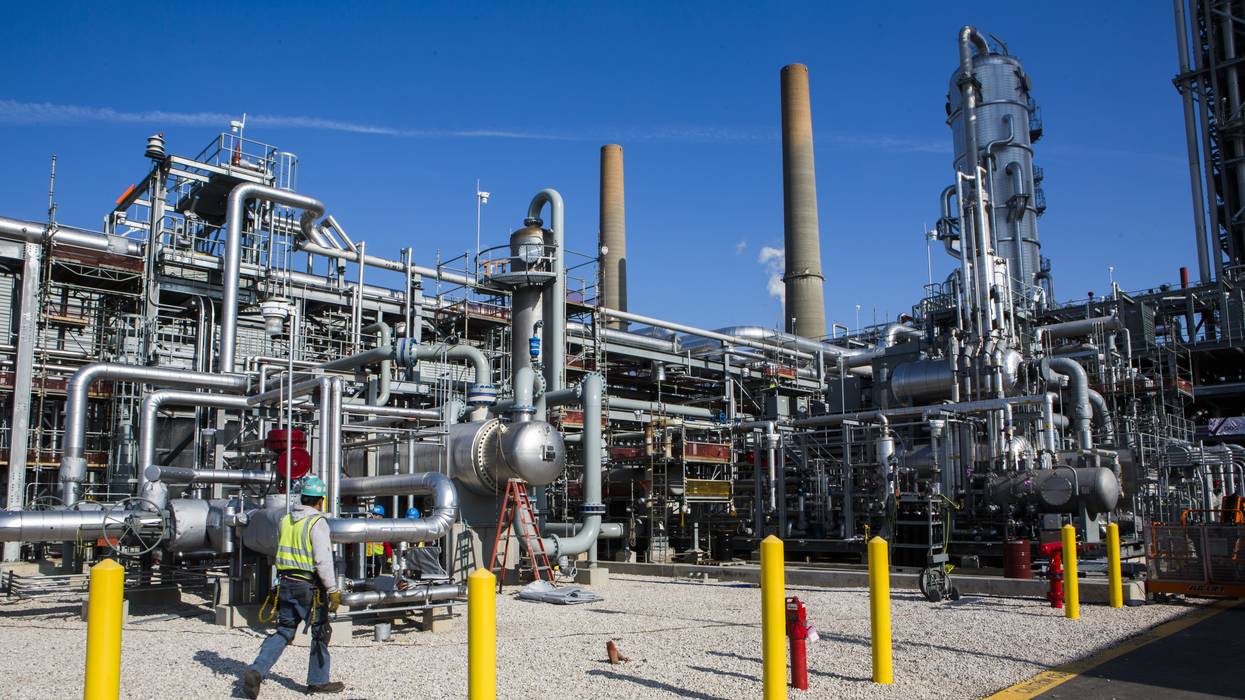
"The fossil fuel industry delays climate action, distracts from real solutions that would end the fossil fuel era, and does everything in its power to squeeze the last drops of profit from a dying industry, at the expense of all of us."
Among the world's wealthiest countries, the U.S. leads the way in spending public money on so-called climate "solutions" that have been proven to "consistently fail, overspend, or underperform," according to an analysis released Thursday by the research and advocacy group Oil Change International.
The group's report, titled Funding Failure, focuses on international spending on carbon capture and fossil-based hydrogen subsidies, which continues despite ample data showing that the technological fixes have "failed to make a dent in carbon emissions" after 50 years of research and development.
The report details how five countries account for 95% of all carbon capture spending, with the U.S. investing the most taxpayer money in the technology, at $12 billion in subsidies over the last 40 years.
Norway comes in second with $6 billion going to carbon capture and storage, while Canada has spent $3.8 billion, the European Union has spent $3.6 billion, and the Netherlands has poured $2.6 billion into the technology, with which carbon dioxide emissions are compressed and utilized or stored underground.
"It is nothing short of a travesty that funds meant to combat climate change are instead bolstering the very industries driving it."
Harjeet Singh, global engagement director for the Fossil Fuel Non-Proliferation Treaty Initiative, told The Guardian that the subsidies amount to a "colossal waste of money."
"It is nothing short of a travesty that funds meant to combat climate change are instead bolstering the very industries driving it," said Singh.
While proponents claim carbon capture and storage reduces planet-heating carbon emissions, OCI notes, it was originally developed in the 1970s "to enhance oil production, and this remains its primary use," with the technology "barely" reducing emissions.
High-profile carbon capture failures in the U.S. include the Petra Nova project in Houston, Texas, which cost nearly $200 million in taxpayer funds and whose captured emissions were later used for crude oil production, and the FutureGen project, "which swallowed $200 million and never materialized."
"Investing in carbon capture delays the transition to renewable energy," reads OCI's report. "Instead of wasting time and money on technologies that do not work, governments must commit to justly and urgently phasing out fossil fuels before it's too late."
Despite the lack of data supporting the use of carbon capture, the group said, countries including the U.S. are "preparing to waste hundreds of billions of taxpayer dollars on these ineffective technologies, further benefiting the fossil fuel industry."
OCI highlighted how the U.S. and Canada, while ostensibly fighting the climate crisis, have spent a combined $4 billion in public money to explicitly "pay oil companies to produce more oil," with the subsidies going to carbon capture for "enhanced oil recovery."
The report also found that in addition to the $12 billion in taxpayer funds the U.S. has spent on carbon capture and fossil hydrogen—a leak-prone gas produced through energy-intensive processes that cause their own emissions—the government has spent an estimated $1.3 billion on the 45Q tax credit, which allows companies to write off tax for every ton of carbon dioxide they store underground.
The Inflation Reduction Act (IRA) increased the amount given to companies in 45Q tax credits from $35 to $60 per ton, meaning that the subsidy could grow to over $100 billion in the next 10 years.
OCI's Policy Tracker shows that overall public spending on carbon capture and hydrogen could grow by between $115 billion and $240 billion in the coming decades.
"We need real climate action, not fossil fuel bailouts!" said OCI in a post on social media.
The group's report also highlights that fossil fuel giants such as ExxonMobil have shifted from carbon capture skeptics to outspoken proponents of the technology—with the company bragging to investors that carbon capture and hydrogen would help its Low Carbon Business Unit make "hundreds of billions of dollars" and grow to be "larger than ExxonMobil's base business."
Exxon didn't launch its carbon capture efforts until 2018, having spent several years and hundreds of millions of dollars on another "climate solution" that ultimately failed: the use of algae to make biofuels.
Since then, Exxon has "pushed for direct government funding for carbon capture, particularly at the U.S. Department of Energy (DOE)," successfully lobbying for $12 billion allocated in the Bipartisan Infrastructure Bill in 2021 for "carbon management research, development, and demonstration."
Exxon also lobbied for the increased rate of the 45Q tax credit in the IRA and "played a 'central role' in drafting a 2019 DOE-sponsored report on carbon capture that determined Congress would need to create an incentive of around $90 to $110 per ton to support carbon capture deployment," according to OCI.
The Guardian on Thursday reported that Exxon still "chases billions in U.S. subsidies for a 'climate solution' that helps drill more oil," describing how the oil giant hosted an event at the Democratic National Convention earlier this month where senior climate strategy and technology director Vijay Swarup praised the IRA for helping Exxon pursue carbon capture and said: "We need new technology and we need policy to support that technology. We need governments working with private industry."
Exxon's enthusiasm for carbon capture, said OCI, is an example of how "the fossil fuel industry delays climate action, distracts from real solutions that would end the fossil fuel era, and does everything in its power to squeeze the last drops of profit from a dying industry, at the expense of all of us."

The Yasuní referendum in Ecuador and the Fossil Fuel Non-Proliferation Treaty are two rare examples of people taking action to end the production of oil, gas, and coal.
Everyone complains about the weather, but nobody does anything about it. This quip by the American essayist Charles Dudley Warner applies to fossil fuels as well. Everyone talks about ending fossil fuel production, but almost no one is doing anything about it.
Take the example of the Biden administration. It has launched the most ambitious effort by the United States to leave fossil fuels behind and enter the new era of renewable energy. And yet, in 2023, the United States produced more crude oil than ever before: 12.9 million barrels per day compared to the previous record from 2019 of 12.3 million barrels a day.
Or take the example of Brazil, where the progressive politician Lula da Silva won back the presidency in 2022. His predecessor was a big fan of drilling for fossil fuels. Lula has made it clear that he will take a very different approach. For instance, he wants Brazil to join the club of oil-producing countries in order to lead it into a clean-energy future. And yet, in 2023, Brazil’s production of oil increased by 13% and gas by over 8%, both new records.
In 2020, the United States imported nearly 70% of the oil produced by Amazonian countries.
Given all this Green rhetoric and crude (oil) action, it’s hard to find examples around the world where people are actually doing something to end fossil fuel production.
One of those places is Ecuador, which held a referendum last August about keeping oil under the ground of a certain plot of land in the Yasuní national park. “Yasuní is the most important park in Ecuador,” observes Esperanza Martínez, of Acción Ecológica in Ecuador. “It has been recognized as the most biodiverse region in the world, and it’s also home to many Indigenous peoples.”
Thanks to the work of several collectives, Ecuadorans voted 54-37% in the August referendum to stop all operations to explore for and extract oil from Block 43—also known as ITT—within the park. Since the referendum, however, an election brought in a new president who has threatened to ignore the results of the referendum in order to raise funds to address the country’s security crisis.
Another example of effective action, this time at the international level, comes from the organizers of the Fossil Fuel Non-Proliferation Treaty (FFNPT), an effort to roll back fossil fuels at the global level. Currently, 12 countries have endorsed the initiative, including a number of small island states but also, most recently, Colombia.
“Colombia is the first continental country to sign, with more than a century of petroleum extraction,” one of those organizers, Andrés Gómez O, points out. “So, this is a very important game-changer in the battle.”
One of the backers of this treaty, the one with the largest economy, is the U.S. state of California, which has been a leader in the United States in terms of expanding the renewable energy sector. There is so much energy generated by solar panels on sunny days in California that sometimes the net cost of that electricity drops below zero.
But as Raphael Hoetmer of Amazon Watch points out, California is also the largest importer of oil from the Amazon. In 2020, the United States imported nearly 70% of the oil produced by Amazonian countries, mostly Ecuador but a small amount from Colombia and Peru as well. And California is the state that’s importing by far the largest amount of this oil. So, shutting down the production of fossil fuels in Ecuador and elsewhere also requires addressing the largest consumers of those resources.
These three Latin American experts on the challenge of ending the international addiction to fossil fuels presented their findings at an April 2024 seminar sponsored by the Ecosocial and Intercultural Pact of the South and Global Just Transition. They not only discussed the appalling state of affairs in the world of energy and environment but also explained how some people are actually doing something about it.
The effort to preserve the biodiversity of Yasuní in the Ecuadoran Amazon and keep out the oil companies has been going on for more than a decade. In 2007, then-president Rafael Correa floated a plan for international investors to essentially pay Ecuador to keep its oil in the ground. When the international community didn’t pony up the $3.5 billion, Correa abandoned his plan and pledged to move forward with drilling.
That’s when Esperanza Martínez and others began to organize the first referendum to keep that oil in the ground. They collected 850,000 signatures, 25% more than were necessary to trigger a vote. But the National Electoral Council threw out the petition, arguing that 60% of the signatures were fakes.
“We spent ten years fighting in tribunals and legal proceedings,” Martínez relates. “And what the National Electoral Council did was a fraud. We could prove that it was a fraud.”
“The discussion is no longer if this part of the park should be closed or not, but how and when.”
The August 2023 referendum was a dramatic vindication for the Yasunídos. “Five million Ecuadorans said that it was right to leave the crude oil underground,” she continues. “This was a campaign that had never been seen before in the country to stop oil companies from extracting oil from the ground and preventing the negative impacts on the health and environment. We won!”
In the same referendum, voters also decided to stop mining activities in the “El Chocó” biosphere reserve in the capital city of Quito. The campaign, “Quito sin mineria,” opposed mining projects in the Metropolitan District of Quito and the Chocó Andino region, which comprises 124,000 hectares.
But the referenda on Yasuní and El Chocó were not the only elections that took place on that day in Ecuador. Voters also went to the polls to vote for a new president. In a later second round, businessman Daniel Noboa won. Noboa had supported the Yasuní referendum, pointing out that a ban on extraction actually made economic sense since it would cost $59 a barrel to extract the oil, which would sell for only $58 a barrel on the international market. After his election, he said that he would respect the results.
But then, in January 2024, he reversed himself, calling instead for a year moratorium on the ruling. Ecuador, Noboa argued, needed the money to address its worsening security situation: a surge in narcotrafficking, a skyrocketing murder rate, and a descent into gang warfare.
The Yasunídos argue that even this perilous situation should not affect the results of the referendum. “In Ecuador, nature is the subject of rights,” Martínez says, referring to the fact that Ecuador was the first country in the world in 2008 to include the rights of nature in its constitution. “The discussion is no longer if this part of the park should be closed or not, but how and when.”
The Amazon rainforest is a powerful symbol of biodiversity all around the world, even for people who can’t identify the countries through which the Amazon river flows.
“It’s the world’s largest tropical rainforest,” reports Raphael Hoetmer of Amazon Watch in Peru. “It houses up to 30% of the world species and contains one-fifth of the world’s fresh water. It is home to 410 Indigenous nationalities, 82 of them living in isolation by choice, all of them helping in global climate regulation.”
But the Amazon region also contains an abundance of natural resources: timber, gold, and fossil fuels. “Any just transition requires ending the extraction of oil—and not only oil—from the Amazon,” Hoetmer continues. “It also requires ending the system that is behind this extraction.”
Shutting down oil and gas production in the Amazon requires looking beyond the producers to the investors and the consumers.
The degradation of the Amazon rainforest is reaching a tipping point. The estimate is that when deforestation reaches 20-25% of the biome, the area can’t recover. Hoetmer reports that deforestation is now approaching 26%.
Fossil fuel extraction is contributing to that deforestation is several ways. Millions of hectares are currently slated for oil and gas extraction. The drilling itself requires deforestation, but so do the new roads established to reach those sites. Those roads in turn open the region up to other forms of exploitation such as logging and agribusiness.
Then there are the oil spills that contaminate vast stretches of land. Several major pipeline breaks have dumped oil into the Ecuadorian Amazon, and the Ecuadorian environmental ministry estimates that there have been over a thousand “environmental liabilities” and over 3,000 sites “sources of contamination.” Between 1971 and 2000, Occidental Petroleum dumped 9 billion gallons of untreated waste containing heavy metals into Peru’s rivers and streams, leading to a lawsuit against the company by Indigenous Peruvians that resulted in an out-of-court settlement. Colombia’s oil industry has been involved in over 2,000 episodes of environmental contamination between 2015 and 2022.
Shutting down oil and gas production in the Amazon requires looking beyond the producers to the investors and the consumers. California, since it absorbs nearly half of all Amazon oil exports, is a major potential target. On the financing side, Amazon Watch’s End Amazon Crude campaign is working to stop new financial flows into, for instance, Petroperú, the country’s state-run oil company. Campaigners are targeting major banking institutions in the Global North, including JPMorgan Chase, Citi, and Bank of America. Community-led protests have taken place in the United States, Chile, and Germany. By raising the costs of investment into Amazonian extraction, campaigners are pushing lenders to remove Amazonian oil from their portfolios.
Another strategy is strengthening territorial sovereignty in Indigenous lands. “One of the processes that gives us hope is this proposed proposal to reconstruct the Amazon based on strengthening the self-governance of Amazonian people,” Hoetmer notes. “The notion of Autonomous Territorial Governments started with the Wampis peoples but has now expanded to over 10 Indigenous nations. The Autonomous Territorial Governments defend their territories against illegal mining as well as land invasions and fossil fuel extraction, demand and build intercultural education, and negotiate public services with the Peruvian state.”
Frontline communities, particularly those from the Global South, are paying the highest price of fossil fuel exploitation and climate change, yet they are the least responsible. All over the world and for decades, frontline struggles have shown leadership in resisting the plundering of their territories. Today, for many communities around the world—and for some whole countries—continued fossil fuel extraction and climate change represent an existential crisis.
In response to this crisis, an early proposal came from officials and civil society leaders in the Pacific for a moratorium and binding international mechanisms specifically dedicated to phasing out fossil fuels in the Pacific. In 2015, in the Suva Declaration on Climate Change issued from the Pacific Islands Development Forum Third Annual Summit held in Suva, Fiji, decision-makers called for: “a new global dialogue on the implementation of an international moratorium on the development and expansion of fossil fuel extracting industries, particularly the construction of new coal mines, as an urgent step towards decarbonizing the global economy.”
In 2016, following a summit in the Solomon Islands, 14 Pacific Island nations discussed the world’s first treaty that would ban new coal mining and embrace the 1.5°C goal set at the Paris climate talks.
By connecting the struggle to the experiences of local communities—the violence associated with extraction, the cancer cases, the oil spills—“we are not just interested in convincing the already existing movements,” he says, “We also have to move the whole society.”
Initiated by island countries most at risk from rising waters, the movement for a Fossil Fuel Non-Proliferation Treaty has now been endorsed by a dozen countries and more than 2,000 civil society organizations as well as a number of cities and states like California and more than 100 Nobel laureates.
“Our treaty is based on other treaties that have talked about nuclear weapons, mines, and gasses like the Montreal Protocol on phasing out ozone-depleting substances,” relates Andrés Gómez O.
“What’s clear is that we don’t have time for business as usual,” the FFNPT organizers argue. “The International Energy Agency determined that there needs to be a decline of fossil fuel use from four-fifths of the world’s energy supply today to one-fifth by 2050. The fossil fuels that remain will be embedded in some products such as plastics and in processes where emissions are scarce.” Critical to this process is action by richer countries. “Countries that are better off economically can support other countries to step away from the fossil fuel system,” Gómez continues.
A key strategy, he adds, would be “the Yasunization of territories.” He explains that “this means, first, making this park a utopia for the country. Then we localize this approach in different provinces in Ecuador where we say, okay, in this province we have our own Yasuní.” This local approach has had some precedents. The Ecuadoran city of Cuenca, for instance, held a referendum in 2021 banning future mining project.
The treaty appeals not only to the environmental movement. By connecting the struggle to the experiences of local communities—the violence associated with extraction, the cancer cases, the oil spills—“we are not just interested in convincing the already existing movements,” he says, “We also have to move the whole society.”
He concludes succinctly: “We are not just about saying no—to fossil fuels, to extractivism. We are about saying a very big yes: to life!”
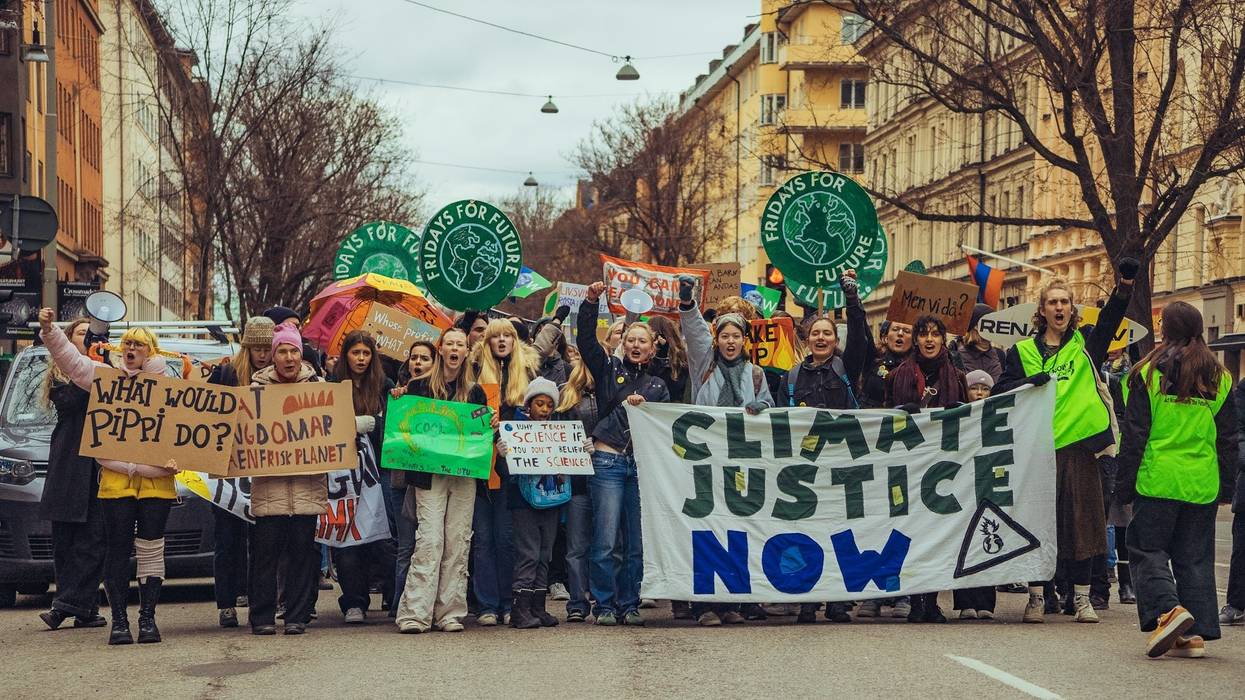
"We are many people and youths who want to express our frustration over what decision-makers are doing right now: They don't care about our future and aren't doing anything to stop the climate crisis," one young activist said.
Ahead of Earth Day, young people around the world are participating in a global strike on Friday to demand "climate justice now."
In Sweden, Greta Thunberg joined hundreds of other demonstrators for a march in Stockholm; in Kenya, participants demanded that their government join the Fossil Fuel Non-Proliferation Treaty; and in the U.S., youth activists are kicking off more than 200 Earth Day protests directed at pressing President Joe Biden to declare a climate emergency.
"We're gathered here to fight, once again, for climate justice," Thunberg told Agence France-Presse at the Stockholm protest, which drew around 500 people. "It's now been more than five and a half years that we've been doing the same thing, organizing big global strikes for the climate and gathering people, youths from the entire world."
"I lost my home to climate change. Now I'm fighting so that others don't lose their homes."
The first global youth climate strike, which grew out of Thunberg's Fridays for Future school strikes, took place on March 15, 2019. Since then, both emissions and temperatures have continued to rise, with 2023 blowing past the record for hottest year. Yet, according to Climate Action Tracker, no country has policies in place that are compatible with limiting global heating to 1.5°C above preindustrial levels.
"We are many people and youths who want to express our frustration over what decision-makers are doing right now: They don't care about our future and aren't doing anything to stop the climate crisis," Karla Alfaro Gripe, an 18-year-old participant at the Stockholm march, told AFP.
The global strikes are taking place under the umbrella of Friday's for Future, which has three main demands: 1. limit temperature rise to 1.5°C, 2. ensure climate justice and equity, and 3. listen to the most accurate, up-to-date science."Fight with us for a world worth living in," the group wrote on their website, next to a link inviting visitors to find actions in their countries.
Participants shared videos and images of their actions on social media.
European strikers also gathered in London, Dublin, and Madrid.
In Asia, Save Future Bangladesh founder Nayon Sorkar posted a video from the Meghna River on Bangladesh's Bola Island, where erosion destroyed his family's home when he was three years old.
"I lost my home to climate change," Sorkar wrote. "Now I'm fighting so that others don't lose their homes."
Also in Bangladesh, larger crowds rallied in Dhaka, Sylhet, Feni, and Bandarban for climate action.
"Young climate activists in Bandarban demand a shift to renewable energy and away from fossil fuels," said Sajjad Hossain, the divisional coordinator for Youthnet for Climate Justice Bangladesh. "We voiced urgency for sustainable energy strategies and climate justice. Let's hold governments accountable for a just transition!"
In Kenya, young people struck specifically to demand that the government sign on to the Fossil Fuel Non-Proliferation Treaty.
"As a member of the Lake Victoria community, the importance of the treaty in our climate strikes cannot be overstated," Rahmina Paullette, founder of Kisumu Environmental Champions and a coordinator for Fridays for Future Africa, said in a statement. "By advocating for its implementation, we address the triple threat of climate change, plastic pollution, and environmental injustice facing our nation."
"Halting fossil fuel expansion not only safeguards crucial ecosystems but also combats the unjust impacts of environmental degradation, ensuring a more equitable and sustainable future for our community and the wider Kenyan society," Paullette said.
In the U.S., Fridays for Future NYC planned for what they expected to be the largest New York City climate protest since September 2023's March to End Fossil Fuels. The action will begin at Foley Square at 2:00 pm Eastern Time, at which point more than 1,000 students and organizers are expected to walk across the Brooklyn Bridge to rally in front of Borough Hall.
The strike "is part of a national escalation of youth-led actions in more than 200 cities and college campuses around the country, all calling on President Biden to listen to our generation and young voters, stop expanding fossil fuels, and declare a climate emergency that meaningfully addresses fossil fuels, creating millions of good paying union jobs, and preparing us for climate disasters in the process," Fridays for Future NYC said in a statement.
The coalition behind the climate emergency drive, which also includes the Sunrise Movement, Fridays for Future USA, and Campus Climate Network, got encouraging news on Wednesday when Bloomberg reported that the White House had reopened internal discussions into potentially declaring a climate emergency.
"We're staring down another summer of floods, fires, hurricanes, and extreme heat," Sunrise executive director Aru Shiney-Ajay said in a statement. "Biden must do what right Republicans in Congress are unwilling to do: Stand up to oil and gas CEOs, create green union jobs, and prepare us for climate disasters. Biden must declare a climate emergency and use every tool at his disposal to tackle the climate crisis and prepare our communities to weather the storm. If Biden wants to be taken seriously by young people, he needs to deliver on climate change."
The coalition is planning events leading up to Monday including dozens of Earth Day teach-ins beginning Friday to encourage members of Congress to pressure Biden on a climate emergency and Reclaim Earth Day mobilizations on more than 100 college and university campuses to demand that schools divest from and cut ties with the fossil fuel industry.
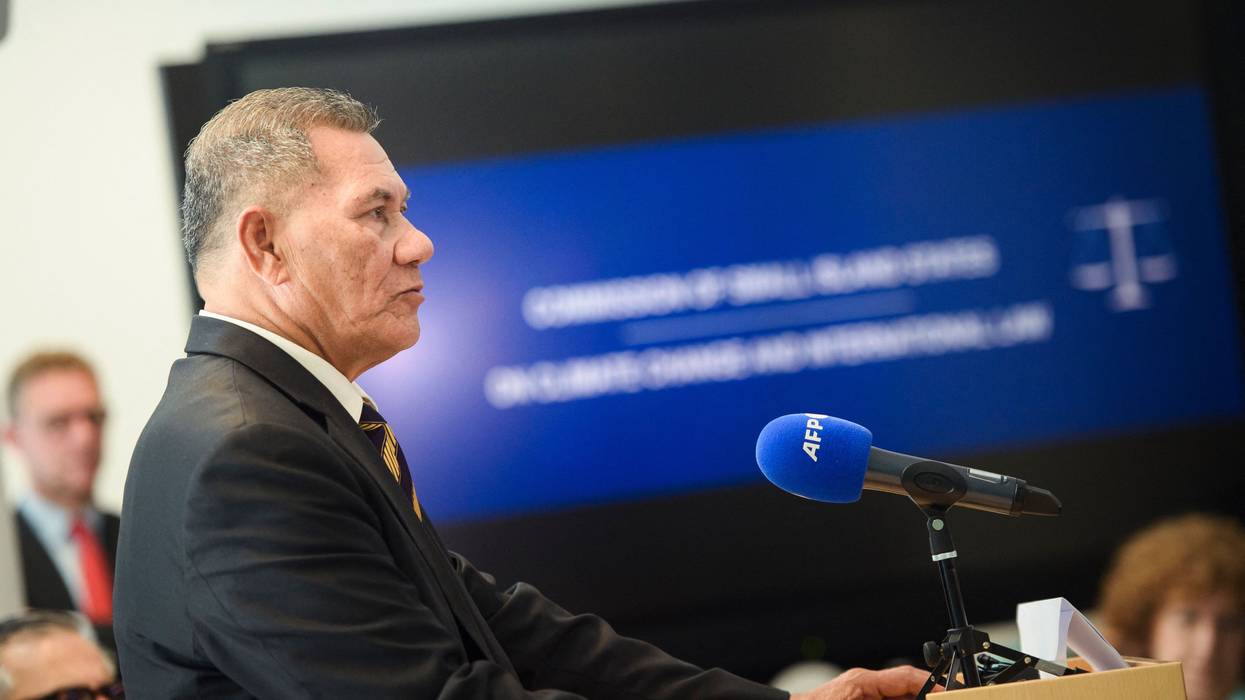
"The longer we remain addicted to fossil fuels, the longer we commit ourselves to mutual decline," Tuvaluan Prime Minister Kausea Natano said at the U.N. Climate Ambition Summit.
As heads of climate-wrecking nations like the United States, China, and Britain declined to attend Wednesday's United Nations Climate Ambition Summit in New York, leaders of Pacific island and other Global South countries renewed the push for a fossil fuel nonproliferation treaty.
The government of Tuvalu is working with neighbors Vanuatu, Fiji, Tonga, the Solomon Islands, and the self-governing New Zealand territory of Niue—all signatories to the Port Vila Call, a framework to a just transition to a fossil-free Pacific—and global partners to draft a FFNPT.
"The longer we remain addicted to fossil fuels, the longer we commit ourselves to mutual decline," Tuvaluan Prime Minister Kausea Natano said at the summit. "A negotiated fossil fuel nonproliferation treaty would complement the Paris agreement and ensure a global just transition.
"We've proven we can mobilize our collective ambition at the multilateral level. The scale of the challenge we face can now only be met with an even greater level of ambition and cooperation," he added. "I traveled thousands of miles over four days to be here today, because I believe in international cooperation and multilateralism. I have faith in our collective humanity and our ability to foster global solidarity to undertake what needs to be done."
Launched in 2020 and backed by hundreds of groups, thousands of scientists, and people around the world from youth to grandparents, the FFNPT is based on three pillars:
In addition to the aforementioned nations, the country of East Timor, the European Parliament, and the World Health Organization have called for a FFNPT. Scores of cities and other subnational governments have also endorsed the FFNPT, including London, Paris, Los Angeles, Sydney, Toronto, and the Hawaiian Legislature.
Earlier this month, California became the largest economy in the world to endorse the treaty.
"This climate crisis is a fossil fuel crisis," Democratic California Gov. Gavin Newsom said at Wednesday's summit. "It's not complicated. It's the burning of oil. It's the burning of gas. It's the burning of coal. And we need to call that out. For decades and decades, the fossil fuel industry has been playing each and every one of us in this room for fools."
Colombian President Gustavo Petro, another supporter of the treaty, said during Wednesday's summit that "the real goal that all countries should have is aiming for zero production and supply of carbon gas and oil. If we don't aim for that as our overarching goal, life will not be saved."
"If we keep on our current track it will be suicide," he added. "We live on coal and gas exports, but if we don't change course it will mean death because those industries are polluting the atmosphere. Fossil capital is a burden for humankind. Fossil fuel subsidies need to be completely eliminated worldwide. That would give us a prospect for the future."
Tzeporah Berman, chair of the Fossil Fuel Nonproliferation Treaty Initiative, said at a press conference Wednesday that "today was a turning point... A growing block of countries is calling for a FFNPT that would ensure an end to expansion of oil, gas, and coal projects, and cooperation on a plan for a managed wind-down that is fast, fair, and financed."
The climate action group Oil Change International blasted what it called wealthy nations' "display of inaction and indifference."
"The handful of rich countries driving oil and gas expansion failed to answer United Nations Secretary-General António Guterres' call for an end to new fossil fuel production," the group noted. "These countries, with the greatest financial means and responsibility to lead a fast and fair global phaseout of production, are instead leading in jeopardizing the global 1.5°C goal."
"Five Global North countries—the United States, Canada, Australia, Norway, and the United Kingdom—are responsible for 51% of carbon dioxide pollution threatened by new oil and gas extraction between 2023 and 2050," Oil Change continued. "If these planet-wreckers were to heed the United Nations secretary-general's call to halt new oil and gas, we could prevent a staggering 100 billion tons of carbon pollution from entering our atmosphere, equivalent to the lifetime emissions of over 620 new coal plants."
"In contrast, countries like Chile, Denmark, France, and Tuvalu were invited to speak at the summit," the group added, "as they have halted fossil fuel expansion and financing as needed to align with 1.5°C."

"Fossil fuels are killing us, and the G20's reckless failure to act will be measured in further lives and livelihoods lost," said one campaigner who noted the refusal by rich nations to pledge a phaseout of oil, coal, and gas.
Climate groups cried foul Saturday after an agreement generated at the G20 summit in New Delhi, India failed to see the world's wealthiest bloc of nations make anywhere near the kind of climate commitments—namely an agreement to phase out fossil fuels—required to address the planetary emergency fueled by greenhouse gas emissions.
Greenpeace described the lackluster pledge, which came in the form of a joint G20 communique, as an "incomprehensible failure" in the face of a runaway climate crisis that continues to wreak havoc, death, grave injustice, and economic disaster for working people across the globe.
"Despite record-shattering temperatures, raging wildfires, drought, floods and other climate disasters over recent months impacting tens of millions of people, G20 leaders have collectively failed to deliver anything meaningful on climate change this year," said Tracy Carty, a global climate politics expert for Greenpeace International.
" Fossil fuels are killing us, and the G20's reckless failure to act will be measured in further lives and livelihoods lost," Carty added. "Leaders failed to reach agreement on the phaseout of coal, oil and gas. They also made a timid commitment to triple renewables, but only through 'existing targets and policies.'"
Alex Rafalowicz, director of the Fossil Fuel Non-Proliferation Treaty initiative, also expressed dismay with the lack of ambition shown by the G20 leaders.
"World leaders, particularly rich countries, need to rise to the occasion and fulfill their fair share of responsibilities in the fight against the climate crisis. Anything less would be an affront to both humanity and our planet."
"Continued dependence on fossil fuels remains a primary driver of climate change, carrying dire and irrevocable consequences for ecosystems, communities, and the global economy," Rafalowicz said in a statement on Saturday.
The failure by the richest nations in the world "to come up with anything substantial on fossil fuel phaseout is unacceptable," he said. "World leaders, particularly rich countries, need to rise to the occasion and fulfill their fair share of responsibilities in the fight against the climate crisis. Anything less would be an affront to both humanity and our planet."
The G20 summit in India comes ahead of one-day United Nations climate summit that kicks off in New York City next week and a meeting of the UN General Assembly. While a major protest march by hundreds of climate-focused groups is planned for Sept. 17, the global movement calling for a just energy transition has seen few signs of hope as increasingly severe extreme weather events and dire warnings from the scientific community continue in the face of rising emissions.
UN Secretary General António Guterres, who is hosting what he's dubbed the "Climate Ambition Summit" in New York, suggested his disappointment with the G20's limited statement.
"Half-measures will not prevent full climate breakdown," Guterres said Saturday afternoon. "Today I urged the G20 to demonstrate far more ambition on reducing emissions and supporting climate justice. We have one planet. Let's save it."
While some applauded the G20 for the vow to ramp up renewables by the end of the decade, critical experts said an increase in green energy is simply not enough if fossil fuel companies are allowed to continue to extract and burn oil, gas, and coal.
"The G20's commitment to triple renewable energy is a historic step—a glimmer of hope in our battle against climate chaos," said Andreas Sieber, associate director of global policy at 350.org, but added that it was still not time to celebrate.
"We must hold them accountable, demand they phase out fossil fuels, and lead with urgency," Sieber added. "In particular, rich nations who bear the most responsibility for climate change must provide the finance required to achieve a tripling of renewable energy capacity globally by 2030.”
Avinash Chanchal, campaign manager at Greenpeace India, said the lack of concrete financing commitments from the rich nations makes such lofty goals around renewables hard to stomach, especially as these top polluting countries remain responsible for 80% of global emissions.
According to Chanchal, "G20 developed countries have utterly failed to take concrete steps to increase international financial support for climate action. Existing promises such as providing USD100BN per year until 2025 in climate finance remain unfulfilled, and merely reiterating these promises in the G20 declaration is useless and will not lead to tangible change."

"We hope this move locks in real action on ending the era of fossil fuels in California, and spurs other regions, states, and countries to join forces in tackling the root cause of the climate crisis," said one activist.
Climate campaigners in California and beyond celebrated on Friday after the state Legislature affirmed its support for a resolution that urges the U.S. government to join a worldwide effort to develop "a fossil fuel nonproliferation treaty as an international mechanism to manage a global transition away from coal, oil, and gas."
Senate Joint Resolution 2 also endorses what advocates call a "just transition," stating that "California affirms the need for a plan to phase out existing fossil fuel production that prioritizes the most impacted workers and local government services with short- and long-term investments that include enforceable labor standards, such as prevailing wages, apprenticeship opportunities, and project labor agreements, to protect workers and communities."
California Senate Majority Whip Lena Gonzalez (D-33), who spearheaded SJR 2, declared Friday that "it is essential that we commit once and for all to ending our reliance on fossil fuels. People around the world, especially low-income people of color, are suffering the adverse health impacts of fossil fuel pollution, from asthma to cancer. The recent devastating fires and hurricanes emphasize the urgency of taking action, to prevent further extreme weather changes."
"The science has been clear for decades—fossil fuels are responsible for the climate crisis," she added. "We can prevent further harm to our communities, and that is why I am proud that California has now been added to the growing list of governments endorsing the fossil fuel nonproliferation treaty. It is time for our nation to be a part of the solution, to forge strong unity and commitment to phasing out the use of fossil fuels."
According to its text, SJR 2 will be sent to Democratic U.S. President Joe Biden and Vice President Kamala Harris—who are seeking reelection next year—as well as the top Democrats and Republicans in Congress, California's congressional delegation, Democratic Gov. Gavin Newsom, every mayor in the state, the United Nations secretary-general, and the U.N. high commissioner for human rights.
The resolution was sponsored by the Stand.earth initiative Stand Against Fossil Fuel Expansion (SAFE) Cities and the Indigenous Environmental Network, whose executive director, Tom Goldtooth, said in a statement Friday that "this decision of the state of California is a commitment to take down the single biggest contributor to the climate crisis: the fossil fuel industry."
"California joins the millions of voices across Turtle Island and Mother Earth calling on Biden to follow in the footsteps of our Pacific Island brothers and sisters from the small island states and negotiate a mandate for a fossil fuel nonproliferation treaty," he noted. "As the state with the highest population of Indigenous peoples in the country, it is important to pass legislation that would put a halt to the devastation and destruction of the compounding effects of climate change caused by fossil fuels."
"This decision of the state of California is a commitment to take down the single biggest contributor to the climate crisis: the fossil fuel industry."
Along with other local, regional, and national governments, the demand for such a treaty is backed by the European Parliament, the World Health Organization, faith and civil society groups, and individuals across the globe, including Nobel laureates, scientists, and youth leaders.
If California were a country, it would be the fifth-largest economy in the world in terms of gross domestic product, after the full United States, China, Japan, and Germany. The U.S. state is the largest economy to embrace the treaty call so far, according to Alex Rafalowicz, executive director of the Fossil Fuel Nonproliferation Treaty Initiative.
Rafalowicz said in a statement Friday that by supporting the treaty proposal, "California sets a powerful example to the international community, underscoring the urgency of fast-tracking an equitable transition away from oil, gas, and coal. This move will catalyze a ripple effect that reaches far beyond state borders."
"By aligning its immense economic and cultural influence with the fossil fuel treaty proposal, California can accelerate its own energy transition, inspiring global cooperation to safeguard our planet and communities," the campaigner continued. "We hope this move locks in real action on ending the era of fossil fuels in California, and spurs other regions, states, and countries to join forces in tackling the root cause of the climate crisis: the production of coal, oil, and gas."
Last December, California regulators approved a blueprint to cut planet-heating emissions by 85% and get the state to carbon neutrality by 2045. Newsom said at the time that "California is leading the world's most significant economic transformation since the Industrial Revolution—we're cutting pollution, turning the page on fossil fuels, and creating millions of new jobs." However, activists have called on him and other state leaders to go further.
Nathan Taft, a California resident and senior digital campaigner for SAFE Cities, said Friday that "Los Angeles was one of the first cities in the world to endorse the fossil fuel treaty, and it's great to see California following its lead by becoming one of the first subnational governments joining this movement to address the climate crisis with the scale and urgency required."
"At the same time, California must follow this historic resolution with concrete policies that protect its residents and the climate from fossil fuels," Taft asserted. "At a bare minimum, California should stop issuing new fossil fuel permits, divest its massive pensions from fossil fuels, and implement all-electric building codes."
Central California Environmental Justice Network oil and gas director Cesar Aguirre similarly argued that the state's support for the treaty "only holds weight if we see meaningful protections come from it" and "no new neighborhood drilling should be the first priority."
The vote in California comes as much of the Northern Hemisphere has endured a summer of extreme heat connected to human-caused global warming and as parties to the 2015 Paris agreement prepare for COP28, a U.N. climate summit hosted by the United Arab Emirates in November.
As Common Dreams reported last November, during COP27 in Egypt, Kausea Natano, prime minister of the Pacific nation Tuvalu, proposed a fossil fuel nonproliferation treaty, telling those gathered that "we all know that the leading cause of climate crisis is fossil fuels."

"So-called 'climate leaders' need to stop using these forums as a performance stage and stop new fossil fuel projects—that is the test," said one campaigner.
Climate campaigners on Thursday issued fresh calls for humanity to swiftly transition away from fossil fuels in response to a speech in which Sultan Ahmed Al Jaber, the oil executive appointed COP28 president-designate, outlined his vision for the United Nations climate summit hosted by the United Arab Emirates in Dubai later this year.
Al Jaber—whose COP28 presidency already has been condemned because he is also CEO of the UAE's Abu Dhabi National Oil Company—delivered a keynote address in Brussels during the 7th Ministerial on Climate Action, convened by Canada, China, and the European Union.
"We were expecting a clear vision for a 'game-changing' COP," said Oil Change International global policy lead Romain Ioualalen in a statement. "Instead, we heard a confusing and sometimes incoherent speech."
"Confusing because, while Sultan Al Jaber has been touring the world listening to a variety of stakeholders, he seems to have only heard the fossil fuel industry's shopping list of techno-fixes and delay tactics and not the growing global clamor for a rapid transition away from coal, oil, and gas," the campaigner explained. "Repackaging the oil and gas industry's inadequate climate plans and calling it 'just transition' does not a climate leader make."
"Repackaging the oil and gas industry's inadequate climate plans and calling it 'just transition' does not a climate leader make."
Referencing the more ambitious 2015 Paris climate agreement goal, Ioualalen argued that "the speech was also incoherent because science has shown that the 1.5°C limit cannot be kept alive unless world leaders recognize the urgent need to end the expansion of fossil fuel production and for a fast, fair, and full phaseout of all fossil fuels. The phaseout of fossil fuels is not only inevitable, it is urgent."
"Sultan Al Jaber is right that tripling renewable energy capacity and doubling energy efficiency globally are key objectives for this COP. But recent history has shown that more renewable energy does not automatically translate into less fossil fuels," he said.
"COP28 will only be a success if its presidency sets aside the interests of the oil and gas industry and facilitates a clear outcome on the need for a decline of all fossil fuel production and use, as well as a rapid phase-in of wind and solar," Ioualalen added. "The only way we'll build a new energy system that is both clean and fair is by actively phasing out the old."
Speaking for over 20 minutes in Brussels on Thursday, Al Jaber said that "the science has been crystal clear" about what is needed to cut emissions in line with the 1.5°C target, which the international community is "nowhere near close enough" to hitting.
After acknowledging that the world has faced recent record-breaking heat along with "devastating droughts and floods" that are becoming more common due to global heating, he declared that "I am calling on all of us to disrupt business-as-usual, unite around decisive action, and achieve game-changing results."
The COP28 leader on Thursday also released a related letter stating that "our vision to deliver on the pillars of the Paris agreement is to focus our specific action on four paradigm shifts," which are:
Alex Rafalowicz, executive director of the Fossil Fuel Nonproliferation Treaty Initiative, said Thursday that "Al Jaber already recognized himself that the end of fossil fuels is inevitable. The question is, how?"
"If COP28's main goal is to ensure we honor the commitment to 1.5°C, this can only be achieved by a commitment to stop any new fossil fuel projects from today," he continued. "The UAE should do this, and the USA should do this, every country must. So-called 'climate leaders' need to stop using these forums as a performance stage and stop new fossil fuel projects—that is the test."
According to Rafalowicz, "The COP must work with and support the real leadership of countries like the Pacific nations and Colombia, that want to end fossil fuels—fast, fair, and forever."
While less critical of Al Jaber than some campaigners, Tom Evans, policy adviser on climate diplomacy and geopolitics at the international think tank E3G, similarly stressed on Thursday that achieving the Paris limit—beyond which scientists warn of catastrophic tipping points—requires concrete global action.
"The UAE have taken on a lot the feedback that people were eager to hear them set out a vision and a forward process," said Evans. "They've shown more of a clear grip over the stepping stones between now and COP28. It's coming later than expected, but it's a step up."
"Al Jaber's vision has the right ingredients. But the proof will be in the pudding," he added. "Keeping 1.5°C in reach requires final agreements at COP28 to phase out fossil fuels, triple renewables, accelerate reform of the financial system to unlock money for mitigation and adaptation, and a functioning fund for loss and damage."
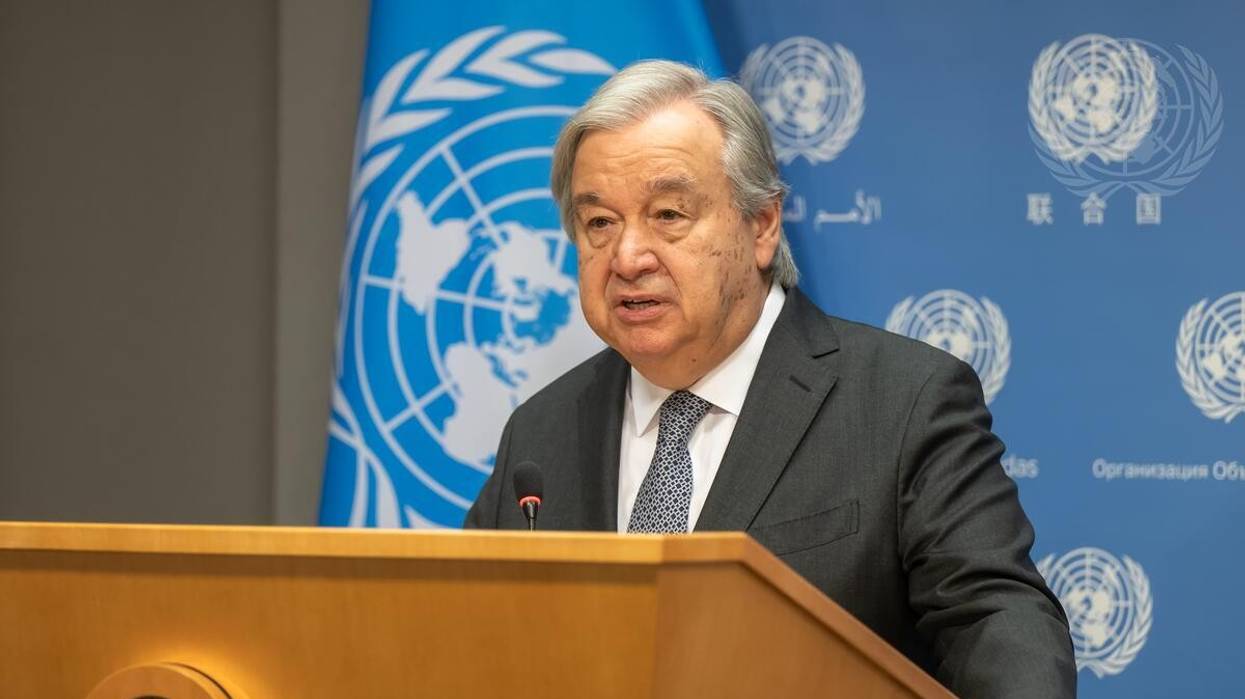
"The world must phase out fossil fuels in a just and equitable way—moving to leave oil, coal, and gas in the ground where they belong and massively boosting renewable investment in a just transition," António Guterres said.
As United Nations climate talks came to a disappointing conclusion in Germany on Thursday, U.N. Secretary-General António Guterres delivered remarks in New York City targeting "the polluted heart of the climate crisis: the fossil fuel industry."
Guterres' comments came just after he met with civil society leaders and ahead of his September Climate Ambition Summit in NYC, which is set to be followed in November by the U.N. conference COP28, hosted by the United Arab Emirates in Dubai.
"Countries are far off track in meeting climate promises and commitments. I see a lack of ambition. A lack of trust. A lack of support. A lack of cooperation. And an abundance of problems around clarity and credibility," he said. "The climate agenda is being undermined. At a time when we should be accelerating action, there is backtracking. At a time when we should be filling gaps, those gaps are growing."
"Meanwhile, the human rights of climate activists are being trampled. The most vulnerable are suffering the most," Guterres continued, noting that current policies put the world on track for a 2.8°C temperature rise by the end of the century, nearly double the 2015 Paris climate agreement's more ambitious 1.5°C goal. Hitting the higher number, he said, "spells catastrophe."
"Yet the collective response remains pitiful. We are hurtling towards disaster, eyes wide open—with far too many willing [to bet it] all on wishful thinking, unproven technologies, and silver bullet solutions," he declared. "It's time to wake up and step up. It's time to rebuild trust based on climate justice. It's time to accelerate the just transition to a green economy."
"It's time to wake up and step up. It's time to rebuild trust based on climate justice. It's time to accelerate the just transition to a green economy."
While acknowledging the important roles of governments and financial institutions—particularly from the Global Noth—in the worldwide transition to renewables, Guterres also said that "the fossil fuel industry and its enablers have a special responsibility."
"The problem is not simply fossil fuel emissions. It's fossil fuels—period," he said in what was widely seen as a rebuke of recent remarks from Sultan Ahmed Al Jaber, whose selection as COP28's president-designate is controversial around the world given that he is also the UAE's industry minister and CEO of the country's Abu Dhabi National Oil Company.
"The solution is clear: The world must phase out fossil fuels in a just and equitable way—moving to leave oil, coal, and gas in the ground where they belong and massively boosting renewable investment in a just transition," Guterres asserted. However, just a tiny fraction of the oil and gas industry's record $4 trillion windfall last year was put toward a clean future.
Stressing that "the world needs the industry to apply its massive resources to drive, not obstruct, the global move from fossil fuels to renewables," Guterres called for "credible" transition plans "that chart a company's move to clean energy—and away from a product incompatible with human survival."
"Otherwise, they are just proposals to become more efficient planet-wreckers," he said. Condemning plans that "rely on dubious offsets," the U.N. leader said that they "must include reducing emissions from production, processing, transmission, refining, distribution, and use."
"Fossil fuel companies must also cease and desist influence peddling and legal threats designed to knee-cap progress," he added, specifically calling out the industry for abusing antitrust legislation for its own advantage.
While the press conference was far from the first time Guterres has called out the fossil fuel industry, his comments were lauded by campaigners preparing for a global mobilization in September, planned for just before the U.N. chief's summit.
"The U.N. secretary-general's speech echoes the call from people from across the world today demanding an end to the era of fossil fuels," said Alex Rafalowicz, executive director of the Fossil Fuel Nonproliferation Treaty Initiative. "The time for rhetoric, empty promises, and greenwashing is over."
"Governments must work together to put in place an action plan to move away from dependence on oil, gas, and coal in the fairest and fastest way possible," Rafalowicz added. "We will be on the streets to ensure peoples' demands are carried into the negotiation halls in September. Climate impacts are escalating, fossil fuel corporations are digging in, but people are stepping up to end fossil fuels; fair, fast, and forever."
Guterres' remarks came as negotiators finished gathering in the German city of Bonn to prepare for COP28.
Oil Change International (OCI) global policy lead Romain Ioualalen said Thursday that "this speech by the U.N. secretary-general is a wake-up call for the countries that wasted two weeks arguing over procedural matters at the Bonn climate conference instead of charting a path towards a COP28 decision to phase out fossil fuels."
"Countries must step up and fulfill the promises they made in Paris in 2015 to halt fossil fuel expansion and agree to a fair, fast, and full transition away from oil, gas, and coal and towards renewables," Ioualalen continued. "Over 70 countries have called for a COP28 decision on fossil fuel phaseout in Bonn. Countries like Colombia and the members of the Beyond Oil and Gas Alliance are doing the hard work of implementing measures to keep oil and gas in the ground."
"The contrast between this leadership and the actions of the world's biggest historic polluter, the United States, could not be more striking," he argued, adding that under President Joe Biden, "the U.S. has failed in its responsibility to lead a global and just transition away from fossil fuels and avert further climate disaster and has instead actively promoted fossil fuel expansion including with public money."
OCI was among over 500 groups that sent a letter Thursday to Biden and leaders of key U.S. federal agencies demanding executive action "to stop expanding oil, gas, and coal production, the core driver of the climate emergency," by the September summit.
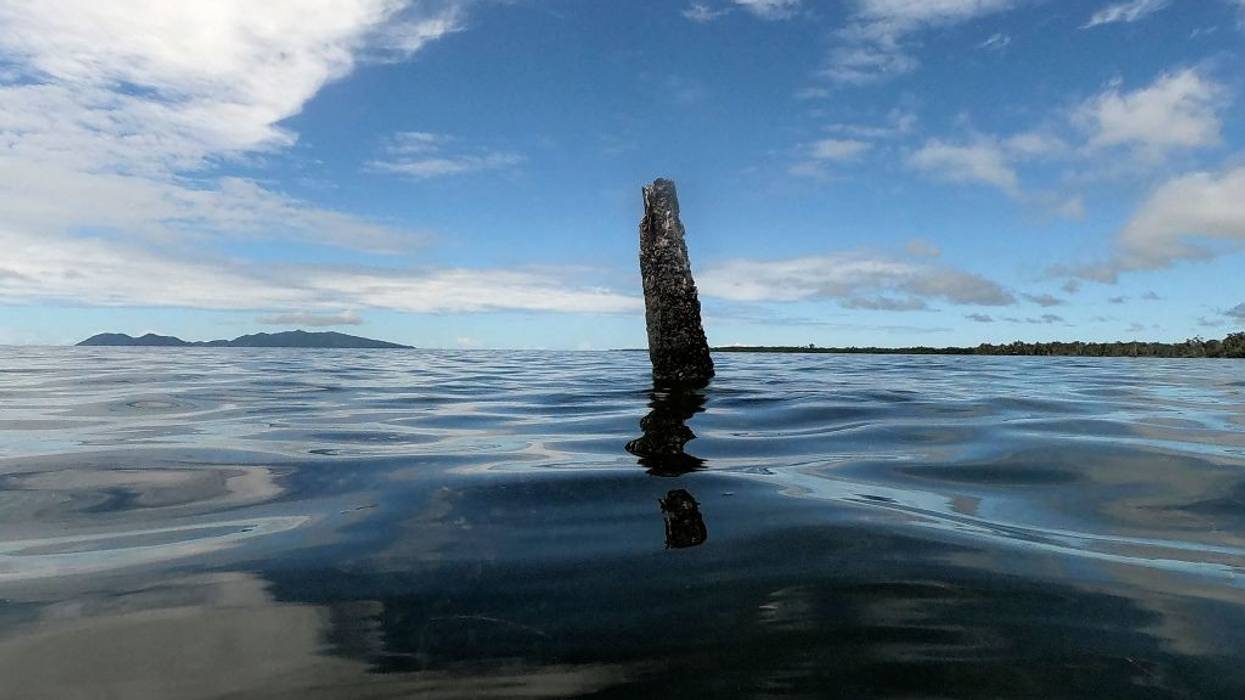
"The time for bold, ambitious, and transformative measures is now," said a representative of the Fijian government.
Fiji on Monday became the latest country to speak out on the world's stage for a Fossil Fuel Non-Proliferation Treaty.
The country had already joined with five other Pacific island nations in backing the treaty at a summit in Port Vila, Vanuatu, in March. Now, it raised its voice to call for a global treaty to phase out fossil fuels at a side event at the ongoing U.N. Climate Change Conference in Bonn, Germany.
"We cannot afford to delay action any longer. Our climate is radically changing, and with it, our ecosystems, our livelihoods, and our cultures all come under increasing threat," Genevieve Jiva, the principal international relations officer for the government of Fiji, said at the conference. "The time for bold, ambitious, and transformative measures is now."
The 14 Pacific Island Developing States are responsible for only 0.23% of global greenhouse gas emissions that cause the climate crisis, compared to the 14 most fossil-fuel burning nations, which contribute more than 70%. Despite this, Pacific nations are disproportionately vulnerable to climate impacts.
Fiji, for example, is already suffering economic damage and population displacement because of more extreme tropical cyclones. Warmer ocean waters are bleaching its coral reefs, which help protect its coasts, provide habitat for fish, and attract tourists, while changing rainfall patterns and rising temperatures threaten its agriculture and freshwater supplies.
"Even as one of the nations least responsible for the climate crisis, we shoulder some of the most devastating loss and damage," Alisi Rabukawaqa, a 350.org Pacific Council Elder from Fiji, said in a statement. "The fight against the climate crisis is fought on multiple fronts—through community and storytelling, through activism and diplomacy."
"Tuvalu calls on all countries to follow the example set by Fiji today and commit to addressing the root cause of the climate crisis: Fossil Fuels."
Pacific island nations have emerged as diplomatic leaders in the struggle for a just response to the climate emergency. Fiji was the first nation to formally ratify the Paris agreement. Then Vanuatu became the first nation to call for a Fossil Fuel Non-Proliferation Treaty at the U.N. General Assembly in New York in September 2022, followed by Tuvalu at COP27 in Sharm El-Sheikh, Egypt, two months later.
"Vanuatu warmly welcomes Fiji's resolute call for a Fossil Fuel Treaty," Vanuatu's Climate Minister Hon. Ralph Regenvanu said in a statement. "As fellow Pacific island nations, we share the same vulnerability to the impacts of climate change and recognize the urgent need for decisive action. Our commitment to a sustainable and renewable future sets a powerful example to the world."
Tuvalu's Minister of Finance & Economic Development, Hon. Seve Paeniu, also welcomed Fiji's statement.
"A Fossil Fuel Treaty will ensure that we do not cross the 1.5 warming threshold, which is a red line for Tuvalu, Fiji, and all Pacific Small Island Developing States who are constantly having to deal with extreme weather events and the degradation of our lands and livelihoods," Paneiu said. "Tuvalu calls on all countries to follow the example set by Fiji today and commit to addressing the root cause of the climate crisis: Fossil Fuels."
The proposed Fossil Fuel Non-Proliferation Treaty has three pillars: an end to fossil fuel expansion; a fair phase out of fossil fuels, with nations that have historically contributed more to the current emergency moving faster; and a just transition from fossil fuels to renewable energy that ensures no workers, communities, or nations are abandoned.
Treaty supporters note that fossil fuels were responsible for 86% of carbon dioxide emissions this decade, yet the Paris agreement doesn't mention fossil fuels by name and the agreements coming out of COP27 did not mention oil and gas.
Six Pacific island nations–with Tonga, the Solomon Islands, and Niue joining Fiji, Vanuatu, and Tuvalu–signed the Port Vila Call for a Just Transition to a Fossil Fuel-Free Pacific in March, which included support for the treaty.
"With oil CEO, Al Jabar, at the helm of COP28 this year, we are going to need all of the Pacific strength we can get to fight the propaganda of fossil fuel expansion."
"The Pacific continues to show the world what real leadership during a crisis looks like and that without greater ambition and vision, we cannot overcome the greatest threat to our planet," Auimatagi Joe Moeono-Kolio, Pacific director of the Fossil Fuel Non-Proliferation Treaty Initiative, said in a statement.
Outside the Pacific, the treaty has also been backed by the World Health Organization, the European Parliament, 84 municipal and regional governments including the California Senate, 101 Nobel laureates, 2,150 civil society organizations, 3,000 scientists and academics, and more than 600,000 individuals.
"Without a managed phaseout of fossil fuels, there is no hope of meeting the aims of the Paris agreement," Moeono-Kolio said. "A Fossil Fuel Treaty would play a key role in reducing the risks of extreme weather events and other physical impacts we experience almost daily now in the Pacific. We stand ready to support the Pacific's vision of a world free from fossil fuels."
Joseph Sikulu, 350.org's Pacific managing director, also hoped that Pacific leadership would yield results during the upcoming COP28 negotiations in the UAE.
"With oil CEO, Al Jabar, at the helm of COP28 this year, we are going to need all of the Pacific strength we can get to fight the propaganda of fossil fuel expansion," Sikulu said. "Another world is possible, one built on justice, equity and safe renewable energy, and I firmly believe the Pacific is going to lead us in getting there."