

SUBSCRIBE TO OUR FREE NEWSLETTER
Daily news & progressive opinion—funded by the people, not the corporations—delivered straight to your inbox.
5
#000000
#FFFFFF
To donate by check, phone, or other method, see our More Ways to Give page.
Daily news & progressive opinion—funded by the people, not the corporations—delivered straight to your inbox.
Arguing that the Democratic Party and its candidates have "willfully abandoned rural communities" as they focus on winning in the cities and suburbs, a progressive Maine state lawmaker and her campaign manager offer a dire warning--and solutions--in a Monday op-ed.
"The only way for Democrats to regain traction in rural places is by running strong campaigns in districts that usually back Republicans."
Writing in The New York Times, Maine state Sen. Chloe Maxmin (D-13) and Canyon Woodward accuse Democrats of being "out of touch and impersonal" in their approach to rural voters. As a result, "Republicans control dozens of state legislatures, and Democrats have only tenuous majorities in Congress at a time in history when we simply can't afford to cede an inch."
"The party can't wait to start correcting course," they assert. "It may be too late to prevent a blowout in the fall, but the future of progressive politics--and indeed our democracy--demands that we revive our relationship with rural communities."
"As two young progressives raised in the country, we were dismayed as small towns like ours swung to the right," they write. "But we believed that Democrats could still win conservative rural districts if they took the time to drive down the long dirt roads where we grew up, have face-to-face conversations with moderate Republican and independent voters, and speak a different language, one rooted in values rather than policy."
The authors continue:
It worked for us. As a 25-year-old climate activist with unabashedly progressive politics, Chloe was an unlikely choice to be competitive--let alone win--in a conservative district that falls mostly within the bounds of a rural Maine county that has the oldest population in the state. But in 2018, she won a state House seat there with almost 53% of the vote.
Two years later, she ran for state Senate, challenging the highest-ranking Republican in state office, the Senate minority leader. And again, in one of the most rural districts in the state, voters chose the young, first-term Democrat who sponsored one of the first Green New Deal policies to pass a state legislature.
Maxmin and Woodward argue that candidates "need not be Joe Manchin-like conservative" to win rural elections, a reference to the right-wing U.S. senator from West Virginia who has almost single-handedly stymied so much of his own party's agenda.
However, they stress that Democrats must eschew a "blinkered strategy" that ignores or writes off rural voters as unreachable or irrelevant.
"This isn't just a story about rural Maine," the pair write. "It's about a nationwide pattern of neglect that goes back years. After the 2010 midterms, when the Democrats lost 63 House seats, Nancy Pelosi, then the House minority leader, disbanded the House Democratic Rural Working Group. Sen. Harry Reid of Nevada later eliminated the Senate's rural outreach group."
By 2016, Democratic presidential nominee Hillary Clinton's campaign "had only a single staff person doing rural outreach from its headquarters, in Brooklyn; the staffer had been assigned to the role just weeks before the election," they add. "And in 2018, the chairman of the Democratic National Committee, Tom Perez, told MSNBC, 'You can't door-knock in rural America.'"
"Ceding rural America leaves a narrow path to victory even in the best circumstances," the authors argue. "When the landscape is more difficult, Democrats set themselves up for catastrophic defeat. But we don't have to cede these parts of the country. Democrats have to change the way they think about them and relate to the voters who live there."
This means recognizing that "rural life is rooted in shared values of independence, common sense, tradition, frugality, community, and hard work," and that "politicians lose rural people when they regurgitate politically triangulated lines and talk about the vagaries of policy."
"Something has to change," warn Maxmin and Woodward. "The Democrats need a profoundly different strategy if they are to restore their reputation as champions of working people, committed to improving their lives, undaunted by wealth and power."
Related Content

"In our view, the only way for Democrats to regain traction in rural places is by running strong campaigns in districts that usually back Republicans," they contend. "This change starts with having face-to-face conversations to rebuild trust and faith not only in Democrats but also in the democratic process. Even though it's hard work with no guaranteed outcome, it is necessary--even if we don't win."
The duo says they "feel every day the profound urgency of our times, the existential necessity of racial justice, the impending doom of the climate crisis, the imperative to reform our criminal justice system, and so much more."
"At the same time, as a party we've made some big mistakes as we walk down the road to a better world," they add. "Abandoning rural voters could be one of the costliest. But it's not too late to make amends, to rebuild our relationship with the quiet roads of rural America. We have to hit the ground running, today, this cycle, and recommit ourselves to the kind of politics that reaches every corner of our country."
On the eve of the global Youth Climate Action Day 2020, more than 125 young elected officials from throughout the United States signed on to an open letter urging President-elect Joe Biden to take bold, necessary action to protect communities across the country and beyond from the human-caused climate emergency.
"No matter how the Senate roll call turns out, President-elect Biden will need support for his clean energy economy agenda from elected officials across the country."
--Alex Cornell du Houx, EOPA
Organized by Elected Officials to Protect America (EOPA), the letter explains that the signatories "believe it is imperative we take action on the climate crisis because it is a threat multiplier for water security, deadly disease, and environmental racism. It is time to enact a national Climate Emergency Plan that protects all our communities."
The letter comes as Biden is assembling his administration following an election that occurred in the midst of the deadly coronavirus pandemic and related economic fallout as well as a national uprising demanding racial justice--in addition to the ongoing climate emergency illuminated by a summer of devastating wildfires across the West Coast and a record-breaking Atlantic hurricane season.
Although Biden won last month and Democrats held on to their majority in the House, party control of the Senate will be determined by a pair of runoff races in Georgia scheduled for January 5. In a statement Friday, EOPA president Alex Cornell du Houx said that "no matter how the Senate roll call turns out, President-elect Biden will need support for his clean energy economy agenda from elected officials across the country."
"That's why our letter is so important," added the former Maine state representative. "Young elected officials help shape the public discourse and the policy agenda. They don't shy away from politically charged topics--they confront them with positive change like the young elected officials that are speaking today."
Though some of Biden's selections and possible future picks for his incoming administration have alarmed climate activists in recent weeks, the former vice president won progressive support ahead of his election in November by embracing a bolder vision for climate policy, including with a green energy plan unveiled in July.
"With President-elect Biden we have the chance to attack the climate crisis, invest in green 21st century jobs, and embrace the clean energy revolution our country, our young people are crying out for," said EOPA executive director Dominic Frongillo, a former Caroline, New York councilmember.
Democratic Maine Rep. Chloe Maxmin last month won her challenge to state Senate Republican Leader Dana Dow after running a campaign that promised residents of a conservative, rural district a Green New Deal and "politics as public service." As Maxmin told Common Dreams after her victory, "When I talk to folks, I mostly listen, I don't show up and talk about myself... I really try and listen and make sure that the voices that I hear are reflected in our campaign."
Maxmin, who signed EOPA's letter, reiterated on Friday that her approach to politics involves engaging with and working for the people who elected her, explaining: "I fight for my rural community and values, regardless of party or background. Our work is built on listening and mutual respect."
"We're at a moment where we can either let our divisions tear us apart or bring us together," noted the state senator-elect, who is currently the youngest woman serving in the Maine House. "With the climate spiraling out of control we have to work together for all our futures."
The EOPA letter urges both Biden and the next Congress to develop a federal climate emergency plan that includes, but is not limited to, the following objectives:
"America must lead the world in protecting everyone from the climate emergency," the letter says, echoing a message from United Nations Secretary-General Antonio Guterres earlier this week.
In an interview that preceded the release of two alarming U.N. climate reports, Guterres warned that "the way we are moving is a suicide" and humanity's survival hinges on the United States returning to the Paris agreement and achieving net-zero carbon emissions by 2050. Though President Donald Trump officially ditched the global climate deal the day after this year's election, Biden has vowed to rejoin it--though experts and advocates have advised that's merely a starting point.
"Young elected officials from all over the country are proposing legislation, passing laws, and standing up to fight [for] environmental justice so we can create an inclusive clean energy economy."
--Ithaca Mayor Svante Myrick
"Young climate activists continue to push and support us to take steps towards a clean energy economy at the state level, but states can only do so much on our own," said Wisconsin state Rep. Greta Neubauer, a Democrat. "Having a president who understands the existential threat of climate change is critical, but he'll need the support of young climate activists and elected officials from every state in order to make the changes we need."
Neubauer joined fellow EOPA letter signatories Maxmin, Wake County Soil & Water Conservation District Board of Supervisors Vice-Chair Jenna Wadsworth, and Ithaca, New York Mayor Svante Myrick for a Friday event to discuss the joint message to Biden.
"Young elected officials from all over the country are proposing legislation, passing laws, and standing up to fight [for] environmental justice so we can create an inclusive clean energy economy," said Myrick, who in 2011 was elected mayor at age 24.
"I'm also encouraged by the wave of young activists demanding climate action," the mayor added. "There is no doubt that their momentum helped New York pass the Climate Leadership and Community Protection Act, putting us on a path to the future."

The results of the U.S. Senate race this week in Maine--won by four-term Republican Sen. Susan Collins after Democrats poured $50 million into challenger Sara Gideon's campaign--may have given the impression that a Trumpian right-wing agenda has an iron grip on the state's more conservative rural voters, but the victory of Democratic state Rep. Chloe Maxmin, a progressive champion who ran on the promise of a Green New Deal and offering a "politics as public service" in a strong GOP district, tells a much different story.
Two years after winning a seat in the state House of Representatives, representing conservative, rural District 88, Maxmin secured a win in her challenge to state Senate Republican Leader Dana Dow. As in her first campaign for elected office, Maxmin won over voters in state Senate District 13--where residents chose Collins over Gideon--by engaging deeply with her community and offering a platform focused on climate action, investing in universal broadband access, and treating healthcare as a human right.
Maxmin's campaign was focused on providing help to people in a part of Maine where many feel disillusioned by politics and neglected by leaders in the state legislature and Washington, D.C.--but her energy was spent less on convincing voters to back a progressive agenda and more on giving them a platform to talk about their own experiences.
"Too often we talk about these things in a partisan lens, but overwhelmingly people believe we need to tax the wealthy, that we need to raise the minimum wage, that we need sick days, paid family leave, healthcare access that's real, that everyone can see a doctor when they need to. Those are not limited to a party. And when you build a multi-race, multi-class coalition like Chloe did... That's how you win in those places."
--Mike Tipping, Maine People's Alliance
"When I talk to folks, I mostly listen, I don't show up and talk about myself," Maxmin told Common Dreams on Thursday. "I really try and listen and make sure that the voices that I hear are reflected in our campaign... The work that we do on our side is to really think about campaigns differently, because we see them as one of the primary ways that we can start building a new type of politics. So we didn't use any party consultants. We designed all of our mailers, palm cards, postcards ourselves. We're all about authentic conversation and just had dozens and dozens of volunteers writing postcards or having conversations with voters and using the same style of just listening, and not going around saying, 'You should vote for Chloe because of this,' but trying to understand where people are at."
"My sense is that people really saw that we were doing it differently and that I could be in office differently, too," she added.
When the Covid-19 pandemic hit earlier this year, the Maxmin campaign further stepped up its commitment to engaging directly with voters, enlisting 200 volunteers to check on voters' well-being.
"Maxmin called upon her volunteers to reach out to every senior in her district and her network of campaign volunteers provided food, assistance with prescription drugs and identified transpiration needs," Marie Follayttar, director of the progressive grassroots group Mainers for Accountable Leadership, told Common Dreams. "Chloe is both a community organizer and an elected official. Not only is Chloe willing to listen to the people where they are--at their dinner table or at their door--she is demonstrably responsive to their needs and leverages the organizing structure of her campaign to assist her in accomplishing mutual aid work."
Other Democratic campaigns in the state, Follayttar noted, "could have done this as well. We transform lives by being present in them and building community to support one another. We move into legislative action by turning the concerns heard at the door into legislation."
Maxmin, who introduced the state's Green New Deal in 2019, with the notable backing of the state AFL-CIO, and co-founded the fossil fuel divestment campaign Divest Harvard while in college, won applause from national climate action campaigners at 350.org and Friends of the Earth.
"Just seeing the amazing news that Chloe Maxmin--who was a young leader of Divest Harvard--has won a seat in the Maine State Senate!" exclaimed Thelma Young-Lutunatabua, an organizer with 350.org, on Wednesday. "Youth of the climate movement gaining political office!"
Maxmin's tactic of engaging authentically with voters is reminiscent of "deep canvassing,"a method of campaigning used by the national grassroots network People's Action and found to be 102 times more effective at winning over undecided voters than a typical brief interaction during a door-knocking or phone-banking campaign.
"Deep canvassing differs from traditional campaign tactics because it relies on soul," People's Action director George Goehl told Common Dreams. "In a deep canvass conversation, you break down your walls and the canvasser and voter really connect with one another. This is the kind of organizing that changes hearts and minds."
Maxmin told Common Dreams that her campaign led her to "thousands" of similar interactions.
"I had thousands of conversations with people," she said. "And it's so interesting when you have that kind of breadth to your exposure of humanity, just the themes that you hear. And it was really, really consistent--rarely hearing direct issues, mostly hearing about how people are so frustrated with everyone and everything on both sides and just hating the negative campaigning."
Mike Tipping of Maine People's Alliance, an affiliate of People's Action, credited Maxmin's ability to connect with voters across party lines, stressing that Maxmin ran a campaign she defined as "bipartisan" rather than "progressive" because issues that matter to voters in her rural district are important to people of all political beliefs.
"These are universal progressive values," Tipping told Common Dreams. "Too often we talk about these things in a partisan lens, but overwhelmingly people believe we need to tax the wealthy, that we need to raise the minimum wage, that we need sick days, paid family leave, healthcare access that's real, that everyone can see a doctor when they need to. Those are not limited to a party. And when you build a multi-race, multi-class coalition like Chloe did... That's how you win in those places."
In "Rural Runner," a short film by Forest Woodward about Maxmin and her campaign manager, Canyon Woodward, Maxmin is seen knocking on doors in rural Maine, talking to voters about how their lives could be impacted by a Green New Deal for the state and other progressive legislation.
"Every year we keep electing the same kind of folks," she says in the film. "They tell us the same things, they act the same way, we elect them, they get into the state House, and they break the same promises and we're left with the same disillusionment that we had before."
In 2018, Maxmin began her campaign in House District 88 as an underdog, 16 points behind her opponent, but credited her tireless face-to-face campaigning with securing victory.
"What Chloe and I have done is pretty simple," said Woodward in "Rural Runner," which was filmed as the team was beginning Maxmin's campaign for the state Senate race. "We put one foot in front of the other, we listen, we show up every day rain or shine, we do our best. We never really know what we're capable of unless we try."
After becoming the first Democrat ever to win House District 88 at the age of 26, Maxmin introduced her state's own Green New Deal, centering the legislation on a just transition for workers in the fossil fuel sector and investing in solar installations for newly-built schools.
In the State House, she has also sponsored legislation to provide access to rural public transportation, an issue she campaigned on this year and called "the great equalizer in rural communities." Maine Senate District 13 has been represented by Republicans for most of the last decade.
While the national Democratic Party often express wariness about engaging with voters in traditionally conservative areas about issues erroneously deemed "left wing," such as far-reaching action to solve the climate emergency, Maxmin's winning campaigns suggest Democrats can find more success with rural voters by being unapologetic proponents of policies aimed at helping working people.
"She is no shrinking violet and didn't try and moderate herself or be anyone other than who she is, and I think voters responded to that," Tipping said.
During the campaigns Maxmin and Woodward have run together, they wrote in an article for The Nation in 2018, "We dig into the local, cultivating relationships and utilizing the resourcefulness of our rural communities to build a rooted movement... We see that rural America is alive and beautiful, eager to be heard and remembered."
"Many have welcomed us into their homes and honored us with stories of family members who are registering to vote just for our campaign, who are voting Democrat for the first time, who have never voted in a midterm but now are because our movement gives them hope," they continued.
"We view our campaign as a movement, built on shared values and authentic conversations," Maxmin and Woodward wrote. "We build real political power, with lasting muscle for the long fight, with an inside-outside movement that elects authentic representatives to fight for everyone and continues to organize beyond the election to maintain pressure on our politicians."
How often I hear that in "polarized" America rural voters will reject a green agenda out of hand. For them, green means liberal, tree-hugging snobs, unconcerned about the struggles of real working people.
But last week that frame busted for me when I had a chance to speak with Chloe Maxmin, a 27 year-old Maine legislator.
Never heard of Chloe Maxmin?
How often I hear that in "polarized" America rural voters will reject a green agenda out of hand. For them, green means liberal, tree-hugging snobs, unconcerned about the struggles of real working people.
But last week that frame busted for me when I had a chance to speak with Chloe Maxmin, a 27 year-old Maine legislator.
Never heard of Chloe Maxmin?
Well, keep reading, and maybe you'll agree with me that the story she and colleagues are writing bring many surprises and lessons worth spreading.
"From the beginning, I was very clear in our messaging that my [Green New Deal] bill was by and for Maine, by and for my community, that was specific and targeted legislation to lift up the voices of rural and working Maine."
--Maine State Rep. Chloe MaxminMaxmin grew up on her parents' farm in Nobleboro, a Maine town of about 1,600. Describing herself as an activist since age 12, in 2015 she earned a degree at Harvard while making time to co-found Divest Harvard, a campaign to push the university's divestment from fossil fuels.
The battle to make Harvard divest is still unresolved, but Maxmin's run for a seat in Maine's House of Representatives in 2018 had a decisive outcome.
First, she won the Democratic primary for District 88 with almost 80 percent of the vote. Then, she took on Republican Michael Lemelin, a local businessman and retired pilot. Though her district had never chosen a Democrat, she received 52.5 percent of the vote.
Given her youth, it's striking that Maxmin now represents a district with one of the oldest populations of any district in the country. Three quarters of her district lies in Lincoln County, where roughly 28 percent of residents are older than 65--a share exceeding the national average by 75 percent.
And how did she win against all odds?
First, Maxmin was helped by Maine's 1996 "Clean Elections" law entitling candidates for the state legislature to receive public financing--if they first collect from voters in their district a certain number of small contributions. For a seat in Maine's House, it's sixty $5.00 contributions. They also agree not to raise or spend any private money. Maine's "Clean Elections" law levels the campaign-playing field, making running for office accessible to anyone regardless of income or background. It helps to hold candidates accountable to the voters, not to their funders.
While 14 states offer some kind public campaign financing for some offices, only two other states offer full public funding for state legislative offices (Connecticut and Arizona), and in Arizona the program has been seriously undermined.
While Clean Elections helped to make Maxmin's campaign possible, her success reflects core messages and a campaigning approach that resonate with voters. "Whenever people ask me how we won, and how we did it, my answer, quite frankly, is just to listen to people, pay attention." She stressed that "once you get through differing opinions on policy issues, below that... we all share an incredibly deep frustration with our government."
She sees the state level as offering "opportunity to really rebuild our humanity and rebuild our faith in each other and politics."
One encounter with a gentleman living in trailer home at the end of a narrow dirt road seemed to capture her point. He was surprised "to see me," as "I was the first political candidate to come to his door and listen." At the end of their talk, he told Maxmin, "You're the first person to listen to me. Everyone judges what my house looks like. They don't bother to knock. I'm grateful that you came. I'm going to vote for you. Thank you."
In all, her campaign team knocked on at least 10,000 doors...and listened.
Once in office, Maxmin quickly moved on her commitment to helping her district by passing Green New Deal legislation.
"From the beginning, I was very clear in our messaging that my [Green New Deal] bill was by and for Maine, by and for my community, that was specific and targeted legislation to lift up the voices of rural and working Maine. I called it the Green New Deal so everyone would pay attention to it and a different way of talking about climate change. Most people got it and also understood that it was different from what's going on in D.C."
Fortunately, five colleagues--including two Republicans--in the state's House and Senate shared Chloe's values enough to introduce their own complementary legislation. "We had to make up for eight years," of Republican governor, and climate-change denier, Paul LePage who had blocked every climate initiative whatsoever.
Despite finding allies, it wasn't always easy. When, after only six months in office, Maxmin stood at the chamber podium to introduce her Green New Deal for Maine Act, Republican colleagues immediately interrupted her, not once but four times in quick succession.
Maxmin remained undeterred, and ultimately her Green New Deal bill passed by a hefty margin: 84 to 55.
In all, seven green bills passed between February and June, including a state "renewable energy portfolio standard" and a goal of 80 percent renewable energy by 2030 and 100 percent by 2050. Maine also set the goal of reducing the state's greenhouse gas emissions by 80 percent by 2050.
With this success, Maine became the third state after California and New Mexico to pass a Green New Deal and a carbon-reduction goal.
Maxmin is especially proud that her Green New Deal was endorsed by a state AFL-CIO affiliate, the first such bill at the state-level to receive labor's support. Why? Her bill specifically mandates that a share--beginning with 10 percent and rising to 25 percent by 2027--of jobs in major solar installations have to be filled by those in apprentice programs registered with the Department of Labor.
Maxmin's strong positions on climate and economic justice impress me, but what also makes her a great leader for our time is her commitment to democracy itself.
Though leadership clearly focuses on the "big questions," Maxmin is also finding time to attend to her district's immediate needs including passing bills, for example, to improve transportation for seniors, as well as hosting monthly coffees at the local diner to talk with constituents about their concerns.
Maxmin's strong positions on climate and economic justice impress me, but what also makes her a great leader for our time is her commitment to democracy itself. "Everything in our lives depends on our political system, and we need to figure out different ways of running campaigns, figure out how to actually represent the people--with respect and dignity for everybody," she told the Times Record.
Talking with Maxmin it was clear to me that her passion for the environment and democracy were not rooted in abstract principle but in deep connection to her home. "I love Maine. I love my town and I want to protect it," she told us more than once.
So, if this piece reads like an "Ode to Chloe Maxmin," I cop to it.
In my view, Chloe Maxmin and her bold colleagues offer the tonic we most need now. It is called "hope"--not blind optimism but hope grounded in courageous action. Thank you, Maine. It sure tastes good.

Maine's Green New Deal legislation is the first to be backed by labor unions.
The Maine AFL-CIO made its support for the state-level bill public on Tuesday.
The union delivered a strong statement allying the organization with the environmentally friendly policy from executive director Matt Schlobohm.
Schlobohm said that the Green New Deal could answer the "twin crises" of climate change and inequality.
"Climate change and inequality pose dire threats to working people, to all that we love about Maine, and to our democracy," said Schlobohm. "The work of moving towards a renewable economy must be rooted in workers's rights and economic and social justice."
The announcement of the union support came from freshman Democratic state Rep. Chloe Maxmin, who introduced the bill last month.
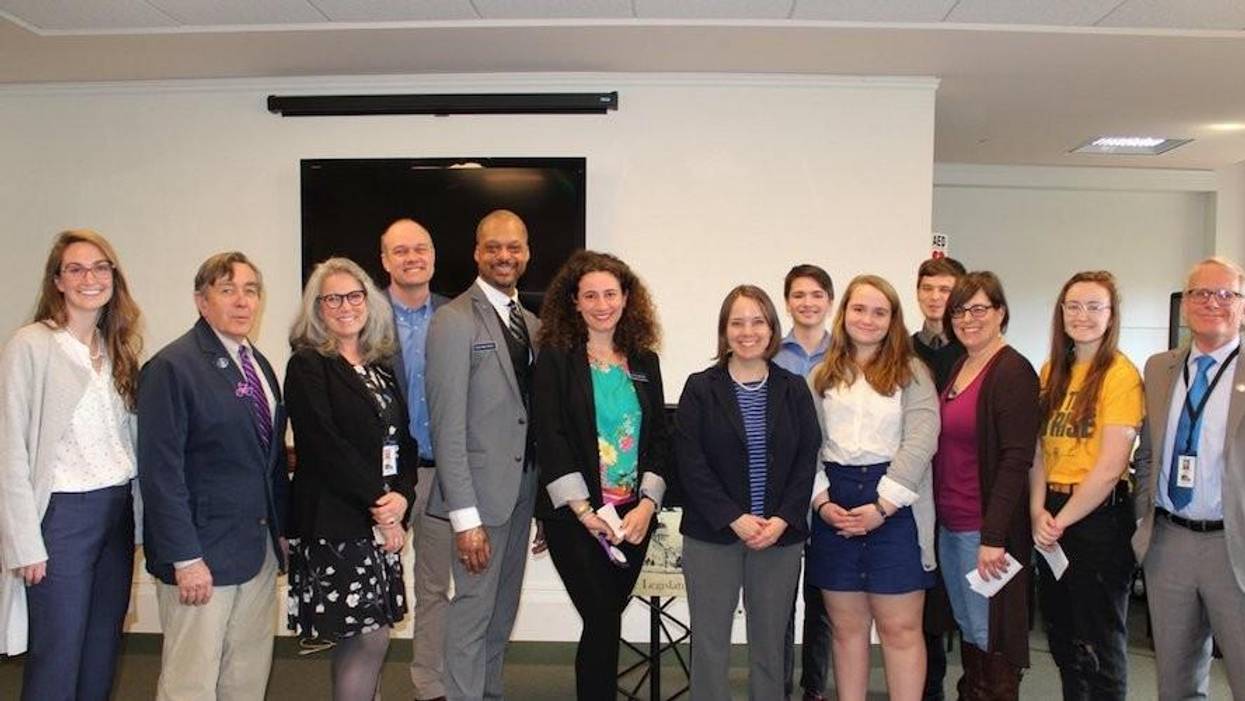
In a tweet celebrating the on-boarding of union support for the policy, Maxmin shared a photo of the team behind the news.
"[A coalition] of labor, farmers, students, teachers, small business owners, and legislators came together today to roll it out," said Maxmin.
The state level union endorsement comes just over a month after the national AFL-CIO called the national Green New Deal policy "not achievable or realistic."
A number of high profile proponents of the the policy and environmental causes celebrated the news.
"It's happening, folks," said writer Naomi Klein.
Wow! It's happening folks... https://t.co/afssFoZFl9
-- Naomi Klein (@NaomiAKlein) April 16, 2019
Varshini Prakash, the co-founder and executive director of youth-led climate change group Sunrise Movement, praised the move.
"A huge congrats today to the good folks in Maine fighting for a #GreenNewDeal that works for all people!" said Prakash.
And health activist Stephanie Quilao said the news from Maine punctuated a point she and others have been making for a while now: that waiting for the federal government to make change will be waiting too long.
"Great example of how we don't wait for #GreenNewDeal to happen at the federal level," said Quilao.
Far from the bright lights of the Bronx, where a fiery star rightfully dazzles the left, there is a trailer at the end of a dirt road in the most rural county in the most rural state in the nation. All the curtains are drawn. I knock on the door. A man emerges from a cloud of cigarette smoke, skeptical of the stranger on his doorstep. "Hello, my name is Chloe Maxmin. I'm running for state representative. I was stopping by to say hello and listen to any issues that you're thinking about this year." He invites me inside. As a young woman canvassing alone in the middle of the woods, the worst thoughts cross my mind. I dismiss them. We simply talk. At the end of our conversation, he says: "You're the first person to listen to me. Everyone judges what my house looks like. They don't bother to knock. I'm grateful that you came. I'm going to vote for you. Thank you."
These are the conversations that we have every day in rural Maine House District 88, where history is being made. We are two young community organizers with a friendship forged in the fire of campus activism whose love for the small towns in which we were raised called us back to our rural roots to build political power in traditionally conservative districts. Chloe, age 26, is the candidate. Canyon, age 25, is the campaign manager. On June 12, 2018, we won our Democratic primary with 80 percent of the vote. Two towns ran out of ballots as more people showed up to vote for Chloe than had voted in any previous Democratic primary, breaking record turnout by 41 percent. We've been endorsed by President Obama, MoveOn.org, the former head of the US Small Business Association, and many local organizations. Now we head toward November, seeking to be the first Democrat ever to win this Maine House seat. One thing is clear as we canvass rural roads, talking to Republicans, independents, Democrats, and the unregistered: The left abandoned rural America, leaving its citizens behind. Our campaign shows that building true representational political power in 2018 and beyond requires investing in state-level politics that translate progressive values to the realities of rural America and revive faith in local political movements.
The story of Maine District 88, which includes Chelsea, Whitefield, Jefferson, and part of Nobleboro, is the story of so many communities left behind by politics-as-usual. Chelsea is a working-class town in Kennebec County with one of the highest property-tax rates in the state. The other towns are in Lincoln County, which is the most rural county in Maine and the oldest county in the nation. Health-care costs leave most people in the district one emergency room visit away from financial disaster. Local schools struggle with shrinking budgets. Nearly 20 percent of our children live in poverty.
As organizers, we see that politicians ignore the will of the people. This pattern is clear in Maine. Since 2016, Maine voters approved five citizen initiatives--to fund schools, institute ranked-choice voting, expand Medicaid to 70,000 Mainers, increase the minimum wage, and legalize marijuana. All of these initiatives were either drastically altered or altogether ignored by our state government. Our governor has vetoed more bills passed by the legislature than all sitting governors since 1917 combined.
Our campaign in District 88 is more than just a small House race. It is an opportunity to pioneer new ways of restoring faith in politics, fighting for our overlooked communities, and listening to all perspectives. Our political system may fail us. We may be disillusioned. But everything that we care about circles back to politics. Our individual well-being revolves around our collective responsibility to hold our politicians accountable. We simply cannot afford to give up on politics.
Our House race has unlocked four key lessons for the left to author a new future.
First: Power is in the local. During Obama's presidency, the GOP stalled federal policy while quietly sweeping state legislatures. The result: unprecedented gerrymandering, relaxed pollution regulations, voter-ID laws that disenfranchise citizens, rejection of Medicaid expansion, climate denial, and other items on the American Legislative Exchange Council wish list. Democrats lost 968 state legislative seats during Obama's presidency, the largest net loss since World War II.
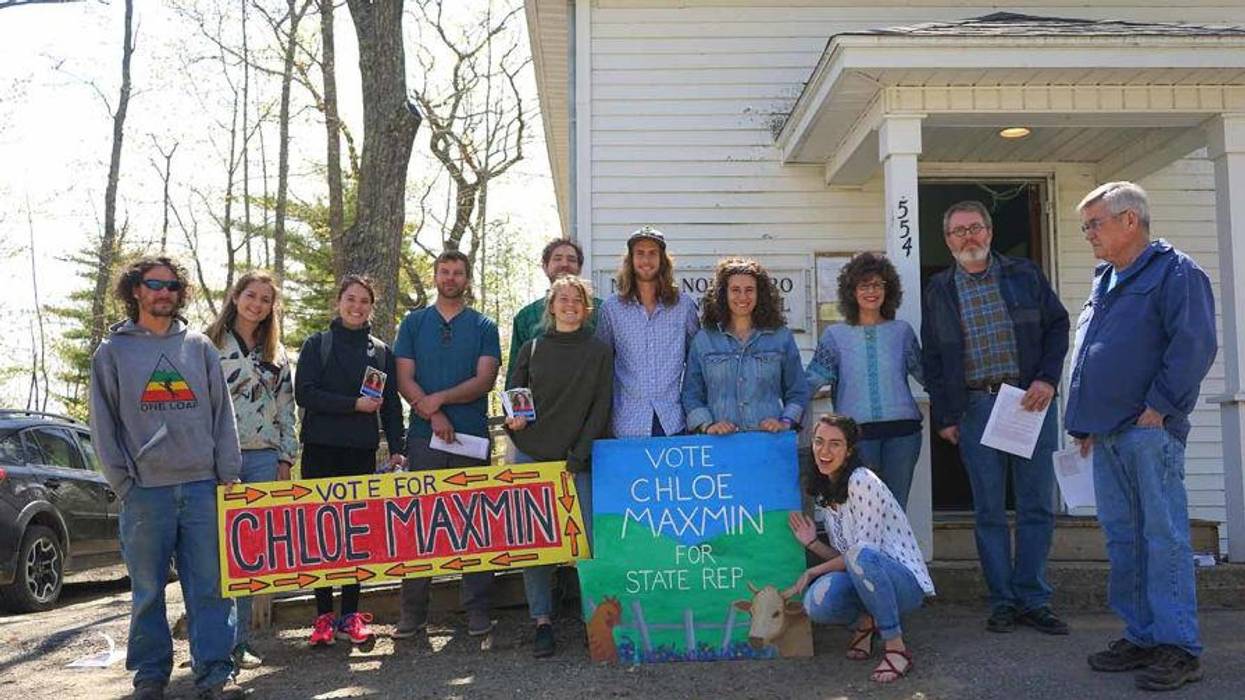
We must adjust course in order to reclaim local politics. The imperative to uncover common ground from beneath the scorched earth of division has never been more urgent. In our House district, we can talk with every voter, listen, understand, and learn from all perspectives. We organize sign-painting parties with local artists, house parties with neighbors, canvass days with friends, and celebrations with local bands. We build relationships to reengage citizens and restore faith in politics. We are empowered with a new understanding that each voice and vote truly counts, as these races are often decided by just hundreds--or even dozens--of votes. Change occurs when we recall the strong values that bind us through authentic conversation, dignified disagreement, and mutual respect.
Second: Youth leadership can ignite change. Millennials are on the verge of surpassing baby boomers to become the largest living generation in 2019. We are the largest voting bloc in America. Yet, we are grossly underrepresented in American politics, with only eight millennials currently in Congress. The average age of the Maine legislature is 54. Still, both parties keep running the same candidates who bring the same perspectives to a broken process. We need fresh points of view, creative energy, and passion injected into politics.
Young people across the country are running for office, engaging vigorously with politics, and organizing for candidates and causes. We came of age in the Great Recession, 40 percent of us saddled with student debt, all looking toward a future of climate chaos. We are keenly aware that politics-as-usual is failing every American except the rich and powerful. Almost two-thirds of us "have more fear than hope" about our democratic future, and 77 percent of us blame politicians. Now we are one of the most politically active generations in history. In District 88 and beyond, everyone is fed up with the current political climate. It is time for something new.
Third: We need to focus on the rural. Victories of leftist insurgents such as Alexandria Ocasio-Cortez and Ayanna Pressley are vital, but the Democrats' biggest challenges are not in New York City or Boston. Look at the map of the 2016 election results. The first thing that struck us on that fateful November day: Hillary won almost every urban center, and Trump swept the rural vote. The greatest support for Donald Trump came from small rural towns like ours. From 1999 to 2009, neither party held a significant advantage among rural voters. Today, Republicans have a 16-percentage-point advantage.
As staffers on numerous campaigns in multiple states, we witnessed the Democratic establishment's neglect of rural areas. We've seen state campaigns siphon volunteers from rural races to boost urban turnout. On one campaign, funding that was promised by the state caucus was withdrawn at the last minute to pay for TV spots in metropolitan markets. On a daily basis, we talk to voters who haven't been contacted by a Democratic campaign in more than a decade. Even Tom Perez, Democratic National Committee Chair, said in a recent interview that "you can't door knock in rural America."
The reasons for this shift are complex. But, after knocking on thousands of doors in rural District 88, we see the consequences of a failed political calculus. No one has taken time to listen to people's stories, struggles, hopes, and needs.
Fourth, and most important, campaigns are the new social movements. What if we looked at political races as social-movement campaigns? They provide us with the opportunity to organize, listen, connect, create community, and build leadership. In 2008, Barack Obama built a grassroots political movement, but on Election Day he essentially said, "Go home. I've got this." In the words of Marshall Ganz, the great organizer behind Obama's 2008 campaign, Obama "demobilized the widest, deepest and most effective grass-roots organization ever built to support a Democratic president." In the decade that followed, the left lost massive amounts of political power.
Bernie Sanders understood Obama's squandered opportunity. In 2016, he articulated a transformational vision of political revolution. He encouraged people to run for office at every level and engage in a movement that would outlast his campaign. Bernie told us that "real change never takes place from the top on down.... It always occurs from the bottom on up." That is why we look at our House campaign as part of a larger social movement. We use the same organizing tools as with community organizing, but our aim is explicitly political.
These four doctrines are the foundation of our campaign. We dig into the local, cultivating relationships and utilizing the resourcefulness of our rural communities to build a rooted movement. We understand and embrace our power as a young political generation on the rise, ready to take leadership and transform the system. We see that rural America is alive and beautiful, eager to be heard and remembered. Many have welcomed us into their homes and honored us with stories of family members who are registering to vote just for our campaign, who are voting Democrat for the first time, who have never voted in a midterm but now are because our movement gives them hope. We view our campaign as a movement, built on shared values and authentic conversations. We build real political power, with lasting muscle for the long fight, with an inside-outside movement that elects authentic representatives to fight for everyone and continues to organize beyond the election to maintain pressure on our politicians.
November 6 must be the day that we all rise up to definitively take ownership of our democracy and author our own future. Until then, we'll be mobilizing voters. We trust that you will be too. After all, there's no better October evening than one spent bouncing down long dirt driveways riddled with potholes, meeting new people, listening to their stories, and encouraging them to use their power to help write history.
This article was originally published at The Nation
A week of civil disobedience, rallies, and student activism, all aimed at pressuring Harvard University to divest its $36 billion endowment from fossil fuels, came to an end on Friday with activist and academic Cornel West saying the elite school risked being on the wrong side of the "planetary Selma" that is climate change.
"Ecological catastrophe is as evil as white supremacist catastrophe, anti-Jewish catastrophe, anti-gay catastrophe, anti-Muslim catastrophe," West reportedly said to loud applause at a Divest Harvard protest on Friday.
Addressing Harvard president Drew Faust, and echoing the divestment movement's "Whose Side Are You On?" rallying cry, West continued: "Doctor Faust, we now have a planetary Selma. We want you on the right side."
In an email sent Thursday, Faust informed student leaders of Divest Harvard that she would be happy to meet--in private and off the record--if the group ended its week-long blockade of the university's main administrative building and stopped "disrupting" business as usual on campus. The students were not swayed.
As Harvard's student newspaper, The Crimson, reported:
Chloe S. Maxmin '15, the group's co-founder, responded to Faust's email by requesting a meeting with Faust as well as the Harvard Corporation "to formally negotiate divestment."
Faust wrote back Thursday night and criticized the group for "the substantial disruption your activities have caused." Faust wrote, however, that she remains willing to meet with the protesters.
In an interview Thursday night, Maxmin called Faust's original message more of the same and said the group was not satisfied.
"We've been to Faust's office hours many many times over the past three years, and we've valued those opportunities to engage with her, but those conversations have not been productive," Maxmin said on Thursday night. "It is frustrating to hear the same statement and to have the same conversation over and over again."
But that frustration did little to tamp down the protesters' resolve.
"Divest Harvard has already mobilized over 1000 students, faculty, alumni, and community members, and some have traveled across the country to stand in solidarity," the group declared in a statement on Wednesday. "Despite this massive outpouring of support, the administration has chosen to hide from our voices, treating this growing coalition of support for divestment from fossil fuels as temporary. But we are committed to fighting for a more just future and to making this institution accountable to its students."
And the Guardian noted that the campaign "did pick up one important endorsement this week"--that of Kat Taylor, one of the university's overseers and CEO of Beneficial State Bank. Taylor wrote in a statement: "I am signing the divest letter as part of the ongoing efforts to encourage a full and transparent debate about how Harvard should lead on climate across all of its activities--research, teaching, campus practices, and investments."
She joined not only a vocal group of Harvard students and alumni, but a growing, student-led movement that is sweeping the nation during this 'Divestment Spring.'
Follow the final actions of Harvard's Heat Week on Twitter:
Over 200 people on Sunday night--including students, faculty, alumni, and community members--initiated what they say will be a week-long blockade of Harvard University's main administrative building as they kicked-off a week of civil disobedience and direct actions designed to elevate and escalate an ongoing student-led campaign to force one of the nation's most elite post-secondary schools to divest its financial holdings from the fossil fuel industry.
Dubbed 'Harvard Heat Week,' the series of actions began on Sunday and will run through Friday.
"We're actually not that radical. We're not insane. We're genuinely frightened for our futures."
--Chloe Maxmin, Divest HarvardThe blockade of Massachusetts Hall, which houses the office of University President Drew G. Faust, followed a day of activities on campus which focused on the crisis of climate change and the national divestment movement in which schools, local governments, pension funds, religious institutions, and individuals have been urged to pull their investments from the coal, oil, and gas industries. Participants left an evening rally, marched across campus, and took up posts in front of various entrances to the building.
According to Divest Harvard, the group spearheading the activities, "Harvard Heat Week will bring together stakeholders to stand united and call on Harvard to divest its endowment from the fossil fuel industry. The climate crisis leaves no room for neutrality, and we must be clear -- sponsoring the destruction of people and planet is NOT an investment."
Chloe Maxmin, a Harvard senior and co-founder of Divest Harvard, told The Daily Crimson, the school newspaper, that President Faust and the administration have "consistently ostracized" the students pushing for divestment and "used ever-changing statements" explaining their refusal to ditch fossil fuels.
"We're actually not that radical," said Maxmin. "We're not insane. We're genuinely frightened for our futures and truly believe that Harvard is sponsoring some of that fear."
Divest Harvard co-coordinator Jasmine P. Opie, a junior at Harvard, said the group has "spent a long time" presenting their arguments to the administration, but to no avail. "The point of our civil disobedience is not just out of the blue," she said.
Watch this footage produced by the Crimson:
And the Boston Globe reported:
The protesters, who estimated that about 200 people took part, split into three groups to block the entrances to Massachusetts Hall, a building on campus that houses administrative offices as well as freshman dorm rooms.
The protesters said they saw about a dozen Harvard police present. The scene was peaceful, said Jasmine Opie, a junior at Harvard and a member of Divest Harvard, the group behind the protest.
"We are blocking the doors of the administrators to try to disrupt business as usual and the status quo of refusing to consider taking action against fossil fuel companies," Opie said, adding that she and some of the other protesters planned to stay overnight.
Bill McKibben, a Harvard alumnus and the leading voice and co-founder of the climate action group 350.org, was present at the event and said the blockade and the coming week of action is "intended to remind Harvard to do more than talk" about the dangers of climate change. "The worst case scenario," he said, "is where we are now. You know, Harvard has just been saying, 'Climate change a trouble, let's talk about it. It's a problem, let's bring in Charlie Rose and have a talk show.' That's the worst case scenario."
The organizers behind 'Heat Week' produced this video to explain their campaign and what's driving increasing numbers of people to support it:
Follow the hashtag #HarvardHeatWeak on Twitter for updates, photos, and reaction:
Demanding an open meeting to discuss divesting the school's $30 billion endowment from fossil fuel companies, a group of Harvard students barricaded the doors to the school president's office on Wednesday morning and have so far refused efforts by police to disperse.
"These guys are not going away!" declared noted climate activist Tim DeChristopher, speaking at a rally in front of historic Massachusetts Hall, where President Drew Faust's office is located. The protesters say they will not move until their demands are heard.
"The fossil fuel industry is waging a war on truth by spreading climate denial and taking over our political system," said Harvard Divest co-founder Chloe Maxmin, speaking before the crowd. "At Harvard our motto is 'Veritas,' our motto is 'Truth,' and we should be standing up for truth. Instead, we are complicit in this war on truth."
In addition to the blockade, student-led group Divest Harvard is holding a Day of Action on Wednesday, including press events and rallies featuring faculty members and community groups who are joining the students' call to go 'fossil free.'
The day's actions can be followed on Twitter:
Tweets about "#BeyondEarthDay OR #Divestharvard"
Seventy-two percent of Harvard students support a referendum calling for divestment and more than 180 faculty and nearly 800 alumni have signed petitions in support of the campaign.
"These efforts have attracted the world's attention, while our administration refuses to engage in public dialogue," Maxmin wrote recently on BillMoyers.com. "Harvard has recoiled from a leadership role in the defining crisis of our time: climate change."
Faust has responded to these calls by arguing that the institution should be "wary of steps intended to instrumentalize our endowment in ways that would appear to position the University as a political actor rather than an academic institution."
Echoing a letter recently penned by nearly 100 prominent faculty member to President Faust, the students say: "If divestment is political, then investment is equally so."
"The college divestment campaign has been catching fire across the country, with broad-based support by students and not a lot of response by administrators," Henney Sullivan, member of the class of 2015 and organizer with Divest Harvard, told Common Dreams.
Sullivan said that if Harvard joined the handful of schools that have already pledged divestment it would "set a precedent for many other universities." He added that other schools look to Harvard, which has the largest private endownment of any university in the country, as a model of what's possible.
"We refuse to accept our university's unwillingness to hold a public meeting on this critical issue," the students declared in an op-ed published Wednesday.
They continue:
We are here today because we believe in a better Harvard. We are here because it is our duty to act. We are here today because it is our moral responsibility as students to ensure that Harvard does not contribute to and profit from the problem but instead aligns its institutional actions and policies with the shared interests of society.
Divest Harvard has launched a petition asking for worldwide support for their call to divest.
_____________________
On Thursday morning, a large and distinguished group of faculty at Harvard University released an open letter to President Drew Gilpin Faust and the Harvard Corporation. It calls, in striking terms, for divestment of the university's endowment--the largest university endowment in the world--from fossil-fuel corporations. Perhaps most striking, it responds forcefully, and at times bluntly, to Faust's public statements opposing divestment. The letter begins:
On Thursday morning, a large and distinguished group of faculty at Harvard University released an open letter to President Drew Gilpin Faust and the Harvard Corporation. It calls, in striking terms, for divestment of the university's endowment--the largest university endowment in the world--from fossil-fuel corporations. Perhaps most striking, it responds forcefully, and at times bluntly, to Faust's public statements opposing divestment. The letter begins:
Our University invests in the fossil fuel industry: this is for us the central issue. We now know that fossil fuels cause climate change of unprecedented destructive potential. We also know that many in this industry spend large sums of money to mislead the public, deny climate science, control legislation and regulation, and suppress alternative energy sources.
We are therefore disappointed in the statements on divestment made by President Faust on October 3, 2013 and April 7, 2014. They appear to misconstrue the purposes and effectiveness of divestment. We believe that the Corporation is making a decision that in the long run will not serve the University well. [Read the rest of the letter.]
The faculty's challenge comes hard on the heels of Faust's latest pronouncement on the subject of climate change, in which she appeared to move ever so slightly in the direction of moral seriousness, yet reaffirmed her opposition to divestment and doubled down on the unserious path of action she has advocated in the past, which is restricted to research, campus greening and investor engagement with fossil-fuel companies.
The faculty letter also comes after many months of organizing, campaigning and writing by students and supportive alumni. (See, for example, these posts by undergraduates Chloe Maxmin and Hannah Borowsky, grad students Tim DeChristopher, Ben Franta and Ted Hamilton and alums Todd Gitlin of Columbia University and former SEC Commissioner Bevis Longstreth. How often does a Reagan appointee join forces with a '60s-era president of SDS?) I even had a few words to say on the subject myself.
So it's good to see Harvard faculty stepping up. And it's good to see them making clear statements like this one:
Divestment is an act of ethical responsibility, a protest against current practices that cannot be altered as quickly or effectively by other means. The University either invests in fossil fuel corporations, or it divests. If the Corporation regards divestment as "political," then its continued investment is a similarly political act, one that finances present corporate activities and calculates profit from them.
The only way to remain "neutral" in such circumstances is to bracket ethical principles even while being deeply concerned about consequences. Slavery was once an investment issue, as were apartheid and the harm caused by smoking.
And this:
As the statements of October 3, 2013 and April 7, 2014 indicate, the Harvard Corporation wishes to influence corporate behaviors in the fossil fuel and energy sectors. We therefore ask:
How, exactly, will the University "encourage" fossil fuel corporations in "addressing pressing environmental imperatives"? Will Harvard initiate or support shareholder resolutions? Will it divest from coal companies? Will it ask questions at shareholder meetings? Will it set standards analogous to the Sullivan Principles? Will it conduct private meetings.
In short, how long will Business As Usual continue?
The questions in this section are not rhetorical. They require answers.
Yes, they do. And this campaign isn't going away--it's just getting started. Harvard can expect students, alumni, and now faculty, to keep increasing the pressure until we receive answers that can be taken seriously, both intellectually and morally, in the face of what we know about the scale and urgency of the climate crisis. (I have reached out to Faust's office and will update with any comment I receive.) As Ben Franta wrote here last month:
At the end of the day, we are acting for our children and grandchildren and for the generations beyond that. When we choose convenience over truth, we ultimately slow progress, and future generations pay the price. They will not care about who won an argument on a particular day, and they will not care about the clever excuses we come up with for doing nothing. They will care about what was actually true and what we actually did on their behalf.
Maybe today Harvard came a step closer to actually doing something commensurate with this crisis.