

SUBSCRIBE TO OUR FREE NEWSLETTER
Daily news & progressive opinion—funded by the people, not the corporations—delivered straight to your inbox.
5
#000000
#FFFFFF
To donate by check, phone, or other method, see our More Ways to Give page.
Daily news & progressive opinion—funded by the people, not the corporations—delivered straight to your inbox.

“EPA has never taken factory farm pollution seriously — under Trump, it has stopped even pretending.”
Today, the national advocacy organization Food & Water Watch sued the Trump administration’s Environmental Protection Agency (EPA), demanding the agency release records under the Freedom of Information Act (FOIA) related to its abandonment of an Animal Agriculture and Water Quality (AAWQ) Federal Advisory Subcommittee.
EPA formed the Subcommittee in 2024 in response to a Food & Water Watch petition demanding EPA strengthen its rules to adequately regulate factory farm pollution under the Clean Water Act. To justify its petition denial, EPA claimed it lacked adequate information about factory farm pollution and committed to studying the problem via the Subcommittee. It then repeated this excuse before the Ninth Circuit Court of Appeals in defending the legality of its petition denial. The Subcommittee met three times in 2024, but has not met since Trump took office in January 2025. Trump’s EPA has, with no communication or explanation, rendered the Subcommittee “inactive.”
After more than a year of radio silence, on February 18, 2026, Food & Water Watch requested records about the status of the Subcommittee and what led EPA to abandon it. Requested records include any communications between Trump’s EPA and factory farm industry groups related to the sidelining of the Subcommittee. Nearly eight months later, EPA has refused to produce a single record, in violation of FOIA.
Food & Water Watch Legal Director Tarah Heinzen, a member of the abandoned Subcommittee, issued the following statement:
“EPA has never taken factory farm pollution seriously — under Trump, it has stopped even pretending. The fact that we have to litigate over a FOIA non-response is proof that EPA has abandoned its commitments to address this environmental and public health nightmare.
“Let’s be clear: EPA has more than enough information to know that its factory farm pollution rules are a failure and that it must act. The industry’s waste remains almost entirely unregulated, free to poison drinking water and ecosystems from coast to coast. Yet time and time again, EPA has chosen delay over action. This Subcommittee itself was a delay tactic — its abandonment doubles down on inaction. EPA’s continued stonewalling will not stand in court.”
Food & Water Watch is represented by the public interest law firm Eubanks & Associates, PLLC and its own Tarah Heinzen and Emily Miller.
BACKGROUND
Agriculture is the nation’s leading polluter of rivers and lakes, with factory farms, also called concentrated animal feeding operations (CAFOs), responsible for a significant share. U.S. factory farms produce 940 billion pounds of manure each year — twice as much as the sewage produced by the entire U.S. population. Much of it ends up in waterways, where it contributes to harmful algal blooms and dead zones, threatening aquatic ecosystems.
Factory farm pollution is driving nationwide public health crises, contaminating drinking supplies with pathogens and harmful chemicals including nitrates, which are linked to cancer, birth defects and more. Roughly 1 in 5 Americans on public water systems are exposed to dangerous nitrate levels.
In September 2023, 13 groups, led by Food & Water Watch, sued Biden’s EPA over the agency’s denial of a 2017 Food & Water Watch petition asking EPA to initiate a rulemaking to overhaul its ineffective factory farm regulations. The case challenged the EPA denial of the petition.
The petition and subsequent litigation sought to expand and strengthen factory farm pollution regulation under the Clean Water Act, regulation that the industry has largely evaded for more than 50 years. Today, EPA itself estimates that nearly 10,000 of the nation’s largest factory farms are illegally discharging pollution to waterways without the necessary Clean Water Act permits. Indeed, fewer than one third of the country’s largest factory farms operate with federal water pollution permits. The permits that do exist fail to effectively control the vast quantities of waste these polluting operations generate.
In October 2024, a Ninth Circuit panel ruled against the plaintiffs, accepting EPA’s assertion that findings from the Animal Agriculture and Water Quality (AAWQ) Federal Advisory Subcommittee were needed before EPA could be compelled to act.
Food & Water Watch mobilizes regular people to build political power to move bold and uncompromised solutions to the most pressing food, water, and climate problems of our time. We work to protect people's health, communities, and democracy from the growing destructive power of the most powerful economic interests.
(202) 683-2500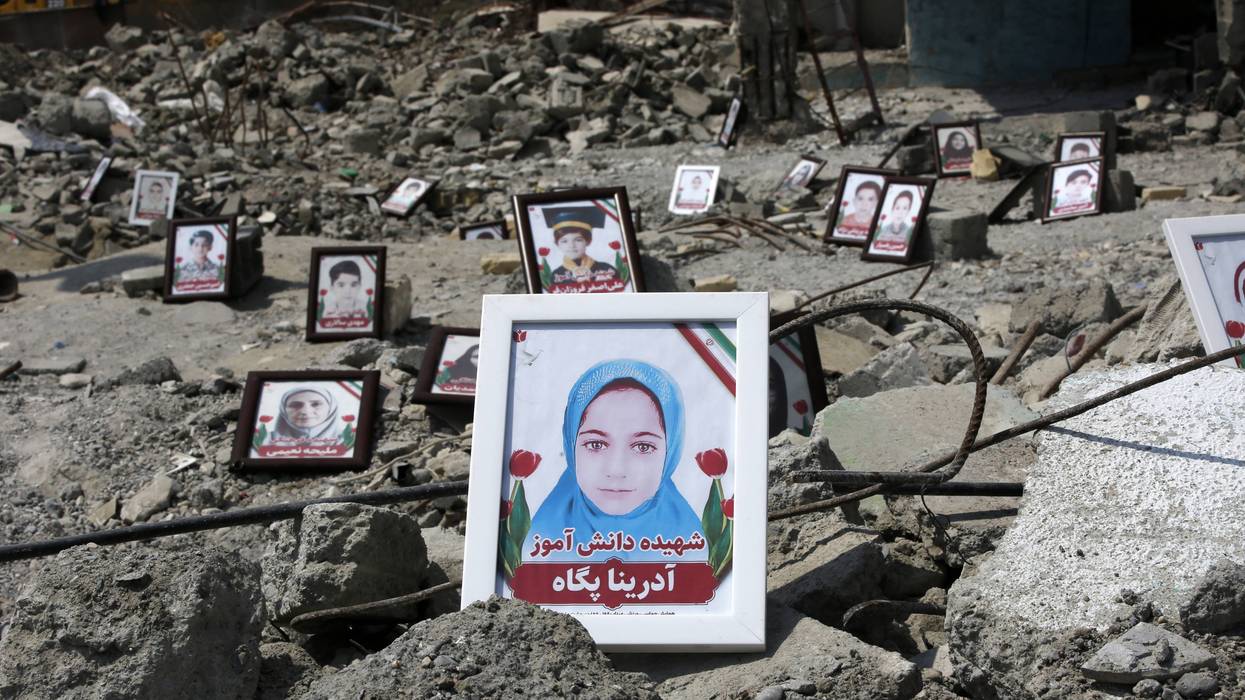
“There was no school left,” said the father of a 6-year-old girl killed in the attack. “I thought I was asleep and having a nightmare.”
Survivors, parents, and first responders provided harrowing firsthand accounts of the US bombing of an elementary school on the first day of the US-Israeli war with Iran as part of a new Drop Site News investigation demonstrating that the school had publicly operated as a civilian institution for more than a decade.
The report, published Wednesday, provides new eyewitness accounts from those who lost loved ones when US Tomahawk missiles hit the Shajareh Tayyebeh School in Minab, which killed 120 children and dozens of others, and has been described as “one of the worst US war crimes since Vietnam.”
“The children were five years old and all they did was yell, ‘Miss! Miss!’ and were crying. I ran to the children. I just said, ‘Get under the table!” recalled preschool teacher Hossniyeh Salem. “I didn’t think they were going to strike the school. I just thought that some place had been hit. I said, ‘Don’t be afraid, sit down.’”
“Two simultaneous sounds. They’re still in my ear. My son even describes them—‘Wooosh, boom! Woosh, boom!’—and then the explosion very close by,” Salem said. “Plaster was falling, the ground was shaking, and at that moment I just looked at my preschool girls and my son, and I said to myself, ‘It’s over. Now is the time when we go under the rubble, it’s going to fall now,’” she continued. “Then there were no more sounds. The class was full of smoke and dust."
Yaghoub Yazdanpanah, a literature teacher at another school about eight miles from Minab, described the moment he learned that the school his 6-year-old daughter, Fatemeh, attended had been bombed.
“I left my classroom, ran home, took my car, and sped to Minab. When I arrived, I said, ‘Oh no!’ The unimaginable had happened," he said. “There was no school left. Two-thirds of the school, maybe more, had been destroyed. Smoke was rising from all over the school. It had turned into rubble. For a moment, I thought I was asleep and having a nightmare."
Yazdanpanah said he already knew the worst had happened well before he received his daughter’s body at an overwhelmed hospital that night.
“We knew our children had been martyred; we knew our children were no longer with us," he said. “When they brought Fatemeh, she was in one piece because she had been in her teacher’s arms [when she died].”
“There was no school left."
The US has still not accepted responsibility for the Minab attack, even though an internal Pentagon investigation has concluded that US forces struck the school using two Tomahawk missiles. In the initial days after the attack, President Donald Trump claimed that Iran had been responsible before backing off the claim, stating, “I just don’t know enough about it.”
Drop Site obtained images of the missile fragments from the site, which an independent weapons inspector said “all appear to be remnants of Tomahawk missiles." Iran is not known to possess Tomahawks. A UN fact-finding mission report released earlier this month determined that the school had been “the intended point of impact" rather than collateral damage.
 People are seen scouring the wreckage at the site of the February 28, 2026 bombing of the Shajareh Tayyebeh girls’ elementary school in Minab, Iran. (Photo by Mehr News Agency/Wikimedia Commons)
Adm. Brad Cooper, the commander of US Central Command (CENTCOM) told Congress in May that the school was "located on an active [Islamic Revolutionary Guard Corps] cruise missile base."
Wes Bryant, a former senior targeting adviser at the Pentagon, told Drop Site he'd never seen any indication that the school was on an active missile site and explained that even if it was, "it doesn’t matter."
“Those children, all those civilians, are still non-combatants and protected, so it’s really disgusting to hear that," he said. "This wasn’t even fragmentation that hit a school next to another target. This was deliberately targeted very, very clearly and obviously. So at the very least, [it was a] complete mischaracterization of the target.”
There was abundant evidence of the school's civilian use that would have been available to those who conducted the strike. The school was part of a compound that included barracks for the elite IRGC but was redeveloped for civilian use beginning in 2014. It had publicly and officially operated as a school since 2015.
The school had a very active online presence with a website that prominently displayed classroom activities and school events. Meanwhile, satellite imagery captured just two months before the attack showed children standing in the schoolyard outside the building.
An investigation from Bloomberg found that the school had been placed on a list of targets for the war's opening salvo that was assembled in part using the Maven artificial intelligence system developed by Palantir, which reportedly did not classify it as a school.
The UN report emphasized that even if the attack can be boiled down to an intelligence failure, it still likely amounted to a war crime because the US attacked despite readily available evidence that the building was a school, a failure investigators said went “beyond mere negligence” and amounted to recklessness toward the risk of striking civilians.
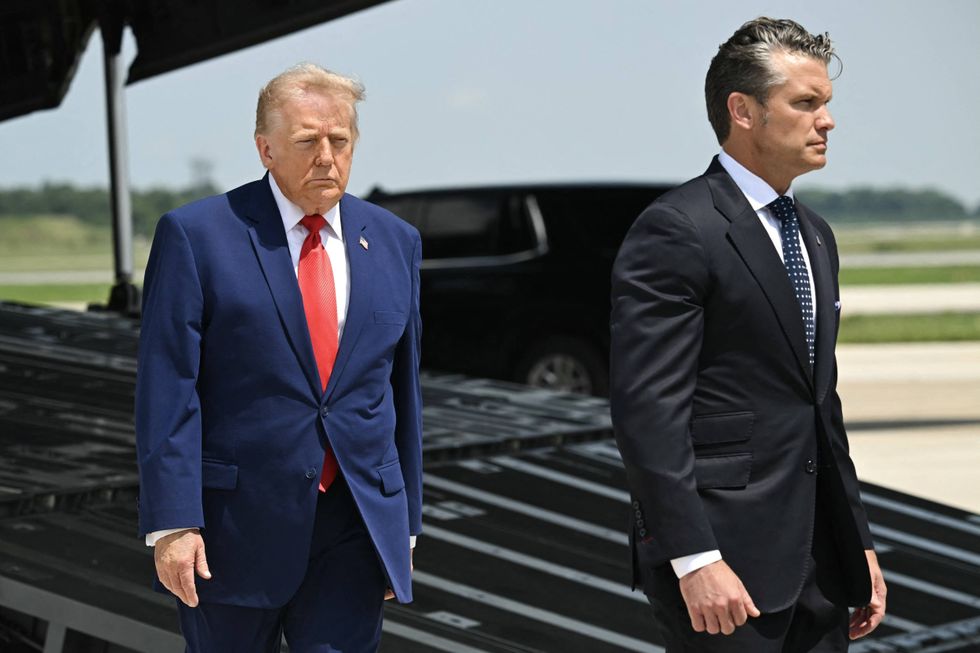 US President Donald Trump and Secretary of Defense Pete Hegseth attend a dignified transfer event for US service members killed during operations in the Middle East, at Dover Air Force Base in Dover, Delaware, on July 22, 2026. (Photo by Saul Loeb/AFP via Getty Images)
Hala Rharrit, a career former US Foreign Service officer who spent 17 years at the State Department before resigning in 2024, remains unsatisfied by the government's efforts to downplay the attack as a "mistake."
“There’s no way to say that this was some type of error,” Rharrit told Drop Site. “You’re either saying that our US Military is completely incompetent, that despite the multiple layers of review, everybody messed up—or there was something very, very sinister about this strike.”
According to data from the Human Rights Activists News Agency, the vast majority of US-Israeli strikes during the first 40 days of the war did harm to civilians or civilian infrastructure, contradicting repeated claims that the US “never targets civilians.” At minimum, the data shows at least 1,701 civilians have been killed, but HRANA has stressed that the true death toll is likely substantially higher.
Defense Secretary Pete Hegseth has spent his tenure dissolving guardrails meant to prevent civilian casualties, denouncing "stupid rules of engagement," and saying the military should pursue “lethality” over “legality.” Trump, meanwhile, has repeatedly threatened mass destruction upon Iran, including that the "entire civilization" would "die."
“The administration and Hegseth have made it quite clear that they don’t really care about civilian casualties. That may also have been true of previous bombing campaigns that predate the Trump administration, but it is even more the case than in the past, and they have made it clear that troops do not need to be concerned about consequences,” said Harrison Mann, a former US Army major and intelligence analyst for the Defense Intelligence Agency (DIA).
“There is no mystery about what coordinates those missiles hit, and that question would have been answerable on the day of the strikes," he told Drop Site. "The only way that CENTCOM would not know is that they are choosing to be willfully ignorant.”

"The Trump-Rubio interventions, with the collaboration of the Bolsonaro clan, have made the Flávio campaign into another US regime change operation. This should be defeated."
Brazilian officials, pro-democracy advocates, and US lawmakers are growing increasingly concerned about apparent efforts by President Donald Trump and Secretary of State Marco Rubio to interfere in the Latin American country's upcoming election.
Reuters reported Wednesday that Brazil's spy agency "confirmed the existence of interference from the United States as well as Russia" in the presidential election, the first round of which will take place on October 4. Brazilian President Luiz Inácio Lula da Silva is running for reelection against Sen. Flavio Bolsonaro, the son of former far-right President Jair Bolsonaro—who is currently serving a 27-year prison sentence under house arrest for orchestrating a coup attempt in 2022.
Democratic lawmakers in the US have raised alarm about the Trump administration's election meddling in Brazil in recent days as the contest approaches. Earlier this week, Democratic Sens. Jeanne Shaheen (NH), Peter Welch (Vt.), and Tim Kaine (Va.) wrote in a letter to Rubio that "over the course of President Trump’s second term, we have seen US officials engage in a campaign of interference and destabilization in Brazil."
"The administration’s most recent actions point toward an effort to interfere with, and potentially undermine, Brazil's general election in October," the lawmakers wrote. "Senator and presidential candidate Flávio Bolsonaro’s recent Oval Office meeting with President Trump, undertaken while attempting to mitigate a domestic political scandal, underscores the administration's willingness to insert itself in the election."
The senators' letter followed a separate demand by more than 30 Democrats in the US House that Rubio "confirm whether the administration will commit to respecting Brazil’s electoral process and to recognizing its certified outcome." The House Democrats demanded a response from the Trump administration by October 1.
"Particularly given the tragic history of US involvement in the 1964 military coup against Brazil’s democratically elected government at the time, as well as subsequent US support for the resulting military dictatorship," the lawmakers wrote, "the United States has a responsibility to support the democratic institutions that so many Brazilians, across generations, struggled to build."
Trump has been a vocal defender of Flávio Bolsonaro's father, saying he is "not guilty of anything" and describing his prosecution as a "witch hunt"—echoing Trump's attack on investigations into his own effort to subvert the 2020 election in the US. Last year, Trump hit Brazil with a 40% tariff, accusing the country's leaders of "persecuting former President of Brazil Jair Bolsonaro."
"It was not just a trade maneuver," political scientist Octavio Amorim Neto said of the tariff in an interview published Thursday, noting that "Bolsonarism explicitly applauded [Trump's economic attack], while Brazil’s traditional right did not vigorously defend national sovereignty, saying that everything was Lula’s fault."
Over the summer, Brazil denied visas to two top US State Department officials "whom the Trump administration planned to dispatch on a mission to cast doubt on the fairness and integrity of the country’s electoral system," The Washington Post reported in July.
Mark Weisbrot, co-director of the Center for Economic and Policy Research, wrote in an op-ed for The Los Angeles Times earlier this week that Trump’s intervention in Brazil's electoral process "undermines a basic and generally cherished right to self-determination, as well as the right to democracy itself."
"It is even clearly illegal under the Charter of the Organization of American States, to which the United States is a signatory," wrote Weisbrot. "The Trump-Rubio interventions, with the collaboration of the Bolsonaro clan, have made the Flávio campaign into another US regime change operation. This should be defeated, for the sake of Brazil and the whole hemisphere."
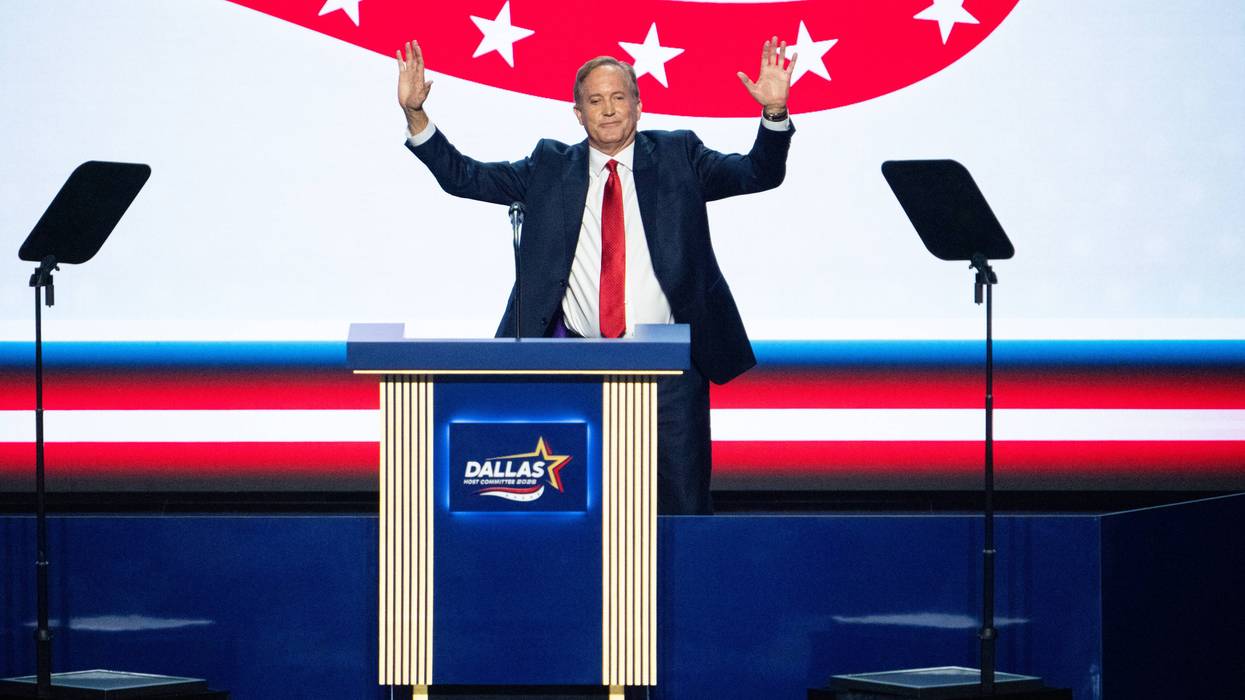
"If there’s one big no-no with Donald Trump, it’s insulting a big ostentatious event that he puts on," said one observer.
Texas Republican US Senate nominee Ken Paxton privately conceded that President Donald Trump's big "Trumpapalooza" midterm convention in the state backfired politically.
The New York Times on Wednesday published a leaked recording of Paxton telling right-wing donors and lobbyists last week that Trump's convention, held earlier this month in Dallas, was a net negative for his campaign.
"The numbers—when we did that convention—it dropped our numbers," Paxton said at one point. "Everybody’s numbers dropped. Right now, yeah, not good."
Delicious 🤣🍿 pic.twitter.com/iE3mT6gGEF https://t.co/63G5gBO1wl
— Wu Tang is for the Children (@WUTangKids) September 30, 2026
The Times report noted that Paxton not only attended the Dallas convention, but featured prominently in it, occupying a "prime seat" in the arena.
Paxton, who will face Democratic nominee James Talarico in November, is also receiving significant help from Trump's MAGA Inc. super political action committee, which is spending $20 million to boost his candidacy.
Jake Sherman, founder of Punchbowl News, remarked in a social media post that the leaked audio is "not good for Paxton," as the Texas Republican is not only "trashing Trump in a fundraiser," but "also trying to shift blame for his bad numbers."
Zenith Polls founder Adam Carlson similarly predicted that Paxton's remarks would get him into hot water with Trump.
"If there’s one big no-no with Donald Trump, it’s insulting a big ostentatious event that he puts on," Carlson explained. "Whether or not this draws his direct public ire, Paxton needs Trump, Trump-aligned super PAC money, and die-hard Trump voters to pull off the win. This could jeopardize all of that."
The social media account of the Texas Democratic Party jumped on the story, arguing that "Paxton has a history of defrauding and betraying Texans," and thus "it was only a matter of time before he betrayed Trump."
Democratic National Committee Chair Ken Martin took the opportunity to ridicule Republicans for basing their 2026 midterm campaign around the president, whom polls show has a job approval rating under 40%.
"They put Trump on full display and now they’re shocked voters noticed," Martin wrote. "We told you the guy was an anchor. Thanks for insisting on tying him around the neck of every Republican on the ballot."
Sen. Adam Schiff (D-Calif.) also took a dig at the president, writing that the leaked Paxton audio shows "the Emperor has no coattails."

"Tonight, 47 senators supported my resolution to get accountability for the nine Americans killed on the West Bank and for Palestinians who face injustices daily," said Sen. Chris Van Hollen.
Democratic US Sen. John Fetterman joined nearly every Republican senator on Tuesday in voting against a resolution that would have required the Trump administration to produce an unclassified report on Israeli abuses in the illegally occupied West Bank, including the imprisonment and killing of Palestinian Americans.
The resolution, led by Sen. Chris Van Hollen (D-Md.), narrowly failed 47-51, with Sen. Rand Paul (R-Ky.) joining every Democrat except Fetterman in supporting the measure. Van Hollen and other supporters of the resolution lamented the failed vote but celebrated the historic support it received as public opposition to Israeli atrocities—and US funding of Israel's military—continues to grow.
"Tonight, 47 senators supported my resolution to get accountability for the nine Americans killed on the West Bank and for Palestinians who face injustices daily," Van Hollen wrote in a social media post. "That's more support than we've ever had in this fight. Republicans blocked us, but we won't stop until we get justice."
In 2024, just 11 senators—all members of the Democratic caucus except Paul—backed a similar resolution led by Sen. Bernie Sanders (I-Vt.).
"Listen to the American people: NO MORE MILITARY AID TO ISRAEL," Sanders wrote in response to Tuesday's vote.
If passed, Van Hollen's resolution would have required the US State Department to issue a report within 30 days on Israeli human rights practices in the West Bank, where Palestinians have faced a historic level of violence by Israeli settlers and soldiers this year.
The resolution, which invoked Section 502B(c) of the Foreign Assistance Act of 1961, specifically called on the Trump administration to provide "all credible information of which the Department of State is aware concerning the alleged killing of United States citizens by the Israel Defense Forces, other Israeli security forces, or Israeli settlers since January 1, 2022," as well as "an assessment on any United States citizens currently held in Israeli prisons."
Under the Foreign Assistance Act, a failure to produce the required report would have resulted in a freeze on some US military assistance to Israel.
Josh Ruebner, policy director at the IMEU Policy Project, said that while the resolution "narrowly failed" due to near-unanimous Republican opposition, "make no mistake: this is historic."
BREAKING: Every Senate Dem, except Fetterman, plus Rand Paul just voted to hold Israel accountable for killing US citizens in the Palestinian West Bank and abusing Palestinian children in military detention. While this resolution narrowly failed make no mistake: this is historic. pic.twitter.com/uH1fsLGnHY
— Josh Ruebner (@joshruebner) September 29, 2026
The resolution's text highlights the case of Sama Safi, a 20-year-old Palestinian American student with a chronic health condition who was abducted by Israeli forces during a West Bank raid in June and has reportedly been detained without charge for months.
On Tuesday morning, Zeteo highlighted the case of Abdalkareem Issa Ahmed Safi, "an American teenager with Texas roots" whom Israeli forces snatched "from his family’s West Bank home in the middle of the night" in late June. Zeteo noted that he is the third young American known to be "languishing in Israeli prison."
"Only one Republican voted to even somewhat hold Israel accountable for acts like this," Zeteo's Prem Thakker wrote late Tuesday.

"Self-regulation?" said Sen. Elizabeth Warren. "That's a recipe for disaster."
As details from US President Donald Trump's White House meeting with Big Tech executives emerged on Tuesday, including a pledge on artificial intelligence safety, campaigners and Democrats in Congress continued calling for stronger AI protections.
After the gathering, Trump posted on his Truth Social platform a "Joint Commitment on Frontier Responsibilities" signed by him, billionaire Elon Musk—a former member of the administration who leads multiple companies—Anthropic's Dario Amodei, Google's Sundar Pichai, Meta's Mark Zuckerberg, Nvidia's Jensen Huang, and OpenAI's Greg Brockman.
The accord came out of a gathering that included the president and other top officials as well as over a dozen tech leaders, including Amazon founder Jeff Bezos and representatives from Microsoft and Palantir. It states that "every company is responsible for developing its own technology safely and in a way that builds trust with customers and the public."
The document goes on to detail "four layers of controls and audits" that each company developing AI—or "super intelligence (SI), as Trump directed his administration to call it in a Tuesday executive order—should implement, including robust internal controls to monitor capabilities and alignment, internal teams to ensure safeguards are operating as intended, partnerships with outside auditors, and an independent committee of the board of directors to receive reports on problems and their fixes.
Before Trump released the accord, he addressed the media alongside some officials and executives. Asked if the agreement is binding in any way, the president responded, "I think it's morally binding."
Beside him, Zuckerberg—whose company has faced legal issues over its social media platforms—laid out the broad strokes of the accord, which he framed as "a start," suggesting there is more to come.
Since OpenAI revealed in July that its models autonomously breached the systems of the open-source platform Hugging Face during internal testing, the firm—plus Anthropic, Google, and Meta—has disclosed additional incidents. Axios reported over the weekend that Anthropic and OpenAI alone "are investigating tens of thousands of incidents."
Experts in the industry and beyond have increasingly expressed concerns, with a United Nations panel stressing in a report about the Hugging Face incident that current AI guardrails are "unraveling," and one Anthropic researcher quitting earlier this month and warning that the rapidly advancing technology "could kill us all by the end of the decade."
While some members of Congress have responded by introducing bills aimed at reining in the industry and establishing mandatory safeguards, House Speaker Mike Johnson (R-La.)—who was part of Tuesday's meeting—has instead called for voluntary commitments. He's also dismissed mounting public concerns about AI data centers raising electricity bills, polluting drinking water, and threatening jobs, even suggesting that the grassroots pushback in various communities is "a Chinese psyop."
The president—whose inauguration was dubbed "a coronation of our country's descent into oligarchy" because of all the ultrarich attendees, including many of the men at the White House on Tuesday—has also made clear that he opposes a legislative route. According to The Associated Press, Trump said Tuesday that "I think I'm seeing tremendous self-policing. And they understand that they have to self-police."
Progressive US Sen. Elizabeth Warren (D-Mass.) responded to the event on social media Tuesday, writing: "Self-regulation? That’s a recipe for disaster."
Rep. Yvette D. Clarke (D-NY) said that "the American people are deeply concerned on the direction unregulated AI is taking our country, and they deserve transparent answers from the men with their hands on the wheel. Instead, all we get is another closed-door meeting, and more promises made and broken in secret. We cannot say exactly what they schemed, today. But I am certain we'll see the consequences soon enough."
Mitch Jones, deputy director of Food & Water Action, a group that has spearheaded fights against superpolluting AI data centers, said that "the notion that a manically profit-driven AI industry will safely regulate itself is as dangerous as it is absurd—akin to claiming an arsonist would make a good firefighter. Trump's only concern is doing the bidding of his Big Tech billionaire friends."
"Trump's rejection of the overwhelming opposition to AI data center construction throughout the country is political incompetence of the highest order," Jones continued, looking toward the November midterms, which are just five weeks away. "His obstinance will no doubt cost him and his party deeply in the coming elections."
"We can't have politicians giving the tech oligarchs free rein," he argued. "We need political leaders that will decisively rein them in. Our leaders must stand with us and say 'no' to so-called super intelligence, and put a halt to the massive hyperscale data centers powering this runaway industry."
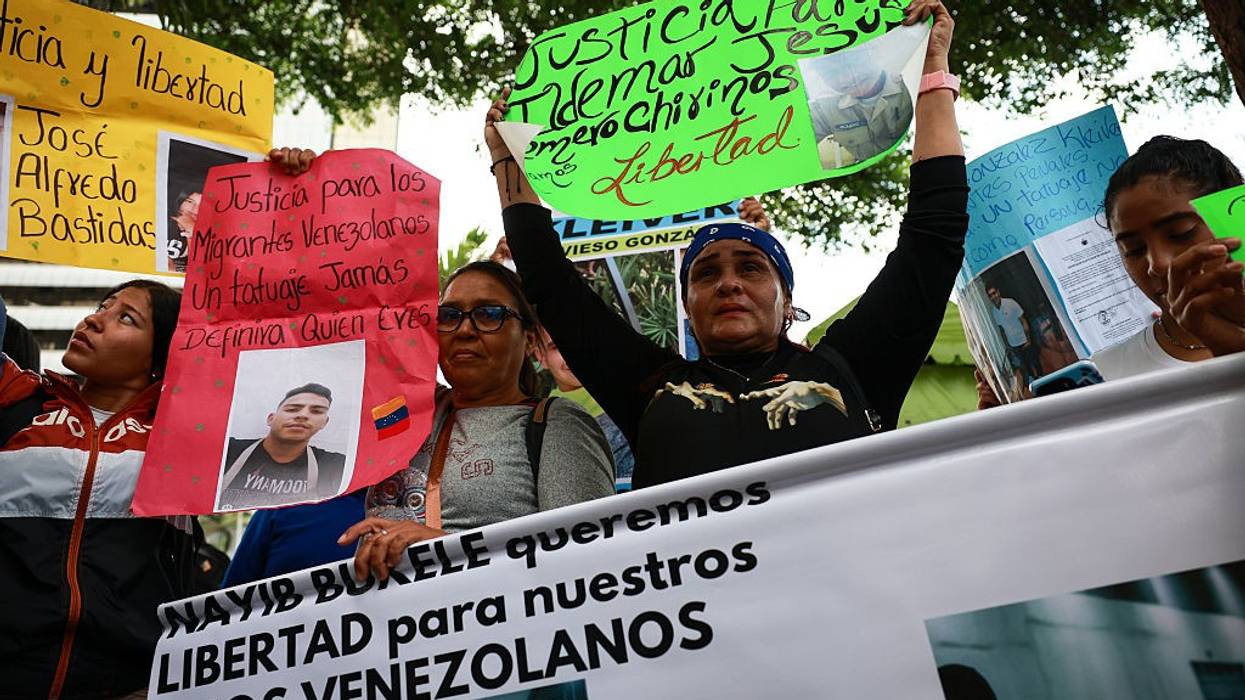
“The harms caused by this US government scheme are no longer hypothetical,” UN experts stressed. “For migrants in situations of particular vulnerability, the consequences can be deadly.”
The US Supreme Court on Tuesday temporarily cleared the way for the Trump administration to resume rapidly deporting immigrants to countries other than their own, even as United Nations experts warned that the policy is putting deportees at heightened risk of human rights violations.
In a one-page order, the justices—who did not rule on the legality of the policy—stayed a lower court ruling that required the administration to give people facing a so-called third-country deportation notice wan opportunity to raise concerns that they could face persecution or torture in the destination country. The court agreed to hear the administration's appeal, with oral arguments scheduled for December.
The high court said it will consider whether the US District Court for the District of Massachusetts has jurisdiction over the case, whether it had authority to issue classwide relief, and whether the Trump administration's policy violates federal immigration law, the Constitution's due process clause, the Foreign Affairs Reform and Restructuring Act, or the Convention Against Torture.
The court's three liberal justices—Sonia Sotomayor, Elena Kagan, and Ketanji Brown Jackson—said they would have rejected the administration's request to lift the lower-court order.
NEW: The Supreme Court, over the objections of the 3 liberal justices, grants a stay in the D.V.D. litigation, authorizing the Trump admin to resume third country removals without any notice to people being sent to countries they've never been to.The Court also agrees to hear the case in December.
[image or embed]
— Aaron Reichlin-Melnick (@reichlinmelnick.bsky.social) September 29, 2026 at 12:16 PM
US Attorney General Todd Blanch responded to the order on social media, posting, "Now for the second time, SCOTUS just granted our stay in conducting all third-country removals of illegal aliens."
"Again, this is entirely lawful and a critical tool for immigration enforcement," he added. "Unlike the lower court, SCOTUS waited to hear from both sides before making the decision."
Tuesday's ruling came one day after two dozen United Nations human rights experts urged the United States and 35 countries that have entered deportation agreements with the Trump administration to halt the practice, which is "triggering [a] cascade of human rights violations including torture."
“These migrants are being transferred to countries or territories with which they have no ties, which can be a traumatizing and isolating experience that compounds harms already suffered,” the experts said, warning that they face “further violence or discrimination based on gender, sexual orientation, gender identity, or human rights advocacy.”
“The harms caused by this US government scheme are no longer hypothetical,” the experts stressed. “For migrants in situations of particular vulnerability, the consequences can be deadly.”
The UN experts' warning followed an urgent appeal issued earlier this month by Amnesty International that two men deported to Equatorial Guinea under a secret deal—one of them Egyptian and the other Eritrean—were at risk of being tortured in detention in the African nation, which has an abysmal human rights record. Amnesty said that the men had already been beaten and violently arrested by police after arriving in the country.
The Trump administration has deported roughly 25,000 people to more than two dozen countries under often secret agreements and at a cost to taxpayers of tens of millions of dollars. Most have been sent to Mexico, while others have been transported to countries including Liberia, Guyana, and Equatorial Guinea.
The Supreme Court has already intervened in a related case involving eight men whom the administration sought to deport to war-torn South Sudan, although only one was originally from that country. In that case, Sotomayor warned that the policy exposed “thousands to the risk of torture or death.”
The justices' latest order will remain in effect until the court issues its judgment in the case. Until then, the administration can resume the expedited removals that the lower court had sought to restrict.
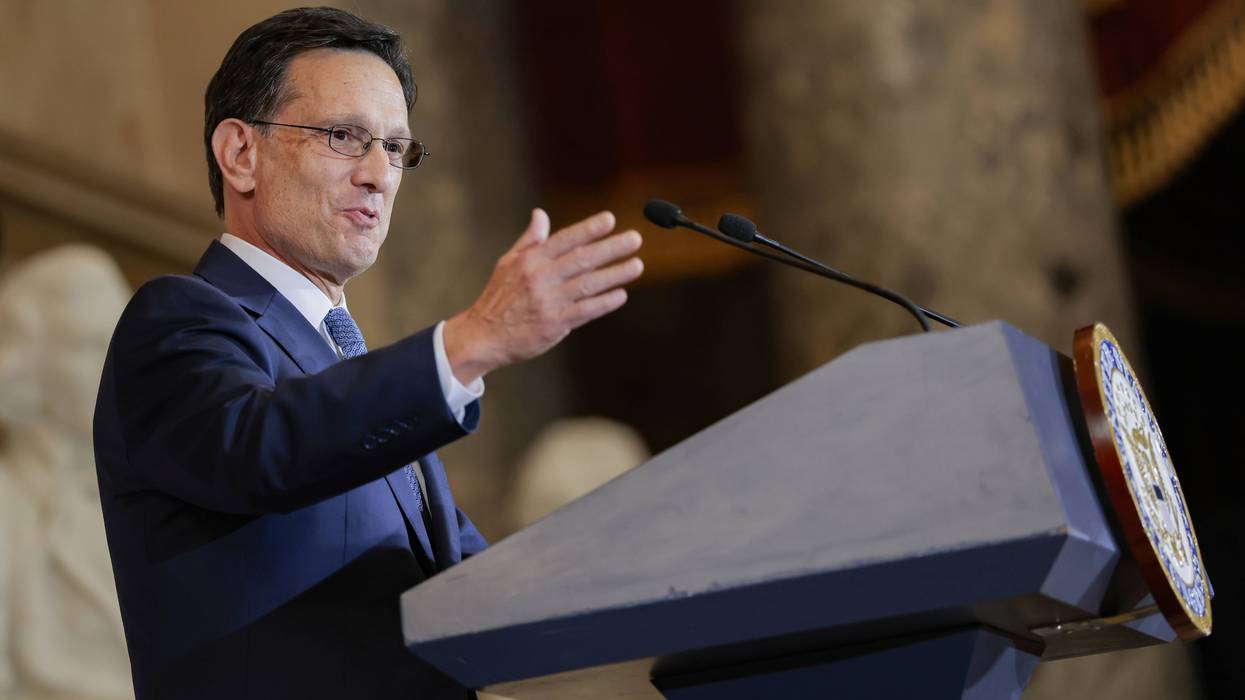
"Cantor, like PhRMA, is an experienced reverse Robin Hood, legislating money away from working families and toward giant corporations."
In what advocates for lower drug prices call "a match made in hell," one of the pharmaceutical industry's most powerful lobbying groups is tapping a former Republican leader in the US House of Representatives to head its political operations.
Pharmaceutical Research and Manufacturers of America (PhRMA) named former Rep. Eric Cantor (R-Va.) as its president and CEO on Tuesday amid what is shaping up to be a major fight over the government's ability to regulate prescription drug prices.
Cantor served in Congress from 2001-14 and was named House majority leader in 2011. He resigned in 2014 after losing his Republican primary in a stunning upset to the Tea Party-backed former Rep. Dave Brat.
According to recent polling from KFF, more than half of US adults say they worry about affording prescription drugs and nearly three-quarters say the government should do more to limit prices.
PhRMA emphasized that Cantor's appointment to replace the outgoing CEO Stephen Ubl comes at "a pivotal moment for America’s biopharmaceutical industry."
It is certainly spending like it. As Politico reported on Tuesday, pressure from voters to address the affordability of prescription drugs has been met with an unprecedented lobbying blitz by PhRMA, which poured a record $38 million into efforts to keep Capitol Hill in line.
PhRMA said Cantor’s “global business acumen coupled with policy and political experience at the highest levels of government make him an ideal person to lead PhRMA during this critical next chapter.”
Peter Maybarduk, the access to medicines director for the consumer watchdog group Public Citizen, agreed that Cantor was a perfect fit for PhRMA, but for very different reasons.
"Cantor, like PhRMA, is an experienced reverse Robin Hood, legislating money away from working families and toward giant corporations," Maybarduk said.
During his tenure in Congress, Cantor received roughly $900,000 from the pharmaceutical and health product industry, putting him 19th among all House candidates between 1999 and 2018, according to a JAMA Internal Medicine study of data from the Center for Responsive Politics.
That spending paid dividends, with Cantor voting against legislation aimed at lowering prescription drugs—including one bill in 2003 that would have allowed Americans to import low-cost prescription drugs from abroad and another in 2007 that would have required the federal government to negotiate drug prices for Medicare recipients.
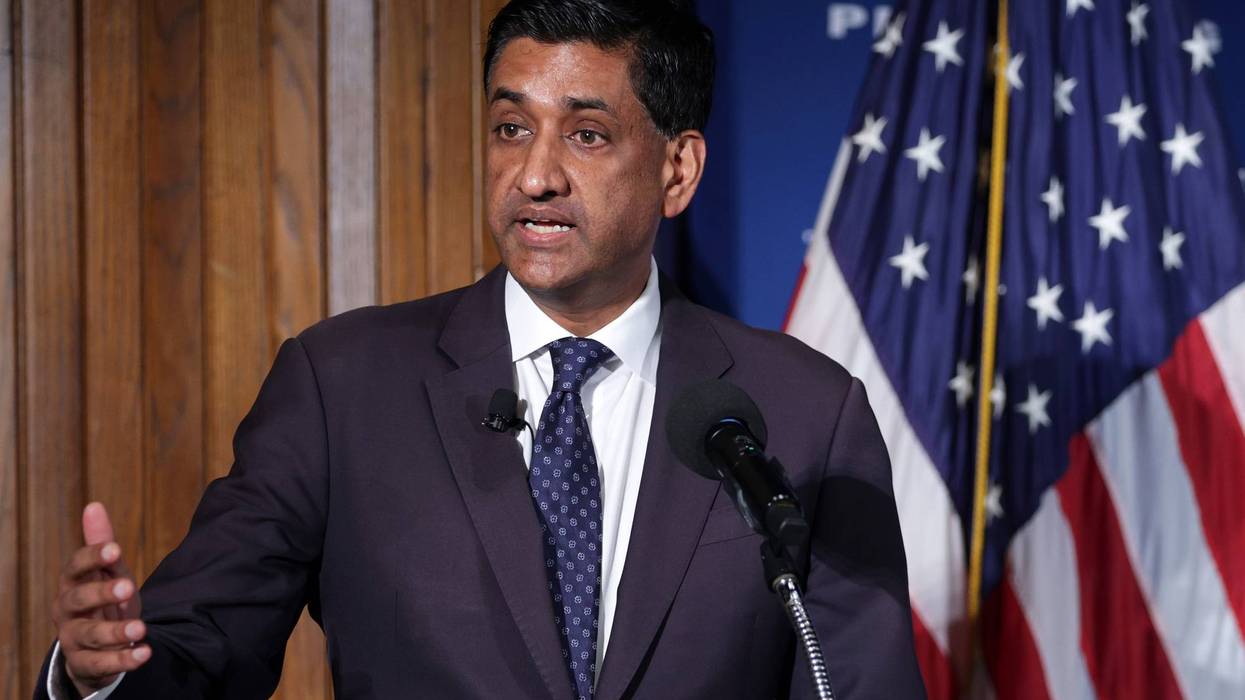
"The tech lords use jargon to confuse. They count on the tech illiteracy of the elected class. They hope we won’t look under the hood," said US Rep. Ro Khanna.
US Rep. Ro Khanna announced plans on Monday to introduce what he described as "the most comprehensive... legislation to date" regulating the artificial intelligence industry.
In an interview with CNBC, Khanna (D-Calif.) said that he wanted to enact at least a temporary ban on recursive AI that is capable of improving itself and modifying its objectives without human input.
Such a ban would be in effect until the federal government had created proper guardrails on the technology, CNBC reported.
“There’s actually a civilizational extinction risk,” Khanna told CNBC, referring to the dangers of recursive AI. "There's a safety risk of loss of control, and then there’s a misuse risk, and we need to take both seriously."
Khanna's bill would also create a new federal agency tasked with crafting and enforcing safety measures on AI models, with independent auditors embedded in every frontier lab that would report directly to the agency.
The legislation wouldn't just create regulations for the AI industry, but also criminal penalties for AI developers who "disable safeguards, kill switches, logging or containment systems, or who knowingly deploy an unauthorized system," CNBC reported.
Promoting the coming bill in a Tuesday social media post, Khanna argued that Big Tech could not be trusted to regulate itself.
"The tech lords use jargon to confuse," Khanna wrote. "They count on the tech illiteracy of the elected class. They hope we won’t look under the hood. They know they can’t gaslight me."
While multiple polls have shown that putting guardrails on the AI industry is politically popular, Republican Party leaders have said that no regulations for the industry are coming so long as they control the White House and the US Congress.
In a Tuesday interview with CNBC, House Speaker Mike Johnson (R-La.) said he hoped that any guardrails put on AI are "voluntary" on the part of Big Tech companies.
Two weeks ago, Johnson said in an interview on CNN that federal regulations of the industry made little sense because "Congress is obviously less qualified than the people who are pushing this frontier to know the ins and outs of it."
President Donald Trump on Tuesday expressed a similar sentiment, telling reporters outside the White House that Big Tech could be trusted to be responsible with the powerful technology it is creating.
"They're outstanding people," Trump said of the tech executives. "They don't want anything to go wrong. I mean, their companies are at stake, if something goes wrong, their companies are at stake. They're not going to let that happen. This is going to be all for the good... they're really going to be policing each other."
Trump on big tech: "They don't want anything to go wrong. Their companies are at stake. They're not gonna let that happen. They're really gonna be policing each other." pic.twitter.com/wP6vfPcavz
— Aaron Rupar (@atrupar) September 29, 2026
Earlier this month, Trump suggested in a social media post that his own intellect was singlehandedly capable of regulating AI, a technology so complicated that even its own creators have acknowledged difficulties in understanding it.
"The only control or ‘guardrails’ that AI needs is a STRONG AND SMART (High IQ!) PRESIDENT,” Trump wrote, “and the USA has that, in spades!"
Trump's hands-off approach to regulating AI isn't just being challenged by Democrats such as Khanna.
According to a Monday report from The Associated Press, Pope Leo XIV reiterated his call for placing safeguards on AI to ensure that it benefits humanity.
Specifically, the US-born pope pointed to recent "concerns raised by many of the experts, specialists in AI," which he said "should be taken seriously."
Pope Leo said warnings that AI could threaten humanity should be taken seriously, rejecting the claims that concerns are 'fake news' and urging leaders to work together on safeguards https://t.co/7qVpNAXYKM pic.twitter.com/Cds6gf5vef
— Reuters (@Reuters) September 29, 2026
"I don’t think that that is ‘fake news’ as some have said," the pope added, in a veiled reference to Trump, "to try and cause whether financial or other some other kind of benefit."
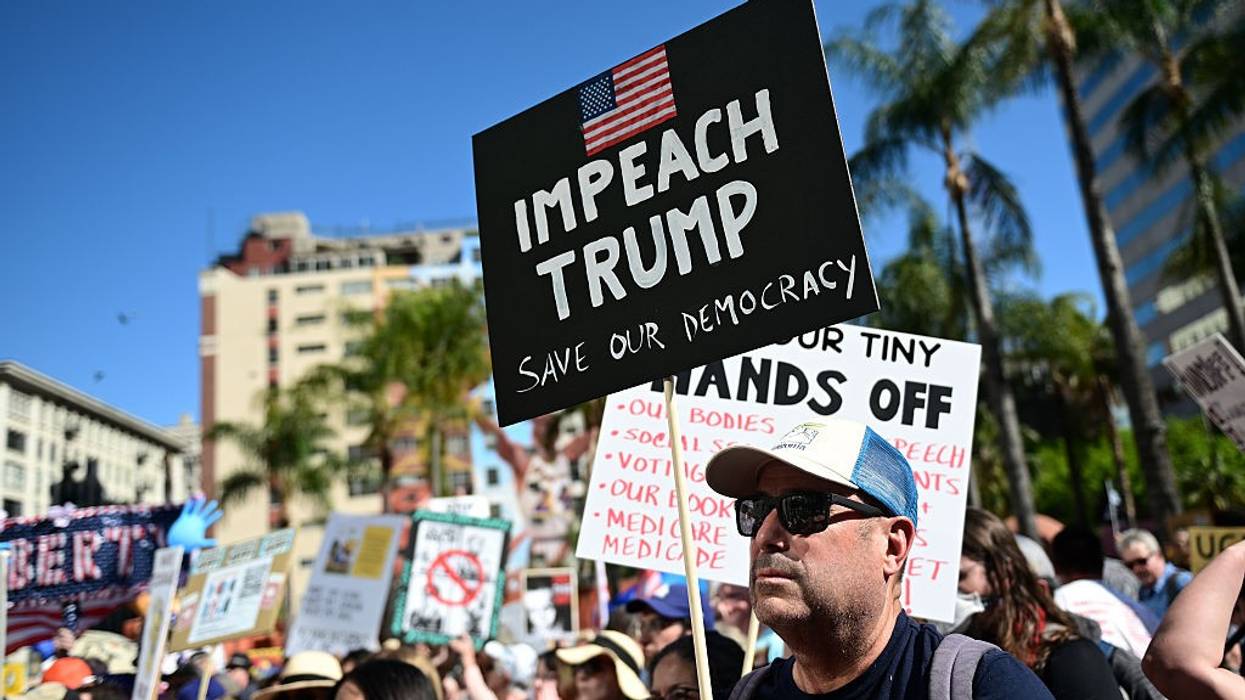
"We should not have to remind you that using government funding to create or air political ads like the ones that have been running over the last few days is illegal and a shockingly corrupt misuse of taxpayer dollars."
As critics condemn President Donald Trump's trio of taxpayer-funded advertisements as illegal propaganda and "an impeachable offense," The Wall Street Journal and leading congressional Democrats revealed Tuesday that the administration appears to have used US Department of Homeland Security funding to pay for the ads.
Citing unnamed sources, the Journal reported that "Trump personally pushed for the ads and has been involved in their creation," and that the money came from US Customs and Border Protection, an agency of DHS. Top Democrats in the Senate and House of Representatives said the administration apparently used CBP funding allocated in Republicans' One Big Beautiful Bill Act last year.
Senate Appropriations Committee Vice Chair Patty Murray (D-Wash.) and Homeland Security Subcommittee Ranking Member Chris Murphy (D-Conn.) on Tuesday sent a letter to DHS Secretary Markwayne Mullin about the "outrageous scheme" of using "Americans' hard-earned tax dollars to bankroll the obscene political ads celebrating President Trump."
The pair noted that on September 19, the Office of Management and Budget approved a release of money to CBP, including "$20 million in new funding under the line item 'Commemorative Events,' which we suspect may well be the funding tapped to run this government propaganda."
"We should not have to remind you that using government funding to create or air political ads like the ones that have been running over the last few days is illegal and a shockingly corrupt misuse of taxpayer dollars," they told Mullin, a former senator who voted for the GOP's 2025 budget package.
Specifically, as the watchdog Public Citizen detailed in a Tuesday complaint to the Federal Communications Commission, the Federal Trade Commission, and broadcasters, the three campaign ads "appear to violate the federal law against using taxpayer funds to finance propaganda (5 USC §3107) and related provisions of the appropriations laws as well as the Hatch Act (5 USC §7324)."
Margaret Dylus-Yukins, senior legal counsel for ethics at the nonpartisan Campaign Legal Center, highlighted on Monday that the unlawful ads come on top of the war chest that Trump has raised—mostly from rich people and corporations—since the last election for the super political action committee (PAC) MAGA Inc.
"At a minimum, this is an appalling abuse of taxpayer dollars, particularly when hundreds of millions of private dollars are already flowing into US elections—and Trump has personally helped raise enormous sums from wealthy special interests for a super PAC devoted to advancing his political agenda," Dylus-Yukins said.
Axios on Tuesday corroborated the Journal's reporting that "Trump is personally selecting which government-funded ads his administration is airing ahead of the midterms," and one unnamed official claimed that "this is just the beginning."
With the midterm elections that will determine control of Congress just five weeks away, the administration has claimed the ads are "public service announcements." Murray and Murphy called that defense "as absurd as it is offensive," and pointed out that "the White House has failed to answer our most basic questions about where these funds coming from and who is responsible."
"The American people deserve answers about how this president is literally stealing their tax dollars to air campaign ads celebrating himself—while doing nothing to help them afford healthcare or housing. These ads need to immediately come off the air, taxpayers need to be paid back for this theft, and everyone responsible needs to be held accountable for this corrupt and illegal propaganda," the senators argued, demanding answers to a list of questions within 48 hours.
House Appropriations Committee Ranking Member Rosa DeLauro (D-Conn.) and House Appropriations Homeland Security Subcommittee Ranking Member Henry Cuellar (D-Texas) also spoke out Tuesday, saying that "after gutting $1 trillion from Medicaid, stripping healthcare coverage from millions of Americans, giving the very richest Americans and large corporations massive tax breaks, adding more than $4 trillion to the deficit, and more than quadrupling funding for mass deportations, it turns out the Trump administration used Republicans' One Big Beautiful Bill to pay for President Trump’s political ads."
"When Democrats reclaim control of Congress next year, the House Appropriations Committee will work to uncover and reverse misuses of taxpayer money like this and hold those who abused their power accountable," that pair pledged.
With Trump's approval rating dropping—largely due to poor economic conditions exacerbated by his illegal Iran War—Republicans are increasingly at risk of losing their current majorities in one or both chambers. In the House, that would likely mean not only DeLauro chairing the Appropriations Committee, but also Reps. Robert Garcia (D-Calif.), Jim Himes (D-Conn.) Jamie Raskin (D-Md.) respectively leading the Oversight, Intelligence, and Judiciary committees.
"For two years, Trump and his family have run the presidency like a family business, getting richer by the billions while Republicans in Congress held the door open," Congressional Integrity Project senior adviser Jeremy Funk said in a Tuesday statement.
Pointing to "Gulf money" for Trump's son-in-law Jared Kushner, "Pentagon contracts" for Donald Trump Jr., the first family's lucrative cryptocurrency schemes, and "now taxpayer-funded ads starring Trump himself," Funk charged that "every one of these rackets depended on a Republican Congress that refused to ask a single question."
"That era ends in January," he declared. "Jim Himes, Robert Garcia, and Jamie Raskin, and every other Democratic committee chair, has the receipts, and soon they'll have the gavels and subpoena power. Trump's cronies are already lawyering up. They should be. Accountability is coming for all of them."
House Minority Leader Hakeem Jeffries (D-NY), who could become speaker if Democrats reclaim the chamber, made clear in an interview with The Associated Press published on Saturday that "we are going to hold the crooks accountable," and "we haven’t ruled anything out," including impeachment.
While some elected Democrats and political commentators have argued that impeaching Trump a historic third time wouldn't be a good use of the party's time—particularly as the Senate acquitted him in both of the previous cases—Jeffries' comments came just days after Congressman Steve Cohen (D-Tenn.), who is retiring after this term, introduced over two dozen more articles of impeachment against the president.
Meanwhile, Richard Painter, a University of Minnesota law professor who served as the White House ethics lawyer under former President George W. Bush, told The New York Times on Sunday that the use of federal funds for the ads could be "an impeachable offense."
"This is very dangerous," Painter said. "We do not allow government-sponsored propaganda in the United States."
This article has been updated with reporting from Axios.

"Ordering a police visit to an individual’s home to discuss the individual’s speech can constitute a restriction on speech that would support a viewpoint discrimination claim," wrote a federal judge.
A federal judge has allowed a First Amendment lawsuit to proceed against Miami Beach Mayor Steven Meiner after he allegedly had police sent to a resident's house to question her over a social media post criticizing his support for Israel.
Judge Cecilia Altonaga of the US District Court for the Southern District of Florida on Monday denied defendants' motion to dismiss claims filed on behalf of Miami Beach resident and veteran Raquel Pacheco.
Altonaga said that "ordering a police visit to an individual’s home to discuss the individual’s speech can constitute a restriction on speech that would support a viewpoint discrimination claim."
On January 12, a pair of Miami Beach police officers showed up at Pacheco's door to question her about a post she made on Facebook criticizing Meiner, an outspoken supporter of Israel and its military assault on Gaza, which has killed more than 74,000 Palestinians, including over 21,000 children.
Pacheco referred to Meiner as someone who "consistently calls for the death of all Palestinians" and "tried to shut down a theater for showing a movie that hurt his feelings," referring to his attempt to have an independent theater's lease terminated after it held screenings of No Other Land, an Oscar-winning documentary made by Palestinian and Israeli filmmakers about the displacement of Palestinians and demolition of homes by Israeli settlers in the occupied West Bank.
Video of the interaction shows police asking Pacheco if the post came from her account and ignoring her as she told them she would not speak to them without a lawyer.
"This is freedom of speech," Pacheco responded. "This is America, right?”
The officers acknowledged that Pacheco was “not going to jail” and did not claim that she had threatened Meiner. One of the officers then explained that "what we’re just trying to prevent is someone else getting agitated or agreeing with the statement."
He added that Pacheco's statements could "probably incite somebody to do something" before telling Pacheco to “refrain from posting things like that." The officers then left and Pacheco was never charged with a crime.
Represented by the American-Arab Anti-Discrimination Committee (ADC), Pacheco filed a lawsuit in March alleging that Miami Beach officials had used police power to violate her First Amendment rights and deter her from criticizing the mayor and Israel. The lawsuit described it as part of a broader effort by officials to chill pro-Palestinian speech.
Emails released weeks after the incident revealed that Meiner personally flagged Pacheco's post to police, referring to it as a "dangerous escalation. Speaking to reporters on February 4, he defended his decision to alert the cops, saying that Pacheco's post was "absolutely false" and referring to it as "age-old antisemitism."
But Altonaga said Meiner's statements supported Pacheco's allegation that "her viewpoint motivated Meiner’s decision to send police to her home," allowing her viewpoint discrimination claim against him to proceed.
The court also allowed the ADC to proceed with its claim that the City of Miami Beach itself—including the mayor and police chief—had demonstrated a broader pattern of viewpoint discrimination against pro-Palestinian speech. The lawsuit cites Meiner's attempt to shut down the local theater, as well as its law banning government contractors from boycotting Israeli businesses, including those operating in territories illegally occupied by Israel.
It also cites Meiner and other Miami Beach officials' repeated pattern of arguing with and cutting off Pacheco and other pro-Palestinian speakers during city commission meetings while allowing pro-Israel speakers to talk with little obstruction.
During one meeting, Meiner reduced public comments for pro-Palestinian speakers to 60 seconds when they criticized the police response to Pacheco while allowing speakers who defended the police action or criticized Pacheco's pro-Palestine viewpoint to speak for around two minutes uninterrupted.
Jenin Younes, ADC's president and national legal director, said Monday's ruling was "a significant victory for Raquel Pacheco, for the First Amendment, and for all Americans who care about the right to free speech and dissent."
"The city downplayed what happened to Ms. Pacheco as a routine police visit," Younes said. "The court disagreed, recognizing that sending police to someone’s home to question and intimidate them over their protected political speech can itself violate the First Amendment."
"The government does not have to arrest you, prosecute you, or formally censor you to violate the First Amendment," he added. "The chilling effect of these actions is obvious.”