

SUBSCRIBE TO OUR FREE NEWSLETTER
Daily news & progressive opinion—funded by the people, not the corporations—delivered straight to your inbox.
5
#000000
#FFFFFF
To donate by check, phone, or other method, see our More Ways to Give page.
Daily news & progressive opinion—funded by the people, not the corporations—delivered straight to your inbox.

"The path forward is difficult, but the way is clear. We want solar for everyone, everywhere, before the decade is out."
As the world braces for the impacts of what's been described as a "Godzilla El Niño" cycle—one projected to drive extreme weather events that could kill nearly half a million people in the months ahead—and heat record after heat record is shattered due to rising global temperatures, a group of global leaders published an open letter Wednesday urging people yearning for a solution to the climate crisis to look up—though reminding them to protect their eyes—to see that renewable energy remains the key to humanity turning things around.
Set to be delivered to the United Nations during this week's meeting of the General Assembly, the open letter—which can also be endorsed by anyone who supports its demands—calls for global cooperation on "universal access" to solar power, one of the three key pillars of the renewable energy triad that also includes wind energy and battery storage.
"That clean energy trinity has broken out of its Chinese base and over the last few years expanded quickly across the planet—from Karachi to California to Cuba, solar panels are going up faster than any energy source has ever grown," writes author and climate activist Bill McKibben, a signatory to the open letter, in a Guardian op-ed Wednesday.
"At the last possible moment, with backs to the wall, we still have our face to the sun." —Bill McKibben
The letter speaks of "great fear" matched with "great hope" about whether humanity can or will act in time to avoid the worst impacts of a rapidly warming planet.
The letter states:
Over the last few months, we’ve seen the world set ablaze by both war and warming. From the conflict in Iran, which has claimed thousands of lives and disrupted billions more, to the series of ever worsening climate disasters, from wildfires in Europe to collapsing glaciers in Nepal, the world seems to be falling apart exactly when it needs to be coming together.
We know that these crises are connected. The oil that governments fight over is also the carbon pollution that is warming our climate. The bad air quality in Delhi, the high price of fuel in Vietnam, the cost of electricity in the United States, the terrifying floods in the Himalayas – they all connect back to fossil fuels.
Until we end that dependence, we’ll never be able to address the climate emergency and stop fighting these endless oil-soaked wars. That’s why today we are inviting the world to unite around a common cause: repowering the world with cheap, clean energy.
The signatories call on "governments, businesses, institutions and the public to work together to provide clean, affordable energy to everyone, everywhere by 2030."
"The path forward is difficult, but the way is clear," the letter states. "We want solar for everyone, everywhere, before the decade is out."
As McKibben notes, the coalition behind the effort is international and diverse. The signatories to the letter, he explains,
range from the most popular active politician in the US (that would be Bernie Sanders) to the most morally grounded spokesperson of the global south (Yeb Saño of the Philippines, say, whose witness after devastating hurricanes helped produce the Paris accords). It comes from great diplomats such as Laurence Tubiana (who helped midwife those Paris agreements) and celebrities and activists such as Jane Fonda. There are leaders from the world of clean energy (Danny Kennedy, for instance, the secretary of the Global Solar Council), and stalwarts from the continents most damaged by rising temperatures (South Africa’s Kumi Naidoo, president of the Fossil Fuel Treaty Initiative). Clean energy entrepreneurs, such as Muhammad Mustafa Amjad of Renewables First in Pakistan, but also the world’s most famous rock climber, Alex Honnold, who runs his own solar non-profit.
The message of their letter, explains McKibben, "is simple, but its three words convey the solution to so many of the interlocking crises we now face: clean energy now."
"If a resurgent movement demands action, we finally have the tools to make that demand matter – a working planet that runs mostly on sun and wind is in tantalizing reach," he concludes. "At the last possible moment, with backs to the wall, we still have our face to the sun."
The full text of the letter and its signatories follows:
We, the undersigned, write this letter out of great fear and great hope.
Over the last few months, we’ve seen the world set ablaze by both war and warming. From the conflict in Iran, which has claimed thousands of lives and disrupted billions more, to the series of ever-worsening climate disasters, from wildfires in Europe to collapsing glaciers in Nepal, the world seems to be falling apart exactly when it needs to be coming together.
We know that these crises are connected. The oil that governments fight over is also the carbon pollution that is warming our climate. The bad air quality in Delhi, the high price of fuel in Vietnam, the cost of electricity in the United States, the terrifying floods in the Himalayas – they all connect back to fossil fuels.
Until we end that dependence, we’ll never be able to address the climate emergency and stop fighting these endless oil-soaked wars. That’s why today we are inviting the world to unite around a common cause: repowering the world with cheap, clean energy.
We are calling on governments, businesses, institutions, and the public to work together to provide clean, affordable energy to everyone, everywhere by 2030.
From the nearly 1 billion people who still lack access to reliable electricity, to the billions more of us who pay too much for dirty fossil fuels.
We know this world is within reach.
Building clean energy is now the cheapest and fastest way to slash energy bills, reduce pollution, and provide electricity access to the places that need it most.
With cheap solar, wind and batteries, we can create huge and rapid change.
California is already using just half as much natural gas to generate electricity as it did three years ago, thanks to solar and batteries. In Pakistan, people have put up millions of solar panels in just months, relying on social media for instruction. Each month, millions more people across sub-Saharan Africa are getting electricity for the first time with home solar kits.
This energy transition is already moving quickly - but we need it to go much quicker. And so we come together to urge two steps.
First, we must build clean power for everyone. For the first time ever, we can reliably bring electricity to the 1 in 10 people on Earth living without regular access.
We ask everyone who can afford it to donate something so that others can turn the lights on for studying, cooking, and medical care - and never have to think about a gallon of diesel or gas again. It takes just $15 to give access to clean electricity for one person for a generation.
Second, we need to build clean power everywhere, and to make that happen we need to build a movement powerful and beautiful enough to force governments to take large-scale action.
Individual steps alone are not enough: too many of our leaders will resist action, until we demonstrate together how much we want them to move. We must demand that governments stop building coal, oil, and gas projects we no longer need, and start building the clean-energy systems that works - no pollution or wars required.
One important day along this path will be 20 June, as the summer solstice approaches in the Northern Hemisphere, generating the most solar power of any day on earth yet. We will celebrate that day as Sun Day, coming together to celebrate and accelerate this great shift.
The path forward is difficult, but the way is clear. We want solar for everyone, everywhere, before the decade is out.
We know that standing up to the powerful can be scary. But if there is one thing that unites us, it is that we live beneath the same sun. That unity is our strength, and we must use it to act now.
Muhammad Mustafa Amjad- Director of Programs, Renewables First
Alyssa Barber - Content Creator, @NewLifestyleABB
Lauren Bash - Content creator and filmmaker
Rachel Bender - Disability rights advocate, @rachcutiepie
Tzeporah Berman - Chair, Fossil Fuel Treaty Initiative
Caitlin Blunnie - Content Creator, 2Liberal Jane
Jessica Craven - Content Creator, @jesscraven101
Nick Cutsumpas - Founder @ Farmer Nick
Summer Dean - Founder, Climate Diva Media
Christiana Figueres - Former UN Climate Secretary and Founding Partner, Global Optimism
Jane Fonda - Actor, activist, and founder, Jane Fonda Climate PAC
Nela Cadinanos Gonzalez
Saul Griffith - Engineer and co-founder, Rewiring America
Malynda Hale - Actor, Filmmaker, Creator
Fletcher Harper - Executive Director, Greenfaith
Alex Honnold - Professional climber and founder, Honnold Foundation
Danny Kennedy - Chair, Global Solar Council
Catherine McKenna - Founder, Climate and Nature Solutions & Women Lead on Climate
Bill McKibben - Author, climate activist, and co-founder, Third Act
Kumi Naidoo - President, Fossil Fuel Non-Proliferation Treaty Initiative
Ky Polanco - Co-Founder, @Feminist
Sean Taylor Pugerude - Creator & Community Organizer, @heyseantaylor
Abbie Richards - Researcher and Educator, @abbiesr
Tom Rivett-Carnac - Founding Partner, Global Optimism
Bernie Sanders - U.S. Senator for Vermont
Yeb Saño - Board Chair, Laudato Si’ Movement
Jacob Simon - Creator and Educator - @jacobsimonsays
Laurence Tubiana - CEO, European Climate Foundation
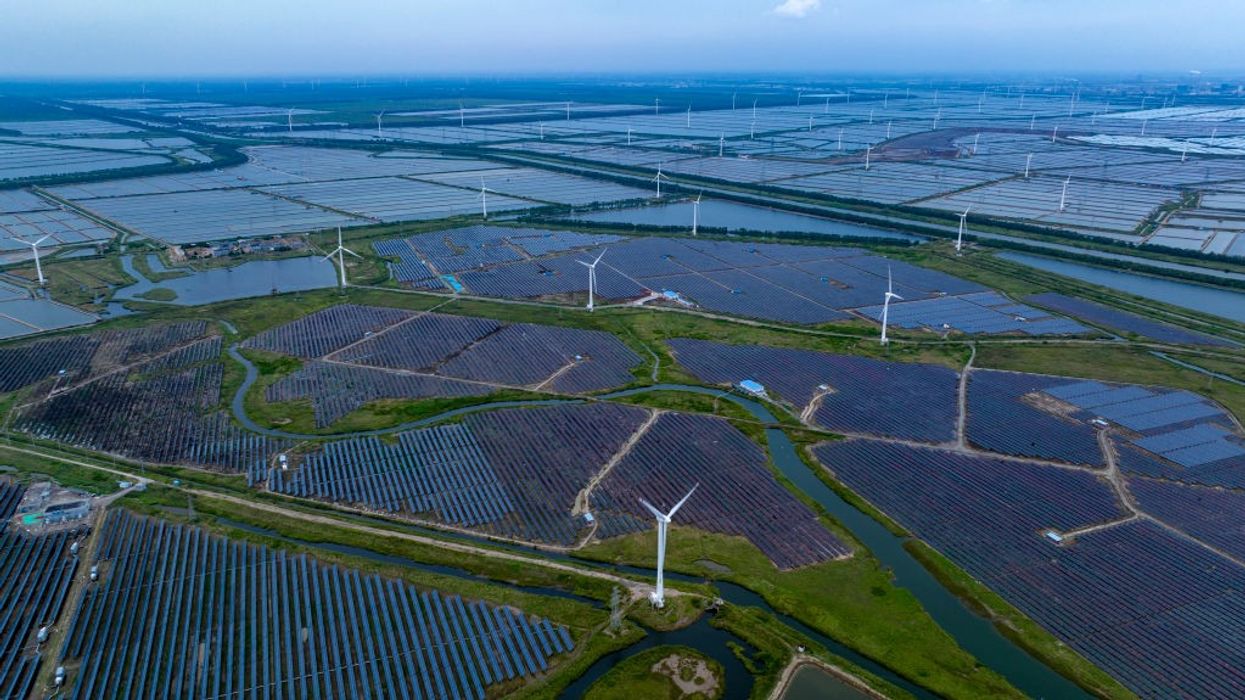
Historically, an overhaul for humanity's energy system would take hundreds or many thousands of years. The rapid shift to cleaner, more sustainable sources of power generations will easily be the most ambitious enterprise our species has ever undertaken.
Humanity’s transition from relying overwhelmingly on fossil fuels to instead using alternative low-carbon energy sources is sometimes said to be unstoppable and exponential. A boosterish attitude on the part of many renewable energy advocates is understandable: overcoming people’s climate despair and sowing confidence could help muster the needed groundswell of motivation to end our collective fossil fuel dependency. But occasionally a reality check is in order.
The reality is that energy transitions are a big deal, and they typically take centuries to unfold. Historically, they’ve been transformative for societies—whether we’re speaking of humanity’s taming of fire hundreds of thousands of years ago, the agricultural revolution 10,000 years ago, or our adoption of fossil fuels starting roughly 200 years ago. Given (1) the current size of the human population (there are eight times as many of us alive today as there were in 1820, when the fossil fuel energy transition was getting underway), (2) the vast scale of the global economy, and (3) the unprecedented speed with which the transition will have to be made in order to avert catastrophic climate change, a rapid renewable energy transition is easily the most ambitious enterprise our species has ever undertaken.
As we’ll see, the evidence shows that the transition is still in its earliest stages, and at the current rate, it will fail to avert a climate catastrophe in which an unimaginable number of people will either die or be forced to migrate, with most ecosystems transformed beyond recognition.
Implementing these seven steps will change everything. The result will be a world that’s less crowded, one where nature is recovering rather than retreating, and one in which people are healthier (because they’re not soaked in pollution) and happier.
We’ll unpack the reasons why the transition is currently such an uphill slog. Then, crucially, we’ll explore what a real energy transition would look like, and how to make it happen.
Despite trillions of dollars having been spent on renewable energy infrastructure, carbon emissions are still increasing, not decreasing, and the share of world energy coming from fossil fuels is only slightly less today than it was 20 years ago. In 2024, the world is using more oil, coal, and natural gas than it did in 2023.
While the U.S. and many European nations have seen a declining share of their electricity production coming from coal, the continuing global growth in fossil fuel usage and CO2 emissions overshadows any cause for celebration.
Why is the rapid deployment of renewable energy not resulting in declining fossil fuel usage? The main culprit is economic growth, which consumes more energy and materials. So far, the amount of annual growth in the world’s energy usage has exceeded the amount of energy added each year from new solar panels and wind turbines. Fossil fuels have supplied the difference.
So, for the time being at least, we are not experiencing a real energy transition. All that humanity is doing is adding energy from renewable sources to the growing amount of energy it derives from fossil fuels. The much-touted energy transition could, if somewhat cynically, be described as just an aspirational grail.
How long would it take for humanity to fully replace fossil fuels with renewable energy sources, accounting for both the current growth trajectory of solar and wind power, and also the continued expansion of the global economy at the recent rate of 3 percent per year? Economic models suggest the world could obtain most of its electricity from renewables by 2060 (though many nations are not on a path to reach even this modest marker). However, electricity represents only about 20 percent of the world’s final energy usage; transitioning the other 80 percent of energy usage would take longer—likely many decades.
However, to avert catastrophic climate change, the global scientific community says we need to achieve net-zero carbon emissions by 2050—i.e., in just 25 years. Since it seems physically impossible to get all of our energy from renewables that soon while still growing the economy at recent rates, the IPCC (the international agency tasked with studying climate change and its possible remedies) assumes that humanity will somehow adopt carbon capture and sequestration technologies at scale—including technologies that have been shown not to work—even though there is no existing way of paying for this vast industrial build-out. This wishful thinking on the part of the IPCC is surely proof that the energy transition is not happening at sufficient speed.
Why isn’t it? One reason is that governments, businesses, and an awful lot of regular folks are clinging to an unrealistic goal for the transition. Another reason is that there is insufficient tactical and strategic global management of the overall effort. We’ll address these problems separately, and in the process uncover what it would take to nurture a true energy transition.
At the heart of most discussions about the energy transition lie two enormous assumptions: that the transition will leave us with a global industrial economy similar to today’s in terms of its scale and services, and that this future renewable-energy economy will continue to grow, as the fossil-fueled economy has done in recent decades. But both of these assumptions are unrealistic. They flow from a largely unstated goal: we want the energy transition to be completely painless, with no sacrifice of profit or convenience. That goal is understandable, since it would presumably be easier to enlist the public, governments, and businesses in an enormous new task if no cost is incurred (though the history of overwhelming societal effort and sacrifice during wartime might lead us to question that presumption).
But the energy transition will undoubtedly entail costs. Aside from tens of trillions of dollars in required monetary investment, the energy transition will itself require energy—lots of it. It will take energy to build solar panels, wind turbines, heat pumps, electric vehicles, electric farm machinery, zero-carbon aircraft, batteries, and the rest of the vast panoply of devices that would be required to operate an electrified global industrial economy at current scale.
In the early stages of the transition, most of that energy for building new low-carbon infrastructure will have to come from fossil fuels, since those fuels still supply over 80 percent of world energy (bootstrapping the transition—using only renewable energy to build transition-related machinery—would take far too long). So, the transition itself, especially if undertaken quickly, will entail a large pulse of carbon emissions. Teams of scientists have been seeking to estimate the size of that pulse; one group suggests that transition-related emissions will be substantial, ranging from 70 to 395 billion metric tons of CO2 “with a cross-scenario average of 195 GtCO2”—the equivalent of more than five years’ worth of global carbon CO2 emissions at current rates. The only ways to minimize these transition-related emissions would be, first, to aim to build a substantially smaller global energy system than the one we are trying to replace; and second, to significantly reduce energy usage for non-transition-related purposes—including transportation and manufacturing, cornerstones of our current economy—during the transition.
In addition to energy, the transition will require materials. While our current fossil-fuel energy regime extracts billions of tons of coal, oil, and gas, plus much smaller amounts of iron, bauxite, and other ores for making drills, pipelines, pumps, and other related equipment, the construction of renewable energy infrastructure at commensurate scale would require far larger quantities of non-fuel raw materials—including copper, iron, aluminum, lithium, iridium, gallium, sand, and rare earth elements.
While some estimates suggest that global reserves of these elements are sufficient for the initial build-out of renewable-energy infrastructure at scale, there are still two big challenges. First: obtaining these materials will require greatly expanding extractive industries along with their supply chains. These industries are inherently polluting, and they inevitably degrade land. For example, to produce one ton of copper ore, over 125 tons of rock and soil must be displaced. The rock-to-metal ratio is even worse for some other ores. Mining operations often take place on Indigenous peoples’ lands and the tailings from those operations often pollute rivers and streams. Non-human species and communities in the global South are already traumatized by land degradation and toxification; greatly expanding resource extraction—including deep-sea mining—would only deepen and multiply the wounds.
The second materials challenge: renewable energy infrastructure will have to be replaced periodically—every 25 to 50 years. Even if Earth’s minerals are sufficient for the first full-scale build-out of panels, turbines, and batteries, will limited mineral abundance permit continual replacements? Transition advocates say that we can avoid depleting the planet’s ores by recycling minerals and metals after constructing the first iteration of solar-and-wind technology. However, recycling is never complete, with some materials degraded in the process. One analysis suggests recycling would only buy a couple of centuries’ worth of time before depletion would bring an end to the regime of replaceable renewable-energy machines—and that’s assuming a widespread, coordinated implementation of recycling on an unprecedented scale. Again, the only real long-term solution is to aim for a much smaller global energy system.
The transition of society from fossil fuel dependency to reliance on low-carbon energy sources will be impossible to achieve without also reducing overall energy usage substantially and maintaining this lower rate of energy usage indefinitely. This transition isn’t just about building lots of solar panels, wind turbines, and batteries. It is about organizing society differently so that is uses much less energy and gets whatever energy it uses from sources that can be sustained over the long run.
Step one: Cap global fossil fuel extraction through global treaty, and annually lower the cap. We will not reduce carbon emissions until we reduce fossil fuel usage—it’s just that simple. Rather than trying to do this by adding renewable energy (which so far hasn’t resulted in a lessening of emissions), it makes far more sense simply to limit fossil fuel extraction. I wrote up the basics of a treaty along these lines several years ago in my book, The Oil Depletion Protocol.
Step two: Manage energy demand fairly. Reducing fossil fuel extraction presents a problem. Where will we get the energy required for transition purposes? Realistically, it can only be obtained by repurposing energy we’re currently using for non-transition purposes. That means most people, especially in highly industrialized countries, would have to use significantly less energy, both directly and also indirectly (in terms of energy embedded in products, and in services provided by society, such as road building). To accomplish this with the minimum of societal stress will require a social means of managing energy demand.
The fairest and most direct way to manage energy demand is via quota rationing. Tradable Energy Quotas (TEQs) is a system designed two decades ago by British economist David Fleming; it rewards energy savers and gently punishes energy guzzlers while ensuring that everyone gets energy they actually need. Every adult would be given an equal free entitlement of TEQs units each week. If you use less than your entitlement of units, you can sell your surplus. If you need more, you can buy them. All trading takes place at a single national price, which will rise and fall in line with demand.
Step three: Manage the public’s material expectations. Persuading people to accept using less energy will be hard, if everyone still wants to use more. Therefore, it will be necessary to manage the public’s expectations. This may sound technocratic and scary, but in fact society has already been managing the public’s expectations for over a century via advertising—which constantly delivers messages encouraging everyone to consume as much as they can. Now we need different messages to set different expectations.
What’s our objective in life? Is it to have as much stuff as possible, or to be happy and secure? Our current economic system assumes the former, and we have instituted an economic goal (constant growth) and an indicator (gross domestic product, or GDP) to help us achieve that goal. But ever-more people using ever-more stuff and energy leads to increased rates of depletion, pollution, and degradation, thereby imperiling the survival of humanity and the rest of the biosphere. In addition, the goal of happiness and security is more in line with cultural traditions and human psychology. If happiness and security are to be our goals, we should adopt indicators that help us achieve them. Instead of GDP, which simply measures the amount of money changing hands in a country annually, we should measure societal success by monitoring human well-being. The tiny country of Bhutan has been doing this for decades with its Gross National Happiness (GNH) indicator, which it has offered as a model for the rest of the world.
Step four: Aim for population decline. If population is always growing while available energy is capped, that means ever-less energy will be available per capita. Even if societies ditch GDP and adopt GNH, the prospect of continually declining energy availability will present adaptive challenges. How can energy scarcity impacts be minimized? The obvious solution: welcome population decline and plan accordingly.
Global population will start to decline sometime during this century. Fertility rates are falling worldwide, and China, Japan, Germany, and many other nations are already seeing population shrinkage. Rather than viewing this as a problem, we should see it as an opportunity. With fewer people, energy decline will be less of a burden on a per capita basis. There are also side benefits: a smaller population puts less pressure on wild nature, and often results in rising wages. We should stop pushing a pro-natalist agenda; ensure that women have the educational opportunities, social standing, security, and access to birth control to make their own childbearing choices; incentivize small families, and aim for the long-term goal of a stable global population closer to the number of people who were alive at the start of the fossil-fuel revolution (even though voluntary population shrinkage will be too slow to help us much in reaching immediate emissions reduction targets).
Step five: Target technological research and development to the transition. Today the main test of any new technology is simply its profitability. However, the transition will require new technologies to meet an entirely different set of criteria, including low-energy operation and minimization of exotic and toxic materials. Fortunately, there is already a subculture of engineers developing low-energy and intermediate technologies that could help run a right-sized circular economy.
Step six: Institute technological triage. Many of our existing technologies don’t meet these new criteria. So, during the transition, we will be letting go of familiar but ultimately destructive and unsustainable machines.
Some energy-guzzling machines—such as gasoline-powered leaf blowers—will be easy to say goodbye to. Commercial aircraft will be harder. Artificial intelligence is an energy guzzler we managed to live without until very recently; perhaps it’s best if we bid it a quick farewell. Cruise ships? Easy: downsize them, replace their engines with sails, and expect to take just one grand voyage during your lifetime. Weapons industries offer plenty of examples of machines we could live without. Of course, giving up some of our labor-saving devices will require us to learn useful skills—which could end up providing us with more exercise. For guidance along these lines, consult the rich literature of technology criticism.
Step seven: Help nature absorb excess carbon. The IPCC is right: if we’re to avert catastrophic climate change we need to capture carbon from the air and sequester it for a long time. But not with machines. Nature already removes and stores enormous amounts of carbon; we just need to help it do more (rather than reducing its carbon-capturing capabilities, which is what humanity is doing now). Reform agriculture to build soil rather than destroy it. Restore ecosystems, including grasslands, wetlands, forests, and coral reefs.
Implementing these seven steps will change everything. The result will be a world that’s less crowded, one where nature is recovering rather than retreating, and one in which people are healthier (because they’re not soaked in pollution) and happier.
Granted, this seven-step program appears politically unachievable today. But that’s largely because humanity hasn’t yet fully faced the failure of our current path of prioritizing immediate profits and comfort above long-term survival—and the consequences of that failure. Given better knowledge of where we’re currently headed, and the alternatives, what is politically impossible today could quickly become inevitable.
Social philosopher Roman Krznaric writes that profound social transformations are often tied to wars, natural disasters, or revolutions. But crisis alone is not positively transformative. There must also be ideas available for different ways to organize society, and social movements energized by those ideas. We have a crisis and (as we have just seen) some good ideas for how to do things differently. Now we need a movement.
Building a movement takes political and social organizing skills, time, and hard work. Even if you don’t have the skills for organizing, you can help the cause by learning what a real energy transition requires and then educating the people you know; by advocating for degrowth or related policies; and by reducing your own energy and materials consumption. Calculate your ecological footprint and shrink it over time, using goals and strategies, and tell your family and friends what you are doing and why.
Even with a new social movement advocating for a real energy transition, there is no guarantee that civilization will emerge from this century of unraveling in a recognizable form. But we all need to understand: this is a fight for survival in which cooperation and sacrifice are required, just as in total war. Until we feel that level of shared urgency, there will be no real energy transition, and little prospect for a desirable human future.
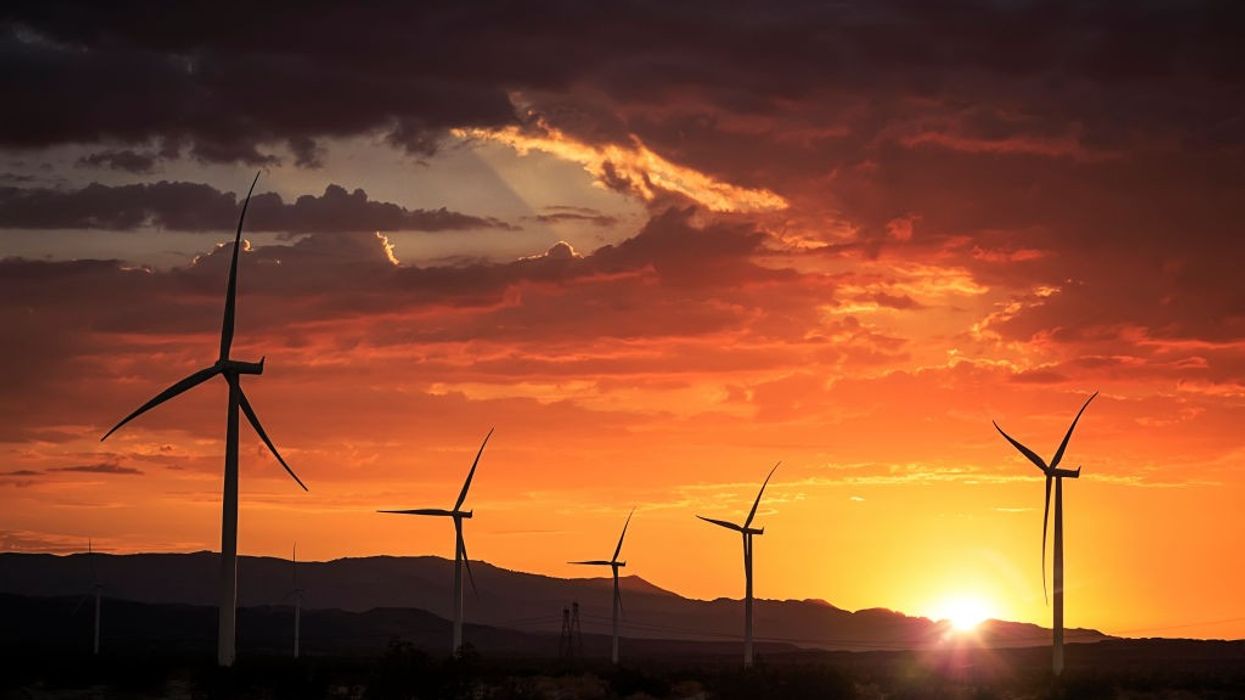
"This historic milestone marks a significant win for clean energy advocates, for ratepayers, and for people and communities across the country," said one climate leader.
U.S. climate advocates this week are celebrating new federal data that show wind and solar have generated more power than coal during the first seven months of 2024 and are on track to do so for the entire calendar year.
"This is the kind of news we like to see!" Food & Water Watch said of the data on social media Tuesday. "Ensuring a livable climate for all depends on us making a swift and just transition to clean energy like wind and solar."'
The group shared reporting from E&E News, which noted that "the milestone had been long expected due to a steady stream of coal plant retirements and the rapid growth of wind and solar. Last year, wind and solar outpaced coal through May before the fossil fuel eventually overtook the pair when power demand surged in the summer."
"Renewables' growth has been driven by a surge in solar production over the last year," the news outlet continued. "The 118 terawatt-hours generated by utility-scale solar facilities through the end of July represented a 36% increase from the same time period last year, according to preliminary U.S. Energy Information Administration figures. Wind production was 275 TWh, up 8% over 2023 levels. Renewables' combined production of 393 TWh outpaced coal generation of 388 TWh."
Sierra Club executive director Ben Jealous said in a statement Wednesday that "wind and solar energy has long been the most cost-effective choice for utilities, but now it has also outpaced coal generation as the top source of energy, further demonstrating that clean energy is critical to a reliable and affordable grid."
"This historic milestone marks a significant win for clean energy advocates, for ratepayers, and for people and communities across the country that simply want to breathe clean air, drink safe water, and worry less about climate disasters like floods and wildfires," Jealous continued.
"For decades, the Sierra Club has fought to move America Beyond Coal and onto a clean, reliable, and affordable grid," he added. "To date, the Beyond Coal campaign has secured the retirement of 385 coal plants and counting, and on August 16th, we celebrate the two-year anniversary of the Inflation Reduction Act, which made historic investments in clean energy and clean energy jobs. Together, families across the country are saving money, enjoying good paying jobs, breathing clean air, and drinking safe water."
Along with celebrating the federal legislation signed in 2022 by President Joe Biden, Sierra Club highlighted a state law signed the previous year by Democratic Illinois Gov. JB Pritzker.
"Illinoisans should be proud of the work we've done to close our largest coal plants and leverage the power of clean energy to drive economic growth while reducing pollution that's harmful to public health and our planet," said Jack Darin, director of the Sierra Club's state chapter. "Thanks to the Climate and Equitable Jobs Act of 2021, Illinois workers are now building the clean energy that is replacing old, dirty fossil fuels and bringing a brighter future to communities across our state."
Celebrations over the "major power milestone" come as Americans prepare for a November presidential election in which Democratic Vice President Kamala Harris and Minnesota Gov. Tim Walz—who are endorsed by a range of climate groups—are set to face former Big Oil-backed former Republican President Donald Trump and U.S. Sen. JD Vance (R-Ohio).
During an April event in Florida, Trump told fossil fuel executives that if they invested just $1 billion into his campaign, he would gut the Biden-Harris administration's climate regulations. The Washington Post reported Tuesday that billionaire Continental Resources founder then "called other oil executives and encouraged them to attend fundraisers and open their wallets."
While Hamm is reportedly sharing Big Oil's priorities with the Trump-Vance team, their approach can be summed up by a phrase they've said on the campaign trail: "drill, baby, drill."
Although the Republican candidates have tried to distance themselves by the Heritage Foundation-led Project 2025, the right-wing policy agenda—crafted by many Trump allies—has also alarmed climate campaigners.
Noting the new energy data, Antonia Juhasz, a senior researcher on fossil fuels at Human Rights Watch, said Tuesday: "This transformation is due in large part to federal government policy which has specifically incentivized renewable energy development and deployment and increased regulation on the harms of fossil fuels. All of which are specifically targeted for removal in Project 2025."
As Common Dreams reported earlier Wednesday, an analysis from the think tank Energy Innovation shows that a GOP administration implementing the Project 2025 plan would increase U.S. greenhouse gas emissions by 2.7 billion metric tons by 2030 compared to the current trajectory.
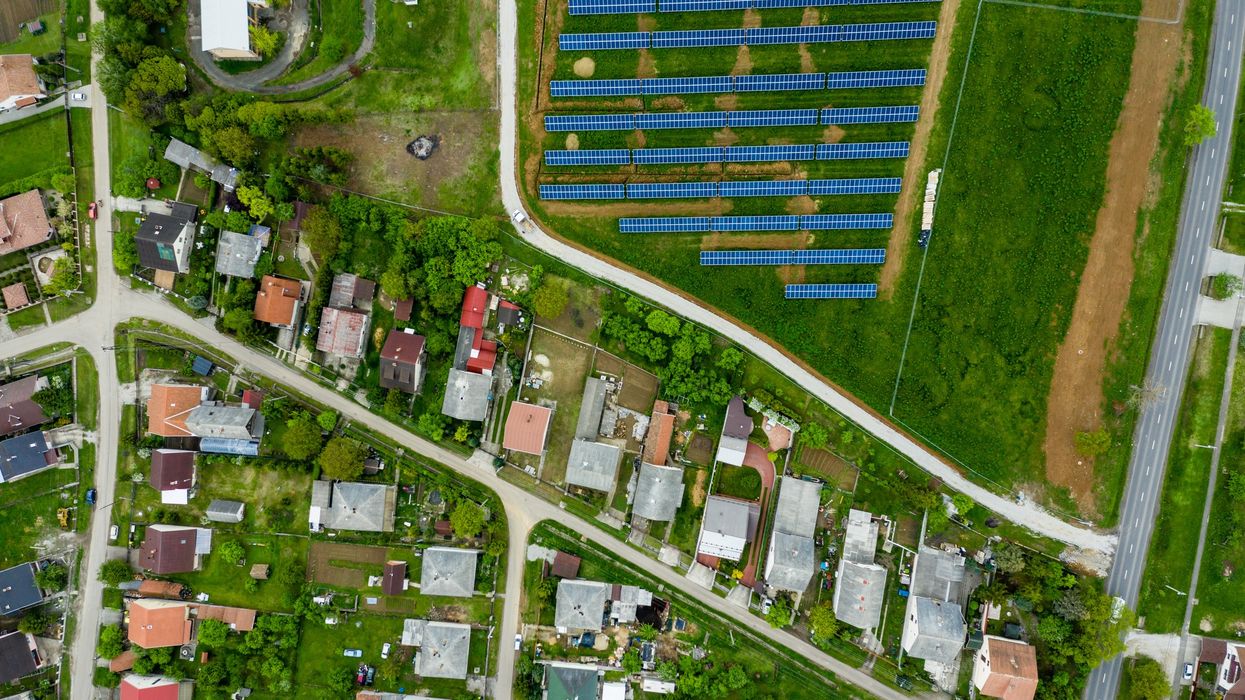
A cleaner, better world is in sight, but that world cannot be realized until we leave oil, coal, and gas in the ground once and for all.
The renewable energy transformation is accelerating — no matter how hard the fossil fuel industry and its supporters push back. It’s about time. I’m just one of many who’ve spent decades warning about the consequences of burning massive amounts of dirty fuels.
Email Of course, we must do much more if we want to avoid worsening the climate change impacts we’re already seeing: heat domes and other extreme weather events, floods, droughts, wildfires, migrant crises, species extinctions, water shortages, rising sea levels and more — not to mention pollution-related health problems.The good news is that the transition is well underway. The International Energy Agency expects global investment in renewable energy technology and infrastructure to reach US$2 trillion this year, double the amount going into gas, oil and coal. Last year also saw a significant increase. According to Reuters, “Combined investment in renewable power and grids overtook the amount spent on fossil fuels for the first time in 2023.”
The latest research clearly shows the world is well on its way to quitting fossil fuels — but we need to move even faster to avoid increasing weather chaos and catastrophe.
A report by London-based energy think tank Ember found that “renewables generated a record 30% of global electricity in 2023, driven by growth in solar and wind.” Solar generation grew by 23 per cent, wind by 10 per cent and fossil fuels by just 0.8 per cent. “The report analyses electricity data from 215 countries, including the latest 2023 data for 80 countries representing 92% of global electricity demand.”
The renewable energy contribution might have been higher, but drought conditions caused a reduction in hydropower, some of which was replaced by coal power in China, India, Vietnam and Mexico — the main reason behind the slight growth in fossil fuel generation.
According to the report, “the latest forecasts give confidence that 2024 will begin a new era of falling fossil generation, marking 2023 as the likely peak of power sector emissions.”
“There’s an unprecedented opportunity for countries that choose to be at the forefront of the clean energy future,” Ember’s Global Insights program director Dave Jones said. “Expanding clean electricity not only helps to decarbonise the power sector. It also provides the step up in supply needed to electrify the whole economy; and that’s the real game-changer for the climate.”
Contrary to fossil fuel interest claims, Ember also found that fossil gas isn’t replacing coal power. “There’s going to be a bit of a rude awakening on gas,” Jones said. “The gas industry before were really looking forward to coal collapsing because that was going to create a new market for them but actually … wind and solar is replacing coal and it’s replacing gas.”
David Suzuki Foundation research confirms that increased fracking for liquefied natural gas in British Columbia and Alberta isn’t good for the climate or economy — let alone drought-stricken water supplies.
Another sign of the fossil fuel era’s demise is the number of countries producing power from renewable sources. According to the International Energy Agency and International Renewable Energy Agency, seven countries — Albania, Bhutan, Ethiopia, Iceland, Nepal, Paraguay and the Democratic Republic of Congo — now generate 99.7 per cent of their electricity from geothermal, hydro, solar and/or wind power.
“Another 40 countries got at least half of their electricity from renewables in 2021 and 2022 including 11 in Europe,” EuroNews reports. “Others, like Germany or Portugal, are capable of running on 100 per cent wind, water and solar for short amounts of time.”
An earlier David Suzuki Foundation report found that Canada can achieve reliable, affordable, 100 per cent emissions-free electricity by 2035 “without relying on expensive and sometimes unproven and dangerous technologies like nuclear or fossil gas with carbon capture and storage.”
Growing electrification of the global economy means increased demand, so energy conservation is also important. We must use and waste less.
The latest research clearly shows the world is well on its way to quitting fossil fuels — but we need to move even faster to avoid increasing weather chaos and catastrophe. We’ve already locked in enormous amounts of greenhouse gases that will remain in the atmosphere for decades, so impacts will continue, but we can slow and eventually reverse the trend.
The accelerating shift is good for the economy, climate, human health and air, land and water. A cleaner, better world is in sight, but we must leave fossil fuels in the ground and in the past.
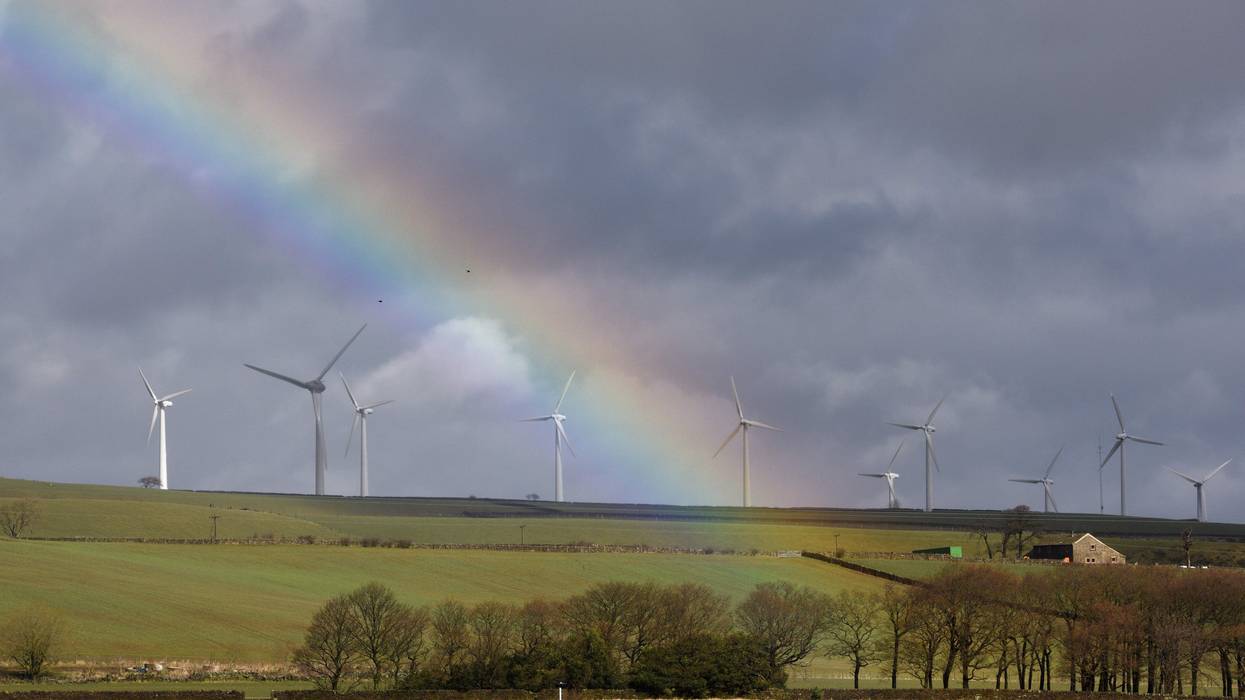
Although there are up front costs of building solar and wind farms, these new energy plants will pay for themselves over time, and by the 2040s energy will be much cheaper.
Last week, the International Energy Agency put out a new report that turns conventional wisdom regarding the clean energy transition on its head.
It is cheaper for everyone to adopt solar, wind, batteries, and other renewables as soon as possible than to go on depending on coal, fossil gas, and petroleum. And we’re just talking about energy costs in a vacuum here, not factoring in the climate change damage that fossil fuels do to the planet, which costs billions of dollars a year and will cost ever more as time goes on.
The report’s authors write that in China in 2023, “more than 95% of new utility-scale solar photovoltaic (PV) installations and new onshore wind capacity had lower generation costs than new coal and natural gas plants. Where electric cars and two- and three-wheelers have higher upfront costs, which is not always the case, they typically result in substantial savings because of lower operating expenses.”
Since the cost of producing electricity by solar is falling so fast, whereas petroleum prices are either stable or slated to rise, if we shift from oil to electricity we obviously are saving a lot of money.
I repeat, solar and wind had lower generation costs. And no wonder, since the cost of solar panels plummeted an astonishing 30% in 2023. And we’re only at the beginning of the transition. Between 2009 and 2019, the price of solar electricity dropped 89%. Think about the last 10 years of gasoline prices in the U.S. The average price of gasoline in 2014 was about $3 per gallon. In 2023 it was $3.52. In real terms, accounting for inflation, the price was probably about flat or down just a wee bit. Fossil fuels are remaining just as expensive as they always were, but renewables are rapidly declining in price. These declines will continue as new technologies are invented and implemented.
Although there are up front costs of building solar and wind farms, these new energy plants will pay for themselves over time, and by the 2040s energy will be much cheaper. The IEA says, “Today, around 50% of total consumer energy expenditure is on oil products, and another 35% is on electricity. In rapid energy transitions these swap places, making the price of electricity the key measure of affordability for most consumers.”
Since the cost of producing electricity by solar is falling so fast, whereas petroleum prices are either stable or slated to rise, if we shift from oil to electricity we obviously are saving a lot of money.
But, we’re going to need some major investments up front to unlock these lower prices. The report says: “As things stand, around $3 trillion is invested each year into the energy sector, of which $1.9 trillion is in a range of clean energy technologies and infrastructure. By 2035, total investments need to rise to $5.3 trillion in the NZE Scenario, with $5 trillion going to clean energy.”
The bottom line is the bill you get from your energy utility every month, and your monthly cost for transpiration fuel. The IEA observes, “Our projections highlight that rapid clean energy transitions result in lower consumer bills compared with a trajectory based on today’s policy settings.”
If we stop subsidizing fossil fuels and put the money instead into a Manhattan Project-style full-court press for renewables, in 11 years consumers could be paying 20% less for their energy, especially in the developing world.

"Solar for All is exactly the type of investment the country needs to re-imagine our clean energy future," said one campaigner. "It's great to see President Biden jumpstart this landmark program."
Climate action advocates on Monday celebrated the Biden administration's Earth Day announcement that it is distributing $7 billion in Solar for All grants "to develop long-lasting solar programs that enable low-income and disadvantaged communities to deploy and benefit from distributed residential solar, lowering energy costs for families, creating good-quality jobs in communities that have been left behind, advancing environmental justice, and tackling climate change."
The U.S. Environmental Protection Agencyestimates that the awards—which are going to 60 applicants, including states, territories, tribal governments, municipalities, and nonprofits—will fund solar projects that positively impact over 900,000 households nationwide while reducing 30 million metric tons of carbon dioxide equivalent emissions. The grant competition was made possible by the Inflation Reduction Act, which President Joe Biden signed in August 2022.
"The United States can and must lead the world in transforming our energy systems away from fossil fuels," said Sen. Bernie Sanders (I-Vt.), who joined Biden on Monday to announce the solar grants—$62.45 million in funding will go to his state—and the Vermont Climate Corps.
"The Solar for All program—that I successfully championed—will not only combat the existential threat of climate change by making solar energy available to working class families, it will also substantially lower the electric bills of Americans and create thousands of good-paying jobs," noted Sanders. "This is a win for the environment, a win for consumers, and a win for the economy."
The Mandan, Hidatsa, and Arikara Nation and Indigenized Energy will get over $135 million to work on solar projects in tribal communities across five states.
Cody Two Bears, executive director of Indigenized Energy, said that the award "will serve as a catalyst for tribes and energy justice communities like ours who are leading the way in building our own clean energy systems within our lands."
"This is a once-in-a-generation award that will begin to transform how tribes achieve energy sovereignty," Two Bears added. "The shift from extractive energy to regenerative energy systems will be the legacy we leave for our future generations."
Margie Alt, director of Climate Action Campaign (CAC), a coalition of a dozen national groups, highlighted both the emissions cuts and that in low-income communities across the United States, "families will see savings—approximately $400 per household."
"The president also announced the launch of the ClimateCorps.gov—a new website featuring 2,000 new job listings in climate and conservation," she pointed out. After years of pressure from campaigners, Biden in September announced the American Climate Corps, which was inspired by former President Franklin D. Roosevelt's Civilian Conservation Corps.
"We're thankful to the Biden administration for making these priorities a reality," said Alt. "While Republicans in Congress make every attempt to roll back climate progress, climate champions in Congress and throughout the administration are standing strong in their commitment to America's clean energy future; a future where all Americans have access to clean energy, good-paying jobs in the clean energy industry, and see direct savings from this clean energy boom."
Paula García, senior energy analyst and energy justice lead at the Union of Concerned Scientists (UCS), which is part of the CAC coalition, also applauded the awards, saying that "the Solar for All grant program is a key part of the larger suite of clean energy investments advanced by President Biden and Congress that will help the United States combat climate change."
"Directing investments toward low-income and disadvantaged communities is imperative to ensuring a just transition to clean energy," García stressed. "If we don't prioritize these populations, we risk exacerbating historical injustices and piling additional burdens on those who have been disproportionately affected by environmental harm."
"The announcement of these grants is an important step forward," she continued. "While UCS research has shown clearly that more ambition is needed to meet climate goals, phase out fossil fuels, and advance environmental justice, the Solar for All program will help create much needed momentum toward ensuring the many benefits of a decarbonized economy, including public health protections, reduced consumer energy costs, and increased energy resilience, are reaching everyone."
Jean Su, who directs the Center for Biological Diversity's Energy Justice program, similarly said that "Solar for All is exactly the type of investment the country needs to re-imagine our clean energy future."
"Broad community-based solar is our brightest hope for protecting people and our climate from the scourge of fossil fuels," she added. "These targeted investments mean low-income families get clean energy that is affordable, resilient, and protects our ecosystems. It's great to see President Biden jumpstart this landmark program. I look forward to its expansion, along with steps to curb fossil fuels with a climate emergency declaration."
Her group and the youth-led Sunrise Movement are among the organizations that have long demanded a climate emergency declaration from Biden, who is reportedly reconsidering it in the wake of the hottest year in human history and as he prepares for a November rematch against former Republican President Donald Trump—whose election could mean a surge in planet-heating pollution, according to an analysis published last month.
Emphasizing the difference between the Democratic Party and the GOP, climate reporter David Roberts called the solar grants "amazing stuff that would not happen if Republicans were in charge" and said, "Thanks Biden!"
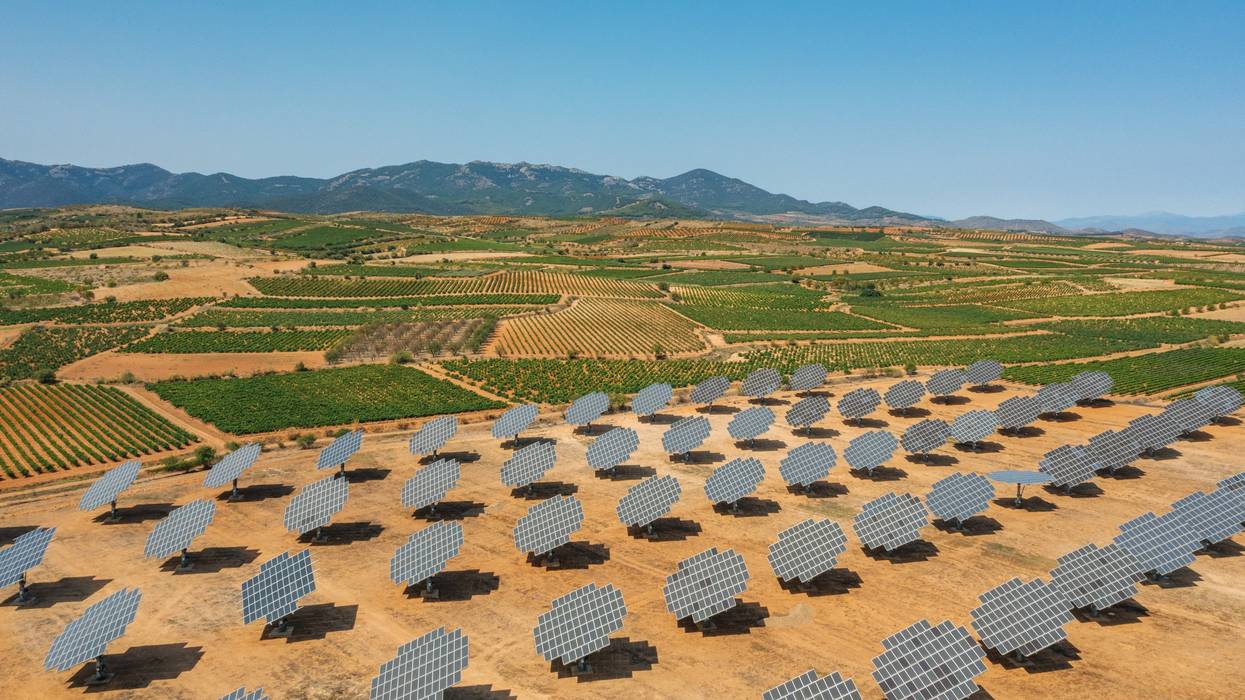
Spaniards have been rushing to put solar panels on their roofs, now helped by E.U. subsidies and by a plummeting in the cost of the systems.
Spain, the world’s 15th-largest economy and the fourth-largest in Europe, recently ran for nine hours entirely on wind, solar, and hydro. It is not the first time the renewables supplied all of the country’s domestic electricity needs on the peninsula, but it is the first time they did so for so many hours in a row, on a weekday when demand is heavier than on the weekends, and when three of the country’s nuclear power plants were shut down for various reasons. So reports Ignacio Fariza at El Pais.
Spain, with a nominal GDP of about $1.427 trillion and a population of 47 million, is a major industrialized democracy, so this achievement is highly significant for what it tells us about the future.
Spain’s prime minister, Pedro Sánchez of the Socialist Workers’ Party, has been a booster of green energy. The Spanish right-wing had actually put punitive taxes on people with solar panels, at the behest of Big Carbon, but Sánchez’s government repealed them. Since the February 2022 Russian invasion of Ukraine and the consequent spike in fossil gas prices, Spaniards have been rushing to put solar panels on their roofs, now helped by E.U. subsidies and by a plummeting in the cost of the systems.
Spain now has one of Europe’s largest solar plants.
In 2022, the country put in 4.28 gigawatts of utility-scale solar, 2.64 gigs of distributed PV, and 1.38 gigs of wind power. That is nearly seven gigawatts of new solar in one year, and the country is not slowing down.
Spain’s total power capacity is 118 gigawatts, with wind making up 29 gigawatts or 22% of the whole. Wind is the biggest installed source of electricity now in Spain. Solar only provides about 10% of electricity, but has enormous potential for growth.
In April, though, solar supplied 22% of Spain’s electricity, and solar and wind together made up 46% of electricity production. It has been especially hot and sunny in Spain this spring, which has created water shortages and problems for farmers. Hydroelectric generation is way down. But solar is doing great business.
Spain has lots more wind and solar in the pipeline. By 2026 the country expects to have 10-15 more gigawatts of solar, and five new gigawatts of wind capacity. Although the country is planning to phase out its nuclear plants, which currently supply over a fifth of its electricity, by 2030, Spanish scientists are confident that wind, solar, hydro, and battery can take up that slack and more.
A just transition away from fossil fuels and into community-centered renewable energy is the only path forward.
The IPCC’s 6th Assessment Synthesis Report released this week summarizes what we already knew: that the climate crisis, whose visibility has grown more pronounced over every season, is unequivocally happening.
Its root cause? Humanity’s addiction to fossil fuels. Every year that we put off a swift, just transition into a decarbonized economy is a year that we will never get back.
But a better world is possible, and in fact it’s already here.
Over the last decade, renewable energy has become more affordable and more accessible. The global energy crisis is driving a sharp acceleration in installations of renewable power, with total capacity growth worldwide set to almost double in the next five years to account for over 90% of global electricity expansion.
This increase is 30% higher than the amount of growth that was forecast just a year ago, and would see renewables overtake coal as the largest source of electricity generation. This keeps the possibility of limiting global warming to 1.5 °C alive, and highlights how quickly change is possible when accompanied by political will.
This leap towards decarbonization is also being taken by grassroots communities worldwide — the ones who are on the frontlines of the crisis. They have had enough, and they have had the courage to take power into their own hands.
Reflecting on some of the key projects that have been the building blocks for our irresistible world, I think of the Solar XL action.
The Keystone XL Pipeline is a partially built pipeline running from the polluting tar sands in Canada across the breadth of the United States. Its construction has been fiercely resisted by local residents, farmers, and Indigenous people, whose livelihoods have been impacted by the pipeline.
In resisting Keystone XL, they did not just say no — they harnessed their agency, and built solar arrays directly on the proposed path of the pipeline. They disrupted the problem with a solution, creating their own energy in place of a pipeline, one of the world’s biggest carbon bombs.
In Fiji and the Philippines, organizations have delivered training for communities, teaching them how to set up portable solar energy devices called Tek Paks. The program, called Solar Scholars, involves training volunteers who then commit to passing on the training to others, and are provided with the tools and resources needed to do so.
These devices are used as emergency response when climate disasters impact the accessibility and availability of electricity.
The Philippines is a country that has experienced grave climate impacts — most recently, super-Typhoon Odette whose torrential rains and violent winds destroyed hundreds of thousands of homes and impacted millions across the country when it made landfall in late 2021.
Solar Scholars is the kind of solution that creates regenerative positive impacts down the line beyond just energy generation. One anecdote that comes to mind is of a woman in the Philippines who, after undertaking her Tek Pak training, was able to power a refrigerator to keep her and her husband’s daily fish catch fresh for longer, increasing their household income.
Above Machynlleth, a market town in Mid-Wales, two community turbines, 75kw and 500 kw respectively, stand on the surrounding hills.
The turbines are owned by around 200 shareholders and have been generating electricity since 2003, with profits given back to shareholders and funneled into local community schemes.
Amid the financial hardship brought on by the cost-of-living crisis, the scheme has been a vital source of funding for a community hub, food, and outdoor play equipment for local schools.
Community renewable energy projects bring more than just clean power and heat – they create more jobs, build support for change, and help create more resilient local economies and energy systems, reducing carbon emissions and contributing to the national grid while reducing pressures on it in other ways.
While investment into renewable energy is at an all-time high, the reality is that powering up renewables will only have an impact if we power down fossil fuels. We can add as much renewable energy capacity as we like to the mix, but if we’re not eliminating emissions that come from fossil fuel use, we’re not getting anywhere.
A just transition away from fossil fuels and into community-centered renewable energy is the only path forward.
Solutions are a form of resistance, and resistance is a tool for remediation. The rallying cries for a livable, fossil-free future are louder than ever, and the calls for change are getting louder and louder.
While the business-as-usual few remain stuck in the past, the collective imaginations, agency, and creativity of the many are launching us into the irresistible world we deserve.
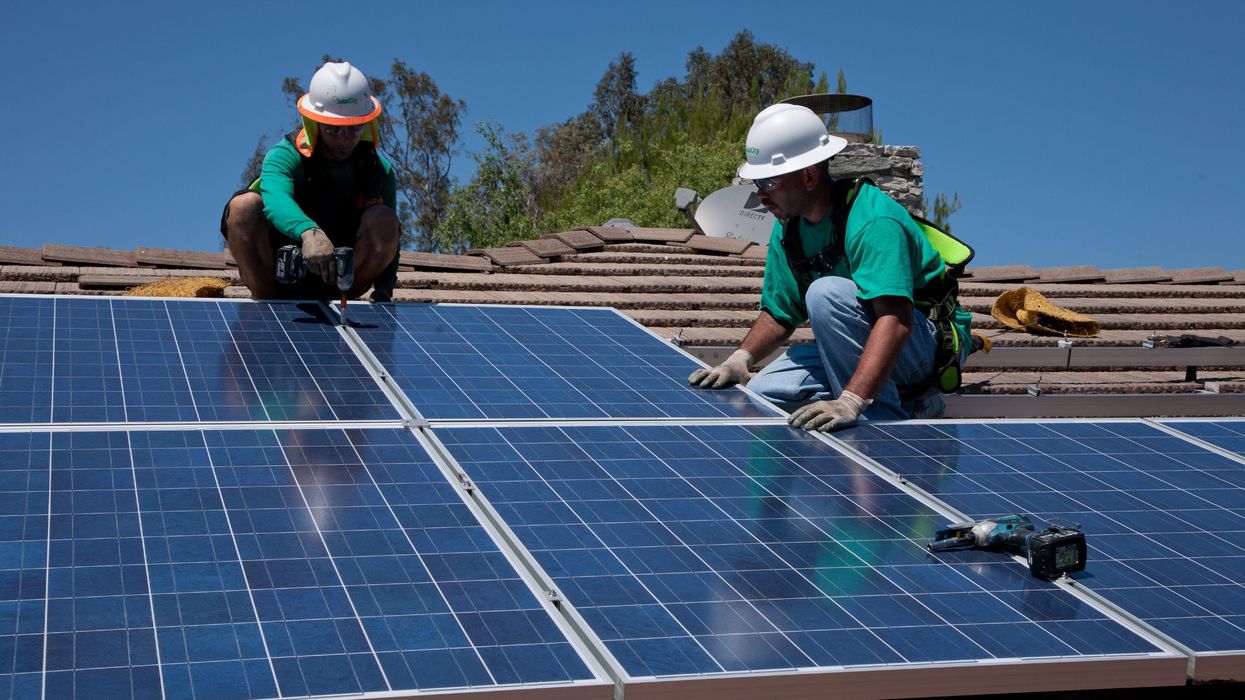
"Thanks to President Biden's affordable clean energy plan, businesses are investing in manufacturing like never before, and planning to create good-paying jobs in every corner of the country," said one climate campaigner.
A leading climate action group on Monday published a report revealing that the 94 clean energy projects announced since U.S. President Joe Biden signed the Inflation Reduction Act into law last August are set to create more than 100,000 green jobs.
Climate Power—which published the report as part of a new six-figure national ad campaign touting the growing green economy—said that since the IRA became law without any Republican support last year, "companies are racing forward with massive investments to build our clean energy future."
"New manufacturing in wind, solar, batteries, and electric vehicles—along with storage projects across the country—mean new, good-paying jobs for hard-working Americans," the group continued. "In the six months since the landmark climate and clean energy investments became law, clean energy companies have announced more than 100,000 new clean energy jobs for electricians, mechanics, construction workers, technicians, support staff, and many others."
"As the largest U.S. investment in clean energy and climate in history, this national clean energy plan will continue to reshape and recharge our economy for many decades to come," Climate Power added.
While green groups have generally praised the IRA's historic $369 billion investment in renewable energy production and innovation, activists have condemned provisions including fossil fuel tax credits and mandatory lease sales on public lands and at sea.
The 94 new clean energy projects in the Climate Power report—which are spread across 31 states and have a combined investment value of $89.5 billion—include:
Forty new battery manufacturing sites in places like Van Buren Township, Michigan; Tucson, Arizona; and Florence County, South Carolina. So far, 22 companies have announced plans for new or expanded electric vehicle manufacturing in Pryor, Oklahoma; Montgomery, Alabama; Highland Park, Michigan—and more. A further 24 companies shared plans to expand wind and solar manufacturing in cities including Pueblo, Colorado; Perrysburg, Ohio; and Georgetown, Texas. The majority of the projects are in seven states—Arizona, Georgia, Michigan, Ohio, South Carolina, Tennessee, and Texas.
"Thanks to President Biden's affordable clean energy plan, businesses are investing in manufacturing like never before, and planning to create good-paying jobs in every corner of the country," Climate Power executive director Lori Lodes said in a statement.
"This is only the beginning—we're months after the passage of the Inflation Reduction Act and we're already at the precipice of a renewed manufacturing, made-in-America boom that will create opportunities for millions of Americans, all while reducing toxic emissions that harm the health and wellbeing of our communities," Lodes added.
Last month, the International Energy Agency said in a report that "the world is at the dawn of a new industrial age—the age of clean energy technology manufacturing," and that green manufacturing jobs will more than double by the end of the decade if countries worldwide live up to their climate and energy pledges—a huge "if" given that global emissions remain at record levels.

"As we begin 2023, it seems very likely that renewables will provide nearly a quarter—if not more—of the nation's electricity during the coming year," said Ken Bossong of the SUN DAY Campaign.
A new analysis of federal data shows that wind and solar alone could generate more electricity in the United States than nuclear and coal over the coming year, critical progress toward reducing the country's reliance on dirty energy.
The SUN DAY Campaign, a nonprofit that promotes sustainable energy development, highlighted a recently released U.S. Energy Information Administration (EIA) review finding that renewable sources as a whole—including solar, wind, biomass, and others—provided 22.6% of U.S. electricity over the first 10 months of 2022, a pace set to beat the agency's projection for the full year.
"Taken together, during the first ten months of 2022, renewable energy sources comfortably out-produced both coal and nuclear power by 16.62% and 27.39% respectively," the SUN DAY Campaign noted Tuesday. "However, natural gas continues to dominate with a 39.4% share of total generation."
The new EIA figures show that electricity output from solar alone jumped by more than 26% in the first 10 months of last year. In just October, the SUN DAY Campaign observed, "solar's output was 31.68% greater than a year earlier, a rate of growth that strongly eclipsed that of every other energy source."
Ken Bossong, the campaign's executive director, said that "as we begin 2023, it seems very likely that renewables will provide nearly a quarter—if not more—of the nation's electricity during the coming year."
"And it is entirely possible that the combination of just wind and solar will outpace nuclear power and maybe even that of coal during the next twelve months," Bossong added.
"It is entirely possible that the combination of just wind and solar will outpace nuclear power and maybe even that of coal during the next twelve months."
The encouraging data comes amid the broader context of U.S. failures to sufficiently accelerate renewable energy production and phase out fossil fuel use, which is helping push greenhouse gas emissions to record-shattering levels globally.
Gas production, a major contributor to highly potent methane pollution, likely broke an annual record in the U.S. last year, according to the latest federal data. One recent analysis found that the U.S. is currently pursuing more new oil pipeline capacity by length than any other country.
The Climate Action Tracker (CAT), a site created by a group of scientists to analyze nations' emissions targets and progress, rates the U.S. as "insufficient" overall, arguing the country's "climate policies and action in 2030 need substantial improvements to be consistent with the 1.5°C temperature limit."
On the positive side, CAT welcomes the recent passage of the Inflation Reduction Act (IRA), a law that's set to boost the U.S. build-out of renewable energy infrastructure.
"However, while the largest share of the IRA is directed to clean technologies, it also includes several concessions for the fossil fuel industry such as requiring minimum acreages of public lands for drilling leases," CAT notes. "These concessions contradict President Biden's promise on his first day in office to ban new oil and gas drilling on federal lands."