

SUBSCRIBE TO OUR FREE NEWSLETTER
Daily news & progressive opinion—funded by the people, not the corporations—delivered straight to your inbox.
5
#000000
#FFFFFF
To donate by check, phone, or other method, see our More Ways to Give page.
Daily news & progressive opinion—funded by the people, not the corporations—delivered straight to your inbox.
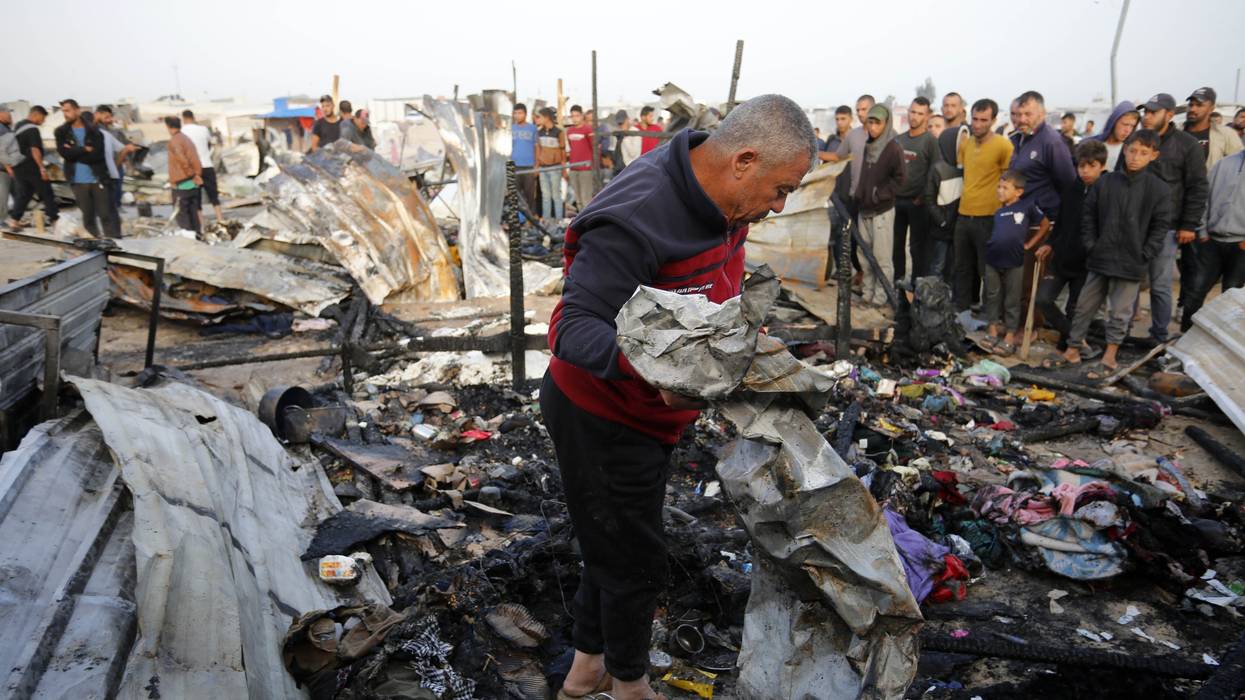
"We will never forget the images emerging from Rafah tonight. Human beings, including babies, were burned alive and torn apart. This genocide must end, it must end now," said one group.
Note: This article includes graphic descriptions and images of violence.
International rights groups and leaders who for months have demanded a cease-fire in Gaza expressed renewed horror as images emerged from Israel's Sunday bombing of a tent camp that had been set up by forcibly displaced Palestinians in Rafah, with women and children making up the majority of the 45 people who were reportedly killed in the attack.
Emergency workers told NBC News that the death toll was likely to rise, as many people had been trapped in the encampment as it was engulfed in flames.
NBC reported that the strike took place less than a mile away from a Médecins Sans Frontières (MSF) medical facility, where at least 180 injured people arrived on Sunday.
"We are horrified by this deadly event, which shows once again that nowhere is safe," said MSF on social media.
Muhammad Al-Mughir, a spokesperson for the Palestinian Civil Defense, told NBC that the Tal al-Sultan neighborhood that was attacked had been designated a "humanitarian area" in Rafah, from which more than 800,000 people have been forcibly displaced this month as Israel has launched a ground invasion. More than 1 million people have been forced to flee to Rafah since October, when Israel began its siege in Gaza.
The bombing came two days after the International Court of Justice issued its latest order to Israel regarding its assault on Gaza, telling the government that it "must immediately halt its military offensive or any other action in the Rafah governorate" and that the ICJ was not convinced by Israel's claims that it was taking steps to protect civilians.
Israeli officials offered familiar statements regarding the attack, saying the Israel Defense Forces (IDF) had been aiming for two senior Hamas leaders, that it had made efforts to prevent civilian harm, and that reports of the refugee camp going up in flames were "under review."
Humanitarian leaders around the world were not convinced, with Francesca Albanese, the United Nations special rapporteur on the occupied Palestinian territories, saying Israel's latest "cruelty, along with blatant defiance of the international law and system, is unacceptable."
Albanese in March published a draft report describing Israel's bombardment of Gaza as a genocide. The IDF has now killed at least 36,050 Palestinians as top Israeli officials have called for the "total annihilation" of cities in the enclave and have instructed the military to treat everyone in Gaza as a legitimate target.
The images out of Rafah on Sunday included videos of tents being engulfed in flames and charred corpses, and one showed a man holding up what appeared to be the body of a small child who had been beheaded. NBC News reported that it "was not able to independently verify the situation on the ground."
Groups that have repeatedly condemned the assault on Gaza demanded that the U.S. government immediately end its financial and political support for Israel. The U.S. is the largest international funder of the IDF, and approved $17 billion more in military aid in April as President Joe Biden warned that a full-scale offensive in Rafah would be a "red line" that would force the White House to halt its support for Israeli Prime Minister Benjamin Netanyahu.
"This U.S.-backed massacre of civilians is a direct result of the Biden administration's enduring political and military support for Israel's genocide in Gaza," said Nihad Awad, national executive director of the Council on American-Islamic Relations, on Monday. "The Palestinian child shown without a head would still be alive today had our government not offered Israel's far-right government unceasing support for the slaughter of Palestinian civilians and the ethnic cleansing of Gaza. Those who support genocide are just as guilty as those who drop American-supplied bombs on civilians."
Awad called on Biden, Secretary of State Antony Blinken, Secretary of Defense Lloyd Austin, and the U.S. Congress to "show a shred of humanity and change course."
As major news outlets like The New York Times and The Washington Post buried the news of the attack under unrelated stories, journalist Mehdi Hasan condemned the silence of the Biden administration and the "U.S. political and media establishments."
"The (lack of) reaction to the scenes of sheer carnage, burned refugee bodies, and decapitated babies coming out of Rafah tonight from the U.S. political and media establishments is nothing other than the normalizing, the banalizing, of genocide," said Hasan.
Jan Egeland, secretary general of the Norwegian Refugee Council, directed ire at European Union leaders who have continued to back Israel's bombardment of Gaza, demanding to know "how many more red lines must be crossed before the E.U. decides to act?"
Albanese said Israel must face "sanctions, justice, [and] suspension of agreements, trade, partnership, and investments" in order to pressure Netanyahu to halt his military operation.
"The Gaza genocide will not easily end without external pressure," she said.
Hamza Yousaf, former first minister of Scotland and a member of Scottish Parliament, called on the international community to "bear witness to the images [in Tal al-Sultan] and ask yourself, are you on the right side of history?"
Jewish Voice for Peace said in a statement, "We will never forget the images emerging from Rafah tonight. Human beings, including babies, were burned alive and torn apart. This genocide must end, it must end now."
"The U.S. government has facilitated this genocide by continuously sending weapons and funding to the Israeli military, despite mass opposition from the American people," the group added. "We hold the U.S. government, in addition to the Israeli government, responsible for the slaughter of over 36,000 Palestinians, for the siege and starvation of Palestinians in Gaza, and for mass destruction of infrastructure and land. We demand an end to all U.S. funding to the Israeli military now. People of conscience throughout the world are calling for an end to genocide."
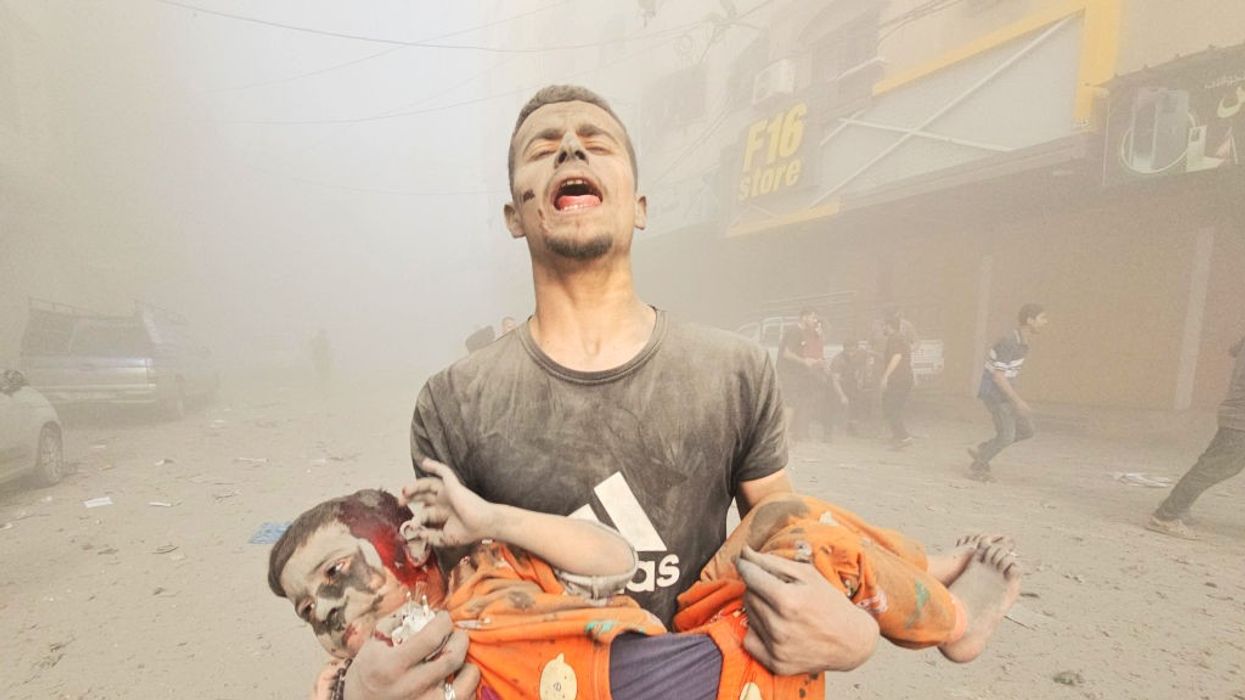
What is happening now in Gaza is genocide. I mourn for my friends, neighbors, and family with the deepest sadness, but it is not only sadness that I feel.
The repeating Israeli airstrikes on the Jabalia refugee camp in Gaza are beyond my own comprehension. For at least 10 of the last 40 days, missiles have rained down on the most densely populated refugee camp in all of Gaza.
And it is not just the days; it is also the nights. The bombing is done in the dark, when the power is off and the only light is from the fires that burn. It is done when the internet is cut, when the journalists are shot dead, to hide their crimes, the burning of children.
I have a long history and strong connection to the people in this camp. My friends, former coworkers, patients, and people I have known for decades through my work as a doctor at Gaza’s Al-Awda hospital are living in this camp. There are the children who grew up coming to the library I founded in Jabalia, who are now young men and women, who have their own children, their own families. There are my beautiful neighbors and friends and patients, who are not my relatives but are my family. They are generation after generation of refugee families living in one of the most crowded places on earth.
After the latest massacre, I cannot reach any of them.
I am so very sad. But it is not only sadness that I feel. It is also rage.
I see these same families in the video sent to me of my neighbors pulling children from the rubble. I see them in my memories as we lived and struggled under dual occupations, and Israeli bombings and apartheid. I hear what it sounds like in the aftermath when women and children, the overwhelming majority of those living in, injured, and killed in Jabalia, scream and mourn in anguish and wake up to do it again. I can taste the chemicals, the poisons that linger in the air for hours and days after these indiscriminate explosions. I can smell the acrid odor of white phosphorus, used by Israel in Gaza and caked on the walls of burning buildings and bodies. I can feel the collective hunger: for food and for justice and for all of it to stop.
But now I am in Cairo and it is so difficult and distressing to hear more terrible news each day, news of my loved ones killed by this criminal occupation, by these crimes of war bragged about by Israeli officials who say that there will be no buildings left in Gaza, that we will be a “city of tents.”
I had always been home in Gaza during previous Israeli bombings that so often use U.S. planes and U.S. missiles, gifted and given as “aid.” Such “help” is the opposite of the aid I am buying now. The food, medicine, and more, even toys for children who have lost so, so much. The Middle East Children’s Alliance is raising money so we can buy these supplies to deliver to children and families in Gaza as soon as we can.
I am so very sad. But it is not only sadness that I feel. It is also rage.
How do I feed a child that will not eat because of fear? How do you give a toy to a child who will not play, who searches the skies for what they know will come?
I am enraged at Israel’s constant, ruthless bombardment, killing thousands of people from newborn babies to grandfathers. What is happening now in Gaza is genocide. Those who are not killed by Israeli bombs are dying slowly from the lack of medicine, food, and water.
How do I feed a child that will not eat because of fear? How do you give a toy to a child who will not play, who searches the skies for what they know will come?
I mourn more of my beloveds, both family and friends, every day and I ask myself who is next. Last week it was one of my dear friends killed in Jabalia. We were friends for over 35 years, since we worked together during the first intifada in 1987.
Before that, it was my own family. My own brother speaks in the video about our own family members that were killed a few weeks ago.
This is our story and it is the tragedy of every family in Gaza. More than one out of every two hundred Palestinians in Gaza has been killed in the last 40 days.
I have always signed my letters to supporters and friends from around the world with these words, “From Gaza with Love.” But today I’m writing with a rage that no mother should know, a rage of desperation and disbelief about what is being allowed to happen. I still feel love for everyone in Palestine, and people who have stood in support and solidarity of our shared struggle. But please, take action. And then do more.
We must stop this genocide.
"This is a near worst-case scenario for one of the most storm surge flood vulnerable regions in the world," one scientist warned. "I hate to say it but we're looking at a potential mass casualty event."
Officials in Bangladesh and Myanmar are preparing Friday to evacuate hundreds of thousands of people as a tropical storm turbocharged by the fossil fuel-driven climate crisis strengthens in the Bay of Bengal.
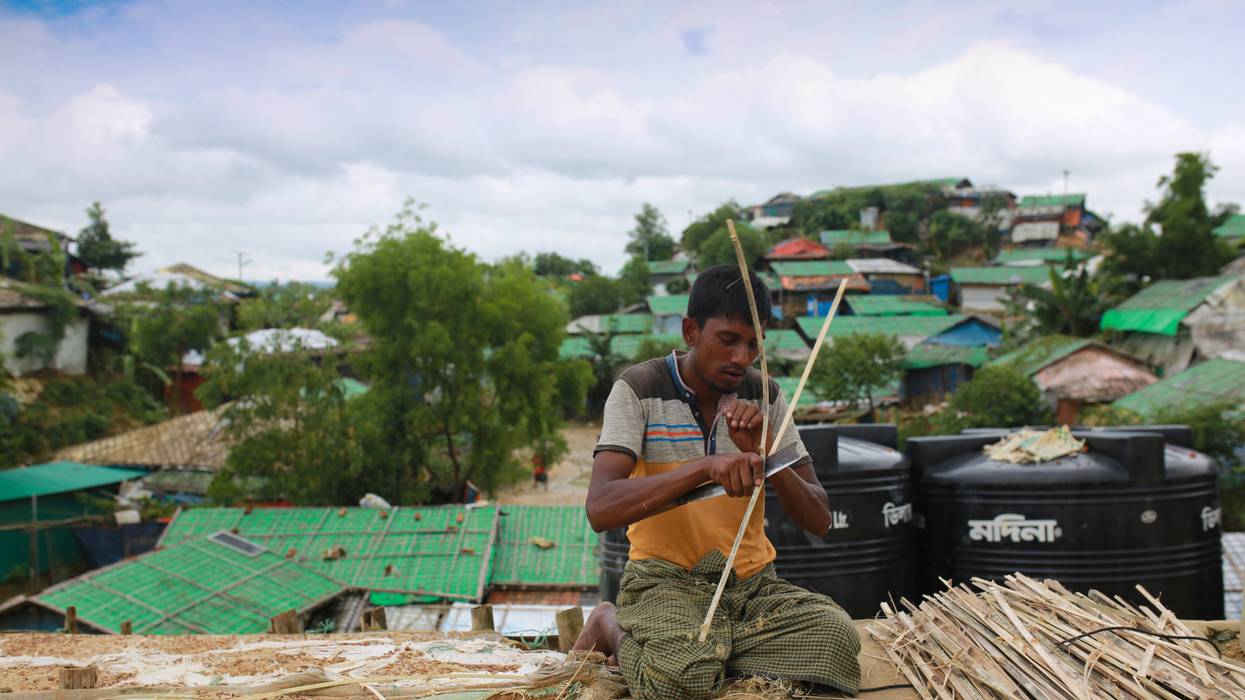
Cyclone Mocha is forecast to intensify further before making landfall on Sunday between western Myanmar and the Bangladeshi city of Cox's Bazar, home to the world's largest refugee camp. Roughly 1 million Rohingya people forced to flee Myanmar amid the country's ongoing genocide against them live in the highly exposed district.
"This is a very, very scary storm," tweeted environmentalist and author Bill McKibben, pointing to its severity and current path.
"The government of Bangladesh needs to develop an inclusive evacuation plan."
The evacuation of more than 500,000 people from the Bangladeshi coast "is expected to start Saturday with 576 cyclone shelters ready to provide refuge to those who are moved from their homes," The Associated Press reported, citing government administrator Muhammad Shaheen Imran.
Bangladesh, a delta nation with more than 160 million residents, is already prone to extreme weather disasters, and that's increasingly the case as the warming Indian Ocean generates more intense and longer-lasting cyclones as well as heavier rainfall.
The impoverished Rohingya refugees living in Cox's Bazar are especially vulnerable to the incoming storm, and it's unclear how many, if any, of them are included in the Bangladeshi government's evacuation plans.
United Nations Refugee Agency spokesperson Olga Sarrado told Reuters that preparations are underway for a partial evacuation of the camp, if necessary. The World Health Organization is also setting up nearly three dozen mobile medical teams and 40 ambulances, along with emergency surgery and cholera kits for the camp.
"Still reeling from a devastating fire in March that destroyed more than 2,600 shelters and critical infrastructure, over 850,000 refugees risk losing their homes and livelihoods," the International Rescue Committee (IRC) warned in a statement. "Strong wind, heavy rains, and subsequent flash floods and mudslides could destroy shelters, community centers, and health clinics, depriving thousands of essential services and humanitarian aid."
"In preparation, more than 3,000 Rohingya refugees have been trained to respond to flooding and mudslides," said the IRC, which is "scaling up its emergency response in Cox's Bazar." According to the organization: "Three mobile medical teams will be deployed to remote areas in the camps and communities to provide emergency medical treatment. Additionally, a mobile protection unit designed for emergency settings will offer protection services to vulnerable groups such as women, girls, the elderly, and those with disabilities."
IRC Bangladesh director Hasina Rahman lamented how "time and again, we have seen the devastating impact of extreme weather events in Cox’s Bazar. Since 2017, countless shelters, schools, health clinics, and safe spaces for survivors of gender-based violence have been decimated as a result of floods and mudslides, as well as preventable tragedies such as the fire in March this year."
"As a low-lying country with major cities in coastal areas, Bangladesh is particularly vulnerable to climate change, which makes annual weather events—such as cyclones—more intense and frequent," said Rahman. "The impacts—loss of life, destroyed crops, challenges to livelihoods, damage to homes and infrastructure—are often borne by the people and communities who have contributed least to the climate crisis: Bangladesh, for example, emits less than 1% of global CO2 emissions."
While a rapid and just clean energy transition and other far-reaching transformations are needed to mitigate the causes of global warming, developing nations like Bangladesh cannot "cope with continued weather shocks without support that addresses the effects of climate change, such as early warning systems, anticipatory action, improving infrastructure to protect against flooding, and investment into climate adaptation," Rahman noted.
"It is crucial to fortify shelters and critical infrastructure," Rahman continued. "This involves using durable construction materials to strengthen community facilities like child-friendly spaces, learning facilities, and mosques, which serve as safe points during emergencies."
"Additionally, the government of Bangladesh needs to develop an inclusive evacuation plan in collaboration with U.N. agencies, humanitarian organizations, and the refugee and host communities," she stressed. "The plan should prioritize access to emergency shelters, ensuring family unity, and the protection of vulnerable groups, including women, children, the elderly, and individuals with disabilities."
The U.N.'s International Organization for Migration (IOM) observed that "last year, the camps escaped devastation from the Bay of Bengal cyclone Sitrang, which killed 35 people, displaced over 20,000, and caused over $35 million in damages in other parts of the country."
Cyclone Mocha, the first to form in the bay this year, "strengthened Friday into the equivalent of a category 1 Atlantic hurricane and is moving north at 11 kilometers per hour (7 miles per hour)," CNN reported, citing the Joint Typhoon Warning Center. "The storm's winds could peak at 220 kph (137 mph)—equivalent to a category 4 Atlantic hurricane—just before making landfall on Sunday morning."
India's Meteorological Department on Friday projected that "a storm surge of up to 2.5 meters (8.2 feet) was likely to inundate low-lying coastal areas in the path of the cyclone at the time of landfall," including Cox's Bazar, the outlet noted.
To assist refugees and local host communities as they brace for Cyclone Mocha, IOM said that it "is strengthening camp infrastructure, preparing for medical emergencies, and supporting volunteers in cyclone preparedness."
The U.N. Office for the Coordination of Humanitarian Affairs (OCHA) also expressed "grave concerns" about the storm's potential impacts on "already vulnerable and displaced communities" in neighboring Myanmar, where a military junta rules.
"Of particular worry is the situation facing 232,100 people who are displaced across Rakhine. Many of the [internally displaced person] camps and sites in Rakhine are located in low-lying coastal areas susceptible to storm surge," said OCHA. "The suffering of more than a million displaced people and other communities in the northwest is also expected to worsen over the coming days as the ex-cyclone moves inland bringing heavy rain. Displaced people in the northwest are already living in precarious conditions in camps, displacement sites, or in forests often without proper shelter."
In May 2008, Cyclone Nargis inundated Myanmar, killing more than 138,000 people, uprooting 800,000, and affecting 2.4 million.
"Extreme weather hazards will occur more frequently due to climate change in the years ahead. The linkages between climate change, migration, and displacement are increasingly pressing worldwide," IOM pointed out. "To avert, mitigate, and address displacement linked to climate disasters and strengthen people's resilience," the U.N. agency urged policymakers around the world "to implement sustainable climate adaptation, preparedness, and disaster risk reduction measures."
Despite knowing that extracting and burning more coal, oil, and gas will exacerbate the deadly effects of the climate emergency, profit-hungry fossil fuel executives are still planning to expand drilling with the continued support of many governments.
While COP27 delegates agreed to establish a loss and damage fund—after failing to commit to phasing out the fossil fuels that are causing so much harm—previous efforts to ramp up climate aid from the Global North to the Global South have fallen far short of what's needed due to the stinginess of wealthy countries, especially the United States.
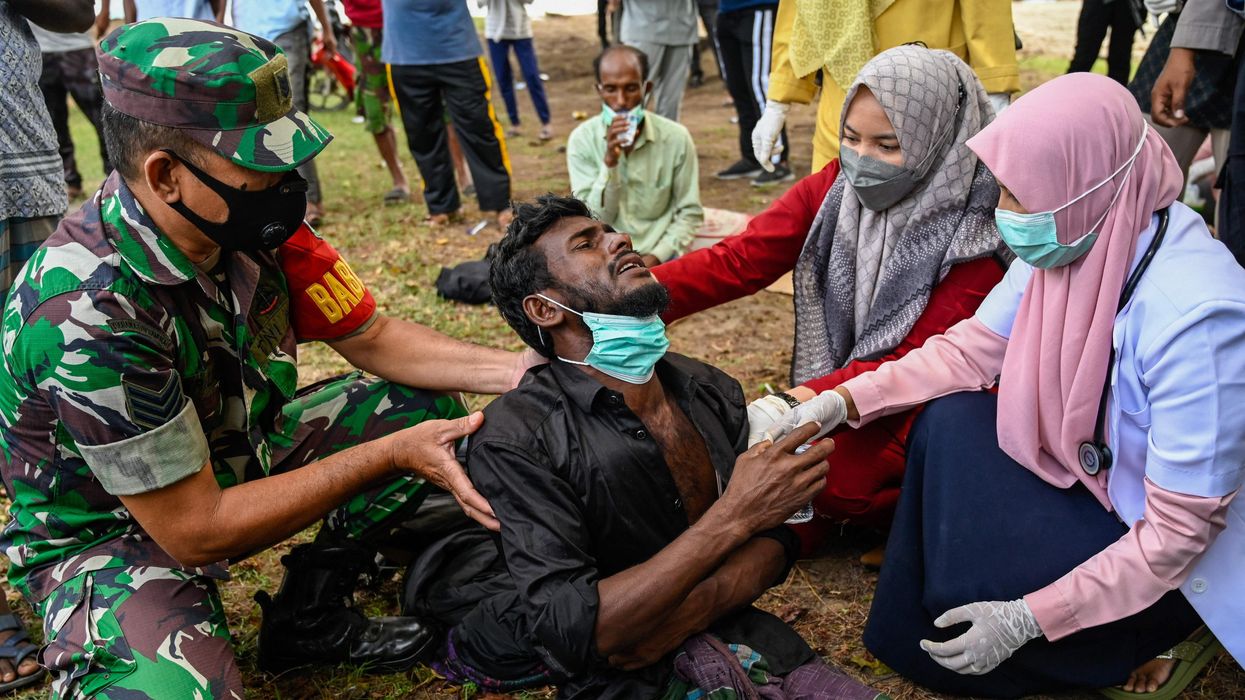
However, around 180 other Rohingya are feared dead amid reports their overcrowded boat sank after setting sail from Bangladesh earlier this month.
The rescue of hundreds of Rohingya refugees by fishers and local authorities in Indonesia's Aceh province was praised Tuesday as "an act of humanity" by United Nations officials, while relatives of around 180 Rohingya on another vessel that's been missing for weeks feared that all aboard had perished.
The United Nations High Commissioner for Refugees (UNHCR) said that "Indonesia has helped to save 472 people in the past six weeks from four boats, showing its commitment and respect of basic humanitarian principles for people who face persecution and conflict."
"We feel like we got a new world today... We could see their faces again. It's really a moment of joy for all of us."
"UNHCR urges other states to follow this example. Many others did not act despite numerous pleas and appeals for help," the Geneva-based agency added. "States in the region must fulfill their legal obligations by saving people on boats in distress to avoid further misery and deaths."
Ann Maymann, the UNHCR representative in Indonesia, said in a statement that "we welcome this act of humanity by local communities and authorities in Indonesia."
"These actions help to save human lives from certain death, ending torturous ordeals for many desperate people," she added.
The Syndey Morning Herald reports residents of Ladong, a fishing village in Aceh, rushed to help 58 Malaysia-bound Rohingya men who arrived Sunday in a rickety wooden boat, many of them severely dehydrated and starving.
The following day, 174 more starving Rohingya men, women, and children, were helped ashore by local authorities and fishers after more than a month at sea.
Mohammed Rezuwan Khan, whose 27-year-old sister Hatamonesa was aboard the boat with her 5-year-old daughter, told Pakistan's Arab News that "we feel like we got a new world today."
“We could see their faces again. It's really a moment of joy for all of us," he said of his family. Speaking of his sister, he added that "she thought that she would die in the voyage at sea."
Babar Baloch, the UNHCR regional spokesperson in Bangkok, stated that 26 people had died aboard the rescued vessel, which left Bangladesh a month ago.
"We were raising alarm about this boat in early December because we had information that it was in the regional waters at least at the end of November," he said. "So when we first got reports that it was somewhere near the coast of Thailand, we approached authorities asking them to help, then when it was moving towards Indonesia and Malaysia we did the same."
"After its engine failure and it was drifting in the sea, there were reports of this boat being spotted close to Indian waters and we approached and asked them as well and we were also in touch with authorities in Sri Lanka," Baloch continued.
"Currently as we speak, the only countries in the region that have acted are Indonesia, in big numbers, and Sri Lanka as well."
According to the BBC, the Indian navy appears to have towed the boat into Indonesian waters after giving its desperate passengers some food and water. The boat drifted for another six days before it was allowed to land.
"Currently as we speak, the only countries in the region that have acted are Indonesia, in big numbers, and Sri Lanka as well," Baloch said. "It is an act in support of humanity, there's no other way to describe it."
Relatives of around 180 other Rohingya who left Bangladesh on December 2 said Tuesday that they fear the overcrowded vessel has sunk in the Andaman Sea. Mohammad Noman, a resident of a Rohingya refugee camp in Cox's Bazar, Bangladesh, told The Guardian that his sister was aboard the boat with her two daughters, who are 5 and 3 years old.
"Every day we called up the boat two or three times on the boatman's satellite phone to find out if my sister and her two daughters were all right. Since December 8, I have failed to get access to that phone," he said. "I know some other people in Cox's Bazar who made phone calls to the boat every day and stayed in contact with their relatives there. None of them has succeeded to reach the phone after December 8."
The captain of another vessel transporting Rohingya refugees said he saw the distressed boat swept up in stormy seas sometime during the second week of December.
"It was around 2:00 am when a strong wind began blowing and big waves surfaced on the sea. [Their] boat began swaying wildly, we could gauge from a flashlight they were pointing at us," he told The Guardian. "After some time, we could not see the flashlight anymore. We believe the boat drowned then."
More than a million Rohingya Muslims are crowded into squalid refugee camps in southern Bangladesh after having fled ethnic cleansing, apartheid, and other violence and repression in Rakhine state, Myanmar, which is ruled by a military dictatorship. Since 2020, thousands of Rohingya have fled the camps by sea.
Hundreds have died during the perilous journey. If the sinking of the boat with 180 aboard is confirmed, it would make 2022 the deadliest year for Rohingya at sea, according to UNHCR.
UNHCR's Baloch stressed that "countries and states in the region have international obligations to help desperate people."
"We have been calling on states to go after people smugglers and human traffickers as they are responsible for putting people on those death-trap boats, but victims have to be saved and saving human life is the most important act," he told the Morning Herald.
"The refugee issue and saving lives cannot just be left to one country, it has to be done collectively, together in the region," he added.
Tun Khin, a Rohingya activist and refugee who now heads the Burmese Rohingya Organization U.K., took aim at regional power Australia, which has been criticized for decades over its abuse of desperate seaborne asylum-seekers, nearly all of whom are sent to dirty, crowded offshore processing centers on Manus Island and Nauru to await their fate.
"Australia has too often set a shameful example for the region through its treatment of refugees," he told the Morning Herald.
"These people are facing genocide in Burma," Khin added, using the former official name of Myanmar. "It is a hopeless situation for them in Bangladesh, there is no dignity of life there."
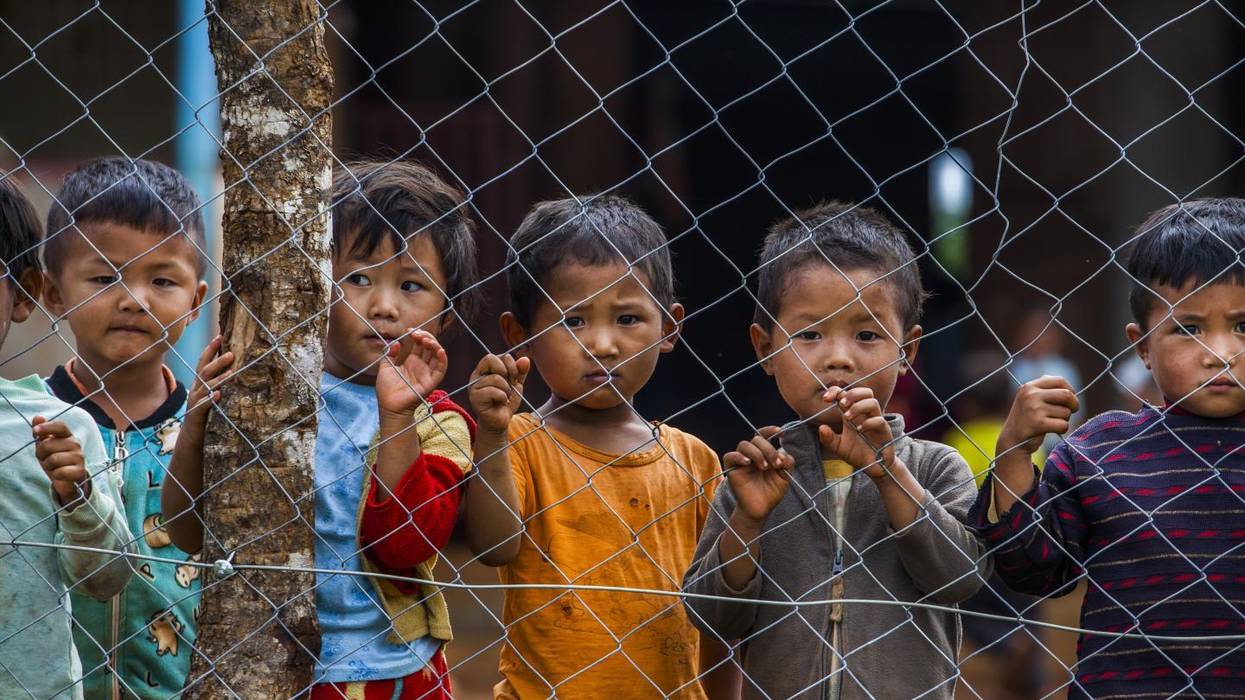
Sunday, June 20 marked the United Nations' World Refugee Day, a time to highlight refugees worldwide, applaud their courage, and highlight their contributions. This year's theme, "Heal, Learn, Shine," recognized the challenges of COVID-19, the need to uphold the right to education, and how refugees persevere despite the challenges presented to them. According to the UN, there are greater than 1.1 million refugees from my home country of Burma, making it one of the top five source countries of refugees worldwide. While many may celebrate World Refugee Day, those forced to flee Burma continue to witness repeated mass atrocities.
As the number of people fleeing the Burmese military's violence has only increased since the coup, seeking refuge in Thailand has proven increasingly difficult for Burma's ethnic minority refugees as Thai officials fear the spread of COVID-19 and strictly police their borders.
"Despite impossible conditions and a consistent lack of international support, there are numerous examples of how refugees from Burma impact communities around our world."
Estimates report that in March and April, close to 3,000 Karen internally displaced persons (IDPs) crossed the Salween River to seek refuge in Thailand, only to be held by Thai officials until conditions were deemed secure enough to turn them away. Similarly, more than 100,000 Karenni civilians escaping conflict in their home state were met with force at the Thai-Burma border, where officials attempted to push back thousands.
Safety and security for refugees are immensely rare, even on the occasion that they are accepted by host countries. Refugees are uniquely affected by a number of factors, and, during a pandemic, are disproportionately impacted by COVID-19. Often crammed into tight living situations with inadequate hygiene facilities, the ability to escape COVID-19's grip is almost impossible for Burma's refugees. With more than 1 million Rohingya refugees living in
Bangladesh, estimates report close to 1,369 cases of COVID-19 in Rohingya refugee camps. Vaccine supplies are also far from refugees' reach-- as of June 1, no COVID-19 vaccines have been distributed in Cox's Bazar.
Education remains unavailable to refugees from Burma and across the diaspora in Bangladesh, India, Thailand, and Malaysia. While some children are able to attend small, community-run schools, the general lack of educational opportunities forces entire generations from Burma to face their future unprepared. A May 2021 study reported that 68 percent of Rohingya families have at least one child, aged 5 to 17, that has been offered no opportunities to gain an education.
Despite impossible conditions and a consistent lack of international support, there are numerous examples of how refugees from Burma impact communities around our world. The Chin Human Rights Organization has empowered thousands of Chin refugees in India and Malaysia to help them reach their full potential. With help from the Rohingya Women Development Network, Rohingya women in Malaysia are taught about their rights and the key roles they play in society. Internally displaced Karenni and their refugee diaspora are supported by the collective work of the Karenni Civil Society Network, a Karenni-led effort that also speaks out against the human rights abuses experienced by ethnic minorities across Burma. While these efforts are worthy of celebration and highlight what refugees contribute to our communities, this impact would be amplified to the greatest extent if these individuals could bring their talent home to Burma for the benefit of all.
It is difficult for civilians in Burma to heal when the Burma army continues to brutalize its own people. However, despite their pain, refugees and IDPs are learning to empower themselves. However, they cannot do this alone. If the situation in Burma does not improve, the reported 175,000 internally displaced men, women, and children--a figure that is doubtlessly a conservative estimate--will likely become refugees.
The Burmese military's impunity weighs heavily on the minds of refugees in Southeast Asia and IDPs in Burma who look to their home country and wonder if their chance to safely return is slipping away. Refugees in camps and those resettled abroad are calling for the world to act, but is anyone listening? While everyone has the right to protection and freedom from the risk of death and torture, now more than ever, we need a world that will sustainably uphold the rights of all.
The international community should be compelled to take swift action to pressure the Burmese military to allow unconditional humanitarian access to internally displaced people. Cross-border aid is also essential and beyond crucial to the survival of the hundreds of thousands living in makeshift and refugee camps. Ending the illegal junta in Burma is the first step to securing human rights-based livelihoods for refugees and the millions of civilians who have long deserved peace and democratic rule. Only then can we collectively begin a new and more equitable process to heal, learn, and shine.
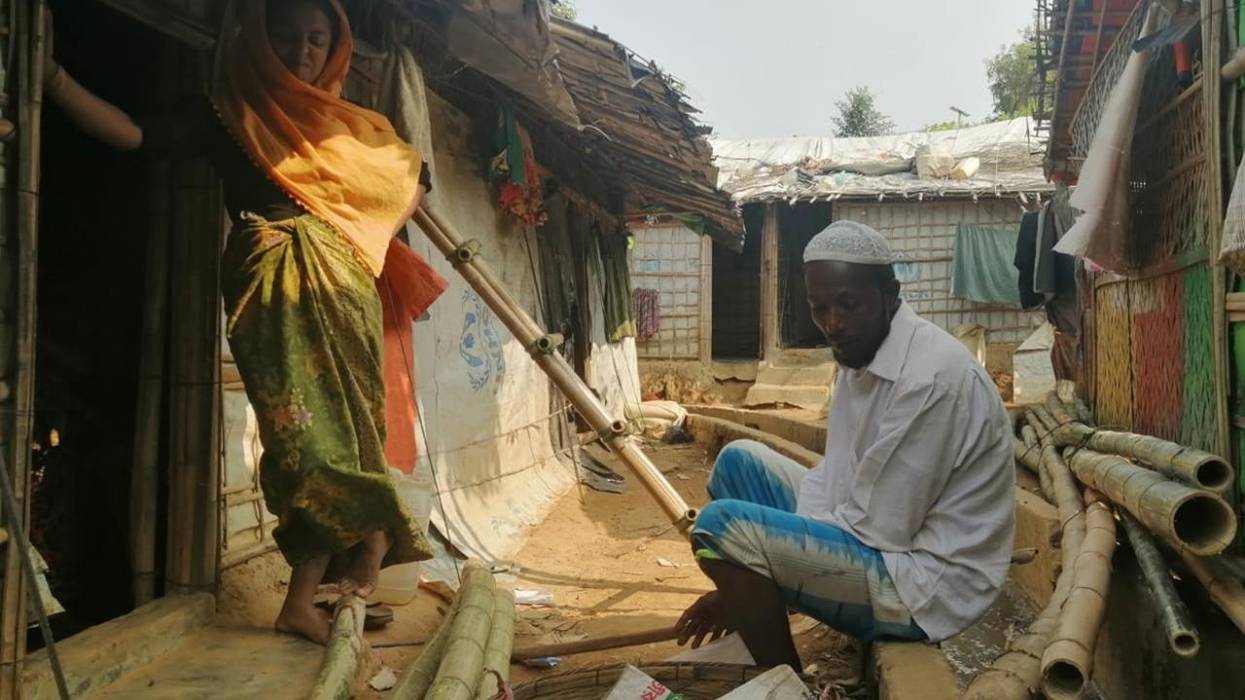
Nineteen-year-old Nur Jahan (pseudonym) shares two flimsy tents with her baby and 14 other family members. Life is really tough for Nur in the sprawling refugee camps of Cox's Bazar, Bangladesh, where she fled four years ago from violence and persecution in Myanmar.
"Simple things like finding clean water or food are hard," she says. "Crammed in these tiny tents, it would be hard to keep safe if a family member got coronavirus."
A year on since the World Health Organization declared Covid-19 a global pandemic, the virus has had far ranging impact on marginalized Rohingya refugees like Nur. The over-riding lesson has been how Rohingya refugees braved the new challenges of the pandemic with incredible determination and resilience.
Here are four things to know about how residents of the world's largest refugee camp have braved Covid-19.
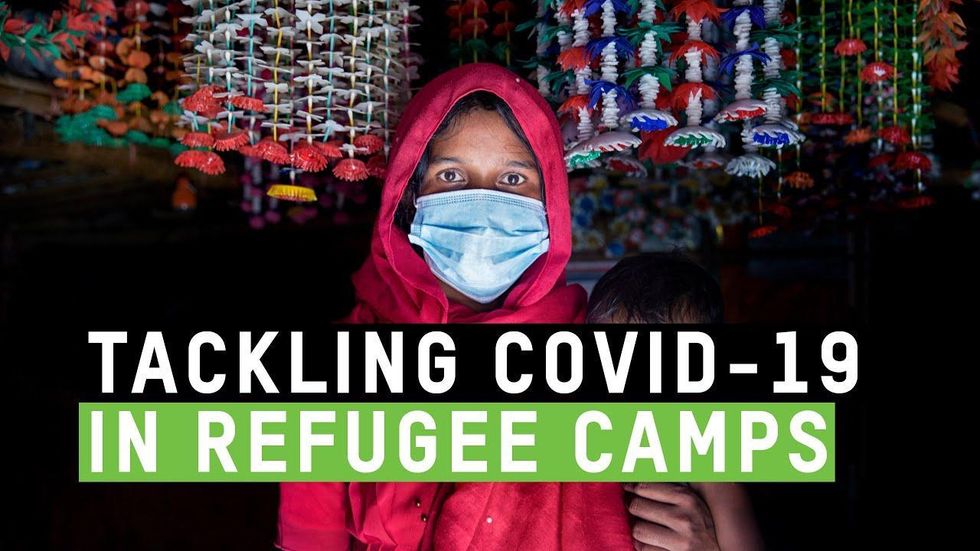
Despite the difficult conditions in the camps, the Rohingya people seem so far to have escaped from the worst. Infection rates have remained far below initial projections with only 406 people having tested positive, and ten deaths, since the first confirmed Covid-19 case was discovered on May 14. The WHO and Bangladesh Institute of Epidemiology plan further research to better understand the trajectory of the virus in Cox's Bazar. There is some suggestion that many refugees were initially reluctant to seek tests.
Humanitarians and the Government of Bangladesh quickly built-up health services, but the low number of cases is still extraordinary. The camps are severely crowded with almost one million people sharing 26 square kilometres--that's 40,000 people per square kilometer. In many areas up to 250 people share a single water tap.Social distancing is virtually impossible. Health experts warned that conditions were set for a devastating outbreak and catastrophic loss of life. So far, they have thankfully been proved wrong.
However, the pandemic has fueled an economic crisis. There has been a sharp decline in refugees' wellbeing. More than half the men and 84% of all women say they've not been able to make the same money as before. Nearly a quarter of all refugee households moved into a higher category of vulnerability--meaning they had less food and experienced more economic stress. Families were much more likely to accept high-risk jobs or send their children to work.
The pandemic also fuelled hunger. Only half of refugee households today have acceptable levels of food. Both refugee and host communities reported overwhelming difficulty to find sufficient or good quality food.
"Before Covid-19, we could get food from the distribution centres after checking it very carefully, but now much of the food gets rotten after two days because it now takes so long to arrive." The most vulnerable people are hardest hit, particularly single mothers, pregnant and lactating women, the elderly, and people with disabilities.
Oxfam and several partners conducted a Gender Analysis that found women and girls--both in the camps and in the host community--were facing greater risks and burdens, such as a spike in violence even as they got less lifesaving services and support. "Intimate partner violence, domestic violence, sexual harassment and kidnapping increased as security dropped and several organizations stopped their protection work," a female Rohingya Youth Leader told the research team. "Gender-based violence protection services are not available every day and it was difficult to access them remotely."
The study also found many Covid-19 messages were not reaching women and girls because of lockdown. Rohingya women in the camps and the host communities were consequently made less aware of Covid-19 risks than men.
Lockdowns also increased women's and girls' burden of unpaid care work which remains almost exclusively their responsibility. "Women are always expected to do more household chores than men. To ensure cleanliness during the pandemic, washing has increased for example and so women's workload has doubled," a host community woman, who also works as a police officer, told us.
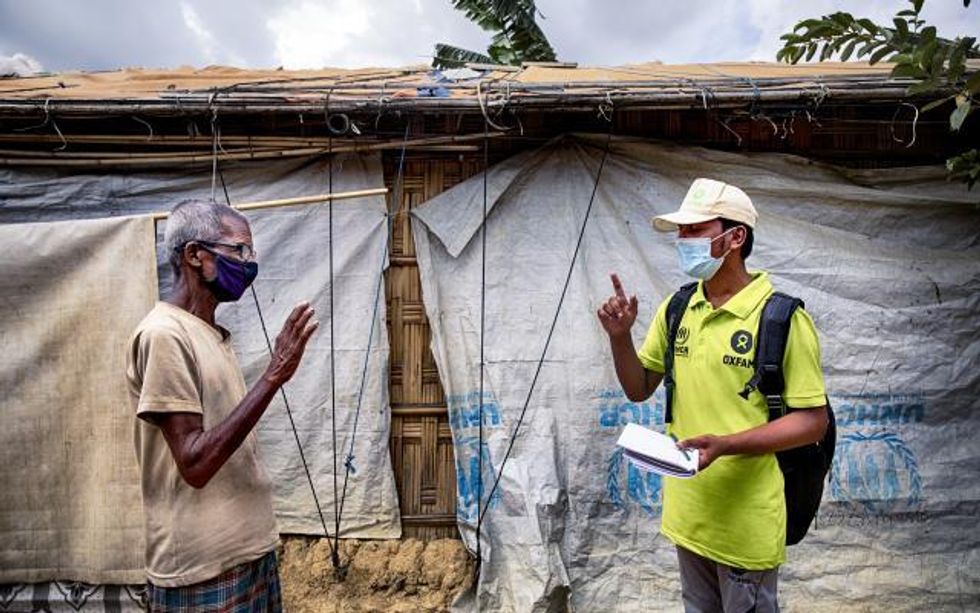
Rohingya refugees were at the heart of their own Covid-19 response. Nur and her family, for example, learned about the disease from refugee volunteers in her community. "They came to make us aware of this virus using megaphones to explain what to do...so we know how to wash hands, how to be safe," she told Oxfam.
The Bangladeshi authorities had to significantly limit relief operations and reduced the humanitarian footprint in the camps by 80 percent. Thousands of community volunteers both from the Rohingya and Bangladeshi host community stepped in. They ramped up awareness on prevention, health and safety, began disinfecting communal areas and taught about the importance of handwashing and social distancing. Youth in the camps used social media to share songs with information about the virus. Women were leaders; more than 70% of volunteer community health workers in Cox's Bazar are female.
Oxfam worked with nearly 400 camp-based volunteers to monitor conditions and promote women's rights and public health. "Every day we help the community with soap and water and providing valuable information," says twenty-year-old Zahid Hossain, an Oxfam volunteer working in the camps. Zahid travels door to door explaining the virus symptoms and precautions, and where people can seek care.
"I'm happy to provide support for my community. If we don't spread messages about how to fight Coronavirus there will be more cases in the camps and more people will die," Zahid said.
The pandemic sparked innovation. Oxfam has provided clean water and sanitation facilities to 73,552 people in Cox's Bazar camps. Together with partners, we also delivered gender and livelihoods programs to both refugees and members of the Bangladeshi host community.
To limit physical contact, Oxfam and partners developed a new foot pedal-powered hand-washing station which made it possible for people to wash their hands without contaminating a tap or soap container. Refugees first tested it and gave us advice on how to improve it.
To reach more women and girls with Covid-19 awareness Oxfam provided new ways to communicate essential information, through dedicated information kits, powered with a Bluetooth speaker with pre-recorded messages in the Rohingya language, a solar charger, and a waterproof pouch. They helped us maintain contact during the pandemic while reducing human contact. This initiative was led by Rohingya women's groups, who shared messages across households.
"Men used to give us confusing information about Covid-19 and we were uncertain what to believe and what not to believe," a Rohingya woman told us. "After getting the audio kit we got to know the right things regarding covid-19 and it cleared our confusion."
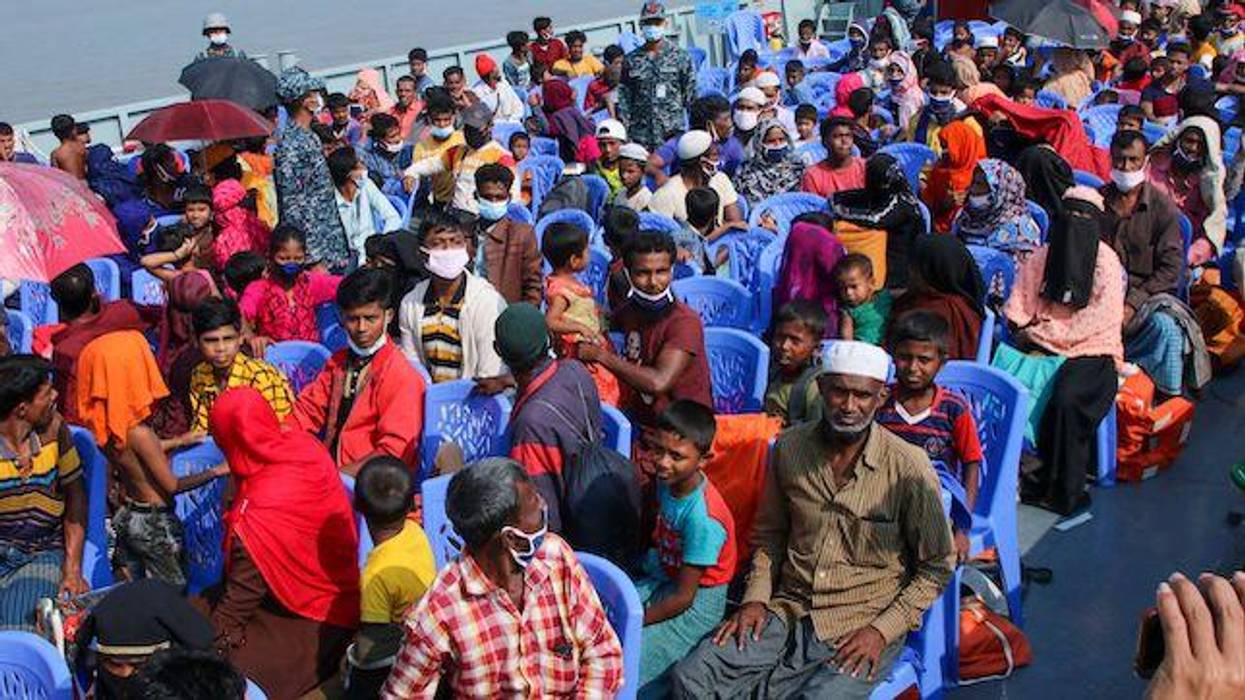
Human rights defenders this week urged Bangladesh to stop its relocation of Rohingya refugees to a flood-prone island in the Bay of Bengal, warning of "grave concerns about independent human rights monitoring."
Bhashan Char, as BBC News previously reported, "emerged less than 20 years ago from the sea. Situated less than 2m (6ft) above sea level, the island is made entirely of silt, Himalayan sediment washed down river and into the sea."
With Bangladesh's main refugee camp, Cox's Bazar, overflowing, Bangladesh has controversially planned to move 100,000 Rohingya refugees there. Human rights groups say it will be akin to a "floating prison," where Rohingya will be forced to move involuntarily, despite humanitarian watchdogs having been blocked from assessing the safety of the conditions.
According to Reuters, Bangladesh--which asserts the relocations are happening with consent--brought roughly 1,600 Rohingya refugees to the island Friday. From Reuters:
On the mainland on Thursday, before the departure, two Rohingya told Reuters their names had appeared on lists compiled by government-appointed local leaders without their consent.
"They have taken us here forcefully," a 31-year-old man told Reuters tearfully by phone as he boarded a bus that he said was taking him from the camps near Cox's Bazar to Chittagong.
"Three days ago, when I heard that my family is on the list, I ran away from the block, but yesterday I was caught and taken here," he said.
Apart from concerns about the refugees' lack of consent to relocate and lack of verification from United Nations authorities that the island has adequate healthcare, housing, and safety measures in place, the island's high risk of flooding has prompted further warnings
"Bangladesh's announced plan to begin relocating Rohingya refugees this week to Bhasan Char--an isolated island in the Bay of Bengal--is short-sighted and inhumane," Refugees International senior advocate for human rights Daniel Sullivan said in a statement Wednesday.
The "cyclone season in the Bay of Bengal is still ongoing," added Sullivan. "As the devastation wrought by Cyclone Amphan demonstrated this summer, super cyclones are the way of the future, and conditions on the isolated island may be too dangerous for the Rohingya."
Amnesty International's South Asia campaigner, Saad Hammadi, sounded similar alarms in a statement Thursday.
"The relocation of so many Rohingya refugees to a remote island, " said Hammadi, "which is still off limits to everyone including rights groups and journalists without prior permission, poses grave concerns about independent human rights monitoring."
"No relocation plan, either to Bhashan Char or to another location, can be undertaken without the full and informed consent of the individuals involved," Hammadi added.
Human Rights Watch also has criticized the relocations, and in a Thursday statement shared ominous accounts from refugees.
"I have no idea how my name appeared there, but I never voluntarily put my name on that list," one refugee said, according to the rights group.
"I only learned I was on the list after the camp-in-charge [camp authority or CiC] called me to his office and told me. After that, I fled from my shelter. I am hearing now that the CiC volunteers and majhis (community leaders) are looking for me and my family. I am afraid that if they find me, they will force me to go," said the refugee.
Brad Adams, HRW's Asia director, accused the Bangladesh government of "actively reneging on its promise to the U.N. not to relocate any refugees to Bhasan Char island until humanitarian experts give a green light."
"If the government were genuinely confident in the habitability of the island," said Adams, "they would be transparent and not hastily circumvent U.N. technical assessments."
"The jungle burns," reported Germany's Die Zeit on Tuesday. French authorities in the northern prefecture of Calais began their planned demolition of part of the sprawling refugee camp known as "the Jungle" on Monday. They continued into the next day despite protests and clashes with refugees and humanitarian groups.
"While the current situation in Calais is unsustainable, evictions are no solution to a crisis on which the French and British governments have turned their backs for years," said John Dalhuisen, Amnesty International's Europe and Central Asia director. "The authorities need to look at this situation holistically, not just out of concern for border management, housing, and hygiene. Each of these individuals has needs and rights that must be protected."
Residents burned their shelters and sat atop shacks and lean-tos in protest of the government's actions, and riot police in turn attacked the refugees with water cannons and tear gas in an attempt to disperse them.
Video footage from Britain's Channel 4 News reveals that the French government also broke its promise not to use bulldozers to destroy the camp:
"This is not the way to solve the refugee problem," Maya Konforti, a volunteer for a humanitarian group, told the New York Times.
Police on the Greece-Macedonia border also on Monday used tear gas and stun grenades to stop people from crossing into Macedonia.
The Balkan state has followed Austria's example and severely limited the number of refugees it is allowing inside the country, prompting the #SafePassage campaign from humanitarian groups who say that European countries are violating human rights and international law by closing their borders to refugees.
Tens of thousands of refugees have been trapped in the Greek border town of Idomeni since Macedonia essentially closed its borders to migrants last week.
The Washington Post reported that most of the asylum seekers trapped in Greece are women and children.
In a series of tweets, the United Nations High Commission called for better treatment of refugees and improved coordination between EU member states to deal with the crisis:
Greece, overwhelmed by an influx made worse by neighboring countries' refusal to allow refugees entry, is asking the European Union for millions of euros in emergency funds, France 24 reported:
"Greece has submitted an emergency plan to the European Commission ... corresponding to around 100,000 refugees," government spokeswoman Olga Gerovassili told reporters, with the requested aid totaling 480 million euros ($534 million).
"We cannot bear the strain of all the refugees coming here," Gerovassili added.
"The surge of the vulnerable comes at the worst possible time," the Washington Post observed. "Just as European nations are barring their doors and 25,000 refugees are suddenly trapped in near-bankrupt Greece, a country that was once merely an entry point."
In a decision that promises to displace thousands of refugees, including hundreds of unaccompanied children, a French judge on Thursday upheld a regional official's approval for a plan to bulldoze the southern portion of the sprawling refugee camp in Calais, France. The judge's decision rejected an emergency appeal filed by a group of charities that sought to have the plan overturned.
The Guardian reported that the groups "filed an urgent appeal to a tribunal asking it to suspend the planned evacuation and demolition until safe and appropriate alternatives had been found for its residents, particularly unaccompanied minors."
However, a Pas-de-Calais prefect's office spokesman said that "[t]he order is applicable, except for common social areas," according to France 24. There are no details on when precisely demolition is set to begin.
Help Refugees, one of the charities behind the emergency appeal, said that it understood the judge's decision to mean that "churches, mosques, schools, the library, the women and children's center, and the youth center" will be spared demolition.
The humanitarian group noted that its "concerns particularly remain with the 305 unaccompanied children who will be evicted from their living quarters without proper assessment, safeguarding or suitable alternative provisions."
Help Refugees promised to appeal this most recent ruling immediately.
The Calais prefecture estimated that up to 1,000 would be displaced by their plan to raze part of the camp, but Help Refugees, which works directly with residents of the camp, says that the government's action will evict 3,455.
Dr. Philip McCarthy, CEO of the Catholic Social Action Network (CSAN), told Christian Today that if the camp is destroyed, "Some [people] will be forced into the arms of people traffickers, some will attempt the risky crossing of the Channel. Some will be dispersed only to come back. We're urging our government to intervene. No one should be living in the mud."
The Pas-de-Calais region where the camp is located has attempted several times in recent weeks to destroy large portions of "the Jungle," as the camp has become known. Residents met an earlier effort to destroy a third of the camp in January with promises of peaceful resistance, as Common Dreams reported.
Local officials' antagonism toward the camp has held firm despite those efforts. "We are pleased," Philippe Mignonet, Calais's deputy mayor, told the Washington Post regarding Thursday's court's decision. "We've been asking for that for ages."
Destruction of the camp is one of many pressing threats to refugees' lives in Calais, say humanitarian groups working in the camp.
A recent report by Medecins sans Frontieres (MSF) lamented that "[t]hese are tough days for migrants in the Calais area; they are scared of many things. Not just of the police, or of the possibility that the camp might be razed. They are also scared of the locals. Civilians have beaten some people in the city or on the highway. They are afraid of everyone now, even those who are trying to help. And many believe that the French police condone such attacks, and so they don't feel like there is anyone there to protect them."
When I was a little boy, I used to dream of being reborn outside the hardship of the Refugee Camp in Gaza, in some other time and place where there were no soldiers, no military occupation, no concentration camps, and no daily grind - where my father fought for our very survival, and my mother toiled to balance out the humiliation of life with her enduring love.
When I grew older and revisited my childhood fantasies, I came to quite a different conclusion: if I had to, I would do it all over again. I would not alter my past, however trying, in any way. I would embrace every moment, relive every tear and loss, and cherish every triumph, however small.
When we are young, they often fail to tell us that we should not fear pain and dread hardship; that nothing can be as rewarding to the growth of one's identity, sense of purpose in life and the liberation of the human spirit than the struggle against injustice. True, one should never internalize servitude or wear victimhood as if a badge, for the mere act of resisting poverty, war, and injustice is the first and most essential criterion to prepare one for a more meaningful existence and a better life.
I say this because I understand what many of you must be going through. My generation of refugee camp dwellers experienced this in the most violent manifestation you can ever imagine. These are challenging years for most of humanity, but all the more for you, young Muslims, in particular. Between the racism of American and European politicians and parties, the anti-Muslim sentiment sweeping much of the world, propagated by selfish individuals with sinister agendas, playing on people's fears and ignorance, and the violence and counter-violence meted out by groups that refer to themselves as 'Muslims,' you find yourself trapped, confined in a prison of stereotypes, media hate speech and violence; targeted, labeled and, undeservedly, feared.
Most of you were born into, or grew up in, that social and political confinement. Remember no particular time in your past when life was relatively normal and you were not the convenient scapegoat for much of what has gone wrong. Wittingly or otherwise, your characters were shaped by this prejudiced reality, where you subsist between bouts of anger at your mistreatment and desperate attempts at defending yourself, fending for your family, and standing up for your community, your culture, and your religion.
Most importantly, you struggle daily to develop a sense of belonging and citizenship in societies where you often find yourself rejected and excluded. They demand your 'assimilation' yet push away whenever you draw nearer. It is seemingly impossible, I know.
And, it seems that, no matter what you do, you are yet to make a dent in the unfair misrepresentation of who you are and the noble values for which your religion stands. Their racism seems to be growing, and all the arrows of their hatred persistently point at Islam despite your passionate attempts to convince them otherwise.
You hardly understand why Islam is, indeed, part of this discussion in the first place. Islam never invited the US to go to war in the Middle East, to tamper with your civilizations, and to torment fellow Muslims in other parts of the globe.
Islam was never consulted when Guantanamo was erected to serve as a gulag outside the norms of human rights and international law.
Islam is hardly a topic of discussion as warring parties, with entirely self-interested political agendas, are fighting over the future of Syria, Iraq, Libya, Yemen, Afghanistan, and so on.
Islam was not the problem when Palestine was overrun by Zionist militias, with the help of the British and, later, the Americans, turning the Holy Land into a battlefield for most of the last century. The repercussions of that act have sealed the region's fate from relative peace into a repugnant and perpetual war and conflict.
The same logic can be applied to everything that went awry, and you have often wondered that yourself. Islam did not invent colonialism and imperialism but inspired Asians, Africans, and Arabs to fight this crushing evil. Islam did not usher in the age of mass slavery, although millions of American and European slaves were, themselves, Muslim.
You try to tell them all of this, and you insist that the likes of vicious groups like ISIS are not a product of Islam but a by-product of violence, greed, and foreign interventions. But they do not listen, countering with selective verses from your Holy Book meant for specific historical contexts and circumstances. You even share such verses from the Quran with all of your social media followers: "...if anyone killed a person, it would be as if he killed the whole of mankind; and if anyone saved a life, it would be as if he saved the life of the whole of mankind..." (Chapter 5; Verse 32), hoping to elicit some understanding of the sanctity of human life according to your religion, but a fundamental change in attitude is yet to come.
So you despair; at least some of you do. Some of those who live in Western countries cease to share with others the fact that they are Muslim, avoiding any discussion that may result in their being ostracized from increasingly intolerant societies. Some of those who live in Muslim-majority countries, sadly, counter hate with hate of their own. Either way, they teeter between hate and self-hate, fear and self-pity, imposed apathy, rage and self-loathing. With time, a sense of belonging has been impossible to achieve, and, like me when I was younger, perhaps you wonder what it would have been like if you had lived in some other place.
But despite all of this, we must remember that life's burdens can offer the best lessons for personal and collective growth.
You must understand that there is yet to exist a group of people that was spared the collective trials of history: that did not suffer persecution, racism, seemingly perpetual war, ethnic cleansing, and all the evils that Muslims are contending with right now, from Syria to Palestine to Donald Trump's America. This does not make it 'okay', but it is an important reminder that your hardship is not unique among nations. It just so happens that this could be the time for you to learn some of life's most valuable lessons.
To surmount this hardship, you must first be clear on who you are. You must take pride in your values and identity. You must never cease to fight hate with love, reach out, educate, and belong. If you don't, racism will win, and you will lose this unparalleled opportunity for individual and collective growth.
Sometimes, I pity those who are born into privilege. Although they have access to money and material opportunities, they can rarely appreciate the kind of experiences that only want and suffering can offer. Nothing even comes close to wisdom born out of pain.
And if you ever weaken, remember that God "does not burden a soul beyond that it can bear." (Chapter 2; Verse 286).