

SUBSCRIBE TO OUR FREE NEWSLETTER
Daily news & progressive opinion—funded by the people, not the corporations—delivered straight to your inbox.
5
#000000
#FFFFFF
To donate by check, phone, or other method, see our More Ways to Give page.
Daily news & progressive opinion—funded by the people, not the corporations—delivered straight to your inbox.
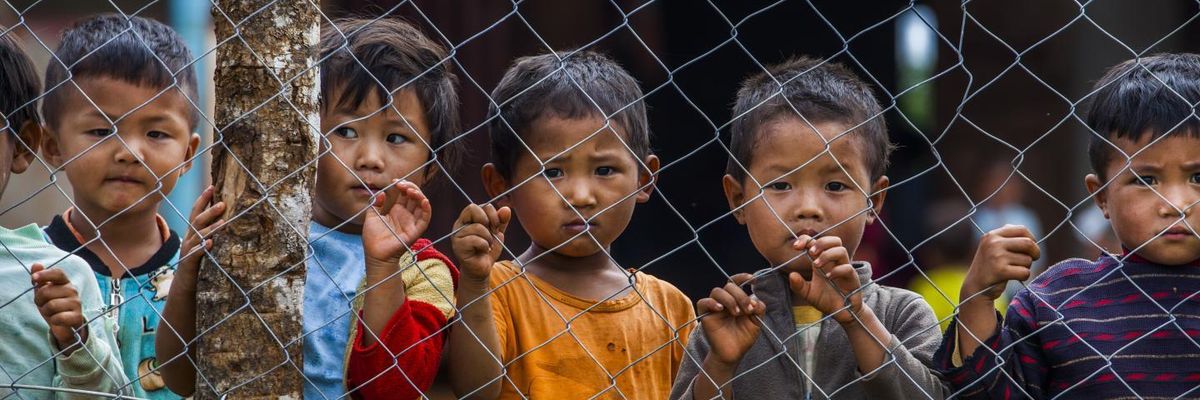
Burmese refugees in camps and those resettled abroad, writes Dahgaypaw, "are calling for the world to act, but is anyone listening? While everyone has the right to protection and freedom from the risk of death and torture, now more than ever, we need a world that will sustainably uphold the rights of all."
Sunday, June 20 marked the United Nations' World Refugee Day, a time to highlight refugees worldwide, applaud their courage, and highlight their contributions. This year's theme, "Heal, Learn, Shine," recognized the challenges of COVID-19, the need to uphold the right to education, and how refugees persevere despite the challenges presented to them. According to the UN, there are greater than 1.1 million refugees from my home country of Burma, making it one of the top five source countries of refugees worldwide. While many may celebrate World Refugee Day, those forced to flee Burma continue to witness repeated mass atrocities.
As the number of people fleeing the Burmese military's violence has only increased since the coup, seeking refuge in Thailand has proven increasingly difficult for Burma's ethnic minority refugees as Thai officials fear the spread of COVID-19 and strictly police their borders.
"Despite impossible conditions and a consistent lack of international support, there are numerous examples of how refugees from Burma impact communities around our world."
Estimates report that in March and April, close to 3,000 Karen internally displaced persons (IDPs) crossed the Salween River to seek refuge in Thailand, only to be held by Thai officials until conditions were deemed secure enough to turn them away. Similarly, more than 100,000 Karenni civilians escaping conflict in their home state were met with force at the Thai-Burma border, where officials attempted to push back thousands.
Safety and security for refugees are immensely rare, even on the occasion that they are accepted by host countries. Refugees are uniquely affected by a number of factors, and, during a pandemic, are disproportionately impacted by COVID-19. Often crammed into tight living situations with inadequate hygiene facilities, the ability to escape COVID-19's grip is almost impossible for Burma's refugees. With more than 1 million Rohingya refugees living in
Bangladesh, estimates report close to 1,369 cases of COVID-19 in Rohingya refugee camps. Vaccine supplies are also far from refugees' reach-- as of June 1, no COVID-19 vaccines have been distributed in Cox's Bazar.
Education remains unavailable to refugees from Burma and across the diaspora in Bangladesh, India, Thailand, and Malaysia. While some children are able to attend small, community-run schools, the general lack of educational opportunities forces entire generations from Burma to face their future unprepared. A May 2021 study reported that 68 percent of Rohingya families have at least one child, aged 5 to 17, that has been offered no opportunities to gain an education.
Despite impossible conditions and a consistent lack of international support, there are numerous examples of how refugees from Burma impact communities around our world. The Chin Human Rights Organization has empowered thousands of Chin refugees in India and Malaysia to help them reach their full potential. With help from the Rohingya Women Development Network, Rohingya women in Malaysia are taught about their rights and the key roles they play in society. Internally displaced Karenni and their refugee diaspora are supported by the collective work of the Karenni Civil Society Network, a Karenni-led effort that also speaks out against the human rights abuses experienced by ethnic minorities across Burma. While these efforts are worthy of celebration and highlight what refugees contribute to our communities, this impact would be amplified to the greatest extent if these individuals could bring their talent home to Burma for the benefit of all.
It is difficult for civilians in Burma to heal when the Burma army continues to brutalize its own people. However, despite their pain, refugees and IDPs are learning to empower themselves. However, they cannot do this alone. If the situation in Burma does not improve, the reported 175,000 internally displaced men, women, and children--a figure that is doubtlessly a conservative estimate--will likely become refugees.
The Burmese military's impunity weighs heavily on the minds of refugees in Southeast Asia and IDPs in Burma who look to their home country and wonder if their chance to safely return is slipping away. Refugees in camps and those resettled abroad are calling for the world to act, but is anyone listening? While everyone has the right to protection and freedom from the risk of death and torture, now more than ever, we need a world that will sustainably uphold the rights of all.
The international community should be compelled to take swift action to pressure the Burmese military to allow unconditional humanitarian access to internally displaced people. Cross-border aid is also essential and beyond crucial to the survival of the hundreds of thousands living in makeshift and refugee camps. Ending the illegal junta in Burma is the first step to securing human rights-based livelihoods for refugees and the millions of civilians who have long deserved peace and democratic rule. Only then can we collectively begin a new and more equitable process to heal, learn, and shine.
Dear Common Dreams reader, It’s been nearly 30 years since I co-founded Common Dreams with my late wife, Lina Newhouser. We had the radical notion that journalism should serve the public good, not corporate profits. It was clear to us from the outset what it would take to build such a project. No paid advertisements. No corporate sponsors. No millionaire publisher telling us what to think or do. Many people said we wouldn't last a year, but we proved those doubters wrong. Together with a tremendous team of journalists and dedicated staff, we built an independent media outlet free from the constraints of profits and corporate control. Our mission has always been simple: To inform. To inspire. To ignite change for the common good. Building Common Dreams was not easy. Our survival was never guaranteed. When you take on the most powerful forces—Wall Street greed, fossil fuel industry destruction, Big Tech lobbyists, and uber-rich oligarchs who have spent billions upon billions rigging the economy and democracy in their favor—the only bulwark you have is supporters who believe in your work. But here’s the urgent message from me today. It's never been this bad out there. And it's never been this hard to keep us going. At the very moment Common Dreams is most needed, the threats we face are intensifying. We need your support now more than ever. We don't accept corporate advertising and never will. We don't have a paywall because we don't think people should be blocked from critical news based on their ability to pay. Everything we do is funded by the donations of readers like you. When everyone does the little they can afford, we are strong. But if that support retreats or dries up, so do we. Will you donate now to make sure Common Dreams not only survives but thrives? —Craig Brown, Co-founder |
Sunday, June 20 marked the United Nations' World Refugee Day, a time to highlight refugees worldwide, applaud their courage, and highlight their contributions. This year's theme, "Heal, Learn, Shine," recognized the challenges of COVID-19, the need to uphold the right to education, and how refugees persevere despite the challenges presented to them. According to the UN, there are greater than 1.1 million refugees from my home country of Burma, making it one of the top five source countries of refugees worldwide. While many may celebrate World Refugee Day, those forced to flee Burma continue to witness repeated mass atrocities.
As the number of people fleeing the Burmese military's violence has only increased since the coup, seeking refuge in Thailand has proven increasingly difficult for Burma's ethnic minority refugees as Thai officials fear the spread of COVID-19 and strictly police their borders.
"Despite impossible conditions and a consistent lack of international support, there are numerous examples of how refugees from Burma impact communities around our world."
Estimates report that in March and April, close to 3,000 Karen internally displaced persons (IDPs) crossed the Salween River to seek refuge in Thailand, only to be held by Thai officials until conditions were deemed secure enough to turn them away. Similarly, more than 100,000 Karenni civilians escaping conflict in their home state were met with force at the Thai-Burma border, where officials attempted to push back thousands.
Safety and security for refugees are immensely rare, even on the occasion that they are accepted by host countries. Refugees are uniquely affected by a number of factors, and, during a pandemic, are disproportionately impacted by COVID-19. Often crammed into tight living situations with inadequate hygiene facilities, the ability to escape COVID-19's grip is almost impossible for Burma's refugees. With more than 1 million Rohingya refugees living in
Bangladesh, estimates report close to 1,369 cases of COVID-19 in Rohingya refugee camps. Vaccine supplies are also far from refugees' reach-- as of June 1, no COVID-19 vaccines have been distributed in Cox's Bazar.
Education remains unavailable to refugees from Burma and across the diaspora in Bangladesh, India, Thailand, and Malaysia. While some children are able to attend small, community-run schools, the general lack of educational opportunities forces entire generations from Burma to face their future unprepared. A May 2021 study reported that 68 percent of Rohingya families have at least one child, aged 5 to 17, that has been offered no opportunities to gain an education.
Despite impossible conditions and a consistent lack of international support, there are numerous examples of how refugees from Burma impact communities around our world. The Chin Human Rights Organization has empowered thousands of Chin refugees in India and Malaysia to help them reach their full potential. With help from the Rohingya Women Development Network, Rohingya women in Malaysia are taught about their rights and the key roles they play in society. Internally displaced Karenni and their refugee diaspora are supported by the collective work of the Karenni Civil Society Network, a Karenni-led effort that also speaks out against the human rights abuses experienced by ethnic minorities across Burma. While these efforts are worthy of celebration and highlight what refugees contribute to our communities, this impact would be amplified to the greatest extent if these individuals could bring their talent home to Burma for the benefit of all.
It is difficult for civilians in Burma to heal when the Burma army continues to brutalize its own people. However, despite their pain, refugees and IDPs are learning to empower themselves. However, they cannot do this alone. If the situation in Burma does not improve, the reported 175,000 internally displaced men, women, and children--a figure that is doubtlessly a conservative estimate--will likely become refugees.
The Burmese military's impunity weighs heavily on the minds of refugees in Southeast Asia and IDPs in Burma who look to their home country and wonder if their chance to safely return is slipping away. Refugees in camps and those resettled abroad are calling for the world to act, but is anyone listening? While everyone has the right to protection and freedom from the risk of death and torture, now more than ever, we need a world that will sustainably uphold the rights of all.
The international community should be compelled to take swift action to pressure the Burmese military to allow unconditional humanitarian access to internally displaced people. Cross-border aid is also essential and beyond crucial to the survival of the hundreds of thousands living in makeshift and refugee camps. Ending the illegal junta in Burma is the first step to securing human rights-based livelihoods for refugees and the millions of civilians who have long deserved peace and democratic rule. Only then can we collectively begin a new and more equitable process to heal, learn, and shine.
Sunday, June 20 marked the United Nations' World Refugee Day, a time to highlight refugees worldwide, applaud their courage, and highlight their contributions. This year's theme, "Heal, Learn, Shine," recognized the challenges of COVID-19, the need to uphold the right to education, and how refugees persevere despite the challenges presented to them. According to the UN, there are greater than 1.1 million refugees from my home country of Burma, making it one of the top five source countries of refugees worldwide. While many may celebrate World Refugee Day, those forced to flee Burma continue to witness repeated mass atrocities.
As the number of people fleeing the Burmese military's violence has only increased since the coup, seeking refuge in Thailand has proven increasingly difficult for Burma's ethnic minority refugees as Thai officials fear the spread of COVID-19 and strictly police their borders.
"Despite impossible conditions and a consistent lack of international support, there are numerous examples of how refugees from Burma impact communities around our world."
Estimates report that in March and April, close to 3,000 Karen internally displaced persons (IDPs) crossed the Salween River to seek refuge in Thailand, only to be held by Thai officials until conditions were deemed secure enough to turn them away. Similarly, more than 100,000 Karenni civilians escaping conflict in their home state were met with force at the Thai-Burma border, where officials attempted to push back thousands.
Safety and security for refugees are immensely rare, even on the occasion that they are accepted by host countries. Refugees are uniquely affected by a number of factors, and, during a pandemic, are disproportionately impacted by COVID-19. Often crammed into tight living situations with inadequate hygiene facilities, the ability to escape COVID-19's grip is almost impossible for Burma's refugees. With more than 1 million Rohingya refugees living in
Bangladesh, estimates report close to 1,369 cases of COVID-19 in Rohingya refugee camps. Vaccine supplies are also far from refugees' reach-- as of June 1, no COVID-19 vaccines have been distributed in Cox's Bazar.
Education remains unavailable to refugees from Burma and across the diaspora in Bangladesh, India, Thailand, and Malaysia. While some children are able to attend small, community-run schools, the general lack of educational opportunities forces entire generations from Burma to face their future unprepared. A May 2021 study reported that 68 percent of Rohingya families have at least one child, aged 5 to 17, that has been offered no opportunities to gain an education.
Despite impossible conditions and a consistent lack of international support, there are numerous examples of how refugees from Burma impact communities around our world. The Chin Human Rights Organization has empowered thousands of Chin refugees in India and Malaysia to help them reach their full potential. With help from the Rohingya Women Development Network, Rohingya women in Malaysia are taught about their rights and the key roles they play in society. Internally displaced Karenni and their refugee diaspora are supported by the collective work of the Karenni Civil Society Network, a Karenni-led effort that also speaks out against the human rights abuses experienced by ethnic minorities across Burma. While these efforts are worthy of celebration and highlight what refugees contribute to our communities, this impact would be amplified to the greatest extent if these individuals could bring their talent home to Burma for the benefit of all.
It is difficult for civilians in Burma to heal when the Burma army continues to brutalize its own people. However, despite their pain, refugees and IDPs are learning to empower themselves. However, they cannot do this alone. If the situation in Burma does not improve, the reported 175,000 internally displaced men, women, and children--a figure that is doubtlessly a conservative estimate--will likely become refugees.
The Burmese military's impunity weighs heavily on the minds of refugees in Southeast Asia and IDPs in Burma who look to their home country and wonder if their chance to safely return is slipping away. Refugees in camps and those resettled abroad are calling for the world to act, but is anyone listening? While everyone has the right to protection and freedom from the risk of death and torture, now more than ever, we need a world that will sustainably uphold the rights of all.
The international community should be compelled to take swift action to pressure the Burmese military to allow unconditional humanitarian access to internally displaced people. Cross-border aid is also essential and beyond crucial to the survival of the hundreds of thousands living in makeshift and refugee camps. Ending the illegal junta in Burma is the first step to securing human rights-based livelihoods for refugees and the millions of civilians who have long deserved peace and democratic rule. Only then can we collectively begin a new and more equitable process to heal, learn, and shine.

