

SUBSCRIBE TO OUR FREE NEWSLETTER
Daily news & progressive opinion—funded by the people, not the corporations—delivered straight to your inbox.
5
#000000
#FFFFFF
To donate by check, phone, or other method, see our More Ways to Give page.
Daily news & progressive opinion—funded by the people, not the corporations—delivered straight to your inbox.

"Every option on the table from the MAGA House majority leaves millions of vulnerable seniors worse off—either extreme cuts against seniors' health and food security, or a manufactured default crisis that delays Social Security checks."
As the U.S. edges closer to a self-inflicted economic disaster whose most immediate cause is House Republicans' refusal to raise the debt ceiling unless President Joe Biden agrees to slash social programs and give the fossil fuel industry more handouts, the earliest potential victims of the GOP's hostage situation—which could provoke the nation's first-ever default as early as June 1—are coming into view.
"Seniors nationwide are on the frontlines of the fight to raise the debt ceiling, because if the federal government can't make a June 2 payment slated for Social Security recipients, the oldest beneficiaries—those over 88—and people with disabilities will be the first to suffer," The Washington Post reported Wednesday amid ongoing negotiations. "Roughly $98 billion worth of benefits, including Medicare, Medicaid, and military and civil retirement payments, are scheduled to go out in the first two days of June, according to an analysis by the Bipartisan Policy Center."
"Social Security benefits are distributed four times a month, but the earliest round of payments go to retirees older than 88 years, as well as people with disabilities and seniors with especially low incomes—and less than $2,000 in assets—who are eligible for Supplemental Security Income (SSI)," the Post noted. "Even a weeklong holdup, economists say, could be devastating for the roughly 27 million Americans who rely on Social Security for most of their income. Food insecurity and poverty rates will almost certainly rise, and people will probably forgo medical treatments, as families struggle to make do without necessities."
"There's no fallback if these checks are late," Kathleen Romig, director of Social Security and disability policy at the Center on Budget and Policy Priorities, told the newspaper. "These are people who are literally not allowed to have emergency savings."
Progressives have long accused House Republicans, who know full well that failing to increase the federal government's arbitrary and arguably unconstitutional borrowing limit prior to the quickly approaching default "X-date" would unleash devastating impacts domestically and globally, of weaponizing the nation's credit rating to advance their reactionary agenda. With a five-seat House majority and the ability of any party member to introduce a motion to remove the speaker—a rule the far-right Freedom Caucus secured in exchange for electing Rep. Kevin McCarthy (R-Calif.) to the role—the GOP has significant leverage over the fate of the U.S. and world economy.
Earlier this week, Rep. Matt Gaetz (R-Fla.) admitted that his party, led by the House Freedom Caucus to which he belongs, is exploiting the ongoing standoff in a bid to gut the nation's already meager welfare state and weaken its embryonic climate policies.
Referring to the austerity-or-default bill House Republicans approved last month, Gaetz told reporters, "My conservative colleagues for the most part support Limit, Save, Grow, and they don't feel like we should negotiate with our hostage."
Soon after the passage of the Limit, Save, Grow Act, the White House abandoned Biden's earlier refusal to hold debt ceiling negotiations and began signaling its openness to certain GOP proposals, only for McCarthy to make even more extreme ransom demands and constantly move the goal posts.
As the Post reported: "Republicans in Congress have maintained that they don't want to cut Social Security benefits, though at least one recent budget blueprint calls for raising the eligibility age for full retirement from 67 to 70 to account for longer life expectancies. The GOP has also proposed a host of cuts and additional work requirements for other federal benefits, such as Medicaid and food stamps, that experts say would have an outsize impact on the country's seniors."
In a Thursday statement, Accountable.US spokesperson Liz Zelnick said that "every option on the table from the MAGA House majority leaves millions of vulnerable seniors worse off—either extreme cuts against seniors' health and food security, or a manufactured default crisis that delays Social Security checks many can't live without."
Biden and House Republicans have yet to reach an agreement. According to Thursday reporting from The Associated Press on the contours of a possible deal, the GOP may abandon its demand to further boost military spending in favor of maintaining the already historically high levels proposed by Biden, while Biden may agree to roll back Internal Revenue Service (IRS) funding if the GOP lets his administration funnel that money into the social safety net.
The fact that Capitol Hill's deficit hawks are eager to attack the poor but don't support reducing the ever-expanding Pentagon budget or hiking taxes on corporations and the rich to increase revenue exposes the "fraudulent" nature of their current crusade, journalist David Sirota tweeted.
Rescinding the recently enacted IRS funding boost would help wealthy households evade taxes, adding an estimated $114 billion to the federal deficit. Meanwhile, House Republicans are reportedly working on legislation that would make permanent certain provisions in the 2017 Tax Cuts and Jobs Act, a Trump-era law whose benefits have flowed overwhelmingly to the top 1% while adding hundreds of billions of dollars to the deficit.
On Thursday, Rep. Rashida Tlaib (D-Mich.) sounded the alarm about House Republicans leaving the Capitol with no debt limit agreement reached just days before the X-date.
Tlaib, a member of the Congressional Progressive Caucus (CPC), was echoing warnings made Wednesday by CPC Chair Pramila Jayapal (D-Wash.) and Deputy Chair Ilhan Omar (D-Minn.), both of whom said that some Republicans are eager to create an economic crisis because they think it would help their electoral chances next year.
Notably, the latest episode of fiscal brinkmanship could have been avoided had Democrats listened to Sen. Elizabeth Warren (D-Mass.) and other progressives who called on the party to raise the debt ceiling—or abolish it altogether—when it still controlled both chambers of Congress last year.
Corporate Democrats refused to act during the lame-duck session despite Warren's warning that GOP lawmakers desperate to win the White House in 2024 will "blow up the economy" and run ads blaming Biden for it.
A growing number of congressional lawmakers—including prominent progressives such as Sen. Bernie Sanders (I-Vt.)—have implored Biden to invoke his 14th Amendment authority to unilaterally avert a default, an option the president has thus far resisted.
On Thursday, Social Security Works and Indivisible led more than 30 progressive advocacy groups in urging Biden to take executive action to disarm the debt ceiling.
"The choice facing the executive branch is clear: Act or default; act or increase the suffering of millions; act or go into economic tailspin," says the letter. "If Republicans in Congress prove unwilling or unable to produce the votes for a bill that avoids default without catastrophic cuts to critical programs, it will fall to you to protect working families from their economic sabotage."
"You have promised to prevent a default, without granting legitimacy to the legislative hostage-taking being undertaken by congressional Republicans," the letter concludes. "Fortunately, the 14th Amendment provides a clear route for you to deliver on that promise. We will stand with you should that route prove necessary."
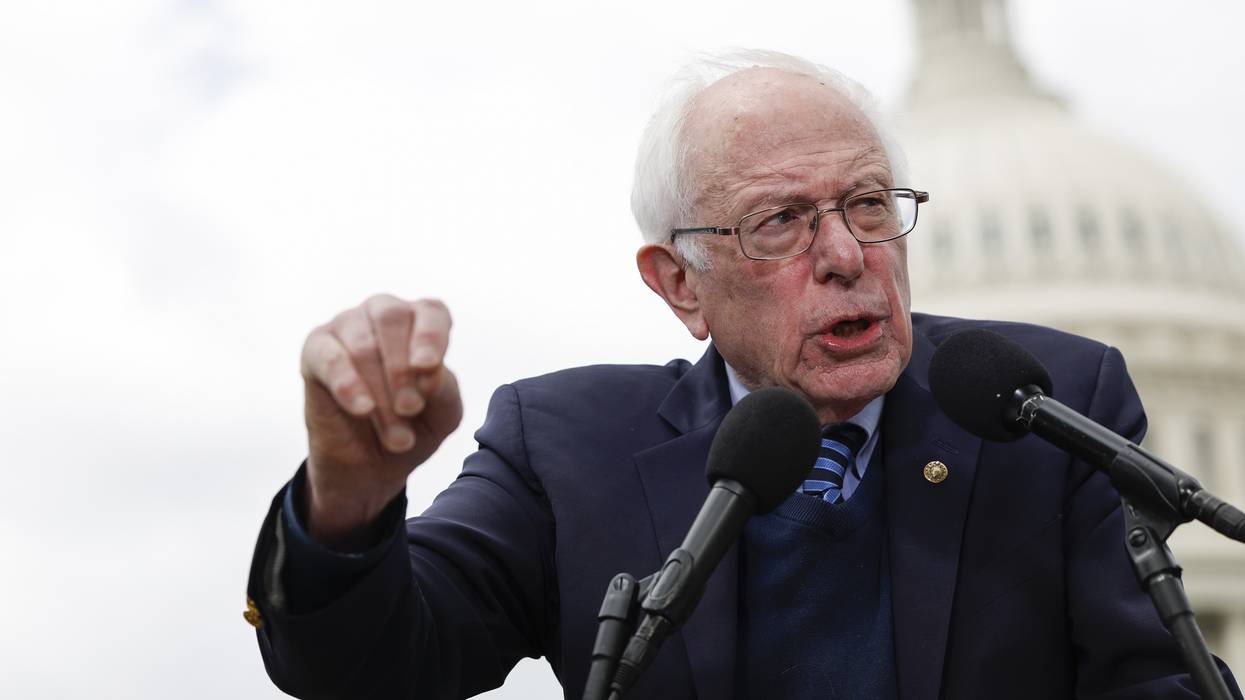
Doing so, argues the U.S. senator, will allow the country "to pay its bills on time and without delay, prevent an economic catastrophe, and prevent huge cuts to healthcare, education, childcare, affordable housing, nutrition assistance, and the needs of our veterans."
Just over a week away from U.S. House Republicans potentially forcing an economically devastating default by refusing to raise the debt ceiling, Sen. Bernie Sandersadvised for President Joe Biden to take urgent unilateral action by invoking the 14th Amendment.
"The willingness of Republicans to hold the world's economy
hostage to their Draconian and cruel demands has made it extremely difficult to enact a bipartisan budget deal at this time," Sanders (I-Vt.) wrote in a Fox News op-ed. "So where do we go from here?"
"In my view, there is only one option," he argued, explaining that Biden " has the authority and the responsibility" to prevent a default under the 14th Amendment to the U.S. Constitution, which says in part that "the validity of the public debt of the United States... shall not be questioned."
"This is a constitutional guarantee that the U.S. will always pay all its debts, period," Sanders said, adding:
This is not a radical idea. Making sure that the United States continues to pay its bills regardless of whether the statutory increase in the debt ceiling is raised or not is an idea that has been supported by Republicans and Democrats.
Back in 2016, then-President Donald Trump was correct when he said: "This is the United States government. First of all, you never have to default because you print the money."
Using the 14th Amendment would allow the United States to continue to pay its bills on time and without delay, prevent an economic catastrophe, and prevent huge cuts to healthcare, education, childcare, affordable housing, nutrition assistance, and the needs of our veterans.
It must be exercised.
Americans are already living with "unprecedented wealth and income inequality," corporations raking in huge profits from jacking up prices, and the world's highest prescription drug costs, Sanders noted. Meanwhile, GOP lawmakers are plotting more tax cuts for the rich and demanding additional military spending—despite the hundreds of billions of dollars the U.S. already pours into the Pentagon and recent revelations about private military contractors' price gouging.
"The hypocrisy of Republicans in Washington is truly breathtaking," the senator charged, emphasizing that the GOP's proposed tax breaks for the wealthy and boosted military spending would collectively increase the deficit they claim to care about by trillions of dollars.
"While defaulting on our nation's debt would be a disaster so would enacting the budget Republicans passed in the House in April," Sanders asserted. In the op-ed, he also detailed some estimated impacts from cuts to nonmilitary discretionary spending in the GOP's so-called Limit, Save, Grow Act:
Sanders is among a growing number of progressive lawmakers and legal scholars who have urged Biden to reject the GOP's push for "massive cuts on the needs of working people, the elderly, the children, the sick, and the poor," and pointed to the 14th Amendment.
The head of the American Federation of Government Employees
joined in Tuesday with a letter to the White House—which came as U.S. District Judge Richard Stearns held a conference for a case involving the 14th Amendment that the National Association of Government Employees filed earlier this month against Biden and Treasury Secretary Janet Yellen.
Stearns, an appointee of former President Bill Clinton, ordered the U.S. Department of Justice to file a document that lays out the DOJ's views of Biden's authority relating to the public debt by May 30 and scheduled a hearing for May 31, the eve of the so-called X-date, or when Yellen warns the government could run out of money to pay its bills.

"A key player in the extreme MAGA House majority now admits what anyone paying attention has suspected all along," said one watchdog group.
Through their actions in recent months, House Republicans have made clear that they view the debt ceiling standoff as a hostage situation that they can exploit to advance their political agenda—which includes draconian cuts to social programs and massive handouts to the fossil fuel industry.
On Tuesday, just days before the June 1 "X-date," Rep. Matt Gaetz (R-Fla.) came right out and admitted it, telling reporters that "my conservative colleagues for the most part support Limit, Save, Grow, and they don't feel like we should negotiate with our hostage."
Semafor's Joseph Zeballos-Roig published audio of Gaetz's comments on Twitter:
The Limit, Save, Grow Act is legislation that Republicans passed in a party-line vote last month, staking out their position that the debt ceiling shouldn't be raised unless rich tax cheats are protected and an axe is taken to spending on federal nutrition assistance, Medicaid, affordable housing, childcare, and other key programs.
The House GOP, officially led by Speaker Kevin McCarthy (R-Calif.) but heavily influenced by the far-right Freedom Caucus, has held to that position, threatening to force a debt default and unleash global economic chaos unless their demands are met.
Gaetz, a member of the House Freedom Caucus, suggested Tuesday that the deal McCarthy struck with his far-right flank to secure the speakership—specifically the rule allowing just one lawmaker to call a vote to unseat the speaker—has kept the Republican leader committed to debt ceiling brinkmanship.
"I believe the one-person motion to vacate has given us the best version of Speaker McCarthy and I think he's doing a good job," Gaetz said Tuesday.
Democratic lawmakers and progressive watchdog groups saw Gaetz's remarks as a frank acknowledgment of what they've said since the start of the debt ceiling standoff.
"A key player in the extreme MAGA House majority now admits what anyone paying attention has suspected all along: Congress Republicans consider the U.S. economy and millions of jobs a 'hostage' while making unreasonable austerity demands that especially hurt low-income veterans and seniors," said Jeremy Funk, spokesman for Accountable.US. "Anyone who doubts the looming default crisis and recession is not entirely manufactured by the MAGA majority need only give the fringe Freedom Caucus a call and hear it from the horse's mouth."
Rep. Brendan Boyle (D-Pa.), the top Democrat on the House Budget Committee, wrote on Twitter that "Matt Gaetz just admitted Republicans are holding the U.S. economy hostage."
"The pro-default extremists in the GOP are willing to risk economic calamity to force their cruel cuts on American families," Boyle wrote. "House Democrats will not let that happen."
Boyle is leading a longshot procedural effort known as a discharge petition to force a vote on a debt ceiling increase as the Republican leadership remains committed to pursuing deep spending cuts that Democrats in the House and Senate have dismissed as nonstarters.
Not a single House Republican has signed the discharge petition, and two Democrats—Reps. Jared Golden of Maine and Ed Case of Hawaii—have yet to sign.
With negotiations between the White House and Republicans at a standstill, a growing number of congressional lawmakers—including prominent progressives such as Sens. Bernie Sanders (I-Vt.) and Elizabeth Warren (D-Mass.)—are imploring President Joe Biden to use his 14th Amendment authority to unilaterally avert a default, an option the president has thus far resisted.
Rep. Alexandria Ocasio-Cortez (D-N.Y.), who has said the 14th Amendment "should be on the table," pointed to Gaetz's comments Tuesday as further confirmation that Republicans are not negotiating in good faith.
"I want to be clear about what the Republican Party is taking hostage. It is not Democrats. It is the entire U.S. economy," Ocasio-Cortez told CNN late Tuesday. "It is extreme, and it is not acceptable."
Rep. Ilhan Omar (D-Minn.) added on Twitter that Gaetz and the GOP "are playing a dangerous game and, like every hostage situation, someone is likely going to be hurt."
"We have to rescue the American people," she wrote.
An earlier version of this story incorrectly described Rep. Brendan Boyle (D-Pa.) as a Republican.
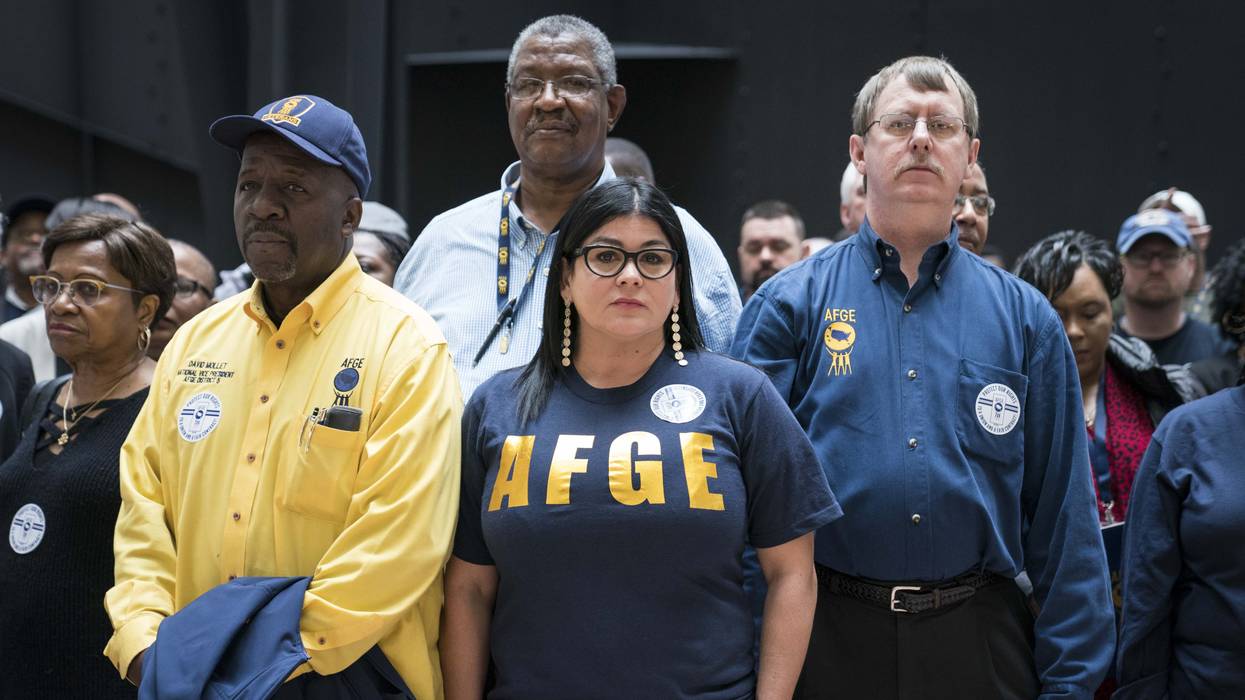
"I urge you not to yield to threats but instead to heed the advice of many legal scholars who have concluded that you have the inherent power, and indeed the duty, to avoid a default," wrote AFGE's leader.
A union leader representing over 750,000 government employees on Tuesday pressured U.S. President Joe Biden to reject congressional Republicans' demands for spending cuts in exchange for raising the debt ceiling and to avert an economically devastating default by invoking the 14th Amendment to the Constitution.
As Treasury Secretary Janet Yellen has continued to warn that the federal government could run out of money to pay its bills as early as June 1, some legal scholars and progressive lawmakers have encouraged Biden to combat the GOP's economic hostage-taking by invoking the section of the amendment which states that "the validity of the public debt... shall not be questioned."
The American Federation of Government Employees, AFL-CIO (AFGE) joined those calls on Tuesday, with national president Everett Kelley writing to Biden to call for "unilateral action to ensure that the government continues to pay its bills and fulfill its obligations after the Treasury exhausts all extraordinary debt measures within the next several days."
"Our union members are the doctors, nurses, firefighters, border patrol agents, corrections officers, federal police, food safety inspectors, transportation security officers, and other public servants who keep the government running around the clock," Kelley noted. "They served tirelessly throughout the pandemic, defending the public, often at great personal risk. More than a few gave their lives to their country. It would be unconscionable now to agree to a budget deal that once again sacrifices their well-being on the altar of fiscal austerity."
"We urge you not to agree to spending caps because, inevitably, they undermine the ability of federal agencies to carry out their missions."
"We urge you not to agree to spending caps because, inevitably, they undermine the ability of federal agencies to carry out their missions and result in further unwarranted cuts to federal jobs and compensation," the union leader stressed, taking aim at a key demand of House Speaker Kevin McCarthy (R-Calif.) and fellow Republicans, who passed their so-called Limit, Save, Grow Act late last month.
Noting that "many federal agencies that deliver services directly to the public, like the Social Security Administration, are already at the breaking point from years of inadequate funding," Kelley warned that they "can in no way withstand further budget cuts of the magnitude proposed by House Republicans in the morally bankrupt 'Limit, Save, Grow Act.' This bill, even in the most diluted form, would be an economic and humanitarian calamity."
"Clearly a default must be avoided at all costs," he added. "I urge you not to yield to threats but instead to heed the advice of many legal scholars who have concluded that you have the inherent power, and indeed the duty, to avoid a default under the Constitution's 14th Amendment. You have additional authorities to mint platinum coins under 31 USC § 5112. Please use these authorities now before it is too late."
Before returning to Washington, D.C. to continue negotiations with McCarthy, Biden told reporters on Sunday that "I think we have the authority" to invoke the 14th Amendment but given the potential for a legal challenge," the question of whether it could be done in time to prevent a default "is unresolved."
Politico reported Friday that some Biden aides worry that "even the appearance of more seriously considering the 14th Amendment could blow up talks that are already quite delicate," and actually doing so could "trigger a pitched legal battle, undermine global faith in U.S. creditworthiness, and damage the economy."
Kelley's letter came as a federal judge scheduled a debt limit lawsuit hearing for May 31, the day before the so-called X-date. That case—filed by another union, the National Association of Government Employees, against Biden and Yellen—cites the 14th Amendment and aims to have the debt limit statute deemed unconstitutional.

"The problem is, it would have to be litigated," the president said of the strategy. "I don't think that solves our problem now."
After meeting with congressional leaders at the White House Tuesday afternoon, U.S. President Joe Biden told reporters he has been "considering" invoking the 14th Amendment to the Constitution to avert a catastrophic default, but he also suggested that doing so won't solve the current battle with House Republicans.
With Treasury Secretary Janet Yellen and others warning that the U.S. could face its first-ever default as soon as June 1, some legal experts and members of Congress have promoted unilateral action by Biden—such as minting a $1 trillion coin or citing the 14th Amendment, which says in part that the validity of the public debt "shall not be questioned," to justify continuing to pay the nation's bills even if GOP lawmakers won't raise the official borrowing limit.
"I have been considering the 14th Amendment" and Laurence Tribe "thinks that it would be legitimate," Biden said Tuesday evening, describing the Harvard University professor emeritus as "a man I have enormous respect for" and "who advised me for a long time."
"But the problem is, it would have to be litigated," the president said of the strategy, which Tribe advocated for in an opinion piece for The New York Times on Sunday. Biden later added that "I don't think that solves our problem now."
The president signaled that he is looking into asking the federal judiciary to weigh in on the 14th Amendment debate "months down the road," after settling the ongoing dispute with House Speaker Kevin McCarthy (R-Calif.).
House Republicans last month passed their so-called Limit, Save, Grow Act, which would raise the debt ceiling by $1.5 trillion or until March 31, 2024, whichever comes first, but also impose dramatic spending cuts that would affect working families. Senate Majority Leader Chuck Schumer (D-N.Y.) has called the legislation "dead on arrival."
Both McCarthy and Schumer were at the White House for Biden's 4:00 pm ET meeting, along with House Minority Leader Hakeem Jeffries (D-N.Y.) and Senate Minority Leader Mitch McConnell (R-Ky.).
Biden, who unveiled his budget blueprint in March, said that "I told congressional leaders that I'm prepared to begin a separate discussion about my budget and spending priorities, but not under the threat of default."
Schumer said after the meeting that "we explicitly asked Speaker McCarthy, would he take default off the table. He refused. President Biden said he would; Leader Jeffries said he would; of course, I said I would, but he wouldn't take it off the table."
"The bottom line is very simple: There are large differences between the parties," he continued, flanked by Jeffries. "If you look at what President Biden had proposed and you look at what Speaker McCarthy has proposed, they're very, very different. We can try to come together on those, in a budget and appropriations process, but to use the risk of default—with all the dangers that has for the American people—as a hostage and say it's my way or no way, or mostly my way or no way, is dangerous."
McConnell claimed that "the United States is not going to default; it never has and it never will," but also made clear that Senate Republicans aren't interested in a clean debt limit increase and stressed that Biden and McCarthy must reach an agreement.
McCarthy, meanwhile, said that "everybody in this meeting reiterated the positions they were at. I didn't see any new movement."
According to Biden, the meeting attendees' staffs will continue to communicate this week and another meeting is set for Friday.
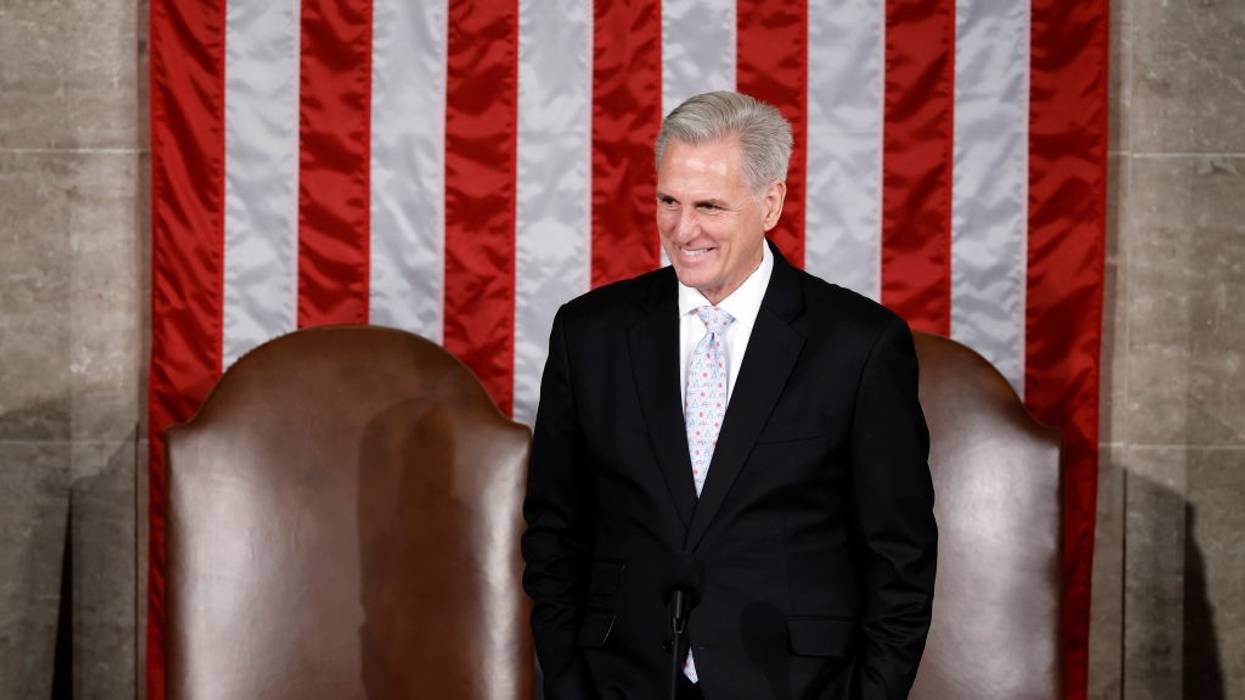
"This default would be a crisis for our economy and our democracy, and it threatens to devastate communities across the country."
Ahead of congressional leaders' Tuesday meeting at the White House, economists and other experts have renewed warnings about what the GOP's threatened first-ever U.S. default—or even coming precariously close to it—could mean for the country.
"Any time would be a bad time to default, but right now, in particular, would be pretty catastrophic," said Mike Konczal, director of macroeconomic analysis at the Roosevelt Institute, during a Monday press conference. "The conservative agenda right now is to try to reduce the standard of living for many people without having to have their fingerprints on it."
Openly backed by most Senate Republicans, the House GOP—led by Speaker Kevin McCarthy (R-Calif.)—is pushing for sizable cuts to federal spending, as made clear in the so-called Limit, Save, Grow Act they passed last month. The bill, which Senate Majority Leader Chuck Schumer (D-N.Y.) has called "dead on arrival," would raise the debt ceiling by $1.5 trillion or until March 31, 2024, either way with severe austerity and on the backs of working people.
After months of zero progress on increasing the debt limit and amid estimates from Treasury Secretary Janet Yellen and others that the U.S. government could run out of money to pay its bills as soon as June 1, President Joe Biden is set to host McCarthy, Schumer, House Minority Leader Hakeem Jeffries (D-N.Y.), and Senate Minority Leader Mitch McConnell (R-Ky.) at 4:00 pm ET.
"We cannot allow extremists in the House to make devastating ransom demands in exchange for not cratering our economy."
"President Biden will discuss the urgency of preventing default and stress that Congress must take action to avoid default without conditions," Michael Kikukawa, a White House spokesperson, said in a statement to The Washington Post early Tuesday. "He will discuss how to initiate a separate process to address the budget and FY2024 appropriations."
Despite similar votes under GOP presidents, House Republicans keep refusing to pass a clean bill raising the nation's arbitrary borrowing limit—and the budget blueprint Biden unveiled in March, featuring major social investments paid for with tax hikes targeting rich individuals and corporations, differs dramatically from GOP priorities, leaving few optimistic about the meeting.
Still, Claire Guzdar, a spokesperson for the ProsperUS coalition—which is made up of over 85 progressive groups—declared Tuesday that "Congress and the White House must move quickly to pass a clean debt limit bill before it's too late. We cannot allow extremists in the House to make devastating ransom demands in exchange for not cratering our economy—period."
"The Republican House majority's shameful default bill is completely unworkable. Their plan is full of wildly unpopular and damaging cuts to healthcare, food assistance, clean energy jobs, and more," said Guzdar. "This bill would be devastating for workers and the economy while doing nothing to make corporations and the wealthy pay their fair share. Negotiating on the debt limit should be a nonstarter at any time and rejected immediately as an egregious attempt to push our economy into crisis."
Experts warn that "we can't afford to undo the extraordinary economic progress we've made in the last two years," as Groundwork Collaborative executive director Lindsay Owens said during the Monday media briefing with other economists.
"President Biden should not agree to negotiate a deal on the debt ceiling that increases unemployment or slows growth—not when there [is] a myriad of easier and softer ways to avoid default," she argued. "We're at a 53-year record low in unemployment. It would be an incredible tragedy to undermine the gains that we're finally seeing in the labor market, particularly for marginalized workers."
Similarly stressing that "the labor market is actually starting to produce gains for workers who tend to be the last hired and first fired," Demos chief of programs Angela Hanks said that "the dangerous brinkmanship over the debt ceiling and the extremist position that Speaker McCarthy has staked out really poses a deep threat to that progress and threatens to trigger a recession."
Republicans' proposed spending cuts "will be borne by people who are already marginalized… who cannot afford to have another economic crisis triggered by our politics," Hanks warned. "This default would be a crisis for our economy and our democracy, and it threatens to devastate communities across the country."
"The dangerous brinkmanship over the debt ceiling and the extremist position that Speaker McCarthy has staked out really poses a deep threat to that progress and threatens to trigger a recession."
The high stakes have led some to urge the White House to take unilateral action if GOP lawmakers continue to hold the global economy hostage. Options include minting a platinum coin worth $1 trillion and invoking a section of the 14th Amendment to the U.S. Constitution that states the validity of the national debt "shall not be questioned."
Proponents and opponents of the 14th Amendment route have suggested that Biden invoking it could lead to a consequential decision by the right-wing U.S. Supreme Court. Such a ruling could already be in the works, thanks to a federal lawsuit filed Monday by the National Association of Government Employees, which aims to have the debt limit law declared unconstitutional.
Robert Hockett, a Cornell University law professor of law and Westwood Capital senior counsel who previously worked at the Federal Reserve Bank of New York and the International Monetary Fund, told the Post Monday that "I don't think the Supreme Court is prepared to bring on global financial calamity by finding in favor of the congressional Republicans."
"I think the Supreme Court would expedite review very quickly on this, and for that reason, I don't think we'd see terrible turmoil in the markets," he said. "I think we'd have more turmoil if we have to wait to see if McCarthy and Biden will come to an accommodation."
In a Tuesday opinion piece for The New York Times, Hockett wrote that if the U.S. defaults, "we would see a great tottering—if not worse—of U.S. banking, U.S. financial markets, and the world's capital markets."
Hockett continued:
For one thing, U.S. Treasury securities, valued at over $24 trillion (by far, the largest asset market in the world), are the primary safe asset held in banking, pension fund, mutual fund, and other business portfolios. Our present regional bank crisis involving Silicon Valley Bank and others is occurring in response to a relatively slight, temporary drop in the value of low-yield Treasuries largely because of the Fed's interest rate hikes. An outright default would leave us nostalgic for the comparable placidity of this troubled moment.
We would also probably see a rapid plunge in the value of the dollar worldwide as a global reserve asset. Our currency's value in relation to others' is rooted primarily in global demand for dollar-denominated financial assets, since we have relinquished our primacy as a goods exporter to China. Since Treasury securities are by far the most voluminous asset, their slide would be the dollar’s slide. This would quickly render imports, on which we continue to rely, far more expensive. Inflation could look more like that of Argentina or Russia 20 years ago than that of the present or even the 1970s.
This is to say nothing of our subsequent incapacity to maintain our military bases and other assets abroad and pay thousands of U.S. military personnel.
"Even the serious prospect of U.S. default would quickly raise debt-servicing costs, rendering our deficit larger than it currently is—a consequence dramatically at odds with Republicans' professed concerns about tying the debt ceiling hike to massive budget cuts," he added, advocating an end to the debt limit, which comes from a 1917 law. "Let us now end the absurdity."'
After outlining the impacts of a default—including cuts to Inflation Reduction Act climate provisions that "would be literally catastrophic"—Economic Policy Institute experts Josh Bivens and Samantha Sanders also asserted Tuesday that "all of this clearly calls for abolishing the debt limit to keep irresponsible congressional majorities from holding the nation's economy hostage to its policy preferences in the future."
"But what makes today's debt limit showdown so bad is how normalized it has become—often with the encouragement of too many in D.C. policymaking circles who should know better," the pair added. "If this drive to normalize debt limit brinkmanship does not spark an economic meltdown this time, we all know where it leads next time."
This post has been updated with comment from the Economic Policy Institute.

"Republicans just passed a bill that would kill jobs, take away federal benefits for millions, and make everyday life for Americans more expensive," said Rep. Pramila Jayapal. "This is completely unworkable."
A wide range of advocacy groups and Democratic lawmakers on Wednesday fiercely denounced Republicans in the U.S. House of Representatives for narrowly passing their "debt ceiling scam" containing "extreme, harmful cuts against average Americans to protect billionaire tax breaks."
The so-called the Limit, Save, Grow Act was unveiled last week by GOP House Speaker Kevin McCarthy (Calif.) and passed 217-215, with just four Republicans—Reps. Andy Biggs (Ariz.), Ken Buck (Colo.), Tim Burchett (Tenn.), and Matt Gaetz (Fla.)—joining Democratic opponents and three lawmakers not voting.
Although the House GOP bill would raise the federal government's arbitrary borrowing limit, averting a first-ever default that would be catastrophic for the U.S. and global economies, the legislation would also cap spending over the next decade, impose fossil fuel-friendly energy policies, restrict regulations, add work requirements for social programs, block President Joe Biden's contested student debt relief plan, and repeal Internal Revenue Service (IRS) funds intended to reduce tax-dodging.
Senate Majority Leader Chuck Schumer (D-N.Y.) has already said the bill is "dead on arrival" in the upper chamber and Biden has also slammed Republicans' attempted cuts, but given the risks of both the proposal and a potential default, critics still shared their outrage over the vote.
"Nearly every Republican in the U.S. House just voted to slash the already inadequate funding of the Social Security Administration (SSA)," said Social Security Works executive director Alex Lawson in a statement.
"Cuts to SSA are cuts to Social Security, and we will hold every single one of these members accountable," he added. "This vote shows that Republicans are united in support of cutting Social Security, while Democrats are united in support of a clean debt limit increase with no cuts to Social Security or any other benefits."
Also noting that the "dangerous" bill includes SSA cuts, which would force office closures and layoffs, delaying services for seniors, Alliance for Retired Americans executive director Richard Fiesta asserted that "a political party's budget reflects its values, and clearly the GOP does not value older Americans."
"The bill also slashes food assistance for more than 1 million low-income seniors—many of whom rely on government food programs to get their only meal of the day," he said. "It will cut oversight of nursing homes, putting thousands of the most vulnerable seniors at risk of living in alarming and unsanitary conditions. This is reckless and irresponsible."
"In addition, this bill jeopardizes millions of Americans' multiemployer pensions that are guaranteed by the Pension Benefit Guaranty Corporation," Fiesta continued. "Finally, it would lead to the eviction of at least 430,000 low-income families from Section 8 housing, 80% of which are headed by seniors."
Climate Action Campaign director Margie Alt charged that "with this vote, House Republicans showed us who they're really looking out for—the Big Oil companies and other corporate polluters whose profits they enhanced at the expense of the health and livelihoods of everyday Americans."
The Republican proposal would reverse some the Inflation Reduction Act's progress on jobs and environmental justice, and "ironically, the consequences would fall most heavily on red states," Alt noted. "In addition to a public health and environmental tragedy, this bill will create economic disaster. Every second we delay acting on climate costs Americans in lives lost, economic harm, and environmental degradation."
Earthjustice vice president of policy and legislation Raúl García argued that Wednesday's vote shows "Speaker McCarthy is willing to cave to the most extremist voices in his party to further their anti-clean energy and pro-polluter agenda."
"It's not a serious proposal, but instead a litany of damaging policies aimed at sacrificing the health and safety of our communities and catering to polluting industries," García said. "It's shameful that McCarthy and House Republicans are willing to hold our economy hostage, force the federal government into default, and sacrifice the creation of countless jobs in their districts at the behest of their corporate donors."
Leading up to the vote, the bill's opponents have pointed out that while House Republicans claim cuts are necessary for any bill that allows additional debt, in 2017, GOP lawmakers passed and then-President Donald Trump signed a law to provide corporations and rich individuals with tax breaks, which the Congressional Budget Office estimated would increase the federal deficit by nearly $2 trillion over a decade.
"The MAGA House majority demands everyday Americans, from veterans to seniors to children, brace for harmful cuts while they protect every cent of the debt-ballooning Trump tax breaks for billionaires and corporations," declared Kyle Herrig, president of Accountable.US, after the bill passed the chamber.
"House Republicans even lined up to gut resources needed to crack down on wealthy tax cheats, a foolhardy move that actually adds over $100 billion to the debt," he stressed, flagging the IRS cuts. "MAGA extremists insist millions of Americans give up health and food security, good-paying manufacturing jobs, and public safety at the same time they shamelessly propose trillions more in new tax giveaways for big corporations that never trickle down to anyone else and fuel the deficit."
"The MAGA majority offers nothing but a lose-lose proposition: harmful cuts that leave everyday Americans worse off—or a default crisis that crashes the economy, disrupts Social Security checks, and skyrockets interest rates on car loans and mortgages," Herrig added. "That's no choice—that's MAGA economic sabotage."
According to Patriotic Millionaires chair Morris Pearl, who also slammed the "draconian cuts" to social programs and IRS rollback, "The new House debt ceiling plan proves that the GOP really only cares about the rich."
"The new House debt ceiling plan proves that the GOP really only cares about the rich."
"The House GOP just told America that they believe it is more important to make sure rich tax cheats can get away with breaking the law than it is to make sure poor families have access to food and healthcare," Pearl said. "This isn't a genuine attempt to balance the federal budget, it's just another extremist step by the GOP to cut critical social services in order to protect the wealth of tax cheats in the top 1%."
Democrats in both chambers of Congress on Wednesday renewed demands for raising the debt limit without any attached policies.
"Republicans just passed a bill that would kill jobs, take away federal benefits for millions, and make everyday life for Americans more expensive. This is completely unworkable," said Congressional Progressive Caucus Chair Pramila Jayapal (D-Wash.). "Let's pass a clean debt ceiling increase."
Blasting the bill as "a ransom note to the American people to suffer the Republican radical, right-wing agenda or suffer a catastrophic default," Schumer pledged Wednesday evening that "Democrats won't allow it."
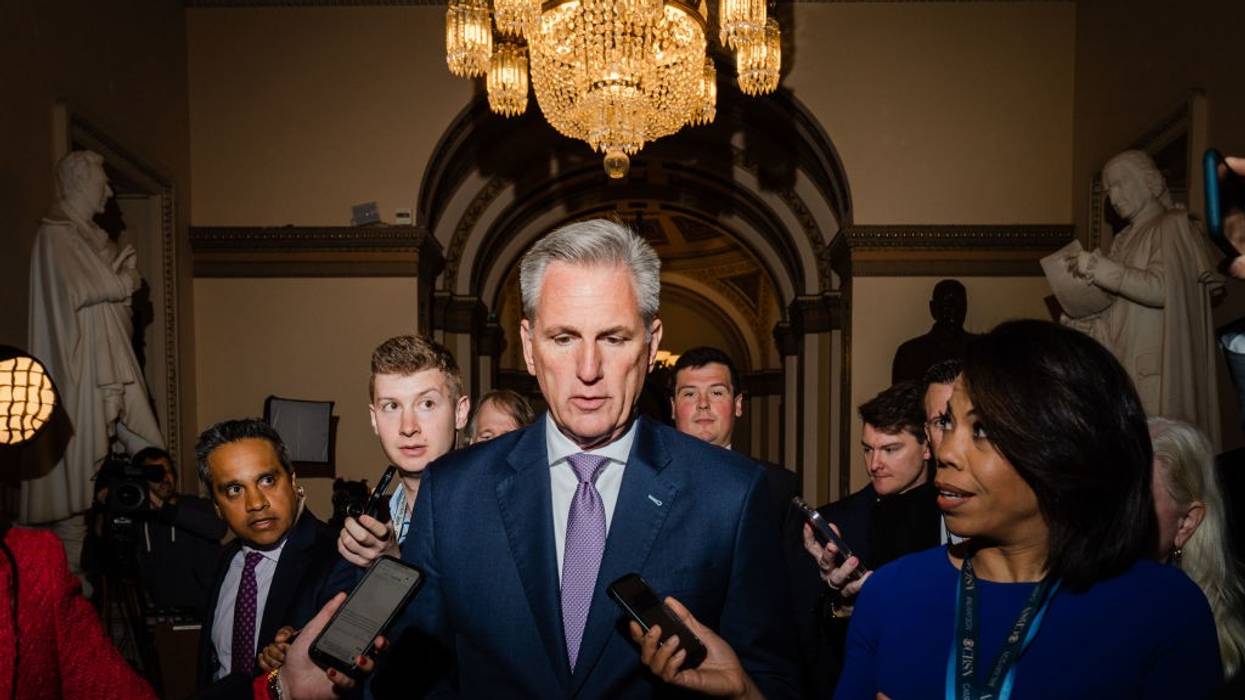
"In tax cuts in 2017 passed by the other side of the aisle, we see wonderful tax cuts for yacht owners and private jets," said Rep. Alexandria Ocasio-Cortez. "But in order to balance our budget now, we're talking about cuts to SNAP, to food out of babies' mouths."
Before House Speaker Kevin McCarthy opened debate Wednesday on a bill that would raise the nation's debt ceiling while gutting social programs and imposing more barriers to access them, nearly 200 House Democrats from across the ideological spectrum signed a letter imploring Republican deficit hawks to drop their demands and pass a clean hike.
Since Washington's arbitrary and arguably unconstitutional borrowing limit was breached in January, Treasury Secretary Janet Yellen has implemented "extraordinary measures" enabling the U.S. government to meet its financial obligations for a few additional months. Unless President Joe Biden's administration takes unilateral action to disarm the debt ceiling, Congress has until sometime between July and September to increase or suspend the federal borrowing cap. If Republicans refuse to do so, the U.S. is poised to suffer an unprecedented default that would have catastrophic impacts both domestically and globally.
Fully aware of the stakes, GOP lawmakers are holding the economy hostage in a bid to further weaken the nation's comparatively meager welfare state and its insufficient climate policies. Last week, McCarthy (R-Calif.) unveiled the so-called Limit, Save, Grow Act, which would raise the debt ceiling, but only in conjunction with measures to peg discretionary spending at fiscal year 2022 levels through 2033; establish new work requirements for Medicaid beneficiaries and expand work requirements for recipients of food aid and income support; force through a Big Oil-friendly energy package; repeal recently approved clean energy investments and Internal Revenue Service (IRS) funding; eliminate Biden's contested student debt cancellation plan; claw back unspent Covid-19 relief money; and require congressional approval before any major federal regulations can take effect.
Wednesday's letter—led by House Budget Committee Ranking Member Brendan Boyle (D-Pa.), Congressional Progressive Caucus (CPC) Chair Pramila Jayapal (D-Wash.), and New Democrat Coalition Chair Annie Kuster (D-N.H.)—calls on McCarthy to fulfill his duty to "uphold the full faith and credit" of the U.S. by "allowing prompt floor consideration of legislation to raise the debt ceiling without any extraneous policies attached."
House Democrats pointed out that "congressional Republicans voted to raise the debt ceiling without preconditions or crisis on three separate occasions" under former President Donald Trump and urged them "to do the same on this occasion."
Democratic lawmakers also reminded McCarthy—who recently described the national debt as "the greatest threat to our future"—that "congressional Republicans voted to pass the Tax Cuts and Jobs Act (TCJA) in 2017, which the Congressional Budget Office (CBO) estimated would increase the federal deficit by $1.9 trillion over 10 years, with 83% of the law's benefits estimated to accrue to the richest 1% by 2027."
Progressive Rep. Alexandria Ocasio-Cortez (D-N.Y.) recently contrasted GOP lawmakers' willingness to attack the poor and slash popular initiatives like Supplementary Nutrition Assistance Program (SNAP) with their previous support for the highly regressive and deeply unpopular TCJA, which corporations and the wealthy enthusiastically welcomed when Trump signed it into law.
"In tax cuts in 2017 passed by the other side of the aisle, we see wonderful tax cuts for yacht owners and private jets," said Ocasio-Cortez. "But in order to balance our budget now, we're talking about cuts to SNAP, to food out of babies' mouths, instead of actually reexamining the inequities within our tax system."
As the letter notes, "The first act of House Republicans in the 118th Congress... was passing legislation—which Democrats unanimously opposed—to rescind funding for IRS enforcement against tax evasion by wealthy individuals and large corporations. The CBO estimated that by reducing revenue, that legislation would increase the deficit by $114 billion over 10 years."
In addition to refusing to consider how creating a fairer tax code and cracking down on tax dodging would increase revenue, GOP lawmakers have shown little interest in shrinking the ever-expanding U.S. military budget.
Overall, the Limit, Save, Grow Act—heavily influenced by the far-right House Freedom Caucus' austerity blueprint—would reduce the federal deficit by roughly $4.8 trillion over 10 years, according to a CBO estimate published Tuesday.
But as journalist Bryce Covert observed, it's essential to remember that this meaningless achievement would be realized in part by taking away Medicaid and SNAP benefits from millions of people.
In a Wednesday blog post, Josh Bivens and Samantha Sanders of the Economic Policy Institute warned that if McCarthy's "deeply unrealistic spending cuts actually came to pass, the human toll would be enormous, and economic growth would be deeply damaged."
"The McCarthy proposal," they wrote, "also resurfaces a completely inaccurate but alarmingly persistent conservative claim: the idea that government anti-poverty programs are unnecessarily generous, bloated, and are keeping people out of the workforce who should otherwise be supporting themselves entirely through income earned in the labor market."
"The U.S. safety net is in serious need of reforms, but not because of inaccurate claims that its excess generosity keeps people out of work," they continued. "The biggest problem with the U.S. safety net is that our programs don't help as many people, or as effectively, as they should."
Echoing House Democrats, Bivens and Sanders derided McCarthy's claim that his proposal would put the U.S. on a path to "fiscal responsibility" and lower inflation as "laughable."
"The biggest driver of deficits for the last 20 years has been a steady trend toward ever-larger tax cuts for corporations and the richest U.S. households," the pair wrote. "No one who actually wants to reduce the federal deficit should be looking to do that on the backs of the poorest and most vulnerable Americans."
In their letter, House Democrats said that "instead of supporting an agenda of deficit-exploding tax cuts for the wealthiest individuals and corporations, we welcome an honest discussion regarding the federal budget that makes clear that the deficit is made up of revenues and investments and that sustainable fiscal solutions will ensure our revenues match the level of investments needed to maintain our economic growth and prosperity."
However, the CPC tweeted, "negotiations on what the government is spending its money on have a time and place—the yearly budget process."
"Republicans are welcome to try to get their extremist wish list met that way," the group added. "But that must happen separately from the threat of U.S. default."
The GOP cleared a key procedural hurdle on Wednesday afternoon when the House approved the rule governing debate on the Limit, Save, Grow Act in a 219-210 party-line vote. McCarthy is seeking to pass the legislation later on Wednesday.
One progressive critic said the GOP bill is "a reflection of just how totally controlled by the fringes of his caucus McCarthy is."
Far-right House Republicans are reportedly "thrilled" with the debt ceiling legislation that Speaker Kevin McCarthy unveiled earlier this week.
That's likely because, according to Rep. Matt Gaetz (R-Fla.), McCarthy (R-Calif.) simply "picked up the House Freedom Caucus plan and helped us convert it into legislative text."
"And it shows," replied the progressive watchdog group Accountable.US.
Gaetz, one of a number of far-right Republicans who led a revolt against McCarthy's speakership bid earlier this year, told reporters Thursday that "if you held this plan and the plan that the House Freedom Caucus laid out some weeks ago and held them up to a lamp, you would see a lot of alignment."
Titled the Limit, Save, Grow Act of 2023, the legislation would revert federal spending back to fiscal year 2022 levels and cap annual spending growth at 1% over the next decade—central demands of the hardline House Freedom Caucus members who threatened to deny McCarthy the speaker's gavel in January.
Last month, the House Freedom Caucus outlined a more detailed proposal that would claw back unspent coronavirus pandemic funds, repeal clean energy tax credits and other elements of the Inflation Reduction Act, block President Joe Biden's stalled effort to cancel up to $20,000 in student loan debt per borrower, and impose new work requirements on recipients of Medicaid and federal food assistance that could kick millions off the lifesaving programs.
The Limit, Save, Grow Act would do all of the above and more, a fact that helps explain the bill's largely positive reception among far-right Republicans—though some, such as former House Freedom Caucus chair Rep. Andy Biggs (R-Ariz.), want the bill to attack aid programs more aggressively.
As Semafor reported, Biggs "expressed openness to voting for the bill" but said he "wanted to see even stricter rules around food stamps."
"That's who is really in charge of the MAGA majority," the progressive advocacy group Indivisible said of the House Freedom Caucus.
Citing Gaetz's comment to reporters, Accountable.US argued the GOP's debt ceiling bill is "a MAGA wishlist, not a serious proposal."
If passed—an unlikely scenario given opposition from congressional Democrats and the Biden White House—the Republican bill would increase the debt limit by $1.5 trillion or suspend the ceiling until next March, setting up another high-stakes standoff in early 2024, a presidential election year.
Congressional Democrats rejected the legislation as a nonstarter, pointing to the massive impact it would have on federal programs related to housing, education, healthcare, climate, and other critical areas.
Last month, the U.S. Department of Housing and Urban Development warned that roughly 640,000 families would lose rental assistance if its budget was reverted to fiscal year 2022 levels. The U.S. Department of Agriculture, meanwhile, estimated that 1.2 million people would lose access to the Special Supplemental Nutrition Program for Women, Infants, and Children (WIC) under the Republican proposal.
"These caps are cuts," Rep. Rosa DeLauro (D-Conn.), the top Democrat on the House Appropriations Committee, said in a statement on Wednesday. "They would ensure that resources for critical programs 10 years from now remain below the levels in effect today. That's 10 years of cuts for less than one year of preventing a default."
Analysts stressed that the cuts to social programs would be even steeper under the GOP plan if it exempts the bloated Pentagon from its austerity spree.
Republicans have two options to make their math work, according to Bobby Kogan, senior director of federal budget policy at the Center for American Progress.
Option one, Kogan noted, is "the entire discretionary budget is cut 28% by 2033 due to McCarthy's caps—including a 28% cut to defense and [Veterans Affairs] Medical Care." The second option is shielding the military budget and inflicting "a 58% cut to all else," leaving "most essential services destroyed."
"This is a ludicrous demand," Kogan argued. "McCarthy's position is that, unless both the president and Congress accede to his very specific and extreme demands, he will force the government to illegally default on its statutory obligations—such as payments to disabled veterans and [Social Security] recipients."
Ezra Levin, co-executive director of Indivisible, said the House GOP leadership's proposal is "a reflection of just how totally controlled by the fringes of his caucus McCarthy is."
"It's just as bad as we expected," said Levin. "Literally take food off the table of millions of families just trying to get by? Help the ultra-wealthy and big corporations get away with cheating on their taxes? Strip away healthcare from children, veterans, and seniors? Saddle millions with crushing student debt? Pull the plug on new clean energy jobs? That's your big pitch to the American people?"
"It'd be funny if it wasn't so serious," Levin added.

By refusing to fight poverty, the GOP shows it only cares about lives with a net worth over a half-billion dollars.
Kevin McCarthy has a keen new idea about what he thinks he can get out of Democrats in Congress in exchange for Republicans authorizing the government to pay the trillions in debt that Donald Trump racked up in his four years in office.
In exchange for lifting the so-called debt ceiling, McCarthy wants Biden and congressional Democrats to throw millions of families off food stamps (SNAP) and end even the possibility of any help to low-income young people unable to pay off student loans.
He claims this is because the federal government can't afford to help out students or hungry Americans. Nonetheless, his caucus is also pushing a new $1.8 trillion cut to the already-hobbled estate tax, paid exclusively by "lucky sperm club" children of the morbidly rich when they inherit fortunes they didn't lift a finger to create.
You'd think that discovering over a quarter-million Americans every year die from current poverty, and an additional 406,000 die every year from long-term or "cumulative" poverty, would move the GOP.
Ironically, this proposal came out the same week that The Journal of the American Medical Association published a new study finding that poverty is the fourth largest killer of Americans.
And by poverty, they're not just talking about the profoundly poor or homeless: For the purposes of this study they defined poverty as everybody living on less than the 50% median of income in the nation.
The study was unambiguous, noting:
"Current poverty was associated with greater mortality than major causes, such as accidents, lower respiratory diseases, and stroke. In 2019, current poverty was also associated with greater mortality than many far more visible causes—10 times as many deaths as homicide, 4.7 times as many deaths as firearms, 3.9 times as many deaths as suicide, and 2.6 times as many deaths as drug overdose."
The outlook for people who've spent at least the past 10 years living below the U.S. median income level is even more grim. The researchers refer to this as "cumulative poverty:"
"Cumulative poverty was associated with approximately 60% greater mortality than current poverty. Hence, cumulative poverty was associated with greater mortality than even obesity and dementia. Heart disease, cancer, and smoking were the only causes or risks with greater mortality than cumulative poverty."
Concluding that "poverty should be considered a major risk factor for death in the U.S.," the researchers noted that the situation is probably even worse than what they were able to easily measure:
"[O]ne limitation of this study is that our estimates may be conservative about the number of deaths associated with poverty."
You'd think that discovering over a quarter-million Americans every year die from current poverty, and an additional 406,000 die every year from long-term or "cumulative" poverty, would move the GOP.
After all, they control the poorest states in the nation, so this hits their constituents harder than it does the electorate of Democratic politicians. This hits right smack in the middle of where Republican politicians live.
But ever since five corrupt Republicans on the Supreme Court first legalized political bribery in 1976 and 1978, paving the way for the Reagan Revolution, the GOP has abandoned Eisenhower's embrace of unionization and anti-poverty programs to instead suck up to the morbidly rich and the corporations they control.
Just in the past six years, Republicans have:
President Biden's $1.9 trillion American Rescue Plan expanded child tax credits and access to Medicaid in 2021, lifting an estimated 12 million people, including 5.6 million children, out of poverty. As Center on Budget and Policy Priorities (CBPP) economists noted:
"[T]he Rescue Plan may turn out to be the most effective single piece of legislation for reducing annual poverty since 1935."
When Republicans refused to go along with an extension of the program last year, however, childhood and general poverty both shot back up, proving that poverty in America isn't some mystical or even natural force, but a policy choice embraced by the GOP.
The so-called "party of life" doesn't, it turns out, give a damn about actual human life
When confronted with the option of cutting or even ending poverty in America (and the homelessness and crime attendant to it) or adding trillions to the money bins of the morbidly rich, Republicans choose the latter every time.
Biden's policies brought Trump's 14.7% unemployment rate all the way down to 3.6%, lifting millions of families out of poverty. Now, however, Trump appointee and lifelong Republican Jerome Powell has dedicated his efforts at the Fed to jacking unemployment back up (while doing nothing at all about out-of-control corporate price gouging) just in time for the 2024 election.
As Senator Ron Wyden said yesterday:
"Republicans manufactured this [debt ceiling] crisis, and Speaker McCarthy's proposal to get out of it would destroy jobs, worsen healthcare, increase hunger, hurt the climate, and make millions of American families poorer."
The so-called "party of life" doesn't, it turns out, give a damn about actual human life unless it has a net worth over a half billion dollars.